



DOTAP methylsulfate
Based on 21 publication(s) in Google Scholar
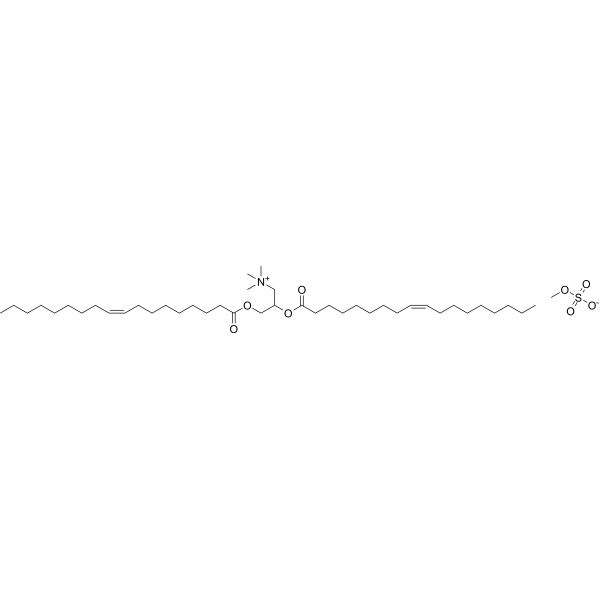
DOTAP methylsulfat is a cationic lipid reagent, a cationic derivative of trimethylammonium, linked to two 18-carbon fatty acid tails, each with a single olefin group. DOTAP methylsulfat can self-assemble with negatively charged ions (such as DNA) to form complexes, which can be adsorbed to the cell membrane surface and enter the cell by electrostatic interaction and endocytosis, respectively. DOTAP methylsulfat promotes endosomal membrane fusion with its own hydrophobic domain, releases DNA into the cytoplasm, and exerts gene delivery function. DOTAP methylsulfat can be widely used in research fields such as gene therapy, cell transfection, and non-viral vector design
Nos produits utilisent uniquement pour la recherche. Nous ne vendons pas aux patients.
- Pureté : 99.94%
- CAS No.: 144189-73-1
- Formule: C43H83NO8S
- Masse moléculaire:774.19
-
Stockage:
4°C, sealed storage, away from moisture
* In solvent : -80°C, 6 months; -20°C, 1 month (sealed storage, away from moisture)

To place orders, for customer services and technical support, please contact: MedChemExpress USA
Tel: 609-228-6898 E-mail: [email protected] [email protected]


-
 Activité biologique
-
Chemical Information
-
Solvant et solubilité
- Pureté et documentation
- Références
-
 Help & FAQs


-
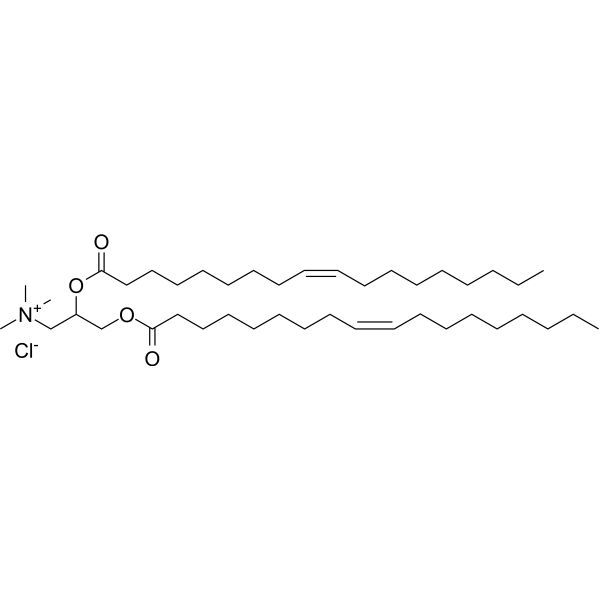
HY-112754A
DOTAP chlorideCationic Lipid -
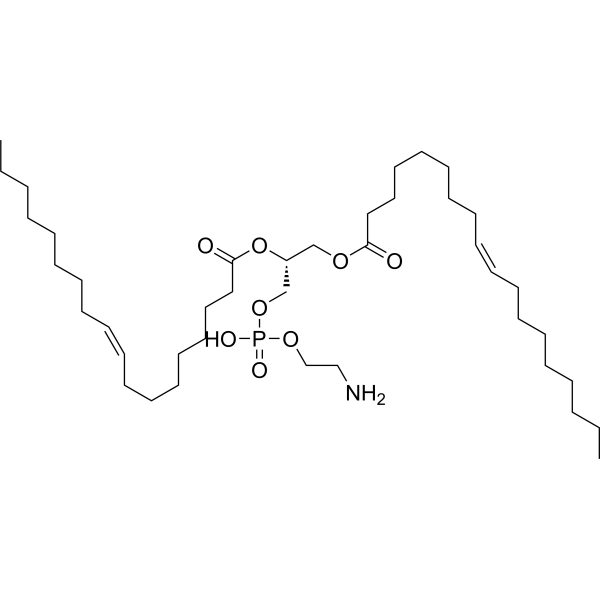
HY-112005
DOPEFerroptosis Inhibitor -
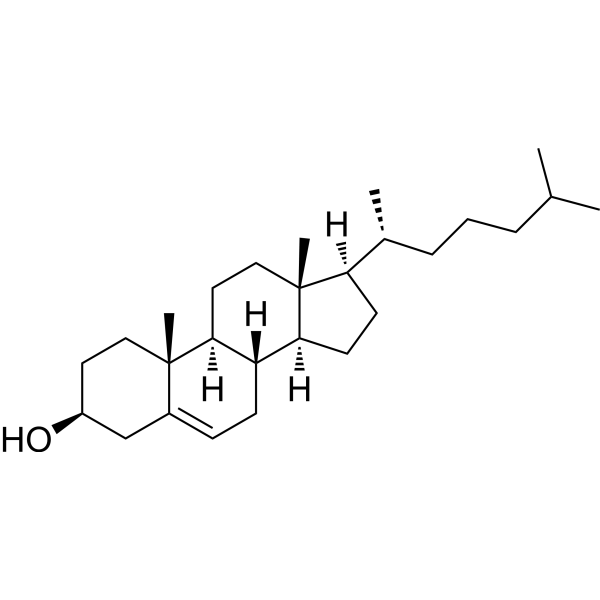
HY-N0322
Cholesterol (from animal)ERRα Agonist -
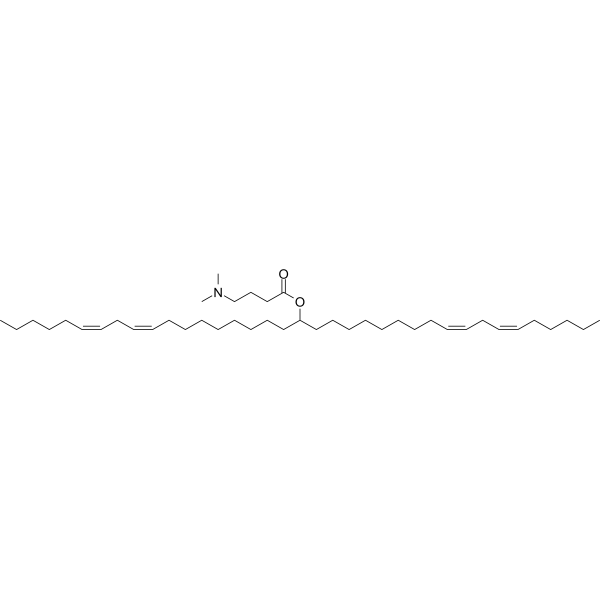
HY-112251
D-Lin-MC3-DMAsiRNA Delivery Vehicle -
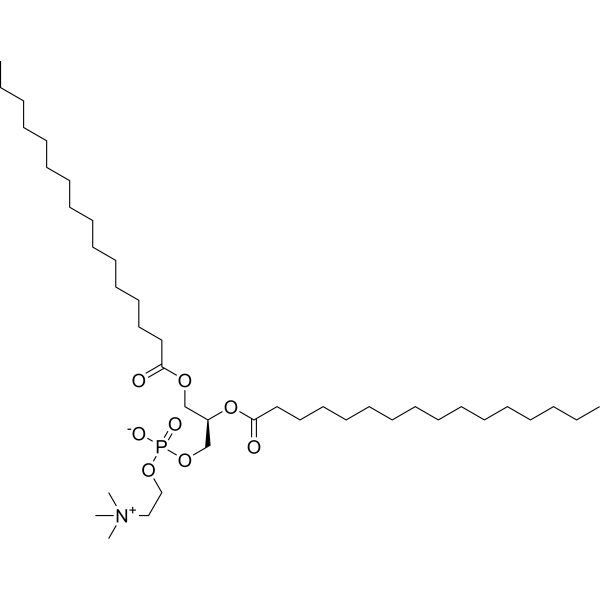
HY-109506
DPPCEndogenous Metabolite -
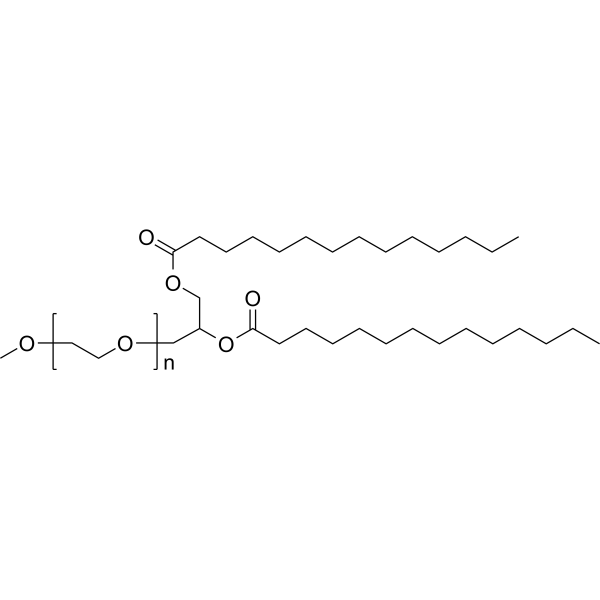
HY-112764
mPEG2000-DMGLiposome -

HY-112754AGL
DOTAP chloride (GMP Like)Cationic Lipid -
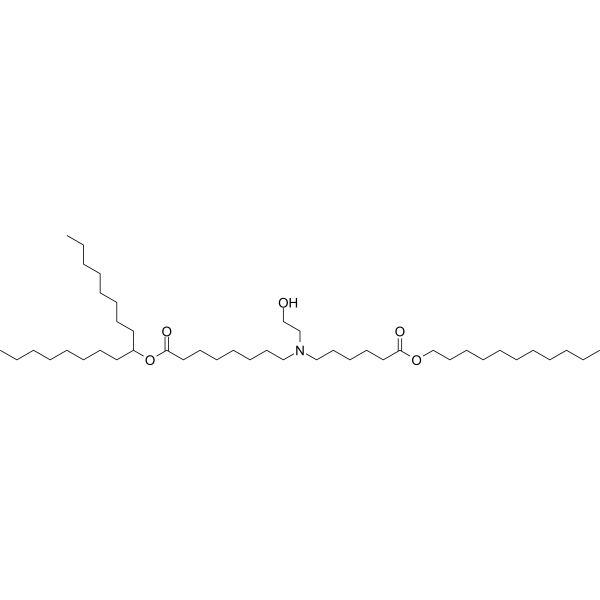
HY-134541
SM-102Ionizable Amino Lipid -
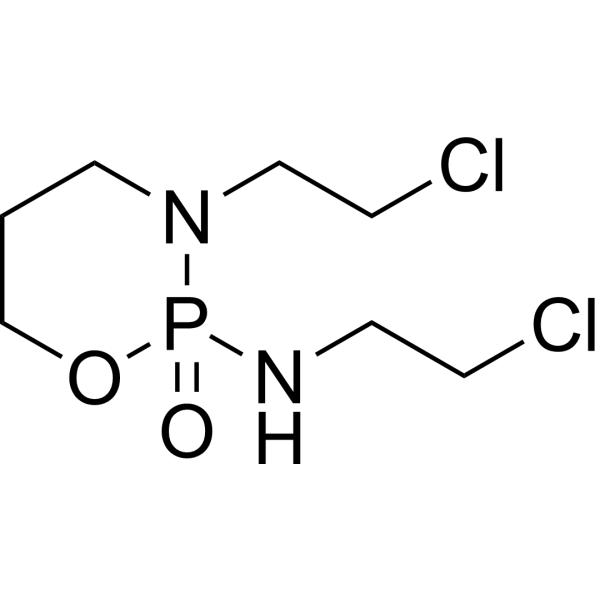
HY-17419
IfosfamideDNA Alkylator/Crosslinker -
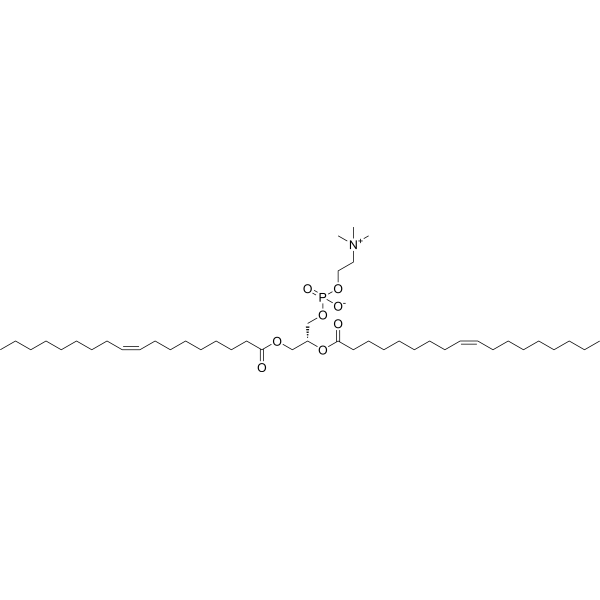
HY-113424A
1,2-Dioleoyl-sn-glycero-3-phosphocholinePhospholipid -
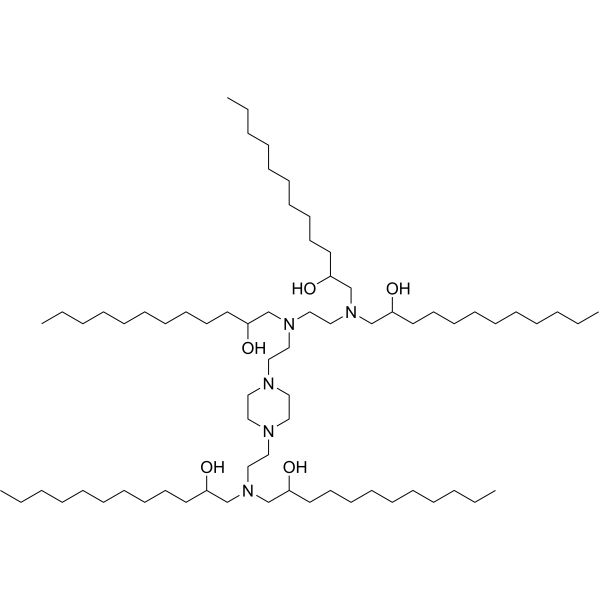
HY-145405
C12-200Cationic Lipidoid -
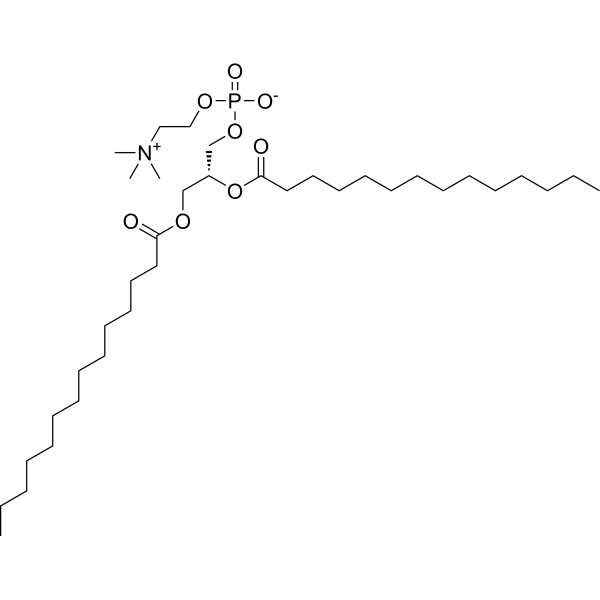
HY-109541
Colfosceril miristatePhospholipid Compound
Publications Citing Use of MedChemExpress (MCE) DOTAP methylsulfate
More- Signal Transduct Target Ther. 2025 Mar 24;10(1):101. [Abstract]
- Immunity. 2026 Feb 10;59(2):270-287.e11. [Abstract]
- Exploration. 2024 Jun 26;5(1):20240002. [Abstract]
- Nat Immunol. 2025 Oct;26(10):1660-1672. [Abstract]
- J Adv Res. 2026 May 4:S2090-1232(26)00378-4. [Abstract]
- Cell Rep Med. 2026 Mar 17;7(3):102667. [Abstract]
- Carbohydr Polym. 2026 Jul 1:383:125313. [Abstract]
- Asian J Pharm Sci. 2026 Jan 10.
- J Control Release. 2026 May 23:396:115047. [Abstract]
- Adv Healthc Mater. 2023 Jan;12(6):e2202412. [Abstract]
- Biofabrication. 2026 Aug 17;18(3):035046.
- Pharmaceutics. 2023 Apr 30;15(5):1379. [Abstract]
- Mikrochim Acta. 2026 Jul 1;193(7):501.
- Nanoscale. 2023 Nov 16;15(44):17825-17838. [Abstract]
- PLoS Pathog. 2026 Mar 17;22(3):e1014062. [Abstract]
- Microbiol Spectr. 2025 Nov 5;13(12):e0143825. [Abstract]
- bioRxiv. 2026 May 4.
- bioRxiv. 2026 Apr 27.
- bioRxiv. 2025 Oct 1:2025.10.01.679765. [Abstract]
- University of Washington. 2025.
- SSRN. 2024 Nov 12.
 Customer Validation & Images

-
Gel Electrophoresis


Activité biologique
Description
In Vitro
Different mass ratios of DOTAP methylsulfat (different mass ratios; 4 hours transfection + 24 hours culture) and DOPE (HY-112005) have different optimal transfection efficiencies. In Huh7 and AGS cells, the optimal ratio is T1P0 (1:0)/T3P1 (3:1), and in A549 cells, the optimal ratio is T1P1 (1:1)/T3P1 (1:3), which is independent of liposome size or zeta potential[1].
DOTAP methylsulfat mixed with lipids in certain ratios (e.g., 1:2, 1:1, 2:1) is more efficient than DOTAP methylsulfat alone in transfecting DNA, and still maintains transfection activity at 80% serum concentration. And the optimal transfection ratio of DOTAP methylsulfat to DNA is 12:1[2].
DOTAP methylsulfat (30 min DNase treatment) DNA-lipid complexes remain stable to DNase I digestion in the presence of serum, and the addition of cholesterol does not affect the structural integrity of the complex[2].
DOTAP methylsulfat (containing 1% NBD-DOTAP methylsulfat label; 2 h transfection) in flow cytometric analysis, cholesterol-modified liposomes bind to cells at a significantly higher rate in serum than pure DOTAP methylsulfat liposomes[2].
MedChemExpress (MCE) has not independently confirmed the accuracy of these methods. They are for reference only.


Chemical Information
-
CAS No. 144189-73-1
-
Appearance Solid
-
Masse moléculaire 774.19
-
Formule C43H83NO8S
-
Color White to off-white
-
SMILES
S(OC)(=O)(=O)[O-].C(OC(CCCCCCC/C=C\CCCCCCCC)=O)(COC(CCCCCCC/C=C\CCCCCCCC)=O)C[N+](C)(C)C
-
Synonyms
1,2-Dioleoyl-3-trimethylammonium-propane methylsulfate
-
Livraison
Room temperature in continental US; may vary elsewhere.
-
Stockage
4°C, sealed storage, away from moisture
* In solvent : -80°C, 6 months; -20°C, 1 month (sealed storage, away from moisture)


Publications (21)
-
Journal Impact Factor
-
Most Recent
-
Signal Transduct Target Ther
Intranasal prime-boost RNA vaccination elicits potent T cell response for lung cancer therapy. [Abstract]2025 Mar 24;10(1):101. PMID: 40122855 -
Immunity
Chromatin-mediated anticipatory control of type I interferon production in plasmacytoid dendritic cells. [Abstract]2026 Feb 10;59(2):270-287.e11. PMID: 41672043 -
Exploration
A pH responsive nanocomposite for combination sonodynamic-immunotherapy with ferroptosis and calcium ion overload via SLC7A11/ACSL4/LPCAT3 pathway. [Abstract]2024 Jun 26;5(1):20240002. PMID: 40040833 -
Nat Immunol
Delaying pyroptosis with an AI-screened gasdermin D pore blocker mitigates inflammatory response. [Abstract]2025 Oct;26(10):1660-1672. PMID: 40954252 -
J Adv Res
4-Octyl itaconate-induced Nrf2 nuclear translocation mitigates Caspase-11-dependent noncanonical macrophage pyroptosis and acute lung injury. [Abstract]2026 May 4:S2090-1232(26)00378-4. PMID: 42092588 -
Cell Rep Med
Engineering lipid nanoparticle-stabilized emulsions for spatiotemporal mRNA delivery and enhanced T cell immunity. [Abstract]2026 Mar 17;7(3):102667. PMID: 41850240 -
Carbohydr Polym
Hyaluronic acid-engineered infection-responsive liposomes achieve biofilm penetration and synergistic photothermal-photodynamic antibacterial therapy. [Abstract]2026 Jul 1:383:125313. PMID: 42067348 -
-
J Control Release
Antimicrobial peptide-derived lipid nanoparticles enable lung-targeted mRNA therapy for multidrug-resistant bacterial pneumonia. [Abstract]2026 May 23:396:115047. PMID: 42178062 -
Adv Healthc Mater
2023 Jan;12(6):e2202412. PMID: 36412002 -
-
Pharmaceutics
MiR-126-Loaded Immunoliposomes against Vascular Endothelial Inflammation In Vitro and Vivo Evaluation. [Abstract]2023 Apr 30;15(5):1379. PMID: 37242620
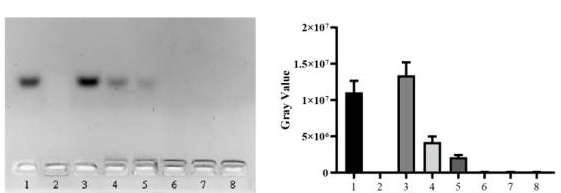
DOTAP methylsulfate purchased from MedChemExpress. Usage Cited in: Pharmaceutics. 2023 Apr 30;15(5):1379. [Abstract]
(A) Identification of miR-126 conjugates using gel retardation assay. 1, miR-126; 2, Va-CLs; 3–8, DOTAP (DOTAP chloride):miR-126 = 16:1, 24:1, 32:1, 40:1, 48:1 and 56:1 incubated for 30 min at room temperature to obtain Va-CLs/miR-126 and CLs/miR-126 complexes. (B) The gray value of each miR-126 band was calculated
-
-
Nanoscale
Differential cellular responses to FDA-approved nanomedicines: an exploration of albumin-based nanocarriers and liposomes in protein corona formation. [Abstract]2023 Nov 16;15(44):17825-17838. PMID: 37850423 -
PLoS Pathog
LL-37 selectively targets Plasmodium-infected erythrocytes and exhibits antimalarial activity. [Abstract]2026 Mar 17;22(3):e1014062. PMID: 41843625 -
Microbiol Spectr
Lipid nanoparticle-delivered mRNA vaccine encoding the MOMP of Chlamydia psittaci elicits protective immune responses in BALB/c mice. [Abstract]2025 Nov 5;13(12):e0143825. PMID: 41190885 -
-
-
bioRxiv
Genus-specific remodeling of carbon and energy metabolism facilitates acetoclastic methanogenesis in Methanosarcina spp. and Methanothrix spp. [Abstract]2025 Oct 1:2025.10.01.679765. PMID: 41256488 -
-


Solvant et solubilité
In Vitro:
Ethanol : ≥ 100 mg/mL (129.17 mM)
DMSO : 5 mg/mL (6.46 mM; Need ultrasonic; Hygroscopic DMSO has a significant impact on the solubility of product, please use newly opened DMSO)
* "≥" means soluble, but saturation unknown.
Please refer to the solubility information to select the appropriate solvent. Once prepared, please aliquot and store the solution to prevent product inactivation from repeated freeze-thaw cycles.
Storage method and period of stock solution: -80°C, 6 months; -20°C, 1 month (sealed storage, away from moisture). When stored at -80°C, please use it within 6 months. When stored at -20°C, please use it within 1 month.
Please refer to the solubility information to select the appropriate solvent. Once prepared, please aliquot and store the solution to prevent product inactivation from repeated freeze-thaw cycles.
Storage method and period of stock solution: -80°C, 6 months; -20°C, 1 month (sealed storage, away from moisture). When stored at -80°C, please use it within 6 months. When stored at -20°C, please use it within 1 month.
Concentration (start) × Volume (start) = Concentration (final) × Volume (final)
In Vivo:
Select the appropriate dissolution method based on your experimental animal and administration route.
- For the following dissolution methods, please ensure to first prepare a clear stock solution using an In Vitro approach and then sequentially add co-solvents:
- To ensure reliable experimental results, the clarified stock solution can be appropriately stored based on storage conditions. As for the working solution for In Vivo experiments, it is recommended to prepare freshly and use it on the same day.
- The percentages shown for the solvents indicate their volumetric ratio in the final prepared solution. If precipitation or phase separation occurs during preparation, heat and/or sonication can be used to aid dissolution.
Add each solvent one by one: 10% EtOH 90% Corn Oil
Solubility: ≥ 2.5 mg/mL (3.23 mM); Clear solution
This protocol yields a clear solution of ≥ 2.5 mg/mL (saturation unknown). If the continuous dosing period exceeds half a month, please choose this protocol carefully.
Taking 1 mL working solution as an example, add 100 μL EtOH stock solution (25.0 mg/mL) to 900 μL Corn oil, and mix evenly.
Add each solvent one by one: 10% DMSO 40% PEG300 5% Tween-80 45% Saline
Solubility: ≥ 1.67 mg/mL (2.16 mM); Clear solution
This protocol yields a clear solution of ≥ 1.67 mg/mL (saturation unknown).
Taking 1 mL working solution as an example, add 100 μL DMSO stock solution (16.7 mg/mL) to 400 μL PEG300, and mix evenly; then add 50 μL Tween-80 and mix evenly; then add 450 μL Saline to adjust the volume to 1 mL.
Preparation of Saline: Dissolve 0.9 g sodium chloride in ddH₂O and dilute to 100 mL to obtain a clear Saline solution.
In Vivo Dissolution Calculator
Please enter the basic information of animal experiments:
-
-
-
-
Recommended: Prepare an additional quantity of animals to account for potential losses during experiments.
Please enter your animal formula composition:
-
%DMSO +
Recommended: Keep the proportion of DMSO in working solution below 2% if your animal is weak.
-
%+
-
+%Tween-80 + +
-
%Saline +
The co-solvents required include: DMSO, . All of co-solvents are available by MedChemExpress (MCE). , Tween 80. All of co-solvents are available by MedChemExpress (MCE).
Working solution concentration: 0.22 mg/mL
Method for preparing stock solution: mg drug dissolved in μL DMSO. Stock solution concentration: mg/mL. * In solvent : -80°C, 6 months; -20°C, 1 month (sealed storage, away from moisture)
1. Take μL DMSO stock solution;
2. Add μL .
μL , mix evenly;
3. Then add μL Tween 80, mix evenly;
4. Then add μL
Please ensure that the stock solution in the first step is dissolved to a clear state, and add co-solvents in sequence. You can use ultrasonic heating (ultrasonic cleaner, recommended frequency 20-40 kHz), vortexing, etc. to assist dissolution.


Pureté et documentation
-
Fiche technique (270 KB)
-
SDS (645 KB)
- English - EN (645 KB)
- Français - FR (645 KB)
- Deutsch - DE (645 KB)
- Norwegian - NO (645 KB)
- Español - ES (645 KB)
- Swedish - SV (645 KB)
- Italian - IT (645 KB)
- Korean - KR (645 KB)
- Portuguese - PT (645 KB)
-
Instruction de manipulation (2659 KB)
Références
[1]. Kim BK, et al. DOTAP/DOPE ratio and cell type determine transfection efficiency with DOTAP-liposomes. Biochim Biophys Acta. 2015 Oct;1848 (10 Pt A) :1996-2001. [Content Brief]
[2]. Crook K, et al. Inclusion of cholesterol in DOTAP transfection complexes increases the delivery of DNA to cells in vitro in the presence of serum. Gene Ther. 1998 Jan;5 (1) :137-43. [Content Brief]


Complete Stock Solution Preparation Table
Please refer to the solubility information to select the appropriate solvent. Once prepared, please aliquot and store the solution to prevent product inactivation from repeated freeze-thaw cycles.
Storage method and period of stock solution: -80°C, 6 months; -20°C, 1 month (sealed storage, away from moisture). When stored at -80°C, please use it within 6 months. When stored at -20°C, please use it within 1 month.
| Optional Solvent | Concentration Solvent Mass | 1 mg | 5 mg | 10 mg | 25 mg |
|---|---|---|---|---|---|
| DMSO / Ethanol | 1 mM | 1.2917 mL | 6.4584 mL | 12.9167 mL | 32.2918 mL |
| 5 mM | 0.2583 mL | 1.2917 mL | 2.5833 mL | 6.4584 mL | |
| Ethanol | 10 mM | 0.1292 mL | 0.6458 mL | 1.2917 mL | 3.2292 mL |
| 15 mM | 0.0861 mL | 0.4306 mL | 0.8611 mL | 2.1528 mL | |
| 20 mM | 0.0646 mL | 0.3229 mL | 0.6458 mL | 1.6146 mL | |
| 25 mM | 0.0517 mL | 0.2583 mL | 0.5167 mL | 1.2917 mL | |
| 30 mM | 0.0431 mL | 0.2153 mL | 0.4306 mL | 1.0764 mL | |
| 40 mM | 0.0323 mL | 0.1615 mL | 0.3229 mL | 0.8073 mL | |
| 50 mM | 0.0258 mL | 0.1292 mL | 0.2583 mL | 0.6458 mL | |
| 60 mM | 0.0215 mL | 0.1076 mL | 0.2153 mL | 0.5382 mL | |
| 80 mM | 0.0161 mL | 0.0807 mL | 0.1615 mL | 0.4036 mL | |
| 100 mM | 0.0129 mL | 0.0646 mL | 0.1292 mL | 0.3229 mL |


DOTAP methylsulfate Related Classifications
HY-W127378 Related Classifications
 Powered by Bioz