



Soyasaponin Ba
Based on 1 publication(s) in Google Scholar
Soyasaponin Ba is a soyasaponin that can be isolated from Phaseolus vulgaris, acts as an aldose reductase inhibitor (ARI). Soyasaponin Ba activates Akt/GSK3β/β-catenin signaling pathway, reduces lipid accumulation, lowers ROS generation, improves mitochondrial membrane potential, ATP levels, and morphology, and inhibits apoptosis. Soyasaponin Ba can be used for the research of lipid accumulation and secondary diabetic complications.
Nos produits utilisent uniquement pour la recherche. Nous ne vendons pas aux patients.
- Pureté : 99.47%
- CAS No.: 114590-20-4
- Formule: C48H78O19
- Masse moléculaire:959.12
-
Stockage:
4°C, protect from light
* In solvent : -80°C, 6 months; -20°C, 1 month (protect from light)

To place orders, for customer services and technical support, please contact: MedChemExpress USA
Tel: 609-228-6898 E-mail: [email protected] [email protected]


-
 Activité biologique
-
Chemical Information
-
Solvant et solubilité
- Protocole
- Pureté et documentation
- Références
-
 Help & FAQs


-
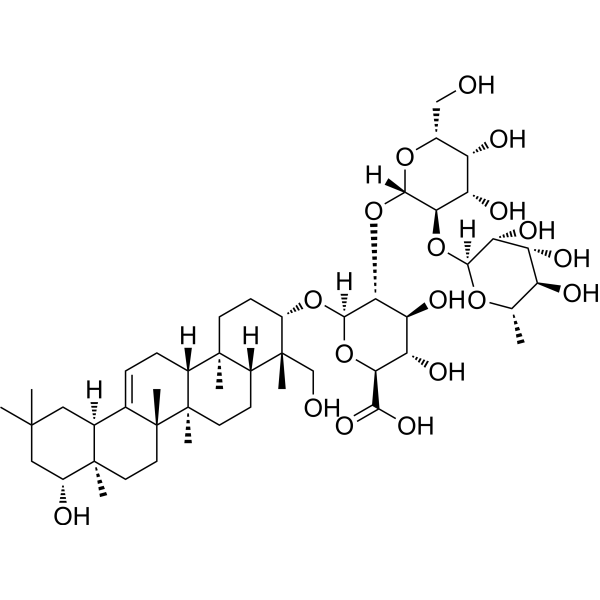
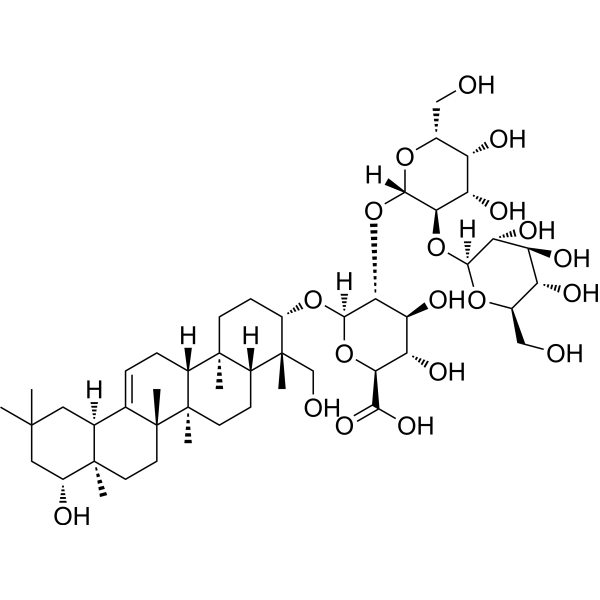
HY-N0310
Soyasaponin BbAldose Reductase Inhibitor -
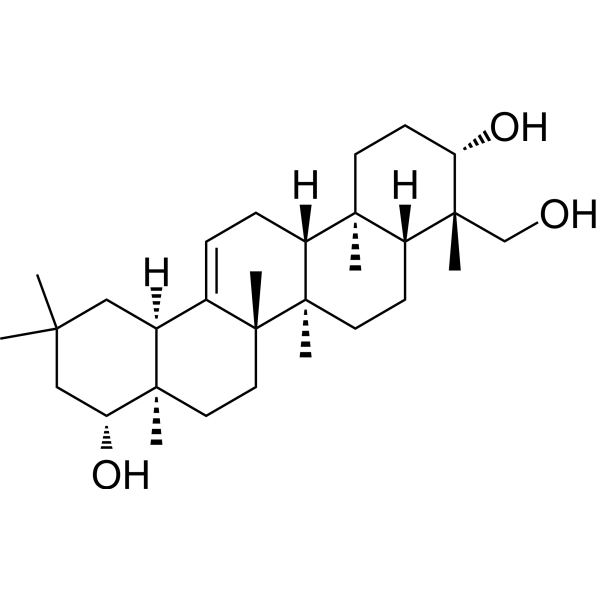
HY-N6074
Soyasapogenol BAutophagy Inducer -
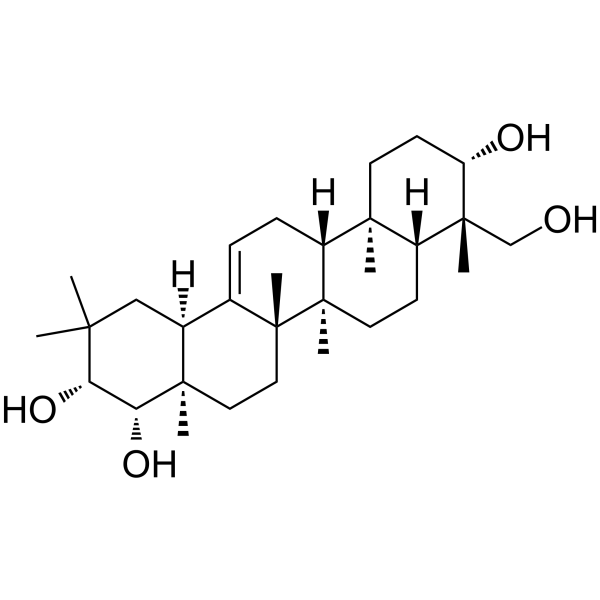
HY-N6073
Soyasapogenol ATriterpenoid Aglycone -

HY-N0309R
Soyasaponin Ba (Standard)Aldose Reductase Inhibitor -
HY-114009
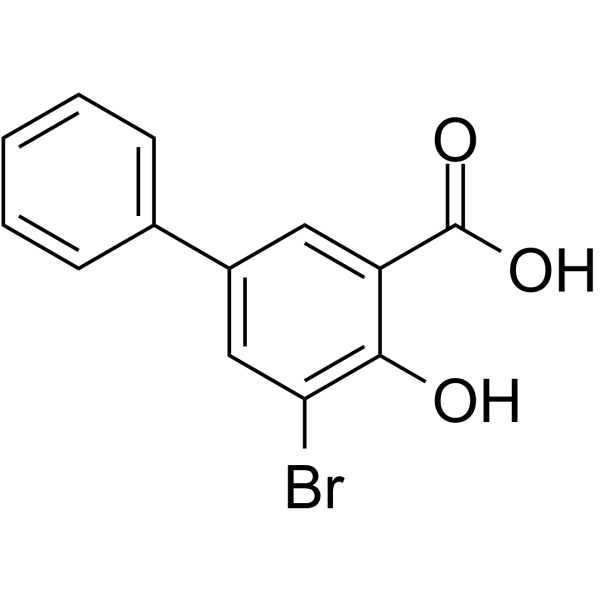
AKR1C1-IN-1AKR1C1 Inhibitor -
HY-N4089
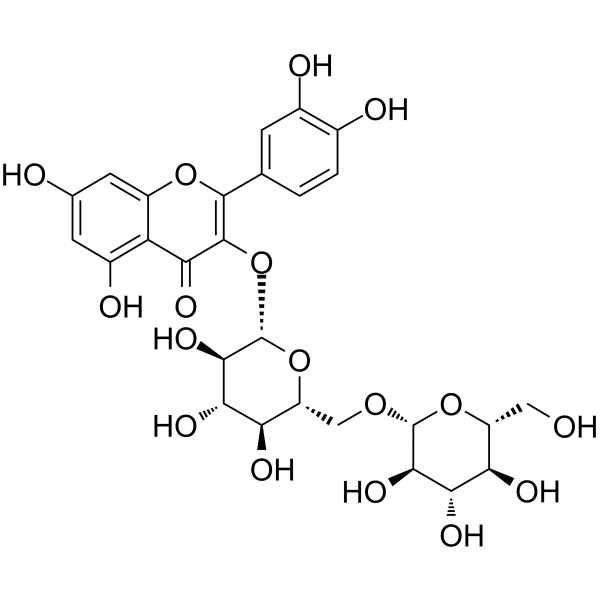
Quercetin 3-gentiobiosideAromatase Inhibitor -
HY-13633
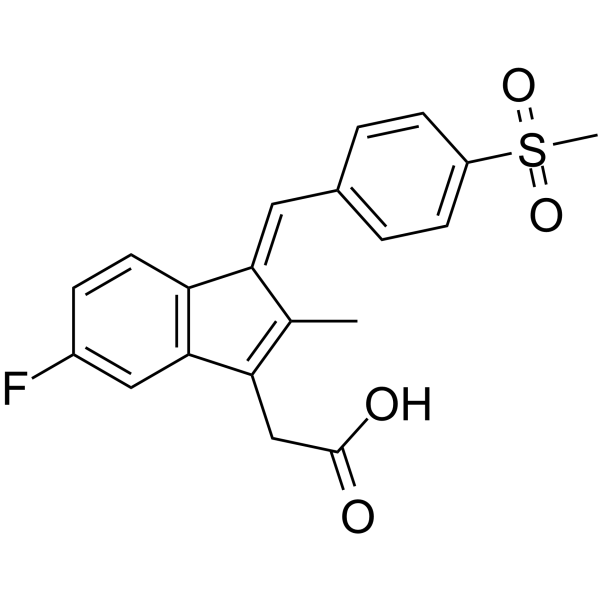
ExisulindAldose Reductase Inhibitor -
HY-118819
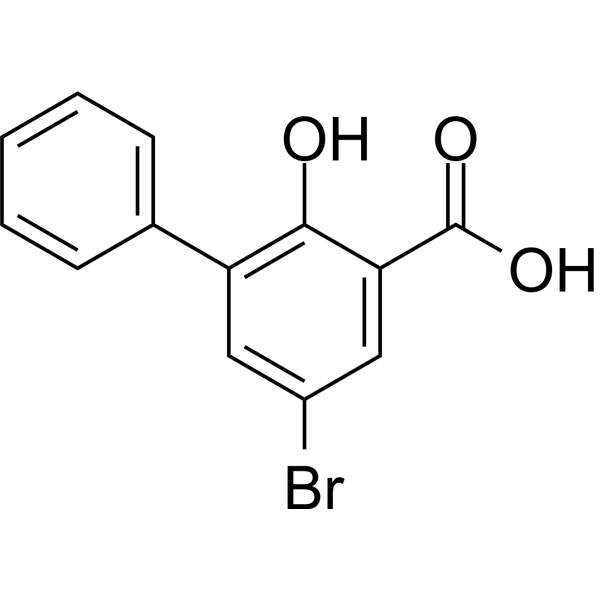
5-Bromo-3-phenyl salicylic acidAKR1C1 Inhibitor -
HY-N2461
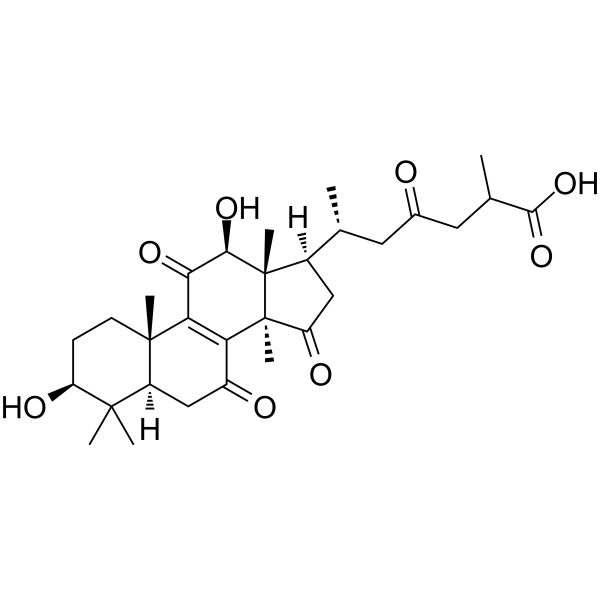
Ganoderic acid C6Aldose reductase Inhibitor -

HY-W319094
4′-HydroxyflavoneAldose Reductase Inhibitors -

HY-N4089R
Quercetin 3-gentiobioside (Standard)Standard of Quercetin 3-gentiobioside
Publications Citing Use of MedChemExpress (MCE) Soyasaponin Ba
More

Activité biologique
Description
In Vitro
Soyasaponin Ba (0.78-25 μM; 0-600 s) directly binds to purified AKT1 protein with a Kd of 4.19 μM[1].
Soyasaponin Ba (4-32 μM; 24 h) dose-dependently alleviates FFA-induced intracellular ROS accumulation, and improves FFA-induced mitochondrial dysfunction in HepG2 cells[1].
Soyasaponin Ba (4-32 μM; 24 h) dose-dependently alleviates FFA-induced apoptosis in HepG2 cells[1].
Soyasaponin Ba (16-32 μM; 24 h) activates the Akt/GSK3β/β-catenin signaling pathway in FFA-induced HepG2 cells[1].
Soyasaponin Ba (8-32 μM; 24 h) dose-dependently alleviates FFA-induced lipid accumulation in THLE-2 cells[1].
Soyasaponin Ba (16-32 μM; 24 h) dose-dependently alleviates FFA-induced ROS accumulation, mitochondrial dysfunction, and apoptosis in THLE-2 cells[1].
MedChemExpress (MCE) has not independently confirmed the accuracy of these methods. They are for reference only.
-
Cell Line:HepG2 cells
-
Concentration:4; 8; 16; 32 μM
-
Incubation Time:24 h
-
Result:Reduced FFA-induced apoptosis in a concentration-dependent manner, as shown by decreased green fluorescence intensity (cleaved caspase-3 activity) in single-cell imaging, normalized relative fluorescent units (RFU) in bulk culture, and reduced Annexin V-mCherry staining.
Significantly decreased caspase-3 activity at 16 and 32 μM, with effects comparable to 20 μM atorvastatin.
-
Cell Line:HepG2 cells
-
Concentration:16; 32 μM
-
Incubation Time:24 h
-
Result:Restored phosphorylated Akt and phosphorylated GSK3β levels reduced by FFA treatment at 32 μM.
Increased intracellular β-catenin and c-Myc levels reduced by FFA treatment in a concentration-dependent manner at 16 and 32 μM.
-
Cell Line:HepG2 cells
-
Concentration:4; 8; 16; 32 μM
-
Incubation Time:24 h
-
Result:Dose-dependently alleviates FFA-induced lipid accumulation in HepG2 cells.
Showed significant effects at all tested concentrations.
In Vivo
MedChemExpress (MCE) has not independently confirmed the accuracy of these methods. They are for reference only.
-
Animal Model:wild-type N2 elegans[1]
-
Dosage:16; 32; 64; 128 μM
-
Administration:incorporated into nematode growth medium; every 48 hours; 3-4 total doses; from L4 stage
-
Result:Dose-dependently reduced high-glucose induced lipid accumulation.
At 128 μM, reduced Nile Red fluorescence intensity significantly compared to the high-glucose untreated group.
Dose-dependently reduced high-glucose induced ROS accumulation.
- 3T3-L1 preadipocyte-to-adipocyte differentiation
- Mitochondrial membrane-potential fluorescent assay
- Detection of Apoptosis
- TUNEL staining for apoptotic DNA fragmentation
- Annexin V plus membrane-impermeant dye apoptosis staining
- ROS/oxidative-stress fluorescent staining
- Fluorescent plasma-membrane potential dye assay
- Mitochondrial membrane-potential and mitochondrial mass staining
- Apoptosis Solutions
- Lipid Droplets: Oil Red O/Sudan Dye Lipid Staining


Chemical Information
-
CAS No. 114590-20-4
-
Appearance Solid
-
Masse moléculaire 959.12
-
Formule C48H78O19
-
Color White to off-white
-
SMILES
O[C@H]([C@H]1O[C@@]2([H])[C@H](O[C@]3([H])O[C@H](CO)[C@@H](O)[C@H](O)[C@H]3O)[C@@H](O)[C@@H](O)[C@@H](CO)O2)[C@H](O)[C@@H](C(O)=O)O[C@@]1([H])O[C@@H]4[C@@](CO)(C)[C@]5([H])CC[C@@]6(C)[C@]7(C)CC[C@@]8(C)[C@H](O)CC(C)(C)C[C@@]8([H])C7=CC[C@]6([H])[C@@]5(C)CC4
-
Structure Classification
-
Initial Source
-
Livraison
Room temperature in continental US; may vary elsewhere.
-
Stockage
4°C, protect from light
* In solvent : -80°C, 6 months; -20°C, 1 month (protect from light)


Publications (1)
-
Journal Impact Factor
-
Most Recent
-
Phytopathology
Untargeted metabolomic analysis reveals a potential role of saponins in the partial resistance of pea (Pisum sativum) against a root rot pathogen, Aphanomyces euteiches. [Abstract]2024 Dec;114(12):2502-2514. PMID: 39186063


Solvant et solubilité
In Vitro:
DMSO : 250 mg/mL (260.66 mM; Need ultrasonic; Hygroscopic DMSO has a significant impact on the solubility of product, please use newly opened DMSO)
Please refer to the solubility information to select the appropriate solvent. Once prepared, please aliquot and store the solution to prevent product inactivation from repeated freeze-thaw cycles.
Storage method and period of stock solution: -80°C, 6 months; -20°C, 1 month (protect from light). When stored at -80°C, please use it within 6 months. When stored at -20°C, please use it within 1 month.
Please refer to the solubility information to select the appropriate solvent. Once prepared, please aliquot and store the solution to prevent product inactivation from repeated freeze-thaw cycles.
Storage method and period of stock solution: -80°C, 6 months; -20°C, 1 month (protect from light). When stored at -80°C, please use it within 6 months. When stored at -20°C, please use it within 1 month.
Concentration (start) × Volume (start) = Concentration (final) × Volume (final)


Pureté et documentation
-
Fiche technique (284 KB)
-
SDS (252 KB)
- English - EN (252 KB)
- Français - FR (252 KB)
- Deutsch - DE (252 KB)
- Norwegian - NO (252 KB)
- Español - ES (252 KB)
- Swedish - SV (252 KB)
- Italian - IT (252 KB)
- Korean - KR (252 KB)
- Portuguese - PT (252 KB)
-
Instruction de manipulation (2659 KB)
Références
[1]. Luo J, et al. Soyasaponin Ba Alleviates Lipid Accumulation via Mitochondrial Remodeling: Multiomics Insights. J Agric Food Chem. 2025;73(33):21199-21221. [Content Brief]
[2]. Balestri F, et al. Soyasaponins from Zolfino bean as aldose reductase differential inhibitors. J Enzyme Inhib Med Chem. 2019;34(1):350-360. [Content Brief]


Complete Stock Solution Preparation Table
Please refer to the solubility information to select the appropriate solvent. Once prepared, please aliquot and store the solution to prevent product inactivation from repeated freeze-thaw cycles.
Storage method and period of stock solution: -80°C, 6 months; -20°C, 1 month (protect from light). When stored at -80°C, please use it within 6 months. When stored at -20°C, please use it within 1 month.
| Optional Solvent | Concentration Solvent Mass | 1 mg | 5 mg | 10 mg | 25 mg |
|---|---|---|---|---|---|
| DMSO | 1 mM | 1.0426 mL | 5.2131 mL | 10.4262 mL | 26.0656 mL |
| 5 mM | 0.2085 mL | 1.0426 mL | 2.0852 mL | 5.2131 mL | |
| 10 mM | 0.1043 mL | 0.5213 mL | 1.0426 mL | 2.6066 mL | |
| 15 mM | 0.0695 mL | 0.3475 mL | 0.6951 mL | 1.7377 mL | |
| 20 mM | 0.0521 mL | 0.2607 mL | 0.5213 mL | 1.3033 mL | |
| 25 mM | 0.0417 mL | 0.2085 mL | 0.4170 mL | 1.0426 mL | |
| 30 mM | 0.0348 mL | 0.1738 mL | 0.3475 mL | 0.8689 mL | |
| 40 mM | 0.0261 mL | 0.1303 mL | 0.2607 mL | 0.6516 mL | |
| 50 mM | 0.0209 mL | 0.1043 mL | 0.2085 mL | 0.5213 mL | |
| 60 mM | 0.0174 mL | 0.0869 mL | 0.1738 mL | 0.4344 mL | |
| 80 mM | 0.0130 mL | 0.0652 mL | 0.1303 mL | 0.3258 mL | |
| 100 mM | 0.0104 mL | 0.0521 mL | 0.1043 mL | 0.2607 mL |


Soyasaponin Ba Related Classifications
HY-N0309 Related Classifications
 Powered by Bioz
Keywords
- Soyasaponin Ba
- 114590-20-4
- Aldose Reductase
- Akt
- GSK-3
- β-catenin
- Reactive Oxygen Species (ROS)
- Mitochondrial Metabolism
- Apoptosis
- c-Myc
- Akt/GSK3β/β-catenin signaling pathway
- lipid accumulation
- wild-type N2 C. elegans
- HepG2 cells
- AKT1
- hAKR1B1
- apoptosis
- THLE-2 cells
- mitochondrial function
- reactive oxygen species
- Inhibitor
- inhibitor
- inhibit