



L-Palmitoylcarnitine
Based on 2 publication(s) in Google Scholar
L-Palmitoylcarnitine, a long-chain acylcarnitine and a fatty acid metabolite, accumulates in the sarcolemma and deranges the membrane lipid environment during ischaemia. L-Palmitoylcarnitine inhibits KATP channel activity, without affecting the single channel conductance, through interaction with Kir6.2.
For research use only. We do not sell to patients.
- Purity : 99.88%
- CAS No.: 2364-67-2
- Formula: C23H45NO4
- Molecular Weight:399.61
-
Storage:Powder -20°C, 3 years , 4°C, 2 years ; In solvent -80°C, 6 months , -20°C, 1 month

To place orders, for customer services and technical support, please contact: MedChemExpress USA
Tel: 609-228-6898 E-mail: [email protected] [email protected]


-
 Biological Activity
-
Chemical Information
-
Solvent & Solubility
- Purity & Documentation
- References
-
 Help & FAQs


-
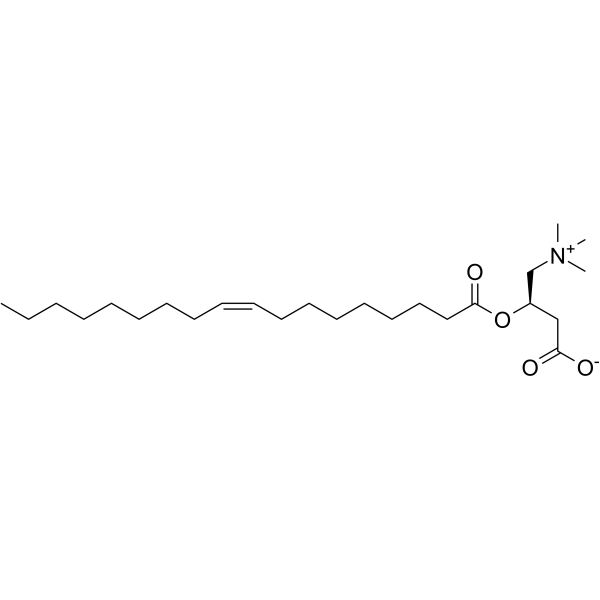
HY-113261
OleoylcarnitineHCC Biomarker -
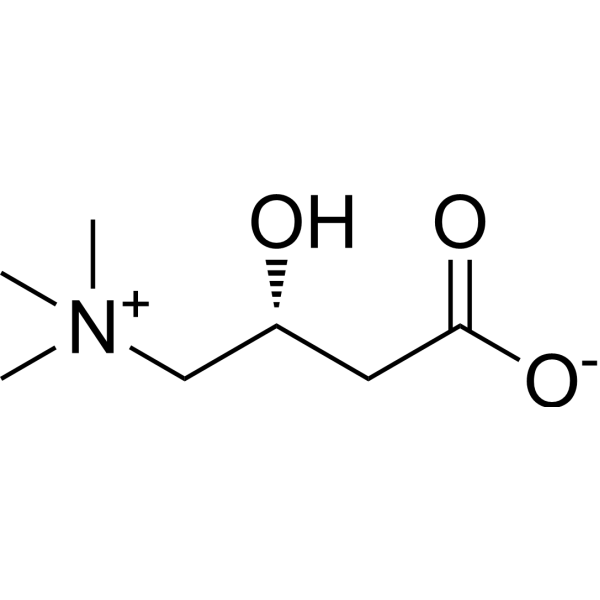
HY-B0399
L-CarnitineCo-factor for β-oxidation -
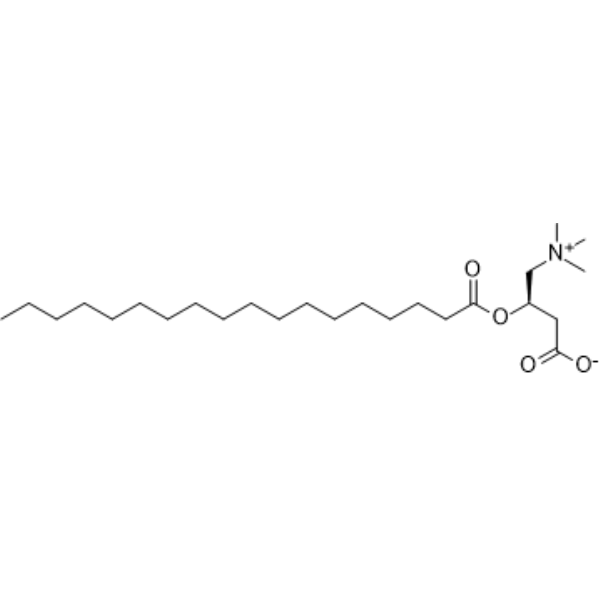
HY-113202
StearoylcarnitineEndogenous Metabolite -
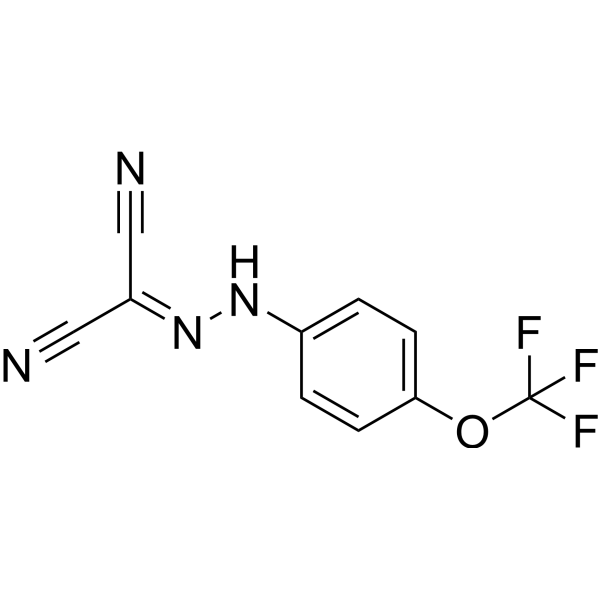
HY-100410
FCCPOXPHOS Uncoupler -
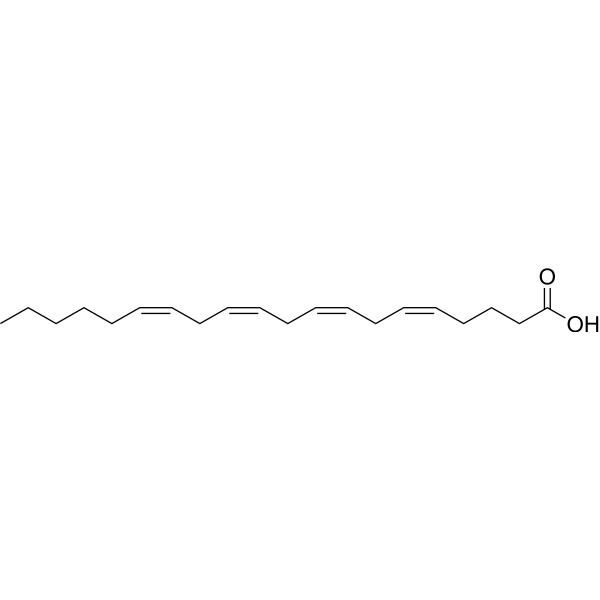
HY-109590
Arachidonic acidPolyunsaturated Fatty Acid -
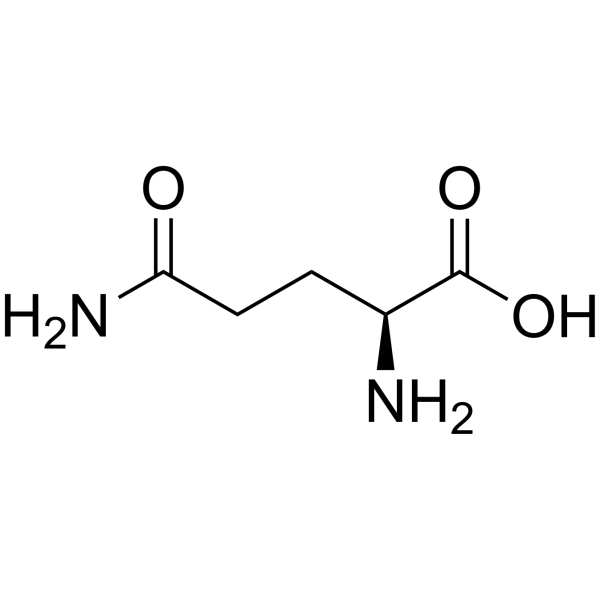
HY-N0390
L-GlutamineEndogenous Metabolite -
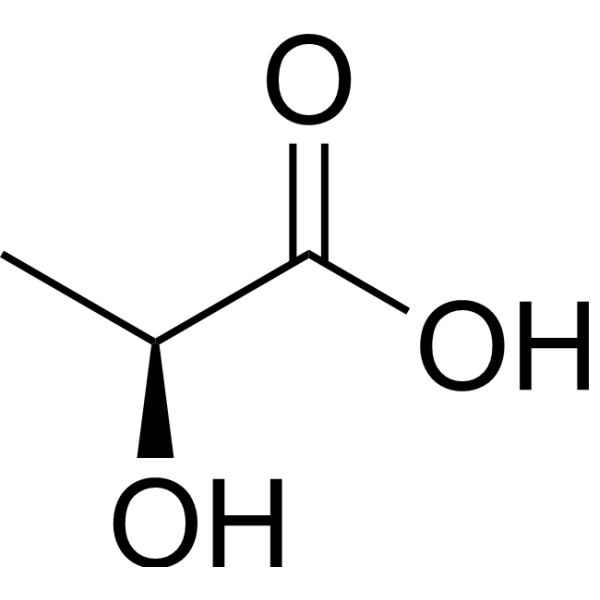
HY-Y0479
L-Lactic acidBuildiing Block -
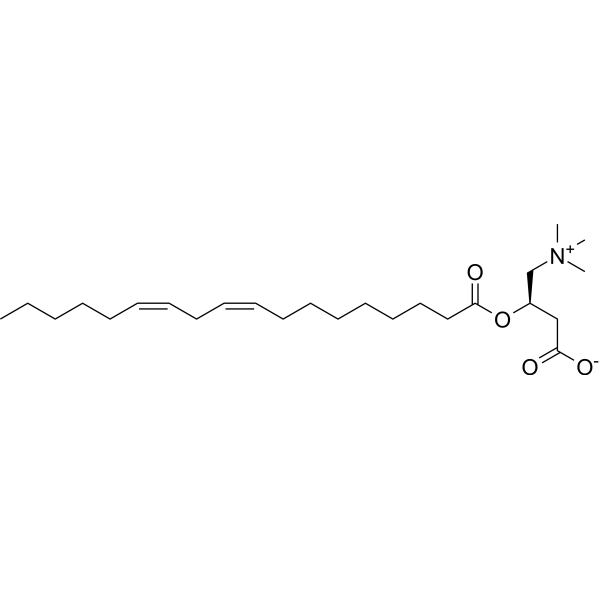
HY-113256
Linoleyl carnitineAcylcarnitine
Publications Citing Use of MedChemExpress (MCE) L-Palmitoylcarnitine
MoreAll Endogenous Metabolite Isoforms
More

Biological Activity
Description
IC50 & Target
[1]|
Kir6.2 |
Human Endogenous Metabolite |
In Vitro
L-Palmitoylcarnitine (1 µM) inhibits KATP channel activity, without affecting the single channel conductance, through interaction with Kir6.2. L-Palmitoylcarnitine simultaneously enhances the ATP sensitivity of the channel (IC50 fell from 62 to 30 µM)[1].
Modulation of the membrane lipid environment caused by L-Palmitoylcarnitine alters the KATP channel function mainly through the interaction with endogenous PI cascade, especially PIP2[1].
MedChemExpress (MCE) has not independently confirmed the accuracy of these methods. They are for reference only. .


Chemical Information
-
CAS No. 2364-67-2
-
Appearance Solid
-
Molecular Weight 399.61
-
Formula C23H45NO4
-
Color White to off-white
-
SMILES
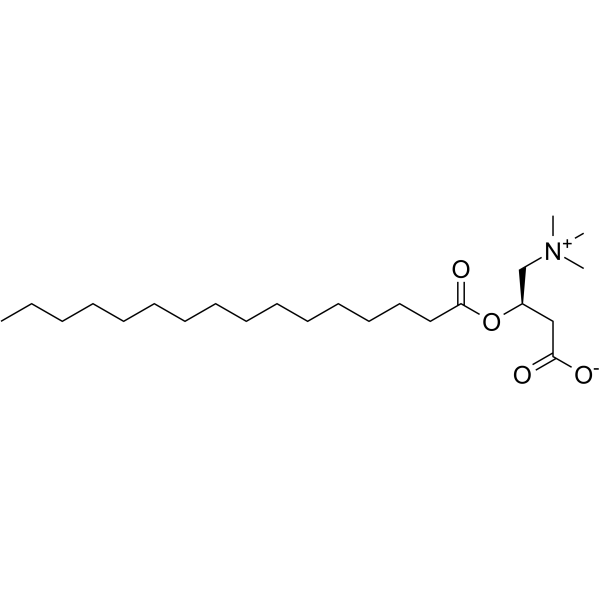
CCCCCCCCCCCCCCCC(O[C@H](CC([O-])=O)C[N+](C)(C)C)=O
-
Structure Classification
-
Initial Source
-
Shipping
Room temperature in continental US; may vary elsewhere.
-
Storage
Powder -20°C 3 years 4°C 2 years In solvent -80°C 6 months -20°C 1 month


Publications (2)
-
Journal Impact Factor
-
Most Recent
-
Cell Rep Med
Targeting long-chain acylcarnitine accumulation to protect cardiac mitochondrial homeostasis after complete revascularization. [Abstract]2025 Dec 16;6(12):102507. PMID: 41406945 -
Nat Prod Bioprospect
2023 Nov 8;13(1):48. PMID: 37938456


Solvent & Solubility
In Vitro:
Ethanol : 25 mg/mL (62.56 mM; Need ultrasonic)
Please refer to the solubility information to select the appropriate solvent. Once prepared, please aliquot and store the solution to prevent product inactivation from repeated freeze-thaw cycles.
Storage method and period of stock solution: -80°C, 6 months; -20°C, 1 month. When stored at -80°C, please use it within 6 months. When stored at -20°C, please use it within 1 month.
Please refer to the solubility information to select the appropriate solvent. Once prepared, please aliquot and store the solution to prevent product inactivation from repeated freeze-thaw cycles.
Storage method and period of stock solution: -80°C, 6 months; -20°C, 1 month. When stored at -80°C, please use it within 6 months. When stored at -20°C, please use it within 1 month.
Concentration (start) × Volume (start) = Concentration (final) × Volume (final)
In Vivo:
Select the appropriate dissolution method based on your experimental animal and administration route.
- For the following dissolution methods, please ensure to first prepare a clear stock solution using an In Vitro approach and then sequentially add co-solvents:
- To ensure reliable experimental results, the clarified stock solution can be appropriately stored based on storage conditions. As for the working solution for In Vivo experiments, it is recommended to prepare freshly and use it on the same day.
- The percentages shown for the solvents indicate their volumetric ratio in the final prepared solution. If precipitation or phase separation occurs during preparation, heat and/or sonication can be used to aid dissolution.
Add each solvent one by one: 10% EtOH 40% PEG300 5% Tween-80 45% Saline
Solubility: ≥ 2.5 mg/mL (6.26 mM); Clear solution
This protocol yields a clear solution of ≥ 2.5 mg/mL (saturation unknown).
Taking 1 mL working solution as an example, add 100 μL EtOH stock solution (25.0 mg/mL) to 400 μL PEG300, and mix evenly; then add 50 μL Tween-80 and mix evenly; then add 450 μL Saline to adjust the volume to 1 mL.
Preparation of Saline: Dissolve 0.9 g sodium chloride in ddH₂O and dilute to 100 mL to obtain a clear Saline solution.
Add each solvent one by one: 10% EtOH 90% (20% SBE-β-CD in Saline)
Solubility: ≥ 2.5 mg/mL (6.26 mM); Clear solution
This protocol yields a clear solution of ≥ 2.5 mg/mL (saturation unknown).
Taking 1 mL working solution as an example, add 100 μL EtOH stock solution (25.0 mg/mL) to 900 μL 20% SBE-β-CD in Saline, and mix evenly.
Preparation of 20% SBE-β-CD in Saline (4°C, storage for one week): 2 g SBE-β-CD powder is dissolved in 10 mL Saline, completely dissolve until clear.
In Vivo Dissolution Calculator
Please enter the basic information of animal experiments:
-
-
-
-
Recommended: Prepare an additional quantity of animals to account for potential losses during experiments.
Working solution concentration: 0.22 mg/mL


Purity & Documentation
-
Data Sheet (268 KB)
-
SDS (394 KB)
- English - EN (394 KB)
- Français - FR (394 KB)
- Deutsch - DE (394 KB)
- Norwegian - NO (394 KB)
- Español - ES (394 KB)
- Swedish - SV (394 KB)
- Italian - IT (394 KB)
- Korean - KR (394 KB)
- Portuguese - PT (394 KB)
-
Handling Instructions (2659 KB)
References


Complete Stock Solution Preparation Table
Please refer to the solubility information to select the appropriate solvent. Once prepared, please aliquot and store the solution to prevent product inactivation from repeated freeze-thaw cycles.
Storage method and period of stock solution: -80°C, 6 months; -20°C, 1 month. When stored at -80°C, please use it within 6 months. When stored at -20°C, please use it within 1 month.
| Optional Solvent | Concentration Solvent Mass | 1 mg | 5 mg | 10 mg | 25 mg |
|---|---|---|---|---|---|
| Ethanol | 1 mM | 2.5024 mL | 12.5122 mL | 25.0244 mL | 62.5610 mL |
| 5 mM | 0.5005 mL | 2.5024 mL | 5.0049 mL | 12.5122 mL | |
| 10 mM | 0.2502 mL | 1.2512 mL | 2.5024 mL | 6.2561 mL | |
| 15 mM | 0.1668 mL | 0.8341 mL | 1.6683 mL | 4.1707 mL | |
| 20 mM | 0.1251 mL | 0.6256 mL | 1.2512 mL | 3.1280 mL | |
| 25 mM | 0.1001 mL | 0.5005 mL | 1.0010 mL | 2.5024 mL | |
| 30 mM | 0.0834 mL | 0.4171 mL | 0.8341 mL | 2.0854 mL | |
| 40 mM | 0.0626 mL | 0.3128 mL | 0.6256 mL | 1.5640 mL | |
| 50 mM | 0.0500 mL | 0.2502 mL | 0.5005 mL | 1.2512 mL | |
| 60 mM | 0.0417 mL | 0.2085 mL | 0.4171 mL | 1.0427 mL |


L-Palmitoylcarnitine Related Classifications
HY-113147 Related Classifications
 Powered by Bioz