



Palmitoylcarnitine chloride
Based on 2 publication(s) in Google Scholar
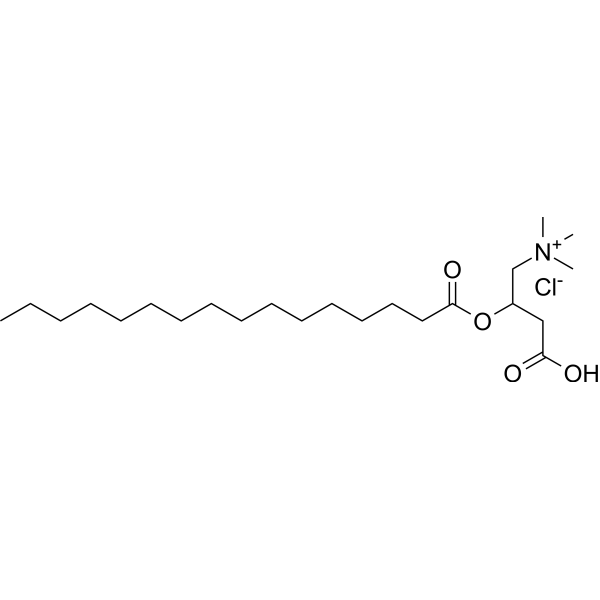
Palmitoylcarnitine chloride is a C16:0 long-chain acylcarnitine and an intermediate product of fatty acid oxidation. The level of Palmitoylcarnitine chloride in human prostate cancer tissues is higher than that in non-cancerous tissues. Palmitoylcarnitine chloride can be used in studies related to lipid metabolism associated with prostate cancer.
For research use only. We do not sell to patients.
- Purity : 98.0%
- CAS No.: 6865-14-1
- Formula: C23H46ClNO4
- Molecular Weight:436.07
-
Storage:
-20°C, sealed storage, away from moisture
* In solvent : -80°C, 6 months; -20°C, 1 month (sealed storage, away from moisture)

To place orders, for customer services and technical support, please contact: MedChemExpress USA
Tel: 609-228-6898 E-mail: [email protected] [email protected]


-
 Biological Activity
-
Chemical Information
-
Solvent & Solubility
- Purity & Documentation
- References
-
 Help & FAQs


-
HY-130466
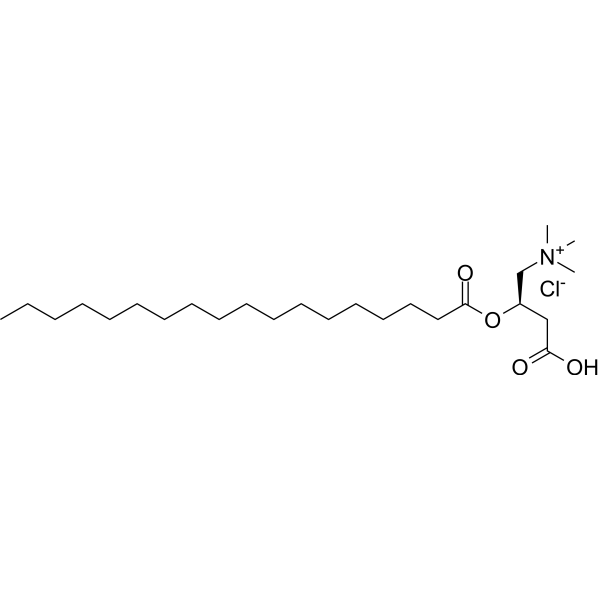
Stearoyl-L-carnitine chloride -
HY-B0399
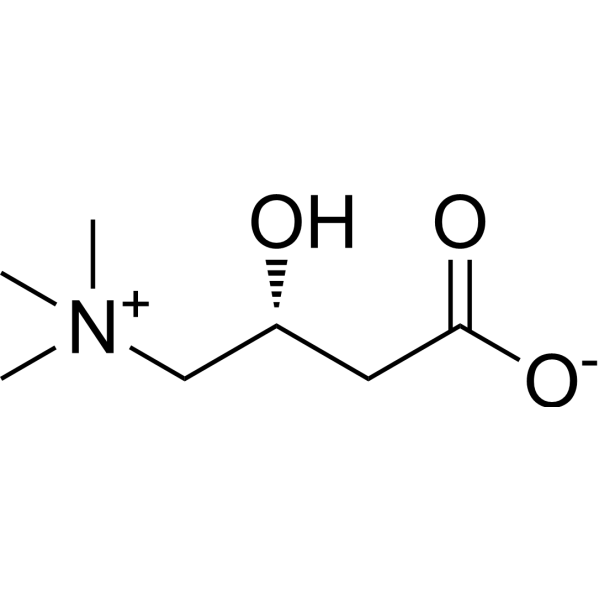
L-Carnitine -
HY-113261
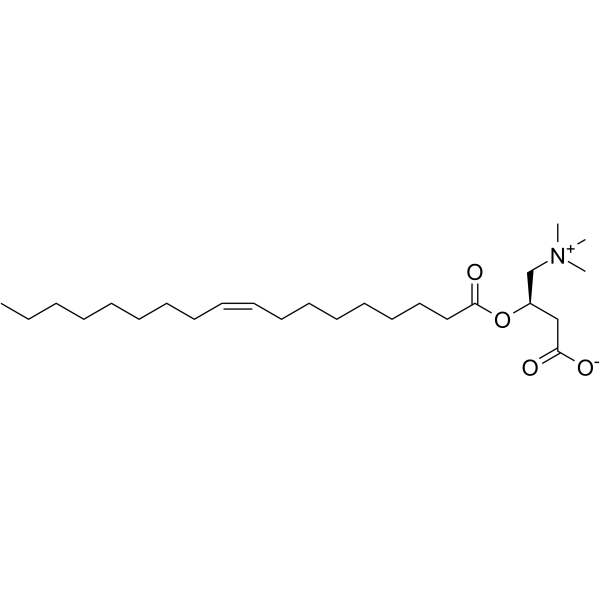
Oleoylcarnitine -
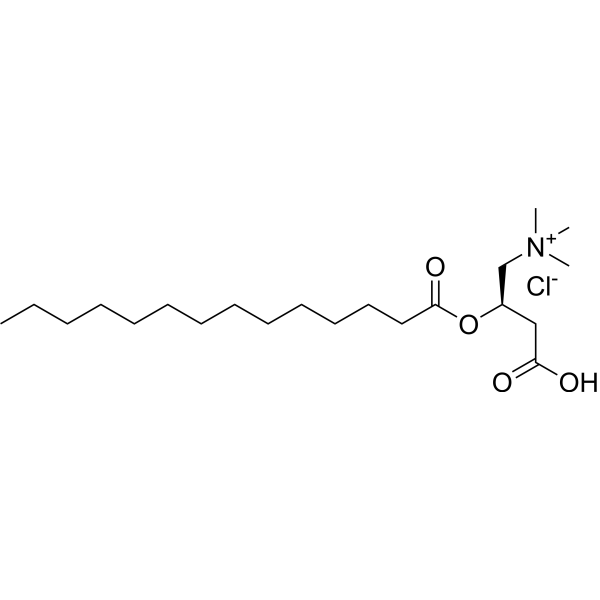
HY-135170
Myristoyl-L-carnitine chloride -
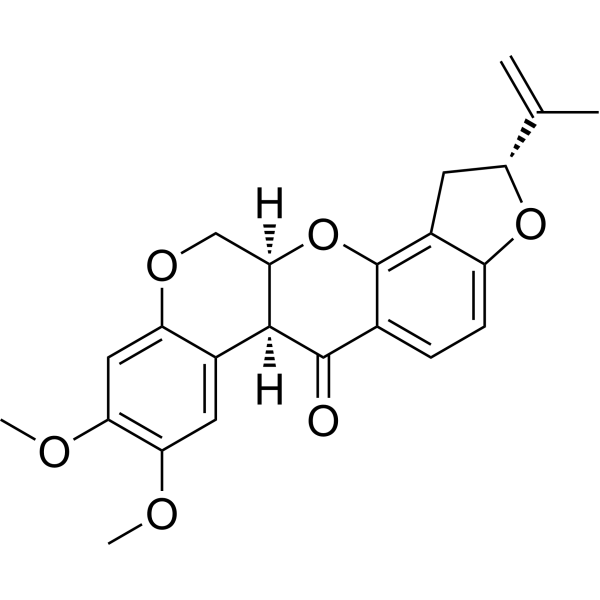
HY-B1756
Rotenone -

HY-N6782
Oligomycin -
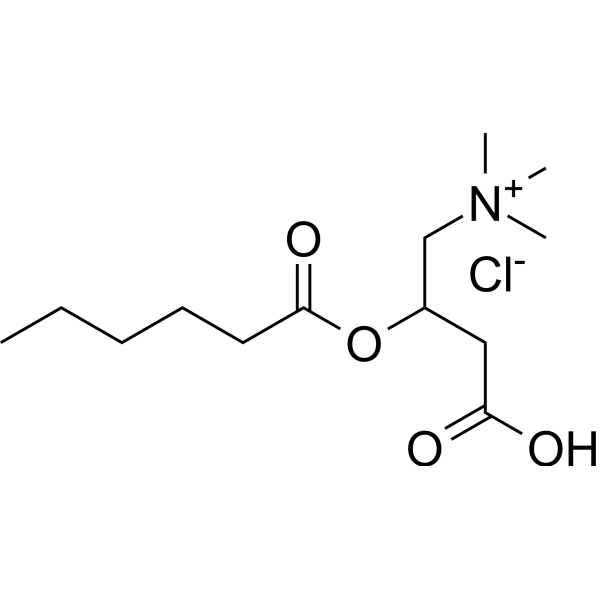
HY-100978
(±)-Hexanoylcarnitine chloride -
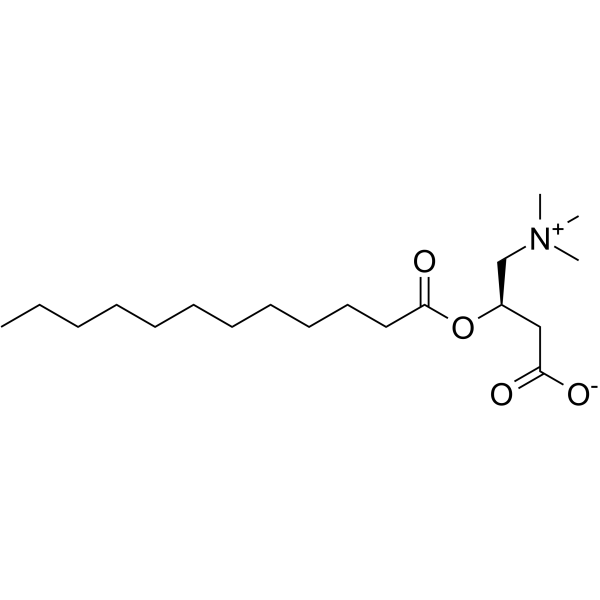
HY-113166
Dodecanoylcarnitine -
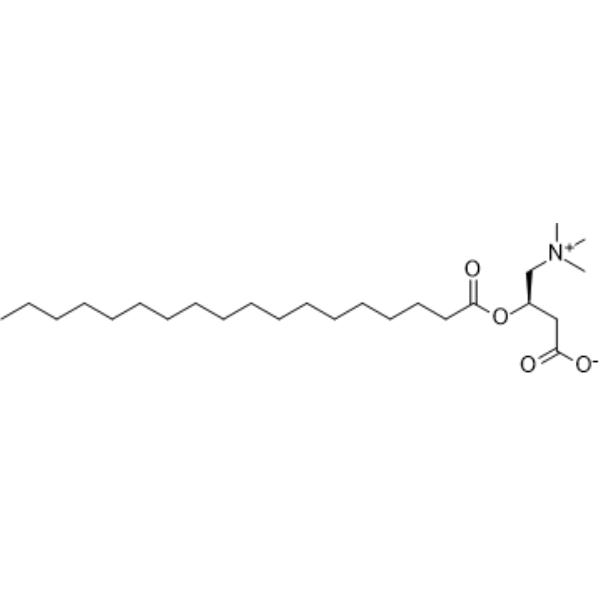
HY-113202
Stearoylcarnitine -
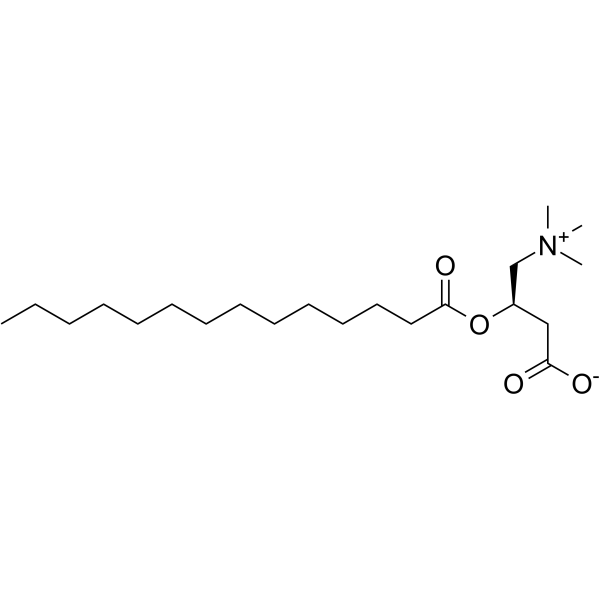
HY-113201
Tetradecanoylcarnitine -

HY-101017R
Palmitoylcarnitine chloride (Standard) -
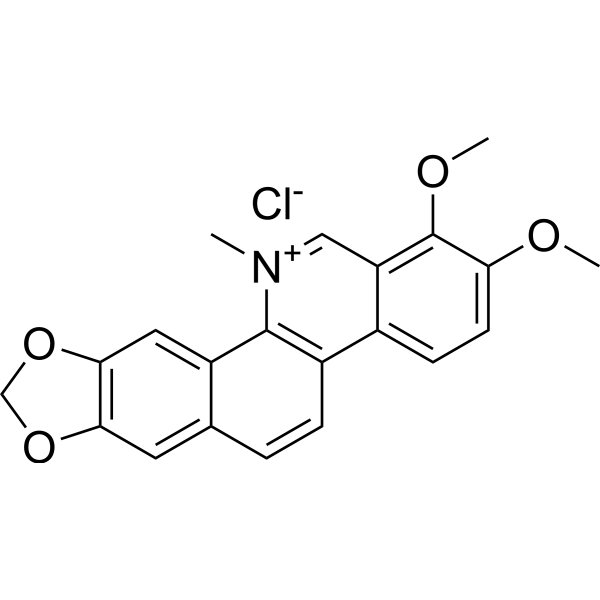
HY-12048
Chelerythrine chloride
Publications Citing Use of MedChemExpress (MCE) Palmitoylcarnitine chloride
MoreAll Endogenous Metabolite Isoforms
More

Biological Activity
Description
In Vitro
Palmitoylcarnitine chloride accumulates at significantly higher levels in human prostate cancer tissues than in non-cancerous prostate tissues[1].
Palmitoylcarnitine (0-100 μM; 24 h) chloride exerts no effect on the viability of normal human PNT1A prostate epithelial cells even at concentrations up to 100 μM, but reduces the viability of human PC3 prostate adenocarcinoma cells at concentrations ≥50 μM[1].
Palmitoylcarnitine (0-100 μM; 24 h) chloride promotes IL-6 secretion in human PC3 prostate adenocarcinoma cells at a concentration of 50 μM, but exerts no effect on IL-6 secretion in human PNT1A normal prostate epithelial cells or human LnCaP prostate adenocarcinoma cells even at concentrations up to 100 μM[1].
Palmitoylcarnitine (50-100 μM; 24 h) chloride upregulates IL-6 gene expression in human PNT1A normal prostate epithelial cells and human PC3 prostate adenocarcinoma cells, with a stronger response observed in PC3 cells[1].
Palmitoylcarnitine (5-50 μM; 5 min post-treatment) chloride induces rapid, dose-dependent Ca2+ influx in human PC3 prostate adenocarcinoma cells, but exerts no effect on Ca2+ influx in human PNT1A normal prostate epithelial cells, human BPH-1 benign prostatic hyperplasia cells, or human DU145 prostate adenocarcinoma cells[1].
Palmitoylcarnitine (50 nM-5 μM; 8 h) chloride induces a DHT-like gene expression response in human PNT1A normal prostate epithelial cells, with the highest degree of overlap (169 shared genes total) observed at the 5 μM concentration, involving pathways such as glycolysis, cytokine signaling, and apoptosis regulation[1].
MedChemExpress (MCE) has not independently confirmed the accuracy of these methods. They are for reference only.
-
Cell Line:human normal prostate epithelial PNT1A cells, human prostate adenocarcinoma PC3 cells
-
Concentration:0-100 μM
-
Incubation Time:24 h
-
Result:Showed no toxic effect on PNT1A cells at any tested concentration.
Induced a significant decrease in cell viability in PC3 cells at concentrations greater than 50 μM.
-
Cell Line:human normal prostate epithelial PNT1A cells, human prostate adenocarcinoma PC3 cells, human prostate adenocarcinoma LnCaP cells
-
Concentration:0-100 μM
-
Incubation Time:24 h
-
Result:Induced a significant increase in IL-6 secretion in PC3 cells only at 50 μM.
Showed no increase in IL-6 secretion in PNT1A cells at any tested concentration.
Had no effect on IL-6 secretion in LnCaP cells at any tested concentration, where basal IL-6 levels were undetectable.
-
Cell Line:human normal prostate epithelial PNT1A cells, human prostate adenocarcinoma PC3 cells
-
Concentration:0-100 μM
-
Incubation Time:24 h
-
Result:Induced a significant increase in IL-6 gene expression in both PNT1A and PC3 cells at 50-100 μM.
Caused an approximately sixfold increase in IL-6 gene expression in PC3 cells, showing a more pronounced effect than in PNT1A cells.


Chemical Information
-
CAS No. 6865-14-1
-
Appearance Solid
-
Molecular Weight 436.07
-
Formula C23H46ClNO4
-
Color White to off-white
-
SMILES
CCCCCCCCCCCCCCCC(OC(CC(O)=O)C[N+](C)(C)C)=O.[Cl-]
-
Structure Classification
-
Initial Source
-
Shipping
Room temperature in continental US; may vary elsewhere.
-
Storage
-20°C, sealed storage, away from moisture
* In solvent : -80°C, 6 months; -20°C, 1 month (sealed storage, away from moisture)


Publications (2)
-
Journal Impact Factor
-
Most Recent
-
Nature
2025 Jul;643(8070):192-200. PMID: 39695227 -
NPJ Biofilms Microbiomes
Gut bacteria facilitate leaf beetles in adapting to dietary specialization by enhancing larval fitness. [Abstract]2024 Oct 22;10(1):110. PMID: 39438487


Solvent & Solubility
In Vitro:
H2O : 50 mg/mL (114.66 mM; Need ultrasonic)
DMSO : 8.33 mg/mL (19.10 mM; ultrasonic and warming and heat to 60°C; Hygroscopic DMSO has a significant impact on the solubility of product, please use newly opened DMSO)
Please refer to the solubility information to select the appropriate solvent. Once prepared, please aliquot and store the solution to prevent product inactivation from repeated freeze-thaw cycles.
Storage method and period of stock solution: -80°C, 6 months; -20°C, 1 month (sealed storage, away from moisture). When stored at -80°C, please use it within 6 months. When stored at -20°C, please use it within 1 month.
* Note: If you choose water as the stock solution, please dilute it to the working solution, then filter and sterilize it with a 0.22 μm filter before use.
Please refer to the solubility information to select the appropriate solvent. Once prepared, please aliquot and store the solution to prevent product inactivation from repeated freeze-thaw cycles.
Storage method and period of stock solution: -80°C, 6 months; -20°C, 1 month (sealed storage, away from moisture). When stored at -80°C, please use it within 6 months. When stored at -20°C, please use it within 1 month.
* Note: If you choose water as the stock solution, please dilute it to the working solution, then filter and sterilize it with a 0.22 μm filter before use.
Concentration (start) × Volume (start) = Concentration (final) × Volume (final)


Purity & Documentation
-
Data Sheet (276 KB)
-
SDS (393 KB)
- English - EN (393 KB)
- Français - FR (393 KB)
- Deutsch - DE (393 KB)
- Norwegian - NO (393 KB)
- Español - ES (393 KB)
- Swedish - SV (393 KB)
- Italian - IT (393 KB)
- Korean - KR (393 KB)
- Portuguese - PT (393 KB)
-
Handling Instructions (2659 KB)
References


Complete Stock Solution Preparation Table
Please refer to the solubility information to select the appropriate solvent. Once prepared, please aliquot and store the solution to prevent product inactivation from repeated freeze-thaw cycles.
Storage method and period of stock solution: -80°C, 6 months; -20°C, 1 month (sealed storage, away from moisture). When stored at -80°C, please use it within 6 months. When stored at -20°C, please use it within 1 month.
| Optional Solvent | Concentration Solvent Mass | 1 mg | 5 mg | 10 mg | 25 mg |
|---|---|---|---|---|---|
| DMSO / H2O | 1 mM | 2.2932 mL | 11.4660 mL | 22.9321 mL | 57.3302 mL |
| 5 mM | 0.4586 mL | 2.2932 mL | 4.5864 mL | 11.4660 mL | |
| 10 mM | 0.2293 mL | 1.1466 mL | 2.2932 mL | 5.7330 mL | |
| 15 mM | 0.1529 mL | 0.7644 mL | 1.5288 mL | 3.8220 mL | |
| H2O | 20 mM | 0.1147 mL | 0.5733 mL | 1.1466 mL | 2.8665 mL |
| 25 mM | 0.0917 mL | 0.4586 mL | 0.9173 mL | 2.2932 mL | |
| 30 mM | 0.0764 mL | 0.3822 mL | 0.7644 mL | 1.9110 mL | |
| 40 mM | 0.0573 mL | 0.2867 mL | 0.5733 mL | 1.4333 mL | |
| 50 mM | 0.0459 mL | 0.2293 mL | 0.4586 mL | 1.1466 mL | |
| 60 mM | 0.0382 mL | 0.1911 mL | 0.3822 mL | 0.9555 mL | |
| 80 mM | 0.0287 mL | 0.1433 mL | 0.2867 mL | 0.7166 mL | |
| 100 mM | 0.0229 mL | 0.1147 mL | 0.2293 mL | 0.5733 mL |
* Note: If you choose water as the stock solution, please dilute it to the working solution, then filter and sterilize it with a 0.22 μm filter before use.


Palmitoylcarnitine chloride Related Classifications
HY-101017 Related Classifications
 Powered by Bioz
Keywords
- Palmitoylcarnitine
- 6865-14-1
- Endogenous Metabolite
- calcium influx
- PNT1A normal prostate epithelial cells
- apoptosis regulation
- prostate cancer
- androgen-independent cancer cells
- LnCaP prostate adenocarcinoma cells
- IL-6
- cytokine-cytokine receptor interaction
- glycolysis/gluconeogenesis
- PC3 prostate adenocarcinoma cells
- Inhibitor
- inhibitor
- inhibit