Search Result
Results for "
PEG4
" in MedChemExpress (MCE) Product Catalog:
12
Biochemical Assay Reagents
1
Isotope-Labeled Compounds
| Cat. No. |
Product Name |
Target |
Research Areas |
Chemical Structure |
-
- HY-126685
-
-
-
- HY-148057
-
|
|
Drug-Linker Conjugates for ADC
|
Cancer
|
|
TCO-PEG4-VC-PAB-MMAE is a agent-linker conjugate for ADC. TCO-PEG4-VC-PAB-MMAE contains a cleavable ADC linker (TCO-PEG4-VC-PA) and a potent tubulin inhibitor MMAE (HY-15162) . TCO-PEG4-VC-PAB-MMAE is a click chemistry reagent, it contains a TCO group that can undergo an inverse electron demand Diels-Alder reaction (iEDDA) with molecules containing Tetrazine groups.
|
-
-
- HY-130435
-
|
|
ADC Linker
PROTAC Linkers
|
Cancer
|
|
DBCO-PEG4-amine is a PEG-based PROTAC linker can be used in the synthesis of PROTACs. DBCO-PEG4-amine is a cleavable ADC linker used in the synthesis of antibody-drug conjugates (ADCs). DBCO-PEG4-amine can be used in the synthesis of FPM-PEG4-DBCO (a homobifunctional azide-to-azide cross-linker) . DBCO-PEG4-amine is a click chemistry reagent, it contains a DBCO group that can undergo strain-promoted alkyne-azide cycloaddition (SPAAC) with molecules containing Azide groups.
|
-
-
- HY-158768
-
|
|
Drug-Linker Conjugates for ADC
|
Cancer
|
|
Amino-PEG4-GGFG-Dxd (Compound 13-7) is a drug-linker conjugate for ADC. Amino-PEG4-GGFG-Dxd is composed of Dxd (HY-13631D) and a linker. Amino-PEG4-GGFG-Dxd can be used for synthesis of ADCs
|
-
-
- HY-128968
-
-
-
- HY-133492
-
|
|
Drug-Linker Conjugates for ADC
|
Cancer
|
|
DBCO-PEG4-MMAF is a agent-linker conjugate for ADC with potent antitumor activity by using the tubulin polymerization inhibitor, MMAF, linked via the linker DBCO-PEG4. DBCO-PEG4-MMAF is a click chemistry reagent, it contains a DBCO group that can undergo strain-promoted alkyne-azide cycloaddition (SPAAC) with molecules containing Azide groups.
|
-
-
- HY-171580
-
|
|
Drug-Linker Conjugates for ADC
Topoisomerase
|
Cancer
|
|
Mc-PEG4-Val-Ala-PAB-Exatecan is a Drug-linker conjugate for ADC. Mc-PEG4-Val-Ala-PAB-Exatecan contains the ADC linker (Mc-PEG4-Val-Ala-PAB) and a DNA topoisomerase I inhibitor Exatecan (HY-13631) .
|
-
-
- HY-133433
-
|
|
Drug-Linker Conjugates for ADC
|
Cancer
|
|
DBCO-PEG4-VA-PBD is a agent-linker conjugate for ADC by using the antitumor antibiotic, Pyrrolobenzodiazepine (PBD), linked via DBCO-PEG4-VA . DBCO-PEG4-VA-PBD is a click chemistry reagent, it contains a DBCO group that can undergo strain-promoted alkyne-azide cycloaddition (SPAAC) with molecules containing Azide groups.
|
-
-
- HY-159529
-
|
DBCO-PEG4-Eosin Y
|
Fluorescent Dye
|
Others
|
DBCO-PEG4-Eosin 5-isothiocyanate (DBCO-PEG4-Eosin Y) is a fluorescent probe. DBCO-PEG4-Eosin 5-isothiocyanate contains a clickable functional group, DBCO, and four PEG units. DBCO-PEG4-Eosin 5-isothiocyanate can be used for various imaging detections.
|
-
-
- HY-133699
-
|
|
E3 Ligase Ligand-Linker Conjugates
|
Cancer
|
|
Pomalidomide-PEG4-COOH is a E3 ligase ligand-linker conjugate. Pomalidomide-PEG4-COOH contains the Pomalidomide based cereblon ligand and 4-unit PEG linker used in PROTAC technology .
|
-
-
- HY-176765
-
|
|
Drug-Linker Conjugates for ADC
Microtubule/Tubulin
|
Cancer
|
|
DBCO-PEG4-VA-PABC-MMAE is a drug-linker conjugate for ADC. DBCO-PEG4-VA-PABC-MMAE consists of a tubulin inhibitor (MMAE) (HY-15162) and a cleavable linker (DBCO-PEG4-VA-PABC). DBCO-PEG4-VA-PABC-MMAE can be used for synthesis of ADC ABBV-400 (HY-171945) .
|
-
-
- HY-119429
-
-
-
- HY-W040214
-
|
|
ADC Linker
PROTAC Linkers
|
Cancer
|
|
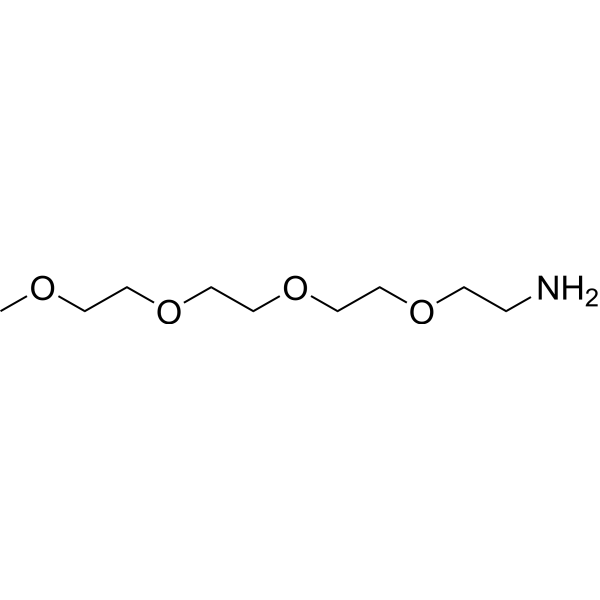
m-PEG4-Amine is a PEG-based PROTAC linker can be used in the synthesis of PROTACs. m-PEG4-Amine is a cleavable ADC linker used in the synthesis of antibody-drug conjugates (ADCs) .
|
-
-
- HY-130346
-
|
|
ADC Linker
PROTAC Linkers
|
Cancer
|
|
DBCO-PEG4-DBCO is a PEG-based PROTAC linker can be used in the synthesis of PROTACs. DBCO-PEG4-DBCO is a cleavable ADC linker used in the synthesis of antibody-drug conjugates (ADCs) . DBCO-PEG4-DBCO is a click chemistry reagent, it contains a DBCO group that can undergo strain-promoted alkyne-azide cycloaddition (SPAAC) with molecules containing Azide groups.
|
-
-
- HY-W099536
-
|
Tetraoxyethylene glycol monododecyl ether
|
Biochemical Assay Reagents
|
Others
|
|
PEG-4 lauryl ether is a non-ionic detergent that can be used as an excipient or for the isolation of functional membrane complexes .
|
-
-
- HY-W755033
-
-
-
- HY-141382
-
|
|
PROTAC Linkers
ADC Linker
|
Cancer
|
|
Bromoacetamido-PEG4-acid is a PEG-based PROTAC linker that can be used in the synthesis of PROTACs . Bromoacetamido-PEG4-acid is also a cleavable 4 unit PEG ADC linker used in the synthesis of antibody-drug conjugates (ADCs) .
|
-
-
- HY-130591
-
|
|
ADC Linker
PROTAC Linkers
|
Cancer
|
|
Propargyl-PEG4-Br is a PEG-based PROTAC linker can be used in the synthesis of PROTACs. Propargyl-PEG4-Br is a non-cleavable ADC linker used in the synthesis of antibody-drug conjugates (ADCs) . Propargyl-PEG4-Br is a click chemistry reagent, it contains an Alkyne group and can undergo copper-catalyzed azide-alkyne cycloaddition (CuAAc) with molecules containing Azide groups.
|
-
-
- HY-130973
-
|
|
ADC Linker
|
Cancer
|
|
Mal-PEG4-bis-PEG4-propargyl is a cleavable 8 unit PEG ADC linker used in the synthesis of antibody-drug conjugates (ADCs) . Mal-PEG4-bis-PEG4-propargyl is a click chemistry reagent, it contains an Alkyne group and can undergo copper-catalyzed azide-alkyne cycloaddition (CuAAc) with molecules containing Azide groups.
|
-
-
- HY-117104
-
|
|
ADC Linker
PROTAC Linkers
|
Cancer
|
|
Hydroxy-PEG4-acid is a non-cleavable 4 unit PEG ADC linker used in the synthesis of antibody-drug conjugates (ADCs). Hydroxy-PEG4-acid is also a PEG-based PROTAC linker that can be used in the synthesis of PROTACs .
|
-
-
- HY-140866
-
|
|
PROTAC Linkers
|
Cancer
|
|
N-(Azido-PEG4)-N-bis(PEG4-NHS ester) is a PEG-based PROTAC linker that can be used in the synthesis of PROTACs . N-(Azido-PEG4)-N-bis(PEG4-NHS ester) is a click chemistry reagent, it contains an Azide group and can undergo copper-catalyzed azide-alkyne cycloaddition reaction (CuAAc) with molecules containing Alkyne groups. It can also undergo strain-promoted alkyne-azide cycloaddition (SPAAC) reactions with molecules containing DBCO or BCN groups.
|
-
-
- HY-145090
-
|
|
PROTAC Linkers
ADC Linker
|
Others
|
|
DBCO-N-bis(PEG4-NHS ester) is a PEG linker which contains two PEG4-NHS ester and a DBCO group. DBCO-N-bis(PEG4-NHS ester) is useful for protein modification or labeling. DBCO-N-bis(PEG4-NHS ester) is a click chemistry reagent, it contains a DBCO group that can undergo strain-promoted alkyne-azide cycloaddition (SPAAC) with molecules containing Azide groups.
|
-
-
- HY-120397
-
|
|
PROTAC Linkers
|
Infection
Cancer
|
|
Bis-propargyl-PEG4 is a PEG-based PROTAC linker used in the synthesis of PROTACs. Bis-propargyl-PEG4 is used for the synthesis of demethylvancomycin dimers . Bis-propargyl-PEG4 is a click chemistry reagent, it contains an Alkyne group and can undergo copper-catalyzed azide-alkyne cycloaddition (CuAAc) with molecules containing Azide groups.
|
-
-
- HY-151741
-
|
|
ADC Linker
|
Others
|
|
Biotin-PEG4-MeTz is a click chemistry reagent containing a terminal methyltetrazine group that reacts with trans-cyclooctene. Biotin-PEG4-MeTz can be used for the preparation of biotinylated conjugates .
|
-
-
- HY-116427
-
|
|
ADC Linker
PROTAC Linkers
|
Cancer
|
|
Propargyl-PEG4-thiol is a PEG-based PROTAC linker can be used in the synthesis of PROTACs. Propargyl-PEG4-thiol is a non-cleavable ADC linker used in the synthesis of antibody-drug conjugates (ADCs) . Propargyl-PEG4-thiol is a click chemistry reagent, it contains an Alkyne group and can undergo copper-catalyzed azide-alkyne cycloaddition (CuAAc) with molecules containing Azide groups.
|
-
-
- HY-140297
-
|
|
PROTAC Linkers
|
Cancer
|
|
Carboxyrhodamine 110-PEG4-DBCO is a PEG-based PROTAC linker that can be used in the synthesis of PROTACs . Carboxyrhodamine 110-PEG4-DBCO is a click chemistry reagent, it contains a DBCO group that can undergo strain-promoted alkyne-azide cycloaddition (SPAAC) with molecules containing Azide groups.
|
-
-
- HY-W190956
-
|
|
Others
|
Cancer
|
|
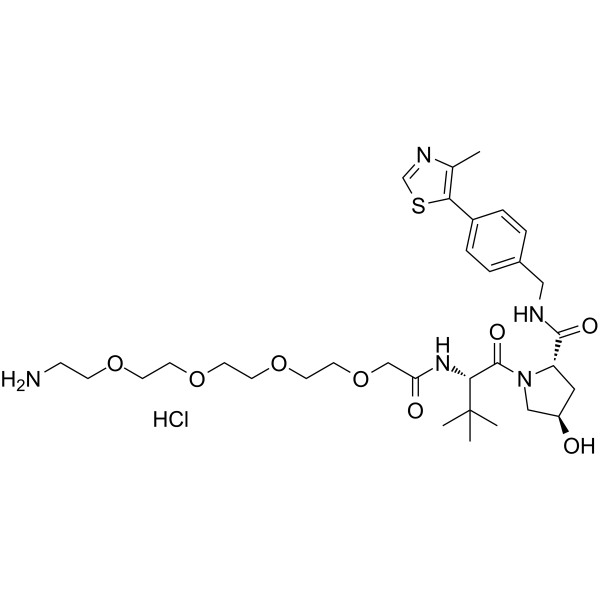
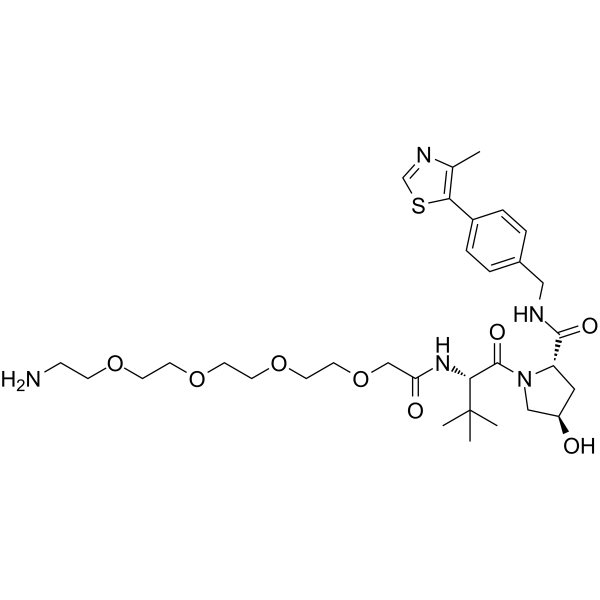
(S,R,S)-AHPC-PEG4-acid is a synthetic PROTAC ligand that binds the E3 ligase ligand to the PEG4 arm, thereby enhancing PROTAC drug research and discovery .
|
-
-
- HY-135970
-
|
|
ADC Linker
|
Cancer
|
|
Alkyne-PEG4-SS-PEG4-alkyne is a cleavable 8 unit PEG ADC linker used in the synthesis of antibody-drug conjugates (ADCs) . Alkyne-PEG4-SS-PEG4-alkyne is a click chemistry reagent, it contains an Alkyne group and can undergo copper-catalyzed azide-alkyne cycloaddition (CuAAc) with molecules containing Azide groups.
|
-
-
- HY-140114
-
|
|
PROTAC Linkers
|
Cancer
|
|
Acid-PEG4-S-S-PEG4-acid is a PEG-based PROTAC linker that can be used in the synthesis of PROTACs .
|
-
-
- HY-177685
-
|
|
Drug-Linker Conjugates for ADC
Topoisomerase
Microtubule/Tubulin
|
Cancer
|
|
N-(TCO-PEG4)-N-(PEG4-Val-Cit-PAB-MMAE)-N-(PEG4-Val-Cit-PAB-Exatecan) is a drug-linker conjugate for ADC (Drug-Linker Conjugate for ADC), consisting of a tubulin polymerization inhibitor MMAE (HY-15162) and a DNA topoisomerase I inhibitor Exatecan (HY-13631), and an ADC linker composition. N-(TCO-PEG4)-N-(PEG4-Val-Cit-PAB-MMAE)-N-(PEG4-Val-Cit-PAB-Exatecan) can be used for synthesis of ADCs and for cancer research.
|
-
-
- HY-177684
-
|
|
Drug-Linker Conjugates for ADC
Topoisomerase
Microtubule/Tubulin
|
Cancer
|
|
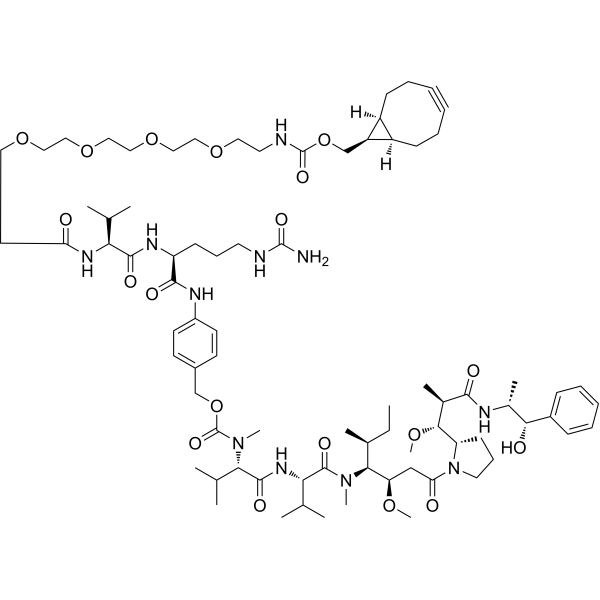
N-(endo-BCN-PEG4)-N-(PEG4-Val-Cit-PAB-MMAE)-N-(PEG4-Val-Cit-PAB-Exatecan) is a drug-linker conjugate for ADC (Drug-Linker Conjugate for ADC), consisting of a tubulin polymerization inhibitor MMAE (HY-15162) and a DNA topoisomerase I inhibitor Exatecan (HY-13631), and an ADC linker composition. N-(endo-BCN-PEG4)-N-(PEG4-Val-Cit-PAB-MMAE)-N-(PEG4-Val-Cit-PAB-Exatecan) can be used for synthesis of ADCs and for cancer research.
|
-
-
- HY-140532
-
|
|
PROTAC Linkers
|
Cancer
|
|
N-(Amino-PEG4)-N-Biotin-PEG4-acid is a biotin-labeled, PEG-based PROTAC linker that can be used in the synthesis of PROTACs .
|
-
-
- HY-141071
-
|
|
PROTAC Linkers
|
Cancer
|
|
N-(m-PEG4)-N'-(DBCO-PEG4)-Cy5 is a PEG-based PROTAC linker that can be used in the synthesis of PROTACs . N-(m-PEG4)-N'-(DBCO-PEG4)-Cy5 is a click chemistry reagent, it contains a DBCO group that can undergo strain-promoted alkyne-azide cycloaddition (SPAAC) with molecules containing Azide groups.
|
-
-
- HY-126669
-
|
|
ADC Linker
|
Cancer
|
|
Mal-PEG4-VA is a cleavable ADC linker containing a Maleimide group. Mal-PEG4-VA is used for making antibody-drug conjugate.
|
-
-
- HY-W800668
-
|
|
PROTAC Linkers
|
Cancer
|
|
(S, R, S)-AHPC-PEG4-NHS ester is a PROTAC linker that incorporatess an E3 ligase ligand with a PEG4 spacer to empower PROTAC medicine chemistry. It is is reactive with amine molecule. PEG4 arm increases the molecule's solubility.
|
-
-
- HY-126496
-
|
|
ADC Linker
|
Cancer
|
|
PEG4-SPDP is a cleavable ADC linker used for the antibody-drug conjugates (ADCs).
|
-
-
- HY-140388
-
|
|
PROTAC Linkers
|
Cancer
|
|
PEG4-MS is a PEG-based PROTAC linker that can be used in the synthesis of PROTACs .
|
-
-
- HY-133009
-
|
|
PROTAC Linkers
|
Cancer
|
|
BCN-PEG4-acid is a PEG-based PROTAC linker can be used in the synthesis of PROTACs. BCN-PEG4-acid contains a BCN group that can undergo strain-promoted alkyne-azide cycloaddition (SPAAC) with molecules containing Azide groups.
|
-
-
- HY-140310
-
|
|
ADC Linker
PROTAC Linkers
|
Cancer
|
|
TCO-PEG4-DBCO is a PEG-based PROTAC linker can be used in the synthesis of PROTACs. TCO-PEG4-DBCO is a cleavable ADC linker used in the synthesis of antibody-drug conjugates (ADCs) . TCO-PEG4-DBCO is a click chemistry reagent, it contains a DBCO group that can undergo strain-promoted alkyne-azide cycloaddition (SPAAC) with molecules containing Azide groups. TCO-PEG4-DBCO also contains a TCO group that can undergo an inverse electron demand Diels-Alder reaction (iEDDA) with molecules containing Tetrazine groups.
|
-
-
- HY-130387
-
|
|
PROTAC Linkers
ADC Linker
|
Cancer
|
|
Propargyl-PEG4-Tos is a PEG-based PROTAC linker can be used in the synthesis of PROTACs. Propargyl-PEG4-Tos is a cleavable ADC linker used in the synthesis of antibody-drug conjugates (ADCs) . Propargyl-PEG4-Tos is a click chemistry reagent, it contains an Alkyne group and can undergo copper-catalyzed azide-alkyne cycloaddition (CuAAc) with molecules containing Azide groups.
|
-
-
- HY-140599
-
|
|
PROTAC Linkers
|
Cancer
|
|
Propargyl-PEG4-S-PEG4-Boc is a PEG-based PROTAC linker that can be used in the synthesis of PROTACs . Propargyl-PEG4-S-PEG4-Boc is a click chemistry reagent, it contains an Alkyne group and can undergo copper-catalyzed azide-alkyne cycloaddition (CuAAc) with molecules containing Azide groups.
|
-
-
- HY-140131
-
|
|
PROTAC Linkers
|
Cancer
|
|
Biotin-PEG4-PC-PEG4-alkyne is a PEG-based PROTAC linker that can be used in the synthesis of PROTACs . Biotin-PEG4-PC-PEG4-alkyne is a click chemistry reagent, it contains an Alkyne group and can undergo copper-catalyzed azide-alkyne cycloaddition (CuAAc) with molecules containing Azide groups.
|
-
-
- HY-141124
-
|
|
PROTAC Linkers
|
Cancer
|
|
NHS-PEG4-(m-PEG4)3-ester is a PEG-based PROTAC linker that can be used in the synthesis of PROTACs .
|
-
-
- HY-130312
-
|
|
PROTAC Linkers
|
Cancer
|
|
N-(Azido-PEG4)-N-Boc-PEG4-NHS ester is a PEG-based PROTAC linker with a terminal azide group. N-(Azido-PEG4)-N-Boc-PEG4-NHS ester is used in the synthesis of PROTACs N-(Azido-PEG4)-N-Boc-PEG4-NHS ester is a click chemistry reagent, it contains an Azide group and can undergo copper-catalyzed azide-alkyne cycloaddition reaction (CuAAc) with molecules containing Alkyne groups. It can also undergo strain-promoted alkyne-azide cycloaddition (SPAAC) reactions with molecules containing DBCO or BCN groups.
|
-
-
- HY-140582
-
|
|
PROTAC Linkers
|
Cancer
|
|
N-(DBCO-PEG4)-N-Biotin-PEG4-NHS is a PEG-based PROTAC linker that can be used in the synthesis of PROTACs . N-(DBCO-PEG4)-N-Biotin-PEG4-NHS is a click chemistry reagent, it contains a DBCO group that can undergo strain-promoted alkyne-azide cycloaddition (SPAAC) with molecules containing Azide groups.
|
-
-
- HY-177683
-
|
|
Drug-Linker Conjugates for ADC
Topoisomerase
Microtubule/Tubulin
|
Cancer
|
|
N-(DBCO-PEG4)-N-(PEG4-Val-Cit-PAB-MMAE)-N-(PEG4-Val-Cit-PAB-Exatecan) is a drug-linker conjugate for ADC (Drug-Linker Conjugate for ADC), consisting of a tubulin polymerization inhibitor MMAE (HY-15162) and a DNA topoisomerase I inhibitor Exatecan (HY-13631), and an ADC linker composition. N-(DBCO-PEG4)-N-(PEG4-Val-Cit-PAB-MMAE)-N-(PEG4-Val-Cit-PAB-Exatecan) can be used for synthesis of ADCs and for cancer research.
|
-
-
- HY-177686
-
|
|
Drug-Linker Conjugates for ADC
Topoisomerase
Microtubule/Tubulin
|
Cancer
|
|
N-(Azido-PEG4)-N-(PEG4-Val-Cit-PAB-MMAF)-N-(PEG4-Val-Cit-PAB-Exatecan) is a drug-linker conjugate for ADC (Drug-Linker Conjugate for ADC), consisting of a tubulin polymerization inhibitor MMAE (HY-15162) and a DNA topoisomerase I inhibitor Exatecan (HY-13631), and an ADC linker composition. N-(Azido-PEG4)-N-(PEG4-Val-Cit-PAB-MMAF)-N-(PEG4-Val-Cit-PAB-Exatecan) can be used for synthesis of ADCs and for cancer research.
|
-
-
- HY-177687
-
|
|
Drug-Linker Conjugates for ADC
Topoisomerase
Microtubule/Tubulin
|
Cancer
|
|
N-(Mal-PEG4)-N-(PEG4-Val-Cit-PAB-MMAF)-N-(PEG4-Val-Cit-PAB-Exatecan) is a drug-linker conjugate for ADC (Drug-Linker Conjugate for ADC), consisting of a tubulin polymerization inhibitor MMAE (HY-15162) and a DNA topoisomerase I inhibitor Exatecan (HY-13631), and an ADC linker composition. N-(Mal-PEG4)-N-(PEG4-Val-Cit-PAB-MMAF)-N-(PEG4-Val-Cit-PAB-Exatecan) can be used for synthesis of ADCs and for cancer research.
|
-
-
- HY-177682
-
|
|
Drug-Linker Conjugates for ADC
Topoisomerase
Microtubule/Tubulin
|
Cancer
|
|
N-(NHS-PEG4)-N-(PEG4-Val-Cit-PAB-MMAE)-N-(PEG4-Val-Cit-PAB-Exatecan) is a drug-linker conjugate for ADC (Drug-Linker Conjugate for ADC), consisting of a tubulin polymerization inhibitor MMAE (HY-15162) and a DNA topoisomerase I inhibitor Exatecan (HY-13631), and an ADC linker composition. N-(NHS-PEG4)-N-(PEG4-Val-Cit-PAB-MMAE)-N-(PEG4-Val-Cit-PAB-Exatecan) can be used for synthesis of ADCs and for cancer research.
|
-
-
- HY-177688
-
|
|
Drug-Linker Conjugates for ADC
Topoisomerase
Microtubule/Tubulin
|
Cancer
|
|
N-(NHS-PEG4)-N-(PEG4-Val-Cit-PAB-MMAF)-N-(PEG4-Val-Cit-PAB-Exatecan) is a drug-linker conjugate for ADC (Drug-Linker Conjugate for ADC), consisting of a tubulin polymerization inhibitor MMAE (HY-15162) and a DNA topoisomerase I inhibitor Exatecan (HY-13631), and an ADC linker composition. N-(NHS-PEG4)-N-(PEG4-Val-Cit-PAB-MMAF)-N-(PEG4-Val-Cit-PAB-Exatecan) can be used for synthesis of ADCs and for cancer research.
|
-
- HY-130422
-
|
Tos-PEG4-Boc
|
PROTAC Linkers
|
Cancer
|
|
Tos-PEG4-t-butyl ester (Tos-PEG4-Boc) is a PROTAC linker, which refers to the PEG composition. Tos-PEG4-t-butyl ester (Tos-PEG4-Boc) can be used in the synthesis of a series of PROTACs, such as BI-3663 (HY-111546). BI-3663 is a highly selective PTK2/FAK PROTAC, with cereblon ligands to hijack E3 ligases for PTK2 degradation, and inhibits PTK2 with an IC50 of 18 nM .
|
-
- HY-130457
-
|
|
ADC Linker
PROTAC Linkers
|
Cancer
|
|
m-PEG4-MS is a PEG-based PROTAC linker can be used in the synthesis of PROTACs. m-PEG4-MS is a cleavable ADC linker used in the synthesis of antibody-drug conjugates (ADCs) .
|
-
- HY-130161
-
|
|
ADC Linker
PROTAC Linkers
|
Cancer
|
|
m-PEG4-Br is a cleavable ADC linker used in the synthesis of antibody-drug conjugate (ADC) for Trastuzumab (HY-P9907). m-PEG4-Br is placed distally from the monomethyl auristatin E (MMAE) payload to yield an ADC with altered hydrophilicity, antigen binding, and in vitro potency . m-PEG4-Br also can be used as a PROTAC linker that can be used in the synthesis of PROTACs.
|
-
- HY-164863
-
|
|
Biochemical Assay Reagents
|
Others
|
|
β-GalNAc-PEG4-Azide is an asialoglycoprotein receptor ligand with PEG4 linker and azide group that can be utilized in onward click chemistry .
|
-
- HY-141053
-
|
|
PROTAC Linkers
|
Cancer
|
|
N-(m-PEG4)-N'-(m-PEG4)-O-(m-PEG4)-O'-(propargyl-PEG4)-Cy5 is a PEG-based PROTAC linker that can be used in the synthesis of PROTACs . N-(m-PEG4)-N'-(m-PEG4)-O-(m-PEG4)-O'-(propargyl-PEG4)-Cy5 is a click chemistry reagent, it contains an Alkyne group and can undergo copper-catalyzed azide-alkyne cycloaddition (CuAAc) with molecules containing Azide groups.
|
-
- HY-141068
-
|
|
PROTAC Linkers
|
Cancer
|
|
N-(m-PEG4)-N'-(m-PEG4)-O-(m-PEG4)-O'-(azide-PEG4)-Cy5 is a PEG-based PROTAC linker that can be used in the synthesis of PROTACs . N-(m-PEG4)-N'-(m-PEG4)-O-(m-PEG4)-O'-(azide-PEG4)-Cy5 is a click chemistry reagent, it contains an Azide group and can undergo copper-catalyzed azide-alkyne cycloaddition reaction (CuAAc) with molecules containing Alkyne groups. It can also undergo strain-promoted alkyne-azide cycloaddition (SPAAC) reactions with molecules containing DBCO or BCN groups.
|
-
- HY-140597
-
|
|
PROTAC Linkers
|
Cancer
|
|
Propargyl-PEG4-S-PEG4-acid is a PEG-based PROTAC linker that can be used in the synthesis of PROTACs . Propargyl-PEG4-S-PEG4-acid is a click chemistry reagent, it contains an Alkyne group and can undergo copper-catalyzed azide-alkyne cycloaddition (CuAAc) with molecules containing Azide groups.
|
-
- HY-140610
-
|
|
PROTAC Linkers
|
Cancer
|
|
Propargyl-PEG4-Sulfone-PEG4-acid is a PEG-based PROTAC linker that can be used in the synthesis of PROTACs . Propargyl-PEG4-Sulfone-PEG4-acid is a click chemistry reagent, it contains an Alkyne group and can undergo copper-catalyzed azide-alkyne cycloaddition (CuAAc) with molecules containing Azide groups.
|
-
- HY-140589
-
|
|
PROTAC Linkers
|
Cancer
|
|
Acid-PEG4-S-PEG4-acid is a PEG-based PROTAC linker that can be used in the synthesis of PROTACs .
|
-
- HY-140612
-
|
|
PROTAC Linkers
|
Cancer
|
|
Propargyl-PEG4-Sulfone-PEG4-Boc is a PEG-based PROTAC linker that can be used in the synthesis of PROTACs . Propargyl-PEG4-Sulfone-PEG4-Boc is a click chemistry reagent, it contains an Alkyne group and can undergo copper-catalyzed azide-alkyne cycloaddition (CuAAc) with molecules containing Azide groups.
|
-
- HY-140598
-
|
|
PROTAC Linkers
|
Cancer
|
|
Propargyl-PEG4-S-PEG4-propargyl is a PEG-based PROTAC linker that can be used in the synthesis of PROTACs . Propargyl-PEG4-S-PEG4-propargyl is a click chemistry reagent, it contains an Alkyne group and can undergo copper-catalyzed azide-alkyne cycloaddition (CuAAc) with molecules containing Azide groups.
|
-
- HY-W099536R
-
|
Tetraoxyethylene glycol monododecyl ether (Standard)
|
Biochemical Assay Reagents
Reference Standards
|
Others
|
|
PEG 4 lauryl ether (Standard) is the analytical standard of PEG 4 lauryl ether. This product is intended for research and analytical applications. PEG 4 lauryl ether can be used as an excipient. Pharmaceutical excipients, or pharmaceutical auxiliaries, refer to other chemical substances used in the pharmaceutical process other than pharmaceutical ingredients. Pharmaceutical excipients generally refer to inactive ingredients in pharmaceutical preparations, which can improve the stability, solubility and processability of pharmaceutical preparations. Pharmaceutical excipients also affect the absorption, distribution, metabolism, and elimination (ADME) processes of co-administered drugs .
|
-
- HY-140877
-
|
|
Fluorescent Dye
|
Others
|
|
Dde Biotin-PEG4-TAMRA-PEG4 Alkyne is a dye derivative of TAMRA (HY-135640) modified with a cleavable biotin group. Dde Biotin-PEG4-TAMRA-PEG4 Alkyne contains Alkyne groups that can undergo copper-catalyzed azide-alkyne cycloaddition (CuAAc) with molecules containing Azide groups.
|
-
- HY-140084
-
|
|
PROTAC Linkers
|
Cancer
|
|
N-(Propargyl-PEG4)-N-bis(PEG4-acid) is a PEG-based PROTAC linker that can be used in the synthesis of PROTACs . N-(Propargyl-PEG4)-N-bis(PEG4-acid) is a click chemistry reagent, it contains an Alkyne group and can undergo copper-catalyzed azide-alkyne cycloaddition (CuAAc) with molecules containing Azide groups.
|
-
- HY-130943
-
|
|
ADC Linker
|
Cancer
|
|
Methyltetrazine-PEG4-SS-PEG4-methyltetrazine is a cleavable 8 unit PEG ADC linker used in the synthesis of antibody-drug conjugates (ADCs) . Methyltetrazine-PEG4-SS-PEG4-methyltetrazine is a click chemistry reagent, it contains a Tetrazine group that can undergo an inverse electron demand Diels-Alder reaction (iEDDA) with molecules containing TCO groups.
|
-
- HY-140613
-
|
|
PROTAC Linkers
|
Cancer
|
|
Boc-PEG4-sulfone-PEG4-Boc is a PEG-based PROTAC linker that can be used in the synthesis of PROTACs .
|
-
- HY-130967
-
|
|
ADC Linker
|
Cancer
|
|
Ald-Ph-PEG4-bis-PEG4-propargyl is a cleavable 8 unit PEG ADC linker used in the synthesis of antibody-drug conjugates (ADCs) . Ald-Ph-PEG4-bis-PEG4-propargyl is a click chemistry reagent, it contains an Alkyne group and can undergo copper-catalyzed azide-alkyne cycloaddition (CuAAc) with molecules containing Azide groups.
|
-
- HY-177678
-
|
|
Drug-Linker Conjugates for ADC
Topoisomerase
Microtubule/Tubulin
|
Cancer
|
|
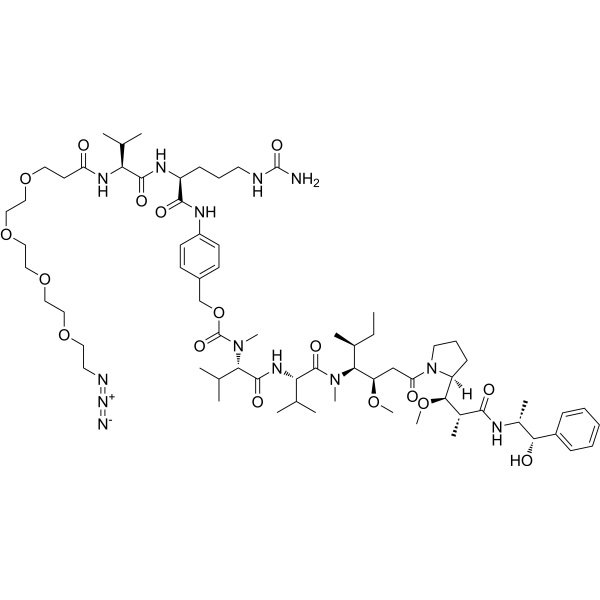
N-(Azido-PEG4)-N-(PEG4-Val-Cit-PAB-MMAE)-N-(PEG4-Val-Cit-PAB-Exatecan) is a drug-linker conjugate for ADC (Drug-Linker Conjugate for ADC), consisting of a tubulin polymerization inhibitor MMAE (HY-15162) and a DNA topoisomerase I inhibitor Exatecan (HY-13631), and an ADC linker composition. N-(Azido-PEG4)-N-(PEG4-Val-Cit-PAB-MMAE)-N-(PEG4-Val-Cit-PAB-Exatecan) can be used for synthesis of ADCs and for cancer research.
|
-
- HY-177679
-
|
|
Drug-Linker Conjugates for ADC
Topoisomerase
Microtubule/Tubulin
|
Cancer
|
|
N-(Amino-PEG4)-N-(PEG4-Val-Cit-PAB-MMAE)-N-(PEG4-Val-Cit-PAB-Exatecan) is a drug-linker conjugate for ADC (Drug-Linker Conjugate for ADC), consisting of a tubulin polymerization inhibitor MMAE (HY-15162) and a DNA topoisomerase I inhibitor Exatecan (HY-13631), and an ADC linker composition. N-(Amino-PEG4)-N-(PEG4-Val-Cit-PAB-MMAE)-N-(PEG4-Val-Cit-PAB-Exatecan) can be used for synthesis of ADCs and for cancer research.
|
-
- HY-140531
-
|
|
PROTAC Linkers
|
Cancer
|
|
N-(Biotin-PEG4)-N-bis(PEG4-acid) is a PEG-based PROTAC linker that can be used in the synthesis of PROTACs .
|
-
- HY-140786
-
|
|
PROTAC Linkers
|
Cancer
|
|
Azido-PEG4-amido-PEG4-Boc is a PEG-based PROTAC linker that can be used in the synthesis of PROTACs . Azido-PEG4-amido-PEG4-Boc is a click chemistry reagent, it contains an Azide group and can undergo copper-catalyzed azide-alkyne cycloaddition reaction (CuAAc) with molecules containing Alkyne groups. It can also undergo strain-promoted alkyne-azide cycloaddition (SPAAC) reactions with molecules containing DBCO or BCN groups.
|
-
- HY-140259
-
|
|
PROTAC Linkers
|
Cancer
|
|
N-(Boc-PEG4)-NH-PEG4-NH-Boc is a PEG-based PROTAC linker that can be used in the synthesis of PROTACs .
|
-
- HY-140255
-
|
|
PROTAC Linkers
|
Cancer
|
|
N-(Amino-PEG4)-N-bis(PEG4-Boc) is a PEG-based PROTAC linker that can be used in the synthesis of PROTACs .
|
-
- HY-141288
-
|
|
PROTAC Linkers
|
Cancer
|
|
N-(Biotin-PEG4)-N-bis(PEG4-Boc) is a PEG-based PROTAC linker that can be used in the synthesis of PROTACs .
|
-
- HY-140393
-
|
|
PROTAC Linkers
|
Cancer
|
|
N-(Tos-PEG4)-N-bis(PEG4-Boc) is a PEG-based PROTAC linker that can be used in the synthesis of PROTACs .
|
-
- HY-141036
-
|
|
PROTAC Linkers
|
Cancer
|
|
N-(m-PEG4)-N'-(PEG4-acid)-Cy5 is a PEG-based PROTAC linker that can be used in the synthesis of PROTACs .
|
-
- HY-140519
-
|
|
PROTAC Linkers
|
Cancer
|
|
N-(Azido-PEG4)-N-bis(PEG4-acid) is a PEG-based PROTAC linker that can be used in the synthesis of PROTACs . N-(Azido-PEG4)-N-bis(PEG4-acid) is a click chemistry reagent, it contains an Azide group and can undergo copper-catalyzed azide-alkyne cycloaddition reaction (CuAAc) with molecules containing Alkyne groups. It can also undergo strain-promoted alkyne-azide cycloaddition (SPAAC) reactions with molecules containing DBCO or BCN groups.
|
-
- HY-140567
-
|
|
PROTAC Linkers
|
Cancer
|
|
N-(Azido-PEG4)-N-Boc-PEG4-Boc is a PEG-based PROTAC linker that can be used in the synthesis of PROTACs . N-(Azido-PEG4)-N-Boc-PEG4-Boc is a click chemistry reagent, it contains an Azide group and can undergo copper-catalyzed azide-alkyne cycloaddition reaction (CuAAc) with molecules containing Alkyne groups. It can also undergo strain-promoted alkyne-azide cycloaddition (SPAAC) reactions with molecules containing DBCO or BCN groups.
|
-
- HY-141046
-
|
|
PROTAC Linkers
|
Cancer
|
|
N-(m-PEG4)-N'-(PEG4-NHS ester)-Cy5 is a PEG-based PROTAC linker that can be used in the synthesis of PROTACs .
|
-
- HY-W013522R
-
|
Tetraglyme (Standard)
|
Reference Standards
PROTAC Linkers
|
Cancer
|
|
Me-PEG4-Me (Standard) is the analytical standard of Me-PEG4-Me. This product is intended for research and analytical applications. Me-PEG4-Me is a PEG-based PROTAC linker that can be used in the synthesis of PROTACs .
|
-
- HY-140870
-
|
|
PROTAC Linkers
|
Cancer
|
|
N-(Azido-PEG4)-N-bis(PEG4-t-butyl ester) is a PEG-based PROTAC linker that can be used in the synthesis of PROTACs . N-(Azido-PEG4)-N-bis(PEG4-t-butyl ester) is a click chemistry reagent, it contains an Azide group and can undergo copper-catalyzed azide-alkyne cycloaddition reaction (CuAAc) with molecules containing Alkyne groups. It can also undergo strain-promoted alkyne-azide cycloaddition (SPAAC) reactions with molecules containing DBCO or BCN groups.
|
-
- HY-W879031
-
|
|
Biochemical Assay Reagents
|
Others
|
|
Endo-BCN-PEG4-Palmitic is a PEG derivative containing an endo-BCN cycloalkyne structure, a tetraethylene glycol (PEG4) linker, and a Palmitic acid (HY-N0830) fatty acid group. Endo-BCN-PEG4-Palmitic can be used for drug delivery, surface modification, and click chemistry reactions .
|
-
- HY-141078
-
|
|
PROTAC Linkers
|
Cancer
|
|
N-(m-PEG4)-N'-(azide-PEG4)-Cy7 is a PEG-based PROTAC linker that can be used in the synthesis of PROTACs . N-(m-PEG4)-N'-(azide-PEG4)-Cy7 is a click chemistry reagent, it contains an Azide group and can undergo copper-catalyzed azide-alkyne cycloaddition reaction (CuAAc) with molecules containing Alkyne groups. It can also undergo strain-promoted alkyne-azide cycloaddition (SPAAC) reactions with molecules containing DBCO or BCN groups.
|
-
- HY-141030
-
|
|
PROTAC Linkers
|
Cancer
|
|
N-(m-PEG4)-N'-(azide-PEG4)-Cy3 is a PEG-based PROTAC linker that can be used in the synthesis of PROTACs . N-(m-PEG4)-N'-(azide-PEG4)-Cy3 is a click chemistry reagent, it contains an Azide group and can undergo copper-catalyzed azide-alkyne cycloaddition reaction (CuAAc) with molecules containing Alkyne groups. It can also undergo strain-promoted alkyne-azide cycloaddition (SPAAC) reactions with molecules containing DBCO or BCN groups.
|
-
- HY-W800652
-
|
|
PROTAC Linkers
|
Cancer
|
|
(S, R, S)-AHPC-PEG4-tosyl is a PROTAC linker that incorporatess an E3 ligase ligand with a PEG4 linker to empower PROTAC drug research & discovery. PEG4 spacer increases the compound's hydrophility. Tosyl group is reactive with amine or other nucleophiles.
|
-
- HY-W574465
-
-
- HY-133054
-
|
|
PROTAC Linkers
|
Cancer
|
|
PEG4-sulfonic acid is a PEG-based PROTAC linker that can be used in the synthesis of PROTACs .
|
-
- HY-141032
-
|
|
PROTAC Linkers
|
Cancer
|
|
N-methyl-N'-methyl-O-(m-PEG4)-O'-(propargyl-PEG4)-Cy3 is a PEG-based PROTAC linker that can be used in the synthesis of PROTACs . N-methyl-N'-methyl-O-(m-PEG4)-O'-(propargyl-PEG4)-Cy3 is a click chemistry reagent, it contains an Alkyne group and can undergo copper-catalyzed azide-alkyne cycloaddition (CuAAc) with molecules containing Azide groups.
|
-
- HY-141052
-
|
|
PROTAC Linkers
|
Cancer
|
|
N-methyl-N'-methyl-O-(m-PEG4)-O'-(propargyl-PEG4)-Cy5 is a PEG-based PROTAC linker that can be used in the synthesis of PROTACs . N-methyl-N'-methyl-O-(m-PEG4)-O'-(propargyl-PEG4)-Cy5 is a click chemistry reagent, it contains an Alkyne group and can undergo copper-catalyzed azide-alkyne cycloaddition (CuAAc) with molecules containing Azide groups.
|
-
- HY-D2106
-
|
|
Fluorescent Dye
|
Others
|
|
TAMRA-PEG4-NHS is a dye derivative of TAMRA (HY-135640) containing 4 PEG units. TAMRA-PEG4-NHS contains NHS groups that react with ammonia to form ester bonds.
|
-
- HY-141069
-
|
|
PROTAC Linkers
|
Cancer
|
|
N-(m-PEG4)-N'-(Biotin-PEG2-amido-PEG4)-Cy5 is a PEG-based PROTAC linker that can be used in the synthesis of PROTACs .
|
-
- HY-D2109
-
|
|
Fluorescent Dye
|
Others
|
|
TAMRA-PEG4-COOH is a dye derivative of TAMRA (HY-135640) containing 4 PEG units. TAMRA-PEG4-COOH contains carboxyl groups, which can condense ammonia to form covalent bonds.
|
-
- HY-141075
-
|
|
PROTAC Linkers
|
Cancer
|
|
N-(m-PEG4)-N'-(4-Hydroxycyclohexyl-1-amido-PEG4)-Cy5 is a PEG-based PROTAC linker that can be used in the synthesis of PROTACs .
|
-
- HY-141322
-
|
|
PROTAC Linkers
|
Cancer
|
|
PEG4-bis(phosphonic acid diethyl ester) is a PEG-based PROTAC linker that can be used in the synthesis of PROTACs .
|
-
- HY-177680
-
|
|
Drug-Linker Conjugates for ADC
Topoisomerase
Microtubule/Tubulin
|
Cancer
|
|
N-(Mal-PEG4)-N-(PEG4-Val-Cit-PAB-MMAE)-N-(PEG4-Val-Cit-PAB-Exatecan) is a drug-linker conjugate for ADC (Drug-Linker Conjugate for ADC), consisting of a tubulin polymerization inhibitor MMAE (HY-15162) and a DNA topoisomerase I inhibitor Exatecan (HY-13631), and an ADC linker composition. N-(Mal-PEG4)-N-(PEG4-Val-Cit-PAB-MMAE)-N-(PEG4-Val-Cit-PAB-Exatecan) can be used for synthesis of ADCs and for cancer research.
|
-
- HY-140531A
-
|
|
Biochemical Assay Reagents
|
Others
|
|
N-(Biotin-PEG4)-N-bis(PEG4-acid) hydrochloride is a branched biotinylation reagent for labeling. The carboxylic acid groups can react with primary amines in the presence of EDC and HATU to form stable amide bonds.
|
-
- HY-179678
-
|
|
Biochemical Assay Reagents
|
Others
|
|
Macropa-PEG4-TPF (Compound 7g) is a bifunctional chelator. Macropa-PEG4-TPF can be conjugated to lysine residues on YS5, with an average of about 2.6 chelators per antibody. Macropa-PEG4-TPF can be used for PET imaging studies .
|
-
- HY-167791
-
-
- HY-167788
-
|
|
Drug Intermediate
|
Cancer
|
|
DOTA-PEG4-Osu is a conjugate of a chelating agent and a linker, which can be used for the synthesis of the radionuclide reagent 68Ga-DOTA-PEG4-(GGG-cKiE)2.
|
-
- HY-W592010
-
|
|
Biochemical Assay Reagents
|
Others
|
|
C18-PEG4-Azide is a hybrid linker featuring a hydrophobic C18 chain, a hydrophilic PEG4 spacer, and an azide. The azide is reactive with terminal alkynes or strained cyclooctynes such as DBCO or BCN through click chemistry.
|
-
- HY-182972
-
|
|
Drug-Linker Conjugates for ADC
JAK
|
Inflammation/Immunology
Cancer
|
|
Mal-PEG4-NPV-PABC-DMEDA-tofacitinib is a conjugate of a toxin and a linker, consisting of the JAK inhibitor Tofacitinib (HY-40354) and the linker Mal-PEG4-NPV-PABC-DMEDA (HY-182977). Mal-PEG4-NPV-PABC-DMEDA-tofacitinib can be used for the synthesis of ADC molecules .
|
-
- HY-139726
-
|
|
Drug-Linker Conjugates for ADC
|
Cancer
|
|
Mal-PEG4-Val-Cit-PAB-MMAE is part of a drug-linker conjugate for ADC. Mal-PEG4-Val-Cit-PAB-MMAE contains a degradable ADC linker Mal-PEG4-Val-Cit-PAB (HY-126672) and a potent tubulin inhibitor MMAE (HY-15162) .
|
-
- HY-130086
-
|
|
ADC Linker
|
Cancer
|
|
Bis-PEG4-NHS ester is a crosslinking reagent and amine-reactive modulator [2].Bis-PEG4-NHS ester reacts with primary amine groups on liposome surfaces via amide bond formation to covalently attach dibenzylcyclooctyne groups, with a hydrophilic PEG4 spacer reducing steric hindrance for subsequent click chemistry [1].Bis-PEG4-NHS ester enables site-specific antibody coupling to liposome surfaces via copper-free strain-promoted alkyne-azide cycloaddition click chemistry without disrupting liposome structure in minimal organic solvent volumes [1].Bis-PEG4-NHS ester undergoes hydrolysis during annealing to form -COOH groups that interact with PbI and FAI to enhance perovskite structural integrity, passivate defects, and modulate nucleation kinetics to regulate crystal growth [2].Bis-PEG4-NHS ester enhances device efficiency and long-term stability when used as an antisolvent additive for p-i-n perovskite solar cells .
|
-
- HY-126668
-
|
|
ADC Linker
|
Cancer
|
|
Mal-PEG4-VC-PAB-DMEA is a cleavable ADC linker containing a Maleimide group. Mal-PEG4-VC-PAB-DMEA is used in the synthesis of antibody-drug conjugates (ADCs) .
|
-
- HY-181992
-
|
|
Drug-Linker Conjugates for ADC
|
Inflammation/Immunology
Cancer
|
|
Mal-PEG4-Val-Cit-PAB-MSA-2 is a Drug-Linker Conjugates for ADC. Mal-PEG4-Val-Cit-PAB-MSA-2 consists of the ADC Cytotoxin MSA-2 (HY-136927) and a linker Mal-PEG4-Val-Cit-PAB-OH (HY-140143). Mal-PEG4-Val-Cit-PAB-MSA-2 can be used for synthesis of ADCs .
|
-
- HY-W1121767
-
-
- HY-156755
-
|
|
Drug-Linker Conjugates for ADC
|
Cancer
|
|
Propargyl-PEG4-GGFG-DXd is a drug-linker conjugate for ADC. Propargyl-PEG4-GGFG-DXd contains a ADC linker and a DNA topoisomerase I inhibitor DXd (HY-13631D) .
|
-
- HY-141033
-
|
|
PROTAC Linkers
|
Cancer
|
|
Cy5-PEG4-acid (chloride) is a PEG-based PROTAC linker that can be used in the synthesis of PROTACs .
|
-
- HY-D2527
-
-
- HY-141395
-
|
|
ADC Linker
PROTAC Linkers
|
Cancer
|
|
m-PEG4-Boc is a cleavable 4 unit PEG ADC linker used in the synthesis of antibody-drug conjugates (ADCs) . m-PEG4-Boc is also a PEG-based PROTAC linker that can be used in the synthesis of PROTACs .
|
-
- HY-134723
-
|
|
Drug-Linker Conjugates for ADC
|
Cancer
|
|
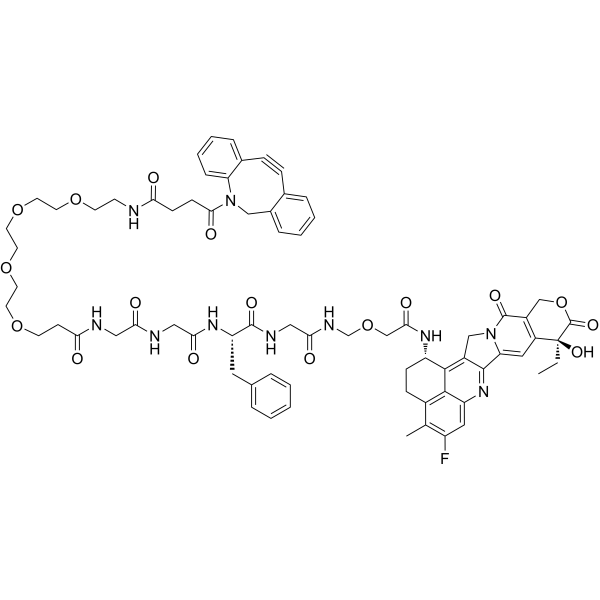
DBCO-PEG4-GGFG-Dxd is a agent-linker conjugate for ADC with potent antitumor activity by using Dxd (a DNA topoisomerase I inhibitor), linked via the cleavable ADC linker DBCO-PEG4-GGFG . DBCO-PEG4-GGFG-Dxd is a click chemistry reagent, it contains a DBCO group that can undergo strain-promoted alkyne-azide cycloaddition (SPAAC) with molecules containing Azide groups.
|
-
- HY-111456
-
|
|
ADC Linker
PROTAC Linkers
|
Cancer
|
|
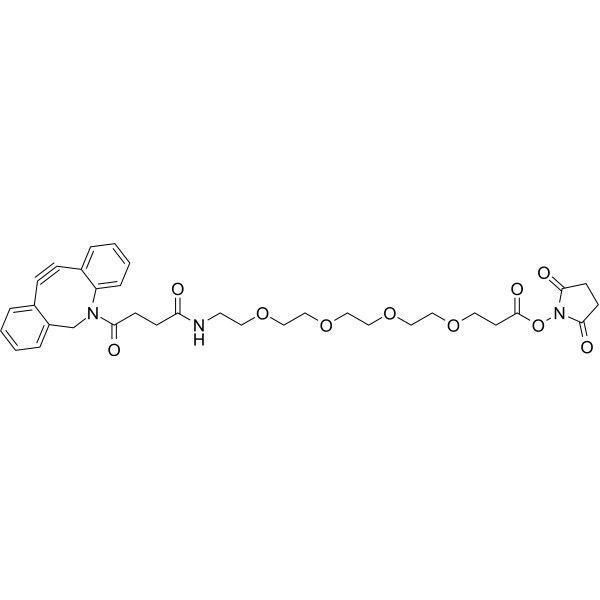
DBCO-NHCO-PEG4-NHS ester is a PEG/Alkyl/ether-based PROTAC linker can be used in the synthesis of PROTACs. DBCO-NHCO-PEG4-NHS ester is a cleavable ADC linker used in the synthesis of antibody-drug conjugates (ADCs) . DBCO-NHCO-PEG4-NHS ester is a click chemistry reagent, it contains a DBCO group that can undergo strain-promoted alkyne-azide cycloaddition (SPAAC) with molecules containing Azide groups.
|
-
- HY-141067
-
|
|
PROTAC Linkers
|
Cancer
|
|
N-methyl-N'-methyl-O-(m-PEG4)-O'-(azide-PEG4)-Cy5 is a PEG-based PROTAC linker that can be used in the synthesis of PROTACs . N-methyl-N'-methyl-O-(m-PEG4)-O'-(azide-PEG4)-Cy5 is a click chemistry reagent, it contains an Azide group and can undergo copper-catalyzed azide-alkyne cycloaddition reaction (CuAAc) with molecules containing Alkyne groups. It can also undergo strain-promoted alkyne-azide cycloaddition (SPAAC) reactions with molecules containing DBCO or BCN groups.
|
-
- HY-141031
-
|
|
PROTAC Linkers
|
Cancer
|
|
N-Methyl-N'-methyl-O-(m-PEG4)-O'-(azide-PEG4)-Cy3 is a PEG-based PROTAC linker that can be used in the synthesis of PROTACs . N-Methyl-N'-methyl-O-(m-PEG4)-O'-(azide-PEG4)-Cy3 is a click chemistry reagent, it contains an Azide group and can undergo copper-catalyzed azide-alkyne cycloaddition reaction (CuAAc) with molecules containing Alkyne groups. It can also undergo strain-promoted alkyne-azide cycloaddition (SPAAC) reactions with molecules containing DBCO or BCN groups.
|
-
- HY-D2140
-
|
|
Fluorescent Dye
|
Others
|
|
Cy3-PEG4-Alkyne is a dye derivative of Cyanine 3 (Cy3) (HY-D0822) containing 4 PEG units. Cy3-PEG4-Alkyne contains Alkyne groups and can undergo copper-catalyzed azide-alkyne cycloaddition (CuAAc) with molecules containing Azide groups.
|
-
- HY-114661
-
|
|
PROTAC Linkers
|
Cancer
|
|
m-PEG4-Tos is a derivative of silybin ethers, extracted from patent CN105037337A (compound III-b). m-PEG4-Tos is a PEG-based PROTAC linker can be used in the synthesis of Silymarin (HY-W043277) .
|
-
- HY-156387
-
|
|
PROTAC Linkers
|
Cancer
|
|
SCO-PEG4-COOH is a PROTAC linker and belongs to the PEG class. SCO-PEG4-COOH contains SCO and COOH that can be covalently combined with amino groups, respectively. SCO is often used to react with amino acid residues of proteins or peptides, particularly lysine.
|
-
- HY-124123
-
|
|
ADC Linker
PROTAC Linkers
|
Cancer
|
|
Aminooxy-PEG4-alcohol is a non-cleavable 4 unit PEG ADC linker used in the synthesis of antibody-drug conjugates (ADCs) . Aminooxy-PEG4-alcohol is also a PEG-based PROTAC linker that can be used in the synthesis of PROTACs .
|
-
- HY-W008005
-
|
|
PROTAC Linkers
ADC Linker
|
Cancer
|
|
Amino-PEG4-alcohol is a PEG-based PROTAC linker can be used in the synthesis of PROTACs . Amino-PEG4-alcohol is also a non-cleavable 4 unit PEG ADC linker used in the synthesis of antibody-drug conjugates (ADCs) .
|
-
- HY-136314
-
|
|
Drug-Linker Conjugates for ADC
|
Cancer
|
|
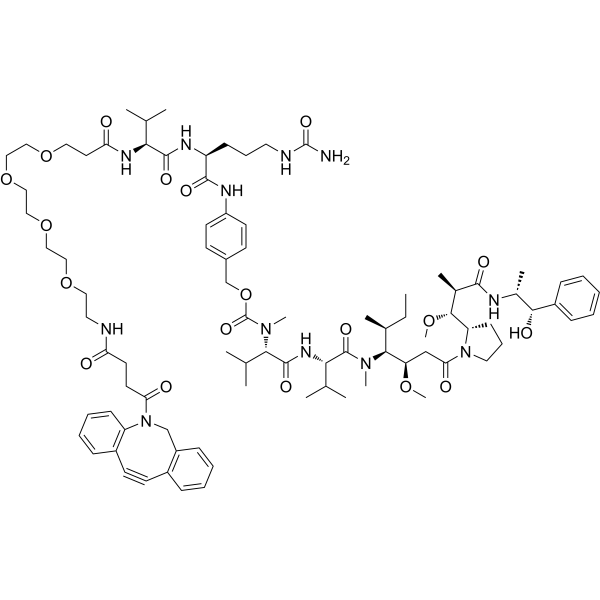
DBCO-PEG4-VC-PAB-MMAE consists a ADC linker (DBCO-PEG4-VC-PAB) and a tubulin polymerization inhibitor MMAE (HY-15162). DBCO-PEG4-VC-PAB-MMAE can be used in the synthesis of antibody-agent conjugates (ADCs). MMAE is a synthetic derivative of dolastatin 10 and functions as a potent mitotic inhibitor by inhibiting tubulin polymerization. DBCO-PEG4-VC-PAB-MMAE is a click chemistry reagent, it contains a DBCO group that can undergo strain-promoted alkyne-azide cycloaddition (SPAAC) with molecules containing Azide groups.
|
-
- HY-156384
-
-
- HY-W879114
-
-
- HY-130990
-
|
|
Drug-Linker Conjugates for ADC
|
Cancer
|
|
DBCO-PEG4-Val-Cit-PAB-MMAF consists a cleavable 4 unit PEG ADC linker (DBCO-PEG4-Val-Cit-PAB) and a potent tubulin polymerization inhibitor (MMAF). DBCO-PEG4-Val-Cit-PAB-MMAF can be used in the synthesis of antibody-drug conjugates (ADCs) . DBCO-PEG4-Val-Cit-PAB-MMAF is a click chemistry reagent, it contains a DBCO group that can undergo strain-promoted alkyne-azide cycloaddition (SPAAC) with molecules containing Azide groups.
|
-
- HY-W046471
-
|
|
ADC Linker
PROTAC Linkers
|
Cancer
|
|
N-Boc-PEG4-bromide is a PEG/Alkyl/ether-based PROTAC linker can be used in the synthesis of PROTACs. N-Boc-PEG4-bromide is a cleavable ADC linker used in the synthesis of antibody-drug conjugates (ADCs) .
|
-
- HY-130595
-
|
|
PROTAC Linkers
|
Cancer
|
|
Benzyl-PEG4-acid is a PEG-based PROTAC linker can be used in the synthesis of PROTACs.
|
-
- HY-126959
-
|
|
PROTAC Linkers
|
Cancer
|
|
Biotin-PEG4-acid is a PEG-based PROTAC linker can be used in the synthesis of PROTAC.
|
-
- HY-126961
-
|
|
PROTAC Linkers
|
Cancer
|
|
Mal-PEG4-acid is a PEG-based PROTAC linker can be used in the synthesis of PROTACs.
|
-
- HY-133292
-
|
HS-PEG4-OH
|
PROTAC Linkers
|
Cancer
|
|
Thiol-PEG4-alcohol is a PEG-based PROTAC linker that can be used in the synthesis of PROTACs .
|
-
- HY-W190741
-
-
- HY-138465
-
|
|
PROTAC Linkers
|
Cancer
|
|
THP-C4-PEG4 is a PEG-based PROTAC linker that can be used in the synthesis of PROTACs .
|
-
- HY-138527
-
|
|
PROTAC Linkers
|
Cancer
|
|
Thiol-C9-PEG4 is a PEG-based PROTAC linker that can be used in the synthesis of PROTACs .
|
-
- HY-141089
-
|
|
PROTAC Linkers
|
Cancer
|
|
Carboxyrhodamine 110-PEG4-alkyne is a PEG-based PROTAC linker that can be used in the synthesis of PROTACs .
|
-
- HY-130809
-
|
|
Biochemical Assay Reagents
|
Cancer
|
|
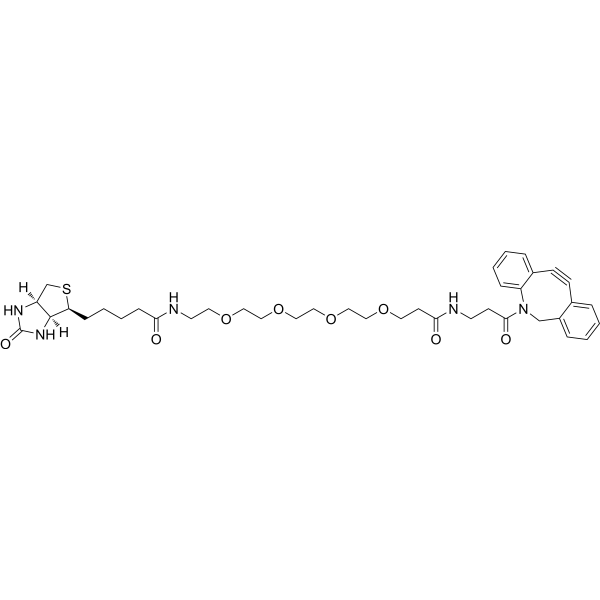
DBCO-PEG4-Biotin is an azadibenzocyclooctyne-biotin derivative containing a biotin group and 4 PEGs. DBCO-PEG4-Biotin is a versatile biotinylation reagent used for the introduction of a biotin moiety to azide-labeled biomolecules via copper-free strain-promoted alkyne-azide click chemistry (SPAAC) reaction . DBCO-PEG4-Biotin is a click chemistry reagent, it contains a DBCO group that can undergo strain-promoted alkyne-azide cycloaddition (SPAAC) with molecules containing Azide groups.
|
-
- HY-141286
-
|
|
Fluorescent Dye
|
Others
|
|
TAMRA-PEG4-methyltetrazine is a dye derivative of TAMRA (HY-135640) containing 4 PEG units. TAMRA-PEG4-methyltetrazine contains a Tetrazine group that can undergo an inverse electron demand Diels-Alder reaction (iEDDA) with molecules containing TCO groups.
|
-
- HY-141285
-
|
|
Fluorescent Dye
|
Others
|
|
TAMRA-PEG4-tetrazine is a dye derivative of TAMRA (HY-135640) containing 4 PEG units. TAMRA-PEG4-tetrazine contains a Tetrazine group that can undergo an inverse electron demand Diels-Alder reaction (iEDDA) with molecules containing TCO groups.
|
-
- HY-114670
-
|
|
PROTAC Linkers
|
Cancer
|
|
Propargyl-PEG4-amine is a PEG-based PROTAC linker can be used in the synthesis of PROTACs. Propargyl-PEG4-amine is a click chemistry reagent, it contains an Alkyne group and can undergo copper-catalyzed azide-alkyne cycloaddition (CuAAc) with molecules containing Azide groups.
|
-
- HY-113921
-
|
|
PROTAC Linkers
|
Cancer
|
|
m-PEG4-propargyl is a PEG-based PROTAC linker can be used in the synthesis of PROTACs. m-PEG4-propargyl is a click chemistry reagent, it contains an Alkyne group and can undergo copper-catalyzed azide-alkyne cycloaddition (CuAAc) with molecules containing Azide groups.
|
-
- HY-W692829
-
|
|
PROTAC Linkers
|
Cancer
|
|
Alkyne-PEG4-I is a PROTAC linker that can be used in the synthesis of PROTACs.
|
-
- HY-W795326
-
|
|
PROTAC Linkers
|
Cancer
|
|
Methanamine-PEG4-methanamine is a PROTAC linker that can be used in the synthesis of PROTACs.
|
-
- HY-W594792
-
-
- HY-W1130396
-
|
|
PROTAC Linkers
|
Cancer
|
|
BG-PEG4-Amine is a PROTAC linker that can be used in the synthesis of PROTACs.
|
-
- HY-W614958
-
|
|
PROTAC Linkers
|
Cancer
|
|
TBS-PEG4-COOH is a PROTAC linker that can be used in the synthesis of PROTACs.
|
-
- HY-W1130311
-
-
- HY-W105836
-
|
|
PROTAC Linkers
|
Cancer
|
|
Cyano-PEG4-cyano is a PROTAC linker that can be used in the synthesis of PROTACs.
|
-
- HY-164379
-
-
- HY-W909956
-
|
|
PROTAC Linkers
|
Cancer
|
|
NHBoc-PEG4-methyl acetate is a PROTAC linker that can be used in the synthesis of PROTACs.
|
-
- HY-180447
-
-
- HY-140287
-
|
|
PROTAC Linkers
|
Cancer
|
|
DBCO-C2-PEG4-amine is a PEG-based PROTAC linker that can be used in the synthesis of PROTACs . DBCO-C2-PEG4-amine is a click chemistry reagent, it contains a DBCO group that can undergo strain-promoted alkyne-azide cycloaddition (SPAAC) with molecules containing Azide groups.
|
-
- HY-116025
-
|
|
PROTAC Linkers
|
Cancer
|
|
APN-C3-PEG4-alkyne is a PEG-based PROTAC linker that can be used in the synthesis of PROTACs . APN-C3-PEG4-alkyne is a click chemistry reagent, it contains an Alkyne group and can undergo copper-catalyzed azide-alkyne cycloaddition (CuAAc) with molecules containing Azide groups.
|
-
- HY-140288
-
|
|
PROTAC Linkers
|
Cancer
|
|
DBCO-C3-PEG4-amine is a PEG-based PROTAC linker that can be used in the synthesis of PROTACs . DBCO-C3-PEG4-amine is a click chemistry reagent, it contains a DBCO group that can undergo strain-promoted alkyne-azide cycloaddition (SPAAC) with molecules containing Azide groups.
|
-
- HY-133399
-
|
|
PROTAC Linkers
|
Cancer
|
|
Alkyne-PEG4-maleimide is a PEG-based PROTAC linker that can be used in the synthesis of PROTACs . Alkyne-PEG4-maleimide is a click chemistry reagent, it contains an Alkyne group and can undergo copper-catalyzed azide-alkyne cycloaddition (CuAAc) with molecules containing Azide groups.
|
-
- HY-140272
-
|
|
PROTAC Linkers
|
Cancer
|
|
DBCO-PEG4-NHS ester is a PEG-based PROTAC linker that can be used in the synthesis of PROTACs . DBCO-PEG4-NHS ester is a click chemistry reagent, it contains a DBCO group that can undergo strain-promoted alkyne-azide cycloaddition (SPAAC) with molecules containing Azide groups.
|
-
- HY-140058
-
|
|
PROTAC Linkers
|
Cancer
|
|
Aminooxy-PEG4-propargyl is a PEG-based PROTAC linker that can be used in the synthesis of PROTACs . Aminooxy-PEG4-propargyl is a click chemistry reagent, it contains an Alkyne group and can undergo copper-catalyzed azide-alkyne cycloaddition (CuAAc) with molecules containing Azide groups.
|
-
- HY-141261A
-
|
|
Biochemical Assay Reagents
|
Others
|
|
Methyltetrazine-PEG4-amine hydrochloride is a PEG derivative containing a free amine and a methyltetrazine group. Methyltetrazine-PEG4-amine hydrochloride is a click chemistry reagent, it contains a Tetrazine group that can undergo an inverse electron demand Diels-Alder reaction (iEDDA) with molecules containing TCO groups .
|
-
- HY-140955
-
|
|
PROTAC Linkers
|
Cancer
|
|
DSPE-PEG4-DBCO is a PEG-based PROTAC linker that can be used in the synthesis of PROTACs . DSPE-PEG4-DBCO is a click chemistry reagent, it contains a DBCO group that can undergo strain-promoted alkyne-azide cycloaddition (SPAAC) with molecules containing Azide groups.
|
-
- HY-133437
-
|
|
PROTAC Linkers
|
Cancer
|
|
BCN-PEG4-alkyne is a PEG-based PROTAC linker that can be used in the synthesis of PROTACs . BCN-PEG4-alkyne is a click chemistry reagent, it contains a BCN group that can undergo strain-promoted alkyne-azide cycloaddition (SPAAC) with molecules containing Azide groups.
|
-
- HY-140028
-
|
|
PROTAC Linkers
|
Cancer
|
|
Propargyl-PEG4-Boc is a PEG-based PROTAC linker that can be used in the synthesis of PROTACs . Propargyl-PEG4-Boc is a click chemistry reagent, it contains an Alkyne group and can undergo copper-catalyzed azide-alkyne cycloaddition (CuAAc) with molecules containing Azide groups.
|
-
- HY-140037
-
|
|
PROTAC Linkers
|
Cancer
|
|
Mal-PEG4-propargyl is a PEG-based PROTAC linker that can be used in the synthesis of PROTACs . Mal-PEG4-propargyl is a click chemistry reagent, it contains an Alkyne group and can undergo copper-catalyzed azide-alkyne cycloaddition (CuAAc) with molecules containing Azide groups.
|
-
- HY-140278
-
|
|
PROTAC Linkers
|
Cancer
|
|
DBCO-PEG4-PFP ester is a PEG-based PROTAC linker that can be used in the synthesis of PROTACs . DBCO-PEG4-PFP ester is a click chemistry reagent, it contains a DBCO group that can undergo strain-promoted alkyne-azide cycloaddition (SPAAC) with molecules containing Azide groups.
|
-
- HY-133439
-
|
|
PROTAC Linkers
ADC Linker
|
Cancer
|
|
BCN-PEG4-NHS ester is a PEG-based PROTAC linker that can be used in the synthesis of PROTACs . BCN-PEG4-NHS ester is a click chemistry reagent, it contains a BCN group that can undergo strain-promoted alkyne-azide cycloaddition (SPAAC) with molecules containing Azide groups.
|
-
- HY-141261
-
|
|
Biochemical Assay Reagents
|
Others
|
|
Methyltetrazine-PEG4-amine is a PEG derivative containing a free amine and a methyltetrazine group. Methyltetrazine-PEG4-amine is a click chemistry reagent, it contains a Tetrazine group that can undergo an inverse electron demand Diels-Alder reaction (iEDDA) with molecules containing TCO groups .
|
-
- HY-133229
-
|
|
PROTAC Linkers
|
Cancer
|
|
Propargyl-PEG4-alcohol is a PEG-based PROTAC linker can be used in the synthesis of PROTACs . Propargyl-PEG4-alcohol is a click chemistry reagent, it contains an Alkyne group and can undergo copper-catalyzed azide-alkyne cycloaddition (CuAAc) with molecules containing Azide groups.
|
-
- HY-140279
-
|
|
PROTAC Linkers
|
Cancer
|
|
DBCO-PEG4-alcohol is a PEG-based PROTAC linker that can be used in the synthesis of PROTACs . DBCO-PEG4-alcohol is a click chemistry reagent, it contains a DBCO group that can undergo strain-promoted alkyne-azide cycloaddition (SPAAC) with molecules containing Azide groups.
|
-
- HY-160839
-
|
|
Fluorescent Dye
|
Others
|
|
SPB-PEG4-AAD (compound 6) is a BFPX probe. SPB-PEG4-AAD shows significant crosslinking of the Nkx2.5/DNA complex or p53/DNA complex while displaying little effect on the DNA alone .
|
-
- HY-138351
-
|
|
PROTAC Linkers
|
Cancer
|
|
Propargyl-PEG4-thioacetyl is a PEG-based PROTAC linker that can be used in the synthesis of PROTACs . Propargyl-PEG4-thioacetyl is a click chemistry reagent, it contains an Alkyne group and can undergo copper-catalyzed azide-alkyne cycloaddition (CuAAc) with molecules containing Azide groups.
|
-
- HY-140308
-
|
|
PROTAC Linkers
|
Cancer
|
|
DBCO-PEG4-triethoxysilane is a PEG-based PROTAC linker that can be used in the synthesis of PROTACs . DBCO-PEG4-triethoxysilane is a click chemistry reagent, it contains a DBCO group that can undergo strain-promoted alkyne-azide cycloaddition (SPAAC) with molecules containing Azide groups.
|
-
- HY-136030
-
|
|
PROTAC Linkers
|
Cancer
|
|
APN-PEG4-PFP is a PEG-based PROTAC linker that can be used in the synthesis of PROTACs . APN-PEG4-PFP is a click chemistry reagent, it contains an Alkyne group and can undergo copper-catalyzed azide-alkyne cycloaddition (CuAAc) with molecules containing Azide groups.
|
-
- HY-W096125
-
|
|
PROTAC Linkers
|
Cancer
|
|
Desthiobiotin-PEG4-propargyl is a PEG-based PROTAC linker that can be used in the synthesis of PROTACs . Desthiobiotin-PEG4-propargyl is a click chemistry reagent, it contains an Alkyne group and can undergo copper-catalyzed azide-alkyne cycloaddition (CuAAc) with molecules containing Azide groups.
|
-
- HY-140045
-
|
|
PROTAC Linkers
|
Cancer
|
|
Propargyl-PEG4-methylamine is a PEG-based PROTAC linker that can be used in the synthesis of PROTACs . Propargyl-PEG4-methylamine is a click chemistry reagent, it contains an Alkyne group and can undergo copper-catalyzed azide-alkyne cycloaddition (CuAAc) with molecules containing Azide groups.
|
-
- HY-140047
-
|
|
PROTAC Linkers
|
Cancer
|
|
Propargyl-PEG4-sulfonic acid is a PEG-based PROTAC linker that can be used in the synthesis of PROTACs . Propargyl-PEG4-sulfonic acid is a click chemistry reagent, it contains an Alkyne group and can undergo copper-catalyzed azide-alkyne cycloaddition (CuAAc) with molecules containing Azide groups.
|
-
- HY-140619
-
|
|
PROTAC Linkers
|
Cancer
|
|
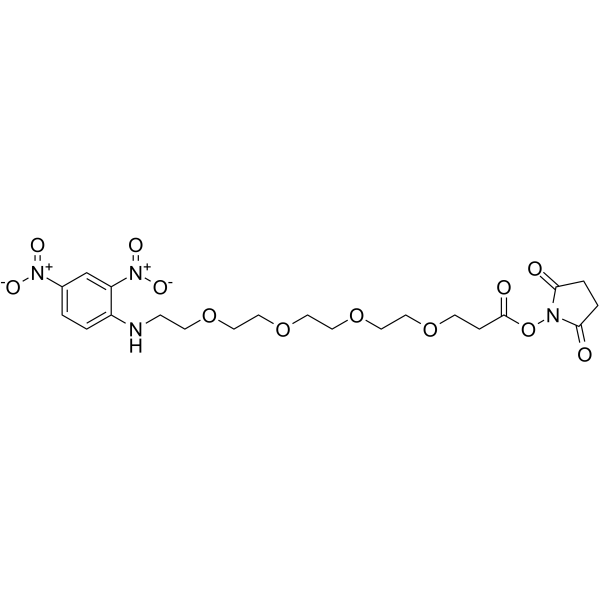
DNP-PEG4-DBCO is a PEG-based PROTAC linker that can be used in the synthesis of PROTACs . DNP-PEG4-DBCO is a click chemistry reagent, it contains a DBCO group that can undergo strain-promoted alkyne-azide cycloaddition (SPAAC) with molecules containing Azide groups.
|
-
- HY-140047A
-
|
|
PROTAC Linkers
|
Cancer
|
|
Propargyl-PEG4-sulfonic acid sodium is a PEG-based PROTAC linker that can be used in the synthesis of PROTACs. Propargyl-PEG4-sulfonic acid sodium is a click chemistry reagent, it contains an Alkyne group and can undergo copper-catalyzed azide-alkyne cycloaddition (CuAAc) with molecules containing Azide groups .
|
-
- HY-140301
-
|
|
PROTAC Linkers
|
Cancer
|
|
DBCO-PEG4-Desthiobiotin is a PEG-based PROTAC linker that can be used in the synthesis of PROTACs . DBCO-PEG4-Desthiobiotin is a click chemistry reagent, it contains a DBCO group that can undergo strain-promoted alkyne-azide cycloaddition (SPAAC) with molecules containing Azide groups.
|
-
- HY-141332
-
|
|
PROTAC Linkers
|
Cancer
|
|
Lipoamido-PEG4-acid is a PEG-based PROTAC linker that can be used in the synthesis of PROTACs .
|
-
- HY-135153
-
|
|
PROTAC Linkers
|
Cancer
|
|
Methylamino-PEG4-acid is a PEG-based PROTAC linker that can be used in the synthesis of PROTACs .
|
-
- HY-138379
-
|
|
PROTAC Linkers
|
Cancer
|
|
Boc-PEG4-acid is a PEG-based PROTAC linker that can be used in the synthesis of PROTACs .
|
-
- HY-120368
-
|
|
PROTAC Linkers
|
Cancer
|
|
Fluorescein-PEG4-acid is a PEG-based PROTAC linker that can be used in the synthesis of PROTACs .
|
-
- HY-130417
-
|
|
PROTAC Linkers
|
Cancer
|
|
Tos-PEG4-acid is a PEG-based PROTAC linker that can be used in the synthesis of PROTACs .
|
-
- HY-141159
-
|
|
PROTAC Linkers
|
Cancer
|
|
TCO-PEG4-acid is a PEG-based PROTAC linker can be used in the synthesis of PROTACs .
|
-
- HY-W096129
-
|
|
PROTAC Linkers
|
Cancer
|
|
Cl-PEG4-acid is a PEG-based PROTAC linker that can be used in the synthesis of PROTACs .
|
-
- HY-141264
-
|
|
PROTAC Linkers
|
Cancer
|
|
Methyltetrazine-PEG4-acid is a PEG-based PROTAC linker that can be used in the synthesis of PROTACs .
|
-
- HY-140953
-
|
|
PROTAC Linkers
|
Cancer
|
|
DSPE-PEG4-acid is a PEG-based PROTAC linker that can be used in the synthesis of PROTACs .
|
-
- HY-141363
-
|
|
PROTAC Linkers
|
Cancer
|
|
Bromo-PEG4-acid is a PEG-based PROTAC linker that can be used in the synthesis of PROTACs .
|
-
- HY-141352
-
|
|
PROTAC Linkers
|
Cancer
|
|
SPDP-PEG4-acid is a PEG-based PROTAC linker that can be used in the synthesis of PROTACs .
|
-
- HY-140394
-
|
|
PROTAC Linkers
|
Cancer
|
|
Aminooxy-PEG4-acid is a PEG-based PROTAC linker that can be used in the synthesis of PROTACs .
|
-
- HY-130198
-
|
|
PROTAC Linkers
|
Cancer
|
|
DNP-PEG4-acid is a PEG-based PROTAC linker that can be used in the synthesis of PROTACs .
|
-
- HY-120678
-
|
|
PROTAC Linkers
|
Others
|
|
DBCO-PEG4-acid is a a PEG-based PROTAC linker that can be used in the synthesis of PROTACs .
|
-
- HY-138486
-
|
|
PROTAC Linkers
|
Cancer
|
|
Br-PEG4-acid is a PEG-based PROTAC linker that can be used in the synthesis of PROTACs .
|
-
- HY-138507
-
|
|
PROTAC Linkers
|
Cancer
|
|
Desthiobiotin-PEG4-acid is a PEG-based PROTAC linker that can be used in the synthesis of PROTACs .
|
-
- HY-130213
-
|
|
PROTAC Linkers
|
Cancer
|
|
Thiol-PEG4-acid is a PEG-based PROTAC linker that can be used in the synthesis of PROTACs .
|
-
- HY-140156
-
|
Methylamino-PEG4-t-butyl ester
|
PROTAC Linkers
|
Cancer
|
|
Methylamino-PEG4-Boc is a PEG-based PROTAC linker that can be used in the synthesis of PROTACs .
|
-
- HY-141328
-
|
Thiol-PEG4-t-butyl ester
|
PROTAC Linkers
|
Cancer
|
|
Thiol-PEG4-Boc is a PEG-based PROTAC linker that can be used in the synthesis of PROTACs .
|
-
- HY-138526
-
|
|
PROTAC Linkers
|
Cancer
|
|
Thiol-C9-PEG4-acid is a PEG-based PROTAC linker that can be used in the synthesis of PROTACs .
|
-
- HY-141167B
-
|
|
ADC Linker
|
Cancer
|
|
(S)-TCO-PEG4-NHS ester is an ADC linker containing 4 PEG units. (S)-TCO-PEG4-NHS ester can use its own TCO group to perform an inverse electron demand Diels-Alder reaction (iEDDA) with molecules with Tetrazine groups.
|
-
- HY-W879032
-
|
|
Biochemical Assay Reagents
|
Others
|
|
Endo-BCN-PEG4-Pomalidomide is a PEG derivative composed of BCN, PEG4 and Pomalidomide (HY-10984). The BCN groupis very reactive with azide-tagged molecules. The amino group is reactive with carboxylic acids, activated NHS esters, carbonyls (ketone, aldehyde) etc .
|
-
- HY-141167A
-
|
|
PROTAC Linkers
|
Cancer
|
|
TCO-PEG4-NHS ester is a PEG-based PROTAC linker that can be used in the synthesis of PROTACs . TCO-PEG4-NHS ester is a click chemistry reagent, it contains a TCO group that can undergo an inverse electron demand Diels-Alder reaction (iEDDA) with molecules containing Tetrazine groups.
|
-
- HY-133508
-
|
|
PROTAC Linkers
|
Cancer
|
|
Methyltetrazine-PEG4-SSPy is a PEG-based PROTAC linker that can be used in the synthesis of PROTACs . Methyltetrazine-PEG4-SSPy is a click chemistry reagent, it contains a Tetrazine group that can undergo an inverse electron demand Diels-Alder reaction (iEDDA) with molecules containing TCO groups.
|
-
- HY-120770
-
|
|
ADC Linker
|
Cancer
|
|
DBCO-PEG4-Maleimide is a non-cleavable ADC linker used in the synthesis of antibody-drug conjugates (ADCs) . DBCO-PEG4-Maleimide is a click chemistry reagent, it contains a DBCO group that can undergo strain-promoted alkyne-azide cycloaddition (SPAAC) with molecules containing Azide groups.
|
-
- HY-126516
-
|
|
ADC Linker
|
Cancer
|
|
Propargyl-PEG4-NHS ester is a nonclaevable 4-unit PEG linker for antibody-agent-conjugation (ADC). Propargyl-PEG4-NHS ester is a click chemistry reagent, it contains an Alkyne group and can undergo copper-catalyzed azide-alkyne cycloaddition (CuAAc) with molecules containing Azide groups.
|
-
- HY-141278
-
|
|
PROTAC Linkers
|
Cancer
|
|
Methyltetrazine-PEG4-maleimide is a PEG-based PROTAC linker that can be used in the synthesis of PROTACs . Methyltetrazine-PEG4-maleimide is a click chemistry reagent, it contains a Tetrazine group that can undergo an inverse electron demand Diels-Alder reaction (iEDDA) with molecules containing TCO groups.
|
-
- HY-140940
-
|
|
PROTAC Linkers
|
Cancer
|
|
Biotin-PEG4-methyltetrazine is a PEG-based PROTAC linker that can be used in the synthesis of PROTACs . Biotin-PEG4-methyltetrazine is a click chemistry reagent, it contains a Tetrazine group that can undergo an inverse electron demand Diels-Alder reaction (iEDDA) with molecules containing TCO groups.
|
-
- HY-140922
-
|
|
PROTAC Linkers
|
Cancer
|
|
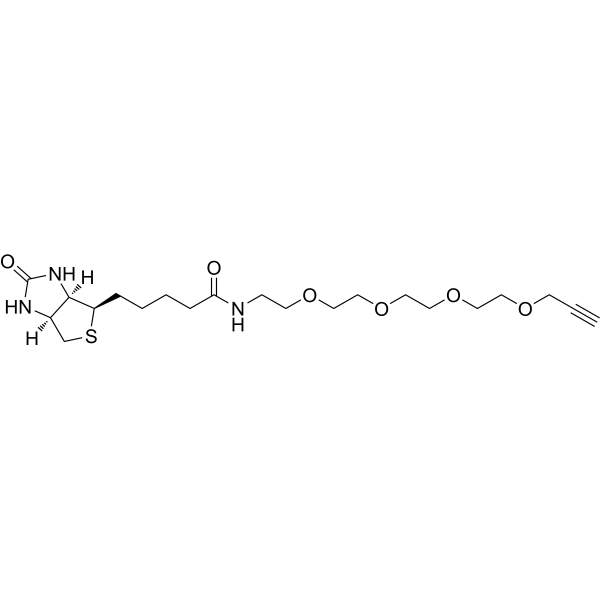
Biotin-PEG4-alkyne is a biotin-labeled, PEG-based PROTAC linker that can be used in the synthesis of PROTACs . Biotin-PEG4-alkyne is a click chemistry reagent, it contains an Alkyne group and can undergo copper-catalyzed azide-alkyne cycloaddition (CuAAc) with molecules containing Azide groups.
|
-
- HY-120666
-
|
|
Fluorescent Dye
|
Others
|
|
TAMRA-PEG4-Alkyne is a dye derivative of TAMRA (HY-135640) containing 4 PEG units. TAMRA-PEG4-Alkyne contains Alkyne groups and can undergo copper-catalyzed azide-alkyne cycloaddition (CuAAc) with molecules containing Azide groups (Ex/Em = 553/575 nm).
|
-
- HY-186115
-
-
- HY-111997
-
|
HaloPROTAC 3
|
E3 Ligase Ligand-Linker Conjugates
|
Others
|
|
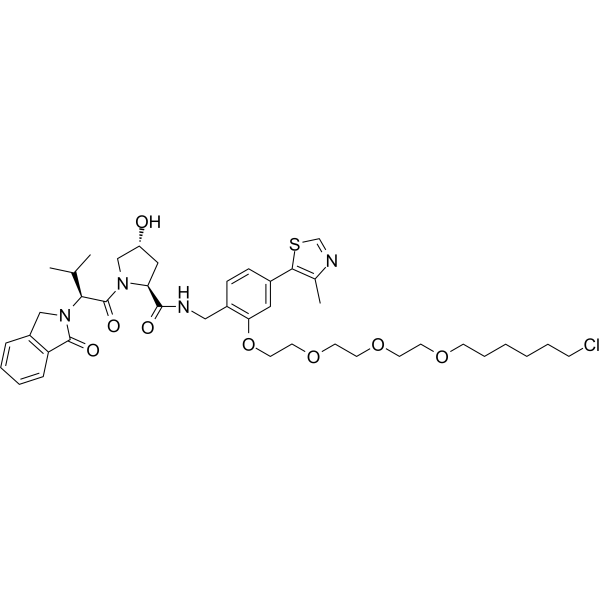
VH285-PEG4-C4-Cl (HaloPROTAC 3) is a conjugate of ligands for E3 and 16-atom-length linker. The connector of linker is Halogen group. VH285-PEG4-C4-Cl incorporates the VH285 based VHL ligand and an alkyl/ether-based linker. VH285-PEG4-C4-Cl is a highly potent and efficacious degrader of GFP-HaloTag7 with a DC50 of 19 nM. VH285-PEG4-C4-Cl is able to induce 90 % degradation of GFP-Halotag at 625 nM. VH285-PEG4-C4-Cl binds to VHL with an IC50 of 0.54 μM .
|
-
- HY-W039178
-
|
|
ADC Linker
PROTAC Linkers
|
Cancer
|
|
Hydroxy-PEG4-(CH2)2-Boc is a uncleavable ADC linker used in the synthesis of antibody-drug conjugates (ADCs). Hydroxy-PEG4-(CH2)2-Boc is extracted from patent WO2004008101A2 (compound 191). Hydroxy-PEG4-(CH2)2-Boc is also a PROTAC linker that can be used in the synthesis of PROTACs.
|
-
- HY-126884
-
|
|
ADC Linker
PROTAC Linkers
|
Cancer
|
|
DBCO-NHCO-PEG4-NH-Boc is a PEG/Alkyl/ether-based PROTAC linker can be used in the synthesis of PROTACs. DBCO-NHCO-PEG4-NH-Boc is a cleavable ADC linker used in the synthesis of antibody-drug conjugates (ADCs) . DBCO-NHCO-PEG4-NH-Boc is a click chemistry reagent, it contains a DBCO group that can undergo strain-promoted alkyne-azide cycloaddition (SPAAC) with molecules containing Azide groups.
|
-
- HY-156478
-
|
|
ADC Linker
|
Cancer
|
|
Me-Tet-PEG4-NHBoc is an ADC Linker containing 4 PEG units. Me-Tet-PEG4-NHBoc can utilize its own Tetrazine group to undergo a specific inverse electron demand Diels-Alder reaction (iEDDA) with compounds with TCO groups.
|
-
- HY-156313
-
|
|
ADC Linker
|
Cancer
|
|
Me-Tet-PEG4-NHS is an ADC Linker containing 4 PEG units. Me-Tet-PEG4-NHS can utilize its own Tetrazine group to undergo a specific inverse electron demand Diels-Alder reaction (iEDDA) with compounds with TCO groups.
|
-
- HY-156492
-
|
|
ADC Linker
|
Cancer
|
|
Me-Tet-PEG4-COOH is an ADC Linker containing 4 PEG units. Me-Tet-PEG4-COOH can utilize its own Tetrazine group to undergo a specific inverse electron demand Diels-Alder reaction (iEDDA) with compounds with TCO groups.
|
-
- HY-140509
-
-
- HY-136131
-
|
|
ADC Linker
|
Cancer
|
|
NH2-PEG4-hydrazone-DBCO is a cleavable 4 unit PEG ADC linker used in the synthesis of antibody-drug conjugates (ADCs) . NH2-PEG4-hydrazone-DBCO is a click chemistry reagent, it contains a DBCO group that can undergo strain-promoted alkyne-azide cycloaddition (SPAAC) with molecules containing Azide groups.
|
-
- HY-136044
-
|
|
ADC Linker
|
Cancer
|
|
APN-PEG4-BCN is a cleavable 4 unit PEG ADC linker used in the synthesis of antibody-drug conjugates (ADCs) . APN-PEG4-BCN is a click chemistry reagent, it contains a BCN group that can undergo strain-promoted alkyne-azide cycloaddition (SPAAC) with molecules containing Azide groups.
|
-
- HY-136049
-
|
|
ADC Linker
|
Cancer
|
|
APN-PEG4-DBCO is a cleavable 4 unit PEG ADC linker used in the synthesis of antibody-drug conjugates (ADCs) . APN-PEG4-DBCO is a click chemistry reagent, it contains a DBCO group that can undergo strain-promoted alkyne-azide cycloaddition (SPAAC) with molecules containing Azide groups.
|
-
- HY-136046
-
|
|
ADC Linker
|
Cancer
|
|
PTAD-PEG4-alkyne is a cleavable 4 unit PEG ADC linker used in the synthesis of antibody-drug conjugates (ADCs) . PTAD-PEG4-alkyne is a click chemistry reagent, it contains an Alkyne group and can undergo copper-catalyzed azide-alkyne cycloaddition (CuAAc) with molecules containing Azide groups.
|
-
- HY-136067
-
|
|
ADC Linker
|
Cancer
|
|
DBCO-PEG4-HyNic is a cleavable 4 unit PEG ADC linker used in the synthesis of antibody-drug conjugates (ADCs) . DBCO-PEG4-HyNic is a click chemistry reagent, it contains a DBCO group that can undergo strain-promoted alkyne-azide cycloaddition (SPAAC) with molecules containing Azide groups.
|
-
- HY-136061
-
|
|
ADC Linker
|
Cancer
|
|
BCN-PEG4-HyNic is a cleavable 4 unit PEG ADC linker used in the synthesis of antibody-drug conjugates (ADCs) . BCN-PEG4-HyNic is a click chemistry reagent, it contains a BCN group that can undergo strain-promoted alkyne-azide cycloaddition (SPAAC) with molecules containing Azide groups.
|
-
- HY-136075
-
|
|
ADC Linker
|
Cancer
|
|
HyNic-PEG4-alkyne is a cleavable 4 unit PEG ADC linker used in the synthesis of antibody-drug conjugates (ADCs) . HyNic-PEG4-alkyne is a click chemistry reagent, it contains an Alkyne group and can undergo copper-catalyzed azide-alkyne cycloaddition (CuAAc) with molecules containing Azide groups.
|
-
- HY-135971
-
|
|
ADC Linker
|
Cancer
|
|
endo-BCN-PEG4-acid is a cleavable 4 unit PEG ADC linker used in the synthesis of antibody-drug conjugates (ADCs) . endo-BCN-PEG4-acid is a click chemistry reagent, it contains a BCN group that can undergo strain-promoted alkyne-azide cycloaddition (SPAAC) with molecules containing Azide groups.
|
-
- HY-124323
-
|
|
PROTAC Linkers
|
Cancer
|
|
m-PEG4-NHS ester is a PEG-based PROTAC linker can be used in the synthesis of PROTACs.
|
-
- HY-W040228
-
|
|
PROTAC Linkers
|
Cancer
|
|
BnO-PEG4-OH is a PEG-based PROTAC linker can be used in the synthesis of PROTACs.
|
-
- HY-140548
-
|
|
PROTAC Linkers
|
Cancer
|
|
NH-bis-PEG4 is a PEG-based PROTAC linker that can be used in the synthesis of PROTACs .
|
-
- HY-130290
-
|
|
PROTAC Linkers
|
Cancer
|
|
Biotin-PEG4-OH is a PEG-based PROTAC linker can be used in the synthesis of PROTAC.
|
-
- HY-140410
-
|
|
PROTAC Linkers
|
Cancer
|
|
Bis-aminooxy-PEG4 is a PEG-based PROTAC linker that can be used in the synthesis of PROTACs .
|
-
- HY-W108219
-
|
|
PROTAC Linkers
|
Cancer
|
|
Benzyl-PEG4-Ots is a PEG-based PROTAC linker can be used in the synthesis of PROTACs.
|
-
- HY-140294
-
|
|
PROTAC Linkers
|
Cancer
|
|
DBCO-C2-PEG4-NH-Boc is a PEG-based PROTAC linker that can be used in the synthesis of PROTACs . DBCO-C2-PEG4-NH-Boc is a click chemistry reagent, it contains a DBCO group that can undergo strain-promoted alkyne-azide cycloaddition (SPAAC) with molecules containing Azide groups.
|
-
- HY-140295
-
|
|
PROTAC Linkers
|
Cancer
|
|
DBCO-C3-PEG4-NH-Boc is a PEG-based PROTAC linker that can be used in the synthesis of PROTACs . DBCO-C3-PEG4-NH-Boc is a click chemistry reagent, it contains a DBCO group that can undergo strain-promoted alkyne-azide cycloaddition (SPAAC) with molecules containing Azide groups.
|
-
- HY-138756
-
|
|
PROTAC Linkers
|
Cancer
|
|
PC DBCO-PEG4-NHS ester is a PEG-based PROTAC linker that can be used in the synthesis of PROTACs . PC DBCO-PEG4-NHS ester is a click chemistry reagent, it contains a DBCO group that can undergo strain-promoted alkyne-azide cycloaddition (SPAAC) with molecules containing Azide groups.
|
-
- HY-140923
-
|
|
PROTAC Linkers
|
Cancer
|
|
Biotin-PEG4-amide-Alkyne is a PEG-based PROTAC linker that can be used in the synthesis of PROTACs . Biotin-PEG4-amide-Alkyne is a click chemistry reagent, it contains an Alkyne group and can undergo copper-catalyzed azide-alkyne cycloaddition (CuAAc) with molecules containing Azide groups.
|
-
- HY-140052
-
|
|
PROTAC Linkers
|
Cancer
|
|
Boc-aminooxy-PEG4-propargyl is a PEG-based PROTAC linker that can be used in the synthesis of PROTACs . Boc-aminooxy-PEG4-propargyl is a click chemistry reagent, it contains an Alkyne group and can undergo copper-catalyzed azide-alkyne cycloaddition (CuAAc) with molecules containing Azide groups.
|
-
- HY-140291
-
|
|
PROTAC Linkers
|
Cancer
|
|
DBCO-PEG4-NH-Boc is a PEG-based PROTAC linker that can be used in the synthesis of PROTACs . DBCO-PEG4-NH-Boc is a click chemistry reagent, it contains a DBCO group that can undergo strain-promoted alkyne-azide cycloaddition (SPAAC) with molecules containing Azide groups.
|
-
- HY-140307
-
|
|
PROTAC Linkers
|
Cancer
|
|
Sulfo DBCO-PEG4-Maleimide is a PEG-based PROTAC linker that can be used in the synthesis of PROTACs . Sulfo DBCO-PEG4-Maleimide is a click chemistry reagent, it contains a DBCO group that can undergo strain-promoted alkyne-azide cycloaddition (SPAAC) with molecules containing Azide groups.
|
-
- HY-140069
-
|
|
PROTAC Linkers
|
Cancer
|
|
endo-BCN-PEG4-NHS ester is a PEG-based PROTAC linker that can be used in the synthesis of PROTACs . endo-BCN-PEG4-NHS ester is a click chemistry reagent, it contains a BCN group that can undergo strain-promoted alkyne-azide cycloaddition (SPAAC) with molecules containing Azide groups.
|
-
- HY-140315
-
|
|
PROTAC Linkers
|
Cancer
|
|
m-PEG4-NH-DBCO is a PEG-based PROTAC linker that can be used in the synthesis of PROTACs . m-PEG4-NH-DBCO is a click chemistry reagent, it contains a DBCO group that can undergo strain-promoted alkyne-azide cycloaddition (SPAAC) with molecules containing Azide groups.
|
-
- HY-140073
-
|
|
PROTAC Linkers
|
Cancer
|
|
endo-BCN-PEG4-PFP ester is a PEG-based PROTAC linker that can be used in the synthesis of PROTACs . endo-BCN-PEG4-PFP ester is a click chemistry reagent, it contains a BCN group that can undergo strain-promoted alkyne-azide cycloaddition (SPAAC) with molecules containing Azide groups.
|
-
- HY-140926
-
|
|
PROTAC Linkers
|
Cancer
|
|
N-(Propargyl-PEG4)-biocytin is a PEG-based PROTAC linker that can be used in the synthesis of PROTACs . N-(Propargyl-PEG4)-biocytin is a click chemistry reagent, it contains an Alkyne group and can undergo copper-catalyzed azide-alkyne cycloaddition (CuAAc) with molecules containing Azide groups.
|
-
- HY-140931
-
|
|
PROTAC Linkers
|
Cancer
|
|
Dde Biotin-PEG4-DBCO is a PEG-based PROTAC linker that can be used in the synthesis of PROTACs . Dde Biotin-PEG4-DBCO is a click chemistry reagent, it contains a DBCO group that can undergo strain-promoted alkyne-azide cycloaddition (SPAAC) with molecules containing Azide groups.
|
-
- HY-140924
-
|
|
PROTAC Linkers
|
Cancer
|
|
Dde Biotin-PEG4-alkyne is a PEG-based PROTAC linker that can be used in the synthesis of PROTACs . Dde Biotin-PEG4-alkyne is a click chemistry reagent, it contains an Alkyne group and can undergo copper-catalyzed azide-alkyne cycloaddition (CuAAc) with molecules containing Azide groups.
|
-
- HY-180447A
-
-
- HY-126684
-
-
- HY-126672
-
|
|
ADC Linker
|
Cancer
|
|
Mal-amide-PEG4-Val-Cit-PAB-OH is a cleavable ADC linker containing a Maleimide group. Mal-amide-PEG4-Val-Cit-PAB-OH is used in the synthesis of antibody-drug conjugates (ADCs) .
|
-
- HY-W451436
-
|
|
PROTAC Linkers
|
Cancer
|
|
TBS-PEG4-O-alkyne is a PROTAC linker that can be used in the synthesis of PROTACs.
|
-
- HY-164379A
-
-
- HY-136079
-
|
|
ADC Linker
|
Cancer
|
|
Methyltetrazine-PEG4-hydrazone-DBCO is a cleavable 4 unit PEG ADC linker used in the synthesis of antibody-drug conjugates (ADCs) . Methyltetrazine-PEG4-hydrazone-DBCO is a click chemistry reagent, it contains a DBCO group that can undergo strain-promoted alkyne-azide cycloaddition (SPAAC) with molecules containing Azide groups. Methyltetrazine-PEG4-hydrazone-DBCO also contains a Tetrazine group that can undergo an inverse electron demand Diels-Alder reaction (iEDDA) with molecules containing TCO groups.
|
-
- HY-140630
-
|
|
PROTAC Linkers
|
Cancer
|
|
Ald-CH2-PEG4-Boc is a PEG-based PROTAC linker that can be used in the synthesis of PROTACs .
|
-
- HY-167789
-
-
- HY-136052
-
|
|
ADC Linker
|
Cancer
|
|
Tetrazine-PEG4-oxyamine (hydrochloride) is a cleavable 4 unit PEG ADC linker used in the synthesis of antibody-drug conjugates (ADCs) . Tetrazine-PEG4-oxyamine (hydrochloride) is a click chemistry reagent, it contains a Tetrazine group that can undergo an inverse electron demand Diels-Alder reaction (iEDDA) with molecules containing TCO groups.
|
-
- HY-130927
-
|
|
ADC Linker
|
Cancer
|
|
BCN-PEG4-Ts is a non-cleavable 4 unit PEG ADC linker used in the synthesis of antibody-drug conjugates (ADCs) . BCN-PEG4-Ts is a click chemistry reagent, it contains a BCN group that can undergo strain-promoted alkyne-azide cycloaddition (SPAAC) with molecules containing Azide groups.
|
-
- HY-136045
-
|
|
ADC Linker
|
Cancer
|
|
APN-PEG4-tetrazine is a cleavable 4 unit PEG ADC linker used in the synthesis of antibody-drug conjugates (ADCs) . APN-PEG4-tetrazine is a click chemistry reagent, it contains a Tetrazine group that can undergo an inverse electron demand Diels-Alder reaction (iEDDA) with molecules containing TCO groups.
|
-
- HY-133430
-
|
|
ADC Linker
|
Cancer
|
|
DBCO-PEG4-alkyne is a non-cleavable 4 unit PEG ADC linker used in the synthesis of antibody-drug conjugates (ADCs) . DBCO-PEG4-alkyne is a click chemistry reagent, it contains an Alkyne group and can undergo copper-catalyzed azide-alkyne cycloaddition (CuAAc) with molecules containing Azide groups.
|
-
- HY-136074
-
|
|
ADC Linker
|
Cancer
|
|
Methyltetrazine-PEG4-aldehyde is a cleavable 4 unit PEG ADC linker used in the synthesis of antibody-drug conjugates (ADCs) . Methyltetrazine-PEG4-aldehyde is a click chemistry reagent, it contains a Tetrazine group that can undergo an inverse electron demand Diels-Alder reaction (iEDDA) with molecules containing TCO groups.
|
-
- HY-136053
-
|
|
ADC Linker
|
Cancer
|
|
Tetrazine-PEG4-biotin is a cleavable 4 unit PEG ADC linker used in the synthesis of antibody-drug conjugates (ADCs) . Tetrazine-PEG4-biotin is a click chemistry reagent, it contains a Tetrazine group that can undergo an inverse electron demand Diels-Alder reaction (iEDDA) with molecules containing TCO groups.
|
-
- HY-130977
-
|
|
ADC Linker
|
Cancer
|
|
Tetrazine-PEG4-amine (hydrochloride) is a cleavable 4 unit PEG ADC linker used in the synthesis of antibody-drug conjugates (ADCs) . Tetrazine-PEG4-amine (hydrochloride) is a click chemistry reagent, it contains a Tetrazine group that can undergo an inverse electron demand Diels-Alder reaction (iEDDA) with molecules containing TCO groups.
|
-
- HY-133427
-
|
|
ADC Linker
|
Cancer
|
|
Propargyl-PEG4-hydrazide is a non-cleavable 4 unit PEG ADC linker used in the synthesis of antibody-drug conjugates (ADCs) . Propargyl-PEG4-hydrazide is a click chemistry reagent, it contains an Alkyne group and can undergo copper-catalyzed azide-alkyne cycloaddition (CuAAc) with molecules containing Azide groups.
|
-
- HY-136056
-
|
|
ADC Linker
|
Cancer
|
|
Methyltetrazine-PEG4-oxyamine is a cleavable 4 unit PEG ADC linker used in the synthesis of antibody-drug conjugates (ADCs) . Methyltetrazine-PEG4-oxyamine is a click chemistry reagent, it contains a Tetrazine group that can undergo an inverse electron demand Diels-Alder reaction (iEDDA) with molecules containing TCO groups.
|
-
- HY-130449
-
|
|
ADC Linker
PROTAC Linkers
|
Cancer
|
|
N-Boc-N-bis(PEG4-OH) is a PEG-based PROTAC linker can be used in the synthesis of PROTACs. N-Boc-N-bis(PEG4-OH) is a cleavable ADC linker used in the synthesis of antibody-drug conjugates (ADCs) .
|
-
- HY-140516
-
|
|
PROTAC Linkers
|
Cancer
|
|
NH-bis(PEG4-acid) is a PEG-based PROTAC linker that can be used in the synthesis of PROTACs .
|
-
- HY-140162
-
|
|
PROTAC Linkers
|
Cancer
|
|
Hydroxy-PEG4-methylamine is a PEG-based PROTAC linker that can be used in the synthesis of PROTACs .
|
-
- HY-132097
-
|
|
PROTAC Linkers
|
Cancer
|
|
Bromo-PEG4-PFP ester is a PEG-based PROTAC linker that can be used in the synthesis of PROTACs .
|
-
- HY-138352
-
|
|
PROTAC Linkers
|
Cancer
|
|
THP-PEG4-Boc is a PEG-based PROTAC linker that can be used in the synthesis of PROTACs .
|
-
- HY-141302
-
|
|
PROTAC Linkers
|
Cancer
|
|
Carboxy-PEG4-phosphonic acid is a PEG-based PROTAC linker that can be used in the synthesis of PROTACs .
|
-
- HY-138513
-
|
|
PROTAC Linkers
|
Cancer
|
|
Benzyl-PEG4-acyl chloride is a PEG-based PROTAC linker that can be used in the synthesis of PROTACs .
|
-
- HY-140618
-
|
|
PROTAC Linkers
|
Cancer
|
|
DNP-PEG4-alcohol is a PEG-based PROTAC linker that can be used in the synthesis of PROTACs .
|
-
- HY-132095
-
|
|
PROTAC Linkers
|
Cancer
|
|
Methyl-PEG4-acyl chloride is a PEG-based PROTAC linker that can be used in the synthesis of PROTACs .
|
-
- HY-138382
-
|
|
PROTAC Linkers
|
Cancer
|
|
m-PEG4-PFP ester is a PEG-based PROTAC linker that can be used in the synthesis of PROTACs .
|
-
- HY-140601
-
|
|
PROTAC Linkers
|
Cancer
|
|
Sulfone-Bis-PEG4-acid is a PEG-based PROTAC linker that can be used in the synthesis of PROTACs .
|
-
- HY-W096073
-
|
|
PROTAC Linkers
|
Cancer
|
|
Benzyl-PEG4-amine is a PEG-based PROTAC linker that can be used in the synthesis of PROTACs .
|
-
- HY-141394
-
|
|
PROTAC Linkers
|
Cancer
|
|
Chloroacetamido-PEG4-NHS ester is a PEG-based PROTAC linker that can be used in the synthesis of PROTACs .
|
-
- HY-130469
-
|
|
PROTAC Linkers
|
Cancer
|
|
Mal-PEG4-Boc is a PEG-based PROTAC linker that can be used in the synthesis of PROTACs .
|
-
- HY-140620
-
|
|
PROTAC Linkers
|
Cancer
|
|
m-PEG4-aldehyde is a PEG-based PROTAC linker that can be used in the synthesis of PROTACs .
|
-
- HY-130512
-
|
|
PROTAC Linkers
|
Cancer
|
|
Br-PEG4-OH is a PEG-based PROTAC linker that can be used in the synthesis of PROTACs .
|
-
- HY-W040527
-
|
|
PROTAC Linkers
|
Cancer
|
|
Bromo-PEG4-bromide is a PEG-based PROTAC linker can be used in the synthesis of PROTACs .
|
-
- HY-140440
-
|
|
PROTAC Linkers
|
Cancer
|
|
Fmoc-aminooxy-PEG4-acid is a PEG-based PROTAC linker that can be used in the synthesis of PROTACs .
|
-
- HY-138346
-
|
|
PROTAC Linkers
|
Cancer
|
|
Benzyl-PEG4-Boc is a PEG-based PROTAC linker that can be used in the synthesis of PROTACs .
|
-
- HY-134720
-
|
|
PROTAC Linkers
|
Cancer
|
|
Amine-PEG4-Desthiobiotin is a PEG-based PROTAC linker that can be used in the synthesis of PROTACs .
|
-
- HY-140006
-
|
|
PROTAC Linkers
|
Cancer
|
|
Diketone-PEG4-PFP ester is a PEG-based PROTAC linker that can be used in the synthesis of PROTACs .
|
-
- HY-141159A
-
|
|
PROTAC Linkers
|
Cancer
|
|
(S)-TCO-PEG4-acid is a PEG-based PROTAC linker that can be used in the synthesis of PROTACs .
|
-
- HY-W042579
-
|
|
PROTAC Linkers
|
Cancer
|
|
TBDMS-PEG4-OH is a PEG-based PROTAC linker that can be used in the synthesis of PROTACs .
|
-
- HY-133316
-
|
|
PROTAC Linkers
|
Cancer
|
|
HO-PEG4-benzyl ester is a PEG-based PROTAC linker that can be used in the synthesis of PROTACs .
|
-
- HY-134704
-
|
|
PROTAC Linkers
|
Cancer
|
|
Biotin-PEG4-SH is a PEG-based PROTAC linker that can be used in the synthesis of PROTACs .
|
-
- HY-134722
-
|
|
PROTAC Linkers
|
Cancer
|
|
Hydrazide-PEG4-Desthiobiotin is a PEG-based PROTAC linker that can be used in the synthesis of PROTACs .
|
-
- HY-138450
-
|
|
PROTAC Linkers
|
Cancer
|
|
Br-PEG4-methyl acetate is a PEG-based PROTAC linker that can be used in the synthesis of PROTACs .
|
-
- HY-141183
-
|
|
PROTAC Linkers
|
Cancer
|
|
TCO-PEG4-biotin is a PEG-based PROTAC linker can be used in the synthesis of PROTACs .
|
-
- HY-138426
-
|
|
PROTAC Linkers
|
Cancer
|
|
Biotin-PEG4-allyl is a PEG-based PROTAC linker that can be used in the synthesis of PROTACs .
|
-
- HY-138423
-
|
|
PROTAC Linkers
|
Cancer
|
|
Acryloyl-PEG4-OH is a PEG-based PROTAC linker that can be used in the synthesis of PROTACs .
|
-
- HY-140174
-
|
|
PROTAC Linkers
|
Cancer
|
|
Boc-PEG4-sulfonic acid is a PEG-based PROTAC linker that can be used in the synthesis of PROTACs .
|
-
- HY-130195
-
|
|
PROTAC Linkers
|
Cancer
|
|
SPDP-PEG4-NHS ester is a PEG-based PROTAC linker that can be used in the synthesis of PROTACs .
|
-
- HY-140448
-
|
|
PROTAC Linkers
|
Cancer
|
|
Diketone-PEG4-Biotin is a PEG-based PROTAC linker that can be used in the synthesis of PROTACs .
|
-
- HY-141307
-
|
|
PROTAC Linkers
|
Cancer
|
|
m-PEG4-phosphonic acid is a PEG-based PROTAC linker that can be used in the synthesis of PROTACs .
|
-
- HY-W096074
-
|
|
PROTAC Linkers
|
Cancer
|
|
MS-PEG4-THP is a PEG-based PROTAC linker that can be used in the synthesis of PROTACs .
|
-
- HY-140170
-
|
|
PROTAC Linkers
|
Cancer
|
|
m-PEG4-sulfonic acid is a PEG-based PROTAC linker that can be used in the synthesis of PROTACs .
|
-
- HY-132024
-
|
|
PROTAC Linkers
|
Cancer
|
|
Bromo-PEG4-MS is a PEG-based PROTAC linker that can be used in the synthesis of PROTACs .
|
-
- HY-D2329
-
|
|
Fluorescent Dye
|
Others
|
|
Fluorescein-PEG4-NHS ester is a colorimetric probe formed by the reaction of adipic dihydrazide and fluorescein isothiocyanate .
|
-
- HY-W190728
-
|
|
PROTAC Linkers
|
Cancer
|
|
Bis-PEG4-TFP ester is a PEG-based PROTAC linker that can be used in the synthesis of PROTACs .
|
-
- HY-138491
-
|
|
PROTAC Linkers
|
Cancer
|
|
Iodoacetyl-PEG4-biotin is a PEG-based PROTAC linker that can be used in the synthesis of PROTACs .
|
-
- HY-135048
-
|
|
PROTAC Linkers
|
Cancer
|
|
Mal-PEG4-OH is a PEG-based PROTAC linker that can be used in the synthesis of PROTACs .
|
-
- HY-141179
-
|
|
PROTAC Linkers
|
Cancer
|
|
TCO-PEG4-amine is a PEG-based PROTAC linker can be used in the synthesis of PROTACs .
|
-
- HY-W096090
-
|
|
PROTAC Linkers
|
Cancer
|
|
Benzyl-PEG4-MS is a PEG-based PROTAC linker that can be used in the synthesis of PROTACs .
|
-
- HY-126998
-
|
|
PROTAC Linkers
|
Cancer
|
|
Bis-PEG4-PFP ester is a PEG-based PROTAC linker that can be used in the synthesis of PROTACs .
|
-
- HY-141387
-
|
|
PROTAC Linkers
|
Cancer
|
|
Bromoacetamido-PEG4-NHS ester is a PEG-based PROTAC linker that can be used in the synthesis of PROTACs .
|
-
- HY-140413
-
|
|
PROTAC Linkers
|
Cancer
|
|
Boc-aminoxy-PEG4-acid is a PEG-based PROTAC linker that can be used in the synthesis of PROTACs .
|
-
- HY-138372
-
|
|
PROTAC Linkers
|
Cancer
|
|
Br-PEG4-THP is a PEG-based PROTAC linker that can be used in the synthesis of PROTACs .
|
-
- HY-140193
-
|
|
PROTAC Linkers
|
Cancer
|
|
Amino-PEG4-Boc is a PEG-based PROTAC linker that can be used in the synthesis of PROTACs .
|
-
- HY-140903
-
|
|
PROTAC Linkers
|
Cancer
|
|
Biotin-PEG4-TFP ester is a PEG-based PROTAC linker that can be used in the synthesis of PROTACs .
|
-
- HY-140614
-
|
|
PROTAC Linkers
|
Cancer
|
|
DNP-PEG4-NHS ester is a PEG-based PROTAC linker that can be used in the synthesis of PROTACs .
|
-
- HY-122456
-
|
|
PROTAC Linkers
|
Cancer
|
|
Fmoc-PEG4-NHS ester is a PEG-based PROTAC linker that can be used in the synthesis of PROTACs .
|
-
- HY-141402
-
|
|
PROTAC Linkers
|
Cancer
|
|
m-PEG4-Hydrazide is a PEG-based PROTAC linker can be used in the synthesis of PROTACs .
|
-
- HY-133271
-
|
|
PROTAC Linkers
|
Cancer
|
|
m-PEG4-SH is a PEG-based PROTAC linker that can be used in the synthesis of PROTACs .
|
-
- HY-140748
-
|
|
PROTAC Linkers
|
Cancer
|
|
BnO-PEG4-Boc is a PEG-based PROTAC linker that can be used in the synthesis of PROTACs .
|
-
- HY-132008
-
|
|
PROTAC Linkers
|
Cancer
|
|
Benzyl-PEG4-THP is a PEG-based PROTAC linker that can be used in the synthesis of PROTACs .
|
-
- HY-130230
-
|
|
PROTAC Linkers
|
Cancer
|
|
THP-PEG4-OH is a PEG-based PROTAC linker that can be used in the synthesis of PROTACs .
|
-
- HY-141188
-
|
|
PROTAC Linkers
|
Cancer
|
|
TCO-PEG4-TCO is a PEG-based PROTAC linker can be used in the synthesis of PROTACs .
|
-
- HY-138422
-
|
|
PROTAC Linkers
|
Cancer
|
|
Iodoacetyl-PEG4-NHS ester is a PEG-based PROTAC linker that can be used in the synthesis of PROTACs .
|
-
- HY-W096083
-
|
|
PROTAC Linkers
|
Cancer
|
|
Ethyl-PEG4-alcohol is a PEG-based PROTAC linker that can be used in the synthesis of PROTACs .
|
-
- HY-138421
-
|
|
PROTAC Linkers
|
Cancer
|
|
Hydroxy-PEG4-methyl acetate is a PEG-based PROTAC linker that can be used in the synthesis of PROTACs .
|
-
- HY-132017
-
|
|
PROTAC Linkers
|
Cancer
|
|
Bromo-PEG4-NHS ester is a PEG-based PROTAC linker that can be used in the synthesis of PROTACs .
|
-
- HY-140168
-
|
|
PROTAC Linkers
|
Cancer
|
|
Carboxy-PEG4-sulfonic acid is a PEG-based PROTAC linker that can be used in the synthesis of PROTACs .
|
-
- HY-140166
-
|
|
PROTAC Linkers
|
Cancer
|
|
Bis-PEG4-sulfonic acid is a PEG-based PROTAC linker that can be used in the synthesis of PROTACs .
|
-
- HY-138446
-
|
SH-PEG4-NH2 hydrochloride
|
PROTAC Linkers
|
Cancer
|
|
Thiol-PEG4-NH2 hydrochloride is a PEG-based PROTAC linker that can be used in the synthesis of PROTACs .
|
-
- HY-179583
-
|
|
Integrin
|
Cancer
|
|
FSC(PEG4-avb6)3 is a tracer targeting αvβ6 integrin trimer (IC50 = 0.69 nM). FSC(PEG4-avb6)3 can be used for the study of head-and-neck, lung, breast, and pancreatic carcinomas .
|
-
- HY-130939
-
|
|
ADC Linker
|
Cancer
|
|
APN-PEG4-Amine (hydrochloride) is a cleavable 4 unit PEG ADC linker used in the synthesis of antibody-drug conjugates (ADCs) . APN-PEG4-Amine (hydrochloride) is a click chemistry reagent, it contains an Alkyne group and can undergo copper-catalyzed azide-alkyne cycloaddition (CuAAc) with molecules containing Azide groups.
|
-
- HY-W588712
-
-
- HY-140055
-
|
|
E3 Ligase Ligand-Linker Conjugates
Autophagy
Apoptosis
|
Cancer
|
|
Thalidomide-PEG4-Propargyl is a synthesized E3 ligase ligand-linker conjugate that incorporates the Thalidomide based cereblon ligand and a linker used in PROTAC technology . Thalidomide-PEG4-Propargyl is a click chemistry reagent, it contains an Alkyne group and can undergo copper-catalyzed azide-alkyne cycloaddition (CuAAc) with molecules containing Azide groups.
|
-
- HY-140024
-
|
|
PROTAC Linkers
|
Cancer
|
|
Propargyl-PEG4-CH2-acid is a PEG-based PROTAC linker that can be used in the synthesis of PROTACs . Propargyl-PEG4-CH2-acid is a click chemistry reagent, it contains an Alkyne group and can undergo copper-catalyzed azide-alkyne cycloaddition (CuAAc) with molecules containing Azide groups.
|
-
- HY-130396
-
|
|
PROTAC Linkers
|
Cancer
|
|
DBCO-PEG4-C2-acid is a PEG-based PROTAC linker that can be used in the synthesis of PROTACs . DBCO-PEG4-C2-acid is a click chemistry reagent, it contains a DBCO group that can undergo strain-promoted alkyne-azide cycloaddition (SPAAC) with molecules containing Azide groups.
|
-
- HY-140139
-
|
|
ADC Linker
|
Cancer
|
|
PC Alkyne-PEG4-NHS ester is a cleavable 4 unit PEG ADC linker used in the synthesis of antibody-drug conjugates (ADCs) . PC Alkyne-PEG4-NHS ester is a click chemistry reagent, it contains an Alkyne group and can undergo copper-catalyzed azide-alkyne cycloaddition (CuAAc) with molecules containing Azide groups.
|
-
- HY-156323
-
|
|
ADC Linker
|
Cancer
|
|
BCN-exo-PEG4-NHS is an ADC Linker containing 4 PEG units. BCN-exo-PEG4-NHS contains the lyophilic bidentate macrocyclic ligand BCN, which allows for further synthesis of macrocyclic complexes. In click chemistry, BCN reacts with molecules containing azide groups to form stable triazoles in the absence of catalysts.
|
-
- HY-135979
-
|
|
ADC Linker
|
Cancer
|
|
DBCO-SS-PEG4-Biotin is a cleavable 4 unit PEG ADC linker used in the synthesis of antibody-drug conjugates (ADCs) . DBCO-SS-PEG4-Biotin is a click chemistry reagent, it contains a DBCO group that can undergo strain-promoted alkyne-azide cycloaddition (SPAAC) with molecules containing Azide groups.
|
-
- HY-140263
-
|
|
PROTAC Linkers
|
Cancer
|
|
NH-bis(m-PEG4) is a PEG-based PROTAC linker that can be used in the synthesis of PROTACs .
|
-
- HY-140074
-
|
|
PROTAC Linkers
|
Cancer
|
|
endo-BCN-PEG4-Boc is a PEG-based PROTAC linker can be used in the synthesis of PROTACs.
|
-
- HY-W013522
-
|
Tetraglyme
|
PROTAC Linkers
|
Cancer
|
|
Me-PEG4-Me is a PEG-based PROTAC linker that can be used in the synthesis of PROTACs .
|
-
- HY-157465
-
|
|
Drug-Linker Conjugates for ADC
|
Cancer
|
|
MA-PEG4-VC-PAB-DMEA-duocarmycin DM is a drug-linker conjugate for ADC by using the DNA minor-groove alkylator Duocarmycin DM (HY-130978), linked via MA-PEG4-vc-PAB-DMEA (HY-126668).
|
-
- HY-133426
-
|
Ald-benzyl-amide-PEG4-propargyl
|
ADC Linker
|
Cancer
|
|
Ald-Ph-amido-PEG4-propargyl is a non-cleavable 4 unit PEG ADC linker used in the synthesis of antibody-drug conjugates (ADCs) . Ald-Ph-amido-PEG4-propargyl is a click chemistry reagent, it contains an Alkyne group and can undergo copper-catalyzed azide-alkyne cycloaddition (CuAAc) with molecules containing Azide groups.
|
-
- HY-141013
-
|
|
E3 Ligase Ligand-Linker Conjugates
Autophagy
Apoptosis
|
Cancer
|
|
Thalidomide-O-amido-PEG4-propargyl is a PEG-based PROTAC linker that can be used in the synthesis of PROTACs . Thalidomide-O-amido-PEG4-propargyl is a click chemistry reagent, it contains an Alkyne group and can undergo copper-catalyzed azide-alkyne cycloaddition (CuAAc) with molecules containing Azide groups.
|
-
- HY-140307A
-
|
|
PROTAC Linkers
|
Others
|
|
Sulfo DBCO-PEG4-Maleimide TEA is a PEG-based PROTAC linker that can be used in the synthesis of PROTACs . Sulfo DBCO-PEG4-Maleimide (TEA) is a click chemistry reagent, it contains a DBCO group that can undergo strain-promoted alkyne-azide cycloaddition (SPAAC) with molecules containing Azide groups.
|
-
- HY-133464
-
|
|
PROTAC Linkers
|
Cancer
|
|
Tetrazine-Ph-NHCO-PEG4-alkyne is a PEG-based PROTAC linker that can be used in the synthesis of PROTACs . Tetrazine-Ph-NHCO-PEG4-alkyne is a click chemistry reagent, it contains an Alkyne group and can undergo copper-catalyzed azide-alkyne cycloaddition (CuAAc) with molecules containing Azide groups.
|
-
- HY-156300
-
|
|
ADC Linker
|
Cancer
|
|
Me-Tet-PEG4-NH2 is an ADC Linker containing 4 PEG units. Me-Tet-PEG4-NH2 can use its own Tetrazine group to undergo a specific inverse electron demand Diels-Alder reaction (iEDDA) with compounds with TCO groups.
|
-
- HY-140048
-
|
|
PROTAC Linkers
|
Cancer
|
|
Propargyl-PEG4-5-nitrophenyl carbonate is a PEG-based PROTAC linker that can be used in the synthesis of PROTACs . Propargyl-PEG4-5-nitrophenyl carbonate is a click chemistry reagent, it contains an Alkyne group and can undergo copper-catalyzed azide-alkyne cycloaddition (CuAAc) with molecules containing Azide groups.
|
-
- HY-140879
-
|
|
PROTAC Linkers
|
Cancer
|
|
Boc-N-Amido-PEG4-propargyl is a PEG-based PROTAC linker that can be used in the synthesis of PROTACs . Boc-N-Amido-PEG4-propargyl is a click chemistry reagent, it contains an Alkyne group and can undergo copper-catalyzed azide-alkyne cycloaddition (CuAAc) with molecules containing Azide groups.
|
-
- HY-144079
-
|
|
PROTAC Linkers
|
Cancer
|
|
Bromo-C4-PEG4-t-butyl ester is a PEG-based PROTAC linker that can be used in the synthesis of PROTACs .
|
-
- HY-W544848
-
|
|
PROTAC Linkers
|
Cancer
|
|
Hydroxy-PEG4-NH-CO-OBn is a PROTAC linker that can be used in the synthesis of PROTACs.
|
-
- HY-140889
-
|
|
PROTAC Linkers
|
Cancer
|
|
Biotin-PEG4-NHS ester is a biotin-labeled, PEG-based PROTAC linker that can be used in the synthesis of PROTACs .
|
-
- HY-140239
-
|
|
PROTAC Linkers
|
Cancer
|
|
Amino-PEG4-benzyl ester is a PEG- and Alkyl/ether-based PROTAC linker that can be used in the synthesis of PROTACs .
|
-
- HY-140895
-
|
|
PROTAC Linkers
|
Cancer
|
|
Biotin-PEG4-amine is a biotin-labeled, PEG-based PROTAC linker that can be used in the synthesis of PROTACs .
|
-
- HY-153172
-
|
|
Others
|
Others
|
|
Phenylbenzothiazole-PEG4-OH (compound 1) can study spinal cord injury and promote spine formation .
|
-
- HY-140932
-
|
|
PROTAC Linkers
|
Cancer
|
|
Biotin-PEG4-hydrazide is a biotin-labeled, PEG-based PROTAC linker that can be used in the synthesis of PROTACs .
|
-
- HY-W800655
-
|
|
PROTAC Linkers
|
Cancer
|
|
Thalidomide-O-PEG4-Acid is a PROTAC linker that can react with Amine containing moiety in the presence of Activator EDC or HATU.
|
-
- HY-126506
-
|
|
ADC Linker
|
Cancer
|
|
Mal-PEG4-PFP ester is a nonclaevable ADC linker containing a Maleimide group, 4-unit PEG and a PFP ester.
|
-
- HY-42640
-
|
|
ADC Linker
PROTAC Linkers
|
Cancer
|
|
Boc-NH-PEG4-CH2COOH is a cleavable ADC linker used as a linker for antibody-drug conjugates (ADC). Boc-NH-PEG4-CH2COOH is also a PEG-based PROTAC linker that can be used in the synthesis of PROTACs .
|
-
- HY-130175
-
|
|
ADC Linker
PROTAC Linkers
|
Cancer
|
|
Fmoc-NH-PEG4-CH2COOH is a cleavable ADC linker used in the synthesis of antibody-drug conjugates (ADCs). Fmoc-NH-PEG4-CH2COOH is also a PEG-based PROTAC linker that can be used in the synthesis of PROTACs .
|
-
- HY-164598
-
-
- HY-140633
-
|
N3-PEG4-CH2CH2CHO
|
PROTAC Linkers
|
Cancer
|
|
Ald-C2-PEG4-azide is a PEG-based PROTAC linker that can be used in the synthesis of PROTACs . Ald-C2-PEG4-azide is a click chemistry reagent, it contains an Azide group and can undergo copper-catalyzed azide-alkyne cycloaddition reaction (CuAAc) with molecules containing Alkyne groups. It can also undergo strain-promoted alkyne-azide cycloaddition (SPAAC) reactions with molecules containing DBCO or BCN groups.
|
-
- HY-159780
-
-
- HY-133466
-
|
|
ADC Linker
|
Cancer
|
|
Methyltetrazine-PEG4-SS-NHS ester is a cleavable 4 unit PEG ADC linker used in the synthesis of antibody-drug conjugates (ADCs) . Methyltetrazine-PEG4-SS-NHS ester is a click chemistry reagent, it contains a Tetrazine group that can undergo an inverse electron demand Diels-Alder reaction (iEDDA) with molecules containing TCO groups.
|
-
- HY-136035
-
|
|
ADC Linker
|
Cancer
|
|
Methyltetrazine-SS-PEG4-Biotin is a cleavable 4 unit PEG ADC linker used in the synthesis of antibody-drug conjugates (ADCs) . Methyltetrazine-SS-PEG4-Biotin is a click chemistry reagent, it contains a Tetrazine group that can undergo an inverse electron demand Diels-Alder reaction (iEDDA) with molecules containing TCO groups.
|
-
- HY-136078
-
|
|
ADC Linker
|
Cancer
|
|
Tetrazine-diazo-PEG4-biotin is a cleavable 4 unit PEG ADC linker used in the synthesis of antibody-drug conjugates (ADCs) . Tetrazine-diazo-PEG4-biotin is a click chemistry reagent, it contains a Tetrazine group that can undergo an inverse electron demand Diels-Alder reaction (iEDDA) with molecules containing TCO groups.
|
-
- HY-133432
-
|
|
ADC Linker
|
Cancer
|
|
DBCO-PEG4-SS-TCO is a cleavable 4 unit PEG ADC linker used in the synthesis of antibody-drug conjugates (ADCs) . DBCO-PEG4-SS-TCO is a click chemistry reagent, it contains a TCO group that can undergo an inverse electron demand Diels-Alder reaction (iEDDA) with molecules containing Tetrazine groups.
|
-
- HY-133435
-
|
|
ADC Linker
|
Cancer
|
|
Aminooxy-amido-PEG4-propargyl is a non-cleavable 4 unit PEG ADC linker used in the synthesis of antibody-drug conjugates (ADCs) . Aminooxy-amido-PEG4-propargyl is a click chemistry reagent, it contains an Alkyne group and can undergo copper-catalyzed azide-alkyne cycloaddition (CuAAc) with molecules containing Azide groups.
|
-
- HY-136040
-
|
|
ADC Linker
|
Cancer
|
|
Tetrazine-PEG4-SS-NHS is a cleavable 4 unit PEG ADC linker used in the synthesis of antibody-drug conjugates (ADCs) . Tetrazine-PEG4-SS-NHS is a click chemistry reagent, it contains a Tetrazine group that can undergo an inverse electron demand Diels-Alder reaction (iEDDA) with molecules containing TCO groups.
|
-
- HY-136036
-
|
|
ADC Linker
|
Cancer
|
|
Tetrazine-SS-PEG4-Biotin is a cleavable 4 unit PEG ADC linker used in the synthesis of antibody-drug conjugates (ADCs) . Tetrazine-SS-PEG4-Biotin is a click chemistry reagent, it contains a Tetrazine group that can undergo an inverse electron demand Diels-Alder reaction (iEDDA) with molecules containing TCO groups.
|
-
- HY-130947
-
|
|
ADC Linker
|
Cancer
|
|
Tetrazine-PEG4-SS-Py is a cleavable 4 unit PEG ADC linker used in the synthesis of antibody-drug conjugates (ADCs) . Tetrazine-PEG4-SS-Py is a click chemistry reagent, it contains a Tetrazine group that can undergo an inverse electron demand Diels-Alder reaction (iEDDA) with molecules containing TCO groups.
|
-
- HY-136288
-
|
|
Drug-Linker Conjugates for ADC
|
Cancer
|
|
Azide-PEG4-VC-PAB-Doxorubicin is a agent-linker conjugate composed of a cytotoxic anthracycline antibiotic Doxorubicin and a linker Azide-PEG4-VC-PAB to make antibody agent conjugate (ADC) . Azide-PEG4-VC-PAB-Doxorubicin is a click chemistry reagent, it contains an Azide group and can undergo copper-catalyzed azide-alkyne cycloaddition reaction (CuAAc) with molecules containing Alkyne groups. It can also undergo strain-promoted alkyne-azide cycloaddition (SPAAC) reactions with molecules containing DBCO or BCN groups.
|
-
- HY-136260
-
|
|
Drug-Linker Conjugates for ADC
|
Cancer
|
|
DBCO-PEG4-Ahx-DM1 is a agent-linker conjugate composed of a potent microtubulin inhibitor DM1 and a linker DBCO-PEG4-Ahx to make antibody agent conjugate (ADC). Mertansine (DM1) is a microtubulin inhibitor and is an antibody-conjugatable maytansinoid that is developed to overcome systemic toxicity associated with maytansine and to enhance tumor-specific delivery. DBCO-PEG4-Ahx-DM1 is a click chemistry reagent, it contains a DBCO group that can undergo strain-promoted alkyne-azide cycloaddition (SPAAC) with molecules containing Azide groups.
|
-
- HY-W040134
-
|
|
PROTAC Linkers
|
Cancer
|
|
Mal-amido-PEG4-NHS ester is a PEG-based PROTAC linker that can be used in the synthesis of PROTACs .
|
-
- HY-141012
-
-
- HY-141350
-
|
|
PROTAC Linkers
|
Cancer
|
|
S-acetyl-PEG4-propargyl is a PEG-based PROTAC linker that can be used in the synthesis of PROTACs .
|
-
- HY-132067
-
|
|
PROTAC Linkers
|
Cancer
|
|
Bis-PEG4-t-butyl ester is a PEG-based PROTAC linker that can be used in the synthesis of PROTACs .
|
-
- HY-141347
-
|
|
PROTAC Linkers
|
Cancer
|
|
S-acetyl-PEG4-Boc is a PEG-based PROTAC linker that can be used in the synthesis of PROTACs .
|
-
- HY-141304
-
|
|
PROTAC Linkers
|
Cancer
|
|
Boc-PEG4-phosphonic acid ethyl ester is a PEG-based PROTAC linker that can be used in the synthesis of PROTACs .
|
-
- HY-132109
-
|
|
PROTAC Linkers
|
Cancer
|
|
MS-PEG4-t-butyl ester is a PEG-based PROTAC linker that can be used in the synthesis of PROTACs .
|
-
- HY-141341
-
|
|
PROTAC Linkers
|
Cancer
|
|
S-acetyl-PEG4-alcohol is a PEG-based PROTAC linker that can be used in the synthesis of PROTACs .
|
-
- HY-140258
-
|
|
PROTAC Linkers
|
Cancer
|
|
NH-bis(PEG4-Boc) is a PEG-based PROTAC linker that can be used in the synthesis of PROTACs .
|
-
- HY-133470
-
|
|
PROTAC Linkers
|
Cancer
|
|
Fmoc-NH-PEG4-alcohol is a PEG-based PROTAC linker that can be used in the synthesis of PROTACs .
|
-
- HY-141119
-
|
|
PROTAC Linkers
|
Cancer
|
|
Boc-NH-PEG4-NHS ester is a PEG-based PROTAC linker that can be used in the synthesis of PROTACs .
|
-
- HY-141113
-
|
|
PROTAC Linkers
|
Cancer
|
|
m-PEG4-O-NHS ester is a PEG-based PROTAC linker that can be used in the synthesis of PROTACs .
|
-
- HY-140423
-
|
|
PROTAC Linkers
|
Cancer
|
|
Boc-Aminoxy-PEG4-OH is a PEG-based PROTAC linker that can be used in the synthesis of PROTACs .
|
-
- HY-138758
-
|
|
PROTAC Linkers
|
Cancer
|
|
S-acetyl-PEG4-Thiol is a PEG-based PROTAC linker that can be used in the synthesis of PROTACs .
|
-
- HY-140286
-
|
|
PROTAC Linkers
|
Cancer
|
|
Sulfo DBCO-PEG4-amine is a PEG-based PROTAC linker that can be used in the synthesis of PROTACs .
|
-
- HY-138752
-
|
|
PROTAC Linkers
|
Cancer
|
|
S-acetyl-PEG4-amine is a PEG-based PROTAC linker that can be used in the synthesis of PROTACs .
|
-
- HY-141001
-
|
|
PROTAC Linkers
|
Cancer
|
|
Bis-Mal-Lysine-PEG4-acid is a PEG-based PROTAC linker that can be used in the synthesis of PROTACs .
|
-
- HY-138755
-
|
|
PROTAC Linkers
|
Cancer
|
|
S-acetyl-PEG4-NHBoc is a PEG-based PROTAC linker that can be used in the synthesis of PROTACs .
|
-
- HY-140391
-
|
|
PROTAC Linkers
|
Cancer
|
|
Boc-NH-PEG4-MS is a PEG-based PROTAC linker that can be used in the synthesis of PROTACs .
|
-
- HY-141103
-
|
|
PROTAC Linkers
|
Cancer
|
|
Fmoc-NMe-PEG4-NHS ester is a PEG-based PROTAC linker that can be used in the synthesis of PROTACs .
|
-
- HY-140937
-
|
|
PROTAC Linkers
|
Cancer
|
|
Biotin-amido-PEG4-PFP ester is a PEG-based PROTAC linker that can be used in the synthesis of PROTACs .
|
-
- HY-138481
-
|
|
PROTAC Linkers
|
Cancer
|
|
Boc-PEG4-methyl propionate is a PEG-based PROTAC linker that can be used in the synthesis of PROTACs .
|
-
- HY-141279
-
|
|
PROTAC Linkers
|
Cancer
|
|
Methyltetrazine-PEG4-NH-Boc is a PEG-based PROTAC linker that can be used in the synthesis of PROTACs .
|
-
- HY-140223
-
|
|
PROTAC Linkers
|
Cancer
|
|
Amino-PEG4-hydrazide-Boc is a PEG-based PROTAC linker that can be used in the synthesis of PROTACs .
|
-
- HY-140600
-
|
|
PROTAC Linkers
|
Cancer
|
|
S-Bis-(PEG4-Boc) is a PEG-based PROTAC linker that can be used in the synthesis of PROTACs .
|
-
- HY-140967
-
|
|
PROTAC Linkers
|
Cancer
|
|
Mal-Amido-PEG4-Boc is a PEG-based PROTAC linker that can be used in the synthesis of PROTACs .
|
-
- HY-132079
-
|
|
PROTAC Linkers
|
Cancer
|
|
FmocNH-PEG4-t-butyl acetate is a PEG-based PROTAC linker that can be used in the synthesis of PROTACs .
|
-
- HY-140626
-
|
|
PROTAC Linkers
|
Cancer
|
|
Ald-Ph-PEG4-Boc is a PEG-based PROTAC linker that can be used in the synthesis of PROTACs .
|
-
- HY-141311
-
|
|
PROTAC Linkers
|
Cancer
|
|
m-PEG4-phosphonic acid ethyl ester is a PEG-based PROTAC linker that can be used in the synthesis of PROTACs .
|
-
- HY-130181
-
|
|
PROTAC Linkers
|
Cancer
|
|
m-PEG4-amino-Mal is a PEG-based PROTAC linker that can be used in the synthesis of PROTACs .
|
-
- HY-141303
-
|
|
PROTAC Linkers
|
Cancer
|
|
Carboxy-PEG4-phosphonic acid ethyl ester is a PEG-based PROTAC linker that can be used in the synthesis of PROTACs .
|
-
- HY-140932A
-
|
|
PROTAC Linkers
|
Cancer
|
|
Biotin-PEG4-hydrazide (TFA) is a PEG-based PROTAC linker that can be used in the synthesis of PROTACs .
|
-
- HY-140377
-
|
|
PROTAC Linkers
|
Cancer
|
|
Boc-Aminooxy-PEG4-Tos is a PEG-based PROTAC linker that can be used in the synthesis of PROTACs .
|
-
- HY-140978
-
|
|
PROTAC Linkers
|
Cancer
|
|
Mal-amido-PEG4-TFP ester is a PEG-based PROTAC linker that can be used in the synthesis of PROTACs .
|
-
- HY-132064
-
|
|
PROTAC Linkers
|
Cancer
|
|
FmocNH-PEG4-t-butyl ester is a PEG-based PROTAC linker that can be used in the synthesis of PROTACs .
|
-
- HY-140016
-
|
|
PROTAC Linkers
|
Cancer
|
|
Bis-(m-PEG4)-amidohexanoic acid is a PEG-based PROTAC linker that can be used in the synthesis of PROTACs .
|
-
- HY-130524
-
|
|
PROTAC Linkers
ADC Linker
|
Cancer
|
|
Amino-PEG4-CH2COOH is a PEG-based PROTAC linker that can be used in the synthesis of PROTACs . Amino-PEG4-CH2COOH is also a non-cleavable 4 unit PEG ADC linker used in the synthesis of antibody-drug conjugates (ADCs) .
|
-
- HY-133465
-
|
|
PROTAC Linkers
|
Cancer
|
|
Tetrazine-Ph-PEG4-Ph-aldehyde is a PEG-based PROTAC linker that can be used in the synthesis of PROTACs . Tetrazine-Ph-PEG4-Ph-aldehyde is a click chemistry reagent, it contains a Tetrazine group that can undergo an inverse electron demand Diels-Alder reaction (iEDDA) with molecules containing TCO groups.
|
-
- HY-140141
-
|
|
PROTAC Linkers
|
Cancer
|
|
PC Methyltetrazine-PEG4-NHS carbonate ester is a PEG-based PROTAC linker that can be used in the synthesis of PROTACs . PC Methyltetrazine-PEG4-NHS carbonate ester is a click chemistry reagent, it contains a Tetrazine group that can undergo an inverse electron demand Diels-Alder reaction (iEDDA) with molecules containing TCO groups.
|
-
- HY-126505
-
|
|
ADC Linker
|
Cancer
|
|
Mal-PEG4-NHS ester is a non-cleavable ADC linker which links Quantum dots (QDs) with PEGylated liposomes .
|
-
- HY-182977
-
|
|
ADC Linker
|
Others
|
|
Mal-PEG4-NPV-PABC-DMEDA is a linker that can be used for the synthesis of ADC molecules .
|
-
- HY-140841
-
|
|
PROTAC Linkers
|
Cancer
|
|
APN-C3-PEG4-azide is a PEG-based PROTAC linker that can be used in the synthesis of PROTACs . APN-C3-PEG4-azide is a click chemistry reagent, it contains an Azide group and can undergo copper-catalyzed azide-alkyne cycloaddition reaction (CuAAc) with molecules containing Alkyne groups. It can also undergo strain-promoted alkyne-azide cycloaddition (SPAAC) reactions with molecules containing DBCO or BCN groups.
|
-
- HY-157465A
-
|
|
Drug-Linker Conjugates for ADC
|
Cancer
|
|
MA-PEG4-VC-PAB-DMEA-duocarmycin DM TFA is a drug-linker conjugate for ADC by using the DNA minor-groove alkylator Duocarmycin DM (HY-130978), linked via MA-PEG4-vc-PAB-DMEA (HY-126668).
|
-
- HY-141152
-
-
- HY-W096079
-
|
|
ADC Linker
|
Cancer
|
|
BCN-endo-PEG4-NHS is an ADC Linker containing 4 PEG units. BCN-endo-PEG4-NHS contains the lyophilic bidentate macrocyclic ligand endo-BCN, which allows for further synthesis of macrocyclic complexes. In click chemistry, endo-BCN can react with molecules containing azide groups to form stable triazoles in the absence of catalysts.
|
-
- HY-141246
-
|
|
PROTAC Linkers
|
Cancer
|
|
1-Isothiocyanato-PEG4-alcohol is a PEG-based PROTAC linker that can be used in the synthesis of PROTACs .
|
-
- HY-141360
-
|
|
PROTAC Linkers
|
Cancer
|
|
(2-Pyridyldithio)-PEG4-propargyl is a PEG-based PROTAC linker that can be used in the synthesis of PROTACs .
|
-
- HY-141359
-
|
|
PROTAC Linkers
|
Cancer
|
|
(2-Pyridyldithio)-PEG4-alcohol is a PEG-based PROTAC linker that can be used in the synthesis of PROTACs .
|
-
- HY-134742
-
|
|
PROTAC Linkers
|
Cancer
|
|
3-Aminophenol-PEG4-methyl is a PEG-based PROTAC linker that can be used in the synthesis of PROTACs .
|
-
- HY-141159B
-
-
- HY-175216
-
|
|
Drug-Linker Conjugates for ADC
Topoisomerase
|
Cancer
|
|
Maleimide-Ph(3,5-F)-PEG4-Val-Ala-MF-6 is a drug-linker conjugate for ADC. Maleimide-Ph(3,5-F)-PEG4-Val-Ala-MF-6 consists of a topoisomerase 1 inhibitor (Topi MF-6) (HY-175203) and a cleavable linker (Maleimide-Ph(3,5-F)-PEG4-Val-Ala) (HY-175218). Maleimide-Ph(3,5-F)-PEG4-Val-Ala-MF-6 can be used for synthesis of ADCs .
|
-
- HY-D1070
-
|
|
DNA Stain
|
Others
|
|
DBCO-PEG4-TAMRA is a PEG-based TAMRA dye and contains a DBCO group, which enables Click Chemistry. The TAMRA dye is a dye widely used in oligonucleotide labeling and automated DNA sequencing applications. DBCO-PEG4-TAMRA is a click chemistry reagent, it contains a DBCO group that can undergo strain-promoted alkyne-azide cycloaddition (SPAAC) with molecules containing Azide groups.
|
-
- HY-140309
-
|
|
ADC Linker
|
Cancer
|
|
Gly-Gly-Gly-PEG4-DBCO is a 4 unit PEG ADC linker used in the synthesis of antibody-drug conjugates (ADCs) . Gly-Gly-Gly-PEG4-DBCO is a click chemistry reagent, it contains a DBCO group that can undergo strain-promoted alkyne-azide cycloaddition (SPAAC) with molecules containing Azide groups.
|
-
- HY-140855
-
|
|
Biochemical Assay Reagents
|
Others
|
|
Azido-PEG4-oxazolidin-2-one is a PEG linker which contains an azide moiety and an oxazolidin group. Azido-PEG4-oxazolidin-2-one is a click chemistry reagent. It contains an azide group and can undergo copper-catalyzed azide-alkyne cycloaddition (CuAAc) with molecules containing alkyne groups.
|
-
- HY-140023
-
|
|
PROTAC Linkers
|
Cancer
|
|
Propargyl-PEG4-CH2COOH is a PEG-based PROTAC linker that can be used in the synthesis of PROTACs . Propargyl-PEG4-CH2COOH is a click chemistry reagent, it contains an Alkyne group and can undergo copper-catalyzed azide-alkyne cycloaddition (CuAAc) with molecules containing Azide groups.
|
-
- HY-140063
-
|
|
PROTAC Linkers
|
Cancer
|
|
Propargyl-PEG4-CH2-methyl ester is a PEG-based PROTAC linker that can be used in the synthesis of PROTACs . Propargyl-PEG4-CH2-methyl ester is a click chemistry reagent, it contains an Alkyne group and can undergo copper-catalyzed azide-alkyne cycloaddition (CuAAc) with molecules containing Azide groups.
|
-
- HY-133505
-
|
|
PROTAC Linkers
|
Cancer
|
|
Me-Tet-PEG4-NH2 (hydrochloride) is a PEG-based PROTAC linker that can be used in the synthesis of PROTACs . Me-Tet-PEG4-NH2 (hydrochloride) is a click chemistry reagent, it contains a Tetrazine group that can undergo an inverse electron demand Diels-Alder reaction (iEDDA) with molecules containing TCO groups.
|
-
- HY-135961
-
|
|
ADC Linker
|
Cancer
|
|
PTAD-PEG4-amine is a cleavable 4 unit PEG ADC linker used in the synthesis of antibody-drug conjugates (ADCs) .
|
-
- HY-126883
-
-
- HY-130414
-
|
|
PROTAC Linkers
|
Cancer
|
|
Mal-amido-PEG4-C2-acid is a PEG-based PROTAC linker that can be used in the synthesis of PROTACs .
|
-
- HY-136048
-
|
|
ADC Linker
|
Cancer
|
|
Methylcyclopropene-PEG4-NHS is a cleavable 4 unit PEG ADC linker used in the synthesis of antibody-drug conjugates (ADCs) .
|
-
- HY-136127
-
|
|
ADC Linker
|
Cancer
|
|
ALD-PEG4-OPFP is a cleavable 4 unit PEG ADC linker used in the synthesis of antibody-drug conjugates (ADCs) .
|
-
- HY-138488
-
|
|
ADC Linker
|
Cancer
|
|
Biotin-PEG4-PFP ester is a cleavable 4 unit PEG ADC linker used in the synthesis of antibody-drug conjugates (ADCs) .
|
-
- HY-135964
-
|
|
ADC Linker
|
Cancer
|
|
(2-pyridyldithio)-PEG4 acid is a cleavable 4 unit PEG ADC linker used in the synthesis of antibody-drug conjugates (ADCs) .
|
-
- HY-130090
-
|
|
ADC Linker
|
Cancer
|
|
NHPI-PEG4-C2-Pfp ester is used as a linker for antibody-drug conjugates (ADC).
|
-
- HY-W096111
-
|
|
PROTAC Linkers
|
Cancer
|
|
Trt-PEG4-C2-COOH is a PROTAC linker that can be used in the synthesis of PROTACs.
|
-
- HY-181426
-
|
|
ADC Linker
|
Cancer
|
|
GDP-L-Fuc-PEG4-BCN is a cleavable ADC linker used in the synthesis of antibody-drug conjugates (ADCs).
|
-
- HY-W348324
-
|
|
PROTAC Linkers
|
Cancer
|
|
BnO-PEG4-CH2COOH is a PROTAC linker that can be used in the synthesis of PROTACs.
|
-
- HY-140578
-
|
|
PROTAC Linkers
|
Cancer
|
|
N-Me-N-bis-PEG4 is a PEG-based PROTAC linker that can be used in the synthesis of PROTACs .
|
-
- HY-140587
-
|
|
PROTAC Linkers
|
Cancer
|
|
N-Benzyl-N-bis-PEG4 is a PEG-based PROTAC linker that can be used in the synthesis of PROTACs .
|
-
- HY-136261
-
|
|
Drug-Linker Conjugates for ADC
|
Cancer
|
|
DM1-(PEG)4-DBCO is a agent-linker conjugate composed of a potent microtubulin inhibitor DM1 and a linker DBCO-PEG4-Ahx to make antibody agent conjugate (ADC). Mertansine (DM1) is a microtubulin inhibitor and is an antibody-conjugatable maytansinoid that is developed to overcome systemic toxicity associated with maytansine and to enhance tumor-specific delivery. DM1-PEG4-DBCO is a click chemistry reagent, it contains a DBCO group that can undergo strain-promoted alkyne-azide cycloaddition (SPAAC) with molecules containing Azide groups.
|
-
- HY-W021787
-
|
|
ADC Linker
PROTAC Linkers
|
Cancer
|
|
NH2-PEG4-CH2CH2COOH is a cleavable 4 unit PEG ADC linker used in the synthesis of antibody-drug conjugates (ADCs). NH2-PEG4-CH2CH2COOH is also a PEG-based PROTAC linker that can be used in the synthesis of PROTACs.
|
-
- HY-124386
-
|
|
ADC Linker
PROTAC Linkers
|
Cancer
|
|
DBCO-NHCO-PEG4-amine is a PEG-based PROTAC linker can be used in the synthesis of PROTACs. DBCO-NHCO-PEG4-amine is a cleavable ADC linker used to conjugate MMAE (HY-15162) and antibody (e.g., DBCO-VCpAB MMAE and DBCO-TRX MMAE with EC50s of 280 nM and 22 nM in SKBR3 cells, respectively) .
|
-
- HY-156308
-
|
|
ADC Linker
|
Cancer
|
|
Me-Tet-PEG4-Maleimide is an ADC Linker containing 4 PEG units. Me-Tet-PEG4-Maleimide can utilize its own Tetrazine group to undergo a specific inverse electron demand Diels-Alder reaction (iEDDA) with compounds with TCO groups. Its maleimide group (-Maleimide) degrades in aqueous media and has been used in drug delivery studies.
|
-
- HY-140507
-
|
|
PROTAC Linkers
|
Cancer
|
|
m-PEG4-CH2-acid is a PEG-based PROTAC linker can be used in the synthesis of PROTACs .
|
-
- HY-W096111A
-
|
|
PROTAC Linkers
|
Cancer
|
|
Trt-PEG4-C2-acid (hydrate) is a PEG-based PROTAC linker that can be used in the synthesis of PROTACs .
|
-
- HY-W039197
-
|
|
PROTAC Linkers
|
Cancer
|
|
Acid-PEG4-mono-methyl ester is a PEG- and Alkyl/ether-based PROTAC linker can be used in the synthesis of PROTACs .
|
-
- HY-136058
-
|
Fmoc-Lys(PEG4-N3)-OH
|
ADC Linker
|
Cancer
|
|
N3-PEG4-amido-Lys(Fmoc)-acid is a cleavable 4 unit PEG ADC linker used in the synthesis of antibody-drug conjugates (ADCs) . N3-PEG4-amido-Lys(Fmoc)-acid is a click chemistry reagent, it contains an Azide group and can undergo copper-catalyzed azide-alkyne cycloaddition reaction (CuAAc) with molecules containing Alkyne groups. It can also undergo strain-promoted alkyne-azide cycloaddition (SPAAC) reactions with molecules containing DBCO or BCN groups.
|
-
- HY-130940
-
|
PTAD-PEG4-N3
|
ADC Linker
|
Cancer
|
|
PTAD-PEG4-N3 is a cleavable 4 unit PEG ADC linker used in the synthesis of antibody-drug conjugates (ADCs) . PTAD-PEG4-N3 is a click chemistry reagent, it contains an Azide group and can undergo copper-catalyzed azide-alkyne cycloaddition reaction (CuAAc) with molecules containing Alkyne groups. It can also undergo strain-promoted alkyne-azide cycloaddition (SPAAC) reactions with molecules containing DBCO or BCN groups.
|
-
- HY-140842
-
|
|
PROTAC Linkers
|
Cancer
|
|
Azido-PEG4-nitrile is a PEG-based PROTAC linker that can be used in the synthesis of PROTACs . Azido-PEG4-nitrile is a click chemistry reagent, it contains an Azide group and can undergo copper-catalyzed azide-alkyne cycloaddition reaction (CuAAc) with molecules containing Alkyne groups. It can also undergo strain-promoted alkyne-azide cycloaddition (SPAAC) reactions with molecules containing DBCO or BCN groups.
|
-
- HY-138715
-
|
|
PROTAC Linkers
|
Cancer
|
|
Benzyl-PEG4-Azido is a PEG-based PROTAC linker can be used in the synthesis of PROTACs. Benzyl-PEG4-Azido is a click chemistry reagent, it contains an Azide group and can undergo copper-catalyzed azide-alkyne cycloaddition reaction (CuAAc) with molecules containing Alkyne groups. It can also undergo strain-promoted alkyne-azide cycloaddition (SPAAC) reactions with molecules containing DBCO or BCN groups.
|
-
- HY-138525
-
|
|
PROTAC Linkers
|
Cancer
|
|
Azido-PEG4-Thiol is a PEG-based PROTAC linker that can be used in the synthesis of PROTACs . Azido-PEG4-Thiol is a click chemistry reagent, it contains an Azide group and can undergo copper-catalyzed azide-alkyne cycloaddition reaction (CuAAc) with molecules containing Alkyne groups. It can also undergo strain-promoted alkyne-azide cycloaddition (SPAAC) reactions with molecules containing DBCO or BCN groups.
|
-
- HY-140777
-
|
|
PROTAC Linkers
|
Cancer
|
|
Azido-PEG4-Boc is a PEG-based PROTAC linker that can be used in the synthesis of PROTACs . Azido-PEG4-Boc is a click chemistry reagent, it contains an Azide group and can undergo copper-catalyzed azide-alkyne cycloaddition reaction (CuAAc) with molecules containing Alkyne groups. It can also undergo strain-promoted alkyne-azide cycloaddition (SPAAC) reactions with molecules containing DBCO or BCN groups.
|
-
- HY-140765
-
|
|
PROTAC Linkers
|
Cancer
|
|
Azido-PEG4-NHS-ester is a PEG-based PROTAC linker that can be used in the synthesis of PROTACs . Azido-PEG4-NHS-ester is a click chemistry reagent, it contains an Azide group and can undergo copper-catalyzed azide-alkyne cycloaddition reaction (CuAAc) with molecules containing Alkyne groups. It can also undergo strain-promoted alkyne-azide cycloaddition (SPAAC) reactions with molecules containing DBCO or BCN groups.
|
-
- HY-22340
-
|
|
PROTAC Linkers
|
Cancer
|
|
Azido-PEG4-alcohol is a PEG-based PROTAC linker can be used in the synthesis of PROTACs . Azido-PEG4-alcohol is a click chemistry reagent, it contains an Azide group and can undergo copper-catalyzed azide-alkyne cycloaddition reaction (CuAAc) with molecules containing Alkyne groups. It can also undergo strain-promoted alkyne-azide cycloaddition (SPAAC) reactions with molecules containing DBCO or BCN groups.
|
-
- HY-138472
-
|
|
PROTAC Linkers
|
Cancer
|
|
Azido-PEG4-THP is a PEG-based PROTAC linker that can be used in the synthesis of PROTACs . Azido-PEG4-THP is a click chemistry reagent, it contains an Azide group and can undergo copper-catalyzed azide-alkyne cycloaddition reaction (CuAAc) with molecules containing Alkyne groups. It can also undergo strain-promoted alkyne-azide cycloaddition (SPAAC) reactions with molecules containing DBCO or BCN groups.
|
-
- HY-133438
-
|
|
PROTAC Linkers
|
Cancer
|
|
BCN-PEG4-hydrazide is a PEG-based PROTAC linker that can be used in the synthesis of PROTACs . BCN-PEG4-hydrazide is a click chemistry reagent, it contains an Azide group and can undergo copper-catalyzed azide-alkyne cycloaddition reaction (CuAAc) with molecules containing Alkyne groups. Strain-promoted alkyne-azide cycloaddition (SPAAC) can also occur with molecules containing DBCO or BCN groups.
|
-
- HY-140351
-
|
|
PROTAC Linkers
|
Cancer
|
|
Azide-PEG4-Tos is a PEG-based PROTAC linker that can be used in the synthesis of PROTACs . Azide-PEG4-Tos is a click chemistry reagent, it contains an Azide group and can undergo copper-catalyzed azide-alkyne cycloaddition reaction (CuAAc) with molecules containing Alkyne groups. It can also undergo strain-promoted alkyne-azide cycloaddition (SPAAC) reactions with molecules containing DBCO or BCN groups.
|
-
- HY-140814
-
|
|
PROTAC Linkers
|
Cancer
|
|
Azido-PEG4-hydrazide is a PEG-based PROTAC linker that can be used in the synthesis of PROTACs . Azido-PEG4-hydrazide is a click chemistry reagent, it contains an Azide group and can undergo copper-catalyzed azide-alkyne cycloaddition reaction (CuAAc) with molecules containing Alkyne groups. It can also undergo strain-promoted alkyne-azide cycloaddition (SPAAC) reactions with molecules containing DBCO or BCN groups.
|
-
- HY-133455
-
|
|
PROTAC Linkers
|
Cancer
|
|
Benzaldehyde-PEG4-azide is a PEG-based PROTAC linker that can be used in the synthesis of PROTACs . Benzaldehyde-PEG4-azide is a click chemistry reagent, it contains an Azide group and can undergo copper-catalyzed azide-alkyne cycloaddition reaction (CuAAc) with molecules containing Alkyne groups. It can also undergo strain-promoted alkyne-azide cycloaddition (SPAAC) reactions with molecules containing DBCO or BCN groups.
|
-
- HY-132096
-
|
|
PROTAC Linkers
|
Cancer
|
|
Azido-PEG4-acyl chloride is a PEG-based PROTAC linker that can be used in the synthesis of PROTACs . Azido-PEG4-acyl chloride is a click chemistry reagent, it contains an Azide group and can undergo copper-catalyzed azide-alkyne cycloaddition reaction (CuAAc) with molecules containing Alkyne groups. It can also undergo strain-promoted alkyne-azide cycloaddition (SPAAC) reactions with molecules containing DBCO or BCN groups.
|
-
- HY-138692
-
|
|
PROTAC Linkers
|
Cancer
|
|
Azido-PEG4-azide is a PEG-based PROTAC linker can be used in the synthesis of PROTACs. Azido-PEG4-azide is a click chemistry reagent, it contains an Azide group and can undergo copper-catalyzed azide-alkyne cycloaddition reaction (CuAAc) with molecules containing Alkyne groups. It can also undergo strain-promoted alkyne-azide cycloaddition (SPAAC) reactions with molecules containing DBCO or BCN groups.
|
-
- HY-130197
-
|
|
PROTAC Linkers
|
Cancer
|
|
Lipoamido-PEG4-azide is a PEG-based PROTAC linker can be used in the synthesis of PROTACs. Lipoamido-PEG4-azide is a click chemistry reagent, it contains an Azide group and can undergo copper-catalyzed azide-alkyne cycloaddition reaction (CuAAc) with molecules containing Alkyne groups. It can also undergo strain-promoted alkyne-azide cycloaddition (SPAAC) reactions with molecules containing DBCO or BCN groups.
|
-
- HY-126950
-
|
|
PROTAC Linkers
|
Cancer
|
|
Aminooxy-PEG4-azide is a PEG-based PROTAC linker can be used in the synthesis of PROTACs . Aminooxy-PEG4-azide is a click chemistry reagent, it contains an Azide group and can undergo copper-catalyzed azide-alkyne cycloaddition reaction (CuAAc) with molecules containing Alkyne groups. It can also undergo strain-promoted alkyne-azide cycloaddition (SPAAC) reactions with molecules containing DBCO or BCN groups.
|
-
- HY-179560
-
|
|
Polo-like Kinase (PLK)
MDM-2/p53
|
Cancer
|
|
PMV6-PEG4-BI2536 is a p53-Y220C-PLK1 dual-functional compound, composed of a high-affinity p53-Y220C mutant binder (Kd ≈ 2.5 nM) and a potent PLK1 kinase inhibitor (IC50 = 0.83 nM). PMV6-PEG4-BI2536 triggers TP53 Y220C cell G2/M arrest and apoptosis through PLK1 mislocalization and kinase inhibition, independent of p53 transcriptional reactivation. PMV6-PEG4-BI2536 can be used for the study of TP53 mutant cancers .
|
-
- HY-133576
-
|
|
ADC Linker
|
Cancer
|
|
Cyclooctyne-O-amido-PEG4-PFP ester is a non-cleavable 4 unit PEG ADC linker used in the synthesis of antibody-drug conjugates (ADCs) . Cyclooctyne-O-amido-PEG4-PFP ester is a click chemistry reagent, it contains an Alkyne group and can undergo copper-catalyzed azide-alkyne cycloaddition (CuAAc) with molecules containing Azide groups.
|
-
- HY-141147
-
|
|
Drug-Linker Conjugates for ADC
|
Cancer
|
|
7-O-(Amino-PEG4)-paclitaxel is a PEG-class Drug-linker conjugates for ADC, containing a paclitaxel moiety and a amino group. The amine group is reactive with carboxylic acids, activated NHS esters, carbonyls (ketone, aldehyde) etc. 7-O-(Amino-PEG4)-paclitaxel can be used in the synthesis of Antibody-Drug Conjugates (ADCs) .
|
-
- HY-141284
-
|
|
ADC Linker
|
Cancer
|
|
Gly-Gly-Gly-PEG4-methyltetrazine is a cleavable 4 unit PEG ADC linker used in the synthesis of antibody-drug conjugates (ADCs) . Gly-Gly-Gly-PEG4-methyltetrazine is a click chemistry reagent, it contains a Tetrazine group that can undergo an inverse electron demand Diels-Alder reaction (iEDDA) with molecules containing TCO groups.
|
-
- HY-133436
-
|
|
ADC Linker
|
Cancer
|
|
Boc-aminooxy-amide-PEG4-propargyl is a non-cleavable 4 unit PEG ADC linker used in the synthesis of antibody-drug conjugates (ADCs) . Boc-aminooxy-amide-PEG4-propargyl is a click chemistry reagent, it contains an Alkyne group and can undergo copper-catalyzed azide-alkyne cycloaddition (CuAAc) with molecules containing Azide groups.
|
-
- HY-140580
-
|
|
PROTAC Linkers
|
Cancer
|
|
Bis(m-PEG4)-N-OH is a PEG-based PROTAC linker that can be used in the synthesis of PROTACs .
|
-
- HY-141002
-
|
|
PROTAC Linkers
|
Cancer
|
|
Bis-Mal-Lysine-PEG4-TFP ester is a PEG-based PROTAC linker that can be used in the synthesis of PROTACs .
|
-
- HY-138752A
-
|
|
PROTAC Linkers
|
Cancer
|
|
S-acetyl-PEG4-amine (TFA) is a PEG-based PROTAC linker that can be used in the synthesis of PROTACs .
|
-
- HY-140135
-
|
|
PROTAC Linkers
|
Cancer
|
|
PC-Biotin-PEG4-NHS carbonate is a PEG-based PROTAC linker that can be used in the synthesis of PROTACs .
|
-
- HY-140528
-
|
|
PROTAC Linkers
|
Cancer
|
|
N-Biotin-N-bis(PEG4-acid) is a PEG-based PROTAC linker that can be used in the synthesis of PROTACs .
|
-
- HY-130527
-
|
|
PROTAC Linkers
|
Cancer
|
|
Ald-Ph-PEG4-NH-Boc is a PEG-based PROTAC linker that can be used in the synthesis of PROTACs .
|
-
- HY-140417
-
|
|
PROTAC Linkers
|
Cancer
|
|
t-Boc-Aminooxy-PEG4-NHS ester is a PEG-based PROTAC linker that can be used in the synthesis of PROTACs .
|
-
- HY-141132
-
|
|
PROTAC Linkers
|
Cancer
|
|
Propargyl-PEG4-beta-D-glucose is a PEG-based PROTAC linker that can be used in the synthesis of PROTACs .
|
-
- HY-143821
-
|
|
PROTAC Linkers
|
Cancer
|
|
t-Boc-Aminooxy-PEG4-amine is a PEG-based PROTAC linker that can be used in the synthesis of PROTACs .
|
-
- HY-140250
-
|
|
PROTAC Linkers
|
Cancer
|
|
Tri(Amino-PEG4-amide)-amine is a PEG-based PROTAC linker that can be used in the synthesis of PROTACs .
|
-
- HY-140540
-
|
|
PROTAC Linkers
|
Cancer
|
|
N-Boc-N-bis(PEG4-acid) is a PEG-based PROTAC linker that can be used in the synthesis of PROTACs .
|
-
- HY-140380
-
|
|
PROTAC Linkers
|
Cancer
|
|
Tos-aminoxy-Boc-PEG4-Tos is a PEG-based PROTAC linker that can be used in the synthesis of PROTACs .
|
-
- HY-140579
-
|
|
PROTAC Linkers
|
Cancer
|
|
N-Me-N-bis(PEG4-acid) is a PEG-based PROTAC linker that can be used in the synthesis of PROTACs .
|
-
- HY-134715
-
|
|
PROTAC Linkers
|
Cancer
|
|
Fmoc-N-amido-PEG4-amine is a PEG-based PROTAC linker that can be used in the synthesis of PROTACs .
|
-
- HY-130653
-
|
|
PROTAC Linkers
ADC Linker
|
Inflammation/Immunology
Cancer
|
|
Azido-PEG4-C2-acid a PEG-based PROTAC linker can be used in the synthesis of vRucaparib-TP4. Azido-PEG4-C2-acid is also a non-cleavable 4 unit PEG ADC linker used in the synthesis of antibody-drug conjugates (ADCs). Azido-PEG4-C2-acid is a click chemistry reagent, it contains an Azide group and can undergo copper-catalyzed azide-alkyne cycloaddition reaction (CuAAc) with molecules containing Alkyne groups. It can also undergo strain-promoted alkyne-azide cycloaddition (SPAAC) reactions with molecules containing DBCO or BCN groups.
|
-
- HY-156726
-
|
|
E3 Ligase Ligand-Linker Conjugates
|
Cancer
|
|
Pomalidomide-amino-PEG4-C4-Cl (Intermediate 4d) is an E3 ligase ligand-linker conjugate containing a Pomalidomide (HY-10984) based cereblon (CRBN) ligand and a linker. Pomalidomide-amino-PEG4-C4-Cl can be used in the synthesis of PROTAC .
|
-
- HY-140887
-
|
|
PROTAC Linkers
|
Cancer
|
|
1,1,1-Trifluoroethyl-PEG4-propargyl is a PEG-based PROTAC linker that can be used in the synthesis of PROTACs . 1,1,1-Trifluoroethyl-PEG4-propargyl is a click chemistry reagent, it contains an Alkyne group and can undergo copper-catalyzed azide-alkyne cycloaddition (CuAAc) with molecules containing Azide groups.
|
-
- HY-133462
-
|
|
PROTAC Linkers
|
Cancer
|
|
Tetrazine-Ph-NHCO-PEG4-NH-Boc is a PEG-based PROTAC linker that can be used in the synthesis of PROTACs . Tetrazine-Ph-NHCO-PEG4-NH-Boc is a click chemistry reagent, it contains a Tetrazine group that can undergo an inverse electron demand Diels-Alder reaction (iEDDA) with molecules containing TCO groups.
|
-
- HY-129774
-
|
|
PROTAC Linkers
|
Cancer
|
|
Phthalimide-PEG4-MPDM-OH is a PROTAC linker, which refers to the PEGs composition. Phthalimide-PEG4-MPDM-OH can be used in the synthesis of a series of PROTACs. PROTACs contain two different ligands connected by a linker; one is a ligand for an E3 ubiquitin ligase and the other is for the target protein. PROTACs exploit the intracellular ubiquitin-proteasome system to selectively degrade target proteins .
|
-
- HY-129773
-
|
|
PROTAC Linkers
|
Cancer
|
|
Phthalimide-PEG4-PDM-OTBS is a PROTAC linker, which refers to the PEGs composition. Phthalimide-PEG4-PDM-OTBS can be used in the synthesis of a series of PROTACs. PROTACs contain two different ligands connected by a linker; one is a ligand for an E3 ubiquitin ligase and the other is for the target protein. PROTACs exploit the intracellular ubiquitin-proteasome system to selectively degrade target proteins .
|
-
- HY-130436
-
|
|
PROTAC Linkers
|
Cancer
|
|
Acid-C2-PEG4-C2-NHS ester is a PEG-based PROTAC linker that can be used in the synthesis of PROTACs .
|
-
- HY-140910
-
|
|
PROTAC Linkers
|
Cancer
|
|
Biotin-PEG4-azide is a biotin-labeled, PEG-based PROTAC linker that can be used in the synthesis of PROTACs . Biotin-PEG4-azide is a click chemistry reagent, it contains an Azide group and can undergo copper-catalyzed azide-alkyne cycloaddition reaction (CuAAc) with molecules containing Alkyne groups. It can also undergo strain-promoted alkyne-azide cycloaddition (SPAAC) reactions with molecules containing DBCO or BCN groups.
|
-
- HY-130481
-
|
|
PROTAC Linkers
|
Cancer
|
|
Propargyl-PEG4-acid is a PEG-based PROTAC linker can be used in the synthesis of BTK-IAP PROTACs Ibrutinib (HY-10997)-based PROTAC 2 and an analogue PROTAC 3. PROTAC 3 causes BTK degradation with a DC50 of 200 nM in THP-1 cells . Propargyl-PEG4-acid is a click chemistry reagent, it contains an Alkyne group and can undergo copper-catalyzed azide-alkyne cycloaddition (CuAAc) with molecules containing Azide groups.
|
-
- HY-W190984
-
|
|
Biochemical Assay Reagents
|
Others
|
|
Desthiobiotin-PEG4-alkyne is a biotinylated biochemical reagent, which can be utilized in conjunction with click chemistry for the selective labeling and enrichment of certain tRNAs .
|
-
- HY-42617
-
|
|
PROTAC Linkers
|
Cancer
|
|
Hydroxy-PEG4-CH2-Boc is a PEG-based PROTAC linker can be used in the synthesis of PROTACs.
|
-
- HY-140438
-
|
|
PROTAC Linkers
|
Cancer
|
|
Boc-Aminooxy-PEG4-NH2 is a PEG-based PROTAC linker that can be used in the synthesis of PROTACs .
|
-
- HY-138530
-
|
|
PROTAC Linkers
|
Cancer
|
|
Thiol-PEG4-amide-NH2 is a PEG-based PROTAC linker that can be used in the synthesis of PROTACs .
|
-
- HY-140594
-
|
|
PROTAC Linkers
|
Cancer
|
|
m-PEG3-S-PEG4-propargyl is a PEG-based PROTAC linker can be used in the synthesis of PROTACs . m-PEG3-S-PEG4-propargyl is a click chemistry reagent, it contains an Alkyne group and can undergo copper-catalyzed azide-alkyne cycloaddition (CuAAc) with molecules containing Azide groups.
|
-
- HY-136098
-
|
|
ADC Linker
|
Cancer
|
|
DBCO-PEG4-acetic-Val-Cit-PAB is a cleavable 4 unit PEG ADC linker used in the synthesis of antibody-drug conjugates (ADCs) . DBCO-PEG4-acetic-Val-Cit-PAB is a click chemistry reagent, it contains a DBCO group that can undergo strain-promoted alkyne-azide cycloaddition (SPAAC) with molecules containing Azide groups.
|
-
- HY-140608
-
|
|
PROTAC Linkers
|
Cancer
|
|
m-PEG3-Sulfone-PEG4-propargyl is a PEG-based PROTAC linker that can be used in the synthesis of PROTACs . m-PEG3-Sulfone-PEG4-propargyl is a click chemistry reagent, it contains an Alkyne group and can undergo copper-catalyzed azide-alkyne cycloaddition (CuAAc) with molecules containing Azide groups.
|
-
- HY-130389
-
|
|
PROTAC Linkers
|
Cancer
|
|
Propargyl-PEG4-O-C1-Boc is a PEG-based PROTAC linker can be used in the synthesis of PROTACs . Propargyl-PEG4-O-C1-Boc is a click chemistry reagent, it contains an Alkyne group and can undergo copper-catalyzed azide-alkyne cycloaddition (CuAAc) with molecules containing Azide groups.
|
-
- HY-136103
-
|
|
ADC Linker
|
Cancer
|
|
DBCO-PEG4-Propionic-Val-Cit-PAB is a cleavable 4 unit PEG ADC linker used in the synthesis of antibody-drug conjugates (ADCs) . DBCO-PEG4-Propionic-Val-Cit-PAB is a click chemistry reagent, it contains a DBCO group that can undergo strain-promoted alkyne-azide cycloaddition (SPAAC) with molecules containing Azide groups.
|
-
- HY-130654
-
|
VH032-C2-PEG4-N3
|
E3 Ligase Ligand-Linker Conjugates
|
Cancer
|
|
(S,R,S)-AHPC-C2-PEG4-N3 (VH032-C2-PEG4-N3) is a synthesized E3 ligase ligand-linker conjugate that incorporates the (S,R,S)-AHPC based VHL ligand and 4-unit PEG linker used in PROTAC technology. (S,R,S)-AHPC-C2-PEG4-N3 can be used in the synthesis of vRucaparib-TP4 (HY-130647). vRucaparib-TP4 a highly potent PARP1 degrader with a half-maximal degrading concentration (DC50) of 82 nM . (S,R,S)-AHPC-C2-PEG4-N3 is a click chemistry reagent, it contains an Azide group and can undergo copper-catalyzed azide-alkyne cycloaddition reaction (CuAAc) with molecules containing Alkyne groups. It can also undergo strain-promoted alkyne-azide cycloaddition (SPAAC) reactions with molecules containing DBCO or BCN groups.
|
-
- HY-149039
-
|
|
Biochemical Assay Reagents
|
Others
|
|
Amine-PEG4-amido-tri-(carboxyethoxymethyl)-methane is a organic compounds, acts as a linker used to synthesize multifunctional molecules.
|
-
- HY-W190966
-
|
|
PROTAC Linkers
|
Others
|
|
t-Boc-Aminooxy-PEG4-t-butyl ester is a PEG-based PROTAC linker can be used in the synthesis of PROTACs.
|
-
- HY-140243
-
|
|
PROTAC Linkers
|
Cancer
|
|
111-Trifluoroethyl-PEG4-amine is a PEG-based PROTAC linker that can be used in the synthesis of PROTACs .
|
-
- HY-126691
-
|
|
Drug-Linker Conjugates for ADC
|
Cancer
|
|
DBCO-PEG4-VC-PAB-DMEA-PNU-159682, a agent-linker conjugate for ADC, consists the ADC linker DBCO-PEG4-VC-PAB and a potent ADC cytotoxin DMEA-PNU-159682. DMEA-PNU-159682 includes metabolites of nemorubicin (MMDX) from liver microsomes and ADC cytotoxin PNU-159682. DBCO-PEG4-VC-PAB-DMEA-PNU-159682 is a click chemistry reagent, it contains a DBCO group that can undergo strain-promoted alkyne-azide cycloaddition (SPAAC) with molecules containing Azide groups.
|
-
- HY-141126
-
|
|
Biochemical Assay Reagents
|
Cancer
|
|
Azido-PEG4-alpha-D-mannose is a PEG linker that combines an azide group with an alpha-D-mannose moiety. Azido-PEG4-alpha-D-mannose is a click chemistry reagent, it contains an Azide group and can undergo copper-catalyzed azide-alkyne cycloaddition reaction (CuAAc) with molecules containing Alkyne groups. It can also undergo strain-promoted alkyne-azide cycloaddition (SPAAC) reactions with molecules containing DBCO or BCN groups. Azido-PEG4-alpha-D-mannose has the targeting property of mannose, which can accurately deliver drugs to specific cells or tissues to improve the therapeutic effect of drugs .
|
-
- HY-135306
-
|
|
PROTAC Linkers
|
Cancer
|
|
Cl-C6-PEG4-C3-COOH is a PROTAC linker can be used in the synthesis of chloroalkane-containing PROTACs (HaloPROTACs) .
|
-
- HY-W190943
-
|
|
Drug-Linker Conjugates for ADC
|
Cancer
|
|
Azido-PEG4-Val-Cit-PAB-MMAE is a agent-linker conjugate for ADC by using the anti-mitotic agent, monomethyl auristatin E (MMAE, a tubulin inhibitor), linked via the cleavable linker Azido-PEG4-Val-Cit-PAB-OH . Azido-PEG4-Val-Cit-PAB-MMAE is a click chemistry reagent, it contains an Azide group and can undergo copper-catalyzed azide-alkyne cycloaddition reaction (CuAAc) with molecules containing Alkyne groups. It can also undergo strain-promoted alkyne-azide cycloaddition (SPAAC) reactions with molecules containing DBCO or BCN groups.
|
-
- HY-W800686
-
|
|
Biochemical Assay Reagents
|
Others
|
|
Acid-PEG4-NHS ester is a PEG linker with a carboxylic acid and an NHS ester. Both functional group can react with primary amine, but the carboxylic acid will need activators such as EDC or HATU.
|
-
- HY-174914
-
|
|
Biochemical Assay Reagents
|
Others
|
|
Biotin-PEG4-mal is a PEG derivative composed of Biotin, 4 PEG units and Maleimide. Biotin can form a stable non-covalent bond with streptavidin.
|
-
- HY-124386A
-
|
|
ADC Linker
PROTAC Linkers
|
Cancer
|
|
DBCO-NHCO-PEG4-amine TFA is a PEG-based PROTAC linker can be used in the synthesis of PROTACs. DBCO-NHCO-PEG4-amine TFA is a cleavable ADC linker used to conjugate MMAE (HY-15162) and antibody (e.g., DBCO-VCpAB MMAE and DBCO-TRX MMAE with EC50s of 280 nM and 22 nM in SKBR3 cells, respectively) .
|
-
- HY-42619
-
|
|
PROTAC Linkers
|
Cancer
|
|
Amino-PEG4-C1-Boc is a PEG-based PROTAC linker that can be used in the synthesis of PROTACs .
|
-
- HY-141122
-
|
|
PROTAC Linkers
|
Cancer
|
|
Boc-PEG4-C2-NHS ester is a PEG-based PROTAC linker that can be used in the synthesis of PROTACs .
|
-
- HY-140465
-
|
|
PROTAC Linkers
|
Cancer
|
|
Fmoc-NMe-PEG4-C2-acid is a PEG-based PROTAC linker that can be used in the synthesis of PROTACs .
|
-
- HY-141245
-
|
|
PROTAC Linkers
|
Cancer
|
|
Hydroxy-PEG4-C2-nitrile is a PEG-based PROTAC linker that can be used in the synthesis of PROTACs .
|
-
- HY-141242
-
|
|
PROTAC Linkers
|
Cancer
|
|
Hydroxy-PEG4-C2-methyl ester is a PEG-based PROTAC linker that can be used in the synthesis of PROTACs .
|
-
- HY-140402
-
|
|
PROTAC Linkers
|
Cancer
|
|
Aminooxy-PEG4-C2-Boc is a PEG-based PROTAC linker that can be used in the synthesis of PROTACs .
|
-
- HY-42620
-
|
|
PROTAC Linkers
|
Cancer
|
|
Tos-PEG4-CH2-Boc is a PEG-based PROTAC linker that can be used in the synthesis of PROTACs .
|
-
- HY-W800630
-
|
|
PROTAC Linkers
|
Cancer
|
|
Hydroxy-PEG4-CH2COOH is a PEG-based PROTAC linker that can be used in the synthesis of PROTACs .
|
-
- HY-130473
-
|
|
PROTAC Linkers
|
Cancer
|
|
Tos-PEG4-CH2COOH is a PEG-based PROTAC linker that can be used in the synthesis of PROTACs .
|
-
- HY-W019796
-
|
|
PROTAC Linkers
|
Cancer
|
|
Cbz-NH-PEG4-C2-acid is a PEG-based PROTAC linker that can be used in the synthesis of PROTACs .
|
-
- HY-140403
-
|
|
PROTAC Linkers
|
Cancer
|
|
Aminooxy-PEG4-CH2-Boc is a PEG-based PROTAC linker that can be used in the synthesis of PROTACs .
|
-
- HY-117041
-
|
|
PROTAC Linkers
|
Cancer
|
|
m-PEG4-CH2-aldehyde is a PEG-based based PROTAC linker can be used in the synthesis of PROTACs.
|
-
- HY-134690
-
|
|
PROTAC Linkers
|
Cancer
|
|
Propanol-PEG4-CH2OH is a PEG-based PROTAC linker that can be used in the synthesis of PROTACs .
|
-
- HY-133057
-
|
|
PROTAC Linkers
|
Cancer
|
|
m-PEG4-CH2-alcohol is PEG-based based PROTAC linker can be used in the synthesis of PROTACs.
|
-
- HY-130478
-
|
|
PROTAC Linkers
|
Cancer
|
|
m-PEG4-CH2COOH is a PEG-based based PROTAC linker can be used in the synthesis of PROTACs.
|
-
- HY-138408
-
|
|
PROTAC Linkers
|
Cancer
|
|
BocNH-PEG4-CH2CHO is a PEG-based PROTAC linker that can be used in the synthesis of PROTACs .
|
-
- HY-140498
-
|
|
PROTAC Linkers
|
Cancer
|
|
Hydroxy-PEG4-CH2COOH is a PEG-based PROTAC linker that can be used in the synthesis of PROTACs .
|
-
- HY-130477
-
|
|
PROTAC Linkers
|
Cancer
|
|
Fmoc-Lys (biotin-PEG4)-OH is a biotin-labeled, PEG-based PROTAC linker that can be used in the synthesis of PROTACs .
|
-
- HY-134675
-
|
|
PROTAC Linkers
|
Cancer
|
|
THP-PEG4-C1-OH is a PEG-based PROTAC linker that can be used in the synthesis of PROTACs .
|
-
- HY-133339
-
|
|
PROTAC Linkers
|
Cancer
|
|
H2N-PEG4-Hydrazide is a PEG-based PROTAC linker that can be used in the synthesis of PROTACs .
|
-
- HY-138785A
-
|
|
E3 Ligase Ligand-Linker Conjugates
|
Cancer
|
|
Thalidomide-5-PEG4-NH2 hydrochloride is a synthesized E3 ligase ligand-linker conjugate that incorporates the Thalidomide based cereblon ligand and a linker used in PROTAC technology .
|
-
- HY-138785
-
-
- HY-130390
-
|
|
PROTAC Linkers
|
Cancer
|
|
Propargyl-PEG4-O-C1-NHS ester (compound 8) is a PEG-based PROTAC linker can be used in the synthesis of PROTACs. Propargyl-PEG4-O-C1-NHS ester is a click chemistry reagent, it contains an Alkyne group and can undergo copper-catalyzed azide-alkyne cycloaddition (CuAAc) with molecules containing Azide groups.
|
-
- HY-140817
-
|
|
PROTAC Linkers
|
Cancer
|
|
Azido-PEG4-hydrazide-Boc is a PEG-based PROTAC linker that can be used in the synthesis of PROTACs . Azido-PEG4-hydrazide-Boc is a click chemistry reagent, it contains an Azide group and can undergo copper-catalyzed azide-alkyne cycloaddition reaction (CuAAc) with molecules containing Alkyne groups. It can also undergo strain-promoted alkyne-azide cycloaddition (SPAAC) reactions with molecules containing DBCO or BCN groups.
|
-
- HY-140916
-
|
|
PROTAC Linkers
|
Cancer
|
|
Dde Biotin-PEG4-azide is a PEG-based PROTAC linker that can be used in the synthesis of PROTACs . Dde Biotin-PEG4-azide is a click chemistry reagent, it contains an Azide group and can undergo copper-catalyzed azide-alkyne cycloaddition reaction (CuAAc) with molecules containing Alkyne groups. It can also undergo strain-promoted alkyne-azide cycloaddition (SPAAC) reactions with molecules containing DBCO or BCN groups.
|
-
- HY-120781
-
|
|
PROTAC Linkers
|
Cancer
|
|
Fluorescein-thiourea-PEG4-azide is a PEG-based PROTAC linker can be used in the synthesis of PROTACs. Fluorescein-thiourea-PEG4-azide is a click chemistry reagent, it contains an Azide group and can undergo copper-catalyzed azide-alkyne cycloaddition reaction (CuAAc) with molecules containing Alkyne groups. It can also undergo strain-promoted alkyne-azide cycloaddition (SPAAC) reactions with molecules containing DBCO or BCN groups.
|
-
- HY-123609
-
|
|
PROTAC Linkers
|
Cancer
|
|
Pyrene-amido-PEG4-azide is a PEG-based PROTAC linker that can be used in the synthesis of PROTACs . Pyrene-amido-PEG4-azide is a click chemistry reagent, it contains an Azide group and can undergo copper-catalyzed azide-alkyne cycloaddition reaction (CuAAc) with molecules containing Alkyne groups. It can also undergo strain-promoted alkyne-azide cycloaddition (SPAAC) reactions with molecules containing DBCO or BCN groups.
|
-
- HY-176181
-
|
|
E3 Ligase Ligand-Linker Conjugates
|
Inflammation/Immunology
|
|
Thalidomide-4-OH-PEG4-OTs is an E3 ligase ligand-linker conjugate that incorporates the Thalidomide (HY-14658) based CRBN ligand (HY-103596) and 4-unit PEG linker (HY-176182). Thalidomide-4-OH-PEG4-OTs can be used for synthesis of PROTAC STING degrader-4 (HY-176180) .
|
-
- HY-140919
-
|
|
PROTAC Linkers
|
Cancer
|
|
N-(Azido-PEG4)-biocytin is a PEG-based PROTAC linker that can be used in the synthesis of PROTACs . N-(Azido-PEG4)-biocytin is a click chemistry reagent, it contains an Azide group and can undergo copper-catalyzed azide-alkyne cycloaddition reaction (CuAAc) with molecules containing Alkyne groups. It can also undergo strain-promoted alkyne-azide cycloaddition (SPAAC) reactions with molecules containing DBCO or BCN groups.
|
-
- HY-140433
-
|
|
PROTAC Linkers
|
Cancer
|
|
Boc-Aminooxy-PEG4-azide is a PEG-based PROTAC linker that can be used in the synthesis of PROTACs . Boc-Aminooxy-PEG4-azide is a click chemistry reagent, it contains an Azide group and can undergo copper-catalyzed azide-alkyne cycloaddition reaction (CuAAc) with molecules containing Alkyne groups. It can also undergo strain-promoted alkyne-azide cycloaddition (SPAAC) reactions with molecules containing DBCO or BCN groups.
|
-
- HY-141249
-
|
|
PROTAC Linkers
|
Cancer
|
|
Azido-PEG4-Amido-Tris is a PEG-based PROTAC linker that can be used in the synthesis of PROTACs . Azido-PEG4-Amido-Tris is a click chemistry reagent, it contains an Azide group and can undergo copper-catalyzed azide-alkyne cycloaddition reaction (CuAAc) with molecules containing Alkyne groups. It can also undergo strain-promoted alkyne-azide cycloaddition (SPAAC) reactions with molecules containing DBCO or BCN groups.
|
-
- HY-139107
-
|
|
ADC Linker
|
Cancer
|
|
Biotin-PEG4-SS-azide is a cleavable, biotin-labeled, ADC linker used in the synthesis of antibody-drug conjugates (ADCs). Biotin-PEG4-SS-azide is a click chemistry reagent, it contains an Azide group and can undergo copper-catalyzed azide-alkyne cycloaddition reaction (CuAAc) with molecules containing Alkyne groups. It can also undergo strain-promoted alkyne-azide cycloaddition (SPAAC) reactions with molecules containing DBCO or BCN groups.
|
-
- HY-140836
-
|
|
PROTAC Linkers
|
Cancer
|
|
Boc-NH-PEG4-azide is a PEG-based PROTAC linker that can be used in the synthesis of PROTACs . Boc-NH-PEG4-azide is a click chemistry reagent, it contains an Azide group and can undergo copper-catalyzed azide-alkyne cycloaddition reaction (CuAAc) with molecules containing Alkyne groups. It can also undergo strain-promoted alkyne-azide cycloaddition (SPAAC) reactions with molecules containing DBCO or BCN groups.
|
-
- HY-138388
-
|
|
PROTAC Linkers
|
Cancer
|
|
Azido-PEG4-formylhydrazine-Boc is a PEG-based PROTAC linker that can be used in the synthesis of PROTACs . Azido-PEG4-formylhydrazine-Boc is a click chemistry reagent, it contains an Azide group and can undergo copper-catalyzed azide-alkyne cycloaddition reaction (CuAAc) with molecules containing Alkyne groups. It can also undergo strain-promoted alkyne-azide cycloaddition (SPAAC) reactions with molecules containing DBCO or BCN groups.
|
-
- HY-140915
-
|
|
PROTAC Linkers
|
Cancer
|
|
Biotin-PEG4-Picolyl azide is a PEG-based PROTAC linker that can be used in the synthesis of PROTACs . Biotin-PEG4-Picolyl azide is a click chemistry reagent, it contains an Azide group and can undergo copper-catalyzed azide-alkyne cycloaddition reaction (CuAAc) with molecules containing Alkyne groups. It can also undergo strain-promoted alkyne-azide cycloaddition (SPAAC) reactions with molecules containing DBCO or BCN groups.
|
-
- HY-140510
-
|
|
PROTAC Linkers
|
Cancer
|
|
N-Methyl-N-(t-Boc)-PEG4-acid is a PEG-based PROTAC linker that can be used in the synthesis of PROTACs .
|
-
- HY-130097
-
|
|
ADC Linker
|
Cancer
|
|
Ald-Ph-amido-PEG4-C2-acid is a noncleavable linker used for the antibody-drug conjugate (ADC).
|
-
- HY-140262
-
|
|
PROTAC Linkers
|
Cancer
|
|
Amino-Tri-(m-PEG4-ethoxymethyl)-methane is a PEG-based PROTAC linker that can be used in the synthesis of PROTACs .
|
-
- HY-141252
-
|
|
PROTAC Linkers
|
Cancer
|
|
N,N-Diethanol amine-PEG4-Boc is a PEG-based PROTAC linker that can be used in the synthesis of PROTACs .
|
-
- HY-140573
-
|
|
PROTAC Linkers
|
Cancer
|
|
N-Mal-N-bis(PEG4-amine) is a PEG-based PROTAC linker that can be used in the synthesis of PROTACs .
|
-
- HY-140250A
-
|
|
PROTAC Linkers
|
Cancer
|
|
Tri(Amino-PEG4-amide)-amine TFA is a PEG-based PROTAC linker that can be used in the synthesis of PROTACs .
|
-
- HY-168548
-
|
|
ADC Linker
|
Cancer
|
|
pAF-Oxime-PEG4-OH serves as a linker for Opadotina (HY-147248) and can be utilized in the preparation of antibody-drug conjugates (ADCs) .
|
-
- HY-160981
-
|
|
ADC Linker
|
Cancer
|
|
Mal-PEG4-VCP-NB (Compound 17) is a degradable ADC linker containing a maleimide group, 4 PEG units and VCP NB .
|
-
- HY-141049
-
|
|
PROTAC Linkers
|
Cancer
|
|
N-methyl-N'-(propargyl-PEG4)-Cy5 (chloride) is a PEG-based PROTAC linker that can be used in the synthesis of PROTACs . N-methyl-N'-(propargyl-PEG4)-Cy5 is a click chemistry reagent, it contains an Alkyne group and can undergo copper-catalyzed azide-alkyne cycloaddition (CuAAc) with molecules containing Azide groups.
|
-
- HY-126687
-
|
|
Drug-Linker Conjugates for ADC
|
Cancer
|
|
Mal-PEG4-VC-PAB-DMEA-PNU-159682, a agent-linker conjugate for ADC, consists the ADC linker Mal-PEG4-VC-PAB and a potent ADC cytotoxin DMEA-PNU-159682. DMEA-PNU-159682 includes metabolites of nemorubicin (MMDX) from liver microsomes and ADC cytotoxin PNU-159682 .
|
-
- HY-141015
-
|
|
E3 Ligase Ligand-Linker Conjugates
|
Cancer
|
|
Pomalidomide-PEG4-azide is a synthesized E3 ligase ligand-linker conjugate that incorporates the Pomalidomide based cereblon ligand and a linker used in PROTAC technology . Pomalidomide-PEG4-azide is a click chemistry reagent, it contains an Azide group and can undergo copper-catalyzed azide-alkyne cycloaddition reaction (CuAAc) with molecules containing Alkyne groups. It can also undergo strain-promoted alkyne-azide cycloaddition (SPAAC) reactions with molecules containing DBCO or BCN groups.
|
-
- HY-132161
-
|
|
Drug-Linker Conjugates for ADC
|
Cancer
|
|
MP-PEG4-Val-Lys-Gly-7-MAD-MDCPT is a Camptothecin-linker compound extracted from patent WO2019195665A1, example 4-1. MP-PEG4-Val-Lys-Gly-7-MAD-MDCPT is a agent-linker conjugate for antibody-drug conjugate (ADC) .
|
-
- HY-180568
-
|
|
ADC Linker
|
Cancer
|
|
Bromoacetamide-PEG4-DBCO (Compound bromoacetamido-dPEG ®4-amido-DBCO) is a ADC linker and can be used for synthesis of antibody-drug conjugates (ADCs) .
|
-
- HY-138774
-
-
- HY-W796277
-
|
|
Biochemical Assay Reagents
|
Others
|
|
Dde Biotin-PEG4 is a PEG derivative composed of Biotin, 5 PEG units, and Dde protecting group. Biotin can form a stable non-covalent bond with streptavidin.
|
-
- HY-130819
-
|
|
PROTAC Linkers
|
Cancer
|
|
Tos-PEG4-THP is a PEG-based PROTAC linker can be used in the synthesis of PROTAC K-Ras Degrader-1 (HY-129523) .
|
-
- HY-186063
-
|
|
Biochemical Assay Reagents
|
Cancer
|
|
Mal-b-Lys(mal)-PEG4-amide-PEG3-azide is a cross-linking agent that can be used to cross-link antibodies. Mal-b-Lys(mal)-PEG4-amide-PEG3-azide can be used to synthesize antibody-drug conjugates (ADCs) .
|
-
- HY-140025
-
|
|
ADC Linker
|
Cancer
|
|
Propargyl-PEG4-CH2CO2-NHS (compound P-7) is a PEG derivative containing a propargyl group and an NHS group. Propargyl-PEG4-CH2CO2-NHS is an ADC linker used in the synthesis of antibody-drug conjugates (ADCs). Propargyl-PEG4-CH2CO2-NHS is a click chemistry reagent, it contains an Alkyne group and can undergo copper-catalyzed azide-alkyne cycloaddition (CuAAc) with molecules containing Azide groups .
|
-
- HY-130293
-
|
|
ADC Linker
PROTAC Linkers
|
Cancer
|
|
Propargyl-PEG4-CH2CH2-Boc is a non-cleavable ADC linker that can be used to synthesize ADC inhibitors of Galectin-3. Propargyl-PEG4-CH2CH2-Boc is a PEG- and Alkyl/ether-based PROTAC linker that can be used in the synthesis of PROTACs . Propargyl-PEG4-CH2CH2-Boc is a click chemistry reagent, it contains an Alkyne group and can undergo copper-catalyzed azide-alkyne cycloaddition (CuAAc) with molecules containing Azide groups.
|
-
- HY-42618
-
|
|
ADC Linker
PROTAC Linkers
|
Cancer
|
|
Azido-PEG4-CH2-Boc is a cleavable 4 unit PEG ADC linker used in the synthesis of antibody-drug conjugates (ADCs) . Azido-PEG4-CH2-Boc is also a PEG- and Alkyl/ether-based PROTAC linker that can be used in the synthesis of PROTACs . Azido-PEG4-CH2-Boc is a click chemistry reagent, it contains an Azide group and can undergo copper-catalyzed azide-alkyne cycloaddition reaction (CuAAc) with molecules containing Alkyne groups. It can also undergo strain-promoted alkyne-azide cycloaddition (SPAAC) reactions with molecules containing DBCO or BCN groups.
|
-
- HY-174799
-
|
|
HSP
|
Cancer
|
|
HSP90i-COCH2CH2-PEG4-NHBoc is a conjugate of the HSP90 Ligand (HY-174476) and the linker (HY-W021787). HSP90i-COCH2CH2-PEG4-NHBoc can be used for synthesis of LYTACs, such as dPDL1-4 (HY-174468) .
|
-
- HY-140149
-
|
|
ADC Linker
PROTAC Linkers
|
Cancer
|
|
Azido-PEG4-Val-Cit-PAB-OH is a cleavable 4 unit PEG ADC linker used in the synthesis of antibody-drug conjugates (ADCs) . Azido-PEG4-Val-Cit-PAB-OH is also a PEG-based PROTAC linker that can be used in the synthesis of PROTACs . Azido-PEG4-Val-Cit-PAB-OH is a click chemistry reagent, it contains an Azide group and can undergo copper-catalyzed azide-alkyne cycloaddition reaction (CuAAc) with molecules containing Alkyne groups. It can also undergo strain-promoted alkyne-azide cycloaddition (SPAAC) reactions with molecules containing DBCO or BCN groups.
|
-
- HY-130470
-
|
|
PROTAC Linkers
|
Cancer
|
|
Chloroacetamido-PEG4-C2-Boc is a PEG/Alkyl/ether-based PROTAC linker can be used in the synthesis of PROTACs.
|
-
- HY-133545
-
|
|
ADC Linker
|
Cancer
|
|
Mal-Ph-CONH-PEG4- NHS ester is a non-cleavable 4 unit PEG ADC linker used in the synthesis of antibody-drug conjugates (ADCs).
|
-
- HY-140478
-
|
|
PROTAC Linkers
|
Cancer
|
|
Boc-N-amido-PEG4-C3-acid is a PEG-based PROTAC linker that can be used in the synthesis of PROTACs .
|
-
- HY-172308
-
|
|
Biochemical Assay Reagents
|
Others
|
|
t-Boc-aminooxy-PEG4-phthalimide is a biochemical reagent that can be used as a biological material or organic compound for life science related research.
|
-
- HY-22335
-
|
|
PROTAC Linkers
|
Cancer
|
|
Amino-PEG4-C2-amine is a PEG-based (4 units) PROTAC linker can be used in the synthesis of PROTACs.
|
-
- HY-141404
-
|
|
PROTAC Linkers
|
Cancer
|
|
m-PEG4-CH2-methyl ester is a PEG- and Alkyl/ester-based PROTAC linker can be used in the synthesis of PROTACs .
|
-
- HY-130968
-
|
|
ADC Linker
|
Cancer
|
|
Amino-PEG4-bis-PEG3-propargyl is a cleavable 6 unit PEG ADC linker used in the synthesis of antibody-drug conjugates (ADCs) . Amino-PEG4-bis-PEG3-propargyl is a click chemistry reagent, it contains an Alkyne group and can undergo copper-catalyzed azide-alkyne cycloaddition (CuAAc) with molecules containing Azide groups.
|
-
- HY-130971
-
|
|
ADC Linker
|
Cancer
|
|
Mal-PEG4-bis-PEG3-DBCO is a cleavable 7 unit PEG ADC linker used in the synthesis of antibody-drug conjugates (ADCs) . Mal-PEG4-bis-PEG3-DBCO is a click chemistry reagent, it contains a DBCO group that can undergo strain-promoted alkyne-azide cycloaddition (SPAAC) with molecules containing Azide groups.
|
-
- HY-141247
-
|
|
PROTAC Linkers
|
Cancer
|
|
1,1,1-Trifluoroethyl-PEG4-alcohol is a PEG-based PROTAC linker that can be used in the synthesis of PROTACs .
|
-
- HY-140379
-
|
|
PROTAC Linkers
|
Cancer
|
|
1,1,1-Trifluoroethyl-PEG4-Tos is a PEG-based PROTAC linker that can be used in the synthesis of PROTACs .
|
-
- HY-141006
-
|
|
PROTAC Linkers
|
Cancer
|
|
3,4-Dibromo-Mal-PEG4-Boc is a PEG-based PROTAC linker that can be used in the synthesis of PROTACs .
|
-
- HY-132163
-
|
|
ADC Linker
|
Cancer
|
|
MP-PEG4-VK(Boc)G-OSu is a cleavable ADC linker used in the synthesis of antibody-drug conjugates (ADCs) .
|
-
- HY-140445
-
|
|
PROTAC Linkers
|
Cancer
|
|
1,1,1-Trifluoroethyl-PEG4-aminooxy is a PEG-based PROTAC linker that can be used in the synthesis of PROTACs .
|
-
- HY-140545
-
|
|
Fluorescent Dye
|
Others
|
|
N-(Azido-PEG2)-N-fluorescein-PEG4-acid is a fluorescein lableing reagent containing anazide group and a carboxylic acid. N-(Azido-PEG2)-N-fluorescein-PEG4-acid is a click chemistry reagent. It contains an azide group and can undergo copper-catalyzed azide-alkyne cycloaddition (CuAAc) with molecules containing alkyne groups .
|
-
- HY-W190908A
-
|
|
Biochemical Assay Reagents
|
Others
|
|
Desthiobiotin-PEG4-NHS ester is a PEG derivative composed of desthiobiotin, 4 PEG units, and NHS ester. NHS ester can be conjugated to amino acids or other molecules containing amino groups.
|
-
- HY-140558
-
|
|
PROTAC Linkers
|
Cancer
|
|
N-Boc-N-bis(PEG4-NHS ester) is a PEG-based PROTAC linker that can be used in the synthesis of PROTACs .
|
-
- HY-140583
-
|
|
PROTAC Linkers
|
Cancer
|
|
N-Desthiobiotin-N-bis(PEG4-NHS ester) is a PEG-based PROTAC linker that can be used in the synthesis of PROTACs .
|
-
- HY-140572
-
|
|
PROTAC Linkers
|
Cancer
|
|
N-Mal-N-bis(PEG4-NHS ester) is a PEG-based PROTAC linker that can be used in the synthesis of PROTACs .
|
-
- HY-176962
-
|
|
Influenza Virus
Drug Derivative
|
Infection
|
|
Di(zanamivir-amide(N-Me)-PEG1)-N-PEG4-alkyne is a conjugate of Zanamivir (a viral neuraminidase inhibitor) (HY-13210) and linker. Di(zanamivir-amide(N-Me)-PEG1)-N-PEG4-alkyne can be used for viral infection research .
|
-
- HY-140241
-
|
|
PROTAC Linkers
|
Cancer
|
|
NH2-PEG4-Glu(OH)-NH-m-PEG24 is a PEG-based PROTAC linker that can be used in the synthesis of PROTACs .
|
-
- HY-W004816
-
|
PROTAC Linker 16
|
PROTAC Linkers
|
Cancer
|
|
Bis-Tos-PEG4 (PROTAC Linker 16) is a PEG-based PROTAC linker can be used in the synthesis of PROTACs .
|
-
- HY-W025896
-
|
PROTAC Linker 12
|
PROTAC Linkers
|
Cancer
|
|
Boc-NH-PEG4 (PROTAC Linker 12) is a PEG-based PROTAC linker can be used in the synthesis of PROTACs .
|
-
- HY-145066
-
|
|
ADC Linker
|
Cancer
|
|
Gly-Gly-Gly-PEG4-azide is an ADC linker used in the synthesis of antibody-drug conjugates (ADCs) . Gly-Gly-Gly-PEG4-azide is a click chemistry reagent, it contains an Azide group and can undergo copper-catalyzed azide-alkyne cycloaddition reaction (CuAAc) with molecules containing Alkyne groups. It can also undergo strain-promoted alkyne-azide cycloaddition (SPAAC) reactions with molecules containing DBCO or BCN groups.
|
-
- HY-140858
-
|
|
PROTAC Linkers
|
Cancer
|
|
Azido-PEG4-4-nitrophenyl carbonate is a PEG-based PROTAC linker that can be used in the synthesis of PROTACs . Azido-PEG4-4-nitrophenyl carbonate is a click chemistry reagent, it contains an Azide group and can undergo copper-catalyzed azide-alkyne cycloaddition reaction (CuAAc) with molecules containing Alkyne groups. It can also undergo strain-promoted alkyne-azide cycloaddition (SPAAC) reactions with molecules containing DBCO or BCN groups.
|
-
- HY-140917
-
|
|
PROTAC Linkers
|
Cancer
|
|
Dde Biotin-PEG4-Picolyl azide is a PEG-based PROTAC linker that can be used in the synthesis of PROTACs . Dde Biotin-PEG4-Picolyl azide is a click chemistry reagent, it contains an Azide group and can undergo copper-catalyzed azide-alkyne cycloaddition reaction (CuAAc) with molecules containing Alkyne groups. It can also undergo strain-promoted alkyne-azide cycloaddition (SPAAC) reactions with molecules containing DBCO or BCN groups.
|
-
- HY-141011
-
|
|
E3 Ligase Ligand-Linker Conjugates
Autophagy
Apoptosis
|
Cancer
|
|
Thalidomide-O-amido-PEG4-azide is a PEG-based PROTAC linker that can be used in the synthesis of PROTACs . Thalidomide-O-amido-PEG4-azide is a click chemistry reagent, it contains an Azide group and can undergo copper-catalyzed azide-alkyne cycloaddition reaction (CuAAc) with molecules containing Alkyne groups. It can also undergo strain-promoted alkyne-azide cycloaddition (SPAAC) reactions with molecules containing DBCO or BCN groups.
|
-
- HY-140012
-
|
|
PROTAC Linkers
|
Cancer
|
|
Azido-PEG4-beta-D-glucose is a PEG-based PROTAC linker that can be used in the synthesis of PROTACs . Azido-PEG4-beta-D-glucose is a click chemistry reagent, it contains an Azide group and can undergo copper-catalyzed azide-alkyne cycloaddition reaction (CuAAc) with molecules containing Alkyne groups. It can also undergo strain-promoted alkyne-azide cycloaddition (SPAAC) reactions with molecules containing DBCO or BCN groups.
|
-
- HY-130536
-
|
|
PROTAC Linkers
|
Cancer
|
|
Br-PEG4-CH2-Boc is a PEG- and Alkyl/ether-based PROTAC linker can be used in the synthesis of PROTACs .
|
-
- HY-136134
-
|
|
ADC Linker
|
Cancer
|
|
SS-bis-amino-PEG4-NHS ester is a cleavable 4 unit PEG ADC linker used in the synthesis of antibody-drug conjugates (ADCs) .
|
-
- HY-130091
-
|
|
ADC Linker
|
Cancer
|
|
NHPI-PEG4-C2-NHS ester is an ADC Linker, which can be used to synthesize antibody-drug conjugates (ADCs) .
|
-
- HY-130520
-
|
|
PROTAC Linkers
|
Cancer
|
|
Bromoacetamido-PEG4-C2-Boc is a PEG- and Alkyl/ether-based PROTAC linker can be used in the synthesis of PROTACs .
|
-
- HY-130108
-
|
|
ADC Linker
|
Cancer
|
|
N3-PEG4-C2-Pfp ester is a nonclaevable 4-unit PEG linker used in the synthesis of antibody-drug conjugates (ADCs). N3-PEG4-C2-Pfp ester is a click chemistry reagent, it contains an Azide group and can undergo copper-catalyzed azide-alkyne cycloaddition reaction (CuAAc) with molecules containing Alkyne groups. It can also undergo strain-promoted alkyne-azide cycloaddition (SPAAC) reactions with molecules containing DBCO or BCN groups.
|
-
- HY-130109
-
|
|
ADC Linker
|
Cancer
|
|
N3-PEG4-C2-NHS ester is a nonclaevable 4-unit PEG linker used in the synthesis of antibody-drug conjugates (ADCs). N3-PEG4-C2-NHS ester is a click chemistry reagent, it contains an Azide group and can undergo copper-catalyzed azide-alkyne cycloaddition reaction (CuAAc) with molecules containing Alkyne groups. It can also undergo strain-promoted alkyne-azide cycloaddition (SPAAC) reactions with molecules containing DBCO or BCN groups.
|
-
- HY-130970
-
|
|
ADC Linker
|
Cancer
|
|
Amino-PEG4-bis-PEG3-methyltetrazine is a cleavable 7 unit PEG ADC linker used in the synthesis of antibody-drug conjugates (ADCs) . Amino-PEG4-bis-PEG3-methyltetrazine is a click chemistry reagent, it contains a Tetrazine group that can undergo an inverse electron demand Diels-Alder reaction (iEDDA) with molecules containing TCO groups.
|
-
- HY-130953
-
|
|
ADC Linker
|
Cancer
|
|
Mal-PEG4-bis-PEG3-methyltetrazine is a cleavable 7 unit PEG ADC linker used in the synthesis of antibody-drug conjugates (ADCs) . Mal-PEG4-bis-PEG3-methyltetrazine is a click chemistry reagent, it contains a Tetrazine group that can undergo an inverse electron demand Diels-Alder reaction (iEDDA) with molecules containing TCO groups.
|
-
- HY-141010
-
-
- HY-141014
-
-
- HY-158382
-
-
- HY-141309
-
|
|
PROTAC Linkers
|
Cancer
|
|
m-PEG4-(CH2)6-Phosphonic acid is a PEG-based PROTAC linker that can be used in the synthesis of PROTACs .
|
-
- HY-140420
-
|
|
PROTAC Linkers
|
Cancer
|
|
Boc-Aminooxy-PEG4-CH2-Boc is a PEG-based PROTAC linker that can be used in the synthesis of PROTACs .
|
-
- HY-130491
-
|
|
PROTAC Linkers
|
Cancer
|
|
DNP-NH-PEG4-C2-Boc is a PEG-based PROTAC linker that can be used in the synthesis of PROTACs .
|
-
- HY-138370
-
|
|
PROTAC Linkers
|
Cancer
|
|
Boc-NH-PEG4-C2-Boc is a PEG-based PROTAC linker that can be used in the synthesis of PROTACs .
|
-
- HY-141125
-
|
|
PROTAC Linkers
|
Cancer
|
|
NHS-PEG4-(m-PEG12)3-ester is a PEG-based PROTAC linker that can be used in the synthesis of PROTACs .
|
-
- HY-141314
-
|
|
PROTAC Linkers
|
Cancer
|
|
m-PEG4-C6-phosphonic acid ethyl ester is a PEG-based PROTAC linker that can be used in the synthesis of PROTACs .
|
-
- HY-140530
-
|
|
PROTAC Linkers
|
Cancer
|
|
Mal-N-bis(PEG4-C2-acid) is a PEG-based PROTAC linker that can be used in the synthesis of PROTACs .
|
-
- HY-156166
-
-
- HY-103604AR
-
|
VH032-PEG4-NH2 (Standard); VHL Ligand-Linker Conjugates 4 (Standard); E3 ligase Ligand-Linker Conjugates 7 Free Base (Standard)
|
Reference Standards
E3 Ligase Ligand-Linker Conjugates
|
Cancer
|
|
(S,R,S)-AHPC-PEG4-NH2 (Standard) is the analytical standard of (S,R,S)-AHPC-PEG4-NH2 (HY-103604A). This product is intended for research and analytical applications. (S,R,S)-AHPC-PEG4-NH2 is a synthesized E3 ligase ligand-linker conjugate that incorporates the (S,R,S)-AHPC based VHL ligand and 4-unit PEG linker used in PROTAC technology.
|
-
- HY-141148
-
|
|
Drug-Linker Conjugates for ADC
|
Cancer
|
|
7-O-(Cbz-N-amido-PEG4)-paclitaxel is a PEG-class Drug-linker conjugates for ADC, containing a paclitaxel moiety and a amino group. The amine group is reactive with carboxylic acids, activated NHS esters, carbonyls (ketone, aldehyde) etc. 7-O-(Cbz-N-amido-PEG4)-paclitaxel can be used in the synthesis of Antibody-Drug Conjugates (ADCs) .
|
-
- HY-141133
-
|
|
PROTAC Linkers
|
Cancer
|
|
Propargyl-PEG4-tetra-Ac-beta-D-glucose is a PEG-based PROTAC linker that can be used in the synthesis of PROTACs .
|
-
- HY-140575
-
|
|
PROTAC Linkers
|
Cancer
|
|
N-Mal-N-bis(PEG4-NH-Boc) is a PEG-based PROTAC linker that can be used in the synthesis of PROTACs .
|
-
- HY-141135
-
|
|
PROTAC Linkers
|
Cancer
|
|
Propargyl-PEG4-tetra-Ac-beta-D-galactose is a PEG-based PROTAC linker that can be used in the synthesis of PROTACs .
|
-
- HY-W040132
-
|
|
PROTAC Linkers
ADC Linker
|
Cancer
|
|
Boc-NH-PEG4-CH2CH2COOH is a PEG-based PROTAC linker can be used in the synthesis of PROTAC . Boc-NH-PEG4-CH2CH2COOH is also a cleavable ADC linker used as a linker for antibody-drug conjugates (ADC) .
|
-
- HY-173093
-
|
|
E3 Ligase Ligand-Linker Conjugates
|
Cancer
|
|
Me-(S,R,S)-AHPC-CO-CH2-PEG4-O-CH2-COOH is the conjugate composed of an E3 ligase ligand and a linker. Me-(S,R,S)-AHPC-CO-CH2-PEG4-O-CH2-COOH can be used for synthesis of PROTAC degrader MS4322 (HY-141877) .
|
-
- HY-42774
-
|
1,11-Bis(methanesulfonyloxy)-3,6,9-trioxandecane
|
PROTAC Linkers
|
Cancer
|
|
Ms-PEG4-MS is a PEG-based PROTAC linker that can be used in the synthesis of PROTACs .
|
-
- HY-175614
-
|
|
Drug-Linker Conjugates for ADC
Glutathione Peroxidase
Ferroptosis
|
Cancer
|
|
RSL3-NH2-Ala-Val-DBCO-PEG4-Maleimide is a drug-linker conjugate for ADC. RSL3-NH2-Ala-Val-DBCO-PEG4-Maleimide consists of a GPX4 inhibitor and ferroptosis inducer (RSL3-NH2) (HY-175615) and a linker (H-Ala-Val-OH) (HY-P4955). RSL3-NH2-Ala-Val-DBCO-PEG4-Maleimide can be used for synthesis of ADCs .
|
-
- HY-W800684
-
|
|
Biochemical Assay Reagents
|
Others
|
|
Benzyloxy carbonyl-PEG4-NHS ester is a reagent with a benzyl protecting group and an NHS ester. The NHS ester reacts with primary amines (-NH2). The benzyl protecting group can be removed by hydrogenolysis.
|
-
- HY-141010A
-
-
- HY-W800616
-
|
|
Biochemical Assay Reagents
|
Others
|
|
C11-PEG4-alcohol is a linker with an aliphatic carbon chain and a PEG chain. The hydrophilic PEG chain increases the water solubility of the compounds in the aqueous media. The hydroxyl group enables further derivatization or replacement with other reactive functional groups.
|
-
- HY-W800847
-
|
|
ADC Linker
|
Cancer
|
|
Mal-Amide-PEG4-Val-Cit-PAB-PNP is a cleavable ADC linker used in the synthesis of antibody-drug conjugates (ADCs) .
|
-
- HY-141054
-
|
|
PROTAC Linkers
|
Cancer
|
|
N,N'-bis-(propargyl-PEG4)-Cy5 (chloride) is a PEG-based PROTAC linker that can be used in the synthesis of PROTACs .
|
-
- HY-141074
-
|
|
PROTAC Linkers
|
Cancer
|
|
N-(m-PEG4)-N'-hydroxypropyl-Cy5 is a PEG-based PROTAC linker that can be used in the synthesis of PROTACs .
|
-
- HY-141042
-
|
|
PROTAC Linkers
|
Cancer
|
|
Bis-(N,N'-carboxyl-PEG4)-Cy5 is a PEG-based PROTAC linker that can be used in the synthesis of PROTACs .
|
-
- HY-140602
-
|
|
PROTAC Linkers
|
Cancer
|
|
Azido-PEG3-Sulfone-PEG4-acid is a PEG-based PROTAC linker that can be used in the synthesis of PROTACs . Azido-PEG3-Sulfone-PEG4-acid is a click chemistry reagent, it contains an Azide group and can undergo copper-catalyzed azide-alkyne cycloaddition reaction (CuAAc) with molecules containing Alkyne groups. It can also undergo strain-promoted alkyne-azide cycloaddition (SPAAC) reactions with molecules containing DBCO or BCN groups.
|
-
- HY-145383
-
|
|
Fluorescent Dye
|
Others
|
|
Biotin-PEG4-dialkoxydiphenylsilane-picolyl azide is a clickable, acid-cleavable biotin-picolyl azide. Biotin-PEG4-dialkoxydiphenylsilane-picolyl azide is an enrichment handle of cell surface glycoproteins for protein labeling . It contains an azide group and can undergo copper-catalyzed azide-alkyne cycloaddition (CuAAc) with molecules containing alkyne groups. It can also undergo ring strain-promoted alkyne-azide cycloaddition (SPAAC) with molecules containing DBCO or BCN groups.
|
-
- HY-23167
-
|
|
PROTAC Linkers
|
Cancer
|
|
Acid-PEG4-C2-Boc is a PEG- and Alkyl/ether-based PROTAC linker can be used in the synthesis of PROTACs for the inhibition of mTOR .
|
-
- HY-130315
-
-
- HY-138790
-
|
|
E3 Ligase Ligand-Linker Conjugates
|
Cancer
|
|
Glutarimide-Isoindolinone-NH-PEG4-COOH is a synthesized E3 ligase ligand-linker conjugate that incorporates a cereblon ligand and a linker used in PROTAC technology .
|
-
- HY-140584
-
|
|
PROTAC Linkers
|
Cancer
|
|
N-Desthiobiotin-N-bis(PEG4-t-butyl ester) is a PEG-based PROTAC linker that can be used in the synthesis of PROTACs .
|
-
- HY-164588
-
|
|
Radionuclide-Drug Conjugates (RDCs)
|
Cancer
|
|
NH2-PEG4-NODA-GA is a NODA-type metal chelator that can bind to radionuclides to prepare radionuclide drug conjugates (RDCs). RDCs have the ability to specifically target biomolecules and can be used in medical imaging or therapy.
|
-
- HY-140844
-
|
|
E3 Ligase Ligand-Linker Conjugates
Autophagy
Apoptosis
|
Cancer
|
|
Thalidomide-O-PEG4-azide is a synthesized E3 ligase ligand-linker conjugate that incorporates the Thalidomide based cereblon ligand and a linker used in PROTAC technology. Thalidomide-O-PEG4-azide is a click chemistry reagent, it contains an Azide group and can undergo copper-catalyzed azide-alkyne cycloaddition reaction (CuAAc) with molecules containing Alkyne groups. It can also undergo strain-promoted alkyne-azide cycloaddition (SPAAC) reactions with molecules containing DBCO or BCN groups.
|
-
- HY-130964B
-
-
- HY-132050
-
|
|
PROTAC Linkers
|
Cancer
|
|
Azido-PEG4-propargyl is a PEG-based PROTAC linker that can be used in the synthesis of PROTACs . Azido-PEG4-propargyl is a click chemistry reagent, it contains an Alkyne group and can undergo copper-catalyzed azide-alkyne cycloaddition (CuAAc) with molecules containing Azide groups. It contains an azide group and can undergo copper-catalyzed azide-alkyne cycloaddition (CuAAc) with molecules containing alkyne groups. It can also undergo ring strain-promoted alkyne-azide cycloaddition (SPAAC) with molecules containing DBCO or BCN groups.
|
-
- HY-W800682
-
|
|
Biochemical Assay Reagents
|
Others
|
|
Bis-Sulfone-PEG4-acid is a reagent with a sulfone and an acid. The sulfone group can be conjugated with thiol groups of proteins. The terminal acid reacts with primary amines with the help of activators (EDC or HATU) to from stable amide bonds.
|
-
- HY-W190755
-
|
|
Biochemical Assay Reagents
|
Others
|
|
Mal-PEG4-Mal is a PEG derivative with maleimide groups at both ends. Maleimide is a functional group that can undergo Michael addition reactions with sulfhydryl groups (–SH) and can be used for bioconjugation .
|
-
- HY-140145
-
|
|
ADC Linker
|
Cancer
|
|
Mal-PEG4-Val-Cit-PAB-PNP is a cleavable 4 unit PEG ADC linker used in the synthesis of antibody-drug conjugates (ADCs) .
|
-
- HY-141149
-
|
|
ADC Linker
|
Cancer
|
|
Fmoc-PEG4-Ala-Ala-Asn-PAB is a cleavable 4 unit PEG ADC linker used in the synthesis of antibody-drug conjugates (ADCs) .
|
-
- HY-136157
-
|
|
ADC Linker
|
Cancer
|
|
Py-ds-dmBut-amido-PEG4-NHS ester is a cleavable 4 unit PEG ADC linker used in the synthesis of antibody-drug conjugates (ADCs) .
|
-
- HY-140143
-
|
|
ADC Linker
|
Cancer
|
|
Mal-PEG4-Val-Cit-PAB-OH is a cleavable 4 unit PEG ADC linker used in the synthesis of antibody-drug conjugates (ADCs) .
|
-
- HY-141154
-
-
- HY-141155
-
|
|
Drug-Linker Conjugates for ADC
|
Cancer
|
|
endo-BCN-PEG4-Val-Cit-PAB-MMAE is a cleavable ADC linker conjugated with drug containing 4-unit PEG, which can be used for synthesizing antibody-drug conjugates (ADCs). endo-BCN-PEG4-Val-Cit-PAB-MMAE is a click chemistry reagent, it contains a BCN group that can undergo strain-promoted alkyne-azide cycloaddition (SPAAC) with molecules containing Azide groups .
|
-
- HY-W590556
-
|
|
Drug-Linker Conjugates for ADC
|
Cancer
|
|
Endo-BCN-PEG4-Val-Cit-PAB-MMAF is a cleavable ADC linker conjugated with drug containing 4-unit PEG, which can be used for synthesizing antibody-drug conjugates (ADCs). endo-BCN-PEG4-Val-Cit-PAB-MMAF is a click chemistry reagent, it contains a BCN group that can undergo strain-promoted alkyne-azide cycloaddition (SPAAC) with molecules containing Azide groups .
|
-
- HY-130974
-
|
|
ADC Linker
|
Cancer
|
|
Ald-Ph-PEG4-bis-PEG3-methyltetrazine is a cleavable 7 unit PEG ADC linker used in the synthesis of antibody-drug conjugates (ADCs) . Ald-Ph-PEG4-bis-PEG3-methyltetrazine is a click chemistry reagent, it contains a Tetrazine group that can undergo an inverse electron demand Diels-Alder reaction (iEDDA) with molecules containing TCO groups.
|
-
- HY-140537
-
|
|
PROTAC Linkers
|
Cancer
|
|
N-(Boc-PEG5)-N-bis(PEG4-acid) is a PEG-based PROTAC linker that can be used in the synthesis of PROTACs .
|
-
- HY-141000
-
|
|
PROTAC Linkers
|
Cancer
|
|
Mal-PEG4-Lys(TFA)-NH-m-PEG24 is a PEG-based PROTAC linker that can be used in the synthesis of PROTACs .
|
-
- HY-141808
-
|
|
Beta-lactamase
|
Cancer
|
|
AZD-CO-Ph-PEG4-Ph-CO-AZD is a bis-β-lactam linker can be used for antibody-siRNA conjugate synthesis .
|
-
- HY-140261
-
|
|
PROTAC Linkers
|
Cancer
|
|
NH-bis(PEG4-C2-NH-Boc) is a PEG-based PROTAC linker that can be used in the synthesis of PROTACs .
|
-
- HY-134693
-
|
|
PROTAC Linkers
|
Cancer
|
|
Azido-C1-PEG4-C3-NH2 is a PEG-based PROTAC linker that can be used in the synthesis of PROTACs . Azido-C1-PEG4-C3-NH2 is a click chemistry reagent, it contains an Azide group and can undergo copper-catalyzed azide-alkyne cycloaddition reaction (CuAAc) with molecules containing Alkyne groups. It can also undergo strain-promoted alkyne-azide cycloaddition (SPAAC) reactions with molecules containing DBCO or BCN groups.
|
-
- HY-141050
-
|
|
PROTAC Linkers
|
Cancer
|
|
N-PEG3-N'-(propargyl-PEG4)-Cy5 is a PEG-based PROTAC linker that can be used in the synthesis of PROTACs . N-PEG3-N'-(propargyl-PEG4)-Cy5 is a click chemistry reagent, it contains an Alkyne group and can undergo copper-catalyzed azide-alkyne cycloaddition (CuAAc) with molecules containing Azide groups.
|
-
- HY-186089
-
-
- HY-W110146
-
|
|
Biochemical Assay Reagents
|
Others
|
|
(3aS,4S,6aR)-Biotin-PEG4-Alkyne is an alkyne-activated biotinylation reagent. (3aS,4S,6aR)-Biotin-PEG4-Alkyne can be reacted with azides via a copper-catalyzed click reaction. Biotin-labeled biomolecules can be bound to avidin or streptavidin for further purification and detection .
|
-
- HY-140568
-
|
N-(Hydroxy-PEG3)-N-Boc-PEG4-t-butyl ester
|
PROTAC Linkers
|
Cancer
|
|
N-(Hydroxy-PEG3)-N-Boc-PEG4-Boc is a PEG-based PROTAC linker that can be used in the synthesis of PROTACs .
|
-
- HY-128803
-
|
PROTAC Linker 7
|
PROTAC Linkers
|
Cancer
|
|
Tos-PEG4-NH-Boc (PROTAC Linker 7) is a PEG-based PROTAC linker can be used in the synthesis of PROTACs .
|
-
- HY-W800681
-
|
|
Biochemical Assay Reagents
|
Others
|
|
Benzyloxy carbonyl-PEG4-acid is a linker with a benzyl protecting group and a carboxylic acid. The carboxylic acid can undergo reactions with primary amines with the help of activators (EDC or HATU). The benzyl protecting group can be removed via hydrogenolysis.
|
-
- HY-140242
-
|
|
ADC Linker
|
Cancer
|
|
NH2-PEG4-Lys(Boc)-NH-(m-PEG24) is a cleavable 28 unit PEG ADC linker used in the synthesis of antibody-drug conjugates (ADCs) .
|
-
- HY-140556
-
|
|
PROTAC Linkers
|
Cancer
|
|
N-Boc-N-bis(PEG4-azide) is a PEG-based PROTAC linker that can be used in the synthesis of PROTACs . N-Boc-N-bis(PEG4-azide) is a click chemistry reagent, it contains an Azide group and can undergo copper-catalyzed azide-alkyne cycloaddition reaction (CuAAc) with molecules containing Alkyne groups. It can also undergo strain-promoted alkyne-azide cycloaddition (SPAAC) reactions with molecules containing DBCO or BCN groups.
|
-
- HY-140523
-
|
|
PROTAC Linkers
|
Cancer
|
|
Azido-PEG4-amido-tri-(carboxyethoxymethyl)-methane is a PEG-based PROTAC linker that can be used in the synthesis of PROTACs . Azido-PEG4-amido-tri-(carboxyethoxymethyl)-methane is a click chemistry reagent, it contains an Azide group and can undergo copper-catalyzed azide-alkyne cycloaddition reaction (CuAAc) with molecules containing Alkyne groups. It can also undergo strain-promoted alkyne-azide cycloaddition (SPAAC) reactions with molecules containing DBCO or BCN groups.
|
-
- HY-130543
-
|
|
PROTAC Linkers
|
Cancer
|
|
111-Trifluoroethyl-PEG4-azide is a PEG-based PROTAC linker that can be used in the synthesis of PROTACs . 1,1,1-Trifluoroethyl-PEG4-azide is a click chemistry reagent, it contains an Azide group and can undergo copper-catalyzed azide-alkyne cycloaddition reaction (CuAAc) with molecules containing Alkyne groups. It can also undergo strain-promoted alkyne-azide cycloaddition (SPAAC) reactions with molecules containing DBCO or BCN groups.
|
-
- HY-138380
-
|
|
PROTAC Linkers
|
Cancer
|
|
Mal-PEG4-C2-NH2 TFA is a PEG-based PROTAC linker that can be used in the synthesis of PROTACs .
|
-
- HY-130101
-
|
|
ADC Linker
|
Cancer
|
|
Ald-Ph-amido-PEG4-C2-NHS ester is a nonclaevable 4-unit PEG linker for antibody-agent-conjugation (ADC).
|
-
- HY-141010B
-
-
- HY-181606
-
|
|
MDM-2/p53
Integrin
Apoptosis
|
Neurological Disease
Cancer
|
|
Cyclo (phg-isoDGR-k)-PEG4-non-cleavable-SAR405838 is a dual MDM2 and α5β1 integrin modulator. Cyclo (phg-isoDGR-k)-PEG4-non-cleavable-SAR405838 acts as an antiproliferative agent, apoptosis inducer and cell cycle regulator, induces reactivation of p53 and upregulation of p21, redistributes glioblastoma cells from the G0/G1 phase to the G2/M phase, and enhances apoptosis. Cyclo (phg-isoDGR-k)-PEG4-non-cleavable-SAR405838 is applicable to the research of glioblastoma .
|
-
- HY-140997
-
|
|
PROTAC Linkers
|
Cancer
|
|
Mal-PEG4-Glu(OH)-NH-m-PEG24 is a PEG-based PROTAC linker that can be used in the synthesis of PROTACs .
|
-
- HY-140928
-
|
|
PROTAC Linkers
|
Cancer
|
|
Biotin-PEG4-amino-t-Bu-DADPS-C3-alykne is a PEG-based PROTAC linker that can be used in the synthesis of PROTACs . Biotin-PEG4-amino-t-Bu-DADPS-C3-alykne is a click chemistry reagent, it contains an Alkyne group and can undergo copper-catalyzed azide-alkyne cycloaddition (CuAAc) with molecules containing Azide groups.
|
-
- HY-131998
-
-
- HY-174897
-
|
|
Biochemical Assay Reagents
|
Others
|
|
DSPE-PEG4-NHS ester is a lipid-containing PEG derivative that can be used to form micelles as nanoparticles for drug delivery . NHS esters can be conjugated to amino acids or other molecules containing an amino group.
|
-
- HY-126668A
-
|
|
ADC Linker
|
Cancer
|
|
Mal-PEG4-VC-PAB-DMEA TFA is a degradable ADC linker containing a maleimide group and can be used to synthesize antibody conjugate active molecules (ADCs) .
|
-
- HY-130695
-
|
|
ADC Linker
|
Cancer
|
|
N-(Amino-PEG5)-N-bis(PEG4-acid) is a PEG derivative containing an amino group with two terminal carboxylic acids. The amino group is reactive with carboxylic acids, activated NHS esters. The terminal carboxylic acids can react with primary amine groups in the presence of activators to form a stable amide bond. N-(Amino-PEG5)-N-bis(PEG4-acid) can be useful in the development of antibody drug conjugates (ADCs) .
|
-
- HY-140874
-
|
|
PROTAC Linkers
|
Cancer
|
|
Azido-PEG4-Amido-tri-(t-butoxycarbonylethoxymethyl)-methane is a PEG-based PROTAC linker that can be used in the synthesis of PROTACs . Azido-PEG4-Amido-tri-(t-butoxycarbonylethoxymethyl)-methane is a click chemistry reagent, it contains an Azide group and can undergo copper-catalyzed azide-alkyne cycloaddition reaction (CuAAc) with molecules containing Alkyne groups. It can also undergo strain-promoted alkyne-azide cycloaddition (SPAAC) reactions with molecules containing DBCO or BCN groups.
|
-
- HY-140846
-
|
|
PROTAC Linkers
|
Cancer
|
|
N-Fmoc-N'-(azido-PEG4)-L-Lysine is an alkyl/ether-based PROTAC linker that can be used in the synthesis of PROTACs . N-Fmoc-N'-(azido-PEG4)-L-Lysine is a click chemistry reagent, it contains an Azide group and can undergo copper-catalyzed azide-alkyne cycloaddition reaction (CuAAc) with molecules containing Alkyne groups. It can also undergo strain-promoted alkyne-azide cycloaddition (SPAAC) reactions with molecules containing DBCO or BCN groups.
|
-
- HY-141127
-
|
|
PROTAC Linkers
|
Cancer
|
|
Azido-PEG4-tetra-Ac-beta-D-glucose is a PEG-based PROTAC linker that can be used in the synthesis of PROTACs . Azido-PEG4-tetra-Ac-beta-D-glucose is a click chemistry reagent, it contains an Azide group and can undergo copper-catalyzed azide-alkyne cycloaddition reaction (CuAAc) with molecules containing Alkyne groups. It can also undergo strain-promoted alkyne-azide cycloaddition (SPAAC) reactions with molecules containing DBCO or BCN groups.
|
-
- HY-148426
-
-
- HY-138859
-
|
|
E3 Ligase Ligand-Linker Conjugates
|
Cancer
|
|
Pomalidomide-amino-PEG4-NH2 is a synthesized E3 ligase ligand-linker conjugate that incorporates the Pomalidomide based cereblon ligand and a linker used in PROTAC technology .
|
-
- HY-138859A
-
|
|
E3 Ligase Ligand-Linker Conjugates
|
Cancer
|
|
Pomalidomide-amino-PEG4-NH2 hydrochloride is a synthesized E3 ligase ligand-linker conjugate that incorporates the Pomalidomide based cereblon ligand and a linker used in PROTAC technology .
|
-
- HY-140254
-
|
|
PROTAC Linkers
|
Cancer
|
|
N-(Amino-PEG3)-N-bis(PEG4-Boc) is a PEG-based PROTAC linker that can be used in the synthesis of PROTACs .
|
-
- HY-141251
-
|
|
PROTAC Linkers
|
Cancer
|
|
N-(Hydroxy-PEG3)-N-bis(PEG4-Boc) is a PEG-based PROTAC linker that can be used in the synthesis of PROTACs .
|
-
- HY-141047
-
|
|
PROTAC Linkers
|
Cancer
|
|
Bis-(N,N'-PEG4-NHS ester)-Cy5 is an alkyl/ether-based PROTAC linker that can be used in the synthesis of PROTACs .
|
-
- HY-140446
-
|
|
PROTAC Linkers
|
Cancer
|
|
N-(Aminooxy-PEG3)-N-bis(PEG4-Boc) is a PEG-based PROTAC linker that can be used in the synthesis of PROTACs .
|
-
- HY-W008352
-
|
|
ADC Linker
PROTAC Linkers
|
Cancer
|
|
Boc-NH-PEG4-CH2CH2NH2 a cleavable 5 unit PEG ADC linker used in the synthesis of antibody-drug conjugates (ADCs). Boc-NH-PEG4-CH2CH2NH2 is also a PEG-based PROTAC linker that can be used in the synthesis of PROTACs .
|
-
- HY-143208
-
|
|
DNA/RNA Synthesis
|
Cancer
|
|
HOE 33187-O-CONH-PEG4-phenol-thiophenone-NHPh-COOEt has inhibitory activity against pre-miR-21 RNA. HOE 33187-O-CONH-PEG4-phenol-thiophenone-NHPh-COOEt has the potential for the research of neoplastic disease such as cancer and especially cancers expressing miR-21 (extracted from patent WO2021087084A1, compound 25) .
|
-
- HY-140095
-
|
|
PROTAC Linkers
|
Cancer
|
|
N-(Propargyl-PEG4-carbonyl)-N-bis(PEG1-methyl ester) is a PEG-based PROTAC linker that can be used in the synthesis of PROTACs . N-(Propargyl-PEG4-carbonyl)-N-bis(PEG1-methyl ester) is a click chemistry reagent, it contains an Alkyne group and can undergo copper-catalyzed azide-alkyne cycloaddition (CuAAc) with molecules containing Azide groups.
|
-
- HY-140854
-
|
|
PROTAC Linkers
|
Cancer
|
|
Azido-PEG4-(CH2)3-methyl ester is a PEG-based PROTAC linker that can be used in the synthesis of PROTACs . Azido-PEG4-(CH2)3-methyl ester is a click chemistry reagent, it contains an Azide group and can undergo copper-catalyzed azide-alkyne cycloaddition reaction (CuAAc) with molecules containing Alkyne groups. It can also undergo strain-promoted alkyne-azide cycloaddition (SPAAC) reactions with molecules containing DBCO or BCN groups.
|
-
- HY-140809
-
|
|
PROTAC Linkers
|
Cancer
|
|
Azido-PEG4-(CH2)3OH is a PEG-based PROTAC linker that can be used in the synthesis of PROTACs . Azido-PEG4-(CH2)3OH is a click chemistry reagent, it contains an Azide group and can undergo copper-catalyzed azide-alkyne cycloaddition reaction (CuAAc) with molecules containing Alkyne groups. It can also undergo strain-promoted alkyne-azide cycloaddition (SPAAC) reactions with molecules containing DBCO or BCN groups.
|
-
- HY-140914
-
|
|
PROTAC Linkers
|
Cancer
|
|
Biotin-PEG4-Amide-C6-Azide is a PEG-based PROTAC linker that can be used in the synthesis of PROTACs . Biotin-PEG4-Amide-C6-Azide is a click chemistry reagent, it contains an Azide group and can undergo copper-catalyzed azide-alkyne cycloaddition reaction (CuAAc) with molecules containing Alkyne groups. It can also undergo strain-promoted alkyne-azide cycloaddition (SPAAC) reactions with molecules containing DBCO or BCN groups.
|
-
- HY-140604
-
|
|
PROTAC Linkers
|
Cancer
|
|
Azido-PEG3-Sulfone-PEG4-Boc is a PEG-based PROTAC linker that can be used in the synthesis of PROTACs . Azido-PEG3-Sulfone-PEG4-Boc is a click chemistry reagent, it contains an Azide group and can undergo copper-catalyzed azide-alkyne cycloaddition reaction (CuAAc) with molecules containing Alkyne groups. It can also undergo strain-promoted alkyne-azide cycloaddition (SPAAC) reactions with molecules containing DBCO or BCN groups.
|
-
- HY-130508
-
|
|
PROTAC Linkers
|
Cancer
|
|
Methyltetrazine-Ph-PEG4-azide is a PEG-based PROTAC linker that can be used in the synthesis of PROTACs . Methyltetrazine-Ph-PEG4-azide is a click chemistry reagent, it contains a Tetrazine group that can undergo an inverse electron demand Diels-Alder reaction (iEDDA) with molecules containing TCO groups. It contains an azide group and can undergo copper-catalyzed azide-alkyne cycloaddition (CuAAc) with molecules containing alkyne groups. It can also undergo ring strain-promoted alkyne-azide cycloaddition (SPAAC) with molecules containing DBCO or BCN groups.
|
-
- HY-136084
-
|
|
ADC Linker
|
Cancer
|
|
Mal-PEG4-(PEG3-DBCO)-(PEG3-TCO) is a cleavable 10 unit PEG ADC linker used in the synthesis of antibody-drug conjugates (ADCs) . Mal-PEG4-(PEG3-DBCO)-(PEG3-TCO) is a click chemistry reagent, it contains a TCO group that can undergo an inverse electron demand Diels-Alder reaction (iEDDA) with molecules containing Tetrazine groups.
|
-
- HY-172717
-
|
|
Fluorescent Dye
|
Others
|
|
TAMRA-PEG4-t-butyl ester is a TAMRA red-fluorescent dye linker, with excitation/emission maximum 553/575 nm, containing a t-butyl protected carboxyl group which can be deprotected under acidic conditions.
|
-
- HY-140157
-
|
|
PROTAC Linkers
|
Cancer
|
|
N-Me-N-bis(PEG4-C2-Boc) is an alkyl/ether-based PROTAC linker that can be used in the synthesis of PROTACs .
|
-
- HY-141035
-
|
|
PROTAC Linkers
|
Cancer
|
|
N-(m-PEG4)-N'-(PEG2-acid)-Cy5 is a PEG-based PROTAC linker that can be used in the synthesis of PROTACs .
|
-
- HY-103601R
-
|
VH032-PEG4-N3 (Standard); VHL Ligand-Linker Conjugates 5 (Standard); E3 ligase Ligand-Linker Conjugates 4 (Standard)
|
Reference Standards
E3 Ligase Ligand-Linker Conjugates
|
Others
|
|
(S,R,S)-AHPC-PEG4-N3 (Standard) is the analytical standard of (S,R,S)-AHPC-PEG4-N3 (HY-103601). This product is intended for research and analytical applications. (S,R,S)-AHPC-PEG4-N3 is a synthesized E3 ligase ligand-linker conjugate that incorporates the (S,R,S)-AHPC based VHL ligand and 4-unit PEG linker used in PROTAC technology. (S,R,S)-AHPC-PEG4-N3 is a click chemistry reagent, it contains an Azide group and can undergo copper-catalyzed azide-alkyne cycloaddition reaction (CuAAc) with molecules containing Alkyne groups. It can also undergo strain-promoted alkyne-azide cycloaddition (SPAAC) reactions with molecules containing DBCO or BCN groups.
|
-
- HY-400676
-
|
|
ADC Linker
|
Cancer
|
|
NH2-PEG4-GGFG-CH2-O-CH2-Cbz is a reactant for the synthesis of ADC linker and is used to synthesize Antibody-Drug Conjugates (ADCs) .
|
-
- HY-140998
-
|
|
PROTAC Linkers
|
Cancer
|
|
Mal-PEG4-Glu(TFP ester)-NH-m-PEG24 is a PEG-based PROTAC linker that can be used in the synthesis of PROTACs .
|
-
- HY-140999
-
|
|
PROTAC Linkers
|
Cancer
|
|
Mal-PEG4-Lys(t-Boc)-NH-m-PEG24 is a PEG-based PROTAC linker that can be used in the synthesis of PROTACs .
|
-
- HY-151833
-
|
|
ADC Linker
|
Others
|
|
Methyltetrazine-amido-N-bis(PEG4-acid) is a click chemistry reagent containing an azide group. Methyltetrazine-amido-N-bis(PEG4-acid) is a PEG derivative that contains a methyltetrazine group and two acid groups. This reagent can react with TCO-containing compounds to form a stable covalent bond without the catalysis of Cu or elevated temperatures. The inverse-electron demand Diels-Alder cycloaddition reaction of TCO with tetrazines is the fastest bioorthogonal reaction with exceptional selectivity. The terminal carboxylic acid can react with primary amine groups in the presence of activators (e.g. EDC, or HATU) to form a stable amide bond. PEG linker increases the water solubility of the compound. Reagent grade, for research use only . Methyltetrazine-amido-N-bis(PEG4-acid) is a click chemistry reagent, it contains a Tetrazine group that can undergo an inverse electron demand Diels-Alder reaction (iEDDA) with molecules containing TCO groups.
|
-
- HY-140525
-
|
|
PROTAC Linkers
|
Cancer
|
|
N-(Azido-PEG2)-N-Boc-PEG4-acid is a PEG-based PROTAC linker that can be used in the synthesis of PROTACs . N-(Azido-PEG2)-N-Boc-PEG4-acid is a click chemistry reagent, it contains an Azide group and can undergo copper-catalyzed azide-alkyne cycloaddition reaction (CuAAc) with molecules containing Alkyne groups. It can also undergo strain-promoted alkyne-azide cycloaddition (SPAAC) reactions with molecules containing DBCO or BCN groups.
|
-
- HY-140546
-
|
|
PROTAC Linkers
|
Cancer
|
|
N-(Azido-PEG3)-N-Fluorescein-PEG4-acid is a PEG-based PROTAC linker that can be used in the synthesis of PROTACs . N-(Azido-PEG3)-N-Fluorescein-PEG4-acid is a click chemistry reagent, it contains an Azide group and can undergo copper-catalyzed azide-alkyne cycloaddition reaction (CuAAc) with molecules containing Alkyne groups. It can also undergo strain-promoted alkyne-azide cycloaddition (SPAAC) reactions with molecules containing DBCO or BCN groups.
|
-
- HY-140518
-
|
|
PROTAC Linkers
|
Cancer
|
|
N-(Azido-PEG3)-N-bis(PEG4-acid) is a PEG-based PROTAC linker that can be used in the synthesis of PROTACs . N-(Azido-PEG3)-N-bis(PEG4-acid) is a click chemistry reagent, it contains an Azide group and can undergo copper-catalyzed azide-alkyne cycloaddition reaction (CuAAc) with molecules containing Alkyne groups. It can also undergo strain-promoted alkyne-azide cycloaddition (SPAAC) reactions with molecules containing DBCO or BCN groups.
|
-
- HY-136155
-
|
|
ADC Linker
|
Cancer
|
|
Fmoc-NH-Azide-PEG4-L-Lysine-PFP ester is a cleavable 4 unit PEG ADC linker used in the synthesis of antibody-drug conjugates (ADCs) . Fmoc-NH-Azide-PEG4-L-Lysine-PFP ester is a click chemistry reagent, it contains an Azide group and can undergo copper-catalyzed azide-alkyne cycloaddition reaction (CuAAc) with molecules containing Alkyne groups. It can also undergo strain-promoted alkyne-azide cycloaddition (SPAAC) reactions with molecules containing DBCO or BCN groups.
|
-
- HY-141091
-
|
|
Fluorescent Dye
|
Others
|
|
Biotin-PEG4-Dde-TAMRA-PEG3-Azide is a dye derivative of TAMRA (HY-135640) modified with a cleavable biotin group. Biotin-PEG4-Dde-TAMRA-PEG3-Azide contains an Azide group and can undergo copper-catalyzed azide-alkyne cycloaddition reaction (CuAAc) with molecules containing Alkyne groups. It can also undergo strain-promoted alkyne-azide cycloaddition (SPAAC) reactions with molecules containing DBCO or BCN groups.
|
-
- HY-140592
-
|
|
PROTAC Linkers
|
Cancer
|
|
Azido-PEG3-S-PEG4-t-butyl ester is a PEG-based PROTAC linker that can be used in the synthesis of PROTACs . Azido-PEG3-S-PEG4-t-butyl ester is a click chemistry reagent, it contains an Azide group and can undergo copper-catalyzed azide-alkyne cycloaddition reaction (CuAAc) with molecules containing Alkyne groups. It can also undergo strain-promoted alkyne-azide cycloaddition (SPAAC) reactions with molecules containing DBCO or BCN groups.
|
-
- HY-W190918
-
|
|
Biochemical Assay Reagents
|
Others
|
|
endo-BCN-PEG4-amine is a click chemistry crosslinker reagent. The BCN groupis very reactive with azide-tagged molecules. The amino group is reactive with carboxylic acids, activated NHS esters, carbonyls (ketone, aldehyde) etc.
|
-
- HY-130861
-
|
|
PROTAC Linkers
|
Cancer
|
|
Mal-NH-PEG4-CH2CH2COOPFP ester is a PEG-based PROTAC linker that can be used in the synthesis of PROTACs .
|
-
- HY-140191
-
|
|
PROTAC Linkers
|
Cancer
|
|
Amino-PEG4-(CH2)3CO2H is a PEG-based PROTAC linker that can be used in the synthesis of PROTACs .
|
-
- HY-130397
-
|
|
PROTAC Linkers
|
Cancer
|
|
Pyrene-amido-PEG4-CH2CH2COOH is a PEG-based PROTAC linker that can be used in the synthesis of PROTACs .
|
-
- HY-140416
-
|
|
PROTAC Linkers
|
Cancer
|
|
Boc-Aminooxy-PEG4-CH2CO2H is a PEG-based PROTAC linker that can be used in the synthesis of PROTACs .
|
-
- HY-126515
-
|
|
ADC Linker
|
Cancer
|
|
Propargyl-O-C1-amido-PEG4-C2-NHS ester is a nonclaevable 4-unit PEG linker for antibody-agent-conjugation (ADC). Propargyl-O-C1-amido-PEG4-C2-NHS ester is a click chemistry reagent, it contains an Alkyne group and can undergo copper-catalyzed azide-alkyne cycloaddition (CuAAc) with molecules containing Azide groups.
|
-
- HY-140133
-
|
|
ADC Linker
|
Cancer
|
|
PC-Biotin-PEG4-PEG3-azide is a cleavable 7 unit PEG ADC linker used in the synthesis of antibody-drug conjugates (ADCs) . PC-Biotin-PEG4-PEG3-azide is a click chemistry reagent, it contains an Azide group and can undergo copper-catalyzed azide-alkyne cycloaddition reaction (CuAAc) with molecules containing Alkyne groups. It can also undergo strain-promoted alkyne-azide cycloaddition (SPAAC) reactions with molecules containing DBCO or BCN groups.
|
-
- HY-W000434
-
|
Fmoc-15-amino-4,7,10,13-tetraoxapentadecanoic acid
|
ADC Linker
PROTAC Linkers
|
Cancer
|
|
Fmoc-NH-PEG4-CH2CH2COOH is a cleavable ADC linker used in the synthesis of antibody-drug conjugates (ADCs). Fmoc-NH-PEG4-CH2CH2COOH is also a PEG-based PROTAC linker that can be used in the synthesis of PROTACs .
|
-
- HY-141038
-
|
|
PROTAC Linkers
|
Cancer
|
|
N-(m-PEG4)-N'-(Acid-PEG3)-benzothiazole Cy5 is a PEG-based PROTAC linker that can be used in the synthesis of PROTACs .
|
-
- HY-160069
-
|
|
PROTAC Linkers
|
Others
|
|
Fmoc-Gly-Gly-Gly-NH-PEG4-C2-COOH is a PEG-based PROTAC linker that can be used in the synthesis of PROTACs
|
-
- HY-154802
-
|
|
ADC Linker
Radionuclide-Drug Conjugates (RDCs)
|
Cancer
|
|
TCO-GK-PEG4-NHS ester is an ADC Linker, and can be used for synthesis of [18F]AlF-NOTA-Tz-TCO-GK-2Rs15d. [18F]AlF-NOTA-Tz-TCO-GK-2Rs15d binds with high affinity and immunoreactivity to HER2 . TCO-GK-PEG4-NHS ester is a click chemistry reagent, it contains a TCO group that can undergo an inverse electron demand Diels-Alder reaction (iEDDA) with molecules containing Tetrazine groups.
|
-
- HY-W800817
-
|
|
Biochemical Assay Reagents
|
Others
|
|
TCO-PEG4-maleimide is a click chemistry building block containing a TCO moiety and a maleimide group. The maleimide group will react with a thiol group to form a covalent bond. TCO moiety is very reactive with tetrazine (3rd generation click chemistry).
|
-
- HY-124780
-
|
|
PROTAC Linkers
|
Others
|
|
HOOCCH2O-PEG4-CH2COOH, compound 5, is a symmetric PEG linker, used for the synthesis of the first class of Homo-PROTAC .
|
-
- HY-140847
-
|
|
PROTAC Linkers
|
Cancer
|
|
N-Fmoc-N'-(azido-PEG4)-L-Lysine-PFP ester is an alkyl/ether and PEG-based PROTAC linker that can be used in the synthesis of PROTACs . N-Fmoc-N'-(azido-PEG4)-L-Lysine-PFP ester is a click chemistry reagent, it contains an Azide group and can undergo copper-catalyzed azide-alkyne cycloaddition reaction (CuAAc) with molecules containing Alkyne groups. It can also undergo strain-promoted alkyne-azide cycloaddition (SPAAC) reactions with molecules containing DBCO or BCN groups.
|
-
- HY-400677
-
|
|
ADC Linker
|
Cancer
|
|
NH2-PEG4-GGFG-NH-CH2-O-CH2COOH is a reactant for the synthesis of ADC linkers and is used to synthesize Antibody-Drug Conjugates (ADCs) .
|
-
- HY-126677
-
|
|
ADC Linker
PROTAC Linkers
|
Cancer
|
|
Boc-NH-PEG3-C2-triazole-DBCO-PEG4-VC-PAB-DMEA is a double claevable 3-unit and 4-unit PEG linker for antibody-agent-conjugation (ADC). Boc-NH-PEG3-C2-triazole-DBCO-PEG4-VC-PAB-DMEA also is a PROTAC linker that can be used in the synthesis of PROTACs.
|
-
- HY-141720
-
|
|
HCV
|
Others
|
|
4-(2,4,4-Trimethylpentan-2-yl)benzene-PEG4-OH, a nonionic surfactant with a low hydrophile-lypophile balance (HLB) value and dispersible in aqueous solution at room temperature, has a Krafft point above the room temperature. 4-(2,4,4-Trimethylpentan-2-yl)benzene-PEG4-OH has the potential for the research of the hepatitis C virus (HCV) .
|
-
- HY-141056
-
|
|
PROTAC Linkers
|
Cancer
|
|
N-(m-PEG4)-N'-(amino-PEG3)-Cy5 is a PEG-based PROTAC linker that can be used in the synthesis of PROTACs .
|
-
- HY-141073
-
|
|
PROTAC Linkers
|
Cancer
|
|
N-(m-PEG4)-N'-(hydroxy-PEG2)-Cy5 is a PEG-based PROTAC linker that can be used in the synthesis of PROTACs .
|
-
- HY-141070
-
|
|
PROTAC Linkers
|
Cancer
|
|
N-(m-PEG4)-N'-(biotin-PEG3)-Cy5 is a PEG-based PROTAC linker that can be used in the synthesis of PROTACs .
|
-
- HY-141076
-
|
|
PROTAC Linkers
|
Cancer
|
|
N-(m-PEG4)-N'-(PEG3-Mal)-Cy5 is a PEG-based PROTAC linker that can be used in the synthesis of PROTACs .
|
-
- HY-130598
-
|
|
PROTAC Linkers
|
Cancer
|
|
N-(Azido-PEG3)-N-Boc-PEG4-acid is a PEG-based PROTAC linker with a terminal azide group and is used in the synthesis of PROTACs N-(Azido-PEG3)-N-Boc-PEG4-acid is a click chemistry reagent, it contains an Azide group and can undergo copper-catalyzed azide-alkyne cycloaddition reaction (CuAAc) with molecules containing Alkyne groups. It can also undergo strain-promoted alkyne-azide cycloaddition (SPAAC) reactions with molecules containing DBCO or BCN groups.
|
-
- HY-W190940
-
|
|
Biochemical Assay Reagents
|
Others
|
|
Biotin-PEG4-S-S-acid is a cleavable reagent which can efficiently introduce a biotin moiety to amine-containing biomolecules. The disulfide bond in this linker can be cleaved using reducing agents such as DTT, BME and TCEP to remove the biotin label.
|
-
- HY-128834
-
|
PROTAC Linker 20
|
PROTAC Linkers
|
Cancer
|
|
N3-PEG4-C2-NH2 (PROTAC Linker 20) is a PEG-based PROTAC linker can be used in the synthesis of PROTACs . N3-PEG4-C2-NH2 is a click chemistry reagent, it contains an Azide group and can undergo copper-catalyzed azide-alkyne cycloaddition reaction (CuAAc) with molecules containing Alkyne groups. It can also undergo strain-promoted alkyne-azide cycloaddition (SPAAC) reactions with molecules containing DBCO or BCN groups.
|
-
- HY-W909319
-
|
|
Biochemical Assay Reagents
|
Others
|
|
2-(t-Butyloxycarbonyl-PEG4)isoindoline-1,3-dione is a biochemical reagent that can be used as a biological material or organic compound for life science related research.
|
-
- HY-175218
-
|
|
ADC Linker
|
Cancer
|
|
Maleimide-Ph(3,5-F)-PEG4-Val-Ala is a cleavable PEG-based ADC linker that can be used in the synthesis of antibody-drug conjugates (ADCs) .
|
-
- HY-112496
-
|
PROTAC Linker 4
|
PROTAC Linkers
|
Cancer
|
|
Cl-C6-PEG4-O-CH2COOH (PROTAC Linker 4) is a PEG-based PROTAC linker can be used in the synthesis of chloroalkane-containing PROTACs (HaloPROTACs) .
|
-
- HY-W591373
-
|
|
ADC Linker
|
Cancer
|
|
DBCO-PEG4-Val-Ala-PAB is a cleavable ADC linker. The Val-Ala linkers can be cleaved by Cathepsin B. The DBCO groups is commonly used for Click Chemistry reactions. PEG spacer improves the compound's aqueous solubility.
|
-
- HY-W800660
-
|
|
Biochemical Assay Reagents
|
Others
|
|
endo-BCN-PEG4-Boc-amine is a PEG linker containing a BCN group and a Boc-protected amine. The protected amine can be deprotected under mild acidic conditions. The BCN group can react with azide-tagged biomolecules.
|
-
- HY-140867
-
|
|
PROTAC Linkers
|
Cancer
|
|
N-(Azido-PEG2)-N-bis(PEG4-Boc) is a PEG-based PROTAC linker that can be used in the synthesis of PROTACs . N-(Azido-PEG2)-N-bis(PEG4-Boc) is a click chemistry reagent, it contains an Azide group and can undergo copper-catalyzed azide-alkyne cycloaddition reaction (CuAAc) with molecules containing Alkyne groups. It can also undergo strain-promoted alkyne-azide cycloaddition (SPAAC) reactions with molecules containing DBCO or BCN groups.
|
-
- HY-140560
-
|
|
PROTAC Linkers
|
Cancer
|
|
N-(Azido-PEG2)-N-Boc-PEG4-NHS ester is a PEG-based PROTAC linker that can be used in the synthesis of PROTACs . N-(Azido-PEG2)-N-Boc-PEG4-NHS ester is a click chemistry reagent, it contains an Azide group and can undergo copper-catalyzed azide-alkyne cycloaddition reaction (CuAAc) with molecules containing Alkyne groups. It can also undergo strain-promoted alkyne-azide cycloaddition (SPAAC) reactions with molecules containing DBCO or BCN groups.
|
-
- HY-140563
-
|
|
PROTAC Linkers
|
Cancer
|
|
N-(Azido-PEG2)-N-Boc-PEG4-Boc is a PEG-based PROTAC linker that can be used in the synthesis of PROTACs . N-(Azido-PEG2)-N-Boc-PEG4-Boc is a click chemistry reagent, it contains an Azide group and can undergo copper-catalyzed azide-alkyne cycloaddition reaction (CuAAc) with molecules containing Alkyne groups. It can also undergo strain-promoted alkyne-azide cycloaddition (SPAAC) reactions with molecules containing DBCO or BCN groups.
|
-
- HY-141041
-
|
|
PROTAC Linkers
|
Cancer
|
|
N-(Azide-PEG3)-N'-(PEG4-acid)-Cy5 is a PEG-based PROTAC linker that can be used in the synthesis of PROTACs . N-(Azide-PEG3)-N'-(PEG4-acid)-Cy5 is a click chemistry reagent, it contains an Azide group and can undergo copper-catalyzed azide-alkyne cycloaddition reaction (CuAAc) with molecules containing Alkyne groups. It can also undergo strain-promoted alkyne-azide cycloaddition (SPAAC) reactions with molecules containing DBCO or BCN groups.
|
-
- HY-140869
-
|
|
PROTAC Linkers
|
Cancer
|
|
N-(Azido-PEG3)-N-bis(PEG4-Boc) is a PEG-based PROTAC linker that can be used in the synthesis of PROTACs . N-(Azido-PEG3)-N-bis(PEG4-Boc) is a click chemistry reagent, it contains an Azide group and can undergo copper-catalyzed azide-alkyne cycloaddition reaction (CuAAc) with molecules containing Alkyne groups. It can also undergo strain-promoted alkyne-azide cycloaddition (SPAAC) reactions with molecules containing DBCO or BCN groups.
|
-
- HY-140565
-
|
|
PROTAC Linkers
|
Cancer
|
|
N-(Azido-PEG3)-N-Boc-PEG4-Boc is a PEG-based PROTAC linker that can be used in the synthesis of PROTACs . N-(Azido-PEG3)-N-Boc-PEG4-Boc is a click chemistry reagent, it contains an Azide group and can undergo copper-catalyzed azide-alkyne cycloaddition reaction (CuAAc) with molecules containing Alkyne groups. It can also undergo strain-promoted alkyne-azide cycloaddition (SPAAC) reactions with molecules containing DBCO or BCN groups.
|
-
- HY-140581
-
|
|
PROTAC Linkers
|
Cancer
|
|
N-(Azido-PEG3)-N-Biotin-PEG4-methyl ester is a PEG-based PROTAC linker that can be used in the synthesis of PROTACs . N-(Azido-PEG3)-N-Biotin-PEG4-methyl ester is a click chemistry reagent, it contains an Azide group and can undergo copper-catalyzed azide-alkyne cycloaddition reaction (CuAAc) with molecules containing Alkyne groups. It can also undergo strain-promoted alkyne-azide cycloaddition (SPAAC) reactions with molecules containing DBCO or BCN groups.
|
-
- HY-W190913
-
|
|
ADC Linker
|
Cancer
|
|
DBCO-PEG4-Val-Cit-PAB-PNP is a cleavable ADC linker. The Val-Cit will specifically be cleaved by Cathepsin B. PNP can be substituted by amine-containing payload. DBCO enable click chemistry with azide molecules.
|
-
- HY-W590574
-
|
|
Biochemical Assay Reagents
|
Others
|
|
Propargyl-PEG4-Ms has an alkyne group and a mesylate group. The mesylate group is a sulfonate ester for nucleophilic substitution reactions (SN2). The alkyne group can react with azides via copper catalyzed Click Chemistry reactions. The PEG units help increase the solubility of the molecule in aqueous environments.
|
-
- HY-140828
-
|
13-Azido-2,5,8,11-tetraoxatridecane
|
PROTAC Linkers
|
Cancer
|
|
m-PEG4-azide (13-Azido-2,5,8,11-tetraoxatridecane) is a PEG-based PROTAC linker can be used in the synthesis of PROTACs . m-PEG4-azide is a click chemistry reagent, it contains an Azide group and can undergo copper-catalyzed azide-alkyne cycloaddition reaction (CuAAc) with molecules containing Alkyne groups. It can also undergo strain-promoted alkyne-azide cycloaddition (SPAAC) reactions with molecules containing DBCO or BCN groups.
|
-
- HY-W800676
-
|
|
Biochemical Assay Reagents
|
Others
|
|
DBCO-N-bis(PEG4-acid) is a branched click chemistry reagent. The DBCO group enables copper-free Click Chemistry reactions. carboxylic acid groups allows for reactions with primary amine groups using activators such as EDC or HATU to form a stable amide bond.
|
-
- HY-141045
-
|
|
PROTAC Linkers
|
Cancer
|
|
N-(m-PEG4)-N'-(PEG2-NHS ester)-Cy5 is a PEG-based PROTAC linker that can be used in the synthesis of PROTACs .
|
-
- HY-157407
-
-
- HY-136090
-
|
|
ADC Linker
|
Cancer
|
|
Amino-PEG4-bis-PEG3-N3 is a cleavable 7 unit PEG ADC linker used in the synthesis of antibody-drug conjugates (ADCs) . Amino-PEG4-bis-PEG3-N3 is a click chemistry reagent, it contains an Azide group and can undergo copper-catalyzed azide-alkyne cycloaddition reaction (CuAAc) with molecules containing Alkyne groups. It can also undergo strain-promoted alkyne-azide cycloaddition (SPAAC) reactions with molecules containing DBCO or BCN groups.
|
-
- HY-140591
-
|
|
PROTAC Linkers
|
Cancer
|
|
Azido-PEG3-S-PEG4-propargyl is a PEG-based PROTAC linker that can be used in the synthesis of PROTACs . Azido-PEG3-S-PEG4-propargyl is a click chemistry reagent, it contains an Alkyne group and can undergo copper-catalyzed azide-alkyne cycloaddition (CuAAc) with molecules containing Azide groups. It contains an azide group and can undergo copper-catalyzed azide-alkyne cycloaddition (CuAAc) with molecules containing alkyne groups. It can also undergo ring strain-promoted alkyne-azide cycloaddition (SPAAC) with molecules containing DBCO or BCN groups.
|
-
- HY-140566
-
|
|
PROTAC Linkers
|
Cancer
|
|
N-Azido-PEG4-N-Boc-N-PEG3-Boc is a PEG-based PROTAC linker that can be used in the synthesis of PROTACs . N-Azido-PEG4-N-Boc-N-PEG3-Boc is a click chemistry reagent, it contains an Azide group and can undergo copper-catalyzed azide-alkyne cycloaddition reaction (CuAAc) with molecules containing Alkyne groups. It can also undergo strain-promoted alkyne-azide cycloaddition (SPAAC) reactions with molecules containing DBCO or BCN groups.
|
-
- HY-140921
-
|
|
PROTAC Linkers
|
Cancer
|
|
Biotin-PEG4-amino-t-Bu-DADPS-C6-azide is a PEG-based PROTAC linker that can be used in the synthesis of PROTACs . Biotin-PEG4-amino-t-Bu-DADPS-C6-azide is a click chemistry reagent, it contains an Azide group and can undergo copper-catalyzed azide-alkyne cycloaddition reaction (CuAAc) with molecules containing Alkyne groups. It can also undergo strain-promoted alkyne-azide cycloaddition (SPAAC) reactions with molecules containing DBCO or BCN groups.
|
-
- HY-134591
-
-
- HY-130969
-
|
|
ADC Linker
|
Cancer
|
|
Ald-Ph-PEG4-bis-PEG3-N3 is a cleavable 6 unit PEG ADC linker used in the synthesis of antibody-drug conjugates (ADCs) . Ald-Ph-PEG4-bis-PEG3-N3 is a click chemistry reagent, it contains an Azide group and can undergo copper-catalyzed azide-alkyne cycloaddition reaction (CuAAc) with molecules containing Alkyne groups. It can also undergo strain-promoted alkyne-azide cycloaddition (SPAAC) reactions with molecules containing DBCO or BCN groups.
|
-
- HY-W800724
-
|
|
Biochemical Assay Reagents
|
Others
|
|
Methyltetrazine-PEG4-DBCO is a PEG linker with a terminal TCO reactive reagent and a DBCO group. DBCO is commonly used for copper-free Click Chemistry reactions. Methyltetrazine can be used to convert azido-containing peptides or proteins into tetrazine-modified peptides or protein without catalyst or axillary reagents.
|
-
- HY-112599B
-
|
|
E3 Ligase Ligand-Linker Conjugates
|
Cancer
|
|
Pomalidomide-PEG4-C2-NH2 hydrochloride is a synthesized E3 ligase ligand-linker conjugate that incorporates the Pomalidomide based cereblon ligand and 4-unit PEG linker used in the synthesis of PROTACs..
|
-
- HY-130821
-
|
|
PROTAC Linkers
|
Cancer
|
|
THP-PEG4-Pyrrolidine(N-Me)-CH2OH is a PEG-based PROTAC linker can be used in the synthesis of PROTAC K-Ras Degrader-1 (HY-129523) .
|
-
- HY-130820
-
|
|
PROTAC Linkers
|
Cancer
|
|
THP-PEG4-Pyrrolidine(N-Boc)-CH2OH is a PEG-based PROTAC linker can be used in the synthesis of PROTAC K-Ras Degrader-1 (HY-129523) .
|
-
- HY-W250735
-
|
|
Biochemical Assay Reagents
|
Others
|
|
NHS-PEG4-biotinidase resistant biotin is a biotinylation reagent with a terminal NHS ester. The hydrophilic PEG spacer increases solubility in aqueous media. The NHS ester can be used to label the primary amines (-NH2) of proteins, amine-modified oligonucleotides, and other amine-containing molecules.
|
-
- HY-141063
-
|
|
PROTAC Linkers
|
Cancer
|
|
N-(m-PEG4)-N'-(azide-PEG3)-Cy5 is a PEG-based PROTAC linker that can be used in the synthesis of PROTACs . N-(m-PEG4)-N'-(azide-PEG3)-Cy5 is a click chemistry reagent, it contains an Azide group and can undergo copper-catalyzed azide-alkyne cycloaddition reaction (CuAAc) with molecules containing Alkyne groups. It can also undergo strain-promoted alkyne-azide cycloaddition (SPAAC) reactions with molecules containing DBCO or BCN groups.
|
-
- HY-W590588
-
|
|
Biochemical Assay Reagents
|
Others
|
|
Diethyl acetal-PEG4-amine is a PEG reagent containing an amino (NH2) group and a terminal diethyl acetal protecting group, which can be deprotected to form the free aldehyde. NH2 group is reactive with carboxylic acids, activated NHS esters, carbonyls (ketone, aldehyde), etc.
|
-
- HY-W590586
-
|
|
Biochemical Assay Reagents
|
Others
|
|
Mal-PEG4-NH-Boc is a PEG linker containing a maleimide group and a Boc protected amine group. The hydrophilic PEG spacer increases solubility in aqueous media. The protected amine can be deprotected under acidic conditions. The maleimide group will react with a thiol group to form a covalent bond.
|
-
- HY-122710
-
|
|
E3 Ligase Ligand-Linker Conjugates
|
Cancer
|
|
Thalidomide-O-amido-PEG4-C2-NH2 is a synthesized E3 ligase ligand-linker conjugate that incorporates the Thalidomide based cereblon ligand and a linker used in PROTAC technology .
|
-
- HY-138857A
-
|
|
E3 Ligase Ligand-Linker Conjugates
|
Cancer
|
|
Thalidomide-NH-amido-PEG4-C2-NH2 hydrochloride is a synthesized E3 ligase ligand-linker conjugate that incorporates the Thalidomide based cereblon ligand and a linker used in PROTAC technology .
|
-
- HY-138857
-
|
|
E3 Ligase Ligand-Linker Conjugates
|
Cancer
|
|
Thalidomide-NH-amido-PEG4-C2-NH2 is a synthesized E3 ligase ligand-linker conjugate that incorporates the Thalidomide based cereblon ligand and a linker used in PROTAC technology .
|
-
- HY-141048
-
|
|
PROTAC Linkers
|
Cancer
|
|
N-(Azide-PEG3)-N'-(PEG4-NHS ester)-Cy5 is a PEG-based PROTAC linker that can be used in the synthesis of PROTACs . N-(Azide-PEG3)-N'-(PEG4-NHS ester)-Cy5 is a click chemistry reagent, it contains an Azide group and can undergo copper-catalyzed azide-alkyne cycloaddition reaction (CuAAc) with molecules containing Alkyne groups. It can also undergo strain-promoted alkyne-azide cycloaddition (SPAAC) reactions with molecules containing DBCO or BCN groups.
|
-
- HY-141064
-
|
|
PROTAC Linkers
|
Cancer
|
|
N-(azide-PEG3)-N'-(m-PEG4)-Benzothiazole Cy5 is a PEG-based PROTAC linker that can be used in the synthesis of PROTACs . N-(azide-PEG3)-N'-(m-PEG4)-Benzothiazole Cy5 is a click chemistry reagent, it contains an Azide group and can undergo copper-catalyzed azide-alkyne cycloaddition reaction (CuAAc) with molecules containing Alkyne groups. It can also undergo strain-promoted alkyne-azide cycloaddition (SPAAC) reactions with molecules containing DBCO or BCN groups.
|
-
- HY-141040
-
|
|
PROTAC Linkers
|
Cancer
|
|
N-methyl-N'-methyl-O-(m-PEG4)-O'-(acid-PEG5)-Cy5 is a PEG-based PROTAC linker that can be used in the synthesis of PROTACs .
|
-
- HY-158383
-
|
|
E3 Ligase Ligand-Linker Conjugates
|
Cancer
|
|
Pomalidomide-CO-C3-PEG4-C6-NH2 is an E3 ligase ligand-linker conjugate part of PROTAC PIPIB degrader 1 (HY-158381). Pomalidomide consists of the E3 ligase ligand Pomalidomide (HY-10984) and a linker .
|
-
- HY-122710A
-
-
- HY-130946
-
|
|
ADC Linker
|
Cancer
|
|
NH2-C5-PEG4-N3-L-Lysine-PEG3-N3 is a cleavable 7 unit PEG ADC linker used in the synthesis of antibody-drug conjugates (ADCs) . NH2-C5-PEG4-N3-L-Lysine-PEG3-N3 is a click chemistry reagent, it contains an Azide group and can undergo copper-catalyzed azide-alkyne cycloaddition reaction (CuAAc) with molecules containing Alkyne groups. It can also undergo strain-promoted alkyne-azide cycloaddition (SPAAC) reactions with molecules containing DBCO or BCN groups.
|
-
- HY-W800666
-
|
|
Biochemical Assay Reagents
|
Others
|
|
5-(Tetrahydro-2H-pyran-2-yloxy)pent-3-yn-1-peg4-azide is a biochemical reagent that can be used as a biological material or organic compound for life science related research.
|
-
- HY-P11026
-
|
DOTA-PEG4-TMVP1446
|
VEGFR
|
Cancer
|
|
DOTA-TMVP1446 is a VEGFR-3 targeting peptide. DOTA-TMVP1446 labeled with 68Ga accurately detectes the status of lymph node metastasis, even in micrometastatic tumors, in the B16-F10 tumor mice model. DOTA-TMVP1446 can be used as a radiotracer for cancer-metastatic sentinel lymph nodes (m-SLN) imaging .
|
-
- HY-D2117
-
|
|
Fluorescent Dye
|
Others
|
|
TAMRA-PEG4-Me-Tet is a dye derivative of TAMRA (HY-135640) containing 4 PEG units. TAMRA-PEG8-Me-Tet contains a Tetrazine group that can undergo an inverse electron demand Diels-Alder reaction (iEDDA) with molecules containing TCO groups.
|
-
- HY-174904
-
|
|
Biochemical Assay Reagents
|
Others
|
|
Dde Biotin-PEG4-COOH is a PEG derivative composed of Biotin, 5 PEG units, and a carboxyl group (-COOH). Biotin can form a stable non-covalent bond with streptavidin. The carboxyl group can easily form a stable amide bond with the amino group, and can also form an ester bond with the hydroxyl group.
|
-
- HY-W591374
-
|
|
ADC Linker
|
Cancer
|
|
DBCO-PEG4-Val-Ala-PAB-PNP is a cleavable ADC linker. The Val-Ala linkers can be cleaved by Cathepsin B. The DBCO groups is commonly used for Click Chemistry reactions. PEG spacer improves the compound's aqueous solubility. PNP is a good leaving group.
|
-
- HY-W190922
-
|
|
Biochemical Assay Reagents
|
Others
|
|
Mal-PEG4-amine is a PEG linker containing a maleimide group and an amine group. The hydrophilic PEG spacer increases solubility in aqueous media. The amine group is reactive with carboxylic acids, activated NHS esters, carbonyls (ketone, aldehyde) etc. The maleimide group will react with a thiol group to form a covalent bond, enabling the connection of biomolecule with a thiol.
|
-
- HY-D3264
-
|
|
Fluorescent Dye
|
Others
|
|
SiR-PEG4-DBCO is a novel fluorescent labeling molecule that combines the superior fluorescent properties of silicon-rhodamine dyes with the functionalities of polyethylene glycol (PEG) and Click Chemistry. SiR dyes exhibit excellent photostability under identical excitation conditions, making them suitable for long-term cellular imaging (Ex = 640 nm, Em = 670–680 nm).
|
-
- HY-156810
-
|
|
ADC Linker
|
Cancer
|
|
Fmoc-PEG4-GGFG-CH2-O-CH2-Cbz is a cleavable ADC linker containing 4 units of PEG, which can be used to synthesize active antibody conjugation molecules (ADC) .
|
-
- HY-W800688
-
|
|
Biochemical Assay Reagents
|
Others
|
|
Acid-PEG5-Amide-Tri(3-methoxypropanamide-PEG4-Azide) Methane is a branched PEG linker with a terminal carboxylic acid group and three terminal azides. The azide groups enables PEGylation via Click Chemistry.
|
-
- HY-103601
-
|
VH032-PEG4-N3; VHL Ligand-Linker Conjugates 5; E3 ligase Ligand-Linker Conjugates 4
|
E3 Ligase Ligand-Linker Conjugates
|
Others
|
|
(S,R,S)-AHPC-PEG4-N3 is a synthesized E3 ligase ligand-linker conjugate that incorporates the (S,R,S)-AHPC based VHL ligand and 4-unit PEG linker used in PROTAC technology. (S,R,S)-AHPC-PEG4-N3 is a click chemistry reagent, it contains an Azide group and can undergo copper-catalyzed azide-alkyne cycloaddition reaction (CuAAc) with molecules containing Alkyne groups. It can also undergo strain-promoted alkyne-azide cycloaddition (SPAAC) reactions with molecules containing DBCO or BCN groups.
|
-
- HY-W909314
-
|
|
Biochemical Assay Reagents
|
Others
|
|
t-Butyoxycarboxy-PEG4-para-nitrophenyl carbonate is a PEG linker with a nitrophenyl group linked to a carbonate, four PEG units, and a t-butyl group that can be deprotected under acidic conditions. The PEG units enhance the solubility of the molecule in aqueous media. Nitrophenyl group is reactive towards the amino-bearing molecules.
|
-
- HY-180980
-
|
|
PROTAC Linkers
|
Cancer
|
|
H2N-PEG4-C2-Trizole-C3-COOH is a PEG-based PROTAC linker that can be used for the synthesis of PROTACs, such as P22D (HY-180979) .
|
-
- HY-141065
-
|
|
PROTAC Linkers
|
Cancer
|
|
N-(azide-PEG3)-N'-(Amine-C3-Amide-PEG4)-Cy5 is a PEG-based PROTAC linker that can be used in the synthesis of PROTACs . N-(azide-PEG3)-N'-(Amine-C3-Amide-PEG4)-Cy5 is a click chemistry reagent, it contains an Azide group and can undergo copper-catalyzed azide-alkyne cycloaddition reaction (CuAAc) with molecules containing Alkyne groups. It can also undergo strain-promoted alkyne-azide cycloaddition (SPAAC) reactions with molecules containing DBCO or BCN groups.
|
-
- HY-176478
-
|
|
ADC Linker
|
Cancer
|
|
PAB-(PEG4-Me)-Cit-Val-PEG2-amide-C2-MC is an ADC linker that can be combined with the TLR7/8 agonist (HY-170770) for the synthesis of a linker-payload conjugate .
|
-
- HY-103604
-
|
VH032-PEG4-NH2 hydrochloride; VHL Ligand-Linker Conjugates 4 hydrochloride; E3 ligase Ligand-Linker Conjugates 7
|
E3 Ligase Ligand-Linker Conjugates
|
Cancer
|
|
(S,R,S)-AHPC-PEG4-NH2 hydrochloride is a synthesized E3 ligase ligand-linker conjugate that incorporates the (S,R,S)-AHPC based VHL ligand and 4-unit PEG linker used in PROTAC technology.
|
-
- HY-W591402
-
|
|
ADC Linker
|
Cancer
|
|
3,4-Dibromo-Mal-PEG4-acid is a site specific ADC linker with a dibromomaleimide group and an acid group. The dibromomaleimide group allows for two points of substitution due to the two bromine atoms. The carboxylic acid can react with primary amines in the presence of EDC and HATU to form a stable amide bond. The hydrophilic PEG linker increases the water solubility of compounds in aqueous media.
|
-
- HY-W1113139
-
|
|
Biochemical Assay Reagents
|
Others
|
|
H2N-PEG4-C3-OH is a PEG linker with a terminal amino group that can react with carboxylic acids, activated NHS esters, carbonyls (ketone, aldehyde), etc. Hydroxyl group can react with a variety of functional groups. PEG spacer improves the compound's aqueous solubility.
|
-
- HY-103604A
-
|
VH032-PEG4-NH2; VHL Ligand-Linker Conjugates 4 ; E3 ligase Ligand-Linker Conjugates 7 Free Base
|
E3 Ligase Ligand-Linker Conjugates
|
Cancer
|
|
(S,R,S)-AHPC-PEG4-NH2 is a synthesized E3 ligase ligand-linker conjugate that incorporates the (S,R,S)-AHPC based VHL ligand and 4-unit PEG linker used in PROTAC technology.
|
-
- HY-W800635
-
|
|
Biochemical Assay Reagents
|
Others
|
|
4-Azide-TFP-Amide-PEG4-acid contains an aryl azide and a carboxylic acid with a PEG spacer to increase aqueous solubility and decrease steric hinderance during ligation. The aryl azide can be photo-activated with UV light (250 to 350 nm) for conjugation with biomolecules. Fluoro helps to stabilize the free radical intermediate. The carboxylic acid can be reacted with amines in the presence of an activator to form an amide bond.
|
-
- HY-41549
-
|
Cereblon Ligand-Linker Conjugates 9; E3 Ligase Ligand-Linker Conjugates 2
|
E3 Ligase Ligand-Linker Conjugates
|
Cancer
|
|
Pomalidomide-PEG4-Ph-NH2 is a synthesized E3 ligase ligand-linker conjugate that incorporates the Pomalidomide based cereblon ligand and 4-unit PEG linker used in PROTAC technology.
|
-
- HY-140821
-
|
|
PROTAC Linkers
|
Cancer
|
|
Bromo-PEG5-azide is a PEG-based PROTAC linker that can be used in the synthesis of PROTACs . Bromo-PEG4-azide is a click chemistry reagent, it contains an Azide group and can undergo copper-catalyzed azide-alkyne cycloaddition reaction (CuAAc) with molecules containing Alkyne groups. It can also undergo strain-promoted alkyne-azide cycloaddition (SPAAC) reactions with molecules containing DBCO or BCN groups.
|
-
- HY-W096120C
-
|
|
Biochemical Assay Reagents
|
Others
|
|
Azide-PEG4-Desthiobiotin is a PEG derivative consisting of desthiobiotin, 4 PEG unit, and an azide group. Biotin can form a stable non-covalent bond with streptavidin. It contains an azide group and can undergo copper-catalyzed azide-alkyne cycloaddition (CuAAc) with molecules containing alkyne groups. It can also undergo ring strain-driven alkyne-azide cycloaddition (SPAAC) with molecules containing DBCO or BCN groups .
|
-
- HY-125541
-
|
|
ADC Linker
PROTAC Linkers
|
Cancer
|
|
DBCO-Amide-PEG5-acid is a PEG-based PROTAC linker can be used in the synthesis of PROTACs. DBCO-Amide-PEG5-acid is a cleavable ADC linker used in the synthesis of antibody-drug conjugates (ADCs) . DBCO-NHCO-PEG4-acid is a click chemistry reagent, it contains a DBCO group that can undergo strain-promoted alkyne-azide cycloaddition (SPAAC) with molecules containing Azide groups.
|
-
- HY-171910
-
|
|
Asialoglycoprotein Receptor (ASGPR)
LYTACs
|
Others
|
|
tri(GalNAc-PEG2)-PEG4-cyclo(Ac-DCAW-{Arg(3F-Ph)-PEG2}-LGELVWCT) (Cys2-Cys12) is an asialoglycoprotein receptor (ASGPR) ligand that can be used for LYsosome TArgeting Chimera (LYTAC) research .
|
-
- HY-158385
-
|
|
Biochemical Assay Reagents
|
Others
|
|
5-Azido-PEG4-SS-UTP tristriethylamine is a biochemical assay reagent, which can be used in click chemistry. Click chemistry has great potential for use in binding between nucleic acids, lipids, proteins, and other molecules, and has been used in many research fields because of its beneficial characteristics, including high yield, high specificity, and simplicity .
|
-
- HY-W800667
-
|
|
Biochemical Assay Reagents
|
Others
|
|
Hydroxy-PEG4-acid sodium is a PEG linker containing a hydroxyl group with a terminal carboxylic acid (as sodium salt form). The free acid form is not stable due to the reaction of OH with PEG-COOH group to form polymer. The sodium salt form is stable for storage and shipping. The terminal carboxylic acid can react with primary amine groups in the presence of activators (e.g. EDC, or HATU) to form a stable amide bond. The hydrophilic PEG spacer increases solubility in aqueous media. The hydroxyl group enables further derivatization or replacement with other reactive functional groups.
|
-
- HY-176202
-
|
|
Drug-Linker Conjugates for ADC
|
Cancer
|
|
TLR7/8 agonist 12-PAB-(PEG4-Me)-Cit-Val-PEG2-amide-C2-MC (compound LIV1-IMC (12) linker-payload) is a linker-payload conjugate, used in the synthesis of antibody-drug conjugates (ADCs).TLR7/8 agonist 12-PAB-(PEG4-Me)-Cit-Val-PEG2-amide-C2-MC contains TLR7/8 agonist (HY-170770) (ADC payload) and a linker (HY-176478) .
|
-
- HY-21930
-
|
Cereblon Ligand -Linker Conjugates 1; E3 Ligase Ligand-Linker Conjugates 1
|
E3 Ligase Ligand-Linker Conjugates
|
Cancer
|
|
Pomalidomide-PEG4-C-COOH (Cereblon Ligand -Linker Conjugate 1) is a synthesized E3 ligase ligand-linker conjugate that incorporates the Pomalidomide based cereblon ligand and 4-unit PEG linker used in PROTAC technology.
|
-
- HY-W190952
-
|
|
Biochemical Assay Reagents
|
Others
|
|
Bis-sulfone-PEG4-NHS Ester is a bis-alkylating labeling reagent that is selective for the cysteine sulfur atoms from a native disulfide. These reagents undergo bis-alkylation to conjugate both thiols derived from the two cysteine residues of a reduced native disulfide bond such as the interchain disulfide bonds of an antibody. The reaction results in covalent rebridging of the disulfide bond via a three carbon bridge leaving the protein structurally intact. The hydrophilic PEG spacer increases solubility in aqueous media.
|
-
- HY-112599
-
|
Cereblon Ligand-Linker Conjugates 8; E3 Ligase Ligand-Linker Conjugates 22
|
E3 Ligase Ligand-Linker Conjugates
|
Cancer
|
|
Pomalidomide-PEG4-C2-NH2 is a synthesized E3 ligase ligand-linker conjugate that incorporates the Pomalidomide based cereblon ligand and 4-unit PEG linker used in PROTAC technology.
|
-
- HY-W190720
-
|
|
Biochemical Assay Reagents
|
Others
|
|
Fmoc-NH-PEG4-HZ-BOC is a PEG reagent containing an Fmoc-protected amine and a Boc-protected hydrazide. The Fmoc group can be deprotected under basic condition to obtain the free amine which can be used for further conjugations. The hydrophilic PEG spacer increases solubility in aqueous media. The Boc can be deprotected under mild acidic conditions to form a reactive hydrazide, which can then be coupled with various carbonyl groups.
|
-
- HY-131699
-
|
|
Biochemical Assay Reagents
|
Others
|
|
t-Butyl ester-PEG4-CH2COOH is a PEG linker containing a t-butyl group with a terminal carboxylic acid. The terminal carboxylic acid can react with primary amine groups in the presence of activators (e.g. HATU) to form a stable amide bond. The hydrophilic PEG spacer increases solubility in aqueous media. The t-butyl group can be deprotected under acidic conditions.
|
-
- HY-W800708
-
|
|
Biochemical Assay Reagents
|
Others
|
|
N-(TCO)-N-bis(PEG4-acid) is a branched click chemistry reagent with a terminal TCO group and two terminal carboxylic acids. This reagent can react with tetrazine-containing molecule to form a stable covalent bond . The inverse-electron demand Diels-Alder cycloaddition reaction of TCO with tetrazines is the fastest bioorthogonal reaction with exceptional selectivity. The terminal carboxylic acids can react with primary amino groups in the presence of activators (e.g. EDC, HATU ).
|
-
- HY-W403327
-
|
|
Biochemical Assay Reagents
|
Others
|
|
CbzNH-PEG4-CH2COOH is a PEG linker containing an carboxylic acid (CO2H) group and a benzyl (Cbz) protecting group. The hydrophilic PEG spacer increases the water solubility of a compound in aqueous media. The terminal carboxylic acid is reactive with primary amine groups in the presence of activators (e.g. HATU) forming a stable amide bond. The benzyl protecting group can be removed via hydrogenolysis to form a free amine.
|
-
- HY-176863
-
|
|
Androgen Receptor
|
Neurological Disease
|
|
Di(5-(methylsulfonyl)-1,3,4-oxadiazol-2-yl)-benzene-amide-PEG4-ester-2,3,5,6-F-Ph (Compound L-1026) is a linker that connects Androgen Receptor (AR) RNAi agent to targeting ligands (such as antibodies). The conjugation can inhibit AR gene expression and reduce AR activity. Di(5-(methylsulfonyl)-1,3,4-oxadiazol-2-yl)-benzene-amide-PEG4-ester-2,3,5,6-F-Ph can be used for spinal and bulbar muscular atrophy (SBMA) research .
|
-
- HY-112599A
-
|
Cereblon Ligand-Linker Conjugates 8 TFA; E3 Ligase Ligand-Linker Conjugates 22 TFA
|
E3 Ligase Ligand-Linker Conjugates
|
Cancer
|
|
Pomalidomide-PEG4-C2-NH2 TFA is a synthesized E3 ligase ligand-linker conjugate that incorporates the Pomalidomide based cereblon ligand and 4-unit PEG linker used in PROTAC technology.
|
-
- HY-W800839
-
|
|
Biochemical Assay Reagents
|
Others
|
|
TCO-PEG4-TFP Ester is an amine-reactive labeling reagent used to modify proteins, antibodies, and other amine-containing biopolymers. A 2,3,5,6-tetrafluorophenol (TFP) is a reactive ester that displays much better stability toward hydrolysis in aqueous media resulting in more efficiency and better reproducible labeling of biopolymers. TFP ester of carboxylic acids react with primary amines at the same rate as NHS ester forming covalent amide bond that is identical to one formed by the reaction between primary amines and NHS esters or sulfo-NHS esters.
|
-
- HY-182341
-
|
|
Drug Derivative
|
Infection
|
|
APD-209 is a sialic acid conjugate with a PEG4 polar linker and a PDA non-polar tail. APD-209 aggregates adenovirus type 37 particles, blocks the binding of viral particles to human corneal epithelial cells, and inhibits cellular entry of adenovirus type 37. APD-209 can be used for the research of epidemic keratoconjunctivitis .
|
-
- HY-W800837
-
|
|
ADC Linker
|
Cancer
|
|
t-Boc-N-amido-PEG4-Val-Cit is a protease-cleavable ADC linker featuring a Boc-protected amine, a hydrophilic PEG spacer, and a Val-Cit dipeptide. The Val-Cit dipeptide is cleavable by cell proteases and features a carboxylic acid which is free for coupling reactions with amines to form amides. The Boc can be removed under acidic conditions to reveal a free primary amine, which may be used in a variety of reactions such as coupling or reductive amination.
|
-
- HY-W800664
-
|
|
Biochemical Assay Reagents
|
Others
|
|
5-(Azido-PEG4)-pent-2-yn-1-Ol is a PEG linker containing an azide group and a terminal hydroxyl group. The hydrophilic PEG spacer increases solubility in aqueous media. The azide group can react with alkyne, BCN, DBCO via Click Chemistry to yield a stable triazole linkage. The hydroxyl group enables further derivatization or replacement with other reactive functional groups.
|
-
- HY-W800622
-
|
|
ADC Linker
|
Cancer
|
|
Fmoc-PEG4-Val-Cit-PAB-OH is an enzyme-cleavable ADC linker featuring a Boc-protected amine, a hydrophilic PEG spacer, and a Val-Cit-PAB dipeptide. The benzylic alcohol on the PAB can be used to attach with reactive groups such as PNP for conjugation with drug payloads. The Fmoc protecting group may be removed with piperidine to reveal a primary amine which may be used in coupling reactions to form amides. The Val-Cit-PAB is cleaved by cellular proteases for efficient release of payloads to the cell.
|
-
- HY-W800625
-
|
|
ADC Linker
|
Cancer
|
|
Boc-PEG4-Val-Cit-PAB-OH is an enzyme-cleavable ADC linker featuring a Boc-protected amine, a hydrophilic PEG spacer, and a Val-Cit-PAB dipeptide. The benzylic alcohol on the PAB can be used to attach with reactive groups such as PNP for conjugation with drug payloads. The Boc protecting group may be removed with acid to reveal a primary amine which may be used in coupling reactions to form amides. The Val-Cit-PAB is cleaved by cellular proteases for efficient release of payloads to the cell.
|
-
- HY-185464
-
|
|
Drug Derivative
|
Others
|
|
DBCO-Headpiece is a conjugate of DBCO-PEG4-NHS ester (HY-140272) and Headpiece (HY-185129).
|
-
- HY-128832
-
|
MDM2 Ligand-Linker Conjugates 1; E3 ligase Ligand-Linker Conjugates 48
|
E3 Ligase Ligand-Linker Conjugates
|
Cancer
|
|
Nutlin-C1-amido-PEG4-C2-N3 is a synthesized E3 ligase ligand-linker conjugate that incorporates the Nutlin 3 based MDM2 ligand and 4-unit PEG linker used in PROTAC technology. Nutlin-C1-amido-PEG4-C2-N3 is a click chemistry reagent, it contains an Azide group and can undergo copper-catalyzed azide-alkyne cycloaddition reaction (CuAAc) with molecules containing Alkyne groups. It can also undergo strain-promoted alkyne-azide cycloaddition (SPAAC) reactions with molecules containing DBCO or BCN groups.
|
-
- HY-W800619
-
|
|
ADC Linker
|
Others
|
|
NH2-PEG4-Val-Cit-PAB-OH is a cleavable ADC linker featuring a primary amine, a hydrophilic PEG spacer, a Val-Cit dipeptide, and a PAB group. The benzylic alcohol on the PAB can be used to attach with reactive groups such as PNP for conjugation with drug payloads. The primary amine is free to perform a wide variety of reactions such as coupling with carboxylic acids, reductive aminations with ketones or aldehydes, or other more specialized uses such as in SNAr reactions or heterocyclic chemistry. The Val-Cit dipeptide is cleaved by cellular proteases within the cell to allow for efficient payload delivery via an elimination mechanism within the PAB structure.
|
-
- HY-A0023AS2
-
-
- HY-139859
-
|
|
ADC Linker
|
Cancer
|
|
APN-PEG36-tetrazine is an analogue of APN-PEG4-tetrazine. APN-PEG4-tetrazine is a cleavable 4 unit PEG ADC linker used in the synthesis of antibody-drug conjugates (ADCs) . APN-PEG36-tetrazine is a click chemistry reagent, it contains a Tetrazine group that can undergo an inverse electron demand Diels-Alder reaction (iEDDA) with molecules containing TCO groups.
|
-
- HY-176562
-
|
|
ADC Linker
|
Cancer
|
|
4-DTM-phenoxy-PEG4-CH2COOH (Formula 3) is a cleavable PEG-based ADC linker that can be used in the synthesis of antibody-drug conjugates (ADCs) .
|
-
- HY-P991930
-
|
|
ADC Antibody
TNF Receptor
|
Cancer
|
|
ARX305 Antibody is an anti-human CD70 antibody. ARX305 Antibody can generate antibody drug conjugate (ADC) (ARX305) with a potent microtubule inhibitor PEG4-aminooxy-MMAF (AS269) (HY-128968). ARX305 Antibody can be used for the study of multiple solid and hematological cancers .
|
-
- HY-148459
-
|
|
Drug-Linker Conjugates for ADC
|
Cancer
|
|
ATAC21, a linker-immune-stimulatory compound that can be formed by conjugating a noncleavable maleimide-PEG4 linker containing a succinimide group with an immune- stimulatory compound. ATAC21 can be combined with SBT-040 (anti-CD40 antibody) to form a conjugate .
|
-
- HY-P11773
-
|
|
Radionuclide-Drug Conjugates (RDCs)
Integrin
|
Others
|
|
3P-RGD2 is a dimeric cyclic RGD (Arg-Gly-Asp) peptide. When radiolabeled with 99mTc, 3P-RGD2 serves as a selective radiotracer for integrin αvβ3. When radiolabeled with 99mTc, 3P-RGD2 enables single-photon emission computed tomography imaging of integrin αvβ3 .
|
-
- HY-176563
-
|
|
ADC Linker
|
Cancer
|
|
Di(4-morpholine-amide)-4-DTM-phenoxy(3,5-F)-PEG4-CH2COOH (compound BL) is a cleavable PEG-based ADC linker that can be used in the synthesis of antibody-drug conjugates (ADCs) .
|
-
- HY-P11774
-
|
|
Integrin
|
Cancer
|
|
HYNIC-3P-RGD2 is a dimeric cyclic RGD peptide with high binding affinity for integrin αvβ3 (IC50 = 33 nM). HYNIC-3P-RGD2 acts as a precursor molecule for radiotracers and is used to detect tumor angiogenesis .
|
-
- HY-P10906
-
-
- HY-P10872
-
|
|
SARS-CoV
|
Infection
|
|
P315V3 is an pan inhibitor for coronavirus, that inhibits SARS-CoV-2 prototypePT, Delta, BA.1 and BA.4 strain with IC50s of 10.9, 8.9, 8.6, and 2.7 nM. P315V3 exhibits cytotoxicity in Vero cell with CC50 of 4.3 μM. P315V3 exhibits anti-infectious efficacy in mouse models .
|
-
- HY-P10590
-
|
|
Fluorescent Dye
|
Cancer
|
|
Talogreptide mesaroxetan is a diagnostic imaging agent, with antineoplastic effect .
|
-
- HY-W800656
-
|
|
Biochemical Assay Reagents
|
Others
|
|
Fmoc-PEG4-hydroxy is a PEG linker containing an Fmoc-protected amine and a hydroxyl group. The hydrophilic PEG spacer increases solubility in aqueous media. The Fmoc group can be deprotected under basic condition to obtain the free amine which can be used for further conjugations. The hydroxyl group enables further derivatization or replacement with other reactive functional groups.
|
-
- HY-140820
-
|
|
PROTAC Linkers
|
Cancer
|
|
Bromo-PEG4-azide is a PEG-based PROTAC linker that can be used in the synthesis of PROTACs . Bromo-PEG3-azide is a click chemistry reagent, it contains an Azide group and can undergo copper-catalyzed azide-alkyne cycloaddition reaction (CuAAc) with molecules containing Alkyne groups. It can also undergo strain-promoted alkyne-azide cycloaddition (SPAAC) reactions with molecules containing DBCO or BCN groups.
|
-
- HY-157275
-
|
|
ADC Linker
|
Cancer
|
|
Gly-Gly-Gly-PEG2-azide is an ADC linker used in the synthesis of antibody-drug conjugates (ADCs) . Gly-Gly-Gly-PEG4-azide is a click chemistry reagent, it contains an Azide group and can undergo copper-catalyzed azide-alkyne cycloaddition reaction (CuAAc) with molecules containing Alkyne groups. It can also undergo strain-promoted alkyne-azide cycloaddition (SPAAC) reactions with molecules containing DBCO or BCN groups.
|
-
- HY-114324
-
|
|
PROTACs
PARP
|
Cancer
|
|
PROTAC PARP1 degrader is a PARP1 degrader based on MDM2 E3 ligand. PROTAC PARP1 degrader induces significant PARP1 cleavage and programmed cell death. PROTAC PARP1 degrader consists of E3 ubiquitinase ligand MDM2 ligand (HY-128836), blue part; target protein ligand PAPR1 ligand (HY-171543), pink part; PROTAC linker N3-PEG4-C2-NH2 (HY-128834), black part .
|
-
- HY-171767
-
|
JB325
|
PROTACs
Apoptosis
Caspase
Aurora Kinase
|
Cancer
|
|
SK2188 is a highly efficient and selective PROTAC degrader targeting AURKA (DC50 = 3.9 nM). SK2188 induces DNA damage and cell apoptosis. SK2188 indirectly degrades MYCN, inhibits tumor cell proliferation, and provides insights into the study of MYCN-amplified neuroblastoma (Pink: AURKA ligand: MK-5108 (HY-13252); Blue: Thalidomide (HY-14658); Black: Linker: Amino-PEG4-alcohol (HY-W008005)) .
|
-
- HY-153713
-
|
|
RIBOTAC
c-Myc
Apoptosis
|
Cancer
|
|
MYC-RIBOTAC is a nucleic acid-targeting degrader (ribonuclease-targeting chimera, RIBOTAC) that targets the MYC internal ribosome entry site (IRES). MYC-RIBOTAC contains a MYC mRNA binding component and a small molecule that recruits and locally activates RNAse L1. MYC-RIBOTAC reduces MYC mRNA and protein expression levels, induces cell apoptosis, and can be used for antitumor research . MYC-RIBOTAC consists of pre-miR-155 binder Anticancer agent 167 (HY-156839), RNA binder NCI-B16 (HY-156215), and Linker Amino-PEG4-alcohol (HY-W008005).
|
-
- HY-151649
-
|
|
ADC Linker
|
Others
|
|
Biotin-PEG(4)-SS-Alkyne is a click chemistry reagent containing an alkyne group. Biotin-PEG(4)-SS-Alkyne can be used for the research of various biochemical .
|
-
- HY-171946
-
|
|
Drug-Linker Conjugates for ADC
Topoisomerase
|
Cancer
|
|
TGA-Val-Ala-NH2-bicyclo[1.1.1]pentane-7-MAD-MDCPT is a drug-linker conjugate for ADC. TGA-Val-Ala-NH2-bicyclo[1.1.1]pentane-7-MAD-MDCPT consists of a topoisomerase 1 inhibitor (Topi MF-6) (HY-175203) and a cleavable linker (Maleimide-Ph(3,5-F)-PEG4-Val-Ala) (HY-175218). TGA-Val-Ala-NH2-bicyclo[1.1.1]pentane-7-MAD-MDCPT can be used for synthesis of ADCs .
|
-
- HY-151670
-
|
|
ADC Linker
|
Others
|
|
Biotin-PEG(4)-SS-Azide is a click chemistry reagent containing an azide group. Biotin-PEG(4)-SS-Azide can be used for the research of various biochemical . It contains an azide group and can undergo copper-catalyzed azide-alkyne cycloaddition (CuAAc) with molecules containing alkyne groups. It can also undergo ring strain-promoted alkyne-azide cycloaddition (SPAAC) with molecules containing DBCO or BCN groups.
|
-
- HY-151726
-
|
|
ADC Linker
|
Others
|
|
Azido-PEG(4)-Val-Cit-PAB-PNP is a cleavable peptide ADC linker. Azido-PEG(4)-Val-Cit-PAB-PNP is a click chemistry reagent containing an azide group. It contains an azide group and can undergo copper-catalyzed azide-alkyne cycloaddition (CuAAc) with molecules containing alkyne groups. It can also undergo ring strain-promoted alkyne-azide cycloaddition (SPAAC) with molecules containing DBCO or BCN groups.
|
-
- HY-RS22812
-
|
|
Small Interfering RNA (siRNA)
|
Others
|
|
Snrpn Mouse Pre-designed siRNA Set A contains three designed siRNAs for Snrpn gene (Mouse), as well as a negative control, a positive control, and a FAM-labeled negative control.
|
-
Snrpn Mouse Pre-designed siRNA Set A
- HY-169385
-
|
|
AUTOTACs
Androgen Receptor
|
Cancer
|
|
ATC-324 is an bivalent AR (Androgen Receptor) degrader based on the protein degradation technology platform AUTOphagy-TArgeting Chimera (AUTOTAC). ATC-324 induces the formation of AR/p62 complex, leading to autophagy-lysosomal degradation of AR. ATC-324 can reduce nuclear AR levels and downregulate target gene expression of AR and AR-v7, and also has a degradation effect on common AR mutants in PCa . ATC-324 is composed of target-binding ligand (TBL) Enzalutamide (HY-70002) and p62/SQSTM1 autophagy-targeting ligand (ATL) YT 6-2 analog-1 (HY-169386), connected by Boc-NH-PEG4-CH2CH2NH2 (HY-W008352). Among them, the active control of the target protein ligand is Enzalutamide carboxylic acid (HY-70002B), and the conjugate composed of the autophagy-targeting ligand and the linker is YT 6-2-PEG3-C2-NH2 (HY-169387).
|
-
- HY-P11455
-
|
|
Liposome
|
Others
|
|
Lipopeptide CPE4 is a PEG-modified peptide E4 [(EIAALEK) 4]. Lipopeptide CPE4 is capable of coiled-coil formation when attached to liposomes. Lipopeptide CPE4 triggers membrane fusion between liposomes and living cells with concomitant efficient cytosolic delivery of a variety of compounds such as fluorescent dyes Propidium Iodide (PI) (HY-D0815) and TO-PRO-3 iodide (HY-117070), and Doxorubicin (DOX) (HY-15142A). Lipopeptide CPE4 can be used for drug delivery research .
|
-
- HY-D3340
-
-
- HY-D3343
-
-
- HY-D3341
-
-
- HY-174917
-
|
|
Biochemical Assay Reagents
|
Others
|
|
Biotin-PEG Acrylamide is a PEG derivative composed of Biotin, 4 PEG units and Acrylamide. Biotin can form a stable non-covalent bond with streptavidin.
|
-
- HY-D3344
-
-
- HY-D3338
-
-
- HY-D3342
-
-
- HY-W096068
-
|
|
Biochemical Assay Reagents
|
Others
|
|
Propargyl-PEG5-Ms represents a bifunctional linker possessing a proparygyl group reactive towards azides in copper (I) click chemistry to form stable triazoles with the target compound as well as a mesyl group which is a good leaving group for nucleophilic reactions.
|
-
- HY-D3339
-
-
- HY-W714952
-
|
|
DNA/RNA Synthesis
Phosphoramidites
|
Others
|
|
1,1-Bis(4-methoxyphenyl)-1-phenyl-3,6,9,12-tetraoxa-2-azatetradecan-14-yl (2-cyanoethyl) diisopropylphosphoramidite is a phosphoramidite that can be used in the synthesis of oligonucleotides.
|
-
- HY-41541
-
|
Tos-PEG4
|
ADC Linker
PROTAC Linkers
|
Cancer
|
|
Tetraethylene glycol monotosylate is a cleavable and acylhydrazone-based ADC linker used in the synthesis of antibody-drug conjugates (ADCs) . Tetraethylene glycol monotosylate also can be used as a PROTAC linker that can be used in the synthesis of PROTACs.
|
-
- HY-D2413
-
|
BODIPY FL PEG4-VH032
|
Fluorescent Dye
|
Others
|
|
BODIPY FL VH032 is a high-affinity VHL fluorescent probe with a Kd value of 3.01 nM. BODIPY FL VH032 consists of von Hippel-Lindau (VHL) ligand VH032 (HY-120217) and BODIPY FL (HY-43520). BODIPY FL VH032 can be used for time-resolved fluorescence resonance energy transfer (TR-FRET) detection for high-throughput identification and characterization of VHL ligands with maximum excitation emission wavelength: 504/520 nm .
|
-
- HY-D2845C
-
|
|
Fluorescent Dye
|
Others
|
|
4-arm-PEG20000-FITC is a fluorescent dye composed of FITC (HY-66019) and four-arm polyethylene glycol (4-Arm PEG). 4-arm-PEG20000-FITC can be used to modify proteins, peptides and other materials with active groups (Ex/Em=488/525 nm) .
|
-
| Cat. No. |
Product Name |
Type |
-
- HY-159529
-
|
DBCO-PEG4-Eosin Y
|
Fluorescent Dye
|
DBCO-PEG4-Eosin 5-isothiocyanate (DBCO-PEG4-Eosin Y) is a fluorescent probe. DBCO-PEG4-Eosin 5-isothiocyanate contains a clickable functional group, DBCO, and four PEG units. DBCO-PEG4-Eosin 5-isothiocyanate can be used for various imaging detections.
|
-
- HY-D2329
-
|
|
Fluorescent Dye
|
|
Fluorescein-PEG4-NHS ester is a colorimetric probe formed by the reaction of adipic dihydrazide and fluorescein isothiocyanate .
|
-
- HY-145383
-
|
|
Fluorescent Dye
|
|
Biotin-PEG4-dialkoxydiphenylsilane-picolyl azide is a clickable, acid-cleavable biotin-picolyl azide. Biotin-PEG4-dialkoxydiphenylsilane-picolyl azide is an enrichment handle of cell surface glycoproteins for protein labeling . It contains an azide group and can undergo copper-catalyzed azide-alkyne cycloaddition (CuAAc) with molecules containing alkyne groups. It can also undergo ring strain-promoted alkyne-azide cycloaddition (SPAAC) with molecules containing DBCO or BCN groups.
|
-
- HY-D2527
-
|
|
Fluorescent Dye
|
|
Biotin-PEG4-amide-PEG2-C6-Cl is a biotinylated PEG4-amide-PEG2-C6-Cl.
|
-
- HY-D2413
-
|
BODIPY FL PEG4-VH032
|
Fluorescent Dye
|
|
BODIPY FL VH032 is a high-affinity VHL fluorescent probe with a Kd value of 3.01 nM. BODIPY FL VH032 consists of von Hippel-Lindau (VHL) ligand VH032 (HY-120217) and BODIPY FL (HY-43520). BODIPY FL VH032 can be used for time-resolved fluorescence resonance energy transfer (TR-FRET) detection for high-throughput identification and characterization of VHL ligands with maximum excitation emission wavelength: 504/520 nm .
|
-
- HY-D2106
-
|
|
Fluorescent Dye
|
|
TAMRA-PEG4-NHS is a dye derivative of TAMRA (HY-135640) containing 4 PEG units. TAMRA-PEG4-NHS contains NHS groups that react with ammonia to form ester bonds.
|
-
- HY-D2109
-
|
|
Fluorescent Dye
|
|
TAMRA-PEG4-COOH is a dye derivative of TAMRA (HY-135640) containing 4 PEG units. TAMRA-PEG4-COOH contains carboxyl groups, which can condense ammonia to form covalent bonds.
|
-
- HY-D2140
-
|
|
Fluorescent Dye
|
|
Cy3-PEG4-Alkyne is a dye derivative of Cyanine 3 (Cy3) (HY-D0822) containing 4 PEG units. Cy3-PEG4-Alkyne contains Alkyne groups and can undergo copper-catalyzed azide-alkyne cycloaddition (CuAAc) with molecules containing Azide groups.
|
-
- HY-D2117
-
|
|
Fluorescent Dye
|
|
TAMRA-PEG4-Me-Tet is a dye derivative of TAMRA (HY-135640) containing 4 PEG units. TAMRA-PEG8-Me-Tet contains a Tetrazine group that can undergo an inverse electron demand Diels-Alder reaction (iEDDA) with molecules containing TCO groups.
|
-
- HY-172717
-
|
|
Fluorescent Dye
|
|
TAMRA-PEG4-t-butyl ester is a TAMRA red-fluorescent dye linker, with excitation/emission maximum 553/575 nm, containing a t-butyl protected carboxyl group which can be deprotected under acidic conditions.
|
-
- HY-W190940
-
|
|
Fluorescent Dye
|
|
Biotin-PEG4-S-S-acid is a cleavable reagent which can efficiently introduce a biotin moiety to amine-containing biomolecules. The disulfide bond in this linker can be cleaved using reducing agents such as DTT, BME and TCEP to remove the biotin label.
|
-
- HY-D3264
-
|
|
Fluorescent Dye
|
|
SiR-PEG4-DBCO is a novel fluorescent labeling molecule that combines the superior fluorescent properties of silicon-rhodamine dyes with the functionalities of polyethylene glycol (PEG) and Click Chemistry. SiR dyes exhibit excellent photostability under identical excitation conditions, making them suitable for long-term cellular imaging (Ex = 640 nm, Em = 670–680 nm).
|
-
- HY-D2845C
-
|
|
Fluorescent Dye
|
|
4-arm-PEG20000-FITC is a fluorescent dye composed of FITC (HY-66019) and four-arm polyethylene glycol (4-Arm PEG). 4-arm-PEG20000-FITC can be used to modify proteins, peptides and other materials with active groups (Ex/Em=488/525 nm) .
|
-
- HY-D3340
-
-
- HY-D3343
-
-
- HY-D3341
-
-
- HY-D3344
-
-
- HY-D3338
-
-
- HY-D3342
-
-
- HY-D3339
-
| Cat. No. |
Product Name |
Type |
-
- HY-W190908A
-
|
|
Biochemical Assay Reagents
|
|
Desthiobiotin-PEG4-NHS ester is a PEG derivative composed of desthiobiotin, 4 PEG units, and NHS ester. NHS ester can be conjugated to amino acids or other molecules containing amino groups.
|
-
- HY-W190984
-
|
|
Biochemical Assay Reagents
|
|
Desthiobiotin-PEG4-alkyne is a biotinylated biochemical reagent, which can be utilized in conjunction with click chemistry for the selective labeling and enrichment of certain tRNAs .
|
-
- HY-174914
-
|
|
Biochemical Assay Reagents
|
|
Biotin-PEG4-mal is a PEG derivative composed of Biotin, 4 PEG units and Maleimide. Biotin can form a stable non-covalent bond with streptavidin.
|
-
- HY-W190755
-
|
|
Biochemical Assay Reagents
|
|
Mal-PEG4-Mal is a PEG derivative with maleimide groups at both ends. Maleimide is a functional group that can undergo Michael addition reactions with sulfhydryl groups (–SH) and can be used for bioconjugation .
|
-
- HY-W879032
-
|
|
Biochemical Assay Reagents
|
|
Endo-BCN-PEG4-Pomalidomide is a PEG derivative composed of BCN, PEG4 and Pomalidomide (HY-10984). The BCN groupis very reactive with azide-tagged molecules. The amino group is reactive with carboxylic acids, activated NHS esters, carbonyls (ketone, aldehyde) etc .
|
-
- HY-W879031
-
|
|
Biochemical Assay Reagents
|
|
Endo-BCN-PEG4-Palmitic is a PEG derivative containing an endo-BCN cycloalkyne structure, a tetraethylene glycol (PEG4) linker, and a Palmitic acid (HY-N0830) fatty acid group. Endo-BCN-PEG4-Palmitic can be used for drug delivery, surface modification, and click chemistry reactions .
|
-
- HY-W190741
-
-
- HY-W796277
-
|
|
Biochemical Assay Reagents
|
|
Dde Biotin-PEG4 is a PEG derivative composed of Biotin, 5 PEG units, and Dde protecting group. Biotin can form a stable non-covalent bond with streptavidin.
|
-
- HY-174897
-
|
|
Biochemical Assay Reagents
|
|
DSPE-PEG4-NHS ester is a lipid-containing PEG derivative that can be used to form micelles as nanoparticles for drug delivery . NHS esters can be conjugated to amino acids or other molecules containing an amino group.
|
-
- HY-174917
-
|
|
Biochemical Assay Reagents
|
|
Biotin-PEG Acrylamide is a PEG derivative composed of Biotin, 4 PEG units and Acrylamide. Biotin can form a stable non-covalent bond with streptavidin.
|
-
- HY-174904
-
|
|
Biochemical Assay Reagents
|
|
Dde Biotin-PEG4-COOH is a PEG derivative composed of Biotin, 5 PEG units, and a carboxyl group (-COOH). Biotin can form a stable non-covalent bond with streptavidin. The carboxyl group can easily form a stable amide bond with the amino group, and can also form an ester bond with the hydroxyl group.
|
-
- HY-W096120C
-
|
|
Biochemical Assay Reagents
|
|
Azide-PEG4-Desthiobiotin is a PEG derivative consisting of desthiobiotin, 4 PEG unit, and an azide group. Biotin can form a stable non-covalent bond with streptavidin. It contains an azide group and can undergo copper-catalyzed azide-alkyne cycloaddition (CuAAc) with molecules containing alkyne groups. It can also undergo ring strain-driven alkyne-azide cycloaddition (SPAAC) with molecules containing DBCO or BCN groups .
|
| Cat. No. |
Product Name |
Target |
Research Area |
-
- HY-P11026
-
|
DOTA-PEG4-TMVP1446
|
VEGFR
|
Cancer
|
|
DOTA-TMVP1446 is a VEGFR-3 targeting peptide. DOTA-TMVP1446 labeled with 68Ga accurately detectes the status of lymph node metastasis, even in micrometastatic tumors, in the B16-F10 tumor mice model. DOTA-TMVP1446 can be used as a radiotracer for cancer-metastatic sentinel lymph nodes (m-SLN) imaging .
|
-
- HY-P10590
-
|
|
Fluorescent Dye
|
Cancer
|
|
Talogreptide mesaroxetan is a diagnostic imaging agent, with antineoplastic effect .
|
-
- HY-P10906
-
-
- HY-P10872
-
|
|
SARS-CoV
|
Infection
|
|
P315V3 is an pan inhibitor for coronavirus, that inhibits SARS-CoV-2 prototypePT, Delta, BA.1 and BA.4 strain with IC50s of 10.9, 8.9, 8.6, and 2.7 nM. P315V3 exhibits cytotoxicity in Vero cell with CC50 of 4.3 μM. P315V3 exhibits anti-infectious efficacy in mouse models .
|
-
- HY-179583
-
|
|
Integrin
|
Cancer
|
|
FSC(PEG4-avb6)3 is a tracer targeting αvβ6 integrin trimer (IC50 = 0.69 nM). FSC(PEG4-avb6)3 can be used for the study of head-and-neck, lung, breast, and pancreatic carcinomas .
|
-
- HY-P11455
-
|
|
Liposome
|
Others
|
|
Lipopeptide CPE4 is a PEG-modified peptide E4 [(EIAALEK) 4]. Lipopeptide CPE4 is capable of coiled-coil formation when attached to liposomes. Lipopeptide CPE4 triggers membrane fusion between liposomes and living cells with concomitant efficient cytosolic delivery of a variety of compounds such as fluorescent dyes Propidium Iodide (PI) (HY-D0815) and TO-PRO-3 iodide (HY-117070), and Doxorubicin (DOX) (HY-15142A). Lipopeptide CPE4 can be used for drug delivery research .
|
-
- HY-P11773
-
|
|
Radionuclide-Drug Conjugates (RDCs)
Integrin
|
Others
|
|
3P-RGD2 is a dimeric cyclic RGD (Arg-Gly-Asp) peptide. When radiolabeled with 99mTc, 3P-RGD2 serves as a selective radiotracer for integrin αvβ3. When radiolabeled with 99mTc, 3P-RGD2 enables single-photon emission computed tomography imaging of integrin αvβ3 .
|
-
- HY-P11774
-
|
|
Integrin
|
Cancer
|
|
HYNIC-3P-RGD2 is a dimeric cyclic RGD peptide with high binding affinity for integrin αvβ3 (IC50 = 33 nM). HYNIC-3P-RGD2 acts as a precursor molecule for radiotracers and is used to detect tumor angiogenesis .
|
| Cat. No. |
Product Name |
Target |
Research Area |
Image |
-
- HY-P991930
-
|
|
ADC Antibody
TNF Receptor
|
Cancer
|
|
ARX305 Antibody is an anti-human CD70 antibody. ARX305 Antibody can generate antibody drug conjugate (ADC) (ARX305) with a potent microtubule inhibitor PEG4-aminooxy-MMAF (AS269) (HY-128968). ARX305 Antibody can be used for the study of multiple solid and hematological cancers .
|
-
(5)
| Cat. No. |
Product Name |
Chemical Structure |
-
- HY-A0023AS2
-
|
|
|
Sulfo DBCO-PEG4-Maleimide TEA is a PEG-based PROTAC linker that can be used in the synthesis of PROTACs .
|
-
| Cat. No. |
Product Name |
|
Classification |
-
- HY-140272
-
|
|
|
PROTAC Synthesis
DBCO
|
|
DBCO-PEG4-NHS ester is a PEG-based PROTAC linker that can be used in the synthesis of PROTACs . DBCO-PEG4-NHS ester is a click chemistry reagent, it contains a DBCO group that can undergo strain-promoted alkyne-azide cycloaddition (SPAAC) with molecules containing Azide groups.
|
-
- HY-130809
-
|
|
|
DBCO
|
|
DBCO-PEG4-Biotin is an azadibenzocyclooctyne-biotin derivative containing a biotin group and 4 PEGs. DBCO-PEG4-Biotin is a versatile biotinylation reagent used for the introduction of a biotin moiety to azide-labeled biomolecules via copper-free strain-promoted alkyne-azide click chemistry (SPAAC) reaction . DBCO-PEG4-Biotin is a click chemistry reagent, it contains a DBCO group that can undergo strain-promoted alkyne-azide cycloaddition (SPAAC) with molecules containing Azide groups.
|
-
- HY-120770
-
|
|
|
ADC Synthesis
DBCO
|
|
DBCO-PEG4-Maleimide is a non-cleavable ADC linker used in the synthesis of antibody-drug conjugates (ADCs) . DBCO-PEG4-Maleimide is a click chemistry reagent, it contains a DBCO group that can undergo strain-promoted alkyne-azide cycloaddition (SPAAC) with molecules containing Azide groups.
|
-
- HY-134723
-
|
|
|
ADC Synthesis
DBCO
|
|
DBCO-PEG4-GGFG-Dxd is a agent-linker conjugate for ADC with potent antitumor activity by using Dxd (a DNA topoisomerase I inhibitor), linked via the cleavable ADC linker DBCO-PEG4-GGFG . DBCO-PEG4-GGFG-Dxd is a click chemistry reagent, it contains a DBCO group that can undergo strain-promoted alkyne-azide cycloaddition (SPAAC) with molecules containing Azide groups.
|
-
- HY-136314
-
|
|
|
DBCO
ADC Synthesis
|
|
DBCO-PEG4-VC-PAB-MMAE consists a ADC linker (DBCO-PEG4-VC-PAB) and a tubulin polymerization inhibitor MMAE (HY-15162). DBCO-PEG4-VC-PAB-MMAE can be used in the synthesis of antibody-agent conjugates (ADCs). MMAE is a synthetic derivative of dolastatin 10 and functions as a potent mitotic inhibitor by inhibiting tubulin polymerization. DBCO-PEG4-VC-PAB-MMAE is a click chemistry reagent, it contains a DBCO group that can undergo strain-promoted alkyne-azide cycloaddition (SPAAC) with molecules containing Azide groups.
|
-
- HY-148057
-
|
|
|
TCO
ADC Synthesis
|
|
TCO-PEG4-VC-PAB-MMAE is a agent-linker conjugate for ADC. TCO-PEG4-VC-PAB-MMAE contains a cleavable ADC linker (TCO-PEG4-VC-PA) and a potent tubulin inhibitor MMAE (HY-15162) . TCO-PEG4-VC-PAB-MMAE is a click chemistry reagent, it contains a TCO group that can undergo an inverse electron demand Diels-Alder reaction (iEDDA) with molecules containing Tetrazine groups.
|
-
- HY-130435
-
|
|
|
ADC Synthesis
DBCO
PROTAC Synthesis
|
|
DBCO-PEG4-amine is a PEG-based PROTAC linker can be used in the synthesis of PROTACs. DBCO-PEG4-amine is a cleavable ADC linker used in the synthesis of antibody-drug conjugates (ADCs). DBCO-PEG4-amine can be used in the synthesis of FPM-PEG4-DBCO (a homobifunctional azide-to-azide cross-linker) . DBCO-PEG4-amine is a click chemistry reagent, it contains a DBCO group that can undergo strain-promoted alkyne-azide cycloaddition (SPAAC) with molecules containing Azide groups.
|
-
- HY-133492
-
|
|
|
DBCO
ADC Synthesis
|
|
DBCO-PEG4-MMAF is a agent-linker conjugate for ADC with potent antitumor activity by using the tubulin polymerization inhibitor, MMAF, linked via the linker DBCO-PEG4. DBCO-PEG4-MMAF is a click chemistry reagent, it contains a DBCO group that can undergo strain-promoted alkyne-azide cycloaddition (SPAAC) with molecules containing Azide groups.
|
-
- HY-133433
-
|
|
|
DBCO
|
|
DBCO-PEG4-VA-PBD is a agent-linker conjugate for ADC by using the antitumor antibiotic, Pyrrolobenzodiazepine (PBD), linked via DBCO-PEG4-VA . DBCO-PEG4-VA-PBD is a click chemistry reagent, it contains a DBCO group that can undergo strain-promoted alkyne-azide cycloaddition (SPAAC) with molecules containing Azide groups.
|
-
- HY-130990
-
|
|
|
DBCO
ADC Synthesis
|
|
DBCO-PEG4-Val-Cit-PAB-MMAF consists a cleavable 4 unit PEG ADC linker (DBCO-PEG4-Val-Cit-PAB) and a potent tubulin polymerization inhibitor (MMAF). DBCO-PEG4-Val-Cit-PAB-MMAF can be used in the synthesis of antibody-drug conjugates (ADCs) . DBCO-PEG4-Val-Cit-PAB-MMAF is a click chemistry reagent, it contains a DBCO group that can undergo strain-promoted alkyne-azide cycloaddition (SPAAC) with molecules containing Azide groups.
|
-
- HY-114670
-
|
|
|
PROTAC Synthesis
Alkynes
|
|
Propargyl-PEG4-amine is a PEG-based PROTAC linker can be used in the synthesis of PROTACs. Propargyl-PEG4-amine is a click chemistry reagent, it contains an Alkyne group and can undergo copper-catalyzed azide-alkyne cycloaddition (CuAAc) with molecules containing Azide groups.
|
-
- HY-159529
-
|
DBCO-PEG4-Eosin Y
|
|
DBCO
|
DBCO-PEG4-Eosin 5-isothiocyanate (DBCO-PEG4-Eosin Y) is a fluorescent probe. DBCO-PEG4-Eosin 5-isothiocyanate contains a clickable functional group, DBCO, and four PEG units. DBCO-PEG4-Eosin 5-isothiocyanate can be used for various imaging detections.
|
-
- HY-176765
-
|
|
|
DBCO
|
|
DBCO-PEG4-VA-PABC-MMAE is a drug-linker conjugate for ADC. DBCO-PEG4-VA-PABC-MMAE consists of a tubulin inhibitor (MMAE) (HY-15162) and a cleavable linker (DBCO-PEG4-VA-PABC). DBCO-PEG4-VA-PABC-MMAE can be used for synthesis of ADC ABBV-400 (HY-171945) .
|
-
- HY-130346
-
|
|
|
ADC Synthesis
PROTAC Synthesis
DBCO
|
|
DBCO-PEG4-DBCO is a PEG-based PROTAC linker can be used in the synthesis of PROTACs. DBCO-PEG4-DBCO is a cleavable ADC linker used in the synthesis of antibody-drug conjugates (ADCs) . DBCO-PEG4-DBCO is a click chemistry reagent, it contains a DBCO group that can undergo strain-promoted alkyne-azide cycloaddition (SPAAC) with molecules containing Azide groups.
|
-
- HY-140279
-
|
|
|
PROTAC Synthesis
DBCO
|
|
DBCO-PEG4-alcohol is a PEG-based PROTAC linker that can be used in the synthesis of PROTACs . DBCO-PEG4-alcohol is a click chemistry reagent, it contains a DBCO group that can undergo strain-promoted alkyne-azide cycloaddition (SPAAC) with molecules containing Azide groups.
|
-
- HY-141264
-
|
|
|
Tetrazine
|
|
Methyltetrazine-PEG4-acid is a PEG-based PROTAC linker that can be used in the synthesis of PROTACs .
|
-
- HY-126516
-
|
|
|
ADC Synthesis
Alkynes
|
|
Propargyl-PEG4-NHS ester is a nonclaevable 4-unit PEG linker for antibody-agent-conjugation (ADC). Propargyl-PEG4-NHS ester is a click chemistry reagent, it contains an Alkyne group and can undergo copper-catalyzed azide-alkyne cycloaddition (CuAAc) with molecules containing Azide groups.
|
-
- HY-133229
-
|
|
|
PROTAC Synthesis
Alkynes
|
|
Propargyl-PEG4-alcohol is a PEG-based PROTAC linker can be used in the synthesis of PROTACs . Propargyl-PEG4-alcohol is a click chemistry reagent, it contains an Alkyne group and can undergo copper-catalyzed azide-alkyne cycloaddition (CuAAc) with molecules containing Azide groups.
|
-
- HY-141278
-
|
|
|
PROTAC Synthesis
Tetrazine
|
|
Methyltetrazine-PEG4-maleimide is a PEG-based PROTAC linker that can be used in the synthesis of PROTACs . Methyltetrazine-PEG4-maleimide is a click chemistry reagent, it contains a Tetrazine group that can undergo an inverse electron demand Diels-Alder reaction (iEDDA) with molecules containing TCO groups.
|
-
- HY-130591
-
|
|
|
PROTAC Synthesis
ADC Synthesis
Alkynes
|
|
Propargyl-PEG4-Br is a PEG-based PROTAC linker can be used in the synthesis of PROTACs. Propargyl-PEG4-Br is a non-cleavable ADC linker used in the synthesis of antibody-drug conjugates (ADCs) . Propargyl-PEG4-Br is a click chemistry reagent, it contains an Alkyne group and can undergo copper-catalyzed azide-alkyne cycloaddition (CuAAc) with molecules containing Azide groups.
|
-
- HY-133399
-
|
|
|
Alkynes
PROTAC Synthesis
|
|
Alkyne-PEG4-maleimide is a PEG-based PROTAC linker that can be used in the synthesis of PROTACs . Alkyne-PEG4-maleimide is a click chemistry reagent, it contains an Alkyne group and can undergo copper-catalyzed azide-alkyne cycloaddition (CuAAc) with molecules containing Azide groups.
|
-
- HY-140940
-
|
|
|
PROTAC Synthesis
Tetrazine
|
|
Biotin-PEG4-methyltetrazine is a PEG-based PROTAC linker that can be used in the synthesis of PROTACs . Biotin-PEG4-methyltetrazine is a click chemistry reagent, it contains a Tetrazine group that can undergo an inverse electron demand Diels-Alder reaction (iEDDA) with molecules containing TCO groups.
|
-
- HY-130973
-
|
|
|
Alkynes
ADC Synthesis
|
|
Mal-PEG4-bis-PEG4-propargyl is a cleavable 8 unit PEG ADC linker used in the synthesis of antibody-drug conjugates (ADCs) . Mal-PEG4-bis-PEG4-propargyl is a click chemistry reagent, it contains an Alkyne group and can undergo copper-catalyzed azide-alkyne cycloaddition (CuAAc) with molecules containing Azide groups.
|
-
- HY-140955
-
|
|
|
DBCO
PROTAC Synthesis
|
|
DSPE-PEG4-DBCO is a PEG-based PROTAC linker that can be used in the synthesis of PROTACs . DSPE-PEG4-DBCO is a click chemistry reagent, it contains a DBCO group that can undergo strain-promoted alkyne-azide cycloaddition (SPAAC) with molecules containing Azide groups.
|
-
- HY-140047
-
|
|
|
PROTAC Synthesis
Alkynes
|
|
Propargyl-PEG4-sulfonic acid is a PEG-based PROTAC linker that can be used in the synthesis of PROTACs . Propargyl-PEG4-sulfonic acid is a click chemistry reagent, it contains an Alkyne group and can undergo copper-catalyzed azide-alkyne cycloaddition (CuAAc) with molecules containing Azide groups.
|
-
- HY-140619
-
|
|
|
PROTAC Synthesis
DBCO
|
|
DNP-PEG4-DBCO is a PEG-based PROTAC linker that can be used in the synthesis of PROTACs . DNP-PEG4-DBCO is a click chemistry reagent, it contains a DBCO group that can undergo strain-promoted alkyne-azide cycloaddition (SPAAC) with molecules containing Azide groups.
|
-
- HY-140301
-
|
|
|
PROTAC Synthesis
DBCO
|
|
DBCO-PEG4-Desthiobiotin is a PEG-based PROTAC linker that can be used in the synthesis of PROTACs . DBCO-PEG4-Desthiobiotin is a click chemistry reagent, it contains a DBCO group that can undergo strain-promoted alkyne-azide cycloaddition (SPAAC) with molecules containing Azide groups.
|
-
- HY-136131
-
|
|
|
DBCO
ADC Synthesis
|
|
NH2-PEG4-hydrazone-DBCO is a cleavable 4 unit PEG ADC linker used in the synthesis of antibody-drug conjugates (ADCs) . NH2-PEG4-hydrazone-DBCO is a click chemistry reagent, it contains a DBCO group that can undergo strain-promoted alkyne-azide cycloaddition (SPAAC) with molecules containing Azide groups.
|
-
- HY-140866
-
|
|
|
PROTAC Synthesis
Azide
|
|
N-(Azido-PEG4)-N-bis(PEG4-NHS ester) is a PEG-based PROTAC linker that can be used in the synthesis of PROTACs . N-(Azido-PEG4)-N-bis(PEG4-NHS ester) is a click chemistry reagent, it contains an Azide group and can undergo copper-catalyzed azide-alkyne cycloaddition reaction (CuAAc) with molecules containing Alkyne groups. It can also undergo strain-promoted alkyne-azide cycloaddition (SPAAC) reactions with molecules containing DBCO or BCN groups.
|
-
- HY-145090
-
|
|
|
DBCO
ADC Synthesis
PROTAC Synthesis
|
|
DBCO-N-bis(PEG4-NHS ester) is a PEG linker which contains two PEG4-NHS ester and a DBCO group. DBCO-N-bis(PEG4-NHS ester) is useful for protein modification or labeling. DBCO-N-bis(PEG4-NHS ester) is a click chemistry reagent, it contains a DBCO group that can undergo strain-promoted alkyne-azide cycloaddition (SPAAC) with molecules containing Azide groups.
|
-
- HY-120397
-
|
|
|
Alkynes
PROTAC Synthesis
|
|
Bis-propargyl-PEG4 is a PEG-based PROTAC linker used in the synthesis of PROTACs. Bis-propargyl-PEG4 is used for the synthesis of demethylvancomycin dimers . Bis-propargyl-PEG4 is a click chemistry reagent, it contains an Alkyne group and can undergo copper-catalyzed azide-alkyne cycloaddition (CuAAc) with molecules containing Azide groups.
|
-
- HY-151741
-
|
|
|
Labeling and Fluorescence Imaging
Tetrazine
|
|
Biotin-PEG4-MeTz is a click chemistry reagent containing a terminal methyltetrazine group that reacts with trans-cyclooctene. Biotin-PEG4-MeTz can be used for the preparation of biotinylated conjugates .
|
-
- HY-116427
-
|
|
|
PROTAC Synthesis
Alkynes
ADC Synthesis
|
|
Propargyl-PEG4-thiol is a PEG-based PROTAC linker can be used in the synthesis of PROTACs. Propargyl-PEG4-thiol is a non-cleavable ADC linker used in the synthesis of antibody-drug conjugates (ADCs) . Propargyl-PEG4-thiol is a click chemistry reagent, it contains an Alkyne group and can undergo copper-catalyzed azide-alkyne cycloaddition (CuAAc) with molecules containing Azide groups.
|
-
- HY-140297
-
|
|
|
PROTAC Synthesis
DBCO
|
|
Carboxyrhodamine 110-PEG4-DBCO is a PEG-based PROTAC linker that can be used in the synthesis of PROTACs . Carboxyrhodamine 110-PEG4-DBCO is a click chemistry reagent, it contains a DBCO group that can undergo strain-promoted alkyne-azide cycloaddition (SPAAC) with molecules containing Azide groups.
|
-
- HY-140058
-
|
|
|
PROTAC Synthesis
Alkynes
|
|
Aminooxy-PEG4-propargyl is a PEG-based PROTAC linker that can be used in the synthesis of PROTACs . Aminooxy-PEG4-propargyl is a click chemistry reagent, it contains an Alkyne group and can undergo copper-catalyzed azide-alkyne cycloaddition (CuAAc) with molecules containing Azide groups.
|
-
- HY-140037
-
|
|
|
PROTAC Synthesis
Alkynes
|
|
Mal-PEG4-propargyl is a PEG-based PROTAC linker that can be used in the synthesis of PROTACs . Mal-PEG4-propargyl is a click chemistry reagent, it contains an Alkyne group and can undergo copper-catalyzed azide-alkyne cycloaddition (CuAAc) with molecules containing Azide groups.
|
-
- HY-140278
-
|
|
|
DBCO
PROTAC Synthesis
|
|
DBCO-PEG4-PFP ester is a PEG-based PROTAC linker that can be used in the synthesis of PROTACs . DBCO-PEG4-PFP ester is a click chemistry reagent, it contains a DBCO group that can undergo strain-promoted alkyne-azide cycloaddition (SPAAC) with molecules containing Azide groups.
|
-
- HY-W096125
-
|
|
|
Alkynes
PROTAC Synthesis
|
|
Desthiobiotin-PEG4-propargyl is a PEG-based PROTAC linker that can be used in the synthesis of PROTACs . Desthiobiotin-PEG4-propargyl is a click chemistry reagent, it contains an Alkyne group and can undergo copper-catalyzed azide-alkyne cycloaddition (CuAAc) with molecules containing Azide groups.
|
-
- HY-120678
-
|
|
|
DBCO
|
|
DBCO-PEG4-acid is a a PEG-based PROTAC linker that can be used in the synthesis of PROTACs .
|
-
- HY-156313
-
|
|
|
ADC Synthesis
Tetrazine
|
|
Me-Tet-PEG4-NHS is an ADC Linker containing 4 PEG units. Me-Tet-PEG4-NHS can utilize its own Tetrazine group to undergo a specific inverse electron demand Diels-Alder reaction (iEDDA) with compounds with TCO groups.
|
-
- HY-135970
-
|
|
|
ADC Synthesis
Alkynes
|
|
Alkyne-PEG4-SS-PEG4-alkyne is a cleavable 8 unit PEG ADC linker used in the synthesis of antibody-drug conjugates (ADCs) . Alkyne-PEG4-SS-PEG4-alkyne is a click chemistry reagent, it contains an Alkyne group and can undergo copper-catalyzed azide-alkyne cycloaddition (CuAAc) with molecules containing Azide groups.
|
-
- HY-141071
-
|
|
|
DBCO
PROTAC Synthesis
|
|
N-(m-PEG4)-N'-(DBCO-PEG4)-Cy5 is a PEG-based PROTAC linker that can be used in the synthesis of PROTACs . N-(m-PEG4)-N'-(DBCO-PEG4)-Cy5 is a click chemistry reagent, it contains a DBCO group that can undergo strain-promoted alkyne-azide cycloaddition (SPAAC) with molecules containing Azide groups.
|
-
- HY-140310
-
|
|
|
TCO
DBCO
PROTAC Synthesis
ADC Synthesis
|
|
TCO-PEG4-DBCO is a PEG-based PROTAC linker can be used in the synthesis of PROTACs. TCO-PEG4-DBCO is a cleavable ADC linker used in the synthesis of antibody-drug conjugates (ADCs) . TCO-PEG4-DBCO is a click chemistry reagent, it contains a DBCO group that can undergo strain-promoted alkyne-azide cycloaddition (SPAAC) with molecules containing Azide groups. TCO-PEG4-DBCO also contains a TCO group that can undergo an inverse electron demand Diels-Alder reaction (iEDDA) with molecules containing Tetrazine groups.
|
-
- HY-130387
-
|
|
|
PROTAC Synthesis
Alkynes
ADC Synthesis
|
|
Propargyl-PEG4-Tos is a PEG-based PROTAC linker can be used in the synthesis of PROTACs. Propargyl-PEG4-Tos is a cleavable ADC linker used in the synthesis of antibody-drug conjugates (ADCs) . Propargyl-PEG4-Tos is a click chemistry reagent, it contains an Alkyne group and can undergo copper-catalyzed azide-alkyne cycloaddition (CuAAc) with molecules containing Azide groups.
|
-
- HY-111456
-
|
|
|
PROTAC Synthesis
DBCO
ADC Synthesis
|
|
DBCO-NHCO-PEG4-NHS ester is a PEG/Alkyl/ether-based PROTAC linker can be used in the synthesis of PROTACs. DBCO-NHCO-PEG4-NHS ester is a cleavable ADC linker used in the synthesis of antibody-drug conjugates (ADCs) . DBCO-NHCO-PEG4-NHS ester is a click chemistry reagent, it contains a DBCO group that can undergo strain-promoted alkyne-azide cycloaddition (SPAAC) with molecules containing Azide groups.
|
-
- HY-133437
-
|
|
|
Alkynes
BCN
PROTAC Synthesis
|
|
BCN-PEG4-alkyne is a PEG-based PROTAC linker that can be used in the synthesis of PROTACs . BCN-PEG4-alkyne is a click chemistry reagent, it contains a BCN group that can undergo strain-promoted alkyne-azide cycloaddition (SPAAC) with molecules containing Azide groups.
|
-
- HY-141261
-
|
|
|
Tetrazine
PROTAC Synthesis
|
|
Methyltetrazine-PEG4-amine is a PEG derivative containing a free amine and a methyltetrazine group. Methyltetrazine-PEG4-amine is a click chemistry reagent, it contains a Tetrazine group that can undergo an inverse electron demand Diels-Alder reaction (iEDDA) with molecules containing TCO groups .
|
-
- HY-136046
-
|
|
|
Alkynes
ADC Synthesis
|
|
PTAD-PEG4-alkyne is a cleavable 4 unit PEG ADC linker used in the synthesis of antibody-drug conjugates (ADCs) . PTAD-PEG4-alkyne is a click chemistry reagent, it contains an Alkyne group and can undergo copper-catalyzed azide-alkyne cycloaddition (CuAAc) with molecules containing Azide groups.
|
-
- HY-136061
-
|
|
|
BCN
ADC Synthesis
|
|
BCN-PEG4-HyNic is a cleavable 4 unit PEG ADC linker used in the synthesis of antibody-drug conjugates (ADCs) . BCN-PEG4-HyNic is a click chemistry reagent, it contains a BCN group that can undergo strain-promoted alkyne-azide cycloaddition (SPAAC) with molecules containing Azide groups.
|
-
- HY-140599
-
|
|
|
Alkynes
PROTAC Synthesis
|
|
Propargyl-PEG4-S-PEG4-Boc is a PEG-based PROTAC linker that can be used in the synthesis of PROTACs . Propargyl-PEG4-S-PEG4-Boc is a click chemistry reagent, it contains an Alkyne group and can undergo copper-catalyzed azide-alkyne cycloaddition (CuAAc) with molecules containing Azide groups.
|
- HY-140131
-
|
|
|
PROTAC Synthesis
Alkynes
|
|
Biotin-PEG4-PC-PEG4-alkyne is a PEG-based PROTAC linker that can be used in the synthesis of PROTACs . Biotin-PEG4-PC-PEG4-alkyne is a click chemistry reagent, it contains an Alkyne group and can undergo copper-catalyzed azide-alkyne cycloaddition (CuAAc) with molecules containing Azide groups.
|
- HY-130312
-
|
|
|
Azide
PROTAC Synthesis
|
|
N-(Azido-PEG4)-N-Boc-PEG4-NHS ester is a PEG-based PROTAC linker with a terminal azide group. N-(Azido-PEG4)-N-Boc-PEG4-NHS ester is used in the synthesis of PROTACs N-(Azido-PEG4)-N-Boc-PEG4-NHS ester is a click chemistry reagent, it contains an Azide group and can undergo copper-catalyzed azide-alkyne cycloaddition reaction (CuAAc) with molecules containing Alkyne groups. It can also undergo strain-promoted alkyne-azide cycloaddition (SPAAC) reactions with molecules containing DBCO or BCN groups.
|
- HY-140582
-
|
|
|
DBCO
PROTAC Synthesis
|
|
N-(DBCO-PEG4)-N-Biotin-PEG4-NHS is a PEG-based PROTAC linker that can be used in the synthesis of PROTACs . N-(DBCO-PEG4)-N-Biotin-PEG4-NHS is a click chemistry reagent, it contains a DBCO group that can undergo strain-promoted alkyne-azide cycloaddition (SPAAC) with molecules containing Azide groups.
|
- HY-141089
-
|
|
|
Alkynes
|
|
Carboxyrhodamine 110-PEG4-alkyne is a PEG-based PROTAC linker that can be used in the synthesis of PROTACs .
|
- HY-141285
-
|
|
|
PROTAC Synthesis
Tetrazine
|
|
TAMRA-PEG4-tetrazine is a dye derivative of TAMRA (HY-135640) containing 4 PEG units. TAMRA-PEG4-tetrazine contains a Tetrazine group that can undergo an inverse electron demand Diels-Alder reaction (iEDDA) with molecules containing TCO groups.
|
- HY-113921
-
|
|
|
Alkynes
PROTAC Synthesis
|
|
m-PEG4-propargyl is a PEG-based PROTAC linker can be used in the synthesis of PROTACs. m-PEG4-propargyl is a click chemistry reagent, it contains an Alkyne group and can undergo copper-catalyzed azide-alkyne cycloaddition (CuAAc) with molecules containing Azide groups.
|
- HY-180447
-
|
|
|
Tetrazine
|
|
Tz-Ph-PEG4-NH-DOTA (Compound 10) is a 1,2,4,5-tetrazine (Tz) derivative. Tz-Ph-PEG4-NH-DOTA can be used in PET imaging and tumor research .
|
- HY-140028
-
|
|
|
PROTAC Synthesis
Alkynes
|
|
Propargyl-PEG4-Boc is a PEG-based PROTAC linker that can be used in the synthesis of PROTACs . Propargyl-PEG4-Boc is a click chemistry reagent, it contains an Alkyne group and can undergo copper-catalyzed azide-alkyne cycloaddition (CuAAc) with molecules containing Azide groups.
|
- HY-140308
-
|
|
|
DBCO
PROTAC Synthesis
|
|
DBCO-PEG4-triethoxysilane is a PEG-based PROTAC linker that can be used in the synthesis of PROTACs . DBCO-PEG4-triethoxysilane is a click chemistry reagent, it contains a DBCO group that can undergo strain-promoted alkyne-azide cycloaddition (SPAAC) with molecules containing Azide groups.
|
- HY-W879032
-
|
|
|
BCN
|
|
Endo-BCN-PEG4-Pomalidomide is a PEG derivative composed of BCN, PEG4 and Pomalidomide (HY-10984). The BCN groupis very reactive with azide-tagged molecules. The amino group is reactive with carboxylic acids, activated NHS esters, carbonyls (ketone, aldehyde) etc .
|
- HY-126884
-
|
|
|
PROTAC Synthesis
DBCO
ADC Synthesis
|
|
DBCO-NHCO-PEG4-NH-Boc is a PEG/Alkyl/ether-based PROTAC linker can be used in the synthesis of PROTACs. DBCO-NHCO-PEG4-NH-Boc is a cleavable ADC linker used in the synthesis of antibody-drug conjugates (ADCs) . DBCO-NHCO-PEG4-NH-Boc is a click chemistry reagent, it contains a DBCO group that can undergo strain-promoted alkyne-azide cycloaddition (SPAAC) with molecules containing Azide groups.
|
- HY-136044
-
|
|
|
ADC Synthesis
BCN
|
|
APN-PEG4-BCN is a cleavable 4 unit PEG ADC linker used in the synthesis of antibody-drug conjugates (ADCs) . APN-PEG4-BCN is a click chemistry reagent, it contains a BCN group that can undergo strain-promoted alkyne-azide cycloaddition (SPAAC) with molecules containing Azide groups.
|
- HY-141053
-
|
|
|
PROTAC Synthesis
Alkynes
|
|
N-(m-PEG4)-N'-(m-PEG4)-O-(m-PEG4)-O'-(propargyl-PEG4)-Cy5 is a PEG-based PROTAC linker that can be used in the synthesis of PROTACs . N-(m-PEG4)-N'-(m-PEG4)-O-(m-PEG4)-O'-(propargyl-PEG4)-Cy5 is a click chemistry reagent, it contains an Alkyne group and can undergo copper-catalyzed azide-alkyne cycloaddition (CuAAc) with molecules containing Azide groups.
|
- HY-141068
-
|
|
|
PROTAC Synthesis
Azide
|
|
N-(m-PEG4)-N'-(m-PEG4)-O-(m-PEG4)-O'-(azide-PEG4)-Cy5 is a PEG-based PROTAC linker that can be used in the synthesis of PROTACs . N-(m-PEG4)-N'-(m-PEG4)-O-(m-PEG4)-O'-(azide-PEG4)-Cy5 is a click chemistry reagent, it contains an Azide group and can undergo copper-catalyzed azide-alkyne cycloaddition reaction (CuAAc) with molecules containing Alkyne groups. It can also undergo strain-promoted alkyne-azide cycloaddition (SPAAC) reactions with molecules containing DBCO or BCN groups.
|
- HY-140597
-
|
|
|
PROTAC Synthesis
Alkynes
|
|
Propargyl-PEG4-S-PEG4-acid is a PEG-based PROTAC linker that can be used in the synthesis of PROTACs . Propargyl-PEG4-S-PEG4-acid is a click chemistry reagent, it contains an Alkyne group and can undergo copper-catalyzed azide-alkyne cycloaddition (CuAAc) with molecules containing Azide groups.
|
- HY-140610
-
|
|
|
PROTAC Synthesis
Alkynes
|
|
Propargyl-PEG4-Sulfone-PEG4-acid is a PEG-based PROTAC linker that can be used in the synthesis of PROTACs . Propargyl-PEG4-Sulfone-PEG4-acid is a click chemistry reagent, it contains an Alkyne group and can undergo copper-catalyzed azide-alkyne cycloaddition (CuAAc) with molecules containing Azide groups.
|
- HY-140612
-
|
|
|
Alkynes
PROTAC Synthesis
|
|
Propargyl-PEG4-Sulfone-PEG4-Boc is a PEG-based PROTAC linker that can be used in the synthesis of PROTACs . Propargyl-PEG4-Sulfone-PEG4-Boc is a click chemistry reagent, it contains an Alkyne group and can undergo copper-catalyzed azide-alkyne cycloaddition (CuAAc) with molecules containing Azide groups.
|
- HY-140598
-
|
|
|
Alkynes
PROTAC Synthesis
|
|
Propargyl-PEG4-S-PEG4-propargyl is a PEG-based PROTAC linker that can be used in the synthesis of PROTACs . Propargyl-PEG4-S-PEG4-propargyl is a click chemistry reagent, it contains an Alkyne group and can undergo copper-catalyzed azide-alkyne cycloaddition (CuAAc) with molecules containing Azide groups.
|
- HY-140877
-
|
|
|
PROTAC Synthesis
Alkynes
|
|
Dde Biotin-PEG4-TAMRA-PEG4 Alkyne is a dye derivative of TAMRA (HY-135640) modified with a cleavable biotin group. Dde Biotin-PEG4-TAMRA-PEG4 Alkyne contains Alkyne groups that can undergo copper-catalyzed azide-alkyne cycloaddition (CuAAc) with molecules containing Azide groups.
|
- HY-140084
-
|
|
|
PROTAC Synthesis
Alkynes
|
|
N-(Propargyl-PEG4)-N-bis(PEG4-acid) is a PEG-based PROTAC linker that can be used in the synthesis of PROTACs . N-(Propargyl-PEG4)-N-bis(PEG4-acid) is a click chemistry reagent, it contains an Alkyne group and can undergo copper-catalyzed azide-alkyne cycloaddition (CuAAc) with molecules containing Azide groups.
|
- HY-130943
-
|
|
|
ADC Synthesis
Tetrazine
|
|
Methyltetrazine-PEG4-SS-PEG4-methyltetrazine is a cleavable 8 unit PEG ADC linker used in the synthesis of antibody-drug conjugates (ADCs) . Methyltetrazine-PEG4-SS-PEG4-methyltetrazine is a click chemistry reagent, it contains a Tetrazine group that can undergo an inverse electron demand Diels-Alder reaction (iEDDA) with molecules containing TCO groups.
|
- HY-130967
-
|
|
|
Alkynes
ADC Synthesis
|
|
Ald-Ph-PEG4-bis-PEG4-propargyl is a cleavable 8 unit PEG ADC linker used in the synthesis of antibody-drug conjugates (ADCs) . Ald-Ph-PEG4-bis-PEG4-propargyl is a click chemistry reagent, it contains an Alkyne group and can undergo copper-catalyzed azide-alkyne cycloaddition (CuAAc) with molecules containing Azide groups.
|
- HY-140786
-
|
|
|
Azide
PROTAC Synthesis
|
|
Azido-PEG4-amido-PEG4-Boc is a PEG-based PROTAC linker that can be used in the synthesis of PROTACs . Azido-PEG4-amido-PEG4-Boc is a click chemistry reagent, it contains an Azide group and can undergo copper-catalyzed azide-alkyne cycloaddition reaction (CuAAc) with molecules containing Alkyne groups. It can also undergo strain-promoted alkyne-azide cycloaddition (SPAAC) reactions with molecules containing DBCO or BCN groups.
|
- HY-140519
-
|
|
|
Azide
PROTAC Synthesis
|
|
N-(Azido-PEG4)-N-bis(PEG4-acid) is a PEG-based PROTAC linker that can be used in the synthesis of PROTACs . N-(Azido-PEG4)-N-bis(PEG4-acid) is a click chemistry reagent, it contains an Azide group and can undergo copper-catalyzed azide-alkyne cycloaddition reaction (CuAAc) with molecules containing Alkyne groups. It can also undergo strain-promoted alkyne-azide cycloaddition (SPAAC) reactions with molecules containing DBCO or BCN groups.
|
- HY-140567
-
|
|
|
PROTAC Synthesis
Azide
|
|
N-(Azido-PEG4)-N-Boc-PEG4-Boc is a PEG-based PROTAC linker that can be used in the synthesis of PROTACs . N-(Azido-PEG4)-N-Boc-PEG4-Boc is a click chemistry reagent, it contains an Azide group and can undergo copper-catalyzed azide-alkyne cycloaddition reaction (CuAAc) with molecules containing Alkyne groups. It can also undergo strain-promoted alkyne-azide cycloaddition (SPAAC) reactions with molecules containing DBCO or BCN groups.
|
- HY-140870
-
|
|
|
PROTAC Synthesis
Azide
|
|
N-(Azido-PEG4)-N-bis(PEG4-t-butyl ester) is a PEG-based PROTAC linker that can be used in the synthesis of PROTACs . N-(Azido-PEG4)-N-bis(PEG4-t-butyl ester) is a click chemistry reagent, it contains an Azide group and can undergo copper-catalyzed azide-alkyne cycloaddition reaction (CuAAc) with molecules containing Alkyne groups. It can also undergo strain-promoted alkyne-azide cycloaddition (SPAAC) reactions with molecules containing DBCO or BCN groups.
|
- HY-141078
-
|
|
|
Azide
PROTAC Synthesis
|
|
N-(m-PEG4)-N'-(azide-PEG4)-Cy7 is a PEG-based PROTAC linker that can be used in the synthesis of PROTACs . N-(m-PEG4)-N'-(azide-PEG4)-Cy7 is a click chemistry reagent, it contains an Azide group and can undergo copper-catalyzed azide-alkyne cycloaddition reaction (CuAAc) with molecules containing Alkyne groups. It can also undergo strain-promoted alkyne-azide cycloaddition (SPAAC) reactions with molecules containing DBCO or BCN groups.
|
- HY-141030
-
|
|
|
Azide
PROTAC Synthesis
|
|
N-(m-PEG4)-N'-(azide-PEG4)-Cy3 is a PEG-based PROTAC linker that can be used in the synthesis of PROTACs . N-(m-PEG4)-N'-(azide-PEG4)-Cy3 is a click chemistry reagent, it contains an Azide group and can undergo copper-catalyzed azide-alkyne cycloaddition reaction (CuAAc) with molecules containing Alkyne groups. It can also undergo strain-promoted alkyne-azide cycloaddition (SPAAC) reactions with molecules containing DBCO or BCN groups.
|
- HY-141032
-
|
|
|
PROTAC Synthesis
Alkynes
|
|
N-methyl-N'-methyl-O-(m-PEG4)-O'-(propargyl-PEG4)-Cy3 is a PEG-based PROTAC linker that can be used in the synthesis of PROTACs . N-methyl-N'-methyl-O-(m-PEG4)-O'-(propargyl-PEG4)-Cy3 is a click chemistry reagent, it contains an Alkyne group and can undergo copper-catalyzed azide-alkyne cycloaddition (CuAAc) with molecules containing Azide groups.
|
- HY-141052
-
|
|
|
PROTAC Synthesis
Alkynes
|
|
N-methyl-N'-methyl-O-(m-PEG4)-O'-(propargyl-PEG4)-Cy5 is a PEG-based PROTAC linker that can be used in the synthesis of PROTACs . N-methyl-N'-methyl-O-(m-PEG4)-O'-(propargyl-PEG4)-Cy5 is a click chemistry reagent, it contains an Alkyne group and can undergo copper-catalyzed azide-alkyne cycloaddition (CuAAc) with molecules containing Azide groups.
|
- HY-141067
-
|
|
|
PROTAC Synthesis
Azide
|
|
N-methyl-N'-methyl-O-(m-PEG4)-O'-(azide-PEG4)-Cy5 is a PEG-based PROTAC linker that can be used in the synthesis of PROTACs . N-methyl-N'-methyl-O-(m-PEG4)-O'-(azide-PEG4)-Cy5 is a click chemistry reagent, it contains an Azide group and can undergo copper-catalyzed azide-alkyne cycloaddition reaction (CuAAc) with molecules containing Alkyne groups. It can also undergo strain-promoted alkyne-azide cycloaddition (SPAAC) reactions with molecules containing DBCO or BCN groups.
|
- HY-141031
-
|
|
|
Azide
PROTAC Synthesis
|
|
N-Methyl-N'-methyl-O-(m-PEG4)-O'-(azide-PEG4)-Cy3 is a PEG-based PROTAC linker that can be used in the synthesis of PROTACs . N-Methyl-N'-methyl-O-(m-PEG4)-O'-(azide-PEG4)-Cy3 is a click chemistry reagent, it contains an Azide group and can undergo copper-catalyzed azide-alkyne cycloaddition reaction (CuAAc) with molecules containing Alkyne groups. It can also undergo strain-promoted alkyne-azide cycloaddition (SPAAC) reactions with molecules containing DBCO or BCN groups.
|
- HY-D2140
-
|
|
|
Labeling and Fluorescence Imaging
Alkynes
|
|
Cy3-PEG4-Alkyne is a dye derivative of Cyanine 3 (Cy3) (HY-D0822) containing 4 PEG units. Cy3-PEG4-Alkyne contains Alkyne groups and can undergo copper-catalyzed azide-alkyne cycloaddition (CuAAc) with molecules containing Azide groups.
|
- HY-141286
-
|
|
|
PROTAC Synthesis
Tetrazine
|
|
TAMRA-PEG4-methyltetrazine is a dye derivative of TAMRA (HY-135640) containing 4 PEG units. TAMRA-PEG4-methyltetrazine contains a Tetrazine group that can undergo an inverse electron demand Diels-Alder reaction (iEDDA) with molecules containing TCO groups.
|
- HY-W692829
-
|
|
|
Alkynes
|
|
Alkyne-PEG4-I is a PROTAC linker that can be used in the synthesis of PROTACs.
|
- HY-140287
-
|
|
|
PROTAC Synthesis
DBCO
|
|
DBCO-C2-PEG4-amine is a PEG-based PROTAC linker that can be used in the synthesis of PROTACs . DBCO-C2-PEG4-amine is a click chemistry reagent, it contains a DBCO group that can undergo strain-promoted alkyne-azide cycloaddition (SPAAC) with molecules containing Azide groups.
|
- HY-116025
-
|
|
|
PROTAC Synthesis
Alkynes
|
|
APN-C3-PEG4-alkyne is a PEG-based PROTAC linker that can be used in the synthesis of PROTACs . APN-C3-PEG4-alkyne is a click chemistry reagent, it contains an Alkyne group and can undergo copper-catalyzed azide-alkyne cycloaddition (CuAAc) with molecules containing Azide groups.
|
- HY-140288
-
|
|
|
PROTAC Synthesis
DBCO
|
|
DBCO-C3-PEG4-amine is a PEG-based PROTAC linker that can be used in the synthesis of PROTACs . DBCO-C3-PEG4-amine is a click chemistry reagent, it contains a DBCO group that can undergo strain-promoted alkyne-azide cycloaddition (SPAAC) with molecules containing Azide groups.
|
- HY-138351
-
|
|
|
Alkynes
PROTAC Synthesis
|
|
Propargyl-PEG4-thioacetyl is a PEG-based PROTAC linker that can be used in the synthesis of PROTACs . Propargyl-PEG4-thioacetyl is a click chemistry reagent, it contains an Alkyne group and can undergo copper-catalyzed azide-alkyne cycloaddition (CuAAc) with molecules containing Azide groups.
|
- HY-136030
-
|
|
|
PROTAC Synthesis
|
|
APN-PEG4-PFP is a PEG-based PROTAC linker that can be used in the synthesis of PROTACs . APN-PEG4-PFP is a click chemistry reagent, it contains an Alkyne group and can undergo copper-catalyzed azide-alkyne cycloaddition (CuAAc) with molecules containing Azide groups.
|
- HY-140045
-
|
|
|
PROTAC Synthesis
Alkynes
|
|
Propargyl-PEG4-methylamine is a PEG-based PROTAC linker that can be used in the synthesis of PROTACs . Propargyl-PEG4-methylamine is a click chemistry reagent, it contains an Alkyne group and can undergo copper-catalyzed azide-alkyne cycloaddition (CuAAc) with molecules containing Azide groups.
|
- HY-141159
-
|
|
|
TCO
|
|
TCO-PEG4-acid is a PEG-based PROTAC linker can be used in the synthesis of PROTACs .
|
- HY-141167B
-
|
|
|
TCO
ADC Synthesis
|
|
(S)-TCO-PEG4-NHS ester is an ADC linker containing 4 PEG units. (S)-TCO-PEG4-NHS ester can use its own TCO group to perform an inverse electron demand Diels-Alder reaction (iEDDA) with molecules with Tetrazine groups.
|
- HY-120666
-
|
|
|
Alkynes
PROTAC Synthesis
|
|
TAMRA-PEG4-Alkyne is a dye derivative of TAMRA (HY-135640) containing 4 PEG units. TAMRA-PEG4-Alkyne contains Alkyne groups and can undergo copper-catalyzed azide-alkyne cycloaddition (CuAAc) with molecules containing Azide groups (Ex/Em = 553/575 nm).
|
- HY-133508
-
|
|
|
Tetrazine
PROTAC Synthesis
|
|
Methyltetrazine-PEG4-SSPy is a PEG-based PROTAC linker that can be used in the synthesis of PROTACs . Methyltetrazine-PEG4-SSPy is a click chemistry reagent, it contains a Tetrazine group that can undergo an inverse electron demand Diels-Alder reaction (iEDDA) with molecules containing TCO groups.
|
- HY-156492
-
|
|
|
ADC Synthesis
Tetrazine
|
|
Me-Tet-PEG4-COOH is an ADC Linker containing 4 PEG units. Me-Tet-PEG4-COOH can utilize its own Tetrazine group to undergo a specific inverse electron demand Diels-Alder reaction (iEDDA) with compounds with TCO groups.
|
- HY-156478
-
|
|
|
ADC Synthesis
Tetrazine
|
|
Me-Tet-PEG4-NHBoc is an ADC Linker containing 4 PEG units. Me-Tet-PEG4-NHBoc can utilize its own Tetrazine group to undergo a specific inverse electron demand Diels-Alder reaction (iEDDA) with compounds with TCO groups.
|
- HY-136049
-
|
|
|
DBCO
ADC Synthesis
|
|
APN-PEG4-DBCO is a cleavable 4 unit PEG ADC linker used in the synthesis of antibody-drug conjugates (ADCs) . APN-PEG4-DBCO is a click chemistry reagent, it contains a DBCO group that can undergo strain-promoted alkyne-azide cycloaddition (SPAAC) with molecules containing Azide groups.
|
- HY-136067
-
|
|
|
DBCO
ADC Synthesis
|
|
DBCO-PEG4-HyNic is a cleavable 4 unit PEG ADC linker used in the synthesis of antibody-drug conjugates (ADCs) . DBCO-PEG4-HyNic is a click chemistry reagent, it contains a DBCO group that can undergo strain-promoted alkyne-azide cycloaddition (SPAAC) with molecules containing Azide groups.
|
- HY-186115
-
|
|
|
Azide
|
|
Azido-PEG4-phosphonic acid is a PEG linker that can serve as a linker for ADCs or PROTACs.
|
- HY-136075
-
|
|
|
Alkynes
ADC Synthesis
|
|
HyNic-PEG4-alkyne is a cleavable 4 unit PEG ADC linker used in the synthesis of antibody-drug conjugates (ADCs) . HyNic-PEG4-alkyne is a click chemistry reagent, it contains an Alkyne group and can undergo copper-catalyzed azide-alkyne cycloaddition (CuAAc) with molecules containing Azide groups.
|
- HY-135971
-
|
|
|
ADC Synthesis
BCN
|
|
endo-BCN-PEG4-acid is a cleavable 4 unit PEG ADC linker used in the synthesis of antibody-drug conjugates (ADCs) . endo-BCN-PEG4-acid is a click chemistry reagent, it contains a BCN group that can undergo strain-promoted alkyne-azide cycloaddition (SPAAC) with molecules containing Azide groups.
|
- HY-140294
-
|
|
|
DBCO
PROTAC Synthesis
|
|
DBCO-C2-PEG4-NH-Boc is a PEG-based PROTAC linker that can be used in the synthesis of PROTACs . DBCO-C2-PEG4-NH-Boc is a click chemistry reagent, it contains a DBCO group that can undergo strain-promoted alkyne-azide cycloaddition (SPAAC) with molecules containing Azide groups.
|
- HY-140295
-
|
|
|
DBCO
PROTAC Synthesis
|
|
DBCO-C3-PEG4-NH-Boc is a PEG-based PROTAC linker that can be used in the synthesis of PROTACs . DBCO-C3-PEG4-NH-Boc is a click chemistry reagent, it contains a DBCO group that can undergo strain-promoted alkyne-azide cycloaddition (SPAAC) with molecules containing Azide groups.
|
- HY-138756
-
|
|
|
DBCO
PROTAC Synthesis
|
|
PC DBCO-PEG4-NHS ester is a PEG-based PROTAC linker that can be used in the synthesis of PROTACs . PC DBCO-PEG4-NHS ester is a click chemistry reagent, it contains a DBCO group that can undergo strain-promoted alkyne-azide cycloaddition (SPAAC) with molecules containing Azide groups.
|
- HY-140923
-
|
|
|
Alkynes
PROTAC Synthesis
|
|
Biotin-PEG4-amide-Alkyne is a PEG-based PROTAC linker that can be used in the synthesis of PROTACs . Biotin-PEG4-amide-Alkyne is a click chemistry reagent, it contains an Alkyne group and can undergo copper-catalyzed azide-alkyne cycloaddition (CuAAc) with molecules containing Azide groups.
|
- HY-140052
-
|
|
|
PROTAC Synthesis
Alkynes
|
|
Boc-aminooxy-PEG4-propargyl is a PEG-based PROTAC linker that can be used in the synthesis of PROTACs . Boc-aminooxy-PEG4-propargyl is a click chemistry reagent, it contains an Alkyne group and can undergo copper-catalyzed azide-alkyne cycloaddition (CuAAc) with molecules containing Azide groups.
|
- HY-140291
-
|
|
|
PROTAC Synthesis
DBCO
|
|
DBCO-PEG4-NH-Boc is a PEG-based PROTAC linker that can be used in the synthesis of PROTACs . DBCO-PEG4-NH-Boc is a click chemistry reagent, it contains a DBCO group that can undergo strain-promoted alkyne-azide cycloaddition (SPAAC) with molecules containing Azide groups.
|
- HY-140307
-
|
|
|
PROTAC Synthesis
DBCO
|
|
Sulfo DBCO-PEG4-Maleimide is a PEG-based PROTAC linker that can be used in the synthesis of PROTACs . Sulfo DBCO-PEG4-Maleimide is a click chemistry reagent, it contains a DBCO group that can undergo strain-promoted alkyne-azide cycloaddition (SPAAC) with molecules containing Azide groups.
|
- HY-140069
-
|
|
|
PROTAC Synthesis
BCN
|
|
endo-BCN-PEG4-NHS ester is a PEG-based PROTAC linker that can be used in the synthesis of PROTACs . endo-BCN-PEG4-NHS ester is a click chemistry reagent, it contains a BCN group that can undergo strain-promoted alkyne-azide cycloaddition (SPAAC) with molecules containing Azide groups.
|
- HY-140315
-
|
|
|
PROTAC Synthesis
DBCO
|
|
m-PEG4-NH-DBCO is a PEG-based PROTAC linker that can be used in the synthesis of PROTACs . m-PEG4-NH-DBCO is a click chemistry reagent, it contains a DBCO group that can undergo strain-promoted alkyne-azide cycloaddition (SPAAC) with molecules containing Azide groups.
|
- HY-140073
-
|
|
|
BCN
PROTAC Synthesis
|
|
endo-BCN-PEG4-PFP ester is a PEG-based PROTAC linker that can be used in the synthesis of PROTACs . endo-BCN-PEG4-PFP ester is a click chemistry reagent, it contains a BCN group that can undergo strain-promoted alkyne-azide cycloaddition (SPAAC) with molecules containing Azide groups.
|
- HY-140926
-
|
|
|
PROTAC Synthesis
Alkynes
|
|
N-(Propargyl-PEG4)-biocytin is a PEG-based PROTAC linker that can be used in the synthesis of PROTACs . N-(Propargyl-PEG4)-biocytin is a click chemistry reagent, it contains an Alkyne group and can undergo copper-catalyzed azide-alkyne cycloaddition (CuAAc) with molecules containing Azide groups.
|
- HY-140931
-
|
|
|
DBCO
PROTAC Synthesis
|
|
Dde Biotin-PEG4-DBCO is a PEG-based PROTAC linker that can be used in the synthesis of PROTACs . Dde Biotin-PEG4-DBCO is a click chemistry reagent, it contains a DBCO group that can undergo strain-promoted alkyne-azide cycloaddition (SPAAC) with molecules containing Azide groups.
|
- HY-140924
-
|
|
|
Alkynes
PROTAC Synthesis
|
|
Dde Biotin-PEG4-alkyne is a PEG-based PROTAC linker that can be used in the synthesis of PROTACs . Dde Biotin-PEG4-alkyne is a click chemistry reagent, it contains an Alkyne group and can undergo copper-catalyzed azide-alkyne cycloaddition (CuAAc) with molecules containing Azide groups.
|
- HY-W451436
-
|
|
|
Alkynes
|
|
TBS-PEG4-O-alkyne is a PROTAC linker that can be used in the synthesis of PROTACs.
|
- HY-136079
-
|
|
|
Tetrazine
DBCO
ADC Synthesis
|
|
Methyltetrazine-PEG4-hydrazone-DBCO is a cleavable 4 unit PEG ADC linker used in the synthesis of antibody-drug conjugates (ADCs) . Methyltetrazine-PEG4-hydrazone-DBCO is a click chemistry reagent, it contains a DBCO group that can undergo strain-promoted alkyne-azide cycloaddition (SPAAC) with molecules containing Azide groups. Methyltetrazine-PEG4-hydrazone-DBCO also contains a Tetrazine group that can undergo an inverse electron demand Diels-Alder reaction (iEDDA) with molecules containing TCO groups.
|
- HY-136052
-
|
|
|
Tetrazine
ADC Synthesis
|
|
Tetrazine-PEG4-oxyamine (hydrochloride) is a cleavable 4 unit PEG ADC linker used in the synthesis of antibody-drug conjugates (ADCs) . Tetrazine-PEG4-oxyamine (hydrochloride) is a click chemistry reagent, it contains a Tetrazine group that can undergo an inverse electron demand Diels-Alder reaction (iEDDA) with molecules containing TCO groups.
|
- HY-130927
-
|
|
|
BCN
ADC Synthesis
|
|
BCN-PEG4-Ts is a non-cleavable 4 unit PEG ADC linker used in the synthesis of antibody-drug conjugates (ADCs) . BCN-PEG4-Ts is a click chemistry reagent, it contains a BCN group that can undergo strain-promoted alkyne-azide cycloaddition (SPAAC) with molecules containing Azide groups.
|
- HY-136045
-
|
|
|
ADC Synthesis
Tetrazine
|
|
APN-PEG4-tetrazine is a cleavable 4 unit PEG ADC linker used in the synthesis of antibody-drug conjugates (ADCs) . APN-PEG4-tetrazine is a click chemistry reagent, it contains a Tetrazine group that can undergo an inverse electron demand Diels-Alder reaction (iEDDA) with molecules containing TCO groups.
|
- HY-133430
-
|
|
|
DBCO
Alkynes
ADC Synthesis
|
|
DBCO-PEG4-alkyne is a non-cleavable 4 unit PEG ADC linker used in the synthesis of antibody-drug conjugates (ADCs) . DBCO-PEG4-alkyne is a click chemistry reagent, it contains an Alkyne group and can undergo copper-catalyzed azide-alkyne cycloaddition (CuAAc) with molecules containing Azide groups.
|
- HY-136074
-
|
|
|
Tetrazine
ADC Synthesis
|
|
Methyltetrazine-PEG4-aldehyde is a cleavable 4 unit PEG ADC linker used in the synthesis of antibody-drug conjugates (ADCs) . Methyltetrazine-PEG4-aldehyde is a click chemistry reagent, it contains a Tetrazine group that can undergo an inverse electron demand Diels-Alder reaction (iEDDA) with molecules containing TCO groups.
|
- HY-136053
-
|
|
|
Tetrazine
ADC Synthesis
|
|
Tetrazine-PEG4-biotin is a cleavable 4 unit PEG ADC linker used in the synthesis of antibody-drug conjugates (ADCs) . Tetrazine-PEG4-biotin is a click chemistry reagent, it contains a Tetrazine group that can undergo an inverse electron demand Diels-Alder reaction (iEDDA) with molecules containing TCO groups.
|
- HY-130977
-
|
|
|
ADC Synthesis
Tetrazine
|
|
Tetrazine-PEG4-amine (hydrochloride) is a cleavable 4 unit PEG ADC linker used in the synthesis of antibody-drug conjugates (ADCs) . Tetrazine-PEG4-amine (hydrochloride) is a click chemistry reagent, it contains a Tetrazine group that can undergo an inverse electron demand Diels-Alder reaction (iEDDA) with molecules containing TCO groups.
|
- HY-133427
-
|
|
|
Alkynes
ADC Synthesis
|
|
Propargyl-PEG4-hydrazide is a non-cleavable 4 unit PEG ADC linker used in the synthesis of antibody-drug conjugates (ADCs) . Propargyl-PEG4-hydrazide is a click chemistry reagent, it contains an Alkyne group and can undergo copper-catalyzed azide-alkyne cycloaddition (CuAAc) with molecules containing Azide groups.
|
- HY-136056
-
|
|
|
Tetrazine
ADC Synthesis
|
|
Methyltetrazine-PEG4-oxyamine is a cleavable 4 unit PEG ADC linker used in the synthesis of antibody-drug conjugates (ADCs) . Methyltetrazine-PEG4-oxyamine is a click chemistry reagent, it contains a Tetrazine group that can undergo an inverse electron demand Diels-Alder reaction (iEDDA) with molecules containing TCO groups.
|
- HY-141159A
-
|
|
|
TCO
|
|
(S)-TCO-PEG4-acid is a PEG-based PROTAC linker that can be used in the synthesis of PROTACs .
|
- HY-141183
-
|
|
|
TCO
|
|
TCO-PEG4-biotin is a PEG-based PROTAC linker can be used in the synthesis of PROTACs .
|
- HY-141179
-
|
|
|
TCO
|
|
TCO-PEG4-amine is a PEG-based PROTAC linker can be used in the synthesis of PROTACs .
|
- HY-141188
-
|
|
|
TCO
|
|
TCO-PEG4-TCO is a PEG-based PROTAC linker can be used in the synthesis of PROTACs .
|
- HY-130939
-
|
|
|
ADC Synthesis
|
|
APN-PEG4-Amine (hydrochloride) is a cleavable 4 unit PEG ADC linker used in the synthesis of antibody-drug conjugates (ADCs) . APN-PEG4-Amine (hydrochloride) is a click chemistry reagent, it contains an Alkyne group and can undergo copper-catalyzed azide-alkyne cycloaddition (CuAAc) with molecules containing Azide groups.
|
- HY-140055
-
|
|
|
Alkynes
|
|
Thalidomide-PEG4-Propargyl is a synthesized E3 ligase ligand-linker conjugate that incorporates the Thalidomide based cereblon ligand and a linker used in PROTAC technology . Thalidomide-PEG4-Propargyl is a click chemistry reagent, it contains an Alkyne group and can undergo copper-catalyzed azide-alkyne cycloaddition (CuAAc) with molecules containing Azide groups.
|
- HY-140024
-
|
|
|
PROTAC Synthesis
Alkynes
|
|
Propargyl-PEG4-CH2-acid is a PEG-based PROTAC linker that can be used in the synthesis of PROTACs . Propargyl-PEG4-CH2-acid is a click chemistry reagent, it contains an Alkyne group and can undergo copper-catalyzed azide-alkyne cycloaddition (CuAAc) with molecules containing Azide groups.
|
- HY-130396
-
|
|
|
DBCO
PROTAC Synthesis
|
|
DBCO-PEG4-C2-acid is a PEG-based PROTAC linker that can be used in the synthesis of PROTACs . DBCO-PEG4-C2-acid is a click chemistry reagent, it contains a DBCO group that can undergo strain-promoted alkyne-azide cycloaddition (SPAAC) with molecules containing Azide groups.
|
- HY-140139
-
|
|
|
ADC Synthesis
Alkynes
|
|
PC Alkyne-PEG4-NHS ester is a cleavable 4 unit PEG ADC linker used in the synthesis of antibody-drug conjugates (ADCs) . PC Alkyne-PEG4-NHS ester is a click chemistry reagent, it contains an Alkyne group and can undergo copper-catalyzed azide-alkyne cycloaddition (CuAAc) with molecules containing Azide groups.
|
- HY-156323
-
|
|
|
BCN
|
|
BCN-exo-PEG4-NHS is an ADC Linker containing 4 PEG units. BCN-exo-PEG4-NHS contains the lyophilic bidentate macrocyclic ligand BCN, which allows for further synthesis of macrocyclic complexes. In click chemistry, BCN reacts with molecules containing azide groups to form stable triazoles in the absence of catalysts.
|
- HY-135979
-
|
|
|
DBCO
ADC Synthesis
|
|
DBCO-SS-PEG4-Biotin is a cleavable 4 unit PEG ADC linker used in the synthesis of antibody-drug conjugates (ADCs) . DBCO-SS-PEG4-Biotin is a click chemistry reagent, it contains a DBCO group that can undergo strain-promoted alkyne-azide cycloaddition (SPAAC) with molecules containing Azide groups.
|
- HY-140074
-
|
|
|
BCN
|
|
endo-BCN-PEG4-Boc is a PEG-based PROTAC linker can be used in the synthesis of PROTACs.
|
- HY-133426
-
|
Ald-benzyl-amide-PEG4-propargyl
|
|
Alkynes
ADC Synthesis
|
|
Ald-Ph-amido-PEG4-propargyl is a non-cleavable 4 unit PEG ADC linker used in the synthesis of antibody-drug conjugates (ADCs) . Ald-Ph-amido-PEG4-propargyl is a click chemistry reagent, it contains an Alkyne group and can undergo copper-catalyzed azide-alkyne cycloaddition (CuAAc) with molecules containing Azide groups.
|
- HY-141013
-
|
|
|
PROTAC Synthesis
Alkynes
|
|
Thalidomide-O-amido-PEG4-propargyl is a PEG-based PROTAC linker that can be used in the synthesis of PROTACs . Thalidomide-O-amido-PEG4-propargyl is a click chemistry reagent, it contains an Alkyne group and can undergo copper-catalyzed azide-alkyne cycloaddition (CuAAc) with molecules containing Azide groups.
|
- HY-140307A
-
|
|
|
DBCO
|
|
Sulfo DBCO-PEG4-Maleimide TEA is a PEG-based PROTAC linker that can be used in the synthesis of PROTACs . Sulfo DBCO-PEG4-Maleimide (TEA) is a click chemistry reagent, it contains a DBCO group that can undergo strain-promoted alkyne-azide cycloaddition (SPAAC) with molecules containing Azide groups.
|
- HY-133464
-
|
|
|
Tetrazine
PROTAC Synthesis
Alkynes
|
|
Tetrazine-Ph-NHCO-PEG4-alkyne is a PEG-based PROTAC linker that can be used in the synthesis of PROTACs . Tetrazine-Ph-NHCO-PEG4-alkyne is a click chemistry reagent, it contains an Alkyne group and can undergo copper-catalyzed azide-alkyne cycloaddition (CuAAc) with molecules containing Azide groups.
|
- HY-156300
-
|
|
|
ADC Synthesis
Tetrazine
|
|
Me-Tet-PEG4-NH2 is an ADC Linker containing 4 PEG units. Me-Tet-PEG4-NH2 can use its own Tetrazine group to undergo a specific inverse electron demand Diels-Alder reaction (iEDDA) with compounds with TCO groups.
|
- HY-140048
-
|
|
|
PROTAC Synthesis
Alkynes
|
|
Propargyl-PEG4-5-nitrophenyl carbonate is a PEG-based PROTAC linker that can be used in the synthesis of PROTACs . Propargyl-PEG4-5-nitrophenyl carbonate is a click chemistry reagent, it contains an Alkyne group and can undergo copper-catalyzed azide-alkyne cycloaddition (CuAAc) with molecules containing Azide groups.
|
- HY-140879
-
|
|
|
Alkynes
PROTAC Synthesis
|
|
Boc-N-Amido-PEG4-propargyl is a PEG-based PROTAC linker that can be used in the synthesis of PROTACs . Boc-N-Amido-PEG4-propargyl is a click chemistry reagent, it contains an Alkyne group and can undergo copper-catalyzed azide-alkyne cycloaddition (CuAAc) with molecules containing Azide groups.
|
- HY-140633
-
|
N3-PEG4-CH2CH2CHO
|
|
PROTAC Synthesis
Azide
|
|
Ald-C2-PEG4-azide is a PEG-based PROTAC linker that can be used in the synthesis of PROTACs . Ald-C2-PEG4-azide is a click chemistry reagent, it contains an Azide group and can undergo copper-catalyzed azide-alkyne cycloaddition reaction (CuAAc) with molecules containing Alkyne groups. It can also undergo strain-promoted alkyne-azide cycloaddition (SPAAC) reactions with molecules containing DBCO or BCN groups.
|
- HY-133466
-
|
|
|
ADC Synthesis
Tetrazine
|
|
Methyltetrazine-PEG4-SS-NHS ester is a cleavable 4 unit PEG ADC linker used in the synthesis of antibody-drug conjugates (ADCs) . Methyltetrazine-PEG4-SS-NHS ester is a click chemistry reagent, it contains a Tetrazine group that can undergo an inverse electron demand Diels-Alder reaction (iEDDA) with molecules containing TCO groups.
|
- HY-136035
-
|
|
|
Tetrazine
ADC Synthesis
|
|
Methyltetrazine-SS-PEG4-Biotin is a cleavable 4 unit PEG ADC linker used in the synthesis of antibody-drug conjugates (ADCs) . Methyltetrazine-SS-PEG4-Biotin is a click chemistry reagent, it contains a Tetrazine group that can undergo an inverse electron demand Diels-Alder reaction (iEDDA) with molecules containing TCO groups.
|
- HY-136078
-
|
|
|
ADC Synthesis
Tetrazine
|
|
Tetrazine-diazo-PEG4-biotin is a cleavable 4 unit PEG ADC linker used in the synthesis of antibody-drug conjugates (ADCs) . Tetrazine-diazo-PEG4-biotin is a click chemistry reagent, it contains a Tetrazine group that can undergo an inverse electron demand Diels-Alder reaction (iEDDA) with molecules containing TCO groups.
|
- HY-133432
-
|
|
|
DBCO
TCO
ADC Synthesis
|
|
DBCO-PEG4-SS-TCO is a cleavable 4 unit PEG ADC linker used in the synthesis of antibody-drug conjugates (ADCs) . DBCO-PEG4-SS-TCO is a click chemistry reagent, it contains a TCO group that can undergo an inverse electron demand Diels-Alder reaction (iEDDA) with molecules containing Tetrazine groups.
|
- HY-133435
-
|
|
|
ADC Synthesis
Alkynes
|
|
Aminooxy-amido-PEG4-propargyl is a non-cleavable 4 unit PEG ADC linker used in the synthesis of antibody-drug conjugates (ADCs) . Aminooxy-amido-PEG4-propargyl is a click chemistry reagent, it contains an Alkyne group and can undergo copper-catalyzed azide-alkyne cycloaddition (CuAAc) with molecules containing Azide groups.
|
- HY-136040
-
|
|
|
ADC Synthesis
Tetrazine
|
|
Tetrazine-PEG4-SS-NHS is a cleavable 4 unit PEG ADC linker used in the synthesis of antibody-drug conjugates (ADCs) . Tetrazine-PEG4-SS-NHS is a click chemistry reagent, it contains a Tetrazine group that can undergo an inverse electron demand Diels-Alder reaction (iEDDA) with molecules containing TCO groups.
|
- HY-136036
-
|
|
|
Tetrazine
ADC Synthesis
|
|
Tetrazine-SS-PEG4-Biotin is a cleavable 4 unit PEG ADC linker used in the synthesis of antibody-drug conjugates (ADCs) . Tetrazine-SS-PEG4-Biotin is a click chemistry reagent, it contains a Tetrazine group that can undergo an inverse electron demand Diels-Alder reaction (iEDDA) with molecules containing TCO groups.
|
- HY-130947
-
|
|
|
ADC Synthesis
Tetrazine
|
|
Tetrazine-PEG4-SS-Py is a cleavable 4 unit PEG ADC linker used in the synthesis of antibody-drug conjugates (ADCs) . Tetrazine-PEG4-SS-Py is a click chemistry reagent, it contains a Tetrazine group that can undergo an inverse electron demand Diels-Alder reaction (iEDDA) with molecules containing TCO groups.
|
- HY-136288
-
|
|
|
Azide
|
|
Azide-PEG4-VC-PAB-Doxorubicin is a agent-linker conjugate composed of a cytotoxic anthracycline antibiotic Doxorubicin and a linker Azide-PEG4-VC-PAB to make antibody agent conjugate (ADC) . Azide-PEG4-VC-PAB-Doxorubicin is a click chemistry reagent, it contains an Azide group and can undergo copper-catalyzed azide-alkyne cycloaddition reaction (CuAAc) with molecules containing Alkyne groups. It can also undergo strain-promoted alkyne-azide cycloaddition (SPAAC) reactions with molecules containing DBCO or BCN groups.
|
- HY-136260
-
|
|
|
DBCO
ADC Synthesis
|
|
DBCO-PEG4-Ahx-DM1 is a agent-linker conjugate composed of a potent microtubulin inhibitor DM1 and a linker DBCO-PEG4-Ahx to make antibody agent conjugate (ADC). Mertansine (DM1) is a microtubulin inhibitor and is an antibody-conjugatable maytansinoid that is developed to overcome systemic toxicity associated with maytansine and to enhance tumor-specific delivery. DBCO-PEG4-Ahx-DM1 is a click chemistry reagent, it contains a DBCO group that can undergo strain-promoted alkyne-azide cycloaddition (SPAAC) with molecules containing Azide groups.
|
- HY-141350
-
|
|
|
Alkynes
|
|
S-acetyl-PEG4-propargyl is a PEG-based PROTAC linker that can be used in the synthesis of PROTACs .
|
- HY-140286
-
|
|
|
DBCO
|
|
Sulfo DBCO-PEG4-amine is a PEG-based PROTAC linker that can be used in the synthesis of PROTACs .
|
- HY-141279
-
|
|
|
Tetrazine
|
|
Methyltetrazine-PEG4-NH-Boc is a PEG-based PROTAC linker that can be used in the synthesis of PROTACs .
|
- HY-133465
-
|
|
|
Tetrazine
PROTAC Synthesis
|
|
Tetrazine-Ph-PEG4-Ph-aldehyde is a PEG-based PROTAC linker that can be used in the synthesis of PROTACs . Tetrazine-Ph-PEG4-Ph-aldehyde is a click chemistry reagent, it contains a Tetrazine group that can undergo an inverse electron demand Diels-Alder reaction (iEDDA) with molecules containing TCO groups.
|
- HY-140141
-
|
|
|
PROTAC Synthesis
Tetrazine
|
|
PC Methyltetrazine-PEG4-NHS carbonate ester is a PEG-based PROTAC linker that can be used in the synthesis of PROTACs . PC Methyltetrazine-PEG4-NHS carbonate ester is a click chemistry reagent, it contains a Tetrazine group that can undergo an inverse electron demand Diels-Alder reaction (iEDDA) with molecules containing TCO groups.
|
- HY-140841
-
|
|
|
PROTAC Synthesis
Azide
|
|
APN-C3-PEG4-azide is a PEG-based PROTAC linker that can be used in the synthesis of PROTACs . APN-C3-PEG4-azide is a click chemistry reagent, it contains an Azide group and can undergo copper-catalyzed azide-alkyne cycloaddition reaction (CuAAc) with molecules containing Alkyne groups. It can also undergo strain-promoted alkyne-azide cycloaddition (SPAAC) reactions with molecules containing DBCO or BCN groups.
|
- HY-141152
-
|
|
|
Azide
|
|
Azido-PEG4-Ala-Ala-Asn(Trt)-PAB is a cleavable ADC linker.
|
- HY-W096079
-
|
|
|
ADC Synthesis
BCN
|
|
BCN-endo-PEG4-NHS is an ADC Linker containing 4 PEG units. BCN-endo-PEG4-NHS contains the lyophilic bidentate macrocyclic ligand endo-BCN, which allows for further synthesis of macrocyclic complexes. In click chemistry, endo-BCN can react with molecules containing azide groups to form stable triazoles in the absence of catalysts.
|
- HY-141360
-
|
|
|
Alkynes
|
|
(2-Pyridyldithio)-PEG4-propargyl is a PEG-based PROTAC linker that can be used in the synthesis of PROTACs .
|
- HY-141159B
-
|
|
|
TCO
|
|
(S,E)-TCO2-PEG4-COOH contains TCO groups, and can undergo specific "click" reactions with tetrazine groups .
|
- HY-D1070
-
|
|
|
Labeling and Fluorescence Imaging
DBCO
|
|
DBCO-PEG4-TAMRA is a PEG-based TAMRA dye and contains a DBCO group, which enables Click Chemistry. The TAMRA dye is a dye widely used in oligonucleotide labeling and automated DNA sequencing applications. DBCO-PEG4-TAMRA is a click chemistry reagent, it contains a DBCO group that can undergo strain-promoted alkyne-azide cycloaddition (SPAAC) with molecules containing Azide groups.
|
- HY-140309
-
|
|
|
ADC Synthesis
DBCO
|
|
Gly-Gly-Gly-PEG4-DBCO is a 4 unit PEG ADC linker used in the synthesis of antibody-drug conjugates (ADCs) . Gly-Gly-Gly-PEG4-DBCO is a click chemistry reagent, it contains a DBCO group that can undergo strain-promoted alkyne-azide cycloaddition (SPAAC) with molecules containing Azide groups.
|
- HY-140855
-
|
|
|
Azide
|
|
Azido-PEG4-oxazolidin-2-one is a PEG linker which contains an azide moiety and an oxazolidin group. Azido-PEG4-oxazolidin-2-one is a click chemistry reagent. It contains an azide group and can undergo copper-catalyzed azide-alkyne cycloaddition (CuAAc) with molecules containing alkyne groups.
|
- HY-140023
-
|
|
|
PROTAC Synthesis
Alkynes
|
|
Propargyl-PEG4-CH2COOH is a PEG-based PROTAC linker that can be used in the synthesis of PROTACs . Propargyl-PEG4-CH2COOH is a click chemistry reagent, it contains an Alkyne group and can undergo copper-catalyzed azide-alkyne cycloaddition (CuAAc) with molecules containing Azide groups.
|
- HY-140063
-
|
|
|
PROTAC Synthesis
Alkynes
|
|
Propargyl-PEG4-CH2-methyl ester is a PEG-based PROTAC linker that can be used in the synthesis of PROTACs . Propargyl-PEG4-CH2-methyl ester is a click chemistry reagent, it contains an Alkyne group and can undergo copper-catalyzed azide-alkyne cycloaddition (CuAAc) with molecules containing Azide groups.
|
- HY-133505
-
|
|
|
PROTAC Synthesis
Tetrazine
|
|
Me-Tet-PEG4-NH2 (hydrochloride) is a PEG-based PROTAC linker that can be used in the synthesis of PROTACs . Me-Tet-PEG4-NH2 (hydrochloride) is a click chemistry reagent, it contains a Tetrazine group that can undergo an inverse electron demand Diels-Alder reaction (iEDDA) with molecules containing TCO groups.
|
- HY-136261
-
|
|
|
ADC Synthesis
DBCO
|
|
DM1-(PEG)4-DBCO is a agent-linker conjugate composed of a potent microtubulin inhibitor DM1 and a linker DBCO-PEG4-Ahx to make antibody agent conjugate (ADC). Mertansine (DM1) is a microtubulin inhibitor and is an antibody-conjugatable maytansinoid that is developed to overcome systemic toxicity associated with maytansine and to enhance tumor-specific delivery. DM1-PEG4-DBCO is a click chemistry reagent, it contains a DBCO group that can undergo strain-promoted alkyne-azide cycloaddition (SPAAC) with molecules containing Azide groups.
|
- HY-124386
-
|
|
|
DBCO
|
|
DBCO-NHCO-PEG4-amine is a PEG-based PROTAC linker can be used in the synthesis of PROTACs. DBCO-NHCO-PEG4-amine is a cleavable ADC linker used to conjugate MMAE (HY-15162) and antibody (e.g., DBCO-VCpAB MMAE and DBCO-TRX MMAE with EC50s of 280 nM and 22 nM in SKBR3 cells, respectively) .
|
- HY-156308
-
|
|
|
Tetrazine
ADC Synthesis
|
|
Me-Tet-PEG4-Maleimide is an ADC Linker containing 4 PEG units. Me-Tet-PEG4-Maleimide can utilize its own Tetrazine group to undergo a specific inverse electron demand Diels-Alder reaction (iEDDA) with compounds with TCO groups. Its maleimide group (-Maleimide) degrades in aqueous media and has been used in drug delivery studies.
|
- HY-136058
-
|
Fmoc-Lys(PEG4-N3)-OH
|
|
ADC Synthesis
Azide
|
|
N3-PEG4-amido-Lys(Fmoc)-acid is a cleavable 4 unit PEG ADC linker used in the synthesis of antibody-drug conjugates (ADCs) . N3-PEG4-amido-Lys(Fmoc)-acid is a click chemistry reagent, it contains an Azide group and can undergo copper-catalyzed azide-alkyne cycloaddition reaction (CuAAc) with molecules containing Alkyne groups. It can also undergo strain-promoted alkyne-azide cycloaddition (SPAAC) reactions with molecules containing DBCO or BCN groups.
|
- HY-130940
-
|
PTAD-PEG4-N3
|
|
Azide
ADC Synthesis
|
|
PTAD-PEG4-N3 is a cleavable 4 unit PEG ADC linker used in the synthesis of antibody-drug conjugates (ADCs) . PTAD-PEG4-N3 is a click chemistry reagent, it contains an Azide group and can undergo copper-catalyzed azide-alkyne cycloaddition reaction (CuAAc) with molecules containing Alkyne groups. It can also undergo strain-promoted alkyne-azide cycloaddition (SPAAC) reactions with molecules containing DBCO or BCN groups.
|
- HY-140842
-
|
|
|
PROTAC Synthesis
Azide
|
|
Azido-PEG4-nitrile is a PEG-based PROTAC linker that can be used in the synthesis of PROTACs . Azido-PEG4-nitrile is a click chemistry reagent, it contains an Azide group and can undergo copper-catalyzed azide-alkyne cycloaddition reaction (CuAAc) with molecules containing Alkyne groups. It can also undergo strain-promoted alkyne-azide cycloaddition (SPAAC) reactions with molecules containing DBCO or BCN groups.
|
- HY-138715
-
|
|
|
Azide
PROTAC Synthesis
|
|
Benzyl-PEG4-Azido is a PEG-based PROTAC linker can be used in the synthesis of PROTACs. Benzyl-PEG4-Azido is a click chemistry reagent, it contains an Azide group and can undergo copper-catalyzed azide-alkyne cycloaddition reaction (CuAAc) with molecules containing Alkyne groups. It can also undergo strain-promoted alkyne-azide cycloaddition (SPAAC) reactions with molecules containing DBCO or BCN groups.
|
- HY-138525
-
|
|
|
Azide
PROTAC Synthesis
|
|
Azido-PEG4-Thiol is a PEG-based PROTAC linker that can be used in the synthesis of PROTACs . Azido-PEG4-Thiol is a click chemistry reagent, it contains an Azide group and can undergo copper-catalyzed azide-alkyne cycloaddition reaction (CuAAc) with molecules containing Alkyne groups. It can also undergo strain-promoted alkyne-azide cycloaddition (SPAAC) reactions with molecules containing DBCO or BCN groups.
|
- HY-140777
-
|
|
|
PROTAC Synthesis
Azide
|
|
Azido-PEG4-Boc is a PEG-based PROTAC linker that can be used in the synthesis of PROTACs . Azido-PEG4-Boc is a click chemistry reagent, it contains an Azide group and can undergo copper-catalyzed azide-alkyne cycloaddition reaction (CuAAc) with molecules containing Alkyne groups. It can also undergo strain-promoted alkyne-azide cycloaddition (SPAAC) reactions with molecules containing DBCO or BCN groups.
|
- HY-140765
-
|
|
|
Azide
PROTAC Synthesis
|
|
Azido-PEG4-NHS-ester is a PEG-based PROTAC linker that can be used in the synthesis of PROTACs . Azido-PEG4-NHS-ester is a click chemistry reagent, it contains an Azide group and can undergo copper-catalyzed azide-alkyne cycloaddition reaction (CuAAc) with molecules containing Alkyne groups. It can also undergo strain-promoted alkyne-azide cycloaddition (SPAAC) reactions with molecules containing DBCO or BCN groups.
|
- HY-22340
-
|
|
|
PROTAC Synthesis
Azide
|
|
Azido-PEG4-alcohol is a PEG-based PROTAC linker can be used in the synthesis of PROTACs . Azido-PEG4-alcohol is a click chemistry reagent, it contains an Azide group and can undergo copper-catalyzed azide-alkyne cycloaddition reaction (CuAAc) with molecules containing Alkyne groups. It can also undergo strain-promoted alkyne-azide cycloaddition (SPAAC) reactions with molecules containing DBCO or BCN groups.
|
- HY-138472
-
|
|
|
PROTAC Synthesis
Azide
|
|
Azido-PEG4-THP is a PEG-based PROTAC linker that can be used in the synthesis of PROTACs . Azido-PEG4-THP is a click chemistry reagent, it contains an Azide group and can undergo copper-catalyzed azide-alkyne cycloaddition reaction (CuAAc) with molecules containing Alkyne groups. It can also undergo strain-promoted alkyne-azide cycloaddition (SPAAC) reactions with molecules containing DBCO or BCN groups.
|
- HY-140351
-
|
|
|
PROTAC Synthesis
Azide
|
|
Azide-PEG4-Tos is a PEG-based PROTAC linker that can be used in the synthesis of PROTACs . Azide-PEG4-Tos is a click chemistry reagent, it contains an Azide group and can undergo copper-catalyzed azide-alkyne cycloaddition reaction (CuAAc) with molecules containing Alkyne groups. It can also undergo strain-promoted alkyne-azide cycloaddition (SPAAC) reactions with molecules containing DBCO or BCN groups.
|
- HY-140814
-
|
|
|
PROTAC Synthesis
Azide
|
|
Azido-PEG4-hydrazide is a PEG-based PROTAC linker that can be used in the synthesis of PROTACs . Azido-PEG4-hydrazide is a click chemistry reagent, it contains an Azide group and can undergo copper-catalyzed azide-alkyne cycloaddition reaction (CuAAc) with molecules containing Alkyne groups. It can also undergo strain-promoted alkyne-azide cycloaddition (SPAAC) reactions with molecules containing DBCO or BCN groups.
|
- HY-133455
-
|
|
|
PROTAC Synthesis
Azide
|
|
Benzaldehyde-PEG4-azide is a PEG-based PROTAC linker that can be used in the synthesis of PROTACs . Benzaldehyde-PEG4-azide is a click chemistry reagent, it contains an Azide group and can undergo copper-catalyzed azide-alkyne cycloaddition reaction (CuAAc) with molecules containing Alkyne groups. It can also undergo strain-promoted alkyne-azide cycloaddition (SPAAC) reactions with molecules containing DBCO or BCN groups.
|
- HY-132096
-
|
|
|
PROTAC Synthesis
Azide
|
|
Azido-PEG4-acyl chloride is a PEG-based PROTAC linker that can be used in the synthesis of PROTACs . Azido-PEG4-acyl chloride is a click chemistry reagent, it contains an Azide group and can undergo copper-catalyzed azide-alkyne cycloaddition reaction (CuAAc) with molecules containing Alkyne groups. It can also undergo strain-promoted alkyne-azide cycloaddition (SPAAC) reactions with molecules containing DBCO or BCN groups.
|
- HY-138692
-
|
|
|
PROTAC Synthesis
Azide
|
|
Azido-PEG4-azide is a PEG-based PROTAC linker can be used in the synthesis of PROTACs. Azido-PEG4-azide is a click chemistry reagent, it contains an Azide group and can undergo copper-catalyzed azide-alkyne cycloaddition reaction (CuAAc) with molecules containing Alkyne groups. It can also undergo strain-promoted alkyne-azide cycloaddition (SPAAC) reactions with molecules containing DBCO or BCN groups.
|
- HY-130197
-
|
|
|
PROTAC Synthesis
Azide
|
|
Lipoamido-PEG4-azide is a PEG-based PROTAC linker can be used in the synthesis of PROTACs. Lipoamido-PEG4-azide is a click chemistry reagent, it contains an Azide group and can undergo copper-catalyzed azide-alkyne cycloaddition reaction (CuAAc) with molecules containing Alkyne groups. It can also undergo strain-promoted alkyne-azide cycloaddition (SPAAC) reactions with molecules containing DBCO or BCN groups.
|
- HY-126950
-
|
|
|
Azide
PROTAC Synthesis
|
|
Aminooxy-PEG4-azide is a PEG-based PROTAC linker can be used in the synthesis of PROTACs . Aminooxy-PEG4-azide is a click chemistry reagent, it contains an Azide group and can undergo copper-catalyzed azide-alkyne cycloaddition reaction (CuAAc) with molecules containing Alkyne groups. It can also undergo strain-promoted alkyne-azide cycloaddition (SPAAC) reactions with molecules containing DBCO or BCN groups.
|
- HY-141284
-
|
|
|
Tetrazine
ADC Synthesis
|
|
Gly-Gly-Gly-PEG4-methyltetrazine is a cleavable 4 unit PEG ADC linker used in the synthesis of antibody-drug conjugates (ADCs) . Gly-Gly-Gly-PEG4-methyltetrazine is a click chemistry reagent, it contains a Tetrazine group that can undergo an inverse electron demand Diels-Alder reaction (iEDDA) with molecules containing TCO groups.
|
- HY-133436
-
|
|
|
ADC Synthesis
Alkynes
|
|
Boc-aminooxy-amide-PEG4-propargyl is a non-cleavable 4 unit PEG ADC linker used in the synthesis of antibody-drug conjugates (ADCs) . Boc-aminooxy-amide-PEG4-propargyl is a click chemistry reagent, it contains an Alkyne group and can undergo copper-catalyzed azide-alkyne cycloaddition (CuAAc) with molecules containing Azide groups.
|
- HY-141132
-
|
|
|
Alkynes
|
|
Propargyl-PEG4-beta-D-glucose is a PEG-based PROTAC linker that can be used in the synthesis of PROTACs .
|
- HY-130653
-
|
|
|
PROTAC Synthesis
ADC Synthesis
Azide
|
|
Azido-PEG4-C2-acid a PEG-based PROTAC linker can be used in the synthesis of vRucaparib-TP4. Azido-PEG4-C2-acid is also a non-cleavable 4 unit PEG ADC linker used in the synthesis of antibody-drug conjugates (ADCs). Azido-PEG4-C2-acid is a click chemistry reagent, it contains an Azide group and can undergo copper-catalyzed azide-alkyne cycloaddition reaction (CuAAc) with molecules containing Alkyne groups. It can also undergo strain-promoted alkyne-azide cycloaddition (SPAAC) reactions with molecules containing DBCO or BCN groups.
|
- HY-140887
-
|
|
|
Alkynes
PROTAC Synthesis
|
|
1,1,1-Trifluoroethyl-PEG4-propargyl is a PEG-based PROTAC linker that can be used in the synthesis of PROTACs . 1,1,1-Trifluoroethyl-PEG4-propargyl is a click chemistry reagent, it contains an Alkyne group and can undergo copper-catalyzed azide-alkyne cycloaddition (CuAAc) with molecules containing Azide groups.
|
- HY-133462
-
|
|
|
PROTAC Synthesis
Tetrazine
|
|
Tetrazine-Ph-NHCO-PEG4-NH-Boc is a PEG-based PROTAC linker that can be used in the synthesis of PROTACs . Tetrazine-Ph-NHCO-PEG4-NH-Boc is a click chemistry reagent, it contains a Tetrazine group that can undergo an inverse electron demand Diels-Alder reaction (iEDDA) with molecules containing TCO groups.
|
- HY-140910
-
|
|
|
PROTAC Synthesis
Azide
|
|
Biotin-PEG4-azide is a biotin-labeled, PEG-based PROTAC linker that can be used in the synthesis of PROTACs . Biotin-PEG4-azide is a click chemistry reagent, it contains an Azide group and can undergo copper-catalyzed azide-alkyne cycloaddition reaction (CuAAc) with molecules containing Alkyne groups. It can also undergo strain-promoted alkyne-azide cycloaddition (SPAAC) reactions with molecules containing DBCO or BCN groups.
|
- HY-W190984
-
|
|
|
Alkynes
|
|
Desthiobiotin-PEG4-alkyne is a biotinylated biochemical reagent, which can be utilized in conjunction with click chemistry for the selective labeling and enrichment of certain tRNAs .
|
- HY-140594
-
|
|
|
PROTAC Synthesis
Alkynes
|
|
m-PEG3-S-PEG4-propargyl is a PEG-based PROTAC linker can be used in the synthesis of PROTACs . m-PEG3-S-PEG4-propargyl is a click chemistry reagent, it contains an Alkyne group and can undergo copper-catalyzed azide-alkyne cycloaddition (CuAAc) with molecules containing Azide groups.
|
- HY-136098
-
|
|
|
ADC Synthesis
DBCO
|
|
DBCO-PEG4-acetic-Val-Cit-PAB is a cleavable 4 unit PEG ADC linker used in the synthesis of antibody-drug conjugates (ADCs) . DBCO-PEG4-acetic-Val-Cit-PAB is a click chemistry reagent, it contains a DBCO group that can undergo strain-promoted alkyne-azide cycloaddition (SPAAC) with molecules containing Azide groups.
|
- HY-140608
-
|
|
|
Alkynes
PROTAC Synthesis
|
|
m-PEG3-Sulfone-PEG4-propargyl is a PEG-based PROTAC linker that can be used in the synthesis of PROTACs . m-PEG3-Sulfone-PEG4-propargyl is a click chemistry reagent, it contains an Alkyne group and can undergo copper-catalyzed azide-alkyne cycloaddition (CuAAc) with molecules containing Azide groups.
|
- HY-130389
-
|
|
|
Alkynes
PROTAC Synthesis
|
|
Propargyl-PEG4-O-C1-Boc is a PEG-based PROTAC linker can be used in the synthesis of PROTACs . Propargyl-PEG4-O-C1-Boc is a click chemistry reagent, it contains an Alkyne group and can undergo copper-catalyzed azide-alkyne cycloaddition (CuAAc) with molecules containing Azide groups.
|
- HY-136103
-
|
|
|
DBCO
ADC Synthesis
|
|
DBCO-PEG4-Propionic-Val-Cit-PAB is a cleavable 4 unit PEG ADC linker used in the synthesis of antibody-drug conjugates (ADCs) . DBCO-PEG4-Propionic-Val-Cit-PAB is a click chemistry reagent, it contains a DBCO group that can undergo strain-promoted alkyne-azide cycloaddition (SPAAC) with molecules containing Azide groups.
|
- HY-130654
-
|
VH032-C2-PEG4-N3
|
|
Azide
|
|
(S,R,S)-AHPC-C2-PEG4-N3 (VH032-C2-PEG4-N3) is a synthesized E3 ligase ligand-linker conjugate that incorporates the (S,R,S)-AHPC based VHL ligand and 4-unit PEG linker used in PROTAC technology. (S,R,S)-AHPC-C2-PEG4-N3 can be used in the synthesis of vRucaparib-TP4 (HY-130647). vRucaparib-TP4 a highly potent PARP1 degrader with a half-maximal degrading concentration (DC50) of 82 nM . (S,R,S)-AHPC-C2-PEG4-N3 is a click chemistry reagent, it contains an Azide group and can undergo copper-catalyzed azide-alkyne cycloaddition reaction (CuAAc) with molecules containing Alkyne groups. It can also undergo strain-promoted alkyne-azide cycloaddition (SPAAC) reactions with molecules containing DBCO or BCN groups.
|
- HY-126691
-
|
|
|
ADC Synthesis
DBCO
|
|
DBCO-PEG4-VC-PAB-DMEA-PNU-159682, a agent-linker conjugate for ADC, consists the ADC linker DBCO-PEG4-VC-PAB and a potent ADC cytotoxin DMEA-PNU-159682. DMEA-PNU-159682 includes metabolites of nemorubicin (MMDX) from liver microsomes and ADC cytotoxin PNU-159682. DBCO-PEG4-VC-PAB-DMEA-PNU-159682 is a click chemistry reagent, it contains a DBCO group that can undergo strain-promoted alkyne-azide cycloaddition (SPAAC) with molecules containing Azide groups.
|
- HY-141126
-
|
|
|
Azide
PROTAC Synthesis
|
|
Azido-PEG4-alpha-D-mannose is a PEG linker that combines an azide group with an alpha-D-mannose moiety. Azido-PEG4-alpha-D-mannose is a click chemistry reagent, it contains an Azide group and can undergo copper-catalyzed azide-alkyne cycloaddition reaction (CuAAc) with molecules containing Alkyne groups. It can also undergo strain-promoted alkyne-azide cycloaddition (SPAAC) reactions with molecules containing DBCO or BCN groups. Azido-PEG4-alpha-D-mannose has the targeting property of mannose, which can accurately deliver drugs to specific cells or tissues to improve the therapeutic effect of drugs .
|
- HY-W190943
-
|
|
|
ADC Synthesis
Azide
|
|
Azido-PEG4-Val-Cit-PAB-MMAE is a agent-linker conjugate for ADC by using the anti-mitotic agent, monomethyl auristatin E (MMAE, a tubulin inhibitor), linked via the cleavable linker Azido-PEG4-Val-Cit-PAB-OH . Azido-PEG4-Val-Cit-PAB-MMAE is a click chemistry reagent, it contains an Azide group and can undergo copper-catalyzed azide-alkyne cycloaddition reaction (CuAAc) with molecules containing Alkyne groups. It can also undergo strain-promoted alkyne-azide cycloaddition (SPAAC) reactions with molecules containing DBCO or BCN groups.
|
- HY-124386A
-
|
|
|
DBCO
|
|
DBCO-NHCO-PEG4-amine TFA is a PEG-based PROTAC linker can be used in the synthesis of PROTACs. DBCO-NHCO-PEG4-amine TFA is a cleavable ADC linker used to conjugate MMAE (HY-15162) and antibody (e.g., DBCO-VCpAB MMAE and DBCO-TRX MMAE with EC50s of 280 nM and 22 nM in SKBR3 cells, respectively) .
|
- HY-130390
-
|
|
|
Alkynes
PROTAC Synthesis
|
|
Propargyl-PEG4-O-C1-NHS ester (compound 8) is a PEG-based PROTAC linker can be used in the synthesis of PROTACs. Propargyl-PEG4-O-C1-NHS ester is a click chemistry reagent, it contains an Alkyne group and can undergo copper-catalyzed azide-alkyne cycloaddition (CuAAc) with molecules containing Azide groups.
|
- HY-140817
-
|
|
|
PROTAC Synthesis
Azide
|
|
Azido-PEG4-hydrazide-Boc is a PEG-based PROTAC linker that can be used in the synthesis of PROTACs . Azido-PEG4-hydrazide-Boc is a click chemistry reagent, it contains an Azide group and can undergo copper-catalyzed azide-alkyne cycloaddition reaction (CuAAc) with molecules containing Alkyne groups. It can also undergo strain-promoted alkyne-azide cycloaddition (SPAAC) reactions with molecules containing DBCO or BCN groups.
|
- HY-140916
-
|
|
|
PROTAC Synthesis
Azide
|
|
Dde Biotin-PEG4-azide is a PEG-based PROTAC linker that can be used in the synthesis of PROTACs . Dde Biotin-PEG4-azide is a click chemistry reagent, it contains an Azide group and can undergo copper-catalyzed azide-alkyne cycloaddition reaction (CuAAc) with molecules containing Alkyne groups. It can also undergo strain-promoted alkyne-azide cycloaddition (SPAAC) reactions with molecules containing DBCO or BCN groups.
|
- HY-120781
-
|
|
|
Azide
PROTAC Synthesis
|
|
Fluorescein-thiourea-PEG4-azide is a PEG-based PROTAC linker can be used in the synthesis of PROTACs. Fluorescein-thiourea-PEG4-azide is a click chemistry reagent, it contains an Azide group and can undergo copper-catalyzed azide-alkyne cycloaddition reaction (CuAAc) with molecules containing Alkyne groups. It can also undergo strain-promoted alkyne-azide cycloaddition (SPAAC) reactions with molecules containing DBCO or BCN groups.
|
- HY-123609
-
|
|
|
PROTAC Synthesis
Azide
|
|
Pyrene-amido-PEG4-azide is a PEG-based PROTAC linker that can be used in the synthesis of PROTACs . Pyrene-amido-PEG4-azide is a click chemistry reagent, it contains an Azide group and can undergo copper-catalyzed azide-alkyne cycloaddition reaction (CuAAc) with molecules containing Alkyne groups. It can also undergo strain-promoted alkyne-azide cycloaddition (SPAAC) reactions with molecules containing DBCO or BCN groups.
|
- HY-140919
-
|
|
|
PROTAC Synthesis
Azide
|
|
N-(Azido-PEG4)-biocytin is a PEG-based PROTAC linker that can be used in the synthesis of PROTACs . N-(Azido-PEG4)-biocytin is a click chemistry reagent, it contains an Azide group and can undergo copper-catalyzed azide-alkyne cycloaddition reaction (CuAAc) with molecules containing Alkyne groups. It can also undergo strain-promoted alkyne-azide cycloaddition (SPAAC) reactions with molecules containing DBCO or BCN groups.
|
- HY-140433
-
|
|
|
Azide
PROTAC Synthesis
|
|
Boc-Aminooxy-PEG4-azide is a PEG-based PROTAC linker that can be used in the synthesis of PROTACs . Boc-Aminooxy-PEG4-azide is a click chemistry reagent, it contains an Azide group and can undergo copper-catalyzed azide-alkyne cycloaddition reaction (CuAAc) with molecules containing Alkyne groups. It can also undergo strain-promoted alkyne-azide cycloaddition (SPAAC) reactions with molecules containing DBCO or BCN groups.
|
- HY-141249
-
|
|
|
PROTAC Synthesis
Azide
|
|
Azido-PEG4-Amido-Tris is a PEG-based PROTAC linker that can be used in the synthesis of PROTACs . Azido-PEG4-Amido-Tris is a click chemistry reagent, it contains an Azide group and can undergo copper-catalyzed azide-alkyne cycloaddition reaction (CuAAc) with molecules containing Alkyne groups. It can also undergo strain-promoted alkyne-azide cycloaddition (SPAAC) reactions with molecules containing DBCO or BCN groups.
|
- HY-139107
-
|
|
|
ADC Synthesis
Azide
|
|
Biotin-PEG4-SS-azide is a cleavable, biotin-labeled, ADC linker used in the synthesis of antibody-drug conjugates (ADCs). Biotin-PEG4-SS-azide is a click chemistry reagent, it contains an Azide group and can undergo copper-catalyzed azide-alkyne cycloaddition reaction (CuAAc) with molecules containing Alkyne groups. It can also undergo strain-promoted alkyne-azide cycloaddition (SPAAC) reactions with molecules containing DBCO or BCN groups.
|
- HY-140836
-
|
|
|
PROTAC Synthesis
Azide
|
|
Boc-NH-PEG4-azide is a PEG-based PROTAC linker that can be used in the synthesis of PROTACs . Boc-NH-PEG4-azide is a click chemistry reagent, it contains an Azide group and can undergo copper-catalyzed azide-alkyne cycloaddition reaction (CuAAc) with molecules containing Alkyne groups. It can also undergo strain-promoted alkyne-azide cycloaddition (SPAAC) reactions with molecules containing DBCO or BCN groups.
|
- HY-138388
-
|
|
|
PROTAC Synthesis
Azide
|
|
Azido-PEG4-formylhydrazine-Boc is a PEG-based PROTAC linker that can be used in the synthesis of PROTACs . Azido-PEG4-formylhydrazine-Boc is a click chemistry reagent, it contains an Azide group and can undergo copper-catalyzed azide-alkyne cycloaddition reaction (CuAAc) with molecules containing Alkyne groups. It can also undergo strain-promoted alkyne-azide cycloaddition (SPAAC) reactions with molecules containing DBCO or BCN groups.
|
- HY-140915
-
|
|
|
PROTAC Synthesis
Azide
|
|
Biotin-PEG4-Picolyl azide is a PEG-based PROTAC linker that can be used in the synthesis of PROTACs . Biotin-PEG4-Picolyl azide is a click chemistry reagent, it contains an Azide group and can undergo copper-catalyzed azide-alkyne cycloaddition reaction (CuAAc) with molecules containing Alkyne groups. It can also undergo strain-promoted alkyne-azide cycloaddition (SPAAC) reactions with molecules containing DBCO or BCN groups.
|
- HY-141049
-
|
|
|
PROTAC Synthesis
Alkynes
|
|
N-methyl-N'-(propargyl-PEG4)-Cy5 (chloride) is a PEG-based PROTAC linker that can be used in the synthesis of PROTACs . N-methyl-N'-(propargyl-PEG4)-Cy5 is a click chemistry reagent, it contains an Alkyne group and can undergo copper-catalyzed azide-alkyne cycloaddition (CuAAc) with molecules containing Azide groups.
|
- HY-141015
-
|
|
|
Azide
|
|
Pomalidomide-PEG4-azide is a synthesized E3 ligase ligand-linker conjugate that incorporates the Pomalidomide based cereblon ligand and a linker used in PROTAC technology . Pomalidomide-PEG4-azide is a click chemistry reagent, it contains an Azide group and can undergo copper-catalyzed azide-alkyne cycloaddition reaction (CuAAc) with molecules containing Alkyne groups. It can also undergo strain-promoted alkyne-azide cycloaddition (SPAAC) reactions with molecules containing DBCO or BCN groups.
|
- HY-130293
-
|
|
|
Alkynes
ADC Synthesis
PROTAC Synthesis
|
|
Propargyl-PEG4-CH2CH2-Boc is a non-cleavable ADC linker that can be used to synthesize ADC inhibitors of Galectin-3. Propargyl-PEG4-CH2CH2-Boc is a PEG- and Alkyl/ether-based PROTAC linker that can be used in the synthesis of PROTACs . Propargyl-PEG4-CH2CH2-Boc is a click chemistry reagent, it contains an Alkyne group and can undergo copper-catalyzed azide-alkyne cycloaddition (CuAAc) with molecules containing Azide groups.
|
- HY-42618
-
|
|
|
PROTAC Synthesis
Azide
ADC Synthesis
|
|
Azido-PEG4-CH2-Boc is a cleavable 4 unit PEG ADC linker used in the synthesis of antibody-drug conjugates (ADCs) . Azido-PEG4-CH2-Boc is also a PEG- and Alkyl/ether-based PROTAC linker that can be used in the synthesis of PROTACs . Azido-PEG4-CH2-Boc is a click chemistry reagent, it contains an Azide group and can undergo copper-catalyzed azide-alkyne cycloaddition reaction (CuAAc) with molecules containing Alkyne groups. It can also undergo strain-promoted alkyne-azide cycloaddition (SPAAC) reactions with molecules containing DBCO or BCN groups.
|
- HY-140149
-
|
|
|
ADC Synthesis
Azide
PROTAC Synthesis
|
|
Azido-PEG4-Val-Cit-PAB-OH is a cleavable 4 unit PEG ADC linker used in the synthesis of antibody-drug conjugates (ADCs) . Azido-PEG4-Val-Cit-PAB-OH is also a PEG-based PROTAC linker that can be used in the synthesis of PROTACs . Azido-PEG4-Val-Cit-PAB-OH is a click chemistry reagent, it contains an Azide group and can undergo copper-catalyzed azide-alkyne cycloaddition reaction (CuAAc) with molecules containing Alkyne groups. It can also undergo strain-promoted alkyne-azide cycloaddition (SPAAC) reactions with molecules containing DBCO or BCN groups.
|
- HY-130968
-
|
|
|
ADC Synthesis
Alkynes
|
|
Amino-PEG4-bis-PEG3-propargyl is a cleavable 6 unit PEG ADC linker used in the synthesis of antibody-drug conjugates (ADCs) . Amino-PEG4-bis-PEG3-propargyl is a click chemistry reagent, it contains an Alkyne group and can undergo copper-catalyzed azide-alkyne cycloaddition (CuAAc) with molecules containing Azide groups.
|
- HY-130971
-
|
|
|
DBCO
ADC Synthesis
|
|
Mal-PEG4-bis-PEG3-DBCO is a cleavable 7 unit PEG ADC linker used in the synthesis of antibody-drug conjugates (ADCs) . Mal-PEG4-bis-PEG3-DBCO is a click chemistry reagent, it contains a DBCO group that can undergo strain-promoted alkyne-azide cycloaddition (SPAAC) with molecules containing Azide groups.
|
- HY-140545
-
|
|
|
Azide
|
|
N-(Azido-PEG2)-N-fluorescein-PEG4-acid is a fluorescein lableing reagent containing anazide group and a carboxylic acid. N-(Azido-PEG2)-N-fluorescein-PEG4-acid is a click chemistry reagent. It contains an azide group and can undergo copper-catalyzed azide-alkyne cycloaddition (CuAAc) with molecules containing alkyne groups .
|
- HY-176962
-
|
|
|
Alkynes
|
|
Di(zanamivir-amide(N-Me)-PEG1)-N-PEG4-alkyne is a conjugate of Zanamivir (a viral neuraminidase inhibitor) (HY-13210) and linker. Di(zanamivir-amide(N-Me)-PEG1)-N-PEG4-alkyne can be used for viral infection research .
|
- HY-145066
-
|
|
|
Azide
ADC Synthesis
|
|
Gly-Gly-Gly-PEG4-azide is an ADC linker used in the synthesis of antibody-drug conjugates (ADCs) . Gly-Gly-Gly-PEG4-azide is a click chemistry reagent, it contains an Azide group and can undergo copper-catalyzed azide-alkyne cycloaddition reaction (CuAAc) with molecules containing Alkyne groups. It can also undergo strain-promoted alkyne-azide cycloaddition (SPAAC) reactions with molecules containing DBCO or BCN groups.
|
- HY-140858
-
|
|
|
PROTAC Synthesis
Azide
|
|
Azido-PEG4-4-nitrophenyl carbonate is a PEG-based PROTAC linker that can be used in the synthesis of PROTACs . Azido-PEG4-4-nitrophenyl carbonate is a click chemistry reagent, it contains an Azide group and can undergo copper-catalyzed azide-alkyne cycloaddition reaction (CuAAc) with molecules containing Alkyne groups. It can also undergo strain-promoted alkyne-azide cycloaddition (SPAAC) reactions with molecules containing DBCO or BCN groups.
|
- HY-140917
-
|
|
|
PROTAC Synthesis
Azide
|
|
Dde Biotin-PEG4-Picolyl azide is a PEG-based PROTAC linker that can be used in the synthesis of PROTACs . Dde Biotin-PEG4-Picolyl azide is a click chemistry reagent, it contains an Azide group and can undergo copper-catalyzed azide-alkyne cycloaddition reaction (CuAAc) with molecules containing Alkyne groups. It can also undergo strain-promoted alkyne-azide cycloaddition (SPAAC) reactions with molecules containing DBCO or BCN groups.
|
- HY-141011
-
|
|
|
PROTAC Synthesis
Azide
|
|
Thalidomide-O-amido-PEG4-azide is a PEG-based PROTAC linker that can be used in the synthesis of PROTACs . Thalidomide-O-amido-PEG4-azide is a click chemistry reagent, it contains an Azide group and can undergo copper-catalyzed azide-alkyne cycloaddition reaction (CuAAc) with molecules containing Alkyne groups. It can also undergo strain-promoted alkyne-azide cycloaddition (SPAAC) reactions with molecules containing DBCO or BCN groups.
|
- HY-140012
-
|
|
|
PROTAC Synthesis
Azide
|
|
Azido-PEG4-beta-D-glucose is a PEG-based PROTAC linker that can be used in the synthesis of PROTACs . Azido-PEG4-beta-D-glucose is a click chemistry reagent, it contains an Azide group and can undergo copper-catalyzed azide-alkyne cycloaddition reaction (CuAAc) with molecules containing Alkyne groups. It can also undergo strain-promoted alkyne-azide cycloaddition (SPAAC) reactions with molecules containing DBCO or BCN groups.
|
- HY-130108
-
|
|
|
Azide
ADC Synthesis
|
|
N3-PEG4-C2-Pfp ester is a nonclaevable 4-unit PEG linker used in the synthesis of antibody-drug conjugates (ADCs). N3-PEG4-C2-Pfp ester is a click chemistry reagent, it contains an Azide group and can undergo copper-catalyzed azide-alkyne cycloaddition reaction (CuAAc) with molecules containing Alkyne groups. It can also undergo strain-promoted alkyne-azide cycloaddition (SPAAC) reactions with molecules containing DBCO or BCN groups.
|
- HY-130109
-
|
|
|
Azide
ADC Synthesis
|
|
N3-PEG4-C2-NHS ester is a nonclaevable 4-unit PEG linker used in the synthesis of antibody-drug conjugates (ADCs). N3-PEG4-C2-NHS ester is a click chemistry reagent, it contains an Azide group and can undergo copper-catalyzed azide-alkyne cycloaddition reaction (CuAAc) with molecules containing Alkyne groups. It can also undergo strain-promoted alkyne-azide cycloaddition (SPAAC) reactions with molecules containing DBCO or BCN groups.
|
- HY-130970
-
|
|
|
ADC Synthesis
Tetrazine
|
|
Amino-PEG4-bis-PEG3-methyltetrazine is a cleavable 7 unit PEG ADC linker used in the synthesis of antibody-drug conjugates (ADCs) . Amino-PEG4-bis-PEG3-methyltetrazine is a click chemistry reagent, it contains a Tetrazine group that can undergo an inverse electron demand Diels-Alder reaction (iEDDA) with molecules containing TCO groups.
|
- HY-130953
-
|
|
|
Tetrazine
ADC Synthesis
|
|
Mal-PEG4-bis-PEG3-methyltetrazine is a cleavable 7 unit PEG ADC linker used in the synthesis of antibody-drug conjugates (ADCs) . Mal-PEG4-bis-PEG3-methyltetrazine is a click chemistry reagent, it contains a Tetrazine group that can undergo an inverse electron demand Diels-Alder reaction (iEDDA) with molecules containing TCO groups.
|
- HY-141133
-
|
|
|
Alkynes
|
|
Propargyl-PEG4-tetra-Ac-beta-D-glucose is a PEG-based PROTAC linker that can be used in the synthesis of PROTACs .
|
- HY-141135
-
|
|
|
Alkynes
|
|
Propargyl-PEG4-tetra-Ac-beta-D-galactose is a PEG-based PROTAC linker that can be used in the synthesis of PROTACs .
|
- HY-141054
-
|
|
|
Alkynes
|
|
N,N'-bis-(propargyl-PEG4)-Cy5 (chloride) is a PEG-based PROTAC linker that can be used in the synthesis of PROTACs .
|
- HY-140602
-
|
|
|
PROTAC Synthesis
Azide
|
|
Azido-PEG3-Sulfone-PEG4-acid is a PEG-based PROTAC linker that can be used in the synthesis of PROTACs . Azido-PEG3-Sulfone-PEG4-acid is a click chemistry reagent, it contains an Azide group and can undergo copper-catalyzed azide-alkyne cycloaddition reaction (CuAAc) with molecules containing Alkyne groups. It can also undergo strain-promoted alkyne-azide cycloaddition (SPAAC) reactions with molecules containing DBCO or BCN groups.
|
- HY-145383
-
|
|
|
Azide
|
|
Biotin-PEG4-dialkoxydiphenylsilane-picolyl azide is a clickable, acid-cleavable biotin-picolyl azide. Biotin-PEG4-dialkoxydiphenylsilane-picolyl azide is an enrichment handle of cell surface glycoproteins for protein labeling . It contains an azide group and can undergo copper-catalyzed azide-alkyne cycloaddition (CuAAc) with molecules containing alkyne groups. It can also undergo ring strain-promoted alkyne-azide cycloaddition (SPAAC) with molecules containing DBCO or BCN groups.
|
- HY-140844
-
|
|
|
Azide
|
|
Thalidomide-O-PEG4-azide is a synthesized E3 ligase ligand-linker conjugate that incorporates the Thalidomide based cereblon ligand and a linker used in PROTAC technology. Thalidomide-O-PEG4-azide is a click chemistry reagent, it contains an Azide group and can undergo copper-catalyzed azide-alkyne cycloaddition reaction (CuAAc) with molecules containing Alkyne groups. It can also undergo strain-promoted alkyne-azide cycloaddition (SPAAC) reactions with molecules containing DBCO or BCN groups.
|
- HY-132050
-
|
|
|
Azide
PROTAC Synthesis
Alkynes
|
|
Azido-PEG4-propargyl is a PEG-based PROTAC linker that can be used in the synthesis of PROTACs . Azido-PEG4-propargyl is a click chemistry reagent, it contains an Alkyne group and can undergo copper-catalyzed azide-alkyne cycloaddition (CuAAc) with molecules containing Azide groups. It contains an azide group and can undergo copper-catalyzed azide-alkyne cycloaddition (CuAAc) with molecules containing alkyne groups. It can also undergo ring strain-promoted alkyne-azide cycloaddition (SPAAC) with molecules containing DBCO or BCN groups.
|
- HY-141155
-
|
|
|
ADC Synthesis
BCN
|
|
endo-BCN-PEG4-Val-Cit-PAB-MMAE is a cleavable ADC linker conjugated with drug containing 4-unit PEG, which can be used for synthesizing antibody-drug conjugates (ADCs). endo-BCN-PEG4-Val-Cit-PAB-MMAE is a click chemistry reagent, it contains a BCN group that can undergo strain-promoted alkyne-azide cycloaddition (SPAAC) with molecules containing Azide groups .
|
- HY-W590556
-
|
|
|
BCN
|
|
Endo-BCN-PEG4-Val-Cit-PAB-MMAF is a cleavable ADC linker conjugated with drug containing 4-unit PEG, which can be used for synthesizing antibody-drug conjugates (ADCs). endo-BCN-PEG4-Val-Cit-PAB-MMAF is a click chemistry reagent, it contains a BCN group that can undergo strain-promoted alkyne-azide cycloaddition (SPAAC) with molecules containing Azide groups .
|
- HY-130974
-
|
|
|
ADC Synthesis
Tetrazine
|
|
Ald-Ph-PEG4-bis-PEG3-methyltetrazine is a cleavable 7 unit PEG ADC linker used in the synthesis of antibody-drug conjugates (ADCs) . Ald-Ph-PEG4-bis-PEG3-methyltetrazine is a click chemistry reagent, it contains a Tetrazine group that can undergo an inverse electron demand Diels-Alder reaction (iEDDA) with molecules containing TCO groups.
|
- HY-134693
-
|
|
|
Azide
PROTAC Synthesis
|
|
Azido-C1-PEG4-C3-NH2 is a PEG-based PROTAC linker that can be used in the synthesis of PROTACs . Azido-C1-PEG4-C3-NH2 is a click chemistry reagent, it contains an Azide group and can undergo copper-catalyzed azide-alkyne cycloaddition reaction (CuAAc) with molecules containing Alkyne groups. It can also undergo strain-promoted alkyne-azide cycloaddition (SPAAC) reactions with molecules containing DBCO or BCN groups.
|
- HY-141050
-
|
|
|
PROTAC Synthesis
Alkynes
|
|
N-PEG3-N'-(propargyl-PEG4)-Cy5 is a PEG-based PROTAC linker that can be used in the synthesis of PROTACs . N-PEG3-N'-(propargyl-PEG4)-Cy5 is a click chemistry reagent, it contains an Alkyne group and can undergo copper-catalyzed azide-alkyne cycloaddition (CuAAc) with molecules containing Azide groups.
|
- HY-186089
-
|
|
|
DBCO
|
|
Bis-Mal-Lysine-PEG4-DBCO (CGBS-13) is a linker for AOC drugs and can be used to synthesize AOC drugs that inhibit DMPK gene expression .
|
- HY-W110146
-
|
|
|
Labeling and Fluorescence Imaging
|
|
(3aS,4S,6aR)-Biotin-PEG4-Alkyne is an alkyne-activated biotinylation reagent. (3aS,4S,6aR)-Biotin-PEG4-Alkyne can be reacted with azides via a copper-catalyzed click reaction. Biotin-labeled biomolecules can be bound to avidin or streptavidin for further purification and detection .
|
- HY-140556
-
|
|
|
Azide
PROTAC Synthesis
|
|
N-Boc-N-bis(PEG4-azide) is a PEG-based PROTAC linker that can be used in the synthesis of PROTACs . N-Boc-N-bis(PEG4-azide) is a click chemistry reagent, it contains an Azide group and can undergo copper-catalyzed azide-alkyne cycloaddition reaction (CuAAc) with molecules containing Alkyne groups. It can also undergo strain-promoted alkyne-azide cycloaddition (SPAAC) reactions with molecules containing DBCO or BCN groups.
|
- HY-140523
-
|
|
|
Azide
PROTAC Synthesis
|
|
Azido-PEG4-amido-tri-(carboxyethoxymethyl)-methane is a PEG-based PROTAC linker that can be used in the synthesis of PROTACs . Azido-PEG4-amido-tri-(carboxyethoxymethyl)-methane is a click chemistry reagent, it contains an Azide group and can undergo copper-catalyzed azide-alkyne cycloaddition reaction (CuAAc) with molecules containing Alkyne groups. It can also undergo strain-promoted alkyne-azide cycloaddition (SPAAC) reactions with molecules containing DBCO or BCN groups.
|
- HY-130543
-
|
|
|
PROTAC Synthesis
Azide
|
|
111-Trifluoroethyl-PEG4-azide is a PEG-based PROTAC linker that can be used in the synthesis of PROTACs . 1,1,1-Trifluoroethyl-PEG4-azide is a click chemistry reagent, it contains an Azide group and can undergo copper-catalyzed azide-alkyne cycloaddition reaction (CuAAc) with molecules containing Alkyne groups. It can also undergo strain-promoted alkyne-azide cycloaddition (SPAAC) reactions with molecules containing DBCO or BCN groups.
|
- HY-140928
-
|
|
|
Alkynes
PROTAC Synthesis
|
|
Biotin-PEG4-amino-t-Bu-DADPS-C3-alykne is a PEG-based PROTAC linker that can be used in the synthesis of PROTACs . Biotin-PEG4-amino-t-Bu-DADPS-C3-alykne is a click chemistry reagent, it contains an Alkyne group and can undergo copper-catalyzed azide-alkyne cycloaddition (CuAAc) with molecules containing Azide groups.
|
- HY-140874
-
|
|
|
PROTAC Synthesis
Azide
|
|
Azido-PEG4-Amido-tri-(t-butoxycarbonylethoxymethyl)-methane is a PEG-based PROTAC linker that can be used in the synthesis of PROTACs . Azido-PEG4-Amido-tri-(t-butoxycarbonylethoxymethyl)-methane is a click chemistry reagent, it contains an Azide group and can undergo copper-catalyzed azide-alkyne cycloaddition reaction (CuAAc) with molecules containing Alkyne groups. It can also undergo strain-promoted alkyne-azide cycloaddition (SPAAC) reactions with molecules containing DBCO or BCN groups.
|
- HY-140846
-
|
|
|
Azide
PROTAC Synthesis
|
|
N-Fmoc-N'-(azido-PEG4)-L-Lysine is an alkyl/ether-based PROTAC linker that can be used in the synthesis of PROTACs . N-Fmoc-N'-(azido-PEG4)-L-Lysine is a click chemistry reagent, it contains an Azide group and can undergo copper-catalyzed azide-alkyne cycloaddition reaction (CuAAc) with molecules containing Alkyne groups. It can also undergo strain-promoted alkyne-azide cycloaddition (SPAAC) reactions with molecules containing DBCO or BCN groups.
|
- HY-141127
-
|
|
|
Azide
PROTAC Synthesis
|
|
Azido-PEG4-tetra-Ac-beta-D-glucose is a PEG-based PROTAC linker that can be used in the synthesis of PROTACs . Azido-PEG4-tetra-Ac-beta-D-glucose is a click chemistry reagent, it contains an Azide group and can undergo copper-catalyzed azide-alkyne cycloaddition reaction (CuAAc) with molecules containing Alkyne groups. It can also undergo strain-promoted alkyne-azide cycloaddition (SPAAC) reactions with molecules containing DBCO or BCN groups.
|
- HY-140095
-
|
|
|
PROTAC Synthesis
Alkynes
|
|
N-(Propargyl-PEG4-carbonyl)-N-bis(PEG1-methyl ester) is a PEG-based PROTAC linker that can be used in the synthesis of PROTACs . N-(Propargyl-PEG4-carbonyl)-N-bis(PEG1-methyl ester) is a click chemistry reagent, it contains an Alkyne group and can undergo copper-catalyzed azide-alkyne cycloaddition (CuAAc) with molecules containing Azide groups.
|
- HY-140854
-
|
|
|
PROTAC Synthesis
Azide
|
|
Azido-PEG4-(CH2)3-methyl ester is a PEG-based PROTAC linker that can be used in the synthesis of PROTACs . Azido-PEG4-(CH2)3-methyl ester is a click chemistry reagent, it contains an Azide group and can undergo copper-catalyzed azide-alkyne cycloaddition reaction (CuAAc) with molecules containing Alkyne groups. It can also undergo strain-promoted alkyne-azide cycloaddition (SPAAC) reactions with molecules containing DBCO or BCN groups.
|
- HY-140809
-
|
|
|
PROTAC Synthesis
Azide
|
|
Azido-PEG4-(CH2)3OH is a PEG-based PROTAC linker that can be used in the synthesis of PROTACs . Azido-PEG4-(CH2)3OH is a click chemistry reagent, it contains an Azide group and can undergo copper-catalyzed azide-alkyne cycloaddition reaction (CuAAc) with molecules containing Alkyne groups. It can also undergo strain-promoted alkyne-azide cycloaddition (SPAAC) reactions with molecules containing DBCO or BCN groups.
|
- HY-140914
-
|
|
|
Azide
PROTAC Synthesis
|
|
Biotin-PEG4-Amide-C6-Azide is a PEG-based PROTAC linker that can be used in the synthesis of PROTACs . Biotin-PEG4-Amide-C6-Azide is a click chemistry reagent, it contains an Azide group and can undergo copper-catalyzed azide-alkyne cycloaddition reaction (CuAAc) with molecules containing Alkyne groups. It can also undergo strain-promoted alkyne-azide cycloaddition (SPAAC) reactions with molecules containing DBCO or BCN groups.
|
- HY-140604
-
|
|
|
PROTAC Synthesis
Azide
|
|
Azido-PEG3-Sulfone-PEG4-Boc is a PEG-based PROTAC linker that can be used in the synthesis of PROTACs . Azido-PEG3-Sulfone-PEG4-Boc is a click chemistry reagent, it contains an Azide group and can undergo copper-catalyzed azide-alkyne cycloaddition reaction (CuAAc) with molecules containing Alkyne groups. It can also undergo strain-promoted alkyne-azide cycloaddition (SPAAC) reactions with molecules containing DBCO or BCN groups.
|
- HY-130508
-
|
|
|
Tetrazine
Azide
PROTAC Synthesis
|
|
Methyltetrazine-Ph-PEG4-azide is a PEG-based PROTAC linker that can be used in the synthesis of PROTACs . Methyltetrazine-Ph-PEG4-azide is a click chemistry reagent, it contains a Tetrazine group that can undergo an inverse electron demand Diels-Alder reaction (iEDDA) with molecules containing TCO groups. It contains an azide group and can undergo copper-catalyzed azide-alkyne cycloaddition (CuAAc) with molecules containing alkyne groups. It can also undergo ring strain-promoted alkyne-azide cycloaddition (SPAAC) with molecules containing DBCO or BCN groups.
|
- HY-136084
-
|
|
|
ADC Synthesis
TCO
|
|
Mal-PEG4-(PEG3-DBCO)-(PEG3-TCO) is a cleavable 10 unit PEG ADC linker used in the synthesis of antibody-drug conjugates (ADCs) . Mal-PEG4-(PEG3-DBCO)-(PEG3-TCO) is a click chemistry reagent, it contains a TCO group that can undergo an inverse electron demand Diels-Alder reaction (iEDDA) with molecules containing Tetrazine groups.
|
- HY-151833
-
|
|
|
Tetrazine
|
|
Methyltetrazine-amido-N-bis(PEG4-acid) is a click chemistry reagent containing an azide group. Methyltetrazine-amido-N-bis(PEG4-acid) is a PEG derivative that contains a methyltetrazine group and two acid groups. This reagent can react with TCO-containing compounds to form a stable covalent bond without the catalysis of Cu or elevated temperatures. The inverse-electron demand Diels-Alder cycloaddition reaction of TCO with tetrazines is the fastest bioorthogonal reaction with exceptional selectivity. The terminal carboxylic acid can react with primary amine groups in the presence of activators (e.g. EDC, or HATU) to form a stable amide bond. PEG linker increases the water solubility of the compound. Reagent grade, for research use only . Methyltetrazine-amido-N-bis(PEG4-acid) is a click chemistry reagent, it contains a Tetrazine group that can undergo an inverse electron demand Diels-Alder reaction (iEDDA) with molecules containing TCO groups.
|
- HY-140525
-
|
|
|
Azide
PROTAC Synthesis
|
|
N-(Azido-PEG2)-N-Boc-PEG4-acid is a PEG-based PROTAC linker that can be used in the synthesis of PROTACs . N-(Azido-PEG2)-N-Boc-PEG4-acid is a click chemistry reagent, it contains an Azide group and can undergo copper-catalyzed azide-alkyne cycloaddition reaction (CuAAc) with molecules containing Alkyne groups. It can also undergo strain-promoted alkyne-azide cycloaddition (SPAAC) reactions with molecules containing DBCO or BCN groups.
|
- HY-140546
-
|
|
|
Azide
PROTAC Synthesis
|
|
N-(Azido-PEG3)-N-Fluorescein-PEG4-acid is a PEG-based PROTAC linker that can be used in the synthesis of PROTACs . N-(Azido-PEG3)-N-Fluorescein-PEG4-acid is a click chemistry reagent, it contains an Azide group and can undergo copper-catalyzed azide-alkyne cycloaddition reaction (CuAAc) with molecules containing Alkyne groups. It can also undergo strain-promoted alkyne-azide cycloaddition (SPAAC) reactions with molecules containing DBCO or BCN groups.
|
- HY-140518
-
|
|
|
Azide
PROTAC Synthesis
|
|
N-(Azido-PEG3)-N-bis(PEG4-acid) is a PEG-based PROTAC linker that can be used in the synthesis of PROTACs . N-(Azido-PEG3)-N-bis(PEG4-acid) is a click chemistry reagent, it contains an Azide group and can undergo copper-catalyzed azide-alkyne cycloaddition reaction (CuAAc) with molecules containing Alkyne groups. It can also undergo strain-promoted alkyne-azide cycloaddition (SPAAC) reactions with molecules containing DBCO or BCN groups.
|
- HY-136155
-
|
|
|
ADC Synthesis
Azide
|
|
Fmoc-NH-Azide-PEG4-L-Lysine-PFP ester is a cleavable 4 unit PEG ADC linker used in the synthesis of antibody-drug conjugates (ADCs) . Fmoc-NH-Azide-PEG4-L-Lysine-PFP ester is a click chemistry reagent, it contains an Azide group and can undergo copper-catalyzed azide-alkyne cycloaddition reaction (CuAAc) with molecules containing Alkyne groups. It can also undergo strain-promoted alkyne-azide cycloaddition (SPAAC) reactions with molecules containing DBCO or BCN groups.
|
- HY-141091
-
|
|
|
ADC Synthesis
Azide
|
|
Biotin-PEG4-Dde-TAMRA-PEG3-Azide is a dye derivative of TAMRA (HY-135640) modified with a cleavable biotin group. Biotin-PEG4-Dde-TAMRA-PEG3-Azide contains an Azide group and can undergo copper-catalyzed azide-alkyne cycloaddition reaction (CuAAc) with molecules containing Alkyne groups. It can also undergo strain-promoted alkyne-azide cycloaddition (SPAAC) reactions with molecules containing DBCO or BCN groups.
|
- HY-140592
-
|
|
|
Azide
PROTAC Synthesis
|
|
Azido-PEG3-S-PEG4-t-butyl ester is a PEG-based PROTAC linker that can be used in the synthesis of PROTACs . Azido-PEG3-S-PEG4-t-butyl ester is a click chemistry reagent, it contains an Azide group and can undergo copper-catalyzed azide-alkyne cycloaddition reaction (CuAAc) with molecules containing Alkyne groups. It can also undergo strain-promoted alkyne-azide cycloaddition (SPAAC) reactions with molecules containing DBCO or BCN groups.
|
- HY-126515
-
|
|
|
ADC Synthesis
Alkynes
|
|
Propargyl-O-C1-amido-PEG4-C2-NHS ester is a nonclaevable 4-unit PEG linker for antibody-agent-conjugation (ADC). Propargyl-O-C1-amido-PEG4-C2-NHS ester is a click chemistry reagent, it contains an Alkyne group and can undergo copper-catalyzed azide-alkyne cycloaddition (CuAAc) with molecules containing Azide groups.
|
- HY-140133
-
|
|
|
Azide
ADC Synthesis
|
|
PC-Biotin-PEG4-PEG3-azide is a cleavable 7 unit PEG ADC linker used in the synthesis of antibody-drug conjugates (ADCs) . PC-Biotin-PEG4-PEG3-azide is a click chemistry reagent, it contains an Azide group and can undergo copper-catalyzed azide-alkyne cycloaddition reaction (CuAAc) with molecules containing Alkyne groups. It can also undergo strain-promoted alkyne-azide cycloaddition (SPAAC) reactions with molecules containing DBCO or BCN groups.
|
- HY-154802
-
|
|
|
TCO
ADC Synthesis
|
|
TCO-GK-PEG4-NHS ester is an ADC Linker, and can be used for synthesis of [18F]AlF-NOTA-Tz-TCO-GK-2Rs15d. [18F]AlF-NOTA-Tz-TCO-GK-2Rs15d binds with high affinity and immunoreactivity to HER2 . TCO-GK-PEG4-NHS ester is a click chemistry reagent, it contains a TCO group that can undergo an inverse electron demand Diels-Alder reaction (iEDDA) with molecules containing Tetrazine groups.
|
- HY-140847
-
|
|
|
Azide
PROTAC Synthesis
|
|
N-Fmoc-N'-(azido-PEG4)-L-Lysine-PFP ester is an alkyl/ether and PEG-based PROTAC linker that can be used in the synthesis of PROTACs . N-Fmoc-N'-(azido-PEG4)-L-Lysine-PFP ester is a click chemistry reagent, it contains an Azide group and can undergo copper-catalyzed azide-alkyne cycloaddition reaction (CuAAc) with molecules containing Alkyne groups. It can also undergo strain-promoted alkyne-azide cycloaddition (SPAAC) reactions with molecules containing DBCO or BCN groups.
|
- HY-130598
-
|
|
|
Azide
PROTAC Synthesis
|
|
N-(Azido-PEG3)-N-Boc-PEG4-acid is a PEG-based PROTAC linker with a terminal azide group and is used in the synthesis of PROTACs N-(Azido-PEG3)-N-Boc-PEG4-acid is a click chemistry reagent, it contains an Azide group and can undergo copper-catalyzed azide-alkyne cycloaddition reaction (CuAAc) with molecules containing Alkyne groups. It can also undergo strain-promoted alkyne-azide cycloaddition (SPAAC) reactions with molecules containing DBCO or BCN groups.
|
- HY-128834
-
|
PROTAC Linker 20
|
|
Azide
PROTAC Synthesis
|
|
N3-PEG4-C2-NH2 (PROTAC Linker 20) is a PEG-based PROTAC linker can be used in the synthesis of PROTACs . N3-PEG4-C2-NH2 is a click chemistry reagent, it contains an Azide group and can undergo copper-catalyzed azide-alkyne cycloaddition reaction (CuAAc) with molecules containing Alkyne groups. It can also undergo strain-promoted alkyne-azide cycloaddition (SPAAC) reactions with molecules containing DBCO or BCN groups.
|
- HY-W591373
-
|
|
|
DBCO
|
|
DBCO-PEG4-Val-Ala-PAB is a cleavable ADC linker. The Val-Ala linkers can be cleaved by Cathepsin B. The DBCO groups is commonly used for Click Chemistry reactions. PEG spacer improves the compound's aqueous solubility.
|
- HY-140867
-
|
|
|
PROTAC Synthesis
Azide
|
|
N-(Azido-PEG2)-N-bis(PEG4-Boc) is a PEG-based PROTAC linker that can be used in the synthesis of PROTACs . N-(Azido-PEG2)-N-bis(PEG4-Boc) is a click chemistry reagent, it contains an Azide group and can undergo copper-catalyzed azide-alkyne cycloaddition reaction (CuAAc) with molecules containing Alkyne groups. It can also undergo strain-promoted alkyne-azide cycloaddition (SPAAC) reactions with molecules containing DBCO or BCN groups.
|
- HY-140560
-
|
|
|
Azide
PROTAC Synthesis
|
|
N-(Azido-PEG2)-N-Boc-PEG4-NHS ester is a PEG-based PROTAC linker that can be used in the synthesis of PROTACs . N-(Azido-PEG2)-N-Boc-PEG4-NHS ester is a click chemistry reagent, it contains an Azide group and can undergo copper-catalyzed azide-alkyne cycloaddition reaction (CuAAc) with molecules containing Alkyne groups. It can also undergo strain-promoted alkyne-azide cycloaddition (SPAAC) reactions with molecules containing DBCO or BCN groups.
|
- HY-140563
-
|
|
|
PROTAC Synthesis
Azide
|
|
N-(Azido-PEG2)-N-Boc-PEG4-Boc is a PEG-based PROTAC linker that can be used in the synthesis of PROTACs . N-(Azido-PEG2)-N-Boc-PEG4-Boc is a click chemistry reagent, it contains an Azide group and can undergo copper-catalyzed azide-alkyne cycloaddition reaction (CuAAc) with molecules containing Alkyne groups. It can also undergo strain-promoted alkyne-azide cycloaddition (SPAAC) reactions with molecules containing DBCO or BCN groups.
|
- HY-141041
-
|
|
|
PROTAC Synthesis
Azide
|
|
N-(Azide-PEG3)-N'-(PEG4-acid)-Cy5 is a PEG-based PROTAC linker that can be used in the synthesis of PROTACs . N-(Azide-PEG3)-N'-(PEG4-acid)-Cy5 is a click chemistry reagent, it contains an Azide group and can undergo copper-catalyzed azide-alkyne cycloaddition reaction (CuAAc) with molecules containing Alkyne groups. It can also undergo strain-promoted alkyne-azide cycloaddition (SPAAC) reactions with molecules containing DBCO or BCN groups.
|
- HY-140869
-
|
|
|
PROTAC Synthesis
Azide
|
|
N-(Azido-PEG3)-N-bis(PEG4-Boc) is a PEG-based PROTAC linker that can be used in the synthesis of PROTACs . N-(Azido-PEG3)-N-bis(PEG4-Boc) is a click chemistry reagent, it contains an Azide group and can undergo copper-catalyzed azide-alkyne cycloaddition reaction (CuAAc) with molecules containing Alkyne groups. It can also undergo strain-promoted alkyne-azide cycloaddition (SPAAC) reactions with molecules containing DBCO or BCN groups.
|
- HY-140565
-
|
|
|
Azide
PROTAC Synthesis
|
|
N-(Azido-PEG3)-N-Boc-PEG4-Boc is a PEG-based PROTAC linker that can be used in the synthesis of PROTACs . N-(Azido-PEG3)-N-Boc-PEG4-Boc is a click chemistry reagent, it contains an Azide group and can undergo copper-catalyzed azide-alkyne cycloaddition reaction (CuAAc) with molecules containing Alkyne groups. It can also undergo strain-promoted alkyne-azide cycloaddition (SPAAC) reactions with molecules containing DBCO or BCN groups.
|
- HY-140581
-
|
|
|
PROTAC Synthesis
Azide
|
|
N-(Azido-PEG3)-N-Biotin-PEG4-methyl ester is a PEG-based PROTAC linker that can be used in the synthesis of PROTACs . N-(Azido-PEG3)-N-Biotin-PEG4-methyl ester is a click chemistry reagent, it contains an Azide group and can undergo copper-catalyzed azide-alkyne cycloaddition reaction (CuAAc) with molecules containing Alkyne groups. It can also undergo strain-promoted alkyne-azide cycloaddition (SPAAC) reactions with molecules containing DBCO or BCN groups.
|
- HY-W190913
-
|
|
|
DBCO
|
|
DBCO-PEG4-Val-Cit-PAB-PNP is a cleavable ADC linker. The Val-Cit will specifically be cleaved by Cathepsin B. PNP can be substituted by amine-containing payload. DBCO enable click chemistry with azide molecules.
|
- HY-140828
-
|
13-Azido-2,5,8,11-tetraoxatridecane
|
|
Azide
PROTAC Synthesis
|
|
m-PEG4-azide (13-Azido-2,5,8,11-tetraoxatridecane) is a PEG-based PROTAC linker can be used in the synthesis of PROTACs . m-PEG4-azide is a click chemistry reagent, it contains an Azide group and can undergo copper-catalyzed azide-alkyne cycloaddition reaction (CuAAc) with molecules containing Alkyne groups. It can also undergo strain-promoted alkyne-azide cycloaddition (SPAAC) reactions with molecules containing DBCO or BCN groups.
|
- HY-W800676
-
|
|
|
DBCO
|
|
DBCO-N-bis(PEG4-acid) is a branched click chemistry reagent. The DBCO group enables copper-free Click Chemistry reactions. carboxylic acid groups allows for reactions with primary amine groups using activators such as EDC or HATU to form a stable amide bond.
|
- HY-157407
-
|
|
|
Alkynes
|
|
Cyclooctyne-O-amido-PEG4-VC-PAB-Gly-Gly-NH-O-CO-Exatecan is a drug-linker conjugate for ADC (ADC Cytotoxin: Exatecan) .
|
- HY-136090
-
|
|
|
ADC Synthesis
Azide
|
|
Amino-PEG4-bis-PEG3-N3 is a cleavable 7 unit PEG ADC linker used in the synthesis of antibody-drug conjugates (ADCs) . Amino-PEG4-bis-PEG3-N3 is a click chemistry reagent, it contains an Azide group and can undergo copper-catalyzed azide-alkyne cycloaddition reaction (CuAAc) with molecules containing Alkyne groups. It can also undergo strain-promoted alkyne-azide cycloaddition (SPAAC) reactions with molecules containing DBCO or BCN groups.
|
- HY-140591
-
|
|
|
Alkynes
PROTAC Synthesis
Azide
|
|
Azido-PEG3-S-PEG4-propargyl is a PEG-based PROTAC linker that can be used in the synthesis of PROTACs . Azido-PEG3-S-PEG4-propargyl is a click chemistry reagent, it contains an Alkyne group and can undergo copper-catalyzed azide-alkyne cycloaddition (CuAAc) with molecules containing Azide groups. It contains an azide group and can undergo copper-catalyzed azide-alkyne cycloaddition (CuAAc) with molecules containing alkyne groups. It can also undergo ring strain-promoted alkyne-azide cycloaddition (SPAAC) with molecules containing DBCO or BCN groups.
|
- HY-140566
-
|
|
|
Azide
PROTAC Synthesis
|
|
N-Azido-PEG4-N-Boc-N-PEG3-Boc is a PEG-based PROTAC linker that can be used in the synthesis of PROTACs . N-Azido-PEG4-N-Boc-N-PEG3-Boc is a click chemistry reagent, it contains an Azide group and can undergo copper-catalyzed azide-alkyne cycloaddition reaction (CuAAc) with molecules containing Alkyne groups. It can also undergo strain-promoted alkyne-azide cycloaddition (SPAAC) reactions with molecules containing DBCO or BCN groups.
|
- HY-140921
-
|
|
|
Azide
PROTAC Synthesis
|
|
Biotin-PEG4-amino-t-Bu-DADPS-C6-azide is a PEG-based PROTAC linker that can be used in the synthesis of PROTACs . Biotin-PEG4-amino-t-Bu-DADPS-C6-azide is a click chemistry reagent, it contains an Azide group and can undergo copper-catalyzed azide-alkyne cycloaddition reaction (CuAAc) with molecules containing Alkyne groups. It can also undergo strain-promoted alkyne-azide cycloaddition (SPAAC) reactions with molecules containing DBCO or BCN groups.
|
- HY-130969
-
|
|
|
ADC Synthesis
Azide
|
|
Ald-Ph-PEG4-bis-PEG3-N3 is a cleavable 6 unit PEG ADC linker used in the synthesis of antibody-drug conjugates (ADCs) . Ald-Ph-PEG4-bis-PEG3-N3 is a click chemistry reagent, it contains an Azide group and can undergo copper-catalyzed azide-alkyne cycloaddition reaction (CuAAc) with molecules containing Alkyne groups. It can also undergo strain-promoted alkyne-azide cycloaddition (SPAAC) reactions with molecules containing DBCO or BCN groups.
|
- HY-W800724
-
|
|
|
DBCO
|
|
Methyltetrazine-PEG4-DBCO is a PEG linker with a terminal TCO reactive reagent and a DBCO group. DBCO is commonly used for copper-free Click Chemistry reactions. Methyltetrazine can be used to convert azido-containing peptides or proteins into tetrazine-modified peptides or protein without catalyst or axillary reagents.
|
- HY-141063
-
|
|
|
Azide
PROTAC Synthesis
|
|
N-(m-PEG4)-N'-(azide-PEG3)-Cy5 is a PEG-based PROTAC linker that can be used in the synthesis of PROTACs . N-(m-PEG4)-N'-(azide-PEG3)-Cy5 is a click chemistry reagent, it contains an Azide group and can undergo copper-catalyzed azide-alkyne cycloaddition reaction (CuAAc) with molecules containing Alkyne groups. It can also undergo strain-promoted alkyne-azide cycloaddition (SPAAC) reactions with molecules containing DBCO or BCN groups.
|
- HY-141048
-
|
|
|
PROTAC Synthesis
Azide
|
|
N-(Azide-PEG3)-N'-(PEG4-NHS ester)-Cy5 is a PEG-based PROTAC linker that can be used in the synthesis of PROTACs . N-(Azide-PEG3)-N'-(PEG4-NHS ester)-Cy5 is a click chemistry reagent, it contains an Azide group and can undergo copper-catalyzed azide-alkyne cycloaddition reaction (CuAAc) with molecules containing Alkyne groups. It can also undergo strain-promoted alkyne-azide cycloaddition (SPAAC) reactions with molecules containing DBCO or BCN groups.
|
- HY-141064
-
|
|
|
PROTAC Synthesis
Azide
|
|
N-(azide-PEG3)-N'-(m-PEG4)-Benzothiazole Cy5 is a PEG-based PROTAC linker that can be used in the synthesis of PROTACs . N-(azide-PEG3)-N'-(m-PEG4)-Benzothiazole Cy5 is a click chemistry reagent, it contains an Azide group and can undergo copper-catalyzed azide-alkyne cycloaddition reaction (CuAAc) with molecules containing Alkyne groups. It can also undergo strain-promoted alkyne-azide cycloaddition (SPAAC) reactions with molecules containing DBCO or BCN groups.
|
- HY-130946
-
|
|
|
ADC Synthesis
Azide
|
|
NH2-C5-PEG4-N3-L-Lysine-PEG3-N3 is a cleavable 7 unit PEG ADC linker used in the synthesis of antibody-drug conjugates (ADCs) . NH2-C5-PEG4-N3-L-Lysine-PEG3-N3 is a click chemistry reagent, it contains an Azide group and can undergo copper-catalyzed azide-alkyne cycloaddition reaction (CuAAc) with molecules containing Alkyne groups. It can also undergo strain-promoted alkyne-azide cycloaddition (SPAAC) reactions with molecules containing DBCO or BCN groups.
|
- HY-D2117
-
|
|
|
Tetrazine
Labeling and Fluorescence Imaging
|
|
TAMRA-PEG4-Me-Tet is a dye derivative of TAMRA (HY-135640) containing 4 PEG units. TAMRA-PEG8-Me-Tet contains a Tetrazine group that can undergo an inverse electron demand Diels-Alder reaction (iEDDA) with molecules containing TCO groups.
|
- HY-W591374
-
|
|
|
DBCO
|
|
DBCO-PEG4-Val-Ala-PAB-PNP is a cleavable ADC linker. The Val-Ala linkers can be cleaved by Cathepsin B. The DBCO groups is commonly used for Click Chemistry reactions. PEG spacer improves the compound's aqueous solubility. PNP is a good leaving group.
|
- HY-D3264
-
|
|
|
DBCO
|
|
SiR-PEG4-DBCO is a novel fluorescent labeling molecule that combines the superior fluorescent properties of silicon-rhodamine dyes with the functionalities of polyethylene glycol (PEG) and Click Chemistry. SiR dyes exhibit excellent photostability under identical excitation conditions, making them suitable for long-term cellular imaging (Ex = 640 nm, Em = 670–680 nm).
|
- HY-103601
-
|
VH032-PEG4-N3; VHL Ligand-Linker Conjugates 5; E3 ligase Ligand-Linker Conjugates 4
|
|
Azide
|
|
(S,R,S)-AHPC-PEG4-N3 is a synthesized E3 ligase ligand-linker conjugate that incorporates the (S,R,S)-AHPC based VHL ligand and 4-unit PEG linker used in PROTAC technology. (S,R,S)-AHPC-PEG4-N3 is a click chemistry reagent, it contains an Azide group and can undergo copper-catalyzed azide-alkyne cycloaddition reaction (CuAAc) with molecules containing Alkyne groups. It can also undergo strain-promoted alkyne-azide cycloaddition (SPAAC) reactions with molecules containing DBCO or BCN groups.
|
- HY-141065
-
|
|
|
PROTAC Synthesis
Azide
|
|
N-(azide-PEG3)-N'-(Amine-C3-Amide-PEG4)-Cy5 is a PEG-based PROTAC linker that can be used in the synthesis of PROTACs . N-(azide-PEG3)-N'-(Amine-C3-Amide-PEG4)-Cy5 is a click chemistry reagent, it contains an Azide group and can undergo copper-catalyzed azide-alkyne cycloaddition reaction (CuAAc) with molecules containing Alkyne groups. It can also undergo strain-promoted alkyne-azide cycloaddition (SPAAC) reactions with molecules containing DBCO or BCN groups.
|
- HY-140821
-
|
|
|
PROTAC Synthesis
Azide
|
|
Bromo-PEG5-azide is a PEG-based PROTAC linker that can be used in the synthesis of PROTACs . Bromo-PEG4-azide is a click chemistry reagent, it contains an Azide group and can undergo copper-catalyzed azide-alkyne cycloaddition reaction (CuAAc) with molecules containing Alkyne groups. It can also undergo strain-promoted alkyne-azide cycloaddition (SPAAC) reactions with molecules containing DBCO or BCN groups.
|
- HY-125541
-
|
|
|
ADC Synthesis
PROTAC Synthesis
DBCO
|
|
DBCO-Amide-PEG5-acid is a PEG-based PROTAC linker can be used in the synthesis of PROTACs. DBCO-Amide-PEG5-acid is a cleavable ADC linker used in the synthesis of antibody-drug conjugates (ADCs) . DBCO-NHCO-PEG4-acid is a click chemistry reagent, it contains a DBCO group that can undergo strain-promoted alkyne-azide cycloaddition (SPAAC) with molecules containing Azide groups.
|
- HY-158385
-
|
|
|
Azide
|
|
5-Azido-PEG4-SS-UTP tristriethylamine is a biochemical assay reagent, which can be used in click chemistry. Click chemistry has great potential for use in binding between nucleic acids, lipids, proteins, and other molecules, and has been used in many research fields because of its beneficial characteristics, including high yield, high specificity, and simplicity .
|
- HY-W800664
-
|
|
|
Azide
|
|
5-(Azido-PEG4)-pent-2-yn-1-Ol is a PEG linker containing an azide group and a terminal hydroxyl group. The hydrophilic PEG spacer increases solubility in aqueous media. The azide group can react with alkyne, BCN, DBCO via Click Chemistry to yield a stable triazole linkage. The hydroxyl group enables further derivatization or replacement with other reactive functional groups.
|
- HY-128832
-
|
MDM2 Ligand-Linker Conjugates 1; E3 ligase Ligand-Linker Conjugates 48
|
|
Azide
|
|
Nutlin-C1-amido-PEG4-C2-N3 is a synthesized E3 ligase ligand-linker conjugate that incorporates the Nutlin 3 based MDM2 ligand and 4-unit PEG linker used in PROTAC technology. Nutlin-C1-amido-PEG4-C2-N3 is a click chemistry reagent, it contains an Azide group and can undergo copper-catalyzed azide-alkyne cycloaddition reaction (CuAAc) with molecules containing Alkyne groups. It can also undergo strain-promoted alkyne-azide cycloaddition (SPAAC) reactions with molecules containing DBCO or BCN groups.
|
- HY-139859
-
|
|
|
ADC Synthesis
Tetrazine
|
|
APN-PEG36-tetrazine is an analogue of APN-PEG4-tetrazine. APN-PEG4-tetrazine is a cleavable 4 unit PEG ADC linker used in the synthesis of antibody-drug conjugates (ADCs) . APN-PEG36-tetrazine is a click chemistry reagent, it contains a Tetrazine group that can undergo an inverse electron demand Diels-Alder reaction (iEDDA) with molecules containing TCO groups.
|
- HY-140820
-
|
|
|
PROTAC Synthesis
Azide
|
|
Bromo-PEG4-azide is a PEG-based PROTAC linker that can be used in the synthesis of PROTACs . Bromo-PEG3-azide is a click chemistry reagent, it contains an Azide group and can undergo copper-catalyzed azide-alkyne cycloaddition reaction (CuAAc) with molecules containing Alkyne groups. It can also undergo strain-promoted alkyne-azide cycloaddition (SPAAC) reactions with molecules containing DBCO or BCN groups.
|
- HY-157275
-
|
|
|
Azide
ADC Synthesis
|
|
Gly-Gly-Gly-PEG2-azide is an ADC linker used in the synthesis of antibody-drug conjugates (ADCs) . Gly-Gly-Gly-PEG4-azide is a click chemistry reagent, it contains an Azide group and can undergo copper-catalyzed azide-alkyne cycloaddition reaction (CuAAc) with molecules containing Alkyne groups. It can also undergo strain-promoted alkyne-azide cycloaddition (SPAAC) reactions with molecules containing DBCO or BCN groups.
|
- HY-151649
-
|
|
|
Alkynes
|
|
Biotin-PEG(4)-SS-Alkyne is a click chemistry reagent containing an alkyne group. Biotin-PEG(4)-SS-Alkyne can be used for the research of various biochemical .
|
- HY-151670
-
|
|
|
Azide
|
|
Biotin-PEG(4)-SS-Azide is a click chemistry reagent containing an azide group. Biotin-PEG(4)-SS-Azide can be used for the research of various biochemical . It contains an azide group and can undergo copper-catalyzed azide-alkyne cycloaddition (CuAAc) with molecules containing alkyne groups. It can also undergo ring strain-promoted alkyne-azide cycloaddition (SPAAC) with molecules containing DBCO or BCN groups.
|
- HY-151726
-
|
|
|
Azide
|
|
Azido-PEG(4)-Val-Cit-PAB-PNP is a cleavable peptide ADC linker. Azido-PEG(4)-Val-Cit-PAB-PNP is a click chemistry reagent containing an azide group. It contains an azide group and can undergo copper-catalyzed azide-alkyne cycloaddition (CuAAc) with molecules containing alkyne groups. It can also undergo ring strain-promoted alkyne-azide cycloaddition (SPAAC) with molecules containing DBCO or BCN groups.
|
- HY-D3344
-
- HY-D3338
-
- HY-W096068
-
|
|
|
Alkynes
|
|
Propargyl-PEG5-Ms represents a bifunctional linker possessing a proparygyl group reactive towards azides in copper (I) click chemistry to form stable triazoles with the target compound as well as a mesyl group which is a good leaving group for nucleophilic reactions.
|
- HY-D3339
-
| Cat. No. |
Product Name |
|
Classification |
-
- HY-W099536
-
|
Tetraoxyethylene glycol monododecyl ether
|
|
Solvents
|
|
PEG-4 lauryl ether is a non-ionic detergent that can be used as an excipient or for the isolation of functional membrane complexes .
|
-
- HY-W1121767
-
-
- HY-W879114
-
-
- HY-RS22812
-
|
|
|
siRNAs
Mouse Pre-designed siRNA Sets
|
|
Snrpn Mouse Pre-designed siRNA Set A contains three designed siRNAs for Snrpn gene (Mouse), as well as a negative control, a positive control, and a FAM-labeled negative control.
|
-
- HY-W714952
-
|
|
|
Phosphoramidites
Other Phosphoramidite
|
|
1,1-Bis(4-methoxyphenyl)-1-phenyl-3,6,9,12-tetraoxa-2-azatetradecan-14-yl (2-cyanoethyl) diisopropylphosphoramidite is a phosphoramidite that can be used in the synthesis of oligonucleotides.
|
Your information is safe with us. * Required Fields.
Inquiry Information
- Product Name:
- Cat. No.:
- Quantity:
- MCE Japan Authorized Agent:

