Search Result
Results for "
Acetylcholine receptors
" in MedChemExpress (MCE) Product Catalog:
10
Biochemical Assay Reagents
33
Isotope-Labeled Compounds
| Cat. No. |
Product Name |
Target |
Research Areas |
Chemical Structure |
-
- HY-B0282
-
|
ACh chloride
|
nAChR
Calcium Channel
Endogenous Metabolite
|
Infection
Neurological Disease
Cancer
|
|
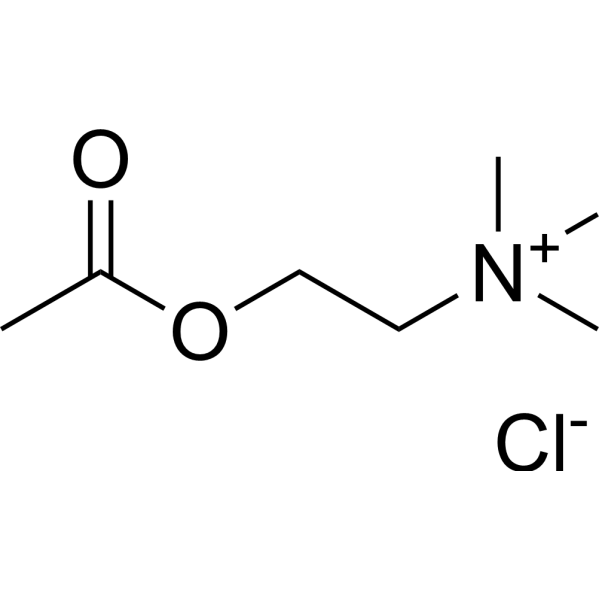
Acetylcholine chloride (ACh chloride), a neurotransmitter, is a potent and BBB-permeable cholinergic agonist. Acetylcholine chloride is a modulator of the activity of dopaminergic (DAergic) neurons through the stimulation of nicotinic acetylcholine receptors (nAChRs) . Acetylcholine chloride inhibits p53 mutant peptide aggregation in vitro .
|
-
-
- HY-B0726
-
-
-
- HY-B0726A
-
-
-
- HY-12560A
-
|
|
nAChR
5-HT Receptor
|
Neurological Disease
|
|
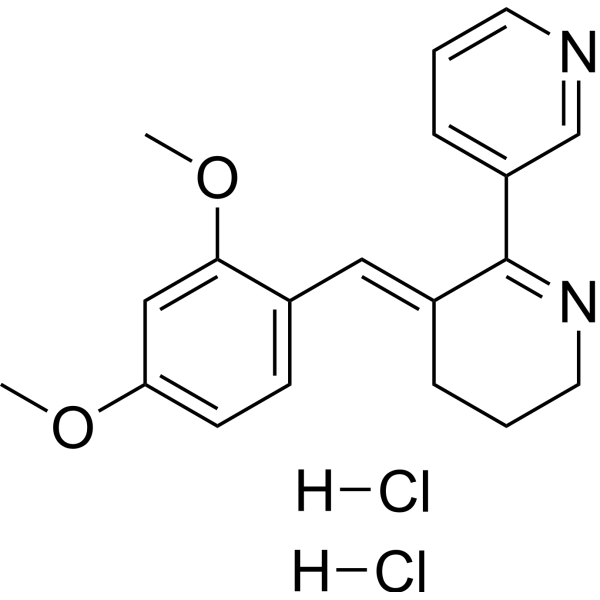
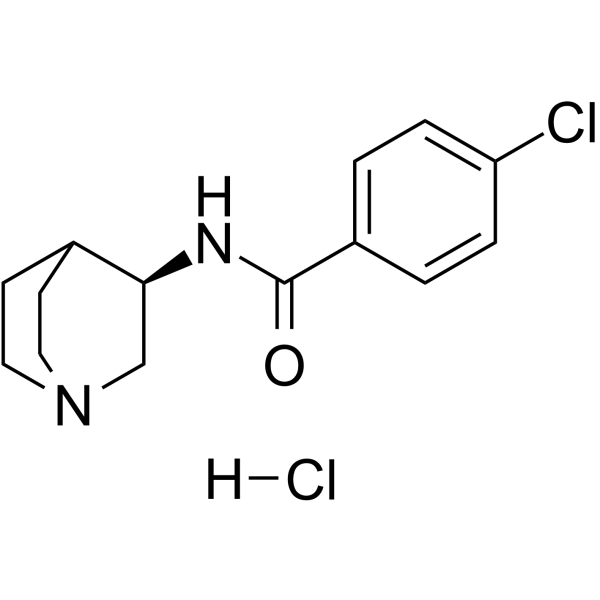
PNU-282987 is a potent α7 nicotinic acetylcholine receptor (nAChR) agonist with an EC50 of 154 nM. PNU-282987 is also a functional antagonist of the 5-HT3 receptor with an IC50 of 4541 nM. PNU-282987 can be used for the research of central and peripheral nervous systems .
|
-
-
- HY-100234
-
|
|
mAChR
|
Neurological Disease
|
|
DREADD agonist 21 is a potent human muscarinic acetylcholine M3 receptors (hM3Dq) agonist (EC50=1.7 nM) .
|
-
-
- HY-32067
-
|
Quinuclidin-3-yl acetate
|
mAChR
|
Cardiovascular Disease
Neurological Disease
|
|
Aceclidine (Quinuclidin-3-yl acetate) is a modulator of M3 muscarinic acetylcholine receptor and a M1 receptor agonist (EC50: 40 μM). Aceclidine is a cycloplegic agent, a surfactant, a tonicity adjustor and optionally a viscosity enhancer and an antioxidant. Aceclidine has the potential for the research of disorders such as refractive errors of the eye, xerostomia, Sjogren's syndrome, glaucoma, conjunctivitis, lacrimal gland disease, and esotropia .
|
-
-
- HY-B0942
-
|
|
Environmental Pollutants
nAChR
Bacterial
Apoptosis
Caspase
|
Infection
Neurological Disease
Cancer
|
|
Benzethonium chloride inhibits nicotinic acetylcholine receptors in human recombinant α7 and α4β2 neurons in Xenopus laevis oocytes, which has antibacterial, anticancer, antisepsis and disinfection activity. Benzethonium chloride induced Apoptosis and activated caspases in cancer cell lines. Benzethonium chloride ablates the tumor-forming ability of FaDu cells, delays the growth of xenograft tumors in vivo .
|
-
-
- HY-B0282S
-
|
ACh-d4 chloride
|
nAChR
Calcium Channel
Endogenous Metabolite
|
Neurological Disease
Cancer
|
|
Acetylcholine-d4 (chloride) is the deuterium labeled Acetylcholine chloride. Acetylcholine chloride (ACh chloride), a neurotransmitter, is a potent and BBB-permeable cholinergic agonist. Acetylcholine chloride is a modulator of the activity of dopaminergic (DAergic) neurons through the stimulation of nicotinic acetylcholine receptors (nAChRs) . Acetylcholine chloride inhibits p53 mutant peptide aggregation in vitro .
|
-
-
- HY-B1006
-
-
-
- HY-101372A
-
|
|
mAChR
|
Neurological Disease
|
|
Oxotremorine M iodide is a potent and non-selective muscarinic acetylcholine receptor (mAChR) agonist. Oxotremorine M iodide potentiates NMDA receptors by muscarinic receptor dependent and independent mechanisms .
|
-
-
- HY-100234A
-
|
|
mAChR
|
Neurological Disease
|
|
DREADD agonist 21 dihydrochloride is a potent human muscarinic acetylcholine M3 receptors (hM3Dq) agonist (EC50=1.7 nM) .
|
-
-
- HY-P0102
-
|
|
nAChR
|
Neurological Disease
Metabolic Disease
|
|
Dipeptide diaminobutyroyl benzylamide diacetate, a Wagerlin-1-mimicking peptide, is a nAChR antagonist. Dipeptide diaminobutyroyl benzylamide diacetate mimics Waglerin-1 to block neuromuscular junction nicotinic acetylcholine receptors, partially inhibits neuronal signal transduction, and relaxes muscles. Dipeptide diaminobutyroyl benzylamide diacetate reduces appearance of facial wrinkles linked to repeated muscle movement.Dipeptide diaminobutyroyl benzylamide diacetate can be used for the research of mild-to-moderate fine and coarse periocular and perioral wrinkles and periorbital ageing .
|
-
-
- HY-B0298
-
|
HS-592; Meclastine
|
Histamine Receptor
mAChR
Autophagy
Apoptosis
Keap1-Nrf2
p62
mTOR
Pyroptosis
IKK
|
Cardiovascular Disease
Neurological Disease
Inflammation/Immunology
|
|
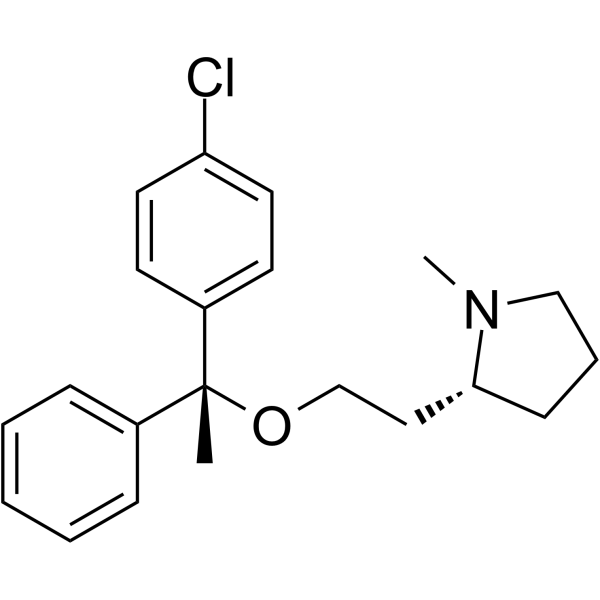
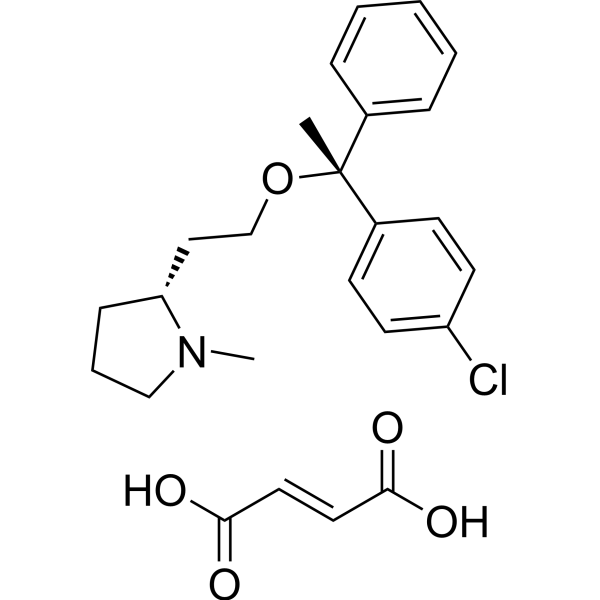
Clemastine (HS-592; Meclastine) is an orally active, blood-brain barrier-permeable H1 histamine receptor (H1 histamine receptor) antagonist with potent antiallergic effects. Clemastine also antagonizes muscarinic acetylcholine receptors (mAChR), particularly the M1 and M4 subtypes. In addition to antihistamine effects, Clemastine exhibits multiple pharmacological activities, especially in promoting central nervous system remyelination, activating autophagy and pyroptosis, exerting anti-apoptotic and neuroprotective effects, and suppressing inflammation .
|
-
-
- HY-P5766
-
|
|
nAChR
|
|
|
AChRα(97-116) is a synthetic peptide corresponding to the 97-116 region of the rat acetylcholine receptor α-subunit, and also an inducer of autoimmune diseases. AChRα(97-116) can be used in studies related to experimental autoimmune myasthenia gravis .
|
-
-
- HY-145298
-
|
|
nAChR
|
Infection
|
|
Dicloromezotiaz is a potent insecticide acting on nicotinic acetylcholine receptors (nAChRs). Dicloromezotiaz can be used to control a broad range of lepidoptera .
|
-
-
- HY-125159
-
|
PF-00520904
|
Parasite
nAChR
|
Infection
|
|
Derquantel, a spirocyclic anthelmintic, is a competitive, orally active nicotinic acetylcholine receptor (nAChR) antagonist. Derquantel inhibits ACh-induced depolarization with an IC50 of 0.22 μM. By selectively antagonizing nAChRs on the somatic muscles of nematodes, Derquantel causes flaccid paralysis of muscles, thereby dislodging parasites from the host's gastrointestinal tract. Derquantel is applicable to research related to Haemonchus contortus infection and Ascaris suum infection .
|
-
-
- HY-B0344
-
|
(-)-Scopolamine methyl bromide; Hyoscine methyl bromide
|
mAChR
|
Neurological Disease
|
|
Methscopolamine bromide ((-)-Scopolamine methyl bromide; Hyoscine methyl bromide) is a peripherally acting muscarinic receptor (mAChR) antagonist that cannot cross the blood-brain barrier. Methscopolamine bromide blocks the muscarinic negative feedback regulation of acetylcholine release from striatal cholinergic terminals, thereby increasing acetylcholine release in the striatum of freely moving rats. Methscopolamine bromide does not induce motor excitation in freely moving rats, nor does it alter the duration of ethanol-induced loss of righting reflex in mice. Methscopolamine bromide fails to antagonize the arecoline-mediated reduction in the duration of ethanol-induced loss of righting reflex in mice .
|
-
-
- HY-B0416
-
|
|
mAChR
Adrenergic Receptor
|
Neurological Disease
|
|
Gallamine Triethiodide is a blood-brain barrier-permeable skeletal muscle relaxant. Gallamine Triethiodide induces skeletal muscle paralysis by blocking acetylcholine. Gallamine Triethiodide directly stimulates intracardiac β receptors. Gallamine Triethiodide prolongs the duration of afterdischarge in the cat cerebral cortex. Gallamine Triethiodide can be used in studies related to convulsive disorders .
|
-
-
- HY-15618
-
|
M1 receptor modulator
|
mAChR
Calcium Channel
|
Neurological Disease
|
|
MK-7622 (M1 receptor modulator) is an orally active positive allosteric modulator of muscarinic M1 acetylcholine receptors (mAChRs). MK-7622 enhances ACh-induced calcium flux in CHO cells expressing human M1 receptors (EC50 = 21 nM) and shows robust agonist activity in rat M1-expressing CHO cells, increasing intracellular calcium. MK-7622 reverses Scopolamine (HY-N0296)-induced cognitive deficits in rhesus macaques in an object retrieval detour task. MK-7622 can be used for the study of Alzheimer's disease (AD) .
|
-
-
- HY-32067A
-
|
Quinuclidin-3-yl acetate hydrochloride
|
mAChR
|
Neurological Disease
|
|
Aceclidine (Quinuclidin-3-yl acetate) hydrochloride is a modulator of M3 muscarinic acetylcholine receptor and a M1 receptor agonist (EC50: 40 μM). Aceclidine hydrochloride is a cycloplegic agent, a surfactant, a tonicity adjustor and optionally a viscosity enhancer and an antioxidant. Aceclidine hydrochloride has the potential for the research of disorders such as refractive errors of the eye, xerostomia, Sjogren's syndrome, glaucoma, conjunctivitis, lacrimal gland disease, and esotropia .
|
-
-
- HY-176710
-
|
|
Protein Arginine Deiminase
Opioid Receptor
mAChR
|
Neurological Disease
Inflammation/Immunology
Cancer
|
|
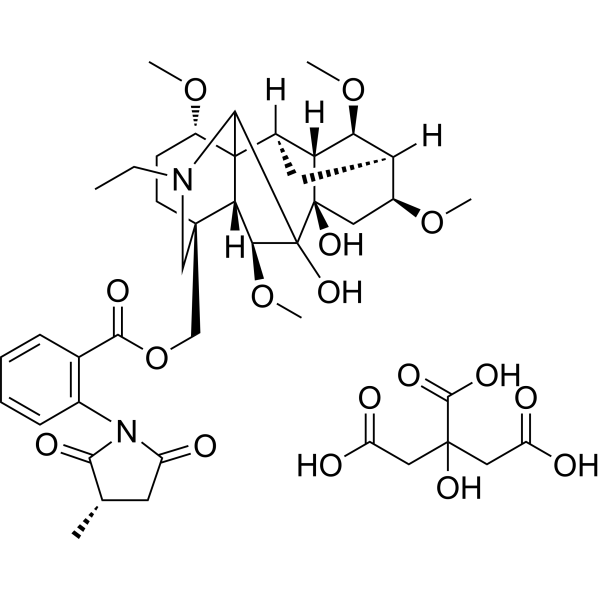
PAD-PF2 is a PAD family inhibitor, as well as a κ-opioid receptor agonist (EC50 = 7.55 μM) and an M1 muscarinic acetylcholine receptor antagonist (IC50 = 12.3 μM). The IC50 values of PAD-PF2 against PAD1, PAD2, PAD3 and PAD4 are 109 nM, 27.9 nM, 106 nM and 20.1 nM, respectively. PAD-PF2 binds to the common allosteric pocket of PAD1-4, and its inhibitory effects on PAD2 and PAD4 are Ca 2+-dependent. PAD-PF2 inhibits protein citrullination in neutrophils. PAD-PF2 is applicable to research related to rheumatoid arthritis, neurodegenerative diseases and cancer .
|
-
-
- HY-P4279
-
|
|
Angiotensin-converting Enzyme (ACE)
Cholinesterase (ChE)
|
Cardiovascular Disease
|
|
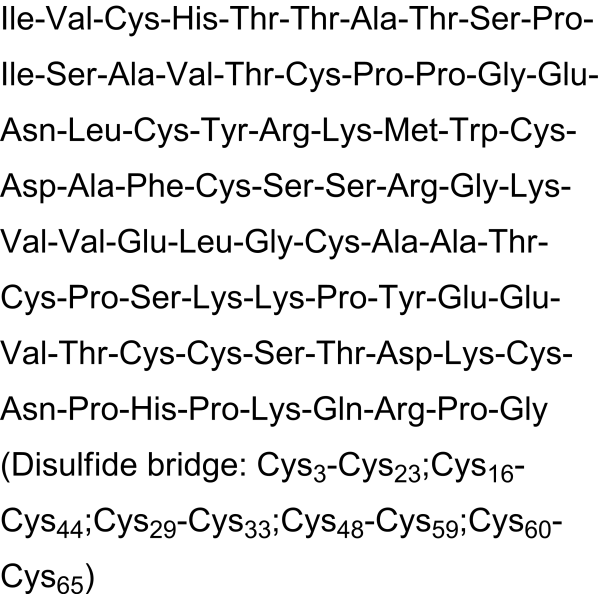
Ovalbumin (154-159) is a protein fragment consisting of residues 154-159 of chicken ovalbumin. Ovalbumin (154-159) is also a poorly conserved sequence (Thr-Asn-Gly-Ile-Ile-Arg) in the α-subunit of the Torpedo acetylcholine receptor, located within the α150-164 epitope region, and exhibits significant angiotensin-converting enzyme (ACE) inhibitory activity .
|
-
-
- HY-101086
-
|
ACh iodide
|
Endogenous Metabolite
mAChR
|
Neurological Disease
Endocrinology
|
|
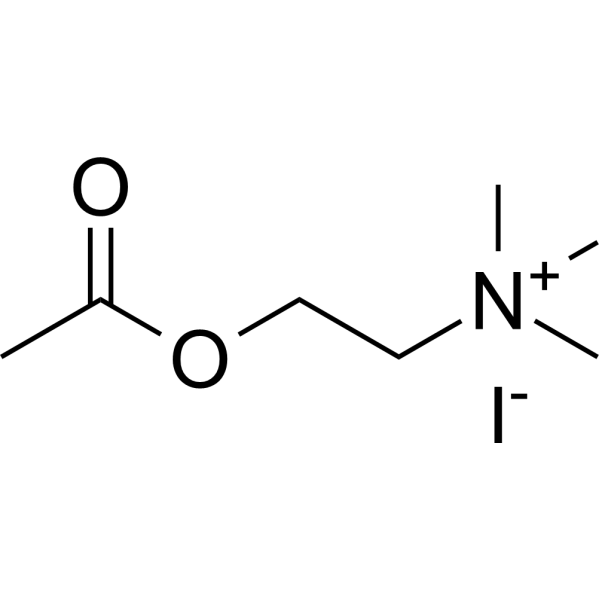
Acetylcholine iodide is a muscarinic receptor modulator. Acetylcholine iodide specifically binds to muscarinic receptors, inhibits sodium absorption, and induces chloride secretion. Acetylcholine iodide changes intestinal ion transport, enhances intestinal secretory function, induces or maintains mammary gland development and lactation. Acetylcholine iodide can be used for intestinal ion transport regulation and mammary gland physiological function research .
|
-
-
- HY-15430A
-
|
EVP-6124 hydrochloride
|
nAChR
|
Neurological Disease
|
|
Encenicline hydrochloride (EVP-6124 hydrochloride) is a novel partial agonist of α7 neuronal nicotinic acetylcholine receptors (nAChRs).
|
-
-
- HY-N2338
-
|
Cholesteryl myristate; Cholesteryl tetradecanoate
|
nAChR
GABA Receptor
Potassium Channel
Endogenous Metabolite
|
Cancer
|
|
Cholesterol myristate is a natural steroid present in traditional Chinese medicine. Cholesterol myristate binds to several ion channels such as the nicotinic acetylcholine receptor, GABAA receptor, and the inward-rectifier potassium ion channel.
|
-
-
- HY-B0570
-
|
|
nAChR
|
Neurological Disease
|
Decamethonium Bromide is an acetylcholine receptor inhibitor and muscle relaxant. Decamethonium Bromide first induces depolarization of skeletal muscles, and then binds to postsynaptic acetylcholine receptors to induce persistent paralysis .\n
|
-
-
- HY-14840
-
|
Carphedon
|
nAChR
Dopamine Transporter
GABA Receptor
iGluR
|
Neurological Disease
|
|
Phenylpiracetam (Carphedon) is a positive allosteric modulator of nicotinic acetylcholine receptors (nAChR) with an IC50 of 5.86 μM. Phenylpiracetam is applicable to studies on scopolamine (Scopolamine) (HY-N0296)-induced amnesia, depression and immune stress .
|
-
-
- HY-B0282S1
-
|
ACh-d9 chloride
|
nAChR
Calcium Channel
Endogenous Metabolite
|
Neurological Disease
Cancer
|
|
Acetylcholine-d9 (chloride) is the deuterium labeled Acetylcholine chloride. Acetylcholine chloride (ACh chloride), a neurotransmitter, is a potent and BBB-permeable cholinergic agonist. Acetylcholine chloride is a modulator of the activity of dopaminergic (DAergic) neurons through the stimulation of nicotinic acetylcholine receptors (nAChRs) . Acetylcholine chloride inhibits p53 mutant peptide aggregation in vitro .
|
-
-
- HY-B2070
-
-
-
- HY-N0443
-
|
Caulophylline
|
nAChR
|
Inflammation/Immunology
|
|
N-Methylcytisine (Caulophylline), a tricyclic quinolizidine alkaloid, exerts hypoglycaemic, analgesic and anti-inflammatory activities. N-methylcytisine is a selective ligand of nicotinic receptors of acetylcholine in the central nervous system and has a high affinity (Kd = 50 nM) to nicotinic acetylcholine receptors (nAChR) from squid optical ganglia .
|
-
-
- HY-B0547A
-
|
|
mAChR
|
Neurological Disease
|
|
Homatropine Bromide is an orally active muscarinic acetylcholine receptor antagonist and can be used as an anticholinergic agent .
|
-
-
- HY-176200
-
|
AF98943
|
mAChR
|
Neurological Disease
|
|
VU6008055 (AF98943) is a brain-penetrant, orally active and selective muscarinic acetylcholine receptor subtype 4 (mAChR4) activator with human EC50 values of 73.4 nM. VU6008055 potentiates mAChR4 receptor activity in the presence of acetylcholine, and exhibits no activity at mAChR1, mAChR3, or mAChR5. VU6008055 can be used for the research of schizophrenia, parkinson’s disease, alzheimer’s disease .
|
-
-
- HY-110160
-
|
ABT-089 dihydrochloride
|
nAChR
|
Neurological Disease
|
|
Pozanicline dihydrochloride (ABT-089 dihydrochloride) is an orally bioavailable nicotinic acetylcholine receptor (nAChR) agonist with a Ki of 16.7 nM for binding to [ 3H]cytisine sites . Pozanicline is an α4β2-selective nAChR agonist, which binds to rat brain α4β2 nAChR with a Ki of 17 nM while binding to α7 nAChR is insignificant .
|
-
-
- HY-110121A
-
NS3861
1 Publications Verification
|
nAChR
|
Neurological Disease
|
|
NS3861 is an agonist of nicotinic acetylcholine receptors (nAChRs) and binds with high affinity to heteromeric α3β4 nAChR. The binding Ki values of 0.62, 25, 7.8, 55 nM for α3β4, α3β2, α4β4, α4β2, respectively .
|
-
-
- HY-114269
-
|
|
nAChR
|
Neurological Disease
Inflammation/Immunology
|
|
(-)-(S)-B-973B is an allosteric activator of α7 nicotinic acetylcholine receptor (α7 nAChR). (-)-(S)-B-973B alleviates pain behaviors. (-)-(S)-B-973B can be used for the research of inflammatory pain .
|
-
-
- HY-B0282R
-
|
ACh chloride (Standard)
|
Reference Standards
nAChR
Calcium Channel
Endogenous Metabolite
|
Neurological Disease
Cancer
|
|
Acetylcholine (chloride) (Standard) is the analytical standard of Acetylcholine (chloride). This product is intended for research and analytical applications. Acetylcholine chloride (ACh chloride), a neurotransmitter, is a potent and BBB-permeable cholinergic agonist. Acetylcholine chloride is a modulator of the activity of dopaminergic (DAergic) neurons through the stimulation of nicotinic acetylcholine receptors (nAChRs) . Acetylcholine chloride inhibits p53 mutant peptide aggregation in vitro .
|
-
-
- HY-172705
-
|
|
Liposome
nAChR
|
Neurological Disease
|
|
DSPE-PEG2000-RVG29 is a PEG conjugate composed of DSPE and rabies virus glycoprotein 29 (RVG29). RVG29 specifically binds to nicotinic acetylcholine receptors (nAChR) at the blood-brain barrier (BBB), crosses the BBB, and mediates receptor-dependent transcytosis. DSPE-PEG2000-RVG29 can be used for brain-targeted drug delivery, surface modification of nanocarriers, as well as gene and nucleic acid delivery. DSPE-PEG2000-RVG29 is applicable to research related to hypoxic-ischemic brain injury, Parkinson's disease, and other conditions .
|
-
-
- HY-107675
-
|
Deformylflustrabromine hydrochloride; dFBr hydrochloride
|
nAChR
|
Neurological Disease
|
|
Desformylflustrabromine hydrochloride is a selective agonist of α4β2 neuronal nicotinic acetylcholine receptor (nAChR) with a pEC50 of 6.48.
|
-
-
- HY-N12302
-
|
N1-Dihydrocaffeoyl, N10-caffeoyl spermidine
|
mAChR
|
Others
|
|
Scotanamine D (N1-Dihydrocaffeoyl, N10-caffeoyl spermidine) is a spermidine alkaloid. It can be isolated from S. tangutica. Scotanamine D potently and selectively inhibits the activity of the M1 muscarinic acetylcholine receptor, with an IC50 of 32 nM. It can be used in studies related to Parkinson's disease .
|
-
-
- HY-139126
-
|
DL-Muscarin chloride
|
mAChR
|
Neurological Disease
|
|
(±)-Muscarine chloride is the racemate of Muscarine chloride. Muscarine is a prototype muscarinic acetylcholine receptor agonist .
|
-
-
- HY-162897
-
|
|
mAChR
|
Cardiovascular Disease
|
|
BAY-2413555 is an orally active muscarinic acetylcholine receptor M2 modulator that protects the heart and improve cardiac function. BAY-2413555 is promising for research of heart failure .
|
-
-
- HY-B1547A
-
-
-
- HY-B0547
-
|
|
mAChR
|
Neurological Disease
|
|
Homatropine is an orally active muscarinic acetylcholine receptor antagonist and can be used as an anticholinergic agent .
|
-
-
- HY-15430
-
|
EVP-6124
|
nAChR
|
Neurological Disease
|
|
Encenicline (EVP-6124) is a novel partial agonist of α7 neuronal nicotinic acetylcholine receptors (nAChRs).
|
-
-
- HY-12560
-
|
|
nAChR
5-HT Receptor
|
Neurological Disease
|
|
PNU-282987 (free base) is a potent α7 nicotinic acetylcholine receptor (nAChR) agonist with an EC50 of 154 nM. PNU-282987 (free base) is also a functional antagonist of the 5-HT3 receptor with an IC50 of 4541 nM. PNU-282987 (free base) can be used for the research of central and peripheral nervous systems .
|
-
-
- HY-110121
-
|
|
nAChR
|
Neurological Disease
|
|
NS3861 fumarate is an agonist of nicotinic acetylcholine receptors (nAChRs) and binds with high affinity to heteromeric α3β4 nAChR. The binding Ki values of 0.62, 25, 7.8, 55 nM for α3β4, α3β2, α4β4, α4β2, respectively .
|
-
-
- HY-B1277A
-
|
|
mAChR
Cholinesterase (ChE)
|
Cardiovascular Disease
Neurological Disease
|
|
Trihexyphenidyl is a selective and orally active M1 muscarinic receptor antagonist with an IC50 of 3.7 nM for rat cerebral cortex M1 muscarinic receptors. Trihexyphenidyl modulates cholinergic activity, countering acetylcholine supersensitivity in neural pathways. Trihexyphenidyl improves movement disorder, inhibits McN-A-343 (HY-107648)-induced pressor responses, vagally-induced bradycardia and vasodilatation. Trihexyphenidyl can be used for the research of Parkinson's disease. .
|
-
-
- HY-B0327A
-
-
-
- HY-121806
-
|
|
mAChR
|
Neurological Disease
|
|
VU0486846 is an orally active and selective muscarinic acetylcholine receptor M1 positive allosteric modulator (PAM) .
|
-
-
- HY-16423
-
|
Org 9487
|
mAChR
|
Neurological Disease
|
|
Rapacuronium bromide (Org 9487), a non-depolarizing neuromuscular blocker, is an allosteric modulator of muscarinic acetylcholine receptor (mAChR) .
|
-
- HY-145297
-
|
|
nAChR
Insecticide
|
Neurological Disease
|
|
Flupyrimin is the antagonist for insect nicotinic acetylcholine receptor (nAChR) that exhibits insecticidal effect by targeting insect nervous system .
|
-
- HY-117284
-
|
|
mAChR
|
Neurological Disease
|
|
Eucatropine is a potent muscarinic acetylcholine receptor (mAChR) inhibitor with an IC50 value of 0.583 μM. Eucatropine is an anticholinergic agent .
|
-
- HY-177309
-
|
|
mAChR
|
Neurological Disease
|
|
Muscarinic M3 receptor antagonist-1 (Example 4) is a muscarinic acetylcholine receptor M3 antagonist. Muscarinic M3 receptor antagonist-1 can be used to study inflammatory and obstructive airway diseases .
|
-
- HY-W856819
-
|
|
Opioid Receptor
Cholinesterase (ChE)
Drug Metabolite
nAChR
|
Neurological Disease
|
|
Eseroline is a potent μ-opioid receptor agonist, which is the hydrolytic metabolite of Physostigmine (HY-N6608). Eseroline is a selective and competitive acetylcholinesterase (AChE) inhibitor, with its Ki values for AChE and BuChE being 0.1 μM and 200 μM respectively. Eseroline has nicotinic acetylcholine receptor allosteric enhancing ligand (nAChR-APL) activity, meaning it does not activate the receptor but significantly enhances the signal transduction of Ach triggered by the receptor. Eseroline is neurotoxic, causing cell membrane damage (LDH leakage) and energy metabolism collapse (ATP depletion). Eseroline can be used for the study of Alzheimer's disease .
|
-
- HY-101743
-
-
- HY-101010
-
|
|
Others
|
Neurological Disease
|
|
Methylfurmethide is an acetylcholine receptor. Methylfurmethide blocks the uptake of atropine. Methylfurmethide can be used to study the properties of acetylcholine receptors in intestinal smooth muscle .
|
-
- HY-A0215
-
|
BW-A 938U; Nuromax
|
nAChR
|
Neurological Disease
|
|
Doxacurium chloride (BW A938U) is a potent non-depolarizing neuromuscular blocking agent. Doxacurium chloride binds to cholinergic receptors to antagonize acetylcholine, resulting in a block of neuromuscular transmission. Doxacurium chloride can be used for the research of neurological diseases .
|
-
- HY-111051
-
|
|
nAChR
|
Neurological Disease
|
|
JN403 is an orally active and selective α7 nicotinic acetylcholine receptor agonist. JN403 can be used in the study of central nervous system disorders .
|
-
- HY-W076756
-
|
|
mAChR
|
Inflammation/Immunology
|
|
4-Piperidyl N-(2-biphenyl)carbamate (compound MA) is a competitive muscarinic acetylcholine receptor (mAChR) antagonist. 4-Piperidyl N-(2-biphenyl)carbamate exhibits higher affinity for M2 and M3 mAChR than β2AR (M2 pKi = 7.33; M3 pKi = 7.51; β2AR pKi = 4.94) .
|
-
- HY-W909173
-
|
|
Trace Amine-associated Receptor (TAAR)
Histamine Receptor
mAChR
|
Neurological Disease
|
|
TAAR1 agonist 2 (compound 30) is a full agonist of trace amine-associated receptor 1 (TAAR1) (pEC50=7.5). TAAR1 agonist 2 also exhibits agonist activity at H1 receptors and activates several members of the muscarinic acetylcholine receptor family, such as the M2 receptor (pEC50=5). TAAR1 agonist 2 can be used in the study of neuropsychiatric diseases .
|
-
- HY-107668
-
|
|
nAChR
|
Neurological Disease
|
|
TC-1698 dihydrochloride is a selective α7 nicotinic acetylcholine receptors agonist with EC50 value of 0.16 μM and 0.46 μM for monkey α7 nicotinic receptor and human α7 nicotinic receptor, respectively. TC-1698 dihydrochloride improves memory and has neuroprotective effects. TC-1698 dihydrochloride can be used for Alzheimer's disease research .
|
-
- HY-107668A
-
|
|
nAChR
|
Neurological Disease
|
|
TC-1698 is a selective α7 nicotinic acetylcholine receptors agonist with EC50 value of 0.16 μM and 0.46 μM for monkey α7 nicotinic receptor and human α7 nicotinic receptor, respectively. TC-1698 improves memory and has neuroprotective effects. TC-1698 can be used for Alzheimer's disease research .
|
-
- HY-14824A
-
|
ABT 894 benzenesulfonate
|
nAChR
|
Neurological Disease
|
|
Sofinicline benzenesulfonate (ABT 894 benzenesulfonate) is a novel nicotinic acetylcholine receptor agonist, specifically acting on the α4β2 subtype of nAChR (IC50=0.1 nM). Sofinicline benzenesulfonate has the potential to improve cognitive function, including attention, memory and working memory. Sofinicline benzenesulfonate can be used in studies of attention deficit, hyperactivity disorder (ADHD) .
|
-
- HY-161118
-
|
|
nAChR
|
Neurological Disease
|
|
MB327 is a bipyridine nonoxime compound that restores neuromuscular function. MB327 restores the activity of nicotinamide acetylcholine receptors (nAChRs) for carbachol desensitization in a typical type II PAM manner. MB327 can neutralize nerve agent poisoning .
|
-
- HY-146102
-
|
|
mAChR
|
Others
|
|
M1 ligand 1 (compound 3b-b) is a muscarinic acetylcholine receptor M1 ligand. M1 ligand 1 is a N-desmethyl congener of arecoline derivative. M1 ligand 1 can be used as PET (positron emission tomography) radiotracer .
|
-
- HY-18159
-
|
AZD1446
|
nAChR
|
Neurological Disease
|
|
TC-6683 (AZD1446) is a selective α4β2 nicotinic acetylcholine receptor (nAChR) agonist. TC-6683 does not show significant therapeutic effects in the animal model of DYT1 dystonia.TC-6683 can be used for the research of neurological disease, such as cognitive disorder .
|
-
- HY-14316C
-
|
Ebanicline tosylate; ABT-594 tosylate
|
nAChR
|
Neurological Disease
|
|
Tebanicline tosylate, an analogue of epibatidine, is a neuronal nicotinic acetylcholine receptor agonist. Tebanicline tosylate exhibits potent antinociceptive effects and has a high affinity for the α4β2 neuronal nicotinic acetylcholine receptor subunit in the central nervous system.
|
-
- HY-14316
-
|
Ebanicline; ABT-594
|
nAChR
|
Neurological Disease
|
|
Tebanicline, an analogue of epibatidine, is a neuronal nicotinic acetylcholine receptor agonist. Tebanicline exhibits potent antinociceptive effects and has a high affinity for the α4β2 neuronal nicotinic acetylcholine receptor subunit in the central nervous system.
|
-
- HY-U00316
-
|
Chanodesethylapovincamine
|
mAChR
|
Neurological Disease
|
|
Vinconate is an indolonaphthyridine derivative and can stimulate the muscariic acetylcholine receptor.
|
-
- HY-130432
-
|
|
nAChR
|
Neurological Disease
|
|
DBO-83 dihydrochloride is a brain-penetrant nicotinic acetylcholine receptor (nAChR) agonist. DBO-83 dihydrochloride activates peripheral nicotinic acetylcholine receptors to evoke non-stimulated ileum contractions. DBO-83 dihydrochloride shows antinociceptive and anti-amnesic activities .
|
-
- HY-W309130
-
|
|
mAChR
|
Neurological Disease
|
|
(S)-Tolterodine is a muscarinic acetylcholine receptor (mAChR) inhibitor, with an IC50 of 588 nM .
|
-
- HY-100152
-
|
SX 810
|
mAChR
|
Inflammation/Immunology
|
|
Beperidium iodide shows a competitive antagonistic effect against acetylcholine receptor with a pA2 of 7.93.
|
-
- HY-107669
-
|
|
nAChR
|
Neurological Disease
|
|
nAChR-IN-1 (hydrochloride) is a tetramethylpiperidine heptanoate, a selective nicotinic acetylcholine receptor (nAChR) inhibitor that inhibits nAChRs lacking α5, α6, or β3 subunits. nAChR-IN-1 has the effect of preventing nerve disorder, can be used for nicotinic acetylcholine receptor dysfunction or neurological disorders research .
|
-
- HY-114736
-
|
2-Hydroxyvarenicline
|
nAChR
|
Neurological Disease
|
|
Hydroxy varenicline (2-Hydroxyvarenicline) is a metabolite of varenicline (HY-10019), a nicotinic acetylcholine receptor (nAChR) agonist.
|
-
- HY-156128
-
|
|
mAChR
|
Neurological Disease
|
|
Imidafenacin Metabolite M4 is a metabolite of the muscarinic acetylcholine receptor antagonist Imidafenacin (HY-B0662) .
|
-
- HY-B0726S
-
-
- HY-107667
-
|
|
nAChR
|
Neurological Disease
|
|
TC-2559 fumarate is a potent and selective neuronal acetylcholine receptor agonist. TC-2559 fumarate is potent and efficacious in the activation of CNS receptors and reduces glutamate-induced neurotoxicity in vitro .
|
-
- HY-120783
-
|
|
Endogenous Metabolite
|
Neurological Disease
|
|
Lu AF58801 is a potent, orally available, brain-penetrant positive allosteric modulator of α7 nicotinic acetylcholine receptors with efficacy in a novel object recognition task in mice. Lu AF58801 was shown to selectively enhance the activity of α7 nicotinic acetylcholine receptors. Lu AF58801 was able to improve cognitive function in mice treated with subchronic fluchlorothiazol (PCP) .
|
-
- HY-N0443R
-
|
Caulophylline (Standard)
|
Reference Standards
nAChR
|
Inflammation/Immunology
|
|
N-Methylcytisine (Standard) is the analytical standard of N-Methylcytisine. This product is intended for research and analytical applications. N-Methylcytisine (Caulophylline), a tricyclic quinolizidine alkaloid, exerts hypoglycaemic, analgesic and anti-inflammatory activities. N-methylcytisine is a selective ligand of nicotinic receptors of acetylcholine in the central nervous system and has a high affinity (Kd = 50 nM) to nicotinic acetylcholine receptors (nAChR) from squid optical ganglia .
|
-
- HY-116149
-
|
|
nAChR
|
Others
|
|
A-424274 is a positive allosteric modulator of the α4β2 neuronal nicotinic acetylcholine receptor with activity to enhance the efficacy of analgesics. A-424274 selectively enhances the potency of a range of nicotinic acetylcholine receptor agonists at the α4β2 receptor and, in preclinical models, co-administration with an α4β2 PAM significantly enhances the analgesic efficacy of ABT-594 at clinically well-tolerated doses in humans.
|
-
- HY-32067AS
-
|
|
Isotope-Labeled Compounds
|
Others
|
|
Aceclidine-d3 hydrochloride is a deuterated version of Aceclidine (HY-32067). Aceclidine is a modulator of the M3 muscarinic acetylcholine receptor.
|
-
- HY-123778
-
|
|
mAChR
|
Neurological Disease
|
|
VU6007678 is a CNS-penetrant muscarinic acetylcholine receptor (mAChR) modulator. VU6007678 potentiates acetylcholine-mediated signaling at human M1, M3, M5 and rat M1, M3, M4, M5 muscarinic acetylcholine receptors. VU6007678 is applicable to research related to Alzheimer's disease, schizophrenia, and ischemic stroke .
|
-
- HY-W680961
-
|
|
nAChR
|
Neurological Disease
|
|
Hydrohydrastinine is a selective α4β2 nicotinic acetylcholine receptor antagonist with an IC50 of 2.6 μM and a Ki of 17 μM. Hydrohydrastinine exhibits weak activity at α4β4 and α3β4 nicotinic acetylcholine receptors. Hydrohydrastinine can be used for the research of depression .
|
-
- HY-182587
-
|
|
mAChR
|
Neurological Disease
|
|
VU0415248 is a selective muscarinic acetylcholine receptor 1 (M1) inhibitor. VU0415248 inhibits acetylcholine-induced calcium mobilization in cells expressing human and rat M1 muscarinic acetylcholine receptors, with an IC50 of 0.4 and 0.18 μM, respectively. VU0415248 is applicable to the research of Parkinson's disease, movement disorders and fragile X syndrome .
|
-
- HY-101372AR
-
|
|
mAChR
Reference Standards
|
Neurological Disease
|
|
Oxotremorine M (iodide) (Standard) is the analytical standard of Oxotremorine M (iodide) (HY-101372A). This product is intended for research and analytical applications. Oxotremorine M iodide is a potent and non-selective muscarinic acetylcholine receptor (mAChR) agonist. Oxotremorine M iodide potentiates NMDA receptors by muscarinic receptor dependent and independent mechanisms .
|
-
- HY-14318
-
|
SIB-1508Y free base
|
nAChR
|
Neurological Disease
|
|
Altinicline (SIB-1508Y free base) is a selective α4β2 nicotinic acetylcholine receptor (nAChR) agonist, with no activity against α7 or α1β1γδ nAChRs and only extremely low activity against α3β4 nAChRs. Altinicline reverses escape deficits and increases avoidance responses. Altinicline is applicable to research related to depression .
|
-
- HY-183203
-
|
|
mAChR
|
Neurological Disease
|
|
VU0476406 is a blood-brain barrier-permeable and selective muscarinic acetylcholine receptor subtype 4 (M4) activator with human EC50 of 91.0 nM and human pEC50 of 7.04. VU0476406 potentiates endogenous acetylcholine activity at M4 receptors. VU0476406 can be used for the research of Parkinson's disease .
|
-
- HY-183204
-
|
|
nAChR
|
Neurological Disease
|
|
TC-2559 is an orally active, selective central nervous system Nicotinic acetylcholine receptor agonist with a Ki value of 5 nM. TC-2559 activates central nervous system receptors selectively over peripheral nervous system receptors. TC-2559 improves scopolamine (HY-N0296)-induced cognitive impairment and enhances radial arm maze performance. TC-2559 can be used in the research of neurodegenerative diseases .
|
-
- HY-167129
-
|
|
nAChR
|
Neurological Disease
|
|
DBO-83 free base is a brain-penetrant nicotinic acetylcholine receptor (nAChR) agonist. DBO-83 free base activates peripheral nicotinic acetylcholine receptors to evoke non-stimulated ileum contractions. DBO-83 free base shows antinociceptive and anti-amnesic activities .
|
-
- HY-B1778C
-
|
Suxamethonium iodide
|
nAChR
mAChR
|
Neurological Disease
|
|
Succinylcholine iodide is a depolarizing neuromuscular blocker with rapid onset and short duration of action. Succinylcholine iodide also acts as an agonist of the Acetylcholine receptor. Succinylcholine iodide is used for emergency airway management .
|
-
- HY-100234AR
-
|
|
mAChR
Reference Standards
|
Neurological Disease
|
|
DREADD agonist 21 (dihydrochloride) (Standard) is the analytical standard of DREADD agonist 21 (dihydrochloride) (HY-100234A). This product is intended for research and analytical applications. DREADD agonist 21 dihydrochloride is a potent human muscarinic acetylcholine M3 receptors (hM3Dq) agonist (EC50=1.7 nM) .
|
-
- HY-131196
-
|
|
mAChR
|
Neurological Disease
|
|
M3 mAChR agonist 1 is an M3-preferring M3/M5 mAChR dual positive allosteric modulators (PAM). M3 mAChR agonist 1 shows excellent subtype selectivity over other subtypes of mAChRs including M1, M2, and M4 mAChRs. M3 mAChR agonist 1 increases the contraction of isolated rat bladder strips by modulating the M3 muscarinic acetylcholine receptor, leading to enhanced signaling pathways. M3 mAChR agonist 1 can be used for the research of endocrinology .
|
-
- HY-118646A
-
|
|
nAChR
TNF Receptor
|
Neurological Disease
Inflammation/Immunology
|
|
NS-6740 hydrochloride is a partial agonist of α7 nicotinic acetylcholine receptor (α7 nAChR) with an IC50 of 3 nM. NS-6740 hydrochloride also acts as a potent modulator of the cholinergic anti-inflammatory pathway. NS-6740 hydrochloride alters the signaling pattern of α7 in an ion channel-independent manner, thereby reducing synaptic function. NS-6740 hydrochloride induces the desensitized state of α7 nAChR. NS-6740 hydrochloride generates robust nAChR-mediated currents. NS-6740 hydrochloride reduces LPS (HY-D1056)-induced TNF-α release from microglia. NS-6740 hydrochloride can be used in the research of neuroinflammation and neuropathic pain .
|
-
- HY-180421
-
|
|
mAChR
|
Neurological Disease
|
|
VU6009048 is a CNS-penetrant human M4 muscarinic acetylcholine receptor (mAChR4) positive allosteric modulator. VU6009048 can be used for the research of parkinson’s disease, huntington’s disease, schizophrenia .
|
-
- HY-181559S
-
|
AG06827
|
mAChR
|
Neurological Disease
|
|
VU6025733 (AG06827) is a highly selective, orally active and blood-brain barrier-penetrant positive allosteric modulator of the muscarinic acetylcholine receptor subtype M4 (M4 mAChR). VU6025733 exerts a potentiating effect on acetylcholine-induced receptor activation with an EC50 of 23 nM for hM4 and 55 nM for rM4. VU6025733 shows high selectivity over other muscarinic acetylcholine receptor subtypes, dose-dependently reduces amphetamine-induced hyperlocomotion in rats. VU6025733 is applicable to the research of schizophrenia, Parkinson's disease, and Alzheimer's disease .
|
-
- HY-106901B
-
|
HI-6 dimesylate
|
Cholinesterase (ChE)
nAChR
|
Neurological Disease
|
|
Asoxime dimesylate (HI-6 dimesylate) is an orally active thiosemicarbazone-based antidote. Asoxime dimesylate is a reversible inhibitor of AChE, and its core mechanism of action is to re-activate AChE inhibited by nerve toxins, thereby restoring the cholinergic nerve function. Asoxime dimesylate significantly restores the function of poisoned muscles without reactivating AChE. Asoxime dimesylate is an antagonist of acetylcholine receptors (AChRs), including nicotinic receptor and α7 nAChR. Asoxime dimesylate can serve as an effective immunomodulator, improving the immune effect of the nervous system .
|
-
- HY-59201
-
|
|
nAChR
5-HT Receptor
ERK
Epigenetic Reader Domain
|
Neurological Disease
|
|
A-582941 is a selective, orally active, blood-brain barrier-permeable α7 nAChR agonist, with Ki values of 10.8 nM and 17 nM in rat brain and human frontal cortex, respectively. A-582941 exhibits agonistic activity at 5-HT3 receptors, with a Ki of 150 nM. A-582941 triggers phosphorylation of ERK1/2 and CREB, inhibits GSK-3β via Ser-9 phosphorylation, increases acetylcholine release, induces the expression of Arc and c-Fos, activates brain regions associated with working memory and attention, and reduces cell death caused by nerve growth factor (NGF) deprivation. A-582941 is applicable for the research of Alzheimer's disease and schizophrenia .
|
-
- HY-W070884
-
|
|
nAChR
|
Infection
|
|
nAChR-IN-2 (Compound 2) is an inhibitor of insect nicotinic acetylcholine receptors (nAChR). nAChR-IN-2 inhibits the binding of α-bungarotoxin (HY-P1264) to the ACh site of insect nAChR in honeybee heads, with an IC50 of 360 μM. nAChR-IN-2 also inhibits the binding of Phencyclidine to the NCB/PCP site of insect nAChR in honeybee heads, with an IC50 of 84 μM .
|
-
- HY-183666
-
|
|
nAChR
Serotonin Transporter
|
Neurological Disease
|
|
NS3956 is a blood-brain barrier-permeable human α4β2-nicotinic acetylcholine receptor (nAChR) agonist (Ki = 0.36 nM). NS3956 induces dopamine release, produces analgesic effects, modulates rotational behavior in 6-OHDA-lesioned rats, and potentiates the effects of SSRI/SNRI in the forced swim test in mice. NS3956 can be used in research related to depression, Parkinson's disease, and acute pain .
|
-
- HY-166417S
-
|
|
Isotope-Labeled Compounds
mAChR
|
Others
|
|
Tiotropium-d3 iodide is the deuterium labeled Tiotropium iodide. Tiotropium-d3 iodide is a muscarinic acetylcholine receptor (mAChR) antagonist that blocks the binding of the acetylcholine ligand. Tiotropium-d3 iodide serves as a stable isotope tracer for quantitative analysis .
|
-
- HY-W700319
-
|
|
mAChR
|
Neurological Disease
|
|
(Rac)-5-Carboxy tolterodine is an inactive metabolite of the muscarinic acetylcholine receptor antagonist Tolterodine (HY-A0024).
|
-
- HY-N9949
-
|
Lupinidine
|
nAChR
|
Neurological Disease
|
|
Sparteine (Lupinidine) is an alkaloid compound derived from leguminous plants and can act as a ganglionic blocker. Sparteine competitively inhibits the activity of the neuronal nicotinic acetylcholine receptor (nACh receptor) .
|
-
- HY-N16476
-
|
|
GABA Receptor
nAChR
|
Infection
|
|
Spinosyn J is a non-competitive insect nicotinic acetylcholine receptor (nAChR) and γ-aminobutyric acid (GABA) receptor modulator with insecticidal activity. Spinosyn J is promising for research of agricultural pests .
|
-
- HY-182599
-
|
|
Calcium Channel
mAChR
|
Neurological Disease
|
|
RCC-36 hydrochloride is an L-type calcium channel inhibitor and competitive muscarinic receptor antagonist. RCC-36 hydrochloride inhibits L-type calcium currents in voltage- and concentration-dependent fashion with no effect on cardiac K + currents. RCC-36 hydrochloride suppresses maximum acetylcholine-induced contractile responses, inhibits detrusor muscle contractions induced by potassium chloride, calcium chloride, and electric field stimulation, including atropine-resistant contractions. RCC-36 hydrochloride can be used for the research of urinary frequency, urinary incontinence, and bladder overactivity .
|
-
- HY-B0726R
-
|
|
Reference Standards
mAChR
|
Neurological Disease
Cancer
|
|
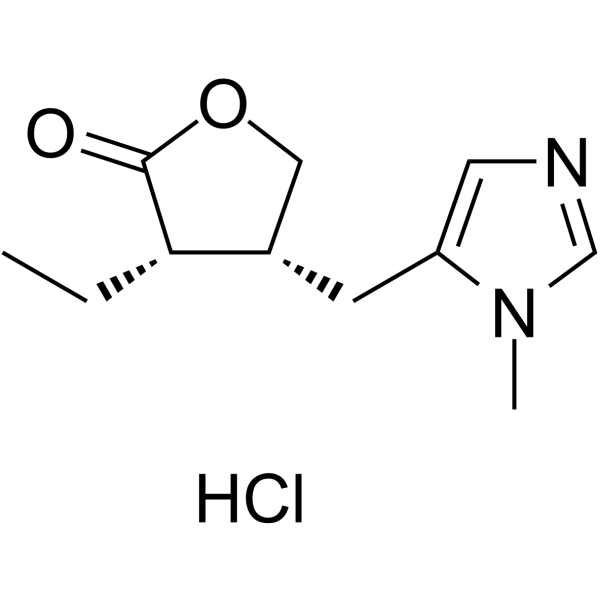
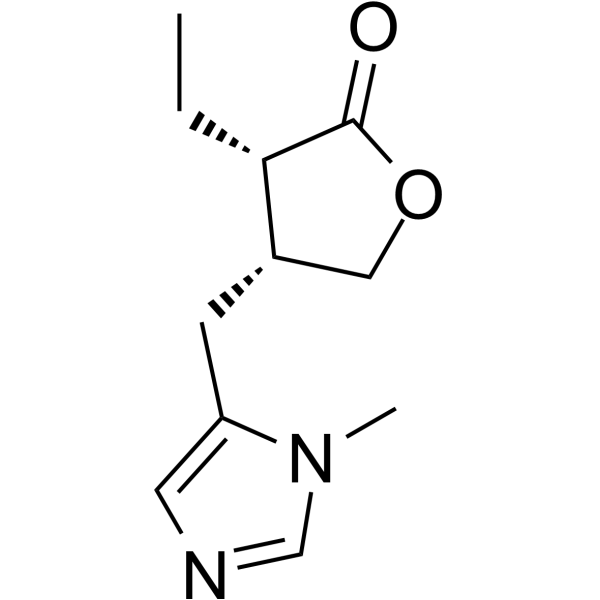
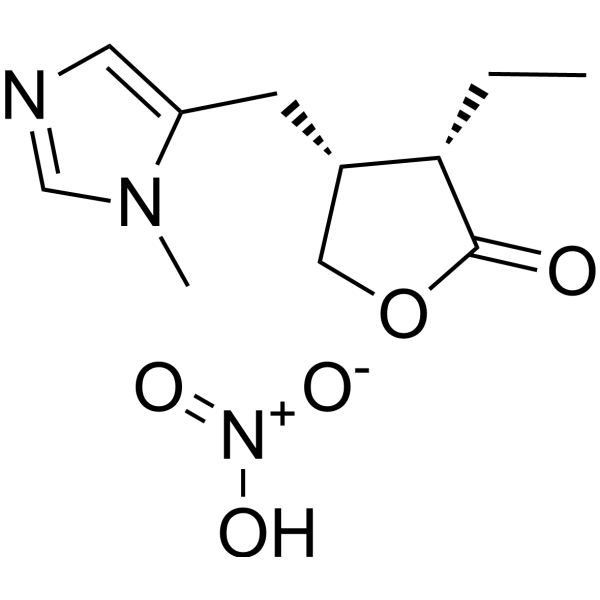
Pilocarpine (Hydrochloride) (Standard) is the analytical standard of Pilocarpine (Hydrochloride). This product is intended for research and analytical applications. Pilocarpine Hydrochloride is a potent M3-type muscarinic acetylcholine receptor (M3 muscarinic receptor) agonist.
|
-
- HY-W705106
-
|
(-)-(S)-Coclaurine hydrochloride; L-Coclaurine hydrochloride
|
nAChR
|
Neurological Disease
|
|
(-)-Coclaurine hydrochloride (compound I) is a class of tetrahydroisoquinoline alkaloids that can be isolated from Sarcopetalum harveyanum. (-)-Coclaurine hydrochloride is a nicotinic acetylcholine receptor (nAChRs) antagonist .
|
-
- HY-107682
-
-
- HY-107654
-
|
(+)-Muscarine iodide
|
mAChR
|
Neurological Disease
|
|
Muscarine ((+)-Muscarine) iodide is a toxin that can stimulate the parasympathetic nervous system. Muscarine iodide is a prototype muscarinic acetylcholine receptor agonist .
|
-
- HY-B0823
-
|
|
Environmental Pollutants
nAChR
|
Neurological Disease
|
|
Acetamiprid is a neonicotinoid insecticide used worldwide. Acetamiprid is a nicotinic acetylcholine receptor (nAChR) agonist, and is shown to be associated with neuromuscular and reproductive disorders .
|
-
- HY-12157
-
|
|
mAChR
|
Others
|
|
VU 0238429 is positive allosteric modulator of muscarinic acetylcholine receptor subtype 5 (mAChR5 or M5), with an EC50 of 1.16 μM.
|
-
- HY-B0726S1
-
-
- HY-P5823
-
|
|
nAChR
|
Neurological Disease
|
|
Azemiopsin is a potent nicotinic acetylcholine receptor (nAChR) inhibitor with IC50s of 0.18 μM and 22 μM against T. californica nAChR and human α7 nAChR, respectively. Azemiopsin blocks acetylcholine-induced currents in Xenopus oocytes heterologously expressing human muscle-type nAChR .
|
-
- HY-151129
-
|
|
nAChR
|
Neurological Disease
|
|
nAChR-IN-1 (2,2,6,6-Tetramethylpiperidin-4-yl heptanoate) is a tetramethylpiperidine heptanoate, a selective nicotinic acetylcholine receptor (nAChR) inhibitor that inhibits nAChRs lacking α5, α6, or β3 subunits. nAChR-IN-1 has the effect of preventing nerve disorder, can be used for nicotinic acetylcholine receptor dysfunction or neurological disorders research .
|
-
- HY-124540B
-
|
|
nAChR
|
Neurological Disease
|
|
(Rac)-ABT-202 dihydrochloride is a racemate of ABT-202. ABT-202 is an agonist of nicotinic acetylcholine receptors (nAChRs) and can be used as an analgesic .
|
-
- HY-134045
-
|
|
nAChR
|
Neurological Disease
Inflammation/Immunology
|
|
(-)-Anatoxin A is an enantiomer of (±)-Anatoxin A (HY-N2326). (-)-Anatoxin A is a neuronal nicotinic acetylcholine receptor agonist. (-)-Anatoxin A can be used for pain and inflammation research .
|
-
- HY-N7247
-
|
|
mAChR
|
Metabolic Disease
|
|
Thiochrome, a natural oxidation product and metabolite of thiamine, is a selective M4 muscarinic receptor of acetylcholine (ACh) affinity enhancer. Thiochrome has neutral cooperativity with ACh at M1 to M3 receptors .
|
-
- HY-P1375
-
|
|
nAChR
|
Endocrinology
|
|
[D-Trp7,9,10]-Substance P is a substance P analogue. Substance P stimulates substance P receptors but also inhibits ion conductance through nicotinic acetylcholine receptors .
|
-
- HY-167896
-
|
|
nAChR
|
Neurological Disease
|
|
Hepzidine (compound 40) is a novel nicotinic acetylcholine receptor (nAChR) ligand. Hepzidine can bind to AChBP. Hepzidine can be used in neuro-related research .
|
-
- HY-170032
-
|
|
mAChR
|
Neurological Disease
|
|
Oxotremorine is an agonist for mAChR, that activates M1 and M3 acetylcholine receptors. Oxotremorine exhibits nicotine-like effects in drug discrimination experiments in macaques .
|
-
- HY-131574
-
|
|
mAChR
|
Neurological Disease
|
|
Heliosupine N-oxide, Heliosupin metabolite, inhibits muscarinic acetylcholine receptor (mAChR) with the IC50 of 350 μM. Heliosupine N-oxide is a pyrrolizidine alkaloid (PA) .
|
-
- HY-14824
-
|
ABT 894
|
nAChR
|
Neurological Disease
|
|
Sofiniclin (ABT 894), an agonist of nicotinic acetylcholine receptor (nAChR), is used as a potential non-stimulant research for attention-deficit/hyperactivity disorder (ADHD) .
|
-
- HY-B1006R
-
|
|
Reference Standards
mAChR
|
Neurological Disease
Cancer
|
|
Pilocarpine (nitrate) (Standard) is the analytical standard of Pilocarpine (nitrate). This product is intended for research and analytical applications. Pilocarpine nitrate is a potent M3-type muscarinic acetylcholine receptor (M3 muscarinic receptor) agonist.
|
-
- HY-P1375A
-
|
|
mAChR
|
Endocrinology
|
|
[D-Trp7,9,10]-Substance P TFA is a substance P analogue. Substance P stimulates substance P receptors but also inhibits ion conductance through nicotinic acetylcholine receptors .
|
-
- HY-N7421
-
|
|
mAChR
|
Neurological Disease
|
|
Smilagenin acetate is a sapogenin derivative extracted from patent US20030004147A1. Smilagenin acetate increases the expression of acetylcholine m2 receptors and can be used for the research of dementia .
|
-
- HY-160440A
-
|
|
mAChR
|
Neurological Disease
|
|
VU6021625 is a selective antagonist muscarinic acetylcholine receptors (mAChRs), with the IC50 value of 0.44 nM, 57 nM for human M4 and rat M4, respectively .
|
-
- HY-B1552B
-
|
|
nAChR
|
Neurological Disease
|
|
Benzoquinonium dibromide is a nicotinic acetylcholine receptors (nAChRs) antagonist, with an IC50 of 0.46 μM. Benzoquinonium dibromide can block neuromuscular and ganglionic transmission .
|
-
- HY-P4129
-
|
|
nAChR
|
Others
|
|
Rabies Virus Matrix Protein Fragment (RV-MAT) is a polypeptide. Rabies Virus Matrix Protein Fragment targets the acetylcholine receptor (AChR) that exists on the cell surface .
|
-
- HY-112209
-
|
|
mAChR
|
Neurological Disease
|
|
VU0467154 is a positive allosteric modulator of the M4 muscarinic acetylcholine receptor (mAChR), potentiating the response to ACh with pEC50s of 7.75, 6.2 and 6 for rat, human and cynomolgus monkey M4 receptor, respectively.
|
-
- HY-100906
-
|
|
nAChR
|
Neurological Disease
|
|
1,1-Dimethyl-4-acetylpiperazinium iodide is an agonist for nicotinic acetylcholine receptor (nAChR) that open ion channels and causes cell membrane depolarization .
|
-
- HY-119913
-
|
Ahistan
|
Histamine Receptor
|
Neurological Disease
|
|
Dacemazine (Ahistan) is a phenothiazine derivative that acts as a histamine H1 receptor antagonist. Dacemazine exhibits local anesthetic activity and can alleviate spasms induced by acetylcholine and histamine .
|
-
- HY-159829
-
|
NBI-1117568; HTL-0016878
|
mAChR
|
Neurological Disease
|
|
Direclidine (NBI-1117568, HTL-0016878) is a selective orthosteric agonist targeting the muscarinic acetylcholine M4 receptor, exhibiting very low affinity for M1, M2, M3, and M5 receptors. It binds to the orthosteric site of the M4 receptor in a non-covalent, competitive manner. Direclidine specifically activates the M4 receptor, inhibiting the release of acetylcholine from striatal cholinergic interneurons, thereby regulating the balance of the dopaminergic system and reducing psychiatric symptoms associated with excessive dopamine release. Direclidine can improve symptoms associated with neuropsychiatric disorders and is used in research on schizophrenia and other neuropsychiatric disorders .
|
-
- HY-123661
-
|
|
Endogenous Metabolite
|
Neurological Disease
|
|
MIPS1455 is a light-activated M1 muscarinic acetylcholine receptor ligand with irreversible binding activity to the allosteric site of the receptor. MIPS1455 is a drug target under investigation for the suppression of cognitive deficits and may become a valuable molecular tool for further investigation of allosteric interactions of the receptor .
|
-
- HY-B0429
-
|
|
nAChR
|
Neurological Disease
|
|
Pancuronium dibromide, a bis-quaternary steroid, is a neuromuscular relaxant. Pancuronium dibromide inhibits neuromuscular transmission by competing with acetylcholine for binding sites on nACh receptors. Pancuronium dibromide also inhibits cardiac muscarinic receptors and has a sympathomimetic action .
|
-
- HY-118356
-
|
|
Neurokinin Receptor
mAChR
|
Neurological Disease
|
|
WIN 62,577 is a rat-specific, but non-human, NK1 receptor antagonist. WIN 62,577 interacts with M1-M4 mAChRs and is an allosteric enhancer of acetylcholine affinity targeting the M3 receptor.
|
-
- HY-122491
-
|
|
mAChR
|
Neurological Disease
|
|
Dimethyl-W84 (dibromide) modulates M2 muscarinic acetylcholine receptors. Dimethyl-W84 (dibromide) can be used in nervous system related research .
|
-
- HY-101347
-
|
|
nAChR
|
Neurological Disease
|
|
Chlorisondamine (diiodide) is a potent nicotinic acetylcholine receptor (nAChR) antagonist and a ganglion blocker. Chlorisondamine antagonizes some of nicotine's central actions in a potent, long-lasting and pharmacologically selective way .
|
-
- HY-101381
-
|
AF-DX 116
|
mAChR
|
Neurological Disease
Metabolic Disease
|
|
Otenzepad (AF-DX 116) is a selective and competitive M2 muscarinic acetylcholine receptor antagonist, with IC50 values of 640 nM and 386 nM for rabbit peripheral lung and rat heart, respectively .
|
-
- HY-14774S
-
|
|
nAChR
|
Cancer
|
|
(Rac)-Monepantel-d5 is deuterium labeled Monepantel. Monepantel is organic anthelmintic, and acts as a positive allosteric modulator of a nematode-specific clade of nicotinic acetylcholine receptor (nAChR) subunits.
|
-
- HY-W698445
-
|
|
Drug Isomer
nAChR
|
Neurological Disease
|
|
α-Nicotine is the α-isomer of Nicotine. Nicotine is a nicotinic acetylcholine receptor (nAChR) agonist. Nicotine is promising for research of neuropsychiatric disorders (e.g., schizophrenia, ADHD) .
|
-
- HY-P5833
-
|
κ-Bgt
|
nAChR
|
Neurological Disease
|
|
κ-Bungarotoxin (κ-Bgt) is a potent, selective, and slowly reversible antagonist of α3β2 neuronal nicotinic acetylcholine receptors with an IC50 of 2.30 nM .
|
-
- HY-14774S1
-
|
|
nAChR
|
Cancer
|
|
(Rac)-Monepantel sulfone-d5 is deuterium labeled Monepantel. Monepantel is organic anthelmintic, and acts as a positive allosteric modulator of a nematode-specific clade of nicotinic acetylcholine receptor (nAChR) subunits.
|
-
- HY-B0394S
-
|
Tropine tropate-d5; DL-Hyoscyamine-d5
|
mAChR
Autophagy
|
Neurological Disease
|
|
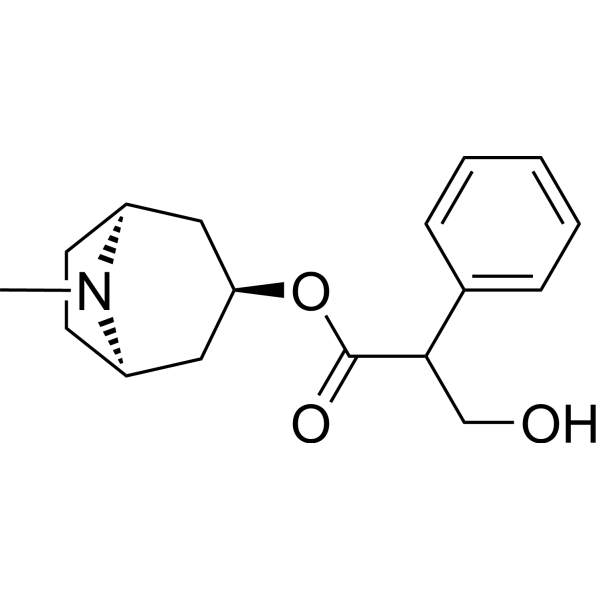
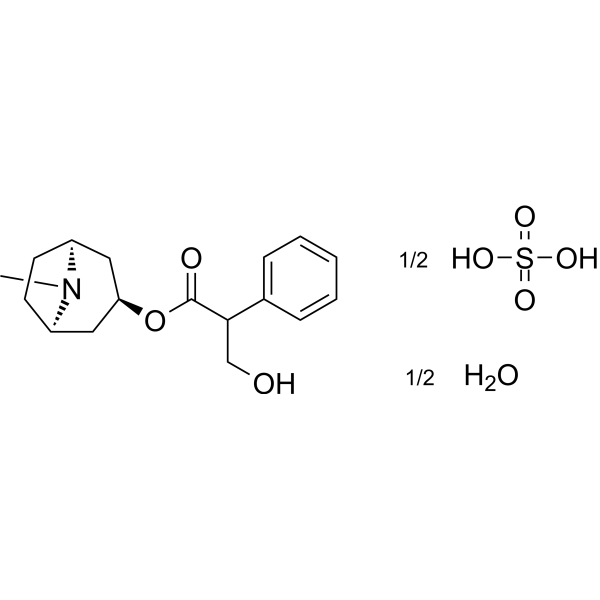
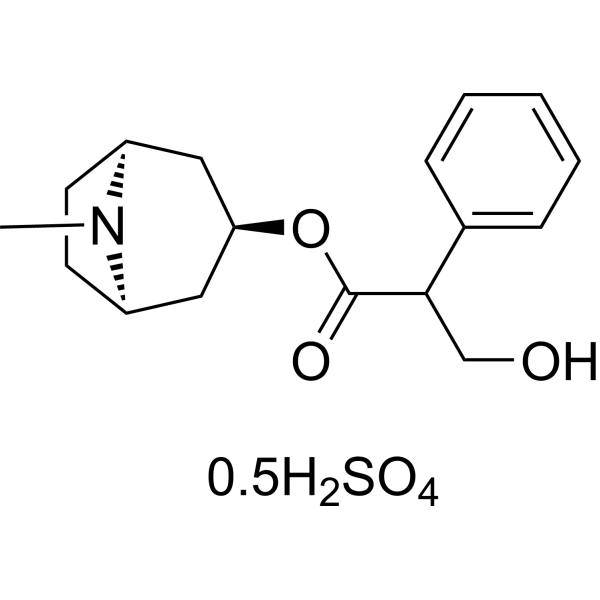
Atropine-d5 is the deuterium labeled Atropine (sulfate monohydrate). Atropine (Tropine tropate) sulfate monohydrate is a broad-spectrum and competitive muscarinic acetylcholine receptor (mAChR) antagonist with anti-myopia effect .
|
-
- HY-B0820
-
|
|
nAChR
Parasite
|
Neurological Disease
|
|
Nitenpyram is a calss of neonicotinoid and an insect nicotinic acetylcholine receptor (nAChR) agonist with an IC50 of 14 nM. Nitenpyram is an oral fast-acting insecticide used to suppress sucking insects on companion animals .
|
-
- HY-139581
-
|
SUVN-911 free base
|
nAChR
|
Neurological Disease
|
|
Ropanicant (SUVN-911 free base) is a novel, potent, selective, and orally active neuronal nicotinic acetylcholine α4β2 receptor antagonist for the research of depression .
|
-
- HY-12149
-
|
|
nAChR
|
Neurological Disease
|
|
A-867744 is a highly potent and selective type II positive allosteric modulator (PAM) of the alpha7 nicotinic acetylcholine receptors (nAChR) with an EC50 of 1.0 μM .
|
-
- HY-122743
-
Iperoxo
2 Publications Verification
|
mAChR
|
Neurological Disease
|
|
Iperoxo is a potent superagonist of muscarinic acetylcholine receptor (mAChR) that activates M1, M2 and M3 receptors with pEC50 of 9.87, 10.1 and 9.78. Iperoxo can be used for direct probing activation-related conformational transitions of muscarinic receptors when labeled with tritium .
|
-
- HY-B0827S
-
|
MTI-446-d3
|
nAChR
Parasite
|
Infection
Cardiovascular Disease
|
|
Dinotefuran-d3 is the deuterium labeled Dinotefuran . Dinotefuran is an insecticide of the neonicotinoid class, its mechanism of action involves disruption of the insect's nervous system by inhibiting nicotinic acetylcholine receptors .
|
-
- HY-B0942S
-
-
- HY-B0547AR
-
|
|
Reference Standards
mAChR
|
Neurological Disease
|
|
Homatropine (Bromide) (Standard) is the analytical standard of Homatropine (Bromide). This product is intended for research and analytical applications. Homatropine Bromide is an orally active muscarinic acetylcholine receptor antagonist and can be used as an anticholinergic agent .
|
-
- HY-W801784
-
|
|
mAChR
|
Others
|
|
Revefenacin impurity 4 (Compound 9b) is an intermediate of Revefenacin (HY-15851). Revefenacin impurity 4 can bind to human M3 muscarinic acetylcholine receptor inhibitors (Ki = 55 nM) .
|
-
- HY-120609
-
|
|
nAChR
|
Neurological Disease
|
|
BMS-902483 is a quinuclidine-containing spirooxazolidine that is a partial agonist of the α7 nicotinic acetylcholine receptor (nAChR). BMS-902483 improves cognitive ability in preclinical rodent models. .
|
-
- HY-14774R
-
|
AAD1566 (Standard); NUZ-001 (Standard)
|
Reference Standards
nAChR
|
Cancer
|
|
Monepantel (Standard) is the analytical standard of Monepantel. This product is intended for research and analytical applications. Monepantel is organic anthelmintic, and acts as a positive allosteric modulator of a nematode-specific clade of nicotinic acetylcholine receptor (nAChR) subunits.
|
-
- HY-N16475
-
|
|
nAChR
|
Infection
|
|
Spinosyn L is a selective nicotinic acetylcholine receptors (nAChR) agonist. Spinosyn L causes sustained neural excitation and paralysis in insects. Spinosyn L is promising for research of pesticides for controlling Lepidoptera, Diptera, and other agricultural pests .
|
-
- HY-13204
-
|
KL 373 hydrochloride
|
mAChR
|
Neurological Disease
|
|
Biperiden (KL 373) hydrochloride is a non-selective muscarinic receptor antagonist that competitively binds to M1 muscarinic receptors, thereby inhibiting acetylcholine and enhancing dopamine signaling in the central nervous system. Biperiden hydrochloride has the potential for the research of Parkinson's disease and other related psychiatric disorders .
|
-
- HY-13204A
-
|
KL 373
|
mAChR
|
Neurological Disease
|
|
Biperiden (KL 373) is a non-selective muscarinic receptor antagonist that competitively binds to M1 muscarinic receptors, thereby inhibiting acetylcholine and enhancing dopamine signaling in the central nervous system. Biperiden has the potential for the research of Parkinson's disease and other related psychiatric disorders .
|
-
- HY-100806
-
-
- HY-129674
-
|
|
nAChR
|
Neurological Disease
|
|
PHA 568487 free base is a selective alpha 7 nicotinic acetylcholine receptor (α-7 nAchR) agonist. PHA 568487 free base reduces neuroinflammation .
|
-
- HY-147360
-
|
|
nAChR
|
Infection
|
|
Tribendimidine is an orally active, broad-spectrum anthelmintic agent, with particularly high activity against A. lumbricoides and N. americanus. Tribendimidine is also an L-type nicotinic acetylcholine receptor (nAChR) agonist .
|
-
- HY-103182A
-
|
|
Adenosine Receptor
|
Others
|
|
PSB-1115 potassium salt is a selective A2B Adenosine Receptor antagonist. PSB-1115 potassium salt inhibits the 2,4,6-trinitrobenzenesulfonic acid (TNBS)-induced contraction inhibition of acetylcholine (ACh) .
|
-
- HY-103182
-
|
|
Adenosine Receptor
|
Others
|
|
PSB-1115 is a selective A2B Adenosine Receptor antagonist. PSB-1115 inhibits the 2,4,6-trinitrobenzenesulfonic acid (TNBS)-induced contraction inhibition of acetylcholine (ACh) .
|
-
- HY-107512
-
-
- HY-B0118A
-
|
ORG NC 45
|
nAChR
|
Neurological Disease
Cancer
|
|
Vecuronium (ORG NC 45) bromide is a non-depolarizing neuromuscular blocking agent that also acts as a nicotinic acetylcholine receptor (nAChR) inhibitor, a muscle relaxant, and can be used for pre-surgical anesthesia .
|
-
- HY-12560D
-
|
|
nAChR
|
Others
|
|
PNU-282987 S enantiomer free base is the S-enantiomer of PNU-282987 free base. PNU-282987 is an α7 nicotinic acetylcholine receptor (α7 nAChR) agonist.
|
-
- HY-110241
-
|
|
nAChR
|
Neurological Disease
|
|
Dianicline dihydrochloride is a α4β2 nicotinic acetylcholine receptor partial agonist, a class of agents that includes varenicline and cytisine for smoking cessation. Dianicline dihydrochloride increases cessation rates in a dose-dependent manner .
|
-
- HY-145297R
-
|
|
Reference Standards
nAChR
Insecticide
|
Neurological Disease
|
|
Flupyrimin (Standard) is the analytical standard of Flupyrimin. This product is intended for research and analytical applications. Flupyrimin is the antagonist for insect nicotinic acetylcholine receptor (nAChR) that exhibits insecticidal effect by targeting insect nervous system .
|
-
- HY-N1064
-
|
|
nAChR
|
Neurological Disease
|
|
Xanthoplanine, isolated from theroot of Xylopia parviflora, fully inhibits the EC50 ACh responses of both alpha7 and alpha4beta2 nACh receptors with estimated IC50 values of 9 μM (alpha7) and 5 μM (alpha4beta2) .
|
-
- HY-P1264F
-
|
|
nAChR
|
Neurological Disease
|
|
FITC-labeled α-Bungarotoxin is FITC-conjugated α-Bungarotoxin (HY-P1264). α-Bungarotoxin acts as a competitive antagonist of nicotinic acetylcholine receptors (nAChRs) .
|
-
- HY-14312
-
|
|
nAChR
|
Neurological Disease
|
|
A 85380 is a novel, high affinity neuronal nicotinic acetylcholine receptor (nAChR) agonist. A 85380 exhibits selectivity for the α4β2 nAChR subtypes. A 85380 has a broad-spectrum analgesic profile .
|
-
- HY-14835
-
|
SSR240600
|
Others
|
Others
|
|
Burapitant (SSR240600) is a compound that modulates cholinergic transmission and regulates acetylcholine release in the limbic/prefrontal region of the rat striatum, with its effects being influenced by the interaction of 5-HT? and 5-HT? receptors.
|
-
- HY-118751
-
|
Bancol
|
nAChR
|
Others
Neurological Disease
|
|
Bensultap (Bancol) is an insecticide, which can control Colorado beetle and some other insect pests. Bensultap is a modulator for nicotinic acetylcholine receptor (nAChR), and exhibits mild and temporary neuromodulatory efficacy on rat nervous system .
|
-
- HY-148412A
-
|
EN101 sodium; ODN 7040 sodium; BL 7040 sodium
|
Cholinesterase (ChE)
|
Others
|
|
Monarsen sodium is a synthetic 20-base antisense oligodeoxynucleotide directed against the human AChE gene. Monarsen sodium is used in the study of Autoimmune myasthenia gravis (MG), a neuromuscular disorder caused by autoantibodies directed against the acetylcholine receptor (AChR).
|
-
- HY-110131
-
|
|
nAChR
|
Neurological Disease
|
|
A 85380 hydrochloride is a novel, high affinity neuronal nicotinic acetylcholine receptor (nAChR) agonist. A 85380 hydrochloride exhibits selectivity for the α4β2 nAChR subtypes. A 85380 hydrochloride has a broad-spectrum analgesic profile .
|
-
- HY-B1813A
-
|
(±)-AH5183 hydrochloride
|
Sigma Receptor
|
Neurological Disease
|
|
(±)-Vesamicol hydrochloride ((±)-AH5183 hydrochloride) is a potent vesicular acetylcholine transport inhibitor with a Ki of 2 nM. (±)-Vesamicol hydrochloride also displays high affinity for σ1 and σ2 receptors with Kis of 26 nM and 34 nM, respectively .
|
-
- HY-107654S
-
|
(+)-Muscarine-d9 iodide
|
Isotope-Labeled Compounds
mAChR
|
Neurological Disease
|
|
Muscarine-d9 (iodide) is the deuterium labeled Muscarine iodide. Muscarine ((+)-Muscarine) iodide is a toxin that can stimulate the parasympathetic nervous system. Muscarine iodide is a prototype muscarinic acetylcholine receptor agonist .
|
-
- HY-N7247R
-
|
|
Reference Standards
mAChR
|
Metabolic Disease
|
|
Thiochrome (Standard) is the analytical standard of Thiochrome. This product is intended for research and analytical applications. Thiochrome, a natural oxidation product and metabolite of thiamine, is a selective M4 muscarinic receptor of acetylcholine (ACh) affinity enhancer. Thiochrome has neutral cooperativity with ACh at M1 to M3 receptors .
|
-
- HY-139582
-
|
OC-02
|
nAChR
SARS-CoV
|
Infection
|
|
Simpinicline (OC-02), a highly selective nicotinic acetylcholine receptor (nAChR) agonist, shows potent antiviral activity against the SARS-CoV-2 variants in cell culture with an IC50 of 0.04 µM .
|
-
- HY-136146
-
|
|
nAChR
|
Neurological Disease
|
|
SUVN-911 is a potent, selective, brain penetrated and orally bioavailable neuronal nicotinic acetylcholine α4β2 receptor antagonist, with a Ki of 1.5 nM. SUVN-911 has antidepressant activity .
|
-
- HY-148961
-
|
|
mAChR
|
Neurological Disease
|
|
HTL-9936 is a selective M1 muscarinic acetylcholine receptor (M1-mAChR) agonist. HTL-9936 is promising for research of neurodegenerative disorders (e.g., Alzheimer’s) .
|
-
- HY-175339
-
|
|
nAChR
|
Infection
|
|
Insecticidal agent 25 (Compound WZ18) is an insecticide targeting the nicotinic acetylcholine receptors (nAChRs) in insect nervous systems. Insecticidal agent 25 disrupts neurotransmission by competitively binding to nAChRs, leading to insect paralysis and death .
|
-
- HY-122190
-
|
|
mAChR
|
Neurological Disease
|
|
TAK-071 is a novel, potent and highly selective muscarinic acetylcholine receptor 1 (M1R) positive allosteric modulator. EC50 of TAK-071 M1R agonist activities is 520 nM .
|
-
- HY-B0823A
-
|
|
nAChR
Drug Isomer
|
Neurological Disease
|
|
(E/Z)-Acetamiprid is the E/Z mixture of Acetamiprid (HY-B0823). Acetamiprid is a neonicotinoid insecticide used worldwide. Acetamiprid is a nicotinic acetylcholine receptor (nAChR) agonist, and is shown to be associated with neuromuscular and reproductive disorders .
|
-
- HY-B0823R
-
|
|
Reference Standards
nAChR
|
Neurological Disease
|
|
Acetamiprid (Standard) is the analytical standard of Acetamiprid. This product is intended for research and analytical applications. Acetamiprid is a neonicotinoid insecticide used worldwide. Acetamiprid is a nicotinic acetylcholine receptor (nAChR) agonist, and is shown to be associated with neuromuscular and reproductive disorders .
|
-
- HY-117284A
-
|
|
mAChR
|
Neurological Disease
|
|
Eucatropine hydrochloride is a potent muscarinic acetylcholine receptor (mAChR) inhibitor with an IC50 value of 0.583 μM. Eucatropine hydrochloride acts as an anticholinergic agent. Eucatropine hydrochloride produces behavioral effects via central cholinergic receptive sites in cats .
|
-
- HY-121366
-
|
RU-15525
|
Calcium Channel
|
Others
|
Kadethrin is a synthetic pyrethroid that acts as an insecticide. Kadethrin can affect the binding of [3H] full-histamine toxin ([3H]H12-HTX) to the nicotinic acetylcholine (Ach) receptor/channel binding sites, and it inhibits the Ca 2+ flux through the receptor ion channels .
|
-
- HY-119918
-
|
|
mAChR
|
Neurological Disease
|
|
Cycrimine is an orally active muscarinic cholinergic receptor (mAChR) M1 antagonist, reduces the acetylcholine levels in parkinson model. Cycrimine shows antispasmodic activity, can be used in studies of behavioral and mental disorder .
|
-
- HY-148412
-
|
EN101; ODN 7040; BL 7040
|
Cholinesterase (ChE)
|
Others
|
|
Monarsen (EN101) is a synthetic 20-base antisense oligodeoxynucleotide directed against the human AChE gene. Monarsen is used in the study of Autoimmune myasthenia gravis (MG), a neuromuscular disorder caused by autoantibodies directed against the acetylcholine receptor (AChR).
|
-
- HY-122510
-
|
Atropine oxidation
|
Parasite
|
Neurological Disease
|
|
Atropine Oxide (Atropine oxidation), a derivative of Atropine, acts as a competitive antagonist to the muscarinic acetylcholine receptors M1, M2, M3, M4, and M5, and is utilized in the treatment of specific nerve agent and pesticide poisonings.
|
-
- HY-B0942R
-
|
|
Reference Standards
nAChR
Bacterial
|
Neurological Disease
|
|
Benzethonium (chloride) (Standard) is the analytical standard of Benzethonium (chloride). This product is intended for research and analytical applications. Benzethonium chloride inhibits nicotinic acetylcholine receptors in human recombinant α7 and α4β2 neurons in Xenopus laevis oocytes.
|
-
- HY-108069
-
|
|
Potassium Channel
nAChR
|
Neurological Disease
|
|
Iptakalim hydrochloride, a lipophilic para-amino compound, is a novel ATP-sensitive potassium channel (KATP) opener, as well as an α4β2-containing nicotinic acetylcholine receptor (nAChR) antagonist .
|
-
- HY-128783
-
|
|
mAChR
|
Neurological Disease
|
|
VU0090157 is a positive allosteric modulator (PAM) of the M1 muscarinic acetylcholine receptor (mAChR). VU0090157 increases the affinity of ACh by binding to the allosteric site. VU0090157 can be used in the study of schizophrenia and Alzheimer's disease .
|
-
- HY-111161
-
|
|
nAChR
Parasite
|
Infection
|
|
GSK575594A is a modulator of the nicotinic acetylcholine receptor (nAChR) in Ascaris suum. GSK575594A enhances muscle contractions induced by acetylcholine (ACh) by binding to the allosteric binding site between subunits within the transmembrane domain of nAChR. At a concentration of 3 μM, GSK575594A significantly increased the contraction induced by ACh in Ascaris suum (Emax increased from 1.19 g to 1.51 g). GSK575594A may be used in research within the field of antiparasitic studies .
|
-
- HY-B2152
-
|
Hemicholinium dibromide
|
Cholinesterase (ChE)
|
Neurological Disease
|
|
Hemicholinium 3 is a competitive inhibitor of the high affinity choline transporter (HACU) with a Ki value of 25 nM. Hemicholinium 3, a neuromuscular blocking agent which inhibits the synthesis and the release of acetylcholine (ACh) . Hemicholinium 3 inhibits the Epibatidine-evoked contraction and [ 3H]acetylcholine release with IC50s of 897 nM and 693 nM, respectively .
|
-
- HY-P1264
-
|
|
nAChR
|
Neurological Disease
|
|
α-Bungarotoxin is a competitive antagonist at nicotinic acetylcholine receptors (nAChRs). α-Bungarotoxin, a selective α7 receptor blocker, blocks α7 currents with an IC50 of 1.6 nM and has no effects on α3β4 currents at concentrations up to 3 μM .
|
-
- HY-176710A
-
|
|
Drug Isomer
|
Others
|
|
(R)-PAD-PF2 is an isomer of PAD-PF2 (HY-176710). PAD-PF2 is a PAD family inhibitor, as well as a κ-opioid receptor agonist (EC50 = 7.55 μM) and an M1 muscarinic acetylcholine receptor antagonist (IC50 = 12.3 μM).
|
-
- HY-101281A
-
|
|
mAChR
|
Neurological Disease
|
|
(Rac)-VU 6008667 is a selective negative allosteric modulator of muscarinic acetylcholine receptor subtype 5 (M5 NAM) (IC50=1.8 μM, pIC50= 5.75), has high CNS penetration .
|
-
- HY-P5798
-
|
FAS-I
|
Cholinesterase (ChE)
|
Neurological Disease
|
|
Fasciculin-I is isolated from the mambas venom. Fasciculin-I exerts its toxic effects by inhibiting acetylcholinesterase (AChE). Fasciculin-I blocks α-neurotoxins of nicotinic acetylcholine receptors and cardiac toxins that interact with cell membranes .
|
-
- HY-122510A
-
|
Atropine oxidation hydrochloride
|
mAChR
|
|
|
Atropine Oxide (Atropine oxidation) hydrochloride, a derivative of Atropine, acts as a competitive antagonist to the muscarinic acetylcholine receptors M1, M2, M3, M4, and M5, and is utilized in the treatment of specific nerve agent and pesticide poisonings .
|
-
- HY-107675R
-
|
Deformylflustrabromine hydrochloride (Standard); dFBr hydrochloride (Standard)
|
Reference Standards
nAChR
|
Neurological Disease
|
|
Desformylflustrabromine hydrochloride (Standard) is the analytical standard of Desformylflustrabromine hydrochloride (HY-107675). This product is intended for research and analytical applications. Desformylflustrabromine hydrochloride is a selective agonist of α4β2 neuronal nicotinic acetylcholine receptor (nAChR) with a pEC50 of 6.48.
|
-
- HY-183144
-
|
|
mAChR
|
Neurological Disease
Inflammation/Immunology
|
|
Vedaclidine is an orally active muscarinic acetylcholine receptor (mAChR) modulator with mixed receptor activity, which activates muscarinic M2 and M4 receptors and blocks muscarinic M1, M3 and M5 receptors. Vedaclidine exerts its activity through interaction with spinal M4 muscarinic receptors, and does not induce hypothermia or excessive salivation. Vedaclidine can be used in research related to pain, neuropathic pain and inflammatory pain states .
|
-
- HY-120946
-
|
|
nAChR
|
Neurological Disease
|
|
VMY-2-95 is an oral active and blood-brain barrier (BBB) penetrant α4β2 nicotinic acetylcholine receptor desensitizer. VMY-2-95 can be used for study of depression or addiction .
|
-
- HY-P5623B
-
RVG TFA
1 Publications Verification
RVG29 TFA; RDP TFA; Rabies Virus Glycoprotein-29 TFA
|
Bacterial
|
Infection
|
|
RVG TFA is a peptide derived from Rabies Virus Glycoprotein that binds to the α-7 subunit of nicotinic acetylcholine receptors (AchR) of neuronal cells. RVG enhances delivery of Mycobacterium tuberculosis antigens to antigen-presenting cells .
|
-
- HY-B0429R
-
|
|
Reference Standards
nAChR
|
Neurological Disease
|
|
Pancuronium (dibromide) (Standard) is the analytical standard of Pancuronium (dibromide). This product is intended for research and analytical applications. Pancuronium dibromide, a bis-quaternary steroid, is a neuromuscular relaxant. Pancuronium dibromide inhibits neuromuscular transmission by competing with acetylcholine for binding sites on nACh receptors. Pancuronium dibromide also inhibits cardiac muscarinic receptors and has a sympathomimetic action .
|
-
- HY-107686
-
|
5-I A-85380 dihydrochloride
|
nAChR
|
Neurological Disease
|
|
5-Iodo-A-85380 dihydrochloride is a selective ligand of nAChR. 5-Iodo-A-85380 dihydrochloride binds to α4β2 nAChRs in rat and human brain with Kds of 12 and 14 pM,respectively .
|
-
- HY-145296
-
|
|
Environmental Pollutants
nAChR
|
Infection
|
|
Triflumezopyrim, a mesoionic insecticide, has high efficiency at a low dosage, and is mainly used to control hopper species. Triflumezopyrim mainly acts on the nicotinic acetylcholine receptor (nAChR) inhibition, which is very highly efficient, rapidly effective, and nearly nontoxic to nontarget arthropods .
|
-
- HY-123852
-
|
|
mAChR
|
Neurological Disease
|
|
PF-06764427 is a selective M1 muscarinic acetylcholine receptor positive allosteric modulator. PF-06764427 exhibits robust M1 agonist activity. PF-06764427 can be used in the research of Alzheimer's disease and schizophrenia .
|
-
- HY-P1271
-
|
Catestatin (cattle)
|
nAChR
|
Cardiovascular Disease
|
|
Catestatin is a 21-amino acid residue, cationic and hydrophobic peptide. Catestatin is an endogenous peptide that regulates cardiac function and blood pressure . Catestatin is a non-competitive nicotinic antagonist acting through nicotinic acetylcholine receptors (nAChRs) to inhibit catecholamine release .
|
-
- HY-B0662
-
|
KRP-197; ONO-8025
|
mAChR
Vasopressin Receptor
|
Neurological Disease
Endocrinology
|
|
Imidafenacin (KRP-197; ONO-8025) is an orally active inhibitor of muscarinic (mAChR) M1 and M3 receptors. Imidafenacin potently inhibits bladder contraction in vivo and exerts an antidiuretic effect by enhancing the signaling pathway of vasopressin (antidiuretic hormone). Imidafenacin can be used in research related to overactive bladder .
|
-
- HY-106699
-
|
CG 4203 sodium
|
Prostaglandin Receptor
nAChR
|
Cardiovascular Disease
|
|
Taprostene sodium is a partial agonist at prostanoid prostacyclin (IP) receptors. Taprostene sodium interacts additively with Prostaglandin E2 (PGE2) (HY-101952), ONO-AE1-259 (selective EP2 agonist), and acetylcholine. Taprostene sodium exerts a significant cardioprotection .
|
-
- HY-B0321S
-
|
Ro 1-7683-d3
|
mAChR
|
Neurological Disease
|
|
Tropicamide-d3 is the deuterium labeled Tropicamide . Tropicamide (Ro 1-7683) is a selective M4 muscarinic acetylcholine receptor antagonist. Tropicamide produces short acting mydriasis (dilation of the pupil) and cycloplegia when applied as eye drops .
|
-
- HY-12641A
-
|
|
nAChR
Parasite
Antibiotic
|
Infection
|
|
Pyrantel is an orally active anthelmintic and an agonist of the nicotinic acetylcholine receptor (nAChR). Pyrantel can cause spasmodic muscle paralysis in parasites. Pyrantel can be used in the study of parasitic infections such as ascariasis, hookworm infections, intestinal worms (pinworm infections), trichinosis and trichinosis .
|
-
- HY-13204R
-
|
KL 373 hydrochloride (Standard)
|
Reference Standards
mAChR
|
Neurological Disease
|
|
Biperiden (hydrochloride) (Standard) is the analytical standard of Biperiden (hydrochloride). This product is intended for research and analytical applications. Biperiden (KL 373) hydrochloride is a non-selective muscarinic receptor antagonist that competitively binds to M1 muscarinic receptors, thereby inhibiting acetylcholine and enhancing dopamine signaling in the central nervous system. Biperiden hydrochloride has the potential for the research of Parkinson's disease and other related psychiatric disorders .
|
-
- HY-13204B
-
|
KL 373 lactate
|
mAChR
|
Neurological Disease
|
|
Biperiden (KL 373) lactate is an orally active non-selective muscarinic receptor antagonist that competitively binds to M1 muscarinic receptors. Biperiden (KL 373) lactate inhibits acetylcholine and enhances dopamine signaling in the central nervous system. Biperiden (KL 373) lactate has the potential for the research of Parkinson's disease and other related psychiatric disorders .
|
-
- HY-114724
-
|
|
Histamine Receptor
|
Inflammation/Immunology
|
|
HSR-609 is an orally active amphoteric antiallergic agent. HSR-609 has a high affinity for histamine H1-receptor in the guinea pig cerebral cortex. HSR-609 inhibits allergic airway hyperresponsiveness to Acetylcholine. HSR-609 shows poor ability to penetrate into the CNS in mice and guinea pigs .
|
-
- HY-13204AR
-
|
KL 373 (Standard)
|
Reference Standards
mAChR
|
Neurological Disease
|
|
Biperiden (Standard) is the analytical standard of Biperiden. This product is intended for research and analytical applications. Biperiden (KL 373) is a non-selective muscarinic receptor antagonist that competitively binds to M1 muscarinic receptors, thereby inhibiting acetylcholine and enhancing dopamine signaling in the central nervous system. Biperiden has the potential for the research of Parkinson's disease and other related psychiatric disorders .
|
-
- HY-B0321
-
|
Ro 1-7683
|
mAChR
|
Neurological Disease
|
|
Tropicamide (Ro 1-7683) is a selective M4 muscarinic acetylcholine receptor antagonist. When used as an eye drop, Tropicamide causes short-term mydriasis (pupil dilation) and cycloplegia. Tropicamide can be used in the research of neurological diseases, such as epilepsy .
|
-
- HY-B0489A
-
-
- HY-W127702
-
|
Methscopolamine nitrate
|
Biochemical Assay Reagents
|
Others
|
|
Scopolamine methyl nitrate is an organic compound commonly used in neuroscience research and pharmacology research. It can be used to study the role and structure of acetylcholine receptors, and is widely used in drug development and research in related fields. In addition, this compound is also used as a substrate or catalyst in certain biochemical reactions.
|
-
- HY-N2364
-
-
- HY-B0820R
-
|
|
Reference Standards
nAChR
Parasite
|
Neurological Disease
|
|
Nitenpyram (Standard) is the analytical standard of Nitenpyram. This product is intended for research and analytical applications. Nitenpyram is a calss of neonicotinoid and an insect nicotinic acetylcholine receptor (nAChR) agonist with an IC50 of 14 nM. Nitenpyram is an oral fast-acting insecticide used to suppress sucking insects on companion animals .
|
-
- HY-105793
-
|
|
mAChR
|
Neurological Disease
|
|
Mazaticol is an anticholinergic agent. Mazaticol blocks the muscarinic acetylcholine receptors and cholinergic nerve activity. Mazaticol is a potent 3H-QNB and 3H-PZ binding inhibitor, can bind to the M2 receptors with high affinity. Mazaticol exhibits inhibitory effects on dopamine uptake in the striatal nerve terminal. Mazaticol can be used for parkinsonian syndrome research .
|
-
- HY-B0321R
-
|
Ro 1-7683 (Standard)
|
Reference Standards
mAChR
|
Neurological Disease
|
|
Tropicamide (Standard) is the analytical standard of Tropicamide. This product is intended for research and analytical applications. Tropicamide (Ro 1-7683) is a selective M4 muscarinic acetylcholine receptor antagonist. Tropicamide produces short acting mydriasis (dilation of the pupil) and cycloplegia when applied as eye drops .
|
-
- HY-P1271A
-
|
|
nAChR
|
Cardiovascular Disease
|
|
Catestatin TFA is a 21-amino acid residue, cationic and hydrophobic peptide. Catestatin TFA is an endogenous peptide that regulates cardiac function and blood pressure . Catestatin TFA is a non-competitive nicotinic antagonist acting through nicotinic acetylcholine receptors (nAChRs) to inhibit catecholamine release .
|
-
- HY-162663
-
|
ML253
|
mAChR
|
Neurological Disease
|
|
VU0448088 (ML253) is a potent and cross the blood-brain barrier tricyclic muscarinic acetylcholine receptor subtype 4 (M4) positive allosteric modulator with EC50 values of 56, 176 nM for human and rat, respectively. VU0448088 has the potential for the research of psychotic .
|
-
- HY-100806S
-
-
- HY-121027
-
|
(-)-Anagyrine; Monolupine; Rhombinine
|
mAChR
nAChR
|
Neurological Disease
|
|
Anagyrine ((-)-Anagyrine) is a quinolizidine alkaloid that has been found in Lupinus albus. Anagyrine binds to muscarinic and nicotinic acetylcholine receptors with IC50 values of 132 and 2096 µM respectively. Anagyrine is a potent and effective desensitizer of nAChR, and Anagyrine can directly, without metabolism, desensitize nAChR .
|
-
- HY-172706
-
|
|
Liposome
nAChR
|
Neurological Disease
|
|
DSPE-PEG5000-RVG29 is a PEG compound which composed of DSPE and a Rabies virus glycoprotein 29 (RVG29). RVG29 can bind specifically to the nicotinic acetylcholine receptor (nAChR) at the blood-brain barrier (BBB) and cross over the BBB .
|
-
- HY-121027A
-
|
(-)-Anagyrine hydrochloride; Monolupine hydrochloride; Rhombinine hydrochloride
|
mAChR
nAChR
|
Neurological Disease
|
|
Anagyrine ((-)-Anagyrine) hydrochloride is a quinolizidine alkaloid that has been found in Lupinus albus. Anagyrine hydrochloride binds to muscarinic and nicotinic acetylcholine receptors with IC50 values of 132 and 2096 µM respectively. Anagyrine hydrochloride is a potent and effective desensitizer of nAChR, and Anagyrine hydrochloride can directly, without metabolism, desensitize nAChR .
|
-
- HY-18039
-
|
SEN15924
|
Cholinesterase (ChE)
|
Neurological Disease
|
|
WAY-361789 (SEN15924) is an orally active agonist for α7 nicotinic acetylcholine receptor (α7 nAChR) with an EC50 of 0.18 μM. WAY-361789 improves the cognitive function, exhibits potential in ameliorating Alzheimer’s Disease and schizophrenia .
|
-
- HY-107666
-
-
- HY-107512R
-
-
- HY-172704
-
|
|
Liposome
nAChR
|
Cancer
|
|
DSPE-PEG1000-RVG29 is a PEG compound which composed of DSPE and a Rabies virus glycoprotein 29 (RVG29). RVG29 can bind specifically to the nicotinic acetylcholine receptor (nAChR) at the blood-brain barrier (BBB) and cross over the BBB .
|
-
- HY-100806R
-
-
- HY-10936
-
|
|
iGluR
|
Neurological Disease
|
|
S 18986 is a selective, orally active, brain penetrant positive allosteric modulator of AMPA-type receptors. S 18986 shows cognitive enhancing properties in rodents. S 18986 activates the release of noradrenaline and acetylcholine in rat hippocampus and enhances rat memory in object-recognition tests .
|
-
- HY-107562A
-
|
|
Histamine Receptor
|
Neurological Disease
|
|
JNJ-10181457 is a selective non-imidazole histamine H3 receptor antagonist that normalizes acetylcholine neurotransmission . JNJ-10181457 is a click chemistry reagent, it contains an Alkyne group and can undergo copper-catalyzed azide-alkyne cycloaddition (CuAAc) with molecules containing Azide groups.
|
-
- HY-B0820S1
-
|
|
Isotope-Labeled Compounds
nAChR
Parasite
|
Neurological Disease
|
|
Nitenpyram-d3-1 is the deuterium labeled Nitenpyram (HY-B0820). Nitenpyram is a calss of neonicotinoid and an insect nicotinic acetylcholine receptor (nAChR) agonist with an IC50 of 14 nM. Nitenpyram is an oral fast-acting insecticide used to suppress sucking insects on companion animals .
|
-
- HY-12641
-
|
|
Parasite
nAChR
Antibiotic
|
Infection
|
|
Pyrantel tartrate is an orally active anthelmintic and an agonist of the nicotinic acetylcholine receptor (nAChR). Pyrantel tartrate can cause spasmodic muscle paralysis in parasites. Pyrantel tartrate can be used in the study of parasitic infections such as ascariasis, hookworm infections, intestinal worms (pinworm infections), trichinosis and trichinosis .
|
-
- HY-13204AS
-
|
KL 373-d5
|
Isotope-Labeled Compounds
mAChR
|
Neurological Disease
|
|
Biperiden-d5 (KL 373-d5) is deuterium labeled Biperiden. Biperiden (KL 373) is a non-selective muscarinic receptor antagonist that competitively binds to M1 muscarinic receptors, thereby inhibiting acetylcholine and enhancing dopamine signaling in the central nervous system. Biperiden has the potential for the research of Parkinson's disease and other related psychiatric disorders .
|
-
- HY-138879
-
|
|
nAChR
|
Neurological Disease
|
|
CP-601927 is a selective α4β2 nicotinic acetylcholine receptor (nAChR) partial agonist (Ki=1.2 nM; EC50=2.6 μM). CP-601927 shows good brain penetration and antidepressant-like properties .
|
-
- HY-B0489
-
|
methyl 1,2,5,6-tetrahydro-1-methyl-3-pyridinecarboxylate hydrobromide
|
mAChR
nAChR
|
Infection
Neurological Disease
Metabolic Disease
Inflammation/Immunology
Cancer
|
|
Arecoline hydrobromide, a naturally brain-penetrant and orally active occurring psychoactive alkaloid, is a partial agonist of nicotinic and muscarinic acetylcholine receptor. Arecoline hydrobromide exhibits stimulation, alertness, anxiolysis and anti-parasitic effects. Arecoline hydrobromide also can induce oxidative stress .
|
-
- HY-17037
-
|
LS 519; Pirenzepin dihydrochloride; Gastrozepin dihydrochloride
|
mAChR
|
Metabolic Disease
Cancer
|
|
Pirenzepine (LS 519) dihydrochloride is a selective M1 mAChR (muscarinic acetylcholine receptor) antagonist, with poor penetration of the blood-brain barrier. Pirenzepine dihydrochloride reduces gastric acid secretion and reduces muscle spasm, can be used in peptic ulcers research. Pirenzepine dihydrochloride shows anti-proliferative activity to cancer cells .
|
-
- HY-116881
-
|
|
mAChR
|
Neurological Disease
|
|
SCH 57790 is a selective antegonist for muscarinic M2 receptor, which increases acetylcholine release, and thus improves cognitive performance. SCH 57790 reverses Scopolamine (HY-N0296)-induced memory deficits in mice, without significant toxicity (100 mg/kg).
|
-
- HY-30647
-
|
|
mAChR
|
Neurological Disease
|
|
RS-86 is a potent, central acting, and selective muscarinic acetylcholine receptor agonist. RS-86 exhibits typical cholinergic excitatory effects, such as inducing smooth muscle contraction, ganglion depolarization, central hypothermia, etc. RS-86 can be used for research on Alzheimer's disease .
|
-
- HY-122761
-
|
|
mAChR
|
Neurological Disease
|
|
Quifenadine (Compound 3a), the hydroxyl-(diphenyl)methyl quinuclidine derivative, is a M3 receptor antagonist with an IC50 value > 1000 nM. Quifenadine can be used for the research of neurological disease .
|
-
- HY-12640
-
|
Pyrantel embonate
|
Parasite
nAChR
Antibiotic
|
Infection
|
|
Pyrantel pamoate (Pyrantel embonate) is an orally active anthelmintic and an agonist of the nicotinic acetylcholine receptor (nAChR). Pyrantel pamoate can cause spasmodic muscle paralysis in parasites. Pyrantel pamoate can be used in the study of parasitic infections such as ascariasis, hookworm infections, intestinal worms (pinworm infections), trichinosis and trichinosis .
|
-
- HY-107652
-
|
|
mAChR
|
Neurological Disease
|
|
AF-DX 384 is a selective antagonist of M2 and M4 muscarinic acetylcholine receptors (Kis=6.03 and 10 nM, respectively) . AF-DX 384 reverses deficits in novel object recognition and passive avoidance in aged rats, as well as in young rats with impairments induced by scopolamine .
|
-
- HY-112076A
-
|
Methylatropine nitrate
|
mAChR
|
Neurological Disease
|
|
Atropine methyl bromide (Methylatropine nitrate), an antagonist of muscarinic acetylcholine receptors (mAChR), is a quaternary ammonium salt of atropine and a mydriatic for dilation of the pupil during ophthalmic examination. It is introduced for relieving pyloric spasm in infants for its highly polar nature. It penetrates less readily into the central nervous system than atropine .
|
-
- HY-76772
-
|
SNI-2011; AF102B hydrochloride hemihydrate
|
mAChR
|
Neurological Disease
Cancer
|
|
Cevimeline hydrochloride hemihydrate (SNI-2011) is a quinuclidine derivative of acetylcholine and a selective and orally active muscarinic M1 and M3 receptor agonist. Cevimeline hydrochloride hemihydrate stimulates secretion by the salivary glands and can be used as a sialogogue for xerostomia . Cevimeline hydrochloride hemihydrate can cross the blood-brain barrier (BBB) .
|
-
- HY-B0118AR
-
|
ORG NC 45 (Standard)
|
Reference Standards
nAChR
|
Neurological Disease
Cancer
|
|
Vecuronium (bromide) (Standard) is the analytical standard of Vecuronium (bromide). This product is intended for research and analytical applications. Vecuronium (ORG NC 45) bromide is a non-depolarizing neuromuscular blocking agent that also acts as a nicotinic acetylcholine receptor (nAChR) inhibitor, a muscle relaxant, and can be used for pre-surgical anesthesia .
|
-
- HY-14314
-
|
|
Endogenous Metabolite
|
Neurological Disease
|
|
ABT-418 is a selective neuronal nicotinic acetylcholine receptor ligand with activity in improving spatial memory. ABT-418 administered before training can significantly reduce the spatial discrimination deficit caused by ventricular damage. ABT-418 is considered to be a potential treatment for attention deficit disorder .
|
-
- HY-70020B
-
|
AF102B hydrochloride
|
mAChR
|
Neurological Disease
Cancer
|
|
Cevimeline hydrochloride (AF102B hydrochloride) is a quinuclidine derivative of acetylcholine and a selective and orally active muscarinic M1 and M3 receptor agonist. Cevimeline hydrochloride stimulates secretion by the salivary glands and can be used as a sialogogue for xerostomia . Cevimeline hydrochloride can cross the blood-brain barrier (BBB) .
|
-
- HY-138800
-
|
|
nAChR
|
Neurological Disease
|
|
Spinosad, a mixture of spinosyns A and D known as fermentation products of a soil actinomycete (Saccharopolyspora spinosa), is a biological neurotoxic insecticide with a broader action spectrum. Spinosad targets the nicotinic acetylcholine receptor (nAChRs) of the insect nervous system. Spinosad has an excellent environmental and mammalian toxicological profile. Larvicidal activity .
|
-
- HY-173413
-
|
|
Insecticide
Cholinesterase (ChE)
nAChR
Sodium Channel
GABA Receptor
|
Others
|
|
Insecticidal agent 21 (Compound 6) is an insecticide that is effective against Culex pipiens larvae (LC50: 0.4 μg/mL). Insecticidal agent 21 achieves multi-target neurotoxicity by inhibiting acetylcholinesterase (AChE) and simultaneously targeting other neural receptors (nicotinic acetylcholine receptors (nAChR), voltage-gated sodium channels (VGSC), and γ-aminobutyric acid receptors (GABAAR)). Insecticidal agent 21 has a strong insecticidal effect and can be used in the development of new insecticides to address the problem of mosquito resistance to traditional insecticides .
|
-
- HY-17037A
-
|
LS 519 free base; Pirenzepin; Gastrozepin
|
mAChR
|
Metabolic Disease
Cancer
|
|
Pirenzepine (LS 519 free base) is a selective M1 mAChR (muscarinic acetylcholine receptor) antagonist, with poor penetration of the blood-brain barrier. Pirenzepine reduces gastric acid secretion and reduces muscle spasm, can be used in peptic ulcers research. Pirenzepine shows anti-proliferative activity to cancer cells .
|
-
- HY-119226
-
|
|
mAChR
|
Neurological Disease
|
|
VU0152099 is a potent, selective and brain-penetrant mAChR M4 positive allosteric modulator with an EC50 of 0.4 µM for rat M4 receptor. VU0152099 is inactive for other mAChR subtypes or other GPCRs. VU0152099 has no agonist activity but potentiated responses of M4 to acetylcholine .
|
-
- HY-14319A
-
|
|
nAChR
|
Neurological Disease
|
|
Sazetidine A hydrochloride is a potent ligand for the α4β2 nicotinic acetylcholine receptor, exhibiting high binding affinities and selectivity towards this subtype. Sazetidine A hydrochloride demonstrates promising pharmacological properties that could potentially contribute to the development of therapies targeting nicotinic receptor-related conditions. Sazetidine A hydrochloride has been implicated in studies examining the binding affinities of various analogs, highlighting its significance in understanding subtype selectivity among nAChR ligands.
|
-
- HY-180358
-
|
|
mAChR
Cholinesterase (ChE)
|
Inflammation/Immunology
|
|
Gallamine is an allosteric, selective muscarinic M2 acetylcholine receptor antagonist (EC50: 130 nM for [ 3H]NMS dissociation from porcine muscarinic M2 receptors). Gallamine is also an acetylcholinesterase inhibitor (IC50s : 1070 μM, 1480 μM, 235 μM for EeAChE, hAChE, hBChE, respectively (in the absence of MeCN)). Gallamine increases free norepinephrine levels. Gallamine can be used as a muscle relaxant .
|
-
- HY-169870
-
|
(+)-Mecamylamine; TC-5214
|
nAChR
|
Neurological Disease
|
|
Dexmecamylamine ((+)-Mecamylamine) is the antagonist for nicotinic acetylcholine receptor (nAChR), that antagonises the α3β4/α4β2/α7/α1β1γδ receptor with IC50 of micromolare levels. Dexmecamylamine exhibits anxiolytic and antidepressant-like activities .
|
-
- HY-12158
-
|
|
mAChR
|
Neurological Disease
|
|
VU0238441 is a pan muscarinic acetylcholine receptor (mAChR) positive allosteric modulator (PAM) with EC50s of 3.2 μM, 2.8 μM, 2.2 μM, 2.1 μM, >10 μM for M1, M2, M3, M5 and M4, respectively .
|
-
- HY-112076
-
|
Methylatropine bromide
|
mAChR
|
Neurological Disease
|
|
Atropine methyl bromide (Methylatropine bromide), an antagonist of muscarinic acetylcholine receptors (mAChR), is a quaternary ammonium salt of atropine and an active molecule used for pupil dilation during ophthalmic examinations. Due to its high polarity, it is used to relieve pyloric spasm in infants. It is less likely than atropine to cross the central nervous system .
|
-
- HY-114791
-
|
|
nAChR
|
Neurological Disease
|
|
Lobelanidine is an antagonist for nicotinic acetylcholine receptor (nAChR), which inhibits α7 nAChR response and α3β2/α3β4 nAChR responses, with IC50 of 2.8 and 8.2 μM .
|
-
- HY-103182R
-
|
|
Reference Standards
Adenosine Receptor
|
Others
|
|
PSB-1115 (Standard) is the analytical standard of PSB-1115. This product is intended for research and analytical applications. PSB-1115 is a selective A2B Adenosine Receptor antagonist. PSB-1115 inhibits the 2,4,6-trinitrobenzenesulfonic acid (TNBS)-induced contraction inhibition of acetylcholine (ACh) .
|
-
- HY-B0460
-
|
BA-679 BR monohydrate
|
mAChR
|
Inflammation/Immunology
|
|
Tiotropium bromide monohydrate (BA-679 BR monohydrate) is a long-acting anticholinergic bronchodilator. Tiotropium bromide monohydrate blocks the action of acetylcholine at muscarinic M1, M2, and M3 receptors, prevents bronchoconstriction, and dilates bronchial airways. Tiotropium bromide monohydrate is applicable to research related to chronic obstructive pulmonary disease and asthma .
|
-
- HY-17360
-
|
BA679 BR
|
mAChR
|
Inflammation/Immunology
|
|
Tiotropium bromide (BA-679 BR) is a long-acting anticholinergic bronchodilator. Tiotropium bromide blocks the action of acetylcholine at muscarinic M1, M2, and M3 receptors, prevents bronchoconstriction, and dilates bronchial airways. Tiotropium bromide is applicable to research related to chronic obstructive pulmonary disease and asthma .
|
-
- HY-124223
-
|
|
mAChR
|
Neurological Disease
|
|
AF-DX 384 (methanesulfonate) is a selective antagonist of M2 and M4 muscarinic acetylcholine receptors (Kis=6.03 and 10 nM, respectively) . AF-DX 384 (methanesulfonate) reverses deficits in novel object recognition and passive avoidance in aged rats, as well as in young rats with impairments induced by scopolamine .
|
-
- HY-B1532
-
|
(S)-Anabasine; (+)-Anabasine
|
Environmental Pollutants
nAChR
|
Neurological Disease
|
|
Anabasine ((S)-Anabasine) is an alkaloid that found as a minor component in tobacco (Nicotiana). Anabasine is a botanical pesticide nicotine, acts as a full agonist of nicotinic acetylcholine receptors (nAChRs). Anabasine induces depolarization of TE671 cells endogenously expressing human fetal muscle-type nAChRs (EC50=0.7 μM) .
|
-
- HY-W014928
-
|
(S)-Anabasine hydrochloride; (+)-Anabasine hydrochloride
|
nAChR
|
Neurological Disease
|
|
Anabasine ((S)-Anabasine) hydrochloride is an alkaloid that found as a minor component in tobacco (Nicotiana). Anabasine is a botanical pesticide nicotine, acts as a full agonist of nicotinic acetylcholine receptors (nAChRs). Anabasine induces depolarization of TE671 cells endogenously expressing human fetal muscle-type nAChRs (EC50=0.7 µM) .
|
-
- HY-70020
-
|
AF102B
|
mAChR
|
Neurological Disease
Cancer
|
|
Cevimeline (AF-102B) is a quinuclidine derivative of acetylcholine and a selective and orally active muscarinic M1 and M3 receptor agonist. Cevimeline stimulates secretion by the salivary glands and can be used as a sialogogue for xerostomia . Cevimeline can cross the blood-brain barrier (BBB) .
|
-
- HY-B0298A
-
|
HS-592 fumarate; Meclastine fumarate
|
Histamine Receptor
Apoptosis
mAChR
Pyroptosis
Keap1-Nrf2
p62
Autophagy
mTOR
IKK
|
Neurological Disease
Metabolic Disease
|
|
Clemastine (HS-592; Meclastine) fumarate is an orally active, blood-brain barrier-permeable H1 histamine receptor (H1 histamine receptor) antagonist with potent antiallergic effects. Clemastine fumarate also antagonizes muscarinic acetylcholine receptors (mAChR), particularly the M1 and M4 subtypes. In addition to antihistamine effects, Clemastine fumarate exhibits multiple pharmacological activities, especially in promoting central nervous system remyelination, activating autophagy and pyroptosis, exerting anti-apoptotic and neuroprotective effects, and suppressing inflammation .
|
-
- HY-B1205
-
-
- HY-B1343
-
|
|
Cholinesterase (ChE)
|
Neurological Disease
|
|
Pridinol mesylate is an orally active, blood-brain permeable, muscarinic acetylcholine receptor (mAChR)-directed muscle relaxant. Pridinol mesylate reduces the conduction of impulses to spinal motor neurons and exerts muscle relaxant activity. Pridinol mesylate inhibits skeletal muscle contractures in diseases of both central and peripheral origin and can be used in research in the field of musculoskeletal diseases .
|
-
- HY-14149A
-
|
R 51619 monohydrate; (±)-Cisaprid monohydrate
|
5-HT Receptor
|
Neurological Disease
Metabolic Disease
|
|
Cisapride monohydrate is an orally and potent 5-HT4 receptor agonist and hERG inhibitor. Cisapride monohydrate is an prokinetic agent which facilitates or restores motility throughout the length of the gastrointestinal tract. Cisapride monohydrate stimulates gastrointestinal motor activity through an indirect mechanism involving the release of acetylcholine mediated by postganglionic nerve endings in the myenteric plexus of the gut .
|
-
- HY-171746
-
|
4,5,6,7-Tetrafluoro-L-tryptophan
|
nAChR
|
Neurological Disease
|
|
F4-Trp (4,5,6,7-Tetrafluoro-L-tryptophan) is a ligand targeting the α3β4 nicotinic acetylcholine receptor (α3β4 nAChR). F4-Trp is promising for research of neurotransmission, addiction, and related diseases, such as neurological diseases .
|
-
- HY-130656
-
|
cis-8-Eicosenoic acid
|
Endogenous Metabolite
|
Metabolic Disease
|
|
8(Z)-Eicosenoic acid is a cis-unsaturated free fatty acid with a 20-carbon chain. It potentiates acetylcholine (ACh) receptor channel currents without depression and enhances PCKε phosphorylation of a substrate peptide in Xenopus oocytes. 8(Z)-Eicosenoic acid constitutes 6% of the fatty acid pool in seed oil isolated from B. collina.
|
-
- HY-17037R
-
|
LS 519 (Standard); Pirenzepin dihydrochloride (Standard); Gastrozepin dihydrochloride (Standard)
|
Reference Standards
mAChR
|
Metabolic Disease
Cancer
|
|
Pirenzepine (dihydrochloride) (Standard) is the analytical standard of Pirenzepine (dihydrochloride). This product is intended for research and analytical applications. Pirenzepine (LS 519) dihydrochloride is a selective M1 mAChR (muscarinic acetylcholine receptor) antagonist. Pirenzepine dihydrochloride reduces gastric acid secretion and reduces muscle spasm, can be used in peptic ulcers research. Pirenzepine dihydrochloride shows anti-proliferative activity to cancer cells .
|
-
- HY-B1343A
-
|
|
Cholinesterase (ChE)
|
Neurological Disease
|
|
Pridinol is an orally active, blood-brain permeable, muscarinic acetylcholine receptor (mAChR)-directed muscle relaxant. Pridinol reduces the conduction of impulses to spinal motor neurons and exerts muscle relaxant activity. Pridinol inhibits skeletal muscle contractures in diseases of both central and peripheral origin and can be used in research in the field of musculoskeletal diseases .
|
-
- HY-100979
-
|
HDMPPA
|
mAChR
|
Others
|
|
W-84 (dibromide) is a potent allosteric modulator of M2-cholinoceptors, which retards [ 3H]N-methylscopolamine dissociation. W-84 dibromide can stabilize cholinergic antagonist-receptor complexes. W-84 (dibromide) is a non-competitive muscarinic acetylcholine receptors antagonist with allosteric effects. W-84 (dibromide) protects over additively against an organophosphate-intoxication when applied in combination with atropine .
|
-
- HY-B1277
-
|
|
mAChR
Cholinesterase (ChE)
|
Neurological Disease
|
|
Trihexyphenidyl hydrochloride is a selective and orally active M1 muscarinic receptor antagonist with an IC50 of 3.7 nM for rat cerebral cortex M1 muscarinic receptors. Trihexyphenidyl hydrochloride modulates cholinergic activity, countering acetylcholine supersensitivity in neural pathways. Trihexyphenidyl hydrochloride improves movement disorder, inhibits McN-A-343 (HY-107648)-induced pressor responses, vagally-induced bradycardia and vasodilatation. Trihexyphenidyl hydrochloride can be used for the research of Parkinson's disease. .
|
-
- HY-14564A
-
|
DMXB-A; DMBX-anabaseine
|
nAChR
5-HT Receptor
|
Inflammation/Immunology
|
|
GTS-21 dihydrochloride is a selective alpha7 nicotinic acetylcholine receptor (α7-nAChR) agonist with anti inflammatory and cognition enhancing activities. GTS-21 dihydrochloride is also a α4β2 (Ki=20 nM for humanα4β2) and 5-HT3A receptor (IC50=3.1 μM) antagonist .
|
-
- HY-12560C
-
|
|
nAChR
5-HT Receptor
|
Neurological Disease
|
|
(S)-PNU-282987 hydrochloride is an isoform of PNU-282987 (HY-12560). PNU-282987 (free base) is a potent α7 nicotinic acetylcholine receptor (nAChR) agonist with an EC50 of 154 nM. PNU-282987 (free base) is also a functional antagonist of the 5-HT3 receptor with an IC50 of 4541 nM. PNU-282987 (free base) can be used for the research of central and peripheral nervous systems .
|
-
- HY-65036
-
|
4-Bromo-2-pyridone
|
Biochemical Assay Reagents
Drug Intermediate
|
Neurological Disease
|
|
4-Bromo-2-hydroxypyridine is an intermediate. 4-Bromo-2-hydroxypyridine can be used to synthesize M1 muscarinic acetylcholine receptor (M1 mAChR) positive allosteric modulators. 4-Bromo-2-hydroxypyridine can be used in the research of Alzheimer's disease and schizophrenia .
|
-
- HY-P5623
-
RVG
1 Publications Verification
RVG29; RDP; Rabies Virus Glycoprotein-29
|
nAChR
Interleukin Related
|
Neurological Disease
Inflammation/Immunology
|
|
RVG (RVG29) is a blood-brain barrier-permeable peptide derived from rabies virus glycoprotein, which binds to the α-7 subunit of neuronal nicotinic acetylcholine receptor (AchR). RVG efficiently delivers drugs to nerve cells and antigen-presenting cells in a targeted manner, and enhances the efficiency of antigen presentation and drug delivery .
|
-
- HY-101955
-
|
(2S,6S)-HNK hydrochloride
|
mTOR
nAChR
|
Neurological Disease
|
|
(2S,6S)-Hydroxynorketamine hydrochloride is a neurorelaxant with potential antidepressant and analgesic effects. (2S,6S)-Hydroxynorketamine hydrochloride can activate the mTOR pathway, increase the phosphorylation level of downstream targets, and antagonize α7-nicotinic acetylcholine receptor (nAChR) to exert neuroactive properties .
|
-
- HY-B0827A
-
|
(R)-MTI-446
|
nAChR
Parasite
|
Infection
|
|
(R)-Dinotefuran ((R)-MTI-446), a neonicotinoid pesticide, exhibits comparative insecticidal activities (1.7-2.4 times) to typical sucking pests Aphis gossypii and Apolygus lucorum compared to racemic mixtures by inhibiting nicotinic acetylcholine receptors. (R)-Dinotefuran has a good efficacy in controlling target pests while minimizing hazard to honeybees .
|
-
- HY-W127670
-
|
|
Biochemical Assay Reagents
|
Others
|
|
Decamethonium (iodide) is an organic compound containing ammonium and iodide ions. It is commonly used as a neuromuscular blocking agent in anesthesia to induce muscle relaxation during surgery. Decamethonium Iodide acts by binding to nicotinic acetylcholine receptors (nAChRs) in the neuromuscular junction, causing depolarization block and subsequent skeletal muscle paralysis. In addition, it can also serve as a reference standard for pharmacological studies of nAChRs.
|
-
- HY-17037AR
-
|
LS 519 free base (Standard); Pirenzepin (Standard); Gastrozepin (Standard)
|
mAChR
Reference Standards
|
Metabolic Disease
Cancer
|
|
Pirenzepine (Standard) is the analytical standard of Pirenzepine. This product is intended for research and analytical applications. Pirenzepine (LS 519 free base) is a selective M1 mAChR (muscarinic acetylcholine receptor) antagonist. Pirenzepine reduces gastric acid secretion and reduces muscle spasm, can be used in peptic ulcers research. Pirenzepine shows anti-proliferative activity to cancer cells .
|
-
- HY-76569B
-
|
PNU-200577 formic
|
mAChR
|
Neurological Disease
|
|
5-Hydroxymethyl tolterodine (formate) (PNU-200577 (formic)) is an active metabolite of the muscarinic acetylcholine receptor antagonists Tolterodine (HY-A0024) and Fesoterodine (HY-70053). 5-Hydroxymethyl tolterodine (formate) is formed from tolterodine by the cytochrome P450 (CYP) isoform CYP2D6 and from fesoterodine by plasma esterases.
|
-
- HY-P0099
-
|
|
nAChR
|
Others
|
|
Pentapeptide-3 is a pentapeptide fragment of neurotoxin waglerin-1, it can be extracted from the venom of Temple Viper. Pentapeptide-3 is a competitive antagonist of nicotinic acetylcholine receptors (nAChRs), it can blocks nerves at the post-synaptic membrane. Pentapeptide-3 has anti-aging effects and it can be used together with other cosmetic peptides .
|
-
- HY-W011235R
-
|
|
Reference Standards
5-HT Receptor
Calcium Channel
Drug Metabolite
|
Cardiovascular Disease
Neurological Disease
|
|
Arecoline (hydrobromide) (Standard) is the analytical standard of Arecoline (hydrobromide). This product is intended for research and analytical applications. Arecoline hydrobromide, a naturally occurring psychoactive alkaloid, is a partial agonist of nicotinic and muscarinic acetylcholine receptor. Arecoline hydrobromide exhibits stimulation, alertness, anxiolysis and anti-parasitic effects. Arecoline hydrobromide also can induce oxidative stress .
|
-
- HY-W739837
-
-
- HY-N4157
-
|
|
mAChR
5-HT Receptor
Bacterial
|
Neurological Disease
|
|
Isopteropodine is a positive modulator that selectively acts on muscarinic M1 and 5-HT2 receptors. Isopteropodine has an EC50 of 9.92 μM for acetylcholine and 14.5 μM for 5-HT. Isopteropodine also has antibacterial activity against Gram-positive bacteria, with MICs of 150 μg/mL and 250 μg/mL for Staphylococcus aureus and Bacillus subtilis, respectively. Isopteropodine enhances receptor function by increasing the affinity of agonists for receptors and can also inhibit the growth of specific Gram-positive bacteria, and can be used in cognitive impairment and antibacterial research .
|
-
- HY-118504
-
|
|
Environmental Pollutants
nAChR
|
Neurological Disease
|
|
Sulfoxaflor is an orally active full agonist of insect nicotinic acetylcholine receptors (nAChRs), targeting the α-bungarotoxin-insensitive nAChR1 and nAChR2 subtypes. Sulfoxaflor binding to nACh is not inhibited by d-Tubocurarine (HY-125901), but is partially inhibited by Mecamylamine (HY-B1395A). Sulfoxaflor induces inward currents by activating nAChRs, leading to insect neurotoxicity. Sulfoxaflor can be used in the research of agricultural pest control, pesticide toxicology, insect neural receptor pharmacology, etc .
|
-
- HY-B0394
-
|
Tropine tropate sulfate monohydrate; DL-Hyoscyamine sulfate monohydrate
|
mAChR
|
Cardiovascular Disease
Neurological Disease
Cancer
|
|
Atropine (Tropine tropate) sulfate monohydrate is a competitive muscarinic acetylcholine receptor (mAChR) antagonist with IC50 values of 0.39 and 0.71 nM for Human mAChR M4 and Chicken mAChR M4, respectively. Atropine sulfate monohydrate inhibits ACh-induced relaxations in human pulmonary veins. Atropine sulfate monohydrate can be used for research of anti-myopia and bradycardia .
|
-
- HY-121141
-
|
|
nAChR
|
Neurological Disease
|
|
Adiphenine is a non-competitive inhibitor of nicotinic acetylcholine receptor (nAChR), with an IC50s of 1.9, 1.8, 3.7, and 6.3 μM for α1, α3β4, α4β2, and α4β4, respectively. Adiphenine has anticonvulsant effects .
|
-
- HY-107676
-
|
|
nAChR
|
Neurological Disease
|
|
SIB-1553A is an orally bioavailable nicotinic acetylcholine receptors (nAChRs) agonist, with selectivity for β4 subunit-containing nAChRs. SIB-1553A is also a selective neuronal nAChR ligand. SIB-1553A is a cognitive enhancer, and has therapeutic potential for the symptomatic treatment of Alzheimer’s disease and other cognitive disorders .
|
-
- HY-B1205B
-
|
Tropine tropate hydrobromide; DL-Hyoscyamine hydrobromide
|
mAChR
|
Cardiovascular Disease
Neurological Disease
Cancer
|
|
Atropine (Tropine tropate) hydrobromide is a competitive muscarinic acetylcholine receptor (mAChR) antagonist with IC50 values of 0.39 and 0.71 nM for Human mAChR M4 and Chicken mAChR M4, respectively. Atropine hydrobromide inhibits ACh-induced relaxations in human pulmonary veins. Atropine hydrobromide can be used for research of anti-myopia and bradycardia .
|
-
- HY-B1205A
-
|
Tropine tropate sulfate; DL-Hyoscyamine sulfate; Sulfatropinol
|
mAChR
|
Cardiovascular Disease
Neurological Disease
Cancer
|
|
Atropine (Tropine tropate) sulfate is a competitive muscarinic acetylcholine receptor (mAChR) antagonist with IC50 values of 0.39 and 0.71 nM for Human mAChR M4 and Chicken mAChR M4, respectively. Atropine sulfate inhibits ACh-induced relaxations in human pulmonary veins. Atropine sulfate can be used for research of anti-myopia and bradycardia .
|
-
- HY-B0379A
-
|
|
nAChR
|
Neurological Disease
|
|
Adiphenine hydrochloride is a non-competitive inhibitor of nicotinic acetylcholine receptor (nAChR), with an IC50s of 1.9, 1.8, 3.7, and 6.3 μM for α1, α3β4, α4β2, and α4β4, respectively. Adiphenine hydrochloride has anticonvulsant effects .
|
-
- HY-19742A
-
|
SRA-333 hydrochloride
|
5-HT Receptor
|
Neurological Disease
|
|
Lecozotan (SRA-333) hydrochloride is an orally active and selective antagonist of 5-HT1A with a Ki of 4.5 nM for cloned human 5-HT1A receptor. Lecozotan hydrochloride enhances the stimulated release of glutamate and acetylcholine in the hippocampus and possesses cognitive-enhancing properties. Lecozotan hydrochloride has the potential for mild-to-moderate Alzheimer's disease (AD) research .
|
-
- HY-115766
-
|
|
nAChR
|
Neurological Disease
|
|
Anabaseine, a brain-penetrant occurring alkaloid toxin, is potent agonist of multiple nicotinic acetylcholine receptors (AChRs). Anabaseine stimulates the neuromuscular α12β1γδ or α12β1γɛ and α7 AChRs. Anabaseine is also a weak partial agonist at α4β2 nAChRs .
|
-
- HY-117483
-
|
|
iGluR
|
Neurological Disease
|
|
Gly-Pro-Glu is a neuroactive peptide with a potent action on acetylcholine release. Gly-Pro-Glu is the N-terminal tripeptide of insulin-like growth factor-I. Gly-Pro-Glu inhibits glutamate binds to N-methyl-D-aspartate (NMDA) receptor with an IC50 value of 14.7 μM. Gly-Pro-Glu can be used for the research of neuroprotection .
|
-
- HY-B0298AS
-
|
HS-592-d5 fumarate; Meclastine-d5 fumarate
|
Isotope-Labeled Compounds
Histamine Receptor
Apoptosis
mAChR
Pyroptosis
Keap1-Nrf2
p62
Autophagy
mTOR
IKK
|
Neurological Disease
Metabolic Disease
|
|
Clemastine (HS-592; Meclastine)-d5 fumarate is the deuterium labeled Clemastine fumarate. Clemastine fumarate is an orally active, blood-brain barrier-permeable H1 histamine receptor (H1 histamine receptor) antagonist with potent antiallergic effects. Clemastine fumarate also antagonizes muscarinic acetylcholine receptors (mAChR), particularly the M1 and M4 subtypes. In addition to antihistamine effects, Clemastine fumarate exhibits multiple pharmacological activities, especially in promoting central nervous system remyelination, activating autophagy and pyroptosis, exerting anti-apoptotic and neuroprotective effects, and suppressing inflammation .
|
-
- HY-169742
-
|
|
nAChR
|
Neurological Disease
|
|
Epibatidine is a α7nACh agonist with a Kd of 100 nM. Epibatidine can be used in the study of Alzheimer's, Parkinson's and schizophrenia .
|
-
- HY-76772R
-
|
SNI-2011 (Standard); AF102B hydrochloride hemihydrate (Standard)
|
mAChR
Reference Standards
|
Neurological Disease
Cancer
|
|
Cevimeline (hydrochloride hemihydrate) (Standard) is the analytical standard of Cevimeline (hydrochloride hemihydrate). This product is intended for research and analytical applications. Cevimeline hydrochloride hemihydrate (SNI-2011) is a quinuclidine derivative of acetylcholine and a selective and orally active muscarinic M1 and M3 receptor agonist. Cevimeline hydrochloride hemihydrate stimulates secretion by the salivary glands and can be used as a sialogogue for xerostomia . Cevimeline hydrochloride hemihydrate can cross the blood-brain barrier (BBB) .
|
-
- HY-17360S
-
|
BA679 BR-d3
|
Isotope-Labeled Compounds
mAChR
|
Neurological Disease
|
|
Tiotropium-d3 (bromide) is the deuterium labeled Tiotropium (Bromide). Tiotropium bromide (BA-679 BR) is a long-acting anticholinergic bronchodilator. Tiotropium bromide blocks the action of acetylcholine at muscarinic M1, M2, and M3 receptors, prevents bronchoconstriction, and dilates bronchial airways. Tiotropium bromide is applicable to research related to chronic obstructive pulmonary disease and asthma .
|
-
- HY-12641R
-
|
|
Reference Standards
Parasite
nAChR
Antibiotic
|
Infection
|
|
Pyrantel (tartrate) (Standard) is the analytical standard of Pyrantel (tartrate). This product is intended for research and analytical applications. Pyrantel tartrate is an orally active anthelmintic and an agonist of the nicotinic acetylcholine receptor (nAChR). Pyrantel tartrate can cause spasmodic muscle paralysis in parasites. Pyrantel tartrate can be used in the study of parasitic infections such as ascariasis, hookworm infections, intestinal worms (pinworm infections), trichinosis and trichinosis .
|
-
- HY-17360S1
-
|
BA679 BR-d6
|
Isotope-Labeled Compounds
mAChR
|
Neurological Disease
|
|
Tiotropium-d6 (bromide) is deuterium labeled Tiotropium (Bromide). Tiotropium bromide (BA-679 BR) is a long-acting anticholinergic bronchodilator. Tiotropium bromide blocks the action of acetylcholine at muscarinic M1, M2, and M3 receptors, prevents bronchoconstriction, and dilates bronchial airways. Tiotropium bromide is applicable to research related to chronic obstructive pulmonary disease and asthma .
|
-
- HY-70020BR
-
|
AF102B hydrochloride (Standard)
|
mAChR
Reference Standards
|
Neurological Disease
Cancer
|
|
Cevimeline (hydrochloride) (Standard) is the analytical standard of Cevimeline (hydrochloride). This product is intended for research and analytical applications. Cevimeline hydrochloride (AF102B hydrochloride) is a quinuclidine derivative of acetylcholine and a selective and orally active muscarinic M1 and M3 receptor agonist. Cevimeline hydrochloride stimulates secretion by the salivary glands and can be used as a sialogogue for xerostomia . Cevimeline hydrochloride can cross the blood-brain barrier (BBB) .
|
-
- HY-10382
-
|
|
Angiotensin Receptor
|
Cardiovascular Disease
|
|
EXP-6803 is a specific nonpeptide angiotensin II receptor antagonist with antihypertensive activity. EXP-6803 inhibits the contractile response to angiotensin II with a pA2 value of 7.20. EXP-6803 effectively blocks responses to angiotensin I and II while not affecting responses to bradykinin or acetylcholine in guinea pig ileum. EXP-6803 can be used for hypertension research .
|
-
- HY-B0489R
-
|
methyl 1,2,5,6-tetrahydro-1-methyl-3-pyridinecarboxylate hydrobromide (Standard)
|
Reference Standards
mAChR
nAChR
|
Infection
Neurological Disease
Metabolic Disease
Inflammation/Immunology
Cancer
|
|
Arecoline hydrobromide (Standard) is the analytical standard of Arecoline hydrobromide. This product is intended for research and analytical applications. Arecoline hydrobromide, a naturally brain-penetrant and orally active occurring psychoactive alkaloid, is a partial agonist of nicotinic and muscarinic acetylcholine receptor. Arecoline hydrobromide exhibits stimulation, alertness, anxiolysis and anti-parasitic effects. Arecoline hydrobromide also can induce oxidative stress .
|
-
- HY-W001160
-
|
|
Endogenous Metabolite
Calcium Channel
nAChR
|
Neurological Disease
Endocrinology
Cancer
|
|
5-Hydroxyindole is an orally active hydroxylated indole and tryptophan metabolite. 5-Hydroxyindole activates α7 nicotinic acetylcholine receptors and acts on intestinal L-type calcium channels. 5-Hydroxyindole slows down the desensitization of 5-HT3 receptor-mediated ion currents in cells. 5-Hydroxyindole causes convulsions and loss of consciousness. 5-Hydroxyindole is used in the study of neuroblastoma, schizophrenia, and diseases related to intestinal motility disorders .
|
-
- HY-B1277AS
-
|
|
Isotope-Labeled Compounds
mAChR
Cholinesterase (ChE)
|
Neurological Disease
|
|
Trihexyphenidyl-d5 is deuterium labeled Trihexyphenidyl (HY-B1277A). Trihexyphenidyl is a selective and orally active M1 muscarinic receptor antagonist with an IC50 of 3.7 nM for rat cerebral cortex M1 muscarinic receptors. Trihexyphenidyl modulates cholinergic activity, countering acetylcholine supersensitivity in neural pathways. Trihexyphenidyl improves movement disorder, inhibits McN-A-343 (HY-107648)-induced pressor responses, vagally-induced bradycardia and vasodilatation. Trihexyphenidyl can be used for the research of Parkinson's disease. .
|
-
- HY-14296A
-
|
|
Adrenergic Receptor
|
Inflammation/Immunology
|
|
PF-610355 hydrochloride is a β2-adrenergic receptor (β2-AR) full agonist with selectivity for β1-adrenergic receptors. PF-610355 hydrochloride increases intracellular cAMP levels, induces sustained tracheal smooth muscle relaxation, and inhibits acetylcholine-induced bronchoconstriction. PF-610355 hydrochloride can be used in research related to chronic obstructive pulmonary disease, asthma, and respiratory system diseases .
|
-
- HY-136207
-
|
|
nAChR
|
Neurological Disease
|
|
TC-2559 idifumarate is a CNS-selective, orally active α4β2 subtype of nicotinic acetylcholine receptor (nAChR) partial agonist (EC50=0.18 μM). TC-2559 difumarate shows selectivity for α4β2 over α2β4, α4β4 and α3β4 receptors, with EC50s in the range of 10-30 µM. Antinociceptive effect .
|
-
- HY-106901A
-
|
HI-6
|
Cholinesterase (ChE)
nAChR
|
Neurological Disease
|
|
Asoxime dichloride (HI-6) is an orally active thiosemicarbazone-based antidote. Asoxime dichloride is a reversible inhibitor of AChE, and its core mechanism of action is to re-activate AChE inhibited by nerve toxins, thereby restoring the cholinergic nerve function. Asoxime dichloride significantly restores the function of poisoned muscles without reactivating AChE. Asoxime dichloride is an antagonist of acetylcholine receptors (AChRs), including nicotinic receptor and α7 nAChR. Asoxime dichloride can serve as an effective immunomodulator, improving the immune effect of the nervous system .
|
-
- HY-B1277S
-
|
|
Isotope-Labeled Compounds
mAChR
Cholinesterase (ChE)
|
Neurological Disease
|
|
Trihexyphenidyl-d5 hydrochloride is deuterium labeled Trihexyphenidyl hydrochloride (HY-B1277). Trihexyphenidyl hydrochloride is a selective and orally active M1 muscarinic receptor antagonist with an IC50 of 3.7 nM for rat cerebral cortex M1 muscarinic receptors. Trihexyphenidyl hydrochloride modulates cholinergic activity, countering acetylcholine supersensitivity in neural pathways. Trihexyphenidyl hydrochloride improves movement disorder, inhibits McN-A-343 (HY-107648)-induced pressor responses, vagally-induced bradycardia and vasodilatation. Trihexyphenidyl hydrochloride can be used for the research of Parkinson's disease. .
|
-
- HY-B0298AR
-
|
HS-592 fumarate (Standard); Meclastine fumarate (Standard)
|
Reference Standards
Histamine Receptor
Apoptosis
mAChR
Pyroptosis
Keap1-Nrf2
p62
Autophagy
mTOR
IKK
|
Neurological Disease
Metabolic Disease
|
|
Clemastine (HS-592; Meclastine) fumarate (Standard) is the analytical standard of Clemastine fumarate. This product is intended for research and analytical applications. Clemastine fumarate is an orally active, blood-brain barrier-permeable H1 histamine receptor (H1 histamine receptor) antagonist with potent antiallergic effects. Clemastine fumarate also antagonizes muscarinic acetylcholine receptors (mAChR), particularly the M1 and M4 subtypes. In addition to antihistamine effects, Clemastine fumarate exhibits multiple pharmacological activities, especially in promoting central nervous system remyelination, activating autophagy and pyroptosis, exerting anti-apoptotic and neuroprotective effects, and suppressing inflammation .
|
-
- HY-12640R
-
|
Pyrantel embonate (Standard)
|
Reference Standards
Parasite
nAChR
Antibiotic
|
Infection
|
|
Pyrantel (pamoate) (Standard) is the analytical standard of Pyrantel (pamoate). This product is intended for research and analytical applications. Pyrantel pamoate (Pyrantel embonate) is an orally active anthelmintic and an agonist of the nicotinic acetylcholine receptor (nAChR). Pyrantel pamoate can cause spasmodic muscle paralysis in parasites. Pyrantel pamoate can be used in the study of parasitic infections such as ascariasis, hookworm infections, intestinal worms (pinworm infections), trichinosis and trichinosis .
|
-
- HY-B1532R
-
|
(S)-Anabasine (Standard); (+)-Anabasine (Standard)
|
Reference Standards
nAChR
|
Neurological Disease
|
|
Anabasine (Standard) is the analytical standard of Anabasine. This product is intended for research and analytical applications. Anabasine ((S)-Anabasine) is an alkaloid that found as a minor component in tobacco (Nicotiana). Anabasine is a botanical pesticide nicotine, acts as a full agonist of nicotinic acetylcholine receptors (nAChRs). Anabasine induces depolarization of TE671 cells endogenously expressing human fetal muscle-type nAChRs (EC50=0.7 μM) .
|
-
- HY-163980
-
|
|
Cholinesterase (ChE)
nAChR
|
Others
|
|
AChE-IN-73 (compound 6) is an insecticide with higher toxicity than HY-B0815. The LC50 for C. pipiens is 78.0 mg/L. AChE-IN-73 has high affinity for acetylcholinesterase (AChE) and nicotinic acetylcholine receptors (nAChR), with binding energies of -8.11 kcal/mol and -6.27 kcal/mol, respectively. AChE-IN-73 is a potentially potent mosquito inhibitor .
|
-
- HY-P2860A
-
|
|
Cholinesterase (ChE)
|
Neurological Disease
|
|
Acetylcholinesterase, Electric eel is a cholinergic enzyme that is mainly found in neuromuscular junctions and cholinergic chemical synapses and is often used in biochemical research. Acetylcholinesterase, Electric eel can catalyze the decomposition or hydrolysis of acetylcholine and some other choline esters that act as neurotransmitters into acetic acid and choline. The main function of Acetylcholinesterase, Electric eel is to terminate neuronal transmission and signal conduction between synapses to prevent ACh diffusion and activation of nearby receptors .
|
-
- HY-17550
-
|
DM-235
|
iGluR
|
Neurological Disease
|
|
Sunifiram (DM-235) is an ampakine-like compound and an agonist of AMPA receptor with oral activity. Sunifiram can increase the release of acetylcholine in the rat cerebral cortex and exhibits potent cognitive enhancement effects with better nootropic activity compared to piracetam (HY-B0585). Sunifiram is promising for research in neurodegenerative diseases such as mild cognitive impairment (MCI) and Alzheimer's disease (AD) .
|
-
- HY-19752
-
|
CID-25010775 free base
|
mAChR
|
Neurological Disease
|
|
VU0357017 (CID-25010775) is a potent, selective and brain-penetrant allosteric agonist of M1 muscarinic acetylcholine receptor, with an EC50 of 477 nM. VU0357017 is highly selective for M1 and has no activity at M2-M5 up to the highest concentrations tested (30 μM). VU0357017 can be used for the research of Alzheimer’s disease and schizophrenia .
|
-
- HY-19752A
-
|
CID-25010775
|
mAChR
|
Neurological Disease
|
|
VU0357017 hydrochloride (CID-25010775) is a potent, selective and brain-penetrant allosteric agonist of M1 muscarinic acetylcholine receptor, with an EC50 of 477 nM. VU0357017 hydrochloride is highly selective for M1 and has no activity at M2-M5 up to the highest concentrations tested (30 μM). VU0357017 hydrochloride can be used for the research of Alzheimer’s disease and schizophrenia .
|
-
- HY-118504S
-
|
|
Isotope-Labeled Compounds
nAChR
|
Neurological Disease
|
|
Sulfoxaflor-d3 is the deuterium labeled Sulfoxaflor (HY-118504). Sulfoxaflor is an orally active full agonist of insect nicotinic acetylcholine receptors (nAChRs), targeting the α-bungarotoxin-insensitive nAChR1 and nAChR2 subtypes. Sulfoxaflor binding to nACh is not inhibited by d-Tubocurarine (HY-125901), but is partially inhibited by Mecamylamine (HY-B1395A). Sulfoxaflor induces inward currents by activating nAChRs, leading to insect neurotoxicity. Sulfoxaflor can be used in the research of agricultural pest control, pesticide toxicology, insect neural receptor pharmacology, etc .
|
-
- HY-180143
-
|
|
mAChR
Drug Derivative
|
Neurological Disease
|
|
VU6052254, a derivative of VU0467319 (HY-173396), is a selective, potent, orally active and brain-penetrant muscarinic M1 acetylcholine receptor (mAChR1) positive allosteric modulator with an EC50 of 59 nM. VU6052254 has no activity on the M2-5 receptor (EC50 > 30 μM). VU6052254 can improve memory recognition ability and reverse the cognitive impairment induced by Scopolamine (HY-N0296) with minimum effective dose both of 1 mg/kg. VU6052254 can be used for the research of neurological disease, such as Alzheimer's disease .
|
-
- HY-14564
-
|
|
nAChR
5-HT Receptor
|
Inflammation/Immunology
|
|
GTS-21 dihydrochloride is a selective alpha7 nicotinic acetylcholine receptor (α7-nAChR) agonist with anti inflammatory and cognition enhancing activities. GTS-21 dihydrochloride is also a α4β2 (Ki=20 nM for humanα4β2) and 5-HT3A receptor (IC50=3.1 μM) antagonist. GTS-21 can be used in age-associated memory impairment (AAMI) and Alzheimer's disease research .
|
-
- HY-B1277R
-
|
|
Reference Standards
mAChR
Cholinesterase (ChE)
|
Neurological Disease
|
|
Trihexyphenidyl hydrochloride (Standard) is the analytical standard of Trihexyphenidyl hydrochloride (HY-B1277). This product is intended for research and analytical applications. Trihexyphenidyl is a selective and orally active M1 muscarinic receptor antagonist with an IC50 of 3.7 nM for rat cerebral cortex M1 muscarinic receptors. Trihexyphenidyl modulates cholinergic activity, countering acetylcholine supersensitivity in neural pathways. Trihexyphenidyl improves movement disorder, inhibits McN-A-343 (HY-107648)-induced pressor responses, vagally-induced bradycardia and vasodilatation. Trihexyphenidyl can be used for the research of Parkinson's disease. .
|
-
- HY-19651B
-
|
TAK-147 fumarate
|
Cholinesterase (ChE)
|
Neurological Disease
|
|
Zanapezil (TAK-147) fumarate is a potent, reversible and selective acetylcholine esterase (AChE) inhibitor. Zanapezil fumarate shows a potent and reversible inhibition of AChE activity in homogenates of the rat cerebral cortex (IC50=51.2 nM). Zanapezil fumarate shows a moderate inhibition of muscarinic M1 and M2 receptor binding with Ki values of 234 and 340 nM, respectively. Zanapezil fumarate can be used for the research of early stages of Alzheimer's disease (AD) .
|
-
- HY-107676A
-
|
|
nAChR
|
Neurological Disease
|
|
SIB-1553A free base is an orally bioavailable nicotinic acetylcholine receptors (nAChRs) agonist, with selectivity for β4 subunit-containing nAChRs. SIB-1553A free base is also a selective neuronal nAChR ligand. SIB-1553A free base is a cognitive enhancer, and has therapeutic potential for the symptomatic treatment of Alzheimer’s disease and other cognitive disorders .
|
-
- HY-17037S1
-
|
LS 519-d8 dihydrochloride; Pirenzepin-d8 dihydrochloride; Gastrozepin-d8 dihydrochloride
|
Isotope-Labeled Compounds
mAChR
|
Cancer
|
|
Pirenzepine-d8 (LS 519-d8; Pirenzepin-d8) dihydrochloride is a deuterium labeled Pirenzepine (dihydrochloride) (HY-17037). Pirenzepine (LS 519) dihydrochloride is a selective M1 mAChR (muscarinic acetylcholine receptor) antagonist. Pirenzepine dihydrochloride reduces gastric acid secretion and reduces muscle spasm, can be used in peptic ulcers research. Pirenzepine dihydrochloride shows anti-proliferative activity to cancer cells .
|
-
- HY-119333
-
|
|
mAChR
|
Neurological Disease
|
|
NNC 11-1607 is a selective M1/M4 muscarinic acetylcholine receptor (mAChR) agonist. NNC 11-1607 inhibits Forskolin (HY-15371)-stimulated cAMP accumulation in Chinese hamster ovary cells expressing the human M2 or M4 mAChR. NNC 11-1607 is promising for research of central nervous system disorders, such as Alzheimer’s disease and schizophrenia .
|
-
- HY-17360R
-
|
BA679 BR (Standard)
|
Reference Standards
mAChR
|
Neurological Disease
|
|
Tiotropium (Bromide) (Standard) is the analytical standard of Tiotropium (Bromide). This product is intended for research and analytical applications.
Tiotropium bromide (BA-679 BR) is a long-acting anticholinergic bronchodilator. Tiotropium bromide blocks the action of acetylcholine at muscarinic M1, M2, and M3 receptors, prevents bronchoconstriction, and dilates bronchial airways. Tiotropium bromide is applicable to research related to chronic obstructive pulmonary disease and asthma .
|
-
- HY-19651A
-
|
TAK-147
|
Cholinesterase (ChE)
|
Neurological Disease
|
|
Zanapezil (TAK-147) is a potent, reversible and selective acetylcholine esterase (AChE) inhibitor. Zanapezil shows a potent and reversible inhibition of AChE activity in homogenates of the rat cerebral cortex (IC50=51.2 nM). Zanapezil shows a moderate inhibition of muscarinic M1 and M2 receptor binding with Ki values of 234 and 340 nM, respectively. Zanapezil can be used for the research of early stages of Alzheimer's disease (AD) .
|
-
- HY-B1205R
-
|
Tropine tropate (Standard); DL-Hyoscyamine (Standard)
|
Reference Standards
mAChR
Endogenous Metabolite
|
Cardiovascular Disease
Neurological Disease
|
|
Atropine (Standard) is the analytical standard of Atropine. This product is intended for research and analytical applications. Atropine (Tropine tropate) is a competitive muscarinic acetylcholine receptor (mAChR) antagonist with IC50 values of 0.39 and 0.71 nM for Human mAChR M4 and Chicken mAChR M4, respectively. Atropine inhibits ACh-induced relaxations in human pulmonary veins. Atropine can be used for research of anti-myopia and bradycardia .
|
-
- HY-112076R
-
|
Methylatropine bromide (Standard)
|
Reference Standards
mAChR
|
Neurological Disease
|
|
Atropine methyl bromide (Standard) is the analytical standard of Atropine methyl bromide. This product is intended for research and analytical applications. Atropine methyl bromide (Methylatropine bromide), an antagonist of muscarinic acetylcholine receptors (mAChR), is a quaternary ammonium salt of atropine and a mydriatic for dilation of the pupil during ophthalmic examination. It is introduced for relieving pyloric spasm in infants for its highly polar nature. It penetrates less readily into the central nervous system than atropine .
|
-
- HY-P2860
-
|
ACHE; EC 3.1.1.7
|
Cholinesterase (ChE)
|
Neurological Disease
|
|
Acetylcholinesterase, Fly head (ACHE; EC 3.1.1.7) is a cholinergic enzyme mainly found in neuromuscular junctions and cholinergic type chemical synapses used in biochemical research. Acetylcholinesterase, Fly head catalyzes the breakdown or hydrolysis of acetylcholine and some other choline esters that act as neurotransmitters into acetate and choline. Acetylcholinesterase, Fly head's main role is to terminate neuronal transmission and signaling between synapses to prevent ACh spread and activation of nearby receptors .
|
-
- HY-N0584AR
-
|
6-Hydroxyhyoscyamine hydrobromide (Standard)
|
Reference Standards
mAChR
|
Inflammation/Immunology
|
|
Anisodamine (hydrobromide) (Standard) is the analytical standard of Anisodamine (hydrobromide). This product is intended for research and analytical applications. Anisodamine hydrobromide (6-Hydroxyhyoscyamine hydrobromide), a belladonna alkaloid, is a non-subtype-selective muscarinic and a nicotinic cholinoceptor antagonist. Anisodamine hydrobromide shows antioxidant, anti-inflammatory properties .
|
-
- HY-N0584
-
|
6-Hydroxyhyoscyamine
|
mAChR
|
Neurological Disease
Cancer
|
|
Anisodamine (6-Hydroxyhyoscyamine), a belladonna alkaloid, is a non-subtype-selective muscarinic, and also a nicotinic cholinoceptor antagonist. Anisodamine employs in traditional Chinese medicine for many ailments, mainly to improve the microcirculation in states of shock, and also in organophosphate poisoning .
|
-
- HY-N0584A
-
|
6-Hydroxyhyoscyamine hydrobromide
|
mAChR
|
Inflammation/Immunology
Cancer
|
|
Anisodamine hydrobromide (6-Hydroxyhyoscyamine hydrobromide), a belladonna alkaloid, is a non-subtype-selective muscarinic and a nicotinic cholinoceptor antagonist. Anisodamine hydrobromide shows antioxidant, anti-inflammatory properties .
|
-
- HY-180582
-
|
|
nAChR
|
Neurological Disease
Inflammation/Immunology
|
|
QND8 is a selective and potent α7 nicotinic acetylcholine receptor (nAChR) agonist. QND8 can alleviate thermal hyperalgesia and mechanical hyperalgesia in carrageenan-induced inflammatory pain mouse model. QND8 can reduce the swelling of the mice feet, inhibit the release of pro-inflammatory factors at the inflammatory site, and prevent the infiltration of white blood cells. QND8 can be used for the research of inflammation and neurological disease, such as arthritis .
|
-
- HY-A0083C
-
|
Acetyl-β-methylcholine iodide
|
mAChR
|
Cardiovascular Disease
|
|
Methacholine iodide is a potent muscarinic-3 (M3) agonist. Methacholine iodide acts directly on acetylcholine receptors on smooth muscle causing bronchoconstriction and airway narrowing. Methacholine iodide shows a high sensitivity to identify bronchial hyperresponsiveness (BHR). Methacholine iodide can be used to measure airway hyperresponsiveness (AHR) as a diagnostic aid in the assessment of individuals with asthma-like symptoms and normal resting expiratory flow rates .
|
-
- HY-B1343AS
-
|
|
Cholinesterase (ChE)
Isotope-Labeled Compounds
|
Neurological Disease
|
|
Pridinol-d5 is deuterium labeled Pridinol (HY-B1343A) . Pridinol is an orally active, blood-brain permeable, muscarinic acetylcholine receptor (mAChR)-directed muscle relaxant. Pridinol reduces the conduction of impulses to spinal motor neurons and exerts muscle relaxant activity. Pridinol inhibits skeletal muscle contractures in diseases of both central and peripheral origin and can be used in research in the field of musculoskeletal diseases .
|
-
- HY-160959
-
|
|
nAChR
|
Neurological Disease
|
|
AN317 is a selective agonist for α6β2-containing nicotinic acetylcholine receptor (nAChR) with Ki of 6.2 nM and 4.1 nM, for α6/α3β2β3 receptor and α4β2 receptor, respectively. AN317 induces dopamine release in the synaptosomes of the rat striatum, enhances dopaminergic neuronal activity in substantia nigra, and exhibits protective efficacy to rat neurons against dopamine neurotoxin MPP +. AN317 exhibits good pharmacokinetic characteristics in rats. AN317 penetrates the blood-brain barrier (BB) .
|
-
- HY-N4157R
-
|
|
Reference Standards
mAChR
5-HT Receptor
Bacterial
|
Neurological Disease
|
|
Isopteropodine (Standard) is the analytical standard of Isopteropodine (HY-N4157). This product is intended for research and analytical applications. Isopteropodine is a positive modulator that selectively acts on muscarinic M1 and 5-HT2 receptors. Isopteropodine has an EC50 of 9.92 μM for acetylcholine and 14.5 μM for 5-HT. Isopteropodine also has antibacterial activity against Gram-positive bacteria, with MICs of 150 μg/mL and 250 μg/mL for Staphylococcus aureus and Bacillus subtilis, respectively. Isopteropodine enhances receptor function by increasing the affinity of agonists for receptors and can also inhibit the growth of specific Gram-positive bacteria, and can be used in cognitive impairment and antibacterial research .
|
-
- HY-120184
-
|
AZ13713945
|
mAChR
|
Neurological Disease
|
|
VU0467485 (AZ13713945) is a potent, selective, and orally bioavailable muscarinic acetylcholine receptor 4 (M4) positive allosteric modulator (PAM). VU0467485 (AZ13713945) potentiates activity of ACh at M4 with EC50s of 26.6 nM and 78.8 nM at rat and human M4 receptors, respectively. VU0467485 (AZ13713945) shows selectivity for M4 over human and rat M1/2/3/5. VU0467485 (AZ13713945) displays moderate to high CNS penetration. VU0467485 (AZ13713945) has antipsychotic-like activity .
|
-
- HY-B0379AR
-
|
|
Reference Standards
nAChR
|
Neurological Disease
|
|
Adiphenine (hydrochloride) (Standard) is the analytical standard of Adiphenine (hydrochloride). This product is intended for research and analytical applications. Adiphenine hydrochloride is a non-competitive inhibitor of nicotinic acetylcholine receptor (nAChR), with an IC50s of 1.9, 1.8, 3.7, and 6.3 μM for α1, α3β4, α4β2, and α4β4, respectively. Adiphenine hydrochloride has anticonvulsant effects .
|
-
- HY-W127641R
-
|
|
Biochemical Assay Reagents
Reference Standards
|
Others
|
|
β-Methylcholine (chloride) (Standard) is the analytical standard of β-Methylcholine (chloride). This product is intended for research and analytical applications. β-Methylcholine chloride is an organic compound containing choline and chloride ions. It is commonly used as a pharmacological research tool, especially in the study of acetylcholine receptors and signaling pathways. β-Methylcholine chloride has various applications in the pharmaceutical industry, especially as a standard reference material for the calibration of analytical instruments. In addition, it can be used in the production of other choline derivatives and as a precursor of neurotransmitters.
|
-
- HY-19411
-
|
|
nAChR
|
Neurological Disease
|
|
SSR180711 hydrochloride is an orally active, selective and reversible α7 acetylcholine nicotinic receptor (n-AChRs) partial agonist. SSR180711 hydrochloride can act on rat α7 n-AChR (Ki=22 nM; IC50=30 nM) and human α7 n-AChR (Ki=14 nM; IC50=18 nM). SSR180711 hydrochloride increases glutamatergic neurotransmission, ACh release and long-term potentiation (LTP) in the hippocampus .
|
-
- HY-B1343R
-
|
|
Reference Standards
Cholinesterase (ChE)
|
Neurological Disease
|
|
Pridinol mesylate (Standard) is the analytical standard of Pridinol mesylate (HY-B1343). This product is intended for research and analytical applications. Pridinol mesylate is an orally active, blood-brain permeable, muscarinic acetylcholine receptor (mAChR)-directed muscle relaxant. Pridinol mesylate reduces the conduction of impulses to spinal motor neurons and exerts muscle relaxant activity. Pridinol mesylate inhibits skeletal muscle contractures in diseases of both central and peripheral origin and can be used in research in the field of musculoskeletal diseases .
|
-
- HY-B0416R
-
|
|
Reference Standards
mAChR
|
Cardiovascular Disease
|
|
Gallamine Triethiodide (Standard) is the analytical standard of Gallamine Triethiodide. This product is intended for research and analytical applications. Gallamine Gallamine Triethiodide is a blood-brain barrier-permeable skeletal muscle relaxant. Gallamine Triethiodide induces skeletal muscle paralysis by blocking acetylcholine. Gallamine Triethiodide directly stimulates intracardiac β receptors. Gallamine Triethiodide prolongs the duration of afterdischarge in the cat cerebral cortex. Gallamine Triethiodide can be used in studies related to convulsive disorders .
|
-
- HY-A0083
-
|
Acetyl-β-methylcholine chloride
|
mAChR
|
Others
|
|
Methacholine (Acetyl-β-methylcholine) choride is a potent muscarinic-3 (M3) agonist. Methacholine choride acts directly on acetylcholine receptors on smooth muscle causing bronchoconstriction and airway narrowing. Methacholine choride shows a high sensitivity to identify bronchial hyperresponsiveness (BHR). Methacholine choride can be used to measure airway hyperresponsiveness (AHR) as a diagnostic aid in the assessment of individuals with asthma-like symptoms and normal resting expiratory flow rates .
|
-
- HY-10063
-
|
TC-1734; ACD3480
|
nAChR
|
Neurological Disease
|
|
Ispronicline (TC-1734), an orally active, brain-selective α4β2 nicotine acetylcholine receptor (nAChR) partial agonist, has shown memory-enhancing properties in rodents and a good tolerability profile. Ispronicline binds to the α4β2 nAChR with high affinity (Ki=11 nM) and is highly selective to other nAChRs such as α7 nAChR and α3β4 nAChR .
|
-
- HY-10019S
-
|
CP 526555-d4
|
Isotope-Labeled Compounds
nAChR
|
Neurological Disease
|
|
Varenicline-d4 is deuterium labeled Varenicline. Varenicline (CP 526555) is a potent partial agonist for α4β2 nicotinic acetylcholine receptor (nAChR) with an EC50 value of 2.3 μM. Varenicline is a full agonist for α3β4 and α7 nAChRs with EC50 values of 55 μM and 18 μM, respectively . Varenicline is a nicotinic ligand based on the structure of cytisine, has the potential for smoking cessation treatment .
|
-
- HY-B1113
-
|
Dimpylate
|
Environmental Pollutants
Parasite
|
Infection
|
|
Diazinon is an orally active, irreversible AChE inhibitor and insecticide that can be absorbed through the digestive system, skin or respiratory tract. Diazinon inhibits AChE, leading to accumulation of acetylcholine, which in turn overstimulates ACh receptors and affects the nervous system. Diazinon also produces reactive oxygen species (ROS), which induce oxidative stress in various tissues. Diazinon is mainly used in the agricultural field as an insecticide and may have potential effects on human and animal health .
|
-
- HY-19490
-
|
AQW-051
|
nAChR
|
Neurological Disease
|
|
VQW-765 (AQW-051) is a selective and orally active alpha-7 nicotinic acetylcholine receptor (α7-nAChR) agonist with a pKD value of 7.56 to recombinantly expressed human α7-nAChR. VQW-765 shows anxiolytic-like effect in vivo. VQW-765 can be used for the research of anxiety disorder and acute performance anxiety .
|
-
- HY-B0394R
-
|
Tropine tropate sulfate monohydrate (Standard); DL-Hyoscyamine sulfate monohydrate (Standard)
|
Reference Standards
mAChR
|
Cardiovascular Disease
Neurological Disease
|
|
Atropine (sulfate monohydrate) (Standard) is the analytical standard of Atropine (sulfate monohydrate). This product is intended for research and analytical applications. Atropine (Tropine tropate) sulfate monohydrate is a competitive muscarinic acetylcholine receptor (mAChR) antagonist with IC50 values of 0.39 and 0.71 nM for Human mAChR M4 and Chicken mAChR M4, respectively. Atropine sulfate monohydrate inhibits ACh-induced relaxations in human pulmonary veins. Atropine sulfate monohydrate can be used for research of anti-myopia and bradycardia .
|
-
- HY-A0083B
-
|
Acetyl-β-methylcholine bromide
|
mAChR
|
Cardiovascular Disease
|
|
Methacholine (Acetyl-β-methylcholine) bromide is a potent muscarinic-3 (M3) agonist. Methacholine bromide acts directly on acetylcholine receptors on smooth muscle causing bronchoconstriction and airway narrowing. Methacholine bromide shows a high sensitivity to identify bronchial hyperresponsiveness (BHR). Methacholine bromide can be used to measure airway hyperresponsiveness (AHR) as a diagnostic aid in the assessment of individuals with asthma-like symptoms and normal resting expiratory flow rates .
|
-
- HY-B1205AR
-
|
Tropine tropate sulfate (Standard); DL-Hyoscyamine sulfate (Standard); Sulfatropinol (Standard)
|
Reference Standards
mAChR
|
Cardiovascular Disease
Neurological Disease
|
|
Atropine (sulfate) (Standard) is the analytical standard of Atropine (sulfate). This product is intended for research and analytical applications. Atropine (Tropine tropate) sulfate is a competitive muscarinic acetylcholine receptor (mAChR) antagonist with IC50 values of 0.39 and 0.71 nM for Human mAChR M4 and Chicken mAChR M4, respectively. Atropine sulfate inhibits ACh-induced relaxations in human pulmonary veins. Atropine sulfate can be used for research of anti-myopia and bradycardia .
|
-
- HY-17037AS
-
|
LS 519 free base-d11; Pirenzepin-d11; Gastrozepin-d11
|
Isotope-Labeled Compounds
mAChR
|
Cancer
|
|
Pirenzepine-d11 (LS 519 (free base)-d11; Pirenzepin-d11; Gastrozepin-d11) is the deuterium labeled Pirenzepine (HY-17037A). Pirenzepine (LS 519 free base) is a selective M1 mAChR (muscarinic acetylcholine receptor) antagonist. Pirenzepine reduces gastric acid secretion and reduces muscle spasm, can be used in peptic ulcers research. Pirenzepine shows anti-proliferative activity to cancer cells .
|
-
- HY-106901AS
-
|
HI-6-d4
|
Isotope-Labeled Compounds
Cholinesterase (ChE)
nAChR
|
Neurological Disease
|
|
Asoxime-d4 dichloride (HI-6-d4) is the deuterium labeled Asoxime dichloride. Asoxime dichloride is an orally active thiosemicarbazone-based antidote. Asoxime dichloride is a reversible inhibitor of AChE, and its core mechanism of action is to re-activate AChE inhibited by nerve toxins, thereby restoring the cholinergic nerve function. Asoxime dichloride significantly restores the function of poisoned muscles without reactivating AChE. Asoxime dichloride is an antagonist of acetylcholine receptors (AChRs), including nicotinic receptor and α7 nAChR. Asoxime dichloride can serve as an effective immunomodulator, improving the immune effect of the nervous system.
|
-
- HY-172705A
-
|
|
Liposome
nAChR
|
Infection
|
|
DSPE-PEG3400-RVG29 is a PEG conjugate composed of DSPE and rabies virus glycoprotein 29 (RVG29). RVG29 specifically binds to nicotinic acetylcholine receptors (nAChR) at the blood-brain barrier (BBB), crosses the BBB, and mediates receptor-dependent transcytosis. DSPE-PEG3400-RVG29 can be used for brain-targeted drug delivery, surface modification of nanocarriers, as well as gene and nucleic acid delivery. DSPE-PEG3400-RVG29 is applicable to research related to hypoxic-ischemic brain injury, Parkinson's disease, and other conditions
|
-
- HY-133011
-
|
|
nAChR
|
Neurological Disease
|
|
nAChR agonist 1 is a potent, blood-brain-barrier-permeable, and orally active allosteric modulator of α7 nicotinic acetylcholine receptor (α7 nAChR). nAChR agonist 1 has the EC50 of 0.32 μM in a Ca 2+ mobilization assay (PNU-282987-induced, FLIPR based) in human IMR-32 neuroblastoma cells that endogenously express α7 nAChR. nAChR agonist 1 can be develpoped for the treatment of Alzheimer’s disease .
|
-
- HY-19651
-
|
TAK-147 free base
|
Cholinesterase (ChE)
|
Neurological Disease
|
|
Zanapezil (TAK-147) free base is a potent, reversible and selective acetylcholine esterase (AChE) inhibitor. Zanapezil free base shows a potent and reversible inhibition of AChE activity in homogenates of the rat cerebral cortex (IC50=51.2 nM). Zanapezil free base shows a moderate inhibition of muscarinic M1 and M2 receptor binding with Ki values of 234 and 340 nM, respectively. Zanapezil free base can be used for the research of early stages of Alzheimer's disease (AD) .
|
-
- HY-17550R
-
|
DM-235 (Standard)
|
Reference Standards
iGluR
|
Neurological Disease
|
|
Sunifiram (Standard) is the analytical standard of Sunifiram. This product is intended for research and analytical applications. Sunifiram (DM-235) is an ampakine-like compound and an agonist of AMPA receptor with oral activity. Sunifiram can increase the release of acetylcholine in the rat cerebral cortex and exhibits potent cognitive enhancement effects with better nootropic activity compared to piracetam (HY-B0585). Sunifiram is promising for research in neurodegenerative diseases such as mild cognitive impairment (MCI) and Alzheimer's disease (AD) .
|
-
- HY-10019AS1
-
|
|
Isotope-Labeled Compounds
nAChR
|
Inflammation/Immunology
|
|
Varenicline-d4 hydrochloride is a deuterium labeled Varenicline (dihydrochloride) (HY-10019A) . Varenicline (CP 526555) dihydrochloride is a potent partial agonist for α4β2 nicotinic acetylcholine receptor (nAChR) with an EC50 value of 2.3 μM. Varenicline dihydrochloride is a full agonist for α3β4 and α7 nAChRs with EC50 values of 55 μM and 18 μM, respectively . Varenicline dihydrochloride is a nicotinic ligand based on the structure of cytosine, and has the potential for smoking cessation treatment .
|
-
- HY-A0083R
-
|
Acetyl-β-methylcholine chloride (Standard)
|
Reference Standards
mAChR
|
Others
|
|
Methacholine (chloride) (Standard) is the analytical standard of Methacholine (chloride). This product is intended for research and analytical applications. Methacholine (Acetyl-β-methylcholine) choride is a potent muscarinic-3 (M3) agonist. Methacholine choride acts directly on acetylcholine receptors on smooth muscle causing bronchoconstriction and airway narrowing. Methacholine choride shows a high sensitivity to identify bronchial hyperresponsiveness (BHR). Methacholine choride can be used to measure airway hyperresponsiveness (AHR) as a diagnostic aid in the assessment of individuals with asthma-like symptoms and normal resting expiratory flow rates .
|
-
- HY-14562
-
|
|
mAChR
Amyloid-β
|
Neurological Disease
Inflammation/Immunology
|
|
TBPB (tert-butyl peroxybenzoate) is a highly selective, blood-brain-permeable M1 mAChR allosteric agonist (EC50=289 nM) with anti-schizophrenia and anti-inflammatory activities. TBPB can enhance the sensitivity of M1 receptors to acetylcholine, activate downstream signaling pathways, and inhibit the release of pro-inflammatory cytokines (TNF-α, IL-6). TBPB can regulate the processing of amyloid and can be used in the study of neurodegenerative diseases (such as Alzheimer's disease) and inflammation-related diseases (such as sepsis) .
|
-
- HY-W001160R
-
|
|
Reference Standards
Endogenous Metabolite
nAChR
Calcium Channel
|
Neurological Disease
Endocrinology
Cancer
|
|
5-Hydroxyindole (Standard) is the analytical standard of 5-Hydroxyindole (HY-W001160). This product is intended for research and analytical applications. 5-Hydroxyindole is an orally active hydroxylated indole and tryptophan metabolite. 5-Hydroxyindole activates α7 nicotinic acetylcholine receptors and acts on intestinal L-type calcium channels. 5-Hydroxyindole slows down the desensitization of 5-HT3 receptor-mediated ion currents in cells. 5-Hydroxyindole causes convulsions and loss of consciousness. 5-Hydroxyindole is used in the study of neuroblastoma, schizophrenia, and diseases related to intestinal motility disorders .
|
-
- HY-108515
-
|
JO1784
|
Sigma Receptor
NO Synthase
|
Cardiovascular Disease
Neurological Disease
Inflammation/Immunology
|
|
(+)-Igmesine hydrochloride (JO1784) is an orally active and selective σ1 receptor ligand with an IC50 of 39 nM. (+)-Igmesine hydrochloride binds σ1 receptors to activate G-proteins and modulate Ca 2+ uptake. (+)-Igmesine (hydrochloride) attenuates ischaemia-induced nitric oxide synthase activity and hyperactivity. (+)-Igmesine hydrochloride can be used for the research of duodenal ulcers, gastric ulcers, and cerebral ischaemia .
|
-
- HY-N8376
-
|
(±)-Fustin; 3,7,3',4'-Tetrahydroxyflavanone
|
Amyloid-β
mAChR
Cholinesterase (ChE)
|
Neurological Disease
|
|
Fustinis ((±)-Fustin; 3,7,3',4'-Tetrahydroxyflavanone) is a potent amyloid β (Aβ) inhibitor. Fustinis ((±)-Fustin; 3,7,3',4'-Tetrahydroxyflavanone) increases the expression of acetylcholine (ACh) levels, choline acetyltransferase (ChAT) activity, and ChAT gene induced by Aβ (1-42). Fustinis ((±)-Fustin; 3,7,3',4'-Tetrahydroxyflavanone) decreases in acetyl cholinesterase (AChE) activity and AChE gene expression induced by Aβ (1-42). Fustinis ((±)-Fustin; 3,7,3',4'-Tetrahydroxyflavanone) increases muscarinic M1 receptor gene expression and muscarinic M1 receptor binding activity. Fustinis ((±)-Fustin; 3,7,3',4'-Tetrahydroxyflavanone) can be used for Alzheimer's disease research .
|
-
- HY-134061
-
|
|
Apoptosis
Mitosis
|
Cancer
|
|
Arecaidine propargyl ester hydrobromide is an agonist of M2 muscarinic acetylcholine receptors and has the activity of inhibiting tumor cell proliferation. The application of arecaidine propargyl ester hydrobromide has shown that it can reduce the number of ovarian cancer cells in vitro and induce apoptosis and the production of reactive oxygen species (ROS) at specific concentrations. Arecaidine propargyl ester hydrobromide can also arrest cells at the G2/M phase of the cell cycle and increase the percentage of abnormal mitosis. Arecaidine propargyl ester hydrobromide is more sensitizing to ovarian surface epithelial cells with higher M2 receptor levels than to cancer cells. Arecaidine propargyl ester hydrobromide exhibits the effect of lowering arterial blood pressure when interacting with the cardiovascular system in a natural physiological state, indicating its potential pharmacological application .
|
-
- HY-128575
-
|
|
nAChR
|
Neurological Disease
|
|
BNC375 is a potent, selective, and orally available type I positive allosteric modulator of α7 nAChRs with an EC50 of 1.9 μM. BNC375 exhibits good CNS-agent like properties and clinical candidate potential. .
|
-
- HY-14565
-
|
ABT-089
|
nAChR
|
Neurological Disease
|
|
Pozanicline (ABT-089) selectively activate neuronal nicotinic acetylcholine receptor (nAChR) subtypes, is a novel cholinergic agent that is a partial agonist at α4β2* nAChRs (Ki=16 nM) and shows high selectivity for α6β2* and α4α5β2 nAChR subtypes, the binding affinity (Ki, rat) for Pozanicline to [ 3H] cytisine sites is 16.7 nM.
Pozanicline reverses nicotine withdrawal-induced cognitive deficits, may be an effective component of novel therapeutic strategies for nicotine addiction .
|
-
- HY-101196
-
|
|
Endogenous Metabolite
|
Neurological Disease
|
|
PG 9 maleate is a compound with analgesic and anti-memory loss activity. PG 9 maleate exerts analgesic effects by enhancing central cholinergic transmission. PG 9 maleate protects against memory loss caused by scopolamine or dicyclomine within a specific dose range. The affinity profile of PG 9 maleate indicates significant selectivity among the M4/M1 receptor subtypes, which may be the mechanism for its analgesic and anti-memory loss effects. PG 9 maleate can increase the release of acetylcholine, thereby improving its biological activity .
|
-
- HY-10019
-
|
CP 526555
|
nAChR
|
Neurological Disease
Inflammation/Immunology
Cancer
|
|
Varenicline (CP 526555) is an orally active partial agonist of α4β2 nicotinic acetylcholine receptor (α4β2 nAChR, IC50 = 250 nM), which is the principal mediator of nicotine dependence. Varenicline is also a partial agonist of α6β2 nAChR and a full agonist of α7β2 nAChR. Varenicline blocks the direct agonist effects of nicotine on nAChR while stimulates nAChR in a more moderate way, being widely used as an aid of smoking cessation .
|
-
- HY-10020
-
|
CP 526555 hydrochloride
|
nAChR
|
Neurological Disease
Inflammation/Immunology
Cancer
|
|
Varenicline (CP 526555) is an orally active partial agonist of α4β2 nicotinic acetylcholine receptor (α4β2 nAChR, IC50 = 250 nM), which is the principal mediator of nicotine dependence. Varenicline is also a partial agonist of α6β2 nAChR and a full agonist of α6β2 nAChR. Varenicline blocks the direct agonist effects of nicotine on nAChR while stimulates nAChR in a more moderate way, being widely used as an aid of smoking cessation .
|
-
- HY-10019A
-
|
CP 526555 dihydrochloride
|
nAChR
|
Neurological Disease
Inflammation/Immunology
Cancer
|
|
Varenicline (CP 526555-18) is an orally active partial agonist of α4β2 nicotinic acetylcholine receptor (α4β2 nAChR, IC50 = 250 nM), which is the principal mediator of nicotine dependence. Varenicline is also a partial agonist of α6β2 nAChR and a full agonist of α7β2 nAChR. Varenicline blocks the direct agonist effects of nicotine on nAChR while stimulates nAChR in a more moderate way, being widely used as an aid of smoking cessation .
|
-
- HY-10021
-
|
CP 526555-18
|
nAChR
ERK
p38 MAPK
|
Others
Neurological Disease
Cancer
|
|
Varenicline (CP 526555) is an orally active partial agonist of α4β2 nicotinic acetylcholine receptor (α4β2 nAChR, IC50 = 250 nM), which is the principal mediator of nicotine dependence. Varenicline is also a partial agonist of α6β2 nAChR and a full agonist of α6β2 nAChR. Varenicline blocks the direct agonist effects of nicotine on nAChR while stimulates nAChR in a more moderate way, being widely used as an aid of smoking cessation .
|
-
- HY-15116
-
|
|
Prolyl Endopeptidase (PREP)
|
Neurological Disease
|
|
ONO 1603, a novel prolyl endopeptidase inhibitor investigated as a potential antidementia drug, demonstrated neuroprotective and neurotrophic effects in cerebellar granule cells similar to tetrahydroaminoacridine (THA). At a concentration of 0.03 microM, ONO 1603 promoted neuronal survival, enhanced neurite outgrowth, increased m3-muscarinic acetylcholine receptor (mAChR) mRNA levels, and stimulated mAChR-mediated signaling pathways. These findings suggest that ONO 1603 shares pharmacological similarities with THA, indicating its potential as a therapeutic agent for Alzheimer's disease by enhancing cholinergic neurotransmission and neuronal function .
|
-
- HY-182707
-
|
|
nAChR
Interleukin Related
TNF Receptor
NF-κB
|
Neurological Disease
|
|
JWX-A0108 is a selective human α7 nAChR positive allosteric modulator with an EC50 of 4.35 μM. JWX-A0108 potentiates α7 nAChR currents only in the presence of acetylcholine, with no direct activating effect or alteration of desensitization. JWX-A0108 enhances hippocampal GABAergic synaptic transmission by increasing spontaneous inhibitory postsynaptic currents. JWX-A0108 reduces the brain expression levels of IL-1β, TNF-α, and IL-6 by blocking the NF-κB signaling pathway, and reduces microglial activation by downregulating Iba1. JWX-A0108 effectively improves cognitive deficits, neuroinflammation, and hippocampal neuronal damage in mouse models of schizophrenia and Alzheimer's disease. JWX-A0108 can be used for research related to schizophrenia and Alzheimer's disease .
|
-
- HY-46286
-
|
N-(4-tert-butyl-1,3-thiazol-2-yl)-3-fluorobenzamide
|
5-HT Receptor
nAChR
GABA Receptor
Glycine Receptor (GlyR)
|
Neurological Disease
|
|
TTFB (N-(4-tert-butyl-1,3-thiazol-2-yl)-3-fluorobenzamide) is a selective, non-competitive zinc-activated channel (ZAC) antagonist. TTFB inhibits Zn 2+- and H +-induced ZAC currents with IC50 values of 3 μM and 8.5 μM, respectively, and has an IC50 of 4.7 μM against spontaneous activity. TTFB shows no significant agonistic, antagonistic or modulatory activity towards representative classical Cys-loop receptors including m5-HT3AR, hα3β4 nAChR, hα1β2γ2S GABAAR and hα1 GlyR. TTFB can be used to investigate the physiological and pathological functions of ZAC.
|
-
- HY-118990
-
|
|
Histone Methyltransferase
|
Neurological Disease
|
|
Lobelane hydrochloride is a biologically active compound that has the activity of inhibiting vesicular monoamine transporter-2 (VMAT2). Lobelane hydrochloride has a low affinity for nicotinic acetylcholine receptors (nAChR), thereby enhancing its selectivity for VMAT2. Synthetic structural changes of lobelane hydrochloride have led to some related analogs that show mild changes in affinity for VMAT2. The most potent synthetic lobelane hydrochloride obtained after structural modification has a K(i) value of 630 nM, showing significant VMAT2 selectivity. The biological activity of lobelane hydrochloride suggests that it has the potential to be used in the development of compounds to inhibit methamphetamine abuse .
|
-
- HY-N3610
-
|
|
nAChR
|
Cancer
|
|
Coclaurine is a class of tetrahydroisoquinoline alkaloids that can be isolated from Sarcopetalum harveyanum with anticancer activity. Coclaurine is a nicotinic acetylcholine receptor (nAChRs) antagonist. Coclaurine is a key molecule in S. tetrandra responsible for EFHD2 inhibition. Coclaurine can downregulate EFHD2-related NOX4-ABCC1 signaling and enhanced Cisplatin (HY-17394) sensitivity. Coclaurine suppresses the stemness and metastatic properties of NSCLC cells. Coclaurine disrupts the interaction between the transcription factor FOXG1 and the EFHD2 promoter, leading to a reduction in EFHD2 transcription .
|
-
- HY-B1178
-
|
(-)-Cotinine; (S)-Cotinine; NIH-10498
|
Endogenous Metabolite
nAChR
|
Cardiovascular Disease
Inflammation/Immunology
|
|
Cotinine ((-)-Cotinine) is an orally active alkaloid found in tobacco and is the primary metabolite of nicotine. Cotinine is metabolized by CYP2A13 into trans-3'-hydroxycotinine. Cotinine is used as a biomarker to measure exposure to tobacco smoke components. Cotinine has vasodepressor activity. The mixture of cotinine and nicotine (Nicotine) has antiproliferative activity against pterygium. (S)-(-)-Cotinine activates nicotinic acetylcholine receptors (nAChR) in a calcium-dependent manner, leading to the release of dopamine (Dopamine, HY-B0451). Cotinine ((-)-Cotinine) is used in research related to cardiovascular and inflammatory diseases .
|
-
- HY-172412
-
|
ALKS 2680
|
Orexin Receptor (OX Receptor)
|
Neurological Disease
|
|
Alixorexton (ALKS 2680) is an orally bioavailable, blood-brain barrier-permeable OX2R-selective activator and wake-promoting agent. Alixorexton can be used for the research of narcolepsy and idiopathic hypersomnia .
|
-
- HY-B0170A
-
|
Azatadine maleate
|
Histamine Receptor
SARS-CoV
|
Inflammation/Immunology
|
|
Azatadine dimaleate (Azatadine maleate) is an orally active histamine H1 receptor inhibitor, cetylcholine receptor inhibitor, and serotonin receptor inhibitor. Azatadine dimaleate induces sedation and exhibits topical anesthetic properties. Azatadine dimaleate can be used for the research of allergic rhinitis .
|
-
- HY-B0170
-
|
|
Histamine Receptor
mAChR
nAChR
5-HT Receptor
|
Inflammation/Immunology
|
|
Azatadine is an orally active histamine H1 receptor inhibitor, cetylcholine receptor inhibitor, and serotonin receptor inhibitor. Azatadine induces sedation and exhibits topical anesthetic properties. Azatadine can be used for the research of allergic rhinitis .
|
-
- HY-B0170AR
-
|
Azatadine maleate (Standard)
|
Histamine Receptor
Reference Standards
|
Metabolic Disease
Inflammation/Immunology
|
|
Azatadine dimaleate (Standard) is the analytical standard of Azatadine dimaleate. This product is intended for research and analytical applications. Azatadine dimaleate (Azatadine maleate) is an orally active histamine H1 receptor inhibitor, cetylcholine receptor inhibitor, and serotonin receptor inhibitor. Azatadine dimaleate induces sedation and exhibits topical anesthetic properties. Azatadine dimaleate can be used for the research of allergic rhinitis .
|
-
- HY-W002864
-
|
|
Drug Intermediate
|
Others
|
|
6-Bromonicotinic acid is a brominated derivative of Niacin (HY-B0143), can be used as a drug intermediate for the synthesis of Anabaseine (HY-115766) derivatives.
|
-
- HY-175532
-
|
|
mAChR
|
Neurological Disease
|
|
M4 mAChR Modulator-2 is an orally active, selective, brain-penetrant positive allosteric modulator (PAM) of the M4 muscarinic acetylcholine receptor (M4 mAChR) (EC50 = 513 nM). M4 mAChR Modulator-2 exhibits high target selectivity, showing negligible affinity and low inhibition rates for non-target receptors (D1R/D2R/D3R, 5-HT subtypes, κ/δ/μ opioid receptors, H1, M1/M2) while specifically binding to M4 mAChR with a Ki of 377 nM and an inhibition rate of 62.8%. M4 mAChR Modulator-2 reverses Dizocilpine (MK-801) (HY-15084B)-induced hyperlocomotion in mice. M4 mAChR Modulator-2 can be used for the study of schizophrenia
|
-
- HY-103066
-
|
|
nAChR
|
Neurological Disease
|
|
Br-PBTC is a potent, 2/4 subtype-selective positive allosteric modulator of nAChRs (nicotinic acetylcholine receptors) with α2β2, α2β4, α4β2, α4β4, (α4β2)2α4 and (α4β2)2β2 EC50 ranges from 0.1-0.6 μM. Br-PBTC acts from the c-tail of an α subunit .
|
-
- HY-135783
-
AT 1001
1 Publications Verification
|
nAChR
|
Neurological Disease
Metabolic Disease
Inflammation/Immunology
|
|
AT 1001 is an orally effective α3β4 nicotinic acetylcholine receptor (α3β4 nAChR) antagonist with a Ki value of 2.64 nM. AT 1001 reversibly blocks Epibatidine (HY-101078)-induced inward currents in HEK cells transfected with α3β4 nAChR. AT 1001 dose-dependently blocks nicotine self-administration behavior in rats, alleviates gluten-induced gastrointestinal symptoms, blocks tight junction toxin-induced immune responses, and reduces the incidence of type 1 diabetes in rats. AT 1001 can be used in the research of nicotine addiction and celiac disease .
|
-
- HY-10021R
-
|
CP 526555-18 (Standard)
|
Reference Standards
nAChR
ERK
p38 MAPK
|
Others
Neurological Disease
|
|
Varenicline (Tartrate) (Standard) is the analytical standard of Varenicline (Tartrate). This product is intended for research and analytical applications. Varenicline (CP 526555) is an orally active partial agonist of α4β2 nicotinic acetylcholine receptor (α4β2 nAChR, IC50 = 250 nM), which is the principal mediator of nicotine dependence. Varenicline is also a partial agonist of α6β2 nAChR and a full agonist of α6β2 nAChR. Varenicline blocks the direct agonist effects of nicotine on nAChR while stimulates nAChR in a more moderate way, being widely used as an aid of smoking cessation .
|
-
- HY-B0530A
-
|
γ-pipradol hydrochloride
|
Reactive Oxygen Species (ROS)
mAChR
NADPH Oxidase
|
Cancer
|
|
Azacyclonol (γ-pipradol) hydrochloride is a compound with promising anticancer activity, showing effectiveness in inhibiting NOX-derived ROS in A549 human lung cancer cells. Azacyclonol hydrochloride exhibits enhanced proliferation inhibition against androgen-refractory cancer cell lines, specifically DU145 and PC-3. Azacyclonol hydrochloride demonstrates antitumor activity in DU145-xenografted chorioallantoic membrane tumor models. Azacyclonol hydrochloride also acts as a ligand for the M3 muscarinic acetylcholine receptor, which is overexpressed in ARPC. Azacyclonol hydrochloride effectively blocks carbachol-induced proliferation and NOX activity in DU145 cells. Azacyclonol hydrochloride can also be utilized for the treatment of chronic schizophrenia.
|
-
- HY-10019R
-
|
CP 526555 (Standard)
|
Reference Standards
nAChR
|
Neurological Disease
Inflammation/Immunology
Cancer
|
|
Varenicline (Standard) is the analytical standard of Varenicline. This product is intended for research and analytical applications. Varenicline (CP 526555) is an orally active partial agonist of α4β2 nicotinic acetylcholine receptor (α4β2 nAChR, IC50 = 250 nM), which is the principal mediator of nicotine dependence. Varenicline is also a partial agonist of α6β2 nAChR and a full agonist of α7β2 nAChR. Varenicline blocks the direct agonist effects of nicotine on nAChR while stimulates nAChR in a more moderate way, being widely used as an aid of smoking cessation .
|
-
- HY-10019AR
-
|
CP 526555 dihydrochloride (Standard)
|
Reference Standards
nAChR
|
Neurological Disease
Inflammation/Immunology
Cancer
|
|
Varenicline (dihydrochloride) (Standard) is the analytical standard of Varenicline (dihydrochloride). This product is intended for research and analytical applications. Varenicline (CP 526555-18) is an orally active partial agonist of α4β2 nicotinic acetylcholine receptor (α4β2 nAChR, IC50 = 250 nM), which is the principal mediator of nicotine dependence. Varenicline is also a partial agonist of α6β2 nAChR and a full agonist of α7β2 nAChR. Varenicline blocks the direct agonist effects of nicotine on nAChR while stimulates nAChR in a more moderate way, being widely used as an aid of smoking cessation .
|
-
- HY-10020R
-
|
CP 526555 hydrochloride (Standard)
|
Reference Standards
nAChR
|
Neurological Disease
Inflammation/Immunology
Cancer
|
|
Varenicline (Hydrochloride) (Standard) is the analytical standard of Varenicline (Hydrochloride). This product is intended for research and analytical applications. Varenicline (CP 526555) is an orally active partial agonist of α4β2 nicotinic acetylcholine receptor (α4β2 nAChR, IC50 = 250 nM), which is the principal mediator of nicotine dependence. Varenicline is also a partial agonist of α6β2 nAChR and a full agonist of α6β2 nAChR. Varenicline blocks the direct agonist effects of nicotine on nAChR while stimulates nAChR in a more moderate way, being widely used as an aid of smoking cessation .
|
-
- HY-A0139
-
|
NSC 108165; Navan; Navane
|
Sigma Receptor
mAChR
Histamine Receptor
Dopamine Receptor
Adrenergic Receptor
|
Others
|
|
Thiothixene is a typical antipsychotic. It selectively binds to dopamine D2 over D1, D3, and D4 receptors (Kis=0.417, 338, 186.2, and 363.1 nM, respectively). Thiothixene also binds to various serotonin (5-HT), histamine H1, α1- and α2-adrenergic, muscarinic acetylcholine, and sigma receptors (Kis=15-5,754 nM) as well as the dopamine, norepinephrine, and serotonin transporters (Kis=3.16-30 μM). In vivo, thiothixene reduces spontaneous and amphetamine-induced locomotor activity in rats. It enhances latent inhibition, as measured by a decreased lick latency in response to light and foot shock stimuli, which is a measure of selective attention in rats.3 Thiothixene also increases competitive behavior in submissive mice, indicating antidepressant-like behavior.
|
-
- HY-N0340
-
|
Hyoscine butylbromide; (-)-Scopolamine butylbromide; Butylscopolamine bromide
|
mAChR
|
Neurological Disease
Inflammation/Immunology
|
|
Scopolamine butylbromide (Hyoscine butylbromide) is an orally active anticholinergic agent and spasmolytic. Scopolamine butylbromide binds with high affinity to rat cardiac M2 (Ki 83 nmol/L), hM2 (Ki 233 nmol/L), rat intestinal M3 (Ki 290 nmol/L) and hM3 (Ki 643 nmol/L) muscarinic receptors. Scopolamine butylbromide exerts a dose-dependent antagonistic effect on Carbachol-induced gastrointestinal smooth muscle spasm. Scopolamine butylbromide can be used for the research of abdominal colic and pain associated with gastrointestinal spasm, functional abdominal pain, chronic gastropathy and gastric ulcer .
|
-
- HY-W004260
-
|
Eicosanoic acid
|
Endogenous Metabolite
|
Neurological Disease
|
|
Arachidic acid is an orally bioavailable membrane fluidity modulator and receptor/ion channel effector. Arachidic acid does not activate arachidonic acid-sensitive K + channels in rat midbrain and hypothalamic neurons. Arachidic acid alleviates age-related spatial cognitive impairment. Arachidic acid is applicable for research related to age-related spatial cognitive impairment .
|
-
- HY-184140
-
|
|
Insecticide
nAChR
Cholinesterase (ChE)
|
Others
|
|
AChE-IN-117 is an AChE/nAChR inhibitor with larvicidal activity against Culex pipiens third-instar larvae. AChE-IN-117 forms stable catalytic site interactions to disrupt cholinergic signaling. AChE-IN-117 binds to its receptor via hydrogen bonding and π-cation interactions to interfere with cholinergic synaptic transmission. AChE-IN-117 induces neurotoxic symptoms including hyperactivity, erratic movement, tremors, paralysis, and larval mortality. AChE-IN-117 can be used for the research of mosquito-borne infectious diseases .
|
-
- HY-P4086
-
|
|
RABV
nAChR
|
Neurological Disease
Cancer
|
Chimeric Rabies Virus Glycoprotein Fragment (RVG-9R) is a cell-penetrating peptide that is synthesized by adding nona-arginine motif to the carboxy terminus of RVG (rabies virus glycoprotein). Chimeric Rabies Virus Glycoprotein Fragment (RVG-9R) binds to nAChR on neuronal cells to mediate receptor-mediated endocytosis and targeted siRNA delivery. Chimeric Rabies Virus Glycoprotein Fragment (RVG-9R) protects complexed siRNA from degradation, enhances transcellular siRNA delivery in neuronal cells, and promotes efficient, pecific gene silencing. Chimeric Rabies Virus Glycoprotein Fragment (RVG-9R) can be used for the researches of neurological disease and cancer .
|
-
- HY-18060B
-
|
TC-5619 tosylate
|
nAChR
|
Inflammation/Immunology
|
|
Bradanicline (TC-5619) tosylate is an orally active agonist of α7 nAChR with moderate blood-brain barrier penetration. Bradanicline tosylate exhibits high affinity and subtype selectivity for human α7 nAChR. Bradanicline tosylate possesses antitussive activity that depends on sustained receptor binding and activation. Bradanicline tosylate requires systemic administration to dose-dependently inhibit cough induced by citric acid, bradykinin and inhaled nicotine. Bradanicline tosylate is well tolerated in preclinical studies and is widely used in research related to chronic refractory cough .
|
-
- HY-15310
-
Ivermectin
Maximum Cited Publications
48 Publications Verification
MK-933; CD-5024; K-237
|
Environmental Pollutants
Antibiotic
Mitophagy
Bacterial
Parasite
Autophagy
Flavivirus
HSV
HIV
SARS-CoV
Dengue Virus
|
Infection
Cancer
|
|
Ivermectin (MK-933) is a broad-spectrum anti-parasite agent. Ivermectin (MK-933) is a specific inhibitor of Impα/β1-mediated nuclear import and has potent antiviral activity towards both HIV-1 and dengue virus. It is a positive allosteric effector of P2X4 and the α7 neuronal nicotinic acetylcholine receptor (nAChRs). Ivermectin also inhibits bovine herpesvirus1 (BoHV-1) replication and inhibits BoHV-1 DNA polymerase nuclear import . Ivermectin is a candidate therapeutic against SARS-CoV-2/COVID-19 .
|
-
- HY-124110
-
|
|
nAChR
|
Neurological Disease
|
|
TC299423 is an orally active, brain-penetrant, selective and potent agonist for α6β2 ? and α4β2 ? nicotinic acetylcholine receptors (nAChRs) with anxiolytic and antinociceptive properties. TC299423 acts primarily through α6β2 ? nAChRs that are implicated in the anxiolytic effects of nicotine. TC299423 elicits reward-related behavior mediated through α6β2 ? nAChRs in hypersensitive α6L90’S mice. TC299423 elicits dopamine release and dose not suppress nicotine self-administration in rats. TC299423 is proming for rasearch of addiction and Parkinson’s disease .
|
-
- HY-10019S2
-
|
CP 526555-13C,15N
|
Isotope-Labeled Compounds
nAChR
|
Neurological Disease
Inflammation/Immunology
Cancer
|
|
Varenicline- 13C 15N (CP 526555- 13C 15N) is 13C and 15N labeled Varenicline. Varenicline (CP 526555) is an orally active partial agonist of α4β2 nicotinic acetylcholine receptor (α4β2 nAChR, IC50 = 250 nM), which is the principal mediator of nicotine dependence. Varenicline is also a partial agonist of α6β2 nAChR and a full agonist of α7β2 nAChR. Varenicline blocks the direct agonist effects of nicotine on nAChR while stimulates nAChR in a more moderate way, being widely used as an aid of smoking cessation .
|
-
- HY-171807
-
|
|
nAChR
STAT
|
Neurological Disease
Inflammation/Immunology
|
|
TC-2559 free base is a α4β2 nicotinic acetylcholine receptor (nAChR) agonists with an EC50 of 0.18 μM. TC-2559 free base shows much weaker potencies on the group of b4-containing nAChR subtypes, α2β4, α4β4 and α3β4 receptors, with EC50s in the range of 10-30 µM. TC-2559 free base can increase the discharge of dopamine cells in the ventral tegmental area (VTA) of rats in vitro, enhancing the excitability and aggressive behavior of VTA dopamine neurons. TC-2559 free base inhibits STAT3 to exert anti-inflammatory properties and relieves mice mechanical allodynia and improve rats cognitive deficits. TC-2559 free base can be used for the study of nerve pain .
|
-
- HY-10019S1
-
|
CP 526555-15N,13C,d2
|
nAChR
Isotope-Labeled Compounds
|
Neurological Disease
Inflammation/Immunology
Cancer
|
|
Varenicline- 15N, 13C,d2 is 15N and deuterated labeled Varenicline (HY-10019). Varenicline (CP 526555) is an orally active partial agonist of α4β2 nicotinic acetylcholine receptor (α4β2 nAChR, IC50=250 nM), which is the principal mediator of nicotine dependence. Varenicline is also a partial agonist of α6β2 nAChR and a full agonist of α7β2 nAChR. Varenicline blocks the direct agonist effects of nicotine on nAChR while stimulates nAChR in a more moderate way, being widely used as an aid of smoking cessation .
|
-
- HY-118646
-
|
|
nAChR
TNF Receptor
|
Neurological Disease
Inflammation/Immunology
|
|
NS-6740 is a partial agonist of α7 nicotinic acetylcholine receptor (α7 nAChR) with an IC50 of 3 nM. NS-6740 also acts as a potent modulator of the cholinergic anti-inflammatory pathway. NS-6740 alters the signaling pattern of α7 in an ion channel-independent manner, thereby reducing synaptic function. NS-6740 induces the desensitized state of α7 nAChR. NS-6740 generates robust nAChR-mediated currents. NS-6740 reduces LPS (HY-D1056)-induced TNF-α release from microglia. NS-6740 can be used in the research of neuroinflammation and neuropathic pain .
|
-
- HY-59201A
-
|
|
ERK
5-HT Receptor
Epigenetic Reader Domain
nAChR
|
Neurological Disease
Metabolic Disease
|
|
A-582941 dihydrochloride is a selective, orally active, blood-brain barrier-permeable α7 nAChR agonist, with Ki values of 10.8 nM and 17 nM in rat brain and human frontal cortex, respectively. A-582941 dihydrochloride exhibits agonistic activity at 5-HT3 receptors, with a Ki of 150 nM. A-582941 dihydrochloride triggers phosphorylation of ERK1/2 and CREB, inhibits GSK-3β via Ser-9 phosphorylation, increases acetylcholine release, induces the expression of Arc and c-Fos, activates brain regions associated with working memory and attention, and reduces cell death caused by nerve growth factor (NGF) deprivation. A-582941 dihydrochloride is applicable for the research of Alzheimer's disease and schizophrenia .
|
-
- HY-10020S
-
|
CP 526555-15N3 Hydrochloride
|
nAChR
Isotope-Labeled Compounds
|
Neurological Disease
Inflammation/Immunology
Cancer
|
|
Varenicline-15N3 Hydrochloride (CP 526555-15N3 Hydrochloride) is the 15N labeled isotope of Varenicline hydrochloride (HY-10020). Varenicline (CP 526555) is an orally active partial agonist of α4β2 nicotinic acetylcholine receptor (α4β2 nAChR, IC50 = 250 nM), which is the principal mediator of nicotine dependence. Varenicline is also a partial agonist of α6β2 nAChR and a full agonist of α6β2 nAChR. Varenicline blocks the direct agonist effects of nicotine on nAChR while stimulates nAChR in a more moderate way, being widely used as an aid of smoking cessation .
|
-
- HY-121143
-
|
|
Cholinesterase (ChE)
|
Neurological Disease
|
|
Bis-Q is an acetylcholine (ACh) agonist that targets voltage-clamped muscle fibers of the fish Xenomystus nigris. Bis-Q exists in two forms: cis-Bis-Q (non-agonist) and trans-Bis-Q (agonist). Photoisomerization converts cis-Bis-Q to trans-Bis-Q, which induces agonist-induced currents. Channels activated by trans-Bis-Q and ACh have similar conductances and open times. Flashes increase the ratio of trans-Bis-Q to cis-Bis-Q until light equilibrium is reached. Further flashes transiently increase agonist-induced currents, indicating binding of trans-Bis-Q to desensitized receptors. Higher concentrations of cis-Bis-Q produce larger agonist-induced currents that decay exponentially. .
|
-
- HY-126638
-
|
NSC 324645
|
Parasite
|
Infection
|
|
Marcfortine A is an indole alkaloid originally isolated from P. roqueforti. It has nematocidal activity against the parasitic nematode H. contortus (LD99=0.06 μg/mL) and inhibits motility of adult worms (EC50=2 μM). Marcfortine A eliminates H. contortus, T. colubriformis, and O. ostertagi from experimentally infected jirds (ED95s=0.33, 0.11, and 2.5 mg/animal, respectively). It dose-dependently inhibits nicotine-induced calcium mobilization in SH-SY5Y and TE-671 cells expressing α3 subunit-containing human nicotinic acetylcholine receptors (nAChRs) and muscle-type nAChRs, respectively.
|
-
- HY-116586
-
|
|
Sigma Receptor
mAChR
ERK
Amyloid-β
Tau Protein
|
Neurological Disease
|
|
AF710B is an orally effective allosteric agonist for the M1 muscarinic receptor and σ1 receptor. AF710B activates the downstream phosphorylated ERK1/2 and phosphorylated CREB signaling pathways. AF710B simultaneously improves cognitive function and alleviates the core pathological features of Alzheimer's disease, including Aβ deposition, excessive Tau phosphorylation and neuroinflammation. AF710B is applicable to the research of Alzheimer's disease .
|
-
- HY-B0827
-
|
MTI-446
|
Environmental Pollutants
Parasite
nAChR
|
Infection
Cardiovascular Disease
|
|
Dinotefuran is an orally active and competitive inhibitor and insecticide targeting insect nicotinic acetylcholine receptors (nAChRs). Dinotefuran blocks neural signaling and induces neural dysfunction in insects. Dinotefuran binds to [ 3H]epibatidine in the neural cord membrane of American cockroach with an IC50 of 890 nM and to [ 3H]α-bungarotoxin with an IC50 of 36.1 μM. Dinotefuran exhibits knockdown activity (KD50=0.351 nmol/g) and lethal activity (LD50=0.173 nmol/g) against German cockroach. Dinotefuran is mainly used for agricultural pest control, such as field control of piercing-sucking and chewing insects (e.g., aphids, planthoppers), while its environmental toxicological effects (e.g., oxidative stress and reproductive neurotoxicity on earthworms) are also a research focus to assess ecological risks .
|
-
- HY-W748758
-
|
NSC 108165-d8; Navan-d8; Navane-d8
|
Isotope-Labeled Compounds
Dopamine Receptor
Histamine Receptor
mAChR
Adrenergic Receptor
Sigma Receptor
|
Others
|
|
(Z)-Thiothixene-d8 (NSC 108165-d8; Navan-d8; Navane-d8) is the deuterium labeled Thiothixene (HY-A0139). Thiothixene is a typical antipsychotic. It selectively binds to dopamine D2 over D1, D3, and D4 receptors (Kis=0.417, 338, 186.2, and 363.1 nM, respectively). Thiothixene also binds to various serotonin (5-HT), histamine H1, α1- and α2-adrenergic, muscarinic acetylcholine, and sigma receptors (Kis=15-5,754 nM) as well as the dopamine, norepinephrine, and serotonin transporters (Kis=3.16-30 μM). In vivo, thiothixene reduces spontaneous and amphetamine-induced locomotor activity in rats. It enhances latent inhibition, as measured by a decreased lick latency in response to light and foot shock stimuli, which is a measure of selective attention in rats.3 Thiothixene also increases competitive behavior in submissive mice, indicating antidepressant-like behavior.
|
-
- HY-116488
-
|
|
nAChR
|
Neurological Disease
|
|
IND8 is a α7 nAChR activator and cognitive enhancer. IND8 mediates cognitive enhancement by activating α7 nAChR . IND8 improves spatial working memory, episodic short-term memory and spatial long-term memory in amnesic mice induced by Scopolamine (HY-N0296). IND8 improves memory function in mice with delayed natural memory decline. IND8 can be used in research related to Alzheimer's disease .
|
-
- HY-A0024
-
|
(R)-(+)-Tolterodine; (+)-Tolterodine; (R)-Tolterodine; PNU-200583
|
mAChR
Cytochrome P450
|
Neurological Disease
Cancer
|
|
Tolterodine ((R)-(+)-Tolterodine) is a mAChR inhibitor and substrate for cytochrome P450 enzymes. Tolterodine competitively binds acetylcholine, reduces sympathetic excitation, and inhibits involuntary bladder muscle contraction. Tolterodine restores the Nrf2/NF-κB signaling pathway, mediates protection against inflammatory response and ferroptosis. Tolterodine ameliorates LPS (HY-D1056)-induced reactive oxygen species production and lipid oxidation. Tolterodine can be used for the research of urinary tract infections and overactive bladder .
|
-
- HY-N18367
-
|
Wgx-50
|
nAChR
Interleukin Related
Akt
|
Neurological Disease
Inflammation/Immunology
|
|
Lemairamin (Wgx-50) is a hydroxylamine compound. Lemairamin can be isolated from the pericarps of the Zanthoxylum plants. Lemairamin activates α7nAChR, stimulates the expression of IL-10 and POMC. Lemairamin shows a decrease in Akt. Lemairamin attenuates DSS-induced intestinal inflammation. Lemairamin alleviates pain hypersensitivity .
|
-
- HY-182537
-
|
|
Drug Derivative
|
Neurological Disease
|
|
Org 9616 bromide is a non-depolarizing neuromuscular blocker with a structure similar to Pancuroniam. Org 9616 bromide induces rapid-onset, short-duration neuromuscular blockade .
|
-
- HY-122086
-
|
|
mAChR
|
Neurological Disease
|
Prifinium bromide is an anticholinergic drug with anticholinergic and antispasmodic activities, and it exhibits oral activity. Prifinium bromide competitively antagonizes cholinergic receptors and relieves symptoms of spasm or hypermotility in the digestive and urinary tracts, with its anticholinergic activity representing the core mechanism underlying the inhibition of bladder smooth muscle contraction. Prifinium bromide can be used in research related to spasms and diverticular disease .
|
-
- HY-181960
-
|
|
Histamine Receptor
|
Neurological Disease
|
|
BP1.3656B is a selective, orally active, blood-brain barrier-permeable histamine H3 receptor (histamine H3 receptor) inverse agonist/antagonist, with a KB value of 0.08 nM for antagonizing agonist-induced activity and an IC50 value of 0.38 nM for directly inhibiting the basal activity of the receptor. BP1.3656B reduces alcohol consumption, alcohol-seeking behavior, alcohol self-administration, motivation to drink, alcohol relapse, alcohol-induced hyperlocomotion, and binge alcohol intake. BP1.3656B is applicable for the research of alcohol use disorder .
|
-
- HY-180400
-
|
|
nAChR
Calcium Channel
|
Neurological Disease
|
|
PAM-2 is a potent, orally active, CNS-penetrant selective α7 nAChR positive allosteric modulator (human α7 nAChR EC50: 39 μM, rat α7 nAChR EC50: 12 μM) with anti-nociceptive and anti-inflammatory activity. PAM-2 exhibits selectivity over α9α10 nAChR (IC50 = 174 μM) and CaV2.2 channel (IC50 = 89 μM). PAM-2 decreases Streptozotocin (STZ) (HY-13753)- and Oxaliplatin (HY-17371)-inducned nuroparhic pain in mice by α7 nAChR potentiation. PAM-2 can be used for the research of neuropathic pain .
|
-
| Cat. No. |
Product Name |
Type |
-
- HY-N2338
-
|
Cholesteryl myristate; Cholesteryl tetradecanoate
|
Biochemical Assay Reagents
|
|
Cholesterol myristate is a natural steroid present in traditional Chinese medicine. Cholesterol myristate binds to several ion channels such as the nicotinic acetylcholine receptor, GABAA receptor, and the inward-rectifier potassium ion channel.
|
-
- HY-172706
-
|
|
Biochemical Assay Reagents
|
|
DSPE-PEG5000-RVG29 is a PEG compound which composed of DSPE and a Rabies virus glycoprotein 29 (RVG29). RVG29 can bind specifically to the nicotinic acetylcholine receptor (nAChR) at the blood-brain barrier (BBB) and cross over the BBB .
|
-
- HY-172705
-
|
|
Biochemical Assay Reagents
|
|
DSPE-PEG2000-RVG29 is a PEG conjugate composed of DSPE and rabies virus glycoprotein 29 (RVG29). RVG29 specifically binds to nicotinic acetylcholine receptors (nAChR) at the blood-brain barrier (BBB), crosses the BBB, and mediates receptor-dependent transcytosis. DSPE-PEG2000-RVG29 can be used for brain-targeted drug delivery, surface modification of nanocarriers, as well as gene and nucleic acid delivery. DSPE-PEG2000-RVG29 is applicable to research related to hypoxic-ischemic brain injury, Parkinson's disease, and other conditions .
|
-
- HY-W127702
-
|
Methscopolamine nitrate
|
Biochemical Assay Reagents
|
|
Scopolamine methyl nitrate is an organic compound commonly used in neuroscience research and pharmacology research. It can be used to study the role and structure of acetylcholine receptors, and is widely used in drug development and research in related fields. In addition, this compound is also used as a substrate or catalyst in certain biochemical reactions.
|
-
- HY-W002864
-
|
|
Biochemical Assay Reagents
|
|
6-Bromonicotinic acid is a brominated derivative of Niacin (HY-B0143), can be used as a drug intermediate for the synthesis of Anabaseine (HY-115766) derivatives.
|
-
- HY-65036
-
|
4-Bromo-2-pyridone
|
Biochemical Assay Reagents
|
|
4-Bromo-2-hydroxypyridine is an intermediate. 4-Bromo-2-hydroxypyridine can be used to synthesize M1 muscarinic acetylcholine receptor (M1 mAChR) positive allosteric modulators. 4-Bromo-2-hydroxypyridine can be used in the research of Alzheimer's disease and schizophrenia .
|
-
- HY-172704
-
|
|
Biochemical Assay Reagents
|
|
DSPE-PEG1000-RVG29 is a PEG compound which composed of DSPE and a Rabies virus glycoprotein 29 (RVG29). RVG29 can bind specifically to the nicotinic acetylcholine receptor (nAChR) at the blood-brain barrier (BBB) and cross over the BBB .
|
-
- HY-W127670
-
|
|
Biochemical Assay Reagents
|
|
Decamethonium (iodide) is an organic compound containing ammonium and iodide ions. It is commonly used as a neuromuscular blocking agent in anesthesia to induce muscle relaxation during surgery. Decamethonium Iodide acts by binding to nicotinic acetylcholine receptors (nAChRs) in the neuromuscular junction, causing depolarization block and subsequent skeletal muscle paralysis. In addition, it can also serve as a reference standard for pharmacological studies of nAChRs.
|
-
- HY-172705A
-
|
|
Biochemical Assay Reagents
|
|
DSPE-PEG3400-RVG29 is a PEG conjugate composed of DSPE and rabies virus glycoprotein 29 (RVG29). RVG29 specifically binds to nicotinic acetylcholine receptors (nAChR) at the blood-brain barrier (BBB), crosses the BBB, and mediates receptor-dependent transcytosis. DSPE-PEG3400-RVG29 can be used for brain-targeted drug delivery, surface modification of nanocarriers, as well as gene and nucleic acid delivery. DSPE-PEG3400-RVG29 is applicable to research related to hypoxic-ischemic brain injury, Parkinson's disease, and other conditions
|
-
- HY-W127641R
-
|
|
Biochemical Assay Reagents
|
|
β-Methylcholine (chloride) (Standard) is the analytical standard of β-Methylcholine (chloride). This product is intended for research and analytical applications. β-Methylcholine chloride is an organic compound containing choline and chloride ions. It is commonly used as a pharmacological research tool, especially in the study of acetylcholine receptors and signaling pathways. β-Methylcholine chloride has various applications in the pharmaceutical industry, especially as a standard reference material for the calibration of analytical instruments. In addition, it can be used in the production of other choline derivatives and as a precursor of neurotransmitters.
|
| Cat. No. |
Product Name |
Target |
Research Area |
-
- HY-P1264
-
|
|
nAChR
|
Neurological Disease
|
|
α-Bungarotoxin is a competitive antagonist at nicotinic acetylcholine receptors (nAChRs). α-Bungarotoxin, a selective α7 receptor blocker, blocks α7 currents with an IC50 of 1.6 nM and has no effects on α3β4 currents at concentrations up to 3 μM .
|
-
- HY-P0102
-
|
|
nAChR
|
Neurological Disease
Metabolic Disease
|
|
Dipeptide diaminobutyroyl benzylamide diacetate, a Wagerlin-1-mimicking peptide, is a nAChR antagonist. Dipeptide diaminobutyroyl benzylamide diacetate mimics Waglerin-1 to block neuromuscular junction nicotinic acetylcholine receptors, partially inhibits neuronal signal transduction, and relaxes muscles. Dipeptide diaminobutyroyl benzylamide diacetate reduces appearance of facial wrinkles linked to repeated muscle movement.Dipeptide diaminobutyroyl benzylamide diacetate can be used for the research of mild-to-moderate fine and coarse periocular and perioral wrinkles and periorbital ageing .
|
-
- HY-P5766
-
|
|
nAChR
|
|
|
AChRα(97-116) is a synthetic peptide corresponding to the 97-116 region of the rat acetylcholine receptor α-subunit, and also an inducer of autoimmune diseases. AChRα(97-116) can be used in studies related to experimental autoimmune myasthenia gravis .
|
-
- HY-P1264F
-
|
|
nAChR
|
Neurological Disease
|
|
FITC-labeled α-Bungarotoxin is FITC-conjugated α-Bungarotoxin (HY-P1264). α-Bungarotoxin acts as a competitive antagonist of nicotinic acetylcholine receptors (nAChRs) .
|
-
- HY-P4279
-
|
|
Angiotensin-converting Enzyme (ACE)
Cholinesterase (ChE)
|
Cardiovascular Disease
|
|
Ovalbumin (154-159) is a protein fragment consisting of residues 154-159 of chicken ovalbumin. Ovalbumin (154-159) is also a poorly conserved sequence (Thr-Asn-Gly-Ile-Ile-Arg) in the α-subunit of the Torpedo acetylcholine receptor, located within the α150-164 epitope region, and exhibits significant angiotensin-converting enzyme (ACE) inhibitory activity .
|
-
- HY-P5623
-
RVG
1 Publications Verification
RVG29; RDP; Rabies Virus Glycoprotein-29
|
nAChR
Interleukin Related
|
Neurological Disease
Inflammation/Immunology
|
|
RVG (RVG29) is a blood-brain barrier-permeable peptide derived from rabies virus glycoprotein, which binds to the α-7 subunit of neuronal nicotinic acetylcholine receptor (AchR). RVG efficiently delivers drugs to nerve cells and antigen-presenting cells in a targeted manner, and enhances the efficiency of antigen presentation and drug delivery .
|
-
- HY-117483
-
|
|
iGluR
|
Neurological Disease
|
|
Gly-Pro-Glu is a neuroactive peptide with a potent action on acetylcholine release. Gly-Pro-Glu is the N-terminal tripeptide of insulin-like growth factor-I. Gly-Pro-Glu inhibits glutamate binds to N-methyl-D-aspartate (NMDA) receptor with an IC50 value of 14.7 μM. Gly-Pro-Glu can be used for the research of neuroprotection .
|
-
- HY-P4086
-
|
|
RABV
nAChR
|
Neurological Disease
Cancer
|
Chimeric Rabies Virus Glycoprotein Fragment (RVG-9R) is a cell-penetrating peptide that is synthesized by adding nona-arginine motif to the carboxy terminus of RVG (rabies virus glycoprotein). Chimeric Rabies Virus Glycoprotein Fragment (RVG-9R) binds to nAChR on neuronal cells to mediate receptor-mediated endocytosis and targeted siRNA delivery. Chimeric Rabies Virus Glycoprotein Fragment (RVG-9R) protects complexed siRNA from degradation, enhances transcellular siRNA delivery in neuronal cells, and promotes efficient, pecific gene silencing. Chimeric Rabies Virus Glycoprotein Fragment (RVG-9R) can be used for the researches of neurological disease and cancer .
|
-
- HY-P1271
-
|
Catestatin (cattle)
|
nAChR
|
Cardiovascular Disease
|
|
Catestatin is a 21-amino acid residue, cationic and hydrophobic peptide. Catestatin is an endogenous peptide that regulates cardiac function and blood pressure . Catestatin is a non-competitive nicotinic antagonist acting through nicotinic acetylcholine receptors (nAChRs) to inhibit catecholamine release .
|
-
- HY-P0099
-
|
|
nAChR
|
Others
|
|
Pentapeptide-3 is a pentapeptide fragment of neurotoxin waglerin-1, it can be extracted from the venom of Temple Viper. Pentapeptide-3 is a competitive antagonist of nicotinic acetylcholine receptors (nAChRs), it can blocks nerves at the post-synaptic membrane. Pentapeptide-3 has anti-aging effects and it can be used together with other cosmetic peptides .
|
-
- HY-P5623B
-
RVG TFA
1 Publications Verification
RVG29 TFA; RDP TFA; Rabies Virus Glycoprotein-29 TFA
|
Bacterial
|
Infection
|
|
RVG TFA is a peptide derived from Rabies Virus Glycoprotein that binds to the α-7 subunit of nicotinic acetylcholine receptors (AchR) of neuronal cells. RVG enhances delivery of Mycobacterium tuberculosis antigens to antigen-presenting cells .
|
-
- HY-P5823
-
|
|
nAChR
|
Neurological Disease
|
|
Azemiopsin is a potent nicotinic acetylcholine receptor (nAChR) inhibitor with IC50s of 0.18 μM and 22 μM against T. californica nAChR and human α7 nAChR, respectively. Azemiopsin blocks acetylcholine-induced currents in Xenopus oocytes heterologously expressing human muscle-type nAChR .
|
-
- HY-P1271A
-
|
|
nAChR
|
Cardiovascular Disease
|
|
Catestatin TFA is a 21-amino acid residue, cationic and hydrophobic peptide. Catestatin TFA is an endogenous peptide that regulates cardiac function and blood pressure . Catestatin TFA is a non-competitive nicotinic antagonist acting through nicotinic acetylcholine receptors (nAChRs) to inhibit catecholamine release .
|
-
- HY-171746
-
|
4,5,6,7-Tetrafluoro-L-tryptophan
|
nAChR
|
Neurological Disease
|
|
F4-Trp (4,5,6,7-Tetrafluoro-L-tryptophan) is a ligand targeting the α3β4 nicotinic acetylcholine receptor (α3β4 nAChR). F4-Trp is promising for research of neurotransmission, addiction, and related diseases, such as neurological diseases .
|
-
- HY-P1375
-
|
|
nAChR
|
Endocrinology
|
|
[D-Trp7,9,10]-Substance P is a substance P analogue. Substance P stimulates substance P receptors but also inhibits ion conductance through nicotinic acetylcholine receptors .
|
-
- HY-P5833
-
|
κ-Bgt
|
nAChR
|
Neurological Disease
|
|
κ-Bungarotoxin (κ-Bgt) is a potent, selective, and slowly reversible antagonist of α3β2 neuronal nicotinic acetylcholine receptors with an IC50 of 2.30 nM .
|
-
- HY-P1375A
-
|
|
mAChR
|
Endocrinology
|
|
[D-Trp7,9,10]-Substance P TFA is a substance P analogue. Substance P stimulates substance P receptors but also inhibits ion conductance through nicotinic acetylcholine receptors .
|
-
- HY-P4129
-
|
|
nAChR
|
Others
|
|
Rabies Virus Matrix Protein Fragment (RV-MAT) is a polypeptide. Rabies Virus Matrix Protein Fragment targets the acetylcholine receptor (AChR) that exists on the cell surface .
|
-
- HY-P5798
-
|
FAS-I
|
Cholinesterase (ChE)
|
Neurological Disease
|
|
Fasciculin-I is isolated from the mambas venom. Fasciculin-I exerts its toxic effects by inhibiting acetylcholinesterase (AChE). Fasciculin-I blocks α-neurotoxins of nicotinic acetylcholine receptors and cardiac toxins that interact with cell membranes .
|
| Cat. No. |
Product Name |
Category |
Target |
Chemical Structure |
-
- HY-B0282
-
-
-
- HY-B0726
-
-
-
- HY-B1205
-
-
-
- HY-15310
-
-
-
- HY-100806
-
-
-
- HY-N2364
-
-
-
- HY-W004260
-
-
-
- HY-B0489
-
-
-
- HY-B1006
-
-
-
- HY-107512
-
-
-
- HY-N0584
-
-
-
- HY-B1178
-
-
-
- HY-N0340
-
|
Hyoscine butylbromide; (-)-Scopolamine butylbromide; Butylscopolamine bromide
|
Alkaloids
Structural Classification
Other Alkaloids
Datura metel L.
Solanaceae
Plants
Source Classification
|
mAChR
|
|
Scopolamine butylbromide (Hyoscine butylbromide) is an orally active anticholinergic agent and spasmolytic. Scopolamine butylbromide binds with high affinity to rat cardiac M2 (Ki 83 nmol/L), hM2 (Ki 233 nmol/L), rat intestinal M3 (Ki 290 nmol/L) and hM3 (Ki 643 nmol/L) muscarinic receptors. Scopolamine butylbromide exerts a dose-dependent antagonistic effect on Carbachol-induced gastrointestinal smooth muscle spasm. Scopolamine butylbromide can be used for the research of abdominal colic and pain associated with gastrointestinal spasm, functional abdominal pain, chronic gastropathy and gastric ulcer .
|
-
-
- HY-138800
-
-
-
- HY-W001160
-
-
-
- HY-N3610
-
|
|
Alkaloids
Structural Classification
Phenols
Polyphenols
Plants
Lauraceae
Isoquinoline Alkaloids
Lindera aggregata (Sims) Kosterm.
Source Classification
|
nAChR
|
|
Coclaurine is a class of tetrahydroisoquinoline alkaloids that can be isolated from Sarcopetalum harveyanum with anticancer activity. Coclaurine is a nicotinic acetylcholine receptor (nAChRs) antagonist. Coclaurine is a key molecule in S. tetrandra responsible for EFHD2 inhibition. Coclaurine can downregulate EFHD2-related NOX4-ABCC1 signaling and enhanced Cisplatin (HY-17394) sensitivity. Coclaurine suppresses the stemness and metastatic properties of NSCLC cells. Coclaurine disrupts the interaction between the transcription factor FOXG1 and the EFHD2 promoter, leading to a reduction in EFHD2 transcription .
|
-
-
- HY-N8376
-
|
(±)-Fustin; 3,7,3',4'-Tetrahydroxyflavanone
|
Flavanonols
Flavonoids
Plants
Rhus glabra L.
Source Classification
Anacardiaceae
|
Amyloid-β
mAChR
Cholinesterase (ChE)
|
|
Fustinis ((±)-Fustin; 3,7,3',4'-Tetrahydroxyflavanone) is a potent amyloid β (Aβ) inhibitor. Fustinis ((±)-Fustin; 3,7,3',4'-Tetrahydroxyflavanone) increases the expression of acetylcholine (ACh) levels, choline acetyltransferase (ChAT) activity, and ChAT gene induced by Aβ (1-42). Fustinis ((±)-Fustin; 3,7,3',4'-Tetrahydroxyflavanone) decreases in acetyl cholinesterase (AChE) activity and AChE gene expression induced by Aβ (1-42). Fustinis ((±)-Fustin; 3,7,3',4'-Tetrahydroxyflavanone) increases muscarinic M1 receptor gene expression and muscarinic M1 receptor binding activity. Fustinis ((±)-Fustin; 3,7,3',4'-Tetrahydroxyflavanone) can be used for Alzheimer's disease research .
|
-
-
- HY-101086
-
|
ACh iodide
|
Natural Products
Animals
Source Classification
|
Endogenous Metabolite
mAChR
|
|
Acetylcholine iodide is a muscarinic receptor modulator. Acetylcholine iodide specifically binds to muscarinic receptors, inhibits sodium absorption, and induces chloride secretion. Acetylcholine iodide changes intestinal ion transport, enhances intestinal secretory function, induces or maintains mammary gland development and lactation. Acetylcholine iodide can be used for intestinal ion transport regulation and mammary gland physiological function research .
|
-
-
- HY-N2338
-
-
-
- HY-100806R
-
-
-
- HY-B1532
-
-
-
- HY-N0443
-
-
-
- HY-N0584A
-
-
-
- HY-B0282R
-
-
-
- HY-121027
-
-
-
- HY-N12302
-
-
-
- HY-W705106
-
-
-
- HY-B1205R
-
|
Tropine tropate (Standard); DL-Hyoscyamine (Standard)
|
Atropa belladonna Linn.
Solanaceae
Plants
Endogenous metabolite
Source Classification
|
Reference Standards
mAChR
Endogenous Metabolite
|
|
Atropine (Standard) is the analytical standard of Atropine. This product is intended for research and analytical applications. Atropine (Tropine tropate) is a competitive muscarinic acetylcholine receptor (mAChR) antagonist with IC50 values of 0.39 and 0.71 nM for Human mAChR M4 and Chicken mAChR M4, respectively. Atropine inhibits ACh-induced relaxations in human pulmonary veins. Atropine can be used for research of anti-myopia and bradycardia .
|
-
-
- HY-N4157
-
|
|
Uncaria rhynchophylla (Miq.) Miq. ex Havil.
Structural Classification
Iridoids
Terpenoids
Rubiaceae
Plants
Source Classification
|
mAChR
5-HT Receptor
Bacterial
|
|
Isopteropodine is a positive modulator that selectively acts on muscarinic M1 and 5-HT2 receptors. Isopteropodine has an EC50 of 9.92 μM for acetylcholine and 14.5 μM for 5-HT. Isopteropodine also has antibacterial activity against Gram-positive bacteria, with MICs of 150 μg/mL and 250 μg/mL for Staphylococcus aureus and Bacillus subtilis, respectively. Isopteropodine enhances receptor function by increasing the affinity of agonists for receptors and can also inhibit the growth of specific Gram-positive bacteria, and can be used in cognitive impairment and antibacterial research .
|
-
-
- HY-B1205AR
-
|
Tropine tropate sulfate (Standard); DL-Hyoscyamine sulfate (Standard); Sulfatropinol (Standard)
|
Alkaloids
Structural Classification
Other Alkaloids
Atropa belladonna Linn.
Solanaceae
Plants
Source Classification
|
Reference Standards
mAChR
|
|
Atropine (sulfate) (Standard) is the analytical standard of Atropine (sulfate). This product is intended for research and analytical applications. Atropine (Tropine tropate) sulfate is a competitive muscarinic acetylcholine receptor (mAChR) antagonist with IC50 values of 0.39 and 0.71 nM for Human mAChR M4 and Chicken mAChR M4, respectively. Atropine sulfate inhibits ACh-induced relaxations in human pulmonary veins. Atropine sulfate can be used for research of anti-myopia and bradycardia .
|
-
-
- HY-B0726R
-
-
-
- HY-N16475
-
-
-
- HY-114791
-
-
-
- HY-B0489R
-
|
methyl 1,2,5,6-tetrahydro-1-methyl-3-pyridinecarboxylate hydrobromide (Standard)
|
Alkaloids
Structural Classification
Areca catechu L.
Other Alkaloids
Palmae
Plants
Source Classification
|
Reference Standards
mAChR
nAChR
|
|
Arecoline hydrobromide (Standard) is the analytical standard of Arecoline hydrobromide. This product is intended for research and analytical applications. Arecoline hydrobromide, a naturally brain-penetrant and orally active occurring psychoactive alkaloid, is a partial agonist of nicotinic and muscarinic acetylcholine receptor. Arecoline hydrobromide exhibits stimulation, alertness, anxiolysis and anti-parasitic effects. Arecoline hydrobromide also can induce oxidative stress .
|
-
-
- HY-N0443R
-
-
-
- HY-N16476
-
-
-
- HY-N9949
-
-
-
- HY-131574
-
-
-
- HY-B1006R
-
-
-
- HY-N1064
-
-
-
- HY-B0489A
-
-
-
- HY-121027A
-
|
(-)-Anagyrine hydrochloride; Monolupine hydrochloride; Rhombinine hydrochloride
|
Alkaloids
Piperidine Alkaloids
Leguminosae
Plants
Sophora flavescens Aiton
Source Classification
|
mAChR
nAChR
|
|
Anagyrine ((-)-Anagyrine) hydrochloride is a quinolizidine alkaloid that has been found in Lupinus albus. Anagyrine hydrochloride binds to muscarinic and nicotinic acetylcholine receptors with IC50 values of 132 and 2096 µM respectively. Anagyrine hydrochloride is a potent and effective desensitizer of nAChR, and Anagyrine hydrochloride can directly, without metabolism, desensitize nAChR .
|
-
-
- HY-107512R
-
-
-
- HY-B1532R
-
-
-
- HY-N0584AR
-
-
-
- HY-N4157R
-
|
|
Uncaria rhynchophylla (Miq.) Miq. ex Havil.
Structural Classification
Iridoids
Terpenoids
Rubiaceae
Plants
Source Classification
|
Reference Standards
mAChR
5-HT Receptor
Bacterial
|
|
Isopteropodine (Standard) is the analytical standard of Isopteropodine (HY-N4157). This product is intended for research and analytical applications. Isopteropodine is a positive modulator that selectively acts on muscarinic M1 and 5-HT2 receptors. Isopteropodine has an EC50 of 9.92 μM for acetylcholine and 14.5 μM for 5-HT. Isopteropodine also has antibacterial activity against Gram-positive bacteria, with MICs of 150 μg/mL and 250 μg/mL for Staphylococcus aureus and Bacillus subtilis, respectively. Isopteropodine enhances receptor function by increasing the affinity of agonists for receptors and can also inhibit the growth of specific Gram-positive bacteria, and can be used in cognitive impairment and antibacterial research .
|
-
-
- HY-B0394R
-
|
Tropine tropate sulfate monohydrate (Standard); DL-Hyoscyamine sulfate monohydrate (Standard)
|
Alkaloids
Structural Classification
Other Alkaloids
Atropa belladonna Linn.
Solanaceae
Plants
Source Classification
|
Reference Standards
mAChR
|
|
Atropine (sulfate monohydrate) (Standard) is the analytical standard of Atropine (sulfate monohydrate). This product is intended for research and analytical applications. Atropine (Tropine tropate) sulfate monohydrate is a competitive muscarinic acetylcholine receptor (mAChR) antagonist with IC50 values of 0.39 and 0.71 nM for Human mAChR M4 and Chicken mAChR M4, respectively. Atropine sulfate monohydrate inhibits ACh-induced relaxations in human pulmonary veins. Atropine sulfate monohydrate can be used for research of anti-myopia and bradycardia .
|
-
-
- HY-W001160R
-
-
-
- HY-126638
-
|
NSC 324645
|
Human Gut Microbiota Metabolites
Microorganisms
Endogenous metabolite
Source Classification
|
Parasite
|
|
Marcfortine A is an indole alkaloid originally isolated from P. roqueforti. It has nematocidal activity against the parasitic nematode H. contortus (LD99=0.06 μg/mL) and inhibits motility of adult worms (EC50=2 μM). Marcfortine A eliminates H. contortus, T. colubriformis, and O. ostertagi from experimentally infected jirds (ED95s=0.33, 0.11, and 2.5 mg/animal, respectively). It dose-dependently inhibits nicotine-induced calcium mobilization in SH-SY5Y and TE-671 cells expressing α3 subunit-containing human nicotinic acetylcholine receptors (nAChRs) and muscle-type nAChRs, respectively.
|
-
-
- HY-134045
-
-
- HY-N18367
-
-
| Cat. No. |
Product Name |
Chemical Structure |
-
- HY-100806S
-
1 Publications Verification
|
|
Kynurenic acid-d5 is the deuterium labeled Kynurenic acid. Kynurenic acid, an endogenous tryptophan metabolite, is a broad-spectrum antagonist targeting NMDA, glutamate, α7 nicotinic acetylcholine receptor. Kynurenic acid is also an agonist of GPR35/CXCR8 .
|
-
-
- HY-B0282S
-
|
|
|
Acetylcholine-d4 (chloride) is the deuterium labeled Acetylcholine chloride. Acetylcholine chloride (ACh chloride), a neurotransmitter, is a potent and BBB-permeable cholinergic agonist. Acetylcholine chloride is a modulator of the activity of dopaminergic (DAergic) neurons through the stimulation of nicotinic acetylcholine receptors (nAChRs) . Acetylcholine chloride inhibits p53 mutant peptide aggregation in vitro .
|
-
-
- HY-B0282S1
-
|
|
|
Acetylcholine-d9 (chloride) is the deuterium labeled Acetylcholine chloride. Acetylcholine chloride (ACh chloride), a neurotransmitter, is a potent and BBB-permeable cholinergic agonist. Acetylcholine chloride is a modulator of the activity of dopaminergic (DAergic) neurons through the stimulation of nicotinic acetylcholine receptors (nAChRs) . Acetylcholine chloride inhibits p53 mutant peptide aggregation in vitro .
|
-
-
- HY-17360S1
-
|
|
|
Tiotropium-d6 (bromide) is deuterium labeled Tiotropium (Bromide). Tiotropium bromide (BA-679 BR) is a long-acting anticholinergic bronchodilator. Tiotropium bromide blocks the action of acetylcholine at muscarinic M1, M2, and M3 receptors, prevents bronchoconstriction, and dilates bronchial airways. Tiotropium bromide is applicable to research related to chronic obstructive pulmonary disease and asthma .
|
-
-
- HY-B0394S
-
|
|
|
Atropine-d5 is the deuterium labeled Atropine (sulfate monohydrate). Atropine (Tropine tropate) sulfate monohydrate is a broad-spectrum and competitive muscarinic acetylcholine receptor (mAChR) antagonist with anti-myopia effect .
|
-
-
- HY-14774S1
-
|
|
|
(Rac)-Monepantel sulfone-d5 is deuterium labeled Monepantel. Monepantel is organic anthelmintic, and acts as a positive allosteric modulator of a nematode-specific clade of nicotinic acetylcholine receptor (nAChR) subunits.
|
-
-
- HY-14774S
-
|
|
|
(Rac)-Monepantel-d5 is deuterium labeled Monepantel. Monepantel is organic anthelmintic, and acts as a positive allosteric modulator of a nematode-specific clade of nicotinic acetylcholine receptor (nAChR) subunits.
|
-
-
- HY-B0321S
-
|
|
|
Tropicamide-d3 is the deuterium labeled Tropicamide . Tropicamide (Ro 1-7683) is a selective M4 muscarinic acetylcholine receptor antagonist. Tropicamide produces short acting mydriasis (dilation of the pupil) and cycloplegia when applied as eye drops .
|
-
-
- HY-B0827S
-
|
|
|
Dinotefuran-d3 is the deuterium labeled Dinotefuran . Dinotefuran is an insecticide of the neonicotinoid class, its mechanism of action involves disruption of the insect's nervous system by inhibiting nicotinic acetylcholine receptors .
|
-
-
- HY-106901AS
-
1 Publications Verification
|
|
Asoxime-d4 dichloride (HI-6-d4) is the deuterium labeled Asoxime dichloride. Asoxime dichloride is an orally active thiosemicarbazone-based antidote. Asoxime dichloride is a reversible inhibitor of AChE, and its core mechanism of action is to re-activate AChE inhibited by nerve toxins, thereby restoring the cholinergic nerve function. Asoxime dichloride significantly restores the function of poisoned muscles without reactivating AChE. Asoxime dichloride is an antagonist of acetylcholine receptors (AChRs), including nicotinic receptor and α7 nAChR. Asoxime dichloride can serve as an effective immunomodulator, improving the immune effect of the nervous system.
|
-
-
- HY-17360S
-
|
|
|
Tiotropium-d3 (bromide) is the deuterium labeled Tiotropium (Bromide). Tiotropium bromide (BA-679 BR) is a long-acting anticholinergic bronchodilator. Tiotropium bromide blocks the action of acetylcholine at muscarinic M1, M2, and M3 receptors, prevents bronchoconstriction, and dilates bronchial airways. Tiotropium bromide is applicable to research related to chronic obstructive pulmonary disease and asthma .
|
-
-
- HY-B0726S
-
|
|
|
Pilocarpine-d3 (hydrochloride) is deuterium labeled Pilocarpine (Hydrochloride). Pilocarpine Hydrochloride is a potent M3-type muscarinic acetylcholine receptor (M3 muscarinic receptor) agonist.
|
-
-
- HY-32067AS
-
|
|
|
Aceclidine-d3 hydrochloride is a deuterated version of Aceclidine (HY-32067). Aceclidine is a modulator of the M3 muscarinic acetylcholine receptor.
|
-
-
- HY-B0726S1
-
|
|
|
Pilocarpine-d5 hydrochloride is deuterated labeled Pilocarpine hydrochloride (HY-B0726). Pilocarpine Hydrochloride is a potent M3-type muscarinic acetylcholine receptor (M3 muscarinic receptor) agonist.
|
-
-
- HY-B0942S
-
|
|
|
Benzethonium-d7 chloride is the deuterium labeled Benzethonium chloride. Benzethonium chloride inhibit human recombinant α7 and α4β2 neuronal nicotinic acetylcholine receptors in Xenopus oocytes.
|
-
-
- HY-107654S
-
|
|
|
Muscarine-d9 (iodide) is the deuterium labeled Muscarine iodide. Muscarine ((+)-Muscarine) iodide is a toxin that can stimulate the parasympathetic nervous system. Muscarine iodide is a prototype muscarinic acetylcholine receptor agonist .
|
-
-
- HY-13204AS
-
|
|
|
Biperiden-d5 (KL 373-d5) is deuterium labeled Biperiden. Biperiden (KL 373) is a non-selective muscarinic receptor antagonist that competitively binds to M1 muscarinic receptors, thereby inhibiting acetylcholine and enhancing dopamine signaling in the central nervous system. Biperiden has the potential for the research of Parkinson's disease and other related psychiatric disorders .
|
-
-
- HY-B0298AS
-
1 Publications Verification
|
|
Clemastine (HS-592; Meclastine)-d5 fumarate is the deuterium labeled Clemastine fumarate. Clemastine fumarate is an orally active, blood-brain barrier-permeable H1 histamine receptor (H1 histamine receptor) antagonist with potent antiallergic effects. Clemastine fumarate also antagonizes muscarinic acetylcholine receptors (mAChR), particularly the M1 and M4 subtypes. In addition to antihistamine effects, Clemastine fumarate exhibits multiple pharmacological activities, especially in promoting central nervous system remyelination, activating autophagy and pyroptosis, exerting anti-apoptotic and neuroprotective effects, and suppressing inflammation .
|
-
-
- HY-B1277AS
-
|
|
|
Trihexyphenidyl-d5 is deuterium labeled Trihexyphenidyl (HY-B1277A). Trihexyphenidyl is a selective and orally active M1 muscarinic receptor antagonist with an IC50 of 3.7 nM for rat cerebral cortex M1 muscarinic receptors. Trihexyphenidyl modulates cholinergic activity, countering acetylcholine supersensitivity in neural pathways. Trihexyphenidyl improves movement disorder, inhibits McN-A-343 (HY-107648)-induced pressor responses, vagally-induced bradycardia and vasodilatation. Trihexyphenidyl can be used for the research of Parkinson's disease. .
|
-
-
- HY-B1277S
-
|
|
|
Trihexyphenidyl-d5 hydrochloride is deuterium labeled Trihexyphenidyl hydrochloride (HY-B1277). Trihexyphenidyl hydrochloride is a selective and orally active M1 muscarinic receptor antagonist with an IC50 of 3.7 nM for rat cerebral cortex M1 muscarinic receptors. Trihexyphenidyl hydrochloride modulates cholinergic activity, countering acetylcholine supersensitivity in neural pathways. Trihexyphenidyl hydrochloride improves movement disorder, inhibits McN-A-343 (HY-107648)-induced pressor responses, vagally-induced bradycardia and vasodilatation. Trihexyphenidyl hydrochloride can be used for the research of Parkinson's disease. .
|
-
-
- HY-118504S
-
|
|
|
Sulfoxaflor-d3 is the deuterium labeled Sulfoxaflor (HY-118504). Sulfoxaflor is an orally active full agonist of insect nicotinic acetylcholine receptors (nAChRs), targeting the α-bungarotoxin-insensitive nAChR1 and nAChR2 subtypes. Sulfoxaflor binding to nACh is not inhibited by d-Tubocurarine (HY-125901), but is partially inhibited by Mecamylamine (HY-B1395A). Sulfoxaflor induces inward currents by activating nAChRs, leading to insect neurotoxicity. Sulfoxaflor can be used in the research of agricultural pest control, pesticide toxicology, insect neural receptor pharmacology, etc .
|
-
-
- HY-17037S1
-
|
|
|
Pirenzepine-d8 (LS 519-d8; Pirenzepin-d8) dihydrochloride is a deuterium labeled Pirenzepine (dihydrochloride) (HY-17037). Pirenzepine (LS 519) dihydrochloride is a selective M1 mAChR (muscarinic acetylcholine receptor) antagonist. Pirenzepine dihydrochloride reduces gastric acid secretion and reduces muscle spasm, can be used in peptic ulcers research. Pirenzepine dihydrochloride shows anti-proliferative activity to cancer cells .
|
-
-
- HY-B1343AS
-
|
|
|
Pridinol-d5 is deuterium labeled Pridinol (HY-B1343A) . Pridinol is an orally active, blood-brain permeable, muscarinic acetylcholine receptor (mAChR)-directed muscle relaxant. Pridinol reduces the conduction of impulses to spinal motor neurons and exerts muscle relaxant activity. Pridinol inhibits skeletal muscle contractures in diseases of both central and peripheral origin and can be used in research in the field of musculoskeletal diseases .
|
-
-
- HY-10019S
-
|
|
|
Varenicline-d4 is deuterium labeled Varenicline. Varenicline (CP 526555) is a potent partial agonist for α4β2 nicotinic acetylcholine receptor (nAChR) with an EC50 value of 2.3 μM. Varenicline is a full agonist for α3β4 and α7 nAChRs with EC50 values of 55 μM and 18 μM, respectively . Varenicline is a nicotinic ligand based on the structure of cytisine, has the potential for smoking cessation treatment .
|
-
-
- HY-17037AS
-
|
|
|
Pirenzepine-d11 (LS 519 (free base)-d11; Pirenzepin-d11; Gastrozepin-d11) is the deuterium labeled Pirenzepine (HY-17037A). Pirenzepine (LS 519 free base) is a selective M1 mAChR (muscarinic acetylcholine receptor) antagonist. Pirenzepine reduces gastric acid secretion and reduces muscle spasm, can be used in peptic ulcers research. Pirenzepine shows anti-proliferative activity to cancer cells .
|
-
-
- HY-10019AS1
-
|
|
|
Varenicline-d4 hydrochloride is a deuterium labeled Varenicline (dihydrochloride) (HY-10019A) . Varenicline (CP 526555) dihydrochloride is a potent partial agonist for α4β2 nicotinic acetylcholine receptor (nAChR) with an EC50 value of 2.3 μM. Varenicline dihydrochloride is a full agonist for α3β4 and α7 nAChRs with EC50 values of 55 μM and 18 μM, respectively . Varenicline dihydrochloride is a nicotinic ligand based on the structure of cytosine, and has the potential for smoking cessation treatment .
|
-
-
- HY-10019S2
-
|
|
|
Varenicline- 13C 15N (CP 526555- 13C 15N) is 13C and 15N labeled Varenicline. Varenicline (CP 526555) is an orally active partial agonist of α4β2 nicotinic acetylcholine receptor (α4β2 nAChR, IC50 = 250 nM), which is the principal mediator of nicotine dependence. Varenicline is also a partial agonist of α6β2 nAChR and a full agonist of α7β2 nAChR. Varenicline blocks the direct agonist effects of nicotine on nAChR while stimulates nAChR in a more moderate way, being widely used as an aid of smoking cessation .
|
-
-
- HY-10019S1
-
|
|
|
Varenicline- 15N, 13C,d2 is 15N and deuterated labeled Varenicline (HY-10019). Varenicline (CP 526555) is an orally active partial agonist of α4β2 nicotinic acetylcholine receptor (α4β2 nAChR, IC50=250 nM), which is the principal mediator of nicotine dependence. Varenicline is also a partial agonist of α6β2 nAChR and a full agonist of α7β2 nAChR. Varenicline blocks the direct agonist effects of nicotine on nAChR while stimulates nAChR in a more moderate way, being widely used as an aid of smoking cessation .
|
-
-
- HY-10020S
-
|
|
|
Varenicline-15N3 Hydrochloride (CP 526555-15N3 Hydrochloride) is the 15N labeled isotope of Varenicline hydrochloride (HY-10020). Varenicline (CP 526555) is an orally active partial agonist of α4β2 nicotinic acetylcholine receptor (α4β2 nAChR, IC50 = 250 nM), which is the principal mediator of nicotine dependence. Varenicline is also a partial agonist of α6β2 nAChR and a full agonist of α6β2 nAChR. Varenicline blocks the direct agonist effects of nicotine on nAChR while stimulates nAChR in a more moderate way, being widely used as an aid of smoking cessation .
|
-
-
- HY-W748758
-
|
|
|
(Z)-Thiothixene-d8 (NSC 108165-d8; Navan-d8; Navane-d8) is the deuterium labeled Thiothixene (HY-A0139). Thiothixene is a typical antipsychotic. It selectively binds to dopamine D2 over D1, D3, and D4 receptors (Kis=0.417, 338, 186.2, and 363.1 nM, respectively). Thiothixene also binds to various serotonin (5-HT), histamine H1, α1- and α2-adrenergic, muscarinic acetylcholine, and sigma receptors (Kis=15-5,754 nM) as well as the dopamine, norepinephrine, and serotonin transporters (Kis=3.16-30 μM). In vivo, thiothixene reduces spontaneous and amphetamine-induced locomotor activity in rats. It enhances latent inhibition, as measured by a decreased lick latency in response to light and foot shock stimuli, which is a measure of selective attention in rats.3 Thiothixene also increases competitive behavior in submissive mice, indicating antidepressant-like behavior.
|
-
-
- HY-166417S
-
|
|
|
Tiotropium-d3 iodide is the deuterium labeled Tiotropium iodide. Tiotropium-d3 iodide is a muscarinic acetylcholine receptor (mAChR) antagonist that blocks the binding of the acetylcholine ligand. Tiotropium-d3 iodide serves as a stable isotope tracer for quantitative analysis .
|
-
-
- HY-B0820S1
-
|
|
|
Nitenpyram-d3-1 is the deuterium labeled Nitenpyram (HY-B0820). Nitenpyram is a calss of neonicotinoid and an insect nicotinic acetylcholine receptor (nAChR) agonist with an IC50 of 14 nM. Nitenpyram is an oral fast-acting insecticide used to suppress sucking insects on companion animals .
|
-
-
- HY-W739837
-
|
|
|
Arecoline-d5 hydrobromide is the deuterium labeled Arecoline hydrobromide (HY-B0489). Arecoline hydrobromide, a naturally occurring psychoactive alkaloid, is a partial agonist of nicotinic and muscarinic acetylcholine receptor. Arecoline hydrobromide exhibits stimulation, alertness, anxiolysis and anti-parasitic effects. Arecoline hydrobromide also can induce oxidative stress .
|
-
| Cat. No. |
Product Name |
|
Classification |
-
- HY-134061
-
|
|
|
Alkynes
|
|
Arecaidine propargyl ester hydrobromide is an agonist of M2 muscarinic acetylcholine receptors and has the activity of inhibiting tumor cell proliferation. The application of arecaidine propargyl ester hydrobromide has shown that it can reduce the number of ovarian cancer cells in vitro and induce apoptosis and the production of reactive oxygen species (ROS) at specific concentrations. Arecaidine propargyl ester hydrobromide can also arrest cells at the G2/M phase of the cell cycle and increase the percentage of abnormal mitosis. Arecaidine propargyl ester hydrobromide is more sensitizing to ovarian surface epithelial cells with higher M2 receptor levels than to cancer cells. Arecaidine propargyl ester hydrobromide exhibits the effect of lowering arterial blood pressure when interacting with the cardiovascular system in a natural physiological state, indicating its potential pharmacological application .
|
-
- HY-14318
-
|
SIB-1508Y free base
|
|
Alkynes
|
|
Altinicline (SIB-1508Y free base) is a selective α4β2 nicotinic acetylcholine receptor (nAChR) agonist, with no activity against α7 or α1β1γδ nAChRs and only extremely low activity against α3β4 nAChRs. Altinicline reverses escape deficits and increases avoidance responses. Altinicline is applicable to research related to depression .
|
| Cat. No. |
Product Name |
|
Classification |
-
- HY-N2338
-
|
Cholesteryl myristate; Cholesteryl tetradecanoate
|
|
Cholesterol
|
|
Cholesterol myristate is a natural steroid present in traditional Chinese medicine. Cholesterol myristate binds to several ion channels such as the nicotinic acetylcholine receptor, GABAA receptor, and the inward-rectifier potassium ion channel.
|
-
- HY-172706
-
|
|
|
Pegylated Lipids
|
|
DSPE-PEG5000-RVG29 is a PEG compound which composed of DSPE and a Rabies virus glycoprotein 29 (RVG29). RVG29 can bind specifically to the nicotinic acetylcholine receptor (nAChR) at the blood-brain barrier (BBB) and cross over the BBB .
|
-
- HY-172705
-
|
|
|
Pegylated Lipids
|
|
DSPE-PEG2000-RVG29 is a PEG conjugate composed of DSPE and rabies virus glycoprotein 29 (RVG29). RVG29 specifically binds to nicotinic acetylcholine receptors (nAChR) at the blood-brain barrier (BBB), crosses the BBB, and mediates receptor-dependent transcytosis. DSPE-PEG2000-RVG29 can be used for brain-targeted drug delivery, surface modification of nanocarriers, as well as gene and nucleic acid delivery. DSPE-PEG2000-RVG29 is applicable to research related to hypoxic-ischemic brain injury, Parkinson's disease, and other conditions .
|
-
- HY-148412
-
|
EN101; ODN 7040; BL 7040
|
|
Antisense Oligonucleotides
|
|
Monarsen (EN101) is a synthetic 20-base antisense oligodeoxynucleotide directed against the human AChE gene. Monarsen is used in the study of Autoimmune myasthenia gravis (MG), a neuromuscular disorder caused by autoantibodies directed against the acetylcholine receptor (AChR).
|
-
- HY-148412A
-
|
EN101 sodium; ODN 7040 sodium; BL 7040 sodium
|
|
Antisense Oligonucleotides
|
|
Monarsen sodium is a synthetic 20-base antisense oligodeoxynucleotide directed against the human AChE gene. Monarsen sodium is used in the study of Autoimmune myasthenia gravis (MG), a neuromuscular disorder caused by autoantibodies directed against the acetylcholine receptor (AChR).
|
-
- HY-172704
-
|
|
|
Pegylated Lipids
|
|
DSPE-PEG1000-RVG29 is a PEG compound which composed of DSPE and a Rabies virus glycoprotein 29 (RVG29). RVG29 can bind specifically to the nicotinic acetylcholine receptor (nAChR) at the blood-brain barrier (BBB) and cross over the BBB .
|
Your information is safe with us. * Required Fields.
Inquiry Information
- Product Name:
- Cat. No.:
- Quantity:
- MCE Japan Authorized Agent:

