
Search Result
Results for "
excitation
" in MedChemExpress (MCE) Product Catalog:
16
Biochemical Assay Reagents
10
Isotope-Labeled Compounds
| Cat. No. |
Product Name |
Target |
Research Areas |
Chemical Structure |
-
- HY-D0079
-
|
Hydroethidine; PD-MY 003
|
Fluorescent Dye
|
Others
|
|
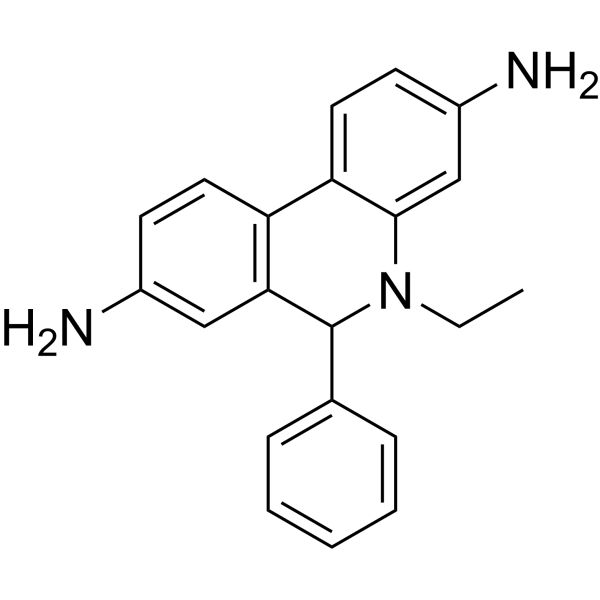
Dihydroethidium, also known as DHE, is a peroxide indicator. Dihydroethidium penetrates cell membranes to form a fluorescent protein complex with blue fluoresces. After entering the cells, Dihydroethidium is mainly localized in the cell membrane, cytoplasm and nucleus, and the staining effect is the strongest in the nucleus. Dihydroethidium produces inherent blue fluorescence with a maximum excitation wavelength of 370 nm and a maximum emission wavelength of 420 nm; after dehydrogenation, Dihydroethidium combines with RNA or DNA to produce red fluorescence with a maximum excitation wavelength of 300 nm and a maximum emission wavelength of 610 nm. 535 nm can also be used as the excitation wavelength for actual observation .
|
-
-
- HY-D0069
-
|
|
Fluorescent Dye
|
Others
Cancer
|
|
CPM is a maleimide derivative, acting as a blue fluorescent thiol-reactive dye (excitation/emission maxima of 387/463 nm) .
|
-
-
- HY-101891
-
|
|
Fluorescent Dye
|
Others
|
|
Di-8-ANEPPS is a naphthylstyryl voltage-sensitive dye, shifting both their fluorescence excitation and emission spectra upon changes in Vm .
|
-
-
- HY-D0073
-
|
|
Fluorescent Dye
|
Others
|
|
2,3-Diaminonaphthalene is a fluorescent reagent used to detect selenium and nitric oxide (NO). 2,3-Diaminonaphthalene binds to selenium to form pyrazolene selenol, with excitation/emission maxima at 365 nm and 525 nm, respectively. 2,3-Diaminonaphthalene binds to NO2− to form the fluorescent product, 1-(H)-napthotriazole, with excitation/emission maxima at 360 nm and 440 nm, respectively .
|
-
-
- HY-12809
-
Optovin
1 Publications Verification
|
TRP Channel
|
Neurological Disease
|
|
Optovin is a reversible photoactivated TRPA1 ligand that enables light-mediated neuronal excitation. Optovin activates TRPA1 via structure-dependent photochemical reactions with redox-sensitive cysteine residues .
|
-
-
- HY-D2295
-
|
|
Fluorescent Dye
|
Others
|
|
Mito-FerroGreen is a mitochondria-specific ferrous ion detection probe with an excitation wavelength of 488nm .
|
-
-
- HY-P2377
-
|
|
Fluorescent Dye
|
Others
|
|
Ac-YVAD-AFC is the the fluorometric peptide substrate of caspase-1, with λ excitation of 400 nm and λ emission of 505 nm .
|
-
-
- HY-D1916
-
|
|
Fluorescent Dye
Mucin
|
Others
|
|
ATTO 594 is a Fluorescent dye (excitation/emission = 603/626 nm). ATTO 594 is covalently conjugated to Mucin via carbodiimide coupling .
|
-
-
- HY-DY1015
-
|
|
Fluorescent Dye
|
Others
|
Dihydroethidium (solution) , also known as DHE, is a peroxide indicator. Dihydroethidium penetrates cell membranes to form a fluorescent protein complex with blue fluoresces. After entering the cells, Dihydroethidium is mainly localized in the cell membrane, cytoplasm and nucleus, and the staining effect is the strongest in the nucleus. Dihydroethidium produces inherent blue fluorescence with a maximum excitation wavelength of 370 nm and a maximum emission wavelength of 420 nm; after dehydrogenation, Dihydroethidium combines with RNA or DNA to produce red fluorescence with a maximum excitation wavelength of 300 nm and a maximum emission wavelength of 610 nm. 535 nm can also be used as the excitation wavelength for actual observation . Solvent and concentration: DMSO: 5 mM
|
-
-
- HY-P1186
-
|
Eledoisin-Related Peptide; Eledoisin RP
|
Neurokinin Receptor
|
Neurological Disease
|
|
Eledoisin Related Peptide is a Substance P analog that excites neurons and triggers behavioral responses. Eledoisin Related Peptide is also a tachykinin receptor ligand.
|
-
-
- HY-D1963
-
|
|
Fluorescent Dye
|
Others
|
|
ATTO 565 Streptavidin is a streptavidin derivative of ATTO 565, it can label protein or antibody, the maximum excitation/emission wavelength: 564/590 nm.
|
-
-
- HY-W001536
-
-
-
- HY-D1499
-
|
|
Fluorescent Dye
|
Others
|
|
Fluorescent red 610 is a fluorescent dye with an excitation peak at 590 nm and an emission peak at 610 nm .
|
-
-
- HY-D2003
-
|
|
Fluorescent Dye
|
Others
|
|
ATTO 565 biotin is a biotin derivative of ATTO 565 with maximum excitation/emission wavelengths: 564/590 nm.
|
-
-
- HY-D1942
-
|
|
Fluorescent Dye
|
Others
|
|
ATTO 590 Biotin is a biotin derivative of ATTO 590 with maximum excitation/emission wavelengths: 594/622 nm.
|
-
-
- HY-D2008
-
|
|
Fluorescent Dye
|
Others
|
|
ATTO 488 amine is an amine derivative of ATTO 488, the maximum excitation/emission wavelength: 500/520 nm.
|
-
-
- HY-N16571
-
|
|
Fluorescent Dye
Endogenous Metabolite
|
Others
|
|
Marionol is a type of flavonol compound and belongs to the secondary metabolites of plants. Marionol exhibits significant specificity towards Cu²⁺ and possesses the characteristic of intramolecular proton transfer in excited state (ESIPT), enabling it to generate strong fluorescence upon excitation by ultraviolet light. The maximum excitation/emission wavelengths are 350 nm and 510 nm (depending on the solvent), respectively. Marionol can be used as a fluorescence probe for Cu²⁺ .
|
-
-
- HY-135172
-
|
|
Fluorescent Dye
|
Others
|
|
Suc-Leu-Tyr-AMC is a fluorometric peptide substrate for µ-calpain and m-calpain. The excitation wavelength is 360 nm and the emission wavelength is 460 nm .
|
-
-
- HY-W110781
-
|
|
DNA Stain
|
Others
|
|
Basic Blue 20 is a very convenient red-emitting DNA stains. Basic Blue 20 has relatively narrow excitation and emission spectra, with peaks at 633 and 677 nm, respectively. Basic Blue 20 also has a very high resistance to photobleaching .
|
-
-
- HY-120993
-
|
1,N6-Etheno-AMP sodium; 1,N6-ε-AMP sodium
|
Fluorescent Dye
|
Others
|
|
1,N6-Ethenoadenosine 5'-monophosphate (1,N6-Etheno-AMP) sodium is a highly fluorescent analog of adenosine 5'-monophosphate (AMP). 1,N6-Ethenoadenosine 5'-monophosphate sodium is a powerful probe for systems involving adenosine 5'-monophosphate and can be detected at low concentration. 1,N6-Ethenoadenosine 5'-monophosphate sodium has long wavelength of excitation (250-300 nm), and emission at 415 nm .
|
-
-
- HY-D2160
-
|
|
Fluorescent Dye
|
Others
|
|
AF 647 carboxylic acid is a derivative of the far-infrared dye AF 647. AF 647 is often used as a replacement for Cy5 dye, with an excitation wavelength (λex) of 635 nm (conventional fluorescence detection)/620 nm (instantaneous detection). The maximum excitation wavelength is 647 nm and the maximum emission wavelength is 671 nm. AF 647 carboxylic acid has a carboxylic acid group and can be coupled to biomolecules with amino groups to achieve dye labeling .
|
-
-
- HY-19465
-
|
|
iGluR
|
Neurological Disease
|
|
Dasolampanel is a kainate receptor antagonist that helps regulate the excitability of the nervous system by blocking kainate receptors and reducing glutamate-mediated excitatory transmission. Dasolampanel can be used in the study of diseases such as overexcitement and sleep disorders .
|
-
-
- HY-D1981
-
|
|
Fluorescent Dye
|
Others
|
|
ATTO 633 Iodacetamid is an iodoacetamide derivative of ATTO 594 with excitation/emission maxima at 630/651 nm.
|
-
-
- HY-D1984
-
|
|
Fluorescent Dye
|
Others
|
|
ATTO 633 Alkin is an alkyne derivative of ATTO 594 with excitation/emission maxima at 630/651 nm.
|
-
-
- HY-D1953
-
|
|
Fluorescent Dye
|
Others
|
|
ATTO 594 Azide is an azide derivative of ATTO 594 with excitation/emission maxima at 603/626 nm.
|
-
-
- HY-D1967
-
|
|
Fluorescent Dye
|
Others
|
|
ATTO 633 Azide is an azide derivative of ATTO 520 with excitation/emission maxima at 630/651 nm.
|
-
-
- HY-D1483
-
|
|
Fluorescent Dye
|
Others
|
|
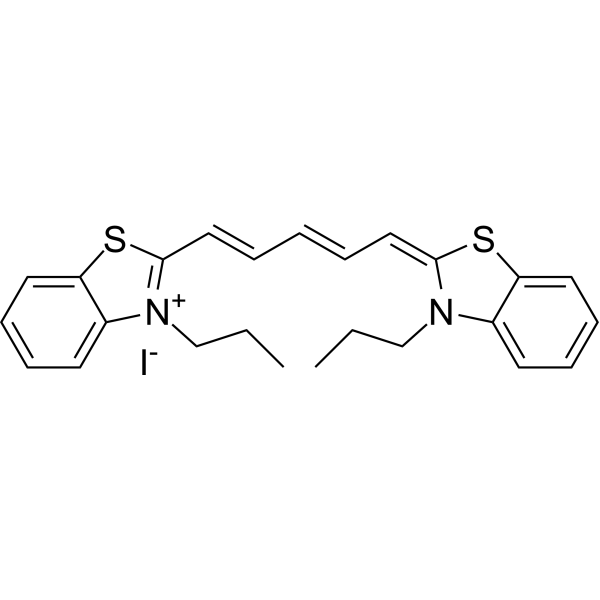
3,3-Dibutylthiacarbocyanine iodide is a fluorescent dye with an excitation of 559 nm and an emission 604 nm .
|
-
-
- HY-D2006
-
|
|
Fluorescent Dye
|
Others
|
|
ATTO 565 azide is an azide derivative of ATTO 565 with excitation/emission maxima at 564/590 nm.
|
-
-
- HY-D1990
-
|
|
Fluorescent Dye
|
Others
|
|
ATTO 620 Azide is an azide derivative of ATTO 520 with excitation/emission maxima at 620/642 nm.
|
-
-
- HY-D2079
-
|
|
Fluorescent Dye
|
Others
|
|
ATTO 665 azide is an azide derivative of ATTO 665 with excitation/emission maxima at 663/680 nm.
|
-
-
- HY-D2013
-
|
|
Fluorescent Dye
|
Others
|
|
ATTO 488 hydrazid is a hydrazide derivative of ATTO 488 with excitation/emission maxima at 500/520 nm.
|
-
-
- HY-D2012
-
|
|
Fluorescent Dye
|
Others
|
|
ATTO 488 iodacetamid is a fluorescent dye suitable for single molecule detection applications and high-resolution microscopy for use in flow cytometry (FACS), fluorescence in situ hybridization (FISH) experiments. ATTO 488 iodacetamid has an effective excitation wavelength of 480-515 nm. When using an argon ion laser, the excitation wavelength is recommended to be 488 nm.
|
-
-
- HY-D2007
-
|
|
Fluorescent Dye
|
Others
|
|
ATTO 488 biotin is a biotin derivative of ATTO 488 with maximum excitation/emission wavelengths: 500/520 nm.
|
-
-
- HY-D2025
-
|
|
Fluorescent Dye
|
Others
|
|
ATTO 550 biotin is a biotin derivative of ATTO 550 with maximum excitation/emission wavelengths: 554/576 nm.
|
-
-
- HY-D2034
-
|
|
Fluorescent Dye
|
Others
|
|
ATTO 514 hydrazid is a hydrazide derivative of ATTO 514 with maximum excitation/emission wavelengths: 511/531 nm.
|
-
-
- HY-D2078
-
|
|
Fluorescent Dye
|
Others
|
|
ATTO 665 amine is an amine derivative of ATTO 665, the maximum excitation/emission wavelength: 663/680 nm.
|
-
-
- HY-D2066
-
|
|
Fluorescent Dye
|
Others
|
|
ATTO 680 amine is an amine derivative of ATTO 680, the maximum excitation/emission wavelength: 681/698 nm.
|
-
-
- HY-D1938
-
|
|
Fluorescent Dye
|
Others
|
|
ATTO 465 Biotin is a biotin derivative of ATTO 465 with maximum excitation/emission wavelengths: 453/506 nm.
|
-
-
- HY-D1978
-
|
|
Fluorescent Dye
|
Others
|
|
ATTO 610 Biotin is a biotin derivative of ATTO 610 with maximum excitation/emission wavelengths: 616/633 nm.
|
-
-
- HY-D2061
-
|
|
Fluorescent Dye
|
Others
|
|
ATTO 740 carboxy is a carboxyl derivative of ATTO 740, the maximum excitation/emission wavelength is: 743/763 nm.
|
-
-
- HY-D1964
-
|
|
Fluorescent Dye
|
Others
|
|
ATTO 633 Biotin is a biotin derivative of ATTO 633 with maximum excitation/emission wavelengths: 630/651 nm.
|
-
-
- HY-D1919
-
|
|
Fluorescent Dye
|
Others
|
|
ATTO 390 amine is a biotin derivative of ATTO 390 with maximum excitation/emission wavelengths: 390/476 nm.
|
-
-
- HY-D2065
-
|
|
Fluorescent Dye
|
Others
|
|
ATTO 680 biotin is a biotin derivative of ATTO 680 with maximum excitation/emission wavelengths: 681/698 nm.
|
-
-
- HY-D1928
-
|
|
Fluorescent Dye
|
Others
|
|
ATTO 425 Amine is an amine derivative of ATTO 425, the maximum excitation emission wavelength: 439/489 nm.
|
-
-
- HY-D1975
-
|
|
Fluorescent Dye
|
Others
|
|
ATTO 725 Carboxy is a carboxyl derivative of ATTO 725, the maximum excitation/emission wavelength is: 728/751 nm.
|
-
-
- HY-D2057
-
|
|
Fluorescent Dye
|
Others
|
|
ATTO 700 carboxy is a carboxyl derivative of ATTO 700 with maximum excitation/emission wavelengths: 700/716 nm.
|
-
-
- HY-D1952
-
|
|
Fluorescent Dye
|
Others
|
|
ATTO 594 Amine is an amine derivative of ATTO 594, the maximum excitation/emission wavelength: 603/626 nm.
|
-
-
- HY-D2050
-
|
|
Fluorescent Dye
|
Others
|
|
ATTO 532 amine is an amine derivative of ATTO 532, the maximum excitation/emission wavelength: 532/552 nm.
|
-
-
- HY-D1921
-
|
|
Fluorescent Dye
|
Others
|
|
ATTO 390 iodoacetamide is the iodoacetamide derivative of ATTO 390, the maximum excitation/emission wavelength: 390/476 nm.
|
-
-
- HY-D1956
-
|
|
Fluorescent Dye
|
Others
|
|
ATTO 594 Alkin is an alkyne derivative of ATTO 594 with maximum excitation/emission wavelengths: 603/626 nm.
|
-
- HY-D2045
-
|
|
Fluorescent Dye
|
Others
|
|
ATTO 532 carboxy is a carboxyl derivative of ATTO 532, the maximum excitation/emission wavelength is: 532/552 nm.
|
-
- HY-D1926
-
|
|
Fluorescent Dye
|
Others
|
|
ATTO 425 Streptavidin is a streptavidin derivative of ATTO 425, the maximum excitation emission wavelength: 439/489 nm.
|
-
- HY-D2005
-
|
|
Fluorescent Dye
|
Others
|
|
ATTO 565 amine is an amine derivative of ATTO 565, the maximum excitation/emission wavelength: 564/590 nm.
|
-
- HY-D1937
-
|
|
Fluorescent Dye
|
Others
|
|
ATTO 465 Streptavidin is a streptavidin derivative of ATTO 465, the maximum excitation/emission wavelength: 453/506 nm.
|
-
- HY-D2031
-
|
|
Fluorescent Dye
|
Others
|
|
ATTO 514 biotin is a biotin derivative of ATTO 514 with maximum excitation/emission wavelengths: 511/531 nm.
|
-
- HY-D2053
-
|
|
Fluorescent Dye
|
Others
|
|
ATTO 532 hydrazid is a hydrazide derivative of ATTO 532 with maximum excitation/emission wavelengths: 532/552 nm.
|
-
- HY-D1934
-
|
|
Fluorescent Dye
|
Others
|
|
ATTO 465 is a new fluorescent dye with good photostability and maximum excitation/emission wavelength: 453/506 nm.
|
-
- HY-D2080
-
|
|
Fluorescent Dye
|
Others
|
|
ATTO 665 iodacetamid is an iodoacetamide derivative of ATTO 665 with maximum excitation/emission wavelengths: 663/680 nm.
|
-
- HY-D1943
-
|
|
Fluorescent Dye
|
Others
|
|
ATTO 590 Amine is an amine derivative of ATTO 590, the maximum excitation/emission wavelength: 594/622 nm.
|
-
- HY-D2081
-
|
|
Fluorescent Dye
|
Others
|
|
ATTO 665 alkin is an alkyne derivative of ATTO 665 with maximum excitation/emission wavelengths: 663/680 nm.
|
-
- HY-D2036
-
|
|
Fluorescent Dye
|
Others
|
|
ATTO 550 iodacetamid is an iodoacetamide derivative of ATTO 550 with maximum excitation/emission wavelengths: 554/576 nm.
|
-
- HY-D2076
-
|
|
Fluorescent Dye
|
Others
|
|
ATTO 740 biotin is a biotin derivative of ATTO 740 with maximum excitation/emission wavelengths: 743/763 nm.
|
-
- HY-D1980
-
|
|
Fluorescent Dye
|
Others
|
|
ATTO 620 Carboxy is a carboxyl derivative of ATTO 620, the maximum excitation/emission wavelength is: 620/642 nm.
|
-
- HY-D1996
-
|
|
Fluorescent Dye
|
Others
|
|
ATTO 647 Biotin is a biotin derivative of ATTO 647 with maximum excitation/emission wavelengths: 630/651 nm.
|
-
- HY-D1951
-
|
|
Fluorescent Dye
|
Others
|
|
ATTO 594 Biotin is a biotin derivative of ATTO 594 with maximum excitation/emission wavelengths: 603/626 nm.
|
-
- HY-D2068
-
|
|
Fluorescent Dye
|
Others
|
|
ATTO 680 iodacetamid is an iodoacetamide derivative of ATTO 680 with maximum excitation/emission wavelengths: 681/698 nm.
|
-
- HY-D2018
-
|
|
Fluorescent Dye
|
Others
|
|
ATTO 550 carboxy is a carboxyl derivative of ATTO 550 with maximum excitation/emission wavelengths: 554/576 nm.
|
-
- HY-D2037
-
|
|
Fluorescent Dye
|
Others
|
|
ATTO 550 hydrazid is a hydrazide derivative of ATTO 550 with maximum excitation/emission wavelengths: 554/576 nm.
|
-
- HY-D2011
-
|
|
Fluorescent Dye
|
Others
|
|
ATTO 565 hydrazid is a hydrazide derivative of ATTO 565 with maximum excitation/emission wavelengths: 564/590 nm.
|
-
- HY-D2069
-
|
|
Fluorescent Dye
|
Others
|
|
ATTO 680 alkin is an alkyne derivative of ATTO 680 with maximum excitation/emission wavelengths: 681/698 nm.
|
-
- HY-D1911
-
|
|
Fluorescent Dye
|
Others
|
|
ATTO 665 Biotin is a biotin derivative of ATTO 665 with maximum excitation/emission wavelengths: 663/680 nm.
|
-
- HY-D1972
-
|
|
Fluorescent Dye
|
Others
|
|
ATTO 610 Carboxy is a carboxyl derivative of ATTO 610 with maximum excitation/emission wavelengths: 616/633 nm.
|
-
- HY-D2027
-
|
|
Fluorescent Dye
|
Others
|
|
ATTO 550 amine is an amine derivative of ATTO 550, the maximum excitation/emission wavelength: 554/576 nm.
|
-
- HY-D2032
-
|
|
Fluorescent Dye
|
Others
|
|
ATTO 514 amine is an amine derivative of ATTO 514, the maximum excitation/emission wavelength: 511/531 nm.
|
-
- HY-D2049
-
|
|
Fluorescent Dye
|
Others
|
|
ATTO 532 biotin is a biotin derivative of ATTO 532 with maximum excitation/emission wavelengths: 532/552 nm.
|
-
- HY-D2009
-
|
|
Fluorescent Dye
|
Others
|
|
ATTO 565 iodacetamid is an iodoacetamide derivative of ATTO 565 with maximum excitation/emission wavelengths: 564/590 nm.
|
-
- HY-D1945
-
|
|
Fluorescent Dye
|
Others
|
|
ATTO 590 Iodacetamid is an iodoacetamide derivative of ATTO 590 with maximum excitation/emission wavelengths: 594/622 nm.
|
-
- HY-D2072
-
|
|
Fluorescent Dye
|
Others
|
|
ATTO 680 carboxy is a carboxyl derivative of ATTO 680, the maximum excitation/emission wavelength is: 681/698 nm.
|
-
- HY-D1988
-
|
|
Fluorescent Dye
|
Others
|
|
ATTO 620 Biotin is a biotin derivative of ATTO 620 with maximum excitation/emission wavelengths: 620/642 nm.
|
-
- HY-D1044A
-
|
Rhodamine 640 hydrochloride
|
Fluorescent Dye
|
Others
|
|
Rhodamine 101 chloride (Rhodamine 640 chloride) hydrochloride is a bright fluorescent dye with excitation and emission maxima of 565 and 595 nm, respectively .
|
-
- HY-D2022
-
|
|
Fluorescent Dye
|
Others
|
|
ATTO 514 is a new type of hydrophilic fluorescent probe with strong stability and maximum excitation/emission wavelength: 511/531 nm.
|
-
- HY-D2024
-
|
|
Fluorescent Dye
|
Others
|
|
ATTO 550 streptavidin is a streptavidin derivative of ATTO 550, it can label protein or antibody, the maximum excitation/emission wavelength: 554/576 nm.
|
-
- HY-D1947
-
|
|
Fluorescent Dye
|
Others
|
|
ATTO 700 Streptavidin is a streptavidin derivative of ATTO 700, it can label protein or antibody, the maximum excitation/emission wavelength: 700/716 nm.
|
-
- HY-D1985
-
|
|
Fluorescent Dye
|
Others
|
|
ATTO 725 Streptavidin is a streptavidin derivative of ATTO 725, it can label protein or antibody, the maximum excitation/emission wavelength: 728/751 nm.
|
-
- HY-D2064
-
|
|
Fluorescent Dye
|
Others
|
|
ATTO 680 streptavidin is a streptavidin derivative of ATTO 680, it can label protein or antibody, the maximum excitation/emission wavelength: 681/698 nm.
|
-
- HY-D1941
-
|
|
Fluorescent Dye
|
Others
|
|
ATTO 590 Streptavidin is a streptavidin derivative of ATTO 590, it can label protein or antibody, the maximum excitation/emission wavelength: 594/622 nm.
|
-
- HY-D1987
-
|
|
Fluorescent Dye
|
Others
|
|
ATTO 620 Streptavidin is a streptavidin derivative of ATTO 620, it can label protein or antibody, the maximum excitation/emission wavelength: 620/642 nm.
|
-
- HY-D1962
-
|
|
Fluorescent Dye
|
Others
|
|
ATTO 633 Streptavidin is a streptavidin derivative of ATTO 633, it can label protein or antibody, the maximum excitation/emission wavelength: 630/651 nm.
|
-
- HY-D2023
-
|
|
Fluorescent Dye
|
Others
|
|
ATTO 665 streptavidin is a streptavidin derivative of ATTO 665, it can label protein or antibody, the maximum excitation/emission wavelength: 663/680 nm.
|
-
- HY-D2030
-
|
|
Fluorescent Dye
|
Others
|
|
ATTO 514 streptavidin is a streptavidin derivative of ATTO 514, it can label protein or antibody, the maximum excitation/emission wavelength: 511/531 nm.
|
-
- HY-D2048
-
|
|
Fluorescent Dye
|
Others
|
|
ATTO 532 streptavidin is a streptavidin derivative of ATTO 532, it can label protein or antibody, the maximum excitation/emission wavelength: 532/552 nm.
|
-
- HY-D1949
-
|
|
Fluorescent Dye
|
Others
|
|
ATTO 594 Streptavidin is a streptavidin derivative of ATTO 594, it can label protein or antibody, the maximum excitation/emission wavelength: 603/626 nm.
|
-
- HY-D2075
-
|
|
Fluorescent Dye
|
Others
|
|
ATTO 740 streptavidin is a streptavidin derivative of ATTO 740, it can label protein or antibody, the maximum excitation/emission wavelength: 743/763 nm.
|
-
- HY-D1977
-
|
|
Fluorescent Dye
|
Others
|
|
ATTO 610 Streptavidin is a streptavidin derivative of ATTO 610, it can label protein or antibody, the maximum excitation/emission wavelength: 616/633 nm.
|
-
- HY-D1970
-
|
|
Fluorescent Dye
|
Others
|
|
ATTO 700 Cadaverin is a cadaverine derivative of ATTO 700 for reactions of carboxylic acids, aldehydes and ketones with maximum excitation/emission wavelengths: 700/716 nm.
|
-
- HY-D2070
-
|
|
Fluorescent Dye
|
Others
|
|
ATTO 680 cadaverin is a cadaverine derivative of ATTO 680, used for carboxylic acid, aldehyde and ketone reactions, maximum excitation/emission wavelength: 681/698 nm.
|
-
- HY-P5993
-
|
|
Fluorescent Dye
|
Others
|
|
MeOSuc-Ala-Ala-Pro-Val-4-MNA is a elastase fluorogenic substrate that can be detected at 425 nm (with excitation at 340 nm) .
|
-
- HY-D2055
-
|
|
Fluorescent Dye
|
Others
|
|
ATTO 532 cadaverin is a cadaverine derivative of ATTO 532, used for carboxylic acid, aldehyde and ketone reactions, maximum excitation/emission wavelength: 532/552 nm.
|
-
- HY-D2039
-
|
|
Fluorescent Dye
|
Others
|
|
ATTO 550 cadaverin is a cadaverine derivative of ATTO 550, used for carboxylic acid, aldehyde and ketone reactions, maximum excitation/emission wavelength: 554/576 nm.
|
-
- HY-D2942
-
|
|
Fluorescent Dye
|
Others
|
|
BDP-V BG-BODIPY is a SNAP tag fluorescent probe labeled with a BODIPY molecular motor. BDP-V BG-BODIPY contains a BODIPY molecular rotor that functions as a viscosity-sensitive fluorophore, which is highly responsive to local viscosity changes and enables the specific monitoring of the local microviscosity of proteins. BDP-V BG-BODIPY supports one-photon and two-photon imaging, with an excitation wavelength (Ex) of 488 nm (for one-photon excitation) and 850 nm (for two-photon excitation), and an emission wavelength (Em) of 500-600 nm .
|
-
- HY-D0817
-
|
Rhodamine 110 chloride; RH110
|
Fluorescent Dye
|
Others
|
|
Rhodamine 110 is a sensitive and selective substrate for assaying proteinases in solution or inside living cells. The excitation wavelength is 498 nm and the emission wavelength is 521 nm .
|
-
- HY-D1925
-
|
|
Fluorescent Dye
|
Others
|
|
ATTO 425 Maleimide is a maleimide ester derivative of ATTO 425, which can be used to label proteins or antibodies. The maximum excitation emission wavelength: 439/489 nm.
|
-
- HY-D1983
-
|
|
Fluorescent Dye
|
Others
|
|
ATTO 620 NHS-Ester is an activated ester derivative of ATTO 620, which can directly label proteins or antibodies. The maximum excitation/emission wavelength: 620/642 nm.
|
-
- HY-D1960
-
|
|
Fluorescent Dye
|
Others
|
|
ATTO 633 Maleimid is a maleimide ester derivative of ATTO 633, which can be used to label proteins or antibodies, with maximum excitation/emission wavelengths: 630/651 nm.
|
-
- HY-D1976
-
|
|
Fluorescent Dye
|
Others
|
|
ATTO 610 Maleimid is a maleimide ester derivative of ATTO 610, which can be used to label proteins or antibodies, with maximum excitation/emission wavelengths: 616/633 nm.
|
-
- HY-D1918
-
|
|
Fluorescent Dye
|
Others
|
|
ATTO 390 maleimide is a maleimide ester derivative of ATTO 390, which can be used to label proteins or antibodies. The maximum excitation/emission wavelength: 390/476 nm.
|
-
- HY-D1982
-
|
|
Fluorescent Dye
|
Others
|
|
ATTO 725 Maleimid is a maleimide ester derivative of ATTO 725, which can be used to label proteins or antibodies. The maximum excitation/emission wavelength: 728/751 nm.
|
-
- HY-D1948
-
|
|
Fluorescent Dye
|
Others
|
|
ATTO 594 Maleimid is a maleimide ester derivative of ATTO 594, which can be used to label proteins or antibodies, with maximum excitation/emission wavelengths: 603/626 nm.
|
-
- HY-D1936
-
|
|
Fluorescent Dye
|
Others
|
|
ATTO 465 Maleimid is a maleimide ester derivative of ATTO 465, which can be used to label proteins or antibodies. The maximum excitation/emission wavelength: 453/506 nm.
|
-
- HY-D2020
-
|
|
Fluorescent Dye
|
Others
|
|
ATTO 665 maleimid is a maleimide ester derivative of ATTO 665, which can be used to label proteins or antibodies. The maximum excitation/emission wavelength: 663/680 nm.
|
-
- HY-D2483
-
|
APG-1 TMA
|
Fluorescent Dye
|
Neurological Disease
|
|
Asante potassium green-1 (APG-1) TMA is a cell-impermeable K + (potassium) sensitive fluorescent indicator (excitation/emission = 525/545 nm) .
|
-
- HY-D1979
-
|
|
Fluorescent Dye
|
Others
|
|
ATTO 725 NHS-Ester is an activated ester derivative of ATTO 725, which can directly label proteins or antibodies. The maximum excitation/emission wavelength: 728/751 nm.
|
-
- HY-D2028
-
|
|
Fluorescent Dye
|
Others
|
|
ATTO 514 maleimid is a maleimide ester derivative of ATTO 514, which can be used to label proteins or antibodies. The maximum excitation/emission wavelength: 511/531 nm.
|
-
- HY-D1986
-
|
|
Fluorescent Dye
|
Others
|
|
ATTO 620 Maleimid is a maleimide ester derivative of ATTO 620, which can be used to label proteins or antibodies, with maximum excitation/emission wavelengths: 620/642 nm.
|
-
- HY-D1994
-
|
|
Fluorescent Dye
|
Others
|
|
ATTO 647 Maleimid is a maleimide ester derivative of ATTO 647, which can be used to label proteins or antibodies, with maximum excitation/emission wavelengths: 630/651 nm.
|
-
- HY-D1974
-
|
|
Fluorescent Dye
|
Others
|
|
ATTO 610 NHS-Ester is an activated ester derivative of ATTO 610, which can directly label proteins or antibodies. The maximum excitation/emission wavelength: 616/633 nm.
|
-
- HY-D0022
-
|
5-AF
|
Fluorescent Dye
|
Others
|
|
5-Aminofluorescein (5-AF) is a fluorescence marker, covalently bound to human serum albumin. The excitation wavelength is 495 nm and the emission wavelength is 535 nm .
|
-
- HY-D1783
-
|
MTDR FM
|
Fluorescent Dye
|
Others
|
MitoTracker Deep Red (MTDR) FM fluorescent dye that selectively accumulates in the mitochondrial matrix. MitoTracker Deep Red FM covalently binds mitochondrial proteins by reacting with free mercaptan of cysteine residues, allowing staining of mitochondrial membrane potential independent of membrane potential. Excitation/emission wavelength 644/665 nm . MitoTracker Deep Red dyes have an excitation/emission wavelength of 633/650-750 nm . The Ex/Em of MitoTracker Deep Red (MTDR) FM is 644/665 nm.
|
-
- HY-D1971
-
|
|
Fluorescent Dye
|
Others
|
|
ATTO 725 is a new type of fluorescent dye with high fluorescence yield, which can be used for most labeling applications, maximum excitation/emission wavelength: 728/751 nm.
|
-
- HY-D1958
-
|
|
Fluorescent Dye
|
Others
|
|
ATTO 565 is a new type of fluorescent dye with high fluorescence yield, which can be used for most labeling applications, maximum excitation/emission wavelength: 564/590 nm.
|
-
- HY-D0789
-
|
|
Fluorescent Dye
|
Others
|
|
ANTS is a fluorescent dye (Excitation wavelength: 380 nm; Emission wavelength: 520 nm). ANTS and DPX are encapsulated in liposomes can be an effective approach for measuring membrane leakage .
|
-
- HY-D2071
-
|
|
Fluorescent Dye
|
Others
|
|
ATTO 680 is a new type of fluorescent dye with high fluorescence yield, which can be used for most labeling applications, maximum excitation/emission wavelength: 681/698 nm.
|
-
- HY-D2056
-
|
|
Fluorescent Dye
|
Others
|
|
ATTO 700 is a new type of fluorescent dye with high fluorescence yield, which can be used for most labeling applications, maximum excitation/emission wavelength: 700/716 nm.
|
-
- HY-D2044
-
|
|
Fluorescent Dye
|
Others
|
|
ATTO 532 is a new type of fluorescent dye with high fluorescence yield, which can be used for most labeling applications, maximum excitation/emission wavelength: 532/552 nm.
|
-
- HY-D1997
-
|
|
Fluorescent Dye
|
Others
|
|
ATTO 665 is a new type of fluorescent dye with high fluorescence yield, which can be used for most labeling applications, maximum excitation/emission wavelength: 663/680 nm.
|
-
- HY-D2043
-
|
|
Fluorescent Dye
|
Others
|
|
ATTO 620 is a new type of fluorescent dye with high fluorescence yield, which can be used for most labeling applications, maximum excitation/emission wavelength: 620/642 nm.
|
-
- HY-D0981
-
|
Coumarin 151; AFC
|
Fluorescent Dye
|
Others
|
|
7-Amino-4-(trifluoromethyl)coumarin (Coumarin 151) is a fluorescent marker for the sensitive detection of proteinases. The excitation and emission wavelengths are 400 and 490 nm, respectively.
|
-
- HY-D1385
-
|
|
Fluorescent Dye
|
Others
|
|
JF526–Pepstatin A TFA is a fluorescent dye that can be used for lysosomal staining in live cells. The excitation maximum is 530 nm and the emission maximum is 549 nm .
|
-
- HY-177329
-
|
|
Renin
|
Cardiovascular Disease
|
|
U80215, a dansylated peptide, is a competitive human renin inhibitor with the IC50 of 2.3 μM. U80215 shows excitation and emission maxima at 340 and 530 nm .
|
-
- HY-D2017
-
|
|
Fluorescent Dye
|
Others
|
|
ATTO 550 is a new type of fluorescent dye with high fluorescence yield, which can be used for most labeling applications, maximum excitation/emission wavelength: 554/576 nm.
|
-
- HY-D1931
-
|
|
Fluorescent Dye
|
Others
|
|
ATTO 590 is a new type of fluorescent dye with high fluorescence yield, which can be used for most labeling applications, maximum excitation/emission wavelength: 594/622 nm.
|
-
- HY-P4545
-
|
|
Angiotensin Receptor
|
Others
|
|
Abz-Gly-p-nitro-Phe-Pro-OH is the fluorescent substrate angiotensin I converting enzyme (ACE-I) with 355 nm excitation and 405 nm emission wavelengths .
|
-
- HY-D2042
-
|
|
Fluorescent Dye
|
Others
|
|
ATTO 610 is a new type of fluorescent dye with high fluorescence yield, which can be used for most labeling applications, maximum excitation/emission wavelength: 616/633 nm.
|
-
- HY-161164
-
|
|
DNA Stain
|
Others
|
|
Tricyclic cytosine tC is a fluorescent base analogue that can be used as a fluorescent probe in nucleic acid-containing systems. The excitation wavelength is 385 nm and the emission wavelength is 505 nm .
|
-
- HY-D2445
-
|
|
Fluorescent Dye
|
Others
|
|
AF405 acid is a fluorescent dye. AF405 exhibits a maximal excitation wavelength of 395 nm, and a maximal emission wavelength of 435 nm. AF405 is used for cell labeling and imaging .
|
-
- HY-D1151
-
HKOH-1
3 Publications Verification
|
Reactive Oxygen Species (ROS)
Fluorescent Dye
|
Others
|
|
HKOH-1 is a highly sensitive green fluorescent probe for the specific detection of ·OH in living cells with a maximum excitation wavelength and emission wavelength of 500 nm and 520 nm, respectively .
|
-
- HY-D1645
-
|
|
Fluorescent Dye
|
Others
|
|
DANSYL-X, SE is an environmentally sensitive hydrophobic dye (Excitation 333 nM; Emission 518 nM). DANSYL-X, SE can increase fluorescence intensity in hydrophobic environment .
|
-
- HY-D1442
-
|
|
Fluorescent Dye
|
Others
|
|
SBFI (tetraammonium), the tetraammonium salt of SBFI, is a cell-impermeant sodium fluorescence indicator. SBFI (tetraammonium) is sodium-sensitive dye. The excitation wavelength is set 333 nm, and the emission wavelength is 539 nm for SBFI .
|
-
- HY-D1903
-
|
|
Fluorescent Dye
|
Others
|
|
Fura Red AM is a fluorescent probe that can be used to visualize Ca 2+ distribution in the cytoplasm of undifferentiated cells. Fura Red AM operates at an excitation wavelength of 488 nm .
|
-
- HY-134620
-
|
|
Fluorescent Dye
|
Others
|
|
Cyanine 5 NHS ester tetrafluoroborate (Compound Cy5) is a cyanine dye that is used to in fluorescence detection of macromolecules. Cyanine 5 NHS ester tetrafluoroborate exhibits an excitation wavelength of 638 nm .
|
-
- HY-D0989
-
|
|
Fluorescent Dye
|
Others
|
|
Rhod-2 is a high-affinity visible light excitation wavelength Ca 2+ fluorescent probe, Rhod-2, AM is an acetyl methyl ester derivative of Rhod-2, which has cell membrane permeability and can easily enter cells with simple culture. Once it enters the cell, it is sheared by its lactesterase to produce Rhod-2 without membrane permeability, which remains in the cell to perform the corresponding physiological functions. Maximum excitation/emission wavelength: 549/578 nm .
|
-
- HY-168375
-
|
|
Fluorescent Dye
|
Metabolic Disease
|
|
BODIPY-Palmitate is a fluorescently labeled palmitic acid (HY-N0830), with excitation/emission maxima at 488/508 nm. BODIPY-Palmitate can be used to detect fatty acid uptake and metabolism .
|
-
- HY-D0941
-
|
|
Fluorescent Dye
|
Others
|
|
5-Carboxytetramethylrhodamine can be used as a fluorescent probe of nucleic acids and proteins. 5-Carboxytetramethylrhodamine displays excitation maxima of 558 nm and an emission maximum of 586 nm .
|
-
- HY-E70419
-
|
|
Others
|
Others
|
|
PQQ-Dependent glucose dehydrogenase, microorganismyes PQQnovel nanostructure platform for fluorescence analysis of glucose dehydrogenase-dependent glycogenase. Fluorescence signals were generated under ultraviolet excitation at a wavelength (365 nm).
|
-
- HY-176031
-
|
|
Fluorescent Dye
|
Others
|
|
Fluo-2 potassium is a cell-impermeant fluorescent calcium indicator. Fluo-2 potassium binds calcium (Kd: 0.37 μM) with excitation/emission wavelengths of 493/518 nm, respectively .
|
-
- HY-158739
-
|
|
Fluorescent Dye
|
Cancer
|
|
Rhodamine dithenoyl hydrazide (probe 1) possesses excellent recognition and selectivity for Fe 3+ ion. Rhodamine dithenoyl hydrazide exhibits Excitation/Emission maxima of 543/550-700 nm, respectively .
|
-
- HY-D1683
-
NBD-PE
2 Publications Verification
|
Fluorescent Dye
|
Others
|
|
NBD-PE is an effective lipid fluorescent probe (Excitation/Emission: 465/535 nm; Color: Green). NBD-PE offers a wide array of applications in membrane and cell biology .
|
-
- HY-133852
-
FD-1080
1 Publications Verification
|
Fluorescent Dye
MOFs
|
Others
|
|
FD-1080 is a fluorophore with both excitation and emission in the NIR-II region (Ex=1064 nm, Em=1080 nm). FD-1080 can be used for in vivo imaging .
|
-
- HY-101882
-
BCECF
3 Publications Verification
2′,7′-Bis(2-carboxyethyl)-5(6)-carboxyfluorescein
|
Fluorescent Dye
|
Others
|
|
BCECF is a cell-impermeant pH-sensitive fluorescent dye. BCECF allows measurements in the physiological pH range 6.0-8.0. Excitation ratio: 490/440 nm; Emission intensity: 535 nm.
|
-
- HY-D1497
-
|
|
Fluorescent Dye
|
Others
|
|
Fluorescent Red Mega 480 is a dye that is specifically designed for multicolor techniques. Fluorescent Red Mega 480 is characterized by an extremely large stoke′s shift between excitation and emission maxima .
|
-
- HY-D1148
-
|
|
Fluorescent Dye
|
Others
|
|
HKGreen-4I is a highly sensitive green fluorescent probe for the specific detection of ONOO - in living cells with a maximum excitation wavelength and emission wavelength of 520 nm and 543 nm, respectively .
|
-
- HY-D1781
-
|
|
Fluorescent Dye
|
Others
|
|
NTPAN-MI is a fluorescent probe (excitation wavelength: 405 nm). NTPAN-MI is selectively activated after labeling unfolded proteins with exposed thiols, thereby reporting the degree of protein homeostasis .
|
-
- HY-D1176
-
|
|
Fluorescent Dye
|
Others
|
|
Calcium Green 1AM is a cell-permeant fluorescent calcium indicator (Excitation 506 nm; Emission 531 nm). Calcium Green 1AM is converted to the fluorescent calcium indicator by intracellular esterases .
|
-
- HY-W998658
-
|
|
Fluorescent Dye
|
Others
|
|
BODIPY 564/570 is a fluorescent dye that can be used in labeling superparamagnetic nanoparticles (MNPs). BODIPY 564/570 exhibits a maximal excitation wavelength of 564 nm and a maximal emission wavelength of 570 nm .
|
-
- HY-D1159
-
|
|
Reactive Oxygen Species (ROS)
Fluorescent Dye
|
Others
|
|
HKOH-1r is a highly sensitive green fluorescent probe for the specific detection of ·OH in living cells with a maximum excitation wavelength and emission wavelength of 500 nm and 520 nm, respectively .
|
-
- HY-W998707
-
|
|
Fluorescent Dye
|
Others
|
|
TAMRA amine, 5-isomer hydrochloride is a rhodamine dye with excitation/emission maximum 553/575 nm. The amine group is reactive with carboxylic acids, activated NHS esters, carbonyls (ketone, aldehyde) etc.
|
-
- HY-137103
-
|
|
Fluorescent Dye
|
Others
|
|
BTC-AM is a low affinity calcium indicator. BTC-AM has substantial calcium-independent fluorescence at all excitation wavelengths. BTC-AM is readily loaded into neurons and is rapidly hydrolysed .
|
-
- HY-DY1020
-
|
|
Fluorescent Dye
|
Others
|
Rhod-2 (solution) is a high-affinity visible light excitation wavelength Ca 2+ fluorescent probe, Rhod-2, AM is an acetyl methyl ester derivative of Rhod-2, which has cell membrane permeability and can easily enter cells with simple culture. Once it enters the cell, it is sheared by its lactesterase to produce Rhod-2 without membrane permeability, which remains in the cell to perform the corresponding physiological functions. Maximum excitation/emission wavelength: 549/578 nm . Solvent and concentration: DMSO: 1 mM
|
-
- HY-D2968
-
|
|
Fluorescent Dye
|
Neurological Disease
|
|
DCM-ONOO is a near-infrared two-photon fluorescence probe specifically designed for real-time monitoring of the dynamic fluctuations of peroxynitrite (ONOO⁻) in epilepsy models. DCM-ONOO exhibits excellent optical properties, with a single photon excitation (Ex) of 520 nm; a single photon emission (Em) of 685 nm; a two-photon excitation of 820 nm; and a Stokes shift of 165 nm. When DCM-ONOO is combined with ONOO⁻, it shifts from 460 nm to 512 nm, and only generates a significant fluorescence response to ONOO⁻. DCM-ONOO has been successfully applied to rat epilepsy models .
|
-
- HY-137296
-
|
|
Fluorescent Dye
|
Others
|
|
Lumogallion is a highly sensitive fluorescent reagent for the detection of aluminum, gallium and other metals. Lumogallion has an excitation wavelength of 490 nm and an emission spectrum in the range of 520 nm to 650 nm, with a peak near 580 nm .
|
-
- HY-D1691
-
|
|
Fluorescent Dye
|
Others
|
|
BODIPY-581/591 NHS ester is a bright, red fluorescent dye (excitation: 581 nm; emission: 591 nm). BODIPY-581/591 NHS ester can be used for the labeling of amine containing biomolecules .
|
-
- HY-D1116
-
|
|
Fluorescent Dye
|
Others
|
|
MitoMark Red I is a fluorescent mitochondrial marker. MitoMark Red I is a red fluorescent dye which accumulates in mitochondria in viable cells and has an excitation wavelength of 578 nm and emission of 599 nm .
|
-
- HY-130022
-
|
|
Fluorescent Dye
|
Others
|
|
HKPerox-1 is a highly sensitive green fluorescent probe for the specific detection of H2O2 in living cells with a maximum excitation wavelength and emission wavelength of 520 nm and 543 nm, respectively .
|
-
- HY-D1240
-
|
|
Biochemical Assay Reagents
|
Others
|
|
Rhodamine 101 inner salt is a bright fluorescent dye with excitation and emission maxima at 565 and 595 nm, respectively. It can be used in various biological applications such as fluorescence microscopy, flow cytometry, fluorescence correlation spectroscopy, and ELISA.
|
-
- HY-P5996
-
|
|
Fluorescent Dye
|
Others
|
|
MCA-Gly-Asp-Ala-Glu-pTyr-Ala-Ala-Lys(DNP)-Arg-NH2 is a protein tyrosine phosphatase fluorogenic substrate that can be detected at 393 nm (with excitation at 325 nm) .
|
-
- HY-D1157
-
|
|
Fluorescent Dye
Reactive Oxygen Species (ROS)
|
Others
|
|
HKPerox-2 is a highly sensitive green fluorescent probe for the specific detection of H2O2 in living cells with a maximum excitation wavelength and emission wavelength of 520 nm and 543 nm, respectively .
|
-
- HY-N16475
-
|
|
nAChR
|
Infection
|
|
Spinosyn L is a selective nicotinic acetylcholine receptors (nAChR) agonist. Spinosyn L causes sustained neural excitation and paralysis in insects. Spinosyn L is promising for research of pesticides for controlling Lepidoptera, Diptera, and other agricultural pests .
|
-
- HY-D1703
-
|
|
Fluorescent Dye
|
Others
|
|
Oxazine 170 perchlorate is a laser dye with a wide excitation spectrum range (300−550 nm), which strongly absorbs light with a wavelength greater than 550 nm, and it emits fluorescence with a wavelength of about 645 nm .
|
-
- HY-157503
-
|
|
Photosensitizer
|
Cancer
|
|
Photosensitizer-3 is a photosensitizer that exhibits powerful selective killing effects on transfected HEK cells and affibody-targeted A431 cancer cells when exposed to near-infrared light excitation .
|
-
- HY-D0053A
-
|
6-Carboxy-X-rhodamine hydrochloride
|
Fluorescent Dye
|
Others
|
|
6-ROX (6-Carboxy-X-rhodamine) hydrochloride, a fluorescent marker of oligonucleotides, acts as a receptor coupled to 5-FAM and as a donor in FRET imaging. Excitation wavelength: 568 nm. Emission wavelength: 568 nm.
|
-
- HY-139579
-
|
OTL 38
|
Fluorescent Dye
|
Cancer
|
|
Pafolacianine (OTL 38) is a fluorescent imaging agent made of near-infrared dye used in detecting tumor lesions during surgical procedures. Pafolacianine excites at 774 to 775 nm and emits at 794 to 796 nm .
|
-
- HY-133852A
-
|
|
Fluorescent Dye
|
Others
|
|
FD-1080 free acid is a fluorophore with both excitation and emission in the NIR-II region (Ex=1064 nm, Em=1080 nm). FD-1080 free acid can be used for in vivo imaging .
|
-
- HY-131510
-
|
SNARF-DE
|
Fluorescent Dye
|
Others
|
|
Chromoionophore XIII (SNARF-DE) is a pH senor that enables excitation with red light. Chromoionophore XIII functionality renders the indicator molecule lipophilic and water-insoluble but also prevents lactonization of the dye in an apolar environment .
|
-
- HY-D3226
-
|
|
Fluorescent Dye
|
Neurological Disease
|
|
Zinc (II) probe-1 (Compound DNP) is a dual-color Fluorescent probe that can simultaneously monitor Zn 2+ and H +. Upon interaction with Zn 2+, Zinc (II) probe-1 produces bright blue fluorescence (excitation wavelength: 405 nm; blue channel wavelength: 420-500 nm). Upon interaction with H +, Zinc (II) probe-1 exhibits red fluorescence (excitation wavelength: 561 nm; red channel emission wavelength: 630-730 nm). Zinc (II) probe-1 can be used in studies related to depression .
|
-
- HY-160272
-
|
|
Fluorescent Dye
|
Others
|
|
DOPE-PEG2000-Fluor 488 is a PEG lipid, composed of a DOPE phospholipid and a Fluor 488 fluorophore. DOPE is an unsaturated phospholipid. Fluor 488 has excitation and emission maxima at 499 nm and 520 nm .
|
-
- HY-D2444
-
|
|
Fluorescent Dye
|
Cancer
|
|
AF555 NHS is a red fluorescent dye with excellent fluorescence properties and light stability. The excitation wavelength is 556 nm and the emission wavelength is 571 nm, which can be used for protein labeling, antibody labeling, and cell imaging .
|
-
- HY-131006
-
|
|
Monoamine Transporter
|
Neurological Disease
|
|
FFN200 dihydrochloride, a fluorescent substrate of VMAT2, selectively trace monoamine exocytosis in both neuronal cell culture and brain tissue. The fluorescence excitation and emission maxima of FFN200 are determined to be 352 and 451 nm, respectively .
|
-
- HY-D3004
-
|
|
Fluorescent Dye
|
Others
|
|
GSH Tracker Probe (CPDSA) is a cyanine-based fluorescent probe with a NIR emission that is specific for GSH (excitation: 635 nm; emission: 655-755 nm). CPDSA can monitor and image GSH levels in live cells and in vivo .
|
-
- HY-W039519
-
|
|
Fluorescent Dye
|
Cancer
|
|
7-Methoxycoumarin-3-carboxylic acid is a fluorescent dye with an excitation peak at 355 nm and an emission peak at 405 nm. 7-Methoxycoumarin-3-carboxylic acid can be used to label peptide .
|
-
- HY-D1161
-
|
NCI 240899
|
Fluorescent Dye
|
Neurological Disease
|
|
True Blue (NCI 240899) is a fluorescent dye, as neuronal retrograde tracer (excitation wavelength 395-425 nm, barrier filter 450 nm). True Blue can label neuron and has no effects on neuronal survival .
|
-
- HY-125746
-
|
|
Fluorescent Dye
|
Others
|
|
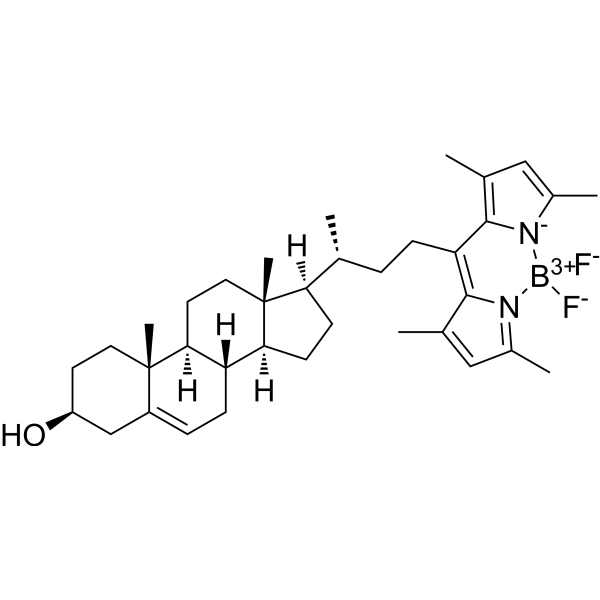
BODIPY-cholesterol is an intrinsically lipophilic, and cell-permeable analog of cholesterol with a fluorescent BODIPY group. BODIPY-cholesterol can be used to monitor sterol uptake and inter-organelle sterol flux in cells. (Excitation/Emission: 505/515 nm) .
|
-
- HY-W806655
-
|
|
Fluorescent Dye
|
Others
|
|
Cy3.5 carboxylic acid is a fluorophore featuring a carboxylic acid. The carboxylic acid is readily attacked by amines to form a stable amide bond. Cy3.5 is a cyanine dye with excitation and emission maxima at 576 nm and 603 nm respectively.
|
-
- HY-D1627
-
|
CM-DiI
|
Fluorescent Dye
|
Others
|
|
CellTracker CM-DiI (CM-DiI) is a lipophilic fluorochrome that can be used for tracking the migration of lymphocytes. CellTracker CM-DiI is feasible to detect labeled cells in histological sections (excitation 553 nm; emission 570 nm) .
|
-
- HY-D0218
-
|
Basic Yellow 1
|
Amyloid-β
|
Others
|
|
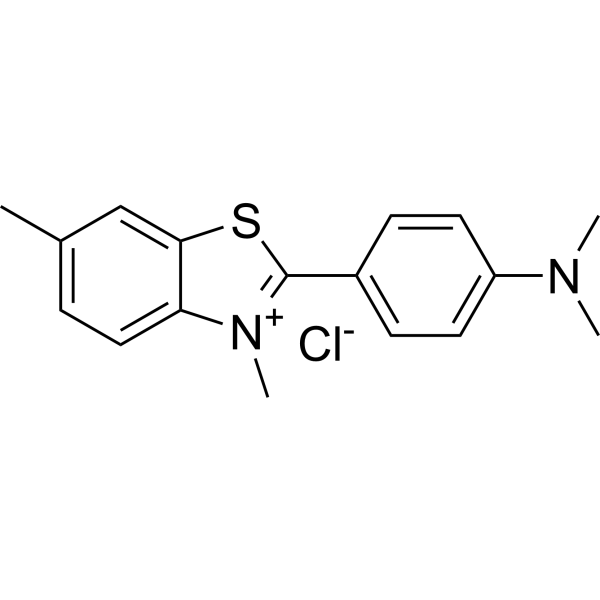
Thioflavin T is a cationic Benzothiazole dye that shows enhanced fluorescence upon binding to amyloid in tissue sections. Excitation max.: ~385 nm (free); ~450 nm (bound); Emission max.: ~445 nm (free); ~485 nm (bound) .
|
-
- HY-D2119
-
CQ-Lyso
2 Publications Verification
|
Fluorescent Dye
|
Cancer
|
|
CQ-Lyso is a lysosome-targeting chromenoquinoline. CQ-Lyso is a fluorescent probe for measuring the pH of lysosomes in living cells using only single wavelength excitation. CQ-Lyso can visualize the dynamic pH changes in lysosomes .
|
-
- HY-D1873
-
|
|
Fluorescent Dye
|
Others
|
|
800CW acid is an orally active near-infrared (NIR) dye (excitation/emission 774/789 nm). 800CW acid can be used for intestinal permeability testing. 800CW acid can be used for in vivo imaging studies .
|
-
- HY-D0324
-
|
|
Fluorescent Dye
|
Others
|
|
Pigment Yellow 101 is a yellow bis-azomethine pigment (excitation/emission: 411 nm/512 nm). Pigment Yellow 101 exhibits solid-state fluorescence. Pigment Yellow 101 is available as a commercial colorant .
|
-
- HY-13615A
-
|
|
Fluorescent Dye
Folate Receptor (FR)
|
Cancer
|
|
EC-17 disodium salt is a folate receptor alpha (FRα) targeting contrast agent with fluorescent properties in the visible light spectrum. The EC-17 maximum excitation and emission wavelengths are 490 nm and 520 nm, respectively .
|
-
- HY-D2481
-
|
APG-2 TMA
|
Fluorescent Dye
|
Neurological Disease
|
|
Asante potassium green-2 (APG-2) TMA is a cell-impermeable K + (potassium ion) fluorescent indicator that produces a fluorescent response to changes in extracellular potassium ion concentration. Its excitation/emission maxima are 525/545 nm , respectively.
|
-
- HY-D1044
-
|
Rhodamine 640 chloride
|
Fluorescent Dye
|
Cancer
|
|
Rhodamine 101 chloride (Rhodamine 640 chloride) is a fluorescent dye with excitation and emission maxima at 565 nM and 595 nM, respectively. Rhodamine 101 chloride binds to intracellular proteins and emits specific fluorescence. Rhodamine 101 chloride can be used in colon cancer research .
|
-
- HY-66020
-
6-FITC
1 Publications Verification
6-Fluorescein Isothiocyanate
|
Fluorescent Dye
Drug Isomer
|
Others
|
|
6-FITC (6-Fluorescein Isothiocyanate) is a fluorescein isomer and also serves as a fluorescent label for biomolecules (FITC isomers have similar excitation/emission wavelengths, which are 495 nm/519 nm in fluorescence detection) .
|
-
- HY-13615
-
|
EC-17
|
Fluorescent Dye
Folate Receptor (FR)
|
Cancer
|
|
Folate-FITC (EC-17) is a folate receptor alpha (FRα) targeting contrast agent with fluorescent properties in the visible light spectrum. The Folate-FITC maximum excitation and emission wavelengths are 490 nm and 520 nm, respectively .
|
-
- HY-172717
-
|
|
Fluorescent Dye
|
Others
|
|
TAMRA-PEG4-t-butyl ester is a TAMRA red-fluorescent dye linker, with excitation/emission maximum 553/575 nm, containing a t-butyl protected carboxyl group which can be deprotected under acidic conditions.
|
-
- HY-172627
-
|
|
Fluorescent Dye
Calcium Channel
|
Others
|
|
Rhod-FF tripotassium is a Rhod-2 derivative and cell-impermeant calcium indicator (Kd of 320 μM). Rhod-FF tripotassium indicates calcium concentration by fluorescence upon binding to calcium ions, with excitation at 552 nm and emission at 580 nm .
|
-
- HY-D1435
-
|
|
Na+/K+ ATPase
Fluorescent Dye
|
Metabolic Disease
|
|
Oxonol VI is an optical indicator of membrane potential in lipid vesicles (excitation/emission wavelengths: 614/646 nm). Oxonol VI can be used to detect changes in membrane potential associated with (Na + + K +)-ATPase activity in reconstituted vesicles .
|
-
- HY-W394025
-
|
|
Biochemical Assay Reagents
|
Others
|
|
Biotinyl-6-aminoquinoline is a fluorescent biotinylated biochemical assay reagent, which can be utilized as a substrate in the assay of biotinidase activity. Biotinyl-6-aminoquinoline exhibits an excitation wanelength of 350 nm and an emission wavelength of 550 nm .
|
-
- HY-172269
-
|
|
Fluorescent Dye
|
Others
|
|
BP Fluor 488 is a bright, green-fluorescent dye widely used for labeling aldehydes or ketones in polysaccharides or glycoproteins. The dye has an excitation peak at 499 nm and an emission peak at 520 nm. The conjugates are widely used in microscopy, flow cytometry, and other applications.
|
-
- HY-139579A
-
|
OTL 38 tetrasodium
|
Fluorescent Dye
|
Cancer
|
|
Pafolacianine tetrasodium (OTL 38 tetrasodium) is a fluorescent imaging agent made of near-infrared dye used in detecting tumor lesions during surgical procedures. Pafolacianine tetrasodium excites at 774 to 775 nm and emits at 794 to 796 nm .
|
-
- HY-D1630
-
|
|
Fluorescent Dye
|
Others
|
|
4-Di-10-ASP is a fluorescent lipophilic tracer (Excitation 485 nm; Emission 620 nm). 4-Di-10-ASP can be used to stain phospholipid membranes in a specific manner .
|
-
- HY-137128
-
|
|
Fluorescent Dye
|
Others
|
|
BTC tetrapotassium is a cell-impermeant calcium indicator (Kd approximately 7-26 µM) featuring many desirable properties for cellular calcium imaging, including long excitation wavelengths (400/485 nm), low sensitivity to Mg 2+, and accuracy of ratiometric measurement .
|
-
- HY-D3242
-
|
FD-1080-MAL
|
Fluorescent Dye
|
Others
|
|
FD-1080 Maleimide (FD-1080-MAL) is a fluorophore with both excitation and emission in the NIR-II region (Ex=1064 nm, Em=1080 nm). FD-1080 can be used for in vivo imaging .
|
-
- HY-D1527
-
|
|
Fluorescent Dye
|
Others
|
|
N-(3-Fluoranthyl)maleimide is a thiol fluorescent probe with a lifetime of 20 nsec. N-(3-Fluoranthyl)maleimide has a maximum excitation wavelength of 370 nm and can be used to study the time-dependent processes of biopolymers .
|
-
- HY-D3233
-
|
|
Fluorescent Dye
|
Others
|
|
Ctrl-BDPS1 is a BODIPY-based control probe that shows no response to copper ions (exhibiting two emission peaks at 575 nm and 708 nm; the maximum excitation wavelength is at 627 nm). Ctrl-BDPS1 has no fluorescent response to Cu + .
|
-
- HY-150725B
-
|
|
Toll-like Receptor (TLR)
IFNAR
|
Inflammation/Immunology
|
|
FITC-labeled ODN 1585 (sodium) is a potent inducer of IFN and TNFα production. FITC-labeled ODN 1585 (sodium) can be used to evaluate CpG ODN cellular uptake and localization by confocal laser-scanning microscopy (excitation 495 nm, emission 520 nm) or flow cytometry.
|
-
- HY-101878
-
|
Sulforhodamine 101; SR101
|
Fluorescent Dye
|
Neurological Disease
|
|
Texas Red (Sulforhodamine 101) is an amphoteric rhodamine red fluorescent dye (excitation/emission: 586/605 nm). Texas Red is used extensively for investigating neuronal morphology and acts as acell type-selective fluorescent marker of astrocytes bothin vivoand in slice preparations .
|
-
- HY-D1553
-
|
|
Fluorescent Dye
|
Others
|
|
BODIPY-C12 is a boron-dipyrromethene derivative containing a lipophilic tail (excitation 490 nm). BODIPY-C12 is a hydrophobic molecular and sensitivity to the surrounding environment and can be used to quantify viscosity, critical micelle concentration, and critical micelle temperature .
|
-
- HY-150743B
-
|
|
Toll-like Receptor (TLR)
|
Inflammation/Immunology
|
|
FITC-labeled ODN 2395 (sodium), a C class oligodeoxynucleotide, is a TLR9 agonist. FITC-labeled ODN 2395 (sodium) can be used to evaluate CpG ODN cellular uptake and localization by confocal laser-scanning microscopy (excitation 495 nm, emission 520 nm) or flow cytometry.
|
-
- HY-146244B
-
|
|
Toll-like Receptor (TLR)
|
Inflammation/Immunology
|
|
FITC-labeled agatolimod (sodium), a class B CpG ODN (oligodeoxynucleotide), is a TLR9 agonist. FITC-labeled agatolimod (sodium) can be used to evaluate CpG ODN cellular uptake and localization by confocal laser-scanning microscopy (excitation 495 nm, emission 520 nm) or flow cytometry.
|
-
- HY-15942
-
5-TAMRA
3 Publications Verification
|
Fluorescent Dye
|
Others
|
|
5-TAMRA can produce bright, pH-insensitive orange-red fluorescence (excitation and emission extremes of 546/579) and has good photostability. 5-TAMRA is mainly used as a fluorescent marker for the synthesis and study of specific oligonucleotide probes .
|
-
- HY-Y1129
-
|
|
Photosensitizer
Apoptosis
|
Inflammation/Immunology
|
|
3-Hydroxypyridine is a compound that can be isolated from bamboo grass. As an endogenous photosensitizer present in human skin, 3-hydroxypyridine can mediate oxidative stress, proliferation inhibition and apoptosis of skin cells through UVA/UVB excitation .
|
-
- HY-D2267
-
|
|
Fluorescent Dye
|
Others
|
|
JF646-Hoechst is a fluorescent red DNA probe that is an ideal substitute for large oligonucleotide-coupled antibodies used in PAINT experiments, especially for bacterial studies. JF646-Hoechst excitation/emission maximum =655/670 nm .
|
-
- HY-150724B
-
|
|
Toll-like Receptor (TLR)
|
Inflammation/Immunology
|
|
FITC-labeled ODN 1018 (sodium),an oligodeoxynucleotide, is a TLR-9 agonist. FITC-labeled ODN 1018 (sodium) can be used to evaluate CpG ODN cellular uptake and localization by confocal laser-scanning microscopy (excitation 495 nm, emission 520 nm) or flow cytometry.
|
-
- HY-W278706
-
|
|
Fluorescent Dye
|
Others
|
|
N-[4-(2-Benzimidazolyl)phenyl]maleimide is a potent fluorescent probe with excitation maximum of 315 nm and emission maximum of 360 nm. N-[4-(2-Benzimidazolyl)phenyl]maleimide can be used for fluorometry of thiol compounds .
|
-
- HY-114227
-
|
|
DNA Stain
|
Inflammation/Immunology
|
|
Hexidium iodide, a fluorescent nucleic binding acid stain (excitation/emission ~ 518/600 nm), permeants to mammalian cells and selectively stains almost all gram-positive bacteria. Hexidium iodide can bind to the DNA of all bacteria after permeabilization by EDTA .
|
-
- HY-120948
-
|
|
Fluorescent Dye
|
Others
|
|
RU 45196 is an 11 beta-substituted 19-norsteroid of the estra-4,9-diene series. RU 45196 displays fluorescence properties (excitation at 480 nm, emission at 525 nm) as well as high binding affinities for the glucocorticoid and progesterone receptors .
|
-
- HY-119674
-
|
|
DNA/RNA Synthesis
|
Infection
|
|
Xanthopterin, an unconjugated pteridine compound, is the main component of the yellow granule in the Oriental hornet bear wings, produces a characteristic excitation/emission maximum at 386/456 nm . Xanthopterin (XPT) causes renal growth and hypertrophy in rat .
Xanthopterin inhibits RNA synthesis .
|
-
- HY-DY1029
-
|
|
Fluorescent Dye
|
Others
|
BODIPY-cholesterol (solution) is an intrinsically lipophilic, and cell-permeable analog of cholesterol with a fluorescent BODIPY group. BODIPY-cholesterol can be used to monitor sterol uptake and inter-organelle sterol flux in cells. (Excitation/Emission: 505/515 nm) . Solvent and concentration: DMSO: 1 mM
|
-
- HY-W021358
-
|
|
Biochemical Assay Reagents
|
Others
|
|
N,N,N′,N′-Tetramethyl-p-phenylenediamine is an electron-donating aromatic diamine with a low ionization potential. N,N,N′,N′-Tetramethyl-p-phenylenediamine is a classic electron donor model compound for photochemical electron transfer studies .
|
-
- HY-150726B
-
|
|
Toll-like Receptor (TLR)
|
Inflammation/Immunology
|
|
FITC-labeled ODN 1668 (sodium), a class B CpG ODN (oligodeoxynucleotide), is a TLR9 agonist. FITC-labeled ODN 1668 (sodium) can be used to evaluate CpG ODN cellular uptake and localization by confocal laser-scanning microscopy (excitation 495 nm, emission 520 nm) or flow cytometry.
|
-
- HY-W998643
-
|
|
Fluorescent Dye
|
Others
|
|
6,8-Difluoro-7-hydroxy-4-methylcoumarin NHS Ester is a molecule with an excitation at 365 nm and emission at 460 nm. The NHS ester can be applied to label the primary amines (-NH2) of proteins, amine-modified oligonucleotides, and other amine-containing molecules.
|
-
- HY-119674A
-
|
|
DNA/RNA Synthesis
|
Inflammation/Immunology
Cancer
|
|
Xanthopterin hydrate, an unconjugated pteridine compound, is the main component of the yellow granule in the Oriental hornet bear wings, produces a characteristic excitation/emission maximum at 386/456 nm . Xanthopterin hydrate(XPT) causes renal growth and hypertrophy in rat .
Xanthopterin hydrate inhibits RNA synthesis .
|
-
- HY-151644
-
|
|
Fluorescent Dye
|
Others
|
|
Fluorescein hydrazide is a sensitive fluorescent probe for Hg 2+ and Co 2+ that induces obvious color changes and fluorescence changes. Fluorescein hydrazide can be prepared by the reaction of fluorescein and hydrazine. Fluorescein hydrazide exhibits an excitation wavelength of 508 nM and an emission wavelength of 531 nM [2][3].
|
-
- HY-D2972
-
|
|
Fluorescent Dye
Apoptosis
Tim3
|
Cancer
|
|
Apotracker Red is a fluorogenic peptide (excitation/emission: 561/610 nm). Apotracker Red binds to PtdSer on the surface of cells. Apotracker Red rapidly and selectively stains Apoptotic cells but not viable cells. Apotracker Red can be used to detect cancer cell death in real time .
|
-
- HY-146245B
-
|
|
Toll-like Receptor (TLR)
|
Inflammation/Immunology
|
|
FITC-labeled ODN 1826 (sodium), a class B CpG ODN (oligodeoxynucleotide), is a TLR9 agonist. FITC-labeled ODN 1826 (sodium) can be used to evaluate CpG ODN cellular uptake and localization by confocal laser-scanning microscopy (excitation 495 nm, emission 520 nm) or flow cytometry.
|
-
- HY-D2760
-
|
|
Fluorescent Dye
|
Others
|
|
BP Fluor 488 acid is a powerful labeling dye. It will react with the amine group in antibody, proteins, peptides, amino-modified oligos, and other target molecules. The dye has an excitation peak at 499 nm and an emission peak at 520 nm. The conjugates are widely used in microscopy, flow cytometry, and other applications.
|
-
- HY-D1969
-
|
|
Fluorescent Dye
|
Others
|
|
ATTO 700 Alkin is an alkyne derivative of ATTO 700 with maximum excitation/emission wavelengths: 700/716 nm. ATTO 700 Alkin is a click chemistry reagent, it contains an Alkyne group and can undergo copper-catalyzed azide-alkyne cycloaddition (CuAAc) with molecules containing Azide groups.
|
-
- HY-D2054
-
|
|
Fluorescent Dye
|
Others
|
|
ATTO 532 alkin is an alkyne derivative of ATTO 532 with maximum excitation/emission wavelengths: 532/552 nm. ATTO 532 alkin is a click chemistry reagent, it contains an Alkyne group and can undergo copper-catalyzed azide-alkyne cycloaddition (CuAAc) with molecules containing Azide groups.
|
-
- HY-D1924
-
|
|
Fluorescent Dye
|
Others
|
|
ATTO 390 alkyne is an alkyne derivative of ATTO 390 with maximum excitation/emission wavelengths: 390/476 nm. ATTO 390 alkyne is a click chemistry reagent, it contains an Alkyne group and can undergo copper-catalyzed azide-alkyne cycloaddition (CuAAc) with molecules containing Azide groups.
|
-
- HY-150738B
-
|
|
Toll-like Receptor (TLR)
|
Inflammation/Immunology
|
|
FITC-labeled ODN 2088 (sodium) is a potent TLR3, TLR7 and TLR9 inhibitor. FITC-labeled ODN 2088 (sodium) can be used to evaluate CpG ODN cellular uptake and localization by confocal laser-scanning microscopy (excitation 495 nm, emission 520 nm) or flow cytometry.
|
-
- HY-D1085
-
|
|
Fluorescent Dye
|
Others
|
|
AMCA-X-SE is a coumarin derivative that generates fixed blue fluorescence and an NHS-activated ester that forms stable amide bonds with primary amine groups. It is used as a reactive dye for labeling amino groups of peptides, proteins, and oligonucleotides. Maximum excitation/emission wavelength: 354/442 nm .
|
-
- HY-D0150
-
|
|
Fluorescent Dye
|
Others
|
|
Thiazole Orange is an asymmetric anthocyanin dye that can be coupled with oligonucleotides (ONs) to prepare fluorescent hybridization probes. Thiazole Orange has been widely used in biomolecular detection and staining of DNA/ RNA in gels and can be used for reticulocyte analysis. Thiazole orange generates a significant fluorescence enhancement and high quantum yield when it binds with nucleic acids, especially RNA. Thiazole orange can permeate living cell membranes. Thiazole orange can use UV light for detection, but can also be detected with blue light. The excitation and emission of Thiazole orange are λex = 510 nm (488 nm and 470 nm also show strong excitation) and λem = 527 nm, respectively .
|
-
- HY-D2760A
-
|
|
Fluorescent Dye
|
Others
|
|
BP Fluor 488 acid triTEA is a powerful labeling dye. It will react with the amine group in antibody, proteins, peptides, amino-modified oligos, and other target molecules. The dye has an excitation peak at 499 nm and an emission peak at 520 nm. The conjugates are widely used in microscopy, flow cytometry, and other applications.
|
-
- HY-150751B
-
|
|
Toll-like Receptor (TLR)
|
Inflammation/Immunology
|
|
FITC-labeled ODN TTAGGG (sodium), a inhibitory oligonucleotide (ODN), is a TLR9, AIM2 and cGAS antagonist. FITC-labeled ODN TTAGGG (sodium) can be used to evaluate CpG ODN cellular uptake and localization by confocal laser-scanning microscopy (excitation 495 nm, emission 520 nm) or flow cytometry.
|
-
- HY-D1652
-
|
|
Caspase
|
Others
|
|
Ac-LEHD-AMC is a fluorogenic substrate for caspase-9 (Excitation: 341 nm; Emission: 441 nm). Caspase-9 can induce hydrolysis of Ac-LEHD-AMC, resulting in the release of AMC fluorophore and its fluorescence can be used to quantify caspase-9 activity .
|
-
- HY-149170
-
|
|
5-HT Receptor
Monoamine Transporter
|
Neurological Disease
|
|
FFN246 is a fluorescent, dual substrate of serotonin transporter (SERT) probe and vesicular monoamine transporter 2 (VMAT2) with excitation and emission spectra 392/427 nm. FFN246 can be used for labeling serotonergic neurons in mouse brain tissue through SERT-dependent accumulation .
|
-
- HY-D1066
-
|
|
Fluorescent Dye
|
Others
|
|
NIR-Thiol dinitrobenzenesulfonate has both absorption and emission in the NIR region. NIR-Thiol dinitrobenzenesulfonate responds to thiol with a large turn-on NIR fluorescence signal upon excitation in the NIR region. NIR-Thiol dinitrobenzenesulfonate is capable of imaging endogenously produced thiol in living cells and mice .
|
-
- HY-135056
-
|
|
Fluorescent Dye
|
Others
|
|
Mito-Tracker Green is a green fluorescent dye that selectively accumulates in the mitochondrial matrix. MitoTracker Green FM covalently binds mitochondrial proteins by reacting with free mercaptan of cysteine residues, allowing staining of mitochondrial membrane potential independent of membrane potential. Excitation/emission wavelength 490/523 nm.
|
-
- HY-D1366A
-
|
|
Fluorescent Dye
|
Others
|
|
Sulfo-Cyanine5.5 carboxylic acid potassium is a fluorescent dye with excitation/emission wavelengths at 673/707 nm. The introduction of the sulfite group enhances the hydrophilic properties of the compound. The terminal carboxylic acid can react with primary amine groups in the presence of activators such as EDC and HATU, to form stable amide bonds.
|
-
- HY-W116606
-
|
|
Fluorescent Dye
|
Others
|
|
Coumarin boronic acid is a fluorescent probe. The excitation and emission wavelengths of coumarin boronic acid are set to 360 nm and 430 nm, respectively. Coumarin boronic acid can be used to monitor the formation of amino acid and protein hydroxyl peroxides in real time, which is beneficial for understanding the mechanisms of oxidative stress and protein post-translational modification .
|
-
- HY-D1416
-
HMBR
1 Publications Verification
|
Fluorescent Dye
|
Others
|
|
HMBR is an analogue with an additional methyl group on the aromatic ring and is non-fluorescent. HMBR conjugated with Y-FAST emits yellow fluorescence under blue light excitation (Ex= 419 nm; Em= 525–539 nm). HMBR is non-toxic to zebrafish embryos. HMBR has high cell permeability .
|
-
- HY-D2166
-
|
|
Fluorescent Dye
|
Others
|
|
AF 594 NHS ester is a derivative of the red fluorescent dye AF 594 with high fluorescence quantum yield and high photostability (Ex=594 nm, Em=615 nm). AF 594 NHS ester can form an ester bond by reacting the NHS group with ammonia, with maximum excitation wavelength of 594 nm .
|
-
- HY-150741B
-
|
|
Toll-like Receptor (TLR)
Interleukin Related
|
Inflammation/Immunology
|
|
FITC-labeled ODN 2216 (sodium) is a human-specific TLR9 (toll-like receptor 9) ligand or agonist. FITC-labeled ODN 2216 (sodium) can be used to evaluate CpG ODN cellular uptake and localization by confocal laser-scanning microscopy (excitation 495 nm, emission 520 nm) or flow cytometry.
|
-
- HY-D1119C
-
|
|
Fluorescent Dye
|
Others
|
|
AF647-NHS ester is an analogue of Alexa Fluor 647 (AF647), which has excitation wavelength (λex) of 635 nm (conventional fluorescence detection)/620 nm (instantaneous detection). NHS ester can covalently bind to molecules with amino groups (such as proteins, antibodies, etc.) .
|
-
- HY-131007
-
|
|
Adrenergic Receptor
|
Metabolic Disease
|
|
FFN270 hydrochloride, a fluorescent tracer of norepinephrine, is a fluorescent substrate of the norepinephrine and vesicular monoamine transporters. FFN270 hydrochloride exhibits two resolved absorption/excitation maxima depending on solvent pH (FFN270 ex: 320 nm or 365 nm, em: 475 nm) and can function as ratiometric fluorescent pH-sensors .
|
-
- HY-137873
-
|
4-Methylumbelliferyl-α-D-Glucose; 4-Methylumbelliferyl-α-D-Glucoside; 4-MU-α-D-Glucopyranoside
|
Fluorescent Dye
Glycosidase
|
Others
|
|
4-Methylumbelliferyl-α-D-Glucopyranoside (4-Methylumbelliferyl-α-D-Glucose) is a fluorescent substrate for α-glucosidase, which releases the fluorescent moiety 4-methylumbelliferyl (4-MU) upon cleavage. 4-MU has pH-dependent fluorescence excitation activity, with excitation wavelengths of 320 nm at low pH (1.97-6.72) and 360 nm at high pH (7.12-10.3), respectively. The emission wavelength of 4-Methylumbelliferyl-α-D-Glucopyranoside increases with decreasing pH, ranging from 445-455 nm. 4-Methylumbelliferyl-α-D-Glucopyranoside can be used as a biomarker for Fabry and Pompe diseases to quantify α-glucosidase activity in infant blood spot samples.
|
-
- HY-D2150
-
|
|
Fluorescent Dye
|
Others
|
|
AF 430 maleimide is a derivative of the yellow fluorescent dye AF 430. AF430 has an excitation wavelength of 425 nm and an emission wavelength of 542 nm. AF 430 maleimide contains maleimide groups that react with thiol groups to form covalent bonds. To achieve specific coupling of dye labels and biomolecules .
|
-
- HY-D1154
-
|
|
Fluorescent Dye
|
Others
|
|
β-Ala-Lys (AMCA) is a fluorescently labeled substrate of oligopeptide transporters . β-Ala-Lys (AMCA) acts as a substrate for a variety of bacterial proton-coupled oligopeptide transporters, and is used to label the activity of oligopeptide transporters. Excitation/emission wavelength: 340 nM/460 nM .
|
-
- HY-P4419
-
|
|
Fluorescent Dye
|
Others
|
|
Boc-Asp(OBzl)-Pro-Arg-AMC is a fluorogenic substrate for the determination of protease activity. Boc-Asp(OBzl)-Pro-Arg-AMC undergoes hydrolysis and releases the fluorescent product 7-amino-4-methylcoumarin (AMC). The excitation and emission wavelengths are 351 nm and 430 nm, respectively .
|
-
- HY-D2475
-
|
|
Fluorescent Dye
|
Others
|
|
2-Amino-5-methoxybenzamidoxime is a chemical probe for detection of ketone, including aromatic ketones, hydroxyl ketones, cyclic ketones and aliphatic ketones. 2-Amino-5-methoxybenzamidoxime exhibits an excitation maximal wavelength of 389 nm and a emission maximal wavelength of 515 nm .
|
-
- HY-159485
-
|
|
Phosphatase
|
Cancer
|
|
NFh-ALP is an alkaline phosphatase (ALP)-activatable photosensitizer. NFh-ALP could be activated by ALP in cells and generate 1O2 under 808 nm excitation, effectively killing tumor cells by inducing apoptosis and having good biocompatibility. The maximum absorption wavelength of NFh-ALP is about 656 nm .
|
-
- HY-D1300
-
|
LysoTracker Red DND-99
|
Biochemical Assay Reagents
Fluorescent Dye
|
Others
|
|
LysoTracker Red is a Red fluorescently labeled lysosomal probe with a maximum excitation/emission wavelength of 577/590 nm. The structure is composed of a fluorescein group and linked weak bases, which can freely cross the cell membrane and gather on spherical organelles. It is suitable for observing the internal biosynthesis and related pathogenesis of lysosomes .
|
-
- HY-D1082
-
|
|
Fluorescent Dye
|
Others
|
|
5-DTAF is a fluorescein dye that directly react with polysaccharides and other alcohols in aqueous solution at pH >9. The maximum of the 5-DTAF emission profile is at a wavelength of 518 nm after excitation at 488 nm. 5-DTAF can be used for biomolecular labeling, protein detection, and cell imaging .
|
-
- HY-D3388
-
|
|
Fluorescent Dye
Drug Derivative
|
Others
|
|
BI dihydrochloride is a DFHBI (HY-110250) derivative for imaging of RNA in cells. BI dihydrochloride increases brightness and photostability of Broccoli aptamers in cells. BI dihydrochloride enables imaging of single Broccoli-tagged mRNAs in living cells. BI dihydrochloride exhibits peak excitation of 470 nm and peak fluorescence emission of 505 nm when bound to Broccoli.
|
-
- HY-D0159
-
|
|
Fluorescent Dye
|
Others
|
|
ZnAF-1F is a potent fluorophore for with an Kd value of 2.2 nM. ZnAF-1F can be used as fluorescent probes for Zn 2+ in cells. ZnAF-1F shows λ excitation of 489 nm and λ emission of 514 nm .
|
-
- HY-175119
-
|
|
Nucleoside Antimetabolite/Analog
|
Others
|
|
3'-Bromo ANT-dATP sodium is a fluorescent ribosyl-modified analogue of the purine nucleotide dATP. The maximum excitation/emission wavelengths of 3'-Bromo ANT-dATP sodium in water are approximately 345/425 nm. 3'-Bromo ANT-dATP sodium can be used as a substrate for various enzymes in molecular biology research.
|
-
- HY-D0110B
-
|
|
Fluorescent Dye
|
Others
|
|
Fura-2 pentasodium is a cell-impermeable scaled fluorescent dye that can be used for intracellular calcium imaging. Fura-2 pentasodium has an emission wavelength of 510 nm and excitation wavelengths of 340 nm or 380 nm and the ratio of 340/380 fluorescence intensity is proportional to the intracellular Ca 2+ level .
|
-
- HY-P3467
-
-
- HY-D0110A
-
|
|
Fluorescent Dye
|
Others
|
|
Fura-2 pentapotassium is a cell-impermeable scaled fluorescent dye that can be used for intracellular calcium imaging. Fura-2 pentapotassium has an emission wavelength of 510 nm and excitation wavelengths of 340 nm or 380 nm and the ratio of 340/380 fluorescence intensity is proportional to the intracellular Ca 2+ level .
|
-
- HY-W923132
-
|
Acryloyloxy fluorescein
|
Fluorescent Dye
Endogenous Metabolite
|
Others
|
|
Fluorescein O-acrylate (Acryloyloxy fluorescein) is a highly efficient fluorescent monomer that exhibits strong quantum yield in aqueous solutions, with its excitation and emission wavelengths situated within the visible light spectrum. This versatile monomer can be copolymerized with various compounds, including styrene, and acrylamide, enhancing its ability to bond with macromolecules.
|
-
- HY-D2176
-
|
|
Fluorescent Dye
|
Others
|
|
AF 555 carboxylic acid is a derivative of the orange fluorescent dye AF 555. AF 555 carboxylic acid is widely used in cell dyes, biological dyes, biomolecules and particle fluorescent labeling. AF 555 exhibits average excitation wavelengths under green laser and red laser of 510 nm and 610 nm, respectively .
|
-
- HY-D0286
-
|
2,8-Dimethylnaphtho[3,2,1-kl]xanthene
|
Fluorescent Dye
|
Others
|
|
Fluorol Yellow 088 is a fluorescent dye that can be used as a biological material or an organic compound for life science research. Fluorol Yellow 088 is suitable for lipid staining in plant tissues, particularly for the fluorescence imaging of suberized cell walls and hydrophobic structures, with an excitation wavelength of 365 nm and an emission wavelength of ≥420 nm .
|
-
- HY-D2279
-
|
|
Fluorescent Dye
|
Inflammation/Immunology
|
|
NFL-NH2 is a mitochondrial-targeted near-infrared ratiometric fluorescent probe. NFL-NH2 can rapidly detect NO levels associated with the inflammatory damage degree in rheumatoid arthritis (RA) mice models by ratiometric fluorescence imaging. The excitation wavelength and emission wavelength are 650 nm and 780 nm, respectively .
|
-
- HY-165426
-
|
|
Fluorescent Dye
Glutaminase
|
|
|
HB-230 is a red fluorescent transglutaminase 2 (TG2) probe. HB-230 complexes with TG2 and α2-macroglobulin via the LRP1 pathway for efficient endocytosis. The excitation and emission wavelengths of HB-230 are 649 and 665 nm, respectively .
|
-
- HY-149117
-
|
|
Fluorescent Dye
|
Others
|
|
AF430 NHS ester is an AF 430 maleimide is a derivative of the yellow fluorescent dye AF 430. AF430 has an excitation wavelength of 425 nm and an emission wavelength of 542 nm. AF430 NHS ester can be uesd for the labeling of amino-groups in peptides, proteins, and oligonucleotides. To achieve specific coupling of dye labels and biomolecules .
|
-
- HY-P2628
-
|
|
Fluorescent Dye
|
Others
|
|
Dabcyl-YVADAPV-EDANS is a fluorogenic interleukin-1β converting enzyme (ICE) substrate for measuring ICE-like protease activity. Dabcyl-YVADAPV-EDANS detects fluorescence at 360 nm excitation and 480 nm emission wavelengths. ICE-like protease is a critical mediator of K + deprivation-induced apoptosis of cerebellar granule neurons .
|
-
- HY-D0159A
-
|
|
Fluorescent Dye
|
Others
|
|
ZnAF-1F tetraTFA is a potent fluorophore for with an Kd value of 2.2 nM. ZnAF-1F tetraTFA can be used as fluorescent probes for Zn 2+ in cells. ZnAF-1F tetraTFA shows λ excitation of 489 nm and λ emission of 514 nm .
|
-
- HY-P1003
-
|
|
Fluorescent Dye
|
Others
|
|
Ac-DEVD-AMC is a fluorescent substrate of caspase-3/caspase-7. When treating Ac-DEVD-AMC with cell lysate, Ac-DEVD-AMC releases amino-4-methylcoumarin (AMC) for fluorescence detection, with an excitation wavelength of 380 nm and an emission wavelength of 460 nm .
|
-
- HY-110213
-
|
|
Fluorescent Dye
|
Others
|
|
BODIPY 630/650X is a red fluorescent dye that targets amine groups. BODIPY 630/650X displays excitation/emission maxima of 630/650 nm, respectively. BODIPY 630/650X can be used to covalently label proteins, antibodies, or other amine-containing biomolecules for detection and imaging .
|
-
- HY-D1913
-
|
|
Fluorescent Dye
|
Others
|
|
Fe2Orange is a Fe 2+ selective probe with an excitation wavelength of 543 nm and an emission wavelength of 580 nm. Fe2Orange emits fluorescence after binding to intracellular Fe 2+, thereby achieving specific labeling of Fe 2+. Fe2Orange is used to detect the content and distribution of Fe 2+ in cells .
|
-
- HY-D1739
-
|
|
Fluorescent Dye
Carboxylesterase (CES)
|
Others
|
|
DDAO phosphate diammonium is a fluorescent phosphatase substrate. DDAO phosphate diammonium has tunable excitation wavelength (600-650nm) and long emission wavelength (λem=656nm). DDAO phosphate diammonium can be used to detect the activity of different enzymes such as β-galactosidase, sulfatase, protein phosphatase 2A, carboxylesterase 2, human albumin and esterase.
|
-
- HY-114879
-
DDAO
1 Publications Verification
|
Fluorescent Dye
Carboxylesterase (CES)
|
Cancer
|
|
DDAO is a promising near-infrared (NIR) red fluorescent probewith tunable excitation wavelength (600-650nm) and longemission wavelength(λem=656nm). DDAO can de desiged for detection of the activities of different enzymes such asβ-galactosidase,sulfatase, proteinphosphatase2A,carboxylesterase 2, humanalbumin andesterases .
|
-
- HY-D2761
-
|
|
Fluorescent Dye
|
Others
|
|
DY-680-NHS ester is an amine reactive hydrophilic fluorochrome. It can be conjugated to an antibody with higher D/P ratio without causing fluorescence quenching and conjugate precipitation, and it is widely used in applications including western blotting, microscopy, flow cytometry, and cell-based assays. The spectrum has an excitation of 690nm and emission at 709nm.
|
-
- HY-D2757
-
|
|
Fluorescent Dye
|
Others
|
|
5(6)-Carboxyrhodamine 110 NHS Ester is the nonsulfonated analog of the BP Fluor 488 dye. The amine-reactive 5(6)-Carboxyrhodamine 110 NHS ester can be used to create bright and photostable green-fluorescent bioconjugates with excitation/emission maxima ~502/527 nm.
The conjugates of this dye often used for Fluorescence Correlation Spectroscopy (FCS).
|
-
- HY-160270
-
|
|
Liposome
|
Others
|
|
DSPE-PEG5000-Fluor 488 is a PEG-dye-lipid conjugate consists of a DSPE phospholipid which is an unsaturated phospholipid, a Fluor 488 dye which is a cyanine dye that is prominently used in fluorescence microscopy with excitation and emission maxima at 499 nm and 520 nm and a large PEG spacer which links the former substance together.
|
-
- HY-DY1032
-
|
|
Fluorescent Dye
|
Others
|
Mito-Tracker Green (solution) is a green fluorescent dye that selectively accumulates in the mitochondrial matrix. MitoTracker Green FM covalently binds mitochondrial proteins by reacting with free mercaptan of cysteine residues, allowing staining of mitochondrial membrane potential independent of membrane potential. Excitation/emission wavelength 490/523 nm. Solvent and concentration: DMSO: 1 mM
|
-
- HY-N10611
-
|
|
Reactive Oxygen Species (ROS)
Apoptosis
Autophagy
Fungal
Fluorescent Dye
|
Infection
Cancer
|
|
Elsinochrome A is a perylene quinone photosensitizer, and can generate reactive oxygen species (ROS) to induce apoptosis and autophagy under light excitation. Elsinochrome A also shows antifungal activity against C. albicans biofilm through photodynamic antimicrobial chemotherapy (PACT). Elsinochrome A can be used for research of photodynamic therapy (PDT) (Ex: 460 nm) .
|
-
- HY-DY1097
-
|
|
Fluorescent Dye
|
Others
|
Thiazole Orange (solution) is an asymmetric anthocyanin dye that can be coupled with oligonucleotides (ONs) to prepare fluorescent hybridization probes. Thiazole Orange has been widely used in biomolecular detection and staining of DNA/ RNA in gels and can be used for reticulocyte analysis. Thiazole orange generates a significant fluorescence enhancement and high quantum yield when it binds with nucleic acids, especially RNA. Thiazole orange can permeate living cell membranes. Thiazole orange can use UV light for detection, but can also be detected with blue light. The excitation and emission of Thiazole orange are λex = 510 nm (488 nm and 470 nm also show strong excitation) and λem = 527 nm, respectively . Solvent and concentration: DMSO: 10 mM The 1 mL volume is defined as the base specification. All larger sizes correspond to incremental volumes of this base.
|
-
- HY-D2465
-
|
|
Fluorescent Dye
|
Others
|
|
CY5-Dextran is a fluorescent dye CY5 (HY-D0821)- labeled Dextran (HY-112624). CY5 exhibits a maximal excitation wavelength of 633 nm, and a maximal emission wavelength of 670 nm. Dextran-CY5 can be used to visualize the specific subcellular distribution of dextran at the nanoscale .
|
-
- HY-DY1098
-
|
2′,7′-Bis(2-carboxyethyl)-5(6)-carboxyfluorescein (solution)
|
Fluorescent Dye
|
Others
|
BCECF (solution) (2′,7′-Bis(2-carboxyethyl)-5(6)-carboxyfluorescein (solution)) is a cell-impermeant pH-sensitive fluorescent dye. BCECF allows measurements in the physiological pH range 6.0-8.0. Excitation ratio: 490/440 nm; Emission intensity: 535 nm. Solvent and concentration: DMSO: 10 mM
|
-
- HY-W247131
-
DASPEI
2 Publications Verification
|
Fluorescent Dye
|
Neurological Disease
|
|
DASPEI is a cationic styrenyl mitochondrial dye with large Stokes shift. DASPEI has excitation and emission wavelength at 550/573 nm, which has good light chromogenic property. DASPEI can stain mitochondria in living cells with good labeling property. And DASPEI can also be used to stain presynaptic nerve endings independently of neuronal activity .
|
-
- HY-162824
-
|
|
Apoptosis
|
Cancer
|
|
Antitumor photosensitizer-6 (Compound Ru2) shows synergetic type I/II photosensitization and photocatalytic activity upon 595 nm light excitation. Ru2 induces intracellular redox imbalance and affects the biosynthetic and metabolic processes, leading to cell apoptosis. Antitumor photosensitizer-6 can be used for research of photodynamic therapy (PDT) .
|
-
- HY-D2154
-
|
|
Fluorescent Dye
|
Others
|
|
AF 430 carboxylic acid is a derivative of the yellow fluorescent dye AF 430. AF430 has an excitation wavelength of 425 nm and an emission wavelength of 542 nm. AF 430 carboxylic acid can form covalent bonds through a condensation reaction between carboxylic acid groups and molecules containing amino groups. To achieve specific coupling of dye labels and biomolecules .
|
-
- HY-131010
-
|
|
Fluorescent Dye
Microtubule/Tubulin
|
Cancer
|
|
Flutax-2 (5/6-mixture) is an active fluorescent derivative of paclitaxel. Flutax-2 (5/6-mixture) binds to a polymerized α,β tubulin dimer. Excitation/emission wavelength: 496/524 nm. Paclitaxel, a diterpenoid secondary metabolite produced by Taxus species, can be used for the research of a variety of cancers .
|
-
- HY-D2164
-
|
|
Fluorescent Dye
|
Others
|
|
AF 430 alkyne is a derivative of the yellow fluorescent dye AF 430. AF430 has an excitation wavelength of 425 nm and an emission wavelength of 542 nm. AF 430 alkyne can undergo copper-catalyzed azide-alkyne cycloaddition (CuAAc) via Alkyne groups and molecules containing Azide groups. To achieve specific coupling of dye labels and biomolecules .
|
-
- HY-DY1040
-
|
|
Fluorescent Dye
Biochemical Assay Reagents
|
Others
|
LysoTracker Red (solution) is a Red fluorescently labeled lysosomal probe with a maximum excitation/emission wavelength of 577/590 nm. The structure is composed of a fluorescein group and linked weak bases, which can freely cross the cell membrane and gather on spherical organelles. It is suitable for observing the internal biosynthesis and related pathogenesis of lysosomes . Solvent and concentration: DMSO: 1 mM
|
-
- HY-D2163
-
|
|
Fluorescent Dye
|
Others
|
|
AF 430 amine is a derivative of the yellow fluorescent dye AF 430. AF430 has an excitation wavelength of 425 nm and an emission wavelength of 542 nm. AF 430 amine can form covalent bonds through a condensation reaction between amino groups and molecules containing carboxyl groups. To achieve specific coupling of dye labels and biomolecules .
|
-
- HY-W015012
-
|
|
Fluorescent Dye
|
Others
|
|
NBD-Hydrazine is an aldehyde- and ketone-reactive fluorescent probe. NBD-Hydrazine has excitation/emission maxima of 468/535 nm in the presence of aldehydes or ketones. NBD-Hydrazine can be used as a starting material to synthesize malondialdehyde-reactive fluorescent probes. NBD-Hydrazine is a synthetic intermediate in the synthesis of cupric and chronic ion colorimetric sensors .
|
-
- HY-147915
-
|
|
Carboxylesterase (CES)
Reactive Oxygen Species (ROS)
|
Cancer
|
|
Benz-AP is a potent photosensitizer. Benz-AP produces singlet oxygen, with a negative correlation with hCES2 (Human carboxylesterase 2) activity. Benz-AP displays a higher photocytotoxicity potency in cancer cells under low hCES2 environments. Upon TPE (Two-photon excitation), Benz-AP produces ROS and kills cancer cells and tumor spheroids .
|
-
- HY-D2148
-
|
|
Fluorescent Dye
|
Others
|
|
AF 430 tetrazine is a derivative of the yellow fluorescent dye AF 430. AF430 has an excitation wavelength of 425 nm and an emission wavelength of 542 nm. AF 430 tetrazine contains a Tetrazine group that can undergo an inverse electron demand Diels-Alder reaction (iEDDA) with molecules containing TCO groups. To achieve specific coupling of dye labels and biomolecules .
|
-
- HY-D2750
-
|
|
Fluorescent Dye
|
Others
|
|
Sulfo-Cy5 Picolyl Azide is a fluorophore featuring a sulfonate group and an azide. Azide groups are click chemistry handles which are reactive towards terminal alkynes and strained cyclooctynes such as BCN or DBCO. Cy5 is a cyanine dye with excitation and emission maxima at 651 nm and 670 nm respectively. The sulfonate group on the Cy5 dye increases this compound’s water solubility.
|
-
- HY-119674AR
-
|
|
DNA/RNA Synthesis
Reference Standards
|
Inflammation/Immunology
Cancer
|
|
Xanthopterin (hydrate) (Standard) is the analytical standard of Xanthopterin (hydrate). This product is intended for research and analytical applications. Xanthopterin hydrate, an unconjugated pteridine compound, is the main component of the yellow granule in the Oriental hornet bear wings, produces a characteristic excitation/emission maximum at 386/456 nm . Xanthopterin hydrate(XPT) causes renal growth and hypertrophy in rat .
Xanthopterin hydrate inhibits RNA synthesis .
|
-
- HY-175146
-
|
|
Fluorescent Dye
Calcium Channel
|
Others
|
|
Fura-2 leakage resistant AM (Fura-PE3) is a new ratiometric calcium indicator. Fura-2 leakage resistant AM has calcium-binding characteristics (Kd = 146 nM) and fluorescent properties (emission: 510 nm; alternating excitation: 340 nm and 380 nm). Fura-2 leakage resistant AM monitors calcium concentration in platelet .
|
-
- HY-D1571
-
|
|
DNA Stain
|
Others
|
|
CellTracker Blue CMF2HC Dye is a blue dye, can be used in two-channel nuclei acid sequencing, with blue and purple excitation light (450-460 nm/400-405nm or 415-450 nm/480-525nm). CellTracker Blue CMF2HC Dye can be used to rapid determination of antibiotic sensitivity of microorganisms .
|
-
- HY-D1296
-
|
|
Fluorescent Dye
|
Others
|
|
Green DND-26 is a green fluorescently labeled lysosomal probe with a maximum excitation/emission wavelength of 504/511 nm. The structure is composed of a fluorescein group and linked weak bases, which can freely cross the cell membrane and generally gather on spherical organelles. Green DND-26 is suitable for observing the internal biosynthesis and related pathogenesis of lysosomes .
|
-
- HY-D1351
-
|
Sulfo-Cy5.5 maleimide potassium
|
Fluorescent Dye
|
Others
|
|
Sulfo-Cyanine5.5 maleimide (Sulfo-Cy5.5 maleimide) potassium is a fluorescent dye. Sulfo-Cyanine5.5 is a nearinfrared (NIR) fluorophore with excitation maximum 675 nm and emission maximum 694 nm. Sulfo-Cyanine5.5 maleimide potassium can be used for the labeling of sensitive proteins, nanoparticles, and highly hydrophylic biopolymers .
|
-
- HY-D1119
-
|
|
Fluorescent Dye
|
Others
|
|
AF647-NHS ester is an analog of Alexa Fluor 647 (AF647). NHS ester can covalently bind to molecules with amino groups (such as proteins, antibodies, etc.). AF647 is a far-red fluorescent dye with an excitation wavelength (λex) of 635 nm (conventional fluorescence detection)/620 nm (instantaneous detection). Storage: Protect from light .
|
-
- HY-D3264
-
|
|
Fluorescent Dye
|
Others
|
|
SiR-PEG4-DBCO is a novel fluorescent labeling molecule that combines the superior fluorescent properties of silicon-rhodamine dyes with the functionalities of polyethylene glycol (PEG) and Click Chemistry. SiR dyes exhibit excellent photostability under identical excitation conditions, making them suitable for long-term cellular imaging (Ex = 640 nm, Em = 670-680 nm).
|
-
- HY-D1040
-
|
Cyanine 5.5 carboxylic acid
|
Fluorescent Dye
|
Others
|
|
Cy5.5-COOH (Cyanine 5.5 carboxylic acid) is a fluorescent dye that emits fluorescence at 710 nm upon excitation at 650 nm. Cy5.5-COOH possesses excellent spectral properties, including a narrow absorption spectrum, high sensitivity, and stability. Cy5.5-COOH can be used for bioimaging and disease diagnosis .
|
-
- HY-101878R
-
|
Sulforhodamine 101 (Standard); SR101 (Standard)
|
Fluorescent Dye
Reference Standards
|
Neurological Disease
|
|
Texas Red (Standard) is the analytical standard of Texas Red (HY-101878). This product is intended for research and analytical applications. Texas Red (Sulforhodamine 101) is an amphoteric rhodamine red fluorescent dye (excitation/emission: 586/605 nm). Texas Red is used extensively for investigating neuronal morphology and acts as acell type-selective fluorescent marker of astrocytes bothin vivoand in slice preparations .
|
-
- HY-Y1129S
-
|
|
Isotope-Labeled Compounds
Photosensitizer
Apoptosis
|
Inflammation/Immunology
|
|
3-Hydroxypyridine-d4 is the deuterium labeled 3-Hydroxypyridine (HY-Y1129). 3-Hydroxypyridine is a compound that can be isolated from bamboo grass. As an endogenous photosensitizer present in human skin, 3-hydroxypyridine can mediate oxidative stress, proliferation inhibition and apoptosis of skin cells through UVA/UVB excitation .
|
-
- HY-W746295
-
|
|
Isotope-Labeled Compounds
Apoptosis
Photosensitizer
|
Inflammation/Immunology
|
|
3-Hydroxypyridine-d5 is the deuterium labeled 3-Hydroxypyridine (HY-Y1129). 3-Hydroxypyridine is a compound that can be isolated from bamboo grass. As an endogenous photosensitizer present in human skin, 3-hydroxypyridine can mediate oxidative stress, proliferation inhibition and apoptosis of skin cells through UVA/UVB excitation .
|
-
- HY-DY1049
-
|
|
Amyloid-β
|
Others
|
Thioflavin T (solution) is a cationic Benzothiazole dye that shows enhanced fluorescence upon binding to amyloid in tissue sections. Excitation max.: ~385 nm (free) ; ~450 nm (bound) ; Emission max.: ~445 nm (free) ; ~485 nm (bound) . Solvent and Concentration: Sterile water: 10 mM The 1 mL volume is defined as the base specification. All larger sizes correspond to incremental volumes of this base.
|
-
- HY-D1040A
-
|
Cyanine 5.5 carboxylic acid chloride
|
Fluorescent Dye
|
Others
|
|
Cy5.5-COOH (Cyanine 5.5 carboxylic acid) chloride is a fluorescent dye that emits fluorescence at 710 nm upon excitation at 650 nm. Cy5.5-COOH chloride possesses excellent spectral properties, including a narrow absorption spectrum, high sensitivity, and stability. Cy5.5-COOH chloride can be used for bioimaging and disease diagnosis .
|
-
- HY-D2443
-
|
|
Fluorescent Dye
|
Cancer
|
|
AF594 DBCO is an AlexaFluor 594-conjugated DBCO click chemistry probe for fluorescent labeling of azido-modified cholesterol probes. DBCO is a commonly used chemical biomarker group. AF594 DBCO (Excitation wavelength about 590 nm, emission wavelength about 617 nm) can be used to label proteins, cells and other biomolecules for fluorescence imaging and flow cytometry detection .
|
-
- HY-131885
-
|
|
GABA Receptor
|
Neurological Disease
|
|
RuBi-Glutamate hexafluorophosphate sodium is a neuronal activator. RuBi-Glutamate hexafluorophosphate sodium photocleaves to release glutamate upon one- or two-photon excitation, activating glutamate receptors in cortical pyramidal neurons. RuBi-Glutamate hexafluorophosphate sodium reduces peak amplitude of evoked GABAergic inhibitory postsynaptic currents in its caged form. RuBi-Glutamate hexafluorophosphate sodium can be used for the research of Huntington's disease .
|
-
- HY-P3106
-
|
(Z-Ala-Ala-Ala-Ala)2Rhodamine110; bis-CBZ-L-alanyl-L-arginine amide Rhodamine 110
|
Fluorescent Dye
|
Others
|
|
(Z-Ala-Ala-Ala-Ala)2Rh110 is a sensitive fluorogenic elastase substrate. The colorless and nonfluorescent (Z-Ala-Ala-Ala-Ala)2Rh110 is selectively cleaved by elastase to yield the highly fluorescent compound rhodamine 110, which can be analyzed with an excitation wavelength of 485 nm and emission wavelength of 525 nm.
|
-
- HY-W714852
-
|
|
Insecticide
Sodium Channel
|
Infection
|
|
Zeta-Cypermethrin is a type II pyrethroid insecticide. Zeta-Cypermethrin primarily acts on voltage-gated sodium channels in nerve cells, causing delayed channel closure, persistent nerve excitation and convulsions. In Drosophila, Zeta-Cypermethrin rapidly induces extremely high metabolic resistance that can be screened, and exhibits in vitro genotoxicity to human peripheral blood lymphocytes .
|
-
- HY-101883A
-
|
|
Fluorescent Dye
|
Others
|
|
BCECF Acetoxymethyl ester is a cell membrane permeable compound widely-used as a fluorescent indicator for intracellular pH. BCECF Acetoxymethyl ester could diffuse through the cell membrane and intracellular esterase cleave the ester bond releasing BCECF (HY-101882). BCECF allows measurements in the physiological pH range 6.0-8.0. Excitation ratio: 490/440 nm; Emission intensity: 535 nm .
|
-
- HY-114899
-
|
|
Environmental Pollutants
Cholinesterase (ChE)
Insecticide
|
Infection
Neurological Disease
|
|
Azamethiphos is an acetylcholinesterase inhibitor and insecticide. Azamethiphos covalently binds to acetylcholinesterase via phosphorylation, inhibits its activity, causes acetylcholine to accumulate in cholinergic synapses, triggers uncontrolled excitation of cholinergic sites, induces paralysis and leads to death. Azamethiphos can be used as a bath insecticide in salmonid aquaculture to control sea lice infestations, and it exerts acute toxicity to European lobster larvae, including mortality and movement disorders .
|
-
- HY-160269
-
|
|
Fluorescent Dye
|
Others
|
|
DSPE-PEG2000-Fluor 488 is a PEG-dye-lipid conjugate consisting of a DSPE phospholipid and a Fluor 488 dye. DSPE is a phospholipid that spontaneously forms micelles in a water medium, and Fluor 488 is a cyanine dye that is widely used in fluorescence microscopy. Fluor 488 has excitation and emission maxima at 499 nm and 520 nm. Polyethylene glycol lipids are commonly used for the stabilization of lipid nanoparticles .
|
-
- HY-171481
-
|
SACD
|
CDK
|
Cancer
|
|
Thio-acridone (SACD) is a photosensitizer (HAF-PSs). Thio-acridone forms a long-lived triplet state upon excitation by 470 nm visible light,, ultimately generating singlet oxygen to damage the structures and functions of target cells such as cancer cells. Thio-acridone is promising for research of cancers . Thio-acridone is a CDK4/Cyclin D1 inhibitor (IC50 = 2 uM) .
|
-
- HY-D2033
-
|
|
Fluorescent Dye
|
Others
|
|
ATTO 514 azide is an azide derivative of ATTO 514 with excitation/emission maxima at 511/531 nm. ATTO 514 azide is a click chemistry reagent, it contains an Azide group and can undergo copper-catalyzed azide-alkyne cycloaddition reaction (CuAAc) with molecules containing Alkyne groups. It can also undergo strain-promoted alkyne-azide cycloaddition (SPAAC) reactions with molecules containing DBCO or BCN groups.
|
-
- HY-DY1056
-
|
|
Fluorescent Dye
|
Neurological Disease
|
Texas Red (Sulforhodamine 101) (solution) is an amphoteric rhodamine red fluorescent dye (excitation/emission: 586/605 nm). Texas Red is used extensively for investigating neuronal morphology and acts as acell type-selective fluorescent marker of astrocytes bothin vivoand in slice preparations . Solvent and concentration: DMSO: 10 mM The 1 mL volume is defined as the base specification. All larger sizes correspond to incremental volumes of this base.
|
-
- HY-D2264
-
|
|
Fluorescent Dye
|
Others
|
|
Caffeine orange (Compound 1) is an aqueous-phase fluorescence turn-on sensor for caffeine that is highly selective to caffeine. Caffeine orange makes caffeinated coffee appear orange when exposed to 532 nM of green excitation light. Caffeine orange has excellent photophysical properties such as high extinction coefficient, high light stability and narrow emission bandwidth, which can be used in the research of caffeine detection devices .
|
-
- HY-D1445
-
|
|
Fluorescent Dye
|
Metabolic Disease
|
|
PDMPO, a lysosome pH indicator, is an excellent fluorescent acidotropic reagent for fluorescence imaging. PDMPO is a potent tool with which to study acidic organelles of live cells. PDMPO exhibits pH-dependent dual-excitation and dual-emission spectral peaks. PDMPO produces a blue fluorescence in weakly acidic organelles and shifts to yellow in more acidic lysosomes. (Abs=329 nm; Em=440/540 nm) .
|
-
- HY-D1920
-
|
|
Fluorescent Dye
|
Others
|
|
ATTO 390 azide is an azide derivative of ATTO 390 with excitation/emission maxima at 390/476 nm. ATTO 390 azide is a click chemistry reagent, it contains an Azide group and can undergo copper-catalyzed azide-alkyne cycloaddition reaction (CuAAc) with molecules containing Alkyne groups. It can also undergo strain-promoted alkyne-azide cycloaddition (SPAAC) reactions with molecules containing DBCO or BCN groups.
|
-
- HY-D2091
-
|
|
Fluorescent Dye
|
Others
|
|
PE-VF647 Maleimide is a double-dye dye that can undergo thiol reaction. It contains maleimide groups that can react with thiol groups to form covalent bonds. PE-VF647 Maleimide contains two dyes, PE and VF, with excitation wavelengths (Ex) of 495 nm and 566 nm, respectively. PE-VF594 Maleimide has an emission wavelength (Em) of 665 nm.
|
-
- HY-DY1082
-
|
|
Fluorescent Dye
|
Others
|
Green DND-26 (solution) is a green fluorescently labeled lysosomal probe with a maximum excitation/emission wavelength of 504/511 nm. The structure is composed of a fluorescein group and linked weak bases, which can freely cross the cell membrane and generally gather on spherical organelles. Green DND-26 is suitable for observing the internal biosynthesis and related pathogenesis of lysosomes . Solvent and concentration: DMSO: 2 mM
|
-
- HY-D2077
-
|
|
Fluorescent Dye
|
Others
|
|
ATTO 725 azide is an azide derivative of ATTO 725 with excitation/emission maxima at 728/751 nm. ATTO 725 azide is a click chemistry reagent, it contains an Azide group and can undergo copper-catalyzed azide-alkyne cycloaddition reaction (CuAAc) with molecules containing Alkyne groups. It can also undergo strain-promoted alkyne-azide cycloaddition (SPAAC) reactions with molecules containing DBCO or BCN groups.
|
-
- HY-D1944
-
|
|
Fluorescent Dye
|
Others
|
|
ATTO 590 Azide is an azide derivative of ATTO 590 with excitation/emission maxima at 594/622 nm. ATTO 590 azide is a click chemistry reagent, it contains an Azide group and can undergo copper-catalyzed azide-alkyne cycloaddition reaction (CuAAc) with molecules containing Alkyne groups. It can also undergo strain-promoted alkyne-azide cycloaddition (SPAAC) reactions with molecules containing DBCO or BCN groups.
|
-
- HY-D0077
-
|
Oregon green 488
|
Fluorescent Dye
|
Others
|
|
2',7'-Difluorofluorescein (Oregon green 488) is a fluorescein derivative and a pH-sensitive fluorescent probe (pKa ~4.7). Upon excitation at 488 nm, 2',7'-Difluorofluorescein exhibits pH-sensitive fluorescence intensity through the formation of dianions, while its pH sensitivity decreases under excitation at 450 nm, allowing its use in ratiometric pH analysis. 2',7'-Difluorofluorescein can be used for the quantitative analysis of pH values in the range of 2-7 in submicron aerosol particles. 2',7'-Difluorofluorescein undergoes buffer-mediated and buffer-free excited-state proton transfer between different protonated forms, and its cationic form undergoes rapid excited-state deprotonation. 2',7'-Difluorofluorescein is resistant to photodegradation, maintains stable absorption and fluorescence properties within the physiological pH range, and serves as a fluorescent protein label, a component of Ca 2+ indicators, a fluorescent imaging agent, and an anisotropy probe .
|
-
- HY-158082C
-
|
Tetramethyl rhodamine isothiocyanate glucan, MW 70000
|
Fluorescent Dye
|
Others
|
|
TRITC-dextran MW 70000 (Tetramethyl rhodamine isothiocyanate glucan, MW 70000) is a fluorescent dye with a molecular weight of 70 kD. The excitation wavelength of TRITC-dextran MW 70000 is 555 nm, and its emission wavelength is 570 nm. TRITC-dextran MW 70000 is used for drug delivery because TRITC maintains stability over a wide pH range (i.e., pH 2-11) and exhibits photobleaching resistance .
|
-
- HY-D3244
-
|
|
Fluorescent Dye
|
Others
|
|
RDDB is a rhodamine-based turn-on fluorescent and colorimetric chemosensor selective for Mn 2+, with a limit of detection of 5×10 -8 M (excitation wavelength: 480-550 nm; fluorescence signal collection range: >590 nm). In the presence of Mn 2+, RDDB undergoes a spirolactam ring-opening reaction of its rhodamine hydrazide moiety, resulting in turn-on fluorescence and a color change. RDDB can be used for intracellular Mn 2+ imaging .
|
-
- HY-124920
-
|
Mercaptodimethur
|
Insecticide
SOD
Glutathione Peroxidase
Reactive Oxygen Species (ROS)
Cholinesterase (ChE)
|
Infection
Inflammation/Immunology
|
|
Methiocarb (Mercaptodimethur) is an orally active carbamate insecticide. Methiocarb exerts dose-dependent toxic effects on onions. In addition to inhibiting acetylcholinesterase to induce cholinergic excitation, Methiocarb can induce lipid peroxidation in liver, kidney, brain and testicular tissues and alter reduced glutathione levels by generating ROS. Methiocarb can be used for agricultural pest control and research on oxidative stress-related cellular damage in mammals .
|
-
- HY-D3255
-
|
|
Fluorescent Dye
|
Others
|
|
CTAP-1 is a monovalent copper ion probe. CTAP-1 binds to monovalent copper Cu (I) to inhibit photoinduced electron transfer, thereby enhancing fluorescence emission. CTAP-1 produces copper-dependent perinuclear staining that colocalizes with mitochondria and the Golgi apparatus. CTAP-1 can be used for imaging Cu (I) pools, excitation/emission Wavelength: 365/480 nm .
|
-
- HY-169491
-
|
|
Fluorescent Dye
|
Metabolic Disease
|
|
Pantothenate-AMC is a fluorogenic substrate used for detecting the enzymatic activity of vanin-1, an enzyme involved in the recycling of L-pantothenic acid. Upon enzymatic cleavage by vanin-1, 7-amino-7-methylcoumarin (AMC) is released, and its fluorescence can be used to quantify vanin-1 activity. The excitation/emission maxima of AMC are 340-360 nm and 440-460 nm, respectively .
|
-
- HY-D2482
-
|
APG-1 AM
|
Fluorescent Dye
|
Neurological Disease
|
|
Asante potassium green-1 AM (APG-1 AM) is a cell-permeable K +-sensitive fluorescent indicator and potassium ion indicator that exhibits minimal interference from Na + and pH at physiologically relevant intracellular levels. Asante potassium green-1 AM enables non-invasive monitoring and quantitative analysis of intracellular potassium ion concentration (ᵢ) . Its excitation/emission maxima are 525/545 nm, respectively.
|
-
- HY-D1346
-
|
|
Fluorescent Dye
|
Others
|
|
610CP is a new type of actin labeling dye. It dissolves in organic solvents. In DMSO the 610CP excitation/emission wavelength is between 609 and 634 nm. 610CP is a fluorescent dye that penetrates living cells. Upon cell entry, 610CP binds to Bromo-des-methyl-Jasplakinolide Therefore, 610CP dye can be used to stain actin fluorescence images with low background and high resolution.
|
-
- HY-D1119A
-
|
|
Fluorescent Dye
|
Others
|
|
AF647-NHS ester tripotassium is an analogue of Alexa Fluor 647 (AF647) (HY-D1119). NHS ester can covalently bind to molecules with amino groups (such as proteins, antibodies, etc.). AF647 is a bright, far-red fluorescent dye with an excitation wavelength (λex) of 635 nm (conventional fluorescence detection)/620 nm (instantaneous detection). Storage: protect from light .
|
-
- HY-D1119B
-
|
|
Fluorescent Dye
|
Others
|
|
AF647-NHS ester (trisodium) is an analogue of Alexa Fluor 647 (AF647) (HY-D1119). NHS ester can covalently bind to molecules with amino groups (such as proteins, antibodies, etc.). AF647 is a bright, far-red fluorescent dye with an excitation wavelength (λex) of 635 nm (conventional fluorescence detection)/620 nm (instantaneous detection). Storage: protect from light .
|
-
- HY-D3377
-
|
LysoRhoNox
|
Fluorescent Dye
|
Others
|
|
HMRhoNox-M (LysoRhoNox) is a selective fluorescent probe for labile Fe 2+ with an orange fluorescence, and its excitation/emission wavelength is λₑₓ/λₑₘ = 555/575 nm. HMRhoNox-M undergoes N-oxide deoxygenation mediated by Fe 2+, converting from a non-fluorescent spirocyclic closed form to a fluorescent quinone open form. HMRhoNox-M is used to detect labile Fe 2+ in living cells .
|
-
- HY-Y1129R
-
|
|
Photosensitizer
Reference Standards
Apoptosis
|
Inflammation/Immunology
|
|
3-Hydroxypyridine (Standard) is the analytical standard of 3-Hydroxypyridine (HY-Y1129). This product is intended for research and analytical applications. 3-Hydroxypyridine is a compound that can be isolated from bamboo grass. As an endogenous photosensitizer present in human skin, 3-hydroxypyridine can mediate oxidative stress, proliferation inhibition and apoptosis of skin cells through UVA/UVB excitation .
|
-
- HY-D1930
-
|
|
Fluorescent Dye
|
Others
|
|
ATTO 425 Azide is an azide derivative of ATTO 425, the maximum excitation and emission wavelength: 439/489 nm. ATTO 425 azide is a click chemistry reagent, it contains an Azide group and can undergo copper-catalyzed azide-alkyne cycloaddition reaction (CuAAc) with molecules containing Alkyne groups. It can also undergo strain-promoted alkyne-azide cycloaddition (SPAAC) reactions with molecules containing DBCO or BCN groups.
|
-
- HY-143702
-
|
NBD-DOTAP
|
Fluorescent Dye
Liposome
|
Inflammation/Immunology
Cancer
|
|
Fluorescent DOTAP (NBD-DOTAP) is a cationic lipid which can be used for nucleic acid and protein delivery. Fluorescent DOTAP is labeled with a fluorophore NBD (maximum excitation/emission wavelength ∼463/536 nm). Fluorescent DOTAP can be used for gene delivery systems, drug delivery, as well as cell imaging and nanocarrier tracking. Fluorescent DOTAP is an ideal candidate for both biological and pharmaceutical formulation (e.g. co-delivery of vaccines) research .
|
-
- HY-15121S
-
|
L-Glutamic Acid γ-ethyl amide-d5; Nγ-Ethyl-L-glutamine-d5
|
Apoptosis
Endogenous Metabolite
|
Neurological Disease
|
|
L-Theanine-d5 is the deuterium labeled L-Theanine. L-Theanine (L-Glutamic Acid γ-ethyl amide)is a non-protein amino acid contained in green tea leaves, which blocks the binding of L-glutamic acid to glutamate receptors in the brain, and with neuroprotective and anti-oxidative activities. L-Theanine causes anti-stress effects via the inhibition of cortical neuron excitation by oral intake .
|
-
- HY-D1742
-
|
|
Fluorescent Dye
DNA Stain
|
Others
|
|
DeepRed Nucleus Dye is a novel cell permeant and far red-fluorescing DNA probe. DeepRed Nucleus Dye excites at a wavelength of 647 nm, close to the Ex, and produces a fluorescence spectrum extending from 665 nm out to beyond 780 nm wavelengths. DeepRed Nucleus Dye fluorescence reflects cellular DNA content. DeepRed Nucleus Dye can be used in combination with FITC and RPE-labelled antibodies, without the need for fluorescence compensation .
|
-
- HY-W800703
-
|
|
Fluorescent Dye
|
Others
|
|
Alexa Fluor 594 azide is an azide-modified fluorescent dye and also a FRET acceptor reactant. Owing to its negligible direct absorption under 488 nm excitation light, excellent photostability, and the ability of its azide group to participate in the CuAAC reaction, Alexa Fluor 594 azide can be paired with a donor dye for single-molecule imaging via TIRFM, thereby enabling the visual monitoring of CuNP-catalyzed click reactions .
|
-
- HY-D2460
-
|
|
Fluorescent Dye
|
Cardiovascular Disease
Cancer
|
|
Dextran-CY5.5 is a CY5.5 (HY-D0924) labeled Dextran (HY-112624) conjugate. CY5.5 is a Cyanine dye (The excitation wavelength is usually 673 nm and the emission wavelength is 707 nm) that can be used for the labeling of proteins, antibodies and small molecular compounds. Dextran has an inhibitory effect on thrombocyte aggregation and coagulation factors and is used as a plasma volume expander .
|
-
- HY-D2093
-
|
|
Fluorescent Dye
|
Others
|
|
PE-VF750 Maleimide is a thiol-reactive double-dye dye that contains maleimide groups that can react with thiol groups to form covalent bonds. Ex/Em=495-566/777 nm. PE-VF750 Maleimide contains two dyes, PE and VF, with excitation wavelengths (Ex) of 495 nm and 566 nm, respectively. PE-VF594 Maleimide has an emission wavelength (Em) of 777 nm.
|
-
- HY-D0041
-
|
Calcein acetoxymethyl ester
|
Fluorescent Dye
|
Cancer
|
|
Calcein AM, has cell membrane permeability and can easily enter the cell. Calcein AM has no fluorescence and is hydrolyzed by endogenous esterase in the cell to produce polar molecule Calcein (Calcein), which has strong negative charge and cannot permeate the cell membrane. Calcein can emit strong green fluorescence, so it is often used with Propidium Iodide for cell viability/virulence detection, excitation/emission wavelength: 494/515 nm .
|
-
- HY-136675
-
|
|
Fluorescent Dye
|
Others
|
|
ASMI is a ratiometric, two-photon excited fluorescent probe, composed of a highly two-photon active and biocompatible merocyanine fluorophore and an acrylate moiety as a thiol reactive site. ASMI is able to selectively detect and monitor mitochondrial Cys with rapid responsiveness, imaging living cells and intact tissues with high contrast and brightness at a depth of 150 μm. The two-photon action cross section (Φσmax) of ASMI is 65.2 GM, corresponding to an excitation wavelength (λex) of 740 nm.
|
-
- HY-128692
-
|
|
Fluorescent Dye
|
Neurological Disease
|
|
Luc Yellow CH dilithium is a high-intensity fluorescent probe containing free hydrazyl groups. Luc Yellow CH can react with fatty aldehydes at room temperature. Luc Yellow CH serves as a biological tracer to monitor neuronal branching, regeneration, gap junction detection and characterization, and selective ablation of cells after aldehyde fixation. Luc Yellow CH displays the maximum excitation/emission of 430 nm/540 nm, respectively .
|
-
- HY-D2092
-
|
|
Fluorescent Dye
|
Others
|
|
PE-VF680 Maleimide is a double-dye dye that can undergo thiol reaction. It contains maleimide groups that can react with thiol groups to form covalent bonds. Ex/Em=495-566/701 nm. PE-VF680 Maleimide contains two dyes, PE and VF, with excitation wavelengths (Ex) of 495 nm and 566 nm, respectively. PE-VF594 Maleimide has an emission wavelength (Em) of 701 nm.
|
-
- HY-D2460A
-
|
|
Fluorescent Dye
|
Cardiovascular Disease
Cancer
|
|
Dextran-CY5.5 (MW 10000) is a CY5.5 (HY-D0924) labeled Dextran (HY-112624) conjugate. CY5.5 is a Cyanine dye (The excitation wavelength is usually 673 nm and the emission wavelength is 707 nm) that can be used for the labeling of proteins, antibodies and small molecular compounds. Dextran has an inhibitory effect on thrombocyte aggregation and coagulation factors and is used as a plasma volume expander .
|
-
- HY-D2460B
-
|
|
Fluorescent Dye
|
Cardiovascular Disease
Cancer
|
|
Dextran-CY5.5 (MW 40000) is a CY5.5 (HY-D0924) labeled Dextran (HY-112624) conjugate. CY5.5 is a Cyanine dye (The excitation wavelength is usually 673 nm and the emission wavelength is 707 nm) that can be used for the labeling of proteins, antibodies and small molecular compounds. Dextran has an inhibitory effect on thrombocyte aggregation and coagulation factors and is used as a plasma volume expander .
|
-
- HY-123645
-
|
|
Fluorescent Dye
|
Others
|
Rhodamine B hydrazide is a fluorescent derivative based on rhodamine B, containing the spirocyclic structure of Rhodamine B (HY-Y0016), which can be used to detect copper ions (Cu 2+), mercury ions, peroxynitrite, hydroxyl radicals and nitric oxide (NO) .
Excitation/emission wavelength:
Conventional detection: 510/578 nm.
Sulfite detection: 554 nm absorption, 574 nm emission (due to the formation of Rhodamine B fluorescent product).
|
-
- HY-W800695
-
|
|
Fluorescent Dye
|
Others
|
|
BP Fluor 405 DBCO is a blue-fluorescent dye that often used in multi-color applications, including flow cytometry and super-resolution microscopy using STORM. Its excitation is ideally suited for the 407 nm spectral line of the krypton laser or the 408 nm violet laser diode. BP Fluor 405 DBCO reacts with azides via a copper-free click chemistry reaction to form a stable triazole and does not require a Cu-catalyst or elevated temperatures.
|
-
- HY-D2523
-
|
|
Folate Receptor (FR)
Fluorescent Dye
|
|
|
Cy3-PEG2000-FA is a fluorescent folate-PEG derivative with excitation/emission wavelengths of ~550 nm/~570 nm. Cy3-PEG2000-FA can be readily traced by its intense red fluorescent signal. Cy3-PEG2000-FA can be used for cell imaging, folate receptor targeting and detection.
|
-
- HY-W778830
-
|
|
Drug Metabolite
|
Neurological Disease
|
|
Bodipy C12-ceramide (B12Cer) is a fluorescently tagged form of C12-Ceramide (HY-100353) that displays excitation/emission maxima of 505/540 nm, respectively. Bodipy C12-ceramide is formed when acid sphingomyelinase hydrolyzes BODIPY-C12 sphingomyelin in vitro and has been used to quantify acid sphingomyelinase activity in plasma with Niemann-Pick disease .
|
-
- HY-W127715
-
|
|
Fluorescent Dye
|
Others
|
|
Lucifer Yellow CH dipotassium is a high-intensity fluorescent probe containing free hydrazyl groups. Lucifer Yellow CH can react with fatty aldehydes at room temperature. Lucifer Yellow CH serves as a biological tracer to monitor neuronal branching, regeneration, gap junction detection and characterization, and selective ablation of cells after aldehyde fixation. Lucifer yellow CH displays the maximum excitation/emission of 430 nm/540 nm, respectively .
|
-
- HY-120601A
-
|
ARS
|
Fluorescent Dye
|
Others
|
|
Alizarin Red S (ARS) is an anthraquinone derivative dye. When combined with cations such as calcium ions, the functional group of Alizarin Red S can form a coordination bond with the cation through the oxygen atom to show orange-red fluorescence. Alizarin Red S can be used for screening of calcium compounds in synovial fluid and detecting osteoblast differentiation, and can also be used for bone staining in mice. Excitation/emission wavelength: 500/570 nm .
|
-
- HY-W800680
-
|
|
Fluorescent Dye
|
Others
|
|
BP Fluor 488 DBCO is a popular labeling dye used in copper-free Click Chemistry reactions. It will react with the azide group in antibody, proteins, peptides, amino-modified oligos, and other target molecules. The dye has an excitation peak at 499 nm and an emission peak at 520 nm. The conjugates are widely used in microscopy, flow cytometry, and other applications. BP Fluor 488 is a pure 5-sulfonated rhodamine molecule and it eliminates the lot-to-lot variation caused by two isomers ratio differences.
|
-
- HY-W781921
-
|
|
Fluorescent Dye
|
Others
|
|
BP Fluor 488 Alkyne is a popular labeling dye used in Click Chemistry reactions. It will react with the azide group in antibody, proteins, peptides, amino-modified oligos, and other target molecules. The dye has an excitation peak at 499 nm and an emission peak at 520 nm. The conjugates are widely used in microscopy, flow cytometry, and other applications. BP Fluor 488 is a pure 5-sulfonated rhodamine molecule and it eliminates the lot-to-lot variation caused by two isomers ratio differences.
|
-
- HY-D1301
-
|
|
Fluorescent Dye
Ferroptosis
|
Metabolic Disease
Inflammation/Immunology
Cancer
|
|
BODIPY 581/591 C11 is a BODIPY borofluoroprene derivative with good light stability and low fluorescence artifacts. BODIPY 581/591 C11 can be used for study lipid peroxidation and antioxidant properties in living cells, or detect ferroptosis by reaction with hydroxyl radicals. BODIPY 581/591 C11 is emitted at 591 nm (reduced prototype), or redshifted to 510 nm (oxidized type). The excitation wavelengths were 581 nm (reduced prototype) and 500 nm (oxidized type) .
|
-
- HY-D2156
-
|
|
Fluorescent Dye
|
Others
|
|
AF 430 azide is a derivative of the yellow fluorescent dye AF 430. AF430 has an excitation wavelength of 425 nm and an emission wavelength of 542 nm. AF 430 azide can undergo copper-catalyzed azide-alkyne cycloaddition (CuAAc) via the azide group and molecules containing Alkyne groups. It can also undergo strain-promoted alkyne-azide cycloaddition (SPAAC) reactions with molecules containing DBCO or BCN groups. To achieve specific coupling of dye labels and biomolecules .
|
-
- HY-143218
-
|
Tetraphenylethene maleimide
|
Huntingtin
Parasite
|
Infection
Neurological Disease
|
|
TPE-MI (Tetraphenylethene maleimide) is a thiol probe for measuring unfolded protein load and proteostasis in cells (the excitation wavelength is 350 nm and the emission wavelength is 470 nm). TPE-MI can report imbalances in proteostasis in induced pluripotent stem cell models of Huntington disease, as well as cells transfected with mutant Huntington exon 1 before the formation of visible aggregates. TPE-MI also detects protein damage following dihydroartemisinin research of the malaria parasites Plasmodium falciparum .
|
-
- HY-150086
-
|
CF4
|
Fluorescent Dye
|
Others
|
|
Copper Fluor-4 (CF4) is a Cu +-specific fluorescent probe based on a rhodol dye scaffold. Copper Fluor-4 has high copper selectivity with a Kd value of 2.9×10 −13 M, particularly over zinc and iron, as well as abundant cellular alkali and alkaline earth metals. Copper Fluor-4 is stable in a physiologically relevant pH regime between 6 and 8 (wavelengths of 415 nm for excitation and 660 nm for emission) .
|
-
- HY-DY1063
-
|
|
Fluorescent Dye
|
Others
|
Cy5-SE (Cy5 NHS Ester) (solution) is a reactive dye for the labeling of amino-groups in peptides, proteins, and oligonucleotides. This dye requires small amount of organic co-solvent (such as DMF or DMSO) to be used in labeling reaction. This reagent is ideal for very cost-efficient labeling of soluble proteins, as well as all kinds of peptides and oligonucleotides. This reagent also works well in organic solvents for small molecule labeling.
Excitation (nm) :649, Emission (nm) : 670. Solvent and concentration: DMSO: 10 mM
|
-
- HY-D3231
-
|
|
Fluorescent Dye
|
Others
|
|
Ratio-Coppersensor-1 is a selective ratiometric copper ion Fluorescent reporter (excitation wavelength: 480 nm; emission peak central wavelengths at 505 nm and 570 nm, respectively). Ratio-Coppersensor-1 exhibits extremely high selectivity for Cu + at cellular concentrations, outperforming other competing metal ions, and shows an approximately 20-fold change in fluorescence ratio upon Cu + binding. Ratio-Coppersensor-1 is capable of reflecting changes in Cu levels .
|
-
- HY-137749A
-
|
2'-Deoxy-3'-MANT-ADP trisodium
|
Biochemical Assay Reagents
|
Others
|
|
MANT-dADP (trisodium) (2'-Deoxy-3'-MANT-ADP (trisodium)) is a fluorescent nucleotide derivative, with an emission maximum of 453 nm upon excitation at 350 nm. MANT-dADP (trisodium) can decrease inositol phoshate formation in CHO-K1 cells that express human purinergic P2Y12 receptor. MANT-dADP (trisodium) can be studied in research on the interaction between cardiac troponin I and myofibrils .
|
-
- HY-D1055
-
MitoSOX Red
Maximum Cited Publications
263 Publications Verification
|
Fluorescent Dye
Reactive Oxygen Species (ROS)
Mitochondrial Metabolism
|
Cancer
|
MitoSOX Red is a live cell fluorescent probe that specifically targets mitochondria and is cell membrane permeable. MitoSOX Red enters mitochondria and is oxidized by superoxide but not by other ROS or RNS generating systems. The oxidized MitoSOX Red then binds to nucleic acids in mitochondria/nucleus, producing strong red fluorescence. MitoSOX Red can be used as a fluorescent indicator to specifically detect superoxide. In addition, superoxide dismutase (SOD) can prevent the oxidation of MitoSOX Red. Excitation/emission wavelength: 510/580 nm.
|
-
- HY-158082E
-
|
Tetramethyl rhodamine isothiocyanate glucan, MW 500000
|
Fluorescent Dye
|
Others
|
|
TRITC-dextran, MW 500000 (Tetramethyl rhodamine isothiocyanate glucan, MW 500000) is a fluorescent dye, with the molecular weight of 500 kD. TRITC-dextran, MW 500000 exhibits an excitation wavelength of 555 nm. TRITC-dextran, MW 500000 is follicular and vessel penetrate, which is dependent on the molecular weight. TRITC-dextran, MW 500000 is utilized in drug delivery for the stability of TRITC over a wide pH range (i.e. pH 2–11) and resistance to photo-bleaching .
|
-
- HY-DY1036
-
|
|
Fluorescent Dye
|
Cancer
|
Calcein AM (solution) , has cell membrane permeability and can easily enter the cell. Calcein AM has no fluorescence and is hydrolyzed by endogenous esterase in the cell to produce polar molecule Calcein (Calcein) , which has strong negative charge and cannot permeate the cell membrane. Calcein can emit strong green fluorescence, so it is often used with Propidium Iodide for cell viability/virulence detection, excitation/emission wavelength: 494/515 nm . Solvent and concentration: DMSO: 2 mM
|
-
- HY-153231A
-
|
|
Fluorescent Dye
Liposome
|
Others
|
|
eGFP mRNA-LNP (500 ng/μL) is a lipid nanoparticle (LNP) containing eGFP mRNA. eGFP mRNA-LNP carries Enhanced Green Fluorescent Protein (eGFP), which will express green fluorescent protein after entering the cell. eGFP is commonly used as a reporter gene detectable by fluorescence microscopy or flow cytometry (excitation wavelength = 488 nm; emission wavelength = 535/40 bandpass). eGFP mRNA-LNP can be used for RNA delivery, translation efficiency and cell viability .
|
-
- HY-120601
-
|
ARS sodium
|
Fluorescent Dye
|
Others
|
|
Alizarin Red S sodium is an anthraquinone derivative dye. When combined with cations such as calcium ions, the functional group of Alizarin Red S sodium can form a coordination bond with the cation through the oxygen atom to show orange-red fluorescence. Alizarin Red S sodium can be used for screening of calcium compounds in synovial fluid and detecting osteoblast differentiation, and can also be used for bone staining in mice. Excitation/emission wavelength: 500/570 nm .
|
-
- HY-125385
-
|
|
Endogenous Metabolite
|
Metabolic Disease
|
|
Sulforhodamine 101 DHPE is a fluorescent probe made from the conjugation of the phospholipid 1,2-dipalmitoyl-sn-glycero-3-PE to sulforhodamine 101, a red fluorescent dye that displays excitation/emission spectra of 586/605 nm, respectively. It integrates into phospholipid bilayers and has been used for imaging of solid supported lipid bilayers, detection of protein-ligand binding on bilayers, and to monitor colocalization of lipid probes in liposomes via resonance energy transfer (RET).
|
-
- HY-D0819
-
|
Cy5 NHS Ester; Sulfo-Cyanine5 Succinimidyl Ester
|
Fluorescent Dye
|
Others
|
|
Cy5-SE (Cy5 NHS Ester) is a reactive dye for the labeling of amino-groups in peptides, proteins, and oligonucleotides. This dye requires small amount of organic co-solvent (such as DMF or DMSO) to be used in labeling reaction. This reagent is ideal for very cost-efficient labeling of soluble proteins, as well as all kinds of peptides and oligonucleotides. This reagent also works well in organic solvents for small molecule labeling.
Excitation (nm):649, Emission (nm): 670.
|
-
- HY-D2151
-
|
|
Fluorescent Dye
|
Others
|
|
AF 430 hydrazide is a derivative of the yellow fluorescent dye AF 430. AF430 has an excitation wavelength of 425 nm and an emission wavelength of 542 nm. AF 430 hydrazide can undergo copper-catalyzed azide-alkyne cycloaddition (CuAAc) via the Azide group and molecules containing Alkyne groups. Strain-promoted alkyne-azide cycloaddition (SPAAC) can also occur with molecules containing DBCO or BCN groups. To achieve specific coupling of dye labels and biomolecules .
|
-
- HY-130783
-
|
|
Fluorescent Dye
|
Others
|
|
LysoFP-NO2 is a turn-on fluorescent probe for carbon monoxide (CO) that localizes to the lysosome. In the presence of lysosomal CO, lysoFP-NO2 is transformed into lysoFP-NH2, which is highly fluorescent. LysoFP-NO2 is selective for CO over various reactive nitrogen, oxygen, and sulfur species. It displays excitation/emission maxima of 440/528 nm, respectively, and is not cytotoxic to HepG2 cells for up to five hours when used at a concentration of 30 μM.
|
-
- HY-W854659
-
|
Ce6 trisodium
|
Photosensitizer
|
Cancer
|
|
Chlorin e6 Ce6 (trisodium) is a water-soluble derivative of chlorophyll, belonging to the chlorin class of photosensitizers with an absorption wavelength range of 600-670 nm. Chlorin e6 trisodium emits characteristic red fluorescence upon light excitation, enabling real-time identification of tumor boundaries and progression. Chlorin e6 trisodium can be used for the study of photodynamic therapy (PDT) of cancers (bladder cancer) and fluorescence diagnosis of neoplastic lesions .
|
-
- HY-110210
-
|
BODIPY FL,SE
|
Fluorescent Dye
|
Others
|
|
BODIPY FL NHS ester (BODIPY FL, SE) is a cell membranes-penatrable amine-reactive fluorescent probe. The maximum excitation/emission wavelength of the BODIPY-FL NHS ester are 502/511 nm, respectively. BODIPY-FL NHS ester has high stability and is insensitive to the polarity, pH and type of solvent, and can maintain stable fluorescence properties under different environmental conditions. BODIPY-FL NHS ester can be used for the synthesis of protease substrates, live cell imaging, protein labeling and immunoassay .
|
-
- HY-114899S
-
|
|
Isotope-Labeled Compounds
Cholinesterase (ChE)
Insecticide
|
Infection
Neurological Disease
|
|
Azamethiphos-d6 is deuterated labeled Azamethiphos (HY-114899). Azamethiphos is an acetylcholinesterase inhibitor and insecticide. Azamethiphos covalently binds to acetylcholinesterase via phosphorylation, inhibits its activity, causes acetylcholine to accumulate in cholinergic synapses, triggers uncontrolled excitation of cholinergic sites, induces paralysis and leads to death. Azamethiphos can be used as a bath insecticide in salmonid aquaculture to control sea lice infestations, and it exerts acute toxicity to European lobster larvae, including mortality and movement disorders .
|
-
- HY-120421
-
|
|
Sigma Receptor
|
Cancer
|
|
SW116 free base is a selective fluorescent ligand for sigma-2 receptor with a Ki of 14 nM. SW116 free base exhibits in methanol a maximal excitation wavelength of 333 nM, and a maximal emission wavelength of 506 nM. SW116 free base can be internalized into MDA-MB-435 cells, and reach 50% maximum fluorescent intensity in 24 minutes. SW116 free base can be as a fluorescent probe used in cancer research .
|
-
- HY-158082D
-
|
Tetramethyl rhodamine isothiocyanate glucan, MW 150000
|
Fluorescent Dye
|
Others
|
|
TRITC-dextran, MW 150000 (Tetramethyl rhodamine isothiocyanate glucan, MW 150000) is a fluorescent dye, with the molecular weight of 150 kD. TRITC-dextran, MW 150000 exhibits an excitation wavelength of 555 nm. TRITC-dextran, MW 150000 is follicular and vessel penetrate, which is dependent on the molecular weight. TRITC-dextran, MW 150000 is utilized in drug delivery for the stability of TRITC over a wide pH range (i.e. pH 2–11) and resistance to photo-bleaching .
|
-
- HY-158082H
-
|
Tetramethyl rhodamine isothiocyanate glucan, MW 2000000
|
Fluorescent Dye
|
Others
|
|
TRITC-dextran, MW 2000000 (Tetramethyl rhodamine isothiocyanate glucan, MW 2000000) is a fluorescent dye, with the molecular weight of 2000 kD. TRITC-dextran, MW 2000000 exhibits an excitation wavelength of 555 nm. TRITC-dextran, MW 2000000 is follicular and vessel penetrate, which is dependent on the molecular weight. TRITC-dextran, MW 2000000 is utilized in drug delivery for the stability of TRITC over a wide pH range (i.e. pH 2–11) and resistance to photo-bleaching .
|
-
- HY-114899R
-
|
|
Reference Standards
Cholinesterase (ChE)
Insecticide
|
Infection
Neurological Disease
|
|
Azamethiphos (Standard) is the analytical standard of Azamethiphos (HY-114899). This product is intended for research and analytical applications. Azamethiphos is an acetylcholinesterase inhibitor and insecticide. Azamethiphos covalently binds to acetylcholinesterase via phosphorylation, inhibits its activity, causes acetylcholine to accumulate in cholinergic synapses, triggers uncontrolled excitation of cholinergic sites, induces paralysis and leads to death. Azamethiphos can be used as a bath insecticide in salmonid aquaculture to control sea lice infestations, and it exerts acute toxicity to European lobster larvae, including mortality and movement disorders .
|
-
- HY-124920S
-
|
Mercaptodimethur-d3
|
Isotope-Labeled Compounds
|
Infection
Inflammation/Immunology
|
|
Methiocarb-d3 is the deuterium labeled Methiocarb (HY-124920). Methiocarb (Mercaptodimethur) is an orally active carbamate insecticide. Methiocarb exerts dose-dependent toxic effects on onions. In addition to inhibiting acetylcholinesterase to induce cholinergic excitation, Methiocarb can induce lipid peroxidation in liver, kidney, brain and testicular tissues and alter reduced glutathione levels by generating ROS. Methiocarb can be used for agricultural pest control and research on oxidative stress-related cellular damage in mammals .
|
-
- HY-D1603
-
|
|
Fluorescent Dye
|
Others
|
|
BODIPY FL-EDA is a widely used fluorescent dye for quantitative analysis of nucleotides. BODIPY FL-EDA is an aliphatic amine analog that can react with aldehydes and ketones. BODIPY FL-EDA can be used to detect both modified and unmodified deoxynucleotides and to determine DNA damage and genomic DNA methylation through capillary electrophoresis with laser-induced fluorescence (CE-LIF). Additionally, it can be used for quantifying intracellular ATP levels. The excitation wavelength is 500 nm, and the emission wavelength is 510 nm .
|
-
- HY-D0085
-
|
|
Fluorescent Dye
|
Cancer
|
|
DiSC3(5) is a fluorescent probe commonly used as a tracer dye to evaluate mitochondrial membrane potential. The excitation/emission wavelength of DiSC3(5) is up to 622/670 nm. DiSC3(5) can inhibit the respiratory system associated with mitochondrial NAD, and the IC50 value is 8 μM. DiSC3(5) in the presence of Na +/K +-ATPase inhibitor ouabain 2 can induce membrane hyperpolarization of Ehrlich ascites tumor cells .
|
-
- HY-D2413
-
|
BODIPY FL PEG4-VH032
|
Fluorescent Dye
|
Others
|
|
BODIPY FL VH032 is a high-affinity VHL fluorescent probe with a Kd value of 3.01 nM. BODIPY FL VH032 consists of von Hippel-Lindau (VHL) ligand VH032 (HY-120217) and BODIPY FL (HY-43520). BODIPY FL VH032 can be used for time-resolved fluorescence resonance energy transfer (TR-FRET) detection for high-throughput identification and characterization of VHL ligands with maximum excitation emission wavelength: 504/520 nm .
|
-
- HY-DY1024
-
|
|
Huntingtin
Parasite
|
Infection
Neurological Disease
|
TPE-MI (Tetraphenylethene maleimide) (solution) is a thiol probe for measuring unfolded protein load and proteostasis in cells (the excitation wavelength is 350 nm and the emission wavelength is 470 nm). TPE-MI can report imbalances in proteostasis in induced pluripotent stem cell models of Huntington disease, as well as cells transfected with mutant Huntington exon 1 before the formation of visible aggregates. TPE-MI also detects protein damage following dihydroartemisinin research of the malaria parasitesPlasmodium falciparum . Solvent and concentration: DMSO: 10 mM
|
-
- HY-139226
-
|
2-Guanidine-4-methylquinazoline
|
GABA Receptor
|
Inflammation/Immunology
|
|
GMQ is an acid-sensing ion channel modulator, competitive GABAAR antagonist. GMQ preferentially, potently, competitively inhibits GABAARs. GMQ inhibits α1β2, α1β2γ2, α4β2γ2 and α5β2γ2 GABAARs. GMQ enhances neuronal excitation through inhibition of GABAergic transmission. GMQ has anti-histamine effects in the enteric system, inhibiting gastric acid secretion .
|
-
- HY-158082
-
|
Tetramethyl rhodamine isothiocyanate glucan, MW 4000
|
Fluorescent Dye
|
Others
|
|
TRITC-dextran MW 4000 (Tetramethyl rhodamine isothiocyanate glucan, MW 4000) is a fluorescent dye, with the molecular weight of 4 kD. TRITC-dextran MW 4000 exhibits an excitation wavelength of 555 nm. TRITC-dextran MW 4000 is vessel penetrate, which could label blood plasma to visualize the vasculature. TRITC-dextran MW 4000 is utilized in drug delivery for the stability of TRITC over a wide pH range (i.e. pH 2–11) and resistance to photo-bleaching .
|
-
- HY-DY1022
-
|
|
Ferroptosis
Fluorescent Dye
|
Metabolic Disease
Inflammation/Immunology
Cancer
|
BODIPY 581/591 C11 (solution) is a BODIPY borofluoroprene derivative with good light stability and low fluorescence artifacts. BODIPY 581/591 C11 can be used for study lipid peroxidation and antioxidant properties in living cells, or detect ferroptosis by reaction with hydroxyl radicals. BODIPY 581/591 C11 is emitted at 591 nm (reduced prototype) , or redshifted to 510 nm (oxidized type). The excitation wavelengths were 581 nm (reduced prototype) and 500 nm (oxidized type) . Solvent and concentration: DMSO: 2 mM
|
-
- HY-158082A
-
|
Tetramethyl rhodamine isothiocyanate glucan, MW 20000
|
Fluorescent Dye
|
Others
|
|
TRITC-dextran, MW 20000 (Tetramethyl rhodamine isothiocyanate glucan, MW 20000) is a fluorescent dye, with the molecular weight of 20 kD. TRITC-dextran MW 20000 exhibits an excitation wavelength of 555 nm. TRITC-dextran MW 20000 is vessel penetrate, which could label blood plasma to visualize the vasculature. TRITC-dextran MW 20000 is utilized in drug delivery for the stability of TRITC over a wide pH range (i.e. pH 2–11) and resistance to photo-bleaching .
|
-
- HY-124086
-
|
|
5-HT Receptor
|
Neurological Disease
|
BHQ-O-5HT is a light-activated caged 5-HT protected by a BHQ group. When exposed to light at 365 or 740 nm, BHQ-O-5HT releases 5-HT through 1 or 2 photon excitation, respectively. BHQ-O-5HT can be manipulated in space and time to explore the role of 5-HT in regulating mood, appetite, memory, learning, and other cognitive functions .
|
-
- HY-D1189
-
|
Lucifer Yellow 3-amino-D-alanine
|
Fluorescent Dye
|
Others
|
|
YADA (Lucifer Yellow 3-amino-D-alanine) is a conjugate of the fluorescent dyes Lucifer yellow and D-alanine, which is a green-yellow fluorescent dye. YADA is suitable for labeling peptidoglycans in living bacteria that can be incorporated into the cell wall where they are being synthesized. YADA has a large Stokes shift and a wide emission spectrum, allowing excitation through a purple light source and detection using a green filter. YADA showed good water solubility, light stability and thermal stability.
|
-
- HY-W009756
-
|
|
Fluorescent Dye
|
Others
|
|
N-Phenyl-1-naphthylamine is a dye that fluoresces strongly when bound to the inner phospholipid bilayer of Gram-negative bacteria. N-Phenyl-1-naphthylamine can be used to measure outer membrane permeability. N-Phenylnaphthalen-1-amine is a fluorescence probe for odorant-binding proteins (OBP) with a dissociation constant of 1.67 μM. N-Phenylnaphthalen-1-amine exhibits an excitation wavelength of 337 nM and an emission wavelength of 407 nM .
|
-
- HY-D3430
-
|
|
Fluorescent Dye
Amyloid-β
|
Neurological Disease
|
|
PTPA-QM is a low-cytotoxicity Aβ protein probe that can be used for live-cell imaging and tissue section staining (Lys. Ex/Em = 385/615 nm). PTPA-QM can intercalate into the β-sheet layered structure of β-amyloid fibrils, form intermolecular interactions with amino acid residues, restrict intramolecular rotation and trigger fluorescence activation for imaging purposes. PTPA-QM is applicable to Alzheimer's disease-related research. Maximum excitation/emission wavelength: 448/605 nm .
|
-
- HY-A0024
-
|
(R)-(+)-Tolterodine; (+)-Tolterodine; (R)-Tolterodine; PNU-200583
|
mAChR
Cytochrome P450
|
Neurological Disease
Cancer
|
|
Tolterodine ((R)-(+)-Tolterodine) is a mAChR inhibitor and substrate for cytochrome P450 enzymes. Tolterodine competitively binds acetylcholine, reduces sympathetic excitation, and inhibits involuntary bladder muscle contraction. Tolterodine restores the Nrf2/NF-κB signaling pathway, mediates protection against inflammatory response and ferroptosis. Tolterodine ameliorates LPS (HY-D1056)-induced reactive oxygen species production and lipid oxidation. Tolterodine can be used for the research of urinary tract infections and overactive bladder .
|
-
- HY-DY1104
-
|
CF4 (solution)
|
Fluorescent Dye
|
Others
|
Copper Fluor-4 (solution) (CF4 (solution)) is a Cu +-specific fluorescent probe based on a rhodol dye scaffold. Copper Fluor-4 solution has high copper selectivity with a Kd value of 2.9×10 ?13 M, particularly over zinc and iron, as well as abundant cellular alkali and alkaline earth metals. Copper Fluor-4 solution is stable in a physiologically relevant pH regime between 6 and 8 (wavelengths of 415 nm for excitation and 660 nm for emission) . Solvent and concentration: DMSO: 5 mM
|
-
- HY-112697
-
|
|
Biochemical Assay Reagents
|
Others
|
|
Rhodamine B isothiocyanate (RBITC) is a fluorescent dye commonly used in biological imaging and labeling applications. It has an isothiocyanate functional group that can be covalently attached to amino groups on proteins and other biomolecules, making it useful for fluorescent labeling of cells and tissues. RBITC fluoresces bright orange-red under green light excitation, which makes it easy to detect and track labeled molecules in complex samples. Due to its stability and sensitivity, RBITC has been widely used in various research fields, including cell biology, immunology, and neurobiology.
|
-
- HY-W250727
-
|
6-(p-Tolylamino)naphthalene-2-sulfonate sodium
|
Fluorescent Dye
|
Others
|
|
TNS (6-(p-Tolylamino) naphthalene-2-sulfonate) sodium is a fluorescent probe used to detect the conformational state of proteins. TNS sodium binds to the central hydrophobic calyx of β-lactoglobulin (β-LG) to form a 1:1 complex, which stabilizes the folded conformation of β-LG. TNS sodium shows weak fluorescent signals in aqueous solution, but its fluorescence intensity increases significantly upon binding to the hydrophobic domains of proteins, with the maximum excitation wavelength and maximum emission wavelength located at 321 nm and 446 nm, respectively .
|
-
- HY-123633
-
|
|
Glycosidase
|
Others
|
|
4-Methylumbelliferyl β-D-Glucopyranoside, a β-D-glucoside, is a fluorogenic substrate for β-glucosidase, utilizes to assay β-glucosidase activity . 4-Methylumbelliferyl β-D-Glucopyranoside releases the highly fluorescent 4-methylumbelliferyl (4-MU), which has an emission maximum at 445-454 nm. The excitation maximum for 4-MU is pH-dependent: 330, 370, and 385 nm at pH 4.6, 7.4, and 10.4, respectively .
|
-
- HY-D0121B
-
|
|
Fluorescent Dye
|
Others
|
|
INDO 1 pentasodium is a cell-impermeant ratiometric, free calcium ion (Ca 2+) fluorescent indicator that can quantitatively monitor dynamic changes in intracellular free Ca 2+ concentrations. When unbound to Ca 2+ (free state), INDO 1 pentasodium exhibits a peak emission wavelength of 485 nm under UV excitation (350 nm). Upon binding to Ca 2+ (bound state), the emission peak shifts to 405 nm. INDO 1 pentasodium is highly photolabile and susceptible to photobleaching, and its emission spectrum may overlap with the autofluorescence of NADH .
|
-
- HY-D1606
-
|
|
Adrenergic Receptor
|
Metabolic Disease
|
|
BODIPY FL prazosin is a fluorescent α1-adrenergic antagonist with Ki values of 14.5, 43.3 nM for α1a-AR and α1b-AR, respectively. BODIPY FL prazosin also is a fluorescent ligand with the excitation and emission wavelengths are 485 and 535 nm, respectively. BODIPY FL prazosin can be used for study the differences in the subcellular localization of α1-adrenoceptor subtypes .
|
-
- HY-D1506
-
|
|
Fluorescent Dye
|
Others
|
|
Fl-DIBO (fluorogenic dibenzocyclooctyne) is a selective and high sensitivity fluorescent probe to azide compounds. Fl-DIBO can react rapidly with azide compounds to form new highly fluorescent products with a maximum emission wavelength of 469 nm and excitation wavelength of 363 nm. Fl-DIBO can be used to label diazo-tagged proteins without detectable background signal interference . Fl-DIBO is a click chemistry reagent, it contains an Alkyne group and can undergo copper-catalyzed azide-alkyne cycloaddition (CuAAc) with molecules containing Azide groups.
|
-
- HY-15941
-
|
Fluorescein 5(6)-isothiocyanate; Fluorescein isothiocyanate 5- and 6- isomers
|
Fluorescent Dye
|
Others
|
|
5(6)-FITC (Fluorescein 5(6)-isothiocyanate) is an amine-reactive derivative of a fluorescent dye, characterized by high absorbance and excellent fluorescence quantum yield. The isothiocyanate group of FITC can react with various functional groups on proteins, including amines, thiols, imidazoles, tyrosines and carbonyls, enabling the labeling of proteins such as antibodies and lectins. 5(6)-FITC has a wide range of applications, including flow cytometry, immunofluorescence, protease assays and conjugation. The maximum excitation/emission wavelengths are 492/518 nm .
|
-
- HY-D0027
-
|
Coumarin 120; AMC
|
Fluorescent Dye
Antibiotic
Fungal
|
Infection
|
|
7-Amino-4-methylcoumarin belongs to the coumarin class, can be isolated from the endophytic fungus Xylaria sp. and has a broad spectrum of antibacterial activity. 7-Amino-4-methylcoumarin is also commonly used as an important laser dye that emits in the blue region, capable of analyzing glycoprotein monosaccharides and N-linked oligosaccharides, and is also utilized in tissue pathology analysis, enzyme activity measurement, and copper ion detection. The excitation wavelength and emission wavelength are 351 nm and 430 nm, respectively.
|
-
- HY-W800694
-
|
|
Fluorescent Dye
|
Others
|
|
BP Fluor 405 alkyne triTEA is a blue-fluorescent dye that often used in multi-color applications, including flow cytometry and super-resolution microscopy using STORM. Its excitation is ideally suited for the 407 nm spectral line of the krypton laser or the 408 nm violet laser diode. BP Fluor 405 alkyne triTEA reacts with azides via a copper-catalyzed click reaction (CuAAC) to form a stable triazole linker. A probe for copper-less detection (BP Fluor 405 DBCO) is also available for application where the presence of copper is not acceptable.
|
-
- HY-D1069
-
|
DBCO-Sulfo-Cy3
|
Fluorescent Dye
|
Others
|
|
DBCO-Cy3 (DBCO-Sulfo-Cy3) is the derivative of Cyanine3 fluorophore, a pH insensitive from pH (4-10) orange fluorescent dyewith excitation maximum 555 nm and emission maximum of 580nm. DBCO-Cy3 has fast reaction kinetics and good stability, and is productive to use in many standard fluorescent instrumentations. DBCO-Cy3 is a click chemistry reagent, it contains a DBCO group that can undergo strain-promoted alkyne-azide cycloaddition (SPAAC) with molecules containing Azide groups.
|
-
- HY-90010
-
|
Kabi-2234; PNU-200583E
|
mAChR
Cytochrome P450
|
Neurological Disease
Cancer
|
|
Tolterodine tartrate (Kabi-2234) is a mAChR inhibitor and substrate for cytochrome P450 enzymes. Tolterodine tartrate competitively binds acetylcholine, reduces sympathetic excitation, and inhibits involuntary bladder muscle contraction. Tolterodine tartrate restores the Nrf2/NF-κB signaling pathway, mediates protection against inflammatory response and ferroptosis. Tolterodine tartrate ameliorates LPS (HY-D1056)-induced reactive oxygen species production and lipid oxidation. Tolterodine tartrate can be used for the research of urinary tract infections and overactive bladder .
|
-
- HY-130916
-
|
5(6)-CarboxyrhodaMine 6G, succinimidyl ester
|
Biochemical Assay Reagents
|
Others
|
|
5(6)-CR6G,SE (5(6)-CarboxyrhodaMine 6G) is a trace fluorescent labeling reagent for fluorescence imaging of protein crystallization. 5(6)-CR6G,SE can efficiently bind to proteins to produce characteristic fluorescence under specific excitation conditions. 5(6)-CR6G,SE shows a peak absorption wavelength of approximately 525 nm and exhibits a peak fluorescence emission wavelength of around 550 nm when excited by a 530 nm green LED .
|
-
- HY-D0938
-
|
CFSE; 5(6)-Carboxyfluorescein diacetate succinimidyl ester; 5(6)-CFDA N-succinmidyl ester
|
Fluorescent Dye
|
Others
|
|
CFDA-SE is a fluorescent dye that can penetrate the cell membrane. It can react with the free amine group in the cytoskeleton protein inside the cell, and finally form a protein complex with fluorescence. After entering the cell, CFDA-SE locates in the cell membrane, cytoplasm and nucleus, and the fluorescence staining is strongest in the nucleus .
CFDA-SE dye can be uniformly inherited by the cells with cell division and proliferation, and its attenuation is proportional to the number of cell divisions. This phenomenon can be detected and analyzed by flow cytometry under the excitation light of 488 nm, and can be used to detect the proliferation of cells .
|
-
- HY-W008598
-
|
p-Fluorophenacyl bromide
|
DNA/RNA Synthesis
|
Cancer
|
|
2-Bromo-4'-fluoroacetophenone (p-Fluorophenacyl bromide) is a photoinducible DNA cleavage inducer.2-Bromo-4'-fluoroacetophenone generates fluorine-substituted phenyl radicals upon excitation and irradiation to cleave DNA, converting circular supercoiled DNA to circular relaxed and linear DNA forms.2-Bromo-4'-fluoroacetophenone exhibits concentration-dependent DNA cleaving activity.2-Bromo-4'-fluoroacetophenone can be used for the research of cancer .
|
-
- HY-A0024S
-
|
(R)-(+)-Tolterodine-d14 hydrochloride; (+)-Tolterodine-d14 hydrochloride; (R)-Tolterodine-d14 hydrochloride; PNU-200583-d14 hydrochloride
|
Isotope-Labeled Compounds
mAChR
Cytochrome P450
|
Neurological Disease
|
|
Tolterodine-d14 (hydrochloride) is the deuterium labeled Tolterodine hydrochloride . Tolterodine ((R)-(+)-Tolterodine) is a mAChR inhibitor and substrate for cytochrome P450 enzymes. Tolterodine competitively binds acetylcholine, reduces sympathetic excitation, and inhibits involuntary bladder muscle contraction. Tolterodine restores the Nrf2/NF-κB signaling pathway, mediates protection against inflammatory response and ferroptosis. Tolterodine ameliorates LPS (HY-D1056)-induced reactive oxygen species production and lipid oxidation. Tolterodine can be used for the research of urinary tract infections and overactive bladder.
|
-
- HY-D3007
-
|
|
Fluorescent Dye
|
Others
|
|
LD-CK is a fluorescent probe based on a coumarin-chromone structure, specifically designed to visualize lipid droplet polarity changes and endowed with multimodal imaging capability. LD-CK contains a high-performance lipophilic coumarin moiety, which enables it to specifically target lipid droplets upon cellular entry while minimizing background fluorescence to the greatest extent. LD-CK has an excitation wavelength (Ex) of 488 nm and an emission wavelength (Em) of 540 nm (in low-polarity environments such as toluene) or 640 nm (in high-polarity environments such as glycerol), with its emission peak undergoing a redshift as solvent polarity increases .
|
-
- HY-A0024R
-
|
(R)-(+)-Tolterodine (Standard); (+)-Tolterodine (Standard); (R)-Tolterodine (Standard); PNU-200583 (Standard)
|
Reference Standards
mAChR
Cytochrome P450
|
Neurological Disease
Cancer
|
|
Tolterodine (Standard) is the analytical standard of Tolterodine. This product is intended for research and analytical applications. Tolterodine ((R)-(+)-Tolterodine) is a mAChR inhibitor and substrate for cytochrome P450 enzymes. Tolterodine competitively binds acetylcholine, reduces sympathetic excitation, and inhibits involuntary bladder muscle contraction. Tolterodine restores the Nrf2/NF-κB signaling pathway, mediates protection against inflammatory response and ferroptosis. Tolterodine ameliorates LPS (HY-D1056)-induced reactive oxygen species production and lipid oxidation. Tolterodine can be used for the research of urinary tract infections and overactive bladder.
|
-
- HY-D2765
-
|
|
Biochemical Assay Reagents
|
Others
|
|
BP Fluor 405 Cadaverine is a carbonyl-reactive building block used to modify carboxylic groups in the presence of activators (e.g. EDC or DCC) or activated esters (e.g. NHS esters) through a stable amide bond. Another common application for BP Fluor 405 Cadaverine is cell fixing by treatment with formaldehyde or glutaraldehyde.
BP Fluor 405 is a water-soluble, blue-fluorescent dye that is often used in multi-color applications, including flow cytometry and super-resolution microscopy using STORM. Its excitation is ideally suited for the 407 nm spectral line of the krypton laser or the 408 nm violet laser diode.
|
-
- HY-131586
-
|
Resogalangin
|
17β-HSD
Estrogen Receptor/ERR
Aldose Reductase
|
Endocrinology
Cancer
|
|
3,7-Dihydroxyflavone (Resogalangin) is a flavonoid phytoestrogen, which can be isolated from Adenophora species. 3,7-Dihydroxyflavone is a modulator of estrogen receptors and an inhibitor of human progesterone metabolizing enzyme AKR1C1 and fungal 17β-hydroxysteroid dehydrogenase and a redox inhibitor (IC50=0.6 and 6.0 μM, respectively). 3,7-Dihydroxyflavone is a fluorescent binding substrate for human serum albumin (HSA) with excitation wavelengths of 370 nm (pH 7.4) and 350 nm (pH 3.5), respectively, and emission wavelength of 515 nm .
|
-
- HY-90010R
-
|
Kabi-2234 (Standard); PNU-200583E (Standard)
|
Reference Standards
mAChR
Cytochrome P450
|
Neurological Disease
Cancer
|
|
Tolterodine (tartrate) (Standard) is the analytical standard of Tolterodine tartrate. This product is intended for research and analytical applications. Tolterodine ((R)-(+)-Tolterodine) is a mAChR inhibitor and substrate for cytochrome P450 enzymes. Tolterodine competitively binds acetylcholine, reduces sympathetic excitation, and inhibits involuntary bladder muscle contraction. Tolterodine restores the Nrf2/NF-κB signaling pathway, mediates protection against inflammatory response and ferroptosis. Tolterodine ameliorates LPS (HY-D1056)-induced reactive oxygen species production and lipid oxidation. Tolterodine can be used for the research of urinary tract infections and overactive bladder.
|
-
- HY-DY1009
-
|
|
Fluorescent Dye
|
Others
|
CFDA-SE (solution) is a fluorescent dye that can penetrate the cell membrane. It can react with the free amine group in the cytoskeleton protein inside the cell, and finally form a protein complex with fluorescence. After entering the cell, CFDA-SE locates in the cell membrane, cytoplasm and nucleus, and the fluorescence staining is strongest in the nucleus . CFDA-SE dye can be uniformly inherited by the cells with cell division and proliferation, and its attenuation is proportional to the number of cell divisions. This phenomenon can be detected and analyzed by flow cytometry under the excitation light of 488 nm, and can be used to detect the proliferation of cells . Solvent and concentration: DMSO: 5 mM
|
-
- HY-D1065
-
|
|
Fluorescent Dye
|
Inflammation/Immunology
|
|
NIR-H2O2 is a cell-permeable near-infrared (NIR) fluorescent turn-on sensor. NIR-H2O2 has both absorption and emission in the NIR region. NIR-H2O2 responds to H2O2 with a large turn-on NIR fluorescence signal upon excitation in the NIR region. NIR-H2O2 is capable of imaging endogenously produced H2O2 in living cells and mice .
|
-
- HY-B0344
-
|
(-)-Scopolamine methyl bromide; Hyoscine methyl bromide
|
mAChR
|
Neurological Disease
|
|
Methscopolamine bromide ((-)-Scopolamine methyl bromide; Hyoscine methyl bromide) is a peripherally acting muscarinic receptor (mAChR) antagonist that cannot cross the blood-brain barrier. Methscopolamine bromide blocks the muscarinic negative feedback regulation of acetylcholine release from striatal cholinergic terminals, thereby increasing acetylcholine release in the striatum of freely moving rats. Methscopolamine bromide does not induce motor excitation in freely moving rats, nor does it alter the duration of ethanol-induced loss of righting reflex in mice. Methscopolamine bromide fails to antagonize the arecoline-mediated reduction in the duration of ethanol-induced loss of righting reflex in mice .
|
-
- HY-DY1021
-
|
|
Fluorescent Dye
|
Others
|
DiSC3 (5) (solution) is a fluorescent probe commonly used as a tracer dye to evaluate mitochondrial membrane potential. The excitation/emission wavelength of DiSC3 (5) is up to 622/670 nm. DiSC3 (5) can inhibit the respiratory system associated with mitochondrial NAD, and the IC50 value is 8 μM. DiSC3 (5) in the presence of Na +/K +-ATPase inhibitor ouabain 2 can induce membrane hyperpolarization of Ehrlich ascites tumor cells . Solvent and concentration: DMSO: 1 mM The 1 mL volume is defined as the base specification. All larger sizes correspond to incremental volumes of this base.
|
-
- HY-D0031
-
|
APTS
|
Fluorescent Dye
|
Others
|
|
8-Aminopyrene-1,3,6-trisulfonic acid trisodium (APTS) is an anionic fluorescent dye (excitation/emission: 425/503 nm in pH 7.4 PBS). The fluorescence intensity of 8-Aminopyrene-1,3,6-trisulfonic acid trisodium remains stable at pH 4-10. 8-Aminopyrene-1,3,6-trisulfonic acid trisodium retains its fluorescence properties when immobilized in a hydrogel by copolymerization. 8-Aminopyrene-1,3,6-trisulfonic acid trisodium can be used for glucose sensing .
|
-
- HY-D1570
-
|
|
Fluorescent Dye
|
Others
|
|
BODIPYFL C12 is a BODIPY dye. BODIPY dye is a small molecule dye with strong ultraviolet absorption ability, its fluorescence peak is relatively sharp, and the quantum yield is high. They are relatively insensitive to the polarity and pH of the environment and are relatively stable under different physiological conditions. Due to its structural asymmetry, BODIPY derives a variety of structural products. BODIPY lipid droplet dyes can well pass through the cell membrane into the cell, and localize the neutral lipids in the cell to specifically stain the lipid droplets, which can be used for labeling of live cells and fixed cells . Maximum excitation/emission wavelength: 480/508 nm .
|
-
- HY-D3275
-
|
|
Fluorescent Dye
|
Others
|
|
PE-Cy5.5 is a far-red emitting tandem dye designed based on the principle of fluorescence resonance energy transfer (FRET), and is widely used in multicolor flow cytometry. PE-Cy5.5 consists of phycoerythrin (PE) as the energy donor and the cyanine dye Cy5.5 as the energy acceptor. Upon excitation by blue or green laser light, PE absorbs energy and transfers it to Cy5.5 via FRET, ultimately resulting in Cy5.5 emitting characteristic far-red fluorescence (Ex/Em = 450-500 nm/698 nm) .
|
-
- HY-D2449
-
|
|
Fluorescent Dye
|
Others
|
|
DQ-BSA-Red is a bovine serum albumin labeled with a red fluorescent dye that can be used to detect lysosomal activity. The excitation wavelength and emission wavelength of DQ-BSA-Red are 590 nm and 620 nm, respectively. The BSA molecule in DQ-BSA-Red is labeled with high concentration of red fluorescent dye in multiple sites, which shows high fluorescence self-inhibition. Once DQ-BSA-RED enters the lysosome, DQ-BSA is cleaved by lysosomal proteases, resulting in unquenched and released fluorescent fragments, emitting bright fluorescence. Inactivated lysosomes are unable to degrade the BSA protein and thus have a lower or even no fluorescent signal .
|
-
- HY-90010S
-
|
Kabi-2234-d14; PNU-200583E-d14
|
Isotope-Labeled Compounds
mAChR
Cytochrome P450
|
Neurological Disease
Cancer
|
|
Tolterodine tartrate-d14 (Kabi-2234-d14) is deuterium labeled Tolterodine tartrate. Tolterodine ((R)-(+)-Tolterodine) is a mAChR inhibitor and substrate for cytochrome P450 enzymes. Tolterodine competitively binds acetylcholine, reduces sympathetic excitation, and inhibits involuntary bladder muscle contraction. Tolterodine restores the Nrf2/NF-κB signaling pathway, mediates protection against inflammatory response and ferroptosis. Tolterodine ameliorates LPS (HY-D1056)-induced reactive oxygen species production and lipid oxidation. Tolterodine can be used for the research of urinary tract infections and overactive bladder.
|
-
- HY-170603
-
|
|
Fluorescent Dye
Histone Methyltransferase
Apoptosis
|
Cancer
|
|
PRMT5-targeted fluorescent ligand-1 (Compound 7) is a PRMT5-targeted fluorescent ligand, that inhibits PRMT5 with an IC50 of 29.39 nM. PRMT5-targeted fluorescent ligand-1 exhibits cell imaging activity, that exhibits good fluorescence signal in MCF-7 with an IC50 of 29 nM. PRMT5-targeted fluorescent ligand-1 induces apoptosis. PRMT5-targeted fluorescent ligand-1 exhibits a maximal excitation wavelength of 438 nm and a maximal emission wavelength of 550 nm .
|
-
- HY-126823
-
|
PGSK diacetate (5/6-mixture)
|
Fluorescent Dye
|
Others
|
|
Phen green SK (PGSK) diacetate (PGSK diacetate (5/6-mixture)) is a metal ion-sensitive fluorescent probe that can penetrate cell membranes. Phen green SK (PGSK) diacetate can react with a variety of metal ions, including Fe 2+, Cd 2+, Co 2+, Ni 2+, Zn 2+, etc. Phen green SK (PGSK) diacetate chelates Fe 2+, resulting in fluorescence quenching, which can be restored when a membrane-permeable chelator is added, thereby reflecting the changes in the intracellular chelatable iron pool. The excitation/emission maxima of Phen green SK diacetate are 507/532 nm, respectively .
|
-
- HY-W090090
-
|
Pyrromethene 546
|
Fluorescent Dye
|
Others
|
|
BODIPY493/503 is a BODIPY dye. BODIPY dye is a small molecule dye with strong ultraviolet absorption ability, its fluorescence peak is relatively sharp, and the quantum yield is high. They are relatively insensitive to the polarity and pH of the environment and are relatively stable under different physiological conditions. Due to its structural asymmetry, BODIPY derives a variety of structural products. BODIPY lipid droplet dyes can well pass through the cell membrane into the cell, and localize the neutral lipids in the cell to specifically stain the lipid droplets, which can be used for labeling of live cells and fixed cells . Maximum excitation/emission wavelength: 493/503 nm .
|
-
- HY-D1237
-
|
|
Fluorescent Dye
|
Metabolic Disease
|
|
BODIPY505/515 is a BODIPY dye. BODIPY dye is a small molecule dye with strong ultraviolet absorption ability, its fluorescence peak is relatively sharp, and the quantum yield is high. They are relatively insensitive to the polarity and pH of the environment and are relatively stable under different physiological conditions. Due to its structural asymmetry, BODIPY derives a variety of structural products. BODIPY lipid droplet dyes can well pass through the cell membrane into the cell, and localize the neutral lipids in the cell to specifically stain the lipid droplets, which can be used for labeling of live cells and fixed cells . Maximum excitation/emission wavelength: 505/515 nm .
|
-
- HY-D3334
-
|
|
Fluorescent Dye
CD74
|
Others
|
|
PE-CF594 is a labeled monoclonal antibody conjugate that specifically binds to HLA-DR on the surface of monocytes and B cells, while acting as a signal attenuator. Through steric hindrance and a possible fluorescence resonance energy transfer mechanism, PE-CF594 specifically reduces the fluorescence intensity of PE-CD124 staining, but does not interfere with the staining of other PE-labeled antibodies such as CD40, CD4 or CD14. PE-CF594 can also be used to detect the emission signal of mt-Keima after excitation with a 561-nm laser, thereby effectively evaluating mitophagy activity .
|
-
- HY-138226
-
|
|
Fluorescent Dye
|
Others
|
|
BODIPY 558/568 C12 is a BODIPY dye. BODIPY dye is a small molecule dye with strong ultraviolet absorption ability, its fluorescence peak is relatively sharp, and the quantum yield is high. They are relatively insensitive to the polarity and pH of the environment and are relatively stable under different physiological conditions. Due to its structural asymmetry, BODIPY derives a variety of structural products. BODIPY lipid droplet dyes can well pass through the cell membrane into the cell, and localize the neutral lipids in the cell to specifically stain the lipid droplets, which can be used for labeling of live cells and fixed cells . Maximum excitation/emission wavelength: 558/568 nm .
|
-
- HY-D1428
-
|
|
Fluorescent Dye
|
Inflammation/Immunology
|
|
Di-4-ANEPPDHQ is a polarity-sensitive membrane probe with a doubly positive charge that can be used to visualize membrane microdomains in living Arabidopsis cells. Di-4-ANEPPDHQ produces a fluorescence spectrum shift by changing the polarity of the lipid environment after embedding into the cell membrane, thereby quantifying the degree of lipid accumulation. The excitation wavelength of Di-4-ANEPPDHQ is 488 nm, and the emission wavelengths are 560 nm and 650 nm in the liquid ordered and disordered phases, respectively. Di-4-ANEPPDHQ is often used for fluorescence imaging studies of membrane microstructure, lipid order, and membrane tension response in living cells[1][2][3].
|
-
- HY-D1614
-
|
|
Fluorescent Dye
|
Others
|
|
BODIPY493/503 methyl bromide is a BODIPY dye. BODIPY dye is a small molecule dye with strong ultraviolet absorption ability, its fluorescence peak is relatively sharp, and the quantum yield is high. They are relatively insensitive to the polarity and pH of the environment and are relatively stable under different physiological conditions. Due to its structural asymmetry, BODIPY derives a variety of structural products. BODIPY lipid droplet dyes can well pass through the cell membrane into the cell, and localize the neutral lipids in the cell to specifically stain the lipid droplets, which can be used for labeling of live cells and fixed cells . Maximum excitation/emission wavelength: 493/503 nm .
|
-
- HY-W800696
-
|
|
Fluorescent Dye
|
Others
|
|
BP Fluor 430 Azide is a water-soluble, green-fluorescent, azide-activated probe that reacts with terminal alkynes via a copper-catalyzed click reaction (CuAAC). It also reacts with strained cyclooctyne via a copper-free click chemistry reaction to form a stable triazole and does not require a Cu-catalyst or elevated temperatures.
BP Fluor 430 is a bright, photostable, green-fluorescent probe with excitation near its absorption maximum at 432 nm and emission maximum at 539 nm. This probe is water soluble and pH-insensitive from pH 4 to pH 10.
A next generation probe, BP Fluor 430 Picolyl Azide, is also available for detection of low abundance alkyne-tagged biomolecules.
|
-
- HY-117771
-
DO34
5 Publications Verification
|
DAGL
|
Neurological Disease
Metabolic Disease
|
|
DO34 is a selective DAGL inhibitor, with an IC50 of 6 nM for DAGLα conversion of SAG to 2-AG. DO34 blocks de novo 2-AG synthesis, and suppresses tonic CB1 receptor activation. DO34 blocks depolarization-induced suppression of excitation and inhibition in the cerebellum and hippocampus. DO34 regulates feeding behavior and locomotor activity in mice. DO34 abolishes AM251-mediated enhancement of parallel fiber-evoked excitatory postsynaptic currents in cerebellar slices from MAGL global knockout mice. DO34 can be used for the research of energy balance disorder and neuroinflammation .
|
-
- HY-150520
-
|
|
Antibiotic
Phospholipase
|
Infection
Cancer
|
|
Neomycin, an aminoglycoside antibiotic, exerts antibacterial activity through irreversible binding of the nuclear 30S ribosomal subunit, thereby blocking bacterial protein synthesis. Neomycin is a known phospholipase C (PLC) inhibitor. Neomycin potently inhibits both the nuclear translocation of angiogenin and angiogenin-induced cell proliferation and angiogenesis. Neomycin inhibits IP3-mediated Ca 2+ release, MgATP-dependent Ca 2+ uptake, and electrical excitation-evoked skeletal muscle Ca 2+ transients. Neomycin depletes gut microbiota in specific mouse models, causes hearing impairment, and kidney damage with prolonged exposure. Neomycin can be used for the research of cancer .
|
-
- HY-125623
-
|
|
Fluorescent Dye
|
Others
|
|
MitoPerOx is a mitochondrial-targeted, lipid peroxidation-indicating fluorescent probe with BODIPY581/591 fluorophores. The triphenylphosphine cation (TPP+) of MitoPerOx can be selectively enriched in mitochondria (depending on membrane potential) and can be used to detect lipid peroxidation in the inner mitochondrial membrane. Under the action of lipid peroxides, the BODIPY581/591 fluorophores of MitoPerOx shift their emission wavelength from 590 nm (reduced state) to 520 nm (oxidized state), and ratiometric detection can be performed at an excitation wavelength of 488 nm. MitoPerOx can specifically monitor the peroxidation of mitochondrial phospholipids (especially cardiolipin) and is used in the study of oxidative stress-related diseases (such as aging, neurodegenerative diseases, and mitochondrial dysfunction)[1][2].
|
-
- HY-DY1004
-
|
|
Fluorescent Dye
|
Others
|
BODIPY 493/503 (solution) is a BODIPY dye. BODIPY dye is a small molecule dye with strong ultraviolet absorption ability, its fluorescence peak is relatively sharp, and the quantum yield is high. They are relatively insensitive to the polarity and pH of the environment and are relatively stable under different physiological conditions. Due to its structural asymmetry, BODIPY derives a variety of structural products. BODIPY lipid droplet dyes can well pass through the cell membrane into the cell, and localize the neutral lipids in the cell to specifically stain the lipid droplets, which can be used for labeling of live cells and fixed cells . Maximum excitation/emission wavelength: 493/503 nm. Solvent and concentration: DMSO: 5 mM.
|
-
- HY-DY1090
-
|
|
Fluorescent Dye
|
Others
|
BODIPY 493/503 methyl bromide (solution) is a BODIPY dye. BODIPY dye is a small molecule dye with strong ultraviolet absorption ability, its fluorescence peak is relatively sharp, and the quantum yield is high. They are relatively insensitive to the polarity and pH of the environment and are relatively stable under different physiological conditions. Due to its structural asymmetry, BODIPY derives a variety of structural products. BODIPY lipid droplet dyes can well pass through the cell membrane into the cell, and localize the neutral lipids in the cell to specifically stain the lipid droplets, which can be used for labeling of live cells and fixed cells . Maximum excitation/emission wavelength: 493/503 nm . Solvent and concentration: DMSO: 5 mM
|
-
- HY-D2738
-
|
|
Fluorescent Dye
|
Others
|
|
BP Fluor 532 NHS ester is an amine reactive, yellow-emitting dye routinely used to label proteins or antibodies through primary amines (Lys), amine-modified oligonucleotides, and other amine-containing biomolecules. The labeling occurs most efficiently at pH 7-9 and forms a stable, covalent amide bond.
BP Fluor 532 is a bright yellow-fluorescent dye with pH insensitive emission from pH 4 to pH 10. The excitation of BP Fluor 532 is ideally suited for the frequency-doubled Nd:YAG laser line. BP Fluor 532 can be conjugated to a variety of antibodies, peptides, proteins, tracers, and amplification substrates, and is often used for the generation of stable signals in imaging and flow cytometry.
|
-
- HY-D2768
-
|
|
Fluorescent Dye
|
Others
|
|
BP Fluor 430 NHS Ester is a water-soluble, green-fluorescent dye that is often used in multi-color applications, including flow cytometry and super-resolution microscopy using STORM. Its excitation is ideally suited for the 407 nm spectral line of the krypton laser or the 408 nm violet laser diode. BP Fluor 405 conjugates are pH-insensitive from pH 4 to pH 10.
The NHS ester (or succinimidyl ester) is the most popular amine reactive group for labeling the primary amines of proteins (Lys), amine-modified oligonucleotides, and other amine-containing molecules. Proteins can be labeled with BP Fluor 430 NHS Ester at high molar ratios without significant self-quenching, leading to brighter conjugates and more sensitive detection.
|
-
- HY-DY1061
-
|
|
Fluorescent Dye
|
Others
|
BODIPY 558/568 C12 (solution) is a BODIPY dye. BODIPY dye is a small molecule dye with strong ultraviolet absorption ability, its fluorescence peak is relatively sharp, and the quantum yield is high. They are relatively insensitive to the polarity and pH of the environment and are relatively stable under different physiological conditions. Due to its structural asymmetry, BODIPY derives a variety of structural products. BODIPY lipid droplet dyes can well pass through the cell membrane into the cell, and localize the neutral lipids in the cell to specifically stain the lipid droplets, which can be used for labeling of live cells and fixed cells . Maximum excitation/emission wavelength: 558/568 nm . Solvent and concentration: DMSO: 2 mM
|
-
- HY-D0233
-
|
|
Fluorescent Dye
|
Others
|
|
Leucocrystal violet is a cationic triarylmethane dye. Leucocrystal violet generates a colored purple product in the presence of hydrogen peroxide and horseradish peroxidase, or when oxidized by periodate under the catalysis of horseradish peroxidase. Leucocrystal violet serves as a chromogenic reagent for the determination of submicrogram-level hydrogen peroxide, with no interference from tryptophan, persulfate or chromate. Leucocrystal violet reacts with blood to produce a purple/violet color in the presence of hydrogen peroxide; it forms a very weak fluorophore when acting with whole blood in an unbuffered solution, with a maximum absorption wavelength of 630 nm and a maximum fluorescence emission wavelength of 665 nm upon excitation at 630 nm. Leucocrystal violet is widely used for staining blood residues on porous and non-porous materials .
|
-
- HY-DY1089
-
|
|
Fluorescent Dye
|
Others
|
Di-4-ANEPPDHQ (solution) is a polarity-sensitive membrane probe with a doubly positive charge that can be used to visualize membrane microdomains in living Arabidopsis cells. Di-4-ANEPPDHQ produces a fluorescence spectrum shift by changing the polarity of the lipid environment after embedding into the cell membrane, thereby quantifying the degree of lipid accumulation. The excitation wavelength of Di-4-ANEPPDHQ is 488 nm, and the emission wavelengths are 560 nm and 650 nm in the liquid ordered and disordered phases, respectively. Di-4-ANEPPDHQ is often used for fluorescence imaging studies of membrane microstructure, lipid order, and membrane tension response in living cells[1][2][3]. Solvent and concentration: DMSO: 5 mM
|
-
- HY-DY1073
-
|
|
Fluorescent Dye
|
Others
|
MitoPerOx (solution) is a mitochondrial-targeted, lipid peroxidation-indicating fluorescent probe with BODIPY581/591 fluorophores. The triphenylphosphine cation (TPP+) of MitoPerOx can be selectively enriched in mitochondria (depending on membrane potential) and can be used to detect lipid peroxidation in the inner mitochondrial membrane. Under the action of lipid peroxides, the BODIPY581/591 fluorophores of MitoPerOx shift their emission wavelength from 590 nm (reduced state) to 520 nm (oxidized state) , and ratiometric detection can be performed at an excitation wavelength of 488 nm. MitoPerOx can specifically monitor the peroxidation of mitochondrial phospholipids (especially cardiolipin) and is used in the study of oxidative stress-related diseases (such as aging, neurodegenerative diseases, and mitochondrial dysfunction) . Solvent and concentration: DMSO: 2 mM
|
-
- HY-B0470
-
|
|
Environmental Pollutants
Antibiotic
Phospholipase
Bacterial
|
Infection
Metabolic Disease
Cancer
|
|
Neomycin sulfate, an aminoglycoside antibiotic, exerts antibacterial activity through irreversible binding of the nuclear 30S ribosomal subunit, thereby blocking bacterial protein synthesis. Neomycin sulfate is a known phospholipase C (PLC) inhibitor. Neomycin sulfate potently inhibits both the nuclear translocation of angiogenin and angiogenin-induced cell proliferation and angiogenesis. Neomycin sulfate inhibits IP3-mediated Ca 2+ release, MgATP-dependent Ca 2+ uptake, and electrical excitation-evoked skeletal muscle Ca 2+ transients. Neomycin sulfate depletes gut microbiota in specific mouse models, causes hearing impairment, and kidney damage with prolonged exposure. Neomycin sulfate can be used for the research of cancer .
|
-
- HY-D2771
-
|
|
Fluorescent Dye
|
Others
|
|
BP Fluor 405 NHS Ester is a water-soluble, blue-fluorescent dye that is often used in multi-color applications, including flow cytometry and super-resolution microscopy using STORM. Its excitation is ideally suited for the 407 nm spectral line of the krypton laser or the 408 nm violet laser diode. BP Fluor 405 conjugates are pH-insensitive from pH 4 to pH 10.
The NHS ester (or succinimidyl ester) is the most popular amine reactive group for labeling with the primary amines of proteins (Lys), amine-modified oligonucleotides, and other amine-containing molecules. Proteins can be labeled with BP Fluor 405 NHS Ester at high molar ratios without significant self-quenching, leading to brighter conjugates and more sensitive detection. BP Fluor 405 conjugates can also be used for the detection of abundance targets.
|
-
- HY-D0027R
-
|
Coumarin 120 (Standard); AMC (Standard)
|
Fluorescent Dye
Antibiotic
Fungal
Reference Standards
|
Infection
|
|
7-Amino-4-methylcoumarin (Standard) is the analytical standard of 7-Amino-4-methylcoumarin. This product is intended for research and analytical applications. 7-Amino-4-methylcoumarin belongs to the coumarin class, can be isolated from the endophytic fungus Xylaria sp. and has a broad spectrum of antibacterial activity. 7-Amino-4-methylcoumarin is also commonly used as an important laser dye that emits in the blue region, capable of analyzing glycoprotein monosaccharides and N-linked oligosaccharides, and is also utilized in tissue pathology analysis, enzyme activity measurement, and copper ion detection. The excitation wavelength and emission wavelength are 351 nm and 430 nm, respectively. [4]
|
-
- HY-D1617
-
|
|
Fluorescent Dye
|
Others
|
|
BODIPY 500/510 C1, C12 is a BODIPY dye. BODIPY dye is a small molecule dye with strong ultraviolet absorption ability, its fluorescence peak is relatively sharp, and the quantum yield is high. They are relatively insensitive to the polarity and pH of the environment and are relatively stable under different physiological conditions. Due to its structural asymmetry, BODIPY derives a variety of structural products. BODIPY lipid droplet dyes can well pass through the cell membrane into the cell, and localize the neutral lipids in the cell to specifically stain the lipid droplets, which can be used for labeling of live cells and fixed cells . Maximum excitation/emission wavelength: 500/510 nm . Protect from light, stored at -20°C.
|
-
- HY-153006
-
|
DCFH2
|
Biochemical Assay Reagents
|
Others
|
|
2,7-Dichlorodihydrofluorescein (DCFH2) is a non-fluorescent reactive oxygen species (ROS) probe with an excitation wavelength of 485-500 nm and an emission wavelength of 515-530 nm. 2,7-Dichlorodihydrofluorescein is first hydrolyzed by intracellular esterases and then oxidized by ROS to generate non-biomembrane-permeable, highly fluorescent 2,7-dichlorofluorescein (DCF). The fluorescence intensity of DCF is positively correlated with the ROS concentration. 2,7-Dichlorodihydrofluorescein can undergo oxidation reactions with a variety of ROS (such as ·OH, H2O2, ONOO -, etc.) and is used to quantitatively detect the level of oxidative stress inside and outside cells. It is suitable for oxidative stress analysis in in vitro cell models and in vivo targeted delivery (such as liver-targeted liposomes) .
|
-
- HY-D0098
-
|
N-(5-Fluoresceinyl)maleimide
|
Fluorescent Dye
|
Others
|
Fluorescein-5-maleimide (N-(5-Fluoresceinyl)maleimide) is a fluorescent dye. Fluorescein-5-maleimide can be used to detect the redox state of thiols in eukaryotic cells. Fluorescein-5-maleimide can label peptides and is used to detect negatively charged nanoparticles. Fluorescein-5-maleimide can also label actin to explore its interaction with cardiac myosin-binding protein C (cMyBP-C), which helps in developing small molecule modulators for heart failure. Fluorescein-5-maleimide can screen mutant proteins that contain cysteine residues. The excitation wavelength of Fluorescein-5-maleimide is 494 nm, and the emission wavelength is 519 nm .
|
-
- HY-160116
-
|
|
Radionuclide-Drug Conjugates (RDCs)
Fluorescent Dye
α-synuclein
|
Neurological Disease
|
|
α-Synuclein aggregate binder 1 (Compound C05-05) is a specific binder for α-synuclein aggregates and can inhibit α-synuclein aggregation. α-Synuclein aggregate binder 1 can be used as a fluorescent probe (excitation wavelength 900 nm, detection wavelength 500-550 nm) for optical imaging, and can also inhibit α-synuclein fibril formation by blocking the aggregation process. α-Synuclein aggregate binder 1 can be used for positron emission tomography (PET) imaging after being labeled with 18F. α-Synuclein aggregate binder 1 can be used for visual diagnosis of brain lesions and mechanism research of neurodegenerative diseases such as Parkinson's disease and Lewy body dementia .
|
-
- HY-W027553
-
|
NIK-247 free base; Amiridine free base
|
Cholinesterase (ChE)
Potassium Channel
Sodium Channel
|
Neurological Disease
Metabolic Disease
|
|
Ipidacrine is orally active and brain-penetrant AChE and BuChE inhibitors with IC50 values of 1 μM and 1.9 μM, respectively, which is also a partial agonist of M2-cholinergic receptors and a reversible cholinesterase inhibitor. Ipidacrine has a stimulating effect on neuromuscular transmission and excitation along the nerve fibres with a moderately anti-pain effect. Ipidacrine is an aminopyridines and is structurally similar to Tacrine (HY-111338). Ipidacrine is effective in various amnesia models, improves erectile function and inhibits K + and Na +-channels in the neuronal membrane in diabetic rats. Ipidacrine is promising for research of Alzheimer’s disease, ischaemic stroke, idiopathic neuropathy of the facial nerve, diabetes mellitus-induced erectile dysfunction and other deficits in central or peripheral cholinergic deseases .
|
-
- HY-D0233S
-
|
|
Isotope-Labeled Compounds
Fluorescent Dye
|
Others
|
|
Leucocrystal violet-d6 is the deuterium labeled Leucocrystal violet (HY-D0233). Leucocrystal violet is a cationic triarylmethane dye. Leucocrystal violet generates a colored purple product in the presence of hydrogen peroxide and horseradish peroxidase, or when oxidized by periodate under the catalysis of horseradish peroxidase. Leucocrystal violet serves as a chromogenic reagent for the determination of submicrogram-level hydrogen peroxide, with no interference from tryptophan, persulfate or chromate. Leucocrystal violet reacts with blood to produce a purple/violet color in the presence of hydrogen peroxide; it forms a very weak fluorophore when acting with whole blood in an unbuffered solution, with a maximum absorption wavelength of 630 nm and a maximum fluorescence emission wavelength of 665 nm upon excitation at 630 nm. Leucocrystal violet is widely used for staining blood residues on porous and non-porous materials.
|
-
- HY-W800702
-
|
|
Fluorescent Dye
|
Others
|
|
BP Fluor 555 Azide is a water-soluble, bright orange-fluorescent dye with excitation ideally suited for the 532 nm or 555 nm laser lines and visualized with TRITC (tetramethylrhodamine) filter sets. BP Fluor 555 conjugates of antibodies, peptides, and proteins are pH insensitive from pH 4 to pH 10. AF 555 conjugates ideally suited for detection of low abundance targets.
BP Fluor 555 Azide can be reacted with terminal alkynes via a copper-catalyzed click reaction (CuAAC). It also reacts with strained cyclooctyne via a copper-free “click chemistry” reaction to form a stable triazole and does not require Cu-catalyst or elevated temperatures. The brightness and photostability of this dye are best suited to direct imaging of low-abundance targets.
|
-
- HY-174322
-
|
|
SHP2
ERK
Fluorescent Dye
|
Cancer
|
|
SHP2-IN-38 is a novel green-fluorescent SHP2 inhibitor with IC50 values of 2.89 μM (SHP2), 8.73 μM (SHP1), 11.08 μM (PTP1B), 33.07 μM (TCPTP). SHP2-IN-38 blocks the SHP2-mediated ERK signaling pathway and inhibits MV4-11 cells proliferation in vitro with IC50 of 7.90 μM. SHP2-IN-38 has an excitation wavelength of 360 nm, with a maximum emission wavelength of 550 nm in DMSO and 540 nm in DMF. SHP2-IN-38 shows green fluorescence imaging in HeLa cells and zebrafish.
|
-
- HY-133240
-
|
|
DNA Alkylator/Crosslinker
Calcium Channel
Potassium Channel
Sodium Channel
|
Infection
|
|
trans-AzoTAB is a photoresponsive potassium/sodium/calcium channel modulator and DNA-binding agent. trans-AzoTAB undergoes trans-cis isomerization driven by light, with variable polarity and DNA affinity. trans-AzoTAB also enhances voltage-gated potassium currents and inhibits sodium and calcium currents in cardiomyocytes, thereby reducing spontaneous electrical activity and excitation conduction velocity. In addition, trans-AzoTAB induces compaction and frozen conformation of λ-phage DNA, and non-sequence-dependently inhibits transcription and translation processes in the dark; its activity can be reversed and restored by visible light after activation with ultraviolet irradiation. trans-AzoTAB can serve as a probe for two-photon optical regulation of myocardial excitability, and is used to construct photoresponsive interfacial polymer structures .
|
-
- HY-158726
-
|
|
Fluorescent Dye
Apoptosis
|
Cancer
|
|
Complex 3 is a fluorescent dithiocarbazate-copper complex with anticancer activity, which localizes to mitochondria. Complex 3 displays excitation/emission maxima of 455-495/535 nm, respectively. Complex 3 inhibits the growth of BxPC-3, AsPC-1, PANC-1, and WI38 pancreatic cancer cells with IC50 values of 0.74, 0.41, 0.62, and 2.06 µM, respectively. Complex 3 induces lipid peroxidation and mitochondrial rupture and shrinkage in AsPC-1 cells. Complex 3 also induces mitochondrial apoptosis and cytokine-cytokine receptor interaction dysfunction in AsPC-1 cells. Complex 3 reduces tumor volume in an AsPC-1 mouse xenograft model .
|
-
- HY-N9677
-
|
|
Herbicide
|
Others
|
|
Digalactosyldiacylglycerol is a membrane structure stabilizer that selectively acts on photosystem II light-harvesting complex II (LHCII), serving as a natural bilayer-forming lipid in plant thylakoid membranes. Digalactosyldiacylglycerol constructs a lipid bilayer environment with monogalactosyldiacylglycerol (MGDG) in a 2:1 molar ratio, stabilizing the supramolecular structure of LHCII through interactions such as hydrogen bonding. Its core activity is maintaining thylakoid membrane stacking (grana formation) and supporting photosynthesis-related functions, while also possessing functions in light harvesting assistance and excitation energy quenching regulation under light stress. Digalactosyldiacylglycerol can be used in research on plant photosynthesis mechanisms, thylakoid membrane structure and function regulation, as well as in the construction of artificial photosynthetic systems and the development of plant photoprotection strategies .
|
-
- HY-D3181
-
|
|
Fluorescent Dye
Caspase
|
Cancer
|
|
CyGbPF is a granzyme B-specific near-infrared fluorescent probe. CyGbPF can be cleaved by granzyme B to remove the peptide cage group, restoring near-infrared fluorescence. CyGbPF passively accumulates in mouse tumors, and its activated fluorescence correlates with granzyme B expression, CD8 + cytotoxic T lymphocyte populations, and CD4 + helper T lymphocyte populations in tumor tissues. CyGbPF is efficiently cleared by the kidneys, enabling the assessment of immune activation via optical urine analysis. CyGbPF allows real-time non-invasive evaluation of cancer immunotherapeutic efficacy in living animals. CyGbPF can be used in research on cancers such as breast cancer. Excitation wavelength/emission wavelength: approximately 658 nm/approximately 717 nm .
|
-
- HY-108448
-
|
OLDA
|
TRP Channel
Lipoxygenase
|
Cardiovascular Disease
Neurological Disease
Metabolic Disease
|
|
N-Oleoyldopamine (OLDA) is an orally active TRPV1 activator and 5-LOX inhibitor with blood-brain barrier permeability. N-Oleoyldopamine excites histaminergic neurons in the tuberomammillary nucleus via a dopamine receptor mechanism, a process independent of TRPV1 and cannabinoid receptors. On one hand, N-Oleoyldopamine promotes the release of insulin and glucose-dependent insulinotropic polypeptide through a GPR119-dependent pathway to improve glucose tolerance; on the other hand, N-Oleoyldopamine improves left ventricular function and reduces myocardial infarction size by triggering the release of substance P and calcitonin gene-related peptide. N-Oleoyldopamine is used in studies related to glycemic abnormalities and myocardial ischemia-reperfusion injury .
|
-
- HY-113621B
-
|
|
Fluorescent Dye
MMP
|
Cancer
|
|
Ageladine A dihydrochloride is an inhibitor of matrix metalloproteinase (MMP) isolated from the marine sponge Agelas nakamurai, possessing anti-angiogenic activity. Ageladine A dihydrochloride not only inhibits MMP-2 but also MMP-1, MMP-8, MMP-9, MMP-12, and MMP-13, with IC50 values of 4.65 μM, 2.79 μM, 907.12 nM, 1.83 μM, 767.57 nM, and 1.09 μM, respectively. Additionally, Ageladine A dihydrochloride is a pH-sensitive membrane-permeable dye that emits fluorescence in the blue-green range upon UV excitation, featuring a maximum absorption peak at 370 nm. Furthermore, Ageladine A dihydrochloride serves as a reliable and stable fluorescent pH sensor for detecting changes in intracellular pH values .
|
-
- HY-66019
-
|
Fluorescein 5-isothiocyanate
|
Fluorescent Dye
|
Inflammation/Immunology
|
|
FITC (Fluorescein Isothiocyanate), is one of the green fluorescein derivatives widely used in biology. FITC has the characteristics of high absorptivity and excellent fluorescence quantum yield. The isothiocyanate group of FITC can be combined with amino, sulfhydryl, imidazole, tyrosyl, carbonyl and other groups on the protein, so as to achieve protein labeling including antibodies and lectins. In addition to its use as a protein marker, FITC can also be used as a fluorescent protein tracer to rapidly identify pathogens by labeling antibodies, or for microsequencing of proteins and peptides (HPLC). The maximum excitation wavelength of FITC is 494 nm. Once excited, it fluoresces yellow-green at a maximum emission wavelength of 520 nm. In addition, FITC is also a hapten that can induce contact hypersensitivity (CHS) and induce an atopic dermatitis model .
|
-
- HY-15558
-
|
bisBenzimide H 33258; H 33258
|
Fluorescent Dye
DNA Stain
DNA Alkylator/Crosslinker
|
Others
|
|
Hoechst 33258 is a blue to blue-green fluorescent live cell dye that can label DNA. Hoechst 33258 can specifically bind to the minor groove of DNA (and tends to bind to A/T-rich DNA), resulting in a significant increase in fluorescence intensity. Hoechst 33258 can cross the cell membrane and cause changes in DNA structure, such as G2/M phase arrest. Hoechst 33258 can bind to live or fixed cells, and the fluorescence intensity increases with increasing solution pH. As a DNA-specific probe, Hoechst 33258 can be used to detect DNA content, analyze cell cycle, etc. The excitation wavelength of Hoechst 33258 is 350-365 nm, and the emission wavelength is 460-490 nm .
|
-
- HY-DY1088
-
|
N-(5-Fluoresceinyl)maleimide (solution)
|
Fluorescent Dye
|
Others
|
Fluorescein-5-maleimide (solution) (N-(5-Fluoresceinyl)maleimide (solution)) is a fluorescent dye. Fluorescein-5-maleimide can be used to detect the redox state of thiols in eukaryotic cells. Fluorescein-5-maleimide can label peptides and is used to detect negatively charged nanoparticles. Fluorescein-5-maleimide can also label actin to explore its interaction with cardiac myosin-binding protein C (cMyBP-C), which helps in developing small molecule modulators for heart failure. Fluorescein-5-maleimide can screen mutant proteins that contain cysteine residues. The excitation wavelength of Fluorescein-5-maleimide is 494 nm, and the emission wavelength is 519 nm .
Solvent and concentration: DMSO: 10 mM
|
-
- HY-D2763
-
|
|
Fluorescent Dye
|
Others
|
|
BP Fluor 532 maleimide is a photostable, bright yellow-fluorescent dye with pH insensitive emission from pH 4 to pH 10. The excitation of BP Fluor 532 is ideally suited for the frequency-doubled Nd:YAG laser line. BP Fluor 532 dye can be conjugated to a variety of antibodies, peptides, proteins, tracers, and amplification substrates, and is often used for the generation of stable signals in imaging and flow cytometry.
Maleimide is the most popular sulfhydryl-reactive group for conjugating the dye to a thiol group on a protein, oligonucleotide thiophosphate, or low molecular weight ligand. The maleimide group specifically and efficiently reacts with reduced thiols (sulfhydryl groups, –SH) at pH 6.5 to 7.5 to form a stable thioether bond. The resulting conjugates exhibit brighter fluorescence and greater photostability than the conjugates of many other spectrally similar fluorophores.
|
-
- HY-D0027S1
-
|
Coumarin 120-d4; AMC-d4
|
Isotope-Labeled Compounds
Fluorescent Dye
Antibiotic
Fungal
|
Infection
|
|
7-Amino-4-methylcoumarin-d4 (Coumarin 120-d4) is the deuterium labeled 7-Amino-4-methylcoumarin (HY-D0027). 7-Amino-4-methylcoumarin belongs to the coumarin class, can be isolated from the endophytic fungus Xylaria sp. and has a broad spectrum of antibacterial activity. 7-Amino-4-methylcoumarin is also commonly used as an important laser dye that emits in the blue region, capable of analyzing glycoprotein monosaccharides and N-linked oligosaccharides, and is also utilized in tissue pathology analysis, enzyme activity measurement, and copper ion detection. The excitation wavelength and emission wavelength are 351 nm and 430 nm, respectively .
|
-
- HY-D0233R
-
|
|
Reference Standards
Fluorescent Dye
|
Others
|
|
Leucocrystal violet (Standard) is the analytical standard of Leucocrystal violet (HY-D0233). This product is intended for research and analytical applications. Leucocrystal violet is a cationic triarylmethane dye. Leucocrystal violet generates a colored purple product in the presence of hydrogen peroxide and horseradish peroxidase, or when oxidized by periodate under the catalysis of horseradish peroxidase. Leucocrystal violet serves as a chromogenic reagent for the determination of submicrogram-level hydrogen peroxide, with no interference from tryptophan, persulfate or chromate. Leucocrystal violet reacts with blood to produce a purple/violet color in the presence of hydrogen peroxide; it forms a very weak fluorophore when acting with whole blood in an unbuffered solution, with a maximum absorption wavelength of 630 nm and a maximum fluorescence emission wavelength of 665 nm upon excitation at 630 nm. Leucocrystal violet is widely used for staining blood residues on porous and non-porous materials.
|
-
- HY-D2773
-
|
|
Fluorescent Dye
|
Others
|
|
5-Carboxyrhodamine 110 NHS Ester is the nonsulfonated analog of the BP Fluor 488 dye. The amine-reactive 5(6)-Carboxyrhodamine 110 NHS Ester can be used to create bright and photostable green-fluorescent bioconjugates with excitation/emission maxima ~502/527 nm. For many applications, the dye is preferred over 5-(6)-carboxyfluorescein NHS ester or FITC because of its exceptional photostability and fluorescence insensitivity to pH (4-9).
Although the mixed isomers of Carboxyrhodamine 110 NHS Ester preferred, routinely used fluorescent dye for labeling proteins, peptides and nucleotides, purification of peptide and nucleotides labeled with 5(6) isomers might be troublesome due to significant signal broadening in HPLC purification. Peptides and nucleotides labeled with a single isomer usually give better resolution in HPLC purification that is often required in the conjugation processes.
|
-
- HY-W020012
-
|
22-NBD Cholesterol
|
Fluorescent Dye
|
Metabolic Disease
|
|
Fluoresterol (22-NBD Cholesterol) is a cholesterol-specific fluorescent probe with cholesterol-mimicking binding properties. Fluoresterol is ineffective orally and does not cross the blood-brain barrier. Fluoresterol specifically binds to cholesterol transport-related proteins (such as ABCA1 and ABCG1) and is primarily used in cholesterol metabolism research, particularly for the visualization and quantitative analysis of cholesterol absorption, efflux, intracellular transport efficiency, and reverse cholesterol transport (RCT) processes. The commonly used concentration of Fluoresterol in in vitro experiments is 0.1-10 μM, and the commonly used dose in in vivo experiments is 5-20 mg/kg (gavage or intraperitoneal injection), with excitation/emission wavelengths of 472/540 nm. Fluoresterol can be applied to the study of cholesterol metabolism mechanisms related to hyperlipidemia, atherosclerosis, and non-alcoholic fatty liver disease (NAFLD) .
|
-
- HY-19689
-
|
NIK-247; Amiridine
|
Cholinesterase (ChE)
Potassium Channel
Sodium Channel
|
Cardiovascular Disease
Neurological Disease
Endocrinology
|
|
Ipidacrine (NIK-247; Amiridine) hydrochloride is orally active and blood-brain-barrier-penetrant AChE and BuChE inhibitors with IC50 values of 1 μM and 1.9 μM, respectively, which is also a partial agonist of M2-cholinergic receptors and a reversible cholinesterase inhibitor. Ipidacrine hydrochloride has a stimulating effect on neuromuscular transmission and excitation along the nerve fibres with a moderately anti-pain effect. Ipidacrine hydrochloride is an aminopyridines and is structurally similar to Tacrine (HY-111338). Ipidacrine hydrochloride is effective in various amnesia models, improves erectile function and inhibits K + and Na +-channels in the neuronal membrane in diabetic rats. Ipidacrine hydrochloride is promising for research of Alzheimer’s disease, ischaemic stroke, idiopathic neuropathy of the facial nerve, diabetes mellitus-induced erectile dysfunction and other deficits in central or peripheral cholinergic deseases .
|
-
- HY-182383
-
|
|
CDK
Apoptosis
|
Cancer
|
|
VMY-1-101 is a fluorescent cyclin-dependent kinase (CDK) inhibitor, with an excitation of 410 nm and emission of 512 nm. VMY-1-101 competitively inhibits ATP binding to CDKs. VMY-1-101 induces G2/M cell cycle arrest in human breast cancer cells. VMY-1-101 induces modest apoptosis in human breast cancer cells. VMY-1-101 blocks proliferation of human breast cancer cells, including multidrug resistance-positive cells, and is not a substrate for p-glycoprotein. VMY-1-101 localizes to the cytoplasm of human breast cancer cells. VMY-1-101 shows increased binding to human breast cancer tissue compared to fluorophore alone. VMY-1-101 can be used for the research of breast cancer .
|
-
- HY-W027553R
-
|
NIK-247 free base (Standard); Amiridine free base (Standard)
|
Reference Standards
Cholinesterase (ChE)
Potassium Channel
Sodium Channel
|
Neurological Disease
Metabolic Disease
|
|
Ipidacrine (Standard) is the analytical reference standard of Ipidacrine. This product is used for research and analytical applications. Ipidacrine is orally active and blood-brain-barrier-penetrant AChE and BuChE inhibitors with IC50 values of 1 μM and 1.9 μM, respectively, which is also a partial agonist of M2-cholinergic receptors and a reversible cholinesterase inhibitor. Ipidacrine has a stimulating effect on neuromuscular transmission and excitation along the nerve fibres with a moderately anti-pain effect. Ipidacrine is an aminopyridines and is structurally similar to Tacrine (HY-111338). Ipidacrine is effective in various amnesia models, improves erectile function and inhibits K + and Na +-channels in the neuronal membrane in diabetic rats. Ipidacrine is promising for research of Alzheimer’s disease, ischaemic stroke, idiopathic neuropathy of the facial nerve, diabetes mellitus-induced erectile dysfunction and other deficits in central or peripheral cholinergic deseases .
|
-
- HY-131498
-
|
Mca-Pro-Leu-Gly-Leu-Dpa-Ala-Arg-NH2
|
Fluorescent Dye
MMP
|
Cancer
|
MOCAc-PLGL (Dpa) AR (Mca-Pro-Leu-Gly-Leu-Dpa-Ala-Arg-NH2) is a synthetic fluorescent substrate mainly used for in vitro enzymatic activity assays of MMP-7 (detection at 393 nm after excitation at 328 nm). MOCAc-PLGL (Dpa) AR is specifically cleaved and hydrolyzed by MMP-7 at the Gly-Leu peptide bond, allowing enzymatic activity to be monitored via fluorometry or HPLC (DMSO is usually added to ensure sufficient dissolution when determining kinetic parameters). MOCAc-PLGL (Dpa) AR is used to accurately evaluate the catalytic activity and pH dependence of recombinant mature human MMP-7 in vitro. MOCAc-PLGL (Dpa) AR is suitable for research on the mechanisms of tumor metastasis and invasion, particularly in fields such as prostate cancer, colon cancer, lung cancer and breast cancer .\n
|
-
- HY-D1737
-
|
|
Bacterial
|
Infection
|
|
RADA is a fluorescent D-amino acid (FDAA) with high photostability and thermostability, which emits yellow-to-orange fluorescence. RADA shows low outer membrane permeability in wild-type Gram-negative Escherichia coli, but it targets penicillin-binding proteins and L,D-transpeptidases, mimics the interaction between acyl acceptors and enzyme intermediates, and integrates into peptidoglycan during biosynthesis. As a peptidoglycan labeling reagent, RADA metabolically integrates into the nascent peptidoglycan of live bacterial cells, labels the peptidoglycan at the poles and lateral walls of mycobacteria, and enables visualization of peptidoglycan synthesis and remodeling processes. RADA serves as a non-specific stain for fixed cells, is non-toxic to bacterial cells, and its red-shifted excitation/emission spectra reduce phototoxicity. RADA also supports virtual pulse-chase labeling experiments and stochastic optical reconstruction microscopy for sub-diffraction-limited imaging of bacterial cell walls .
|
-
- HY-DY1007
-
|
|
Fluorescent Dye
|
Inflammation/Immunology
|
FITC (Fluorescein Isothiocyanate) (solution) , is one of the green fluorescein derivatives widely used in biology. FITC has the characteristics of high absorptivity and excellent fluorescence quantum yield. The isothiocyanate group of FITC can be combined with amino, sulfhydryl, imidazole, tyrosyl, carbonyl and other groups on the protein, so as to achieve protein labeling including antibodies and lectins. In addition to its use as a protein marker, FITC can also be used as a fluorescent protein tracer to rapidly identify pathogens by labeling antibodies, or for microsequencing of proteins and peptides (HPLC). The maximum excitation wavelength of FITC is 494 nm. Once excited, it fluoresces yellow-green at a maximum emission wavelength of 520 nm. In addition, FITC is also a hapten that can induce contact hypersensitivity (CHS) and induce an atopic dermatitis model . Solvent and concentration: DMSO: 20 mM The 1 mL volume is defined as the base specification. All larger sizes correspond to incremental volumes of this base.
|
-
- HY-W051271
-
|
Titanium dioxide
|
Environmental Pollutants
Reactive Oxygen Species (ROS)
Photosensitizer
|
Others
|
|
Titanium(IV) oxide is a photosensitizer and photocatalyst. Titanium(IV) oxide can be used as a pharmaceutical excipient such as a flow aid, coating agent, sunscreen, colorant, etc. Pharmaceutical excipients or pharmaceutical excipients refer to other chemical substances used in the pharmaceutical process other than the drug ingredients. Pharmaceutical excipients generally refer to inactive ingredients in pharmaceutical preparations that can improve the stability, solubility and processability of pharmaceutical preparations. Pharmaceutical excipients also affect the absorption, distribution, metabolism and elimination (ADME) process of co-administered drugs. Titanium(IV) oxide can use light energy to generate electron-hole pairs to degrade pollutants. Photons excite electrons in TiO2 to generate active oxygen species (such as ·OH and ·O2 -), thereby oxidizing and mineralizing pollutants such as organic compounds and heavy metals. TiO2 can be used in the research of environmental remediation fields such as water treatment, air purification and self-cleaning materials .
|
-
- HY-D2747
-
|
|
Fluorescent Dye
|
Others
|
|
BP Fluor 405 acid is a water-soluble, blue-fluorescent dye that is often used in multi-color applications, including flow cytometry and super-resolution microscopy using STORM. Its excitation is ideally suited for the 407 nm spectral line of the krypton laser or the 408 nm violet laser diode. BP Fluor 405 conjugates are pH-insensitive from pH 4 to pH 10.
The carboxylic acid of BP Fluor 405 is a reagent of choice for the preparation of custom activated esters that often are not commercially available. Examples of such activated esters include sulfo-NHS, TFP (2,3,5,6-Tetrafluorophenol), and STP (4-Sulfo-2,3,5,6-Tetrafluorophenol, Sodium Salt). Another common application for the non-activated carboxylic acid is peptide modification during solid phase synthesis, which usually requires in-situ activation with peptide coupling regents, e.g. HATU. BP Fluor 405 acid is also often used for control experiments, and for calibration.
|
-
- HY-W027553S1
-
|
NIK-247-d9 free base
|
Isotope-Labeled Compounds
Cholinesterase (ChE)
Potassium Channel
Sodium Channel
|
Metabolic Disease
|
|
Ipidacrine-d9 (NIK-247-d9 (free base)) is the deuterium labeled Ipidacrine (HY-W027553). Ipidacrine is orally active and brain-penetrant AChE and BuChE inhibitors with IC50 values of 1 μM and 1.9 μM, respectively, which is also a partial agonist of M2-cholinergic receptors and a reversible cholinesterase inhibitor. Ipidacrine has a stimulating effect on neuromuscular transmission and excitation along the nerve fibres with a moderately anti-pain effect. Ipidacrine is an aminopyridines and is structurally similar to Tacrine (HY-111338). Ipidacrine is effective in various amnesia models, improves erectile function and inhibits K+ and Na+-channels in the neuronal membrane in diabetic rats. Ipidacrine is promising for research of Alzheimer’s disease, ischaemic stroke, idiopathic neuropathy of the facial nerve, diabetes mellitus-induced erectile dysfunction and other deficits in central or peripheral cholinergic deseases .
|
-
- HY-146248
-
|
|
SARS-CoV
Poly(ADP-ribose) Glycohydrolase (PARG)
Protease Activated Receptor (PAR)
|
Infection
|
|
TFMU-ADPr is a selective reporter substrate of SARS-CoV-2 Macro1 (IC50=0.59 μM), with an excitation wavelength (λEx) of 385 nm, and an emission wavelength (λEm) of 502 nm (or 495 nm). TFMU-ADPr can also undergo enzymatic hydrolysis with Poly(ADP-ribose) Glycohydrolase (PARG) sourced from human, Tetrahymena thermophila and ADP-ribosylhydrolase 3 from human to release fluorophores, thereby directly reporting total poly (ADP-ribose) hydrolase activity. TFMU-ADPr binds to the ADPr-binding site of SARS-CoV-2 Macro1, and its TFMU moiety inserts into the narrow hydrophobic groove of this protein. TFMU-ADPr can thus be used to evaluate small-molecule inhibitors targeting PAR hydrolases under in vitro conditions, to investigate the regulatory mechanisms of ADP-ribosyl catabolic enzymes, or to detect PAR hydrolase activity in whole-cell lysate assays. TFMU-ADPr is also applicable to COVID-19-related research .
|
-
- HY-W327027
-
|
|
Fluorescent Dye
|
Others
|
|
7-(2,4-Dinitrophenoxy)-4-methyl-2H-chromen-2-one (Compound 1) is a fluorescent probe for the detection of hydrogen sulfide (H2S). 7-(2,4-Dinitrophenoxy)-4-methyl-2H-chromen-2-one has a low detection limit (4×10 -6 mol/L), good selectivity and high sensitivity. 7-(2,4-Dinitrophenoxy)-4-methyl-2H-chromen-2-one shows almost no cytotoxicity at concentrations of 150 µg/mL. 7-(2,4-Dinitrophenoxy)-4-methyl-2H-chromen-2-one has the excitation peak of 331 nm, and the emission peak about 385 nm in DMSO solvent. Upon the addition of increasing amounts of HS -, the fluorescence intensity increases obviously at about 392 nm .
|
-
- HY-146248B
-
|
|
Poly(ADP-ribose) Glycohydrolase (PARG)
SARS-CoV
Protease Activated Receptor (PAR)
|
Metabolic Disease
|
|
TFMU-ADPr diammonium is a selective reporter substrate of SARS-CoV-2 Macro1 (IC50=0.59 μM), with an excitation wavelength (λEx) of 385 nm, and an emission wavelength (λEm) of 502 nm (or 495 nm). TFMU-ADPr diammonium can also undergo enzymatic hydrolysis with Poly(ADP-ribose) Glycohydrolase (PARG) sourced from human, Tetrahymena thermophila and ADP-ribosylhydrolase 3 from human to release fluorophores, thereby directly reporting total poly (ADP-ribose) hydrolase activity. TFMU-ADPr diammonium binds to the ADPr-binding site of SARS-CoV-2 Macro1, and its TFMU moiety inserts into the narrow hydrophobic groove of this protein. TFMU-ADPr diammonium can thus be used to evaluate small-molecule inhibitors targeting PAR hydrolases under in vitro conditions, to investigate the regulatory mechanisms of ADP-ribosyl catabolic enzymes, or to detect PAR hydrolase activity in whole-cell lysate assays. TFMU-ADPr diammonium is also applicable to COVID-19-related research .
|
-
- HY-146248A
-
|
|
Poly(ADP-ribose) Glycohydrolase (PARG)
SARS-CoV
Protease Activated Receptor (PAR)
|
Others
|
|
TFMU-ADPr triethylamine is a selective reporter substrate of SARS-CoV-2 Macro1 (IC50=0.59 μM), with an excitation wavelength (λEx) of 385 nm, and an emission wavelength (λEm) of 502 nm (or 495 nm). TFMU-ADPr triethylamine can also undergo enzymatic hydrolysis with Poly(ADP-ribose) Glycohydrolase (PARG) sourced from human, Tetrahymena thermophila and ADP-ribosylhydrolase 3 from human to release fluorophores, thereby directly reporting total poly (ADP-ribose) hydrolase activity. TFMU-ADPr triethylamine binds to the ADPr-binding site of SARS-CoV-2 Macro1, and its TFMU moiety inserts into the narrow hydrophobic groove of this protein. TFMU-ADPr triethylamine can thus be used to evaluate small-molecule inhibitors targeting PAR hydrolases under in vitro conditions, to investigate the regulatory mechanisms of ADP-ribosyl catabolic enzymes, or to detect PAR hydrolase activity in whole-cell lysate assays. TFMU-ADPr triethylamine is also applicable to COVID-19-related research .
|
-
| Cat. No. |
Product Name |
Type |
-
- HY-D0079
-
|
Hydroethidine; PD-MY 003
|
Fluorescent Dyes
|
|
Dihydroethidium, also known as DHE, is a peroxide indicator. Dihydroethidium penetrates cell membranes to form a fluorescent protein complex with blue fluoresces. After entering the cells, Dihydroethidium is mainly localized in the cell membrane, cytoplasm and nucleus, and the staining effect is the strongest in the nucleus. Dihydroethidium produces inherent blue fluorescence with a maximum excitation wavelength of 370 nm and a maximum emission wavelength of 420 nm; after dehydrogenation, Dihydroethidium combines with RNA or DNA to produce red fluorescence with a maximum excitation wavelength of 300 nm and a maximum emission wavelength of 610 nm. 535 nm can also be used as the excitation wavelength for actual observation .
|
-
- HY-D0069
-
|
|
Fluorescent Dyes
|
|
CPM is a maleimide derivative, acting as a blue fluorescent thiol-reactive dye (excitation/emission maxima of 387/463 nm) .
|
-
- HY-101891
-
|
|
Fluorescent Dyes
|
|
Di-8-ANEPPS is a naphthylstyryl voltage-sensitive dye, shifting both their fluorescence excitation and emission spectra upon changes in Vm .
|
-
- HY-D0073
-
|
|
Fluorescent Dyes
|
|
2,3-Diaminonaphthalene is a fluorescent reagent used to detect selenium and nitric oxide (NO). 2,3-Diaminonaphthalene binds to selenium to form pyrazolene selenol, with excitation/emission maxima at 365 nm and 525 nm, respectively. 2,3-Diaminonaphthalene binds to NO2− to form the fluorescent product, 1-(H)-napthotriazole, with excitation/emission maxima at 360 nm and 440 nm, respectively .
|
-
- HY-D0817
-
|
Rhodamine 110 chloride; RH110
|
Fluorescent Dyes
|
|
Rhodamine 110 is a sensitive and selective substrate for assaying proteinases in solution or inside living cells. The excitation wavelength is 498 nm and the emission wavelength is 521 nm .
|
-
- HY-D2295
-
|
|
Fluorescent Dyes
|
|
Mito-FerroGreen is a mitochondria-specific ferrous ion detection probe with an excitation wavelength of 488nm .
|
-
- HY-P2377
-
|
|
Fluorescent Dyes
|
|
Ac-YVAD-AFC is the the fluorometric peptide substrate of caspase-1, with λ excitation of 400 nm and λ emission of 505 nm .
|
-
- HY-D1916
-
|
|
Fluorescent Dyes
|
|
ATTO 594 is a Fluorescent dye (excitation/emission = 603/626 nm). ATTO 594 is covalently conjugated to Mucin via carbodiimide coupling .
|
-
- HY-DY1015
-
|
|
Fluorescent Dyes
|
Dihydroethidium (solution) , also known as DHE, is a peroxide indicator. Dihydroethidium penetrates cell membranes to form a fluorescent protein complex with blue fluoresces. After entering the cells, Dihydroethidium is mainly localized in the cell membrane, cytoplasm and nucleus, and the staining effect is the strongest in the nucleus. Dihydroethidium produces inherent blue fluorescence with a maximum excitation wavelength of 370 nm and a maximum emission wavelength of 420 nm; after dehydrogenation, Dihydroethidium combines with RNA or DNA to produce red fluorescence with a maximum excitation wavelength of 300 nm and a maximum emission wavelength of 610 nm. 535 nm can also be used as the excitation wavelength for actual observation . Solvent and concentration: DMSO: 5 mM
|
-
- HY-D1963
-
|
|
Fluorescent Dyes
|
|
ATTO 565 Streptavidin is a streptavidin derivative of ATTO 565, it can label protein or antibody, the maximum excitation/emission wavelength: 564/590 nm.
|
-
- HY-D2003
-
|
|
Fluorescent Dyes
|
|
ATTO 565 biotin is a biotin derivative of ATTO 565 with maximum excitation/emission wavelengths: 564/590 nm.
|
-
- HY-D1942
-
|
|
Fluorescent Dyes
|
|
ATTO 590 Biotin is a biotin derivative of ATTO 590 with maximum excitation/emission wavelengths: 594/622 nm.
|
-
- HY-D2008
-
|
|
Fluorescent Dyes
|
|
ATTO 488 amine is an amine derivative of ATTO 488, the maximum excitation/emission wavelength: 500/520 nm.
|
-
- HY-120993
-
|
1,N6-Etheno-AMP sodium; 1,N6-ε-AMP sodium
|
Fluorescent Dyes
|
|
1,N6-Ethenoadenosine 5'-monophosphate (1,N6-Etheno-AMP) sodium is a highly fluorescent analog of adenosine 5'-monophosphate (AMP). 1,N6-Ethenoadenosine 5'-monophosphate sodium is a powerful probe for systems involving adenosine 5'-monophosphate and can be detected at low concentration. 1,N6-Ethenoadenosine 5'-monophosphate sodium has long wavelength of excitation (250-300 nm), and emission at 415 nm .
|
-
- HY-D2160
-
|
|
Fluorescent Dyes
|
|
AF 647 carboxylic acid is a derivative of the far-infrared dye AF 647. AF 647 is often used as a replacement for Cy5 dye, with an excitation wavelength (λex) of 635 nm (conventional fluorescence detection)/620 nm (instantaneous detection). The maximum excitation wavelength is 647 nm and the maximum emission wavelength is 671 nm. AF 647 carboxylic acid has a carboxylic acid group and can be coupled to biomolecules with amino groups to achieve dye labeling .
|
-
- HY-D1948
-
|
|
Fluorescent Dyes
|
|
ATTO 594 Maleimid is a maleimide ester derivative of ATTO 594, which can be used to label proteins or antibodies, with maximum excitation/emission wavelengths: 603/626 nm.
|
-
- HY-D1981
-
|
|
Fluorescent Dyes
|
|
ATTO 633 Iodacetamid is an iodoacetamide derivative of ATTO 594 with excitation/emission maxima at 630/651 nm.
|
-
- HY-D1984
-
|
|
Fluorescent Dyes
|
|
ATTO 633 Alkin is an alkyne derivative of ATTO 594 with excitation/emission maxima at 630/651 nm.
|
-
- HY-D1953
-
|
|
Fluorescent Dyes
|
|
ATTO 594 Azide is an azide derivative of ATTO 594 with excitation/emission maxima at 603/626 nm.
|
-
- HY-D1967
-
|
|
Fluorescent Dyes
|
|
ATTO 633 Azide is an azide derivative of ATTO 520 with excitation/emission maxima at 630/651 nm.
|
-
- HY-D1483
-
|
|
Fluorescent Dyes
|
|
3,3-Dibutylthiacarbocyanine iodide is a fluorescent dye with an excitation of 559 nm and an emission 604 nm .
|
-
- HY-D2006
-
|
|
Fluorescent Dyes
|
|
ATTO 565 azide is an azide derivative of ATTO 565 with excitation/emission maxima at 564/590 nm.
|
-
- HY-D1990
-
|
|
Fluorescent Dyes
|
|
ATTO 620 Azide is an azide derivative of ATTO 520 with excitation/emission maxima at 620/642 nm.
|
-
- HY-D2079
-
|
|
Fluorescent Dyes
|
|
ATTO 665 azide is an azide derivative of ATTO 665 with excitation/emission maxima at 663/680 nm.
|
-
- HY-D2013
-
|
|
Fluorescent Dyes
|
|
ATTO 488 hydrazid is a hydrazide derivative of ATTO 488 with excitation/emission maxima at 500/520 nm.
|
-
- HY-D2012
-
|
|
Fluorescent Dyes
|
|
ATTO 488 iodacetamid is a fluorescent dye suitable for single molecule detection applications and high-resolution microscopy for use in flow cytometry (FACS), fluorescence in situ hybridization (FISH) experiments. ATTO 488 iodacetamid has an effective excitation wavelength of 480-515 nm. When using an argon ion laser, the excitation wavelength is recommended to be 488 nm.
|
-
- HY-D2007
-
|
|
Fluorescent Dyes
|
|
ATTO 488 biotin is a biotin derivative of ATTO 488 with maximum excitation/emission wavelengths: 500/520 nm.
|
-
- HY-D2025
-
|
|
Fluorescent Dyes
|
|
ATTO 550 biotin is a biotin derivative of ATTO 550 with maximum excitation/emission wavelengths: 554/576 nm.
|
-
- HY-D2034
-
|
|
Fluorescent Dyes
|
|
ATTO 514 hydrazid is a hydrazide derivative of ATTO 514 with maximum excitation/emission wavelengths: 511/531 nm.
|
-
- HY-D2078
-
|
|
Fluorescent Dyes
|
|
ATTO 665 amine is an amine derivative of ATTO 665, the maximum excitation/emission wavelength: 663/680 nm.
|
-
- HY-D2066
-
|
|
Fluorescent Dyes
|
|
ATTO 680 amine is an amine derivative of ATTO 680, the maximum excitation/emission wavelength: 681/698 nm.
|
-
- HY-D1938
-
|
|
Fluorescent Dyes
|
|
ATTO 465 Biotin is a biotin derivative of ATTO 465 with maximum excitation/emission wavelengths: 453/506 nm.
|
-
- HY-D1978
-
|
|
Fluorescent Dyes
|
|
ATTO 610 Biotin is a biotin derivative of ATTO 610 with maximum excitation/emission wavelengths: 616/633 nm.
|
-
- HY-D2061
-
|
|
Fluorescent Dyes
|
|
ATTO 740 carboxy is a carboxyl derivative of ATTO 740, the maximum excitation/emission wavelength is: 743/763 nm.
|
-
- HY-D1964
-
|
|
Fluorescent Dyes
|
|
ATTO 633 Biotin is a biotin derivative of ATTO 633 with maximum excitation/emission wavelengths: 630/651 nm.
|
-
- HY-D1919
-
|
|
Fluorescent Dyes
|
|
ATTO 390 amine is a biotin derivative of ATTO 390 with maximum excitation/emission wavelengths: 390/476 nm.
|
-
- HY-D2065
-
|
|
Fluorescent Dyes
|
|
ATTO 680 biotin is a biotin derivative of ATTO 680 with maximum excitation/emission wavelengths: 681/698 nm.
|
-
- HY-D1928
-
|
|
Fluorescent Dyes
|
|
ATTO 425 Amine is an amine derivative of ATTO 425, the maximum excitation emission wavelength: 439/489 nm.
|
-
- HY-D1975
-
|
|
Fluorescent Dyes
|
|
ATTO 725 Carboxy is a carboxyl derivative of ATTO 725, the maximum excitation/emission wavelength is: 728/751 nm.
|
-
- HY-D2057
-
|
|
Fluorescent Dyes
|
|
ATTO 700 carboxy is a carboxyl derivative of ATTO 700 with maximum excitation/emission wavelengths: 700/716 nm.
|
-
- HY-D1952
-
|
|
Fluorescent Dyes
|
|
ATTO 594 Amine is an amine derivative of ATTO 594, the maximum excitation/emission wavelength: 603/626 nm.
|
-
- HY-D2050
-
|
|
Fluorescent Dyes
|
|
ATTO 532 amine is an amine derivative of ATTO 532, the maximum excitation/emission wavelength: 532/552 nm.
|
-
- HY-D1921
-
|
|
Fluorescent Dyes
|
|
ATTO 390 iodoacetamide is the iodoacetamide derivative of ATTO 390, the maximum excitation/emission wavelength: 390/476 nm.
|
-
- HY-D1956
-
|
|
Fluorescent Dyes
|
|
ATTO 594 Alkin is an alkyne derivative of ATTO 594 with maximum excitation/emission wavelengths: 603/626 nm.
|
-
- HY-D2045
-
|
|
Fluorescent Dyes
|
|
ATTO 532 carboxy is a carboxyl derivative of ATTO 532, the maximum excitation/emission wavelength is: 532/552 nm.
|
-
- HY-D1926
-
|
|
Fluorescent Dyes
|
|
ATTO 425 Streptavidin is a streptavidin derivative of ATTO 425, the maximum excitation emission wavelength: 439/489 nm.
|
-
- HY-D2005
-
|
|
Fluorescent Dyes
|
|
ATTO 565 amine is an amine derivative of ATTO 565, the maximum excitation/emission wavelength: 564/590 nm.
|
-
- HY-D1937
-
|
|
Fluorescent Dyes
|
|
ATTO 465 Streptavidin is a streptavidin derivative of ATTO 465, the maximum excitation/emission wavelength: 453/506 nm.
|
-
- HY-D2031
-
|
|
Fluorescent Dyes
|
|
ATTO 514 biotin is a biotin derivative of ATTO 514 with maximum excitation/emission wavelengths: 511/531 nm.
|
-
- HY-D2053
-
|
|
Fluorescent Dyes
|
|
ATTO 532 hydrazid is a hydrazide derivative of ATTO 532 with maximum excitation/emission wavelengths: 532/552 nm.
|
- HY-D1934
-
|
|
Fluorescent Dyes
|
|
ATTO 465 is a new fluorescent dye with good photostability and maximum excitation/emission wavelength: 453/506 nm.
|
- HY-D2080
-
|
|
Fluorescent Dyes
|
|
ATTO 665 iodacetamid is an iodoacetamide derivative of ATTO 665 with maximum excitation/emission wavelengths: 663/680 nm.
|
- HY-D1943
-
|
|
Fluorescent Dyes
|
|
ATTO 590 Amine is an amine derivative of ATTO 590, the maximum excitation/emission wavelength: 594/622 nm.
|
- HY-D2081
-
|
|
Fluorescent Dyes
|
|
ATTO 665 alkin is an alkyne derivative of ATTO 665 with maximum excitation/emission wavelengths: 663/680 nm.
|
- HY-D2036
-
|
|
Fluorescent Dyes
|
|
ATTO 550 iodacetamid is an iodoacetamide derivative of ATTO 550 with maximum excitation/emission wavelengths: 554/576 nm.
|
- HY-D2076
-
|
|
Fluorescent Dyes
|
|
ATTO 740 biotin is a biotin derivative of ATTO 740 with maximum excitation/emission wavelengths: 743/763 nm.
|
- HY-D1980
-
|
|
Fluorescent Dyes
|
|
ATTO 620 Carboxy is a carboxyl derivative of ATTO 620, the maximum excitation/emission wavelength is: 620/642 nm.
|
- HY-D1996
-
|
|
Fluorescent Dyes
|
|
ATTO 647 Biotin is a biotin derivative of ATTO 647 with maximum excitation/emission wavelengths: 630/651 nm.
|
- HY-D1951
-
|
|
Fluorescent Dyes
|
|
ATTO 594 Biotin is a biotin derivative of ATTO 594 with maximum excitation/emission wavelengths: 603/626 nm.
|
- HY-D2068
-
|
|
Fluorescent Dyes
|
|
ATTO 680 iodacetamid is an iodoacetamide derivative of ATTO 680 with maximum excitation/emission wavelengths: 681/698 nm.
|
- HY-D2018
-
|
|
Fluorescent Dyes
|
|
ATTO 550 carboxy is a carboxyl derivative of ATTO 550 with maximum excitation/emission wavelengths: 554/576 nm.
|
- HY-D2037
-
|
|
Fluorescent Dyes
|
|
ATTO 550 hydrazid is a hydrazide derivative of ATTO 550 with maximum excitation/emission wavelengths: 554/576 nm.
|
- HY-D2011
-
|
|
Fluorescent Dyes
|
|
ATTO 565 hydrazid is a hydrazide derivative of ATTO 565 with maximum excitation/emission wavelengths: 564/590 nm.
|
- HY-D2069
-
|
|
Fluorescent Dyes
|
|
ATTO 680 alkin is an alkyne derivative of ATTO 680 with maximum excitation/emission wavelengths: 681/698 nm.
|
- HY-D1911
-
|
|
Fluorescent Dyes
|
|
ATTO 665 Biotin is a biotin derivative of ATTO 665 with maximum excitation/emission wavelengths: 663/680 nm.
|
- HY-D1972
-
|
|
Fluorescent Dyes
|
|
ATTO 610 Carboxy is a carboxyl derivative of ATTO 610 with maximum excitation/emission wavelengths: 616/633 nm.
|
- HY-D2027
-
|
|
Fluorescent Dyes
|
|
ATTO 550 amine is an amine derivative of ATTO 550, the maximum excitation/emission wavelength: 554/576 nm.
|
- HY-D2032
-
|
|
Fluorescent Dyes
|
|
ATTO 514 amine is an amine derivative of ATTO 514, the maximum excitation/emission wavelength: 511/531 nm.
|
- HY-D2049
-
|
|
Fluorescent Dyes
|
|
ATTO 532 biotin is a biotin derivative of ATTO 532 with maximum excitation/emission wavelengths: 532/552 nm.
|
- HY-D2009
-
|
|
Fluorescent Dyes
|
|
ATTO 565 iodacetamid is an iodoacetamide derivative of ATTO 565 with maximum excitation/emission wavelengths: 564/590 nm.
|
- HY-D1945
-
|
|
Fluorescent Dyes
|
|
ATTO 590 Iodacetamid is an iodoacetamide derivative of ATTO 590 with maximum excitation/emission wavelengths: 594/622 nm.
|
- HY-D2072
-
|
|
Fluorescent Dyes
|
|
ATTO 680 carboxy is a carboxyl derivative of ATTO 680, the maximum excitation/emission wavelength is: 681/698 nm.
|
- HY-D1988
-
|
|
Fluorescent Dyes
|
|
ATTO 620 Biotin is a biotin derivative of ATTO 620 with maximum excitation/emission wavelengths: 620/642 nm.
|
- HY-D1044A
-
|
Rhodamine 640 hydrochloride
|
Fluorescent Dyes
|
|
Rhodamine 101 chloride (Rhodamine 640 chloride) hydrochloride is a bright fluorescent dye with excitation and emission maxima of 565 and 595 nm, respectively .
|
- HY-D2022
-
|
|
Fluorescent Dyes
|
|
ATTO 514 is a new type of hydrophilic fluorescent probe with strong stability and maximum excitation/emission wavelength: 511/531 nm.
|
- HY-D2024
-
|
|
Fluorescent Dyes
|
|
ATTO 550 streptavidin is a streptavidin derivative of ATTO 550, it can label protein or antibody, the maximum excitation/emission wavelength: 554/576 nm.
|
- HY-D1947
-
|
|
Fluorescent Dyes
|
|
ATTO 700 Streptavidin is a streptavidin derivative of ATTO 700, it can label protein or antibody, the maximum excitation/emission wavelength: 700/716 nm.
|
- HY-D1985
-
|
|
Fluorescent Dyes
|
|
ATTO 725 Streptavidin is a streptavidin derivative of ATTO 725, it can label protein or antibody, the maximum excitation/emission wavelength: 728/751 nm.
|
- HY-D2064
-
|
|
Fluorescent Dyes
|
|
ATTO 680 streptavidin is a streptavidin derivative of ATTO 680, it can label protein or antibody, the maximum excitation/emission wavelength: 681/698 nm.
|
- HY-D1941
-
|
|
Fluorescent Dyes
|
|
ATTO 590 Streptavidin is a streptavidin derivative of ATTO 590, it can label protein or antibody, the maximum excitation/emission wavelength: 594/622 nm.
|
- HY-D1987
-
|
|
Fluorescent Dyes
|
|
ATTO 620 Streptavidin is a streptavidin derivative of ATTO 620, it can label protein or antibody, the maximum excitation/emission wavelength: 620/642 nm.
|
- HY-D1962
-
|
|
Fluorescent Dyes
|
|
ATTO 633 Streptavidin is a streptavidin derivative of ATTO 633, it can label protein or antibody, the maximum excitation/emission wavelength: 630/651 nm.
|
- HY-D2023
-
|
|
Fluorescent Dyes
|
|
ATTO 665 streptavidin is a streptavidin derivative of ATTO 665, it can label protein or antibody, the maximum excitation/emission wavelength: 663/680 nm.
|
- HY-D2030
-
|
|
Fluorescent Dyes
|
|
ATTO 514 streptavidin is a streptavidin derivative of ATTO 514, it can label protein or antibody, the maximum excitation/emission wavelength: 511/531 nm.
|
- HY-D2048
-
|
|
Fluorescent Dyes
|
|
ATTO 532 streptavidin is a streptavidin derivative of ATTO 532, it can label protein or antibody, the maximum excitation/emission wavelength: 532/552 nm.
|
- HY-D1949
-
|
|
Fluorescent Dyes
|
|
ATTO 594 Streptavidin is a streptavidin derivative of ATTO 594, it can label protein or antibody, the maximum excitation/emission wavelength: 603/626 nm.
|
- HY-D2075
-
|
|
Fluorescent Dyes
|
|
ATTO 740 streptavidin is a streptavidin derivative of ATTO 740, it can label protein or antibody, the maximum excitation/emission wavelength: 743/763 nm.
|
- HY-D1977
-
|
|
Fluorescent Dyes
|
|
ATTO 610 Streptavidin is a streptavidin derivative of ATTO 610, it can label protein or antibody, the maximum excitation/emission wavelength: 616/633 nm.
|
- HY-D1970
-
|
|
Fluorescent Dyes
|
|
ATTO 700 Cadaverin is a cadaverine derivative of ATTO 700 for reactions of carboxylic acids, aldehydes and ketones with maximum excitation/emission wavelengths: 700/716 nm.
|
- HY-D2070
-
|
|
Fluorescent Dyes
|
|
ATTO 680 cadaverin is a cadaverine derivative of ATTO 680, used for carboxylic acid, aldehyde and ketone reactions, maximum excitation/emission wavelength: 681/698 nm.
|
- HY-D2055
-
|
|
Fluorescent Dyes
|
|
ATTO 532 cadaverin is a cadaverine derivative of ATTO 532, used for carboxylic acid, aldehyde and ketone reactions, maximum excitation/emission wavelength: 532/552 nm.
|
- HY-D2039
-
|
|
Fluorescent Dyes
|
|
ATTO 550 cadaverin is a cadaverine derivative of ATTO 550, used for carboxylic acid, aldehyde and ketone reactions, maximum excitation/emission wavelength: 554/576 nm.
|
- HY-D1925
-
|
|
Fluorescent Dyes
|
|
ATTO 425 Maleimide is a maleimide ester derivative of ATTO 425, which can be used to label proteins or antibodies. The maximum excitation emission wavelength: 439/489 nm.
|
- HY-D1983
-
|
|
Fluorescent Dyes
|
|
ATTO 620 NHS-Ester is an activated ester derivative of ATTO 620, which can directly label proteins or antibodies. The maximum excitation/emission wavelength: 620/642 nm.
|
- HY-D1960
-
|
|
Fluorescent Dyes
|
|
ATTO 633 Maleimid is a maleimide ester derivative of ATTO 633, which can be used to label proteins or antibodies, with maximum excitation/emission wavelengths: 630/651 nm.
|
- HY-D1976
-
|
|
Fluorescent Dyes
|
|
ATTO 610 Maleimid is a maleimide ester derivative of ATTO 610, which can be used to label proteins or antibodies, with maximum excitation/emission wavelengths: 616/633 nm.
|
- HY-D1918
-
|
|
Fluorescent Dyes
|
|
ATTO 390 maleimide is a maleimide ester derivative of ATTO 390, which can be used to label proteins or antibodies. The maximum excitation/emission wavelength: 390/476 nm.
|
- HY-D1982
-
|
|
Fluorescent Dyes
|
|
ATTO 725 Maleimid is a maleimide ester derivative of ATTO 725, which can be used to label proteins or antibodies. The maximum excitation/emission wavelength: 728/751 nm.
|
- HY-D1936
-
|
|
Fluorescent Dyes
|
|
ATTO 465 Maleimid is a maleimide ester derivative of ATTO 465, which can be used to label proteins or antibodies. The maximum excitation/emission wavelength: 453/506 nm.
|
- HY-D2942
-
|
|
Fluorescent Dyes
|
|
BDP-V BG-BODIPY is a SNAP tag fluorescent probe labeled with a BODIPY molecular motor. BDP-V BG-BODIPY contains a BODIPY molecular rotor that functions as a viscosity-sensitive fluorophore, which is highly responsive to local viscosity changes and enables the specific monitoring of the local microviscosity of proteins. BDP-V BG-BODIPY supports one-photon and two-photon imaging, with an excitation wavelength (Ex) of 488 nm (for one-photon excitation) and 850 nm (for two-photon excitation), and an emission wavelength (Em) of 500-600 nm .
|
- HY-D2020
-
|
|
Fluorescent Dyes
|
|
ATTO 665 maleimid is a maleimide ester derivative of ATTO 665, which can be used to label proteins or antibodies. The maximum excitation/emission wavelength: 663/680 nm.
|
- HY-D2483
-
|
APG-1 TMA
|
Fluorescent Dyes
|
|
Asante potassium green-1 (APG-1) TMA is a cell-impermeable K + (potassium) sensitive fluorescent indicator (excitation/emission = 525/545 nm) .
|
- HY-D1979
-
|
|
Fluorescent Dyes
|
|
ATTO 725 NHS-Ester is an activated ester derivative of ATTO 725, which can directly label proteins or antibodies. The maximum excitation/emission wavelength: 728/751 nm.
|
- HY-D2028
-
|
|
Fluorescent Dyes
|
|
ATTO 514 maleimid is a maleimide ester derivative of ATTO 514, which can be used to label proteins or antibodies. The maximum excitation/emission wavelength: 511/531 nm.
|
- HY-D1986
-
|
|
Fluorescent Dyes
|
|
ATTO 620 Maleimid is a maleimide ester derivative of ATTO 620, which can be used to label proteins or antibodies, with maximum excitation/emission wavelengths: 620/642 nm.
|
- HY-D1994
-
|
|
Fluorescent Dyes
|
|
ATTO 647 Maleimid is a maleimide ester derivative of ATTO 647, which can be used to label proteins or antibodies, with maximum excitation/emission wavelengths: 630/651 nm.
|
- HY-D1974
-
|
|
Fluorescent Dyes
|
|
ATTO 610 NHS-Ester is an activated ester derivative of ATTO 610, which can directly label proteins or antibodies. The maximum excitation/emission wavelength: 616/633 nm.
|
- HY-D0022
-
|
5-AF
|
Fluorescent Dyes
|
|
5-Aminofluorescein (5-AF) is a fluorescence marker, covalently bound to human serum albumin. The excitation wavelength is 495 nm and the emission wavelength is 535 nm .
|
- HY-D1971
-
|
|
Fluorescent Dyes
|
|
ATTO 725 is a new type of fluorescent dye with high fluorescence yield, which can be used for most labeling applications, maximum excitation/emission wavelength: 728/751 nm.
|
- HY-D1958
-
|
|
Fluorescent Dyes
|
|
ATTO 565 is a new type of fluorescent dye with high fluorescence yield, which can be used for most labeling applications, maximum excitation/emission wavelength: 564/590 nm.
|
- HY-D0789
-
|
|
Fluorescent Dyes
|
|
ANTS is a fluorescent dye (Excitation wavelength: 380 nm; Emission wavelength: 520 nm). ANTS and DPX are encapsulated in liposomes can be an effective approach for measuring membrane leakage .
|
- HY-D2071
-
|
|
Fluorescent Dyes
|
|
ATTO 680 is a new type of fluorescent dye with high fluorescence yield, which can be used for most labeling applications, maximum excitation/emission wavelength: 681/698 nm.
|
- HY-D2056
-
|
|
Fluorescent Dyes
|
|
ATTO 700 is a new type of fluorescent dye with high fluorescence yield, which can be used for most labeling applications, maximum excitation/emission wavelength: 700/716 nm.
|
- HY-D2044
-
|
|
Fluorescent Dyes
|
|
ATTO 532 is a new type of fluorescent dye with high fluorescence yield, which can be used for most labeling applications, maximum excitation/emission wavelength: 532/552 nm.
|
- HY-D1997
-
|
|
Fluorescent Dyes
|
|
ATTO 665 is a new type of fluorescent dye with high fluorescence yield, which can be used for most labeling applications, maximum excitation/emission wavelength: 663/680 nm.
|
- HY-D2043
-
|
|
Fluorescent Dyes
|
|
ATTO 620 is a new type of fluorescent dye with high fluorescence yield, which can be used for most labeling applications, maximum excitation/emission wavelength: 620/642 nm.
|
- HY-D0981
-
|
Coumarin 151; AFC
|
Fluorescent Dyes
|
|
7-Amino-4-(trifluoromethyl)coumarin (Coumarin 151) is a fluorescent marker for the sensitive detection of proteinases. The excitation and emission wavelengths are 400 and 490 nm, respectively.
|
- HY-D1385
-
|
|
Fluorescent Dyes
|
|
JF526–Pepstatin A TFA is a fluorescent dye that can be used for lysosomal staining in live cells. The excitation maximum is 530 nm and the emission maximum is 549 nm .
|
- HY-D2017
-
|
|
Fluorescent Dyes
|
|
ATTO 550 is a new type of fluorescent dye with high fluorescence yield, which can be used for most labeling applications, maximum excitation/emission wavelength: 554/576 nm.
|
- HY-D1931
-
|
|
Fluorescent Dyes
|
|
ATTO 590 is a new type of fluorescent dye with high fluorescence yield, which can be used for most labeling applications, maximum excitation/emission wavelength: 594/622 nm.
|
- HY-D2042
-
|
|
Fluorescent Dyes
|
|
ATTO 610 is a new type of fluorescent dye with high fluorescence yield, which can be used for most labeling applications, maximum excitation/emission wavelength: 616/633 nm.
|
- HY-D2445
-
|
|
Fluorescent Dyes
|
|
AF405 acid is a fluorescent dye. AF405 exhibits a maximal excitation wavelength of 395 nm, and a maximal emission wavelength of 435 nm. AF405 is used for cell labeling and imaging .
|
- HY-D1151
-
HKOH-1
3 Publications Verification
|
Fluorescent Dyes
|
|
HKOH-1 is a highly sensitive green fluorescent probe for the specific detection of ·OH in living cells with a maximum excitation wavelength and emission wavelength of 500 nm and 520 nm, respectively .
|
- HY-D1442
-
|
|
Fluorescent Dyes
|
|
SBFI (tetraammonium), the tetraammonium salt of SBFI, is a cell-impermeant sodium fluorescence indicator. SBFI (tetraammonium) is sodium-sensitive dye. The excitation wavelength is set 333 nm, and the emission wavelength is 539 nm for SBFI .
|
- HY-D1903
-
|
|
Fluorescent Dyes
|
|
Fura Red AM is a fluorescent probe that can be used to visualize Ca 2+ distribution in the cytoplasm of undifferentiated cells. Fura Red AM operates at an excitation wavelength of 488 nm .
|
- HY-134620
-
|
|
Fluorescent Dyes
|
|
Cyanine 5 NHS ester tetrafluoroborate (Compound Cy5) is a cyanine dye that is used to in fluorescence detection of macromolecules. Cyanine 5 NHS ester tetrafluoroborate exhibits an excitation wavelength of 638 nm .
|
- HY-D0989
-
|
|
Fluorescent Dyes
|
|
Rhod-2 is a high-affinity visible light excitation wavelength Ca 2+ fluorescent probe, Rhod-2, AM is an acetyl methyl ester derivative of Rhod-2, which has cell membrane permeability and can easily enter cells with simple culture. Once it enters the cell, it is sheared by its lactesterase to produce Rhod-2 without membrane permeability, which remains in the cell to perform the corresponding physiological functions. Maximum excitation/emission wavelength: 549/578 nm .
|
- HY-D0941
-
|
|
Fluorescent Dyes
|
|
5-Carboxytetramethylrhodamine can be used as a fluorescent probe of nucleic acids and proteins. 5-Carboxytetramethylrhodamine displays excitation maxima of 558 nm and an emission maximum of 586 nm .
|
- HY-176031
-
|
|
Fluorescent Dyes
|
|
Fluo-2 potassium is a cell-impermeant fluorescent calcium indicator. Fluo-2 potassium binds calcium (Kd: 0.37 μM) with excitation/emission wavelengths of 493/518 nm, respectively .
|
- HY-158739
-
|
|
Fluorescent Dyes
|
|
Rhodamine dithenoyl hydrazide (probe 1) possesses excellent recognition and selectivity for Fe 3+ ion. Rhodamine dithenoyl hydrazide exhibits Excitation/Emission maxima of 543/550-700 nm, respectively .
|
- HY-D1683
-
NBD-PE
2 Publications Verification
|
Fluorescent Dyes
|
|
NBD-PE is an effective lipid fluorescent probe (Excitation/Emission: 465/535 nm; Color: Green). NBD-PE offers a wide array of applications in membrane and cell biology .
|
- HY-133852
-
FD-1080
1 Publications Verification
|
Fluorescent Dyes
|
|
FD-1080 is a fluorophore with both excitation and emission in the NIR-II region (Ex=1064 nm, Em=1080 nm). FD-1080 can be used for in vivo imaging .
|
- HY-101882
-
BCECF
3 Publications Verification
2′,7′-Bis(2-carboxyethyl)-5(6)-carboxyfluorescein
|
Fluorescent Dyes
|
|
BCECF is a cell-impermeant pH-sensitive fluorescent dye. BCECF allows measurements in the physiological pH range 6.0-8.0. Excitation ratio: 490/440 nm; Emission intensity: 535 nm.
|
- HY-D1497
-
|
|
Fluorescent Dyes
|
|
Fluorescent Red Mega 480 is a dye that is specifically designed for multicolor techniques. Fluorescent Red Mega 480 is characterized by an extremely large stoke′s shift between excitation and emission maxima .
|
- HY-D1148
-
|
|
Fluorescent Dyes
|
|
HKGreen-4I is a highly sensitive green fluorescent probe for the specific detection of ONOO - in living cells with a maximum excitation wavelength and emission wavelength of 520 nm and 543 nm, respectively .
|
- HY-D1781
-
|
|
Fluorescent Dyes
|
|
NTPAN-MI is a fluorescent probe (excitation wavelength: 405 nm). NTPAN-MI is selectively activated after labeling unfolded proteins with exposed thiols, thereby reporting the degree of protein homeostasis .
|
- HY-D1176
-
|
|
Fluorescent Dyes
|
|
Calcium Green 1AM is a cell-permeant fluorescent calcium indicator (Excitation 506 nm; Emission 531 nm). Calcium Green 1AM is converted to the fluorescent calcium indicator by intracellular esterases .
|
- HY-D1159
-
|
|
Fluorescent Dyes
|
|
HKOH-1r is a highly sensitive green fluorescent probe for the specific detection of ·OH in living cells with a maximum excitation wavelength and emission wavelength of 500 nm and 520 nm, respectively .
|
- HY-W998707
-
|
|
Fluorescent Dyes
|
|
TAMRA amine, 5-isomer hydrochloride is a rhodamine dye with excitation/emission maximum 553/575 nm. The amine group is reactive with carboxylic acids, activated NHS esters, carbonyls (ketone, aldehyde) etc.
|
- HY-137103
-
|
|
Fluorescent Dyes
|
|
BTC-AM is a low affinity calcium indicator. BTC-AM has substantial calcium-independent fluorescence at all excitation wavelengths. BTC-AM is readily loaded into neurons and is rapidly hydrolysed .
|
- HY-DY1020
-
|
|
Fluorescent Dyes
|
Rhod-2 (solution) is a high-affinity visible light excitation wavelength Ca 2+ fluorescent probe, Rhod-2, AM is an acetyl methyl ester derivative of Rhod-2, which has cell membrane permeability and can easily enter cells with simple culture. Once it enters the cell, it is sheared by its lactesterase to produce Rhod-2 without membrane permeability, which remains in the cell to perform the corresponding physiological functions. Maximum excitation/emission wavelength: 549/578 nm . Solvent and concentration: DMSO: 1 mM
|
- HY-D2968
-
|
|
Fluorescent Dyes
|
|
DCM-ONOO is a near-infrared two-photon fluorescence probe specifically designed for real-time monitoring of the dynamic fluctuations of peroxynitrite (ONOO⁻) in epilepsy models. DCM-ONOO exhibits excellent optical properties, with a single photon excitation (Ex) of 520 nm; a single photon emission (Em) of 685 nm; a two-photon excitation of 820 nm; and a Stokes shift of 165 nm. When DCM-ONOO is combined with ONOO⁻, it shifts from 460 nm to 512 nm, and only generates a significant fluorescence response to ONOO⁻. DCM-ONOO has been successfully applied to rat epilepsy models .
|
- HY-137296
-
|
|
Fluorescent Dyes
|
|
Lumogallion is a highly sensitive fluorescent reagent for the detection of aluminum, gallium and other metals. Lumogallion has an excitation wavelength of 490 nm and an emission spectrum in the range of 520 nm to 650 nm, with a peak near 580 nm .
|
- HY-D1691
-
|
|
Fluorescent Dyes
|
|
BODIPY-581/591 NHS ester is a bright, red fluorescent dye (excitation: 581 nm; emission: 591 nm). BODIPY-581/591 NHS ester can be used for the labeling of amine containing biomolecules .
|
- HY-D1116
-
|
|
Fluorescent Dyes
|
|
MitoMark Red I is a fluorescent mitochondrial marker. MitoMark Red I is a red fluorescent dye which accumulates in mitochondria in viable cells and has an excitation wavelength of 578 nm and emission of 599 nm .
|
- HY-130022
-
|
|
Fluorescent Dyes
|
|
HKPerox-1 is a highly sensitive green fluorescent probe for the specific detection of H2O2 in living cells with a maximum excitation wavelength and emission wavelength of 520 nm and 543 nm, respectively .
|
- HY-D1240
-
|
|
Fluorescent Dyes
|
|
Rhodamine 101 inner salt is a bright fluorescent dye with excitation and emission maxima at 565 and 595 nm, respectively. It can be used in various biological applications such as fluorescence microscopy, flow cytometry, fluorescence correlation spectroscopy, and ELISA.
|
- HY-D1157
-
|
|
Fluorescent Dyes
|
|
HKPerox-2 is a highly sensitive green fluorescent probe for the specific detection of H2O2 in living cells with a maximum excitation wavelength and emission wavelength of 520 nm and 543 nm, respectively .
|
- HY-D1703
-
|
|
Fluorescent Dyes
|
|
Oxazine 170 perchlorate is a laser dye with a wide excitation spectrum range (300−550 nm), which strongly absorbs light with a wavelength greater than 550 nm, and it emits fluorescence with a wavelength of about 645 nm .
|
- HY-139579
-
|
OTL 38
|
Fluorescent Dyes
|
|
Pafolacianine (OTL 38) is a fluorescent imaging agent made of near-infrared dye used in detecting tumor lesions during surgical procedures. Pafolacianine excites at 774 to 775 nm and emits at 794 to 796 nm .
|
- HY-131510
-
|
SNARF-DE
|
Fluorescent Dyes
|
|
Chromoionophore XIII (SNARF-DE) is a pH senor that enables excitation with red light. Chromoionophore XIII functionality renders the indicator molecule lipophilic and water-insoluble but also prevents lactonization of the dye in an apolar environment .
|
- HY-D3226
-
|
|
Fluorescent Dyes
|
|
Zinc (II) probe-1 (Compound DNP) is a dual-color Fluorescent probe that can simultaneously monitor Zn 2+ and H +. Upon interaction with Zn 2+, Zinc (II) probe-1 produces bright blue fluorescence (excitation wavelength: 405 nm; blue channel wavelength: 420-500 nm). Upon interaction with H +, Zinc (II) probe-1 exhibits red fluorescence (excitation wavelength: 561 nm; red channel emission wavelength: 630-730 nm). Zinc (II) probe-1 can be used in studies related to depression .
|
- HY-D2444
-
|
|
Fluorescent Dyes
|
|
AF555 NHS is a red fluorescent dye with excellent fluorescence properties and light stability. The excitation wavelength is 556 nm and the emission wavelength is 571 nm, which can be used for protein labeling, antibody labeling, and cell imaging .
|
- HY-D3004
-
|
|
Fluorescent Dyes
|
|
GSH Tracker Probe (CPDSA) is a cyanine-based fluorescent probe with a NIR emission that is specific for GSH (excitation: 635 nm; emission: 655-755 nm). CPDSA can monitor and image GSH levels in live cells and in vivo .
|
- HY-W039519
-
|
|
Fluorescent Dyes
|
|
7-Methoxycoumarin-3-carboxylic acid is a fluorescent dye with an excitation peak at 355 nm and an emission peak at 405 nm. 7-Methoxycoumarin-3-carboxylic acid can be used to label peptide .
|
- HY-D1161
-
|
NCI 240899
|
Fluorescent Dyes
|
|
True Blue (NCI 240899) is a fluorescent dye, as neuronal retrograde tracer (excitation wavelength 395-425 nm, barrier filter 450 nm). True Blue can label neuron and has no effects on neuronal survival .
|
- HY-125746
-
|
|
Fluorescent Dyes
|
|
BODIPY-cholesterol is an intrinsically lipophilic, and cell-permeable analog of cholesterol with a fluorescent BODIPY group. BODIPY-cholesterol can be used to monitor sterol uptake and inter-organelle sterol flux in cells. (Excitation/Emission: 505/515 nm) .
|
- HY-W806655
-
|
|
Fluorescent Dyes
|
|
Cy3.5 carboxylic acid is a fluorophore featuring a carboxylic acid. The carboxylic acid is readily attacked by amines to form a stable amide bond. Cy3.5 is a cyanine dye with excitation and emission maxima at 576 nm and 603 nm respectively.
|
- HY-D1627
-
|
CM-DiI
|
Fluorescent Dyes
|
|
CellTracker CM-DiI (CM-DiI) is a lipophilic fluorochrome that can be used for tracking the migration of lymphocytes. CellTracker CM-DiI is feasible to detect labeled cells in histological sections (excitation 553 nm; emission 570 nm) .
|
- HY-D0218
-
|
Basic Yellow 1
|
Fluorescent Dyes
|
|
Thioflavin T is a cationic Benzothiazole dye that shows enhanced fluorescence upon binding to amyloid in tissue sections. Excitation max.: ~385 nm (free); ~450 nm (bound); Emission max.: ~445 nm (free); ~485 nm (bound) .
|
- HY-D2119
-
CQ-Lyso
2 Publications Verification
|
Fluorescent Dyes
|
|
CQ-Lyso is a lysosome-targeting chromenoquinoline. CQ-Lyso is a fluorescent probe for measuring the pH of lysosomes in living cells using only single wavelength excitation. CQ-Lyso can visualize the dynamic pH changes in lysosomes .
|
- HY-D1873
-
|
|
Fluorescent Dyes
|
|
800CW acid is an orally active near-infrared (NIR) dye (excitation/emission 774/789 nm). 800CW acid can be used for intestinal permeability testing. 800CW acid can be used for in vivo imaging studies .
|
- HY-D0324
-
|
|
Fluorescent Dyes
|
|
Pigment Yellow 101 is a yellow bis-azomethine pigment (excitation/emission: 411 nm/512 nm). Pigment Yellow 101 exhibits solid-state fluorescence. Pigment Yellow 101 is available as a commercial colorant .
|
- HY-D2481
-
|
APG-2 TMA
|
Fluorescent Dyes
|
|
Asante potassium green-2 (APG-2) TMA is a cell-impermeable K + (potassium ion) fluorescent indicator that produces a fluorescent response to changes in extracellular potassium ion concentration. Its excitation/emission maxima are 525/545 nm , respectively.
|
- HY-D1044
-
|
Rhodamine 640 chloride
|
Fluorescent Dyes
|
|
Rhodamine 101 chloride (Rhodamine 640 chloride) is a fluorescent dye with excitation and emission maxima at 565 nM and 595 nM, respectively. Rhodamine 101 chloride binds to intracellular proteins and emits specific fluorescence. Rhodamine 101 chloride can be used in colon cancer research .
|
- HY-66020
-
6-FITC
1 Publications Verification
6-Fluorescein Isothiocyanate
|
Fluorescent Dyes
|
|
6-FITC (6-Fluorescein Isothiocyanate) is a fluorescein isomer and also serves as a fluorescent label for biomolecules (FITC isomers have similar excitation/emission wavelengths, which are 495 nm/519 nm in fluorescence detection) .
|
- HY-172717
-
|
|
Fluorescent Dyes
|
|
TAMRA-PEG4-t-butyl ester is a TAMRA red-fluorescent dye linker, with excitation/emission maximum 553/575 nm, containing a t-butyl protected carboxyl group which can be deprotected under acidic conditions.
|
- HY-D1435
-
|
|
Fluorescent Dyes
|
|
Oxonol VI is an optical indicator of membrane potential in lipid vesicles (excitation/emission wavelengths: 614/646 nm). Oxonol VI can be used to detect changes in membrane potential associated with (Na + + K +)-ATPase activity in reconstituted vesicles .
|
- HY-172269
-
|
|
Fluorescent Dyes
|
|
BP Fluor 488 is a bright, green-fluorescent dye widely used for labeling aldehydes or ketones in polysaccharides or glycoproteins. The dye has an excitation peak at 499 nm and an emission peak at 520 nm. The conjugates are widely used in microscopy, flow cytometry, and other applications.
|
- HY-D1630
-
|
|
Fluorescent Dyes
|
|
4-Di-10-ASP is a fluorescent lipophilic tracer (Excitation 485 nm; Emission 620 nm). 4-Di-10-ASP can be used to stain phospholipid membranes in a specific manner .
|
- HY-D3242
-
|
FD-1080-MAL
|
Fluorescent Dyes
|
|
FD-1080 Maleimide (FD-1080-MAL) is a fluorophore with both excitation and emission in the NIR-II region (Ex=1064 nm, Em=1080 nm). FD-1080 can be used for in vivo imaging .
|
- HY-D1527
-
|
|
Fluorescent Dyes
|
|
N-(3-Fluoranthyl)maleimide is a thiol fluorescent probe with a lifetime of 20 nsec. N-(3-Fluoranthyl)maleimide has a maximum excitation wavelength of 370 nm and can be used to study the time-dependent processes of biopolymers .
|
- HY-D3233
-
|
|
Fluorescent Dyes
|
|
Ctrl-BDPS1 is a BODIPY-based control probe that shows no response to copper ions (exhibiting two emission peaks at 575 nm and 708 nm; the maximum excitation wavelength is at 627 nm). Ctrl-BDPS1 has no fluorescent response to Cu + .
|
- HY-101878
-
|
Sulforhodamine 101; SR101
|
Fluorescent Dyes
|
|
Texas Red (Sulforhodamine 101) is an amphoteric rhodamine red fluorescent dye (excitation/emission: 586/605 nm). Texas Red is used extensively for investigating neuronal morphology and acts as acell type-selective fluorescent marker of astrocytes bothin vivoand in slice preparations .
|
- HY-D1553
-
|
|
Fluorescent Dyes
|
|
BODIPY-C12 is a boron-dipyrromethene derivative containing a lipophilic tail (excitation 490 nm). BODIPY-C12 is a hydrophobic molecular and sensitivity to the surrounding environment and can be used to quantify viscosity, critical micelle concentration, and critical micelle temperature .
|
- HY-15942
-
5-TAMRA
3 Publications Verification
|
Fluorescent Dyes
|
|
5-TAMRA can produce bright, pH-insensitive orange-red fluorescence (excitation and emission extremes of 546/579) and has good photostability. 5-TAMRA is mainly used as a fluorescent marker for the synthesis and study of specific oligonucleotide probes .
|
- HY-D2267
-
|
|
Fluorescent Dyes
|
|
JF646-Hoechst is a fluorescent red DNA probe that is an ideal substitute for large oligonucleotide-coupled antibodies used in PAINT experiments, especially for bacterial studies. JF646-Hoechst excitation/emission maximum =655/670 nm .
|
- HY-DY1029
-
|
|
Fluorescent Dyes
|
BODIPY-cholesterol (solution) is an intrinsically lipophilic, and cell-permeable analog of cholesterol with a fluorescent BODIPY group. BODIPY-cholesterol can be used to monitor sterol uptake and inter-organelle sterol flux in cells. (Excitation/Emission: 505/515 nm) . Solvent and concentration: DMSO: 1 mM
|
- HY-151644
-
|
|
Fluorescent Dyes
|
|
Fluorescein hydrazide is a sensitive fluorescent probe for Hg 2+ and Co 2+ that induces obvious color changes and fluorescence changes. Fluorescein hydrazide can be prepared by the reaction of fluorescein and hydrazine. Fluorescein hydrazide exhibits an excitation wavelength of 508 nM and an emission wavelength of 531 nM [2][3].
|
- HY-D2972
-
|
|
Fluorescent Dyes
|
|
Apotracker Red is a fluorogenic peptide (excitation/emission: 561/610 nm). Apotracker Red binds to PtdSer on the surface of cells. Apotracker Red rapidly and selectively stains Apoptotic cells but not viable cells. Apotracker Red can be used to detect cancer cell death in real time .
|
- HY-D2760
-
|
|
Fluorescent Dyes
|
|
BP Fluor 488 acid is a powerful labeling dye. It will react with the amine group in antibody, proteins, peptides, amino-modified oligos, and other target molecules. The dye has an excitation peak at 499 nm and an emission peak at 520 nm. The conjugates are widely used in microscopy, flow cytometry, and other applications.
|
- HY-D1969
-
|
|
Fluorescent Dyes
|
|
ATTO 700 Alkin is an alkyne derivative of ATTO 700 with maximum excitation/emission wavelengths: 700/716 nm. ATTO 700 Alkin is a click chemistry reagent, it contains an Alkyne group and can undergo copper-catalyzed azide-alkyne cycloaddition (CuAAc) with molecules containing Azide groups.
|
- HY-D2054
-
|
|
Fluorescent Dyes
|
|
ATTO 532 alkin is an alkyne derivative of ATTO 532 with maximum excitation/emission wavelengths: 532/552 nm. ATTO 532 alkin is a click chemistry reagent, it contains an Alkyne group and can undergo copper-catalyzed azide-alkyne cycloaddition (CuAAc) with molecules containing Azide groups.
|
- HY-D1924
-
|
|
Fluorescent Dyes
|
|
ATTO 390 alkyne is an alkyne derivative of ATTO 390 with maximum excitation/emission wavelengths: 390/476 nm. ATTO 390 alkyne is a click chemistry reagent, it contains an Alkyne group and can undergo copper-catalyzed azide-alkyne cycloaddition (CuAAc) with molecules containing Azide groups.
|
- HY-D1085
-
|
|
Fluorescent Dyes
|
|
AMCA-X-SE is a coumarin derivative that generates fixed blue fluorescence and an NHS-activated ester that forms stable amide bonds with primary amine groups. It is used as a reactive dye for labeling amino groups of peptides, proteins, and oligonucleotides. Maximum excitation/emission wavelength: 354/442 nm .
|
- HY-D0150
-
|
|
Fluorescent Dyes
|
|
Thiazole Orange is an asymmetric anthocyanin dye that can be coupled with oligonucleotides (ONs) to prepare fluorescent hybridization probes. Thiazole Orange has been widely used in biomolecular detection and staining of DNA/ RNA in gels and can be used for reticulocyte analysis. Thiazole orange generates a significant fluorescence enhancement and high quantum yield when it binds with nucleic acids, especially RNA. Thiazole orange can permeate living cell membranes. Thiazole orange can use UV light for detection, but can also be detected with blue light. The excitation and emission of Thiazole orange are λex = 510 nm (488 nm and 470 nm also show strong excitation) and λem = 527 nm, respectively .
|
- HY-D2760A
-
|
|
Fluorescent Dyes
|
|
BP Fluor 488 acid triTEA is a powerful labeling dye. It will react with the amine group in antibody, proteins, peptides, amino-modified oligos, and other target molecules. The dye has an excitation peak at 499 nm and an emission peak at 520 nm. The conjugates are widely used in microscopy, flow cytometry, and other applications.
|
- HY-D1066
-
|
|
Fluorescent Dyes
|
|
NIR-Thiol dinitrobenzenesulfonate has both absorption and emission in the NIR region. NIR-Thiol dinitrobenzenesulfonate responds to thiol with a large turn-on NIR fluorescence signal upon excitation in the NIR region. NIR-Thiol dinitrobenzenesulfonate is capable of imaging endogenously produced thiol in living cells and mice .
|
- HY-135056
-
|
|
Fluorescent Dyes
|
|
Mito-Tracker Green is a green fluorescent dye that selectively accumulates in the mitochondrial matrix. MitoTracker Green FM covalently binds mitochondrial proteins by reacting with free mercaptan of cysteine residues, allowing staining of mitochondrial membrane potential independent of membrane potential. Excitation/emission wavelength 490/523 nm.
|
- HY-D1366A
-
|
|
Fluorescent Dyes
|
|
Sulfo-Cyanine5.5 carboxylic acid potassium is a fluorescent dye with excitation/emission wavelengths at 673/707 nm. The introduction of the sulfite group enhances the hydrophilic properties of the compound. The terminal carboxylic acid can react with primary amine groups in the presence of activators such as EDC and HATU, to form stable amide bonds.
|
- HY-D1416
-
HMBR
1 Publications Verification
|
Fluorescent Dyes
|
|
HMBR is an analogue with an additional methyl group on the aromatic ring and is non-fluorescent. HMBR conjugated with Y-FAST emits yellow fluorescence under blue light excitation (Ex= 419 nm; Em= 525–539 nm). HMBR is non-toxic to zebrafish embryos. HMBR has high cell permeability .
|
- HY-D2166
-
|
|
Fluorescent Dyes
|
|
AF 594 NHS ester is a derivative of the red fluorescent dye AF 594 with high fluorescence quantum yield and high photostability (Ex=594 nm, Em=615 nm). AF 594 NHS ester can form an ester bond by reacting the NHS group with ammonia, with maximum excitation wavelength of 594 nm .
|
- HY-D1119C
-
|
|
Fluorescent Dyes
|
|
AF647-NHS ester is an analogue of Alexa Fluor 647 (AF647), which has excitation wavelength (λex) of 635 nm (conventional fluorescence detection)/620 nm (instantaneous detection). NHS ester can covalently bind to molecules with amino groups (such as proteins, antibodies, etc.) .
|
- HY-D2150
-
|
|
Fluorescent Dyes
|
|
AF 430 maleimide is a derivative of the yellow fluorescent dye AF 430. AF430 has an excitation wavelength of 425 nm and an emission wavelength of 542 nm. AF 430 maleimide contains maleimide groups that react with thiol groups to form covalent bonds. To achieve specific coupling of dye labels and biomolecules .
|
- HY-D1154
-
|
|
Fluorescent Dyes
|
|
β-Ala-Lys (AMCA) is a fluorescently labeled substrate of oligopeptide transporters . β-Ala-Lys (AMCA) acts as a substrate for a variety of bacterial proton-coupled oligopeptide transporters, and is used to label the activity of oligopeptide transporters. Excitation/emission wavelength: 340 nM/460 nM .
|
- HY-D2475
-
|
|
Fluorescent Dyes
|
|
2-Amino-5-methoxybenzamidoxime is a chemical probe for detection of ketone, including aromatic ketones, hydroxyl ketones, cyclic ketones and aliphatic ketones. 2-Amino-5-methoxybenzamidoxime exhibits an excitation maximal wavelength of 389 nm and a emission maximal wavelength of 515 nm .
|
- HY-D1300
-
|
LysoTracker Red DND-99
|
Fluorescent Dyes
|
|
LysoTracker Red is a Red fluorescently labeled lysosomal probe with a maximum excitation/emission wavelength of 577/590 nm. The structure is composed of a fluorescein group and linked weak bases, which can freely cross the cell membrane and gather on spherical organelles. It is suitable for observing the internal biosynthesis and related pathogenesis of lysosomes .
|
- HY-D1082
-
|
|
Fluorescent Dyes
|
|
5-DTAF is a fluorescein dye that directly react with polysaccharides and other alcohols in aqueous solution at pH >9. The maximum of the 5-DTAF emission profile is at a wavelength of 518 nm after excitation at 488 nm. 5-DTAF can be used for biomolecular labeling, protein detection, and cell imaging .
|
- HY-D3388
-
|
|
Fluorescent Dyes
|
|
BI dihydrochloride is a DFHBI (HY-110250) derivative for imaging of RNA in cells. BI dihydrochloride increases brightness and photostability of Broccoli aptamers in cells. BI dihydrochloride enables imaging of single Broccoli-tagged mRNAs in living cells. BI dihydrochloride exhibits peak excitation of 470 nm and peak fluorescence emission of 505 nm when bound to Broccoli.
|
- HY-D0159
-
|
|
Fluorescent Dyes
|
|
ZnAF-1F is a potent fluorophore for with an Kd value of 2.2 nM. ZnAF-1F can be used as fluorescent probes for Zn 2+ in cells. ZnAF-1F shows λ excitation of 489 nm and λ emission of 514 nm .
|
- HY-D0110B
-
|
|
Fluorescent Dyes
|
|
Fura-2 pentasodium is a cell-impermeable scaled fluorescent dye that can be used for intracellular calcium imaging. Fura-2 pentasodium has an emission wavelength of 510 nm and excitation wavelengths of 340 nm or 380 nm and the ratio of 340/380 fluorescence intensity is proportional to the intracellular Ca 2+ level .
|
- HY-D0110A
-
|
|
Fluorescent Dyes
|
|
Fura-2 pentapotassium is a cell-impermeable scaled fluorescent dye that can be used for intracellular calcium imaging. Fura-2 pentapotassium has an emission wavelength of 510 nm and excitation wavelengths of 340 nm or 380 nm and the ratio of 340/380 fluorescence intensity is proportional to the intracellular Ca 2+ level .
|
- HY-W923132
-
|
Acryloyloxy fluorescein
|
Fluorescent Dyes
|
|
Fluorescein O-acrylate (Acryloyloxy fluorescein) is a highly efficient fluorescent monomer that exhibits strong quantum yield in aqueous solutions, with its excitation and emission wavelengths situated within the visible light spectrum. This versatile monomer can be copolymerized with various compounds, including styrene, and acrylamide, enhancing its ability to bond with macromolecules.
|
- HY-D2176
-
|
|
Fluorescent Dyes
|
|
AF 555 carboxylic acid is a derivative of the orange fluorescent dye AF 555. AF 555 carboxylic acid is widely used in cell dyes, biological dyes, biomolecules and particle fluorescent labeling. AF 555 exhibits average excitation wavelengths under green laser and red laser of 510 nm and 610 nm, respectively .
|
- HY-D0286
-
|
2,8-Dimethylnaphtho[3,2,1-kl]xanthene
|
Fluorescent Dyes
|
|
Fluorol Yellow 088 is a fluorescent dye that can be used as a biological material or an organic compound for life science research. Fluorol Yellow 088 is suitable for lipid staining in plant tissues, particularly for the fluorescence imaging of suberized cell walls and hydrophobic structures, with an excitation wavelength of 365 nm and an emission wavelength of ≥420 nm .
|
- HY-D2279
-
|
|
Fluorescent Dyes
|
|
NFL-NH2 is a mitochondrial-targeted near-infrared ratiometric fluorescent probe. NFL-NH2 can rapidly detect NO levels associated with the inflammatory damage degree in rheumatoid arthritis (RA) mice models by ratiometric fluorescence imaging. The excitation wavelength and emission wavelength are 650 nm and 780 nm, respectively .
|
- HY-149117
-
|
|
Fluorescent Dyes
|
|
AF430 NHS ester is an AF 430 maleimide is a derivative of the yellow fluorescent dye AF 430. AF430 has an excitation wavelength of 425 nm and an emission wavelength of 542 nm. AF430 NHS ester can be uesd for the labeling of amino-groups in peptides, proteins, and oligonucleotides. To achieve specific coupling of dye labels and biomolecules .
|
- HY-P2628
-
|
|
Fluorescent Dyes
|
|
Dabcyl-YVADAPV-EDANS is a fluorogenic interleukin-1β converting enzyme (ICE) substrate for measuring ICE-like protease activity. Dabcyl-YVADAPV-EDANS detects fluorescence at 360 nm excitation and 480 nm emission wavelengths. ICE-like protease is a critical mediator of K + deprivation-induced apoptosis of cerebellar granule neurons .
|
- HY-D0159A
-
|
|
Fluorescent Dyes
|
|
ZnAF-1F tetraTFA is a potent fluorophore for with an Kd value of 2.2 nM. ZnAF-1F tetraTFA can be used as fluorescent probes for Zn 2+ in cells. ZnAF-1F tetraTFA shows λ excitation of 489 nm and λ emission of 514 nm .
|
- HY-P1003
-
|
|
Fluorescent Dyes
|
|
Ac-DEVD-AMC is a fluorescent substrate of caspase-3/caspase-7. When treating Ac-DEVD-AMC with cell lysate, Ac-DEVD-AMC releases amino-4-methylcoumarin (AMC) for fluorescence detection, with an excitation wavelength of 380 nm and an emission wavelength of 460 nm .
|
- HY-110213
-
|
|
Fluorescent Dyes
|
|
BODIPY 630/650X is a red fluorescent dye that targets amine groups. BODIPY 630/650X displays excitation/emission maxima of 630/650 nm, respectively. BODIPY 630/650X can be used to covalently label proteins, antibodies, or other amine-containing biomolecules for detection and imaging .
|
- HY-D1913
-
|
|
Fluorescent Dyes
|
|
Fe2Orange is a Fe 2+ selective probe with an excitation wavelength of 543 nm and an emission wavelength of 580 nm. Fe2Orange emits fluorescence after binding to intracellular Fe 2+, thereby achieving specific labeling of Fe 2+. Fe2Orange is used to detect the content and distribution of Fe 2+ in cells .
|
- HY-D1739
-
|
|
Fluorescent Dyes
|
|
DDAO phosphate diammonium is a fluorescent phosphatase substrate. DDAO phosphate diammonium has tunable excitation wavelength (600-650nm) and long emission wavelength (λem=656nm). DDAO phosphate diammonium can be used to detect the activity of different enzymes such as β-galactosidase, sulfatase, protein phosphatase 2A, carboxylesterase 2, human albumin and esterase.
|
- HY-114879
-
DDAO
1 Publications Verification
|
Fluorescent Dyes
|
|
DDAO is a promising near-infrared (NIR) red fluorescent probewith tunable excitation wavelength (600-650nm) and longemission wavelength(λem=656nm). DDAO can de desiged for detection of the activities of different enzymes such asβ-galactosidase,sulfatase, proteinphosphatase2A,carboxylesterase 2, humanalbumin andesterases .
|
- HY-D2761
-
|
|
Fluorescent Dyes
|
|
DY-680-NHS ester is an amine reactive hydrophilic fluorochrome. It can be conjugated to an antibody with higher D/P ratio without causing fluorescence quenching and conjugate precipitation, and it is widely used in applications including western blotting, microscopy, flow cytometry, and cell-based assays. The spectrum has an excitation of 690nm and emission at 709nm.
|
- HY-D2757
-
|
|
Fluorescent Dyes
|
|
5(6)-Carboxyrhodamine 110 NHS Ester is the nonsulfonated analog of the BP Fluor 488 dye. The amine-reactive 5(6)-Carboxyrhodamine 110 NHS ester can be used to create bright and photostable green-fluorescent bioconjugates with excitation/emission maxima ~502/527 nm.
The conjugates of this dye often used for Fluorescence Correlation Spectroscopy (FCS).
|
- HY-DY1032
-
|
|
Fluorescent Dyes
|
Mito-Tracker Green (solution) is a green fluorescent dye that selectively accumulates in the mitochondrial matrix. MitoTracker Green FM covalently binds mitochondrial proteins by reacting with free mercaptan of cysteine residues, allowing staining of mitochondrial membrane potential independent of membrane potential. Excitation/emission wavelength 490/523 nm. Solvent and concentration: DMSO: 1 mM
|
- HY-DY1097
-
|
|
Fluorescent Dyes
|
Thiazole Orange (solution) is an asymmetric anthocyanin dye that can be coupled with oligonucleotides (ONs) to prepare fluorescent hybridization probes. Thiazole Orange has been widely used in biomolecular detection and staining of DNA/ RNA in gels and can be used for reticulocyte analysis. Thiazole orange generates a significant fluorescence enhancement and high quantum yield when it binds with nucleic acids, especially RNA. Thiazole orange can permeate living cell membranes. Thiazole orange can use UV light for detection, but can also be detected with blue light. The excitation and emission of Thiazole orange are λex = 510 nm (488 nm and 470 nm also show strong excitation) and λem = 527 nm, respectively . Solvent and concentration: DMSO: 10 mM The 1 mL volume is defined as the base specification. All larger sizes correspond to incremental volumes of this base.
|
- HY-D2465
-
|
|
Fluorescent Dyes
|
|
CY5-Dextran is a fluorescent dye CY5 (HY-D0821)- labeled Dextran (HY-112624). CY5 exhibits a maximal excitation wavelength of 633 nm, and a maximal emission wavelength of 670 nm. Dextran-CY5 can be used to visualize the specific subcellular distribution of dextran at the nanoscale .
|
- HY-DY1098
-
|
2′,7′-Bis(2-carboxyethyl)-5(6)-carboxyfluorescein (solution)
|
Fluorescent Dyes
|
BCECF (solution) (2′,7′-Bis(2-carboxyethyl)-5(6)-carboxyfluorescein (solution)) is a cell-impermeant pH-sensitive fluorescent dye. BCECF allows measurements in the physiological pH range 6.0-8.0. Excitation ratio: 490/440 nm; Emission intensity: 535 nm. Solvent and concentration: DMSO: 10 mM
|
- HY-W247131
-
DASPEI
2 Publications Verification
|
Fluorescent Dyes
|
|
DASPEI is a cationic styrenyl mitochondrial dye with large Stokes shift. DASPEI has excitation and emission wavelength at 550/573 nm, which has good light chromogenic property. DASPEI can stain mitochondria in living cells with good labeling property. And DASPEI can also be used to stain presynaptic nerve endings independently of neuronal activity .
|
- HY-D2154
-
|
|
Fluorescent Dyes
|
|
AF 430 carboxylic acid is a derivative of the yellow fluorescent dye AF 430. AF430 has an excitation wavelength of 425 nm and an emission wavelength of 542 nm. AF 430 carboxylic acid can form covalent bonds through a condensation reaction between carboxylic acid groups and molecules containing amino groups. To achieve specific coupling of dye labels and biomolecules .
|
- HY-131010
-
|
|
Fluorescent Dyes
|
|
Flutax-2 (5/6-mixture) is an active fluorescent derivative of paclitaxel. Flutax-2 (5/6-mixture) binds to a polymerized α,β tubulin dimer. Excitation/emission wavelength: 496/524 nm. Paclitaxel, a diterpenoid secondary metabolite produced by Taxus species, can be used for the research of a variety of cancers .
|
- HY-D2164
-
|
|
Fluorescent Dyes
|
|
AF 430 alkyne is a derivative of the yellow fluorescent dye AF 430. AF430 has an excitation wavelength of 425 nm and an emission wavelength of 542 nm. AF 430 alkyne can undergo copper-catalyzed azide-alkyne cycloaddition (CuAAc) via Alkyne groups and molecules containing Azide groups. To achieve specific coupling of dye labels and biomolecules .
|
- HY-DY1040
-
|
|
Fluorescent Dyes
|
LysoTracker Red (solution) is a Red fluorescently labeled lysosomal probe with a maximum excitation/emission wavelength of 577/590 nm. The structure is composed of a fluorescein group and linked weak bases, which can freely cross the cell membrane and gather on spherical organelles. It is suitable for observing the internal biosynthesis and related pathogenesis of lysosomes . Solvent and concentration: DMSO: 1 mM
|
- HY-D2163
-
|
|
Fluorescent Dyes
|
|
AF 430 amine is a derivative of the yellow fluorescent dye AF 430. AF430 has an excitation wavelength of 425 nm and an emission wavelength of 542 nm. AF 430 amine can form covalent bonds through a condensation reaction between amino groups and molecules containing carboxyl groups. To achieve specific coupling of dye labels and biomolecules .
|
- HY-D2148
-
|
|
Fluorescent Dyes
|
|
AF 430 tetrazine is a derivative of the yellow fluorescent dye AF 430. AF430 has an excitation wavelength of 425 nm and an emission wavelength of 542 nm. AF 430 tetrazine contains a Tetrazine group that can undergo an inverse electron demand Diels-Alder reaction (iEDDA) with molecules containing TCO groups. To achieve specific coupling of dye labels and biomolecules .
|
- HY-D2750
-
|
|
Fluorescent Dyes
|
|
Sulfo-Cy5 Picolyl Azide is a fluorophore featuring a sulfonate group and an azide. Azide groups are click chemistry handles which are reactive towards terminal alkynes and strained cyclooctynes such as BCN or DBCO. Cy5 is a cyanine dye with excitation and emission maxima at 651 nm and 670 nm respectively. The sulfonate group on the Cy5 dye increases this compound’s water solubility.
|
- HY-D1571
-
|
|
Fluorescent Dyes
|
|
CellTracker Blue CMF2HC Dye is a blue dye, can be used in two-channel nuclei acid sequencing, with blue and purple excitation light (450-460 nm/400-405nm or 415-450 nm/480-525nm). CellTracker Blue CMF2HC Dye can be used to rapid determination of antibiotic sensitivity of microorganisms .
|
- HY-D1296
-
|
|
Fluorescent Dyes
|
|
Green DND-26 is a green fluorescently labeled lysosomal probe with a maximum excitation/emission wavelength of 504/511 nm. The structure is composed of a fluorescein group and linked weak bases, which can freely cross the cell membrane and generally gather on spherical organelles. Green DND-26 is suitable for observing the internal biosynthesis and related pathogenesis of lysosomes .
|
- HY-D1351
-
|
Sulfo-Cy5.5 maleimide potassium
|
Fluorescent Dyes
|
|
Sulfo-Cyanine5.5 maleimide (Sulfo-Cy5.5 maleimide) potassium is a fluorescent dye. Sulfo-Cyanine5.5 is a nearinfrared (NIR) fluorophore with excitation maximum 675 nm and emission maximum 694 nm. Sulfo-Cyanine5.5 maleimide potassium can be used for the labeling of sensitive proteins, nanoparticles, and highly hydrophylic biopolymers .
|
- HY-D1119
-
|
|
Fluorescent Dyes
|
|
AF647-NHS ester is an analog of Alexa Fluor 647 (AF647). NHS ester can covalently bind to molecules with amino groups (such as proteins, antibodies, etc.). AF647 is a far-red fluorescent dye with an excitation wavelength (λex) of 635 nm (conventional fluorescence detection)/620 nm (instantaneous detection). Storage: Protect from light .
|
- HY-D3264
-
|
|
Fluorescent Dyes
|
|
SiR-PEG4-DBCO is a novel fluorescent labeling molecule that combines the superior fluorescent properties of silicon-rhodamine dyes with the functionalities of polyethylene glycol (PEG) and Click Chemistry. SiR dyes exhibit excellent photostability under identical excitation conditions, making them suitable for long-term cellular imaging (Ex = 640 nm, Em = 670-680 nm).
|
- HY-D1040
-
|
Cyanine 5.5 carboxylic acid
|
Fluorescent Dyes
|
|
Cy5.5-COOH (Cyanine 5.5 carboxylic acid) is a fluorescent dye that emits fluorescence at 710 nm upon excitation at 650 nm. Cy5.5-COOH possesses excellent spectral properties, including a narrow absorption spectrum, high sensitivity, and stability. Cy5.5-COOH can be used for bioimaging and disease diagnosis .
|
- HY-101878R
-
|
Sulforhodamine 101 (Standard); SR101 (Standard)
|
Fluorescent Dyes
|
|
Texas Red (Standard) is the analytical standard of Texas Red (HY-101878). This product is intended for research and analytical applications. Texas Red (Sulforhodamine 101) is an amphoteric rhodamine red fluorescent dye (excitation/emission: 586/605 nm). Texas Red is used extensively for investigating neuronal morphology and acts as acell type-selective fluorescent marker of astrocytes bothin vivoand in slice preparations .
|
- HY-DY1049
-
|
|
Fluorescent Dyes
|
Thioflavin T (solution) is a cationic Benzothiazole dye that shows enhanced fluorescence upon binding to amyloid in tissue sections. Excitation max.: ~385 nm (free) ; ~450 nm (bound) ; Emission max.: ~445 nm (free) ; ~485 nm (bound) . Solvent and Concentration: Sterile water: 10 mM The 1 mL volume is defined as the base specification. All larger sizes correspond to incremental volumes of this base.
|
- HY-D1040A
-
|
Cyanine 5.5 carboxylic acid chloride
|
Fluorescent Dyes
|
|
Cy5.5-COOH (Cyanine 5.5 carboxylic acid) chloride is a fluorescent dye that emits fluorescence at 710 nm upon excitation at 650 nm. Cy5.5-COOH chloride possesses excellent spectral properties, including a narrow absorption spectrum, high sensitivity, and stability. Cy5.5-COOH chloride can be used for bioimaging and disease diagnosis .
|
- HY-D2443
-
|
|
Fluorescent Dyes
|
|
AF594 DBCO is an AlexaFluor 594-conjugated DBCO click chemistry probe for fluorescent labeling of azido-modified cholesterol probes. DBCO is a commonly used chemical biomarker group. AF594 DBCO (Excitation wavelength about 590 nm, emission wavelength about 617 nm) can be used to label proteins, cells and other biomolecules for fluorescence imaging and flow cytometry detection .
|
- HY-101883A
-
|
|
Fluorescent Dyes
|
|
BCECF Acetoxymethyl ester is a cell membrane permeable compound widely-used as a fluorescent indicator for intracellular pH. BCECF Acetoxymethyl ester could diffuse through the cell membrane and intracellular esterase cleave the ester bond releasing BCECF (HY-101882). BCECF allows measurements in the physiological pH range 6.0-8.0. Excitation ratio: 490/440 nm; Emission intensity: 535 nm .
|
- HY-D2033
-
|
|
Fluorescent Dyes
|
|
ATTO 514 azide is an azide derivative of ATTO 514 with excitation/emission maxima at 511/531 nm. ATTO 514 azide is a click chemistry reagent, it contains an Azide group and can undergo copper-catalyzed azide-alkyne cycloaddition reaction (CuAAc) with molecules containing Alkyne groups. It can also undergo strain-promoted alkyne-azide cycloaddition (SPAAC) reactions with molecules containing DBCO or BCN groups.
|
- HY-DY1056
-
|
|
Fluorescent Dyes
|
Texas Red (Sulforhodamine 101) (solution) is an amphoteric rhodamine red fluorescent dye (excitation/emission: 586/605 nm). Texas Red is used extensively for investigating neuronal morphology and acts as acell type-selective fluorescent marker of astrocytes bothin vivoand in slice preparations . Solvent and concentration: DMSO: 10 mM The 1 mL volume is defined as the base specification. All larger sizes correspond to incremental volumes of this base.
|
- HY-D2264
-
|
|
Fluorescent Dyes
|
|
Caffeine orange (Compound 1) is an aqueous-phase fluorescence turn-on sensor for caffeine that is highly selective to caffeine. Caffeine orange makes caffeinated coffee appear orange when exposed to 532 nM of green excitation light. Caffeine orange has excellent photophysical properties such as high extinction coefficient, high light stability and narrow emission bandwidth, which can be used in the research of caffeine detection devices .
|
- HY-D1445
-
|
|
Fluorescent Dyes
|
|
PDMPO, a lysosome pH indicator, is an excellent fluorescent acidotropic reagent for fluorescence imaging. PDMPO is a potent tool with which to study acidic organelles of live cells. PDMPO exhibits pH-dependent dual-excitation and dual-emission spectral peaks. PDMPO produces a blue fluorescence in weakly acidic organelles and shifts to yellow in more acidic lysosomes. (Abs=329 nm; Em=440/540 nm) .
|
- HY-D1920
-
|
|
Fluorescent Dyes
|
|
ATTO 390 azide is an azide derivative of ATTO 390 with excitation/emission maxima at 390/476 nm. ATTO 390 azide is a click chemistry reagent, it contains an Azide group and can undergo copper-catalyzed azide-alkyne cycloaddition reaction (CuAAc) with molecules containing Alkyne groups. It can also undergo strain-promoted alkyne-azide cycloaddition (SPAAC) reactions with molecules containing DBCO or BCN groups.
|
- HY-D2091
-
|
|
Fluorescent Dyes
|
|
PE-VF647 Maleimide is a double-dye dye that can undergo thiol reaction. It contains maleimide groups that can react with thiol groups to form covalent bonds. PE-VF647 Maleimide contains two dyes, PE and VF, with excitation wavelengths (Ex) of 495 nm and 566 nm, respectively. PE-VF594 Maleimide has an emission wavelength (Em) of 665 nm.
|
- HY-DY1082
-
|
|
Fluorescent Dyes
|
Green DND-26 (solution) is a green fluorescently labeled lysosomal probe with a maximum excitation/emission wavelength of 504/511 nm. The structure is composed of a fluorescein group and linked weak bases, which can freely cross the cell membrane and generally gather on spherical organelles. Green DND-26 is suitable for observing the internal biosynthesis and related pathogenesis of lysosomes . Solvent and concentration: DMSO: 2 mM
|
- HY-D2077
-
|
|
Fluorescent Dyes
|
|
ATTO 725 azide is an azide derivative of ATTO 725 with excitation/emission maxima at 728/751 nm. ATTO 725 azide is a click chemistry reagent, it contains an Azide group and can undergo copper-catalyzed azide-alkyne cycloaddition reaction (CuAAc) with molecules containing Alkyne groups. It can also undergo strain-promoted alkyne-azide cycloaddition (SPAAC) reactions with molecules containing DBCO or BCN groups.
|
- HY-D1944
-
|
|
Fluorescent Dyes
|
|
ATTO 590 Azide is an azide derivative of ATTO 590 with excitation/emission maxima at 594/622 nm. ATTO 590 azide is a click chemistry reagent, it contains an Azide group and can undergo copper-catalyzed azide-alkyne cycloaddition reaction (CuAAc) with molecules containing Alkyne groups. It can also undergo strain-promoted alkyne-azide cycloaddition (SPAAC) reactions with molecules containing DBCO or BCN groups.
|
- HY-158082C
-
|
Tetramethyl rhodamine isothiocyanate glucan, MW 70000
|
Fluorescent Dyes
|
|
TRITC-dextran MW 70000 (Tetramethyl rhodamine isothiocyanate glucan, MW 70000) is a fluorescent dye with a molecular weight of 70 kD. The excitation wavelength of TRITC-dextran MW 70000 is 555 nm, and its emission wavelength is 570 nm. TRITC-dextran MW 70000 is used for drug delivery because TRITC maintains stability over a wide pH range (i.e., pH 2-11) and exhibits photobleaching resistance .
|
- HY-D3244
-
|
|
Fluorescent Dyes
|
|
RDDB is a rhodamine-based turn-on fluorescent and colorimetric chemosensor selective for Mn 2+, with a limit of detection of 5×10 -8 M (excitation wavelength: 480-550 nm; fluorescence signal collection range: >590 nm). In the presence of Mn 2+, RDDB undergoes a spirolactam ring-opening reaction of its rhodamine hydrazide moiety, resulting in turn-on fluorescence and a color change. RDDB can be used for intracellular Mn 2+ imaging .
|
- HY-D3255
-
|
|
Fluorescent Dyes
|
|
CTAP-1 is a monovalent copper ion probe. CTAP-1 binds to monovalent copper Cu (I) to inhibit photoinduced electron transfer, thereby enhancing fluorescence emission. CTAP-1 produces copper-dependent perinuclear staining that colocalizes with mitochondria and the Golgi apparatus. CTAP-1 can be used for imaging Cu (I) pools, excitation/emission Wavelength: 365/480 nm .
|
- HY-D2482
-
|
APG-1 AM
|
Fluorescent Dyes
|
|
Asante potassium green-1 AM (APG-1 AM) is a cell-permeable K +-sensitive fluorescent indicator and potassium ion indicator that exhibits minimal interference from Na + and pH at physiologically relevant intracellular levels. Asante potassium green-1 AM enables non-invasive monitoring and quantitative analysis of intracellular potassium ion concentration (ᵢ) . Its excitation/emission maxima are 525/545 nm, respectively.
|
- HY-D1346
-
|
|
Fluorescent Dyes
|
|
610CP is a new type of actin labeling dye. It dissolves in organic solvents. In DMSO the 610CP excitation/emission wavelength is between 609 and 634 nm. 610CP is a fluorescent dye that penetrates living cells. Upon cell entry, 610CP binds to Bromo-des-methyl-Jasplakinolide Therefore, 610CP dye can be used to stain actin fluorescence images with low background and high resolution.
|
- HY-D1119A
-
|
|
Fluorescent Dyes
|
|
AF647-NHS ester tripotassium is an analogue of Alexa Fluor 647 (AF647) (HY-D1119). NHS ester can covalently bind to molecules with amino groups (such as proteins, antibodies, etc.). AF647 is a bright, far-red fluorescent dye with an excitation wavelength (λex) of 635 nm (conventional fluorescence detection)/620 nm (instantaneous detection). Storage: protect from light .
|
- HY-D1119B
-
|
|
Fluorescent Dyes
|
|
AF647-NHS ester (trisodium) is an analogue of Alexa Fluor 647 (AF647) (HY-D1119). NHS ester can covalently bind to molecules with amino groups (such as proteins, antibodies, etc.). AF647 is a bright, far-red fluorescent dye with an excitation wavelength (λex) of 635 nm (conventional fluorescence detection)/620 nm (instantaneous detection). Storage: protect from light .
|
- HY-D3377
-
|
LysoRhoNox
|
Fluorescent Dyes
|
|
HMRhoNox-M (LysoRhoNox) is a selective fluorescent probe for labile Fe 2+ with an orange fluorescence, and its excitation/emission wavelength is λₑₓ/λₑₘ = 555/575 nm. HMRhoNox-M undergoes N-oxide deoxygenation mediated by Fe 2+, converting from a non-fluorescent spirocyclic closed form to a fluorescent quinone open form. HMRhoNox-M is used to detect labile Fe 2+ in living cells .
|
- HY-D1930
-
|
|
Fluorescent Dyes
|
|
ATTO 425 Azide is an azide derivative of ATTO 425, the maximum excitation and emission wavelength: 439/489 nm. ATTO 425 azide is a click chemistry reagent, it contains an Azide group and can undergo copper-catalyzed azide-alkyne cycloaddition reaction (CuAAc) with molecules containing Alkyne groups. It can also undergo strain-promoted alkyne-azide cycloaddition (SPAAC) reactions with molecules containing DBCO or BCN groups.
|
- HY-D1742
-
|
|
Fluorescent Dyes
|
|
DeepRed Nucleus Dye is a novel cell permeant and far red-fluorescing DNA probe. DeepRed Nucleus Dye excites at a wavelength of 647 nm, close to the Ex, and produces a fluorescence spectrum extending from 665 nm out to beyond 780 nm wavelengths. DeepRed Nucleus Dye fluorescence reflects cellular DNA content. DeepRed Nucleus Dye can be used in combination with FITC and RPE-labelled antibodies, without the need for fluorescence compensation .
|
- HY-D2460
-
|
|
Fluorescent Dyes
|
|
Dextran-CY5.5 is a CY5.5 (HY-D0924) labeled Dextran (HY-112624) conjugate. CY5.5 is a Cyanine dye (The excitation wavelength is usually 673 nm and the emission wavelength is 707 nm) that can be used for the labeling of proteins, antibodies and small molecular compounds. Dextran has an inhibitory effect on thrombocyte aggregation and coagulation factors and is used as a plasma volume expander .
|
- HY-D2093
-
|
|
Fluorescent Dyes
|
|
PE-VF750 Maleimide is a thiol-reactive double-dye dye that contains maleimide groups that can react with thiol groups to form covalent bonds. Ex/Em=495-566/777 nm. PE-VF750 Maleimide contains two dyes, PE and VF, with excitation wavelengths (Ex) of 495 nm and 566 nm, respectively. PE-VF594 Maleimide has an emission wavelength (Em) of 777 nm.
|
- HY-D0041
-
|
Calcein acetoxymethyl ester
|
Fluorescent Dyes
|
|
Calcein AM, has cell membrane permeability and can easily enter the cell. Calcein AM has no fluorescence and is hydrolyzed by endogenous esterase in the cell to produce polar molecule Calcein (Calcein), which has strong negative charge and cannot permeate the cell membrane. Calcein can emit strong green fluorescence, so it is often used with Propidium Iodide for cell viability/virulence detection, excitation/emission wavelength: 494/515 nm .
|
- HY-128692
-
|
|
Fluorescent Dyes
|
|
Luc Yellow CH dilithium is a high-intensity fluorescent probe containing free hydrazyl groups. Luc Yellow CH can react with fatty aldehydes at room temperature. Luc Yellow CH serves as a biological tracer to monitor neuronal branching, regeneration, gap junction detection and characterization, and selective ablation of cells after aldehyde fixation. Luc Yellow CH displays the maximum excitation/emission of 430 nm/540 nm, respectively .
|
- HY-D2092
-
|
|
Fluorescent Dyes
|
|
PE-VF680 Maleimide is a double-dye dye that can undergo thiol reaction. It contains maleimide groups that can react with thiol groups to form covalent bonds. Ex/Em=495-566/701 nm. PE-VF680 Maleimide contains two dyes, PE and VF, with excitation wavelengths (Ex) of 495 nm and 566 nm, respectively. PE-VF594 Maleimide has an emission wavelength (Em) of 701 nm.
|
- HY-D2460A
-
|
|
Fluorescent Dyes
|
|
Dextran-CY5.5 (MW 10000) is a CY5.5 (HY-D0924) labeled Dextran (HY-112624) conjugate. CY5.5 is a Cyanine dye (The excitation wavelength is usually 673 nm and the emission wavelength is 707 nm) that can be used for the labeling of proteins, antibodies and small molecular compounds. Dextran has an inhibitory effect on thrombocyte aggregation and coagulation factors and is used as a plasma volume expander .
|
- HY-D2460B
-
|
|
Fluorescent Dyes
|
|
Dextran-CY5.5 (MW 40000) is a CY5.5 (HY-D0924) labeled Dextran (HY-112624) conjugate. CY5.5 is a Cyanine dye (The excitation wavelength is usually 673 nm and the emission wavelength is 707 nm) that can be used for the labeling of proteins, antibodies and small molecular compounds. Dextran has an inhibitory effect on thrombocyte aggregation and coagulation factors and is used as a plasma volume expander .
|
- HY-123645
-
|
|
Fluorescent Dyes
|
Rhodamine B hydrazide is a fluorescent derivative based on rhodamine B, containing the spirocyclic structure of Rhodamine B (HY-Y0016), which can be used to detect copper ions (Cu 2+), mercury ions, peroxynitrite, hydroxyl radicals and nitric oxide (NO) .
Excitation/emission wavelength:
Conventional detection: 510/578 nm.
Sulfite detection: 554 nm absorption, 574 nm emission (due to the formation of Rhodamine B fluorescent product).
|
- HY-W800695
-
|
|
Fluorescent Dyes
|
|
BP Fluor 405 DBCO is a blue-fluorescent dye that often used in multi-color applications, including flow cytometry and super-resolution microscopy using STORM. Its excitation is ideally suited for the 407 nm spectral line of the krypton laser or the 408 nm violet laser diode. BP Fluor 405 DBCO reacts with azides via a copper-free click chemistry reaction to form a stable triazole and does not require a Cu-catalyst or elevated temperatures.
|
- HY-D2523
-
|
|
Fluorescent Dyes
|
|
Cy3-PEG2000-FA is a fluorescent folate-PEG derivative with excitation/emission wavelengths of ~550 nm/~570 nm. Cy3-PEG2000-FA can be readily traced by its intense red fluorescent signal. Cy3-PEG2000-FA can be used for cell imaging, folate receptor targeting and detection.
|
- HY-W127715
-
|
|
Fluorescent Dyes
|
|
Lucifer Yellow CH dipotassium is a high-intensity fluorescent probe containing free hydrazyl groups. Lucifer Yellow CH can react with fatty aldehydes at room temperature. Lucifer Yellow CH serves as a biological tracer to monitor neuronal branching, regeneration, gap junction detection and characterization, and selective ablation of cells after aldehyde fixation. Lucifer yellow CH displays the maximum excitation/emission of 430 nm/540 nm, respectively .
|
- HY-W800680
-
|
|
Fluorescent Dyes
|
|
BP Fluor 488 DBCO is a popular labeling dye used in copper-free Click Chemistry reactions. It will react with the azide group in antibody, proteins, peptides, amino-modified oligos, and other target molecules. The dye has an excitation peak at 499 nm and an emission peak at 520 nm. The conjugates are widely used in microscopy, flow cytometry, and other applications. BP Fluor 488 is a pure 5-sulfonated rhodamine molecule and it eliminates the lot-to-lot variation caused by two isomers ratio differences.
|
- HY-D1301
-
|
|
Fluorescent Dyes
|
|
BODIPY 581/591 C11 is a BODIPY borofluoroprene derivative with good light stability and low fluorescence artifacts. BODIPY 581/591 C11 can be used for study lipid peroxidation and antioxidant properties in living cells, or detect ferroptosis by reaction with hydroxyl radicals. BODIPY 581/591 C11 is emitted at 591 nm (reduced prototype), or redshifted to 510 nm (oxidized type). The excitation wavelengths were 581 nm (reduced prototype) and 500 nm (oxidized type) .
|
- HY-D2156
-
|
|
Fluorescent Dyes
|
|
AF 430 azide is a derivative of the yellow fluorescent dye AF 430. AF430 has an excitation wavelength of 425 nm and an emission wavelength of 542 nm. AF 430 azide can undergo copper-catalyzed azide-alkyne cycloaddition (CuAAc) via the azide group and molecules containing Alkyne groups. It can also undergo strain-promoted alkyne-azide cycloaddition (SPAAC) reactions with molecules containing DBCO or BCN groups. To achieve specific coupling of dye labels and biomolecules .
|
- HY-143218
-
|
Tetraphenylethene maleimide
|
Fluorescent Dyes
|
|
TPE-MI (Tetraphenylethene maleimide) is a thiol probe for measuring unfolded protein load and proteostasis in cells (the excitation wavelength is 350 nm and the emission wavelength is 470 nm). TPE-MI can report imbalances in proteostasis in induced pluripotent stem cell models of Huntington disease, as well as cells transfected with mutant Huntington exon 1 before the formation of visible aggregates. TPE-MI also detects protein damage following dihydroartemisinin research of the malaria parasites Plasmodium falciparum .
|
- HY-150086
-
|
CF4
|
Fluorescent Dyes
|
|
Copper Fluor-4 (CF4) is a Cu +-specific fluorescent probe based on a rhodol dye scaffold. Copper Fluor-4 has high copper selectivity with a Kd value of 2.9×10 −13 M, particularly over zinc and iron, as well as abundant cellular alkali and alkaline earth metals. Copper Fluor-4 is stable in a physiologically relevant pH regime between 6 and 8 (wavelengths of 415 nm for excitation and 660 nm for emission) .
|
- HY-DY1063
-
|
|
Fluorescent Dyes
|
Cy5-SE (Cy5 NHS Ester) (solution) is a reactive dye for the labeling of amino-groups in peptides, proteins, and oligonucleotides. This dye requires small amount of organic co-solvent (such as DMF or DMSO) to be used in labeling reaction. This reagent is ideal for very cost-efficient labeling of soluble proteins, as well as all kinds of peptides and oligonucleotides. This reagent also works well in organic solvents for small molecule labeling.
Excitation (nm) :649, Emission (nm) : 670. Solvent and concentration: DMSO: 10 mM
|
- HY-D3231
-
|
|
Fluorescent Dyes
|
|
Ratio-Coppersensor-1 is a selective ratiometric copper ion Fluorescent reporter (excitation wavelength: 480 nm; emission peak central wavelengths at 505 nm and 570 nm, respectively). Ratio-Coppersensor-1 exhibits extremely high selectivity for Cu + at cellular concentrations, outperforming other competing metal ions, and shows an approximately 20-fold change in fluorescence ratio upon Cu + binding. Ratio-Coppersensor-1 is capable of reflecting changes in Cu levels .
|
- HY-D1055
-
MitoSOX Red
Maximum Cited Publications
263 Publications Verification
|
Fluorescent Dyes
|
MitoSOX Red is a live cell fluorescent probe that specifically targets mitochondria and is cell membrane permeable. MitoSOX Red enters mitochondria and is oxidized by superoxide but not by other ROS or RNS generating systems. The oxidized MitoSOX Red then binds to nucleic acids in mitochondria/nucleus, producing strong red fluorescence. MitoSOX Red can be used as a fluorescent indicator to specifically detect superoxide. In addition, superoxide dismutase (SOD) can prevent the oxidation of MitoSOX Red. Excitation/emission wavelength: 510/580 nm.
|
- HY-DY1036
-
|
|
Fluorescent Dyes
|
Calcein AM (solution) , has cell membrane permeability and can easily enter the cell. Calcein AM has no fluorescence and is hydrolyzed by endogenous esterase in the cell to produce polar molecule Calcein (Calcein) , which has strong negative charge and cannot permeate the cell membrane. Calcein can emit strong green fluorescence, so it is often used with Propidium Iodide for cell viability/virulence detection, excitation/emission wavelength: 494/515 nm . Solvent and concentration: DMSO: 2 mM
|
- HY-D0819
-
|
Cy5 NHS Ester; Sulfo-Cyanine5 Succinimidyl Ester
|
Fluorescent Dyes
|
|
Cy5-SE (Cy5 NHS Ester) is a reactive dye for the labeling of amino-groups in peptides, proteins, and oligonucleotides. This dye requires small amount of organic co-solvent (such as DMF or DMSO) to be used in labeling reaction. This reagent is ideal for very cost-efficient labeling of soluble proteins, as well as all kinds of peptides and oligonucleotides. This reagent also works well in organic solvents for small molecule labeling.
Excitation (nm):649, Emission (nm): 670.
|
- HY-D2151
-
|
|
Fluorescent Dyes
|
|
AF 430 hydrazide is a derivative of the yellow fluorescent dye AF 430. AF430 has an excitation wavelength of 425 nm and an emission wavelength of 542 nm. AF 430 hydrazide can undergo copper-catalyzed azide-alkyne cycloaddition (CuAAc) via the Azide group and molecules containing Alkyne groups. Strain-promoted alkyne-azide cycloaddition (SPAAC) can also occur with molecules containing DBCO or BCN groups. To achieve specific coupling of dye labels and biomolecules .
|
- HY-110210
-
|
BODIPY FL,SE
|
Fluorescent Dyes
|
|
BODIPY FL NHS ester (BODIPY FL, SE) is a cell membranes-penatrable amine-reactive fluorescent probe. The maximum excitation/emission wavelength of the BODIPY-FL NHS ester are 502/511 nm, respectively. BODIPY-FL NHS ester has high stability and is insensitive to the polarity, pH and type of solvent, and can maintain stable fluorescence properties under different environmental conditions. BODIPY-FL NHS ester can be used for the synthesis of protease substrates, live cell imaging, protein labeling and immunoassay .
|
- HY-D1603
-
|
|
Fluorescent Dyes
|
|
BODIPY FL-EDA is a widely used fluorescent dye for quantitative analysis of nucleotides. BODIPY FL-EDA is an aliphatic amine analog that can react with aldehydes and ketones. BODIPY FL-EDA can be used to detect both modified and unmodified deoxynucleotides and to determine DNA damage and genomic DNA methylation through capillary electrophoresis with laser-induced fluorescence (CE-LIF). Additionally, it can be used for quantifying intracellular ATP levels. The excitation wavelength is 500 nm, and the emission wavelength is 510 nm .
|
- HY-D0085
-
|
|
Fluorescent Dyes
|
|
DiSC3(5) is a fluorescent probe commonly used as a tracer dye to evaluate mitochondrial membrane potential. The excitation/emission wavelength of DiSC3(5) is up to 622/670 nm. DiSC3(5) can inhibit the respiratory system associated with mitochondrial NAD, and the IC50 value is 8 μM. DiSC3(5) in the presence of Na +/K +-ATPase inhibitor ouabain 2 can induce membrane hyperpolarization of Ehrlich ascites tumor cells .
|
- HY-D2413
-
|
BODIPY FL PEG4-VH032
|
Fluorescent Dyes
|
|
BODIPY FL VH032 is a high-affinity VHL fluorescent probe with a Kd value of 3.01 nM. BODIPY FL VH032 consists of von Hippel-Lindau (VHL) ligand VH032 (HY-120217) and BODIPY FL (HY-43520). BODIPY FL VH032 can be used for time-resolved fluorescence resonance energy transfer (TR-FRET) detection for high-throughput identification and characterization of VHL ligands with maximum excitation emission wavelength: 504/520 nm .
|
- HY-DY1024
-
|
|
Fluorescent Dyes
|
TPE-MI (Tetraphenylethene maleimide) (solution) is a thiol probe for measuring unfolded protein load and proteostasis in cells (the excitation wavelength is 350 nm and the emission wavelength is 470 nm). TPE-MI can report imbalances in proteostasis in induced pluripotent stem cell models of Huntington disease, as well as cells transfected with mutant Huntington exon 1 before the formation of visible aggregates. TPE-MI also detects protein damage following dihydroartemisinin research of the malaria parasitesPlasmodium falciparum . Solvent and concentration: DMSO: 10 mM
|
- HY-DY1022
-
|
|
Fluorescent Dyes
|
BODIPY 581/591 C11 (solution) is a BODIPY borofluoroprene derivative with good light stability and low fluorescence artifacts. BODIPY 581/591 C11 can be used for study lipid peroxidation and antioxidant properties in living cells, or detect ferroptosis by reaction with hydroxyl radicals. BODIPY 581/591 C11 is emitted at 591 nm (reduced prototype) , or redshifted to 510 nm (oxidized type). The excitation wavelengths were 581 nm (reduced prototype) and 500 nm (oxidized type) . Solvent and concentration: DMSO: 2 mM
|
- HY-158082A
-
|
Tetramethyl rhodamine isothiocyanate glucan, MW 20000
|
Fluorescent Dyes
|
|
TRITC-dextran, MW 20000 (Tetramethyl rhodamine isothiocyanate glucan, MW 20000) is a fluorescent dye, with the molecular weight of 20 kD. TRITC-dextran MW 20000 exhibits an excitation wavelength of 555 nm. TRITC-dextran MW 20000 is vessel penetrate, which could label blood plasma to visualize the vasculature. TRITC-dextran MW 20000 is utilized in drug delivery for the stability of TRITC over a wide pH range (i.e. pH 2–11) and resistance to photo-bleaching .
|
- HY-D1189
-
|
Lucifer Yellow 3-amino-D-alanine
|
Fluorescent Dyes
|
|
YADA (Lucifer Yellow 3-amino-D-alanine) is a conjugate of the fluorescent dyes Lucifer yellow and D-alanine, which is a green-yellow fluorescent dye. YADA is suitable for labeling peptidoglycans in living bacteria that can be incorporated into the cell wall where they are being synthesized. YADA has a large Stokes shift and a wide emission spectrum, allowing excitation through a purple light source and detection using a green filter. YADA showed good water solubility, light stability and thermal stability.
|
- HY-W009756
-
|
|
Fluorescent Dyes
|
|
N-Phenyl-1-naphthylamine is a dye that fluoresces strongly when bound to the inner phospholipid bilayer of Gram-negative bacteria. N-Phenyl-1-naphthylamine can be used to measure outer membrane permeability. N-Phenylnaphthalen-1-amine is a fluorescence probe for odorant-binding proteins (OBP) with a dissociation constant of 1.67 μM. N-Phenylnaphthalen-1-amine exhibits an excitation wavelength of 337 nM and an emission wavelength of 407 nM .
|
- HY-D3430
-
|
|
Fluorescent Dyes
|
|
PTPA-QM is a low-cytotoxicity Aβ protein probe that can be used for live-cell imaging and tissue section staining (Lys. Ex/Em = 385/615 nm). PTPA-QM can intercalate into the β-sheet layered structure of β-amyloid fibrils, form intermolecular interactions with amino acid residues, restrict intramolecular rotation and trigger fluorescence activation for imaging purposes. PTPA-QM is applicable to Alzheimer's disease-related research. Maximum excitation/emission wavelength: 448/605 nm .
|
- HY-DY1104
-
|
CF4 (solution)
|
Fluorescent Dyes
|
Copper Fluor-4 (solution) (CF4 (solution)) is a Cu +-specific fluorescent probe based on a rhodol dye scaffold. Copper Fluor-4 solution has high copper selectivity with a Kd value of 2.9×10 ?13 M, particularly over zinc and iron, as well as abundant cellular alkali and alkaline earth metals. Copper Fluor-4 solution is stable in a physiologically relevant pH regime between 6 and 8 (wavelengths of 415 nm for excitation and 660 nm for emission) . Solvent and concentration: DMSO: 5 mM
|
- HY-112697
-
|
|
Fluorescent Dyes
|
|
Rhodamine B isothiocyanate (RBITC) is a fluorescent dye commonly used in biological imaging and labeling applications. It has an isothiocyanate functional group that can be covalently attached to amino groups on proteins and other biomolecules, making it useful for fluorescent labeling of cells and tissues. RBITC fluoresces bright orange-red under green light excitation, which makes it easy to detect and track labeled molecules in complex samples. Due to its stability and sensitivity, RBITC has been widely used in various research fields, including cell biology, immunology, and neurobiology.
|
- HY-D0121B
-
|
|
Fluorescent Dyes
|
|
INDO 1 pentasodium is a cell-impermeant ratiometric, free calcium ion (Ca 2+) fluorescent indicator that can quantitatively monitor dynamic changes in intracellular free Ca 2+ concentrations. When unbound to Ca 2+ (free state), INDO 1 pentasodium exhibits a peak emission wavelength of 485 nm under UV excitation (350 nm). Upon binding to Ca 2+ (bound state), the emission peak shifts to 405 nm. INDO 1 pentasodium is highly photolabile and susceptible to photobleaching, and its emission spectrum may overlap with the autofluorescence of NADH .
|
- HY-D1606
-
|
|
Fluorescent Dyes
|
|
BODIPY FL prazosin is a fluorescent α1-adrenergic antagonist with Ki values of 14.5, 43.3 nM for α1a-AR and α1b-AR, respectively. BODIPY FL prazosin also is a fluorescent ligand with the excitation and emission wavelengths are 485 and 535 nm, respectively. BODIPY FL prazosin can be used for study the differences in the subcellular localization of α1-adrenoceptor subtypes .
|
- HY-D1506
-
|
|
Fluorescent Dyes
|
|
Fl-DIBO (fluorogenic dibenzocyclooctyne) is a selective and high sensitivity fluorescent probe to azide compounds. Fl-DIBO can react rapidly with azide compounds to form new highly fluorescent products with a maximum emission wavelength of 469 nm and excitation wavelength of 363 nm. Fl-DIBO can be used to label diazo-tagged proteins without detectable background signal interference . Fl-DIBO is a click chemistry reagent, it contains an Alkyne group and can undergo copper-catalyzed azide-alkyne cycloaddition (CuAAc) with molecules containing Azide groups.
|
- HY-15941
-
|
Fluorescein 5(6)-isothiocyanate; Fluorescein isothiocyanate 5- and 6- isomers
|
Fluorescent Dyes
|
|
5(6)-FITC (Fluorescein 5(6)-isothiocyanate) is an amine-reactive derivative of a fluorescent dye, characterized by high absorbance and excellent fluorescence quantum yield. The isothiocyanate group of FITC can react with various functional groups on proteins, including amines, thiols, imidazoles, tyrosines and carbonyls, enabling the labeling of proteins such as antibodies and lectins. 5(6)-FITC has a wide range of applications, including flow cytometry, immunofluorescence, protease assays and conjugation. The maximum excitation/emission wavelengths are 492/518 nm .
|
- HY-D0027
-
|
Coumarin 120; AMC
|
Fluorescent Dyes
|
|
7-Amino-4-methylcoumarin belongs to the coumarin class, can be isolated from the endophytic fungus Xylaria sp. and has a broad spectrum of antibacterial activity. 7-Amino-4-methylcoumarin is also commonly used as an important laser dye that emits in the blue region, capable of analyzing glycoprotein monosaccharides and N-linked oligosaccharides, and is also utilized in tissue pathology analysis, enzyme activity measurement, and copper ion detection. The excitation wavelength and emission wavelength are 351 nm and 430 nm, respectively.
|
- HY-W800694
-
|
|
Fluorescent Dyes
|
|
BP Fluor 405 alkyne triTEA is a blue-fluorescent dye that often used in multi-color applications, including flow cytometry and super-resolution microscopy using STORM. Its excitation is ideally suited for the 407 nm spectral line of the krypton laser or the 408 nm violet laser diode. BP Fluor 405 alkyne triTEA reacts with azides via a copper-catalyzed click reaction (CuAAC) to form a stable triazole linker. A probe for copper-less detection (BP Fluor 405 DBCO) is also available for application where the presence of copper is not acceptable.
|
- HY-D1069
-
|
DBCO-Sulfo-Cy3
|
Fluorescent Dyes
|
|
DBCO-Cy3 (DBCO-Sulfo-Cy3) is the derivative of Cyanine3 fluorophore, a pH insensitive from pH (4-10) orange fluorescent dyewith excitation maximum 555 nm and emission maximum of 580nm. DBCO-Cy3 has fast reaction kinetics and good stability, and is productive to use in many standard fluorescent instrumentations. DBCO-Cy3 is a click chemistry reagent, it contains a DBCO group that can undergo strain-promoted alkyne-azide cycloaddition (SPAAC) with molecules containing Azide groups.
|
- HY-130916
-
|
5(6)-CarboxyrhodaMine 6G, succinimidyl ester
|
Fluorescent Dyes
|
|
5(6)-CR6G,SE (5(6)-CarboxyrhodaMine 6G) is a trace fluorescent labeling reagent for fluorescence imaging of protein crystallization. 5(6)-CR6G,SE can efficiently bind to proteins to produce characteristic fluorescence under specific excitation conditions. 5(6)-CR6G,SE shows a peak absorption wavelength of approximately 525 nm and exhibits a peak fluorescence emission wavelength of around 550 nm when excited by a 530 nm green LED .
|
- HY-D0938
-
|
CFSE; 5(6)-Carboxyfluorescein diacetate succinimidyl ester; 5(6)-CFDA N-succinmidyl ester
|
Fluorescent Dyes
|
|
CFDA-SE is a fluorescent dye that can penetrate the cell membrane. It can react with the free amine group in the cytoskeleton protein inside the cell, and finally form a protein complex with fluorescence. After entering the cell, CFDA-SE locates in the cell membrane, cytoplasm and nucleus, and the fluorescence staining is strongest in the nucleus .
CFDA-SE dye can be uniformly inherited by the cells with cell division and proliferation, and its attenuation is proportional to the number of cell divisions. This phenomenon can be detected and analyzed by flow cytometry under the excitation light of 488 nm, and can be used to detect the proliferation of cells .
|
- HY-D3007
-
|
|
Fluorescent Dyes
|
|
LD-CK is a fluorescent probe based on a coumarin-chromone structure, specifically designed to visualize lipid droplet polarity changes and endowed with multimodal imaging capability. LD-CK contains a high-performance lipophilic coumarin moiety, which enables it to specifically target lipid droplets upon cellular entry while minimizing background fluorescence to the greatest extent. LD-CK has an excitation wavelength (Ex) of 488 nm and an emission wavelength (Em) of 540 nm (in low-polarity environments such as toluene) or 640 nm (in high-polarity environments such as glycerol), with its emission peak undergoing a redshift as solvent polarity increases .
|
- HY-D2765
-
|
|
Fluorescent Dyes
|
|
BP Fluor 405 Cadaverine is a carbonyl-reactive building block used to modify carboxylic groups in the presence of activators (e.g. EDC or DCC) or activated esters (e.g. NHS esters) through a stable amide bond. Another common application for BP Fluor 405 Cadaverine is cell fixing by treatment with formaldehyde or glutaraldehyde.
BP Fluor 405 is a water-soluble, blue-fluorescent dye that is often used in multi-color applications, including flow cytometry and super-resolution microscopy using STORM. Its excitation is ideally suited for the 407 nm spectral line of the krypton laser or the 408 nm violet laser diode.
|
- HY-DY1009
-
|
|
Fluorescent Dyes
|
CFDA-SE (solution) is a fluorescent dye that can penetrate the cell membrane. It can react with the free amine group in the cytoskeleton protein inside the cell, and finally form a protein complex with fluorescence. After entering the cell, CFDA-SE locates in the cell membrane, cytoplasm and nucleus, and the fluorescence staining is strongest in the nucleus . CFDA-SE dye can be uniformly inherited by the cells with cell division and proliferation, and its attenuation is proportional to the number of cell divisions. This phenomenon can be detected and analyzed by flow cytometry under the excitation light of 488 nm, and can be used to detect the proliferation of cells . Solvent and concentration: DMSO: 5 mM
|
- HY-D1065
-
|
|
Fluorescent Dyes
|
|
NIR-H2O2 is a cell-permeable near-infrared (NIR) fluorescent turn-on sensor. NIR-H2O2 has both absorption and emission in the NIR region. NIR-H2O2 responds to H2O2 with a large turn-on NIR fluorescence signal upon excitation in the NIR region. NIR-H2O2 is capable of imaging endogenously produced H2O2 in living cells and mice .
|
- HY-DY1021
-
|
|
Fluorescent Dyes
|
DiSC3 (5) (solution) is a fluorescent probe commonly used as a tracer dye to evaluate mitochondrial membrane potential. The excitation/emission wavelength of DiSC3 (5) is up to 622/670 nm. DiSC3 (5) can inhibit the respiratory system associated with mitochondrial NAD, and the IC50 value is 8 μM. DiSC3 (5) in the presence of Na +/K +-ATPase inhibitor ouabain 2 can induce membrane hyperpolarization of Ehrlich ascites tumor cells . Solvent and concentration: DMSO: 1 mM The 1 mL volume is defined as the base specification. All larger sizes correspond to incremental volumes of this base.
|
- HY-D1570
-
|
|
Fluorescent Dyes
|
|
BODIPYFL C12 is a BODIPY dye. BODIPY dye is a small molecule dye with strong ultraviolet absorption ability, its fluorescence peak is relatively sharp, and the quantum yield is high. They are relatively insensitive to the polarity and pH of the environment and are relatively stable under different physiological conditions. Due to its structural asymmetry, BODIPY derives a variety of structural products. BODIPY lipid droplet dyes can well pass through the cell membrane into the cell, and localize the neutral lipids in the cell to specifically stain the lipid droplets, which can be used for labeling of live cells and fixed cells . Maximum excitation/emission wavelength: 480/508 nm .
|
- HY-D3275
-
|
|
Fluorescent Dyes
|
|
PE-Cy5.5 is a far-red emitting tandem dye designed based on the principle of fluorescence resonance energy transfer (FRET), and is widely used in multicolor flow cytometry. PE-Cy5.5 consists of phycoerythrin (PE) as the energy donor and the cyanine dye Cy5.5 as the energy acceptor. Upon excitation by blue or green laser light, PE absorbs energy and transfers it to Cy5.5 via FRET, ultimately resulting in Cy5.5 emitting characteristic far-red fluorescence (Ex/Em = 450-500 nm/698 nm) .
|
- HY-D2449
-
|
|
Fluorescent Dyes
|
|
DQ-BSA-Red is a bovine serum albumin labeled with a red fluorescent dye that can be used to detect lysosomal activity. The excitation wavelength and emission wavelength of DQ-BSA-Red are 590 nm and 620 nm, respectively. The BSA molecule in DQ-BSA-Red is labeled with high concentration of red fluorescent dye in multiple sites, which shows high fluorescence self-inhibition. Once DQ-BSA-RED enters the lysosome, DQ-BSA is cleaved by lysosomal proteases, resulting in unquenched and released fluorescent fragments, emitting bright fluorescence. Inactivated lysosomes are unable to degrade the BSA protein and thus have a lower or even no fluorescent signal .
|
- HY-W090090
-
|
Pyrromethene 546
|
Fluorescent Dyes
|
|
BODIPY493/503 is a BODIPY dye. BODIPY dye is a small molecule dye with strong ultraviolet absorption ability, its fluorescence peak is relatively sharp, and the quantum yield is high. They are relatively insensitive to the polarity and pH of the environment and are relatively stable under different physiological conditions. Due to its structural asymmetry, BODIPY derives a variety of structural products. BODIPY lipid droplet dyes can well pass through the cell membrane into the cell, and localize the neutral lipids in the cell to specifically stain the lipid droplets, which can be used for labeling of live cells and fixed cells . Maximum excitation/emission wavelength: 493/503 nm .
|
- HY-D1237
-
|
|
Fluorescent Dyes
|
|
BODIPY505/515 is a BODIPY dye. BODIPY dye is a small molecule dye with strong ultraviolet absorption ability, its fluorescence peak is relatively sharp, and the quantum yield is high. They are relatively insensitive to the polarity and pH of the environment and are relatively stable under different physiological conditions. Due to its structural asymmetry, BODIPY derives a variety of structural products. BODIPY lipid droplet dyes can well pass through the cell membrane into the cell, and localize the neutral lipids in the cell to specifically stain the lipid droplets, which can be used for labeling of live cells and fixed cells . Maximum excitation/emission wavelength: 505/515 nm .
|
- HY-D3334
-
|
|
Fluorescent Dyes
|
|
PE-CF594 is a labeled monoclonal antibody conjugate that specifically binds to HLA-DR on the surface of monocytes and B cells, while acting as a signal attenuator. Through steric hindrance and a possible fluorescence resonance energy transfer mechanism, PE-CF594 specifically reduces the fluorescence intensity of PE-CD124 staining, but does not interfere with the staining of other PE-labeled antibodies such as CD40, CD4 or CD14. PE-CF594 can also be used to detect the emission signal of mt-Keima after excitation with a 561-nm laser, thereby effectively evaluating mitophagy activity .
|
- HY-138226
-
|
|
Fluorescent Dyes
|
|
BODIPY 558/568 C12 is a BODIPY dye. BODIPY dye is a small molecule dye with strong ultraviolet absorption ability, its fluorescence peak is relatively sharp, and the quantum yield is high. They are relatively insensitive to the polarity and pH of the environment and are relatively stable under different physiological conditions. Due to its structural asymmetry, BODIPY derives a variety of structural products. BODIPY lipid droplet dyes can well pass through the cell membrane into the cell, and localize the neutral lipids in the cell to specifically stain the lipid droplets, which can be used for labeling of live cells and fixed cells . Maximum excitation/emission wavelength: 558/568 nm .
|
- HY-D1428
-
|
|
Fluorescent Dyes
|
|
Di-4-ANEPPDHQ is a polarity-sensitive membrane probe with a doubly positive charge that can be used to visualize membrane microdomains in living Arabidopsis cells. Di-4-ANEPPDHQ produces a fluorescence spectrum shift by changing the polarity of the lipid environment after embedding into the cell membrane, thereby quantifying the degree of lipid accumulation. The excitation wavelength of Di-4-ANEPPDHQ is 488 nm, and the emission wavelengths are 560 nm and 650 nm in the liquid ordered and disordered phases, respectively. Di-4-ANEPPDHQ is often used for fluorescence imaging studies of membrane microstructure, lipid order, and membrane tension response in living cells[1][2][3].
|
- HY-W800696
-
|
|
Fluorescent Dyes
|
|
BP Fluor 430 Azide is a water-soluble, green-fluorescent, azide-activated probe that reacts with terminal alkynes via a copper-catalyzed click reaction (CuAAC). It also reacts with strained cyclooctyne via a copper-free click chemistry reaction to form a stable triazole and does not require a Cu-catalyst or elevated temperatures.
BP Fluor 430 is a bright, photostable, green-fluorescent probe with excitation near its absorption maximum at 432 nm and emission maximum at 539 nm. This probe is water soluble and pH-insensitive from pH 4 to pH 10.
A next generation probe, BP Fluor 430 Picolyl Azide, is also available for detection of low abundance alkyne-tagged biomolecules.
|
- HY-125623
-
|
|
Fluorescent Dyes
|
|
MitoPerOx is a mitochondrial-targeted, lipid peroxidation-indicating fluorescent probe with BODIPY581/591 fluorophores. The triphenylphosphine cation (TPP+) of MitoPerOx can be selectively enriched in mitochondria (depending on membrane potential) and can be used to detect lipid peroxidation in the inner mitochondrial membrane. Under the action of lipid peroxides, the BODIPY581/591 fluorophores of MitoPerOx shift their emission wavelength from 590 nm (reduced state) to 520 nm (oxidized state), and ratiometric detection can be performed at an excitation wavelength of 488 nm. MitoPerOx can specifically monitor the peroxidation of mitochondrial phospholipids (especially cardiolipin) and is used in the study of oxidative stress-related diseases (such as aging, neurodegenerative diseases, and mitochondrial dysfunction)[1][2].
|
- HY-DY1004
-
|
|
Fluorescent Dyes
|
BODIPY 493/503 (solution) is a BODIPY dye. BODIPY dye is a small molecule dye with strong ultraviolet absorption ability, its fluorescence peak is relatively sharp, and the quantum yield is high. They are relatively insensitive to the polarity and pH of the environment and are relatively stable under different physiological conditions. Due to its structural asymmetry, BODIPY derives a variety of structural products. BODIPY lipid droplet dyes can well pass through the cell membrane into the cell, and localize the neutral lipids in the cell to specifically stain the lipid droplets, which can be used for labeling of live cells and fixed cells . Maximum excitation/emission wavelength: 493/503 nm. Solvent and concentration: DMSO: 5 mM.
|
- HY-DY1090
-
|
|
Fluorescent Dyes
|
BODIPY 493/503 methyl bromide (solution) is a BODIPY dye. BODIPY dye is a small molecule dye with strong ultraviolet absorption ability, its fluorescence peak is relatively sharp, and the quantum yield is high. They are relatively insensitive to the polarity and pH of the environment and are relatively stable under different physiological conditions. Due to its structural asymmetry, BODIPY derives a variety of structural products. BODIPY lipid droplet dyes can well pass through the cell membrane into the cell, and localize the neutral lipids in the cell to specifically stain the lipid droplets, which can be used for labeling of live cells and fixed cells . Maximum excitation/emission wavelength: 493/503 nm . Solvent and concentration: DMSO: 5 mM
|
- HY-D2738
-
|
|
Fluorescent Dyes
|
|
BP Fluor 532 NHS ester is an amine reactive, yellow-emitting dye routinely used to label proteins or antibodies through primary amines (Lys), amine-modified oligonucleotides, and other amine-containing biomolecules. The labeling occurs most efficiently at pH 7-9 and forms a stable, covalent amide bond.
BP Fluor 532 is a bright yellow-fluorescent dye with pH insensitive emission from pH 4 to pH 10. The excitation of BP Fluor 532 is ideally suited for the frequency-doubled Nd:YAG laser line. BP Fluor 532 can be conjugated to a variety of antibodies, peptides, proteins, tracers, and amplification substrates, and is often used for the generation of stable signals in imaging and flow cytometry.
|
- HY-D2768
-
|
|
Fluorescent Dyes
|
|
BP Fluor 430 NHS Ester is a water-soluble, green-fluorescent dye that is often used in multi-color applications, including flow cytometry and super-resolution microscopy using STORM. Its excitation is ideally suited for the 407 nm spectral line of the krypton laser or the 408 nm violet laser diode. BP Fluor 405 conjugates are pH-insensitive from pH 4 to pH 10.
The NHS ester (or succinimidyl ester) is the most popular amine reactive group for labeling the primary amines of proteins (Lys), amine-modified oligonucleotides, and other amine-containing molecules. Proteins can be labeled with BP Fluor 430 NHS Ester at high molar ratios without significant self-quenching, leading to brighter conjugates and more sensitive detection.
|
- HY-DY1061
-
|
|
Fluorescent Dyes
|
BODIPY 558/568 C12 (solution) is a BODIPY dye. BODIPY dye is a small molecule dye with strong ultraviolet absorption ability, its fluorescence peak is relatively sharp, and the quantum yield is high. They are relatively insensitive to the polarity and pH of the environment and are relatively stable under different physiological conditions. Due to its structural asymmetry, BODIPY derives a variety of structural products. BODIPY lipid droplet dyes can well pass through the cell membrane into the cell, and localize the neutral lipids in the cell to specifically stain the lipid droplets, which can be used for labeling of live cells and fixed cells . Maximum excitation/emission wavelength: 558/568 nm . Solvent and concentration: DMSO: 2 mM
|
- HY-D0233
-
|
|
Fluorescent Dyes
|
|
Leucocrystal violet is a cationic triarylmethane dye. Leucocrystal violet generates a colored purple product in the presence of hydrogen peroxide and horseradish peroxidase, or when oxidized by periodate under the catalysis of horseradish peroxidase. Leucocrystal violet serves as a chromogenic reagent for the determination of submicrogram-level hydrogen peroxide, with no interference from tryptophan, persulfate or chromate. Leucocrystal violet reacts with blood to produce a purple/violet color in the presence of hydrogen peroxide; it forms a very weak fluorophore when acting with whole blood in an unbuffered solution, with a maximum absorption wavelength of 630 nm and a maximum fluorescence emission wavelength of 665 nm upon excitation at 630 nm. Leucocrystal violet is widely used for staining blood residues on porous and non-porous materials .
|
- HY-DY1089
-
|
|
Fluorescent Dyes
|
Di-4-ANEPPDHQ (solution) is a polarity-sensitive membrane probe with a doubly positive charge that can be used to visualize membrane microdomains in living Arabidopsis cells. Di-4-ANEPPDHQ produces a fluorescence spectrum shift by changing the polarity of the lipid environment after embedding into the cell membrane, thereby quantifying the degree of lipid accumulation. The excitation wavelength of Di-4-ANEPPDHQ is 488 nm, and the emission wavelengths are 560 nm and 650 nm in the liquid ordered and disordered phases, respectively. Di-4-ANEPPDHQ is often used for fluorescence imaging studies of membrane microstructure, lipid order, and membrane tension response in living cells[1][2][3]. Solvent and concentration: DMSO: 5 mM
|
- HY-DY1073
-
|
|
Fluorescent Dyes
|
MitoPerOx (solution) is a mitochondrial-targeted, lipid peroxidation-indicating fluorescent probe with BODIPY581/591 fluorophores. The triphenylphosphine cation (TPP+) of MitoPerOx can be selectively enriched in mitochondria (depending on membrane potential) and can be used to detect lipid peroxidation in the inner mitochondrial membrane. Under the action of lipid peroxides, the BODIPY581/591 fluorophores of MitoPerOx shift their emission wavelength from 590 nm (reduced state) to 520 nm (oxidized state) , and ratiometric detection can be performed at an excitation wavelength of 488 nm. MitoPerOx can specifically monitor the peroxidation of mitochondrial phospholipids (especially cardiolipin) and is used in the study of oxidative stress-related diseases (such as aging, neurodegenerative diseases, and mitochondrial dysfunction) . Solvent and concentration: DMSO: 2 mM
|
- HY-D2771
-
|
|
Fluorescent Dyes
|
|
BP Fluor 405 NHS Ester is a water-soluble, blue-fluorescent dye that is often used in multi-color applications, including flow cytometry and super-resolution microscopy using STORM. Its excitation is ideally suited for the 407 nm spectral line of the krypton laser or the 408 nm violet laser diode. BP Fluor 405 conjugates are pH-insensitive from pH 4 to pH 10.
The NHS ester (or succinimidyl ester) is the most popular amine reactive group for labeling with the primary amines of proteins (Lys), amine-modified oligonucleotides, and other amine-containing molecules. Proteins can be labeled with BP Fluor 405 NHS Ester at high molar ratios without significant self-quenching, leading to brighter conjugates and more sensitive detection. BP Fluor 405 conjugates can also be used for the detection of abundance targets.
|
- HY-D0027R
-
|
Coumarin 120 (Standard); AMC (Standard)
|
Fluorescent Dyes
|
|
7-Amino-4-methylcoumarin (Standard) is the analytical standard of 7-Amino-4-methylcoumarin. This product is intended for research and analytical applications. 7-Amino-4-methylcoumarin belongs to the coumarin class, can be isolated from the endophytic fungus Xylaria sp. and has a broad spectrum of antibacterial activity. 7-Amino-4-methylcoumarin is also commonly used as an important laser dye that emits in the blue region, capable of analyzing glycoprotein monosaccharides and N-linked oligosaccharides, and is also utilized in tissue pathology analysis, enzyme activity measurement, and copper ion detection. The excitation wavelength and emission wavelength are 351 nm and 430 nm, respectively. [4]
|
- HY-D1617
-
|
|
Fluorescent Dyes
|
|
BODIPY 500/510 C1, C12 is a BODIPY dye. BODIPY dye is a small molecule dye with strong ultraviolet absorption ability, its fluorescence peak is relatively sharp, and the quantum yield is high. They are relatively insensitive to the polarity and pH of the environment and are relatively stable under different physiological conditions. Due to its structural asymmetry, BODIPY derives a variety of structural products. BODIPY lipid droplet dyes can well pass through the cell membrane into the cell, and localize the neutral lipids in the cell to specifically stain the lipid droplets, which can be used for labeling of live cells and fixed cells . Maximum excitation/emission wavelength: 500/510 nm . Protect from light, stored at -20°C.
|
- HY-D0098
-
|
N-(5-Fluoresceinyl)maleimide
|
Fluorescent Dyes
|
Fluorescein-5-maleimide (N-(5-Fluoresceinyl)maleimide) is a fluorescent dye. Fluorescein-5-maleimide can be used to detect the redox state of thiols in eukaryotic cells. Fluorescein-5-maleimide can label peptides and is used to detect negatively charged nanoparticles. Fluorescein-5-maleimide can also label actin to explore its interaction with cardiac myosin-binding protein C (cMyBP-C), which helps in developing small molecule modulators for heart failure. Fluorescein-5-maleimide can screen mutant proteins that contain cysteine residues. The excitation wavelength of Fluorescein-5-maleimide is 494 nm, and the emission wavelength is 519 nm .
|
- HY-W800702
-
|
|
Fluorescent Dyes
|
|
BP Fluor 555 Azide is a water-soluble, bright orange-fluorescent dye with excitation ideally suited for the 532 nm or 555 nm laser lines and visualized with TRITC (tetramethylrhodamine) filter sets. BP Fluor 555 conjugates of antibodies, peptides, and proteins are pH insensitive from pH 4 to pH 10. AF 555 conjugates ideally suited for detection of low abundance targets.
BP Fluor 555 Azide can be reacted with terminal alkynes via a copper-catalyzed click reaction (CuAAC). It also reacts with strained cyclooctyne via a copper-free “click chemistry” reaction to form a stable triazole and does not require Cu-catalyst or elevated temperatures. The brightness and photostability of this dye are best suited to direct imaging of low-abundance targets.
|
- HY-158726
-
|
|
Fluorescent Dyes
|
|
Complex 3 is a fluorescent dithiocarbazate-copper complex with anticancer activity, which localizes to mitochondria. Complex 3 displays excitation/emission maxima of 455-495/535 nm, respectively. Complex 3 inhibits the growth of BxPC-3, AsPC-1, PANC-1, and WI38 pancreatic cancer cells with IC50 values of 0.74, 0.41, 0.62, and 2.06 µM, respectively. Complex 3 induces lipid peroxidation and mitochondrial rupture and shrinkage in AsPC-1 cells. Complex 3 also induces mitochondrial apoptosis and cytokine-cytokine receptor interaction dysfunction in AsPC-1 cells. Complex 3 reduces tumor volume in an AsPC-1 mouse xenograft model .
|
- HY-D3181
-
|
|
Fluorescent Dyes
|
|
CyGbPF is a granzyme B-specific near-infrared fluorescent probe. CyGbPF can be cleaved by granzyme B to remove the peptide cage group, restoring near-infrared fluorescence. CyGbPF passively accumulates in mouse tumors, and its activated fluorescence correlates with granzyme B expression, CD8 + cytotoxic T lymphocyte populations, and CD4 + helper T lymphocyte populations in tumor tissues. CyGbPF is efficiently cleared by the kidneys, enabling the assessment of immune activation via optical urine analysis. CyGbPF allows real-time non-invasive evaluation of cancer immunotherapeutic efficacy in living animals. CyGbPF can be used in research on cancers such as breast cancer. Excitation wavelength/emission wavelength: approximately 658 nm/approximately 717 nm .
|
- HY-66019
-
|
Fluorescein 5-isothiocyanate
|
Fluorescent Dyes
|
|
FITC (Fluorescein Isothiocyanate), is one of the green fluorescein derivatives widely used in biology. FITC has the characteristics of high absorptivity and excellent fluorescence quantum yield. The isothiocyanate group of FITC can be combined with amino, sulfhydryl, imidazole, tyrosyl, carbonyl and other groups on the protein, so as to achieve protein labeling including antibodies and lectins. In addition to its use as a protein marker, FITC can also be used as a fluorescent protein tracer to rapidly identify pathogens by labeling antibodies, or for microsequencing of proteins and peptides (HPLC). The maximum excitation wavelength of FITC is 494 nm. Once excited, it fluoresces yellow-green at a maximum emission wavelength of 520 nm. In addition, FITC is also a hapten that can induce contact hypersensitivity (CHS) and induce an atopic dermatitis model .
|
- HY-15558
-
|
bisBenzimide H 33258; H 33258
|
Fluorescent Dyes
|
|
Hoechst 33258 is a blue to blue-green fluorescent live cell dye that can label DNA. Hoechst 33258 can specifically bind to the minor groove of DNA (and tends to bind to A/T-rich DNA), resulting in a significant increase in fluorescence intensity. Hoechst 33258 can cross the cell membrane and cause changes in DNA structure, such as G2/M phase arrest. Hoechst 33258 can bind to live or fixed cells, and the fluorescence intensity increases with increasing solution pH. As a DNA-specific probe, Hoechst 33258 can be used to detect DNA content, analyze cell cycle, etc. The excitation wavelength of Hoechst 33258 is 350-365 nm, and the emission wavelength is 460-490 nm .
|
- HY-DY1088
-
|
N-(5-Fluoresceinyl)maleimide (solution)
|
Fluorescent Dyes
|
Fluorescein-5-maleimide (solution) (N-(5-Fluoresceinyl)maleimide (solution)) is a fluorescent dye. Fluorescein-5-maleimide can be used to detect the redox state of thiols in eukaryotic cells. Fluorescein-5-maleimide can label peptides and is used to detect negatively charged nanoparticles. Fluorescein-5-maleimide can also label actin to explore its interaction with cardiac myosin-binding protein C (cMyBP-C), which helps in developing small molecule modulators for heart failure. Fluorescein-5-maleimide can screen mutant proteins that contain cysteine residues. The excitation wavelength of Fluorescein-5-maleimide is 494 nm, and the emission wavelength is 519 nm .
Solvent and concentration: DMSO: 10 mM
|
- HY-D2763
-
|
|
Fluorescent Dyes
|
|
BP Fluor 532 maleimide is a photostable, bright yellow-fluorescent dye with pH insensitive emission from pH 4 to pH 10. The excitation of BP Fluor 532 is ideally suited for the frequency-doubled Nd:YAG laser line. BP Fluor 532 dye can be conjugated to a variety of antibodies, peptides, proteins, tracers, and amplification substrates, and is often used for the generation of stable signals in imaging and flow cytometry.
Maleimide is the most popular sulfhydryl-reactive group for conjugating the dye to a thiol group on a protein, oligonucleotide thiophosphate, or low molecular weight ligand. The maleimide group specifically and efficiently reacts with reduced thiols (sulfhydryl groups, –SH) at pH 6.5 to 7.5 to form a stable thioether bond. The resulting conjugates exhibit brighter fluorescence and greater photostability than the conjugates of many other spectrally similar fluorophores.
|
- HY-D0233R
-
|
|
Fluorescent Dyes
|
|
Leucocrystal violet (Standard) is the analytical standard of Leucocrystal violet (HY-D0233). This product is intended for research and analytical applications. Leucocrystal violet is a cationic triarylmethane dye. Leucocrystal violet generates a colored purple product in the presence of hydrogen peroxide and horseradish peroxidase, or when oxidized by periodate under the catalysis of horseradish peroxidase. Leucocrystal violet serves as a chromogenic reagent for the determination of submicrogram-level hydrogen peroxide, with no interference from tryptophan, persulfate or chromate. Leucocrystal violet reacts with blood to produce a purple/violet color in the presence of hydrogen peroxide; it forms a very weak fluorophore when acting with whole blood in an unbuffered solution, with a maximum absorption wavelength of 630 nm and a maximum fluorescence emission wavelength of 665 nm upon excitation at 630 nm. Leucocrystal violet is widely used for staining blood residues on porous and non-porous materials.
|
- HY-D2773
-
|
|
Fluorescent Dyes
|
|
5-Carboxyrhodamine 110 NHS Ester is the nonsulfonated analog of the BP Fluor 488 dye. The amine-reactive 5(6)-Carboxyrhodamine 110 NHS Ester can be used to create bright and photostable green-fluorescent bioconjugates with excitation/emission maxima ~502/527 nm. For many applications, the dye is preferred over 5-(6)-carboxyfluorescein NHS ester or FITC because of its exceptional photostability and fluorescence insensitivity to pH (4-9).
Although the mixed isomers of Carboxyrhodamine 110 NHS Ester preferred, routinely used fluorescent dye for labeling proteins, peptides and nucleotides, purification of peptide and nucleotides labeled with 5(6) isomers might be troublesome due to significant signal broadening in HPLC purification. Peptides and nucleotides labeled with a single isomer usually give better resolution in HPLC purification that is often required in the conjugation processes.
|
- HY-131498
-
|
Mca-Pro-Leu-Gly-Leu-Dpa-Ala-Arg-NH2
|
Fluorescent Dyes
|
MOCAc-PLGL (Dpa) AR (Mca-Pro-Leu-Gly-Leu-Dpa-Ala-Arg-NH2) is a synthetic fluorescent substrate mainly used for in vitro enzymatic activity assays of MMP-7 (detection at 393 nm after excitation at 328 nm). MOCAc-PLGL (Dpa) AR is specifically cleaved and hydrolyzed by MMP-7 at the Gly-Leu peptide bond, allowing enzymatic activity to be monitored via fluorometry or HPLC (DMSO is usually added to ensure sufficient dissolution when determining kinetic parameters). MOCAc-PLGL (Dpa) AR is used to accurately evaluate the catalytic activity and pH dependence of recombinant mature human MMP-7 in vitro. MOCAc-PLGL (Dpa) AR is suitable for research on the mechanisms of tumor metastasis and invasion, particularly in fields such as prostate cancer, colon cancer, lung cancer and breast cancer .\n
|
- HY-D1737
-
|
|
Fluorescent Dyes
|
|
RADA is a fluorescent D-amino acid (FDAA) with high photostability and thermostability, which emits yellow-to-orange fluorescence. RADA shows low outer membrane permeability in wild-type Gram-negative Escherichia coli, but it targets penicillin-binding proteins and L,D-transpeptidases, mimics the interaction between acyl acceptors and enzyme intermediates, and integrates into peptidoglycan during biosynthesis. As a peptidoglycan labeling reagent, RADA metabolically integrates into the nascent peptidoglycan of live bacterial cells, labels the peptidoglycan at the poles and lateral walls of mycobacteria, and enables visualization of peptidoglycan synthesis and remodeling processes. RADA serves as a non-specific stain for fixed cells, is non-toxic to bacterial cells, and its red-shifted excitation/emission spectra reduce phototoxicity. RADA also supports virtual pulse-chase labeling experiments and stochastic optical reconstruction microscopy for sub-diffraction-limited imaging of bacterial cell walls .
|
- HY-DY1007
-
|
|
Fluorescent Dyes
|
FITC (Fluorescein Isothiocyanate) (solution) , is one of the green fluorescein derivatives widely used in biology. FITC has the characteristics of high absorptivity and excellent fluorescence quantum yield. The isothiocyanate group of FITC can be combined with amino, sulfhydryl, imidazole, tyrosyl, carbonyl and other groups on the protein, so as to achieve protein labeling including antibodies and lectins. In addition to its use as a protein marker, FITC can also be used as a fluorescent protein tracer to rapidly identify pathogens by labeling antibodies, or for microsequencing of proteins and peptides (HPLC). The maximum excitation wavelength of FITC is 494 nm. Once excited, it fluoresces yellow-green at a maximum emission wavelength of 520 nm. In addition, FITC is also a hapten that can induce contact hypersensitivity (CHS) and induce an atopic dermatitis model . Solvent and concentration: DMSO: 20 mM The 1 mL volume is defined as the base specification. All larger sizes correspond to incremental volumes of this base.
|
- HY-D2747
-
|
|
Fluorescent Dyes
|
|
BP Fluor 405 acid is a water-soluble, blue-fluorescent dye that is often used in multi-color applications, including flow cytometry and super-resolution microscopy using STORM. Its excitation is ideally suited for the 407 nm spectral line of the krypton laser or the 408 nm violet laser diode. BP Fluor 405 conjugates are pH-insensitive from pH 4 to pH 10.
The carboxylic acid of BP Fluor 405 is a reagent of choice for the preparation of custom activated esters that often are not commercially available. Examples of such activated esters include sulfo-NHS, TFP (2,3,5,6-Tetrafluorophenol), and STP (4-Sulfo-2,3,5,6-Tetrafluorophenol, Sodium Salt). Another common application for the non-activated carboxylic acid is peptide modification during solid phase synthesis, which usually requires in-situ activation with peptide coupling regents, e.g. HATU. BP Fluor 405 acid is also often used for control experiments, and for calibration.
|
- HY-146248
-
|
|
Fluorescent Dyes
|
|
TFMU-ADPr is a selective reporter substrate of SARS-CoV-2 Macro1 (IC50=0.59 μM), with an excitation wavelength (λEx) of 385 nm, and an emission wavelength (λEm) of 502 nm (or 495 nm). TFMU-ADPr can also undergo enzymatic hydrolysis with Poly(ADP-ribose) Glycohydrolase (PARG) sourced from human, Tetrahymena thermophila and ADP-ribosylhydrolase 3 from human to release fluorophores, thereby directly reporting total poly (ADP-ribose) hydrolase activity. TFMU-ADPr binds to the ADPr-binding site of SARS-CoV-2 Macro1, and its TFMU moiety inserts into the narrow hydrophobic groove of this protein. TFMU-ADPr can thus be used to evaluate small-molecule inhibitors targeting PAR hydrolases under in vitro conditions, to investigate the regulatory mechanisms of ADP-ribosyl catabolic enzymes, or to detect PAR hydrolase activity in whole-cell lysate assays. TFMU-ADPr is also applicable to COVID-19-related research .
|
| Cat. No. |
Product Name |
Type |
-
- HY-D0286
-
|
2,8-Dimethylnaphtho[3,2,1-kl]xanthene
|
Biochemical Assay Reagents
|
|
Fluorol Yellow 088 is a fluorescent dye that can be used as a biological material or an organic compound for life science research. Fluorol Yellow 088 is suitable for lipid staining in plant tissues, particularly for the fluorescence imaging of suberized cell walls and hydrophobic structures, with an excitation wavelength of 365 nm and an emission wavelength of ≥420 nm .
|
-
- HY-158082C
-
|
Tetramethyl rhodamine isothiocyanate glucan, MW 70000
|
Biochemical Assay Reagents
|
|
TRITC-dextran MW 70000 (Tetramethyl rhodamine isothiocyanate glucan, MW 70000) is a fluorescent dye with a molecular weight of 70 kD. The excitation wavelength of TRITC-dextran MW 70000 is 555 nm, and its emission wavelength is 570 nm. TRITC-dextran MW 70000 is used for drug delivery because TRITC maintains stability over a wide pH range (i.e., pH 2-11) and exhibits photobleaching resistance .
|
-
- HY-158082
-
|
Tetramethyl rhodamine isothiocyanate glucan, MW 4000
|
Biochemical Assay Reagents
|
|
TRITC-dextran MW 4000 (Tetramethyl rhodamine isothiocyanate glucan, MW 4000) is a fluorescent dye, with the molecular weight of 4 kD. TRITC-dextran MW 4000 exhibits an excitation wavelength of 555 nm. TRITC-dextran MW 4000 is vessel penetrate, which could label blood plasma to visualize the vasculature. TRITC-dextran MW 4000 is utilized in drug delivery for the stability of TRITC over a wide pH range (i.e. pH 2–11) and resistance to photo-bleaching .
|
-
- HY-W250727
-
|
6-(p-Tolylamino)naphthalene-2-sulfonate sodium
|
Biochemical Assay Reagents
|
|
TNS (6-(p-Tolylamino) naphthalene-2-sulfonate) sodium is a fluorescent probe used to detect the conformational state of proteins. TNS sodium binds to the central hydrophobic calyx of β-lactoglobulin (β-LG) to form a 1:1 complex, which stabilizes the folded conformation of β-LG. TNS sodium shows weak fluorescent signals in aqueous solution, but its fluorescence intensity increases significantly upon binding to the hydrophobic domains of proteins, with the maximum excitation wavelength and maximum emission wavelength located at 321 nm and 446 nm, respectively .
|
-
- HY-143702
-
|
NBD-DOTAP
|
Biochemical Assay Reagents
|
|
Fluorescent DOTAP (NBD-DOTAP) is a cationic lipid which can be used for nucleic acid and protein delivery. Fluorescent DOTAP is labeled with a fluorophore NBD (maximum excitation/emission wavelength ∼463/536 nm). Fluorescent DOTAP can be used for gene delivery systems, drug delivery, as well as cell imaging and nanocarrier tracking. Fluorescent DOTAP is an ideal candidate for both biological and pharmaceutical formulation (e.g. co-delivery of vaccines) research .
|
-
- HY-158082A
-
|
Tetramethyl rhodamine isothiocyanate glucan, MW 20000
|
Biochemical Assay Reagents
|
|
TRITC-dextran, MW 20000 (Tetramethyl rhodamine isothiocyanate glucan, MW 20000) is a fluorescent dye, with the molecular weight of 20 kD. TRITC-dextran MW 20000 exhibits an excitation wavelength of 555 nm. TRITC-dextran MW 20000 is vessel penetrate, which could label blood plasma to visualize the vasculature. TRITC-dextran MW 20000 is utilized in drug delivery for the stability of TRITC over a wide pH range (i.e. pH 2–11) and resistance to photo-bleaching .
|
-
- HY-158082D
-
|
Tetramethyl rhodamine isothiocyanate glucan, MW 150000
|
Biochemical Assay Reagents
|
|
TRITC-dextran, MW 150000 (Tetramethyl rhodamine isothiocyanate glucan, MW 150000) is a fluorescent dye, with the molecular weight of 150 kD. TRITC-dextran, MW 150000 exhibits an excitation wavelength of 555 nm. TRITC-dextran, MW 150000 is follicular and vessel penetrate, which is dependent on the molecular weight. TRITC-dextran, MW 150000 is utilized in drug delivery for the stability of TRITC over a wide pH range (i.e. pH 2–11) and resistance to photo-bleaching .
|
-
- HY-W854659
-
|
Ce6 trisodium
|
Biochemical Assay Reagents
|
|
Chlorin e6 Ce6 (trisodium) is a water-soluble derivative of chlorophyll, belonging to the chlorin class of photosensitizers with an absorption wavelength range of 600-670 nm. Chlorin e6 trisodium emits characteristic red fluorescence upon light excitation, enabling real-time identification of tumor boundaries and progression. Chlorin e6 trisodium can be used for the study of photodynamic therapy (PDT) of cancers (bladder cancer) and fluorescence diagnosis of neoplastic lesions .
|
-
- HY-158082E
-
|
Tetramethyl rhodamine isothiocyanate glucan, MW 500000
|
Biochemical Assay Reagents
|
|
TRITC-dextran, MW 500000 (Tetramethyl rhodamine isothiocyanate glucan, MW 500000) is a fluorescent dye, with the molecular weight of 500 kD. TRITC-dextran, MW 500000 exhibits an excitation wavelength of 555 nm. TRITC-dextran, MW 500000 is follicular and vessel penetrate, which is dependent on the molecular weight. TRITC-dextran, MW 500000 is utilized in drug delivery for the stability of TRITC over a wide pH range (i.e. pH 2–11) and resistance to photo-bleaching .
|
-
- HY-153231A
-
|
|
Biochemical Assay Reagents
|
|
eGFP mRNA-LNP (500 ng/μL) is a lipid nanoparticle (LNP) containing eGFP mRNA. eGFP mRNA-LNP carries Enhanced Green Fluorescent Protein (eGFP), which will express green fluorescent protein after entering the cell. eGFP is commonly used as a reporter gene detectable by fluorescence microscopy or flow cytometry (excitation wavelength = 488 nm; emission wavelength = 535/40 bandpass). eGFP mRNA-LNP can be used for RNA delivery, translation efficiency and cell viability .
|
-
- HY-158082H
-
|
Tetramethyl rhodamine isothiocyanate glucan, MW 2000000
|
Biochemical Assay Reagents
|
|
TRITC-dextran, MW 2000000 (Tetramethyl rhodamine isothiocyanate glucan, MW 2000000) is a fluorescent dye, with the molecular weight of 2000 kD. TRITC-dextran, MW 2000000 exhibits an excitation wavelength of 555 nm. TRITC-dextran, MW 2000000 is follicular and vessel penetrate, which is dependent on the molecular weight. TRITC-dextran, MW 2000000 is utilized in drug delivery for the stability of TRITC over a wide pH range (i.e. pH 2–11) and resistance to photo-bleaching .
|
-
- HY-W001536
-
|
|
Biochemical Assay Reagents
|
|
7-Methoxyindole, 98% is a Fluorescent emitter. 7-Methoxyindole, 98% exhibits a relatively blue excitation spectrum .\n
|
-
- HY-160269
-
|
|
Biochemical Assay Reagents
|
|
DSPE-PEG2000-Fluor 488 is a PEG-dye-lipid conjugate consisting of a DSPE phospholipid and a Fluor 488 dye. DSPE is a phospholipid that spontaneously forms micelles in a water medium, and Fluor 488 is a cyanine dye that is widely used in fluorescence microscopy. Fluor 488 has excitation and emission maxima at 499 nm and 520 nm. Polyethylene glycol lipids are commonly used for the stabilization of lipid nanoparticles .
|
-
- HY-160272
-
|
|
Biochemical Assay Reagents
|
|
DOPE-PEG2000-Fluor 488 is a PEG lipid, composed of a DOPE phospholipid and a Fluor 488 fluorophore. DOPE is an unsaturated phospholipid. Fluor 488 has excitation and emission maxima at 499 nm and 520 nm .
|
-
- HY-W394025
-
|
|
Biochemical Assay Reagents
|
|
Biotinyl-6-aminoquinoline is a fluorescent biotinylated biochemical assay reagent, which can be utilized as a substrate in the assay of biotinidase activity. Biotinyl-6-aminoquinoline exhibits an excitation wanelength of 350 nm and an emission wavelength of 550 nm .
|
-
- HY-160270
-
|
|
Biochemical Assay Reagents
|
|
DSPE-PEG5000-Fluor 488 is a PEG-dye-lipid conjugate consists of a DSPE phospholipid which is an unsaturated phospholipid, a Fluor 488 dye which is a cyanine dye that is prominently used in fluorescence microscopy with excitation and emission maxima at 499 nm and 520 nm and a large PEG spacer which links the former substance together.
|
| Cat. No. |
Product Name |
Target |
Research Area |
-
- HY-P3467
-
-
- HY-P1003
-
|
|
Fluorescent Dye
|
Others
|
|
Ac-DEVD-AMC is a fluorescent substrate of caspase-3/caspase-7. When treating Ac-DEVD-AMC with cell lysate, Ac-DEVD-AMC releases amino-4-methylcoumarin (AMC) for fluorescence detection, with an excitation wavelength of 380 nm and an emission wavelength of 460 nm .
|
-
- HY-P2377
-
|
|
Fluorescent Dye
|
Others
|
|
Ac-YVAD-AFC is the the fluorometric peptide substrate of caspase-1, with λ excitation of 400 nm and λ emission of 505 nm .
|
-
- HY-P1186
-
|
Eledoisin-Related Peptide; Eledoisin RP
|
Neurokinin Receptor
|
Neurological Disease
|
|
Eledoisin Related Peptide is a Substance P analog that excites neurons and triggers behavioral responses. Eledoisin Related Peptide is also a tachykinin receptor ligand.
|
-
- HY-P4545
-
|
|
Angiotensin Receptor
|
Others
|
|
Abz-Gly-p-nitro-Phe-Pro-OH is the fluorescent substrate angiotensin I converting enzyme (ACE-I) with 355 nm excitation and 405 nm emission wavelengths .
|
-
- HY-P3106
-
|
(Z-Ala-Ala-Ala-Ala)2Rhodamine110; bis-CBZ-L-alanyl-L-arginine amide Rhodamine 110
|
Fluorescent Dye
|
Others
|
|
(Z-Ala-Ala-Ala-Ala)2Rh110 is a sensitive fluorogenic elastase substrate. The colorless and nonfluorescent (Z-Ala-Ala-Ala-Ala)2Rh110 is selectively cleaved by elastase to yield the highly fluorescent compound rhodamine 110, which can be analyzed with an excitation wavelength of 485 nm and emission wavelength of 525 nm.
|
-
- HY-135172
-
|
|
Fluorescent Dye
|
Others
|
|
Suc-Leu-Tyr-AMC is a fluorometric peptide substrate for µ-calpain and m-calpain. The excitation wavelength is 360 nm and the emission wavelength is 460 nm .
|
-
- HY-P5993
-
|
|
Fluorescent Dye
|
Others
|
|
MeOSuc-Ala-Ala-Pro-Val-4-MNA is a elastase fluorogenic substrate that can be detected at 425 nm (with excitation at 340 nm) .
|
-
- HY-P5996
-
|
|
Fluorescent Dye
|
Others
|
|
MCA-Gly-Asp-Ala-Glu-pTyr-Ala-Ala-Lys(DNP)-Arg-NH2 is a protein tyrosine phosphatase fluorogenic substrate that can be detected at 393 nm (with excitation at 325 nm) .
|
-
- HY-P4780
-
|
|
Peptides
|
Others
|
|
Glu(EDANS)-Pro-Leu-Phe-Ala-Glu-Arg-Lys(DABCYL) is a calpain substrate. The excitation wavelength is 380 nm and the emission wavelength is 500 nm for Glu(Edans)-Pro-Leu-Phe-Ala-Glu-Arg-Lys(Dabcyl) .
|
-
- HY-P4419
-
|
|
Fluorescent Dye
|
Others
|
|
Boc-Asp(OBzl)-Pro-Arg-AMC is a fluorogenic substrate for the determination of protease activity. Boc-Asp(OBzl)-Pro-Arg-AMC undergoes hydrolysis and releases the fluorescent product 7-amino-4-methylcoumarin (AMC). The excitation and emission wavelengths are 351 nm and 430 nm, respectively .
|
-
- HY-P2628
-
|
|
Fluorescent Dye
|
Others
|
|
Dabcyl-YVADAPV-EDANS is a fluorogenic interleukin-1β converting enzyme (ICE) substrate for measuring ICE-like protease activity. Dabcyl-YVADAPV-EDANS detects fluorescence at 360 nm excitation and 480 nm emission wavelengths. ICE-like protease is a critical mediator of K + deprivation-induced apoptosis of cerebellar granule neurons .
|
-
- HY-KD1101
-
|
|
|
Green Fluorescent Rapid Labelling Kit (FITC) enables green fluorescent labelling of proteins. Maximum excitation/ emission wavelengths: 488/515 nm. Based on NHS-ester chemistry, the NHS-ester-activated fluorescent dye reacts with primary amines in pH 7-9 solutions to form stable amide bonds, thereby achieving conjugation with antibodies/proteins. Typically, one IgG molecule can bind 2-8 molecules of FITC. The entire procedure can be completed within two hours.
|
-
- HY-KD1106
-
|
|
|
Red Fluorescent Rapid Labelling Kit (AF647) enables red fluorescent labelling of proteins. Maximum excitation/ Emission Wavelength: 647/665 nm. Based on NHS ester chemistry, the NHS ester-activated fluorescent dye reacts with primary amines in the antibody/protein to be labelled at pH 7-9, forming stable amide bonds to achieve conjugation. Typically, one IgG molecule can bind 2-8 molecules of AF647. The entire procedure can be completed within two hours.
|
-
- HY-KD1112
-
|
|
|
TheBlue Fluorescence Rapid Labelling Kit (AF350) enables red fluorescent labelling of proteins. Maximum excitation/ emission wavelengths: 346/442 nm. Based on NHS ester chemistry, the NHS ester-activated fluorescent dye reacts with primary amines in the antibody/protein to be labelled at pH 7-9, forming stable amide bonds to achieve conjugation. Typically, one IgG molecule can bind 2-8 molecules of AF350. The entire procedure can be completed within two hours.
|
-
- HY-KD1103
-
|
|
|
Red Fluorescent Rapid Labelling Kit (CY3) enables red fluorescent labelling of proteins. Maximum excitation/ Emission Wavelength: 550/570 nm. Based on NHS ester chemistry, the NHS ester-activated fluorescent dye reacts with primary amines in the antibody/protein to be labelled at pH 7-9, forming stable amide bonds to achieve conjugation with the antibody/protein. Typically, one IgG molecule can bind 2–8 molecules of CY3. The entire experiment can be completed within 2 hours.
|
-
- HY-KD1111
-
|
|
|
Near-infrared Fluorescent Rapid Labelling Kit (AF750) enables red fluorescent labelling of proteins. Maximum excitation/ Emission Wavelength: 750/775 nm. Based on NHS ester chemistry, the NHS ester-activated fluorescent dye reacts with primary amines in pH 7-9 solutions to form stable amide bonds, thereby achieving conjugation with antibodies/proteins. Typically, one IgG molecule can bind 2-8 molecules of AF750. The entire procedure can be completed within two hours.
|
-
- HY-KD1102
-
|
|
|
Green Fluorescent Rapid Labelling Kit (AF488) enables green fluorescent labelling of proteins. Maximum excitation/ emission wavelengths: 480/525 nm. Based on NHS ester chemistry, the NHS ester-activated fluorescent dye reacts with primary amines in pH 7-9 solutions to form stable amide bonds, thereby achieving conjugation with antibodies/proteins. Typically, one IgG molecule can bind 2-8 molecules of AF488. The entire procedure can be completed within two hours.
|
-
- HY-KD1105
-
|
|
|
Red Fluorescent Rapid Labelling Kit (AF594) enables red fluorescent labelling of proteins. Maximum excitation/ Emission Wavelength: 594/617 nm. Based on NHS ester chemistry, the NHS ester-activated fluorescent dye reacts with primary amines in pH 7-9 solutions to form stable amide bonds, thereby achieving conjugation with antibodies/proteins. Typically, one IgG molecule can bind 2-8 molecules of AF594. The entire procedure can be completed within two hours.
|
-
- HY-KD1104
-
|
|
|
Red Fluorescent Rapid Labelling Kit (AF555) enables red fluorescent labelling of proteins. Maximum excitation/ Emission Wavelength: 555/565 nm. Based on NHS ester chemistry, the NHS ester-activated fluorescent dye reacts with primary amines in pH 7-9 solutions to form stable amide bonds with the target antibody/protein, achieving conjugation. Typically, one IgG molecule can bind 2-8 molecules of AF555. The entire procedure can be completed within two hours.
|
-
- HY-KD1107
-
|
|
|
Deep Red Fluorescent Rapid Labelling Kit (CY5) enables red fluorescent labelling of proteins. Maximum excitation/ emission wavelengths: 649/667 nm. Based on NHS ester chemistry, the NHS ester-activated fluorescent dye reacts with primary amines in the antibody/protein to be labelled at pH 7-9, forming stable amide bonds to achieve conjugation. Typically, one IgG molecule can bind 2–8 molecules of CY5. The entire experiment can be completed within 2 hours.
|
-
- HY-KD1109
-
|
|
|
Near-infrared Fluorescent Rapid Labelling Kit (CY7) enables red fluorescent labelling of proteins. Maximum excitation/ emission wavelengths: 750/773 nm. Based on NHS ester chemistry, the NHS ester-activated fluorescent dye reacts with primary amines in the antibody/protein to be labelled at pH 7-9, forming stable amide bonds to achieve conjugation. Typically, one IgG molecule can bind 2–8 molecules of CY7. The entire experiment can be completed within 2 hours.
|
-
- HY-KD1108
-
|
|
|
Deep Red Fluorescent Rapid Labelling Kit (CY5.5) enables red fluorescent labelling of proteins. Maximum excitation/ emission wavelengths: 678/695 nm. Based on NHS ester chemistry, the NHS ester-activated fluorescent dye reacts with primary amines in the antibody/protein to be labelled at pH 7-9, forming stable amide bonds to achieve conjugation. Typically, one IgG molecule can bind 2-8 molecules of CY5.5. The entire procedure can be completed within two hours.
|
-
- HY-KD1110
-
|
|
|
The Near-Infrared Fluorescence Rapid Labelling Kit (CY7.5) enables red fluorescent labelling of proteins. Maximum excitation/ emission wavelengths: 788/814 nm. Based on NHS ester chemistry, the NHS ester-activated fluorescent dye reacts with primary amines in the antibody/protein to be labelled at pH 7-9, forming stable amide bonds to achieve conjugation. Typically, one IgG molecule can bind 2-8 molecules of CY7.5. The entire procedure can be completed within two hours.
|
| Cat. No. |
Product Name |
Category |
Target |
Chemical Structure |
-
- HY-B0470
-
-
-
- HY-119674A
-
-
-
- HY-Y1129
-
-
-
- HY-N16571
-
|
|
Structural Classification
Flavonols
Flavonoids
Amaranthaceae
Plants
Source Classification
|
Fluorescent Dye
Endogenous Metabolite
|
|
Marionol is a type of flavonol compound and belongs to the secondary metabolites of plants. Marionol exhibits significant specificity towards Cu²⁺ and possesses the characteristic of intramolecular proton transfer in excited state (ESIPT), enabling it to generate strong fluorescence upon excitation by ultraviolet light. The maximum excitation/emission wavelengths are 350 nm and 510 nm (depending on the solvent), respectively. Marionol can be used as a fluorescence probe for Cu²⁺ .
|
-
-
- HY-N16475
-
-
-
- HY-N10611
-
-
-
- HY-119674AR
-
|
|
Alkaloids
Structural Classification
Animals
Other Alkaloids
Source Classification
|
DNA/RNA Synthesis
Reference Standards
|
|
Xanthopterin (hydrate) (Standard) is the analytical standard of Xanthopterin (hydrate). This product is intended for research and analytical applications. Xanthopterin hydrate, an unconjugated pteridine compound, is the main component of the yellow granule in the Oriental hornet bear wings, produces a characteristic excitation/emission maximum at 386/456 nm . Xanthopterin hydrate(XPT) causes renal growth and hypertrophy in rat .
Xanthopterin hydrate inhibits RNA synthesis .
|
-
-
- HY-Y1129R
-
-
-
- HY-131586
-
|
Resogalangin
|
Flavonoids
Flavones
Plants
Fabaceae
Zuccagnia punctata Cav.
Source Classification
|
17β-HSD
Estrogen Receptor/ERR
Aldose Reductase
|
|
3,7-Dihydroxyflavone (Resogalangin) is a flavonoid phytoestrogen, which can be isolated from Adenophora species. 3,7-Dihydroxyflavone is a modulator of estrogen receptors and an inhibitor of human progesterone metabolizing enzyme AKR1C1 and fungal 17β-hydroxysteroid dehydrogenase and a redox inhibitor (IC50=0.6 and 6.0 μM, respectively). 3,7-Dihydroxyflavone is a fluorescent binding substrate for human serum albumin (HSA) with excitation wavelengths of 370 nm (pH 7.4) and 350 nm (pH 3.5), respectively, and emission wavelength of 515 nm .
|
-
-
- HY-N9677
-
|
|
Structural Classification
Natural Products
Amaranthaceae
Plants
Spinacia oleracea L.
Source Classification
|
Herbicide
|
|
Digalactosyldiacylglycerol is a membrane structure stabilizer that selectively acts on photosystem II light-harvesting complex II (LHCII), serving as a natural bilayer-forming lipid in plant thylakoid membranes. Digalactosyldiacylglycerol constructs a lipid bilayer environment with monogalactosyldiacylglycerol (MGDG) in a 2:1 molar ratio, stabilizing the supramolecular structure of LHCII through interactions such as hydrogen bonding. Its core activity is maintaining thylakoid membrane stacking (grana formation) and supporting photosynthesis-related functions, while also possessing functions in light harvesting assistance and excitation energy quenching regulation under light stress. Digalactosyldiacylglycerol can be used in research on plant photosynthesis mechanisms, thylakoid membrane structure and function regulation, as well as in the construction of artificial photosynthetic systems and the development of plant photoprotection strategies .
|
-
| Cat. No. |
Product Name |
Chemical Structure |
-
- HY-15121S
-
|
|
|
L-Theanine-d5 is the deuterium labeled L-Theanine. L-Theanine (L-Glutamic Acid γ-ethyl amide)is a non-protein amino acid contained in green tea leaves, which blocks the binding of L-glutamic acid to glutamate receptors in the brain, and with neuroprotective and anti-oxidative activities. L-Theanine causes anti-stress effects via the inhibition of cortical neuron excitation by oral intake .
|
-
-
- HY-Y1129S
-
|
|
|
3-Hydroxypyridine-d4 is the deuterium labeled 3-Hydroxypyridine (HY-Y1129). 3-Hydroxypyridine is a compound that can be isolated from bamboo grass. As an endogenous photosensitizer present in human skin, 3-hydroxypyridine can mediate oxidative stress, proliferation inhibition and apoptosis of skin cells through UVA/UVB excitation .
|
-
-
- HY-114899S
-
|
|
|
Azamethiphos-d6 is deuterated labeled Azamethiphos (HY-114899). Azamethiphos is an acetylcholinesterase inhibitor and insecticide. Azamethiphos covalently binds to acetylcholinesterase via phosphorylation, inhibits its activity, causes acetylcholine to accumulate in cholinergic synapses, triggers uncontrolled excitation of cholinergic sites, induces paralysis and leads to death. Azamethiphos can be used as a bath insecticide in salmonid aquaculture to control sea lice infestations, and it exerts acute toxicity to European lobster larvae, including mortality and movement disorders .
|
-
-
- HY-A0024S
-
|
|
|
Tolterodine-d14 (hydrochloride) is the deuterium labeled Tolterodine hydrochloride . Tolterodine ((R)-(+)-Tolterodine) is a mAChR inhibitor and substrate for cytochrome P450 enzymes. Tolterodine competitively binds acetylcholine, reduces sympathetic excitation, and inhibits involuntary bladder muscle contraction. Tolterodine restores the Nrf2/NF-κB signaling pathway, mediates protection against inflammatory response and ferroptosis. Tolterodine ameliorates LPS (HY-D1056)-induced reactive oxygen species production and lipid oxidation. Tolterodine can be used for the research of urinary tract infections and overactive bladder.
|
-
-
- HY-D0233S
-
|
|
|
Leucocrystal violet-d6 is the deuterium labeled Leucocrystal violet (HY-D0233). Leucocrystal violet is a cationic triarylmethane dye. Leucocrystal violet generates a colored purple product in the presence of hydrogen peroxide and horseradish peroxidase, or when oxidized by periodate under the catalysis of horseradish peroxidase. Leucocrystal violet serves as a chromogenic reagent for the determination of submicrogram-level hydrogen peroxide, with no interference from tryptophan, persulfate or chromate. Leucocrystal violet reacts with blood to produce a purple/violet color in the presence of hydrogen peroxide; it forms a very weak fluorophore when acting with whole blood in an unbuffered solution, with a maximum absorption wavelength of 630 nm and a maximum fluorescence emission wavelength of 665 nm upon excitation at 630 nm. Leucocrystal violet is widely used for staining blood residues on porous and non-porous materials.
|
-
-
- HY-W027553S1
-
|
|
|
Ipidacrine-d9 (NIK-247-d9 (free base)) is the deuterium labeled Ipidacrine (HY-W027553). Ipidacrine is orally active and brain-penetrant AChE and BuChE inhibitors with IC50 values of 1 μM and 1.9 μM, respectively, which is also a partial agonist of M2-cholinergic receptors and a reversible cholinesterase inhibitor. Ipidacrine has a stimulating effect on neuromuscular transmission and excitation along the nerve fibres with a moderately anti-pain effect. Ipidacrine is an aminopyridines and is structurally similar to Tacrine (HY-111338). Ipidacrine is effective in various amnesia models, improves erectile function and inhibits K+ and Na+-channels in the neuronal membrane in diabetic rats. Ipidacrine is promising for research of Alzheimer’s disease, ischaemic stroke, idiopathic neuropathy of the facial nerve, diabetes mellitus-induced erectile dysfunction and other deficits in central or peripheral cholinergic deseases .
|
-
-
- HY-W746295
-
|
|
|
3-Hydroxypyridine-d5 is the deuterium labeled 3-Hydroxypyridine (HY-Y1129). 3-Hydroxypyridine is a compound that can be isolated from bamboo grass. As an endogenous photosensitizer present in human skin, 3-hydroxypyridine can mediate oxidative stress, proliferation inhibition and apoptosis of skin cells through UVA/UVB excitation .
|
-
-
- HY-124920S
-
|
|
|
Methiocarb-d3 is the deuterium labeled Methiocarb (HY-124920). Methiocarb (Mercaptodimethur) is an orally active carbamate insecticide. Methiocarb exerts dose-dependent toxic effects on onions. In addition to inhibiting acetylcholinesterase to induce cholinergic excitation, Methiocarb can induce lipid peroxidation in liver, kidney, brain and testicular tissues and alter reduced glutathione levels by generating ROS. Methiocarb can be used for agricultural pest control and research on oxidative stress-related cellular damage in mammals .
|
-
-
- HY-90010S
-
|
|
|
Tolterodine tartrate-d14 (Kabi-2234-d14) is deuterium labeled Tolterodine tartrate. Tolterodine ((R)-(+)-Tolterodine) is a mAChR inhibitor and substrate for cytochrome P450 enzymes. Tolterodine competitively binds acetylcholine, reduces sympathetic excitation, and inhibits involuntary bladder muscle contraction. Tolterodine restores the Nrf2/NF-κB signaling pathway, mediates protection against inflammatory response and ferroptosis. Tolterodine ameliorates LPS (HY-D1056)-induced reactive oxygen species production and lipid oxidation. Tolterodine can be used for the research of urinary tract infections and overactive bladder.
|
-
-
- HY-D0027S1
-
|
|
|
7-Amino-4-methylcoumarin-d4 (Coumarin 120-d4) is the deuterium labeled 7-Amino-4-methylcoumarin (HY-D0027). 7-Amino-4-methylcoumarin belongs to the coumarin class, can be isolated from the endophytic fungus Xylaria sp. and has a broad spectrum of antibacterial activity. 7-Amino-4-methylcoumarin is also commonly used as an important laser dye that emits in the blue region, capable of analyzing glycoprotein monosaccharides and N-linked oligosaccharides, and is also utilized in tissue pathology analysis, enzyme activity measurement, and copper ion detection. The excitation wavelength and emission wavelength are 351 nm and 430 nm, respectively .
|
-
| Cat. No. |
Product Name |
|
Classification |
-
- HY-D1069
-
|
DBCO-Sulfo-Cy3
|
|
DBCO
Labeling and Fluorescence Imaging
|
|
DBCO-Cy3 (DBCO-Sulfo-Cy3) is the derivative of Cyanine3 fluorophore, a pH insensitive from pH (4-10) orange fluorescent dyewith excitation maximum 555 nm and emission maximum of 580nm. DBCO-Cy3 has fast reaction kinetics and good stability, and is productive to use in many standard fluorescent instrumentations. DBCO-Cy3 is a click chemistry reagent, it contains a DBCO group that can undergo strain-promoted alkyne-azide cycloaddition (SPAAC) with molecules containing Azide groups.
|
-
- HY-D1506
-
|
|
|
Labeling and Fluorescence Imaging
|
|
Fl-DIBO (fluorogenic dibenzocyclooctyne) is a selective and high sensitivity fluorescent probe to azide compounds. Fl-DIBO can react rapidly with azide compounds to form new highly fluorescent products with a maximum emission wavelength of 469 nm and excitation wavelength of 363 nm. Fl-DIBO can be used to label diazo-tagged proteins without detectable background signal interference . Fl-DIBO is a click chemistry reagent, it contains an Alkyne group and can undergo copper-catalyzed azide-alkyne cycloaddition (CuAAc) with molecules containing Azide groups.
|
-
- HY-W800703
-
|
|
|
Azide
|
|
Alexa Fluor 594 azide is an azide-modified fluorescent dye and also a FRET acceptor reactant. Owing to its negligible direct absorption under 488 nm excitation light, excellent photostability, and the ability of its azide group to participate in the CuAAC reaction, Alexa Fluor 594 azide can be paired with a donor dye for single-molecule imaging via TIRFM, thereby enabling the visual monitoring of CuNP-catalyzed click reactions .
|
-
- HY-D2443
-
|
|
|
DBCO
|
|
AF594 DBCO is an AlexaFluor 594-conjugated DBCO click chemistry probe for fluorescent labeling of azido-modified cholesterol probes. DBCO is a commonly used chemical biomarker group. AF594 DBCO (Excitation wavelength about 590 nm, emission wavelength about 617 nm) can be used to label proteins, cells and other biomolecules for fluorescence imaging and flow cytometry detection .
|
-
- HY-D2750
-
|
|
|
Azide
|
|
Sulfo-Cy5 Picolyl Azide is a fluorophore featuring a sulfonate group and an azide. Azide groups are click chemistry handles which are reactive towards terminal alkynes and strained cyclooctynes such as BCN or DBCO. Cy5 is a cyanine dye with excitation and emission maxima at 651 nm and 670 nm respectively. The sulfonate group on the Cy5 dye increases this compound’s water solubility.
|
-
- HY-D1944
-
|
|
|
Azide
|
|
ATTO 590 Azide is an azide derivative of ATTO 590 with excitation/emission maxima at 594/622 nm. ATTO 590 azide is a click chemistry reagent, it contains an Azide group and can undergo copper-catalyzed azide-alkyne cycloaddition reaction (CuAAc) with molecules containing Alkyne groups. It can also undergo strain-promoted alkyne-azide cycloaddition (SPAAC) reactions with molecules containing DBCO or BCN groups.
|
-
- HY-D2148
-
|
|
|
Tetrazine
|
|
AF 430 tetrazine is a derivative of the yellow fluorescent dye AF 430. AF430 has an excitation wavelength of 425 nm and an emission wavelength of 542 nm. AF 430 tetrazine contains a Tetrazine group that can undergo an inverse electron demand Diels-Alder reaction (iEDDA) with molecules containing TCO groups. To achieve specific coupling of dye labels and biomolecules .
|
-
- HY-D2033
-
|
|
|
Azide
|
|
ATTO 514 azide is an azide derivative of ATTO 514 with excitation/emission maxima at 511/531 nm. ATTO 514 azide is a click chemistry reagent, it contains an Azide group and can undergo copper-catalyzed azide-alkyne cycloaddition reaction (CuAAc) with molecules containing Alkyne groups. It can also undergo strain-promoted alkyne-azide cycloaddition (SPAAC) reactions with molecules containing DBCO or BCN groups.
|
-
- HY-D1920
-
|
|
|
Azide
|
|
ATTO 390 azide is an azide derivative of ATTO 390 with excitation/emission maxima at 390/476 nm. ATTO 390 azide is a click chemistry reagent, it contains an Azide group and can undergo copper-catalyzed azide-alkyne cycloaddition reaction (CuAAc) with molecules containing Alkyne groups. It can also undergo strain-promoted alkyne-azide cycloaddition (SPAAC) reactions with molecules containing DBCO or BCN groups.
|
-
- HY-D2077
-
|
|
|
Azide
|
|
ATTO 725 azide is an azide derivative of ATTO 725 with excitation/emission maxima at 728/751 nm. ATTO 725 azide is a click chemistry reagent, it contains an Azide group and can undergo copper-catalyzed azide-alkyne cycloaddition reaction (CuAAc) with molecules containing Alkyne groups. It can also undergo strain-promoted alkyne-azide cycloaddition (SPAAC) reactions with molecules containing DBCO or BCN groups.
|
-
- HY-D1930
-
|
|
|
Azide
|
|
ATTO 425 Azide is an azide derivative of ATTO 425, the maximum excitation and emission wavelength: 439/489 nm. ATTO 425 azide is a click chemistry reagent, it contains an Azide group and can undergo copper-catalyzed azide-alkyne cycloaddition reaction (CuAAc) with molecules containing Alkyne groups. It can also undergo strain-promoted alkyne-azide cycloaddition (SPAAC) reactions with molecules containing DBCO or BCN groups.
|
-
- HY-D2156
-
|
|
|
Azide
|
|
AF 430 azide is a derivative of the yellow fluorescent dye AF 430. AF430 has an excitation wavelength of 425 nm and an emission wavelength of 542 nm. AF 430 azide can undergo copper-catalyzed azide-alkyne cycloaddition (CuAAc) via the azide group and molecules containing Alkyne groups. It can also undergo strain-promoted alkyne-azide cycloaddition (SPAAC) reactions with molecules containing DBCO or BCN groups. To achieve specific coupling of dye labels and biomolecules .
|
-
- HY-D3264
-
|
|
|
DBCO
|
|
SiR-PEG4-DBCO is a novel fluorescent labeling molecule that combines the superior fluorescent properties of silicon-rhodamine dyes with the functionalities of polyethylene glycol (PEG) and Click Chemistry. SiR dyes exhibit excellent photostability under identical excitation conditions, making them suitable for long-term cellular imaging (Ex = 640 nm, Em = 670-680 nm).
|
-
- HY-W800694
-
|
|
|
Alkynes
|
|
BP Fluor 405 alkyne triTEA is a blue-fluorescent dye that often used in multi-color applications, including flow cytometry and super-resolution microscopy using STORM. Its excitation is ideally suited for the 407 nm spectral line of the krypton laser or the 408 nm violet laser diode. BP Fluor 405 alkyne triTEA reacts with azides via a copper-catalyzed click reaction (CuAAC) to form a stable triazole linker. A probe for copper-less detection (BP Fluor 405 DBCO) is also available for application where the presence of copper is not acceptable.
|
| Cat. No. |
Product Name |
|
Classification |
-
- HY-125746
-
|
|
|
Cholesterol
|
|
BODIPY-cholesterol is an intrinsically lipophilic, and cell-permeable analog of cholesterol with a fluorescent BODIPY group. BODIPY-cholesterol can be used to monitor sterol uptake and inter-organelle sterol flux in cells. (Excitation/Emission: 505/515 nm) .
|
-
- HY-143702
-
|
NBD-DOTAP
|
|
Cationic Lipids
|
|
Fluorescent DOTAP (NBD-DOTAP) is a cationic lipid which can be used for nucleic acid and protein delivery. Fluorescent DOTAP is labeled with a fluorophore NBD (maximum excitation/emission wavelength ∼463/536 nm). Fluorescent DOTAP can be used for gene delivery systems, drug delivery, as well as cell imaging and nanocarrier tracking. Fluorescent DOTAP is an ideal candidate for both biological and pharmaceutical formulation (e.g. co-delivery of vaccines) research .
|
-
- HY-150743B
-
|
|
|
CpG ODNs
|
|
FITC-labeled ODN 2395 (sodium), a C class oligodeoxynucleotide, is a TLR9 agonist. FITC-labeled ODN 2395 (sodium) can be used to evaluate CpG ODN cellular uptake and localization by confocal laser-scanning microscopy (excitation 495 nm, emission 520 nm) or flow cytometry.
|
-
- HY-150724B
-
|
|
|
CpG ODNs
|
|
FITC-labeled ODN 1018 (sodium),an oligodeoxynucleotide, is a TLR-9 agonist. FITC-labeled ODN 1018 (sodium) can be used to evaluate CpG ODN cellular uptake and localization by confocal laser-scanning microscopy (excitation 495 nm, emission 520 nm) or flow cytometry.
|
-
- HY-DY1029
-
|
|
|
Cholesterol
|
BODIPY-cholesterol (solution) is an intrinsically lipophilic, and cell-permeable analog of cholesterol with a fluorescent BODIPY group. BODIPY-cholesterol can be used to monitor sterol uptake and inter-organelle sterol flux in cells. (Excitation/Emission: 505/515 nm) . Solvent and concentration: DMSO: 1 mM
|
-
- HY-153231A
-
|
|
|
Liposome
|
|
eGFP mRNA-LNP (500 ng/μL) is a lipid nanoparticle (LNP) containing eGFP mRNA. eGFP mRNA-LNP carries Enhanced Green Fluorescent Protein (eGFP), which will express green fluorescent protein after entering the cell. eGFP is commonly used as a reporter gene detectable by fluorescence microscopy or flow cytometry (excitation wavelength = 488 nm; emission wavelength = 535/40 bandpass). eGFP mRNA-LNP can be used for RNA delivery, translation efficiency and cell viability .
|
-
- HY-150741B
-
|
|
|
CpG ODNs
|
|
FITC-labeled ODN 2216 (sodium) is a human-specific TLR9 (toll-like receptor 9) ligand or agonist. FITC-labeled ODN 2216 (sodium) can be used to evaluate CpG ODN cellular uptake and localization by confocal laser-scanning microscopy (excitation 495 nm, emission 520 nm) or flow cytometry.
|
-
- HY-160269
-
|
|
|
Pegylated Lipids
Fluorescent Lipids
|
|
DSPE-PEG2000-Fluor 488 is a PEG-dye-lipid conjugate consisting of a DSPE phospholipid and a Fluor 488 dye. DSPE is a phospholipid that spontaneously forms micelles in a water medium, and Fluor 488 is a cyanine dye that is widely used in fluorescence microscopy. Fluor 488 has excitation and emission maxima at 499 nm and 520 nm. Polyethylene glycol lipids are commonly used for the stabilization of lipid nanoparticles .
|
-
- HY-160272
-
|
|
|
Pegylated Lipids
Fluorescent Lipids
|
|
DOPE-PEG2000-Fluor 488 is a PEG lipid, composed of a DOPE phospholipid and a Fluor 488 fluorophore. DOPE is an unsaturated phospholipid. Fluor 488 has excitation and emission maxima at 499 nm and 520 nm .
|
-
- HY-120993
-
|
1,N6-Etheno-AMP sodium; 1,N6-ε-AMP sodium
|
|
Nucleotide Analogs
Adenine Nucleotide
|
|
1,N6-Ethenoadenosine 5'-monophosphate (1,N6-Etheno-AMP) sodium is a highly fluorescent analog of adenosine 5'-monophosphate (AMP). 1,N6-Ethenoadenosine 5'-monophosphate sodium is a powerful probe for systems involving adenosine 5'-monophosphate and can be detected at low concentration. 1,N6-Ethenoadenosine 5'-monophosphate sodium has long wavelength of excitation (250-300 nm), and emission at 415 nm .
|
-
- HY-150725B
-
|
|
|
CpG ODNs
|
|
FITC-labeled ODN 1585 (sodium) is a potent inducer of IFN and TNFα production. FITC-labeled ODN 1585 (sodium) can be used to evaluate CpG ODN cellular uptake and localization by confocal laser-scanning microscopy (excitation 495 nm, emission 520 nm) or flow cytometry.
|
-
- HY-146244B
-
|
|
|
CpG ODNs
|
|
FITC-labeled agatolimod (sodium), a class B CpG ODN (oligodeoxynucleotide), is a TLR9 agonist. FITC-labeled agatolimod (sodium) can be used to evaluate CpG ODN cellular uptake and localization by confocal laser-scanning microscopy (excitation 495 nm, emission 520 nm) or flow cytometry.
|
-
- HY-146245B
-
|
|
|
CpG ODNs
|
|
FITC-labeled ODN 1826 (sodium), a class B CpG ODN (oligodeoxynucleotide), is a TLR9 agonist. FITC-labeled ODN 1826 (sodium) can be used to evaluate CpG ODN cellular uptake and localization by confocal laser-scanning microscopy (excitation 495 nm, emission 520 nm) or flow cytometry.
|
-
- HY-150726B
-
|
|
|
CpG ODNs
|
|
FITC-labeled ODN 1668 (sodium), a class B CpG ODN (oligodeoxynucleotide), is a TLR9 agonist. FITC-labeled ODN 1668 (sodium) can be used to evaluate CpG ODN cellular uptake and localization by confocal laser-scanning microscopy (excitation 495 nm, emission 520 nm) or flow cytometry.
|
-
- HY-150738B
-
|
|
|
CpG ODNs
|
|
FITC-labeled ODN 2088 (sodium) is a potent TLR3, TLR7 and TLR9 inhibitor. FITC-labeled ODN 2088 (sodium) can be used to evaluate CpG ODN cellular uptake and localization by confocal laser-scanning microscopy (excitation 495 nm, emission 520 nm) or flow cytometry.
|
-
- HY-150751B
-
|
|
|
CpG ODNs
|
|
FITC-labeled ODN TTAGGG (sodium), a inhibitory oligonucleotide (ODN), is a TLR9, AIM2 and cGAS antagonist. FITC-labeled ODN TTAGGG (sodium) can be used to evaluate CpG ODN cellular uptake and localization by confocal laser-scanning microscopy (excitation 495 nm, emission 520 nm) or flow cytometry.
|
-
- HY-160270
-
|
|
|
Pegylated Lipids
Fluorescent Lipids
|
|
DSPE-PEG5000-Fluor 488 is a PEG-dye-lipid conjugate consists of a DSPE phospholipid which is an unsaturated phospholipid, a Fluor 488 dye which is a cyanine dye that is prominently used in fluorescence microscopy with excitation and emission maxima at 499 nm and 520 nm and a large PEG spacer which links the former substance together.
|
Your information is safe with us. * Required Fields.
Inquiry Information
- Product Name:
- Cat. No.:
- Quantity:
- MCE Japan Authorized Agent:

