



N-Oleoyldopamine
Based on 1 publication(s) in Google Scholar
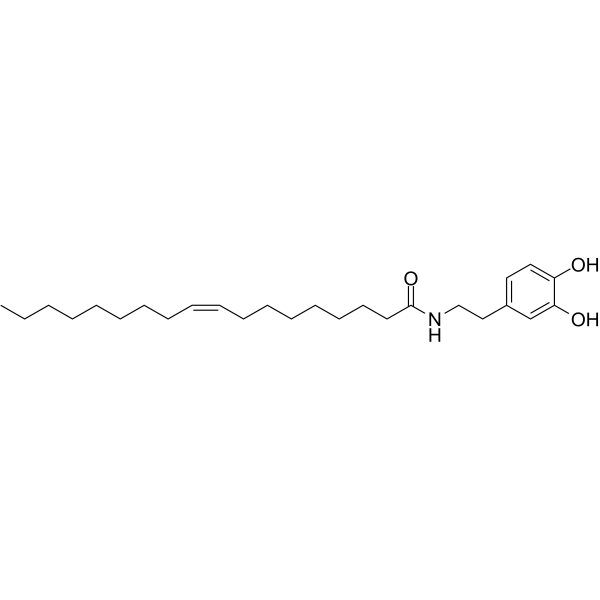
N-Oleoyldopamine (OLDA) is an orally active TRPV1 activator and 5-LOX inhibitor with blood-brain barrier permeability. N-Oleoyldopamine excites histaminergic neurons in the tuberomammillary nucleus via a dopamine receptor mechanism, a process independent of TRPV1 and cannabinoid receptors. On one hand, N-Oleoyldopamine promotes the release of insulin and glucose-dependent insulinotropic polypeptide through a GPR119-dependent pathway to improve glucose tolerance; on the other hand, N-Oleoyldopamine improves left ventricular function and reduces myocardial infarction size by triggering the release of substance P and calcitonin gene-related peptide. N-Oleoyldopamine is used in studies related to glycemic abnormalities and myocardial ischemia-reperfusion injury.
Para uso exclusivo en investigación. No vendemos a pacientes.
- Pureza : 99.47%
- No. CAS: 105955-11-1
- Fòrmula: C26H43NO3
- Peso molecular:417.62
-
Almacenamiento:Powder -20°C, 3 years , 4°C, 2 years ; In solvent -80°C, 6 months , -20°C, 1 month

To place orders, for customer services and technical support, please contact: MedChemExpress USA
Tel: 609-228-6898 E-mail: [email protected] [email protected]


-
 Actividad biológica
-
Chemical Information
-
Solvente y solubilidad
- Protocolo
- Pureza y Documentación
- Referencias
-
 Help & FAQs


-
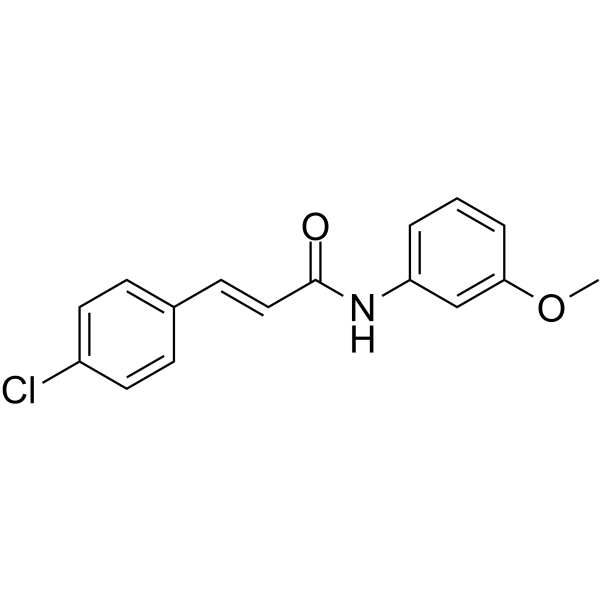
HY-12245
SB-366791VR1/TRPV1 Antagonist -
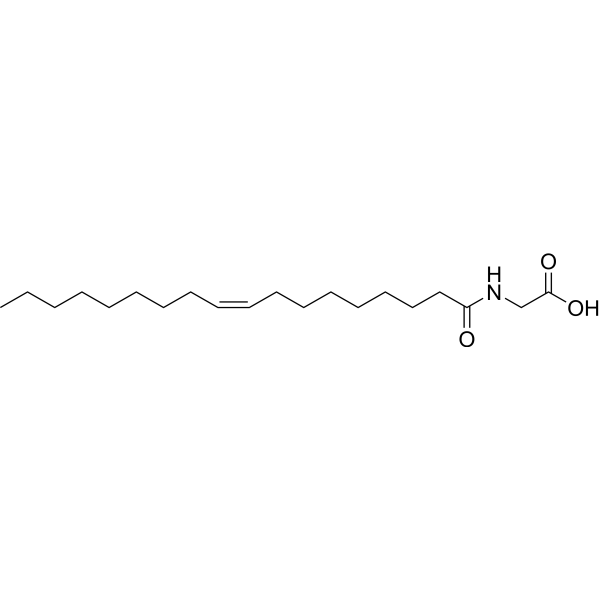
HY-113204
N-Oleoyl glycineCannabinoid Receptor Activator -
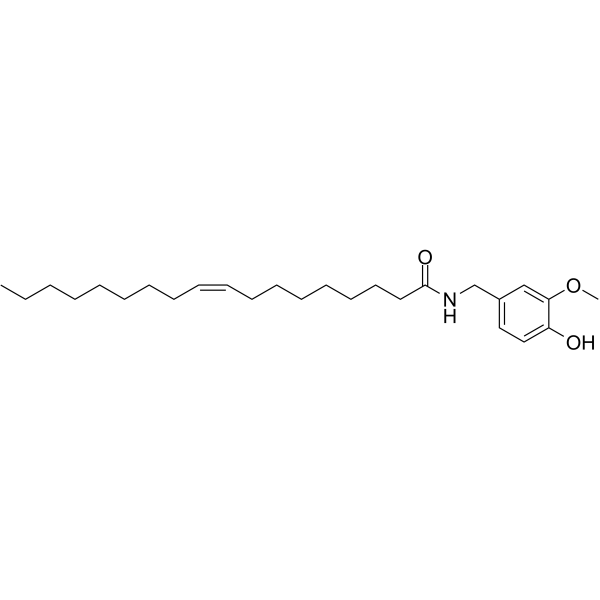
HY-101323
OlvanilTRPV1 Receptor Agonist -
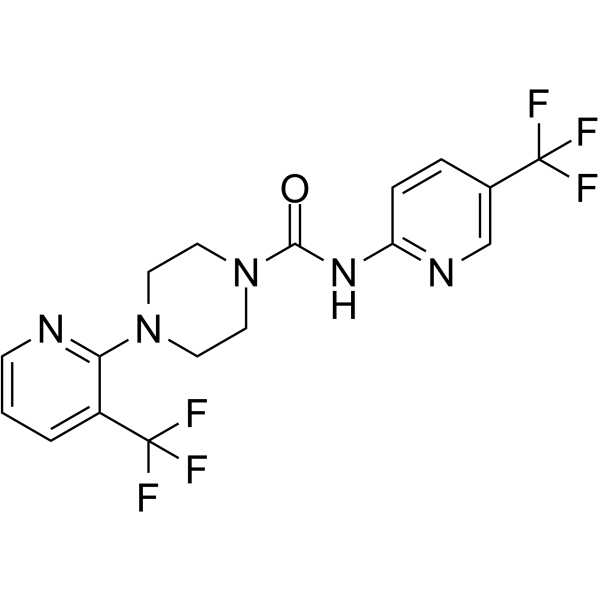
HY-100129
JNJ-17203212TRPV1 Antagonist -
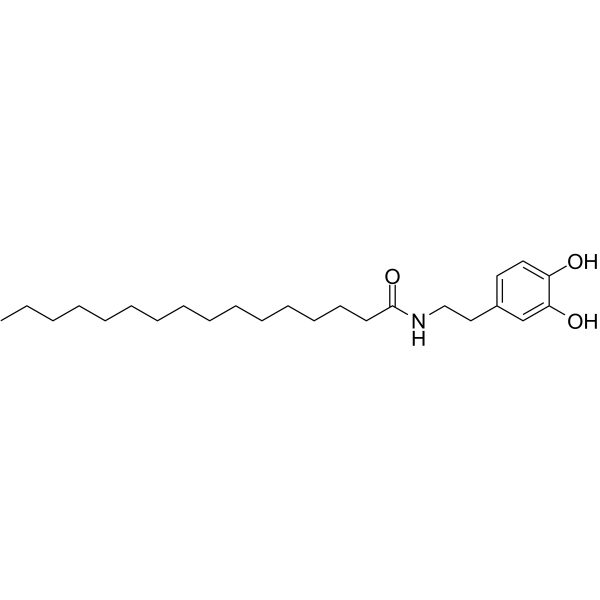
HY-108455
N-Palmitoyl dopamineFatty Acid Dopamide -

HY-108448R
N-Oleoyldopamine (Standard)Reference Standard -
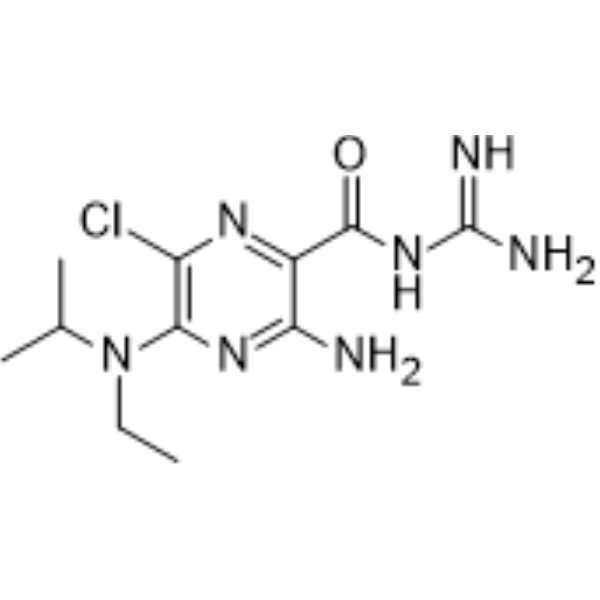
HY-101840
EIPATRPP3 Channel Inhibitor -
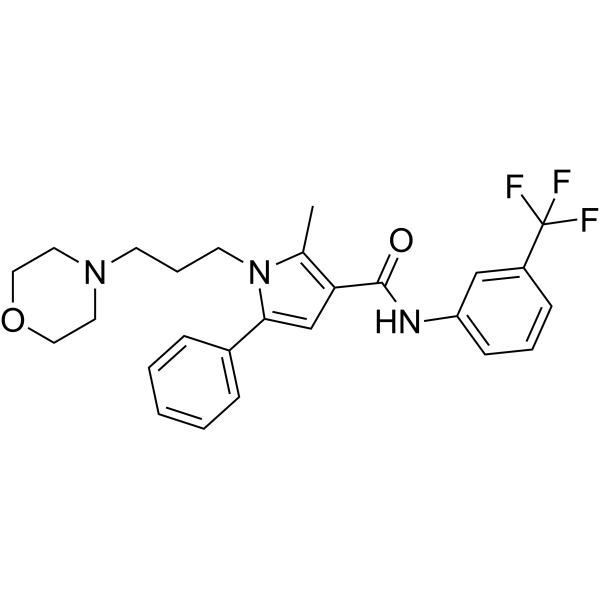
HY-100208
HC-067047TRPV4 Antagonist -
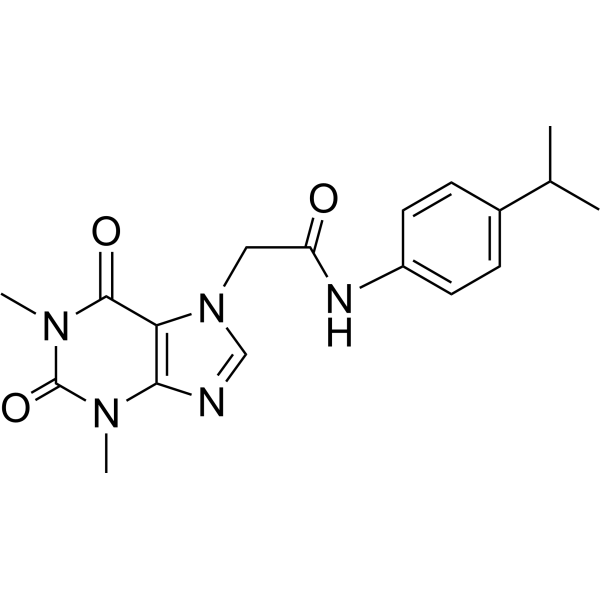
HY-15064
HC-030031TRP Channel Inhibitor -
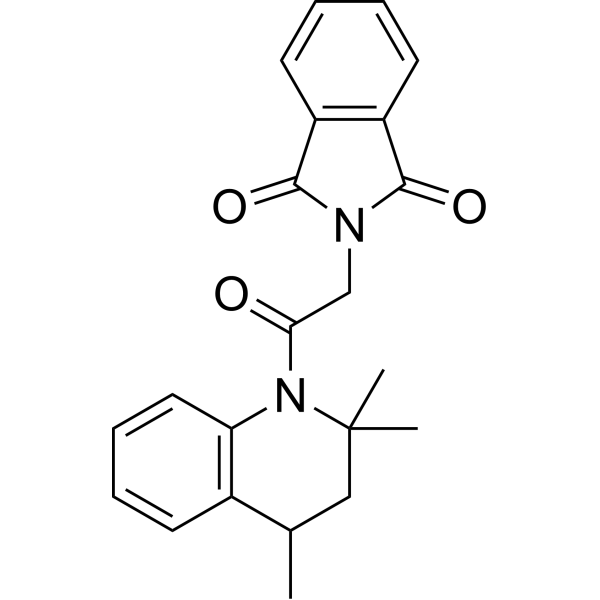
HY-108462
ML-SA1TRPML Agonist -
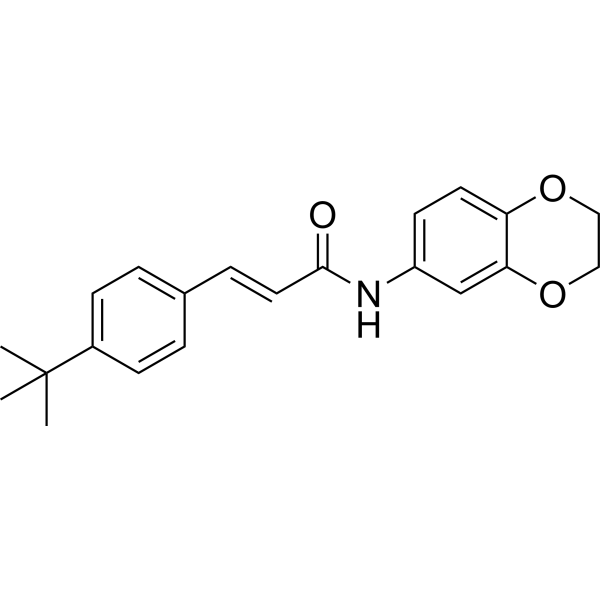
HY-101736
AMG9810TRPV1 Antagonist -
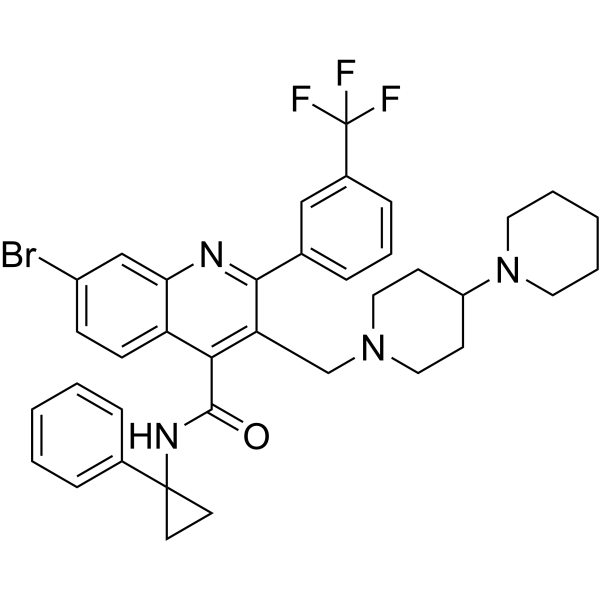
HY-100720
GSK2193874TRPV4 Antagonist
Publications Citing Use of MedChemExpress (MCE) N-Oleoyldopamine
More

Actividad biológica
Descripciòn
IC50 & Target
|
TRPV1 |
5-LOX |
Cellular Effect
|
Cell Line

|
Type | Value | Description | References |
|---|---|---|---|---|
| J774.A1 | IC50 |
5 μM
Compound: 1, OLDA
|
Inhibition of anthrax lethal factor induced J774A.1 cell death by MTT assay
Inhibition of anthrax lethal factor induced J774A.1 cell death by MTT assay
|
[PMID: 17574849] |
| THP-1 | CC50 |
>100 μM
Compound: 1
|
Cytotoxicity against human THP-1 cells assessed as reduction in cell viability incubated for 72 hrs by MTT assay
Cytotoxicity against human THP-1 cells assessed as reduction in cell viability incubated for 72 hrs by MTT assay
|
[PMID: 33479624] |
| THP-1 | IC50 |
3.54 μM
Compound: 1
|
Inhibition of LPS-induced TNFalpha production in human THP-1 cells incubated for 2 hrs followed by LPS stimulation and measured after 12 hrs by ELISA
Inhibition of LPS-induced TNFalpha production in human THP-1 cells incubated for 2 hrs followed by LPS stimulation and measured after 12 hrs by ELISA
|
[PMID: 33479624] |
In Vitro
N-Oleoyldopamine activates HEK293 cells transfected with human GPR119, thereby increasing cAMP accumulation, with an EC50 of 3.2 μM[2].
N-Oleoyldopamine (50 μM; 1 h) significantly stimulates insulin secretion in HIT-T15 cells in a GPR119-dependent and TRPV1-independent manner[2].
N-Oleoyldopamine (3-100 μM) dose-dependently stimulates cAMP accumulation and insulin release in RIN-5F cells transfected with human GPR119, while no such effect is observed in control RIN-5F cells that do not express GPR119[2].
MedChemExpress (MCE) has not independently confirmed the accuracy of these methods. They are for reference only.
In Vivo
OLDA (100 mg/kg; p.o.; single dose) fails to alter GIP release or glucose tolerance in GPR119-deficient mice[2].
MedChemExpress (MCE) has not independently confirmed the accuracy of these methods. They are for reference only.
-
Animal Model:C57Bl/6 (male, overnight-fasted)[2]
-
Dosage:100 mg/kg
-
Administration:p.o.; single dose
-
Result:Increased plasma total GIP levels approximately 2-fold within 30 minutes before glucose challenge.
Significantly elevated GIP levels at 5 and 10 minutes relative to the glucose bolus compared to vehicle.
Significantly improved oral glucose tolerance, with reduced plasma glucose excursion and a statistically significant reduction in the area under the glucose curve (AUC) from 0-120 minutes after glucose bolus (p=0.007).


Chemical Information
-
No. CAS 105955-11-1
-
Appearance Solid
-
Peso molecular 417.62
-
Fòrmula C26H43NO3
-
Color White to off-white
-
SMILES
CCCCCCCC/C=C\CCCCCCCC(NCCC1=CC=C(O)C(O)=C1)=O
-
Synonyms
OLDA
-
Envío
Room temperature in continental US; may vary elsewhere.
-
Almacenamiento
Powder -20°C 3 years 4°C 2 years In solvent -80°C 6 months -20°C 1 month


Publications (1)
-
Journal Impact Factor
-
Most Recent


Solvente y solubilidad
In Vitro:
DMSO : 100 mg/mL (239.45 mM; Need ultrasonic; Hygroscopic DMSO has a significant impact on the solubility of product, please use newly opened DMSO)
Please refer to the solubility information to select the appropriate solvent. Once prepared, please aliquot and store the solution to prevent product inactivation from repeated freeze-thaw cycles.
Storage method and period of stock solution: -80°C, 6 months; -20°C, 1 month. When stored at -80°C, please use it within 6 months. When stored at -20°C, please use it within 1 month.
Please refer to the solubility information to select the appropriate solvent. Once prepared, please aliquot and store the solution to prevent product inactivation from repeated freeze-thaw cycles.
Storage method and period of stock solution: -80°C, 6 months; -20°C, 1 month. When stored at -80°C, please use it within 6 months. When stored at -20°C, please use it within 1 month.
Concentration (start) × Volume (start) = Concentration (final) × Volume (final)
In Vivo:
Select the appropriate dissolution method based on your experimental animal and administration route.
- For the following dissolution methods, please ensure to first prepare a clear stock solution using an In Vitro approach and then sequentially add co-solvents:
- To ensure reliable experimental results, the clarified stock solution can be appropriately stored based on storage conditions. As for the working solution for In Vivo experiments, it is recommended to prepare freshly and use it on the same day.
- The percentages shown for the solvents indicate their volumetric ratio in the final prepared solution. If precipitation or phase separation occurs during preparation, heat and/or sonication can be used to aid dissolution.
Add each solvent one by one: 10% DMSO 40% PEG300 5% Tween-80 45% Saline
Solubility: ≥ 2.5 mg/mL (5.99 mM); Clear solution
This protocol yields a clear solution of ≥ 2.5 mg/mL (saturation unknown).
Taking 1 mL working solution as an example, add 100 μL DMSO stock solution (25.0 mg/mL) to 400 μL PEG300, and mix evenly; then add 50 μL Tween-80 and mix evenly; then add 450 μL Saline to adjust the volume to 1 mL.
Preparation of Saline: Dissolve 0.9 g sodium chloride in ddH₂O and dilute to 100 mL to obtain a clear Saline solution.
Add each solvent one by one: 10% DMSO 90% (20% SBE-β-CD in Saline)
Solubility: 2.5 mg/mL (5.99 mM); Suspended solution; Need ultrasonic
This protocol yields a suspended solution of 2.5 mg/mL. Suspended solution can be used for oral and intraperitoneal injection.
Taking 1 mL working solution as an example, add 100 μL DMSO stock solution (25.0 mg/mL) to 900 μL 20% SBE-β-CD in Saline, and mix evenly.
Preparation of 20% SBE-β-CD in Saline (4°C, storage for one week): 2 g SBE-β-CD powder is dissolved in 10 mL Saline, completely dissolve until clear.
In Vivo Dissolution Calculator
Please enter the basic information of animal experiments:
-
-
-
-
Recommended: Prepare an additional quantity of animals to account for potential losses during experiments.
Please enter your animal formula composition:
-
%DMSO +
Recommended: Keep the proportion of DMSO in working solution below 2% if your animal is weak.
-
%+
-
+%Tween-80 + +
-
%Saline +
The co-solvents required include: DMSO, . All of co-solvents are available by MedChemExpress (MCE). , Tween 80. All of co-solvents are available by MedChemExpress (MCE).
Working solution concentration: 0.22 mg/mL
Method for preparing stock solution: mg drug dissolved in μL DMSO. Stock solution concentration: mg/mL.
1. Take μL DMSO stock solution;
2. Add μL .
μL , mix evenly;
3. Then add μL Tween 80, mix evenly;
4. Then add μL
Please ensure that the stock solution in the first step is dissolved to a clear state, and add co-solvents in sequence. You can use ultrasonic heating (ultrasonic cleaner, recommended frequency 20-40 kHz), vortexing, etc. to assist dissolution.


Pureza y Documentación
-
Ficha de datos (269 KB)
-
SDS (396 KB)
- English - EN (396 KB)
- Français - FR (396 KB)
- Deutsch - DE (396 KB)
- Norwegian - NO (396 KB)
- Español - ES (396 KB)
- Swedish - SV (396 KB)
- Italian - IT (396 KB)
- Korean - KR (396 KB)
- Portuguese - PT (396 KB)
-
Instrucciones de manejo (2659 KB)
Referencias
[1]. De Luca R, et al. Mechanisms of N-oleoyldopamine activation of central histaminergic neurons. Neuropharmacology. 2018;143:327-338. [Content Brief]
[2]. Chu ZL, et al. N-oleoyldopamine enhances glucose homeostasis through the activation of GPR119. Mol Endocrinol. 2010;24(1):161-170. [Content Brief]
[3]. Zhong B, et al. N-oleoyldopamine, a novel endogenous capsaicin-like lipid, protects the heart against ischemia-reperfusion injury via activation of TRPV1. Am J Physiol Heart Circ Physiol. 2008;295(2):H728-H735. [Content Brief]


Complete Stock Solution Preparation Table
Please refer to the solubility information to select the appropriate solvent. Once prepared, please aliquot and store the solution to prevent product inactivation from repeated freeze-thaw cycles.
Storage method and period of stock solution: -80°C, 6 months; -20°C, 1 month. When stored at -80°C, please use it within 6 months. When stored at -20°C, please use it within 1 month.
| Optional Solvent | Concentration Solvent Mass | 1 mg | 5 mg | 10 mg | 25 mg |
|---|---|---|---|---|---|
| DMSO | 1 mM | 2.3945 mL | 11.9726 mL | 23.9452 mL | 59.8630 mL |
| 5 mM | 0.4789 mL | 2.3945 mL | 4.7890 mL | 11.9726 mL | |
| 10 mM | 0.2395 mL | 1.1973 mL | 2.3945 mL | 5.9863 mL | |
| 15 mM | 0.1596 mL | 0.7982 mL | 1.5963 mL | 3.9909 mL | |
| 20 mM | 0.1197 mL | 0.5986 mL | 1.1973 mL | 2.9932 mL | |
| 25 mM | 0.0958 mL | 0.4789 mL | 0.9578 mL | 2.3945 mL | |
| 30 mM | 0.0798 mL | 0.3991 mL | 0.7982 mL | 1.9954 mL | |
| 40 mM | 0.0599 mL | 0.2993 mL | 0.5986 mL | 1.4966 mL | |
| 50 mM | 0.0479 mL | 0.2395 mL | 0.4789 mL | 1.1973 mL | |
| 60 mM | 0.0399 mL | 0.1995 mL | 0.3991 mL | 0.9977 mL | |
| 80 mM | 0.0299 mL | 0.1497 mL | 0.2993 mL | 0.7483 mL | |
| 100 mM | 0.0239 mL | 0.1197 mL | 0.2395 mL | 0.5986 mL |


N-Oleoyldopamine Related Classifications
HY-108448 Related Classifications
 Powered by Bioz