



Fluoresterol

Based on 1 Customer Validation
Fluoresterol (22-NBD Cholesterol) is a cholesterol-specific fluorescent probe with cholesterol-mimicking binding properties. Fluoresterol is ineffective orally and does not cross the blood-brain barrier. Fluoresterol specifically binds to cholesterol transport-related proteins (such as ABCA1 and ABCG1) and is primarily used in cholesterol metabolism research, particularly for the visualization and quantitative analysis of cholesterol absorption, efflux, intracellular transport efficiency, and reverse cholesterol transport (RCT) processes. The commonly used concentration of Fluoresterol in in vitro experiments is 0.1-10 μM, and the commonly used dose in in vivo experiments is 5-20 mg/kg (gavage or intraperitoneal injection), with excitation/emission wavelengths of 472/540 nm. Fluoresterol can be applied to the study of cholesterol metabolism mechanisms related to hyperlipidemia, atherosclerosis, and non-alcoholic fatty liver disease (NAFLD).
For research use only. We do not sell to patients.
- Purity : 99.65%
- CAS No.: 78949-95-8
- Formula: C28H38N4O4
- Molecular Weight:494.63
-
Storage:Powder -20°C, 3 years ; In solvent -80°C, 6 months , -20°C, 1 month


To place orders, for customer services and technical support, please contact: MedChemExpress USA
Tel: 609-228-6898 E-mail: [email protected] [email protected]


-
 Biological Activity
-
Chemical Information
-
Solvent & Solubility
- Protocols
- Purity & Documentation
- References
-
 Help & FAQs


-
HY-13259
MG-132Proteasome Inhibitor -
HY-W010800
Cholesteryl hemisuccinateTopoisomerase Inhibitor -
HY-139407
3-C12-NBD-cholesterolFluorescent Cholesterol Analog -
HY-W356117
C6 NBD GlucosylceramideGlucosylceramide Fluorescent Derivative -
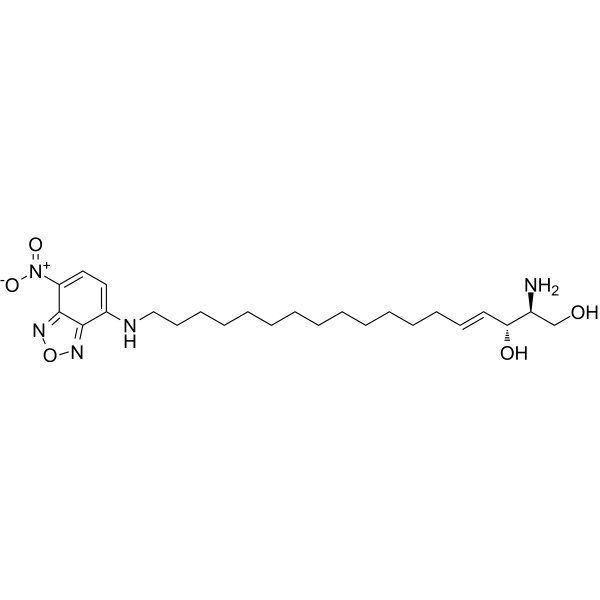
HY-130433
NBD SphingosineFluorochrome -
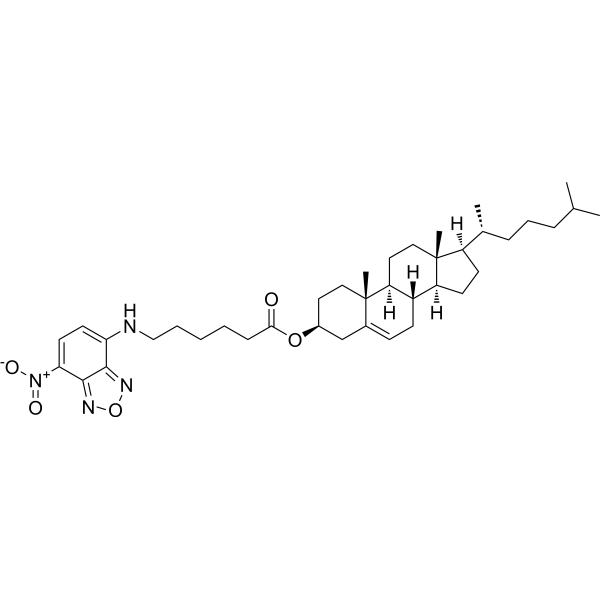
HY-131682
3-C6-NBD-cholesterolFluorescent Lipid -

HY-W010800R
Cholesteryl hemisuccinate (Standard)Topoisomerase Inhibitor -

HY-125385
Sulforhodamine 101 DHPE -
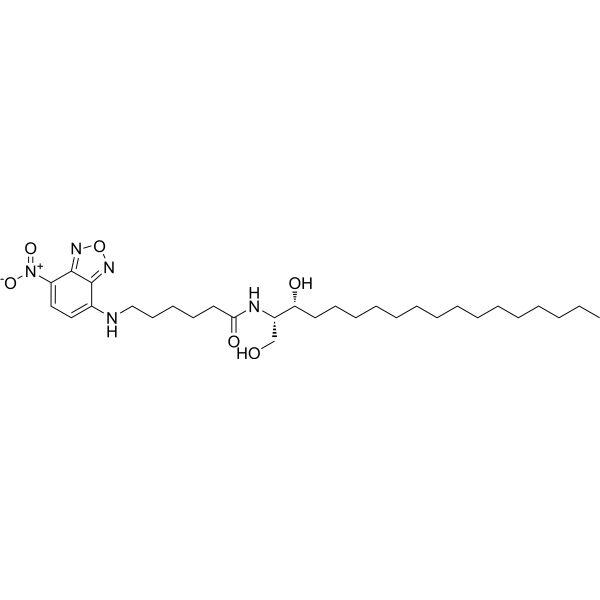
HY-141576
C6-NBD SphinganineFatty Acid Fluorescent Marker -
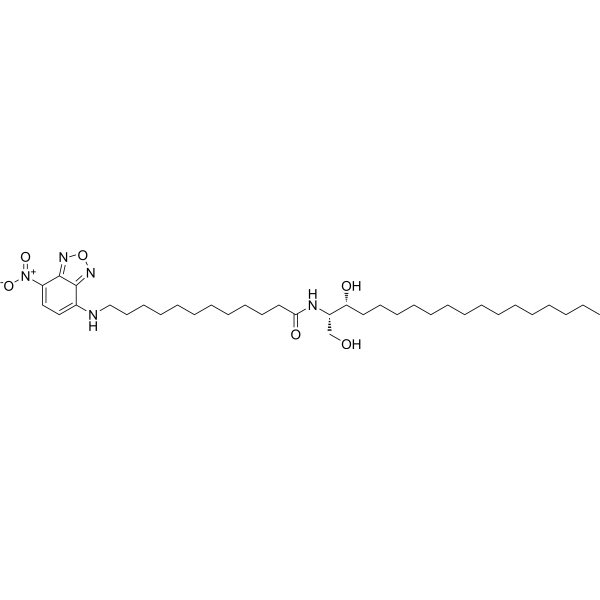
HY-141577
C12-NBD SphinganineCeramidase Substrate -
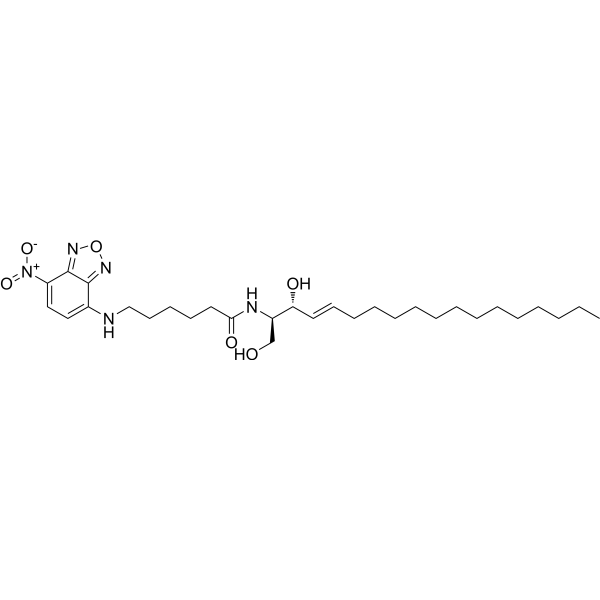
HY-147178
C-6 NBD-dihydro-CeramideCeramides -
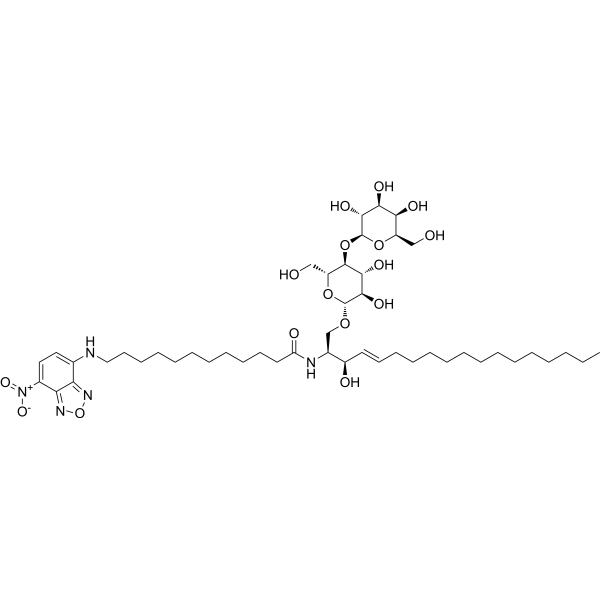
HY-D1580
C12 NBD LactosylceramideFluorescent Dye


Biological Activity
Description
In Vitro
Guide (The following is our recommended solution. This solution is merely a guideline and should be modified according to your specific needs.)
By detecting the fluorescence signal of 22-NBD Cholesterol (Fluoresterol) to reflect the cholesterol efflux efficiency, in vitro fluorescence labeling and cholesterol efflux experiments[1]:
1. Cell preparation: Mouse macrophage RAW264.7 cells were seeded at a density of 3×10⁴ cells per well in a 96-well plate. 1% penicillin-streptomycin and 10% bovine serum-containing DMEM medium was added, and the cells were incubated in a 37°C, 5% CO2 incubator for 16 hours. Mouse peritoneal macrophages were induced with 4% thioacetamide solution and then cultured on a 100% DMEM medium for 2 hours before being transferred to a new culture medium for another 48 hours for later use.
2. Fluorescence labeling: 0.2 mL of the labeled medium containing methyl-β-cyclodextrin, Topflour cholesterol (a fluorescent cholesterol analog) and unlabeled cholesterol was added to the RAW264.7 cells. After incubation for 6 hours, the cells were washed with DMEM medium to remove the unbound fluorescent cholesterol; the mouse peritoneal macrophages were treated using the same labeling method.
3. Drug treatment and incubation: After equilibrating the cells with DMEM medium containing 0.2% BSA for 1 hour, add DMEM medium containing apolipoprotein A1 (apoA1, 10 μg/mL), along with different concentration gradients of ethanol extract of Dianliangpi (EEDL: 100 μg/mL, 200 μg/mL, 400 μg/mL) or LXR agonist T0901317 (0.2 μM, 0.5 μM), and incubate at 37°C and 5% CO2 for 18 hours.
4. Fluorescence Detection: Collect the cell culture supernatant, add lysis buffer to the cell layer, and incubate at room temperature for 30 minutes to prepare the cell lysate. Use an enzyme reader to detect the fluorescence intensity of the supernatant and the lysate. The excitation wavelength is 482 nm and the emission wavelength is 516 nm. Calculate the cholesterol efflux efficiency.
MedChemExpress (MCE) has not independently confirmed the accuracy of these methods. They are for reference only.


Chemical Information
-
CAS No. 78949-95-8
-
Appearance Solid
-
Molecular Weight 494.63
-
Formula C28H38N4O4
-
Color Yellow to orange
-
SMILES
C[C@@]12[C@](CC[C@]2([H])[C@H](C)CNC3=CC=C([N+]([O-])=O)C4=NON=C34)([H])[C@@]5([H])[C@]([C@@]6(C(C[C@@H](O)CC6)=CC5)C)([H])CC1
-
Synonyms
22-NBD Cholesterol
-
Shipping
Room temperature in continental US; may vary elsewhere.
-
Storage
Powder -20°C 3 years In solvent -80°C 6 months -20°C 1 month


Solvent & Solubility
In Vitro:
DMSO : 4.17 mg/mL (8.43 mM; ultrasonic and warming and heat to 60°C; Hygroscopic DMSO has a significant impact on the solubility of product, please use newly opened DMSO)
Please refer to the solubility information to select the appropriate solvent. Once prepared, please aliquot and store the solution to prevent product inactivation from repeated freeze-thaw cycles.
Storage method and period of stock solution: -80°C, 6 months; -20°C, 1 month. When stored at -80°C, please use it within 6 months. When stored at -20°C, please use it within 1 month.
Please refer to the solubility information to select the appropriate solvent. Once prepared, please aliquot and store the solution to prevent product inactivation from repeated freeze-thaw cycles.
Storage method and period of stock solution: -80°C, 6 months; -20°C, 1 month. When stored at -80°C, please use it within 6 months. When stored at -20°C, please use it within 1 month.
Concentration (start) × Volume (start) = Concentration (final) × Volume (final)


Purity & Documentation
-
Data Sheet (284 KB)
-
SDS (393 KB)
- English - EN (393 KB)
- Français - FR (393 KB)
- Deutsch - DE (393 KB)
- Norwegian - NO (393 KB)
- Español - ES (393 KB)
- Swedish - SV (393 KB)
- Italian - IT (393 KB)
- Korean - KR (393 KB)
- Portuguese - PT (393 KB)
-
Handling Instructions (2659 KB)
References
[1]. Han W, et al. Danlou Recipe promotes cholesterol efflux in macrophages RAW264.7 and reverses cholesterol transport in mice with hyperlipidemia induced by P407. BMC Complement Med Ther. 2023 Dec 8;23(1):445. [Content Brief]
[2]. Altmann SW, et al. Niemann-Pick C1 Like 1 protein is critical for intestinal cholesterol absorption. Science. 2004 Feb 20;303(5661):1201-4. [Content Brief]


Complete Stock Solution Preparation Table
Please refer to the solubility information to select the appropriate solvent. Once prepared, please aliquot and store the solution to prevent product inactivation from repeated freeze-thaw cycles.
Storage method and period of stock solution: -80°C, 6 months; -20°C, 1 month. When stored at -80°C, please use it within 6 months. When stored at -20°C, please use it within 1 month.
| Optional Solvent | Concentration Solvent Mass | 1 mg | 5 mg | 10 mg | 25 mg |
|---|---|---|---|---|---|
| DMSO | 1 mM | 2.0217 mL | 10.1086 mL | 20.2171 mL | 50.5428 mL |
| 5 mM | 0.4043 mL | 2.0217 mL | 4.0434 mL | 10.1086 mL |


Fluoresterol Related Classifications
HY-W020012 Related Classifications
 Powered by Bioz