



DDAO
Based on 1 publication(s) in Google Scholar
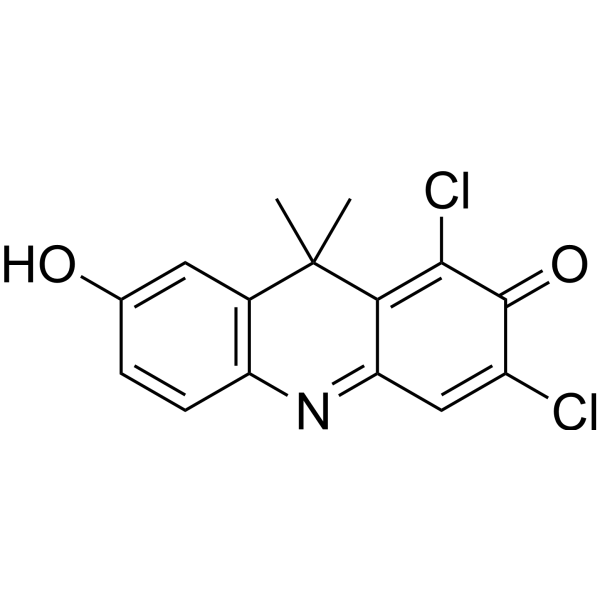
DDAO is a promising near-infrared (NIR) red fluorescent probewith tunable excitation wavelength (600-650nm) and longemission wavelength(λem=656nm). DDAO can be desiged for detection of the activities of different enzymes such asβ-galactosidase,sulfatase, proteinphosphatase2A,carboxylesterase 2, humanalbumin andesterases.
For research use only. We do not sell to patients.
- Purity : 98.02%
- CAS No.: 118290-05-4
- Formula: C15H11Cl2NO2
- Molecular Weight:308.16
-
Storage:
4°C, protect from light
* In solvent : -80°C, 6 months; -20°C, 1 month (protect from light)

To place orders, for customer services and technical support, please contact: MedChemExpress USA
Tel: 609-228-6898 E-mail: [email protected] [email protected]


-
 Biological Activity
-
Chemical Information
-
Solvent & Solubility
- Purity & Documentation
- References
-
 Help & FAQs


-
HY-D0969
DiOFluorescent Probe -
HY-136976
WST-1Cell Proliferation Assay Reagent -
HY-110148
WWL113Ces3/Ces1f Inhibitor -
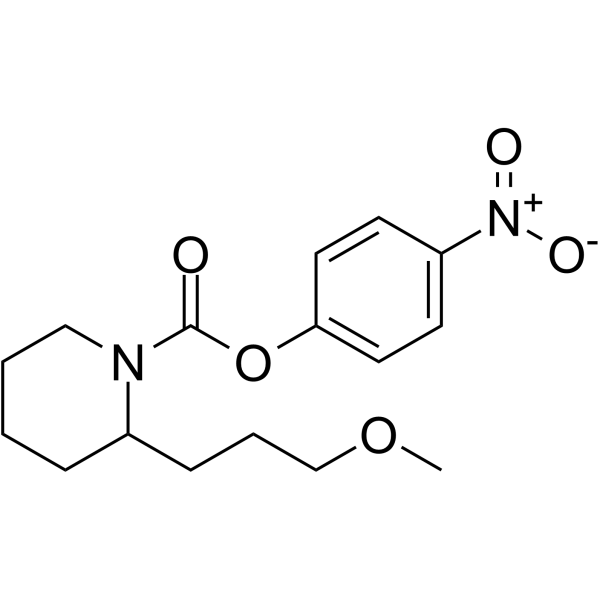
HY-120602
WWL229Carboxylesterase 3 Inhibitor -
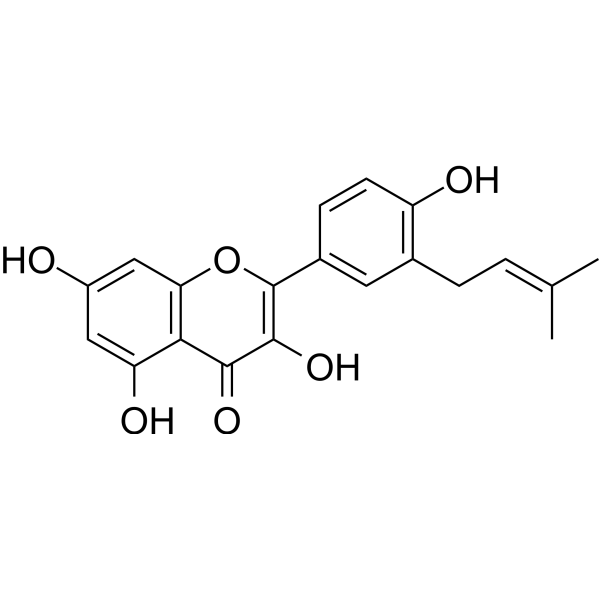
HY-N3474
IsolicoflavonolhCES2A Inhibitor -

HY-DY1100
WST-1 (solution)Cell Proliferation Assay Reagent -
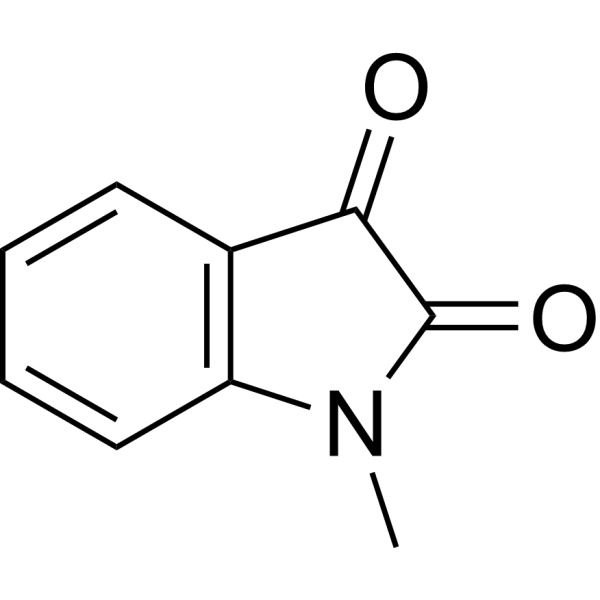
HY-23148
1-MethylisatinCE Inhibitor -
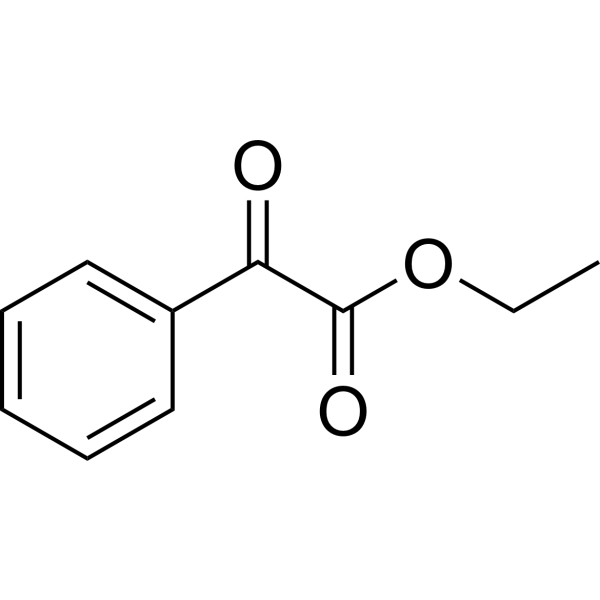
HY-W016618
Ethyl phenylglyoxylateSynthetic Reagent -

HY-W016618R
Ethyl phenylglyoxylate (Standard)Standard of Ethyl phenylglyoxylate -
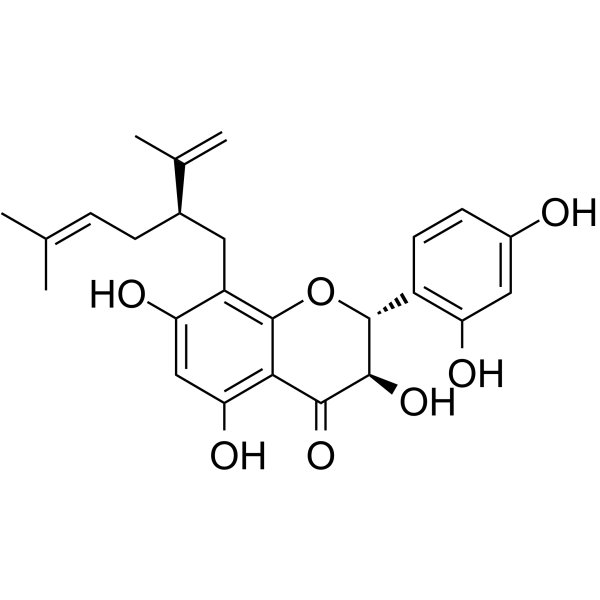
HY-N3413
Kushenol XFlavonoids Compound
Publications Citing Use of MedChemExpress (MCE) DDAO
More

Biological Activity
Description
IC50 & Target
Red fluorescent probe
In Vitro
Guide (The following is our recommended protocol. This protocol is provided as a guideline only and should be modified according to your specific needs).
1. Cell Sample Preparation[1]:
1. Seed HeLa cells in a confocal culture dish at a density of 105 cells and add 1 mL of 1640 medium containing 10% fetal bovine serum.
2. Incubate HeLa cells in a 37 ℃ incubator for 12 h.
2. Dye Stock Solution Preparation:
1. Dissolve 9H-1,3-Dichloro-7-hydroxy-9,9-dimethylacridine-2-one (DDAO) in dimethyl sulfoxide (DMSO) to prepare an AB1 stock solution at a concentration of 500 μM.
3. Dye Working Solution Preparation:
1. Take the AB1 stock solution and further dilute it with DMSO and 20 mM pH 7.4 phosphate buffer (PB) until the final DMSO concentration is 30% (v/v) and the AB1 concentration is 30 μM.
4. Specific Staining Procedure
1. After culturing HeLa cells for 12 h, replace the medium with fresh medium containing AB1 at a final concentration of 5 μM. Continue incubating the cells at 37 ℃ for 2 h.
2. Then treat the cells for 30 min with either H2O2 at a final concentration of 100 μM or Phorbol-12-myristate-13-acetate (HY-18739) (PMA) at a concentration of 1 μg/mL. In control experiments using N-acetylcysteine (NAC) as an H2O2 scavenger, incubate probe-preloaded cells with NAC at a final concentration of 1 mM for 40 min prior to PMA stimulation.
3. After treatment, rinse cells with PBS and mount with mounting medium for 20 min.
MedChemExpress (MCE) has not independently confirmed the accuracy of these methods. They are for reference only.
Emission (Em)
658


Chemical Information
-
CAS No. 118290-05-4
-
Appearance Solid
-
Molecular Weight 308.16
-
Formula C15H11Cl2NO2
-
Color Purple to purplish red
-
SMILES
O=C1C(Cl)=C2C(C)(C)C3=C(C=CC(O)=C3)N=C2C=C1Cl
-
Shipping
Room temperature in continental US; may vary elsewhere.
-
Storage
4°C, protect from light
* In solvent : -80°C, 6 months; -20°C, 1 month (protect from light)


Publications (1)
-
Journal Impact Factor
-
Most Recent
-
Acta Pharm Sin B
Converting bacteria into autologous tumor vaccine via surface biomineralization of calcium carbonate for enhanced immunotherapy. [Abstract]2023 Dec;13(12):5074-5090. PMID: 38045045


Solvent & Solubility
In Vitro:
DMSO : 10.42 mg/mL (33.81 mM; Need ultrasonic; Hygroscopic DMSO has a significant impact on the solubility of product, please use newly opened DMSO)
Please refer to the solubility information to select the appropriate solvent. Once prepared, please aliquot and store the solution to prevent product inactivation from repeated freeze-thaw cycles.
Storage method and period of stock solution: -80°C, 6 months; -20°C, 1 month (protect from light). When stored at -80°C, please use it within 6 months. When stored at -20°C, please use it within 1 month.
Please refer to the solubility information to select the appropriate solvent. Once prepared, please aliquot and store the solution to prevent product inactivation from repeated freeze-thaw cycles.
Storage method and period of stock solution: -80°C, 6 months; -20°C, 1 month (protect from light). When stored at -80°C, please use it within 6 months. When stored at -20°C, please use it within 1 month.
Concentration (start) × Volume (start) = Concentration (final) × Volume (final)


Purity & Documentation
-
Data Sheet (285 KB)
-
SDS (393 KB)
- English - EN (393 KB)
- Français - FR (393 KB)
- Deutsch - DE (393 KB)
- Norwegian - NO (393 KB)
- Español - ES (393 KB)
- Swedish - SV (393 KB)
- Italian - IT (393 KB)
- Korean - KR (393 KB)
- Portuguese - PT (393 KB)
-
Handling Instructions (2659 KB)
References


Complete Stock Solution Preparation Table
Please refer to the solubility information to select the appropriate solvent. Once prepared, please aliquot and store the solution to prevent product inactivation from repeated freeze-thaw cycles.
Storage method and period of stock solution: -80°C, 6 months; -20°C, 1 month (protect from light). When stored at -80°C, please use it within 6 months. When stored at -20°C, please use it within 1 month.
| Optional Solvent | Concentration Solvent Mass | 1 mg | 5 mg | 10 mg | 25 mg |
|---|---|---|---|---|---|
| DMSO | 1 mM | 3.2451 mL | 16.2253 mL | 32.4507 mL | 81.1267 mL |
| 5 mM | 0.6490 mL | 3.2451 mL | 6.4901 mL | 16.2253 mL | |
| 10 mM | 0.3245 mL | 1.6225 mL | 3.2451 mL | 8.1127 mL | |
| 15 mM | 0.2163 mL | 1.0817 mL | 2.1634 mL | 5.4084 mL | |
| 20 mM | 0.1623 mL | 0.8113 mL | 1.6225 mL | 4.0563 mL | |
| 25 mM | 0.1298 mL | 0.6490 mL | 1.2980 mL | 3.2451 mL | |
| 30 mM | 0.1082 mL | 0.5408 mL | 1.0817 mL | 2.7042 mL |


DDAO Related Classifications
HY-114879 Related Classifications
 Powered by Bioz