



Alizarin Red S sodium
Based on 10 publication(s) in Google Scholar
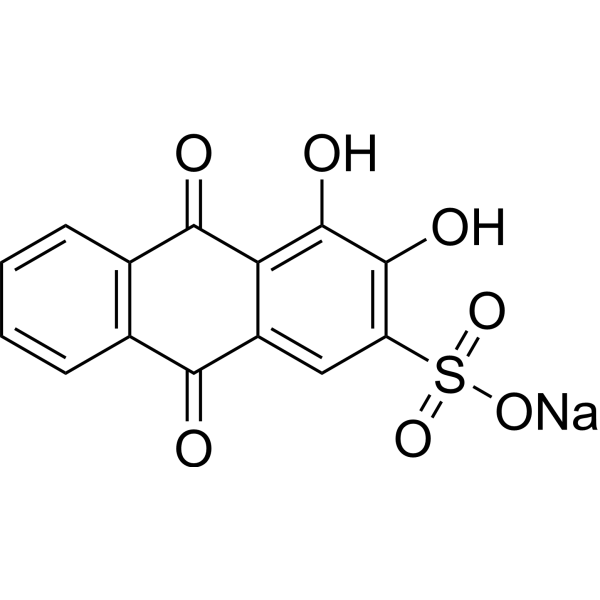
Alizarin Red S sodium is an anthraquinone derivative dye. When combined with cations such as calcium ions, the functional group of Alizarin Red S sodium can form a coordination bond with the cation through the oxygen atom to show orange-red fluorescence. Alizarin Red S sodium can be used for screening of calcium compounds in synovial fluid and detecting osteoblast differentiation, and can also be used for bone staining in mice. Excitation/emission wavelength: 500/570 nm.
For research use only. We do not sell to patients.
- Purity : 95.0%
- CAS No.: 130-22-3
- Formula: C14H7NaO7S
- Molecular Weight:342.26
-
Storage:
4°C, sealed storage, away from moisture and light
* In solvent : -80°C, 6 months; -20°C, 1 month (sealed storage, away from moisture and light)

To place orders, for customer services and technical support, please contact: MedChemExpress USA
Tel: 609-228-6898 E-mail: [email protected] [email protected]


-
 Biological Activity
-
Chemical Information
-
Solvent & Solubility
- Purity & Documentation
- References
-
 Help & FAQs


-
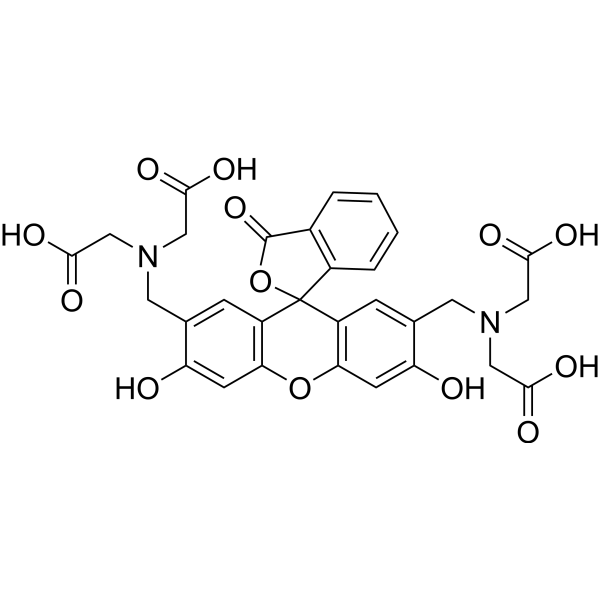
HY-D0040
Calcein -
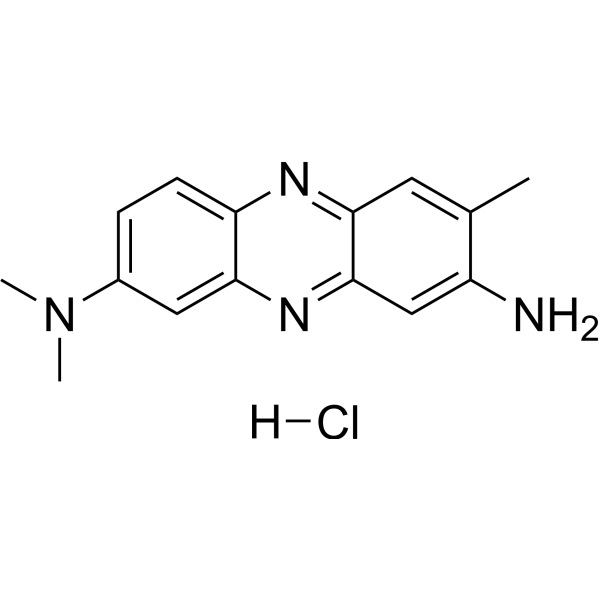
HY-D0166
Neutral Red -
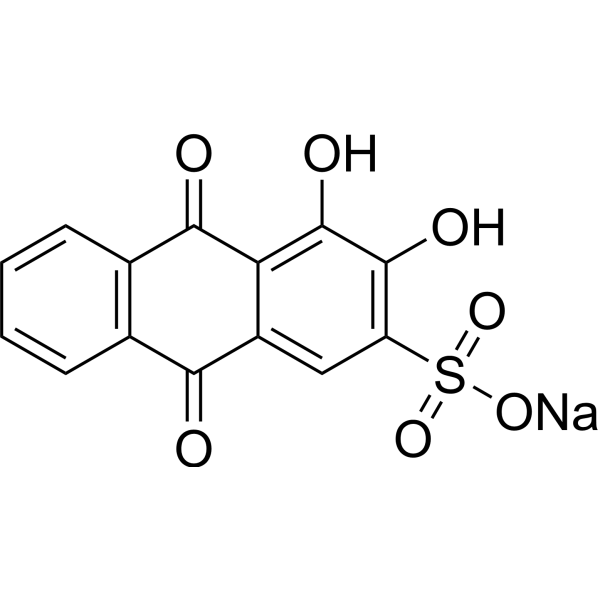
HY-W110927
Alizarin Red S Indicator (4.3-6.3), IND -
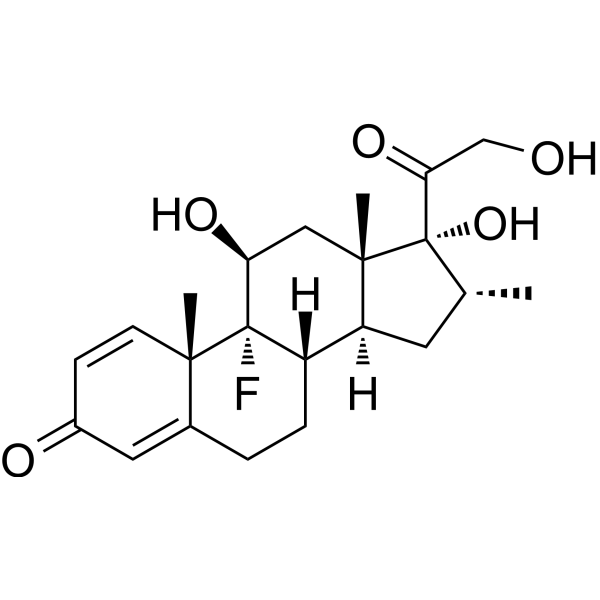
HY-14648
Dexamethasone -
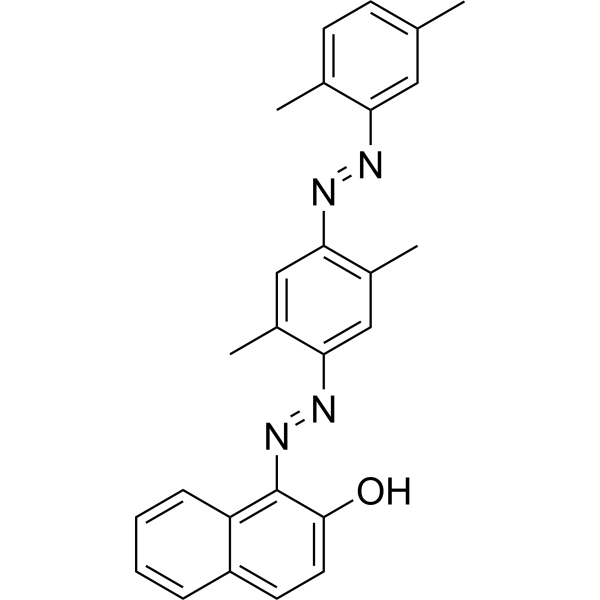
HY-D1168
Oil Red O -
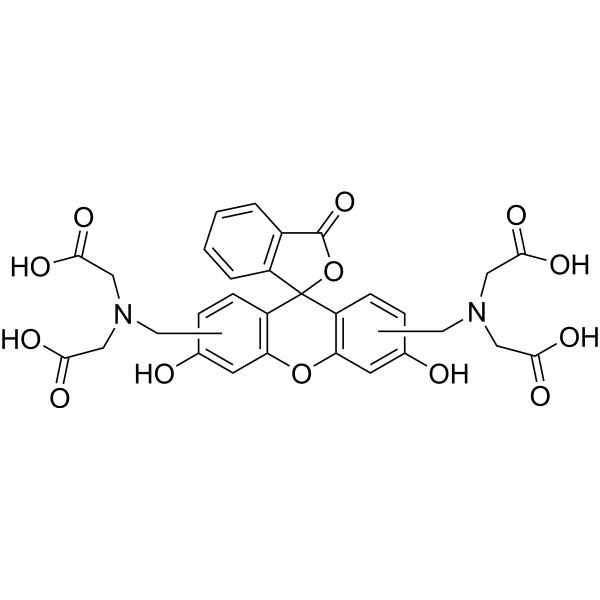
HY-D1249
Calcein (mixture of isomers) -
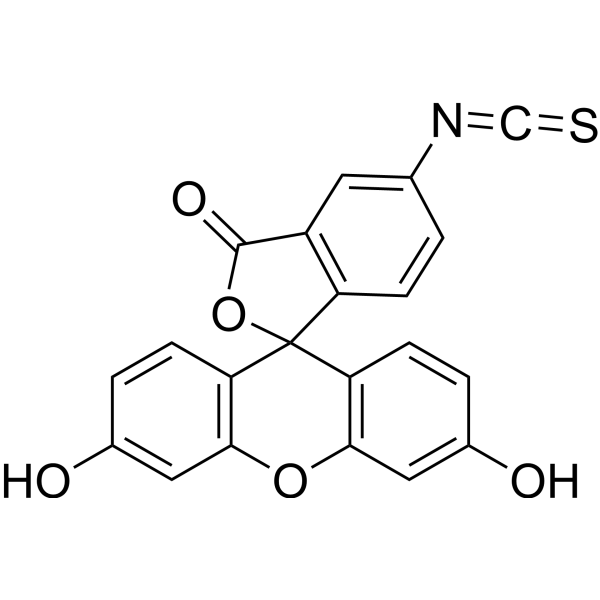
HY-66019
FITC -
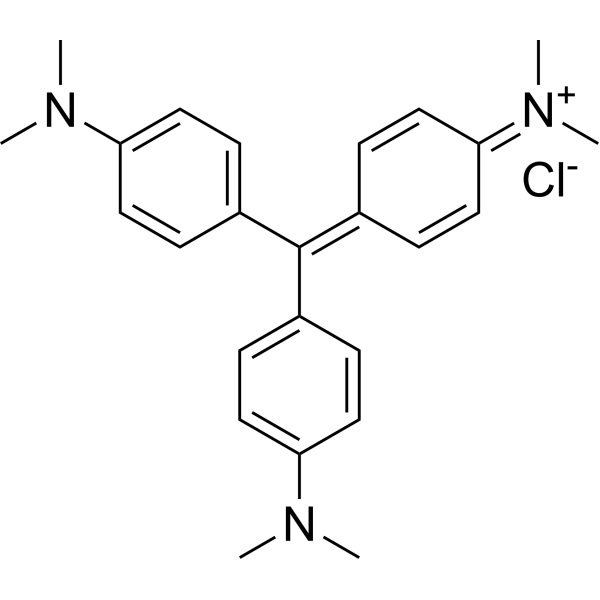
HY-B0324A
Crystal Violet -
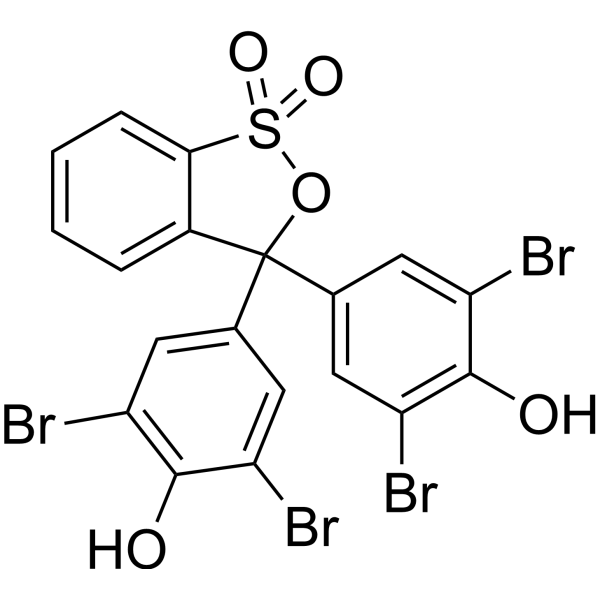
HY-B1571
Bromophenol blue -
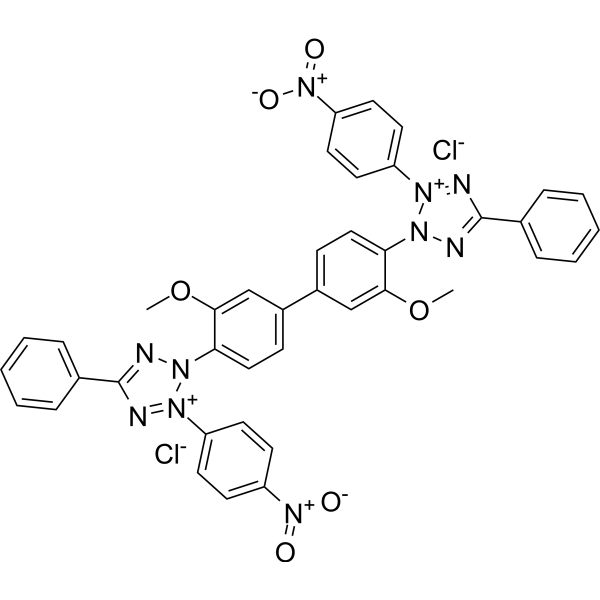
HY-15925
Nitro blue tetrazolium chloride -
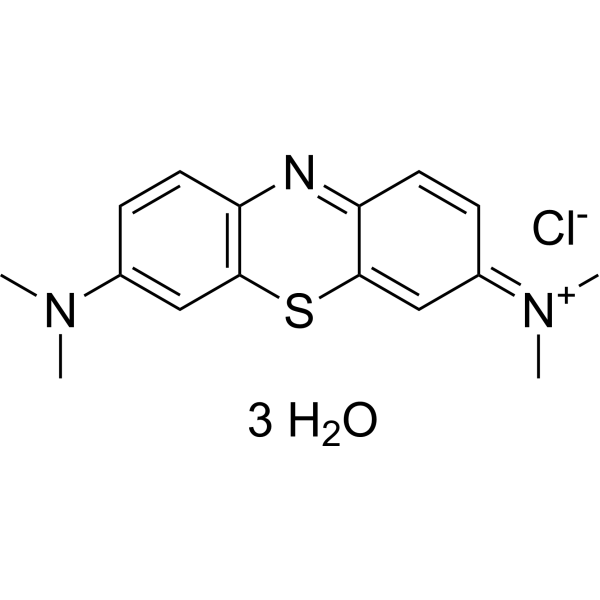
HY-B1359
Methylene blue trihydrate -
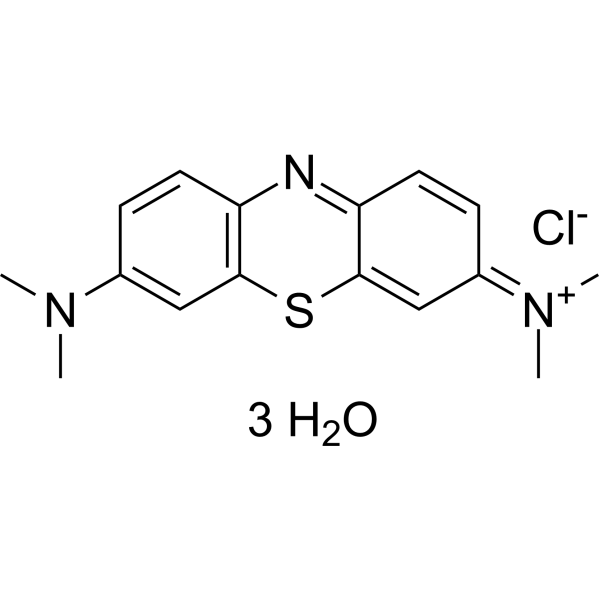
HY-B1359A
Methylene blue indicator
Publications Citing Use of MedChemExpress (MCE) Alizarin Red S sodium
More- Qual Assur Saf Crop. 2021 Nov 26;13 (4).
- J Periodontol. 2021 Nov;92(11):103-115. [Abstract]
- J Orthop Surg Res. 2023 Jul 29;18(1):546. [Abstract]
- J Biochem Mol Toxicol. 2024 Jan;38(1):e23624. [Abstract]
- Arch Biochem Biophys. 2026 Mar:777:110713. [Abstract]
- Int J Cardiol. 2022 Nov 1:366:11-18. [Abstract]
- Biol Reprod. 2024 Aug 15;111(2):414-426. [Abstract]
- J Mol Histol. 2026 Mar 17;57(2):117. [Abstract]
- J Orthop Res. 2022 Jul;40(7):1563-1576. [Abstract]
- Res Sq. 2025 Jul 21.


Biological Activity
Description
In Vitro
Guide (The following is our recommended protocol. This protocol is only a guide and should be modified according to your specific needs).
1. Preparation of Alizarin Red S sodium[1]
1.1 Prepare a 2% aqueous solution of Alizarin Red S sodium.
1.2 Use a pH meter to add ammonium hydroxide dropwise while stirring to adjust the pH to 4.2.
1.3 Filter the solution through a 0.45 μm microfilter and store in an amber bottle.
1.4 Refilter the solution through a 0.22 μm microfilter immediately before use.
2. Alizarin Red S sodium detection of osteoblast differentiation[2]
2.1 Osteogenic differentiation induction: MC3T3-E1 cells are seeded in well plates and are cultured in α-MEM (without ascorbic acid) supplemented with 10% fetal bovine serum. Osteogenic differentiation is induced by osteogenic medium (OSM) containing ascorbic acid (50 μg/mL) and β-glycerophosphate (10 mM).
2.2 Staining: MC3T3-E1 cells are washed with 1×PBS, fixed with 70% ethanol at room temperature for 10 min, rinsed with distilled water, and then stained with Alizarin Red S sodium for 10 min to detect calcium deposition in the matrix.
2.3 Data analysis: The area of the red region is positively proportional to the degree of osteogenic differentiation.
3. Alizarin Red S sodium Screening test for calcium compounds in synovial fluid[1]
3.1 Synovial fluid preparation: Aspirate the synovial fluid into a disposable syringe and transfer the fluid to a clean test tube containing sodium heparin anticoagulant.
3.2 Staining: Aspirate a drop of synovial fluid from the bottom of the test tube, place it on a clean slide, mix it with a drop of 2% Alizarin Red S sodium, and cover it with a coverslip.
3.3 Within three minutes of mixing, observe it under an ordinary light microscope and grade the degree of orange-red staining observed in each high-power field. The area of ??the red area is proportional to the content of calcium compounds.
MedChemExpress (MCE) has not independently confirmed the accuracy of these methods. They are for reference only.
In Vivo
(1) Rat treatment: 20% Alizarin Red S sodium (100 mg/kg, single dose) was injected into albino rats and the rats were killed 2 min-8 h after injection.
(2) Skull treatment: The rat skull was cut off and stored in 2% potassium hydroxide solution for several days. All soft tissues were removed, separated and rinsed in tap water, and stored in 80% ethanol. The skull was embedded in unsaturated polyester resin and cut into 50-60u sections in sagittal or frontal planes with a diamond saw.
(3) Microscopic examination: At 80 times magnification, bones emit green autofluorescence and Alizarin Red S sodium emits red fluorescence.
MedChemExpress (MCE) has not independently confirmed the accuracy of these methods. They are for reference only.


Chemical Information
-
CAS No. 130-22-3
-
Appearance Solid
-
Molecular Weight 342.26
-
Formula C14H7NaO7S
-
Color Light yellow to brown
-
SMILES
O=S(C(C=C1C2=O)=C(O)C(O)=C1C(C3=C2C=CC=C3)=O)(O[Na])=O
-
Synonyms
ARS sodium
-
Shipping
Room temperature in continental US; may vary elsewhere.
-
Storage
4°C, sealed storage, away from moisture and light
* In solvent : -80°C, 6 months; -20°C, 1 month (sealed storage, away from moisture and light)


Publications (10)
-
Journal Impact Factor
-
Most Recent
-
-
J Periodontol
The virulence factor GroEL directs the osteogenic and adipogenic differentiation of human periodontal ligament stem cells through the involvement of JNK/MAPK and NF-κB signaling. [Abstract]2021 Nov;92(11):103-115. PMID: 33913537 -
J Orthop Surg Res
2023 Jul 29;18(1):546. PMID: 37516879 -
J Biochem Mol Toxicol
miRNA-211-5p inhibition enhances the protective effect of hucMSC-derived exosome in Aβ1-40 -induced SH-SY5Y cells by increasing NEP expression. [Abstract]2024 Jan;38(1):e23624. PMID: 38229323 -
Arch Biochem Biophys
Exosomes from isobavachin-modified bone marrow mesenchymal stem cells promote osteoblast proliferation and alleviate osteoporosis by targeting the miR-127-3p/KIF3B/Wnt/β-catenin pathway. [Abstract]2026 Mar:777:110713. PMID: 41443290 -
Int J Cardiol
Down-regulating of MFN2 promotes vascular calcification via regulating RAS-RAF-ERK1/2 pathway. [Abstract]2022 Nov 1:366:11-18. PMID: 35716948 -
Biol Reprod
2024 Aug 15;111(2):414-426. PMID: 38647664 -
J Mol Histol
METTL14 mitigates osteoporosis progression by promoting osteogenic differentiation of BMMSCs through improving mitochondrial dysfunction. [Abstract]2026 Mar 17;57(2):117. PMID: 41843018 -
J Orthop Res
Mg2+ -mediated autophagy-dependent polarization of macrophages mediates the osteogenesis of bone marrow stromal stem cells by interfering with macrophage-derived exosomes containing miR-381. [Abstract]2022 Jul;40(7):1563-1576. PMID: 34727384 -


Solvent & Solubility
In Vitro:
H2O : 10 mg/mL (29.22 mM; Need ultrasonic)
Please refer to the solubility information to select the appropriate solvent. Once prepared, please aliquot and store the solution to prevent product inactivation from repeated freeze-thaw cycles.
Storage method and period of stock solution: -80°C, 6 months; -20°C, 1 month (sealed storage, away from moisture and light). When stored at -80°C, please use it within 6 months. When stored at -20°C, please use it within 1 month.
* Note: If you choose water as the stock solution, please dilute it to the working solution, then filter and sterilize it with a 0.22 μm filter before use.
Please refer to the solubility information to select the appropriate solvent. Once prepared, please aliquot and store the solution to prevent product inactivation from repeated freeze-thaw cycles.
Storage method and period of stock solution: -80°C, 6 months; -20°C, 1 month (sealed storage, away from moisture and light). When stored at -80°C, please use it within 6 months. When stored at -20°C, please use it within 1 month.
* Note: If you choose water as the stock solution, please dilute it to the working solution, then filter and sterilize it with a 0.22 μm filter before use.
Concentration (start) × Volume (start) = Concentration (final) × Volume (final)


Purity & Documentation
-
Data Sheet (283 KB)
-
SDS (396 KB)
- English - EN (396 KB)
- Français - FR (396 KB)
- Deutsch - DE (396 KB)
- Norwegian - NO (396 KB)
- Español - ES (396 KB)
- Swedish - SV (396 KB)
- Italian - IT (396 KB)
- Korean - KR (396 KB)
- Portuguese - PT (396 KB)
-
Handling Instructions (2659 KB)
References
[1]. H Paul, et al. Alizarin red S staining as a screening test to detect calcium compounds in synovial fluid. Arthritis Rheum. 1983 Feb;26(2):191-200. [Content Brief]
[2]. Soomin Lim, et al. Stimulatory Effects of KPR-A148 on Osteoblast Differentiation and Bone Regeneration. Tissue Eng Regen Med. 2019 Jul 17;16(4):405-413. [Content Brief]
[3]. H Vilmann, et al. The in vivo staining of bone with alizarin red S. J Anat. 1969 Nov;105(Pt 3):533-45. [Content Brief]
[4]. W Querido, et al. Giemsa as a fluorescent dye for mineralizing bone-like nodules in vitro. Biomed Mater. 2012 Feb;7(1):011001. [Content Brief]
[5]. Bo Lai, et al. Application of excitation and emission matrix fluorescence (EEM) and UV-vis absorption to monitor the characteristics of Alizarin Red S (ARS) during electro-Fenton degradation process. Chemosphere.2013 Nov;93(11):2805-13. [Content Brief]


Complete Stock Solution Preparation Table
Please refer to the solubility information to select the appropriate solvent. Once prepared, please aliquot and store the solution to prevent product inactivation from repeated freeze-thaw cycles.
Storage method and period of stock solution: -80°C, 6 months; -20°C, 1 month (sealed storage, away from moisture and light). When stored at -80°C, please use it within 6 months. When stored at -20°C, please use it within 1 month.
| Optional Solvent | Concentration Solvent Mass | 1 mg | 5 mg | 10 mg | 25 mg |
|---|---|---|---|---|---|
| H2O | 1 mM | 2.9218 mL | 14.6088 mL | 29.2176 mL | 73.0439 mL |
| 5 mM | 0.5844 mL | 2.9218 mL | 5.8435 mL | 14.6088 mL | |
| 10 mM | 0.2922 mL | 1.4609 mL | 2.9218 mL | 7.3044 mL | |
| 15 mM | 0.1948 mL | 0.9739 mL | 1.9478 mL | 4.8696 mL | |
| 20 mM | 0.1461 mL | 0.7304 mL | 1.4609 mL | 3.6522 mL | |
| 25 mM | 0.1169 mL | 0.5844 mL | 1.1687 mL | 2.9218 mL |
* Note: If you choose water as the stock solution, please dilute it to the working solution, then filter and sterilize it with a 0.22 μm filter before use.


Alizarin Red S sodium Related Classifications
HY-120601 Related Classifications
 Powered by Bioz