



Xanthopterin hydrate (Standard)
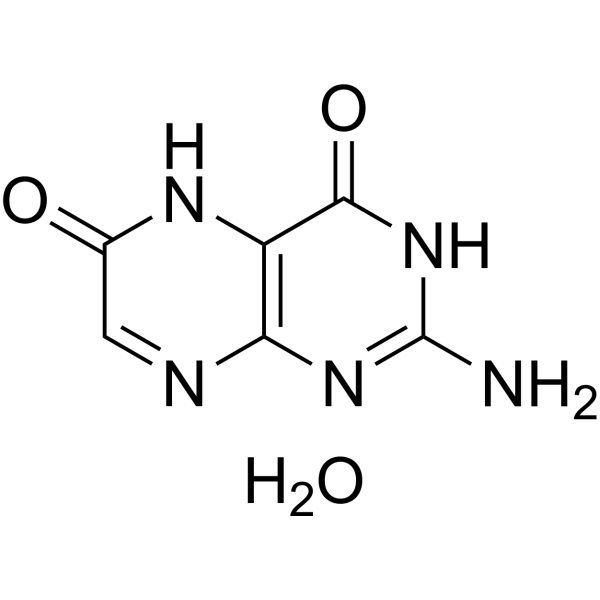
Xanthopterin (hydrate) (Standard) is the analytical standard of Xanthopterin (hydrate). This product is intended for research and analytical applications. Xanthopterin hydrate, an unconjugated pteridine compound, is the main component of the yellow granule in the Oriental hornet bear wings, produces a characteristic excitation/emission maximum at 386/456 nm. Xanthopterin hydrate(XPT) causes renal growth and hypertrophy in rat. Xanthopterin hydrate inhibits RNA synthesis.
For research use only. We do not sell to patients.
- CAS No.: 5979-01-1
- Formula: C6H7N5O3
- Molecular Weight:197.15
-
Storage:
Please store the product under the recommended conditions in the Certificate of Analysis.


To place orders, for customer services and technical support, please contact: MedChemExpress USA
Tel: 609-228-6898 E-mail: [email protected] [email protected]


-
 Product Information
-
Chemical Information
- Purity & Documentation
-
 Help & FAQs


-
HY-119674A
Xanthopterin hydrateDNA/RNA Synthesis Inhibitor -
HY-19620
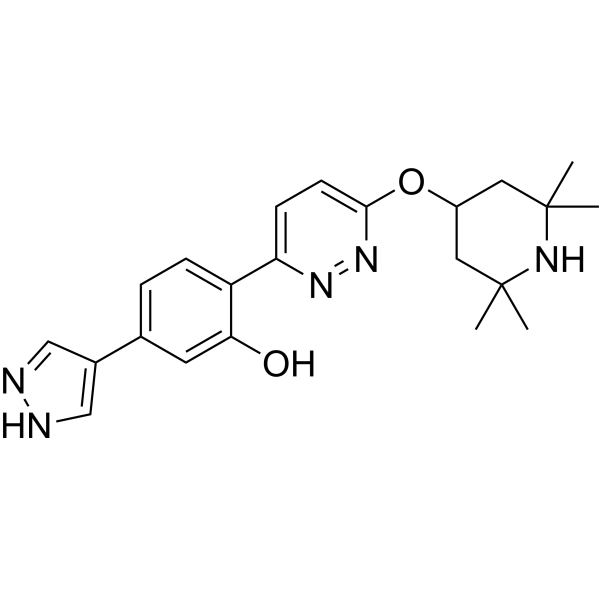
BranaplamSMN2 Splicing Modulator -
HY-17647
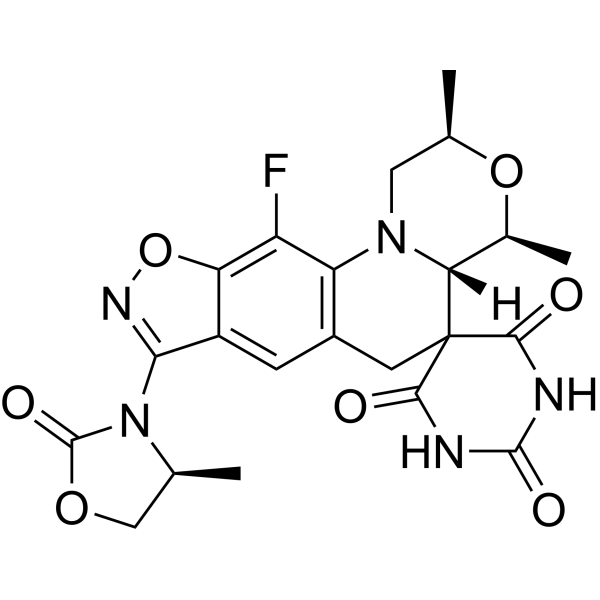
ZoliflodacinDNA gyrase/topoisomerase Inhibitor -
HY-116770
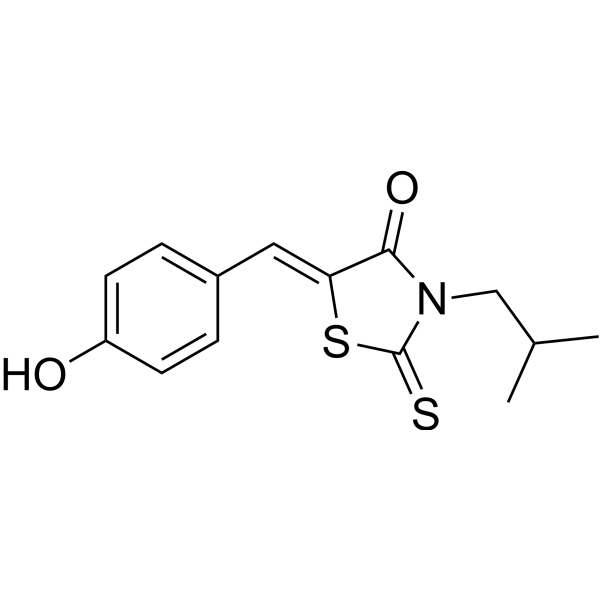
PFM01Endonuclease Inhibitor -
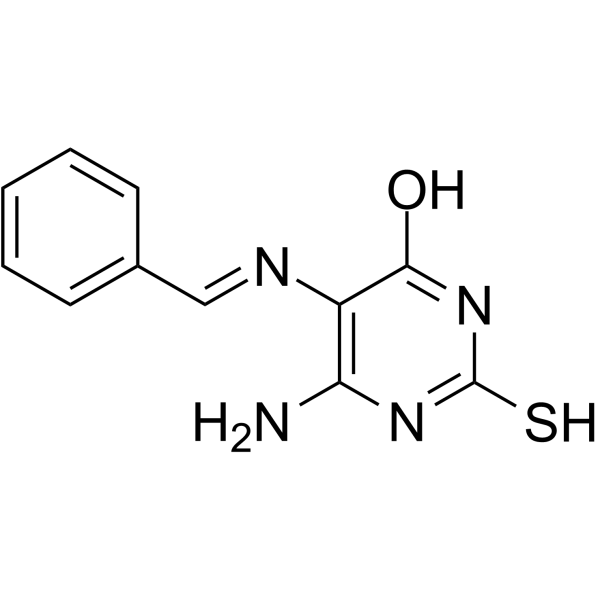
HY-15588
L189DNA Ligase Inhibitor -
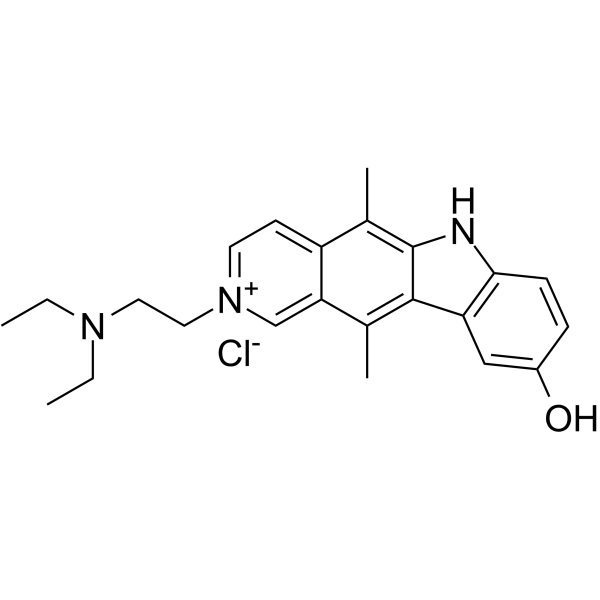
HY-U00337
Datelliptium chloride -

HY-17647R
Zoliflodacin (Standard)DNA gyrase/topoisomerase Inhibitor


Product Information
Information
Application
The compound is the grade of analytical standard, which is the reference standard supplied assay. It is commonly used in qualitative, quantitative and methodological research experiments in HPLC, GC and MS.


Chemical Information
-
CAS No. 5979-01-1
-
Molecular Weight 197.15
-
Formula C6H7N5O3
-
SMILES
O=C1NC(N)=NC2=C1NC(C=N2)=O.O
-
Structure Classification
-
Initial Source
-
Shipping
Room temperature in continental US; may vary elsewhere.
-
Storage
Please store the product under the recommended conditions in the Certificate of Analysis.


Purity & Documentation
References
[1]. Xanthopterin (XPT), an unconjugated pteridine compound, affects cell growth and differentiation. When injected into rats, XPT has caused changes that have been interpreted as renal growth and hypertrophy. [Content Brief]
[2]. Lord JL, et al. Cytotoxicity of xanthopterin and isoxanthopterin in MCF-7 cells. Cancer Lett. 2005 May 10;222(1):119-24. [Content Brief]
[3]. Plotkin M, et al. Xanthopterin in the Oriental hornet (Vespa orientalis): light absorbance is increased with maturation of yellow pigment granules. Photochem Photobiol. 2009 Jul-Aug;85(4):955-61. [Content Brief]
[4]. Ziegler I, et al. Pterins and the regulation of lymphocyte activation on the mode of xanthopterin action. Hoppe Seylers Z Physiol Chem. 1984 Jun;365(6):667-73. [Content Brief]

Calculators
Concentration (start) × Volume (start) = Concentration (final) × Volume (final)


Xanthopterin hydrate (Standard) Related Classifications
HY-119674AR Related Classifications
 Powered by Bioz