

Search Result
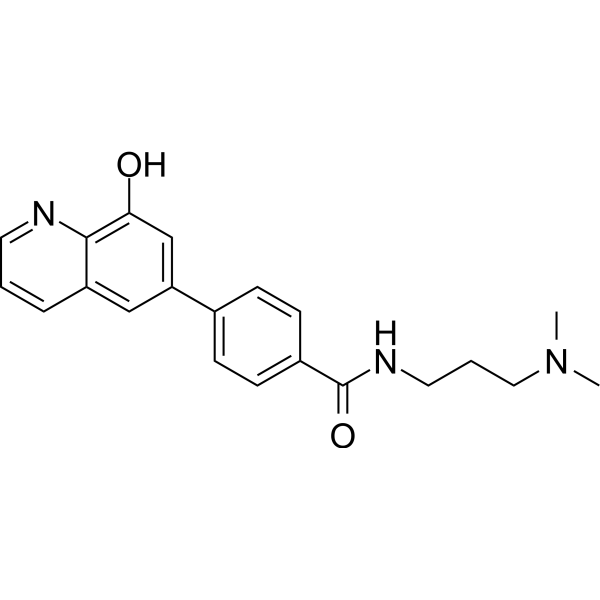
Results for "
Human viruses
" in MedChemExpress (MCE) Product Catalog:
4
Biochemical Assay Reagents
5
Isotope-Labeled Compounds
| Cat. No. |
Product Name |
Target |
Research Areas |
Chemical Structure |
-
- HY-107433
-
-
-
- HY-116282C
-
|
DSS (MW 35000-45000); DXS (MW 35000-45000)
|
Apoptosis
|
Infection
Inflammation/Immunology
Cancer
|
|
Dextran sulfate sodium salt (DSS) (MW 35000-45000) is a polymer of dehydrated glucose with a molecular weight of approximately 35000-45000. DSS with different molecular weights exhibits different biological activities. Dextran sulfate sodium salt (DSS) (MW 35000-45000) is a potent inducer of colitis. Dextran sulfate sodium salt (DSS) (MW 35000-45000) can be used to induce model acute colitis, chronic colitis, and colitis-related colon cancer. Dextran sulfate sodium salt (DSS) (MW 35000-45000) may be related to macrophage dysfunction, intestinal flora dysbiosis, and is particularly toxic to the colonic epithelium .
|
-
-
- HY-116282
-
|
DSS (MW 5000); DXS (MW 5000)
|
HIV
Complement System
Apoptosis
|
Infection
Inflammation/Immunology
|
|
Dextran sulfate sodium salt (DSS) (MW 5000) is a polymer of dehydrated glucose with a molecular weight of approximately 5000. Dextran sulfate sodium salt (DSS) with different molecular weights exhibits different biological activities. Dextran sulfate sodium salt (MW 5000) is an inhibitor of complement and coagulation pathways, and belongs to the glycosaminoglycans (GAG) family. Dextran sulfate sodium salt (MW 5000) acts as an anticoagulant, antiviral, and anti-lipemic agent. Dextran sulfate sodium salt (DSS) stops HIV-1 virus adsorption to host cells. Dextran sulfate sodium salt (MW 5000) prevents NK cell-mediated cytotoxicity. Dextran sulfate sodium salt (MW 5000) inhibits instant blood-mediated inflammatory reaction (IBMIR) .
|
-
-
- HY-P0281
-
|
TAT(47-57); HIV-1 TAT protein (47-57)
|
HIV
|
Infection
|
|
TAT (YGRKKRRQRRR) is derived from the transactivator of transcription (TAT) of human immunodeficiency virus-1 (HIV-1) and is a cell-penetrating peptide. TAT can increase the yields and the solubility of heterologous proteins .
|
-
-
- HY-P99756
-
|
MEDI8897
|
RSV
|
Infection
|
|
Nirsevimab (MEDI8897) is a recombinant monoclonal antibody against human respiratory syncytial virus (RSV). Nirsevimab has neutralizing activity against RSV A and RSV B viruses, with IC50 values of 5.42 ng/mL and 9.71 ng/mL, respectively. Nirsevimab can be used for research on respiratory infections .
|
-
-
- HY-116282A
-
|
DSS (MW 4500-5500); DXS (MW 4500-5500)
|
HIV
Apoptosis
Complement System
|
Infection
Inflammation/Immunology
|
|
Dextran sulfate sodium salt (DSS) (MW 4500-5500) is a polymer of dehydrated glucose with a molecular weight of approximately 4500-5500. Dextran sulfate sodium salt with different molecular weights exhibits different biological activities. Dextran sulfate sodium salt (MW 4500-5500) is an inhibitor of complement and coagulation pathways, and belongs to the glycosaminoglycans (GAG) family. Dextran sulfate sodium salt (MW 4500-5500) acts as an anticoagulant, antiviral, and anti-lipemic agent. Dextran sulfate sodium salt (MW 4500-5500) stops HIV-1 virus adsorption to host cells. Dextran sulfate sodium salt (MW 4500-5500) prevents NK cell-mediated cytotoxicity. Dextran sulfate sodium salt (MW 4500-5500) inhibits instant blood-mediated inflammatory reaction (IBMIR) .
|
-
-
- HY-B1030
-
|
|
Flavivirus
Dengue Virus
Autophagy
Enterovirus
|
Cardiovascular Disease
Cancer
|
|
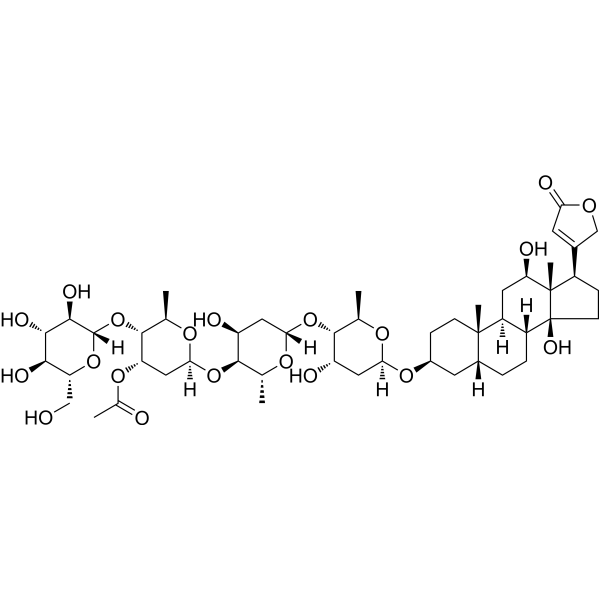
Lanatoside C is a cardiac glycoside, can be used in the treatment of congestive heart failure and cardiac arrhythmia.Lanatoside C has an IC50 of 0.19 μM for dengue virus infection in HuH-7 cells. Lanatoside C can effectively inhibit all four serotypes of dengue virus, flavivirus Kunjin, alphavirus Chikungunya, Sindbis virus and the human enterovirus 71 .
|
-
-
- HY-109137
-
|
GS-9688
|
Toll-like Receptor (TLR)
HBV
|
Infection
|
|
Selgantolimod (GS-9688) is an orally active, potent and selective toll-like receptor 8 (TLR8) agonist for the treatment of hepatitis B virus (HBV) and human immunodeficiency virus (HIV) infection .
|
-
-
- HY-12725
-
|
|
Histone Demethylase
HSV
CMV
|
Cancer
|
|
ML324 is a potent JMJD2 demethylase inhibitor with antiviral activity. ML324 also exhibits inhibition for the histone demethylase KDM4B, with an IC50 of 4.9 μM. ML324 has potent anti-viral activity against both herpes simplex virus (HSV) and human cytomegalovirus (hCMV) infection via inhibition viral IE gene expression .
|
-
-
- HY-128965
-
|
NeuGc; GcNeu
|
Influenza Virus
Endogenous Metabolite
|
Infection
Cancer
|
|
N-Glycolylneuraminic acid is a nonhuman sialic acid molecule synthesized in pigs but not in humans. N-Glycolylneuraminic acid works as a decoy receptor of N-Glycolylneuraminic acid-binding influenza A viruses (IAVs) .
|
-
-
- HY-126306
-
|
|
Glycosidase
|
Others
|
|
Deoxyfuconojirimycin hydrochloride is a highly specific α-L-fucosidase inhibitor, with a Ki value of 10 nM against human liver lysosomal α-L-fucosidase and a Ki value of 140 nM against Charonia lampas α-L-fucosidase. Deoxyfuconojirimycin hydrochloride completely inhibits the activity of all soluble α-L-fucosidases in human liver, including multiple post-translationally generated enzyme forms. Deoxyfuconojirimycin hydrochloride exhibits no anti-human immunodeficiency virus activity .
|
-
-
- HY-N0093
-
|
Cyclocytidine hydrochloride; Cyclo-CMP hydrochloride; Cyclo-C
|
Autophagy
CMV
DNA/RNA Synthesis
|
Infection
Cancer
|
|
Ancitabine hydrochloride is a cytarabine derivative that inhibits viral replication. Ancitabine hydrochloride blocks vaccinia virus DNA replication, the progression of viral protein synthesis from early to late stages, and one-step growth of vaccinia virus. Ancitabine hydrochloride is applicable to research related to vaccinia virus infection, leukemia, human cytomegalovirus infection and colorectal cancer .
|
-
-
- HY-107801
-
|
Imunovir; Delimmun; Groprinosin
|
Interleukin Related
HSV
HIV
HPV
|
Infection
Inflammation/Immunology
|
|
Inosine pranobex is an orally active immunomodulator. Inosine pranobex has broad-spectrum antiviral activity. Inosine pranobex inhibits human immunodeficiency virus (HIV), herpes simplex virus (HSV), vaccinia virus (VACV), human tumor virus (HPV), Cytomegalovirus, influenza virus (INFV), parainfluenza virus (PIV), and Epstein-Barr virus
.
|
-
-
- HY-P99209
-
|
MEDI-524
|
RSV
|
Infection
|
|
Motavizumab (MEDI-524) is an anti-human RSV (respiratory syncytial virus) monoclonal antibody. Motavizumab can be used in respiratory syncytial virus infection in high-risk infants research .
|
-
-
- HY-P990015
-
|
VIR-3434
|
HBV
|
Infection
|
|
Tobevibart (VIR-3434) is a human IgG1 lambda monoclonal antibody against hepatitis B virus (HBV) surface antigen (HBsAg). Tobevibart shows potent neutralization against HBsAg from all HBV genotypes in vitro and inhibits viral entry of HBV and hepatitis delta virus (HDV). Recommend Isotype Controls: Human IgG1 lambda2, Isotype Control (HY-P990096) .
|
-
-
- HY-N2571
-
|
|
Reverse Transcriptase
HIV
Opioid Receptor
|
Infection
Neurological Disease
Cancer
|
|
Corydine is a HIV-1 reverse transcriptase inhibitor and μ-opioid receptor (MOR) agonist, with an IC50 of 356.7 μg/mL against HIV-1 reverse transcriptase, an EC50 of 0.51 μM for MOR, and a Ki of 2.82 μM for MOR. Corydine produces antinociceptive effects by inhibiting acetic acid-induced writhing behavior in a MOR-dependent manner. Corydine inhibits the proliferation of cancer cells, mitogen-stimulated lymphocytes and IL-2-dependent cells. Corydine can be used in studies related to human immunodeficiency virus infection, visceral pain, leukemia, melanoma, bladder cancer and colon adenocarcinoma .
|
-
-
- HY-142989
-
|
|
Liposome
HIV
HCV
HBV
|
Infection
Cancer
|
|
1,2-Didocosahexaenoyl-sn-glycero-3-phosphocholine is a polyunsaturated phospholipid that serves as a component of lipid monolayers and small unilamellar vesicles. 1,2-Didocosahexaenoyl-sn-glycero-3-phosphocholine can be used to prepare endoplasmic reticulum-targeted liposomes (PERLs), which are composed of 1,2-didocosahexaenoyl-sn-glycero-3-phosphoethanolamine, l-α-phosphatidylinositol and l-α-phosphatidylserine at a molar ratio of 1.5:1.5:1:1. PERLs reduce cholesterol levels in human peripheral blood mononuclear cells (PBMCs) and decrease HIV-1 particle secretion from HIV-1-infected PBMCs. Liposomes formed from 1,2-Didocosahexaenoyl-sn-glycero-3-phosphocholine exhibit cytotoxicity against leukemia cells. 1,2-Didocosahexaenoyl-sn-glycero-3-phosphocholine is applicable to studies related to hepatitis C virus infection, HIV infection, hepatitis B virus infection and leukemia .
|
-
-
- HY-121527
-
|
|
Enterovirus
Influenza Virus
Bacterial
|
Infection
Neurological Disease
|
|
Amylmetacresol is a phenolic compound with topical antibacterial and antiviral activity. Amylmetacresol works by destroying the protein structure of the virus surface or interfering with the function of the virus lipid membrane. Amylmetacresol inhibits the attachment and replication of respiratory viruses such as human Rhinovirus 1a and influenza virus A, without significant effect on viruses such as HRV8. Amylmetacresol is mainly applied topically to the throat to relieve viral sore throats. Amylmetacresol is more active against enveloped viruses than non-enveloped viruses .
|
-
-
- HY-P99764
-
|
REGN-3471
|
Filovirus
|
Infection
|
|
Odesivimab is a human monoclonal antibody, targeting Ebola virus glycoprotein with a KD value of 7.74 nM for recombinant histidine-tagged Makona strain Ebola virus glycoprotein ectodomain protein. Odesivimab can be used in research of Ebola virus infection .
|
-
-
- HY-100029
-
|
|
HBV
|
Infection
|
|
BAY 41-4109 is a potent inhibitor of human hepatitis B virus (HBV) with an IC50 of 53 nM.
|
-
-
- HY-P99693
-
|
GC1102
|
HBV
|
Infection
|
|
Lenvervimab (GC1102) is a IgG1-type recombinant human hepatitis B Immunoglobulin. Lenvervimab can be used for research of hepatitis B virus infection .
|
-
-
- HY-P99620
-
|
CT-P22; CT120
|
Influenza Virus
|
Infection
|
|
Firivumab (CT-P22; CT120) is a human IgG1 monoclonal influenza A virus hemagglutinin (Anti-IAV HA) antibody. Firivumab is capable of neutralizing H1N1, H5N1, H6N1, H6N2, H8N4, H8N8, H9N2 and H12N7. Firivumab shows protection against H1N1 virus in mice .
|
-
-
- HY-P99699
-
-
-
- HY-P4122A
-
|
|
HIV
|
Others
|
|
TAT (47-57), FAM-labeled acetate is a 5(6)-Carboxyfluorescein (HY-15940)-labeled TAT (HY-P0281). TAT (YGRKKRRQRRR) is derived from the transactivator of transcription (TAT) of human immunodeficiency virus-1 (HIV-1) and is a cell-penetrating peptide .
|
-
-
- HY-P4122
-
|
|
HIV
|
Others
|
|
TAT (47-57), FAM-labeled is a 5(6)-Carboxyfluorescein (HY-15940)-labeled TAT (HY-P0281). TAT (YGRKKRRQRRR) is derived from the transactivator of transcription (TAT) of human immunodeficiency virus-1 (HIV-1) and is a cell-penetrating peptide .
|
-
-
- HY-W251687
-
-
-
- HY-102026
-
-
-
- HY-114784
-
|
Ingamine
|
Influenza Virus
|
Infection
|
|
Ingavirin (Ingamine) exhibits broad spectrum antiviral activities against human respiratory viruses, such as influenza virus A (IVA), human parainfluenza virus (hPIV) and human adenovirus (AdV). Ingavirin exhibits no toxixcity to mice at the dose of 3000 mg/kg .
|
-
-
- HY-P99792
-
|
NM57; rhRIG
|
RABV
|
Infection
|
|
Ormutivimab (rhRIG) is a recombinant human monoclonal antibody, targeting rabies virus. Ormutivimab neutralizes a variety of rabies virus strains. Ormutivimab exhibits potent potency against rabies post-exposure prophylaxis (PEP) model .
|
-
-
- HY-106282
-
|
|
HIV
|
Infection
|
|
BIT-225 is an inhibitor for Vpu protein through block of Vpu ion channel, and thus inhibits the release of HIV-1, especially in monocyte-derived macrophages (EC50 is 2.25 μM), without significant cytotoxicity (TC50 is 284 μM) .
|
-
-
- HY-16680
-
|
Helioxanthin analogue 8-1
|
HBV
|
Infection
|
|
Helioxanthin 8-1(Helioxanthin analogue 8-1) is an anti-HBV agent. Helioxanthin 8-1 exhibits anti-hepatitis B virus activity in both in vitro human hepatitis B virus models and animal models. Helioxanthin 8-1 inhibits the synthesis of duck hepatitis B virus (DHBV) DNA, covalently closed circular DNA, RNA and proteins, thereby blocking DHBV replication. Helioxanthin 8-1 shows higher cytotoxicity in virus-induced cells than in non-induced cells. Helioxanthin 8-1 can be used in studies related to hepatitis B virus infection .
|
-
-
- HY-128787
-
-
-
- HY-135570
-
-
-
- HY-19232
-
|
|
HIV Protease
|
Inflammation/Immunology
|
|
R-87366 is a water-soluble human immunodeficiency virus (HIV) protease inhibitor. R-87366 has potent inhibitory for HIV protease with a Ki value of 11 nM. R-87366 can be used for the research of anti-human immunodeficiency virus (HIV) .
|
-
-
- HY-114247
-
|
D-FMAU
|
Nucleoside Antimetabolite/Analog
|
Infection
Cancer
|
|
FMAU is a nucleoside analog and cell proliferation marker that can be phosphorylated by human thymidine kinase and subsequently incorporated into DNA. FMAU is applicable to research related to herpes simplex virus infection, various cancers, hepatitis B virus infection, and Epstein-Barr virus infection .
|
-
-
- HY-109045A
-
|
BTA074 hydrochloride; AP 611074 hydrochloride
|
E1/E2/E3 Enzyme
HPV
|
Infection
|
|
Teslexivir (BTA074) hydrochloride is a potent antiviral agent. Teslexivir hydrochloride is a potent and selective inhibitor of the interaction between two essential viral proteins, E1 and E2, an association that is a necessary step in the DNA replication and thus viral production for Human Papilloma Virus (HPV) 6 and 11. Teslexivir hydrochloride can be used for condyloma research .
|
-
-
- HY-106777
-
|
CPEC; NSC 375575
|
DNA/RNA Synthesis
Nucleoside Antimetabolite/Analog
Apoptosis
Necroptosis
Influenza Virus
HSV
|
Infection
Cancer
|
|
Cyclopentenylcytosine (CPEC), a carbocyclic nucleoside analog of cytosine, is a potent inhibitor of CTP synthetase and causes depletion of CTP and dCTP pools. Cyclopentenylcytosine shows broad-spectrum (both DNA and RNA viruses) antiviral activity. Cyclopentenyl cytosine increases Gemcitabine (HY-17026) radiosensitisation in human pancreatic cancer cells. Cyclopentenylcytosine shows effective antiviral activity in the Ad5/NZW rabbit ocular replication model and shows anti-tumor activity in various tumor xenografts model. Cyclopentenylcytosine can be used for the study of infection and cancer .
|
-
-
- HY-112673
-
|
|
RSV
|
Infection
|
|
RSV-IN-1 is a human respiratory syncytical virus (hRSV) inhibitor, with an IC50 of 0.11 μM.
|
-
-
- HY-106382
-
|
|
HIV
CMV
|
Infection
Cancer
|
|
PMEDAP is a potent inhibitor of human immunodeficiency virus (HIV) replication. PMEDAP has anti-murine cytomegalovirus (MCMV) activity. PMEDAP is a very potent inhibitor of Moloney murine sarcoma virus (MSV)-induced tumor formation and associated mortality .
|
-
-
- HY-P5694
-
|
|
HPV
Parasite
|
Infection
|
|
Human α-defensin 5 is an antiviral peptide. Human α-defensin 5 blocks infection of non-enveloped viruses, including AdV, HPV, and polyomaviruses (IC50: 0.6-1.25 μM for HPV16). Human α-defensin 5 can bind to the viral capsid and blocks escape of the virus from the endosome. Human α-defensin 5 increases HIV binding to the cell surface. Human α-defensin 5 also has parasiticidal activity .
|
-
-
- HY-100029A
-
|
|
HBV
|
Infection
|
|
BAY 41-4109 racemate is the racemate of BAY 41-4109. BAY 41-4109 is a potent inhibitor of human hepatitis B virus (HBV) with an IC50 of 53 nM.
|
-
-
- HY-148172
-
|
|
HIV
HBV
Nucleoside Antimetabolite/Analog
|
Infection
|
|
L-Fd4A is an adenine derivative. L-Fd4A has anti-human immunodeficiency virus (HIV) (EC50=1.5 μM) and anti-hepatitis B virus (HBV) (EC50=1.7 μM) activity. L-Fd4A has low cytotoxicity .
|
-
-
- HY-131607
-
|
CBV-TP; (-)-Carbovir triphosphate; (-)-Carbovir 5′-triphosphate
|
HIV
|
Infection
Inflammation/Immunology
|
|
Carbovir triphosphate (CBV-TP) is a phosphorylated metabolite. Carbovir triphosphate can be used for the research of human immunodeficiency virus (HIV) .
|
-
-
- HY-P4015
-
|
|
HIV
|
Neurological Disease
Metabolic Disease
|
|
VIP (1-12), human, porcine, rat, ovine is a vasoactive intestinal peptide (VIP) fragment. VIP (1-12), human, porcine, rat, ovine is a ligand for the CD4 (T4)/human immunodeficiency virus receptor .
|
-
-
- HY-14844
-
|
MIV-210
|
HBV
|
Infection
|
|
Lagociclovir (FLG) is a nucleoside analogue that inhibits wild-type hepatitis B virus (HBV) replication in a human hepatoma cell line permanently expressing HBV .
|
-
-
- HY-P99832
-
|
c13C6-FR1
|
Filovirus
|
Infection
|
|
Cosfroviximab (c13C6-FR1) is a mouse/human chimeric monoclonal antibody against Ebola virus glycoprotein (EBOV-GP) .
|
-
-
- HY-P2251
-
|
|
HIV
Microtubule/Tubulin
|
Infection
Inflammation/Immunology
Cancer
|
|
T-peptide, a Tuftsin analog, can be used for the research of human immunodeficiency virus (HIV) infection. T-peptide prevents cellular immunosuppression and improves survival rate in septic mice. T-peptide also can inhibit the growth of residual tumor cells after surgical resection .
|
-
-
- HY-P35433
-
|
T-1249
|
HIV
|
Inflammation/Immunology
|
|
Tifuvirtide (T-1249) is a peptide human immunodeficiency virus type-1 (HIV-1) fusion inhibitor. Tifuvirtide is a synthetically designed hybrid retroviral envelope polypeptide. Tifuvirtide has antiretroviral activity. Tifuvirtide can be used for the research of HIV infection .
|
-
-
- HY-109045
-
|
BTA074; AP 611074
|
E1/E2/E3 Enzyme
HPV
|
Infection
|
|
Teslexivir (BTA074) is a potent antiviral agent. Teslexivir is a potent and selective inhibitor of the interaction between two essential viral proteins, E1 and E2, an association that is a necessary step in the DNA replication and thus viral production for Human Papilloma Virus (HPV) 6 and 11. Teslexivir can be used for condyloma research .
|
-
-
- HY-P3736
-
|
MP-2
|
Interleukin Related
|
Cancer
|
|
Myelopeptide-2 is a peptide originally isolated from the supernatant of porcine bone marrow cell cultures, can restore mitogenic reactivity of human T lymphocytes inhibited by HL-60 leukemia cells or measles virus conditions. Myelopeptide-2 also recover depressed interleukin-2 (IL-2) synthesis and interleukin-2 receptor (IL-2R) expression. Myelopeptide-2 involves in immunity homeostasis, is perspective to be applied in antitumor and antivirus research .
|
-
- HY-107801R
-
|
Imunovir (Standard); Delimmun (Standard); Groprinosin (Standard); (Standard)
|
Reference Standards
Interleukin Related
HSV
HIV
HPV
|
Infection
Inflammation/Immunology
|
|
Inosine pranobex (Standard) is the analytical standard of Inosine pranobex. This product is intended for research and analytical applications. Inosine pranobex is an orally active immunomodulator. Inosine pranobex has broad-spectrum antiviral activity. Inosine pranobex inhibits human immunodeficiency virus (HIV), herpes simplex virus (HSV), vaccinia virus (VACV), human tumor virus (HPV), Cytomegalovirus, influenza virus (INFV), parainfluenza virus (PIV), and Epstein-Barr virus .
|
-
- HY-P5550
-
|
|
Influenza Virus
|
Infection
|
|
Urumin has antiviral activity against the human influenza A virus. Urumin inhibits the growth of PR8 influenza virus (IC50: 3.8 μM). Urumin targets the conserved stalk of H1 hemagglutini, and is effective at neutralizing drug-resistant H1 influenza viruses. Urumin protects naive mice from lethal influenza infection .
|
-
- HY-P0281B
-
|
TAT(47-57) acetate; HIV-1 TAT protein (47-57) acetate
|
HIV
|
Infection
|
|
TAT (TAT(47-57)) acetate is derived from the transactivator of transcription (TAT) of human immunodeficiency virus-1 (HIV-1) and is a cell-penetrating peptide. TAT acetate can increase the yields and the solubility of heterologous proteins .
|
-
- HY-19194
-
-
- HY-P991157
-
|
|
RSV
|
Infection
|
|
Retavibart is a human respiratory syncytial virus (RSV) fusion glycoprotein F. Retavibart can be used for antiviral research. Isotype control: Human IgG1 kappa .
|
-
- HY-P1753
-
|
|
HIV
|
Infection
|
|
VIR-165 is a modified form of virus inhibitory peptide (VIRIP) that binds the fusion peptide of the gp41 subunit and prevents its insertion into the target membrane. VIRIP inhibits a wide variety of human immunodeficiency virus type 1 (HIV-1) strains .
|
-
- HY-B1030R
-
|
|
Dengue Virus
Flavivirus
Reference Standards
CHIKV
Autophagy
Enterovirus
|
Cardiovascular Disease
Cancer
|
|
Lanatoside C (Standard) is the analytical standard of Lanatoside C. This product is intended for research and analytical applications. Lanatoside C is a cardiac glycoside, can be used in the treatment of congestive heart failure and cardiac arrhythmia.Lanatoside C has an IC50 of 0.19 μM for dengue virus infection in HuH-7 cells. Lanatoside C can effectively inhibit all four serotypes of dengue virus, flavivirus Kunjin, alphavirus Chikungunya, Sindbis virus and the human enterovirus 71 .
|
-
- HY-141426
-
|
|
Enterovirus
|
Infection
|
|
MDL-860 is a broad-spectrum antipicornavirus compound that has low cytotoxicity toward human cells. MDL-860 can be used for the research of virus infection .
|
-
- HY-14135
-
|
BMS 043
|
HIV
|
Infection
Inflammation/Immunology
|
|
BMS 488043 (BMS 043) is an orally active and well-tolerated inhibitor of the attachment of human immunodeficiency virus type 1 (HIV-1) to CD4+ lymphocytes .
|
-
- HY-P991497
-
|
|
RSV
|
Infection
|
|
ASN-500 is a human monoclonal antibody (mAb) targeting F/Fusion glycoprotein F0. ASN-500 can be used in respiratory syncytial virus infection research .
|
-
- HY-P5644
-
|
|
Bacterial
|
Infection
|
|
Retrocyclin-3 is an antimicrobial peptide against human immunodeficiency virus, influenza A and herpes simplex virus .
|
-
- HY-P5643
-
|
|
Bacterial
|
Infection
|
|
Retrocyclin-2 is an antimicrobial peptide against human immunodeficiency virus, influenza A and herpes simplex virus .
|
-
- HY-P10249
-
|
|
HIV
|
Inflammation/Immunology
|
|
HIV gp120 254-274 is a conserved fragment in envelope glycoprotein gp120 of human immunodeficiency virus (HIV), and exhibits immunosilent activity .
|
-
- HY-14741
-
|
S-30563; TAK-851
|
HPV
|
Infection
|
|
Epetirimod (S-30563; TAK-851) is an immune-response modifier, that ameliorates the cervical human papilloma virus (HPV) infection and cervical dysplasia .
|
-
- HY-P991215
-
|
|
HPV
|
Infection
|
|
Anti-HPV18 L1 Antibody (H18L1-A) is a humanized antibody targeting the L1 protein of human papillomavirus type 18 (HPV18). Anti-HPV18 L1 Antibody (H18L1-A) blocks the binding of the HPV18 virus to cell surface receptors, neutralizing the virus activity, and thus inhibiting the virus from infecting cells. Anti-HPV18 L1 Antibody (H18L1-A) is promising for research of human papillomavirus-related diseases .
|
-
- HY-158258
-
|
|
HIV
|
Infection
|
|
Antiviral agent 55 (Compound 107) is an inhibitor for human immunodeficiency virus 1 and 2 (HIV 1 and HIV 2), and exhibits antiviral activity .
|
-
- HY-P990874
-
|
|
HIV
|
Infection
|
|
Anti-HIV gp120 Antibody (55-36) is a kind of mouse IgG1 κ chimeric antibody, targeting to human HIV gp120. Anti-HIV gp120 Antibody (55-36) reacts with human immunodeficiency virus (HIV) envelope glycoprotein 120 (gp120). Anti-HIV gp120 Antibody (55-36) can be used for the research of HIV infection .
|
-
- HY-P990843
-
|
|
Transmembrane Glycoprotein
|
Infection
|
|
Anti-Glycophorin A (type M) Antibody (6A7M) is a kind of mouse IgG1 κ chimeric antibody inhibitor, targeting to human Glycophorin A (type M). Anti-Glycophorin A (type M) reacts with the human glycophorin A (GPA) M allele also known as CD235a. Anti-Glycophorin A (type M) can be used for the research of infection, such as human immunodeficiency virus (HIV) .
|
-
- HY-P990829
-
|
|
C-type Lectin-like Receptors (CTLRs)
|
Infection
|
|
Anti-NKG2D/CD314 Antibody (1D11) is a kind of mouse IgG1 κ chimeric antibody, targeting to human NKG2D/CD314. Anti-NKG2D/CD314 Antibody (1D11) can block the binding of NKG2D to its ligands. Anti-NKG2D/CD314 Antibody (1D11) can be used for the research of infection, such as HIV (human immunodeficiency virus) .
|
-
- HY-P990848
-
|
|
CTLA-4
|
Infection
Inflammation/Immunology
|
|
Anti-CTLA-4/CD152 Antibody (BN13) is a kind of mouse IgG2a κ chimeric antibody inhibitor, targeting to human CTLA-4/CD152. Anti-CTLA-4/CD152 Antibody (BN13) can neutralize CTLA-4 (cytotoxic T lymphocyte antigen-4) also known as CD152. Anti-CTLA-4/CD152 Antibody (BN13) can be used for the researches of infection and immunology, such as human immunodeficiency virus (HIV) .
|
-
- HY-162701
-
|
|
SARS-CoV
Influenza Virus
RSV
HSV
|
Infection
|
|
Antiviral agent 58 (Compound J1) is an orally active antiviral agent with broad-spectrum antiviral activity against enveloped viruses, including influenza A virus (IAV), respiratory syncytial virus (RSV), severe acute respiratory syndrome coronavirus 2 (SARS-CoV-2), human coronavirus OC43 (HCoV-OC43), herpes simplex virus type 1 (HSV-1), and HSV-2 .
|
-
- HY-125719
-
|
L-FMAU-TP
|
HBV
|
Infection
Cancer
|
|
Clevudine triphosphate is a thymidine analog. Clevudine triphosphate has anti-human hepatitis B virus (HBV) activity .
|
-
- HY-148171
-
-
- HY-P2379
-
|
|
HIV Integrase
|
Infection
|
|
His-Cys-Lys-Phe-Trp-Trp is an inhibitor for the human immunodeficiency virus (HIV) integrase with an IC50 of 2 μM .
|
-
- HY-139794
-
|
|
HIV
|
Infection
|
|
SDZ283-910 is a potent human immunodeficiency virus type-1 (HIV-1) protease inhibitor .
|
-
- HY-150079
-
|
|
HIV Integrase
|
Infection
|
|
HIV-1 integrase inhibitor 10 is an orally active HIV-1 allosteric integrase inhibitor (ALLINI). HIV-1 integrase inhibitor 10 can inhibit viral outgrowth of the NLRepRluc virus in MT-2 cells with EC50 values of 3-5 nM. HIV-1 integrase inhibitor 10 can be used for the research of Human immunodeficiency virus-1 (HIV-1) .
|
-
- HY-129678
-
|
|
HIV Protease
HIV
|
Infection
|
|
UK-88947 hydrochloride is a protease inhibitor with activity in inhibiting the replication of human immunodeficiency virus HIV-1. UK-88947 hydrochloride can be added to cells before infection to block the early steps of HIV-1 replication. The use of UK-88947 hydrochloride shows its specific inhibitory effect on HIV-1. At the same time, when the virus infects cells, it inhibits the action of viral protease and affects the virus replication process .
|
-
- HY-125433
-
|
|
HIV
|
Infection
|
|
A-75925 is a human immunodeficiency virus type 1 (HIV-1) proteinase inhibitor and can be utilized in HIV-1 rersearch .
|
-
- HY-N5178
-
|
|
HIV
|
Infection
|
|
Chloropeptin I inhibits the binding of gp120 to CD4 with IC50 of 2.0 μM, with the activity of selective anti-human immunodeficiency virus (HIV) .
|
-
- HY-116252
-
|
|
HIV
|
Infection
|
|
(±)-trans-Lamivudine is separated from the salt of (S)-(+) mandelic acid. (±)-trans-Lamivudine forms cocrystals with (S)-BINOL. (±)-trans-Lamivudine is promising for research of human immunodeficiency virus infection .
|
-
- HY-P4018
-
|
|
HIV Protease
|
Infection
|
|
HIV Protease Substrate IV is a substrate of HIV protease. HIV Protease Substrate IV can be used to measure the activity of HIV (human immunodeficiency virus) -1 protease .
|
-
- HY-105386
-
|
|
HIV
Reverse Transcriptase
|
Infection
|
|
HI-280 is a human immunodeficiency virus type 1 (HIV-1) reverse transcriptase inhibitor. HI-280 can be used for the research of infection .
|
-
- HY-P9804
-
|
MERS-2E6; MERS Antibody-2E6
|
SARS-CoV
|
Infection
|
|
Anti-MERS-2E6 mAb (MERS-2E6; MERS Antibody-2E6), a human neutralizing antibody IgG1 (CHO expressed) that can compete for the binding of the virus Spike protein to the receptor (CD26), thereby inhibiting virus invasion into host cells.
|
-
- HY-100029B
-
|
|
HBV
|
Infection
|
|
Bay 41-4109 less active enantiomer shows less activity than Bay 41-4109. BAY 41-4109 is a potent inhibitor of human hepatitis B virus (HBV) with an IC50 of 53 nM.
|
-
- HY-P991494
-
|
|
RSV
|
Infection
|
|
IN-002 is a human monoclonal antibody (mAb) targeting F, Fusion glycoprotein F0. IN-002 can be used in respiratory syncytial virus (RSV) infections research.
|
-
- HY-182588
-
|
|
Bacterial
HIV
Dengue Virus
|
Infection
|
|
Circulin B is a macrocyclic plant cyclopeptide. Circulin B functions as a plant defense peptide and exhibits antibacterial and anti-HIV activities. Circulin B has high binding affinity for the envelope protein of dengue virus, showing potential anti-dengue virus activity. Circulin B can be used in studies related to dengue virus infection, human immunodeficiency virus infection and microbial infection .
|
-
- HY-182042
-
|
|
Dengue Virus
|
Infection
|
|
DENV-IN-15 is a sulfonyl anthranilic acid derivative and a pan-serotype anti-dengue virus (DENV) inhibitor with broad-spectrum anti-RNA virus activity. The EC50 value of DENV-IN-15 against DENV-2 in Huh-7 cells is 0.7 μM. DENV-IN-15 selectively regulates the translation of mRNAs encoding translation-related proteins and containing a 5'-oligopyrimidine tract. DENV-IN-15 reduces the expression of specific ribosomal proteins, thereby inhibiting viral replication. DENV-IN-15 exhibits enhanced membrane permeability, human plasma stability and human liver microsomal metabolic stability. DENV-IN-15 is applicable to research related to dengue virus infection .
|
-
- HY-109045AR
-
|
BTA074 hydrochloride (Standard); AP 611074 hydrochloride (Standard)
|
Reference Standards
E1/E2/E3 Enzyme
HPV
|
Infection
|
|
Teslexivir hydrochloride (Standard) is the analytical standard of Teslexivir (hydrochloride) (HY-109045A). This product is intended for research and analytical applications. Teslexivir (BTA074) hydrochloride is a potent antiviral agent. Teslexivir hydrochloride is a potent and selective inhibitor of the interaction between two essential viral proteins, E1 and E2, an association that is a necessary step in the DNA replication and thus viral production for Human Papilloma Virus (HPV) 6 and 11. Teslexivir hydrochloride can be used for condyloma research .
|
-
- HY-182316
-
|
|
HIV Protease
HIV
|
Infection
|
|
P-1946 is a HIV protease inhibitor with a human HIV-1 protease Ki of 2.600 nM. P-1946 has potent and selective in vitro antiviral activity and retains full antiviral activity against HIV isolates resistant to commercially available protease inhibitors. P-1946 can be used for the research of human immunodeficiency virus type 1 (HIV-1) infection .
|
-
- HY-N18117A
-
|
|
NO Synthase
EBV
|
Infection
Inflammation/Immunology
Cancer
|
|
23-Hydroxyohchininolide is a limonoid found in the leaves of Melia azedarach L.. 23-Hydroxyohchininolide inhibits LPS (HY-D1056)-induced NO production and exerts cytotoxic activity against human leukemia and stomach cancer cells. 23-Hydroxyohchininolide inhibits TPA (HY-18739)-induced Epstein-Barr virus early antigen activation. 23-Hydroxyohchininolide can be used for the research of cancer, infection and inflammatory disease .
|
-
- HY-186189
-
|
|
Biochemical Assay Reagents
|
Infection
Cancer
|
|
OPA-S-S-alkyne is a cell surface protein-selective labeling agent. OPA-S-S-alkyne selectively labels hyper-reactive extracellular lysines including ROR2 K382 and ENG K285, blocks ENG-BMP9 interaction, and labels purified human serum albumin with minimal bias. OPA-S-S-alkyne can be used for the research of hematologic and influenza A virus infection .
|
-
- HY-135662
-
|
|
Dihydroorotate Dehydrogenase
|
Infection
|
|
DHODH-IN-34 (Compound 21q) is a potent human dihydroorotate dehydrogenase (DHODH) inhibitor with an IC50 value of 13 nM. DHODH-IN-34 is promising for research of RNA viruses such as measles virus and chikungunya virus .
|
-
- HY-125494A
-
|
SC-55389A free base
|
HIV
HIV Protease
|
Infection
|
|
Droxinavir (SC-55389A free base) is an HIV-1 protease inhibitor. Droxinavir binds to the S2 and S2' subsites of HIV-1 protease, and this interaction is regulated by protease amino acid residue 88, where the N88S mutation confers viral resistance. Droxinavir can be used in studies related to human immunodeficiency virus type 1 infection .
|
-
- HY-107433R
-
-
- HY-165513
-
|
|
HIV
|
Infection
|
|
Niruriside is a HIV REV/RRE complex inhibitor. Niruriside specifically inhibits the binding interaction between HIV REV protein and RRE RNA, with an IC50 of 3.3 μM, and shows no significant activity against the unrelated R17 capsid protein/operator RNA binding system. At the tested concentrations, Niruriside fails to protect CEM-SS cells from acute HIV-1 infection. Niruriside can be used in the research of human immunodeficiency virus (HIV) infection .
|
-
- HY-182674
-
|
|
Sec61
HIV
Flavivirus
Neurotensin Receptor
|
Infection
Cancer
|
|
VGD020 is a highly potent and selective Sec61 translocon inhibitor . VGD020 suppresses the expression of cell surface CD4 by inhibiting signal peptide-dependent co-translational ER translocation, interferes with the initiation of ER translocation of dengue virus polyprotein, and reduces the expression of Sortilin in breast cancer cells. VGD020 exhibits broad anti-flavivirus and anti-HIV activities. VGD020 can be used in research related to dengue virus infection, Zika virus infection, yellow fever virus infection, human immunodeficiency virus infection, and breast cancer .
|
-
- HY-106282R
-
|
|
Reference Standards
HIV
|
Infection
|
|
BIT-225 (Standard) is the analytical standard of BIT-225 (HY-106282). This product is intended for research and analytical applications. BIT-225 is an inhibitor for Vpu protein through block of Vpu ion channel, and thus inhibits the release of HIV-1, especially in monocyte-derived macrophages (EC50 is 2.25 μM), without significant cytotoxicity (TC50 is 284 μM) .
|
-
- HY-168165
-
|
|
Endogenous Metabolite
|
Cancer
|
|
Adefovir diphosphate is an antiviral compound with activity against hepatitis B virus (HBV). Adefovir diphosphate blocks the replication of HBV by inhibiting reverse transcriptase. Adefovir diphosphate has also shown activity against other viruses such as herpes viruses and human immunodeficiency virus. Adefovir diphosphate is used as an effective inhibitory option in the suppression of chronic hepatitis B. The mechanism of action of Adefovir diphosphate involves blocking the autophosphorylation of growth factor receptors, thereby potentially reducing the risk of hepatocellular carcinoma (HCC) in patients with chronic hepatitis B .
|
-
- HY-180883
-
|
|
Orthopoxvirus
|
Infection
|
|
ZW-2038 is a potent and selective antiviral compound against vaccinia virus (VACV), monkeypox virus (MPXV), and cowpox virus (CPXV). ZW-2038 suppresses VACV DNA replication and downstream post-replicative gene expression, albeit without inhibiting MPXV resolvase (Mpr). ZW-2038 demonstrates potent antiviral activity in complex human and animal tissue models. ZW-2038 can be used for orthopoxviruses infection research .
|
-
- HY-106382R
-
|
|
Reference Standards
HIV
CMV
|
Infection
Cancer
|
|
PMEDAP (Standard) is the analytical standard of PMEDAP (HY-106382). This product is intended for research and analytical applications. PMEDAP is a potent inhibitor of human immunodeficiency virus (HIV) replication. PMEDAP has anti-murine cytomegalovirus (MCMV) activity. PMEDAP is a very potent inhibitor of Moloney murine sarcoma virus (MSV)-induced tumor formation and associated mortality .
|
-
- HY-13269
-
|
|
HIV
HIV Integrase
|
Infection
Inflammation/Immunology
|
|
BMS-707035 is a potent orally active HIV-1 integrase strand transfer inhibitor (INSTI). BMS-707035 has enzyme inhibitory with an IC50 value of 3 nM. BMS-707035 also has weak CYP inhibiton and antiviral activity. BMS-707035 can be used for the research of human immunodeficiency virus-1 (HIV-1) .
|
-
- HY-P10056
-
|
Human ezrin peptide (324-337)
|
HIV
HCV
HPV
Influenza Virus
Interleukin Related
|
Infection
Inflammation/Immunology
|
|
HEP-1 (Human ezrin peptide (324 - 337)) is an orally active peptide with antiviral, anti-inflammatory, and immunomodulatory activities. HEP-1 is effective against infections by various viruses such as HIV, HCV, herpes viruses, HPV, and influenza viruses. As an immunomodulator, HEP-1 can enhance the adaptive immunity mediated by B cells and T cells. HEP-1 can also increase the antibody titers after hepatitis B vaccination. HEP-1 can be used in the research of viral infections and inflammation-related diseases .
|
-
- HY-148852
-
|
|
HSV
|
Infection
|
|
PNU-183792, a 4-oxo-dihydroquinoline, is an orally active HSV polymerases inhibitor. PNU-183792 shows a broad-spectrum antiviral activity, with IC50 values of 0.69 μM, 0.37 μM and 0.58 μM for human cytomegalovirus (HCM), varicella zoster virus and HSV polymerases, respectively. PNU-183792 is inactive against human α, γ and δ polymerases. PNU-183792 also inhibits simian varicella virus (SVV), murine cytomegalovirus (MCMV) and rat cytomegalovirus (RCMV) .
|
-
- HY-116001
-
|
NSC 614846
|
HIV
Endogenous Metabolite
|
Infection
|
|
(+)-Carbovir (NSC 614846) is an antiviral drug with activity against human immunodeficiency virus type 1. (+)-Carbovir is a nucleoside analog with enhanced chemical and metabolic stability. (+)-Carbovir can be used in AIDS research .
|
-
- HY-P991499
-
|
|
RSV
|
Infection
|
|
EVO-46120 is a human monoclonal antibody (mAb) targeting F, Fusion glycoprotein F0. EVO-46120 can be used in respiratory syncytial virus (RSV) and metapneumovirus infections research.
|
-
- HY-P0281A
-
|
TAT(47-57) TFA; HIV-1 TAT protein (47-57) TFA
|
HIV
|
Infection
|
|
TAT TFA (YGRKKRRQRRR) is derived from the transactivator of transcription (TAT) of human immunodeficiency virus (HIV-1) and is a cell-penetrating peptide. TAT can increase the yields and the solubility of heterologous proteins .
|
-
- HY-P991500
-
|
|
RSV
|
Infection
|
|
EVO-46135 is a human monoclonal antibody (mAb) targeting F/Fusion glycoprotein F0. EVO-46135 can be used in Respiratory syncytial virus infections and Metapneumovirus infections research.
|
-
- HY-139111
-
|
|
Cathepsin
SARS-CoV
|
Infection
|
|
Oxocarbazate is an inhibitor of human cathepsin L with the IC50 values of 6.9 nM (human Cathepsin L,0 h) 0.4 nM ((human Cathepsin L,4 h) and 5.07 μM (human cathepsin B), respectively. Oxocarbazate blockes both SARS-CoV (IC50 = 273 nM) and Ebola virus (IC50 = 193 nM) entry into 293T cells .
|
-
- HY-144646
-
-
- HY-144645
-
-
- HY-N10633
-
|
LS-tetrasaccharide c
|
Others
|
Infection
Cancer
|
|
LSTc (LS-tetrasaccharide c) is a human lactooligosaccharide presents on glycoproteins and glycolipids. LSTc is also a specific human JC polyomavirus (JCV) recognition motif. LSTc has good potential for the study of progressive multifocal leukoencephalopathy (PML) .
|
-
- HY-B1367
-
|
|
Gap Junction Protein
Orthopoxvirus
11β-HSD
|
Infection
Inflammation/Immunology
|
|
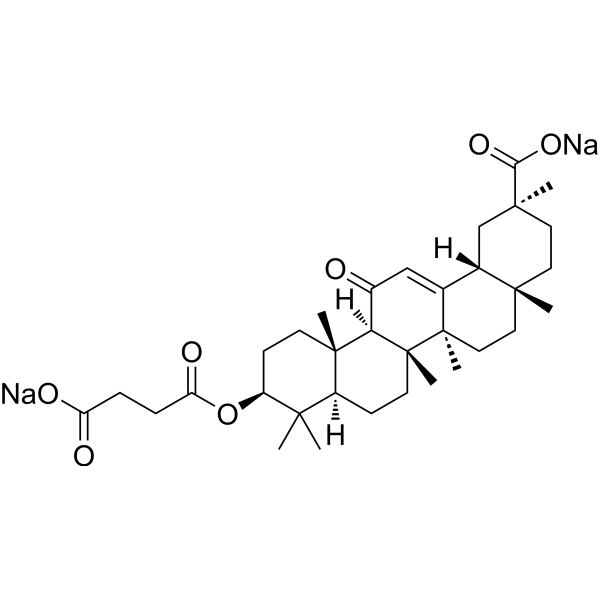
Carbenoxolone disodium is the active metabolite of Glycyrrhizic acid (HY-N0184) and the inhibitor of human 11β-HSD and bacterial 3α, 20β-HSD . Carbenoxolone disodium is an uncoupling agent for gap junctions and a potent inhibitor of Vaccinia virus replication . Carbenoxolone disodium is used for the study of peptic, esophageal and oral ulceration and inflammation. Carbenoxolone disodium inhibits Vaccinia virus replication.
|
-
- HY-10396
-
|
PF 03491390; IDN-6556
|
Caspase
Flavivirus
|
Infection
Neurological Disease
Cancer
|
|
Emricasan (PF 03491390) is an orally active and irreversible pan-caspase inhibitor. Emricasan inhibits Zika virus (ZIKV)-induced increases in caspase-3 activity and protected human cortical neural progenitors .
|
-
- HY-122453
-
|
|
HIV Protease
|
Infection
|
|
Palinavir is a potent human immunodeficiency virus type 1 (HIV-1) and type 2 (HIV-2) protease inhibitor with an IC50 of 0.5-30 nM . Palinavir has antiviral activity .
|
-
- HY-P991450
-
|
ADI-15742; MBP-134 AF
|
Filovirus
|
Infection
|
|
ADI-15878 is a human IgG monoclonal antibody (mAb) targeting Envelope glycoprotein, GP2. ADI-15878 can be used in Ebola virus infection research. Recommended isotype control: Human IgG1 kappa, Isotype Control (HY-P99001) .
|
-
- HY-P991496
-
|
|
RSV
|
Infection
|
|
IDB-002 is a human monoclonal antibody (mAb) targeting F/Fusion glycoprotein F0. IDB-002 can be used in respiratory syncytial virus infection research. Recommended isotype control: Human IgG1 kappa, Isotype Control (HY-P99001).
|
-
- HY-106038
-
|
Dacopafant; RP 55778
|
HIV
Platelet-activating Factor Receptor (PAFR)
|
Infection
|
|
Acopafant (Dacopafant; RP 55778) is a potent platelet-activating factor antagonist. Acopafant inhibits the induction of human immunodeficiency virus (HIV) expression in chronically infected cells. Acopafant has the potential for the research of HIV infection .
|
-
- HY-178201
-
|
|
HIV
Pyroptosis
|
Infection
|
|
JLJ648 is a Gag-Pol dimerizer with antiviral activity. JLJ648 can inhibit HIV replication and induce infected cell pyroptosis. JLJ648 can be used for the research of infection, such as HIV (human immunodeficiency virus) .
|
-
- HY-N14095
-
|
|
Bacterial
HIV
|
Infection
Cancer
|
|
Curromycin A has antibacterial activity against Gram-positive bacteria such as Bacillus subtilis. Curromycin A can inhibit the replication of human immunodeficiency virus (HIV), inhibit mouse melanoma B16 and leukemia P388 cells .
|
-
- HY-P991278
-
|
|
Interleukin Related
|
Inflammation/Immunology
|
|
ABM-125 is a IL-25 neutralizer and immune response modulator. ABM-125 neutralizes human and mouse IL-25 and blocks type 2 immune activation function. ABM-125 regulates virus-induced inflammatory cytokine expression and increases the expression level of antiviral interferons in rhinovirus-infected asthmatic bronchial epithelial cells. For the isotype control of ABM-125, refer to Human IgG1 kappa, Isotype Control (HY-P99001). ABM-125 is applicable to research related to virus-induced acute asthma exacerbations .
|
-
- HY-16907
-
|
S/GSK-364735
|
HIV
HIV Integrase
|
Infection
|
|
GSK-364735 is a potent antiretroviral agent against human immunodeficiency virus type 1 (HIV-1) and serves as an integrase inhibitor with an IC50 of 8 ± 2 nM. GSK-364735 can be utilized in antiviral research .
|
-
- HY-108325
-
-
- HY-100029R
-
|
|
HBV
Reference Standards
|
Infection
|
|
Bay 41-4109 (Standard) is the analytical standard of Bay 41-4109 (HY-100029). This product is intended for research and analytical applications. BAY 41-4109 is a potent inhibitor of human hepatitis B virus (HBV) with an IC50 of 53 nM.
|
-
- HY-14404
-
|
|
HBV
HCV Protease
|
Infection
|
|
MK-1220 is a covalently reversible inhibitor of the hepatitis C virus (HCV) NS3/4A protease (NS3/4A protease) with a Ki of 0.02 nM. MK-1220 in cell models simulating viral replication exhibits EC50s of 4 (with 10% fetal bovine serum) and 11 nM (50% normal human serum). MK-1220 can be used for the study of chronic hepatitis C virus infection .
|
-
- HY-132191
-
|
|
Fungal
SARS-CoV
HIV
|
Infection
|
|
Pradimicin A is a potent antifungal agent with a minimum inhibitory concentration (MIC) of 4 μg/mL against Candida rugosa. Pradimicin A exhibits antiviral activity against SARS-CoV, human immunodeficiency virus (HIV) and other enveloped viruses. Pradimicin A exerts its fungicidal activity through a Ca 2+-dependent mechanism, which induces fungal lysis. Pradimicin A can be used in research related to fungal infections, HIV infections and COVID-19 .
|
-
- HY-P99342
-
|
REGN10987
|
SARS-CoV
|
Infection
|
|
Imdevimab (REGN10987) is a human monoclonal antibody that targets SARS-CoV-2 virus. Imdevimab can be used in combination with Casirivimab (HY-P99341) to reduce viral load and transiently increases anti-receptor-binding domain IgG titers. Imdevimab maintains most of its neutralization activity against viruses with B.1.1.7, B.1.351 and mink cluster 5 spike proteins .
|
-
- HY-P991495
-
|
|
RSV
|
Infection
|
|
VIR-8190 is a human IgG1 monoclonal antibody (mAb) targeting F, Fusion glycoprotein F0. VIR-8190 can be used in respiratory syncytial virus (RSV) and metapneumovirus infections research. Recommended isotype control: Human IgG1 kappa, Isotype Control (HY-P99001).
|
-
- HY-118740
-
|
|
HIV
|
Infection
|
|
L-708906 is a potent human immunodeficiency virus type 1 (HIV-1) inhibitor with an IC50 value of 12 μM. L-708906 inhibits HIV strains resistant to nonnucleoside or nucleoside reverse transcriptase inhibitors .
|
-
- HY-N7696
-
|
|
Apoptosis
|
Inflammation/Immunology
|
|
Physalin F is a secosteroid with potent anti-inflammatory and immunomodulatory activities. Physalin F induces apoptosis of PBMC, decreasing the spontaneous proliferation and cytokine production caused by Human T-lymphotropic virus type 1 (HTLV-1) infection .
|
-
- HY-N14110
-
|
|
Bacterial
HIV
|
Infection
|
|
Curromycin B has antibacterial activity against Gram-positive bacteria such as Bacillus subtilis. Curromycin B can inhibit the replication of human immunodeficiency virus (HIV), inhibit mouse melanoma B16 and leukemia P388 cells .
|
-
- HY-P10437
-
|
Human α1-AT(353-372)
|
HIV
|
Infection
|
|
VIRIP (human α1-AT(353-372)) is a HIV-1 inhibitor. VIRIP blocks the entry of HIV-1 by interacting with gp41 fusion peptide. VIRIP can be used for virus research .
|
-
- HY-N1034
-
|
(±)-12-Oxocalanolide A
|
HIV
|
Infection
|
|
12-Oxocalanolide A (compound 6) is a potent inhibitor of reverse transcriptase from human immunodeficiency virus type 1 (HIV-1) with an IC50 and EC50 of 2.8 and 12 μM, respectively. 12-Oxocalanolide A is the analogue of Calanolide .
|
-
- HY-P4025
-
|
|
HIV
|
Others
|
|
ELDKWA is the highly conserved amino acids on the ecto-domain of gp41. ELDKWA acts as the epitope of a neutralizing monoclonal antibody 2F5 (mAb 2F5) directed against human immunodeficiency virus type 1 .
|
-
- HY-174743
-
|
|
mRNA
|
Inflammation/Immunology
|
|
Human CCR5 mRNA encodes the human C-C motif chemokine receptor 5 (CCR5) protein, a member of the beta chemokine receptor family. CCR5 is known to be an important co-receptor for macrophage-tropic virus, including HIV, to enter host cells. It may also play a role in granulocyte lineage proliferation and differentiation.
|
-
- HY-128660
-
|
|
HCV
Dengue Virus
Influenza Virus
|
Infection
|
|
RYL-634 is a potent broad-spectrum antiviral agent. RYL-634 exerts its antiviral effect by inhibiting the activity of human dihydroorotate dehydrogenase (HsDHODH) and blocking the supply of pyrimidines required for viral replication. RYL-634 shows significant inhibition against many viruses, with the EC50 values against DENV, ZIKV, EV71, HCV and HIV are 7 nM, 20 nM, 4 nM, 5 nM and 13 nM respectively. RYL-634 can be used for the study of various virus infection-related diseases .
|
-
- HY-W019806
-
|
LNFP I
|
Endogenous Metabolite
CDK
Reactive Oxygen Species (ROS)
Apoptosis
Enterovirus
Bacterial
|
Infection
Inflammation/Immunology
|
|
Lacto-N-fucopentaose I (LNFPI) is a human milk oligosaccharide (HMO), possessing antiviral and antibacterial activity. Lacto-N-fucopentaose I can reduce capsid protein VP1 to block virus adsorption, promote CDK2 and reduce cyclin E to recover cell cycle S phase block. Lacto-N-fucopentaose I inhibits ROS production and apoptosis in virus-infected cells. Lacto-N-fucopentaose I can also regulate intestinal microbiota to affect immune system development .
|
-
- HY-13269R
-
|
|
HIV
HIV Integrase
|
Infection
Inflammation/Immunology
|
|
BMS-707035 (Standard) is the analytical standard of BMS-707035. This product is intended for research and analytical applications. BMS-707035 is a potent orally active HIV-1 integrase strand transfer inhibitor (INSTI). BMS-707035 has enzyme inhibitory with an IC50 value of 3 nM. BMS-707035 also has weak CYP inhibiton and antiviral activity. BMS-707035 can be used for the research of human immunodeficiency virus-1 (HIV-1) .
|
-
- HY-N15215
-
|
|
Enterovirus
Influenza Virus
RSV
HSV
|
Infection
Cancer
|
|
Antiviral agent 64 (Compound 12) is a diarylheptanoid that can be isolated from Alpinia officinarum. Antiviral agent 64 exhibits cytotoxicity in human neuroblastoma cell IMR-32 with an IC50 of 0.23 μM. Antiviral agent 64 exhibits antiviral efficacy, that inhibits RSV, poliovirus, measles virus, HSV-1, and influenza virus H1N1, with EC50 of 13.3, 3.7, 6.3, 5.7, and <10 μg/mL, respectively .
|
-
- HY-18257
-
|
|
Antibiotic
Bacterial
Dengue Virus
Amyloid-β
HIV Integrase
|
Infection
Neurological Disease
Inflammation/Immunology
|
Rolitetracycline is a highly soluble, broad-spectrum antibiotic derived from tetracycline. Rolitetracycline binds to and stabilizes bovine serum albumin, and also inhibits HIV-1 integrase, blocks Aβ fibril formation and suppresses dengue virus proliferation. Rolitetracycline mediates the inhibition of Aβ fibrils via a specific three-dimensional pharmacophore conformation, and exerts bacteriostatic and bactericidal activities. Rolitetracycline acts synergistically with Penicillin G (HY-N7139) or Cephalothin (HY-B1275A) to alter the effects on microbial growth. Rolitetracycline serves as an important tool compound for the study of bacterial infections (urinary tract infections, sepsis), HIV-1 and dengue virus infections, as well as Alzheimer's disease .
|
-
- HY-16907A
-
|
S/GSK-364735 potassium
|
HIV
HIV Integrase
|
Infection
|
|
GSK-364735 potassium (S/GSK-364735 potassium) is the potassium salt form of GSK-364735 (HY-16907). GSK-364735 potassium is an antiretroviral, that inhibits the integrase of human immunodeficiency virus type 1 (HIV-1) with an IC50 of 7.8 nM .
|
-
- HY-12336
-
NIBR189
3 Publications Verification
|
EBV
EBI2/GPR183
|
Inflammation/Immunology
|
|
NIBR189 is an EBI2 (Epstein-Barr virus-induced gene 2) antagonist. NIBR189 inhibits human and mouse EBI2 with IC50s of 11 and 16 nM, respectively. NIBR189 can be used for the research of autoimmune diseases .
|
-
- HY-100029AR
-
|
|
Reference Standards
HBV
|
Infection
|
|
Bay 41-4109 (racemate) (Standard) is the analytical standard of Bay 41-4109 (racemate). This product is intended for research and analytical applications. BAY 41-4109 racemate is the racemate of BAY 41-4109. BAY 41-4109 is a potent inhibitor of human hepatitis B virus (HBV) with an IC50 of 53 nM.
|
-
- HY-16907B
-
|
S/GSK-364735 sodium
|
HIV
HIV Integrase
|
Infection
|
|
GSK-364735 sodium (S/GSK-364735 sodium) is the sodium salt form of GSK-364735 (HY-16907). GSK-364735 sodium is an antiretroviral, that inhibits the integrase of human immunodeficiency virus type 1 (HIV-1) with an IC50 of 7.8 nM .
|
-
- HY-P1491
-
|
|
HIV
|
Infection
|
|
HIV-1 TAT (48-60) is a cell-penetrating peptide derived from the human immunodeficient virus (HIV)-1 Tat protein residue 48-60. It has been used to deliver exogenous macromolecules into cells in a non-disruptive way.
|
-
- HY-174517
-
|
|
mRNA
|
Inflammation/Immunology
|
|
Human TNFRSF14 mRNA encodes the human TNF receptor superfamily member 14 (TNFRSF14) protein, a member of the TNF receptor superfamily. TNFRSF14 functions in signal transduction pathways that activate inflammatory and inhibitory T-cell immune response. It binds herpes simplex virus (HSV) viral envelope glycoprotein D (gD), mediating its entry into cells.
|
-
- HY-128965R
-
|
NeuGc (Standard); GcNeu (Standard)
|
Reference Standards
Influenza Virus
Endogenous Metabolite
|
Infection
Cancer
|
|
N-Glycolylneuraminic acid (Standard) is the analytical standard of N-Glycolylneuraminic acid. This product is intended for research and analytical applications. N-Glycolylneuraminic acid is a nonhuman sialic acid molecule synthesized in pigs but not in humans. N-Glycolylneuraminic acid works as a decoy receptor of N-Glycolylneuraminic acid-binding influenza A viruses (IAVs) .
|
-
- HY-144285
-
|
|
CXCR
HIV
|
Inflammation/Immunology
|
|
CXCR4 antagonist 4 is a potent, orally active CXCR4 antagonist (IC50=24 nM) with diminished CYP 2D6 activity, improved PAMPA permeability, potent inhibition of human immunodeficiency virus entry (IC50=7 nM) .
|
-
- HY-19711
-
|
G10
|
STING
Virus Protease
|
Infection
|
|
STING agonist-1 (G10) is human-specific STING agonist that elicits antiviral activity against emerging Alphaviruses. G10 potently blocks replication of Alphavirus species Venezuelan Equine Encephalitis Virus (VEEV) with IC90 of 24.57 μM .
|
-
- HY-169848
-
|
1-O-Octadecyl-sn-glycerol
|
HIV
|
Infection
|
|
(S)-Batylalcohol (1-O-Octadecyl-sn-glycerol) is a phosphonoformic acid (PFA) analog that exhibits higher in vitro antiviral activity against human immunodeficiency virus type 1 (HIV-1) than PFA. (S)-Batylalcohol can be used in antiretroviral research .
|
-
- HY-13637B
-
|
BW-759 hydrate; 2'-Nor-2'-deoxyguanosine hydrate
|
CMV
HSV
Antibiotic
Nucleoside Antimetabolite/Analog
|
Infection
Cancer
|
|
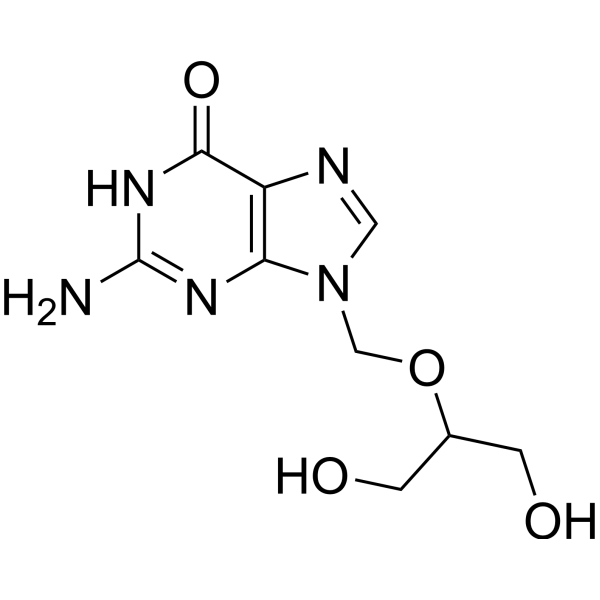
Ganciclovir (BW 759) hydrate, a nucleoside analogue, is an orally active antiviral agent with activity against CMV. Ganciclovir hydrate also has activity in vitro against members of the herpes group and some other DNA viruses. Ganciclovir hydrate inhibits the in vitro replication of human herpes viruses (HSV 1 and 2, CMV) and adenovirus serotypes 1, 2, 4, 6, 8, 10, 19, 22 and 28. Ganciclovir hydrate has an IC50 of 5.2 μM for feline herpesvirus type-1 (FHV-1) and can diffuse into the brain .
|
-
- HY-78726A
-
|
Amprenavir phosphate sodium; GW 433908 sodium
|
Drug Intermediate
HIV
HIV Protease
|
Infection
|
|
Fosamprenavir sodium is an orally active inhibitor targeting HIV-1 protease and is a prodrug of Amprenavir (HY-17430). Fosamprenavir sodium is hydrolyzed into Amprenavir (VX-478) by cell phosphatases in the intestinal epithelium. Amprenavir binds to the active site of HIV-1 protease, preventing the processing of viral gag and gag-pol polyprotein precursors, thereby inhibiting the formation of mature infectious virus particles and exerting anti-HIV-1 infection activity. Fosamprenavir sodium can be used for the study of human immunodeficiency virus (HIV-1) infection .
|
-
- HY-78726
-
|
Amprenavir phosphate; GW 433908
|
Drug Intermediate
HIV
HIV Protease
|
Infection
|
|
Fosamprenavir is an orally active inhibitor targeting HIV-1 protease and is a prodrug of Amprenavir (HY-17430). Fosamprenavir is hydrolyzed into Amprenavir (VX-478) by cell phosphatases in the intestinal epithelium. Amprenavir binds to the active site of HIV-1 protease, preventing the processing of viral gag and gag-pol polyprotein precursors, thereby inhibiting the formation of mature infectious virus particles and exerting anti-HIV-1 infection activity. Fosamprenavir can be used for the study of human immunodeficiency virus (HIV-1) infection .
|
-
- HY-153810
-
|
JNJ-1802
|
Virus Protease
Flavivirus
Dengue Virus
|
Infection
|
|
Mosnodenvir (JNJ-1802) is an orally active pan serotype dengue virus (DENV) inhibitor, with EC50 values ranging from 0.057 to 11 nM for four dengue virus (DENV) serotypes. Mosnodenvir blocks viral replication by inhibiting the formation of complexes between two viral proteins, nonstructural protein 3 (NS3) and NS4B, thereby preventing the formation of new viral RNA. Mosnodenvir exhibits picomolar to nanomolar antiviral activity in vitro and has antiviral efficacy in mice and non-human primates .
|
-
- HY-13637
-
|
BW 759; 2'-Nor-2'-deoxyguanosine
|
CMV
HSV
Antibiotic
Nucleoside Antimetabolite/Analog
|
Infection
Cancer
|
|
Ganciclovir (BW 759), a nucleoside analogue, is an orally active antiviral agent with activity against CMV. Ganciclovir also has activity in vitro against members of the herpes group and some other DNA viruses. Ganciclovir inhibits the in vitro replication of human herpes viruses (HSV 1 and 2, CMV) and adenovirus serotypes 1, 2, 4, 6, 8, 10, 19, 22 and 28. Ganciclovir has an IC50 of 5.2 μM for feline herpesvirus type-1 (FHV-1) and can diffuse into the brain .
|
-
- HY-13637A
-
|
BW 759 sodium; 2'-Nor-2'-deoxyguanosine sodium
|
CMV
HSV
Antibiotic
Nucleoside Antimetabolite/Analog
|
Infection
Cancer
|
|
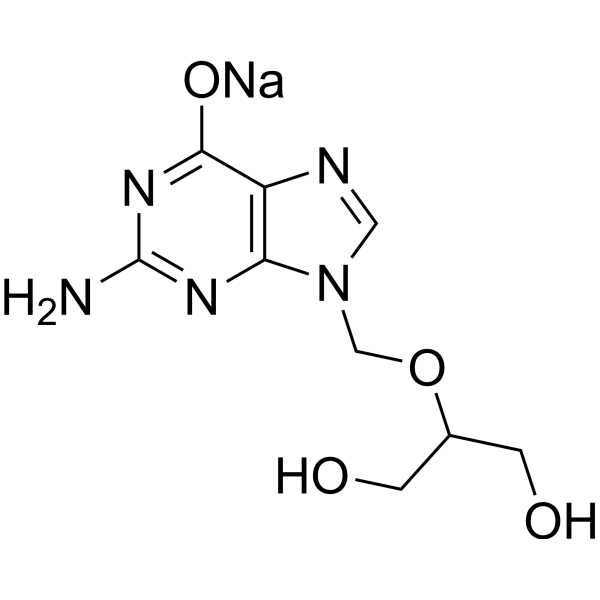
Ganciclovir (BW 759) sodium, a nucleoside analogue, is an orally active antiviral agent with activity against CMV. Ganciclovir sodium also has activity in vitro against members of the herpes group and some other DNA viruses. Ganciclovir sodium inhibits the in vitro replication of human herpes viruses (HSV 1 and 2, CMV) and adenovirus serotypes 1, 2, 4, 6, 8, 10, 19, 22 and 28. Ganciclovir sodium has an IC50 of 5.2 μM for feline herpesvirus type-1 (FHV-1) and can diffuse into the brain .
|
-
- HY-W007524R
-
|
2-Quinolinamine (Standard)
|
Reference Standards
NO Synthase
Orthopoxvirus
|
Infection
Neurological Disease
|
|
2-Aminoquinoline (2-Quinolinamine) is a promising compound as bioavailable nNOS inhibitor but suffers from low human nNOS inhibition, low selectivity versus human eNOS, and significant binding to other CNS targets. 2-Aminoquinoline exhibits antiviral activity against the vaccinia virus. 2-Aminoquinoline has the potential for the research of antineurodegenerative agents .
|
-
- HY-W007524
-
|
2-Quinolinamine
|
NO Synthase
Orthopoxvirus
|
Infection
Neurological Disease
|
|
2-Aminoquinoline (2-Quinolinamine) is a promising compound as bioavailable nNOS inhibitor but suffers from low human nNOS inhibition, low selectivity versus human eNOS, and significant binding to other CNS targets. 2-Aminoquinoline exhibits antiviral activity against the vaccinia virus. 2-Aminoquinoline has the potential for the research of antineurodegenerative agents .
|
-
- HY-168015
-
|
|
Drug Isomer
|
Infection
|
|
5-Oxo leukotriene B4 is a byproduct in the synthesis of 12-oxo LTB4 (HY-130497) with antiviral activity. 5-Oxo leukotriene B4 is promising for research of viral infections caused by human and animal enveloped RNA viruses .
|
-
- HY-P4125
-
|
|
HIV
Fluorescent Dye
|
Infection
|
|
FITC-LC-TAT (47-57) is a FITC-labeled TAT peptide (HY-P0281) (λex: 493 nm, λem: 522 nm). Derived from the trans-activator of transcription (TAT) of human immunodeficiency virus (HIV-1), TAT enhances the yield of heterologous proteins .
|
-
- HY-173278
-
|
|
HBV
Potassium Channel
|
Infection
|
|
AIC263282 is a potent Hepatitis B Virus (HBV) capsid assembly modulator with an EC50 of 3.8 nM. AIC263282 shows an IC50 of 61 nM for hERG. AIC263282 exhibits activity against viral replication and hepatitis B surface antigen (HBsAG) on primary human hepatocytes .
|
-
- HY-14460
-
|
|
FLAP
|
Inflammation/Immunology
|
|
AM679 is a potent, selective 5-lipoxygenase-activating protein (FLAP) inhibitor with an IC50 of 2 nM in a human FLAP membrane binding assay. AM679 markedly reduces the respiratory syncytial virus-driven ocular pathology as well as the synthesis of cysteinyl leukotrienes (CysLTs) in the eye .
|
-
- HY-174150
-
|
|
Filovirus
|
Infection
|
|
EBOV entry-IN-2 (compound 16) is an EBOV entry inhibitor with an EC50 of 4.42 μM. EBOV entry-IN-2 shows metabolic stability .
|
-
- HY-P991493
-
|
|
RSV
|
Infection
|
|
AR-201 is a human IgG1 monoclonal antibody (mAb) targeting F, Fusion glycoprotein F0. AR-201 has anti-respiratory syncytial virus (RSV) activity. AR-201 can be used in lower respiratory tract illness (LRTI) research. Recommended isotype control: Human IgG1 kappa, Isotype Control (HY-P99001).
|
-
- HY-139158
-
|
|
HIV
|
Infection
|
|
Ainuovirine is a second-generation non-nucleoside reverse transcriptase inhibitor (NNRTI). Ainuovirine inhibits HIV replication by non-competitively binding to HIV reverse transcriptase and blocking the reverse transcription process of viral RNA. Ainuovirine can be used for human immunodeficiency virus (HIV) type 1 infection .
|
-
- HY-W013605A
-
|
p-Methoxycinnamaldehyde
|
Environmental Pollutants
RSV
|
Infection
|
|
4-Methoxycinnamaldehyde (p-Methoxycinnamaldehyde), an active constituent of Agastache rugosa, exhibits cytoprotective activity against respiratory syncytial virus (RSV) in human larynx carcinoma cell line. 4-Methoxycinnamaldehyde effectively inhibits cytopathic effect of RSV with an estimated IC50 of 0.055 μg/mL .
|
-
- HY-10396R
-
|
PF 03491390 (Standard); IDN-6556 (Standard)
|
Reference Standards
Caspase
Flavivirus
|
Infection
Neurological Disease
Cancer
|
|
Emricasan (Standard) is the analytical standard of Emricasan. This product is intended for research and analytical applications. Emricasan (PF 03491390) is an orally active and irreversible pan-caspase inhibitor. Emricasan inhibits Zika virus (ZIKV)-induced increases in caspase-3 activity and protected human cortical neural progenitors .
|
-
- HY-183708
-
|
|
Arenavirus
|
Infection
|
|
Antiviral agent 85 is a broad-spectrum arenavirus entry inhibitor with an EC90 of 0.13 µM against Junín virus (JUNV). Antiviral agent 85 blocks the entry of various arenaviruses through both hTfR1-dependent and hTfR1-independent pathways, acting on the early and early post-entry stages of infection. Antiviral agent 85 exhibits antiviral activity against a variety of arenaviruses, is well tolerated in hTfR1-expressing JUNV-infected mouse models, but fails to provide protective effects. Antiviral agent 85 can be used in studies related to arenavirus hemorrhagic fevers .
|
-
- HY-110093
-
|
|
VSV
Histone Methyltransferase
Autophagy
Influenza Virus
|
Infection
Cancer
|
|
UNC0638 hydrate selectively inhibits G9a and GLP histone methyltransferases with IC50 of 15 nM and 19 nM, respectively. UNC0638 hydrate inhibits TNBC cell invasion and migration in vitro. UNC0638 hydrate is also an inhibitor of EHMT1/2 and induces fetal hemoglobin (HbF) expression in human erythroid progenitor cell culture. In addition, UNC0638 hydrate has anti-FMDV (foot-and-mouth disease virus) and anti-VSV (vesicular stomatitis virus) activities, with excellent potency and selectivity against multiple epigenetic and non-epigenetic targets .
|
-
- HY-15273
-
|
|
VSV
Histone Methyltransferase
Autophagy
Influenza Virus
|
Infection
Cancer
|
|
UNC0638, a chemical probe, selectively inhibits G9a and GLP histone methyltransferases with IC50 of 15 nM and 19 nM, respectively. UNC0638 inhibits TNBC cell invasion and migration in vitro. UNC0638 is also an inhibitor of EHMT1/2 and induces fetal hemoglobin (HbF) expression in human erythroid progenitor cell culture. In addition, UNC0638 has anti-FMDV (foot-and-mouth disease virus) and anti-VSV (vesicular stomatitis virus) activities, with excellent potency and selectivity against multiple epigenetic and non-epigenetic targets .
|
-
- HY-182317
-
|
|
Drug Isomer
Dengue Virus
|
Infection
|
|
(+)-Mosnodenvir is an isomer of Mosnodenvir (HY-153810). Mosnodenvir (JNJ-1802) is an orally active pan serotype dengue virus (DENV) inhibitor, with EC50 values ranging from 0.057 to 11 nM for four dengue virus (DENV) serotypes. Mosnodenvir blocks viral replication by inhibiting the formation of complexes between two viral proteins, nonstructural protein 3 (NS3) and NS4B, thereby preventing the formation of new viral RNA. Mosnodenvir exhibits picomolar to nanomolar antiviral activity in vitro and has antiviral efficacy in mice and non-human primates .
|
-
- HY-13637S
-
|
BW 759-d5; 2'-Nor-2'-deoxyguanosine-d5
|
Isotope-Labeled Compounds
CMV
HSV
Antibiotic
Nucleoside Antimetabolite/Analog
|
Infection
|
|
Ganciclovir-d5 is the deuterium labeled Ganciclovir. Ganciclovir (BW 759), a nucleoside analogue, is an orally active antiviral agent with activity against CMV. Ganciclovir also has activity in vitro against members of the herpes group and some other DNA viruses. Ganciclovir inhibits the in vitro replication of human herpes viruses (HSV 1 and 2, CMV) and adenovirus serotypes 1, 2, 4, 6, 8, 10, 19, 22 and 28. Ganciclovir has an IC50 of 5.2 μM for feline herpesvirus type-1 (FHV-1) .
|
-
- HY-130000
-
|
STP0404
|
HIV Integrase
HIV
|
Infection
|
|
Pirmitegravir is a potent and first-in-class inhibitor of allosteric integrase (ALLINI) that targets LEDGF/p75 binding site. Pirmitegravir displays picomolar IC50 in human PBMCs with a >24,000 therapeutic index against HIV-1. Pirmitegravir harbors outstanding anti-virus and safety properties .
|
-
- HY-174521
-
|
|
mRNA
|
Inflammation/Immunology
|
|
Human TLR7 mRNA encodes the human toll like receptor 7 (TLR7) protein, a member of the Toll-like receptor (TLR) family which plays a fundamental role in pathogen recognition and activation of innate immunity. TLR7 senses single-stranded RNA oligonucleotides containing guanosine- and uridine-rich sequences from RNA viruses, a recognition occuring in the endosomes of plasmacytoid dendritic cells and B cells.
|
-
- HY-174525
-
|
|
mRNA
|
Inflammation/Immunology
|
|
Human TLR3 mRNA encodes the human toll like receptor 3 (TLR3) protein, a member of the Toll-like receptor (TLR) family which plays a fundamental role in pathogen recognition and activation of innate immunity. TLR3 recognizes dsRNA associated with viral infection, and induces the activation of NF-kappaB and the production of type I interferons. It may thus play a role in host defense against viruses.
|
-
- HY-169410
-
|
|
SARS-CoV
Virus Protease
|
Infection
|
|
3CLPro-IN-3 (Compound A36) is an inhibitor for SARS-CoV-2 3CLpro with IC50 of 51.3 nM. 3CLPro-IN-3 exhibits antiviral activity against human coronavirus 229E, OC43 and mouse hepatitis virus MHV .
|
-
- HY-P2260B
-
|
|
HIV
|
Infection
|
|
Tat-beclin 1 scrambled is the scrambled part and a scrambled control of Tat-beclin 1 (HY-P2260), which is derived from a region of the autophagy protein, beclin 1. beclin 1 induces autophagy via binding human immunodeficiency virus, HIV-1 Nef and interacting with negative regulator GAPR-1 (GLIPR2). Tat-beclin 1 decreases the accumulation of polyglutamine expansion protein aggregates and the replication of several pathogens, such as HIV-1. Tat-beclin 1 also reduces mortality in mice infected with chikungunya or West Nile virus .
|
-
- HY-17431
-
|
GW433908G
|
Drug Intermediate
HIV
HIV Protease
|
Infection
|
|
Fosamprenavir Calcium Salt (GW433908G) is an orally active inhibitor targeting HIV-1 protease and is a prodrug of Amprenavir (HY-17430). Fosamprenavir Calcium Salt is hydrolyzed into Amprenavir (VX-478) by cell phosphatases in the intestinal epithelium. Amprenavir binds to the active site of HIV-1 protease, preventing the processing of viral gag and gag-pol polyprotein precursors, thereby inhibiting the formation of mature infectious virus particles and exerting anti-HIV-1 infection activity. Fosamprenavir Calcium Salt can be used for the study of human immunodeficiency virus (HIV-1) infection .
|
-
- HY-P2260C
-
|
|
HIV
|
Infection
|
|
Tat-beclin 1 scrambled TFA is the scrambled part and a scrambled control of Tat-beclin 1 (HY-P2260), which is derived from a region of the autophagy protein, beclin 1. beclin 1 induces autophagy via binding human immunodeficiency virus, HIV-1 Nef and interacting with negative regulator GAPR-1 (GLIPR2). Tat-beclin 1 decreases the accumulation of polyglutamine expansion protein aggregates and the replication of several pathogens, such as HIV-1. Tat-beclin 1 also reduces mortality in mice infected with chikungunya or West Nile virus .
|
-
- HY-128067
-
|
Hexamethylene amiloride; HMA
|
Sodium Channel
HIV
Apoptosis
|
Infection
Cancer
|
|
5-(N,N-Hexamethylene)-amiloride (Hexamethylene amiloride) derives from an amiloride and is a potent Na +/H + exchanger inhibitor, which decreases the intracellular pH (pHi) and induces apoptosis in leukemic cells. 5-(N,N-Hexamethylene)-amiloride (Hexamethylene amiloride) is also an inhibitor of the HIV-1 Vpu virus ion channel and inhibits mouse hepatitis virus (MHV) replication and human coronavirus 229E (HCoV229E) replication in cultured L929 cells with EC50s of 3.91 μM and 1.34 μM, respectively .
|
-
- HY-108325R
-
-
- HY-145713
-
|
HBV-IN-19
|
HBV
|
Infection
|
|
GS-8873 is an orally active inhibitor for the production of hepatitis B virus (HBV) surface antigen (HBsAg) with an EC50 of 4 nM. GS-8873 exhibits good pharmacokinetic characters in rats and metabolic stability in human hepatocytes. GS-8873 causes neurofunctional deficits in rats and cynomolgus monkeys .
|
-
- HY-N0855
-
|
Alisol-G; 25-Anhydroalisol A
|
Carboxylesterase (CES)
Bacterial
HBV
|
Infection
Cancer
|
|
Alisol G (25-Anhydroalisol A) is a human carboxylesterase 2 (hCES2) inhibitor with an IC50 of 3.85 μM. Alisol G exhibits cytotoxic activity against human cancer cells, antibacterial activity against Gram-positive strains, and anti-hepatitis B virus activity. Alisol G can be used in research related to lung cancer, breast cancer, prostate cancer, bacterial infections, and HBV infections .
|
-
- HY-P990297
-
|
|
CCR
HIV
|
Infection
Inflammation/Immunology
Cancer
|
|
Anti-Mouse/Rat/Human CCL2/MCP-1 Antibody (2H5) is an anti-mouse/rat/human CCL2/MCP-1 IgG monoclonal antibody. Anti-Mouse/Rat/Human CCL2/MCP-1 Antibody (2H5) can reverse the immunosuppressive microenvironment by blocking the CCL2 signaling pathway. Anti-Mouse/Rat/Human CCL2/MCP-1 Antibody (2H5) can reduce the secretion of IFN-γ and the infiltration of macrophages. CCL2/MCP-1 Antibody (2H5) can reduce the amount of HIV virus by increasing the proportion of T cells. Anti-Mouse/Rat/Human CCL2/MCP-1 Antibody (2H5) can be used for researches on inflammation conditions, virus infection and cancer such as inflammatory bowel disease (IBD), hepatocellular carcinoma (HCC) and HIV .
|
-
- HY-15353
-
|
MKC-442
|
HIV
|
Infection
Inflammation/Immunology
|
|
Emivirine (MKC-442) is a non-nucleoside reverse transcriptase inhibitors (NNRTIs) with Ki values of 0.20 and 0.01 μM for dTTP- and dGTP-dependent DNA or RNA polymerase activity, respectively. Emivirine displays potent and selective anti-human immunodeficiency virus type 1 (HIV-1) activity .
|
-
- HY-164390
-
|
Neu5Acα2-6Galβ1-4GlcNAc
|
Endogenous Metabolite
|
Infection
Cancer
|
6′SLN is a cancer-related extracellular vesicle (EVs) surface glycan that serves as a key form of protein glycosylation in EVs. 6′SLN is also a sialic acid derivative that can interact with hemagglutinins (HAs) from human and avian influenza virus strains, making it useful for research into anti-influenza drugs .
|
-
- HY-119807
-
|
|
Apoptosis
Caspase
|
Endocrinology
|
Prosultiamine is an allithiamine homolog. Prosultiamine can disrupt intracellular redox reactions, inducing caspase-dependent apoptosis in HTLV-1 infected cells. Prosultiamine can be used in studies involving lower urinary tract dysfunction associated with human T-lymphotropic virus type 1-related myelopathy/tropical spastic paraparesis .
|
-
- HY-P9803
-
|
SARS-80R; SARS Antibody-80R
|
SARS-CoV
|
Infection
|
|
Anti-SARS-80R mAb (SARS-80R) is a human monoclonal IgG1 antibody produced in CHO cells. Anti-SARS-80R mAb can specifically bind to Spike (S1) protein to prevent SARS virus infection of susceptible cells .
|
-
- HY-P99637
-
|
MHAA4549A; RG7745
|
Influenza Virus
|
Infection
|
|
Gedivumab (MHAA4549A; RG7745) is a human monoclonal antibody that targets influenza A virus (IAV) with high specificity and binds to the highly conserved stem region of the IAV haemagglutinin protein, thereby preventing haemagglutinin maturation and blocking haemagglutinin-mediated membrane fusion in the intranucleosome. Gedivumab can be used in IAV infection disease studies .
|
-
- HY-148042
-
|
|
HIV
|
Infection
|
|
HIV-1 inhibitor-47 is an inhibitor of HIV-1, and inhibits vif-dependent degradation of human APOBEC3G, with an IC50 value of 14.33 μM. HIV-1 inhibitor-47 also involves in derivatives of 1-(2-pyrimidinyl)piperazine synthesis, with potential antianxiety, antidepressant, and antipsychotic effect .
|
-
- HY-12828
-
KH-CB19
1 Publications Verification
|
CDK
|
Infection
Neurological Disease
|
|
KH-CB19 is a potent CLK (cdc2-like kinase) inhibitor (CLK1 IC50=19.7 nM; CLK3 IC50=530 nM). KH-CB19 shows antiviral activity and inhibits influenza virus replication (IC50=13.6?μM) .
|
-
- HY-P2310
-
|
|
Bacterial
Parasite
Apoptosis
HIV
HSV
CMV
TNF Receptor
NOD-like Receptor (NLR)
DNA/RNA Synthesis
Influenza Virus
|
Cardiovascular Disease
Infection
|
|
Defensin HNP-1 human is a type of human neutrophil peptide (HNPs). Defensin HNP-1 human possesses immunomodulatory functions and can delay the apoptosis of neutrophils. Defensin HNP-1 human inhibits DNA/RNA/protein synthesis and interferes with metabolic pathways, thus exhibiting broad antibacterial activity. Defensin HNP-1 human has direct inactivation effects on HIV, HSV-1, HSV-2, CMV, influenza virus, etc. Defensin HNP-1 human has antileishmanial activity. Defensin HNP-1 human is involved in endothelial cell dysfunction during the early development of atherosclerosis .
|
-
- HY-P991446
-
|
|
Influenza Virus
|
Infection
|
|
MEDI-8852 is a human IgG1 monoclonal antibody against influenza A virus hemagglutinin (HA). MEDI-8852 binds to the conserved HA stalk epitope and neutralizes viral infectivity. MEDI-8852 reduces viral titers in mouse lung tissues. MEDI-8852 is applicable to research related to pandemic influenza . Recommended isotype control: Human IgG1 kappa, Isotype Control (HY-P99001).
|
-
- HY-122156
-
|
|
HIV
|
Infection
|
|
IMB-301 is a specific HIV-1 replication inhibitor that binds to hA3G (human APOBEC3G), interrupts the hA3G-Vif interaction and inhibits Vif-mediated degradation of hA3G. IMB-301 inhibits the replication of HIV-1 in H9 cells (IC50=8.63 uM). Human APOBEC3G is a restriction factor that inhibits human immunodeficiency 1 virus (HIV-1) replication .
|
-
- HY-13637R
-
|
BW 759 (Standard); 2'-Nor-2'-deoxyguanosine (Standard)
|
Reference Standards
CMV
HSV
Antibiotic
Nucleoside Antimetabolite/Analog
|
Infection
Cancer
|
|
Ganciclovir (Standard) is the analytical standard of Ganciclovir. This product is intended for research and analytical applications. Ganciclovir (BW 759), a nucleoside analogue, is an orally active antiviral agent with activity against CMV. Ganciclovir also has activity in vitro against members of the herpes group and some other DNA viruses. Ganciclovir inhibits the in vitro replication of human herpes viruses (HSV 1 and 2, CMV) and adenovirus serotypes 1, 2, 4, 6, 8, 10, 19, 22 and 28. Ganciclovir has an IC50 of 5.2 μM for feline herpesvirus type-1 (FHV-1) and can diffuse into the brain .
|
-
- HY-78726S
-
|
Amprenavir phosphate-d4; GW 433908-d4
|
Isotope-Labeled Compounds
Drug Intermediate
HIV
HIV Protease
|
Infection
|
|
Fosamprenavir-d4 is the Deuterium-labeled Fosamprenavir (HY-78726). Fosamprenavir is an orally active inhibitor targeting HIV-1 protease and is a prodrug of Amprenavir (HY-17430). Fosamprenavir is hydrolyzed into Amprenavir (VX-478) by cell phosphatases in the intestinal epithelium. Amprenavir binds to the active site of HIV-1 protease, preventing the processing of viral gag and gag-pol polyprotein precursors, thereby inhibiting the formation of mature infectious virus particles and exerting anti-HIV-1 infection activity. Fosamprenavir can be used for the study of human immunodeficiency virus (HIV-1) infection .
|
-
- HY-13637AR
-
|
BW 759 sodium (Standard); 2'-Nor-2'-deoxyguanosine sodium (Standard)
|
Reference Standards
CMV
HSV
Antibiotic
Nucleoside Antimetabolite/Analog
|
Infection
Cancer
|
|
Ganciclovir (sodium) (Standard) is the analytical standard of Ganciclovir (sodium). This product is intended for research and analytical applications. Ganciclovir (BW 759) sodium, a nucleoside analogue, is an orally active antiviral agent with activity against CMV. Ganciclovir sodium also has activity in vitro against members of the herpes group and some other DNA viruses. Ganciclovir sodium inhibits the in vitro replication of human herpes viruses (HSV 1 and 2, CMV) and adenovirus serotypes 1, 2, 4, 6, 8, 10, 19, 22 and 28. Ganciclovir sodium has an IC50 of 5.2 μM for feline herpesvirus type-1 (FHV-1) and can diffuse into the brain[1][2][3].
|
-
- HY-183929
-
|
|
Influenza Virus
|
Infection
|
|
Antiviral agent 87 is a potent antiviral agent with low cytotoxicity in host cells. Antiviral agent 87 stabilizes prefusion HA conformation, blocks viral membrane fusion and host cell entry, and inhibits entry and replication of diverse influenza A virus subtypes. Antiviral agent 87 can be used for the research of influenza A virus infection .
|
-
- HY-P99344
-
|
Anti-Human SARS-CoV-2
|
SARS-CoV
|
Infection
|
|
Bamlanivimab (Anti-Human SARS-CoV-2) is the first COVID-19 monoclonal antibody (mAb) to be granted Emergency Use Authorization (EUA) in November 2020 by the U.S. Food and agent Administration (FDA). However, Bamlanivimab is withdrawn in April 2021 following the rise of SARS-CoV-2 virus variants resistant to Bamlanivimab .
|
-
- HY-P2310A
-
|
|
Bacterial
Parasite
Apoptosis
HIV
HSV
CMV
TNF Receptor
Interleukin Related
NOD-like Receptor (NLR)
DNA/RNA Synthesis
Influenza Virus
|
Cardiovascular Disease
Infection
|
|
Defensin HNP-1 human TFA is a type of human neutrophil peptide (HNPs). Defensin HNP-1 human TFA possesses immunomodulatory functions and can delay the apoptosis of neutrophils. Defensin HNP-1 human TFA inhibits DNA/RNA/protein synthesis and interferes with metabolic pathways, thus exhibiting broad antibacterial activity. Defensin HNP-1 human TFA has direct inactivation effects on HIV, HSV-1, HSV-2, CMV, influenza virus, etc. Defensin HNP-1 human TFA has antileishmanial activity. Defensin HNP-1 human TFA is involved in endothelial cell dysfunction during the early development of atherosclerosis .
|
-
- HY-P99750
-
|
CT-P23
|
Influenza Virus
|
Infection
|
|
Navivumab (CT-P23) is a monoclonal antibody targeting the hemagglutinin (HA) of influenza A virus. Navivumab binds to the HA2 stem fusion domain and the low-variability HA2 region of influenza viruses. Navivumab neutralizes influenza A viruses of subtypes H1, H2, H5, and H9. Navivumab is applicable to research related to influenza and influenza A .
|
-
- HY-78726S2
-
|
Amprenavir phosphate-13C6; GW 433908-13C6
|
Isotope-Labeled Compounds
Drug Intermediate
HIV
HIV Protease
|
Infection
|
|
Fosamprenavir- 13C6 is the 13C-labeled Fosamprenavir (HY-78726). Fosamprenavir is an orally active inhibitor targeting HIV-1 protease and is a prodrug of Amprenavir (HY-17430). Fosamprenavir is hydrolyzed into Amprenavir (VX-478) by cell phosphatases in the intestinal epithelium. Amprenavir binds to the active site of HIV-1 protease, preventing the processing of viral gag and gag-pol polyprotein precursors, thereby inhibiting the formation of mature infectious virus particles and exerting anti-HIV-1 infection activity. Fosamprenavir can be used for the study of human immunodeficiency virus (HIV-1) infection .
|
-
- HY-100083R
-
|
|
Reference Standards
HIV
|
Others
|
|
Dolutegravir intermediate-1 (Standard) is the analytical standard of Dolutegravir intermediate-1 (HY-100083). This product is intended for research and analytical applications. Dolutegravir intermediate-1 is a synthetic intermediate of Dolutegravir extracted from patent WO 2016125192 A2. Dolutegravir is an integrase inhibitor developed for the treatment of human immunodeficiency virus (HIV)-1 infection.
|
-
- HY-106958
-
|
HBY 097
|
HIV
Reverse Transcriptase
|
Infection
|
|
Talviraline is a non-nucleoside reverse transcriptase (NNRT) inhibitor that is primarily used to inhibit the replication of human immunodeficiency virus type 1 (HIV-1). Talviraline inhibits the viral replication process by binding to a specific site of HIV-1 reverse transcriptase (RT). Talviraline can be used to study the potential countermeasures and safety of HIV-1 infection .
|
-
- HY-10964
-
Vadimezan
Maximum Cited Publications
71 Publications Verification
DMXAA; ASA-404
|
STING
IFNAR
Influenza Virus
|
Infection
Cancer
|
|
Vadimezan (DMXAA), the tumor vascular disrupting agent (tumor-VDA), is a murine agonist of the stimulator of interferon genes (STING) and also a potent inducer of type I IFNs and other cytokines. Vadimezan is unable to activate human STING. Vadimezan has anti-influenza virus H1N1-PR8 activities.
|
-
- HY-14891
-
|
GSK2248761; FDV
|
HIV
Reverse Transcriptase
|
Infection
|
|
Fosdevirine (GSK2248761) is is a potent, selective, non-nucleoside reverse transcriptase inhibitor (NNRTI) of human immunodeficiency virus type 1 (HIV-1) replication with low nanomolar activity in vitro. Fosdevirine shows good activity against a broad range of HIV-1 strains, including efavirenz (HY-10572)-resistant clinical isolates .
|
-
- HY-106395
-
|
SC-52151
|
HIV Protease
HIV
|
Infection
|
|
Telinavir (SC-52151) is a potent and selective HIV protease inhibitor. Telinavir inhibits lymphotropic, monocytotropic strains and field isolates of HIV type 1 (HIV-1), HIV-2, and simian immunodeficiency virus with EC50s of 26 ng/mL (43 nM). Telinavir is highly protein bound in human plasma and exhibits low partitioning into erythrocytes .
|
-
- HY-108325S
-
-
- HY-107577
-
|
|
HSP
|
Infection
Inflammation/Immunology
Cancer
|
|
Gedunin is a limonoid with anti-cancer, anti-viral, anti-inflammatory and insecticidal activities. Gedunin acts as a potent Hsp90 inhibitor and induces the degradation of Hsp90-dependent client proteins. Geduni may obstructs the entry of SARS-CoV-2 virus into human host cells and can be used for COVID-19 research .
|
-
- HY-P990236
-
|
|
Transmembrane Glycoprotein
|
Infection
Inflammation/Immunology
Cancer
|
|
Anti-Mouse/Rat/Monkey/Human ICOS/CD278 Antibody (C398.4A) is an anti-mouse/rat/monkey/human ICOS/CD278 IgG monoclonal antibody. Anti-Mouse/Rat/Monkey/Human ICOS/CD278 Antibody (C398.4A) has limited effectiveness in improving T cell function and immune activation. Anti-Mouse/Rat/Monkey/Human ICOS/CD278 Antibody (C398.4A) can be used for researches on cancer and infection conditions such as gliomas and hepatitis B virus infection .
|
-
- HY-D1916A
-
|
|
Fluorescent Dye
|
Others
|
|
ATTO 594 TEA is a highly hydrophilic fluorescent dye used to label the outermost position of the glycan moiety of glycosphingolipids to retain the biophysical and biochemical properties of native glycosphingolipids .
|
-
- HY-14837
-
|
Enisamium iodide
|
Influenza Virus
SARS-CoV
|
Infection
|
|
Amizon is an orally effective antiviral and anti-inflammatory agent. Amizon inhibits influenza virus replication and restricts viral RNA synthesis. Amizon reduces the mRNA expression of COX-1, COX-2, NF-κB, TGF1β, IL-1 and IL-6, and stimulates the secretion and mRNA expression of IL-10. Amizon inhibits the oxidative activity of macrophages and possesses antioxidant and free radical-scavenging activities. Amizon is applicable to research related to influenza and acute respiratory viral infections .
|
-
- HY-18944
-
|
|
CDK
HSV
CMV
DNA/RNA Synthesis
|
Infection
|
|
FIT-039 is a selective, ATP-competitive and orally active CDK9 inhibitor with an IC50 of 5.8 μM for CKD9/cyclin T1. FIT-039 does not inhibit other CDKs and other kinases. FIT-039 inhibits replication of HSV-1 (IC50 of 0.69 μM), HSV-2, human adenovirus, and human CMV. FIT-039 is a promising antiviral agent for inhibiting drug-resistant HSVs and other DNA viruses.
|
-
- HY-169064
-
|
|
HIV
Reverse Transcriptase
|
Infection
|
HIV-1 inhibitor-75 is a human immunodeficiency virus 1 (HIV-1) inhibitor, with an EC50 value ranging from 0.0039 to 0.338 μM. The binding target of HIV-1 inhibitor-75 is reverse transcriptase, with an IC50 value of 0.055 μM. HIV-1 inhibitor-75 shows good in vitro metabolic stability, exhibiting moderate clearance rates and a longer half-life in human plasma and liver microsomes .
|
-
- HY-P991054
-
|
|
Influenza Virus
|
Infection
|
|
CR-8020 is a human IgG1 antibody that targets influenza A virus H3N2. CR-8020 binds to hemagglutinin (HA) of H3N2 strains with IC50s of 3.36 nM and 0.06 nM for A/Brisbane/10/2007 and A/Wyoming/3/2003, respectively. The isotype control for CR-8020 can refer to Human IgG1 kappa, Isotype Control (HY-P99001) .
|
-
- HY-N6733
-
Aphidicolin
Maximum Cited Publications
15 Publications Verification
|
DNA/RNA Synthesis
HSV
Apoptosis
Antibiotic
Orthopoxvirus
|
Infection
Inflammation/Immunology
|
|
Aphidicolin is an inhibitor of DNA polymerase α and δ, prevents mitotic cell division by interfering DNA polymerase activity. Aphidicolin is an antibiotic produced by mold Cephalosporium aphidicola, inhibits cellular deoxyribonucleic acid synthesis and the growth of herpes simplex virus. Aphidicolin exhibits anti-orthopoxvirus activity and potentiates apoptosis induced by arabinosyl nucleosides in a human promyelocytic leukemia cell line .
|
-
- HY-10396A
-
|
(2R,3S)-PF 03491390; (2R,3S)-IDN-6556
|
Caspase
Flavivirus
|
Infection
Neurological Disease
Cancer
|
|
(2R,3S)-Emricasan ((2R,3S)-PF 03491390) is an isomer of Emricasan (HY-10396). Emricasan is an orally active and irreversible pan-caspase inhibitor. Emricasan inhibits Zika virus (ZIKV)-induced increases in caspase-3 activity and protected human cortical neural progenitors .
|
-
- HY-153900
-
|
|
Toll-like Receptor (TLR)
|
Cancer
|
|
TLR8 agonist 6 (Compound A) is a TLR8 agonist, with an EC50 of 0.052 μM. TLR8 agonist 6 induces IL-12p40 production in human PBMC (EC50: 0.031 μM). TLR8 agonist 6 can be used in the research of virus resistance, infection resistance, autoimmunity, tumor, etc .
|
-
- HY-117147A
-
|
|
REV-ERB
Cytochrome P450
|
Metabolic Disease
|
|
GSK2945 hydrochloride is a class of tertiary amine, and is a highly specific Rev-erbα/REV-ERBα (mouse/human reverse erythroblastosis virus α) antagonist with EC50s of 21.5 μM and 20.8 μM, respectively. GSK2945 hydrochloride enhances cholesterol 7α-hydroxylase (CYP7A1) level and cholesterol metabolism .
|
-
- HY-117147
-
|
|
Cytochrome P450
|
Metabolic Disease
|
|
GSK2945 is a class of tertiary amine, and is a highly specific Rev-erbα/REV-ERBα (mouse/human reverse erythroblastosis virus α) antagonist with EC50s of 21.5 μM and 20.8 μM, respectively. GSK2945 enhances cholesterol 7α-hydroxylase (CYP7A1) level and cholesterol metabolism .
|
-
- HY-N14107
-
|
|
Bacterial
Endogenous Metabolite
|
Infection
|
|
Cinnabarin is a natural phenoxazinone red pigment derived from Pycnoporus sanguineus. Cinnabarin reduces rabies virus infection levels in neuroblastoma cells and causes cytopathic effects on neuroblastoma cell monolayers at high concentrations. Cinnabarin exhibits antibacterial activity against bacteria, with a preference for Gram-positive bacteria and human isolates. Cinnabarin can be used in studies related to rabies and drug-resistant Gram-positive bacteria .
|
-
- HY-N6771
-
|
|
Calcium Channel
5-HT Receptor
MDM-2/p53
Apoptosis
RSV
|
Infection
|
|
Cyclopiazonic acid is an endoplasmic reticulum calcium ATPase (ECAs) inhibitor and human respiratory syncytial virus (RSV) inhibitor (EC50 value of 4.13 μ M), which can reduce the antagonistic effect of 5-HT receptors in rat thoracic aorta, induce p53 dependent cell apoptosis and reproductive toxicity in mouse testes, and inhibit the biological activation of aflatoxin B [1][4][5].
|
-
- HY-B0217
-
|
NTZ; NSC 697855
|
Parasite
Influenza Virus
Autophagy
|
Infection
Cancer
|
|
Nitazoxanide (NTZ), an anthelmintic agent, exhibits a broad spectrum of activities against a wide variety of helminths, protozoa, and enteric bacteria infecting animals and humans. Nitazoxanide inhibits Giardia lamblia trophozoite proliferation in axenic culture with an IC50 of 2.4 μM . Nitazoxanide can be used for the research of parasitic gastroenteritis. Nitazoxanide shows anti-Japanese encephalitis virus (JEV) activity in a mouse model .
|
-
- HY-176268
-
|
RA-0188293; RA-NSP2-1
|
DNA/RNA Synthesis
Virus Protease
Flavivirus
|
Infection
|
|
SGC-NSP2hel-1 (RA-0188293), a chemical probe, is a potent, specific and orally active nsP2 inhibitor. SGC-NSP2hel-1 has broad spectrum activity against multiple alphaviruses of the nsP2 helicase with a CC50 > 250 μM.
SGC-NSP2hel-1 (RA-0188293) shows selectivity index > 4000 against human
RNA helicases. SGC-NSP2hel-1 reduces virus replication and limited virus-induced pathology by forming a stable complex with nsP2 and ATP in a preclinical small animal model of CHIKV disease.
|
-
- HY-17431R
-
|
GW433908G (Standard)
|
Reference Standards
Drug Intermediate
HIV
HIV Protease
|
Infection
|
|
Fosamprenavir Calcium Salt (GW433908G) (Standard) is the analytical standard of Fosamprenavir Calcium Salt (HY-17431R). This product is intended for research and analytical applications. Fosamprenavir Calcium Salt (GW433908G) is an orally active inhibitor targeting HIV-1 protease and is a prodrug of Amprenavir (HY-17430). Fosamprenavir Calcium Salt is hydrolyzed into Amprenavir (VX-478) by cell phosphatases in the intestinal epithelium. Amprenavir binds to the active site of HIV-1 protease, preventing the processing of viral gag and gag-pol polyprotein precursors, thereby inhibiting the formation of mature infectious virus particles and exerting anti-HIV-1 infection activity. Fosamprenavir Calcium Salt can be used for the study of human immunodeficiency virus (HIV-1) infection .
|
-
- HY-128067R
-
|
Hexamethylene amiloride (Standard); HMA (Standard)
|
Sodium Channel
HIV
Apoptosis
Reference Standards
|
Infection
Cancer
|
|
5-(N,N-Hexamethylene)-amiloride (Standard) is the analytical standard of 5-(N,N-Hexamethylene)-amiloride. This product is intended for research and analytical applications. 5-(N,N-Hexamethylene)-amiloride (Hexamethylene amiloride) derives from an amiloride and is a potent Na+/H+ exchanger inhibitor, which decreases the intracellular pH (pHi) and induces apoptosis in leukemic cells. 5-(N,N-Hexamethylene)-amiloride (Hexamethylene amiloride) is also an inhibitor of the HIV-1 Vpu virus ion channel and inhibits mouse hepatitis virus (MHV) replication and human coronavirus 229E (HCoV229E) replication in cultured L929 cells with EC50s of 3.91 μM and 1.34 μM, respectively .
|
-
- HY-P992081
-
|
|
Orthopoxvirus
|
Infection
|
|
Anti-H3L Antibody (NAL_A185) is a neutralizing antibody targeting the H3L envelope protein of vaccinia virus (CV) belonging to the genus Orthopoxvirus. By binding to the H3L protein of intracellular mature virions, Anti-H3L Antibody (NAL_A185) blocks the binding of the virus to host cells, thereby neutralizing viral infectivity. Anti-H3L Antibody (NAL_A185) not only protects BALB/c mice from intranasal challenge with the lethal vaccinia virus WR strain, reducing weight loss and mortality, but also exhibits complement-dependent neutralizing activity against monkeypox virus. Among these properties, NAL_A185 is an immune target induced by the smallpox vaccine Dryvax; it elicits a robust recall antibody response and induces high-titer neutralizing antibodies in mice. Anti-H3L Antibody (NAL_A185) can be used for studies related to vaccinia virus infection, monkeypox and monkeypox disease .
|
-
- HY-B0155
-
|
SCH 417690; SCH-D; MK-7690 free base
|
CCR
HIV
|
Infection
Cancer
|
|
Vicriviroc (SCH 417690) is an orally active CCR5 antagonist with the IC50 of 10 nM, and also inhibts MIP-1α and intracellular calcium release induced by the ligand RANTES (10 nM) with the IC50 values of 0.91 nM and 16 nM,,respectively. Vicriviroc can inhibits human immunodeficiency virus type 1 (HIV-1) infection, and can also used for study of cancer .
|
-
- HY-144286
-
|
|
CXCR
|
Infection
|
|
CXCR4 antagonist 3 (compound 12a) is a potent antagonist of CXCR4 with an IC50 of 11 nM. CXCR4 antagonist 3 is a congener of TIQ15. CXCR4 antagonist 3 demonstrates the best overall properties including CXCR4 antagonism, CYP 2D6 inhibition, metabolic stability, and permeability. CXCR4 antagonist 3 has the potential for the research of human immunodeficiency virus .
|
-
- HY-W013605AR
-
|
p-Methoxycinnamaldehyde (Standard)
|
Reference Standards
RSV
|
Infection
|
|
4-Methoxycinnamaldehyde (Standard) is the analytical standard of 4-Methoxycinnamaldehyde. This product is intended for research and analytical applications. 4-Methoxycinnamaldehyde (p-Methoxycinnamaldehyde), an active constituent of Agastache rugosa, exhibits cytoprotective activity against respiratory syncytial virus (RSV) in human larynx carcinoma cell line. 4-Methoxycinnamaldehyde effectively inhibits cytopathic effect of RSV with an estimated IC50 of 0.055 μg/mL[1].
|
-
- HY-108044
-
|
|
Cathepsin
SARS-CoV
|
Metabolic Disease
|
|
ONO-5334 is a potent, selective and orally active cathepsin K inhibitor with Ki values of 0.10 nM, 0.049 nM and 0.85 nM for human, rabbit and rat cathepsin K, respectively. ONO 5334 is an effective antiviral compound against SAR-COV-2 virus activity with an EC50 value of 500 nM. ONO-5334 has the potential for the study of osteoporosis and COVID-19 disease .
|
-
- HY-P10845
-
|
|
HIV
|
Infection
|
|
KRL74 is a cyclic peptide inhibitor for interaction between the p6 domain of the HIV Gag protein and the UEV domain of the human TSG101 protein(p6/UEV) with an IC50 of 5.44 μM and a Kd of 11.9 μM. KRL74 inhibits the budding process of HIV from host cells with an IC50 of 2 μM in virus-like particle (VLP) budding assay .
|
-
- HY-173679
-
|
|
PROTACs
PARP
Interleukin Related
STAT
Integrin
HSV
VSV
|
Infection
Cancer
|
|
RBN012811 is a highly selective PROTAC-based PARP14 degrader. RBN012811 forms a ternary complex with cereblon by binding to the NAD + site of PARP14, and mediates the specific degradation of PARP14 via the ubiquitin-proteasome pathway (IC50=10 nM). RBN012811 effectively depletes endogenous PARP14 in various cell lines and primary human macrophages, thereby downregulating IL-10 production and IFN-β mRNA levels, increasing phosphorylated STAT1 levels to enhance inflammatory signaling, and inhibiting interferon-induced ADPr condensate formation. RBN012811 also modulates viral replication, exhibiting increased HSV1 replication while reducing VSV replication. RBN012811 has important application value in research related to cancer and viral infections .
|
-
- HY-170547A
-
|
|
HSV
CMV
EBV
DNA/RNA Synthesis
|
Infection
|
|
DNA polymerase-IN-6 formic is an antiviral agent and a DNA polymerase inhibitor. DNA polymerase-IN-6 formic inhibits the replication of HCMV, HSV-1, HSV-2 and EBV. DNA polymerase-IN-6 formic exhibits low cytotoxicity in mammalian cells. DNA polymerase-IN-6 formic can be used in research related to viral infections .
|
-
- HY-B0155B
-
|
SCH 417690 malate; SCH-D malate; MK-7690
|
CCR
HIV
|
Infection
Cancer
|
|
Vicriviroc (SCH 417690) malate is an orally active CCR5 antagonist with the IC50 of 10 nM, and also inhibts MIP-1α and intracellular calcium release induced by the ligand RANTES (10 nM) with the IC50 values of 0.91 nM and 16 nM,,respectively. Vicriviroc malate can inhibits human immunodeficiency virus type 1 (HIV-1) infection, and can also used for study of cancer .
|
-
- HY-P99103
-
|
LY-3853113; LY-COV1404
|
SARS-CoV
|
Infection
|
|
Bebtelovimab a human IgG1-λ2 antibody targeting to SARS-CoV-2, especially COVID-19 ((the IC50 value for SARS-CoV-2/MT020880.1 virus is 9-22.1 ng/mL)). Bebtelovimab potently neutralizes SARS-CoV-2 variants, and inhibits COVID-19 with mild-to-moderate efficacy .
|
-
- HY-N2575
-
|
|
PKC
Bacterial
Parasite
HIV
VSV
VEGFR
Bcl-2 Family
Apoptosis
|
Infection
Metabolic Disease
Cancer
|
|
Hypocrellin A is a PKC inhibitor that exerts antidiabetic activity by reversing the effects of high glucose on endothelin (ET-1) expression. Hypocrellin A is also a photosensitizer for photodynamic therapy (PDT) with anticancer, antibacterial and antiviral activities, especially against human immunodeficiency virus (HIV). In addition, Hypocrellin-A also possesses anti-Leishmania activity (IC50=0.27 μg/ml) .
|
-
- HY-149022
-
|
|
HSV
Orthopoxvirus
|
Infection
|
|
HSV-1/HSV-2-IN-1 (compound 7d) is a HSV-1 and HSV-2 inhibitor, with EC50s of 7.6, 7.6, 4, and 12 μM for HSV-1 (KOS), HSV-2 (G), HSV-1 TK - KOS ACV r and vaccinia virus in human embryonic lung fibroblast cell cultures .
|
-
- HY-118122
-
|
FIAU; DRG-0098; NSC 678514
|
HSV
HBV
DNA/RNA Synthesis
Orthopoxvirus
Nucleoside Antimetabolite/Analog
|
Infection
|
|
Fialuridine (FIAU), a nucleoside analog, is a HSV-1 and HSV-2 inhibitor with Kis of 0.14 μM and 0.95 μM, respectively. Fialuridine shows anti-orthopoxvirus and anti-hepatitis B virus (HBV) activities. Fialuridine inhibits duck HBV DNA replication with IC50 values of 0.075 μM and 156 μM in human hepatoma cells and in chicken liver cells, respectively .
|
-
- HY-124619
-
|
|
EAAT
HIV
|
Neurological Disease
|
|
GPI-1046 is an orally active, antibiotic-free immunophilin ligand that reduces ethanol intake by upregulating glutamate transporter 1 (GLT1) in the prefrontal cortex (PFC) and nucleus accumbens core (NAc-core). GPI-1046 improves human immunodeficiency virus (HIV)-associated sensory neuropathy (HIV-SN) by attenuating store-operated calcium (SOC) entry. GPI-1046 has neuroprotective activity .
|
-
- HY-106395A
-
|
(Rac)-SC-52151
|
HIV Protease
HIV
|
Infection
|
|
(Rac)-Telinavir ((Rac)-SC-52151) is a racemate of Telinavir (HY-106395A). Telinavir (SC-52151) is a potent and selective HIV protease inhibitor. Telinavir inhibits lymphotropic, monocytotropic strains and field isolates of HIV type 1 (HIV-1), HIV-2, and simian immunodeficiency virus with EC50s of 26 ng/mL (43 nM). Telinavir is highly protein bound in human plasma and exhibits low partitioning into erythrocytes .
|
-
- HY-145713A
-
|
HBV-IN-19 TFA
|
HBV
|
Infection
|
|
GS-8873 TFA is the TFA salt form of GS-8873 (HY-145713). GS-8873 TFA is an orally active inhibitor for the production of hepatitis B virus (HBV) surface antigen (HBsAg) with an EC50 of 4 nM. GS-8873 TFA exhibits good pharmacokinetic characters in rats and metabolic stability in human hepatocytes. GS-8873 TFA causes neurofunctional deficits in rats and cynomolgus monkeys .
|
-
- HY-152851
-
|
IMU-935
|
ROR
Dihydroorotate Dehydrogenase
SARS-CoV
CMV
|
Infection
|
|
Izumerogant (IMU-935) is an orally active RORγ/DHODH dual inhibitor with IC50s of 10 and 98 nM against RORγ and DHODH. Izumerogant efficiently blocks the replication of SARS-CoV-2, HCMV and HAdV5 with EC50 values between 3.6 and 17 nM. Izumerogant can be used for researching antiviral properties .
|
-
- HY-B0217R
-
|
NTZ (Standard); NSC 697855 (Standard)
|
Reference Standards
Parasite
Influenza Virus
Autophagy
|
Infection
Cancer
|
|
Nitazoxanide (Standard) is the analytical standard of Nitazoxanide. This product is intended for research and analytical applications. Nitazoxanide (NTZ), an anthelmintic agent, exhibits a broad spectrum of activities against a wide variety of helminths, protozoa, and enteric bacteria infecting animals and humans. Nitazoxanide inhibits Giardia lamblia trophozoite proliferation in axenic culture with an IC50 of 2.4 μM . Nitazoxanide can be used for the research of parasitic gastroenteritis. Nitazoxanide shows anti-Japanese encephalitis virus (JEV) activity in a mouse model .
|
-
- HY-P991541
-
|
|
CCR
HIV
|
Infection
|
|
HGS101 is a fully human CCR5 monoclonal antibody with high affinity to CCR5. HGS101 binds to the 2nd extracellular loop (ECL-2) and acts as a signal antagonist. HGS101 restores Maraviroc (HY-13004) inhibition of Maraviroc-resistant HIV-1 infection of PBMCs. HGS101 shows anti-HIV activity by inhibiting CCR5 signaling in simian immunodeficiency virus-uninfected RMs models .
|
-
- HY-105097
-
|
U 87201E mesylate
|
HIV
Reverse Transcriptase
|
Inflammation/Immunology
|
|
Atevirdine (U 87201E) mesylate is a nonnucleoside reverse transcriptase (NNRT) inhibitor. Atevirdine mesylate can inhibit human immunodeficiency virus type 1 (HIV-1) with an IC50 of 0.06-1.6 μM. Atevirdine mesylate shows highly synergistic effects against Zidovudine/Didanosine-resistant clinical isolates of HIV-1 companied with Zidovudine (HY-17413)/Didanosine (Hy-B0249). Atevirdine mesylate can be used for the research of AIDS .
|
-
- HY-182678
-
|
|
HIV Integrase
|
Infection
|
|
L-731988 is an inhibitor targeting HIV-1 integrase. L-731988 inhibits HIV-1 replication by blocking integrase function. L-731988 exhibits ED50 values ranging from 0.5 μM to 3.14 μM against various HIV-1 isolates. L-731988 can be used for the research of human immunodeficiency virus type 1 (HIV-1) infection .
|
-
- HY-112258
-
|
|
DNA/RNA Synthesis
|
Infection
|
|
IMP-1088 is a potent human N-myristoyltransferases NMT1 and NMT2 dual inhibitor with IC50s of <1 nM for HsNMT1 and HsNMT2. IMP-1088 has a Kd of <210 pM for HsNMT1. IMP-1088 efficiently blocks rhinovirus replication by blocking rhinovirus virus-encoded protein (VP0) N-myristoylation. IMP-1088 protects host cells from the cytotoxic effects of viral infection .
|
-
- HY-135646
-
|
|
Influenza Virus
|
Infection
Inflammation/Immunology
|
|
Eleutheroside B1, a coumarin compound, has a wide spectrum of anti-human influenza virus efficacy, with an IC50 value of 64-125 µg/ml. Eleutheroside B1 mediates its anti-influenza activity through POLR2A and N-glycosylation. Eleutheroside B1 inhibits the mRNA expression of several chemokine genes and the influenza nucleoprotein (NP) gene, and exhibits low cytotoxicity. Antiviral and anti-inflammatory activities .
|
-
- HY-P99341
-
|
REGN10933
|
SARS-CoV
|
Infection
|
|
Casirivimab (REGN10933) is a human monoclonal antibody that targets the SARS-CoV-2 virus, which causes COVID-19. Casirivimab is ineffective against COVID-19 variants. Casirivimab can be used in combination with Imdevimab (HY-P99342), which alters the lung response of K18-hACE2 mice to the SARS-CoV-2 δ variant, effectively reducing viral load and improving symptoms .
|
-
- HY-N6733R
-
|
|
Reference Standards
DNA/RNA Synthesis
HSV
Apoptosis
Antibiotic
Orthopoxvirus
|
Infection
Inflammation/Immunology
|
|
Aphidicolin (Standard) is the analytical standard of Aphidicolin. This product is intended for research and analytical applications. Aphidicolin is an inhibitor of DNA polymerase α and δ, prevents mitotic cell division by interfering DNA polymerase activity. Aphidicolin is an antibiotic produced by mold Cephalosporium aphidicola, inhibits cellular deoxyribonucleic acid synthesis and the growth of herpes simplex virus. Aphidicolin exhibits anti-orthopoxvirus activity and potentiates apoptosis induced by arabinosyl nucleosides in a human promyelocytic leukemia cell line .
|
-
- HY-P992423
-
|
|
RSV
|
Infection
|
|
NIAID RSVF2-5 is a human monoclonal antibody fragment. NIAID RSVF2-5 binds to conserved, distinct conformational epitopes on RSV fusion glycoprotein, and shows activity against RSV subgroup A and B strains. NIAID RSVF2-5 reduces pulmonary and lung viral titers in RSV-infected rodents. NIAID RSVF2-5 can be used for the research of respiratory syncytial virus infection .
|
-
- HY-106850
-
|
AzdU; AzddU; CS-87
|
HIV
|
Infection
|
|
3′-Azido-2′,3′-dideoxyuridine (AzdU) is a nucleoside analog of Zidovudine (HY-17413). 3′-Azido-2′,3′-dideoxyuridine is a potent inhibitor of human immunodeficiency virus (HIV) replication in human peripheral blood mononuclear cells (PBMC) with limited toxicity for human bone marrow cells (BMC) . 3′-Azido-2′,3′-dideoxyuridine is a click chemistry reagent, it contains an Azide group and can undergo copper-catalyzed azide-alkyne cycloaddition reaction (CuAAc) with molecules containing Alkyne groups. It can also undergo strain-promoted alkyne-azide cycloaddition (SPAAC) reactions with molecules containing DBCO or BCN groups.
|
-
- HY-P991741
-
|
|
CMV
|
Infection
|
|
Anti-HCMV gB Antibody (SM5-1) is an efficient neutralizing human monoclonal antibody that targets the human cytomegalovirus (HCMV) glycoprotein B (gB). Anti-HCMV gB Antibody (SM5-1) neutralizes HCMV by blocking the conformational changes of gB and interfering with its binding to the gH/gL complex. Anti-HCMV gB Antibody (SM5-1) can broadly neutralize different virus strains and inhibit the infection of various cell types (such as fibroblasts, epithelial cells, and dendritic cells). Anti-HCMV gB Antibody (SM5-1) can be used in HCMV vaccine research .
|
-
- HY-18944R
-
|
|
CDK
HSV
CMV
DNA/RNA Synthesis
|
Infection
|
|
FIT-039 (Standard) is the analytical standard of FIT-039. This product is intended for research and analytical applications. FIT-039 is a selective, ATP-competitive and orally active CDK9 inhibitor with an IC50 of 5.8 μM for CKD9/cyclin T1. FIT-039 does not inhibit other CDKs and other kinases. FIT-039 inhibits replication of HSV-1 (IC50 of 0.69 μM), HSV-2, human adenovirus, and human CMV. FIT-039 is a promising antiviral agent for inhibiting drug-resistant HSVs and other DNA viruses.
|
-
- HY-164485
-
|
|
Toll-like Receptor (TLR)
SARS-CoV
|
Infection
|
|
INI-4001 is a TLR7/8 agonist and vaccine adjuvant. INI-4001 regulates innate and adaptive immune responses by activating murine TLR7 and human TLR7/TLR8. INI-4001 enhances IgG and neutralizing antibody responses against Powassan virus (POWV), reduces viral loads in the brain, liver and spleen, provides complete protection against lethal POWV challenge, and skews immune responses toward a Th1 phenotype. When INI-4001 is used in combination with Al (OH)3 and SARS-CoV-2 RBD antigen, it efficiently adsorbs to Al (OH)3, promotes Th1 immunity and enhances SARS-CoV-2 neutralizing antibody responses. INI-4001 is applicable to research related to Powassan virus infection and COVID-19 .
|
-
- HY-169313
-
|
|
RSV
|
Infection
|
|
HRSV/HMPV-IN-1 (compound 3) is a HRSV/HMPV inhibitor with the EC50 values of < 0.2 μM and < 0.5 μM for human RSV-A and human MPV A2 TN/94-49, respectively. HRSV/HMPV-IN-1 can be used for study of bronchiolitis and pneumonia .
|
-
- HY-W001084
-
|
|
Others
|
Infection
Cancer
|
|
Methyl 4-hydroxyphenylacetate is a compound found in the marine fungus Penicillium oxalicum 0312F1. Methyl 4-hydroxyphenylacetate can be Methyl 4-hydroxyphenylacetate inhibits replication of tobacco mosaic virus (TMV) in Nicotiana tabacum leaf discs. Methyl 4-hydroxyphenylacetate shows inhibitory activity against proliferation of cancer cells. Methyl 4-hydroxyphenylacetate can be used for the researches of TMV infection and cancer .
|
-
- HY-N6771S
-
|
|
Isotope-Labeled Compounds
|
Infection
|
|
Cyclopiazonic acid- 13C20 is the 13C-labeled Cyclopiazonic acid (HY-N6771). Cyclopiazonic acid is an endoplasmic reticulum calcium ATPase (ECAs) inhibitor and human respiratory syncytial virus (RSV) inhibitor (EC50 value of 4.13 μ M), which can reduce the antagonistic effect of 5-HT receptors in rat thoracic aorta, induce p53 dependent cell apoptosis and reproductive toxicity in mouse testes, and inhibit the biological activation of aflatoxin B .
|
-
- HY-N0642
-
|
|
Drug Derivative
Calcium Channel
|
Metabolic Disease
|
|
α-L-Rhamnose monohydrate is a neutral sugar present in plants, animals, viruses and bacteria. α-L-Rhamnose monohydrate is a ligand for α-L-rhamnose-recognizing lectin sites, trigger intracellular signaling pathways. α-L-Rhamnose monohydrate induces rhaE and rhaA expression as a specific carbon source in Aspergillus nidulans, while glucose inhibits its cellular uptake. α-L-Rhamnose monohydrate induces rapid and transient increases in intracellular free Ca 2+ concentration in normal human dermal fibroblasts .
|
-
- HY-10964R
-
|
DMXAA (Standard); ASA-404 (Standard)
|
STING
IFNAR
Influenza Virus
Reference Standards
|
Infection
Cancer
|
|
Vadimezan (Standard) (DMXAA (Standard)) is the analytical standard of Vadimezan (HY-10964). This product is intended for research and analytical applications. Vadimezan (DMXAA; ASA-404), the tumor vascular disrupting agent (tumor-VDA), is a murine agonist of the stimulator of interferon genes (STING) and also a potent inducer of type I IFNs and other cytokines. Vadimezan is unable to activate human STING. Vadimezan has anti-influenza virus H1N1-PR8 activities.
|
-
- HY-125798
-
|
Neu5Ac2en; DANA
|
Influenza Virus
|
Infection
|
|
N-acetyl-2,3-dehydro-2-Deoxyneuraminic Acid (Neu5Ac2en) is a potent neuraminidase (sialidase) inhibitor. N-acetyl-2,3-dehydro-2-Deoxyneuraminic Acid shows inhibitory activities against human neuraminidase enzymes with IC50s of 143, 43, 61, and 74 μM for NEU1, NEU2, NEU3, and NEU4, respectively. Anti-influenza virus activity .
|
-
- HY-N14780
-
|
(+)-Pochonin D
|
HSP
Interleukin Related
Enterovirus
|
Infection
Inflammation/Immunology
Cancer
|
|
Pochonin D ((+)-Pochonin D) is an inhibitor of heat shock protein 90 (Hsp90) with antiviral and anti-inflammatory activities. Pochonin D inhibits Hsp90, affects the homeostasis, folding and assembly processes of viral proteins, and reduces the replication capacity of viruses. Pochonin D reduces the infiltration of inflammatory cells, decreases the secretion of inflammatory cytokines such as TNF-α and IL-1β, and alleviates inflammatory responses. Pochonin D is a promising candidate for research on human rhinovirus (HRV) infection and cancer .
|
-
- HY-171692
-
|
|
Cyclic GMP-AMP Synthase
IFNAR
STING
|
Infection
|
|
G3-YSD is a cGAS agonist. G3-YSD directly interacts with cGAS to enhance its enzymatic activity, promote the conversion of ATP and GTP into cGAMP, and trigger STING-dependent IFN-α/β secretion. G3-YSD acts as a viral mimic to replace actual viral DNA . G3-YSD is applicable to research related to long COVID and type 1 human immunodeficiency virus infection .
|
-
- HY-126120
-
|
|
HIV
HIV Protease
|
Infection
|
|
BILA 1906 BS is a HIV protease inhibitor. BILA 1906 BS prevents HIV-1 replication via inhibition of viral protease-mediated cleavage of Gag and Gag-Pol polyprotein precursors during virion maturation. BILA 1906 BS blocks maturation of p24 proteins in wild-type HIV-1, impairing polyprotein processing and viral maturation. BILA 1906 BS can be used for the research of human immunodeficiency virus type 1 (HIV-1) infection .
|
-
- HY-W743654
-
|
|
Apoptosis
|
Cancer
|
|
Capsorubin is a carotenoid found in peppers with multiple biological activities. Capsorubin (167 μM) inhibits lipid peroxidation induced by 2,2'-azobis(2,4-dimethylvaleronitrile) (AMVN) in vitro. Capsorubin (1 μM) reduces UVB-induced DNA strand breaks and apoptosis in human dermal fibroblasts. Capsorubin also inhibits Epstein-Barr virus early antigen (EBV-EA) activation induced by phorbol 12-myristate 13-acetate in Raji cells, a marker of tumorigenesis.
|
-
- HY-N5123
-
|
|
Endogenous Metabolite
|
Metabolic Disease
|
|
α-L-Rhamnose is a neutral sugar present in plants, animals, viruses and bacteria. α-L-Rhamnose is a ligand for α-L-rhamnose-recognizing lectin sites, trigger intracellular signaling pathways. α-L-Rhamnose induces rhaE and rhaA expression as a specific carbon source in Aspergillus nidulans, while glucose inhibits its cellular uptake. α-L-Rhamnose induces rapid and transient increases in intracellular free Ca 2+ concentration in normal human dermal fibroblasts .
|
-
- HY-137694A
-
|
|
DNA/RNA Synthesis
DNA Alkylator/Crosslinker
HIV
|
Infection
|
|
ddTTP tetrasodium is a DNA polymerase γ inhibitor, with Ki values of 0.05 μM and 0.4 μM against bovine testicular DNA polymerase γ. ddTTP tetrasodium can be incorporated into DNA to cause termination of the extended DNA strand. ddTTP tetrasodium can be used in the research of HIV infection .
|
-
- HY-P990835
-
|
|
Integrin
|
Infection
Inflammation/Immunology
|
|
Anti-LFA-1α/CD11a Antibody (TS-1/22.1.1.13) is a kind of mouse IgG1 chimeric antibody inhibitor, targeting to human LFA-1α/CD11a. Anti-LFA-1α/CD11a Antibody (TS-1/22.1.1.13) reacts with human LFA-1α (lymphocyte function-associated antigen 1 alpha) also known as integrin alpha L chain and CD11a. Anti-LFA-1α/CD11a Antibody (TS-1/22.1.1.13) can be used for the researches of immunology and infection, such as human immunodeficiency virus (HIV) .
|
-
- HY-183920
-
|
|
CMV
p97
|
Infection
|
|
LC-1310 is an antiviral agent that targets and inhibits p97, and it suppresses the in vitro replication of human cytomegalovirus (HCMV) with an EC50 value of 0.3 μM. LC-1310 targets the D2 ATP-binding site of p97, downregulates the expression of early viral proteins, thereby blocking the transcription and proliferation of early viral genes. LC-1310 can be used for research on human cytomegalovirus infection .
|
-
- HY-178341
-
|
|
Reverse Transcriptase
HIV
|
Infection
|
|
NNRT-IN-13 is a potent non-nucleoside reverse transcriptase (NNRT) inhibitor that directly inhibiting HIV-1 reverse transcriptase (IC₅₀ = 0.25 μM). NNRT-IN-13 exhibits excellent antiviral activity against wild-type HIV-1 (EC₅₀ = 0.0046 μM) and a broad spectrum of drug-resistant mutants. NNRT-IN-13 exhibits favorable in vivo metabolic and safety profiles. NNRT-IN-13 can be used for human immunodeficiency virus (HIV) research .
|
-
- HY-N2575R
-
|
|
Reference Standards
PKC
Bacterial
Parasite
HIV
VSV
VEGFR
Bcl-2 Family
Apoptosis
|
Infection
Metabolic Disease
Cancer
|
|
Hypocrellin A (Standard) is the analytical standard of Hypocrellin A. This product is intended for research and analytical applications. Hypocrellin A is a PKC inhibitor that exerts antidiabetic activity by reversing the effects of high glucose on endothelin (ET-1) expression. Hypocrellin A is also a photosensitizer for photodynamic therapy (PDT) with anticancer, antibacterial and antiviral activities, especially against human immunodeficiency virus (HIV). In addition, Hypocrellin-A also possesses anti-Leishmania activity (IC50=0.27 μg/ml)[1][2][3][4][5][6][7][8][9].
|
-
- HY-108044R
-
|
|
Reference Standards
Cathepsin
SARS-CoV
|
Metabolic Disease
|
|
ONO-5334 (Standard) is the analytical standard of ONO-5334 (HY-108044). This product is intended for research and analytical applications. ONO-5334 is a potent, selective and orally active cathepsin K inhibitor with Ki values of 0.10 nM, 0.049 nM and 0.85 nM for human, rabbit and rat cathepsin K, respectively. ONO 5334 is an effective antiviral compound against SAR-COV-2 virus activity with an EC50 value of 500 nM. ONO-5334 has the potential for the study of osteoporosis and COVID-19 disease .
|
-
- HY-P10429
-
|
|
CXCR
|
Infection
|
|
RCP168 is a highly selective and affinity CXCR4 receptor antagonist (IC50=5 nM). RCP168 has a stronger ability than natural chemical factors to inhibit the entry of HIV-1 (human immunodeficiency virus type 1) into host cells via CXCR4 receptors. RCP168 inhibits HIV-1 infection by blocking viral binding sites or inducing receptor internalization. RCP168 can be used to analyze the interaction between CXCR4 receptor and other chemical factor receptors .
|
-
- HY-120427
-
|
NSC 658586
|
CCR
CXCR
HIV
HSV
|
Infection
Inflammation/Immunology
|
|
Cosalane (NSC 658586) is a CCR7 (IC50 = 2.43 μM) and CXCR2 antagonist (IC50 = 0.66 μM). Cosalane is an inhibitor of HIV replication with a wide range of activity against HIV-1 isolates, HIV-2, Rauscher murine leukemia virus, HSV-1, HSV-2 and human cytomegalovirus. Cosalane inhibits both attachment of gp120 to CD4. Cosalane inhibits human and murine CCR7 in response to both CCL19 and CCL21 agonists. Cosalane can be studied in research for HIV or attenuating acute graft-versus-host disease (aGVHD) in allogeneic hematopoietic stem cell transplantation (HSCT) .
|
-
- HY-143467
-
|
|
SARS-CoV
|
Infection
|
|
SARS-CoV-IN-4 (compound 13) is a potent and specific inhibitor of SARS-CoV nsp14 N7-methyltransferase, with an IC50 of 0.6 μM (SARS-CoV nsp14) .
|
-
- HY-D2468
-
|
|
Fluorescent Dye
|
Others
|
|
Sulfonylurea Receptor HRP-Streptavidin is a biotin-binding signal amplifier designed to bind tightly with biotinylated anti-TSH monoclonal antibodies, thereby constituting a key component of the signal amplification system in immunoassays. HRP-Streptavidin is formed by the covalent coupling of Horseradish Peroxidase (HRP) with Streptavidin; it combines the highly efficient catalytic activity of the enzyme with the high affinity of Streptavidin for biotin, making it a potent and sensitive tool for signal amplification. HRP-Streptavidin is suitable for use in Western Blotting, ELISA, and other detection techniques .
|
-
- HY-129724A
-
|
ACTH-(11-13) acetate; Lys-Pro-Val acetate; H-Lys-Pro-Val-OH acetate
|
Melanocortin Receptor
NF-κB
Bacterial
Interleukin Related
Apoptosis
|
Infection
Neurological Disease
Metabolic Disease
Inflammation/Immunology
|
|
α-MSH (11-13) (ACTH-(11-13)) acetate is a C-terminal tripeptide of α-MSH that can cross the blood-brain barrier. α-MSH (11-13) acetate exhibits antipyretic, anti-inflammatory, and antibacterial activities. α-MSH (11-13) acetate also exerts neuroprotective effects after traumatic brain injury by inhibiting excessive activation of microglia and reducing neuronal apoptosis. α-MSH (11-13) acetate can be used in research related to traumatic brain injury, fever, and bacterial infections .
|
-
- HY-182464
-
|
|
Potassium Channel
|
Infection
Others
|
|
DABMA is a TMEM175 channel activator with a human EC50 of 17.9 μM. DABMA directly increases TMEM175 channel current via interaction with intracellular, transmembrane, or endosomal lumen-associated domains, and does not alter TMEM175 mRNA or protein levels. DABMA delays endolysosomal substrate degradation, modulates endolysosomal trafficking, increases acidic organelle accumulation, induces cholesterol accumulation and altered late endosome morphology. DABMA can be used for the research of coronavirus disease, Clostridium difficile infection, Pseudomonas aeruginosa infection, rabies, and influenza virus infection .
|
-
- HY-163670
-
|
|
Toll-like Receptor (TLR)
|
Infection
|
|
TLR7 agonist 21 (Compound 27B) is a selective agonist for Toll-like receptor 7(TLR7), with an EC50 of 17.53 nM (for human TLR7) and 41.7 nM (for mouse TLR7). TLR7 agonist 21 stimulates the secretion of pro-inflammatory cytokines, such as IL-6, TNF-α, IFN-α1, and IL-4. TLR7 agonist 21 acts as a vaccine adjuvant, increases levels of IgG and IgA, and protects the mouse from influenza virus infections .
|
-
- HY-W743654R
-
|
|
Apoptosis
Reference Standards
|
Cancer
|
|
Capsorubin (Standard) is the analytical standard of Capsorubin. This product is intended for research and analytical applications. Capsorubin is a carotenoid found in peppers with multiple biological activities. Capsorubin (167 μM) inhibits lipid peroxidation induced by 2,2'-azobis(2,4-dimethylvaleronitrile) (AMVN) in vitro. Capsorubin (1 μM) reduces UVB-induced DNA strand breaks and apoptosis in human dermal fibroblasts. Capsorubin also inhibits Epstein-Barr virus early antigen (EBV-EA) activation induced by phorbol 12-myristate 13-acetate in Raji cells, a marker of tumorigenesis.
|
-
- HY-125322
-
|
|
Bacterial
|
Infection
|
|
Reveromycin C is a polyketide originally isolated from Streptomyces that has antifungal activity against C. albicans (MICs=2.0 and >500 μg/mL at pH 3 and 7.4, respectively). Reveromycin C inhibits EGF-induced mitogenic activity in the Balb/MK mouse epidermal cell line. It also reverses the morphology of sarcoma-virus-transformed NRK rat kidney cells (EC50=1.58 μg/mL) and inhibits proliferation of KB cells and K562 human chronic myelogenous leukemia cells (IC50=2.0 μg/mL for both).
|
-
- HY-10242
-
|
BILN 2061; BILN 2061ZW
|
HCV
HCV Protease
DNA/RNA Synthesis
|
Infection
|
|
Ciluprevir (BILN 2061; BILN 2061ZW) is an orally active macrocyclic peptide inhibitor of hepatitis C virus (HCV)NS3 protease, with an IC50 of 3 nM. Ciluprevir has Kᵢ values of 0.66 nM and 0.30 nM against genotypes 1b and 1a, respectively. Ciluprevir inhibits HCV RNA replication with an EC50 of 1.2 nM, and its EC50 values against genotypes 1b and 1a are 3 nM and 4 nM, respectively. Ciluprevir shows no significant inhibition against human leukocyte elastase and hepatic cathepsin B. Ciluprevir can be used for genotype 1 HCV infection .
|
-
- HY-183925
-
|
|
HIV
Dihydroorotate Dehydrogenase
|
Infection
|
|
Redoxal is a dihydroorotate dehydrogenase (DHODH) inhibitor and anti-HIV-1 agent. Redoxal induces intracellular pyrimidine depletion by inhibiting the de novo pyrimidine biosynthesis pathway, enhances the protein stability of APOBEC3G (A3G), upregulates the abundance of A3G protein in cells and progeny viral particles, thereby strengthening the host endogenous antiviral restriction mediated by A3G . Redoxal selectively targets DHOdehase at the mitochondrial level, with an IC50 of 430 nM for inhibiting DHO oxidation in human mitochondria and an IC50 of 910 nM in rat mitochondria . Redoxal can be used in studies related to HIV-1 infection .
|
-
- HY-N1860
-
|
|
Phosphodiesterase (PDE)
NO Synthase
|
Infection
Neurological Disease
Inflammation/Immunology
|
|
3-O-Methylquercetin is an inhibitor of cAMP and CGMP-phosphodiesterase (PDE) with IC50 at 13.8 μM and 14.3 μM, respectively. 3-O-Methylquercetin is an inhibitor of β-secretase with an IC50 of 6.5 μM. 3-O-Methylquercetin has a neuroprotective effect against neuronal death caused by oxidative damage. 3-O-Methylquercetin has strong antiviral activity against poliovirus, coxsackie virus and human rhinovirus. 3-O-Methylquercetin has anti-inflammatory and trachea-relaxing effects and can be used in the study of inflammatory diseases and asthma .
|
-
- HY-180881
-
|
|
HSV
Tau Protein
Akt
GSK-3
|
Neurological Disease
|
|
PAV-174 is a potent antiviral agent that targets a host protein. PAV-174 prevents Herpes simplex virus (HSV-1) infection in cells (IC50 of 0.02 μM in Vero cells) and human brain organoids. PAV-174 inhibits oxidized macrophage migration inhibitory factor (oxMIF)-induced tau phosphorylation in vitro and in vivo independent of infection. PAV-174 reduces HSV-1-induced tau phosphorylation via the Akt/GSK3β signaling pathway. PAV-174 can be used for Alzheimer’s disease research .
|
-
- HY-D0952
-
|
|
Parasite
|
Others
|
|
Acridine Orange base is a cell-permeable fluorescent dye that stains organisms (bacteria, parasites, viruses, etc.) bright orange and, when used under appropriate conditions (pH=3.5, Ex=460 nm), distinguishes human cells in green for detection by fluorescence microscopy. Acridine Orange base fluoresces green when bound to dsDNA (Ex=488, Em=520-524) and red when bound to ssDNA (Ex=457, Em=630-644) or ssRNA (Ex=457, Em=630-644), also can be used in cell cycle assays .
|
-
- HY-185150
-
|
9-(2-Phosphonylmethoxy)ethylguanine
|
DNA/RNA Synthesis
CMV
|
Infection
Inflammation/Immunology
Cancer
|
|
PMEG is a nuclear DNA polymerases α, δ, and ε inhibitor that causes DNA chain termination, inhibits DNA synthesis, induces cytotoxicity in dividing cells. PMEG is an acyclic nucleotide phosphonate that forms an active phosphorylated metabolite, PMEG diphosphate, within cells. PMEG has activity against leukemia and melanoma in rodent models. PMEG has poor cell permeability; its prodrug is Rabacfosadine (GS-9219) (HY-13640). PMEG shows antiviral activity against against various DNA virus infections including murine cytomegalovirus (MCMV) and human cytomegalovirus (HCMV). PMEG can be used for the research of non-hodgkin's lymphoma [1][2].
|
-
- HY-117813
-
|
|
Nucleoside Antimetabolite/Analog
DNA/RNA Synthesis
Dengue Virus
Flavivirus
CHIKV
SARS-CoV
|
Infection
|
|
2-Thiouridine is an orally active modified nucleobase. 2-Thiouridine stabilizes U:A base pairs and destabilizes U:G wobble base pairs. 2-Thiouridine significantly improves the efficiency and accuracy of nonenzymatic replication of mixed-sequence A/U-containing RNA templates. 2-Thiouridine exhibits antiviral activity against multiple positive-sense single-stranded RNA viruses (DENV2, ZIKV, YFV, JEV, WNV, CHIKV, human coronaviruses ( [HCoV]-229E, HCoV-OC43, SARS-CoV), and MERS-CoV) .
|
-
- HY-50735
-
|
NSC 382097; FIAC; FOAC
|
HSV
EBV
DNA/RNA Synthesis
|
Infection
|
|
Fiacitabine (NSC 382097; FIAC; FOAC) is a potent and highly selective anti-herpesvirus agent. Fiacitabine acts as an inhibitor of HSV DNA polymerase, with a Ki of 0.26 μM for HSV-1 and 0.42 μM for HSV-2, respectively. Fiacitabine can be efficiently phosphorylated by thymidine kinase encoded by the virus itself to generate FIACTP, an active triphosphate metabolite. Fiacitabine is applicable to research related to herpesvirus infections .
|
-
- HY-125426
-
|
|
Glycosidase
Dengue Virus
|
Infection
|
|
ToP-DNJ is a selective endoplasmic reticulum α-glucosidase II (GluII) inhibitor with an IC50 value of 9.0 μM. ToP-DNJ selectively inhibits the two catalytic reactions of GluII, and exhibits stronger activity in the first step of converting di-glycosylated glycans to mono-glycosylated glycans. ToP-DNJ exhibits anti-DENV activity. ToP-DNJ can be used in studies related to dengue virus infection .
|
-
- HY-172918
-
|
|
Influenza Virus
Arenavirus
|
Infection
|
|
VV261 is an orally active prodrug of 4'-fluorouridine. VV261 inhibits viral RNA-dependent RNA polymerase. VV261 exhibits antiviral activity against CCHFV, SFTSV and LCMV. VV261 can be used in research related to viral infections .
|
-
- HY-N1745A
-
|
|
Influenza Virus
|
Infection
Inflammation/Immunology
Cancer
|
|
3-Deoxysappanchalcone is a kinase inhibitor and antiviral agent. 3-Deoxysappanchalcone directly targets MET, EGFR, AKT, mTOR, p38 MAPK, JNK, thrombin, FXa, and influenza virus neuraminidase, thereby regulating related signaling pathways. 3-Deoxysappanchalcone induces cell cycle arrest, ROS production, and apoptosis. 3-Deoxysappanchalcone exhibits anti-inflammatory, anti-allergic, anticoagulant, and antithrombotic activities. 3-Deoxysappanchalcone is applicable to research related to gefitinib-resistant lung cancer, esophageal squamous cell carcinoma, thrombosis, and influenza virus infection .
|
-
- HY-15523A
-
|
|
DNA/RNA Synthesis
CMV
|
Infection
Cancer
|
|
Braco-19 trihydrochloride is a potent telomerase/telomere inhibitor, preventing the capping and catalytic action of telomerase. Braco-19 acts as G-quadruplex (GQ) binding ligand, stabilizing G-quadruplexes formation at the 3V telomeric DNA overhang and produce rapid senescence or selective cell death. Braco-19 is also a HAdV virus replication inhibitor .
|
-
- HY-N2188
-
|
|
HIV
|
Infection
|
|
Beta-Acetoxyisovalerylshikonin is a naturally occurring naphthoquinone-type shikonin derivative that is widely distributed in the roots and cell suspension cultures of *Arnebia euchroma*, *Arnebia guttata*, *Onosma hispidum* and *Lithospermum erythrorhizon*. Beta-Acetoxyisovalerylshikonin exhibits favorable antibacterial, anti-inflammatory, wound-healing promoting and antioxidant activities, and also possesses potential anti-tumor and anti-HIV properties .
|
-
- HY-121255
-
|
(R)-Cryptopleurine; NSC 19912
|
TMV
|
Cancer
|
|
(–)-Cryptopleurine is an alkaloid that has been found in Lauraceae and has diverse biological activities. It inhibits the growth of human A375 melanoma, A431 epidermoid carcinoma, A549 lung, MES-SA uterine sarcoma, and MCF-7 breast cancer cells (IC50=3 nM for all).2 (–)-Cryptopleurine inhibits hypoxia-induced gene expression in a hypoxia response element (HRE) reporter assay (IC50=8.7 nM).3 (–)-Cryptopleurine (500 μg/mL) prevents lesion formation in tobacco (N. tabacum) plants infected with tobacco mosaic virus (TMV). It also inhibits protein synthesis by yeast and mammalian ribosomes.
|
-
- HY-182514
-
|
|
HIV
hnRNP
|
Infection
Cancer
|
|
BMMP is an anti-HIV-1 agent and hnRNP M modulator. BMMP modulates hnRNP M function to suppress CD44 mRNA expression. BMMP induces abnormal uncoating of the HIV viral core at the post-entry step. BMMP suppresses migration of TGF-β-stimulated lung carcinoma cells. BMMP suppresses HIV-1 reverse transcription and replication without inhibiting virion release. BMMP exerts anti-HIV-1 activity via a mechanism distinct from CA protein-binding heterocyclic compounds. BMMP can be used for the research of human immunodeficiency virus infection and non-small cell lung cancer .
|
-
- HY-111964A
-
|
GS-6207 sodium
|
HIV
|
Infection
|
|
Lenacapavir (GS-6207) sodium is an HIV-1 capsid inhibitor. Lenacapavir sodium binds to the interface between capsid hexamers and CA monomers, disrupts capsid assembly and viral maturation, inhibits nuclear translocation of HIV-1 DNA, interferes with CA-mediated protein-protein interactions, reduces the formation of 2-LTR circles and pre-integration proviruses, induces aberrant capsids, and decreases the production of mature HIV-1. Lenacapavir sodium exhibits activity against a variety of HIV-1 subtypes and clinical isolates. Lenacapavir sodium is applicable to research related to human immunodeficiency virus type 1 (HIV-1) infection .
|
-
- HY-181165
-
|
|
PKC
SARS-CoV
IFNAR
|
Infection
|
|
SB2960 is a receptor for activated protein C kinase 1 (RACK1) binder with a human KD of 5.65 μM. SB2960 can promote stress granule (SG) formation and exhibit potent antiviral activity across diverse viral species. SB2960 suppresses viral replication with minimal cytotoxicity by modulating host antiviral immune responses. SB2960 increases the thermal stability of RACK1 and reduces SARS-CoV-2 N protein levels. SB2960 enhances type I interferon (IFN-β) expression and inhibits RIG-I, ISG56, and RANTES expression. SB2960 can be used for the research of virus infection .
|
-
- HY-109014
-
|
CMX-157
|
HIV
HBV
Nucleoside Antimetabolite/Analog
|
Infection
|
|
Tenofovir exalidex (CMX157) is a lipid conjugate of the acyclic nucleotide analog Tenofovir with activity against both wild-type and antiretroviral drug-resistant HIV strains, including multidrug nucleoside/nucleotide analog-resistant viruses. Tenofovir exalidex is active against all major subtypes of HIV-1 and HIV-2 in fresh human PBMCs and against all HIV-1 strains evaluated in monocyte-derived macrophages, with EC50s ranging between 0.2 and 7.2 nM. CMX157 is orally available and has no apparent toxicity. Tenofovir exalidex also shows antiviral activity against HBV .
|
-
- HY-111964
-
|
GS-6207
|
HIV
|
Infection
|
|
Lenacapavir (GS-6207) is an HIV-1 capsid inhibitor. Lenacapavir binds to the interface between capsid hexamers and CA monomers, disrupts capsid assembly and viral maturation, inhibits nuclear translocation of HIV-1 DNA, interferes with CA-mediated protein-protein interactions, reduces the formation of 2-LTR circles and pre-integration proviruses, induces aberrant capsids, and decreases the production of mature HIV-1. Lenacapavir exhibits activity against a variety of HIV-1 subtypes and clinical isolates. Lenacapavir is applicable to research related to human immunodeficiency virus type 1 (HIV-1) infection .
|
-
- HY-183926
-
|
|
HIV Integrase
|
Infection
|
|
D719 is an HIV-1 integrase inhibitor. D719 binds to the hydrophobic pocket of HIV-1 integrase CCD dimer, disrupts interaction with LEDGF/P75, and prevents integrase nuclear translocation. D719 reduces HIV-1 p24 antigen production in acute infection of human T cells. D719 can be used for the research of HIV infection .
|
-
- HY-P992175
-
|
|
RSV
|
Infection
|
|
ADI-14448 is a RSV prefusion fusion glycoprotein inhibitor and HMPV fusion glycoprotein inhibitor, with a Kd of 3.8 × 10 -10 M for RSV preF. ADI-14448 binds to epitope III of RSV preF, thereby blocking viral infection. ADI-14448 neutralizes RSV subtype A and HMPV subtype A1. ADI-14448 can be used in studies related to respiratory syncytial virus infection and metapneumovirus infection .
|
-
- HY-169798
-
|
|
Fluorescent Dye
VSV
|
Infection
|
1,9-Dimethylmethylene blue is a photosensitizer, virus inactivator and hemoglobin oxidant derived from methylene blue. When activated, 1,9-Dimethylmethylene blue generates reactive oxygen species including singlet oxygen, and acts as a metachromatic dye. When activated in monomeric or dimeric form, 1,9-Dimethylmethylene blue induces photoinactivation of R17 phage and vesicular stomatitis virus and oxidizes hemoglobin via non-singlet oxygen reactive oxygen species or singlet oxygen-mediated pathways, respectively. The monomeric form, with higher nucleic acid affinity, achieves virus inactivation under specific conditions without forming methemoglobin. 1,9-Dimethylmethylene blue binds to substances such as glycosaminoglycans to produce color changes. Although it is susceptible to interference from non-glycosaminoglycan components in urine, it is still applicable to spectrophotometric analysis for glycosaminoglycan quantification. With these unique photochemical and binding properties, 1,9-Dimethylmethylene blue is widely used in studies of viral infections and related biochemical analyses .
|
-
- HY-181348
-
|
|
HBV
|
Infection
|
|
HBV-IN-56 is an orally active HBsAg production inhibitor. HBV-IN-56 inhibits HBsAg production both in vitro and in vivo. HBV-IN-56 can be used for the research of chronic hepatitis B virus infection .
|
-
- HY-185215
-
|
|
DNA/RNA Synthesis
RSV
|
Infection
|
|
GS-646089 is a broad-spectrum antiviral nucleoside analog that exhibits significant inhibitory activity against respiratory syncytial virus (RSV), human metapneumovirus (hMPV), rhinovirus (enterovirus) and enteroviruses. The IC50 of GS-646089 targeting RNA-dependent RNA polymerase (RdRp) ranges from 43 to 46 nM. GS-646089 blocks viral replication by being converted into a triphosphate metabolite intracellularly, which competes with ATP for incorporation into nascent RNA strands and acts as an immediate chain terminator. GS-646089 is the parent compound of the double prodrug GS-7682 (HY-161877), and is used in studies of acute respiratory viral infections and infections caused by related pathogens .
|
-
- HY-174252
-
|
|
DNA/RNA Synthesis
HSV
|
Infection
|
|
HSV-1/HSV-2-IN-3 inhibits the herpes-simplex-virus (HSV) helicase-primase complex, blocking the coordinated DNA-unwinding and primer-synthesis steps required for viral genome replication. HSV-1/HSV-2-IN-3 exhibits an EC50 of 7.0 nM against HSV-2 in a gD-immunofluorescence cell assay containing 2 % FBS and 57.5 nM when 10 % human serum is present. HSV-1/HSV-2-IN-3 achieves an EC50 of 1.1 nM in a qPCR replication assay. HSV-1/HSV-2-IN-3 shows strong selectivity over human carbonic-anhydrase off-targets (IC50 ≈ 2.9 µM for hCA II and > 35 µM for hCA I). HSV-1/HSV-2-IN-3 can be studied in anti-HSV research .
|
-
- HY-P5415
-
|
|
HIV
|
Others
|
|
DABCYL-GABA-Ser-Gln-Asn-Tyr-Pro-Ile-Val-Gln-EDANS is a biological active peptide. (DABCYL-GABA-Ser-Gln-Asn-Tyr-Pro-Ile-Val-Gln-EDANS is also called HIV protease substrate I in some literature. It is widely used for the continuous assay for HIV protease activity. The 11-Kd protease (PR) encoded by the human immunodeficiency virus 1 (HIV-1) is essential for the correct processing of viral polyproteins and the maturation of infectious virus, and is therefore a target for the design of selective acquired immunodeficiency syndrome (AIDS) therapeutics. The FRET-based fluorogenic substrate is derived from a natural processing site for HIV-1 PR. Incubation of recombinant HIV-1 PR with the fluorogenic substrate resulted in specific cleavage at the Tyr-Pro bond and a time-dependent increase in fluorescence intensity that is linearly related to the extent of substrate hydrolysis. The fluorescence quantum yields of the HIV-1 PR substrate in the FRET assay increased by 40.0- and 34.4-fold, respectively, per mole of substrate cleaved. Because of its simplicity and precision in the determination of reaction rates required for kinetic analysis, this substrate offers many advantages over the commonly used HPLC or electrophoresis-based assays for peptide substrate hydrolysis by retroviral PRs. Abs/Em = 340nm/490nm.)
|
-
- HY-117085
-
|
|
Phosphatase
TMV
Lipoxygenase
|
Cancer
|
|
Lobaric acid is a depsipeptide metabolite isolated from Stereocaulon lichen with antioxidant, antiproliferative, antiviral and enzyme inhibitory activities. Lobaric acid scavenges superoxide free radicals (IC50=97.9 μM) and inhibits cancer cell proliferation (EC50 of 15.2-63.9 μg/mL against leukemia, colorectal, gastric, breast, ovarian, prostate, pancreatic and lung cancer cell lines). Lobaric acid inhibits protein tyrosine phosphatase 1B (PTP1B; IC50=0.87 μM for human recombinant enzyme) and 12(S)-HETE produced by 12(S)-lipoxygenase (IC50=28.5 μM). Lobaric acid (250 μM) also reduced pathological changes in tobacco leaves infected with tobacco mosaic virus (TMV).
|
-
- HY-109014R
-
|
CMX-157 (Standard)
|
HIV
HBV
Nucleoside Antimetabolite/Analog
Reference Standards
|
Infection
|
|
Tenofovir exalidex (Standard) is the analytical standard of Tenofovir exalidex. This product is intended for research and analytical applications. Tenofovir exalidex (CMX157) is a lipid conjugate of the acyclic nucleotide analog Tenofovir with activity against both wild-type and antiretroviral drug-resistant HIV strains, including multidrug nucleoside/nucleotide analog-resistant viruses. Tenofovir exalidex is active against all major subtypes of HIV-1 and HIV-2 in fresh human PBMCs and against all HIV-1 strains evaluated in monocyte-derived macrophages, with EC50s ranging between 0.2 and 7.2 nM. CMX157 is orally available and has no apparent toxicity. Tenofovir exalidex also shows antiviral activity against HBV .
|
-
- HY-101997
-
|
|
Orthopoxvirus
Apoptosis
Caspase
Bcl-2 Family
Akt
|
Infection
Cancer
|
|
BEPP hydrochloride is a double-stranded RNA-dependent protein kinase (PKR) modulator. BEPP hydrochloride enhances the phosphorylation levels of PKR and eIF2α, activates caspase-3, upregulates the pro-apoptotic protein BAX, and downregulates the anti-apoptotic protein Bcl-2. BEPP hydrochloride inhibits vaccinia virus replication and exhibits selective cytotoxicity in cells expressing PKR. BEPP hydrochloride can be used in research related to cancer and viral infections .
|
-
- HY-W342664
-
|
FIRU
|
Nucleoside Antimetabolite/Analog
HSV
|
Cancer
|
|
2'-Deoxy-2'-fluoro-5-iodouridine (FIRU) is a nucleoside analog. When labeled with 123I, 2'-Deoxy-2'-fluoro-5-iodouridine accumulates highly selectively in tumors expressing the HSV1-tk gene. Radiolabeled 2'-Deoxy-2'-fluoro-5-iodouridine enables imaging of adenovirus-mediated HSV1-tk suicide gene transfer .
|
-
- HY-149906
-
|
GEM91
|
HIV
|
Infection
|
|
Trecovirsen is an antiviral agent targeting HIV gag mRNA, which hybridizes with complementary HIV gag mRNA at the initiation site. Trecovirsen induces a reversible, dose-dependent prolongation of activated partial thromboplastin time via its polyanionic properties. Trecovirsen is applicable to research related to HIV infection .
|
-
- HY-N18117
-
|
|
EBV
|
Infection
Cancer
|
|
21-Hydroxyisoohchininolide is a salannin-type limonoid. 21-Hydroxyisoohchininolide inhibits lipopolysaccharide (LPS, HY-D1056)-induced nitric oxide production in mouse macrophages. 21-Hydroxyisoohchininolide exhibits cytotoxic activity against leukemia cells and breast cancer cells. 21-Hydroxyisoohchininolide suppresses phorbol 12-myristate 13-acetate (PMA) (HY-18739)-induced activation of Epstein-Barr virus early antigen in lymphocytes. 21-Hydroxyisoohchininolide can be used for the research of leukemia, breast cancer and inflammatory diseases .
|
-
- HY-W012282
-
|
|
HCV
|
Infection
|
|
3′-Deoxyuridine is a 3'-deoxynucleoside analog and a 2',3'-dideoxynucleoside. 3′-Deoxyuridine does not inhibit the replication of HCV-like RNA templates or luciferase levels in human cells at the tested concentrations. 3′-Deoxyuridine serves as a substrate for microbial dideoxyribosylation reactions to generate various 2',3'-dideoxynucleosides, but cannot be converted into 2',3'-dideoxycytidine by resting E. coli AJ 2595 cells. 3′-Deoxyuridine can be formed by the deamination of 3'-deoxycytidine by E. coli BM-11 cytidine deaminase, and can also undergo phosphorolytic cleavage to produce uracil and the corresponding pentose phosphate. 3′-Deoxyuridine has been used in research related to HCV and other relevant fields .
|
-
- HY-P10868
-
|
RLS-0071
|
Reactive Oxygen Species (ROS)
|
Infection
Inflammation/Immunology
|
|
Pegtarazimod (RLS-0071) is a dual-target anti-inflammatory peptide that exerts its effects by simultaneously regulating the complement system and neutrophil-associated inflammatory pathways. Pegtarazimod reduces ROS production both in vitro and in vivo, and decreases the level of neutrophil elastase, a marker of neutrophil extracellular traps (NETs), in vivo, thereby alleviating inflammatory responses. Pegtarazimod significantly improves the survival rate of mice in multiple in vivo models of acute graft-versus-host disease (aGVHD). Pegtarazimod inhibits the activation of the C1 complex, reduces the herpes zoster-like spread of herpes simplex virus type 1 skin infection, and improves the survival rate of infected mice . Pegtarazimod can be used in research related to acute graft-versus-host disease, acute pulmonary diseases, and skin herpes simplex virus type 1 infection .
|
-
- HY-N0857
-
|
|
GLUT
HDAC
Virus Protease
PI3K
AMPK
Akt
Histone Demethylase
MDM-2/p53
IFNAR
Reactive Oxygen Species (ROS)
|
Infection
Metabolic Disease
Inflammation/Immunology
|
|
Deoxyandrographolide is an orally active lactone found in the Andrographis paniculata Nees. Deoxyandrographolide shows a KD of 38.4 μM of HDAC1. Deoxyandrographolide enhances GLUT4 plasma membrane translocation, activates PI3K and AMPK-dependent signaling pathways, suppresses fasting blood glucose, serum insulin, triglycerides, and LDL-cholesterol levels. Deoxyandrographolide enhances HDAC1 expression via inhibited ubiquitination degradation, represses H3K4me3, improves chromosome stability, and restrains aging biomarkers p16, p21, γH2A.X, p53 and ROS production. Deoxyandrographolide interacts with Foot-and-Mouth Disease Virus 3Cpro active site, inhibits protease and IFN-antagonist activity, derepresses ISG expression, and inhibits viral replication. Deoxyandrographolide can be used for the researches of type 2 diabetes mellitus, vascular senescence and virus infection .
|
-
- HY-148560A
-
|
|
HBV
DNA/RNA Synthesis
|
Infection
|
|
trans-ccc_R08 (Compound 1-B) is a cccDNA inhibitor with anti-HBV activity, with an IC50 of 0.14 μM for HBeAg and an IC50 of 0.08 μM for HBsAg in in vitro assays. trans-ccc_R08 inhibits covalently closed circular DNA (cccDNA). trans-ccc_R08 is applicable to research related to hepatitis B virus infection .
|
-
- HY-P990828
-
|
|
PD-1/PD-L1
|
Infection
|
|
Anti-PD-L1/B7-H1 Antibody (29E.2A3) is a kind of mouse IgG2b κ chimeric antibody inhibitor, targeting to human PD-L1/B7-H1. Anti-PD-L1/B7-H1 Antibody (29E.2A3) can block the binding of PD-1 to PD-L1. Anti-PD-L1/B7-H1 Antibody (29E.2A3) can be used for the research of infection, such as hepatitis C virus (HCV) .
|
-
- HY-N8146
-
|
|
STAT
Bcl-2 Family
Ser/Thr Kinase
Survivin
c-Myc
Apoptosis
Necroptosis
CDK
|
Infection
Cancer
|
|
Bruceantinol is a quassinoid that can be isolated from Brucea javanica, inhibits pepper mottle virus (PepMoV) in pepper. Bruceantinol is a STAT3 inhibitor demonstrating potent antitumor activity in in vitro and in vivo human colorectal cancer (CRC) models. Bruceantinol has potent anti-leukemic activity. Bruceantinol strongly inhibits STAT3 DNA-binding ability (IC50 = 2.4 pM), blocks the constitutive and IL-6-induced STAT3 activation, and suppresses transcription of MCL-1, PTTG1, survivin and c-Myc. Bruceantinol binds with CDK2/4/6 to facilitate protein degradation through proteasome pathway. Bruceantinol can dose- and time-dependently reduces the cell growth, impede cell proliferation, disrupts the cell cycle, and induces necrosis in MCF-7 cells and apoptosis in MDA-MB-231 cells .
|
-
- HY-W725179
-
|
|
EBV
|
Cancer
|
|
VK-2019 is an orally bioavailable selective inhibitor of EBNA1. By binding to the protein-DNA interface to interfere with the recruitment and anchoring of the viral DNA replication machinery, VK-2019 effectively blocks the replication and proliferation of EBV in latently infected cells. VK-2019 reduces the copy number and gene expression level of Epstein-Barr virus in tumor cells, decreases the number of EBER-positive cells, and exhibits significant antiviral, immunomodulatory and antiproliferative activities. VK-2019 successfully inhibits tumor growth in EBV-dependent xenograft models. VK-2019 has favorable systemic exposure and acceptable safety profiles, and is widely used in research on advanced nasopharyngeal carcinoma and various EBV-associated cancers .
|
-
- HY-148511
-
|
CMP-001
|
Toll-like Receptor (TLR)
IFNAR
PD-1/PD-L1
Indoleamine 2,3-Dioxygenase (IDO)
|
Cancer
|
|
Vidutolimod (CMP-001) is a virus-like particle containing a TLR9 activator . Vidutolimod induces human peripheral blood mononuclear cells to secrete IFNα, and upregulates the gene expression of CXCL10, PDL1, IDO and CD80. Vidutolimod activates TLR9, which in turn triggers plasmacytoid dendritic cell activation, production of IFNγ and TNFα, induction of CXCL10, and recruitment of antitumor T cells. Vidutolimod causes influenza-like symptoms, hypotension and tumor regression, and its activity depends on the presence of anti-Qβ antibodies. Vidutolimod modulates monocyte function, promotes CD4 T cell proliferation, and activates multiple immune cell types in an environment with anti-Qβ antibodies. Vidutolimod prolongs the survival of tumor-bearing mice. Vidutolimod is used in research related to advanced melanoma, head and neck squamous cell carcinoma, and advanced non-small cell lung cancer .
|
-
- HY-P991200
-
|
|
HCV
Claudin
|
Infection
|
|
OM-7D3-B3 is an antibody-based antiviral agent targeting the tight junction protein CLDN1 (Kd=4 nM). By binding to the first extracellular domain of CLDN1, OM-7D3-B3 disrupts the formation of the CLDN1-CD81 co-receptor complex, thereby effectively inhibiting the entry of hepatitis C virus (HCV). OM-7D3-B3 not only prevents de novo and chronic HCV infections in humanized liver chimeric mice and uPA-SCID mice transplanted with human livers, but also exhibits favorable safety with no toxic effects observed. OM-7D3-B3 serves as a critical tool for research on HCV infection mechanisms and antiviral drug development .
|
-
- HY-115516
-
|
|
HCV
HCV Protease
Ras
|
Infection
|
|
BI-1388 is a macrocyclic acylsulfonamide-based HCV NS3-4A protease inhibitor. BI-1388 inhibits clinically relevant drug-resistant mutant strains (KRAS D168V gt 1b and KRAS R155K gt 1a) and exhibits high liver distribution. BI-1388 is applicable for the research of HCV infection .
|
-
- HY-177300
-
|
|
Toll-like Receptor (TLR)
HBV
IFNAR
Interleukin Related
|
Infection
Inflammation/Immunology
|
|
TLR7/8 agonist 13 is an orally active dual agonist of TLR7 (lowest effective concentrations (LEC) [hTLR7] = 1.6 μM) and TLR8 (LEC [hTLR8] = 1.6 μM). TLR7/8 agonist 13 exhibits agonistic activity against human peripheral blood mononuclear cells (hPBMCs) (LEC [hPBMC] = 0.5 μM). TLR7/8 agonist 13 induces endogenous IFNα, activating myeloid dendritic cells and monocytes toward a TH1 phenotype in mice and cynomolgus monkeys. TLR7/8 agonist 13 reduces viral load and HBV surface antigen expression in a mouse model of chronic AAV-HBV infection. TLR7/8 agonist 13 has the potential to indirectly induce IFNγ, which may promote HBV antigen-specific CD8 T cell-mediated responses. TLR7/8 agonist 13 can be used to study hepatitis B virus .
|
-
- HY-B0766
-
|
SY801
|
Autophagy
Apoptosis
HBV
HCV
HSP
Reactive Oxygen Species (ROS)
Bcl-2 Family
Glutathione S-transferase
p38 MAPK
NF-κB
Microtubule/Tubulin
ERK
JNK
TNF Receptor
Interleukin Related
CDK
Cyclin G-associated Kinase (GAK)
mTOR
P-glycoprotein
Ferroptosis
|
Infection
Inflammation/Immunology
Cancer
|
|
Bicyclol (SY801) is an orally active derivative of the traditional Chinese medicine Schisandra chinensis, which has antiviral, anti-inflammatory, immunomodulatory, antioxidant, anti-steatosis, anti-fibrotic and anti-tumor activities. Bicyclol regulates the expression of heat shock proteins and plays an anti-apoptosis role in hepatocytes. Bicyclol reduces the activation of NF-κB and the levels of inflammatory factors in hepatocytes infected with hepatitis C virus (HCV) by inhibiting the activation of the ROS-MAPK-NF-κB pathway, and prevents ferroptosis in acute liver injury. Bicyclol can change the expression of Mdr-1, GSH/GST and Bcl-2, increase the intracellular concentration of anticancer drugs, and sensitize drug-resistant cells to anticancer drugs. Bicyclol inhibits the proliferation of human malignant hepatoma cells by regulating the PI3K/AKT pathway and the Ras/Raf/MEK/ERK pathway. Bicyclol can be used in the study of chronic hepatitis, acute liver injury, nonalcoholic fatty liver disease, liver fibrosis and hepatocellular carcinoma .
|
-
- HY-182552
-
-
- HY-135319
-
|
|
Bacterial
Antibiotic
ERK
JNK
NF-κB
ROR
Apoptosis
Caspase
GSK-3
Akt
PI3K
|
Infection
Metabolic Disease
Inflammation/Immunology
Cancer
|
|
Strictinin is an orally active phenolic compound. Strictinin reduces xanthine oxidase activity, uric acid production, and the activation of ERK1/2, JNK, NF-κB, and NLRP3 inflammasome components in hepatocytes treated with Xanthine (HY-W017389). Strictinin decreases elevated serum uric acid levels and enhanced xanthine oxidase activity in mice treated with potassium oxonate. Strictinin acts as a ROR1 inhibitor and exhibits anticancer activity against highly aggressive non-androgen-dependent prostate cancer. Strictinin induces cancer cell apoptosis (apoptosis), arrests cell cycle, and inhibits cancer cell migration, invasion, and epithelial-mesenchymal transition. Strictinin modulates gut microbiota, inhibits bacterial growth and biofilm formation, accelerates small intestinal transit, and blocks viral entry and replication. Strictinin can be used in research related to hyperuricemia, androgen receptor-negative non-androgen-dependent prostate cancer, triple-negative breast cancer, bacterial infections, constipation, coronavirus infections, dental caries, and infections caused by influenza A, influenza B, and human parainfluenza virus type 1 .
|
-
- HY-W012166
-
|
NHS-Bromoacetate
|
Biochemical Assay Reagents
|
Infection
|
|
N-Succinimidyl bromoacetate (NHS-Bromoacetate) is a heterobifunctional crosslinking reagent, mainly used to modify the ɛ-amino group of lysine side chains. By covalently linking its bromoacetyl moiety to the ɛ-amino group of lysine in peptidomimetics, N-Succinimidyl bromoacetate enables their conjugation with thiol-modified nanoparticles via thioether bonds. N-Succinimidyl bromoacetate also performs bromoacetylation modification on carrier proteins, which then forms stable thioether bonds with the thiol groups of cysteine in peptides, thus efficiently preparing soluble peptide-protein conjugates with high substitution ratios. N-Succinimidyl bromoacetate can be used to prepare activated Sepharose derivatives for affinity chromatography, protein affinity labeling reagents, and peptide-protein immunogen conjugates with non-immunogenic linkages. N-Succinimidyl bromoacetate is applicable to studies related to HIV-1 infection and glioblastoma multiforme .
|
-
- HY-107082
-
-
-
-
HY-L127
-
|
|
37 compounds
|
|
Orthopoxvirus is a genus of viruses in the family Poxviridae and subfamily Chordopoxvirinae. The orthopoxvirus genus consists of 12 viruses including variola virus, vaccinia virus (VV), cowpox viruses (CV), monkeypox virus, and camelpox virus. Smallpox has been eradicated worldwide in 1980, but some other orthopoxvirus, such as monkeypox virus, are still threats to human health.
There are not many drugs available for orthopoxvirus treatment. The only product currently available for treatment of complications of Orthopoxvirus infection is vaccinia immunoglobulin (VIG). In 2021, brincidofovir was approved by FDA for the treatment of smallpox and tecovirimat was approved by EMA for the treatment of monkeypox in 2022. A few active compounds including interferon and interferon inducers, and a variety of nucleosides or nucleotides have been reported to have activity against orthopoxvirus.
MCE carefully prepared a unique collection of 37 compounds reported with the anti- orthopoxvirus activity which can be used for drug screening and other research about orthopoxvirus.
|
-
-
HY-L007
-
|
|
7,846 compounds
|
|
The immune system is a host defense system comprising many biological structures and processes within an organism that protects against disease. To function properly, an immune system must detect a wide variety of agents, known as pathogens, from viruses to parasitic worms, and distinguish them from the organism's own healthy tissue. Inflammation is also the body's attempt at self-protection to remove harmful stimuli and begin the healing process. It’s part of the body's immune response. The immune system recognizes damaged cells, irritants, and pathogens, and inflammation begins the healing process. Inflammatory abnormalities are a large group of disorders that underlie a vast variety of human diseases. The immune system is often involved with inflammatory disorders, demonstrated in both allergic reactions and some myopathies, with many immune system disorders resulting in abnormal inflammation.
MCE designs a unique collection of 7,846 compounds that are useful tool for Immunology/Inflammation research or autoimmune inflammatory diseases drug discovery.
|
| Cat. No. |
Product Name |
Type |
-
- HY-D0952
-
|
|
Fluorescent Dyes
|
|
Acridine Orange base is a cell-permeable fluorescent dye that stains organisms (bacteria, parasites, viruses, etc.) bright orange and, when used under appropriate conditions (pH=3.5, Ex=460 nm), distinguishes human cells in green for detection by fluorescence microscopy. Acridine Orange base fluoresces green when bound to dsDNA (Ex=488, Em=520-524) and red when bound to ssDNA (Ex=457, Em=630-644) or ssRNA (Ex=457, Em=630-644), also can be used in cell cycle assays .
|
-
- HY-D2468
-
|
|
Fluorescent Dyes
|
|
Sulfonylurea Receptor HRP-Streptavidin is a biotin-binding signal amplifier designed to bind tightly with biotinylated anti-TSH monoclonal antibodies, thereby constituting a key component of the signal amplification system in immunoassays. HRP-Streptavidin is formed by the covalent coupling of Horseradish Peroxidase (HRP) with Streptavidin; it combines the highly efficient catalytic activity of the enzyme with the high affinity of Streptavidin for biotin, making it a potent and sensitive tool for signal amplification. HRP-Streptavidin is suitable for use in Western Blotting, ELISA, and other detection techniques .
|
-
- HY-D1916A
-
|
|
Fluorescent Dyes
|
|
ATTO 594 TEA is a highly hydrophilic fluorescent dye used to label the outermost position of the glycan moiety of glycosphingolipids to retain the biophysical and biochemical properties of native glycosphingolipids .
|
| Cat. No. |
Product Name |
Type |
-
- HY-116282
-
|
DSS (MW 5000); DXS (MW 5000)
|
Biochemical Assay Reagents
|
|
Dextran sulfate sodium salt (DSS) (MW 5000) is a polymer of dehydrated glucose with a molecular weight of approximately 5000. Dextran sulfate sodium salt (DSS) with different molecular weights exhibits different biological activities. Dextran sulfate sodium salt (MW 5000) is an inhibitor of complement and coagulation pathways, and belongs to the glycosaminoglycans (GAG) family. Dextran sulfate sodium salt (MW 5000) acts as an anticoagulant, antiviral, and anti-lipemic agent. Dextran sulfate sodium salt (DSS) stops HIV-1 virus adsorption to host cells. Dextran sulfate sodium salt (MW 5000) prevents NK cell-mediated cytotoxicity. Dextran sulfate sodium salt (MW 5000) inhibits instant blood-mediated inflammatory reaction (IBMIR) .
|
-
- HY-126306
-
|
|
Biochemical Assay Reagents
|
|
Deoxyfuconojirimycin hydrochloride is a highly specific α-L-fucosidase inhibitor, with a Ki value of 10 nM against human liver lysosomal α-L-fucosidase and a Ki value of 140 nM against Charonia lampas α-L-fucosidase. Deoxyfuconojirimycin hydrochloride completely inhibits the activity of all soluble α-L-fucosidases in human liver, including multiple post-translationally generated enzyme forms. Deoxyfuconojirimycin hydrochloride exhibits no anti-human immunodeficiency virus activity .
|
-
- HY-142989
-
|
|
Biochemical Assay Reagents
|
|
1,2-Didocosahexaenoyl-sn-glycero-3-phosphocholine is a polyunsaturated phospholipid that serves as a component of lipid monolayers and small unilamellar vesicles. 1,2-Didocosahexaenoyl-sn-glycero-3-phosphocholine can be used to prepare endoplasmic reticulum-targeted liposomes (PERLs), which are composed of 1,2-didocosahexaenoyl-sn-glycero-3-phosphoethanolamine, l-α-phosphatidylinositol and l-α-phosphatidylserine at a molar ratio of 1.5:1.5:1:1. PERLs reduce cholesterol levels in human peripheral blood mononuclear cells (PBMCs) and decrease HIV-1 particle secretion from HIV-1-infected PBMCs. Liposomes formed from 1,2-Didocosahexaenoyl-sn-glycero-3-phosphocholine exhibit cytotoxicity against leukemia cells. 1,2-Didocosahexaenoyl-sn-glycero-3-phosphocholine is applicable to studies related to hepatitis C virus infection, HIV infection, hepatitis B virus infection and leukemia .
|
-
- HY-117813
-
|
|
Biochemical Assay Reagents
|
|
2-Thiouridine is an orally active modified nucleobase. 2-Thiouridine stabilizes U:A base pairs and destabilizes U:G wobble base pairs. 2-Thiouridine significantly improves the efficiency and accuracy of nonenzymatic replication of mixed-sequence A/U-containing RNA templates. 2-Thiouridine exhibits antiviral activity against multiple positive-sense single-stranded RNA viruses (DENV2, ZIKV, YFV, JEV, WNV, CHIKV, human coronaviruses ( [HCoV]-229E, HCoV-OC43, SARS-CoV), and MERS-CoV) .
|
| Cat. No. |
Product Name |
Target |
Research Area |
-
- HY-P0281
-
|
TAT(47-57); HIV-1 TAT protein (47-57)
|
HIV
|
Infection
|
|
TAT (YGRKKRRQRRR) is derived from the transactivator of transcription (TAT) of human immunodeficiency virus-1 (HIV-1) and is a cell-penetrating peptide. TAT can increase the yields and the solubility of heterologous proteins .
|
-
- HY-P2310
-
|
|
Bacterial
Parasite
Apoptosis
HIV
HSV
CMV
TNF Receptor
NOD-like Receptor (NLR)
DNA/RNA Synthesis
Influenza Virus
|
Cardiovascular Disease
Infection
|
|
Defensin HNP-1 human is a type of human neutrophil peptide (HNPs). Defensin HNP-1 human possesses immunomodulatory functions and can delay the apoptosis of neutrophils. Defensin HNP-1 human inhibits DNA/RNA/protein synthesis and interferes with metabolic pathways, thus exhibiting broad antibacterial activity. Defensin HNP-1 human has direct inactivation effects on HIV, HSV-1, HSV-2, CMV, influenza virus, etc. Defensin HNP-1 human has antileishmanial activity. Defensin HNP-1 human is involved in endothelial cell dysfunction during the early development of atherosclerosis .
|
-
- HY-P2310A
-
|
|
Bacterial
Parasite
Apoptosis
HIV
HSV
CMV
TNF Receptor
Interleukin Related
NOD-like Receptor (NLR)
DNA/RNA Synthesis
Influenza Virus
|
Cardiovascular Disease
Infection
|
|
Defensin HNP-1 human TFA is a type of human neutrophil peptide (HNPs). Defensin HNP-1 human TFA possesses immunomodulatory functions and can delay the apoptosis of neutrophils. Defensin HNP-1 human TFA inhibits DNA/RNA/protein synthesis and interferes with metabolic pathways, thus exhibiting broad antibacterial activity. Defensin HNP-1 human TFA has direct inactivation effects on HIV, HSV-1, HSV-2, CMV, influenza virus, etc. Defensin HNP-1 human TFA has antileishmanial activity. Defensin HNP-1 human TFA is involved in endothelial cell dysfunction during the early development of atherosclerosis .
|
-
- HY-129724A
-
|
ACTH-(11-13) acetate; Lys-Pro-Val acetate; H-Lys-Pro-Val-OH acetate
|
Melanocortin Receptor
NF-κB
Bacterial
Interleukin Related
Apoptosis
|
Infection
Neurological Disease
Metabolic Disease
Inflammation/Immunology
|
|
α-MSH (11-13) (ACTH-(11-13)) acetate is a C-terminal tripeptide of α-MSH that can cross the blood-brain barrier. α-MSH (11-13) acetate exhibits antipyretic, anti-inflammatory, and antibacterial activities. α-MSH (11-13) acetate also exerts neuroprotective effects after traumatic brain injury by inhibiting excessive activation of microglia and reducing neuronal apoptosis. α-MSH (11-13) acetate can be used in research related to traumatic brain injury, fever, and bacterial infections .
|
-
- HY-P10056
-
|
Human ezrin peptide (324-337)
|
HIV
HCV
HPV
Influenza Virus
Interleukin Related
|
Infection
Inflammation/Immunology
|
|
HEP-1 (Human ezrin peptide (324 - 337)) is an orally active peptide with antiviral, anti-inflammatory, and immunomodulatory activities. HEP-1 is effective against infections by various viruses such as HIV, HCV, herpes viruses, HPV, and influenza viruses. As an immunomodulator, HEP-1 can enhance the adaptive immunity mediated by B cells and T cells. HEP-1 can also increase the antibody titers after hepatitis B vaccination. HEP-1 can be used in the research of viral infections and inflammation-related diseases .
|
-
- HY-P1491
-
|
|
HIV
|
Infection
|
|
HIV-1 TAT (48-60) is a cell-penetrating peptide derived from the human immunodeficient virus (HIV)-1 Tat protein residue 48-60. It has been used to deliver exogenous macromolecules into cells in a non-disruptive way.
|
-
- HY-P4122A
-
|
|
HIV
|
Others
|
|
TAT (47-57), FAM-labeled acetate is a 5(6)-Carboxyfluorescein (HY-15940)-labeled TAT (HY-P0281). TAT (YGRKKRRQRRR) is derived from the transactivator of transcription (TAT) of human immunodeficiency virus-1 (HIV-1) and is a cell-penetrating peptide .
|
-
- HY-P4122
-
|
|
HIV
|
Others
|
|
TAT (47-57), FAM-labeled is a 5(6)-Carboxyfluorescein (HY-15940)-labeled TAT (HY-P0281). TAT (YGRKKRRQRRR) is derived from the transactivator of transcription (TAT) of human immunodeficiency virus-1 (HIV-1) and is a cell-penetrating peptide .
|
-
- HY-P0281A
-
|
TAT(47-57) TFA; HIV-1 TAT protein (47-57) TFA
|
HIV
|
Infection
|
|
TAT TFA (YGRKKRRQRRR) is derived from the transactivator of transcription (TAT) of human immunodeficiency virus (HIV-1) and is a cell-penetrating peptide. TAT can increase the yields and the solubility of heterologous proteins .
|
-
- HY-P2260B
-
|
|
HIV
|
Infection
|
|
Tat-beclin 1 scrambled is the scrambled part and a scrambled control of Tat-beclin 1 (HY-P2260), which is derived from a region of the autophagy protein, beclin 1. beclin 1 induces autophagy via binding human immunodeficiency virus, HIV-1 Nef and interacting with negative regulator GAPR-1 (GLIPR2). Tat-beclin 1 decreases the accumulation of polyglutamine expansion protein aggregates and the replication of several pathogens, such as HIV-1. Tat-beclin 1 also reduces mortality in mice infected with chikungunya or West Nile virus .
|
-
- HY-P10868
-
|
RLS-0071
|
Reactive Oxygen Species (ROS)
|
Infection
Inflammation/Immunology
|
|
Pegtarazimod (RLS-0071) is a dual-target anti-inflammatory peptide that exerts its effects by simultaneously regulating the complement system and neutrophil-associated inflammatory pathways. Pegtarazimod reduces ROS production both in vitro and in vivo, and decreases the level of neutrophil elastase, a marker of neutrophil extracellular traps (NETs), in vivo, thereby alleviating inflammatory responses. Pegtarazimod significantly improves the survival rate of mice in multiple in vivo models of acute graft-versus-host disease (aGVHD). Pegtarazimod inhibits the activation of the C1 complex, reduces the herpes zoster-like spread of herpes simplex virus type 1 skin infection, and improves the survival rate of infected mice . Pegtarazimod can be used in research related to acute graft-versus-host disease, acute pulmonary diseases, and skin herpes simplex virus type 1 infection .
|
-
- HY-P5694
-
|
|
HPV
Parasite
|
Infection
|
|
Human α-defensin 5 is an antiviral peptide. Human α-defensin 5 blocks infection of non-enveloped viruses, including AdV, HPV, and polyomaviruses (IC50: 0.6-1.25 μM for HPV16). Human α-defensin 5 can bind to the viral capsid and blocks escape of the virus from the endosome. Human α-defensin 5 increases HIV binding to the cell surface. Human α-defensin 5 also has parasiticidal activity .
|
-
- HY-P4125
-
|
|
HIV
Fluorescent Dye
|
Infection
|
|
FITC-LC-TAT (47-57) is a FITC-labeled TAT peptide (HY-P0281) (λex: 493 nm, λem: 522 nm). Derived from the trans-activator of transcription (TAT) of human immunodeficiency virus (HIV-1), TAT enhances the yield of heterologous proteins .
|
-
- HY-P4015
-
|
|
HIV
|
Neurological Disease
Metabolic Disease
|
|
VIP (1-12), human, porcine, rat, ovine is a vasoactive intestinal peptide (VIP) fragment. VIP (1-12), human, porcine, rat, ovine is a ligand for the CD4 (T4)/human immunodeficiency virus receptor .
|
-
- HY-P2260C
-
|
|
HIV
|
Infection
|
|
Tat-beclin 1 scrambled TFA is the scrambled part and a scrambled control of Tat-beclin 1 (HY-P2260), which is derived from a region of the autophagy protein, beclin 1. beclin 1 induces autophagy via binding human immunodeficiency virus, HIV-1 Nef and interacting with negative regulator GAPR-1 (GLIPR2). Tat-beclin 1 decreases the accumulation of polyglutamine expansion protein aggregates and the replication of several pathogens, such as HIV-1. Tat-beclin 1 also reduces mortality in mice infected with chikungunya or West Nile virus .
|
-
- HY-P2251
-
|
|
HIV
Microtubule/Tubulin
|
Infection
Inflammation/Immunology
Cancer
|
|
T-peptide, a Tuftsin analog, can be used for the research of human immunodeficiency virus (HIV) infection. T-peptide prevents cellular immunosuppression and improves survival rate in septic mice. T-peptide also can inhibit the growth of residual tumor cells after surgical resection .
|
-
- HY-P35433
-
|
T-1249
|
HIV
|
Inflammation/Immunology
|
|
Tifuvirtide (T-1249) is a peptide human immunodeficiency virus type-1 (HIV-1) fusion inhibitor. Tifuvirtide is a synthetically designed hybrid retroviral envelope polypeptide. Tifuvirtide has antiretroviral activity. Tifuvirtide can be used for the research of HIV infection .
|
-
- HY-P3736
-
|
MP-2
|
Interleukin Related
|
Cancer
|
|
Myelopeptide-2 is a peptide originally isolated from the supernatant of porcine bone marrow cell cultures, can restore mitogenic reactivity of human T lymphocytes inhibited by HL-60 leukemia cells or measles virus conditions. Myelopeptide-2 also recover depressed interleukin-2 (IL-2) synthesis and interleukin-2 receptor (IL-2R) expression. Myelopeptide-2 involves in immunity homeostasis, is perspective to be applied in antitumor and antivirus research .
|
-
- HY-P5550
-
|
|
Influenza Virus
|
Infection
|
|
Urumin has antiviral activity against the human influenza A virus. Urumin inhibits the growth of PR8 influenza virus (IC50: 3.8 μM). Urumin targets the conserved stalk of H1 hemagglutini, and is effective at neutralizing drug-resistant H1 influenza viruses. Urumin protects naive mice from lethal influenza infection .
|
-
- HY-P0281B
-
|
TAT(47-57) acetate; HIV-1 TAT protein (47-57) acetate
|
HIV
|
Infection
|
|
TAT (TAT(47-57)) acetate is derived from the transactivator of transcription (TAT) of human immunodeficiency virus-1 (HIV-1) and is a cell-penetrating peptide. TAT acetate can increase the yields and the solubility of heterologous proteins .
|
-
- HY-P1753
-
|
|
HIV
|
Infection
|
|
VIR-165 is a modified form of virus inhibitory peptide (VIRIP) that binds the fusion peptide of the gp41 subunit and prevents its insertion into the target membrane. VIRIP inhibits a wide variety of human immunodeficiency virus type 1 (HIV-1) strains .
|
-
- HY-144285
-
|
|
CXCR
HIV
|
Inflammation/Immunology
|
|
CXCR4 antagonist 4 is a potent, orally active CXCR4 antagonist (IC50=24 nM) with diminished CYP 2D6 activity, improved PAMPA permeability, potent inhibition of human immunodeficiency virus entry (IC50=7 nM) .
|
-
- HY-P5644
-
|
|
Bacterial
|
Infection
|
|
Retrocyclin-3 is an antimicrobial peptide against human immunodeficiency virus, influenza A and herpes simplex virus .
|
-
- HY-P5643
-
|
|
Bacterial
|
Infection
|
|
Retrocyclin-2 is an antimicrobial peptide against human immunodeficiency virus, influenza A and herpes simplex virus .
|
-
- HY-P10249
-
|
|
HIV
|
Inflammation/Immunology
|
|
HIV gp120 254-274 is a conserved fragment in envelope glycoprotein gp120 of human immunodeficiency virus (HIV), and exhibits immunosilent activity .
|
-
- HY-P2379
-
|
|
HIV Integrase
|
Infection
|
|
His-Cys-Lys-Phe-Trp-Trp is an inhibitor for the human immunodeficiency virus (HIV) integrase with an IC50 of 2 μM .
|
-
- HY-P4018
-
|
|
HIV Protease
|
Infection
|
|
HIV Protease Substrate IV is a substrate of HIV protease. HIV Protease Substrate IV can be used to measure the activity of HIV (human immunodeficiency virus) -1 protease .
|
-
- HY-P10437
-
|
Human α1-AT(353-372)
|
HIV
|
Infection
|
|
VIRIP (human α1-AT(353-372)) is a HIV-1 inhibitor. VIRIP blocks the entry of HIV-1 by interacting with gp41 fusion peptide. VIRIP can be used for virus research .
|
-
- HY-P4025
-
|
|
HIV
|
Others
|
|
ELDKWA is the highly conserved amino acids on the ecto-domain of gp41. ELDKWA acts as the epitope of a neutralizing monoclonal antibody 2F5 (mAb 2F5) directed against human immunodeficiency virus type 1 .
|
-
- HY-P10845
-
|
|
HIV
|
Infection
|
|
KRL74 is a cyclic peptide inhibitor for interaction between the p6 domain of the HIV Gag protein and the UEV domain of the human TSG101 protein(p6/UEV) with an IC50 of 5.44 μM and a Kd of 11.9 μM. KRL74 inhibits the budding process of HIV from host cells with an IC50 of 2 μM in virus-like particle (VLP) budding assay .
|
-
- HY-P10429
-
|
|
CXCR
|
Infection
|
|
RCP168 is a highly selective and affinity CXCR4 receptor antagonist (IC50=5 nM). RCP168 has a stronger ability than natural chemical factors to inhibit the entry of HIV-1 (human immunodeficiency virus type 1) into host cells via CXCR4 receptors. RCP168 inhibits HIV-1 infection by blocking viral binding sites or inducing receptor internalization. RCP168 can be used to analyze the interaction between CXCR4 receptor and other chemical factor receptors .
|
-
- HY-P5415
-
|
|
HIV
|
Others
|
|
DABCYL-GABA-Ser-Gln-Asn-Tyr-Pro-Ile-Val-Gln-EDANS is a biological active peptide. (DABCYL-GABA-Ser-Gln-Asn-Tyr-Pro-Ile-Val-Gln-EDANS is also called HIV protease substrate I in some literature. It is widely used for the continuous assay for HIV protease activity. The 11-Kd protease (PR) encoded by the human immunodeficiency virus 1 (HIV-1) is essential for the correct processing of viral polyproteins and the maturation of infectious virus, and is therefore a target for the design of selective acquired immunodeficiency syndrome (AIDS) therapeutics. The FRET-based fluorogenic substrate is derived from a natural processing site for HIV-1 PR. Incubation of recombinant HIV-1 PR with the fluorogenic substrate resulted in specific cleavage at the Tyr-Pro bond and a time-dependent increase in fluorescence intensity that is linearly related to the extent of substrate hydrolysis. The fluorescence quantum yields of the HIV-1 PR substrate in the FRET assay increased by 40.0- and 34.4-fold, respectively, per mole of substrate cleaved. Because of its simplicity and precision in the determination of reaction rates required for kinetic analysis, this substrate offers many advantages over the commonly used HPLC or electrophoresis-based assays for peptide substrate hydrolysis by retroviral PRs. Abs/Em = 340nm/490nm.)
|
| Cat. No. |
Product Name |
Target |
Research Area |
Image |
-
- HY-P99756
-
|
MEDI8897
|
RSV
|
Infection
|
|
Nirsevimab (MEDI8897) is a recombinant monoclonal antibody against human respiratory syncytial virus (RSV). Nirsevimab has neutralizing activity against RSV A and RSV B viruses, with IC50 values of 5.42 ng/mL and 9.71 ng/mL, respectively. Nirsevimab can be used for research on respiratory infections .
|
-
(5)
-
- HY-P99209
-
|
MEDI-524
|
RSV
|
Infection
|
|
Motavizumab (MEDI-524) is an anti-human RSV (respiratory syncytial virus) monoclonal antibody. Motavizumab can be used in respiratory syncytial virus infection in high-risk infants research .
|
-
(5)
-
- HY-P990015
-
|
VIR-3434
|
HBV
|
Infection
|
|
Tobevibart (VIR-3434) is a human IgG1 lambda monoclonal antibody against hepatitis B virus (HBV) surface antigen (HBsAg). Tobevibart shows potent neutralization against HBsAg from all HBV genotypes in vitro and inhibits viral entry of HBV and hepatitis delta virus (HDV). Recommend Isotype Controls: Human IgG1 lambda2, Isotype Control (HY-P990096) .
|
-
(5)
-
- HY-P990297
-
|
|
CCR
HIV
|
Infection
Inflammation/Immunology
Cancer
|
|
Anti-Mouse/Rat/Human CCL2/MCP-1 Antibody (2H5) is an anti-mouse/rat/human CCL2/MCP-1 IgG monoclonal antibody. Anti-Mouse/Rat/Human CCL2/MCP-1 Antibody (2H5) can reverse the immunosuppressive microenvironment by blocking the CCL2 signaling pathway. Anti-Mouse/Rat/Human CCL2/MCP-1 Antibody (2H5) can reduce the secretion of IFN-γ and the infiltration of macrophages. CCL2/MCP-1 Antibody (2H5) can reduce the amount of HIV virus by increasing the proportion of T cells. Anti-Mouse/Rat/Human CCL2/MCP-1 Antibody (2H5) can be used for researches on inflammation conditions, virus infection and cancer such as inflammatory bowel disease (IBD), hepatocellular carcinoma (HCC) and HIV .
|
-
(5)
-
- HY-P991446
-
|
|
Influenza Virus
|
Infection
|
|
MEDI-8852 is a human IgG1 monoclonal antibody against influenza A virus hemagglutinin (HA). MEDI-8852 binds to the conserved HA stalk epitope and neutralizes viral infectivity. MEDI-8852 reduces viral titers in mouse lung tissues. MEDI-8852 is applicable to research related to pandemic influenza . Recommended isotype control: Human IgG1 kappa, Isotype Control (HY-P99001).
|
-
(5)
-
- HY-P99750
-
|
CT-P23
|
Influenza Virus
|
Infection
|
|
Navivumab (CT-P23) is a monoclonal antibody targeting the hemagglutinin (HA) of influenza A virus. Navivumab binds to the HA2 stem fusion domain and the low-variability HA2 region of influenza viruses. Navivumab neutralizes influenza A viruses of subtypes H1, H2, H5, and H9. Navivumab is applicable to research related to influenza and influenza A .
|
-
(5)
-
- HY-P991200
-
|
|
HCV
Claudin
|
Infection
|
|
OM-7D3-B3 is an antibody-based antiviral agent targeting the tight junction protein CLDN1 (Kd=4 nM). By binding to the first extracellular domain of CLDN1, OM-7D3-B3 disrupts the formation of the CLDN1-CD81 co-receptor complex, thereby effectively inhibiting the entry of hepatitis C virus (HCV). OM-7D3-B3 not only prevents de novo and chronic HCV infections in humanized liver chimeric mice and uPA-SCID mice transplanted with human livers, but also exhibits favorable safety with no toxic effects observed. OM-7D3-B3 serves as a critical tool for research on HCV infection mechanisms and antiviral drug development .
|
-
(5)
-
- HY-P99764
-
|
REGN-3471
|
Filovirus
|
Infection
|
|
Odesivimab is a human monoclonal antibody, targeting Ebola virus glycoprotein with a KD value of 7.74 nM for recombinant histidine-tagged Makona strain Ebola virus glycoprotein ectodomain protein. Odesivimab can be used in research of Ebola virus infection .
|
-
(5)
-
- HY-P99693
-
|
GC1102
|
HBV
|
Infection
|
|
Lenvervimab (GC1102) is a IgG1-type recombinant human hepatitis B Immunoglobulin. Lenvervimab can be used for research of hepatitis B virus infection .
|
-
(5)
-
- HY-P99342
-
|
REGN10987
|
SARS-CoV
|
Infection
|
|
Imdevimab (REGN10987) is a human monoclonal antibody that targets SARS-CoV-2 virus. Imdevimab can be used in combination with Casirivimab (HY-P99341) to reduce viral load and transiently increases anti-receptor-binding domain IgG titers. Imdevimab maintains most of its neutralization activity against viruses with B.1.1.7, B.1.351 and mink cluster 5 spike proteins .
|
-
(5)
-
- HY-P99637
-
|
MHAA4549A; RG7745
|
Influenza Virus
|
Infection
|
|
Gedivumab (MHAA4549A; RG7745) is a human monoclonal antibody that targets influenza A virus (IAV) with high specificity and binds to the highly conserved stem region of the IAV haemagglutinin protein, thereby preventing haemagglutinin maturation and blocking haemagglutinin-mediated membrane fusion in the intranucleosome. Gedivumab can be used in IAV infection disease studies .
|
-
(5)
-
- HY-P99344
-
|
Anti-Human SARS-CoV-2
|
SARS-CoV
|
Infection
|
|
Bamlanivimab (Anti-Human SARS-CoV-2) is the first COVID-19 monoclonal antibody (mAb) to be granted Emergency Use Authorization (EUA) in November 2020 by the U.S. Food and agent Administration (FDA). However, Bamlanivimab is withdrawn in April 2021 following the rise of SARS-CoV-2 virus variants resistant to Bamlanivimab .
|
-
(5)
-
- HY-P99620
-
|
CT-P22; CT120
|
Influenza Virus
|
Infection
|
|
Firivumab (CT-P22; CT120) is a human IgG1 monoclonal influenza A virus hemagglutinin (Anti-IAV HA) antibody. Firivumab is capable of neutralizing H1N1, H5N1, H6N1, H6N2, H8N4, H8N8, H9N2 and H12N7. Firivumab shows protection against H1N1 virus in mice .
|
-
(5)
-
- HY-P99699
-
-
(5)
-
- HY-P991278
-
|
|
Interleukin Related
|
Inflammation/Immunology
|
|
ABM-125 is a IL-25 neutralizer and immune response modulator. ABM-125 neutralizes human and mouse IL-25 and blocks type 2 immune activation function. ABM-125 regulates virus-induced inflammatory cytokine expression and increases the expression level of antiviral interferons in rhinovirus-infected asthmatic bronchial epithelial cells. For the isotype control of ABM-125, refer to Human IgG1 kappa, Isotype Control (HY-P99001). ABM-125 is applicable to research related to virus-induced acute asthma exacerbations .
|
-
(5)
-
- HY-P99103
-
|
LY-3853113; LY-COV1404
|
SARS-CoV
|
Infection
|
|
Bebtelovimab a human IgG1-λ2 antibody targeting to SARS-CoV-2, especially COVID-19 ((the IC50 value for SARS-CoV-2/MT020880.1 virus is 9-22.1 ng/mL)). Bebtelovimab potently neutralizes SARS-CoV-2 variants, and inhibits COVID-19 with mild-to-moderate efficacy .
|
-
(5)
-
- HY-P99341
-
|
REGN10933
|
SARS-CoV
|
Infection
|
|
Casirivimab (REGN10933) is a human monoclonal antibody that targets the SARS-CoV-2 virus, which causes COVID-19. Casirivimab is ineffective against COVID-19 variants. Casirivimab can be used in combination with Imdevimab (HY-P99342), which alters the lung response of K18-hACE2 mice to the SARS-CoV-2 δ variant, effectively reducing viral load and improving symptoms .
|
-
(5)
-
- HY-P99792
-
|
NM57; rhRIG
|
RABV
|
Infection
|
|
Ormutivimab (rhRIG) is a recombinant human monoclonal antibody, targeting rabies virus. Ormutivimab neutralizes a variety of rabies virus strains. Ormutivimab exhibits potent potency against rabies post-exposure prophylaxis (PEP) model .
|
-
(5)
-
- HY-P990835
-
|
|
Integrin
|
Infection
Inflammation/Immunology
|
|
Anti-LFA-1α/CD11a Antibody (TS-1/22.1.1.13) is a kind of mouse IgG1 chimeric antibody inhibitor, targeting to human LFA-1α/CD11a. Anti-LFA-1α/CD11a Antibody (TS-1/22.1.1.13) reacts with human LFA-1α (lymphocyte function-associated antigen 1 alpha) also known as integrin alpha L chain and CD11a. Anti-LFA-1α/CD11a Antibody (TS-1/22.1.1.13) can be used for the researches of immunology and infection, such as human immunodeficiency virus (HIV) .
|
-
(5)
-
- HY-P990828
-
|
|
PD-1/PD-L1
|
Infection
|
|
Anti-PD-L1/B7-H1 Antibody (29E.2A3) is a kind of mouse IgG2b κ chimeric antibody inhibitor, targeting to human PD-L1/B7-H1. Anti-PD-L1/B7-H1 Antibody (29E.2A3) can block the binding of PD-1 to PD-L1. Anti-PD-L1/B7-H1 Antibody (29E.2A3) can be used for the research of infection, such as hepatitis C virus (HCV) .
|
-
(5)
-
- HY-P99832
-
|
c13C6-FR1
|
Filovirus
|
Infection
|
|
Cosfroviximab (c13C6-FR1) is a mouse/human chimeric monoclonal antibody against Ebola virus glycoprotein (EBOV-GP) .
|
-
(5)
-
- HY-P991450
-
|
ADI-15742; MBP-134 AF
|
Filovirus
|
Infection
|
|
ADI-15878 is a human IgG monoclonal antibody (mAb) targeting Envelope glycoprotein, GP2. ADI-15878 can be used in Ebola virus infection research. Recommended isotype control: Human IgG1 kappa, Isotype Control (HY-P99001) .
|
-
(5)
-
- HY-P991157
-
|
|
RSV
|
Infection
|
|
Retavibart is a human respiratory syncytial virus (RSV) fusion glycoprotein F. Retavibart can be used for antiviral research. Isotype control: Human IgG1 kappa .
|
-
(5)
-
- HY-P991497
-
|
|
RSV
|
Infection
|
|
ASN-500 is a human monoclonal antibody (mAb) targeting F/Fusion glycoprotein F0. ASN-500 can be used in respiratory syncytial virus infection research .
|
-
(5)
-
- HY-P991500
-
|
|
RSV
|
Infection
|
|
EVO-46135 is a human monoclonal antibody (mAb) targeting F/Fusion glycoprotein F0. EVO-46135 can be used in Respiratory syncytial virus infections and Metapneumovirus infections research.
|
-
(5)
-
- HY-P991496
-
|
|
RSV
|
Infection
|
|
IDB-002 is a human monoclonal antibody (mAb) targeting F/Fusion glycoprotein F0. IDB-002 can be used in respiratory syncytial virus infection research. Recommended isotype control: Human IgG1 kappa, Isotype Control (HY-P99001).
|
-
(5)
-
- HY-P991495
-
|
|
RSV
|
Infection
|
|
VIR-8190 is a human IgG1 monoclonal antibody (mAb) targeting F, Fusion glycoprotein F0. VIR-8190 can be used in respiratory syncytial virus (RSV) and metapneumovirus infections research. Recommended isotype control: Human IgG1 kappa, Isotype Control (HY-P99001).
|
-
(5)
-
- HY-P991054
-
|
|
Influenza Virus
|
Infection
|
|
CR-8020 is a human IgG1 antibody that targets influenza A virus H3N2. CR-8020 binds to hemagglutinin (HA) of H3N2 strains with IC50s of 3.36 nM and 0.06 nM for A/Brisbane/10/2007 and A/Wyoming/3/2003, respectively. The isotype control for CR-8020 can refer to Human IgG1 kappa, Isotype Control (HY-P99001) .
|
-
(5)
-
- HY-P991541
-
|
|
CCR
HIV
|
Infection
|
|
HGS101 is a fully human CCR5 monoclonal antibody with high affinity to CCR5. HGS101 binds to the 2nd extracellular loop (ECL-2) and acts as a signal antagonist. HGS101 restores Maraviroc (HY-13004) inhibition of Maraviroc-resistant HIV-1 infection of PBMCs. HGS101 shows anti-HIV activity by inhibiting CCR5 signaling in simian immunodeficiency virus-uninfected RMs models .
|
-
(5)
-
- HY-P991215
-
|
|
HPV
|
Infection
|
|
Anti-HPV18 L1 Antibody (H18L1-A) is a humanized antibody targeting the L1 protein of human papillomavirus type 18 (HPV18). Anti-HPV18 L1 Antibody (H18L1-A) blocks the binding of the HPV18 virus to cell surface receptors, neutralizing the virus activity, and thus inhibiting the virus from infecting cells. Anti-HPV18 L1 Antibody (H18L1-A) is promising for research of human papillomavirus-related diseases .
|
-
(5)
-
- HY-P990874
-
|
|
HIV
|
Infection
|
|
Anti-HIV gp120 Antibody (55-36) is a kind of mouse IgG1 κ chimeric antibody, targeting to human HIV gp120. Anti-HIV gp120 Antibody (55-36) reacts with human immunodeficiency virus (HIV) envelope glycoprotein 120 (gp120). Anti-HIV gp120 Antibody (55-36) can be used for the research of HIV infection .
|
-
(5)
-
- HY-P990843
-
|
|
Transmembrane Glycoprotein
|
Infection
|
|
Anti-Glycophorin A (type M) Antibody (6A7M) is a kind of mouse IgG1 κ chimeric antibody inhibitor, targeting to human Glycophorin A (type M). Anti-Glycophorin A (type M) reacts with the human glycophorin A (GPA) M allele also known as CD235a. Anti-Glycophorin A (type M) can be used for the research of infection, such as human immunodeficiency virus (HIV) .
|
-
(5)
-
- HY-P990829
-
|
|
C-type Lectin-like Receptors (CTLRs)
|
Infection
|
|
Anti-NKG2D/CD314 Antibody (1D11) is a kind of mouse IgG1 κ chimeric antibody, targeting to human NKG2D/CD314. Anti-NKG2D/CD314 Antibody (1D11) can block the binding of NKG2D to its ligands. Anti-NKG2D/CD314 Antibody (1D11) can be used for the research of infection, such as HIV (human immunodeficiency virus) .
|
-
(5)
-
- HY-P990848
-
|
|
CTLA-4
|
Infection
Inflammation/Immunology
|
|
Anti-CTLA-4/CD152 Antibody (BN13) is a kind of mouse IgG2a κ chimeric antibody inhibitor, targeting to human CTLA-4/CD152. Anti-CTLA-4/CD152 Antibody (BN13) can neutralize CTLA-4 (cytotoxic T lymphocyte antigen-4) also known as CD152. Anti-CTLA-4/CD152 Antibody (BN13) can be used for the researches of infection and immunology, such as human immunodeficiency virus (HIV) .
|
-
(5)
-
- HY-P990944
-
-
(5)
-
- HY-P9804
-
|
MERS-2E6; MERS Antibody-2E6
|
SARS-CoV
|
Infection
|
|
Anti-MERS-2E6 mAb (MERS-2E6; MERS Antibody-2E6), a human neutralizing antibody IgG1 (CHO expressed) that can compete for the binding of the virus Spike protein to the receptor (CD26), thereby inhibiting virus invasion into host cells.
|
-
(5)
-
- HY-P991494
-
|
|
RSV
|
Infection
|
|
IN-002 is a human monoclonal antibody (mAb) targeting F, Fusion glycoprotein F0. IN-002 can be used in respiratory syncytial virus (RSV) infections research.
|
-
(5)
-
- HY-P991499
-
|
|
RSV
|
Infection
|
|
EVO-46120 is a human monoclonal antibody (mAb) targeting F, Fusion glycoprotein F0. EVO-46120 can be used in respiratory syncytial virus (RSV) and metapneumovirus infections research.
|
-
(5)
-
- HY-P991493
-
|
|
RSV
|
Infection
|
|
AR-201 is a human IgG1 monoclonal antibody (mAb) targeting F, Fusion glycoprotein F0. AR-201 has anti-respiratory syncytial virus (RSV) activity. AR-201 can be used in lower respiratory tract illness (LRTI) research. Recommended isotype control: Human IgG1 kappa, Isotype Control (HY-P99001).
|
-
(5)
-
- HY-P9803
-
|
SARS-80R; SARS Antibody-80R
|
SARS-CoV
|
Infection
|
|
Anti-SARS-80R mAb (SARS-80R) is a human monoclonal IgG1 antibody produced in CHO cells. Anti-SARS-80R mAb can specifically bind to Spike (S1) protein to prevent SARS virus infection of susceptible cells .
|
-
(5)
-
- HY-P990236
-
|
|
Transmembrane Glycoprotein
|
Infection
Inflammation/Immunology
Cancer
|
|
Anti-Mouse/Rat/Monkey/Human ICOS/CD278 Antibody (C398.4A) is an anti-mouse/rat/monkey/human ICOS/CD278 IgG monoclonal antibody. Anti-Mouse/Rat/Monkey/Human ICOS/CD278 Antibody (C398.4A) has limited effectiveness in improving T cell function and immune activation. Anti-Mouse/Rat/Monkey/Human ICOS/CD278 Antibody (C398.4A) can be used for researches on cancer and infection conditions such as gliomas and hepatitis B virus infection .
|
-
(5)
-
- HY-P992081
-
|
|
Orthopoxvirus
|
Infection
|
|
Anti-H3L Antibody (NAL_A185) is a neutralizing antibody targeting the H3L envelope protein of vaccinia virus (CV) belonging to the genus Orthopoxvirus. By binding to the H3L protein of intracellular mature virions, Anti-H3L Antibody (NAL_A185) blocks the binding of the virus to host cells, thereby neutralizing viral infectivity. Anti-H3L Antibody (NAL_A185) not only protects BALB/c mice from intranasal challenge with the lethal vaccinia virus WR strain, reducing weight loss and mortality, but also exhibits complement-dependent neutralizing activity against monkeypox virus. Among these properties, NAL_A185 is an immune target induced by the smallpox vaccine Dryvax; it elicits a robust recall antibody response and induces high-titer neutralizing antibodies in mice. Anti-H3L Antibody (NAL_A185) can be used for studies related to vaccinia virus infection, monkeypox and monkeypox disease .
|
-
(5)
-
- HY-P992423
-
|
|
RSV
|
Infection
|
|
NIAID RSVF2-5 is a human monoclonal antibody fragment. NIAID RSVF2-5 binds to conserved, distinct conformational epitopes on RSV fusion glycoprotein, and shows activity against RSV subgroup A and B strains. NIAID RSVF2-5 reduces pulmonary and lung viral titers in RSV-infected rodents. NIAID RSVF2-5 can be used for the research of respiratory syncytial virus infection .
|
-
(5)
-
- HY-P991741
-
|
|
CMV
|
Infection
|
|
Anti-HCMV gB Antibody (SM5-1) is an efficient neutralizing human monoclonal antibody that targets the human cytomegalovirus (HCMV) glycoprotein B (gB). Anti-HCMV gB Antibody (SM5-1) neutralizes HCMV by blocking the conformational changes of gB and interfering with its binding to the gH/gL complex. Anti-HCMV gB Antibody (SM5-1) can broadly neutralize different virus strains and inhibit the infection of various cell types (such as fibroblasts, epithelial cells, and dendritic cells). Anti-HCMV gB Antibody (SM5-1) can be used in HCMV vaccine research .
|
-
(5)
-
- HY-P992175
-
|
|
RSV
|
Infection
|
|
ADI-14448 is a RSV prefusion fusion glycoprotein inhibitor and HMPV fusion glycoprotein inhibitor, with a Kd of 3.8 × 10 -10 M for RSV preF. ADI-14448 binds to epitope III of RSV preF, thereby blocking viral infection. ADI-14448 neutralizes RSV subtype A and HMPV subtype A1. ADI-14448 can be used in studies related to respiratory syncytial virus infection and metapneumovirus infection .
|
-
(5)
| Cat. No. |
Product Name |
Category |
Target |
Chemical Structure |
-
- HY-N6733
-
-
-
- HY-N6771
-
-
-
- HY-P0281
-
-
-
- HY-B1030
-
-
-
- HY-128965
-
-
-
- HY-78726
-
-
-
- HY-W019806
-
-
-
- HY-107577
-
-
-
- HY-N2575
-
-
-
- HY-N1860
-
-
-
- HY-N0093
-
|
Cyclocytidine hydrochloride; Cyclo-CMP hydrochloride; Cyclo-C
|
Classification of Application Fields
Disease Research Fields
Cancer
|
Autophagy
CMV
DNA/RNA Synthesis
|
|
Ancitabine hydrochloride is a cytarabine derivative that inhibits viral replication. Ancitabine hydrochloride blocks vaccinia virus DNA replication, the progression of viral protein synthesis from early to late stages, and one-step growth of vaccinia virus. Ancitabine hydrochloride is applicable to research related to vaccinia virus infection, leukemia, human cytomegalovirus infection and colorectal cancer .
|
-
-
- HY-N2571
-
-
-
- HY-N10633
-
-
-
- HY-17431
-
-
-
- HY-N0642
-
-
-
- HY-N2188
-
-
-
- HY-N7696
-
-
-
- HY-N1745A
-
|
|
Structural Classification
Chalcones
Flavonoids
Classification of Application Fields
Leguminosae
Caesalpinia sappan L.
Phenols
Polyphenols
Plants
Inflammation/Immunology
Disease Research Fields
Source Classification
|
Influenza Virus
|
|
3-Deoxysappanchalcone is a kinase inhibitor and antiviral agent. 3-Deoxysappanchalcone directly targets MET, EGFR, AKT, mTOR, p38 MAPK, JNK, thrombin, FXa, and influenza virus neuraminidase, thereby regulating related signaling pathways. 3-Deoxysappanchalcone induces cell cycle arrest, ROS production, and apoptosis. 3-Deoxysappanchalcone exhibits anti-inflammatory, anti-allergic, anticoagulant, and antithrombotic activities. 3-Deoxysappanchalcone is applicable to research related to gefitinib-resistant lung cancer, esophageal squamous cell carcinoma, thrombosis, and influenza virus infection .
|
-
-
- HY-W013605A
-
-
-
- HY-135646
-
-
-
- HY-W001084
-
-
-
- HY-117813
-
|
|
Source Classification
|
Nucleoside Antimetabolite/Analog
DNA/RNA Synthesis
Dengue Virus
Flavivirus
CHIKV
SARS-CoV
|
|
2-Thiouridine is an orally active modified nucleobase. 2-Thiouridine stabilizes U:A base pairs and destabilizes U:G wobble base pairs. 2-Thiouridine significantly improves the efficiency and accuracy of nonenzymatic replication of mixed-sequence A/U-containing RNA templates. 2-Thiouridine exhibits antiviral activity against multiple positive-sense single-stranded RNA viruses (DENV2, ZIKV, YFV, JEV, WNV, CHIKV, human coronaviruses ( [HCoV]-229E, HCoV-OC43, SARS-CoV), and MERS-CoV) .
|
-
-
- HY-N0857
-
|
|
Structural Classification
Acanthaceae
Simsia foetida (Cav.) S.F.Blake
Terpenoids
Diterpenoids
Plants
Source Classification
|
GLUT
HDAC
Virus Protease
PI3K
AMPK
Akt
Histone Demethylase
MDM-2/p53
IFNAR
Reactive Oxygen Species (ROS)
|
|
Deoxyandrographolide is an orally active lactone found in the Andrographis paniculata Nees. Deoxyandrographolide shows a KD of 38.4 μM of HDAC1. Deoxyandrographolide enhances GLUT4 plasma membrane translocation, activates PI3K and AMPK-dependent signaling pathways, suppresses fasting blood glucose, serum insulin, triglycerides, and LDL-cholesterol levels. Deoxyandrographolide enhances HDAC1 expression via inhibited ubiquitination degradation, represses H3K4me3, improves chromosome stability, and restrains aging biomarkers p16, p21, γH2A.X, p53 and ROS production. Deoxyandrographolide interacts with Foot-and-Mouth Disease Virus 3Cpro active site, inhibits protease and IFN-antagonist activity, derepresses ISG expression, and inhibits viral replication. Deoxyandrographolide can be used for the researches of type 2 diabetes mellitus, vascular senescence and virus infection .
|
-
-
- HY-N8146
-
-
-
- HY-135319
-
|
|
Structural Classification
Phenols
Polyphenols
Camellia sinensis (L.) O. Ktze.
Plants
Source Classification
Theaceae
|
Bacterial
Antibiotic
ERK
JNK
NF-κB
ROR
Apoptosis
Caspase
GSK-3
Akt
PI3K
|
|
Strictinin is an orally active phenolic compound. Strictinin reduces xanthine oxidase activity, uric acid production, and the activation of ERK1/2, JNK, NF-κB, and NLRP3 inflammasome components in hepatocytes treated with Xanthine (HY-W017389). Strictinin decreases elevated serum uric acid levels and enhanced xanthine oxidase activity in mice treated with potassium oxonate. Strictinin acts as a ROR1 inhibitor and exhibits anticancer activity against highly aggressive non-androgen-dependent prostate cancer. Strictinin induces cancer cell apoptosis (apoptosis), arrests cell cycle, and inhibits cancer cell migration, invasion, and epithelial-mesenchymal transition. Strictinin modulates gut microbiota, inhibits bacterial growth and biofilm formation, accelerates small intestinal transit, and blocks viral entry and replication. Strictinin can be used in research related to hyperuricemia, androgen receptor-negative non-androgen-dependent prostate cancer, triple-negative breast cancer, bacterial infections, constipation, coronavirus infections, dental caries, and infections caused by influenza A, influenza B, and human parainfluenza virus type 1 .
|
-
-
- HY-N0855
-
-
-
- HY-N14107
-
|
|
Structural Classification
Microorganisms
Antibiotics
Other Antibiotics
Source Classification
|
Bacterial
Endogenous Metabolite
|
|
Cinnabarin is a natural phenoxazinone red pigment derived from Pycnoporus sanguineus. Cinnabarin reduces rabies virus infection levels in neuroblastoma cells and causes cytopathic effects on neuroblastoma cell monolayers at high concentrations. Cinnabarin exhibits antibacterial activity against bacteria, with a preference for Gram-positive bacteria and human isolates. Cinnabarin can be used in studies related to rabies and drug-resistant Gram-positive bacteria .
|
-
-
- HY-N14780
-
|
(+)-Pochonin D
|
Structural Classification
Natural Products
Microorganisms
Source Classification
|
HSP
Interleukin Related
Enterovirus
|
|
Pochonin D ((+)-Pochonin D) is an inhibitor of heat shock protein 90 (Hsp90) with antiviral and anti-inflammatory activities. Pochonin D inhibits Hsp90, affects the homeostasis, folding and assembly processes of viral proteins, and reduces the replication capacity of viruses. Pochonin D reduces the infiltration of inflammatory cells, decreases the secretion of inflammatory cytokines such as TNF-α and IL-1β, and alleviates inflammatory responses. Pochonin D is a promising candidate for research on human rhinovirus (HRV) infection and cancer .
|
-
-
- HY-B1030R
-
-
-
- HY-N15215
-
|
|
Structural Classification
Monophenols
Phenols
Alpinia officinarum Hance
Plants
Source Classification
Zingiberaceae
|
Enterovirus
Influenza Virus
RSV
HSV
|
|
Antiviral agent 64 (Compound 12) is a diarylheptanoid that can be isolated from Alpinia officinarum. Antiviral agent 64 exhibits cytotoxicity in human neuroblastoma cell IMR-32 with an IC50 of 0.23 μM. Antiviral agent 64 exhibits antiviral efficacy, that inhibits RSV, poliovirus, measles virus, HSV-1, and influenza virus H1N1, with EC50 of 13.3, 3.7, 6.3, 5.7, and <10 μg/mL, respectively .
|
-
-
- HY-N6733R
-
-
-
- HY-N5123
-
-
-
- HY-N5178
-
-
-
- HY-N14095
-
-
-
- HY-N14110
-
-
-
- HY-128965R
-
-
-
- HY-17431R
-
|
GW433908G (Standard)
|
Structural Classification
Natural Products
Endogenous metabolite
Source Classification
|
Reference Standards
Drug Intermediate
HIV
HIV Protease
|
|
Fosamprenavir Calcium Salt (GW433908G) (Standard) is the analytical standard of Fosamprenavir Calcium Salt (HY-17431R). This product is intended for research and analytical applications. Fosamprenavir Calcium Salt (GW433908G) is an orally active inhibitor targeting HIV-1 protease and is a prodrug of Amprenavir (HY-17430). Fosamprenavir Calcium Salt is hydrolyzed into Amprenavir (VX-478) by cell phosphatases in the intestinal epithelium. Amprenavir binds to the active site of HIV-1 protease, preventing the processing of viral gag and gag-pol polyprotein precursors, thereby inhibiting the formation of mature infectious virus particles and exerting anti-HIV-1 infection activity. Fosamprenavir Calcium Salt can be used for the study of human immunodeficiency virus (HIV-1) infection .
|
-
-
- HY-W013605AR
-
|
p-Methoxycinnamaldehyde (Standard)
|
Araceae
Ketones, Aldehydes, Acids
Acorus gramineus Soland.
Plants
Source Classification
|
Reference Standards
RSV
|
|
4-Methoxycinnamaldehyde (Standard) is the analytical standard of 4-Methoxycinnamaldehyde. This product is intended for research and analytical applications. 4-Methoxycinnamaldehyde (p-Methoxycinnamaldehyde), an active constituent of Agastache rugosa, exhibits cytoprotective activity against respiratory syncytial virus (RSV) in human larynx carcinoma cell line. 4-Methoxycinnamaldehyde effectively inhibits cytopathic effect of RSV with an estimated IC50 of 0.055 μg/mL[1].
|
-
-
- HY-N2575R
-
-
-
- HY-N18117A
-
-
-
- HY-N18117
-
|
|
Structural Classification
Terpenoids
Melia azedarach L.
Diterpenoids
Plants
Meliaceae
Source Classification
|
EBV
|
|
21-Hydroxyisoohchininolide is a salannin-type limonoid. 21-Hydroxyisoohchininolide inhibits lipopolysaccharide (LPS, HY-D1056)-induced nitric oxide production in mouse macrophages. 21-Hydroxyisoohchininolide exhibits cytotoxic activity against leukemia cells and breast cancer cells. 21-Hydroxyisoohchininolide suppresses phorbol 12-myristate 13-acetate (PMA) (HY-18739)-induced activation of Epstein-Barr virus early antigen in lymphocytes. 21-Hydroxyisoohchininolide can be used for the research of leukemia, breast cancer and inflammatory diseases .
|
-
-
- HY-182552
-
-
| Cat. No. |
Product Name |
Chemical Structure |
-
- HY-13637S
-
|
|
|
Ganciclovir-d5 is the deuterium labeled Ganciclovir. Ganciclovir (BW 759), a nucleoside analogue, is an orally active antiviral agent with activity against CMV. Ganciclovir also has activity in vitro against members of the herpes group and some other DNA viruses. Ganciclovir inhibits the in vitro replication of human herpes viruses (HSV 1 and 2, CMV) and adenovirus serotypes 1, 2, 4, 6, 8, 10, 19, 22 and 28. Ganciclovir has an IC50 of 5.2 μM for feline herpesvirus type-1 (FHV-1) .
|
-
-
- HY-78726S
-
|
|
|
Fosamprenavir-d4 is the Deuterium-labeled Fosamprenavir (HY-78726). Fosamprenavir is an orally active inhibitor targeting HIV-1 protease and is a prodrug of Amprenavir (HY-17430). Fosamprenavir is hydrolyzed into Amprenavir (VX-478) by cell phosphatases in the intestinal epithelium. Amprenavir binds to the active site of HIV-1 protease, preventing the processing of viral gag and gag-pol polyprotein precursors, thereby inhibiting the formation of mature infectious virus particles and exerting anti-HIV-1 infection activity. Fosamprenavir can be used for the study of human immunodeficiency virus (HIV-1) infection .
|
-
-
- HY-78726S2
-
|
|
|
Fosamprenavir- 13C6 is the 13C-labeled Fosamprenavir (HY-78726). Fosamprenavir is an orally active inhibitor targeting HIV-1 protease and is a prodrug of Amprenavir (HY-17430). Fosamprenavir is hydrolyzed into Amprenavir (VX-478) by cell phosphatases in the intestinal epithelium. Amprenavir binds to the active site of HIV-1 protease, preventing the processing of viral gag and gag-pol polyprotein precursors, thereby inhibiting the formation of mature infectious virus particles and exerting anti-HIV-1 infection activity. Fosamprenavir can be used for the study of human immunodeficiency virus (HIV-1) infection .
|
-
-
- HY-108325S
-
|
|
|
Brequinar-d3 (DUP785-d3) is deuterium labeled Brequinar. Brequinar (DUP785) is a potent inhibitor of dihydroorotate dehydrogenase (DHODH) with an IC50 of 5.2 nM for human DHODH. Brequinar has potent activities against a broad spectrum of viruses. Brequinar also has an anti-SARS2 activity .
|
-
-
- HY-N6771S
-
|
|
|
Cyclopiazonic acid- 13C20 is the 13C-labeled Cyclopiazonic acid (HY-N6771). Cyclopiazonic acid is an endoplasmic reticulum calcium ATPase (ECAs) inhibitor and human respiratory syncytial virus (RSV) inhibitor (EC50 value of 4.13 μ M), which can reduce the antagonistic effect of 5-HT receptors in rat thoracic aorta, induce p53 dependent cell apoptosis and reproductive toxicity in mouse testes, and inhibit the biological activation of aflatoxin B .
|
-
| Cat. No. |
Product Name |
|
Classification |
-
- HY-106850
-
|
AzdU; AzddU; CS-87
|
|
Azide
|
|
3′-Azido-2′,3′-dideoxyuridine (AzdU) is a nucleoside analog of Zidovudine (HY-17413). 3′-Azido-2′,3′-dideoxyuridine is a potent inhibitor of human immunodeficiency virus (HIV) replication in human peripheral blood mononuclear cells (PBMC) with limited toxicity for human bone marrow cells (BMC) . 3′-Azido-2′,3′-dideoxyuridine is a click chemistry reagent, it contains an Azide group and can undergo copper-catalyzed azide-alkyne cycloaddition reaction (CuAAc) with molecules containing Alkyne groups. It can also undergo strain-promoted alkyne-azide cycloaddition (SPAAC) reactions with molecules containing DBCO or BCN groups.
|
-
- HY-186189
-
|
|
|
Alkynes
|
|
OPA-S-S-alkyne is a cell surface protein-selective labeling agent. OPA-S-S-alkyne selectively labels hyper-reactive extracellular lysines including ROR2 K382 and ENG K285, blocks ENG-BMP9 interaction, and labels purified human serum albumin with minimal bias. OPA-S-S-alkyne can be used for the research of hematologic and influenza A virus infection .
|
| Cat. No. |
Product Name |
|
Classification |
-
- HY-W342664
-
|
FIRU
|
|
Nucleoside Analogs
Uridine
|
|
2'-Deoxy-2'-fluoro-5-iodouridine (FIRU) is a nucleoside analog. When labeled with 123I, 2'-Deoxy-2'-fluoro-5-iodouridine accumulates highly selectively in tumors expressing the HSV1-tk gene. Radiolabeled 2'-Deoxy-2'-fluoro-5-iodouridine enables imaging of adenovirus-mediated HSV1-tk suicide gene transfer .
|
-
- HY-142989
-
|
|
|
Phospholipids
|
|
1,2-Didocosahexaenoyl-sn-glycero-3-phosphocholine is a polyunsaturated phospholipid that serves as a component of lipid monolayers and small unilamellar vesicles. 1,2-Didocosahexaenoyl-sn-glycero-3-phosphocholine can be used to prepare endoplasmic reticulum-targeted liposomes (PERLs), which are composed of 1,2-didocosahexaenoyl-sn-glycero-3-phosphoethanolamine, l-α-phosphatidylinositol and l-α-phosphatidylserine at a molar ratio of 1.5:1.5:1:1. PERLs reduce cholesterol levels in human peripheral blood mononuclear cells (PBMCs) and decrease HIV-1 particle secretion from HIV-1-infected PBMCs. Liposomes formed from 1,2-Didocosahexaenoyl-sn-glycero-3-phosphocholine exhibit cytotoxicity against leukemia cells. 1,2-Didocosahexaenoyl-sn-glycero-3-phosphocholine is applicable to studies related to hepatitis C virus infection, HIV infection, hepatitis B virus infection and leukemia .
|
-
- HY-149906
-
|
GEM91
|
|
Antisense Oligonucleotides
|
|
Trecovirsen is an antiviral agent targeting HIV gag mRNA, which hybridizes with complementary HIV gag mRNA at the initiation site. Trecovirsen induces a reversible, dose-dependent prolongation of activated partial thromboplastin time via its polyanionic properties. Trecovirsen is applicable to research related to HIV infection .
|
-
- HY-148511
-
|
CMP-001
|
|
CpG ODNs
|
|
Vidutolimod (CMP-001) is a virus-like particle containing a TLR9 activator . Vidutolimod induces human peripheral blood mononuclear cells to secrete IFNα, and upregulates the gene expression of CXCL10, PDL1, IDO and CD80. Vidutolimod activates TLR9, which in turn triggers plasmacytoid dendritic cell activation, production of IFNγ and TNFα, induction of CXCL10, and recruitment of antitumor T cells. Vidutolimod causes influenza-like symptoms, hypotension and tumor regression, and its activity depends on the presence of anti-Qβ antibodies. Vidutolimod modulates monocyte function, promotes CD4 T cell proliferation, and activates multiple immune cell types in an environment with anti-Qβ antibodies. Vidutolimod prolongs the survival of tumor-bearing mice. Vidutolimod is used in research related to advanced melanoma, head and neck squamous cell carcinoma, and advanced non-small cell lung cancer .
|
-
- HY-171692
-
|
|
|
CpG ODNs
|
|
G3-YSD is a cGAS agonist. G3-YSD directly interacts with cGAS to enhance its enzymatic activity, promote the conversion of ATP and GTP into cGAMP, and trigger STING-dependent IFN-α/β secretion. G3-YSD acts as a viral mimic to replace actual viral DNA . G3-YSD is applicable to research related to long COVID and type 1 human immunodeficiency virus infection .
|
-
- HY-148172
-
|
|
|
Nucleoside Analogs
Adenosine
|
|
L-Fd4A is an adenine derivative. L-Fd4A has anti-human immunodeficiency virus (HIV) (EC50=1.5 μM) and anti-hepatitis B virus (HBV) (EC50=1.7 μM) activity. L-Fd4A has low cytotoxicity .
|
-
- HY-109014
-
|
CMX-157
|
|
Phospholipids
|
|
Tenofovir exalidex (CMX157) is a lipid conjugate of the acyclic nucleotide analog Tenofovir with activity against both wild-type and antiretroviral drug-resistant HIV strains, including multidrug nucleoside/nucleotide analog-resistant viruses. Tenofovir exalidex is active against all major subtypes of HIV-1 and HIV-2 in fresh human PBMCs and against all HIV-1 strains evaluated in monocyte-derived macrophages, with EC50s ranging between 0.2 and 7.2 nM. CMX157 is orally available and has no apparent toxicity. Tenofovir exalidex also shows antiviral activity against HBV .
|
-
- HY-148171
-
|
|
|
Nucleoside Analogs
Cytidine
|
|
L-2'-Fd4C, is an l-nucleoside analogue. L-2'-Fd4C has anti-human immunodeficiency virus (HIV) and anti-hepatitis B virus (HBV) activity .
|
-
- HY-174521
-
|
|
|
mRNA
|
|
Human TLR7 mRNA encodes the human toll like receptor 7 (TLR7) protein, a member of the Toll-like receptor (TLR) family which plays a fundamental role in pathogen recognition and activation of innate immunity. TLR7 senses single-stranded RNA oligonucleotides containing guanosine- and uridine-rich sequences from RNA viruses, a recognition occuring in the endosomes of plasmacytoid dendritic cells and B cells.
|
-
- HY-174743
-
|
|
|
mRNA
Chemokine & Receptors
|
|
Human CCR5 mRNA encodes the human C-C motif chemokine receptor 5 (CCR5) protein, a member of the beta chemokine receptor family. CCR5 is known to be an important co-receptor for macrophage-tropic virus, including HIV, to enter host cells. It may also play a role in granulocyte lineage proliferation and differentiation.
|
-
- HY-174517
-
|
|
|
mRNA
|
|
Human TNFRSF14 mRNA encodes the human TNF receptor superfamily member 14 (TNFRSF14) protein, a member of the TNF receptor superfamily. TNFRSF14 functions in signal transduction pathways that activate inflammatory and inhibitory T-cell immune response. It binds herpes simplex virus (HSV) viral envelope glycoprotein D (gD), mediating its entry into cells.
|
-
- HY-174525
-
|
|
|
mRNA
|
|
Human TLR3 mRNA encodes the human toll like receptor 3 (TLR3) protein, a member of the Toll-like receptor (TLR) family which plays a fundamental role in pathogen recognition and activation of innate immunity. TLR3 recognizes dsRNA associated with viral infection, and induces the activation of NF-kappaB and the production of type I interferons. It may thus play a role in host defense against viruses.
|
Your information is safe with us. * Required Fields.
Inquiry Information
- Product Name:
- Cat. No.:
- Quantity:
- MCE Japan Authorized Agent:

