



Tenofovir exalidex

Based on 1 Customer Validation
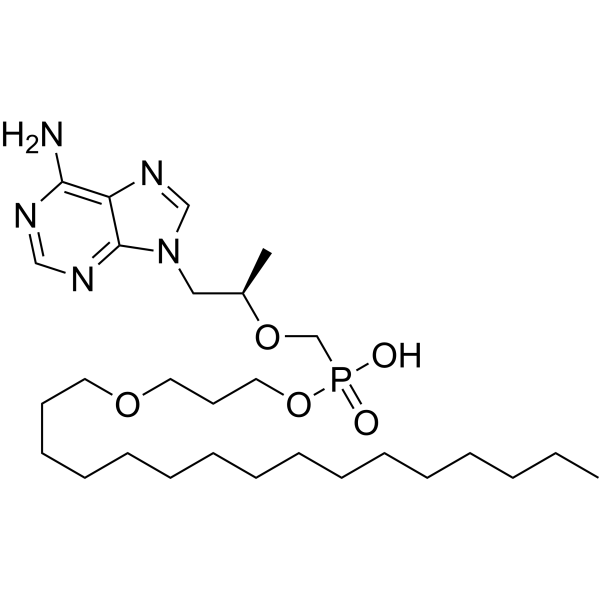
Tenofovir exalidex (CMX157) is a lipid conjugate of the acyclic nucleotide analog Tenofovir with activity against both wild-type and antiretroviral drug-resistant HIV strains, including multidrug nucleoside/nucleotide analog-resistant viruses. Tenofovir exalidex is active against all major subtypes of HIV-1 and HIV-2 in fresh human PBMCs and against all HIV-1 strains evaluated in monocyte-derived macrophages, with EC50s ranging between 0.2 and 7.2 nM. CMX157 is orally available and has no apparent toxicity. Tenofovir exalidex also shows antiviral activity against HBV.
Nur für Forschungszwecke. Wir verkaufen nicht an Patienten.
- Reinheit : 99.82%
- CAS. Nr.: 911208-73-6
- Formel: C28H52N5O5P
- Molecular Weight:569.72
-
Speicherung:Powder -20°C, 3 years , 4°C, 2 years ; In solvent -80°C, 6 months , -20°C, 1 month

To place orders, for customer services and technical support, please contact: MedChemExpress USA
Tel: 609-228-6898 E-mail: [email protected] [email protected]


-
 Biologische Aktivität
-
Chemical Information
-
Lösungsmittel & Löslichkeit
- Protokoll
- Reinheit & Dokumentation
- Verweise
-
 Help & FAQs


-
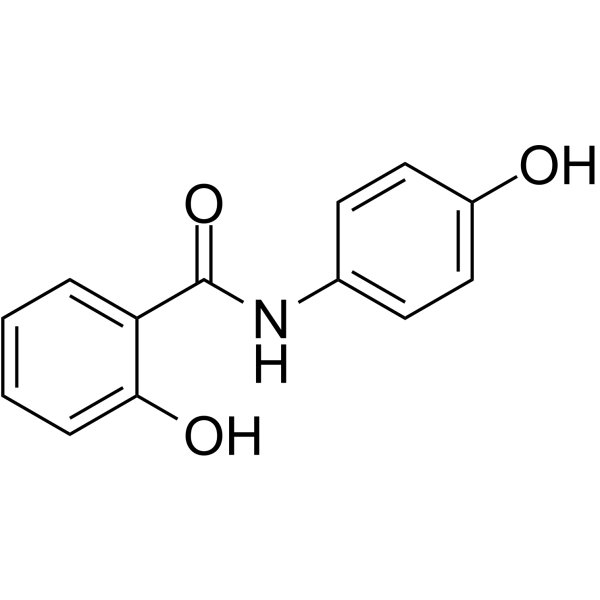
HY-B2116
OsalmidHBV Inhibitor -
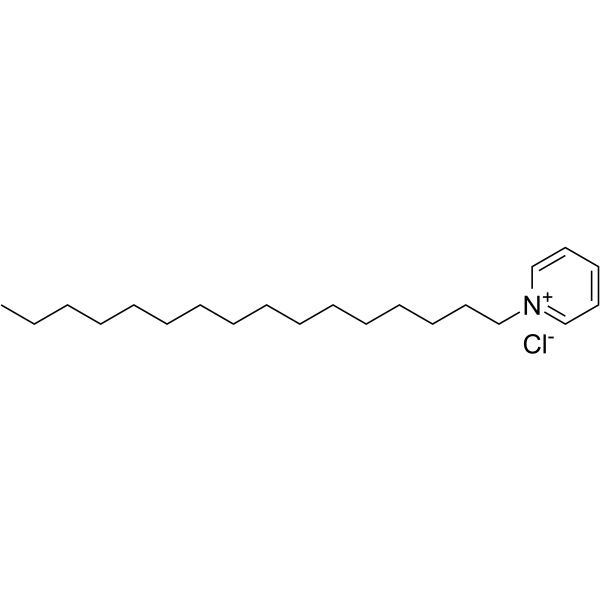
HY-B1464
Cetylpyridinium chlorideAntimicrobial Agent -
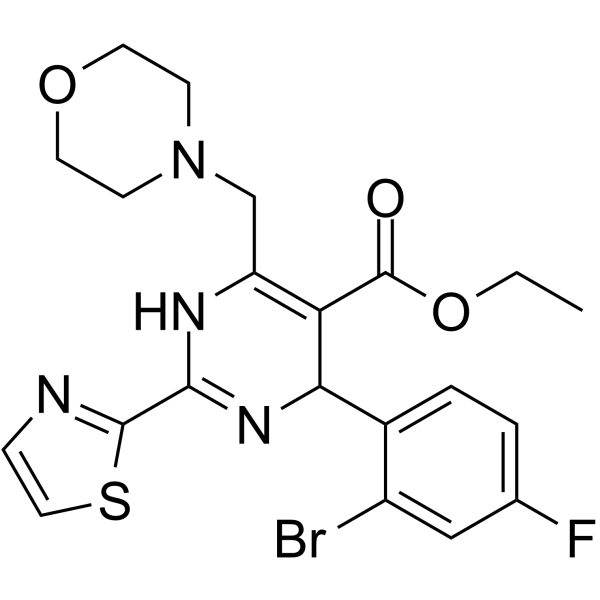
HY-108917
MorphothiadinHBV Inhibitor -
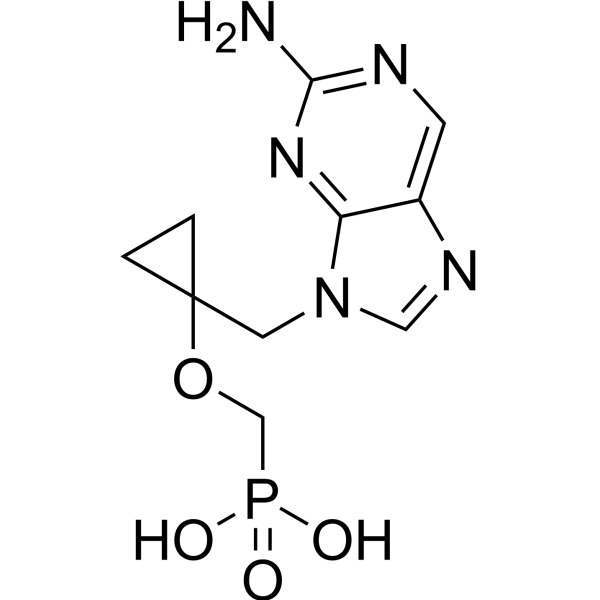
HY-19447
BesifovirHBV Inhibitor -
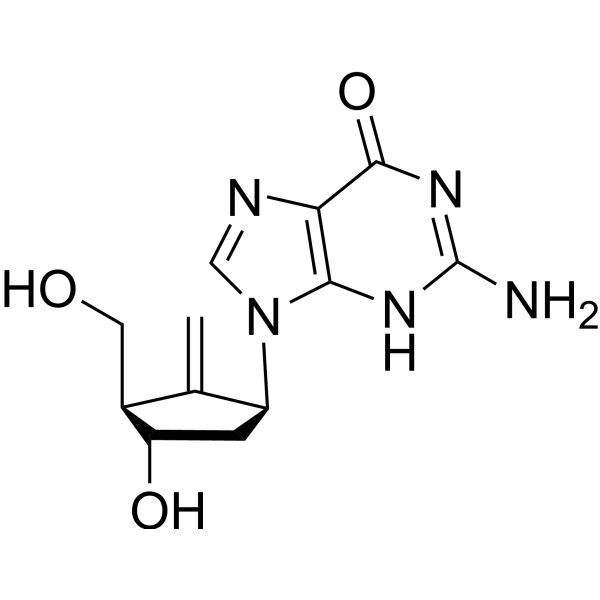
HY-13623
EntecavirHBV Inhibitor -

HY-109014R
Tenofovir exalidex (Standard)HIV Inhibitor -
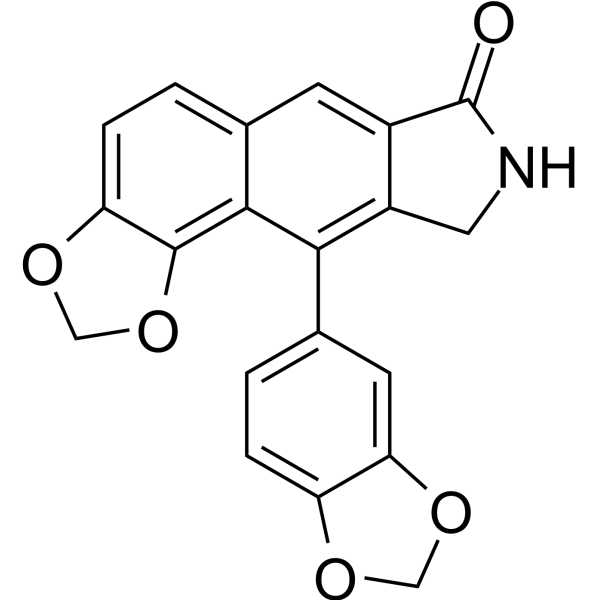
HY-16679
Helioxanthin derivative 5-4-2HBV Inhibitor -
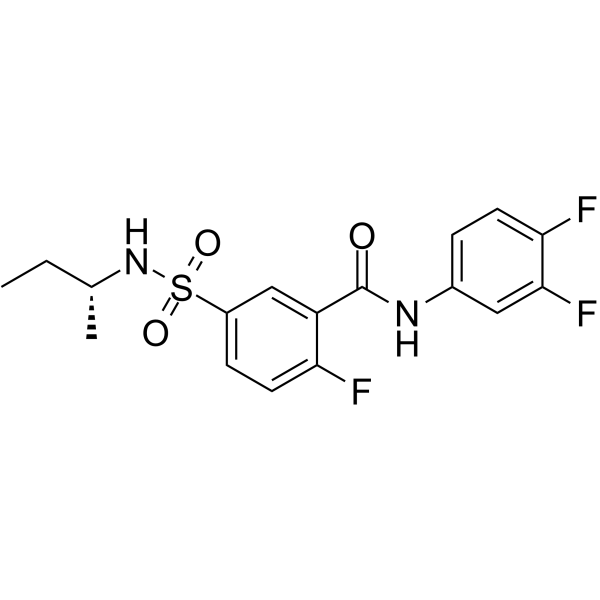
HY-112142
AB-423 -
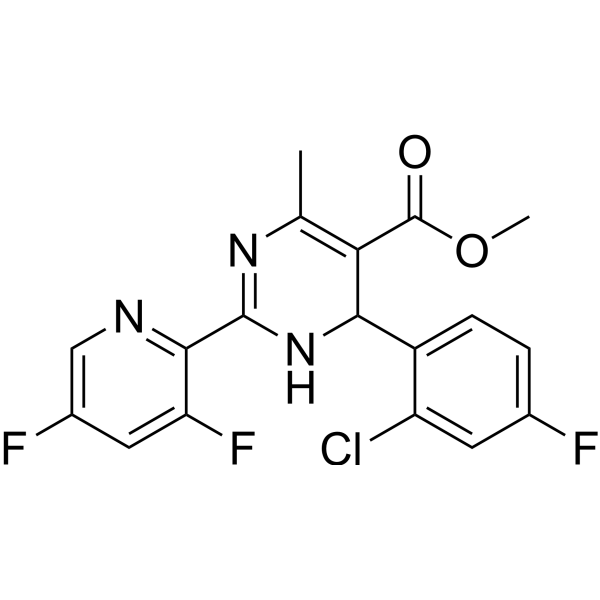
HY-100029A
Bay 41-4109 racemateHBV Inhibitor -
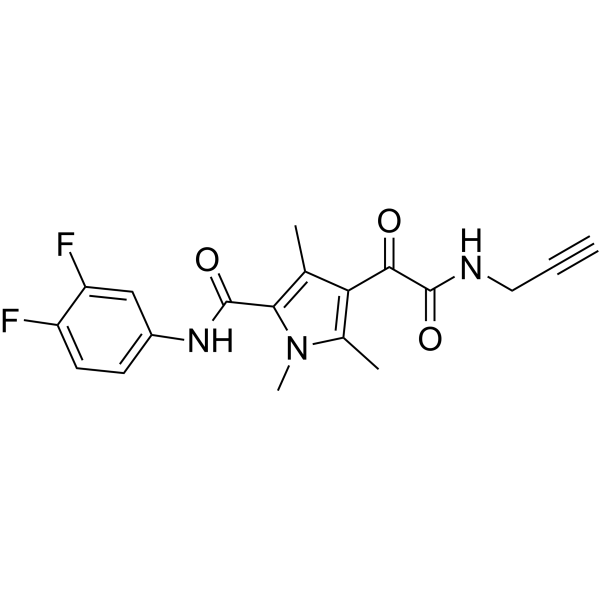
HY-124614
GLP-26HBV Capsid Effector -
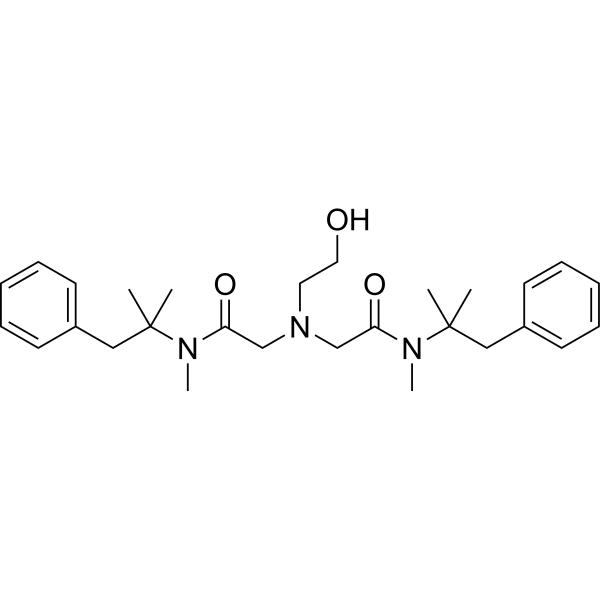
HY-B0955
OxethazaineAnalgesic Agent -
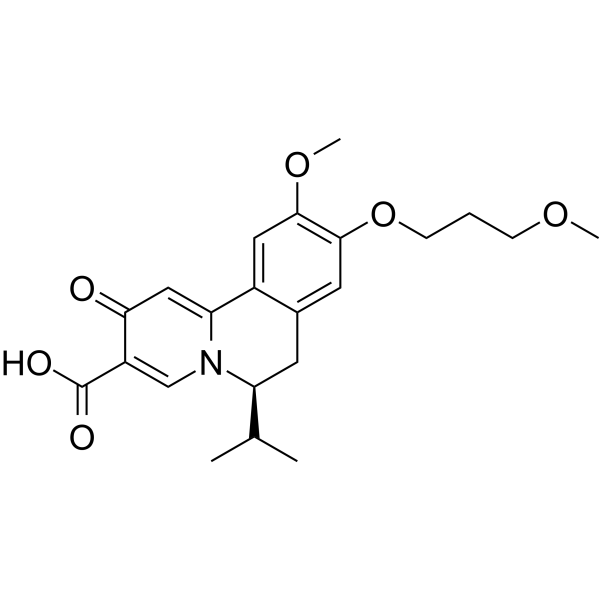
HY-117650A
RG7834HBV Inhibitor


Biologische Aktivität
Beschreibung
IC50 & Target
|
HIV-1 |
HIV-2 |
Cellular Effect
|
Cell Line

|
Type | Value | Description | References |
|---|---|---|---|---|
| Bone marrow cell | CC50 |
2.5 μM
Compound: 1, CMX157
|
Cytotoxicity against human bone marrow cells after 24 hrs by GM-CFU assay
Cytotoxicity against human bone marrow cells after 24 hrs by GM-CFU assay
|
[PMID: 20439609] |
| Bone marrow cell | CC50 |
4.6 μM
Compound: 1, CMX157
|
Cytotoxicity against human bone marrow cells after 24 hrs by BFU-E assay
Cytotoxicity against human bone marrow cells after 24 hrs by BFU-E assay
|
[PMID: 20439609] |
| HepG2 | EC50 |
>18.8 μM
Compound: CMX157, HDP-(R)-PMPA
|
Cytotoxicity against human HepG2 cells by MTS assay
Cytotoxicity against human HepG2 cells by MTS assay
|
[PMID: 17646420] |
| HepG2 2.2.15 | EC50 |
>300 μM
Compound: CMX157, HDP-(R)-PMPA
|
Cytotoxicity against human HepG2(2.2.15) cells after 24 hrs by neutral red uptake assay
Cytotoxicity against human HepG2(2.2.15) cells after 24 hrs by neutral red uptake assay
|
[PMID: 17646420] |
| HepG2 2.2.15 | EC50 |
1.6 μM
Compound: CMX157, HDP-(R)-PMPA
|
Antiviral activity against HBV in human HepG2(2.2.15) cells assessed as viral DNA levels treated for 9 days measured after 24 hrs
Antiviral activity against HBV in human HepG2(2.2.15) cells assessed as viral DNA levels treated for 9 days measured after 24 hrs
|
[PMID: 17646420] |
| MT2 | CC50 |
54 μM
Compound: CMX157, HDP-(R)-PMPA
|
Cytotoxicity against human MT2 cells
Cytotoxicity against human MT2 cells
|
[PMID: 17646420] |
| MT2 | EC50 |
<1 x 10⁻⁵ μM
Compound: CMX157, HDP-(R)-PMPA
|
Antiviral activity against HIV1 LAI in human MT2 cells assessed as inhibition of p24 antigen production by ELISA
Antiviral activity against HIV1 LAI in human MT2 cells assessed as inhibition of p24 antigen production by ELISA
|
[PMID: 17646420] |
| PBMC | CC50 |
144 μM
Compound: CMX157, HDP-(R)-PMPA
|
Cytotoxicity against human PBMC by XTT assay
Cytotoxicity against human PBMC by XTT assay
|
[PMID: 17646420] |
| PBMC | CC50 |
>100 μM
Compound: 1
|
Cytotoxicity against human PBMC assessed as reduction in cell viability by XTT assay
Cytotoxicity against human PBMC assessed as reduction in cell viability by XTT assay
|
[PMID: 27405794] |
In Vitro
Tenofovir exalidex is consistently >300-fold more active than Tenofovir against multiple viruses in several different cell systems. Tenofovir exalidex will be effective against MNR mutants, including those that are unresponsive to all currently available NRTIs. Notably, the average EC50 in PBMCs for CMX157 against a panel of 27 wild-type HIV-1 isolates representing group M subtypes A to G and group O was 2.6 nM (range, 0.2 to 7.2 nM)[1].
Tenofovir exalidex exerts its therapeutic actions by inhibiting HBV polymerase-mediated HBV DNA elongation, but there is no known binding of cyclophilins to HBV polymerase nor participation of cyclophilins in DNA elongation. The combinational effect of CRV431 (host-targeting) and Tenofovir exalidex (direct-acting) on HBV DNA production is more consistent with the two compounds acting on distinct steps of the HBV life cycle[3].
MedChemExpress (MCE) has not independently confirmed the accuracy of these methods. They are for reference only. Further protocols information, click here.
In Vivo
MedChemExpress (MCE) has not independently confirmed the accuracy of these methods. They are for reference only.
-
Animal Model:Female transgenic mice HBV transgenic Tg05 mice (C57BL/6)[1]
-
Dosage:5 mg/kg, 10 mg/kg
-
Administration:Oral gavage; daily for a period of 16 days
-
Result:The reductions in HBV DNA were 55% and 97% for low-dose (5 mg/kg/day) and high-dose (10 mg/kg/day), respectively.
Clinical Trial
| NCT Number | Sponsor | Condition | Start Date |
Phase
|
|---|---|---|---|---|
| NCT01329991 | Plexxikon| | 2011-05 | PHASE1 |


Chemical Information
-
CAS. Nr. 911208-73-6
-
Appearance Solid
-
Molecular Weight 569.72
-
Formel C28H52N5O5P
-
Color White to off-white
-
SMILES
NC1=C2N=CN(C[C@H](OCP(O)(OCCCOCCCCCCCCCCCCCCCC)=O)C)C2=NC=N1
-
Synonyms
CMX-157
-
Versand
Room temperature in continental US; may vary elsewhere.
-
Speicherung
Powder -20°C 3 years 4°C 2 years In solvent -80°C 6 months -20°C 1 month


Lösungsmittel & Löslichkeit
In Vitro:
DMSO : 100 mg/mL (175.52 mM; Need ultrasonic; Hygroscopic DMSO has a significant impact on the solubility of product, please use newly opened DMSO)
Ethanol : 1 mg/mL (1.76 mM; Need ultrasonic)
Please refer to the solubility information to select the appropriate solvent. Once prepared, please aliquot and store the solution to prevent product inactivation from repeated freeze-thaw cycles.
Storage method and period of stock solution: -80°C, 6 months; -20°C, 1 month. When stored at -80°C, please use it within 6 months. When stored at -20°C, please use it within 1 month.
Please refer to the solubility information to select the appropriate solvent. Once prepared, please aliquot and store the solution to prevent product inactivation from repeated freeze-thaw cycles.
Storage method and period of stock solution: -80°C, 6 months; -20°C, 1 month. When stored at -80°C, please use it within 6 months. When stored at -20°C, please use it within 1 month.
Konzentration (Stammlösung) × Volumen (Stammlösung) = Konzentration (Ziellösung) × Volumen (Ziellösung)
In Vivo:
Select the appropriate dissolution method based on your experimental animal and administration route.
- For the following dissolution methods, please ensure to first prepare a clear stock solution using an In Vitro approach and then sequentially add co-solvents:
- To ensure reliable experimental results, the clarified stock solution can be appropriately stored based on storage conditions. As for the working solution for In Vivo experiments, it is recommended to prepare freshly and use it on the same day.
- The percentages shown for the solvents indicate their volumetric ratio in the final prepared solution. If precipitation or phase separation occurs during preparation, heat and/or sonication can be used to aid dissolution.
In Vivo Dissolution Calculator
Please enter the basic information of animal experiments:
-
-
-
-
Recommended: Prepare an additional quantity of animals to account for potential losses during experiments.
Please enter your animal formula composition:
-
%DMSO +
Recommended: Keep the proportion of DMSO in working solution below 2% if your animal is weak.
-
%+
-
+%Tween-80 + +
-
%Saline +
The co-solvents required include: DMSO, . All of co-solvents are available by MedChemExpress (MCE). , Tween 80. All of co-solvents are available by MedChemExpress (MCE).
Working solution concentration: 0.22 mg/mL
Method for preparing stock solution: mg drug dissolved in μL DMSO. Stock solution concentration: mg/mL.
1. Take μL DMSO stock solution;
2. Add μL .
μL , mix evenly;
3. Then add μL Tween 80, mix evenly;
4. Then add μL
Please ensure that the stock solution in the first step is dissolved to a clear state, and add co-solvents in sequence. You can use ultrasonic heating (ultrasonic cleaner, recommended frequency 20-40 kHz), vortexing, etc. to assist dissolution.

Protokoll
-
Research Protocol for Infectious Diseases
Infectious-disease experiments test how pathogens interact with host barriers, innate immune receptors, inflammatory signaling, pathogen replication, and tissue injury; pattern-recognition receptors such as TLRs, RIG-I-like receptors, NOD-like receptors, and inflammasomes detect microbial molecules and activate NF-κB, interferon, and cytokine responses. The central hypothesis is that infection severity reflects the balance between pathogen burden and host response: protective inflammation restricts pathogen growth, whereas excessive or mislocalized inflammation contributes to tissue damage and disease phenotype. Unresolved questions include which host pathways are protective versus pathogenic, why some infection models fail to translate to human disease, and which combined readouts best predict clinically relevant infection outcomes.


Reinheit & Dokumentation
-
Data Sheet (288 KB)
-
SDS (252 KB)
- English - EN (252 KB)
- Français - FR (252 KB)
- Deutsch - DE (252 KB)
- Norwegian - NO (252 KB)
- Español - ES (252 KB)
- Swedish - SV (252 KB)
- Italian - IT (252 KB)
- Korean - KR (252 KB)
- Portuguese - PT (252 KB)
-
Handling Instructions (2659 KB)
Verweise
[1]. Lanier ER, et al. Development of hexadecyloxypropyl tenofovir (CMX157) for treatment of infection caused by wild-type and nucleoside/nucleotide-resistant HIV. Antimicrob Agents Chemother. 2010;54(7):2901-2909. [Content Brief]
[2]. Gallay P, et al. The cyclophilin inhibitor CRV431 inhibits liver HBV DNA and HBsAg in transgenic mice. PLoS One. 2019;14(6):e0217433. Published 2019 Jun 10. [Content Brief]
[3]. Painter GR, et al. Evaluation of hexadecyloxypropyl-9-R-[2-(Phosphonomethoxy)propyl]- adenine, CMX157, as a potential treatment for human immunodeficiency virus type 1 and hepatitis B virus infections [published correction appears in Antimicrob Agents Chemother. 2007 Dec;51(12):4538]. Antimicrob Agents Chemother. 2007;51(10):3505-3509. [Content Brief]


Complete Stock Solution Preparation Table
Please refer to the solubility information to select the appropriate solvent. Once prepared, please aliquot and store the solution to prevent product inactivation from repeated freeze-thaw cycles.
Storage method and period of stock solution: -80°C, 6 months; -20°C, 1 month. When stored at -80°C, please use it within 6 months. When stored at -20°C, please use it within 1 month.
| Optional Solvent | Concentration Solvent Mass | 1 mg | 5 mg | 10 mg | 25 mg |
|---|---|---|---|---|---|
| Ethanol / DMSO | 1 mM | 1.7552 mL | 8.7762 mL | 17.5525 mL | 43.8812 mL |
| DMSO | 5 mM | 0.3510 mL | 1.7552 mL | 3.5105 mL | 8.7762 mL |
| 10 mM | 0.1755 mL | 0.8776 mL | 1.7552 mL | 4.3881 mL | |
| 15 mM | 0.1170 mL | 0.5851 mL | 1.1702 mL | 2.9254 mL | |
| 20 mM | 0.0878 mL | 0.4388 mL | 0.8776 mL | 2.1941 mL | |
| 25 mM | 0.0702 mL | 0.3510 mL | 0.7021 mL | 1.7552 mL | |
| 30 mM | 0.0585 mL | 0.2925 mL | 0.5851 mL | 1.4627 mL | |
| 40 mM | 0.0439 mL | 0.2194 mL | 0.4388 mL | 1.0970 mL | |
| 50 mM | 0.0351 mL | 0.1755 mL | 0.3510 mL | 0.8776 mL | |
| 60 mM | 0.0293 mL | 0.1463 mL | 0.2925 mL | 0.7314 mL | |
| 80 mM | 0.0219 mL | 0.1097 mL | 0.2194 mL | 0.5485 mL | |
| 100 mM | 0.0176 mL | 0.0878 mL | 0.1755 mL | 0.4388 mL |


Tenofovir exalidex Related Classifications
HY-109014 Related Classifications
 Powered by Bioz