



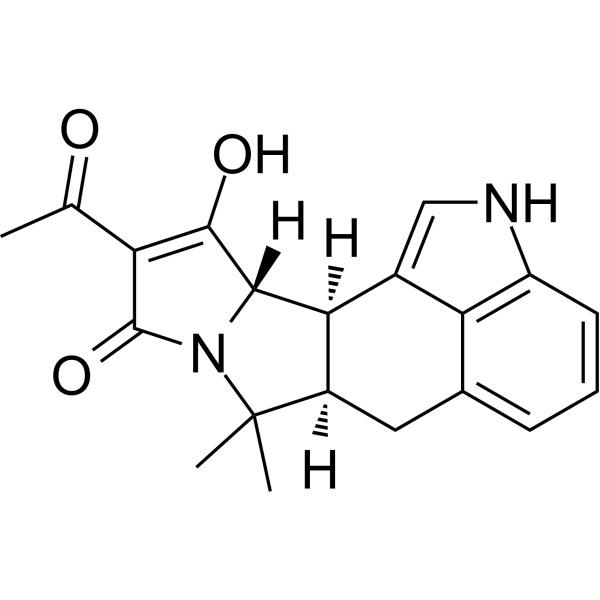
Cyclopiazonic acid
Based on 7 publication(s) in Google Scholar
Cyclopiazonic acid is an endoplasmic reticulum calcium ATPase (ECAs) inhibitor and human respiratory syncytial virus (RSV) inhibitor (EC50 value of 4.13 μ M), which can reduce the antagonistic effect of 5-HT receptors in rat thoracic aorta, induce p53 dependent cell apoptosis and reproductive toxicity in mouse testes, and inhibit the biological activation of aflatoxin B[1][4][5].
For research use only. We do not sell to patients.
- Purity : 99.86%
- CAS No.: 18172-33-3
- Formula: C20H20N2O3
- Molecular Weight:336.38
-
Storage:Powder -20°C, 3 years , 4°C, 2 years ; In solvent -80°C, 6 months , -20°C, 1 month

To place orders, for customer services and technical support, please contact: MedChemExpress USA
Tel: 609-228-6898 E-mail: [email protected] [email protected]


-
 Biological Activity
-
Chemical Information
-
Solvent & Solubility
- Protocols
- Purity & Documentation
- References
-
 Help & FAQs


-
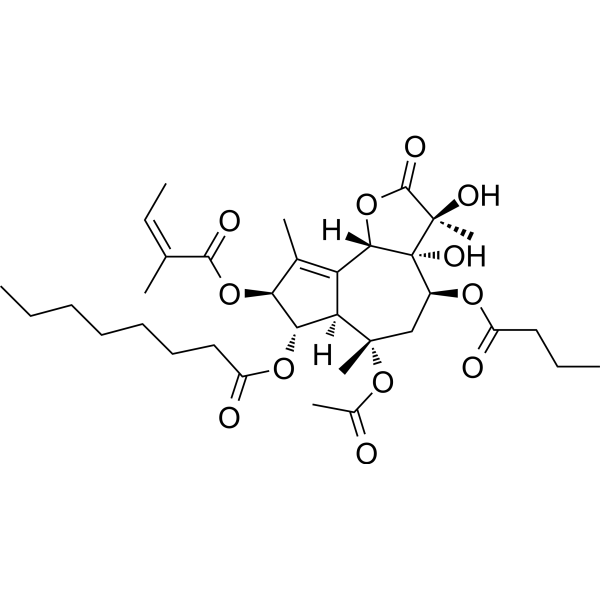
HY-13433
ThapsigarginER Stress Inducer -
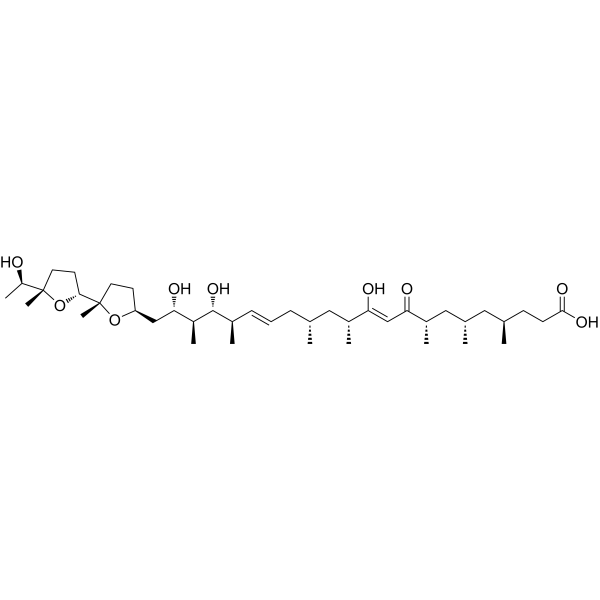
HY-13434
IonomycinCalcium Ionophore -
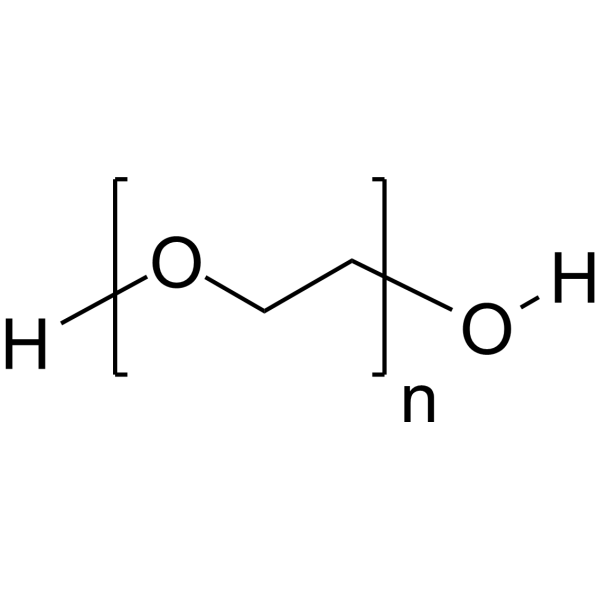
HY-Y0873
PEG300Neutral Polymer -

HY-Y1891
Tween 80 -
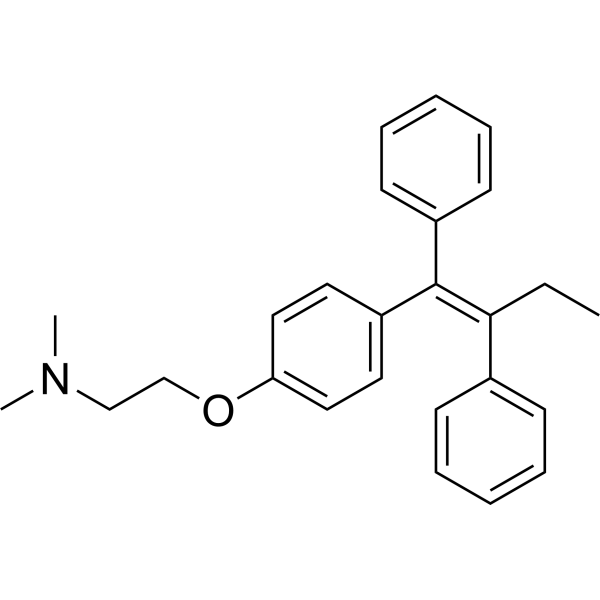
HY-13757A
TamoxifenEstrogen Receptor Modulator -
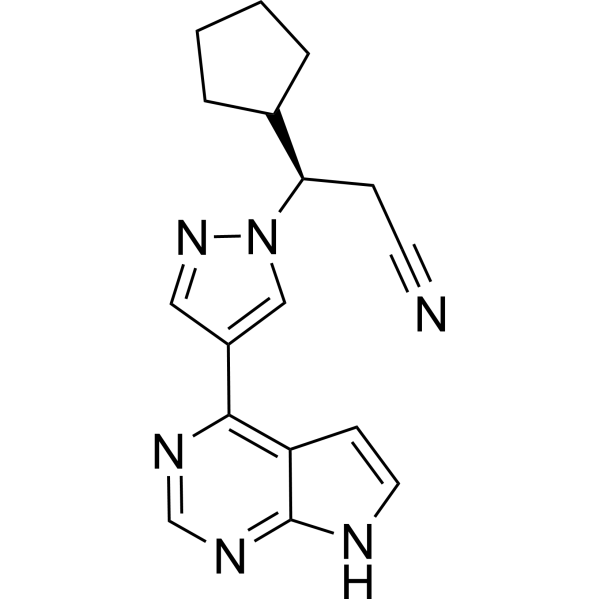
HY-50856
RuxolitinibJAK1/2 Inhibitor -
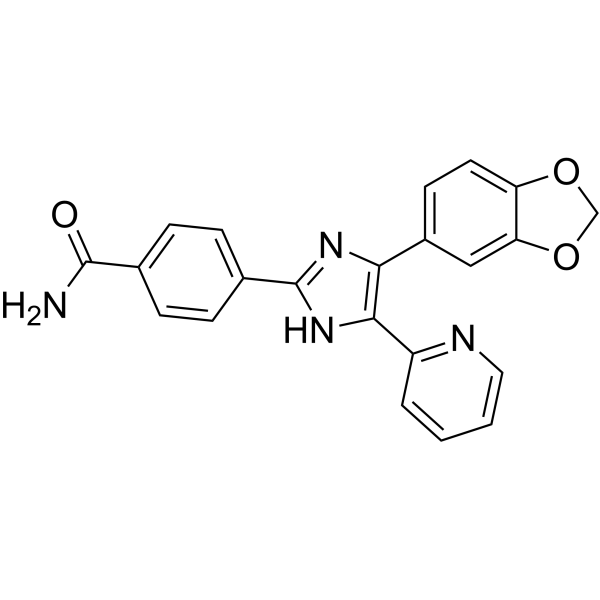
HY-10431
SB-431542TGF-β Receptor Kinase Inhibitor -
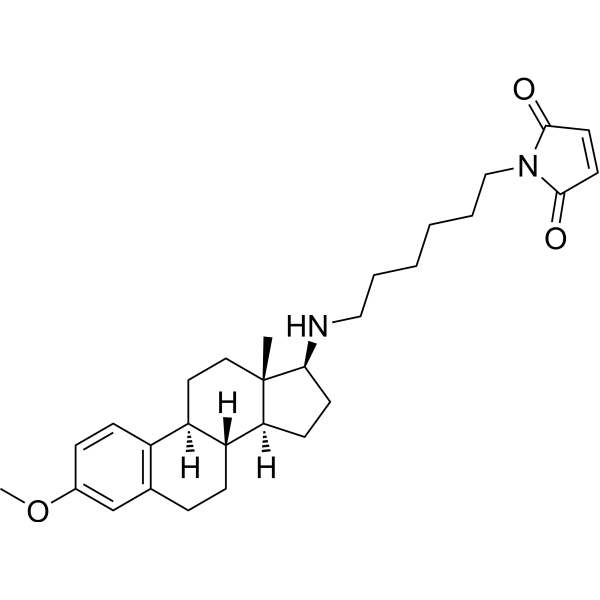
HY-13419
U-73122Phospholipase C Inhibitor -
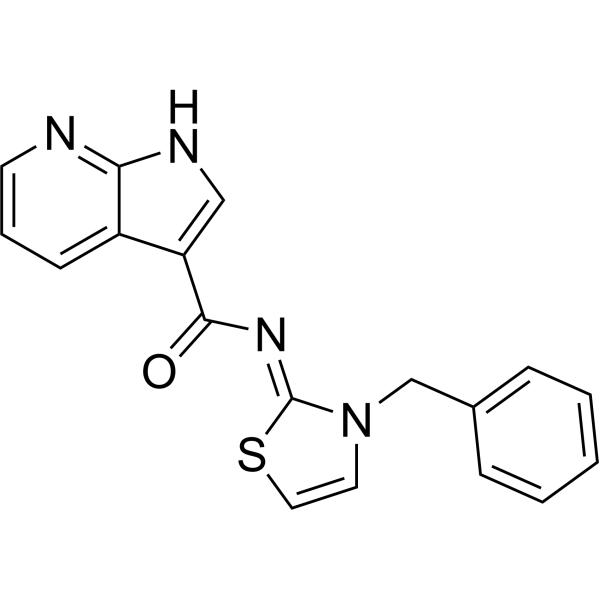
HY-138489
TRULILat1/2 kinases Inhibitor -
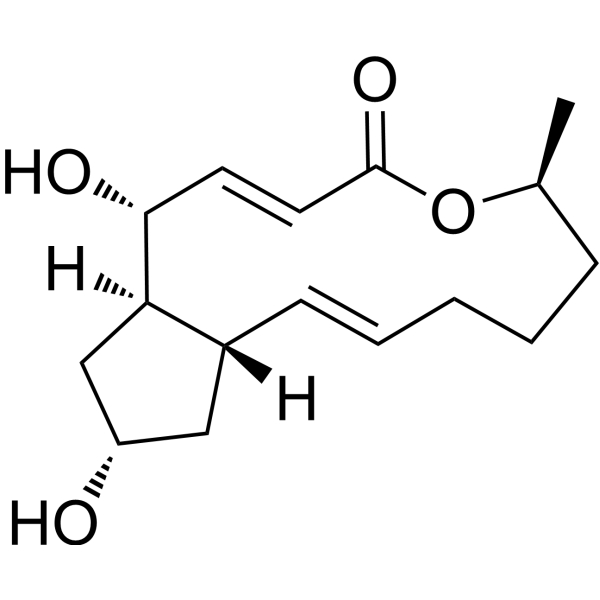
HY-16592
Brefeldin AProtein Transport Inhibitor -
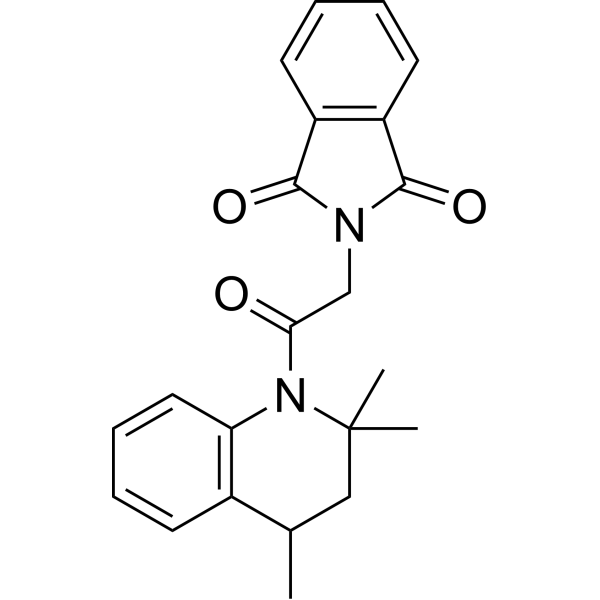
HY-108462
ML-SA1TRPML Agonist -
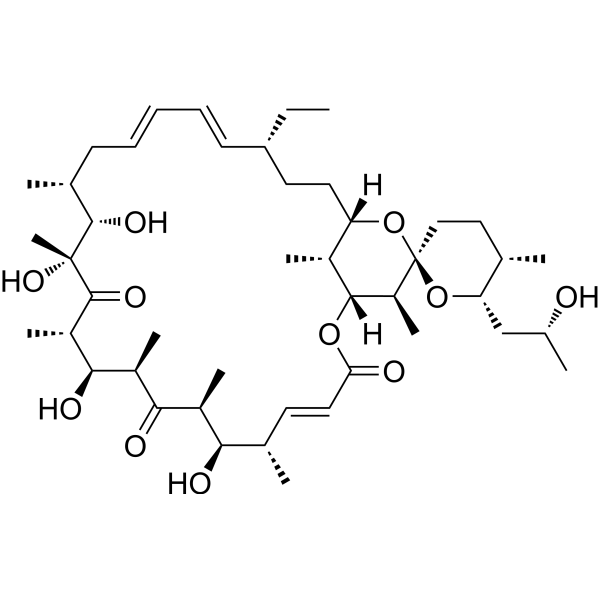
HY-16589
Oligomycin AMitochondrial ATP Synthase Inhibitor
Publications Citing Use of MedChemExpress (MCE) Cyclopiazonic acid
More- Nat Commun. 2025 Aug 29;16(1):8074. [Abstract]
- Genes Dis. 2024 Mar 28;11(6):101281. [Abstract]
- J Clin Invest. 2022 Apr 15;132(8):e149160. [Abstract]
- Alzheimers Res Ther. 2025 Dec 1;17(1):253. [Abstract]
- Cell Rep. 2025 Nov 25;44(11):116502. [Abstract]
- Cell Rep. 2023 Dec 26;42(12):113573. [Abstract]
- Mol Biol Rep. 2025 Feb 12;52(1):223. [Abstract]
 Customer Validation & Images

-
Others
-
WB
-
Cell Proliferation/Viability Assay
-
Others
-
Others
All Calcium Channel Isoforms
MoreAll 5-HT Receptor Isoforms
More

Biological Activity
Description
Cellular Effect
|
Cell Line

|
Type | Value | Description | References |
|---|---|---|---|---|
| Sf9 | IC50 |
0.01 μM
Compound: 1, CPA
|
Inhibition of Heliothis virescens SERCA expressed in Sf9 cells assessed as ATP depletion measured after 60 mins by luciferin/luciferase coupled reporter gene assay
Inhibition of Heliothis virescens SERCA expressed in Sf9 cells assessed as ATP depletion measured after 60 mins by luciferin/luciferase coupled reporter gene assay
|
[PMID: 21719297] |
In Vitro
Cyclopiazonic acid (10 μM) enhances 5-HT-induced contraction and reduces the antagonistic effect of 5-HT receptors in rat thoracic aorta [2]. Cyclopiazonic acid (10 μM, 48h) has an inhibitory effect on pacemaker current in sinoatrial node cells[3]. Cyclopiazonic acid (10 μM, 48h) exhibits antiviral activity against human respiratory syncytial virus by increasing intracellular calcium concentration in HEp-2 cells[4]. Cyclopiazonic acid (10 μM) inhibits the formation of certain metabolites of caffeine and testosterone and suppresses the biological activation of aflatoxin B through cytochrome P450 enzymes[5].
MedChemExpress (MCE) has not independently confirmed the accuracy of these methods. They are for reference only.
-
Cell Line:Isolated sinoatrial node (SAN) cells
-
Concentration:10 μM
-
Incubation Time:48 h
-
Result:Reduced the expression of HCN4 protein.
In Vivo
MedChemExpress (MCE) has not independently confirmed the accuracy of these methods. They are for reference only.
-
Animal Model:Adult male mice[1].
-
Dosage:0.03, 0.06, 0.12 mg/kg
-
Administration:Intraperitoneal injection (i.p.); once a day; 28 days
-
Result:Increased the levels of malondialdehyde (MDA), NO, and CO in testicular tissue, and reduced the concentration of total thiol molecules (TTM) and the level of total antioxidant capacity (TAC).


Chemical Information
-
CAS No. 18172-33-3
-
Appearance Solid
-
Molecular Weight 336.38
-
Formula C20H20N2O3
-
Color Off-white to yellow
-
SMILES
O=C1C(C(C)=O)=C(O)[C@@]([C@]23[H])([H])N1C(C)(C)[C@]2([H])CC4=CC=CC5=C4C3=CN5
-
Structure Classification
-
Initial Source
Aspergillus flavus
-
Shipping
Room temperature in continental US; may vary elsewhere.
-
Storage
Powder -20°C 3 years 4°C 2 years In solvent -80°C 6 months -20°C 1 month


Publications (7)
-
Journal Impact Factor
-
Most Recent
-
Nat Commun
NEXN protects against vascular calcification by promoting SERCA2 SUMOylation and stabilization. [Abstract]2025 Aug 29;16(1):8074. PMID: 40883305 -
Genes Dis
STIM1 promotes acquired resistance to sorafenib by attenuating ferroptosis in hepatocellular carcinoma. [Abstract]2024 Mar 28;11(6):101281. PMID: 39281833
Cyclopiazonic acid purchased from MedChemExpress. Usage Cited in: Genes Dis. 2024 Mar 28;11(6):101281. [Abstract]
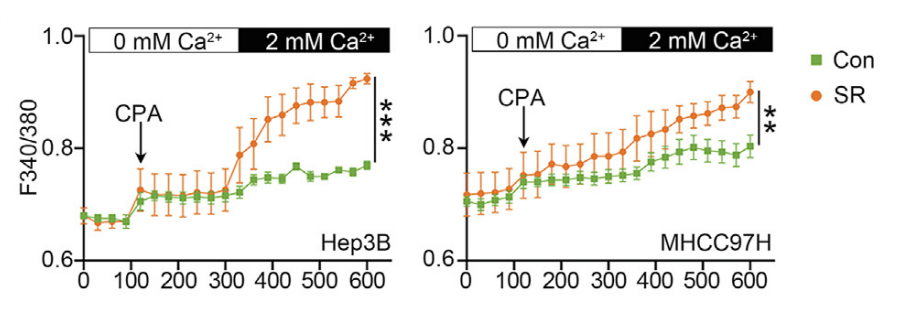
Calcium imaging was applied to analyze the calcium mobilization in Con- and SR-Hep3B and MHCC97H cells, respectively upon cyclopiazonic acid (CPA) (200 μM) stimulation.
-
J Clin Invest
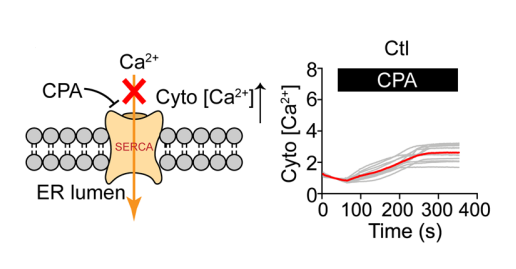
Aberrant miR-339-5p/neuronatin signaling causes prodromal neuronal calcium dyshomeostasis in mutant presenilin mice. [Abstract]2022 Apr 15;132(8):e149160. PMID: 35426376
Cyclopiazonic acid purchased from MedChemExpress. Usage Cited in: J Clin Invest. 2022 Apr 15;132(8):e149160. [Abstract]
CPA (Cyclopiazonic acid: 5 μM) inhibited SERCA and promoted Ca2+ efflux from ER.
-
Alzheimers Res Ther
Ceftriaxone alleviates mitochondrial damage through the inhibition of extrasynaptic NMDA receptor-mediated changes in intracellular calcium levels to improve cognitive deficits in APP/PS1 mice. [Abstract]2025 Dec 1;17(1):253. PMID: 41327376
Cyclopiazonic acid purchased from MedChemExpress. Usage Cited in: Alzheimers Res Ther. 2025 Dec 1;17(1):253. [Abstract]
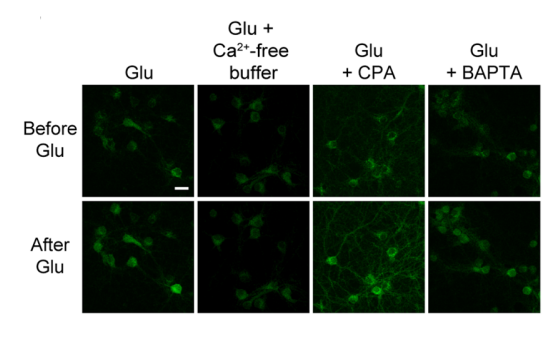
Neuronal MMP decrease induced by Glu exposure was abolished by Ca2+-free buffer, suppressed by preincubation with BAPTA-AM (10 μM; 30 min) but not CPA (Cyclopiazonic acid: 10 μM; 10 min).
-
Cell Rep
Goblet cell-expressed microprotein FXYD3 determines gut homeostasis by maintaining mucus barrier integrity. [Abstract]2025 Nov 25;44(11):116502. PMID: 41187059 -
Cell Rep
Reduced lysosomal density in neuronal dendrites mediates deficits in synaptic plasticity in Huntington's disease. [Abstract]2023 Dec 26;42(12):113573. PMID: 38096054 -
Mol Biol Rep
Mechanism of Ca2+ overload caused by STIM1/ORAI1 activation of store-operated Ca2+ entry (SOCE) in hydrogen peroxide-induced mitochondrial damage and apoptosis in human primary melanocytes. [Abstract]2025 Feb 12;52(1):223. PMID: 39937331
Cyclopiazonic acid purchased from MedChemExpress. Usage Cited in: Mol Biol Rep. 2025 Feb 12;52(1):223. [Abstract]
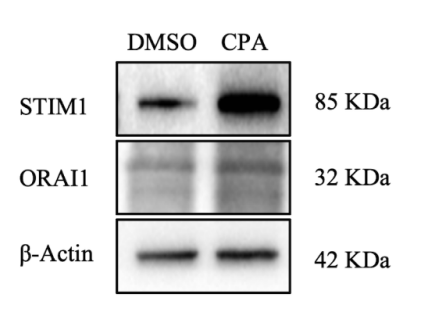
Protein expression of STIM1 and ORAI1 in melanocytes pretreated with CPA (Cyclopiazonic acid: 2.5 µM).
Cyclopiazonic acid purchased from MedChemExpress. Usage Cited in: Mol Biol Rep. 2025 Feb 12;52(1):223. [Abstract]
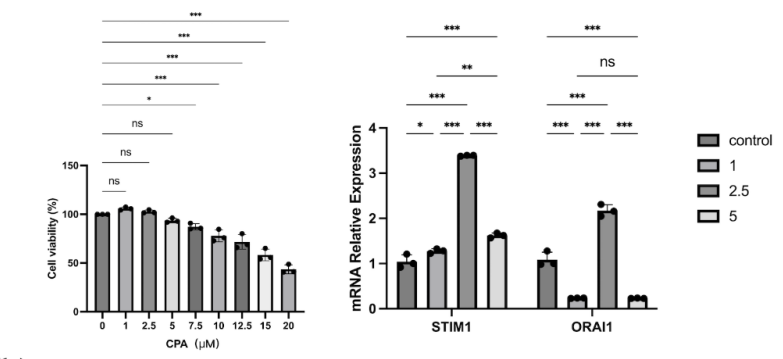
Cell viability of STIM1 and ORAI1 in melanocytes pretreated with CPA (Cyclopiazonic acid: 2.5 µM).


Solvent & Solubility
In Vitro:
DMSO : 100 mg/mL (297.28 mM; Need ultrasonic; Hygroscopic DMSO has a significant impact on the solubility of product, please use newly opened DMSO)
Please refer to the solubility information to select the appropriate solvent. Once prepared, please aliquot and store the solution to prevent product inactivation from repeated freeze-thaw cycles.
Storage method and period of stock solution: -80°C, 6 months; -20°C, 1 month. When stored at -80°C, please use it within 6 months. When stored at -20°C, please use it within 1 month.
Please refer to the solubility information to select the appropriate solvent. Once prepared, please aliquot and store the solution to prevent product inactivation from repeated freeze-thaw cycles.
Storage method and period of stock solution: -80°C, 6 months; -20°C, 1 month. When stored at -80°C, please use it within 6 months. When stored at -20°C, please use it within 1 month.
Concentration (start) × Volume (start) = Concentration (final) × Volume (final)
In Vivo:
Select the appropriate dissolution method based on your experimental animal and administration route.
- For the following dissolution methods, please ensure to first prepare a clear stock solution using an In Vitro approach and then sequentially add co-solvents:
- To ensure reliable experimental results, the clarified stock solution can be appropriately stored based on storage conditions. As for the working solution for In Vivo experiments, it is recommended to prepare freshly and use it on the same day.
- The percentages shown for the solvents indicate their volumetric ratio in the final prepared solution. If precipitation or phase separation occurs during preparation, heat and/or sonication can be used to aid dissolution.
Add each solvent one by one: 10% DMSO 40% PEG300 5% Tween-80 45% Saline
Solubility: ≥ 2.5 mg/mL (7.43 mM); Clear solution
This protocol yields a clear solution of ≥ 2.5 mg/mL (saturation unknown).
Taking 1 mL working solution as an example, add 100 μL DMSO stock solution (25.0 mg/mL) to 400 μL PEG300, and mix evenly; then add 50 μL Tween-80 and mix evenly; then add 450 μL Saline to adjust the volume to 1 mL.
Preparation of Saline: Dissolve 0.9 g sodium chloride in ddH₂O and dilute to 100 mL to obtain a clear Saline solution.
In Vivo Dissolution Calculator
Please enter the basic information of animal experiments:
-
-
-
-
Recommended: Prepare an additional quantity of animals to account for potential losses during experiments.
Please enter your animal formula composition:
-
%DMSO +
Recommended: Keep the proportion of DMSO in working solution below 2% if your animal is weak.
-
%+
-
+%Tween-80 + +
-
%Saline +
The co-solvents required include: DMSO, . All of co-solvents are available by MedChemExpress (MCE). , Tween 80. All of co-solvents are available by MedChemExpress (MCE).
Working solution concentration: 0.22 mg/mL
Method for preparing stock solution: mg drug dissolved in μL DMSO. Stock solution concentration: mg/mL.
1. Take μL DMSO stock solution;
2. Add μL .
μL , mix evenly;
3. Then add μL Tween 80, mix evenly;
4. Then add μL
Please ensure that the stock solution in the first step is dissolved to a clear state, and add co-solvents in sequence. You can use ultrasonic heating (ultrasonic cleaner, recommended frequency 20-40 kHz), vortexing, etc. to assist dissolution.


Purity & Documentation
-
Data Sheet (284 KB)
-
SDS (480 KB)
- English - EN (480 KB)
- Français - FR (480 KB)
- Deutsch - DE (480 KB)
- Norwegian - NO (480 KB)
- Español - ES (480 KB)
- Swedish - SV (480 KB)
- Italian - IT (480 KB)
- Korean - KR (480 KB)
- Portuguese - PT (480 KB)
-
Handling Instructions (2659 KB)
References
[1]. Bonyadi F, et al. Cyclopiazonic acid induced p53-dependent apoptosis in the testis of mice: Another male related risk factor of infertility. Environ Toxicol. 2021 May;36(5):903-913. [Content Brief]
[2]. Selli C, et al. Cyclopiazonic acid alters serotonin-induced responses in rat thoracic aorta. Vascul Pharmacol. 2014 May-Jun;61(2-3):43-8. [Content Brief]
[3]. Chen Q, et al. Inhibitory Effects of Cyclopiazonic Acid on the Pacemaker Current in Sinoatrial Nodal Cells. Neuroscience. 2020 May 1;433:230-240. [Content Brief]
[4]. Cui R, et al. Cyclopiazonic acid, an inhibitor of calcium-dependent ATPases with antiviral activity against human respiratory syncytial virus. Antiviral Res. 2016 Aug;132:38-45. [Content Brief]
[5]. Kuilman-Wahls ME, et al. Cyclopiazonic acid inhibits mutagenic action of aflatoxin B(1). Environ Toxicol Pharmacol. 2002 Jul;11(3-4):207-12. [Content Brief]


Complete Stock Solution Preparation Table
Please refer to the solubility information to select the appropriate solvent. Once prepared, please aliquot and store the solution to prevent product inactivation from repeated freeze-thaw cycles.
Storage method and period of stock solution: -80°C, 6 months; -20°C, 1 month. When stored at -80°C, please use it within 6 months. When stored at -20°C, please use it within 1 month.
| Optional Solvent | Concentration Solvent Mass | 1 mg | 5 mg | 10 mg | 25 mg |
|---|---|---|---|---|---|
| DMSO | 1 mM | 2.9728 mL | 14.8641 mL | 29.7283 mL | 74.3207 mL |
| 5 mM | 0.5946 mL | 2.9728 mL | 5.9457 mL | 14.8641 mL | |
| 10 mM | 0.2973 mL | 1.4864 mL | 2.9728 mL | 7.4321 mL | |
| 15 mM | 0.1982 mL | 0.9909 mL | 1.9819 mL | 4.9547 mL | |
| 20 mM | 0.1486 mL | 0.7432 mL | 1.4864 mL | 3.7160 mL | |
| 25 mM | 0.1189 mL | 0.5946 mL | 1.1891 mL | 2.9728 mL | |
| 30 mM | 0.0991 mL | 0.4955 mL | 0.9909 mL | 2.4774 mL | |
| 40 mM | 0.0743 mL | 0.3716 mL | 0.7432 mL | 1.8580 mL | |
| 50 mM | 0.0595 mL | 0.2973 mL | 0.5946 mL | 1.4864 mL | |
| 60 mM | 0.0495 mL | 0.2477 mL | 0.4955 mL | 1.2387 mL | |
| 80 mM | 0.0372 mL | 0.1858 mL | 0.3716 mL | 0.9290 mL | |
| 100 mM | 0.0297 mL | 0.1486 mL | 0.2973 mL | 0.7432 mL |


Cyclopiazonic acid Related Classifications
HY-N6771 Related Classifications
 Powered by Bioz