



Ancitabine hydrochloride
Based on 1 publication(s) in Google Scholar
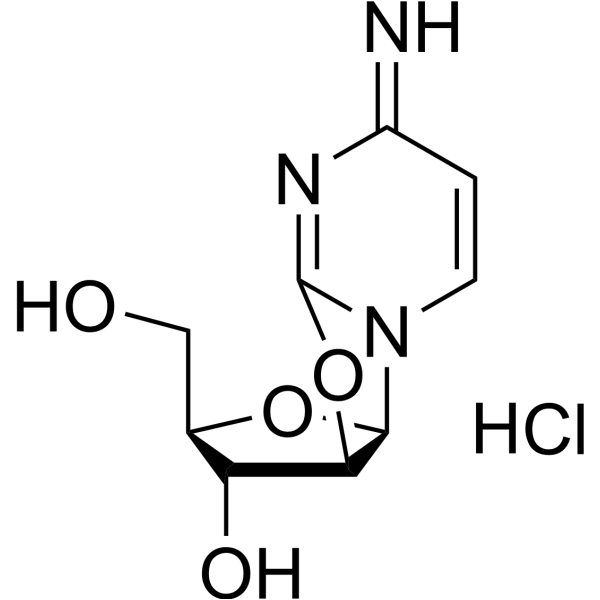
Ancitabine (Cyclocytidine) hydrochloride is a cytarabine derivative that inhibits viral replication. Ancitabine hydrochloride blocks vaccinia virus DNA replication, the progression of viral protein synthesis from early to late stages, and one-step growth of vaccinia virus. Ancitabine hydrochloride is applicable to research related to vaccinia virus infection, leukemia, human cytomegalovirus infection and colorectal cancer.
For research use only. We do not sell to patients.
- Purity : 99.88%
- CAS No.: 10212-25-6
- Formula: C9H12ClN3O4
- Molecular Weight:261.66
-
Storage:
4°C, sealed storage, away from moisture
* In solvent : -80°C, 6 months; -20°C, 1 month (sealed storage, away from moisture)

To place orders, for customer services and technical support, please contact: MedChemExpress USA
Tel: 609-228-6898 E-mail: [email protected] [email protected]


-
 Biological Activity
-
Chemical Information
-
Solvent & Solubility
- Protocols
- Purity & Documentation
- References
-
 Help & FAQs


-
HY-17026
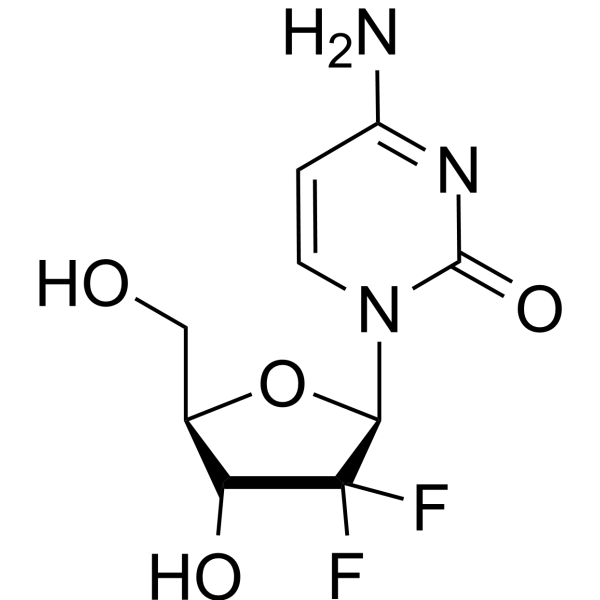
GemcitabineDNA Synthesis Inhibitor -
HY-10821
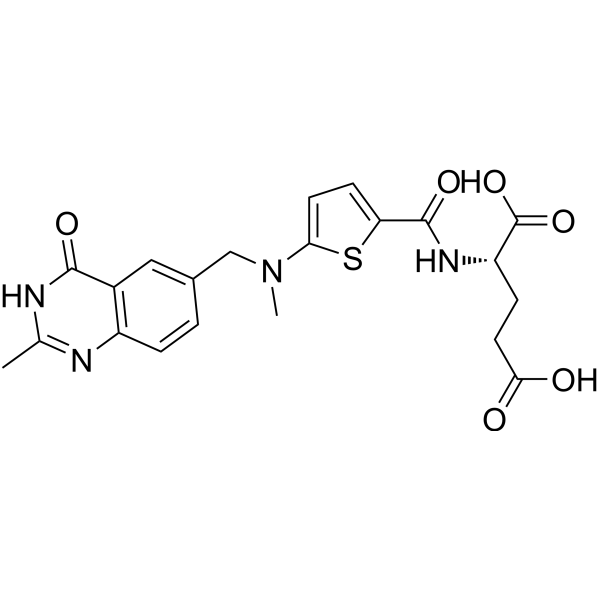
RaltitrexedThymidylate Synthase Inhibitor -
HY-13765
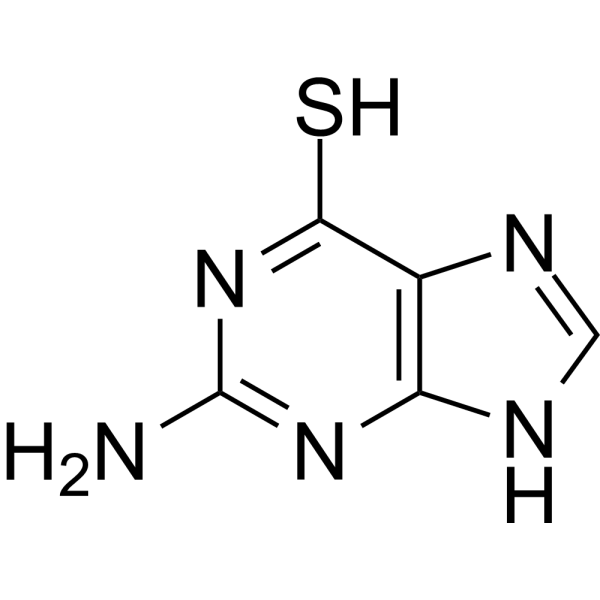
6-ThioguanineImmunosuppressant Agent -
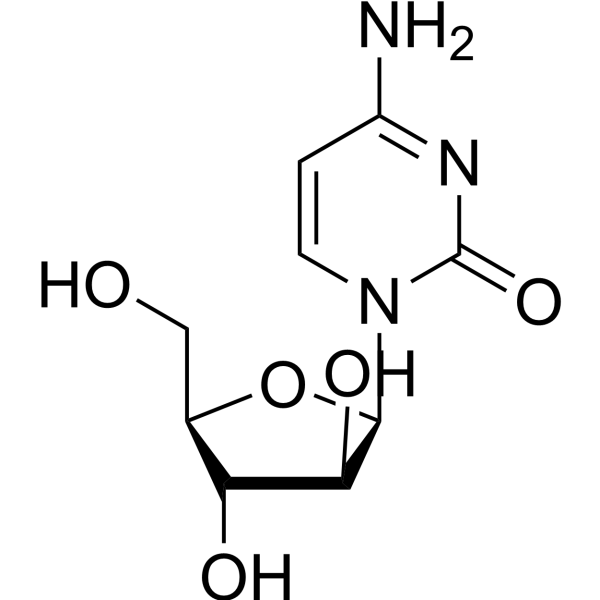
HY-13605
CytarabineDNA Synthesis Inhibitor -

HY-N0093R
Ancitabine hydrochloride (Standard)Reference Standard -
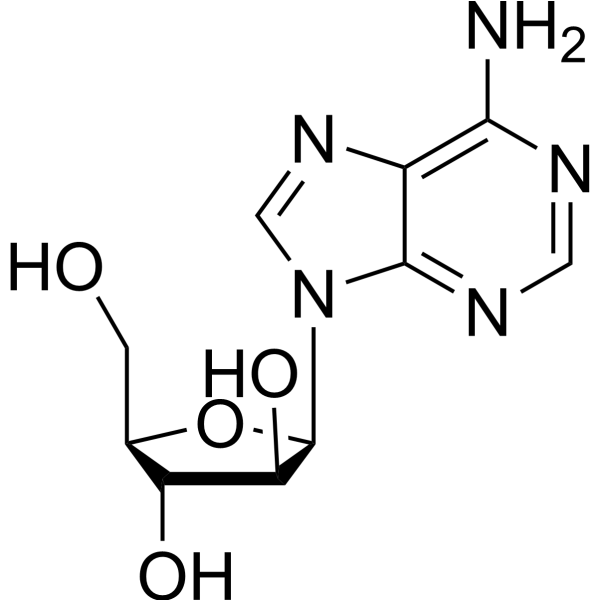
HY-B0277
VidarabineAntiviral Agent -

HY-13605R
Cytarabine (Standard)DNA Synthesis Inhibitor -
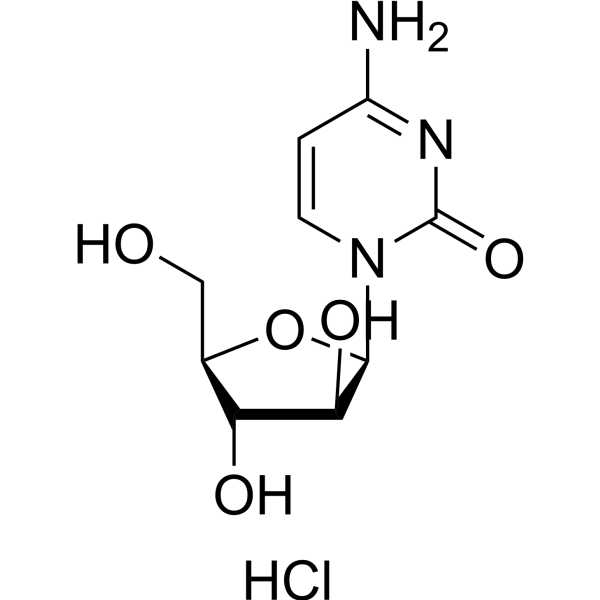
HY-13605A
Cytarabine hydrochlorideDNA Synthesis Inhibitor -
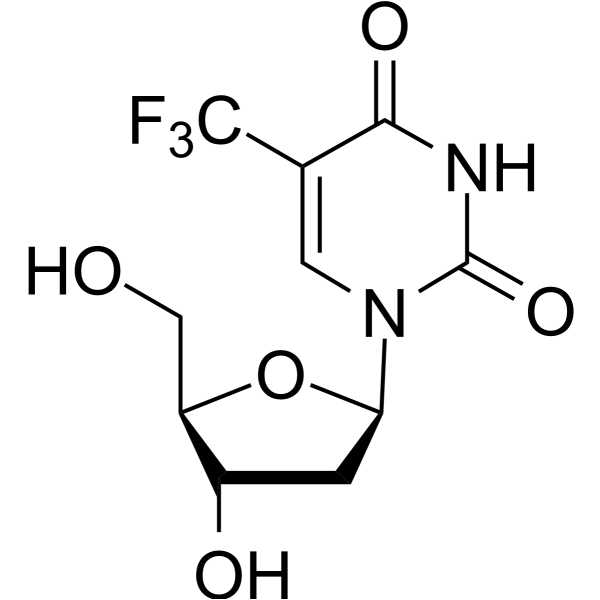
HY-A0061
TrifluridineAnti-Cancer Agent/Anti-Viral Agent -
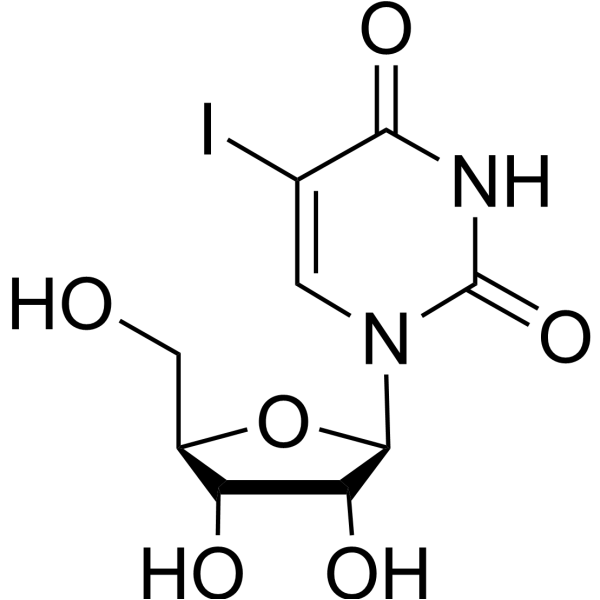
HY-W011079
5-IodouridinePurine Nucleoside Analog -
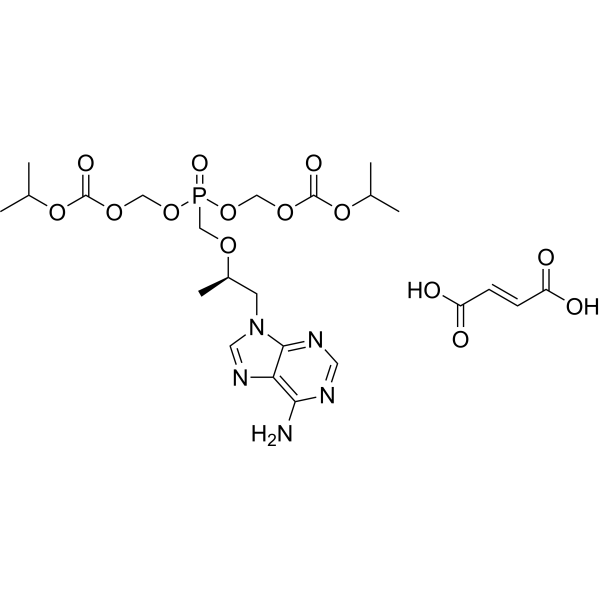
HY-13782
Tenofovir Disoproxil fumarateNucleotide Reverse Transcriptase Inhibitor -
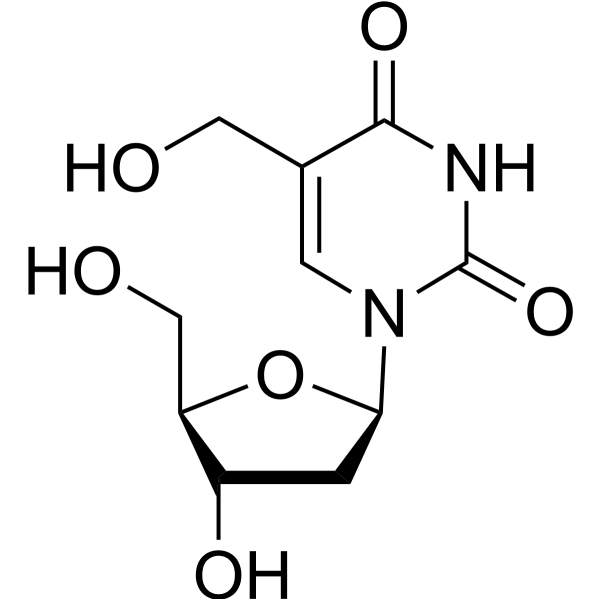
HY-129983
5-Hydroxymethyl-2'-deoxyuridineNucleoside Analog
Publications Citing Use of MedChemExpress (MCE) Ancitabine hydrochloride
MoreAll DNA/RNA Synthesis Isoforms
More

Biological Activity
Description
Cellular Effect
|
Cell Line

|
Type | Value | Description | References |
|---|---|---|---|---|
| HeLa | ED50 |
0.05 μg/mL
Compound: 9, CycloC
|
Cytotoxicity against human HeLa cells after 48 hrs by Coulter counting analysis
Cytotoxicity against human HeLa cells after 48 hrs by Coulter counting analysis
|
[PMID: 178871] |
| HeLa | ED50 |
0.06 μg/mL
Compound: cycloC
|
Cytotoxicity against human HeLa cells after 48 hrs by Coulter counting analysis
Cytotoxicity against human HeLa cells after 48 hrs by Coulter counting analysis
|
[PMID: 178872] |
In Vitro
Ancitabine hydrochloride non-toxically inhibits vaccinia virus replication in BSC40 African green monkey kidney cells with a 48 h IC99 of 11 μM, acting by blocking viral DNA replication and preventing progression from early to late viral protein synthesis[1].
Ancitabine hydrochloride (5 μg/mL; 2 days) completely inhibits replication of the KOS strain of HSV-1 in HEL cells[2].
Ancitabine hydrochloride (5 μg/mL; 2 days) completely inhibits replication of the Savage strain of HSV-2 in HEL cells[2].
Ancitabine hydrochloride (0.14-10 μg/mL; 4 days) potently inhibits replication of the AD169 strain of HCMV in HEL cells, with an ED90 of 0.14 μg/mL and complete inhibition at 10 μg/mL maintained for 4 days[2].
Ancitabine hydrochloride (<0.010->100 μg/mL; 4 days) is non-toxic to stationary HEL cells at concentrations up to 100 μg/mL, but is highly cytotoxic to growing HEL cells with a CyD50 of <0.010 μg/mL[2].
Ancitabine hydrochloride (500 μM; 48 h) is converted to its triphosphate form in HCMV-infected HEL cells[2].
Ancitabine hydrochloride (5 μg/mL; 48 h) substantially suppresses synthesis of HCMV DNA in infected HEL cells[2].
Ancitabine hydrochloride (10 μM; 72 h) induces intracellular vesicle formation in human colorectal carcinoma HCT116 cells with reproducible morphological profiles[3].
MedChemExpress (MCE) has not independently confirmed the accuracy of these methods. They are for reference only. Further protocols information, click here.
In Vivo
MedChemExpress (MCE) has not independently confirmed the accuracy of these methods. They are for reference only.


Chemical Information
-
CAS No. 10212-25-6
-
Appearance Solid
-
Molecular Weight 261.66
-
Formula C9H12ClN3O4
-
Color White to off-white
-
SMILES
OC[C@@H]1[C@@H](O)[C@H](OC2=N3)[C@H](N2C=CC3=N)O1.[H]Cl
-
Synonyms
Cyclocytidine hydrochloride; Cyclo-CMP hydrochloride; Cyclo-C
-
Shipping
Room temperature in continental US; may vary elsewhere.
-
Storage
4°C, sealed storage, away from moisture
* In solvent : -80°C, 6 months; -20°C, 1 month (sealed storage, away from moisture)


Publications (1)
-
Journal Impact Factor
-
Most Recent


Solvent & Solubility
In Vitro:
H2O : ≥ 50 mg/mL (191.09 mM)
DMSO : 25 mg/mL (95.54 mM; Need ultrasonic; Hygroscopic DMSO has a significant impact on the solubility of product, please use newly opened DMSO)
* "≥" means soluble, but saturation unknown.
Please refer to the solubility information to select the appropriate solvent. Once prepared, please aliquot and store the solution to prevent product inactivation from repeated freeze-thaw cycles.
Storage method and period of stock solution: -80°C, 6 months; -20°C, 1 month (sealed storage, away from moisture). When stored at -80°C, please use it within 6 months. When stored at -20°C, please use it within 1 month.
* Note: If you choose water as the stock solution, please dilute it to the working solution, then filter and sterilize it with a 0.22 μm filter before use.
Please refer to the solubility information to select the appropriate solvent. Once prepared, please aliquot and store the solution to prevent product inactivation from repeated freeze-thaw cycles.
Storage method and period of stock solution: -80°C, 6 months; -20°C, 1 month (sealed storage, away from moisture). When stored at -80°C, please use it within 6 months. When stored at -20°C, please use it within 1 month.
* Note: If you choose water as the stock solution, please dilute it to the working solution, then filter and sterilize it with a 0.22 μm filter before use.
Concentration (start) × Volume (start) = Concentration (final) × Volume (final)
In Vivo:
Select the appropriate dissolution method based on your experimental animal and administration route.
- For the following dissolution methods, please ensure to first prepare a clear stock solution using an In Vitro approach and then sequentially add co-solvents:
- To ensure reliable experimental results, the clarified stock solution can be appropriately stored based on storage conditions. As for the working solution for In Vivo experiments, it is recommended to prepare freshly and use it on the same day.
- The percentages shown for the solvents indicate their volumetric ratio in the final prepared solution. If precipitation or phase separation occurs during preparation, heat and/or sonication can be used to aid dissolution.
Add each solvent one by one: 10% DMSO 40% PEG300 5% Tween-80 45% Saline
Solubility: ≥ 2.5 mg/mL (9.55 mM); Clear solution
This protocol yields a clear solution of ≥ 2.5 mg/mL (saturation unknown).
Taking 1 mL working solution as an example, add 100 μL DMSO stock solution (25.0 mg/mL) to 400 μL PEG300, and mix evenly; then add 50 μL Tween-80 and mix evenly; then add 450 μL Saline to adjust the volume to 1 mL.
Preparation of Saline: Dissolve 0.9 g sodium chloride in ddH₂O and dilute to 100 mL to obtain a clear Saline solution.
Add each solvent one by one: 10% DMSO 90% (20% SBE-β-CD in Saline)
Solubility: ≥ 2.5 mg/mL (9.55 mM); Clear solution
This protocol yields a clear solution of ≥ 2.5 mg/mL (saturation unknown).
Taking 1 mL working solution as an example, add 100 μL DMSO stock solution (25.0 mg/mL) to 900 μL 20% SBE-β-CD in Saline, and mix evenly.
Preparation of 20% SBE-β-CD in Saline (4°C, storage for one week): 2 g SBE-β-CD powder is dissolved in 10 mL Saline, completely dissolve until clear.
For the following dissolution methods, please prepare the working solution directly:
It is recommended to prepare fresh solutions and use them promptly within a short period of time.
The percentages shown for the solvents indicate their volumetric ratio in the final prepared solution. If precipitation or phase separation occurs during preparation, heat and/or sonication can be used to aid dissolution.
Add each solvent one by one: PBS
Solubility: 140 mg/mL (535.05 mM); Clear solution; Need ultrasonic
In Vivo Dissolution Calculator
Please enter the basic information of animal experiments:
-
-
-
-
Recommended: Prepare an additional quantity of animals to account for potential losses during experiments.
Working solution concentration: 0.22 mg/mL
This product has good water solubility, please refer to the measured solubility data in water/PBS/Saline for details.

Protocols
-
Research Protocol for Infectious Diseases
Infectious-disease experiments test how pathogens interact with host barriers, innate immune receptors, inflammatory signaling, pathogen replication, and tissue injury; pattern-recognition receptors such as TLRs, RIG-I-like receptors, NOD-like receptors, and inflammasomes detect microbial molecules and activate NF-κB, interferon, and cytokine responses. The central hypothesis is that infection severity reflects the balance between pathogen burden and host response: protective inflammation restricts pathogen growth, whereas excessive or mislocalized inflammation contributes to tissue damage and disease phenotype. Unresolved questions include which host pathways are protective versus pathogenic, why some infection models fail to translate to human disease, and which combined readouts best predict clinically relevant infection outcomes.
-
PCNA Immunodetection Proliferation Assay
PCNA immunodetection measures proliferative activity by detecting proliferating cell nuclear antigen, a nuclear protein associated with DNA polymerase δ function and DNA replication. The assay readout is the proportion of PCNA-positive nuclei among total counted cells, but PCNA labeling is not identical to BrdU labeling because PCNA can mark late G1/early S-associated replication competence and may persist beyond active DNA synthesis depending on fixation and extraction conditions.


Purity & Documentation
-
Data Sheet (278 KB)
-
SDS (419 KB)
- English - EN (419 KB)
- Français - FR (419 KB)
- Deutsch - DE (419 KB)
- Norwegian - NO (419 KB)
- Español - ES (419 KB)
- Swedish - SV (419 KB)
- Italian - IT (419 KB)
- Korean - KR (419 KB)
- Portuguese - PT (419 KB)
-
Handling Instructions (2659 KB)
References
[1]. Deng L, et al. Identification of novel antipoxviral agents: mitoxantrone inhibits vaccinia virus replication by blocking virion assembly. J Virol. 2007;81(24):13392-13402. [Content Brief]
[2]. Nakamura K, et al. Antiviral effect of antileukemic drugs N4-behenoyl-1-beta-D-arabinofuranosylcytosine (BH-AC) and 2,2'-anhydro-1-beta-D-arabinofuranosylcytosine (cyclo-C) against human cytomegalovirus. J Med Virol. 1990;31(2):141-147. [Content Brief]
[3]. Aftab O, et al. Detection of cell aggregation and altered cell viability by automated label-free video microscopy: a promising alternative to endpoint viability assays in high-throughput screening. J Biomol Screen. 2015;20(3):372-381. [Content Brief]


Complete Stock Solution Preparation Table
Please refer to the solubility information to select the appropriate solvent. Once prepared, please aliquot and store the solution to prevent product inactivation from repeated freeze-thaw cycles.
Storage method and period of stock solution: -80°C, 6 months; -20°C, 1 month (sealed storage, away from moisture). When stored at -80°C, please use it within 6 months. When stored at -20°C, please use it within 1 month.
| Optional Solvent | Concentration Solvent Mass | 1 mg | 5 mg | 10 mg | 25 mg |
|---|---|---|---|---|---|
| DMSO / H2O | 1 mM | 3.8218 mL | 19.1088 mL | 38.2175 mL | 95.5438 mL |
| 5 mM | 0.7644 mL | 3.8218 mL | 7.6435 mL | 19.1088 mL | |
| 10 mM | 0.3822 mL | 1.9109 mL | 3.8218 mL | 9.5544 mL | |
| 15 mM | 0.2548 mL | 1.2739 mL | 2.5478 mL | 6.3696 mL | |
| 20 mM | 0.1911 mL | 0.9554 mL | 1.9109 mL | 4.7772 mL | |
| 25 mM | 0.1529 mL | 0.7644 mL | 1.5287 mL | 3.8218 mL | |
| 30 mM | 0.1274 mL | 0.6370 mL | 1.2739 mL | 3.1848 mL | |
| 40 mM | 0.0955 mL | 0.4777 mL | 0.9554 mL | 2.3886 mL | |
| 50 mM | 0.0764 mL | 0.3822 mL | 0.7644 mL | 1.9109 mL | |
| 60 mM | 0.0637 mL | 0.3185 mL | 0.6370 mL | 1.5924 mL | |
| 80 mM | 0.0478 mL | 0.2389 mL | 0.4777 mL | 1.1943 mL | |
| H2O | 100 mM | 0.0382 mL | 0.1911 mL | 0.3822 mL | 0.9554 mL |
* Note: If you choose water as the stock solution, please dilute it to the working solution, then filter and sterilize it with a 0.22 μm filter before use.


Ancitabine hydrochloride Related Classifications
HY-N0093 Related Classifications
 Powered by Bioz
Keywords
- Ancitabine
- 10212-25-6
- Cyclocytidine
- Cyclo-CMP
- Cyclo-C
- Autophagy
- CMV
- DNA/RNA Synthesis
- Orthopoxvirus
- cytidine deaminase
- leukemia
- cytarabine
- human colorectal carcinoma cells
- human fibroblasts
- human cytomegalovirus
- BSC40 African green monkey kidney cells
- HCT116 cells
- herpes simplex virus types 1 and 2
- vaccinia virus
- Inhibitor
- inhibitor
- inhibit