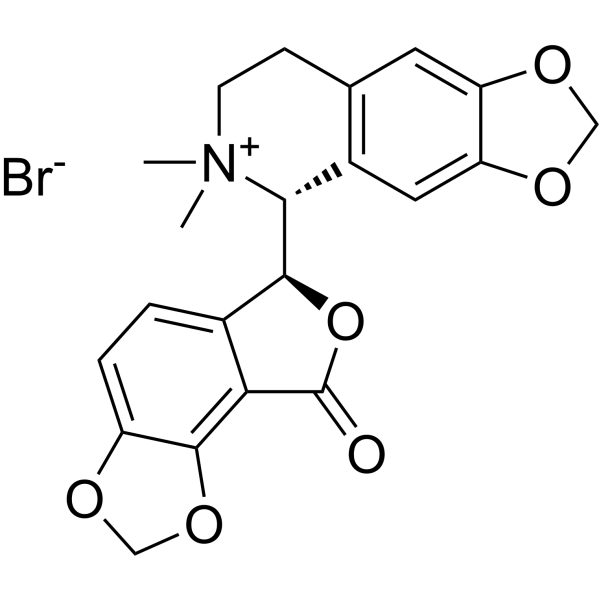
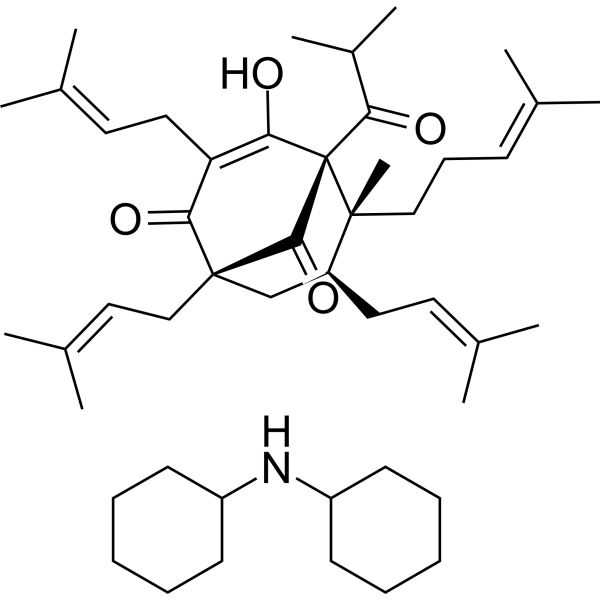
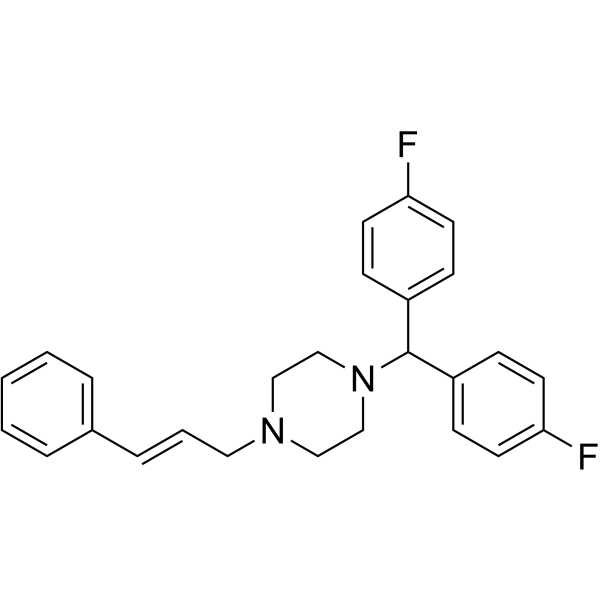
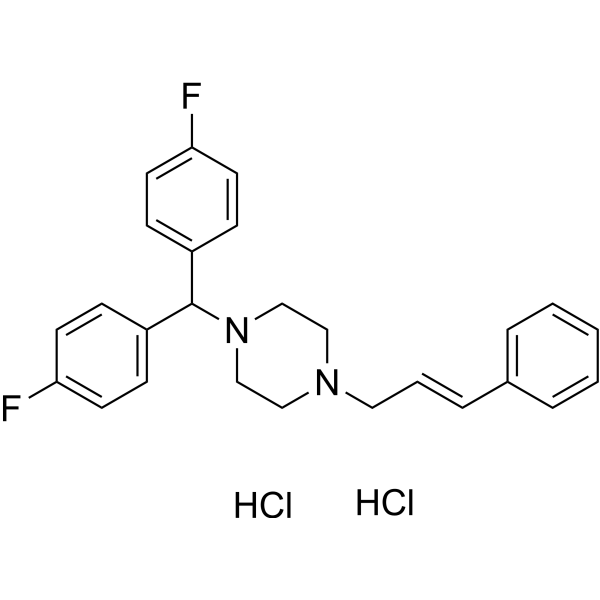
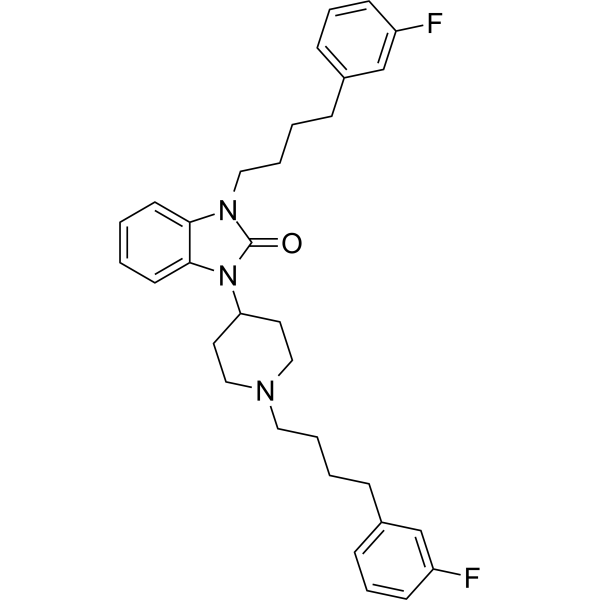
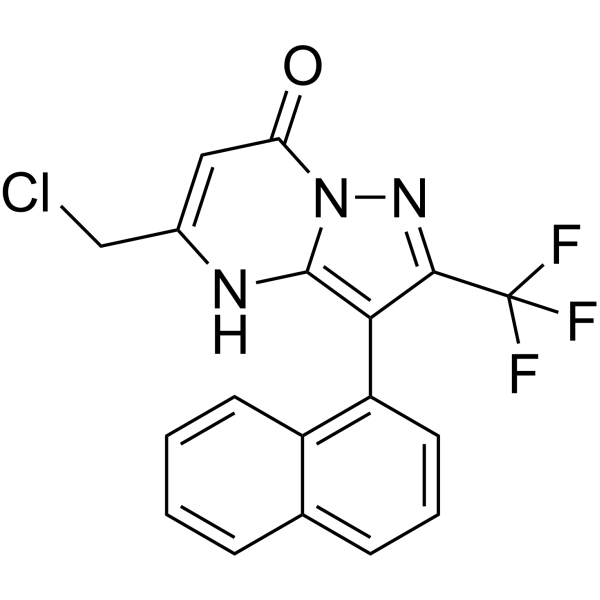
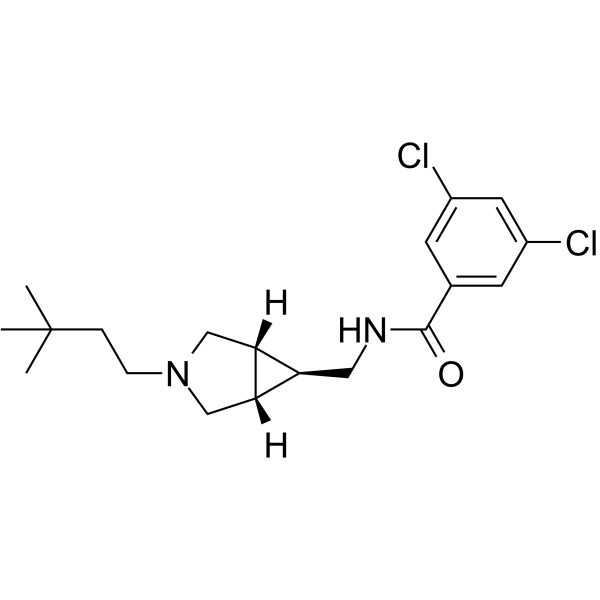
1. Search Result
Search Result
Pathways Recommended: Membrane Transporter/Ion Channel
Results for "

Ca channels

" in MedChemExpress (MCE) Product Catalog:

394

Inhibitors & Agonists

3

Screening Libraries

6

Biochemical Assay Reagents

32

Peptides

48

Natural
Products

54

Isotope-Labeled Compounds

2

Oligonucleotides

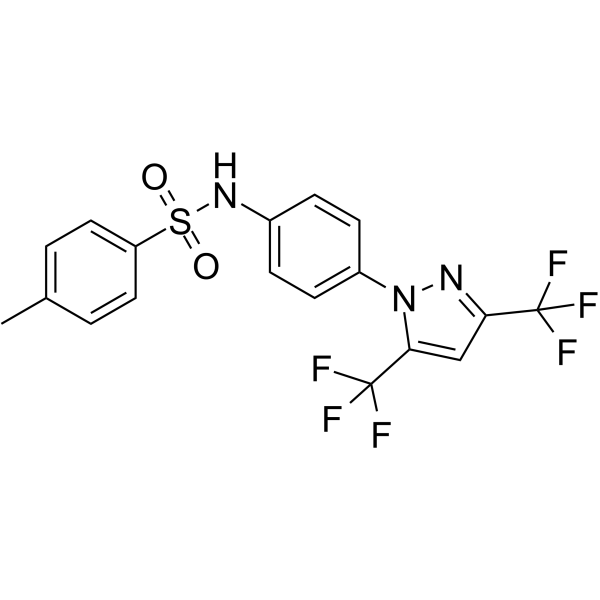
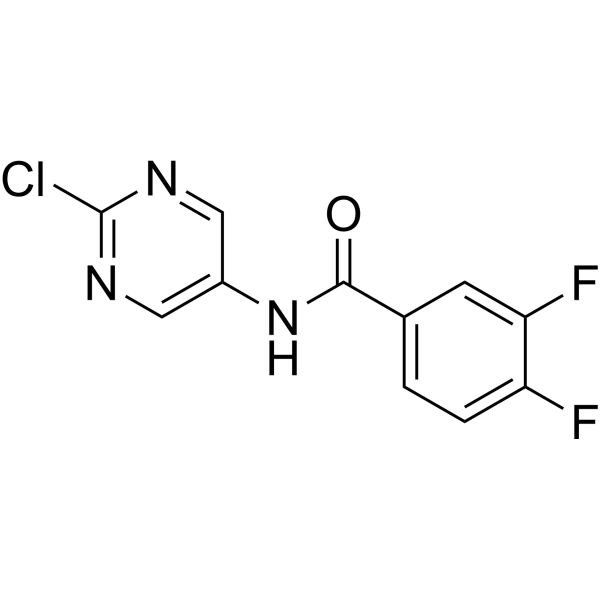
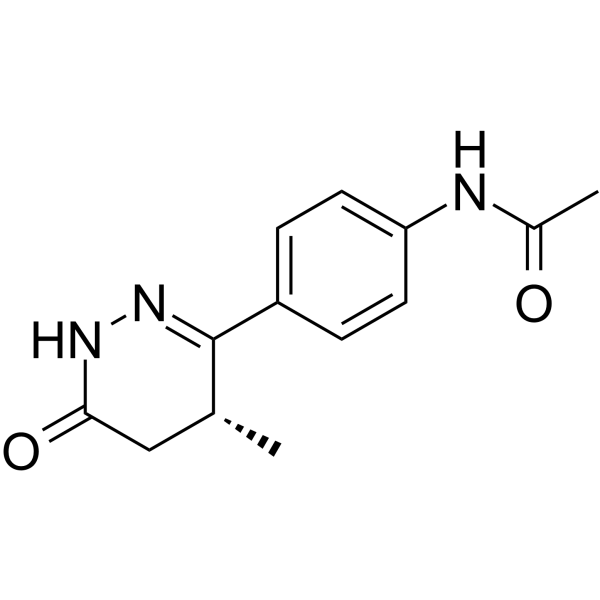
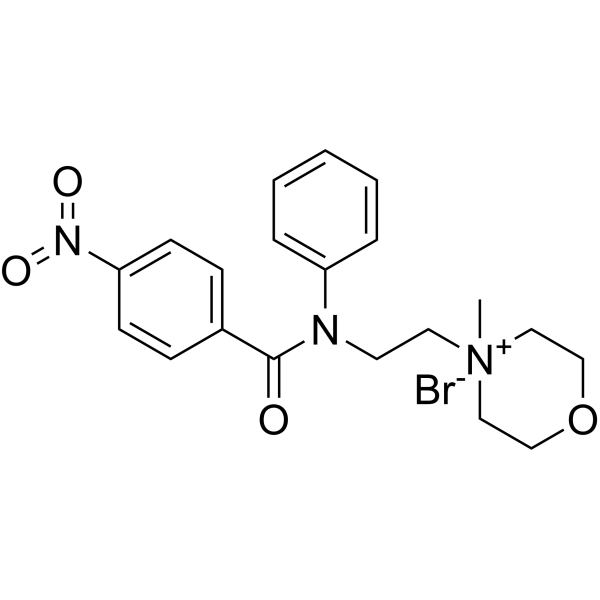
Cat. No. Product Name Target Research Areas Chemical Structure
  • HY-A0057
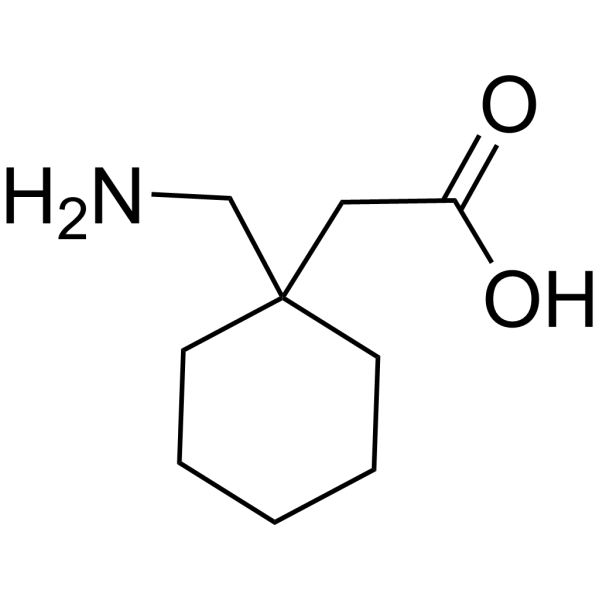
    Gabapentin
    10+ Cited Publications

    Calcium Channel Neurological Disease Cancer
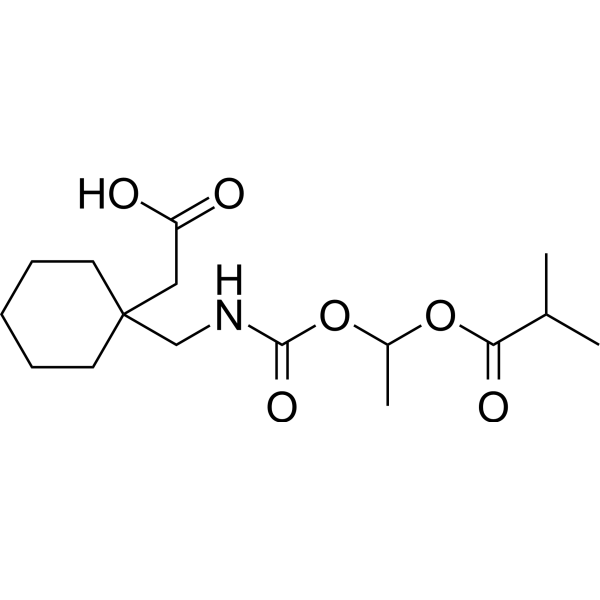
    Gabapentin is a potent, orally active P/Q type Ca 2+ channel blocker. Gabapentin inhibits neuronal Ca 2+ influx and reduction of neurotransmitter release. Gabapentin is a GABA analog that can be used to relieve neuropathic pain .
    Gabapentin
  • HY-19608
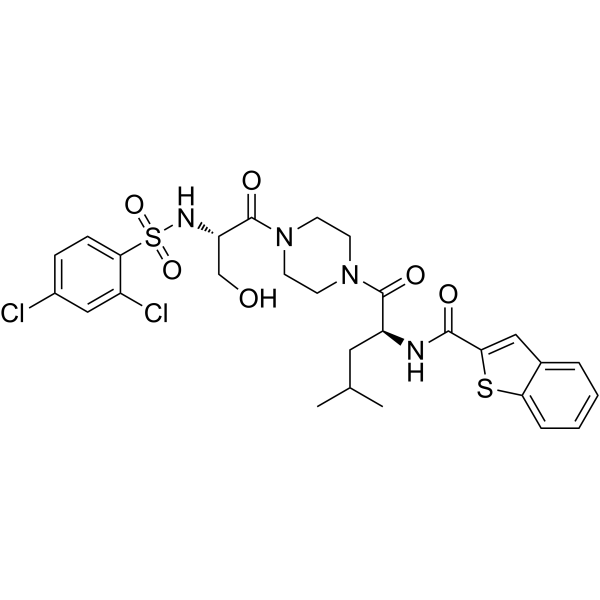
    GSK1016790A
    35+ Cited Publications

    TRP Channel Calcium Channel Cardiovascular Disease Metabolic Disease
    GSK1016790A is a potent and selective transient receptor potential vanilloid 4 (TRPV4) channel agonist. GSK1016790A can elicit Ca 2+ influx and elevate intracellular Ca 2+ in HEK cells .
    GSK1016790A
  • HY-75161
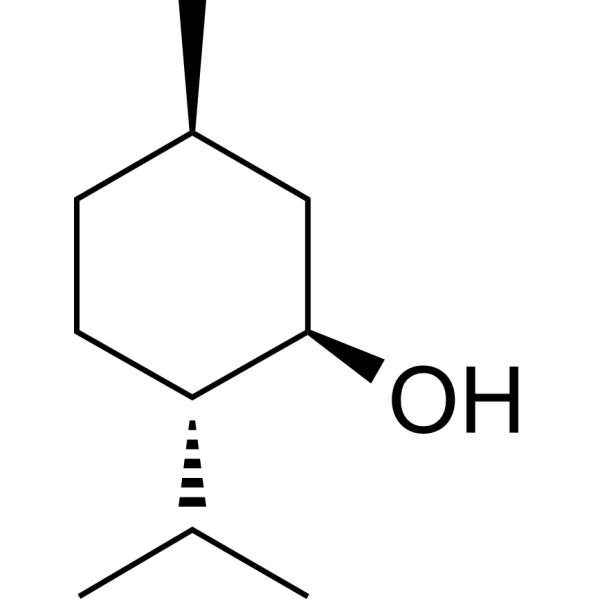
    (-)-Menthol
    4 Publications Verification

    Environmental Pollutants Endogenous Metabolite TRP Channel Cancer
    (-)-Menthol is a key component of peppermint oil that binds and activates transient receptor potential melastatin 8 (TRPM8), a Ca 2+-permeable nonselective cation channel, to increase [Ca 2+]i . Antitumor activity .
    (-)-Menthol
  • HY-10588
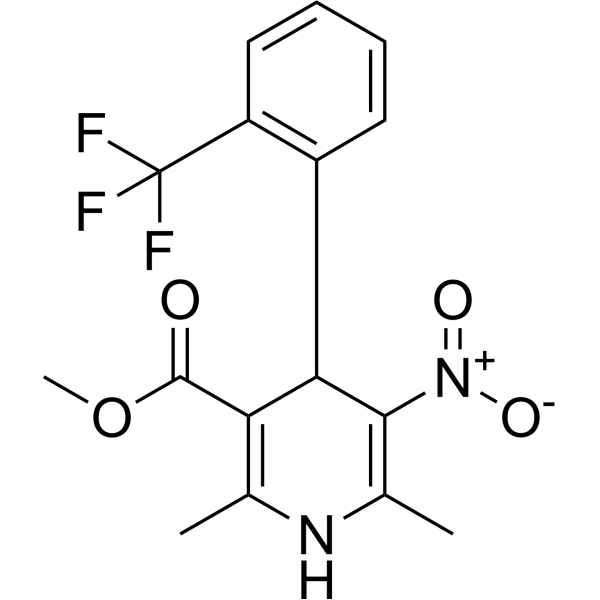
    Bay K 8644
    5+ Cited Publications

    (±)-Bay K 8644

    Calcium Channel Cardiovascular Disease Neurological Disease
    Bay K 8644 ((±)-Bay K 8644) is a racemate consisting of two isomers (R)-(+)-Bay-K-8644 and (S)-(-)-Bay-K-8644 . Bay K 8644 is a L-type Ca 2+ channel agonist with an EC50 of 17.3 nM. Bay K 8644 increases Ca 2+ influx through sarcolemmal Ca 2+ channels by increasing the open time of the channel. Bay K 8644 has vasoconstrictive effects .
    Bay K 8644
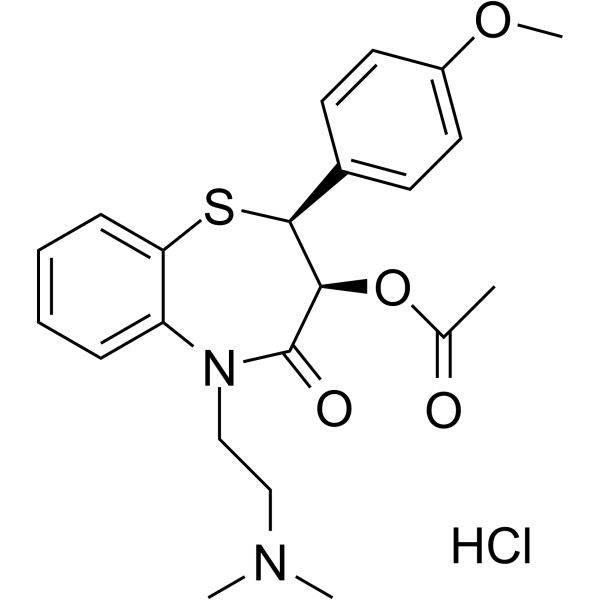
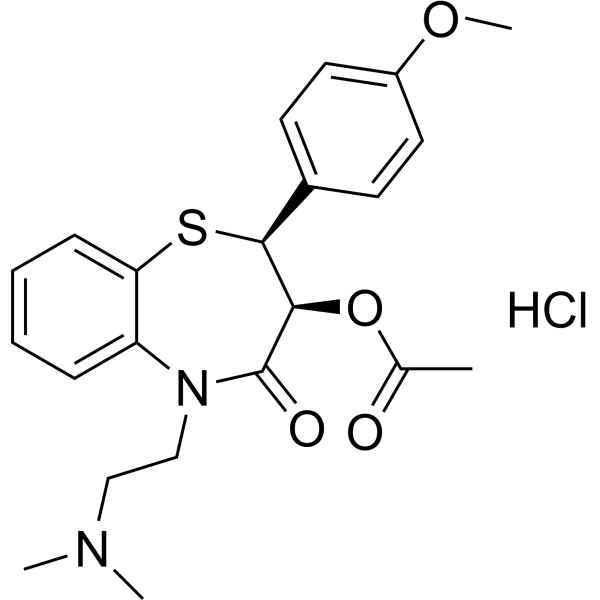
  • HY-14656
    Diltiazem hydrochloride
    5+ Cited Publications

    CRD-401

    Calcium Channel Cardiovascular Disease Cancer
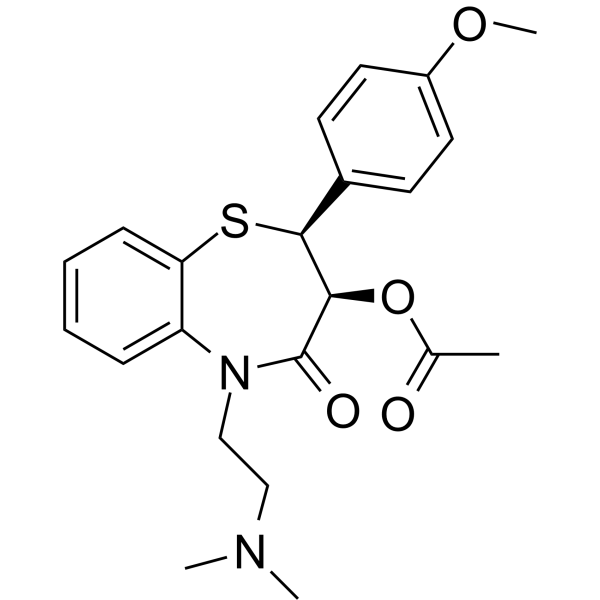
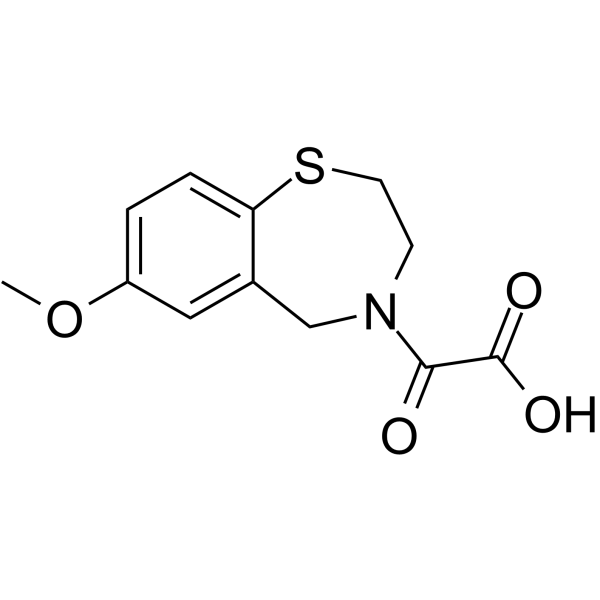
    Diltiazem hydrochloride is a Ca 2+ influx inhibitor (slow channel blocker or calcium antagonist).
    Diltiazem hydrochloride
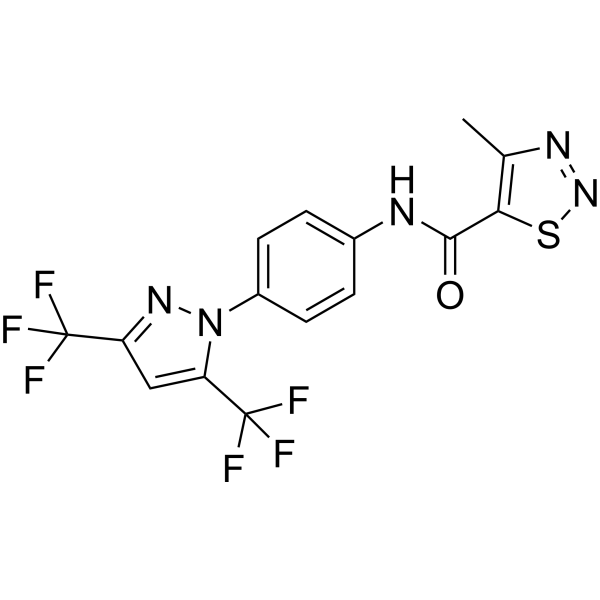
  • HY-100831
    YM-58483
    20+ Cited Publications

    BTP2

    CRAC Channel Inflammation/Immunology
    YM-58483 (BTP2) is the first selective and potent inhibitor of CRAC channels and subsequent Ca 2+ signals. YM-584832 is a blocker of store-operated Ca 2+ entry (SOCE) .
    YM-58483
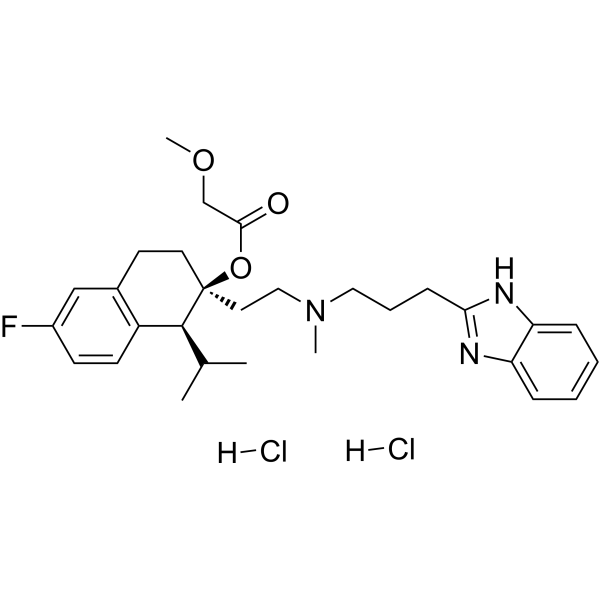
  • HY-15553A
    Mibefradil dihydrochloride
    10+ Cited Publications

    Ro 40-5967 dihydrochloride

    Calcium Channel Cardiovascular Disease Cancer
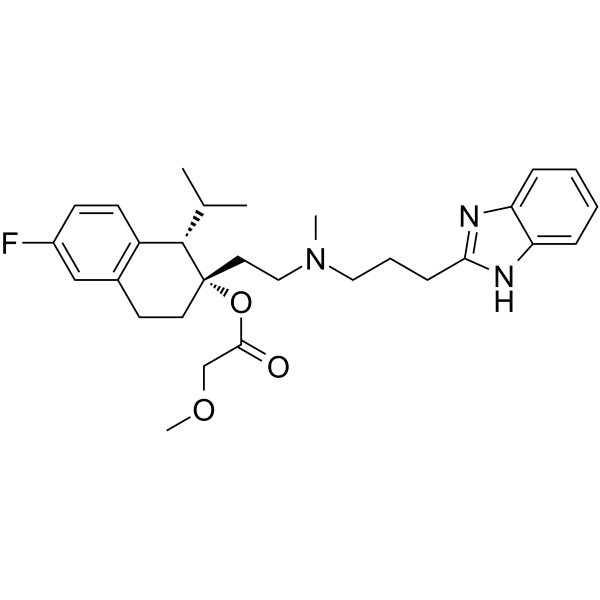
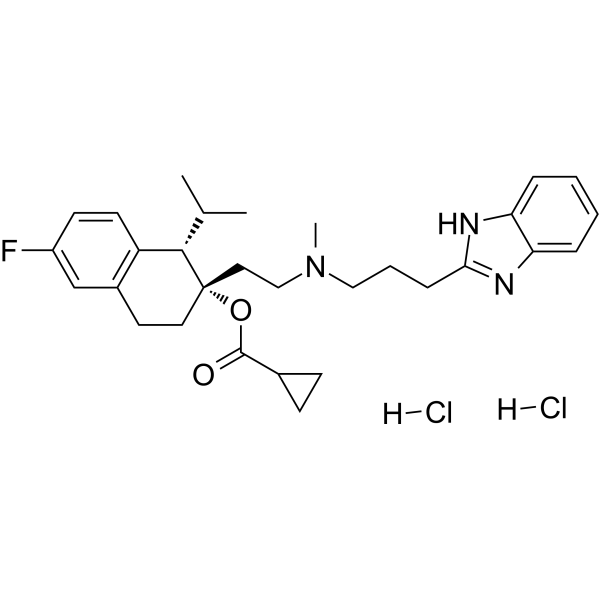
    Mibefradil dihydrochloride (Ro 40-5967 dihydrochloride) is a calcium channel blocker with moderate selectivity for T-type Ca 2+ channels (IC50s of 2.7 μM and 18.6 μM for T-type and L-type currents, respectively) .
    Mibefradil dihydrochloride
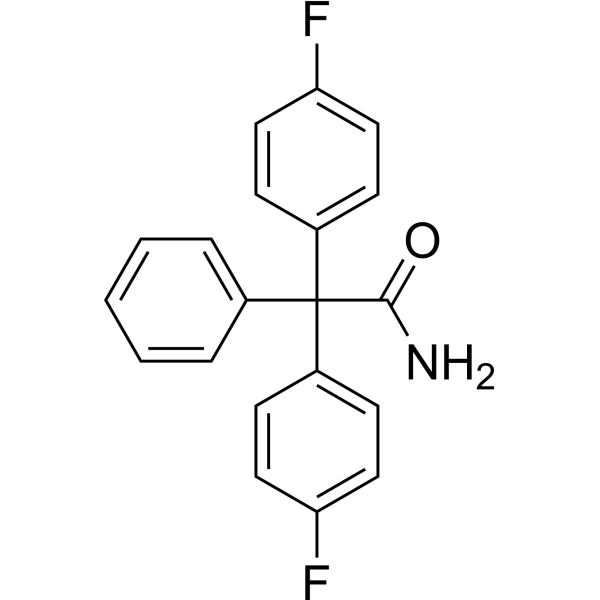
  • HY-50694
    Senicapoc
    10+ Cited Publications

    ICa-17043

    Potassium Channel Others
    Senicapoc (ICA-17043) is a potent and selective Gardos channel (Ca 2+-activated K + channel; KCa3.1) blocker with an IC50 of 11 nM. Senicapoc blocks Ca 2+-induced rubidium flux from human RBCs with an IC50 value of 11 nM and inhibits RBC dehydration with IC50 of 30 nM .
    Senicapoc
  • HY-B1221
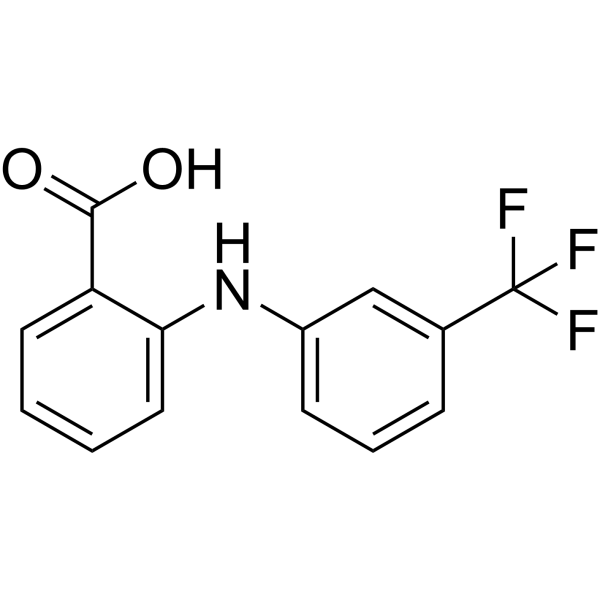
    Flufenamic acid
    5+ Cited Publications

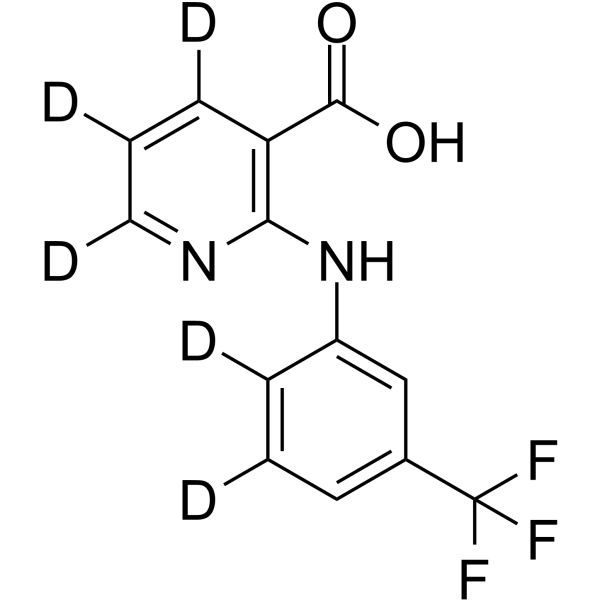
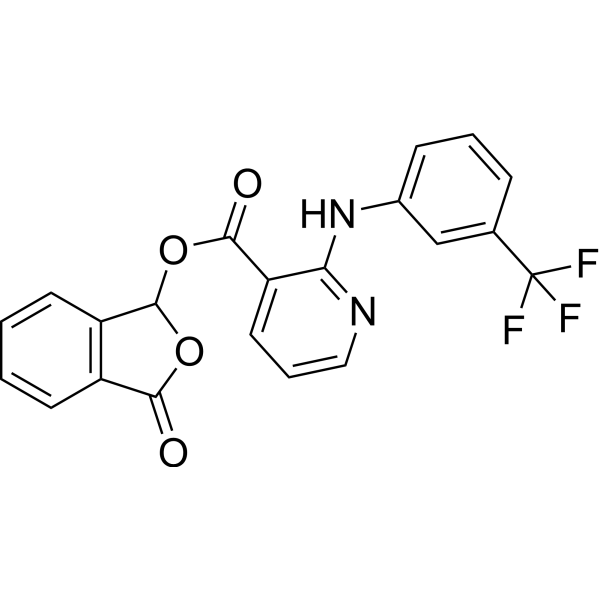
    COX AMPK Potassium Channel Chloride Channel Calcium Channel Parasite Inflammation/Immunology
    Flufenamic acid is a non-steroidal anti-inflammatory agent, inhibits cyclooxygenase (COX), activates AMPK, and also modulates ion channels, blocking chloride channels and L-type Ca 2+ channels, modulating non-selective cation channels (NSC), activating K + channels. Flufenamic acid binds to the central pocket of TEAD2 YBD and inhibits both TEAD function and TEAD-YAP-dependent processes, such as cell migration and proliferation.
    Flufenamic acid
  • HY-133168
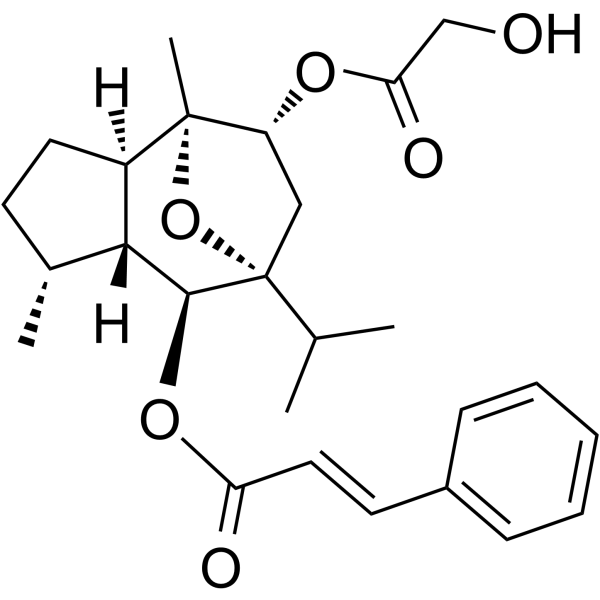
    Englerin A
    1 Publications Verification

    TRP Channel Cancer
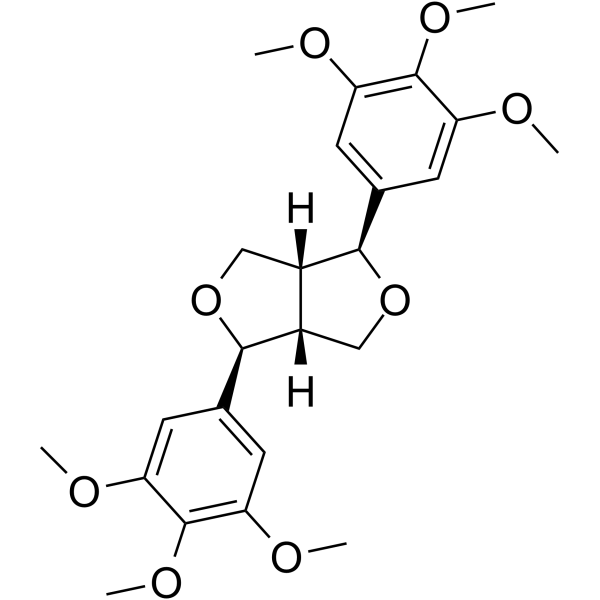
    Englerin A is a potent and selective activator of TRPC4 and TRPC5 channels, with EC50s of 11.2 and 7.6 nM, respectively. Englerin A can induce renal carcinoma cells death by elevated Ca 2+ influx and Ca 2+ cell overload .
    Englerin A
  • HY-P0190
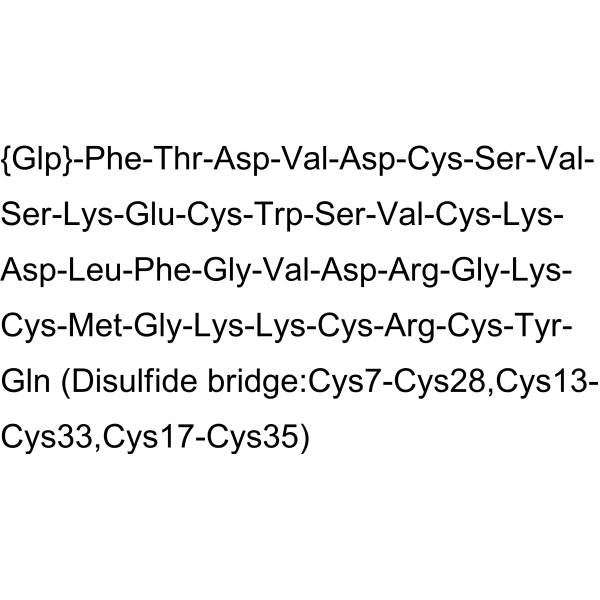
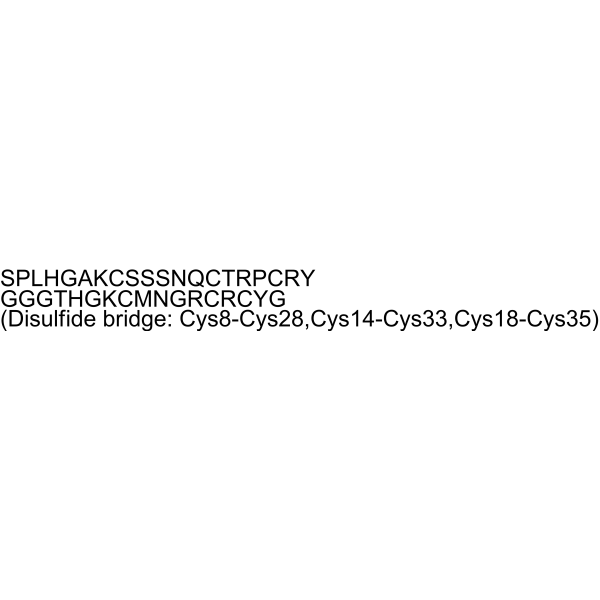
    Iberiotoxin
    2 Publications Verification

    Potassium Channel Cardiovascular Disease
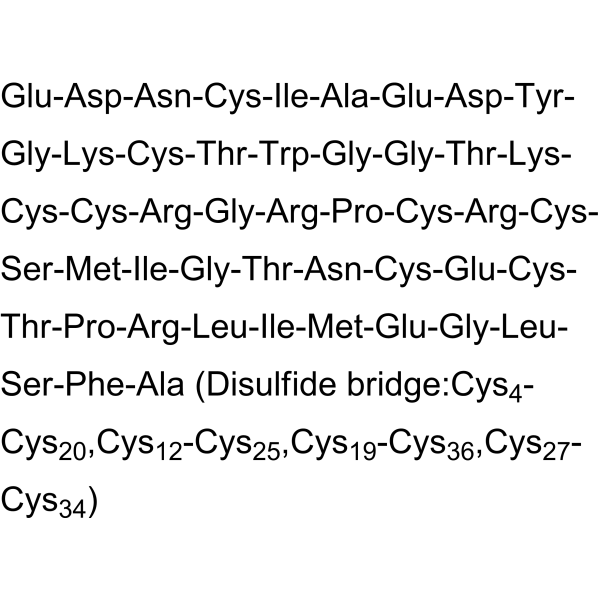
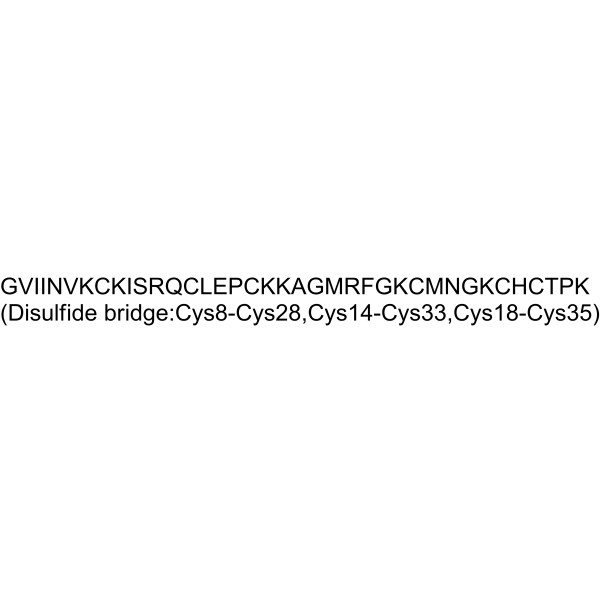
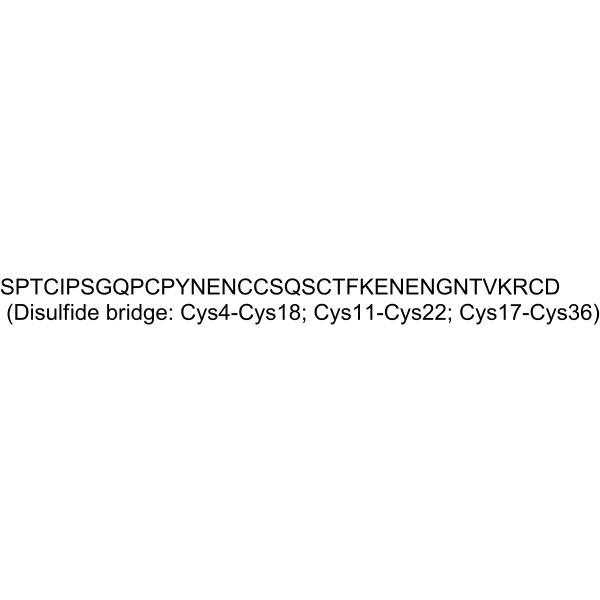
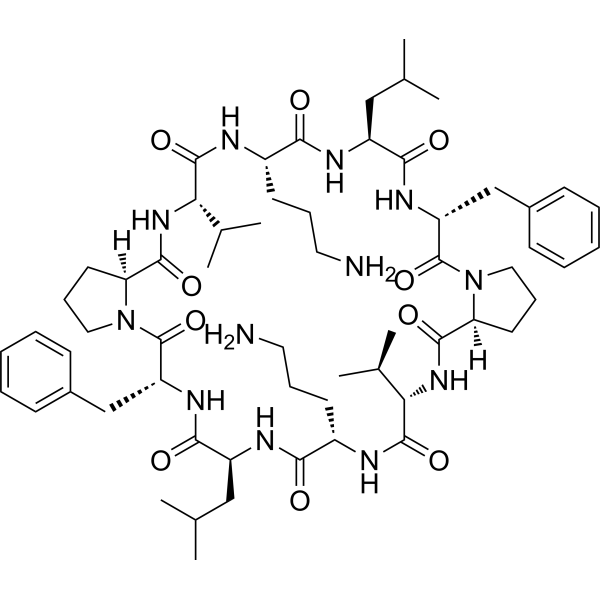
    Iberiotoxin is a toxin isolated from Buthus tamulus scorpion venom. Iberiotoxin is a selective high conductance high conductance Ca 2+-activated K + channel inhibitor with a Kd of ~1 nM. Iberiotoxin does not block other types of voltage-dependent ion channels .
    Iberiotoxin
  • HY-13103
    NS 11021
    3 Publications Verification

    Potassium Channel Others
    NS 11021 is a potent and specific Ca 2+-activated big-conductance K + Channels (KCa1.1 channels) activator. NS 11021 at concentrations above 0.3 μM activates KCa1.1 in a concentration-dependent manner by parallelshifting the channel activation curves to more negative potentials .
    NS 11021
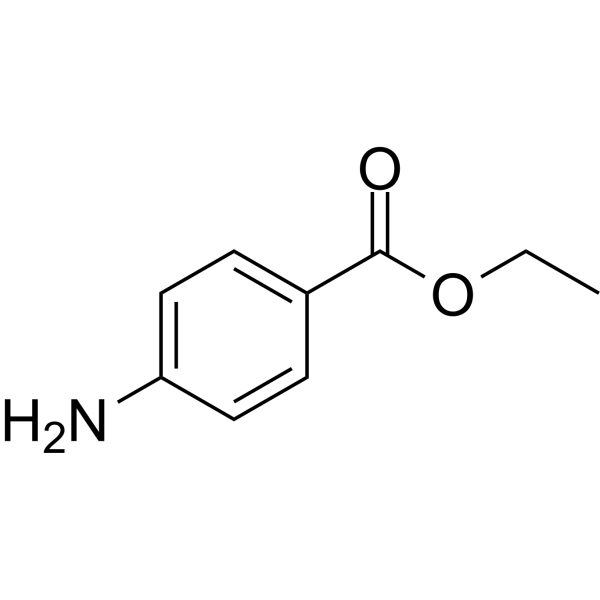
  • HY-Y0258
    Benzocaine
    1 Publications Verification

    Environmental Pollutants Sodium Channel Bacterial Infection Neurological Disease
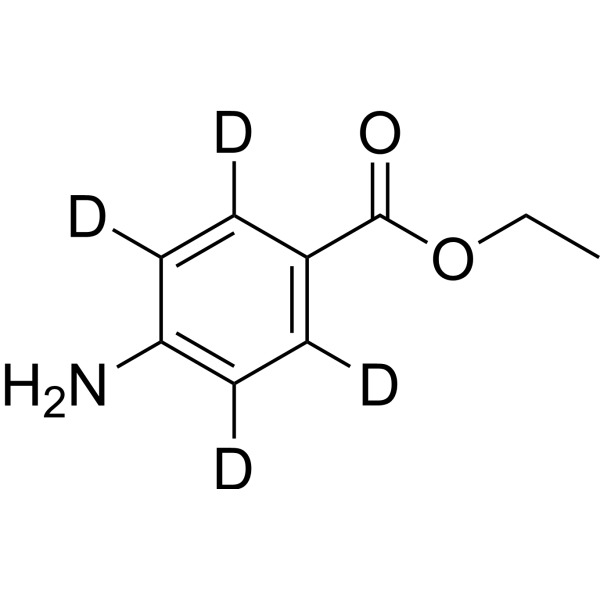
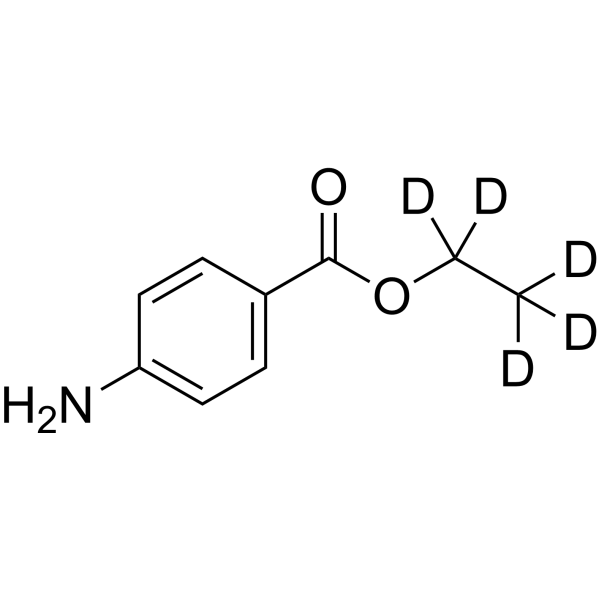
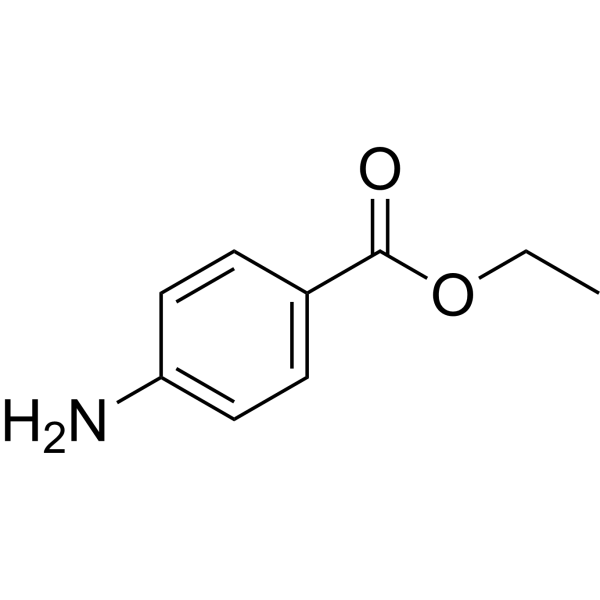
    Benzocaine is an orally active local anesthetic. Benzocaine non-competitively inhibits the binding of Ca-ATPase to Ca 2+, with an IC50 of 47.1 mM. Benzocaine exerts anesthetic effects by blocking voltage-gated sodium channels. Benzocaine induces methemoglobinemia in various experimental animals .
    Benzocaine
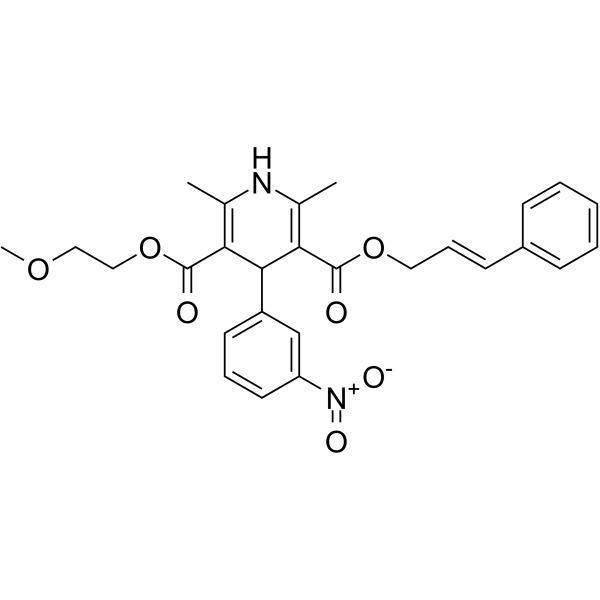
  • HY-17404
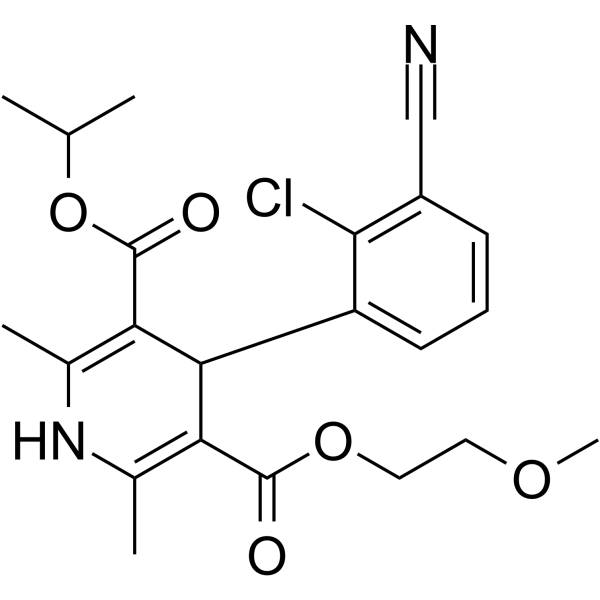
    Cilnidipine
    4 Publications Verification

    FRC-8653

    Calcium Channel Cardiovascular Disease
    Cilnidipine is a long-acting, second-generation dihydropyridine Ca 2+-channel blocker on L and N-type Ca 2+ channel . Antihypertensive effects .
    Cilnidipine
  • HY-110105
    NS8593 hydrochloride
    1 Publications Verification

    Potassium Channel Neurological Disease
    NS8593 hydrochloride is a potent and selective small conductance Ca 2+-activated K + channels (SK channels) inhibitor. NS8593 hydrochloride reversibly inhibits SK3-mediated currents with a Kd value of 77 nM. NS8593 hydrochloride inhibits all the SK1-3 subtypes Ca 2+-dependently (Kds of 0.42, 0.60, and 0.73 μM, respectively, at 0.5 μM Ca 2+), and does not affect the Ca 2+-activated K + channels of intermediate and large conductance (hIK and hBK channels, respectively) .
    NS8593 hydrochloride
  • HY-15416

    Potassium Channel Cardiovascular Disease Neurological Disease
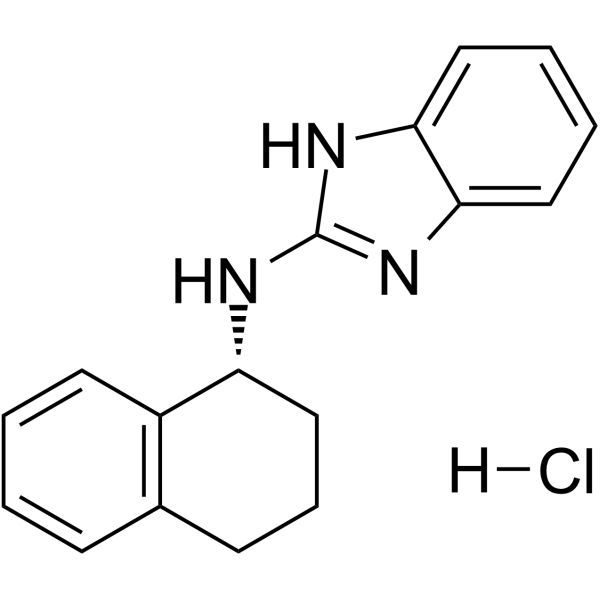
    NS309 is a potent and selective activator of the Ca 2+-activated SK/IK potassium channels, but displays no activity at BK channels .
    NS309
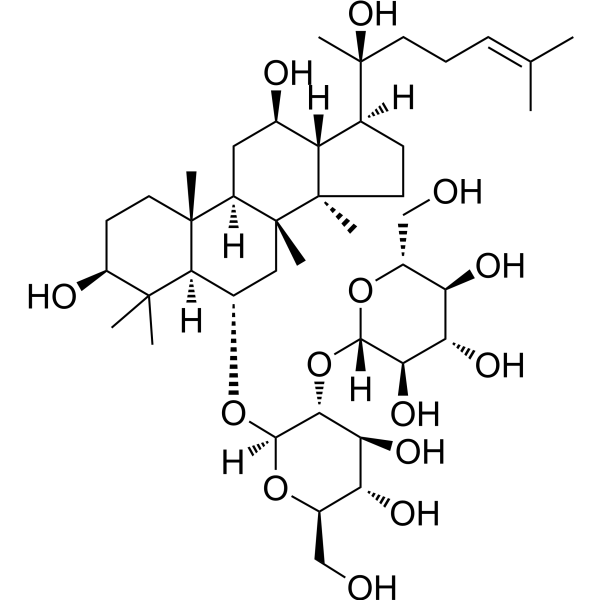
  • HY-N0601
    Ginsenoside Rf
    1 Publications Verification

    Panaxoside Rf

    Calcium Channel Endogenous Metabolite Neurological Disease Cancer
    Ginsenoside Rf is a trace component of ginseng root. Ginsenoside Rf inhibits N-type Ca 2+ channel.
    Ginsenoside Rf
  • HY-12949
    ML204
    5+ Cited Publications

    TRP Channel Neurological Disease
    ML204 is a potent, selective TRPC4/TRPC5 channel inhibitor, with at least 19-fold selectivity against TRPC6 and no appreciable effect on all other TRP channels, nor on voltage-gated sodium, potassium, or Ca 2+ channels .
    ML204
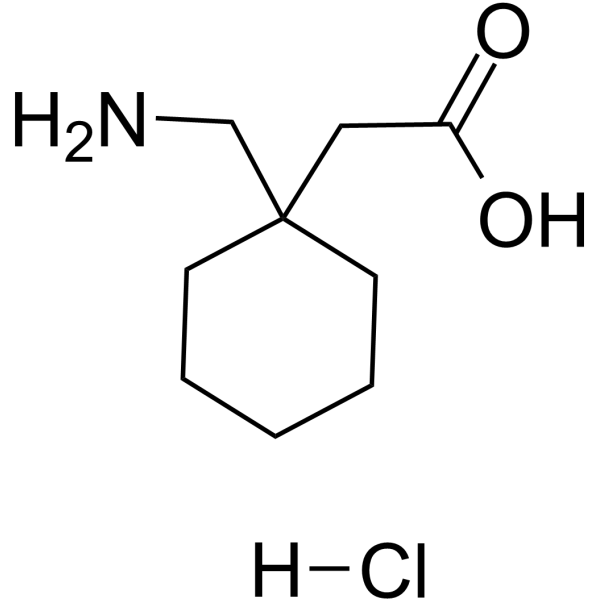
  • HY-A0057A
    Gabapentin hydrochloride
    10+ Cited Publications

    Calcium Channel Neurological Disease Cancer
    Gabapentin hydrochloride is a potent, orally active P/Q type Ca 2+ channel blocker. Gabapentin hydrochloride inhibits neuronal Ca 2+ influx and reduction of neurotransmitter release. Gabapentin hydrochloride is a GABA analog that can be used to relieve neuropathic pain .
    Gabapentin hydrochloride
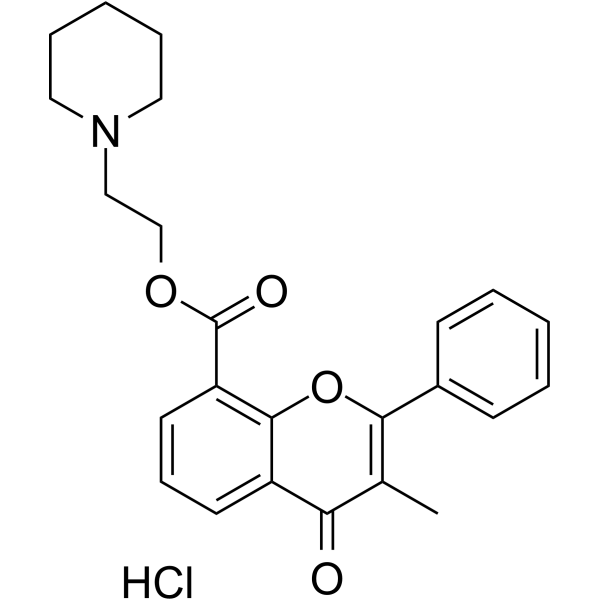
  • HY-B0549A

    Rec-7-0040; DW61

    Calcium Channel Adenosine Receptor mAChR Dopamine Receptor Adrenergic Receptor Cardiovascular Disease Infection Neurological Disease Cancer
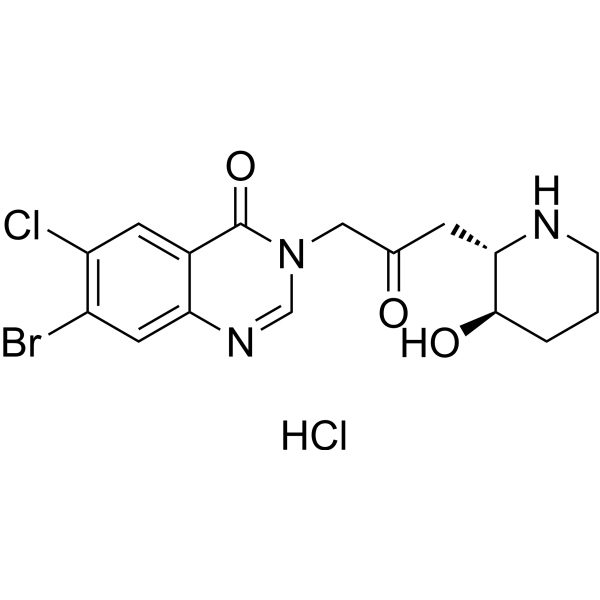
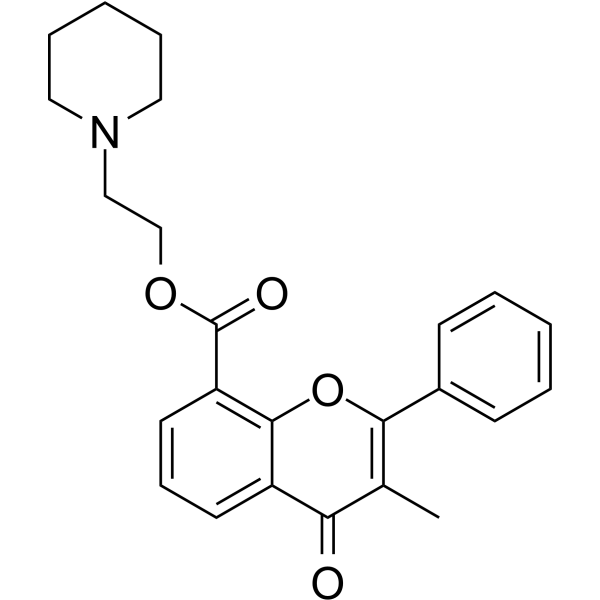
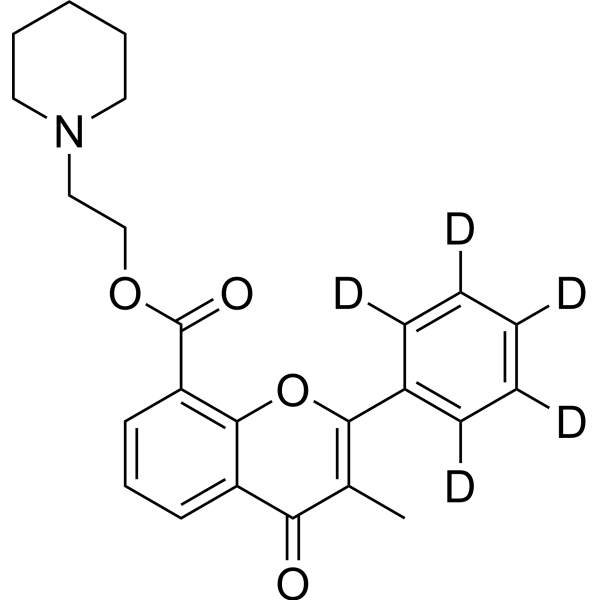
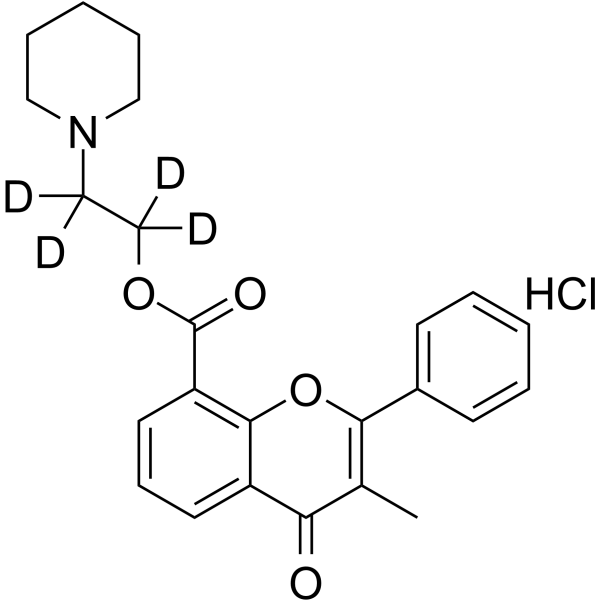
    Flavoxate hydrochloride (Rec-7-0040; DW61) is an orally active L-type Ca 2+ channel inhibitor and antispasmodic. Flavoxate hydrochloride inhibits cyclic adenosine monophosphate production by blocking voltage-dependent inward Ba 2+ currents, regulating the brainstem micturition center, and stimulating G protein-coupled receptors. Consequently, Flavoxate hydrochloride induces relaxation of bladder smooth muscle and inhibits isovolumetric rhythmic contractions. Flavoxate hydrochloride effectively increases bladder capacity and alleviates symptoms of urgent urination frequency and pollakiuria caused by overactive bladder. Flavoxate hydrochloride can be used in research on overactive bladder and related voiding dysfunctions .
    Flavoxate hydrochloride
  • HY-108465
    Pyr3
    5+ Cited Publications

    TRP Channel Others
    Pyr3 is a selective inhibitor of transient receptor potential canonical channel 3 (TRPC3), with an IC50 of 700 nM for TRPC3-mediated Ca 2+ influx.
    Pyr3
  • HY-107319
    Almitrine mesylate
    1 Publications Verification

    Almitrine bismesylate; Almitrine bismethanesulfonate; Almitrine dimesylate

    Potassium Channel Cardiovascular Disease Neurological Disease
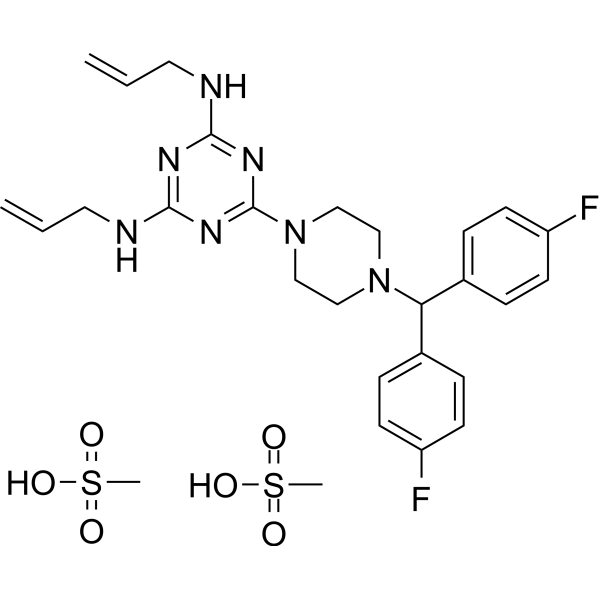
    Almitrine mesylate, a peripheral chemoreceptor agonist, inhibits selectively the Ca 2+-dependent K + channel.
    Almitrine mesylate
  • HY-12498
    GV-58
    2 Publications Verification

    Calcium Channel Neurological Disease
    GV-58 is a novel N- and P/Q-type calcium (Ca 2+) channel agonist with EC50s of 7.21 and 8.81 μM, respectively. GV-58 slows the deactivation of channels, resulting in a large increase in presynaptic Ca 2+ entry during activity. GV-58 can be used in lambert-eaton myasthenic syndrome (LEMS) research .
    GV-58
  • HY-101360

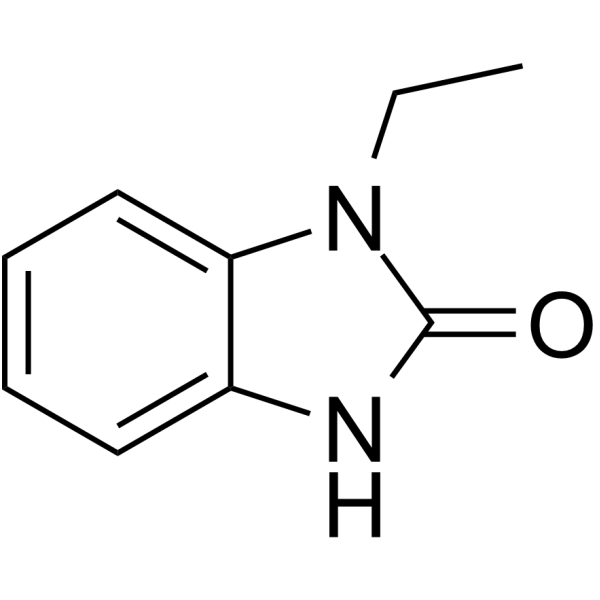
    1-Ethyl-2-benzimidazolinone

    Potassium Channel Neurological Disease
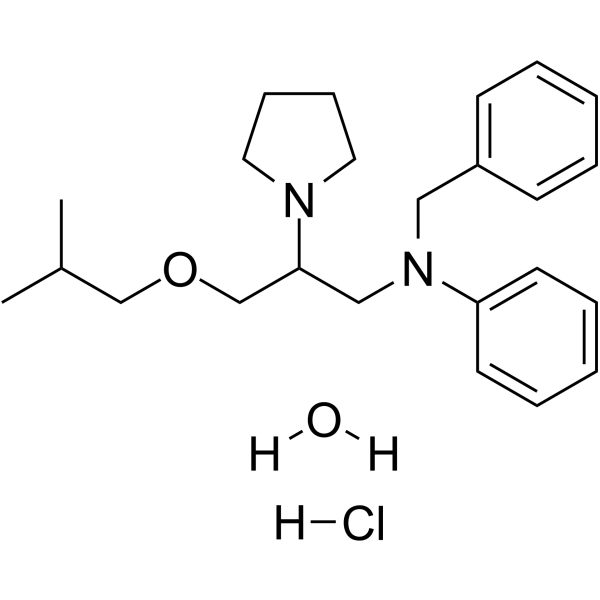
    1-EBIO is an activator of Ca 2+ sensitive K + channels. 1-EBIO is used to study the role of K + channels in diverse physiological functions .
    1-EBIO
  • HY-108593
    BMS-191011
    3 Publications Verification

    BMS-A

    Potassium Channel Neurological Disease
    BMS 191011 (BMS-A) is a potent BKCa channel opener (large-conductance Ca 2+-activated potassium channel). BMS-191011 shows neuroprotective activities in rodent models of stroke .
    BMS-191011
  • HY-103307

    Calcium Channel Cardiovascular Disease
    FPL64176, a nondihydropyridine compound, is a potent agonist of L-type Ca 2+ channels with an EC50 value of 16 nM .
    FPL64176
  • HY-Y0258A
    Benzocaine (hydrochloride)
    1 Publications Verification

    Sodium Channel Calcium Channel Neurological Disease
    Benzocaine hydrochloride is an orally active local anesthetic. Benzocaine hydrochloride non-competitively inhibits the binding of Ca-ATPase to Ca 2+, with an IC50 of 47.1 mM. Benzocaine hydrochloride exerts anesthetic effects by blocking voltage-gated sodium channels. Benzocaine hydrochloride induces methemoglobinemia in various experimental animals .
    Benzocaine (hydrochloride)
  • HY-W641445

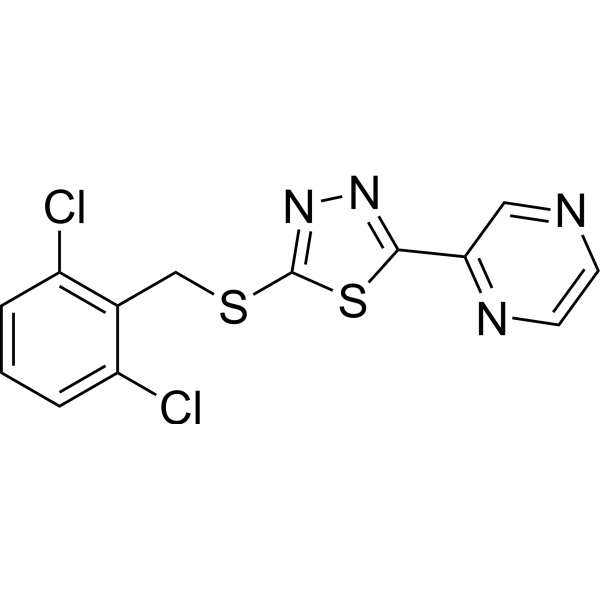
    TRP Channel Inflammation/Immunology
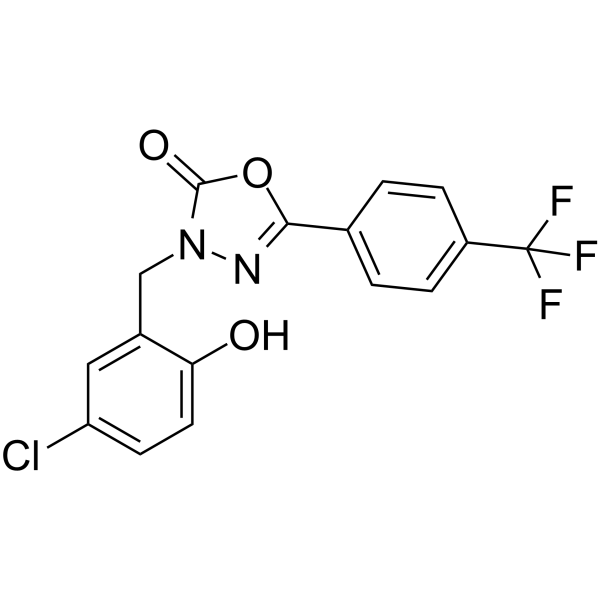
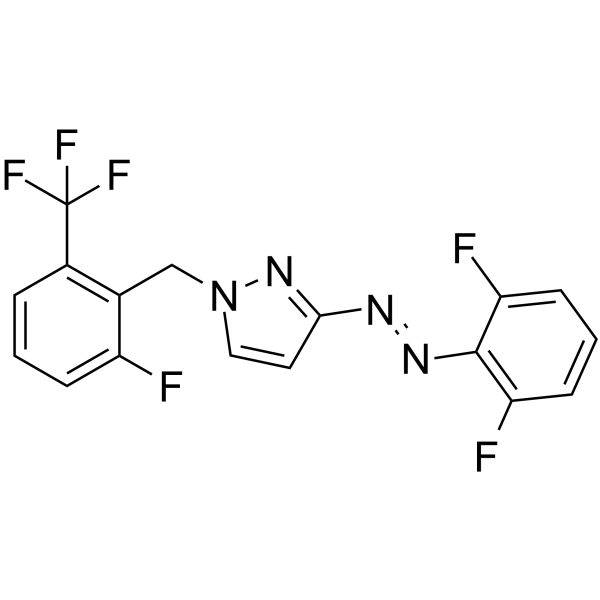
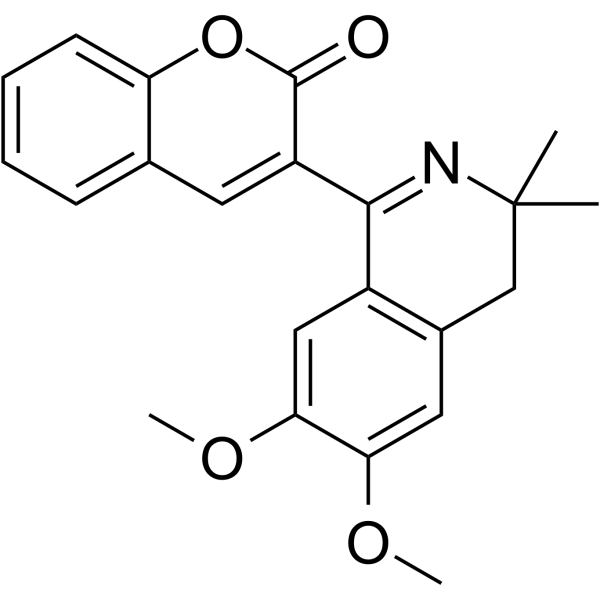
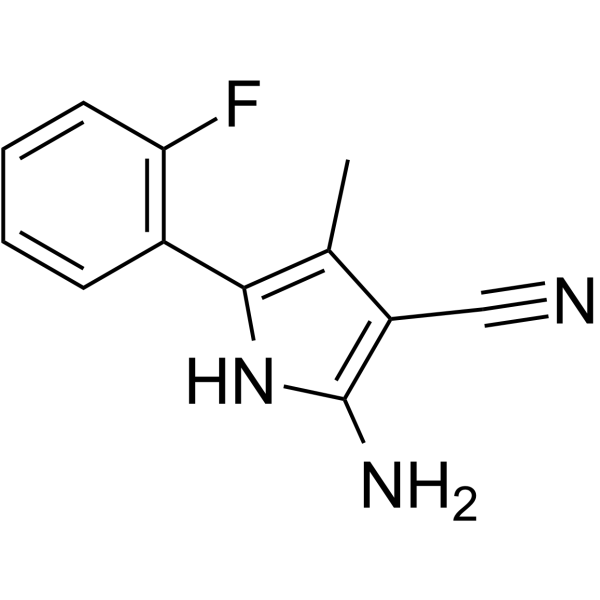
    ELP-004 is a TRPC channel inhibitor and inhibtis TRPC channel-mediated Ca 2+ entry. ELP-004 is an osteoclast inhibitor and inhibits osteoclast differentiation. ELP-004 inhibits basal Ca 2+ and related NFATc1 translocation in inflammatory osteoclastogenesis. ELP-004 reduces bone erosion in a mouse model of rheumatoid arthritis .
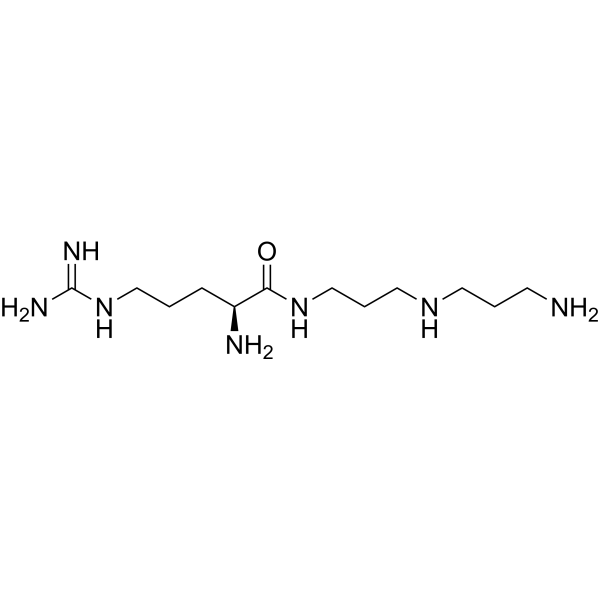
    ELP-004
  • HY-15553

    Ro 40-5967

    Calcium Channel Cardiovascular Disease Cancer
    Mibefradil (Ro 40-5967) is a calcium channel blocker with moderate selectivity for T-type Ca 2+ channels displaying IC50s of 2.7 μM and 18.6 μM for T-type and L-type currents, respectively .
    Mibefradil
  • HY-120597

    Calcium Channel Neurological Disease
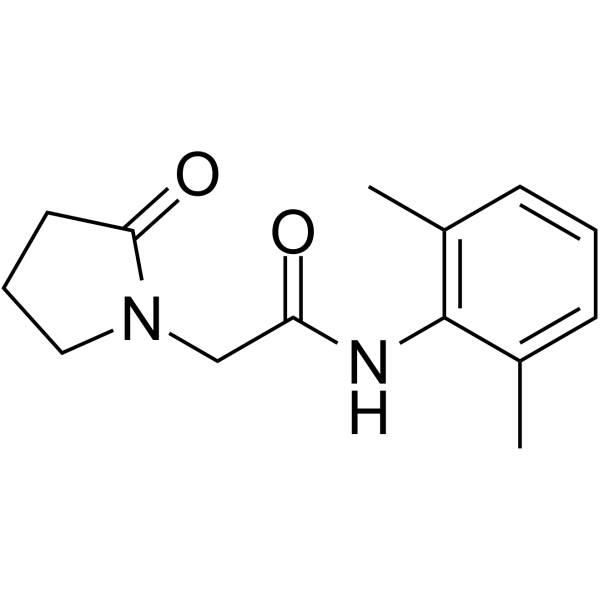
    SAK3 is a potent T-type voltage-gated Ca 2+ channels (T-VGCCs) enhancer. SAK3 enhances Cav3.1 and Cav3.3 T-type Ca 2+ channel currents. Acute SAK3 administration improves memory deficits in olfactory-bulbectomized mice . SAK3 inhibits amyloid β plaque formation in APP-KI mice by activating the proteasome activity .
    SAK3
  • HY-P1075
    CALP3
    2 Publications Verification

    Calcium Channel Neurological Disease Cancer
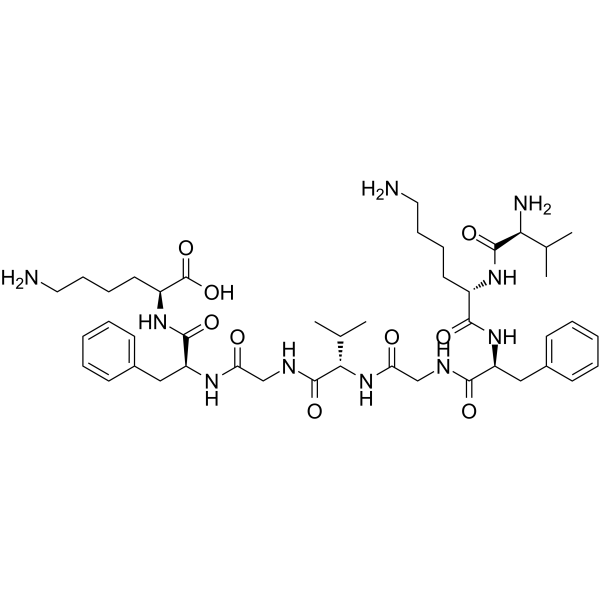
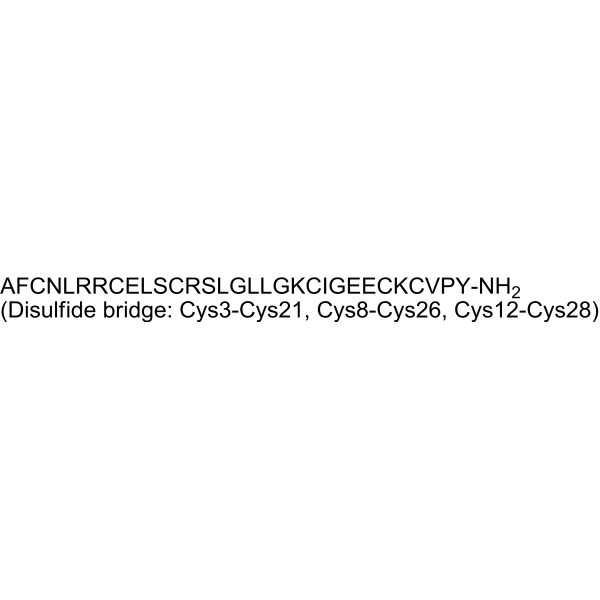
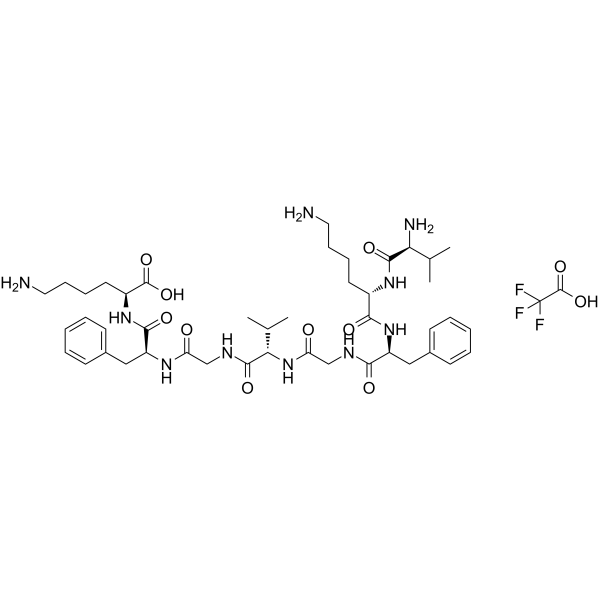
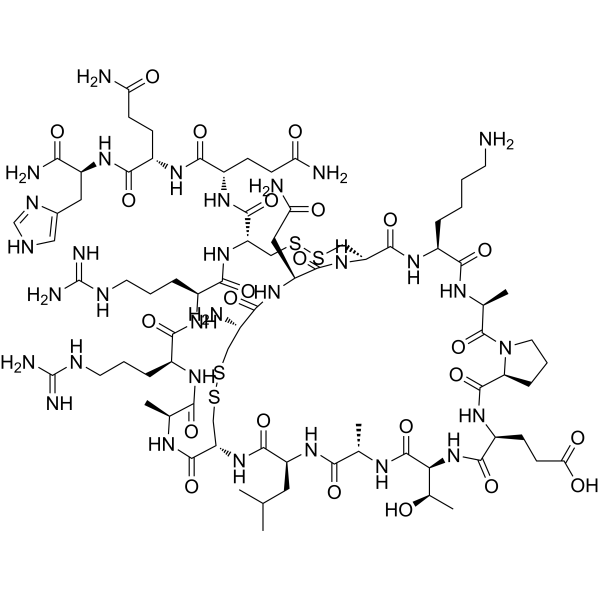
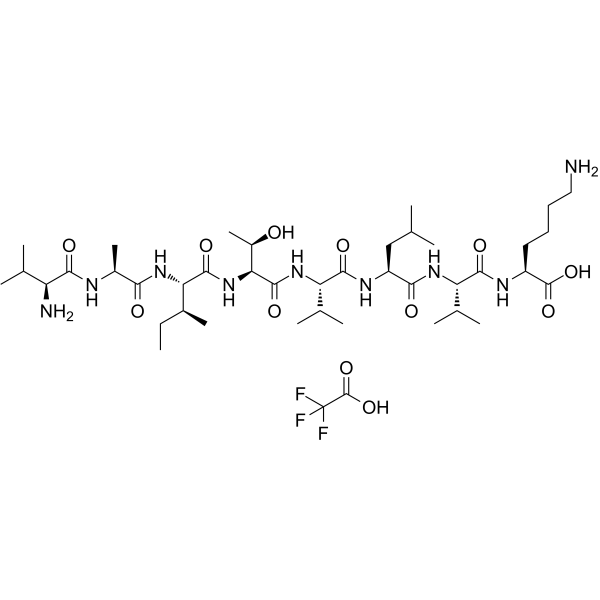
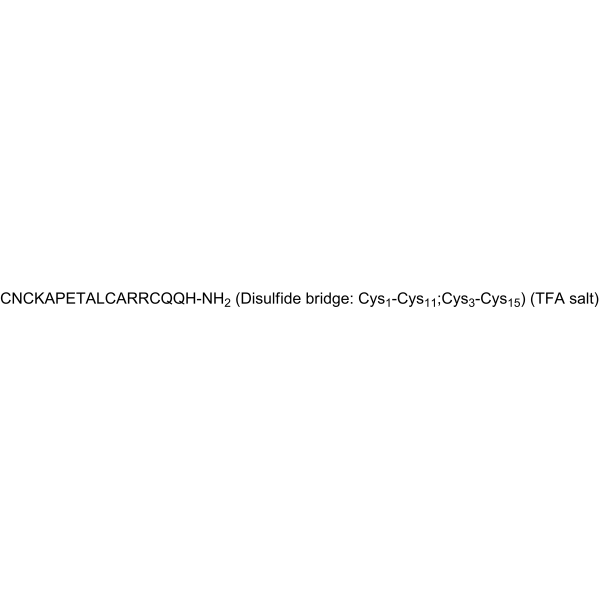
    CALP3, a Ca 2+-like peptide, is a potent Ca 2+ channel blocker that activates EF hand motifs of Ca 2+-binding proteins. CALP3 can functionally mimic increased [Ca 2+]i by modulating the activity of Calmodulin (CaM), Ca 2+ channels and pumps. CALP3 has the potential in controlling apoptosis in diseases such as AIDS or neuronal loss due to ischemia .
    CALP3
  • HY-41076
    Ca2+ channel agonist 1
    1 Publications Verification

    Calcium Channel CDK Neurological Disease
    Ca 2+ channel agonist 1 is an agonist of N-type Ca 2+ channel and an inhibitor of Cdk2, with EC50s of 14.23 μM and 3.34 μM, respectively, and is used as a potential treatment for motor nerve terminal dysfunction.
    Ca2+ channel agonist 1
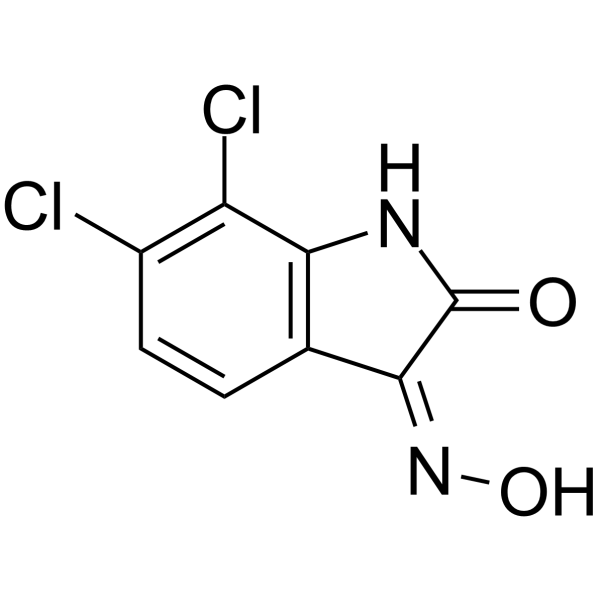
  • HY-136909

    Calcium Channel Cardiovascular Disease
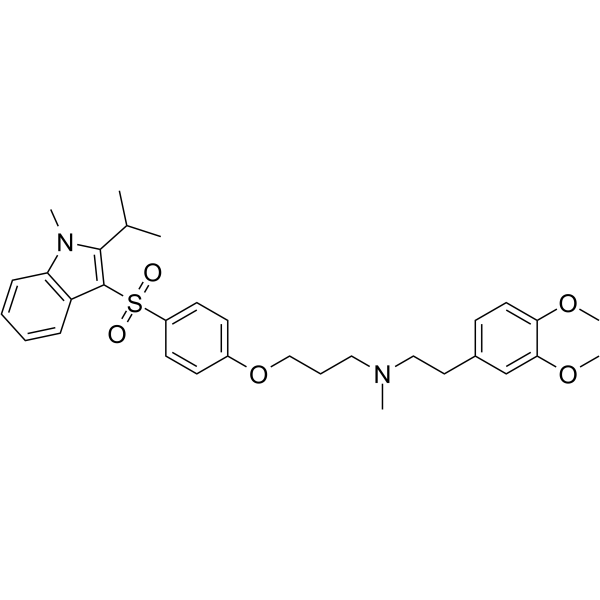
    SR33805 is a potent Ca 2+ channel antagonist, with EC50s of 4.1 nM and 33 nM in depolarized and polarized conditions, respectively. SR33805 blocks L-type but not T-type Ca 2+ channels. SR33805 can be used for the research of acute or chronic failing hearts .
    SR33805
  • HY-U00212

    MPC1304

    Calcium Channel Cardiovascular Disease
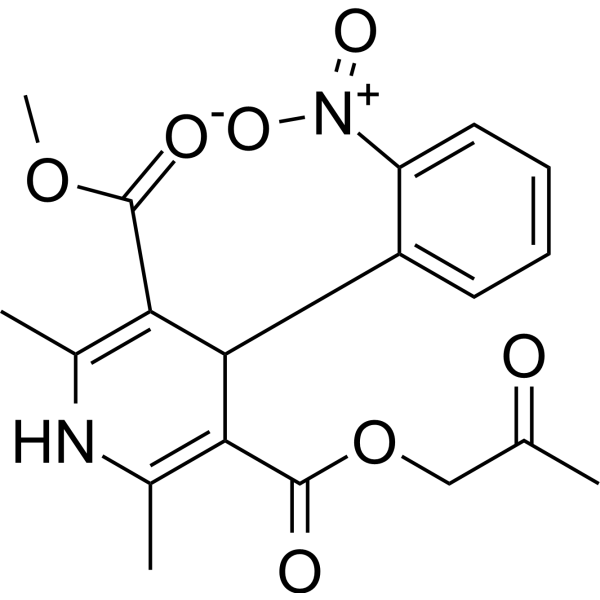
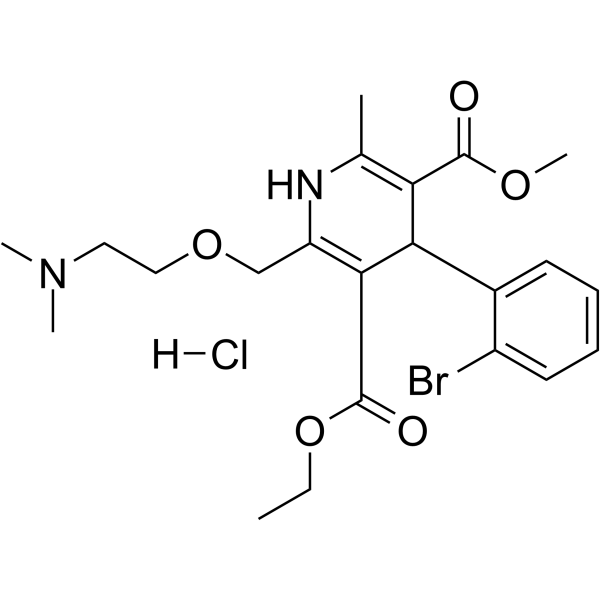
    Aranidipine (MPC1304) is a Ca 2+ channel antagonist with potent and long-lasting antihypertensive effects.
    Aranidipine
  • HY-16952A
    Bepridil hydrochloride hydrate
    5+ Cited Publications

    (±)-Bepridil hydrochloride hydrate; Org 5730 hydrochloride hydrate

    Calcium Channel Cardiovascular Disease
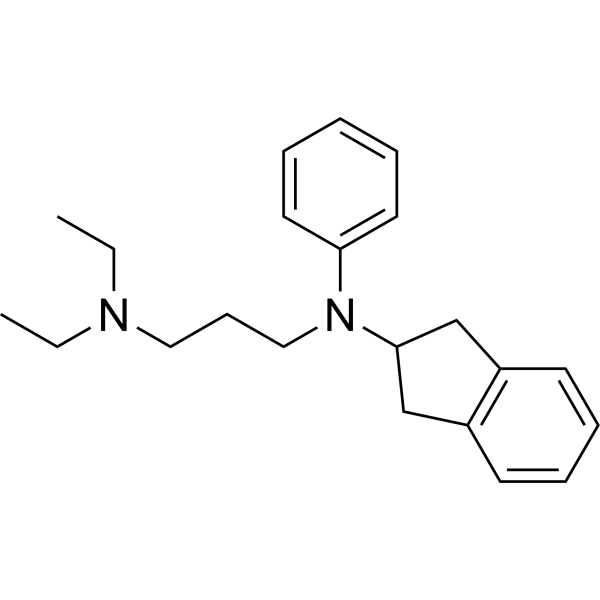
    Bepridil hydrochloride hydrate ((±)-Bepridil hydrochloride hydrate) is a non-selective, long-acting Ca + channel antagonist and Na +, K + channel inhibitor, with antianginal and type I antiarrhythmic effects. Bepridil hydrochloride hydrate also acts as a cardiac Na +/Ca2 + exchange (NCX1) inhibitor. Bepridil hydrochloride hydrate can be used for the research of cardiovascular disorders .
    Bepridil hydrochloride hydrate
  • HY-19721
    ABT-639
    3 Publications Verification

    Calcium Channel Neurological Disease
    ABT-639 is a novel, peripherally acting, selective T-type Ca 2+ channel blocker.
    ABT-639
  • HY-110153

    Potassium Channel Neurological Disease
    NS19504 is a Ca 2+-activated K + channel (BK channel, KCa1.1 channel) activator (EC50=11.0 μM) with relaxing effect on bladder smooth muscle spontaneous phasic contractions .
    NS19504
  • HY-P0190A
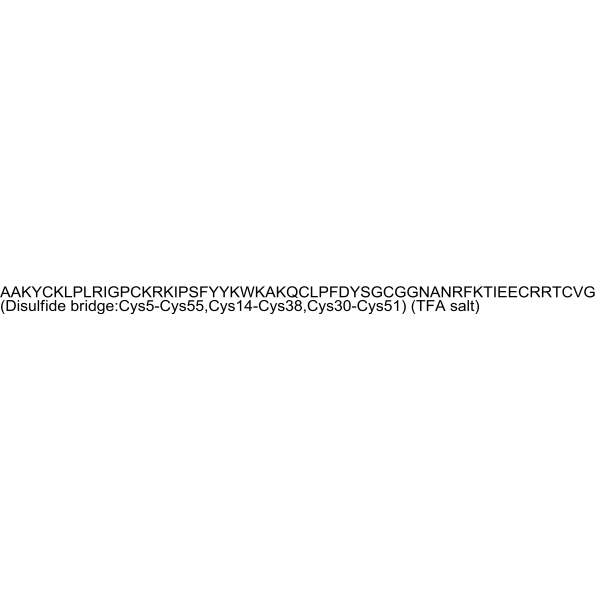
    Iberiotoxin TFA
    2 Publications Verification

    Potassium Channel Others
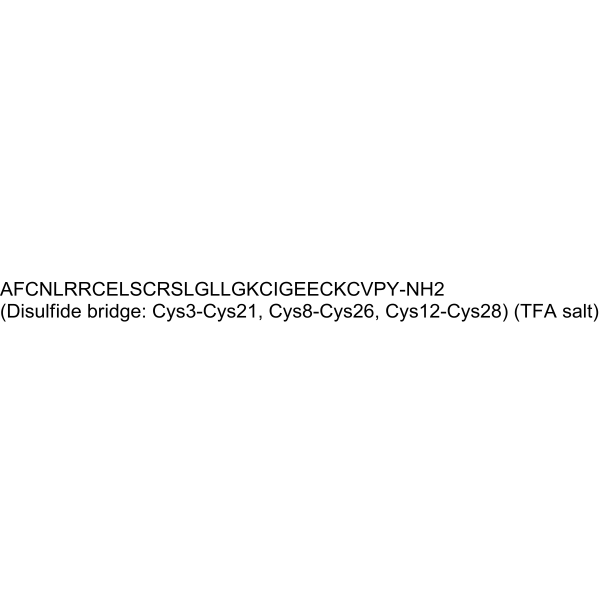
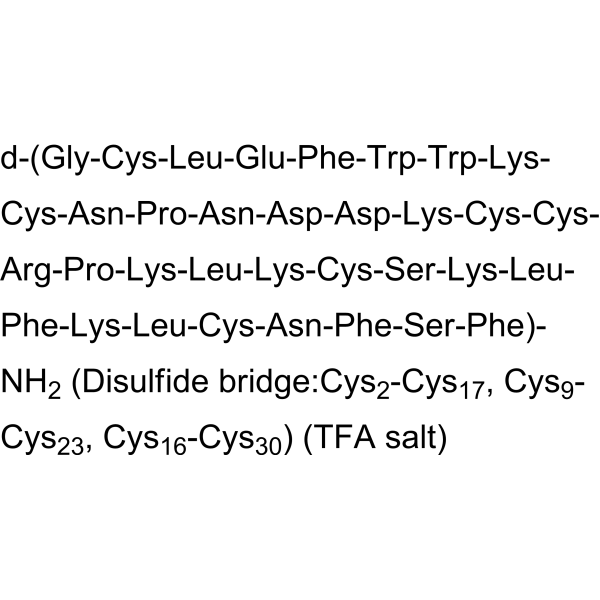
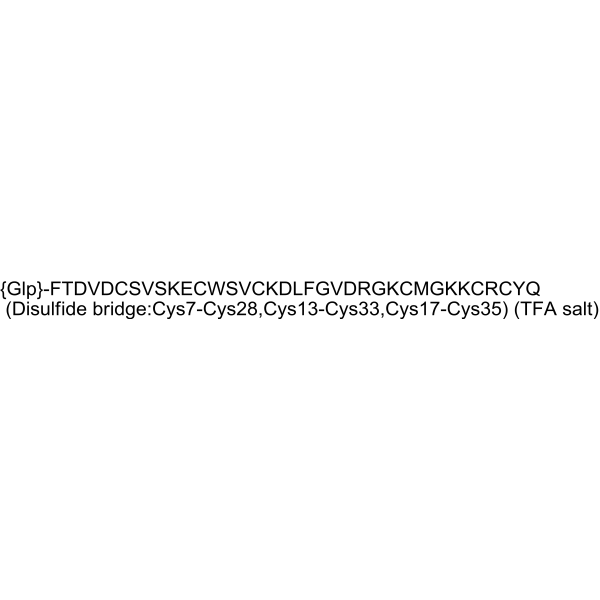
    Iberiotoxin (TFA) is a selective high conductance high conductance Ca 2+-activated K + channel inhibitor with a Kd of ~1 nM. Iberiotoxin (TFA) does not block other types of voltage-dependent ion channels .
    Iberiotoxin TFA
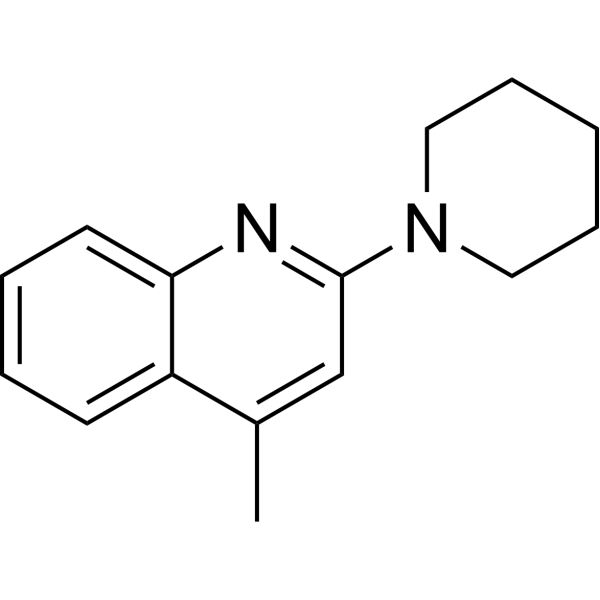
  • HY-N2060

    Apoptosis Bacterial Infection Inflammation/Immunology Cancer
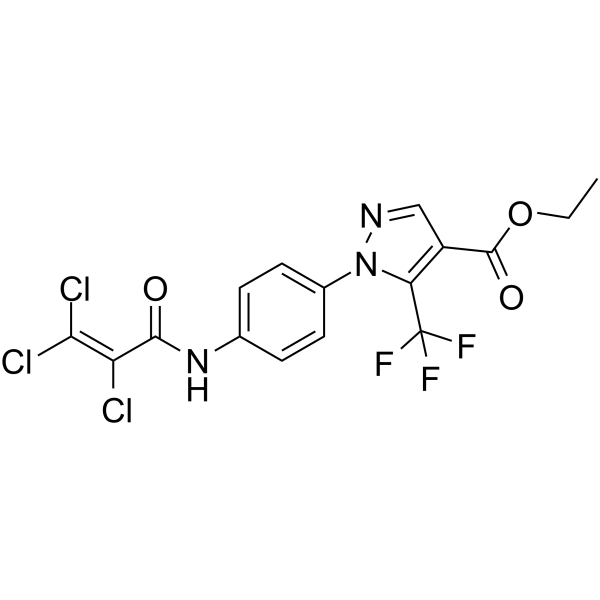
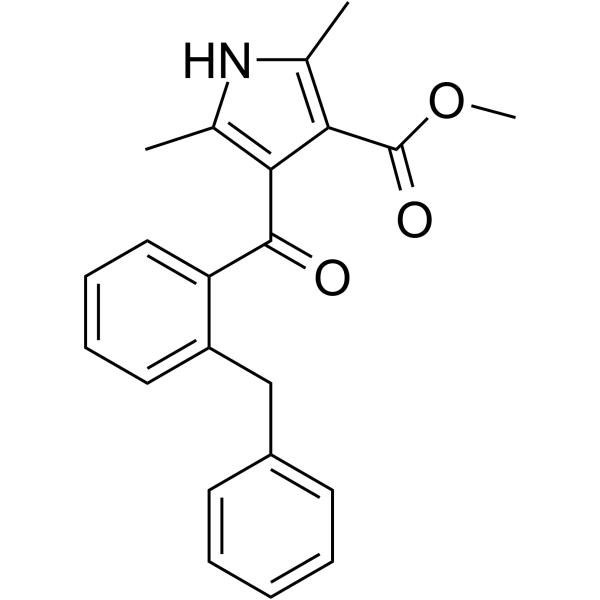
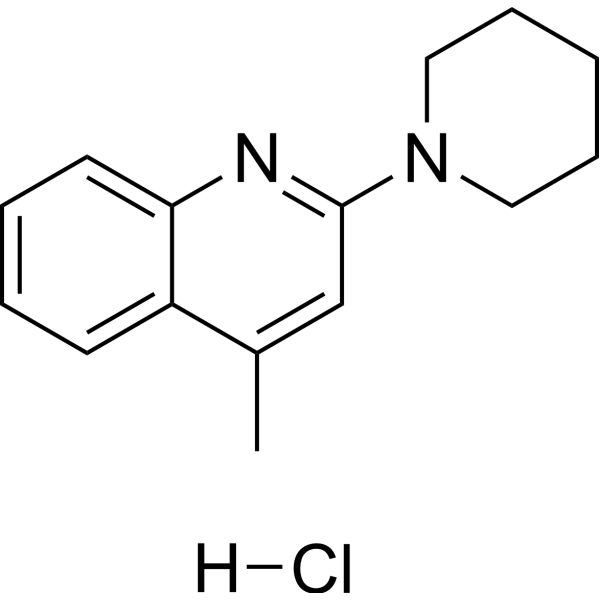
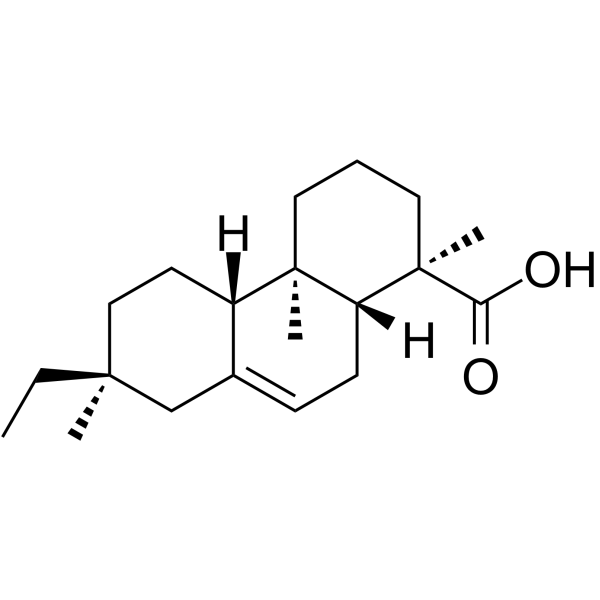
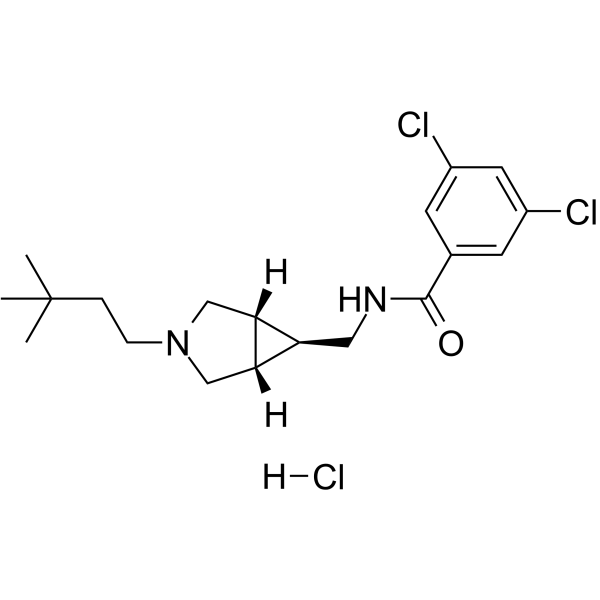
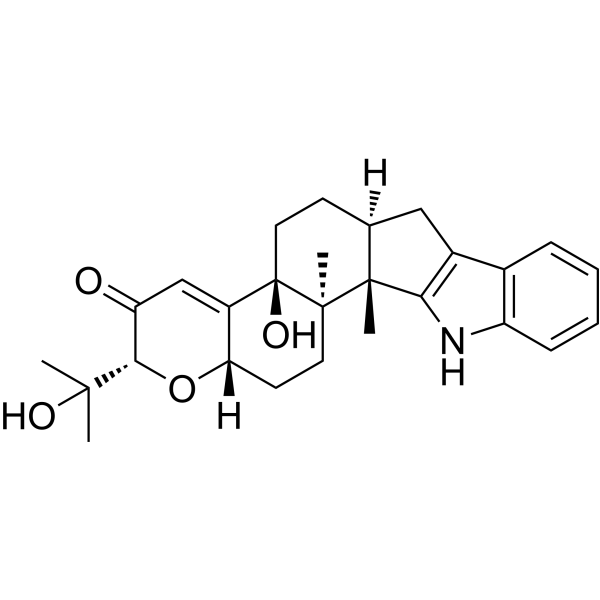
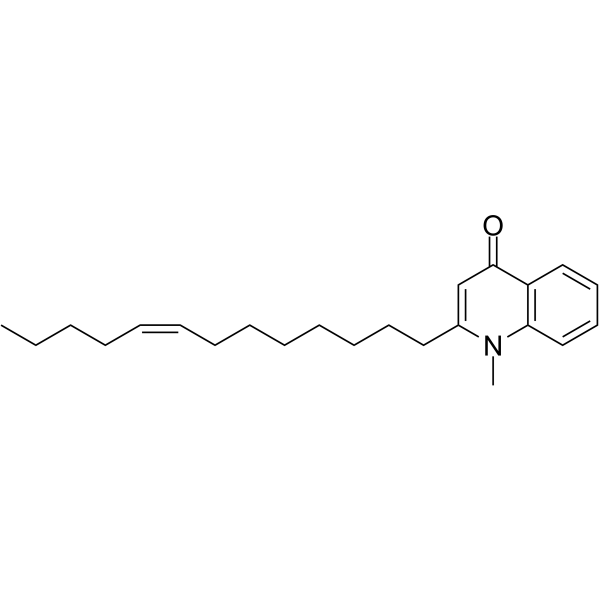
    Evocarpine, a quinolone alkaloid that could be isolated from Evodiae fructus, inhibitss Ca 2+ influx through voltage-dependent calcium channels. Antimycobacterial activity .
    Evocarpine
  • HY-137952

    Potassium Channel TRP Channel Neurological Disease
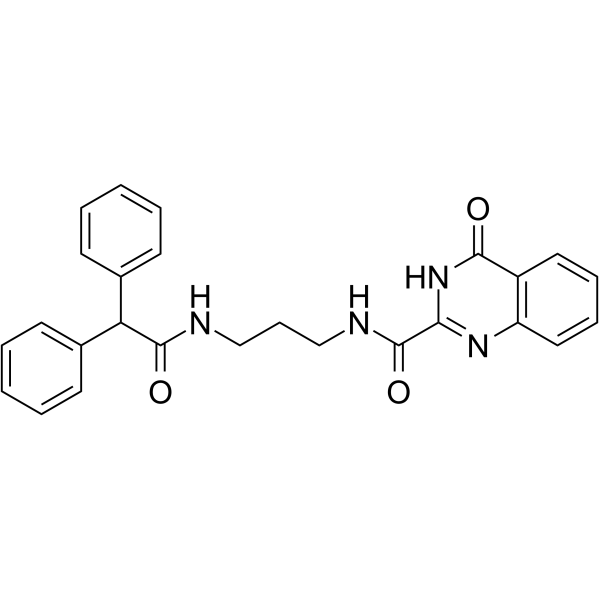
    NS8593 is an SK channel (small conductance Ca 2+-activated K+ channels) inhibitor. NS8593 reversibly inhibited recombinant SK3-mediated currents (human SK3 and rat SK3). NS8593 inhibits all the SK1-3 subtypes Ca 2+-dependently (Kd = 0.42, 0.60, and 0.73 μM, respectively, at 0.5 μM Ca 2+). NS8593 does not affect the Ca 2+-activated K channels of intermediate and large conductance (hlk and hBK channels, respectively). NS8593 can also inhibit TRPM7 (melastatin-related TRP cation channel 7) (IC50 = 1.6 mM). NS8593 can be used for the study of central nervous system (CNS) related diseases .
    NS8593
  • HY-75161R

    Reference Standards TRP Channel Endogenous Metabolite Cancer
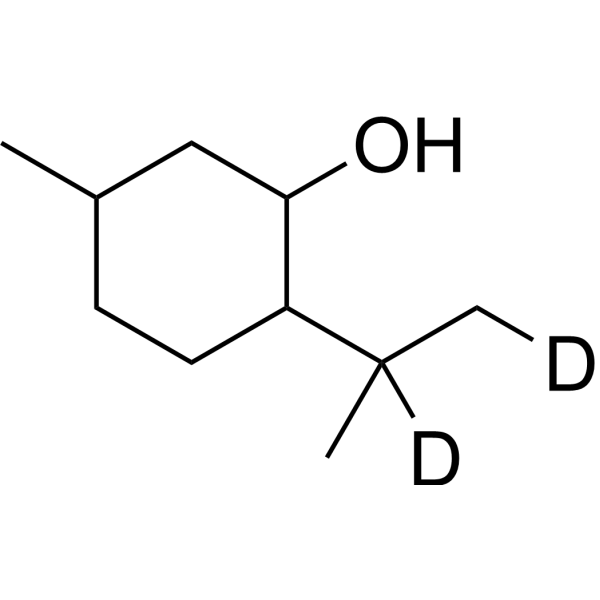
    (-)-Menthol (Standard) is the analytical standard of (-)-Menthol. This product is intended for research and analytical applications. (-)-Menthol is a key component of peppermint oil that binds and activates transient receptor potential melastatin 8 (TRPM8), a Ca2+-permeable nonselective cation channel, to increase [Ca2+]i . Antitumor activity .
    (-)-Menthol (Standard)
  • HY-N7875

    Others Others
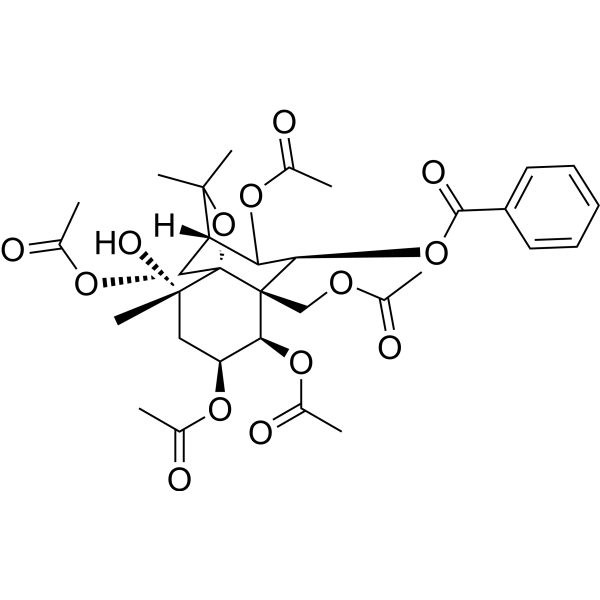
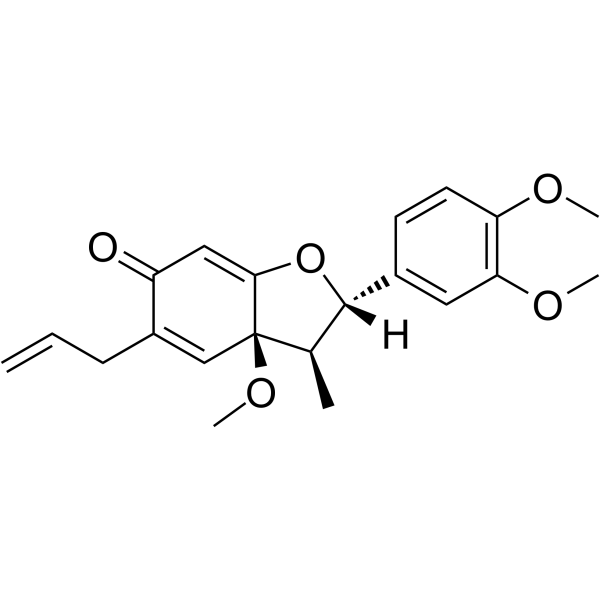
    Celangulin is an insecticidal component isolated from Celastrus angulatus. Celangulin activates the calcium channel on the plasma membrane with increasing the intracellular Ca 2+ after influx from the external. Celangulin activates the calcium channel in the ER .
    Celangulin
  • HY-126583

    Calcium Channel Cancer
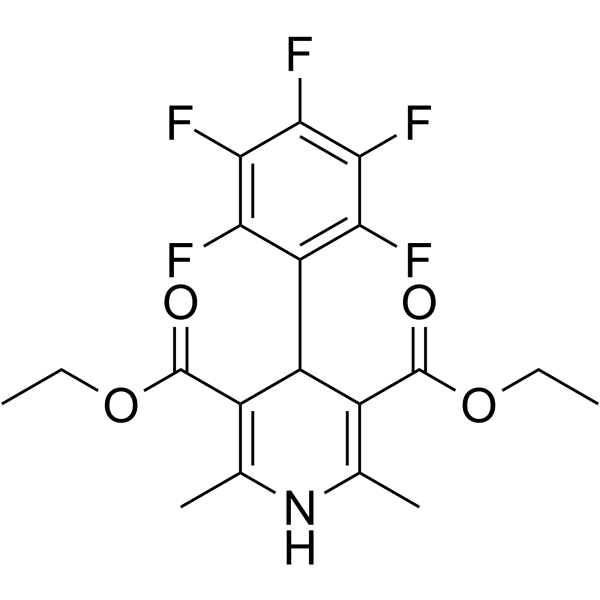
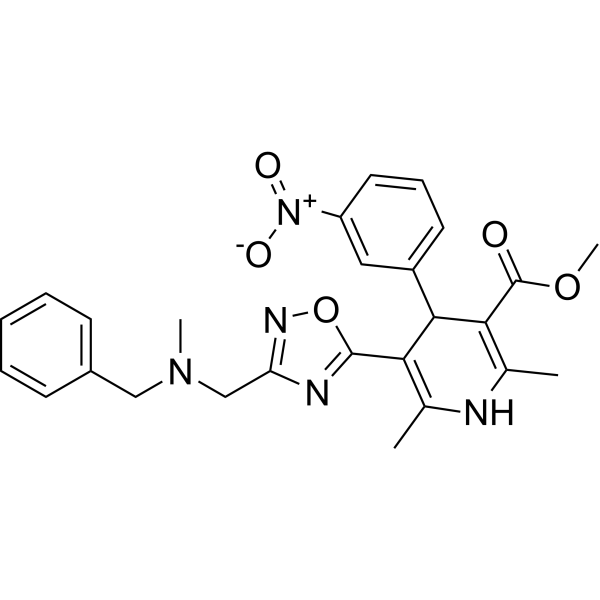
    Nemadipine-A is a specific inhibitor of the EGL-19 L-type Ca 2+ channel . Nemadipine-A, a cell-permeable L-type calcium channel inhibitor, sensitizes TRAIL-resistant cancer cells to this ligand .
    Nemadipine-A
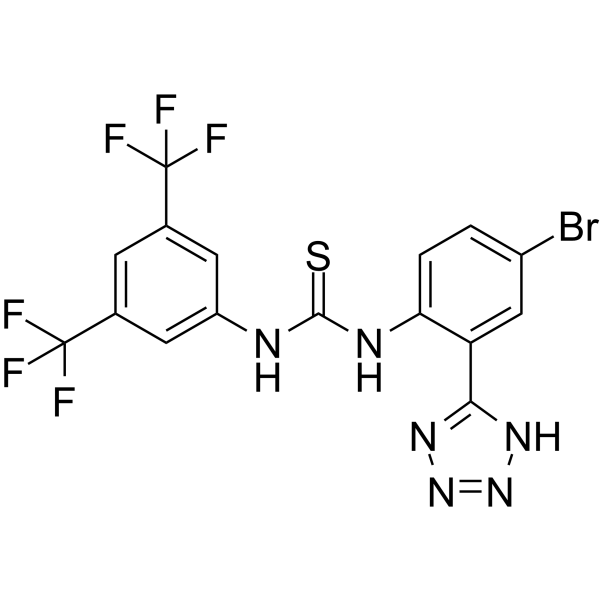
  • HY-131012

    Potassium Channel Others
    GoSlo-SR-5-69 is a potent activator of large conductance Ca 2+-activated K + (BK) channels, with an EC50 of 251 nM .
    GoSlo-SR-5-69
  • HY-P1079

    Calcium Channel Neurological Disease
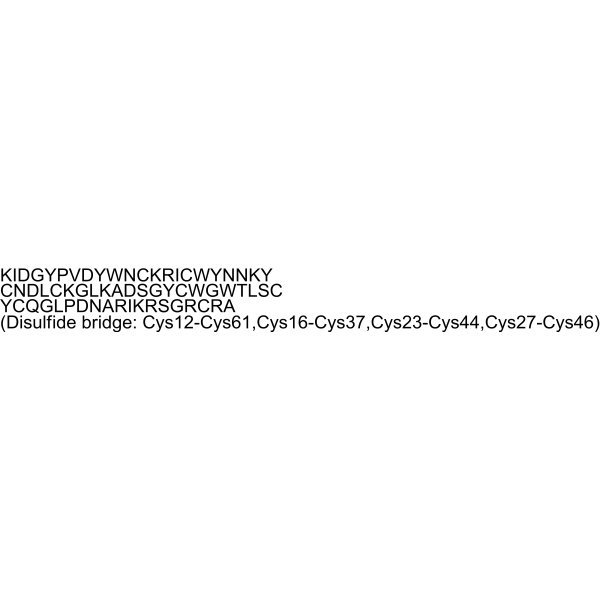
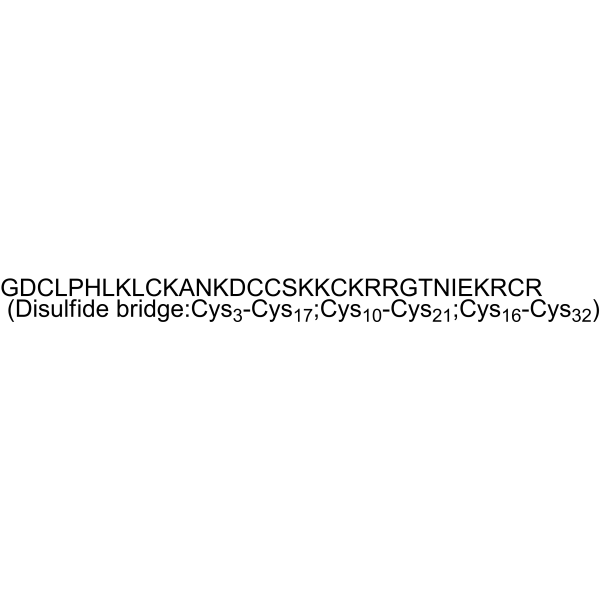
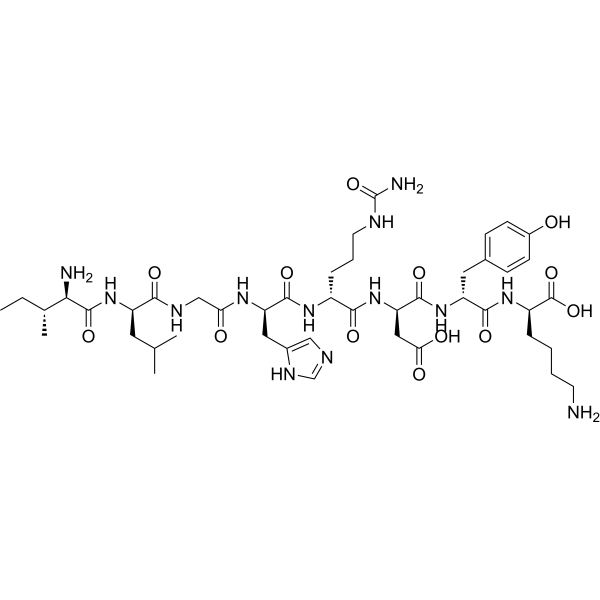
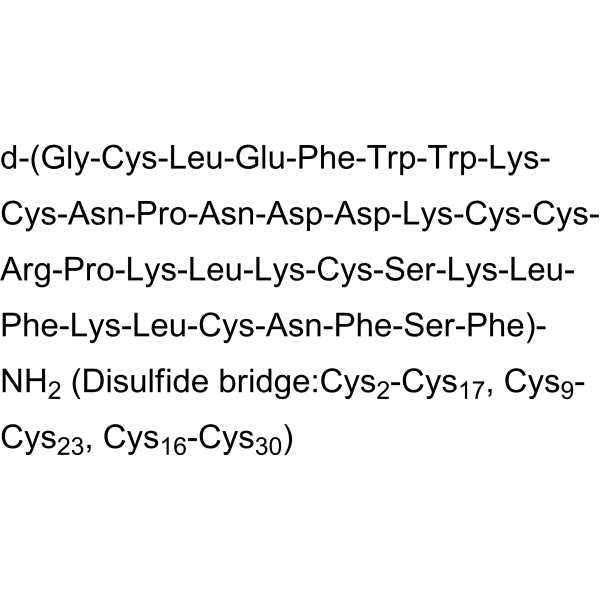
    ω-Agatoxin TK, a peptidyl toxin of the venom of Agelenopsis aperta, is a potent and selective P/Q type Ca 2+ channel blocker. ω-Agatoxin TK inhibits the high K + depolarisation-induced rise in internal Ca 2+ in cerebral isolated nerve endings with an IC50 of of 60 nM. ω-Agatoxin TK has no effect on L-type, N-type, or T-type calcium channels .
    ω-Agatoxin TK
  • HY-B0493S1

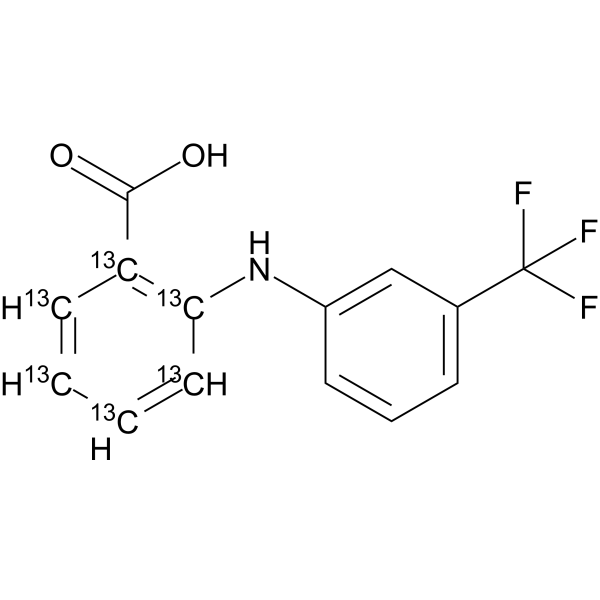
    Isotope-Labeled Compounds Chloride Channel Inflammation/Immunology
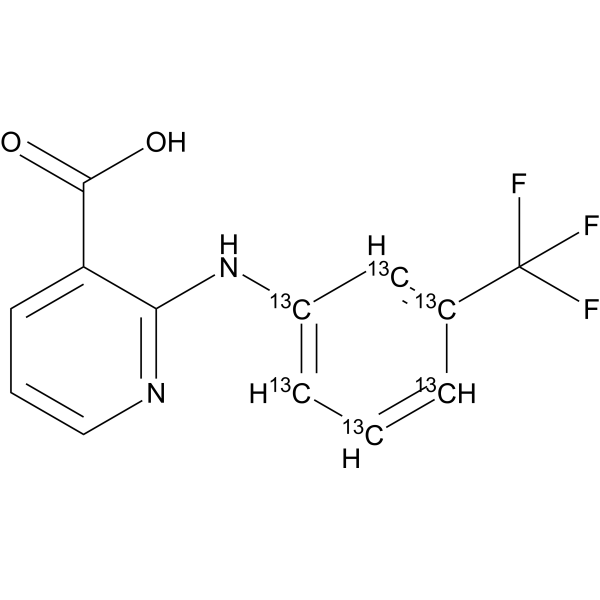
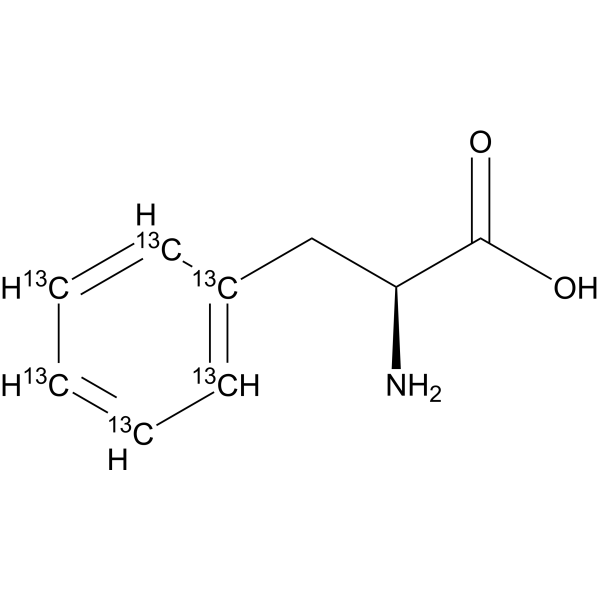
    Niflumic acid- 13C6 is the 13C6 labeled Niflumic acid. Niflumic acid, a Ca2+-activated Cl- channel blocker, is an analgesic and anti-inflammatory agent used in the treatment of rheumatoid arthritis.
    Niflumic acid-13C6
  • HY-12949A
    ML204 hydrochloride
    5+ Cited Publications

    TRP Channel Neurological Disease
    ML204 hydrochloride is a novel, potent, selective TRPC4/TRPC5 channel inhibitor, with at least 19-fold selectivity against TRPC6 and no appreciable effect on all other TRP channels, nor on voltage-gated sodium, potassium, or Ca 2+ channels .
    ML204 hydrochloride
  • HY-P3037A

    Calcium Channel Neurological Disease
    Imperatoxin A TFA is a peptide toxin derived from the venom of the African scorpion Pandinus imperator. Imperatoxin A TFA is a Ca 2+-release channels/ryanodine receptors (RyRs) activator. Imperatoxin A TFA enhances the influx of Ca 2+ from the sarcoplasmatic reticulum into the cell .
    Imperatoxin A TFA
  • HY-14656S

    Calcium Channel Cardiovascular Disease
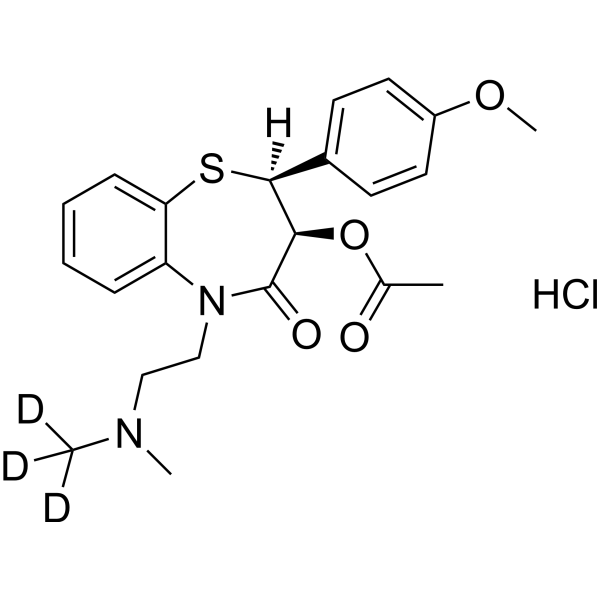
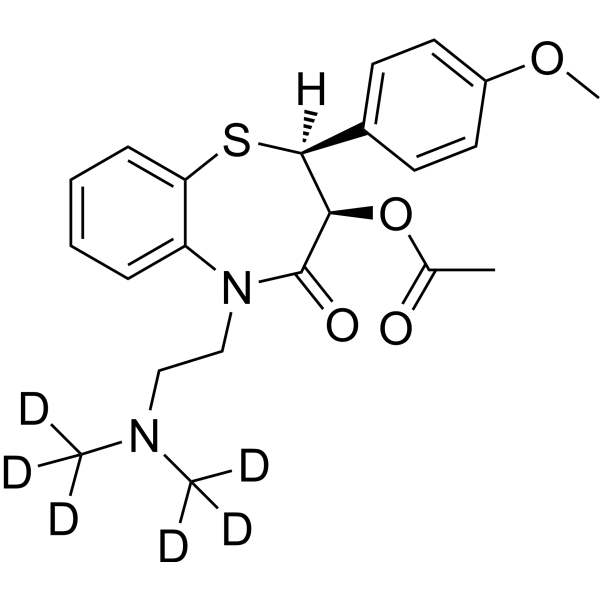
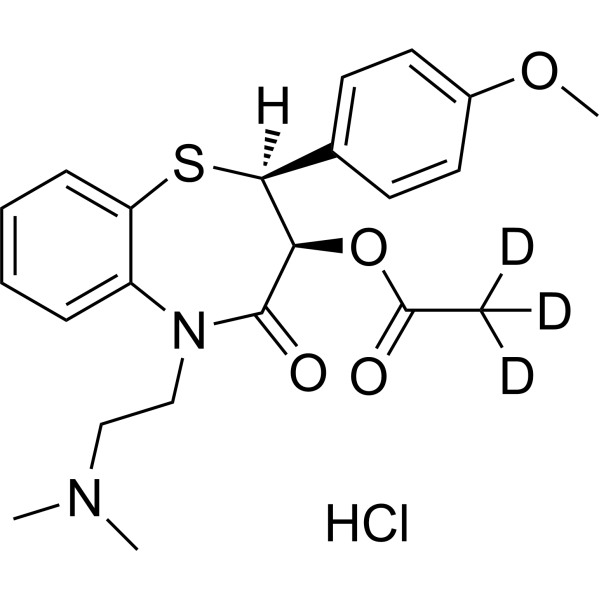
    Diltiazem-d3 (hydrochloride) is the deuterium labeled Diltiazem hydrochloride. Diltiazem hydrochloride is a Ca2+ influx inhibitor (slow channel blocker or calcium antagonist)[1][2].
    Diltiazem-d3 hydrochloride
  • HY-135110
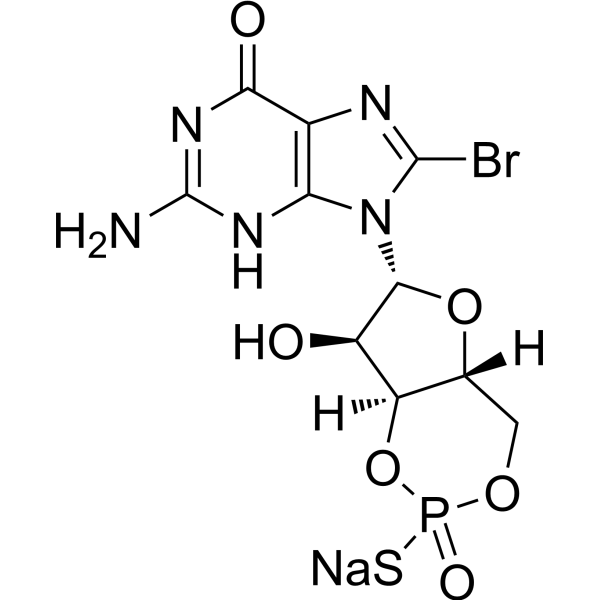
    Rp-8-Br-cGMPS sodium
    1 Publications Verification

    Rp-8-bromo-Cyclic GMPS sodium

    Calcium Channel PKG HCN Channel Metabolic Disease
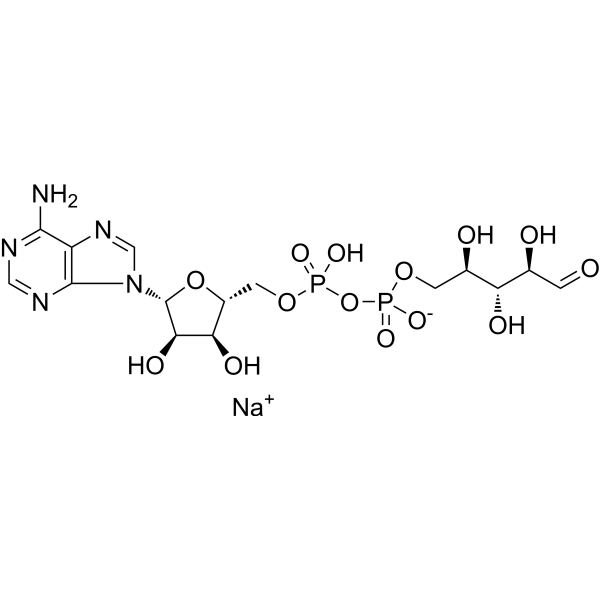
    Rp-8-Br-cGMPS (Rp-8-bromo-Cyclic GMPS) sodium salt is a potent Ca 2+-ATPase activator. Rp-8-Br-cGMPS is also an agonist of the rod CNG channel and an inhibitor of PKG. Rp-8-Br-cGMPS sodium salt mediates cytosolic Ca 2+ reduction by activating Ca 2+-ATPase and subsequently removing Ca 2+ from the cell .
    Rp-8-Br-cGMPS sodium

Inquiry Online

Your information is safe with us. * Required Fields.

Salutation


Country or Region *

Applicant Name *


Organization Name *

Department *


Email Address *


Product Name *

Cat. No.


Requested quantity *

Phone Number *


Remarks

Inquiry Online

Inquiry Information

Product Name:
Cat. No.:
Quantity:
MCE Japan Authorized Agent: