



MRS 1523
Based on 6 publication(s) in Google Scholar
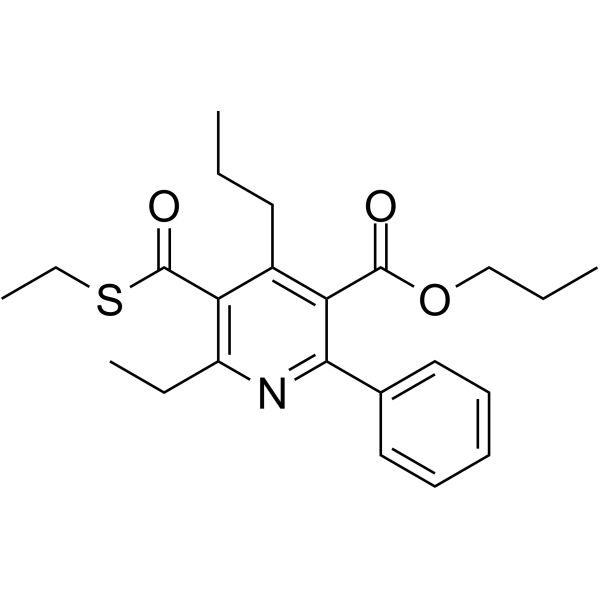
MRS 1523 is a potent and selective adenosine A3 receptor antagonist with Ki values of 18.9 nM and 113 nM for human and rat A3 receptors, respectively. In rat this corresponds to selectivities of 140- and 18-fold vs A1 and A2A receptors, respectively. MRS 1523 can exert antihyperalgesic effect through N-type Ca channel block and action potential inhibition in isolated rat dorsal root ganglion (DRG) neurons.
For research use only. We do not sell to patients.
- Purity : 99.97%
- CAS No.: 212329-37-8
- Formula: C23H29NO3S
- Molecular Weight:399.55
-
Storage:Pure form -20°C, 3 years , 4°C, 2 years ; In solvent -80°C, 6 months , -20°C, 1 month

To place orders, for customer services and technical support, please contact: MedChemExpress USA
Tel: 609-228-6898 E-mail: [email protected] [email protected]


-
 Biological Activity
-
Chemical Information
-
Solvent & Solubility
- Protocols
- Purity & Documentation
- References
-
 Help & FAQs


-
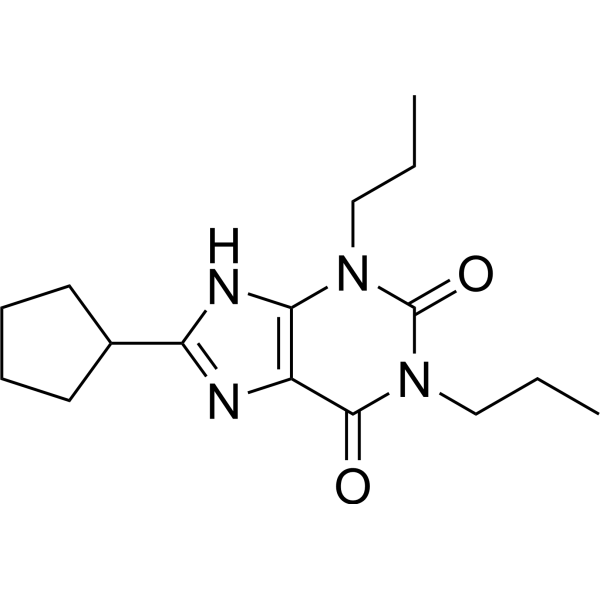
HY-100937
DPCPXA1 Receptor Antagonist -
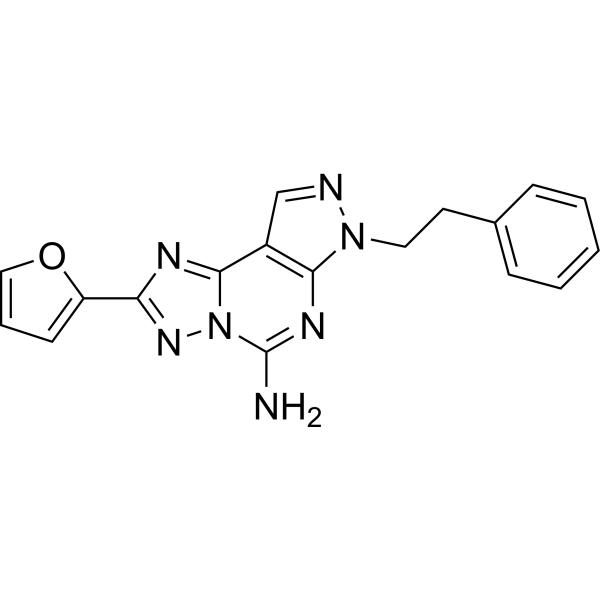
HY-19533
SCH 58261A2A Receptor Antagonist -
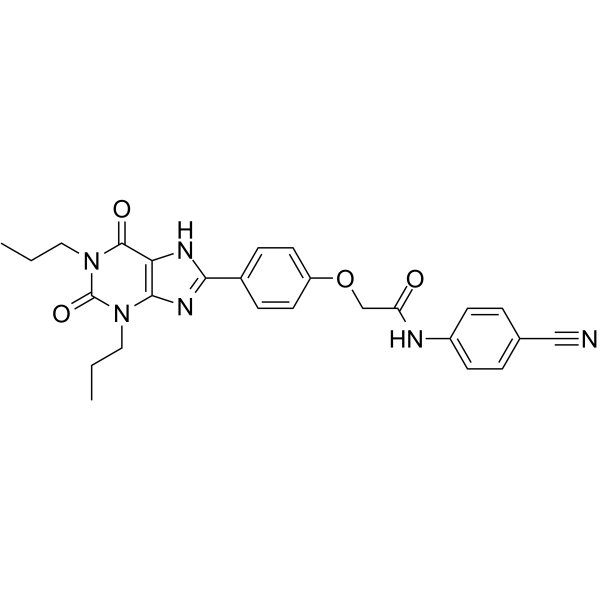
HY-14121
MRS 1754A2B Antagonist -
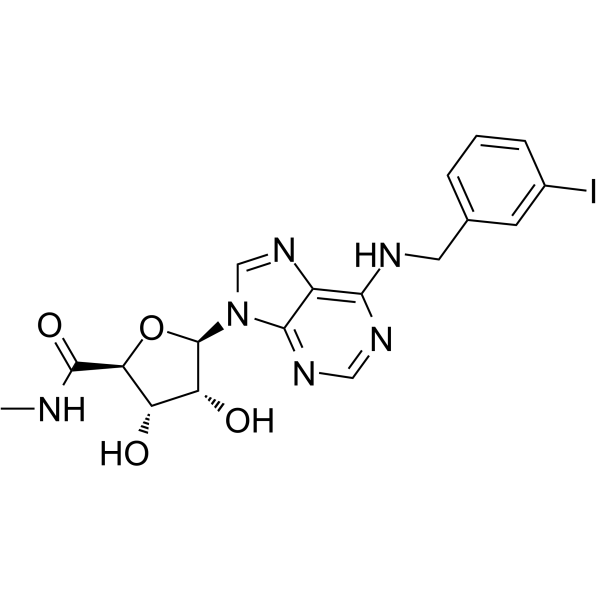
HY-13591
PiclidenosonA3AR Agonist -
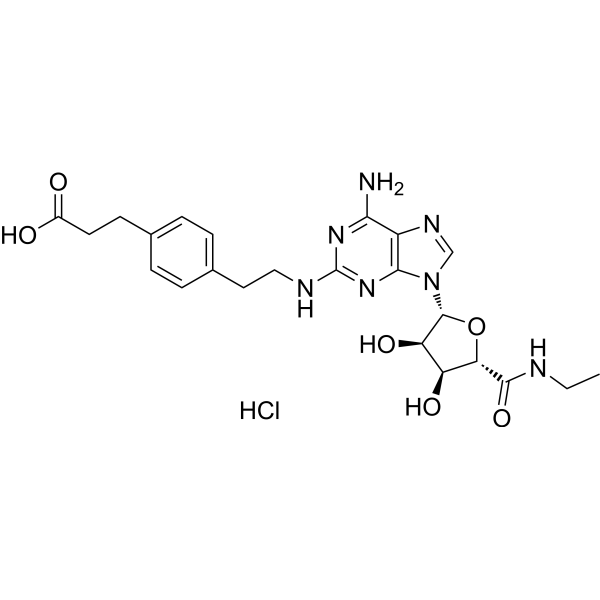
HY-13201A
CGS 21680 HydrochlorideAdenosine A2A Receptor Agonist -
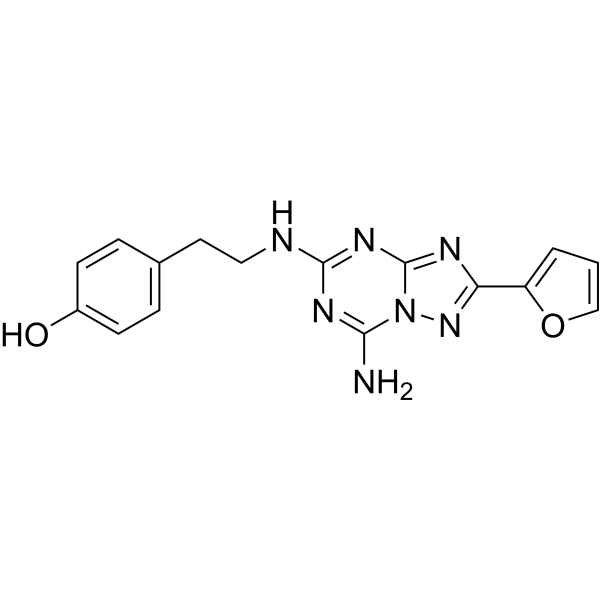
HY-19532
ZM241385A2A Receptor Antagonist -
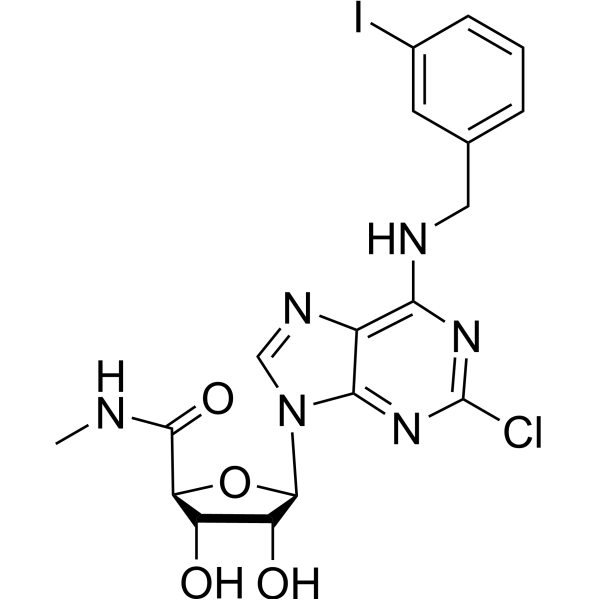
HY-12365
NamodenosonA3AR Agonist -
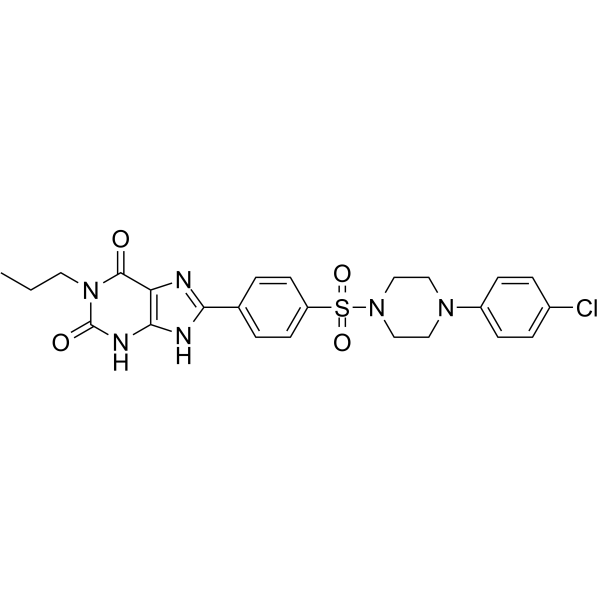
HY-103166
PSB-603A2B Receptor Antagonist -
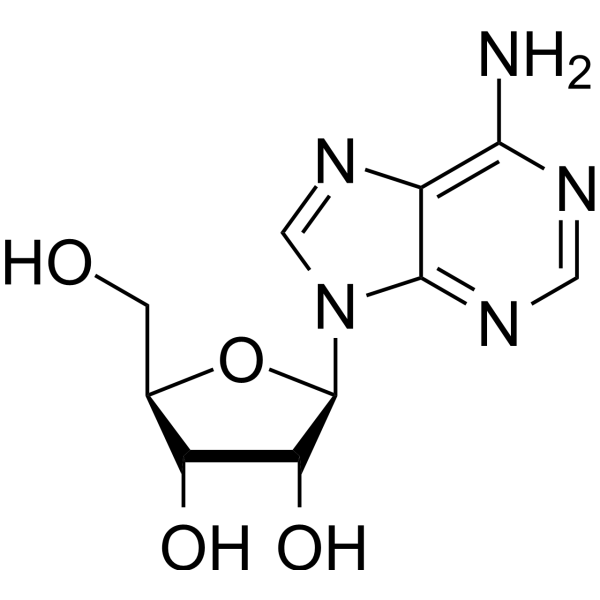
HY-B0228
AdenosineEndogenous Autacoid -
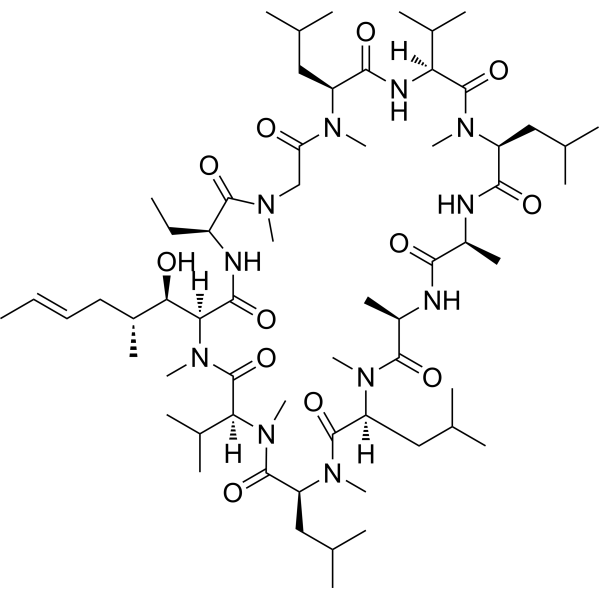
HY-B0579
Cyclosporin ACalcineurin Inhibitor -
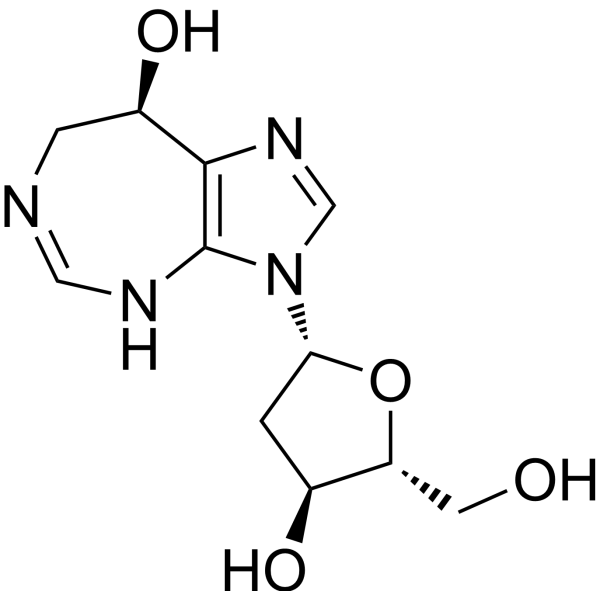
HY-A0006
PentostatinAntibiotic -
HY-125286
AB-680CD73 Inhibitor
Publications Citing Use of MedChemExpress (MCE) MRS 1523
MoreAll Adenosine Receptor Isoforms
MoreAll Calcium Channel Isoforms
More

Biological Activity
Description
IC50 & Target
Ki: 18.9 nM (Human A3 receptor), 113 nM (Rat A3 receptor), 15.6 µM (A1 receptor) and 2.05 µM (A2A receptor)[1]
In Vitro
MRS 1523 (0.1-1 μM) treatment significantly antagonizes cell numbers to 40.7% and 57.4% of the control values, respectively, 30 min before the addition of cordycepin (60 μM). MRS1523 (1 μM) alone has any effect on tumor cell growth[3].
A partial blockade of the adenosine-5'-N-ethylcarboxamide (NECA)-induced migration is observed when human endothelial progenitor cells (hEPC) are co-incubated with MRS 1523 (1 nM). Furthermore, in 3-days hEPC, the treatment with MRS 1523 100 nM inhibits the NECA-induced migration by 70%. NECA-induced migration is blocked in dose-response fashion by MRS 1523 with calculated Ki of 147 nM[4].
MedChemExpress (MCE) has not independently confirmed the accuracy of these methods. They are for reference only.
-
Cell Line:B16-BL6 cells
-
Concentration:0.1 µM, 1 µM
-
Incubation Time:24 hours, 48 hours, 72 hours
-
Result:Antagonized the growth suppression induced by cordycepin.
In Vivo
MedChemExpress (MCE) has not independently confirmed the accuracy of these methods. They are for reference only.


Chemical Information
-
CAS No. 212329-37-8
-
Appearance Oil
-
Molecular Weight 399.55
-
Formula C23H29NO3S
-
Color Colorless to light yellow
-
SMILES
O=C(OCCC)C1=C(C(C(SCC)=O)=C(N=C1C2=CC=CC=C2)CC)CCC
-
Shipping
Room temperature in continental US; may vary elsewhere.
-
Storage
Pure form -20°C 3 years 4°C 2 years In solvent -80°C 6 months -20°C 1 month


Publications (6)
-
Journal Impact Factor
-
Most Recent
-
-
CNS Neurosci Ther
Inhibition of ADORA3 promotes microglial phagocytosis and alleviates chronic ischemic white matter injury. [Abstract]2024 May;30(5):e14742. PMID: 38715283 -
Cells
Caffeine Mitigates Adenosine-Mediated Angiogenic Properties of Choroidal Endothelial Cells Through Antagonism of A1 Adenosine Receptor and PI3K-AKT Axis. [Abstract]2026 Jan 5;15(1):87. PMID: 41511370 -
Int J Mol Sci
Electroacupuncture Relieves Neuropathic Pain via Adenosine 3 Receptor Activation in the Spinal Cord Dorsal Horn of Mice. [Abstract]2024 Sep 24;25(19):10242. PMID: 39408573 -
Purinergic Signal
Pharmacological characterization of DPTN and other selective A3 adenosine receptor antagonists. [Abstract]2021 Dec;17(4):737-746. PMID: 34713378 -


Solvent & Solubility
In Vitro:
DMSO : 100 mg/mL (250.28 mM; Need ultrasonic; Hygroscopic DMSO has a significant impact on the solubility of product, please use newly opened DMSO)
Please refer to the solubility information to select the appropriate solvent. Once prepared, please aliquot and store the solution to prevent product inactivation from repeated freeze-thaw cycles.
Storage method and period of stock solution: -80°C, 6 months; -20°C, 1 month. When stored at -80°C, please use it within 6 months. When stored at -20°C, please use it within 1 month.
Please refer to the solubility information to select the appropriate solvent. Once prepared, please aliquot and store the solution to prevent product inactivation from repeated freeze-thaw cycles.
Storage method and period of stock solution: -80°C, 6 months; -20°C, 1 month. When stored at -80°C, please use it within 6 months. When stored at -20°C, please use it within 1 month.
Concentration (start) × Volume (start) = Concentration (final) × Volume (final)
In Vivo:
Select the appropriate dissolution method based on your experimental animal and administration route.
- For the following dissolution methods, please ensure to first prepare a clear stock solution using an In Vitro approach and then sequentially add co-solvents:
- To ensure reliable experimental results, the clarified stock solution can be appropriately stored based on storage conditions. As for the working solution for In Vivo experiments, it is recommended to prepare freshly and use it on the same day.
- The percentages shown for the solvents indicate their volumetric ratio in the final prepared solution. If precipitation or phase separation occurs during preparation, heat and/or sonication can be used to aid dissolution.
Add each solvent one by one: 10% DMSO 40% PEG300 5% Tween-80 45% Saline
Solubility: ≥ 2.5 mg/mL (6.26 mM); Clear solution
This protocol yields a clear solution of ≥ 2.5 mg/mL (saturation unknown).
Taking 1 mL working solution as an example, add 100 μL DMSO stock solution (25.0 mg/mL) to 400 μL PEG300, and mix evenly; then add 50 μL Tween-80 and mix evenly; then add 450 μL Saline to adjust the volume to 1 mL.
Preparation of Saline: Dissolve 0.9 g sodium chloride in ddH₂O and dilute to 100 mL to obtain a clear Saline solution.
In Vivo Dissolution Calculator
Please enter the basic information of animal experiments:
-
-
-
-
Recommended: Prepare an additional quantity of animals to account for potential losses during experiments.
Please enter your animal formula composition:
-
%DMSO +
Recommended: Keep the proportion of DMSO in working solution below 2% if your animal is weak.
-
%+
-
+%Tween-80 + +
-
%Saline +
The co-solvents required include: DMSO, . All of co-solvents are available by MedChemExpress (MCE). , Tween 80. All of co-solvents are available by MedChemExpress (MCE).
Working solution concentration: 0.22 mg/mL
Method for preparing stock solution: mg drug dissolved in μL DMSO. Stock solution concentration: mg/mL.
1. Take μL DMSO stock solution;
2. Add μL .
μL , mix evenly;
3. Then add μL Tween 80, mix evenly;
4. Then add μL
Please ensure that the stock solution in the first step is dissolved to a clear state, and add co-solvents in sequence. You can use ultrasonic heating (ultrasonic cleaner, recommended frequency 20-40 kHz), vortexing, etc. to assist dissolution.


Purity & Documentation
-
Data Sheet (277 KB)
-
SDS (393 KB)
- English - EN (393 KB)
- Français - FR (393 KB)
- Deutsch - DE (393 KB)
- Norwegian - NO (393 KB)
- Español - ES (393 KB)
- Swedish - SV (393 KB)
- Italian - IT (393 KB)
- Korean - KR (393 KB)
- Portuguese - PT (393 KB)
-
Handling Instructions (2659 KB)
References
[1]. Li AH, et al. Structure-activity relationships and molecular modeling of 3, 5-diacyl-2,4-dialkylpyridine derivatives as selective A3 adenosine receptor antagonists.J Med Chem. 1998 Aug 13;41(17):3186-201. [Content Brief]
[2]. Coppi E, et al. Adenosine A3 receptor activation inhibits pronociceptive N-type Ca2+ currents and cell excitability in dorsal root ganglion neurons.Pain. 2019 May;160(5):1103-1118. [Content Brief]
[3]. Fernandez P, et al. Adenosine A₂A and A₃ receptors are involved in the human endothelial progenitor cells migration. J Cardiovasc Pharmacol. 2012 May;59(5):397-404. [Content Brief]
[4]. Yoshikawa N, et al. Cordycepin (3'-deoxyadenosine) inhibits the growth of B16-BL6 mouse melanoma cells through the stimulation of adenosine A3 receptor followed by glycogen synthase kinase-3beta activation and cyclin D1 suppression. Naunyn Schmiedebergs Arch Pharmacol. 2008 Jun;377(4-6):591-5. [Content Brief]


Complete Stock Solution Preparation Table
Please refer to the solubility information to select the appropriate solvent. Once prepared, please aliquot and store the solution to prevent product inactivation from repeated freeze-thaw cycles.
Storage method and period of stock solution: -80°C, 6 months; -20°C, 1 month. When stored at -80°C, please use it within 6 months. When stored at -20°C, please use it within 1 month.
| Optional Solvent | Concentration Solvent Mass | 1 mg | 5 mg | 10 mg | 25 mg |
|---|---|---|---|---|---|
| DMSO | 1 mM | 2.5028 mL | 12.5141 mL | 25.0282 mL | 62.5704 mL |
| 5 mM | 0.5006 mL | 2.5028 mL | 5.0056 mL | 12.5141 mL | |
| 10 mM | 0.2503 mL | 1.2514 mL | 2.5028 mL | 6.2570 mL | |
| 15 mM | 0.1669 mL | 0.8343 mL | 1.6685 mL | 4.1714 mL | |
| 20 mM | 0.1251 mL | 0.6257 mL | 1.2514 mL | 3.1285 mL | |
| 25 mM | 0.1001 mL | 0.5006 mL | 1.0011 mL | 2.5028 mL | |
| 30 mM | 0.0834 mL | 0.4171 mL | 0.8343 mL | 2.0857 mL | |
| 40 mM | 0.0626 mL | 0.3129 mL | 0.6257 mL | 1.5643 mL | |
| 50 mM | 0.0501 mL | 0.2503 mL | 0.5006 mL | 1.2514 mL | |
| 60 mM | 0.0417 mL | 0.2086 mL | 0.4171 mL | 1.0428 mL | |
| 80 mM | 0.0313 mL | 0.1564 mL | 0.3129 mL | 0.7821 mL | |
| 100 mM | 0.0250 mL | 0.1251 mL | 0.2503 mL | 0.6257 mL |


MRS 1523 Related Classifications
HY-121119 Related Classifications
 Powered by Bioz