



(±)8(9)-EpETE

Based on 1 Customer Validation
Eicosapentaenoic acid (EPA) is converted to epoxyeicosatetraenoic acids (EpETEs) by several cytochrome P450 isoforms. The major product of this epoxygenase pathway, (±)17(18)-EpETE, relaxes vascular and airway smooth muscle by activating large conductance Ca2+-activated K+ (BKCa) channels by directly interacting with BKα channel subunits. (±)8(9)-EpETE is an epoxygenase pathway product produced from EPA by CYP450 both in vitro and in vivo.
For research use only. We do not sell to patients.
- Purity : 99.9%
- CAS No.: 851378-93-3
- Formula: C20H30O3
- Molecular Weight:318.45
-
Storage:
Solution, -20°C, 2 years


To place orders, for customer services and technical support, please contact: MedChemExpress USA
Tel: 609-228-6898 E-mail: [email protected] [email protected]


-
 Biological Activity
-
Chemical Information
- Protocols
- Purity & Documentation
- References
-
 Help & FAQs


-

HY-113490
15-KETE -
HY-150084
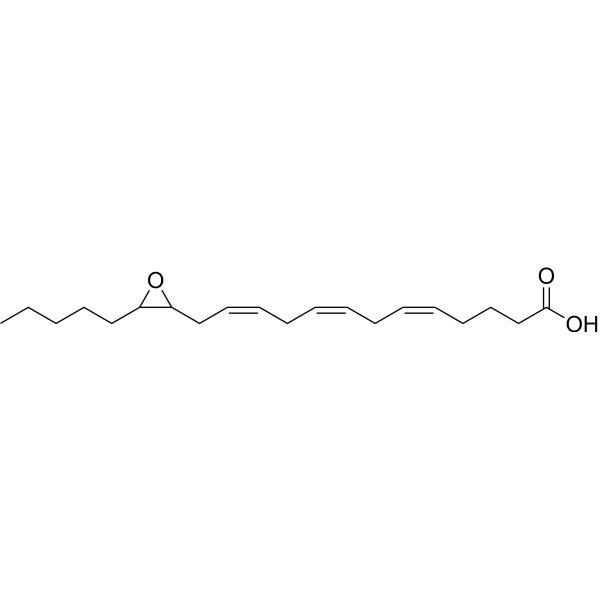
(±)14,15-Epoxyeicosatrienoic acidProliferation Inducer -

HY-120954
14,15-EE-5(Z)-E14,15-EET structural analogue -
HY-145546
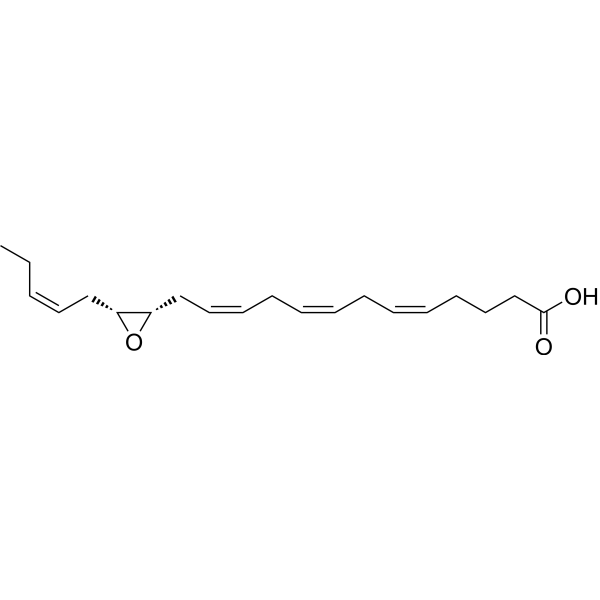
14(15)-EpETEEpoxide -

HY-165022
(±)14(15)-EpEDEPolyunsaturated Fatty Acid -

HY-130140
8,9-DiHETEEster Product -
HY-130138C
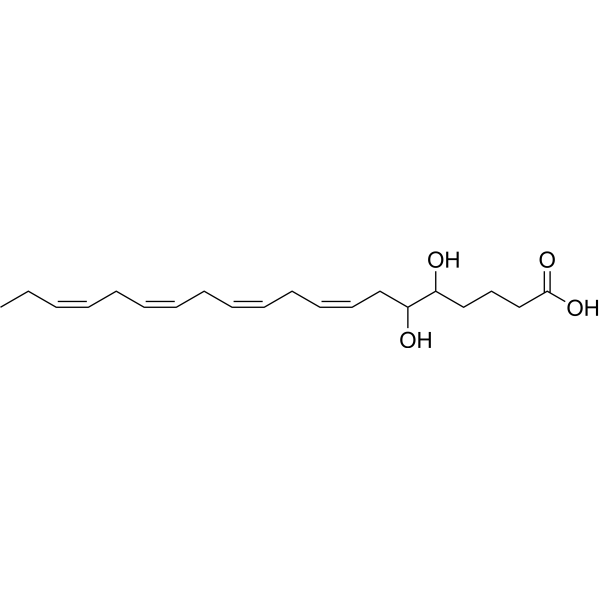
5,6-DiHETEAnti-inflammatory Lipid Mediators -

HY-130675A
15(S)-HEPEAsthma Marker -
HY-113434
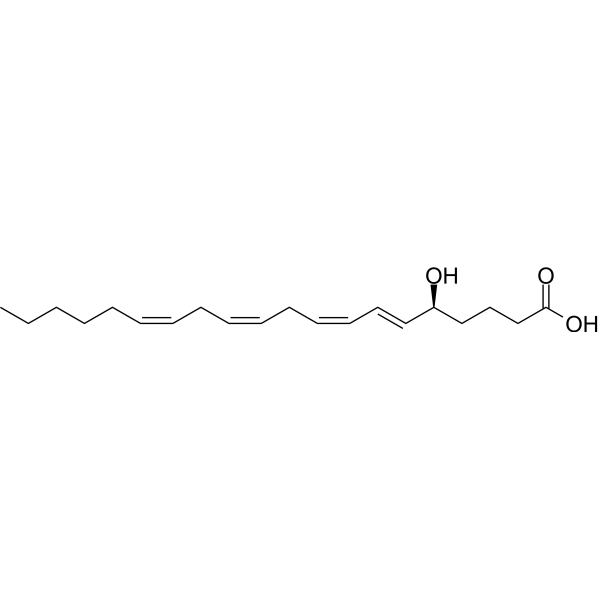
5(S)-HETEEndogenous Metabolite -

HY-165067
14,15-EE-8(Z)-EVasodilator Agonist -

HY-165078
(±)11(12)-EpETEComponent of PUFAs -
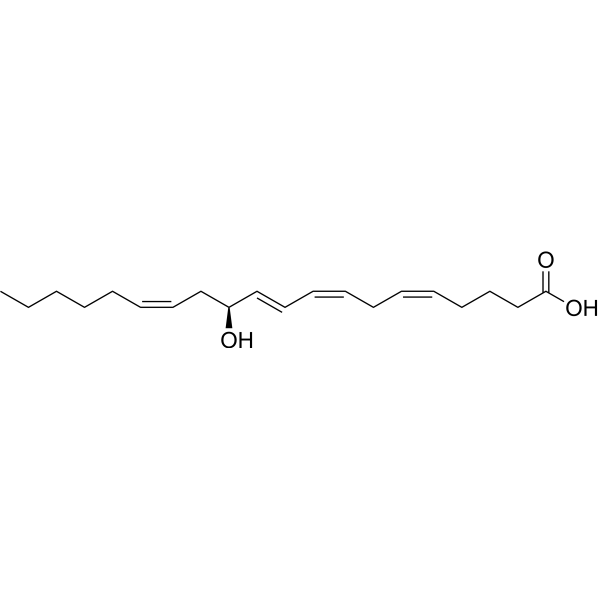
HY-124404A
12(S)-HETEP38 MAPK/ERK Activator


Biological Activity
Description


Chemical Information
-
CAS No. 851378-93-3
-
Appearance Liquid
-
Molecular Weight 318.45
-
Formula C20H30O3
-
Color Colorless to light yellow
-
SMILES
CC/C=C\C/C=C\C/C=C\CC1C(C/C=C\CCCC(O)=O)O1
-
Synonyms
(±)8,9-EEQ; (±)8,9-epoxy Eicosatetraenoic acid
-
Shipping
Room temperature in continental US; may vary elsewhere.
-
Storage
Solution, -20°C, 2 years

Protocols
-
Ca2+ Staining Technique
Ca2+ staining is an experimental technique that utilizes specific fluorescent probes (such as Fluo-4 AM, Fura-2, etc.) to qualitatively or quantitatively detect dynamic changes in intracellular Ca2+ concentrations; this is achieved by monitoring the changes in fluorescent signals generated when these probes bind to free intracellular calcium ions. The underlying principle relies primarily on the presence of chelating groups within the probe's molecular structure that possess high affinity for calcium ions.


Purity & Documentation
-
Data Sheet (263 KB)
-
SDS (545 KB)
- English - EN (545 KB)
- Français - FR (545 KB)
- Deutsch - DE (545 KB)
- Norwegian - NO (545 KB)
- Español - ES (545 KB)
- Swedish - SV (545 KB)
- Italian - IT (545 KB)
- Korean - KR (545 KB)
- Portuguese - PT (545 KB)
-
Handling Instructions (2659 KB)
References

Calculators
Concentration (start) × Volume (start) = Concentration (final) × Volume (final)


(±)8(9)-EpETE Related Classifications
HY-130309 Related Classifications
 Powered by Bioz