



Bicuculline methochloride
Based on 48 publication(s) in Google Scholar
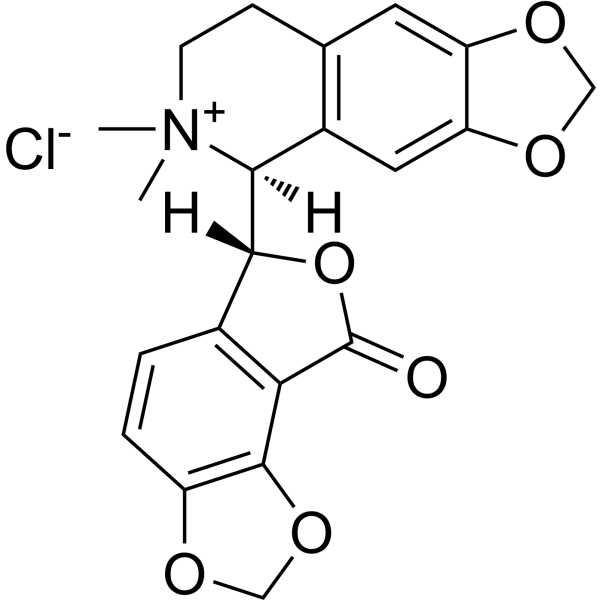
Bicuculline ((+)-Bicuculline; d-Bicuculline) methochloride is a selective GABAA receptor antagonist with an IC50 value of 3 μM. Bicuculline methochloride induces clonic tonic convulsions in mammals and can also be used to block Ca2+ activated potassium channels. Bicuculline methochloride can be used in studies of epilepsy and other related psychiatric disorders.
Para uso exclusivo en investigación. No vendemos a pacientes.
- Pureza : 99.80%
- No. CAS: 38641-83-7
- Fòrmula: C21H20ClNO6
- Peso molecular:417.84
-
Almacenamiento:
4°C, sealed storage, away from moisture
* In solvent : -80°C, 6 months; -20°C, 1 month (sealed storage, away from moisture)

To place orders, for customer services and technical support, please contact: MedChemExpress USA
Tel: 609-228-6898 E-mail: [email protected] [email protected]


-
 Actividad biológica
-
Chemical Information
-
Solvente y solubilidad
- Protocolo
- Pureza y Documentación
- Referencias
-
 Help & FAQs


Publications Citing Use of MedChemExpress (MCE) Bicuculline methochloride
More- Cell. 2023 Mar 30;186(7):1352-1368.e18. [Abstract]
- Nat Electron. 2026 Apr 23.
- Cell Metab. 2025 Sep 23:S1550-4131(25)00383-3. [Abstract]
- Immunity. 2024 Mar 12;57(3):495-512.e11. [Abstract]
- J Adv Res. 2024 Jun:60:41-56. [Abstract]
- Theranostics. 2022 Mar 28;12(7):3057-3078. [Abstract]
- Adv Sci (Weinh). 2025 Oct 20:e07908. [Abstract]
- Adv Sci (Weinh). 2025 Oct 5:e11194. [Abstract]
- Adv Sci (Weinh). 2025 Jun 30:e03017. [Abstract]
- Adv Sci (Weinh). 2025 Feb;12(5):e2407387. [Abstract]
- J Neuroinflammation. 2026 Jan 16. [Abstract]
- Phytomedicine. 2026 Nov:161:158727.
- Acta Pharmacol Sin. 2024 Oct;45(10):2045-2060. [Abstract]
- Proc Natl Acad Sci U S A. 2026 Mar 10;123(10):e2518983123. [Abstract]
- NPJ Parkinsons Dis. 2026 Jun 6. [Abstract]
- Neural Regen Res. 2022 Jan;17(1):178-184. [Abstract]
- Cell Rep. 2026 Jun 18;45(7):117570. [Abstract]
- Cell Rep. 2023 Nov 17;42(12):113467. [Abstract]
- Cell Rep. 2021 Jul 20;36(3):109398. [Abstract]
- Br J Pharmacol. 2026 Aug;183(15):4430-4447. [Abstract]
- Transl Psychiatry. 2026 Mar 27;16(1):210. [Abstract]
- Brain Behav Immun. 2023 Aug:112:96-117. [Abstract]
- Brain Behav Immun. 2019 Nov:82:45-62. [Abstract]
- Neurosci Bull. 2025 Jun 21. [Abstract]
- Clin Exp Hypertens. 2022 Feb 17;44(2):134-145. [Abstract]
- J Agric Food Chem. 2024 Mar 27;72(12):6189-6202. [Abstract]
- CNS Neurosci Ther. 2026 Aug;32(8):e71004.
- Ecotoxicol Environ Saf. 2026 Mar 15:313:119988. [Abstract]
- Life Sci. 2025 Jan 15:361:123290. [Abstract]
- Drug Des Devel Ther. 2026 Mar 10:20:566272. [Abstract]
- Neurobiol Dis. 2023 Jun 15:182:106155. [Abstract]
- Int J Mol Sci. 2022 Sep 23;23(19):11210. [Abstract]
- J Neuroendocrinol. 2020 Jun;32(6):e12876. [Abstract]
- Sci Rep. 2024 Dec 28;14(1):31388. [Abstract]
- iScience. 2025 Jun 18;28(7):112923. [Abstract]
- Biomedicines. 2021 Aug 31;9(9):1118. [Abstract]
- J Pain. 2019 May;20(5):577-591. [Abstract]
- Naunyn Schmiedebergs Arch Pharmacol. 2026 Jul 7.
- J Psychiatr Res. 2023 Jul:163:180-194. [Abstract]
- Animal Model Exp Med. 2026 Aug 17:10.1002/ame2.70265.
- BMC Immunol. 2022 Nov 25;23(1):58. [Abstract]
- SSRN. 2026 Aug 8.
- bioRxiv. 2025 June 03.
- Research Square Preprint. 2024 Oct 08.
- bioRxiv. 2024 November 26.
- bioRxiv. 2023 Jul 6.
- Research Square Print. September 19th, 2022.
- Research Square Print. August 24th, 2022.
 Customer Validation & Images

-
In Vivo Efficacy Study
-
In Vivo Efficacy Study
-
In Vivo Efficacy Study
-
WB
-
IF


Actividad biológica
Descripciòn
IC50 & Target
IC50: 3 μM (GABAA)[3]
Cellular Effect
|
Cell Line

|
Type | Value | Description | References |
|---|---|---|---|---|
| HEK293 | IC50 |
7 μM
Compound: 7
|
Inhibition of Wistar rat recombinant SK3 channel expressed in HEK293 cells by whole cell patch clamp technique
Inhibition of Wistar rat recombinant SK3 channel expressed in HEK293 cells by whole cell patch clamp technique
|
[PMID: 18998663] |
In Vitro
Bicuculline methochloride (1 μM and 3 μM) attains the maximal response of GABA. Bicuculline methochloride appears to shift the dose-response curves of GABA in parallel to the right without decreasing GABA maximal response, suggesting that it is a competitive antagonist at human α1β2γ2L GABAA receptors expressed in Xenopus oocytes[3].
Bicuculline methochloride (1-100 μM; 2 min; applied as outside-out patches) potently blocks both Apamin (HY-P0256)-sensitive small-conductance calcium-activated potassium channels (SK2) currents and Apamin-insensitive SK1 currents in Xenopus oocytes[4].
MedChemExpress (MCE) has not independently confirmed the accuracy of these methods. They are for reference only.
Induced Disease Models
Please do not refer to only one article to determine the experimental conditions. It is recommended to determine the optimal experimental conditions (animal strain, age, dosage, frequency and cycle, detection time and indicators, etc.) through preliminary experiments before the formal experiment.
Bicuculline methochloride can be used in animal modeling to create epilepsy models. Intracerebral injection of Bicuculline methochloride causes an increase in capillary blood flow in the epileptic focus (the specific region where seizures originate), with local blood flow increasing to 42.5 red blood cells per second (compared to 27.8 red blood cells per second in areas away from the epileptic focus)[5].
Administration: 2.5 mM • Intracranial Injection (deep layers of the somatosensory cortex) • single dose
(2) Inject bicuculline methochloride by inserting a glass micropipette with a diameter of 20-50 μm into the deep layers of the mouse somatosensory cortex.
(3) Surgical operation precautions:
a. Fix an insulated metallic head frame above the planned craniotomy area, and make a craniotomy with a diameter of approximately 3 mm over the mouse somatosensory cortex, removing the dura mater to expose the brain tissue.
b. Gently rinse the exposed area with artificial cerebrospinal fluid (composition of artificial cerebrospinal fluid: 125 mM NaCl, 3 mM KCl, 26 mM NaHCO3, 10 mM glucose, 1.1 mM NaH2PO4, 2 mM CaCl2, 1 mM MgSO4) to maintain the physiological environment of the brain tissue.
c. Cover the craniotomy with a phosphate-buffered saline solution containing 1% agarose (pH 7.4) and place a glass coverslip on the metal frame to protect the exposed brain tissue.
Blood flow changes: In the somatosensory cortex of mice injected with bicuculline methochloride, capillary blood flow significantly increases.
MedChemExpress (MCE) has not independently confirmed the accuracy of these methods. They are for reference only.


Chemical Information
-
No. CAS 38641-83-7
-
Appearance Solid
-
Peso molecular 417.84
-
Fòrmula C21H20ClNO6
-
Color Light yellow to green yellow
-
SMILES
C[N+]([C@](C1=C2C=C3C(OCO3)=C1)([H])[C@@](O4)([H])C(C=CC5=C6OCO5)=C6C4=O)(CC2)C.[Cl-]
-
Synonyms
(-)-Bicuculline methochloride
-
Envío
Room temperature in continental US; may vary elsewhere.
-
Almacenamiento
4°C, sealed storage, away from moisture
* In solvent : -80°C, 6 months; -20°C, 1 month (sealed storage, away from moisture)


Publications (48)
-
Journal Impact Factor
-
Most Recent
-
Cell
2023 Mar 30;186(7):1352-1368.e18. PMID: 37001500
Bicuculline methochloride purchased from MedChemExpress. Usage Cited in: Cell. 2023 Mar 30;186(7):1352-1368.e18. [Abstract]
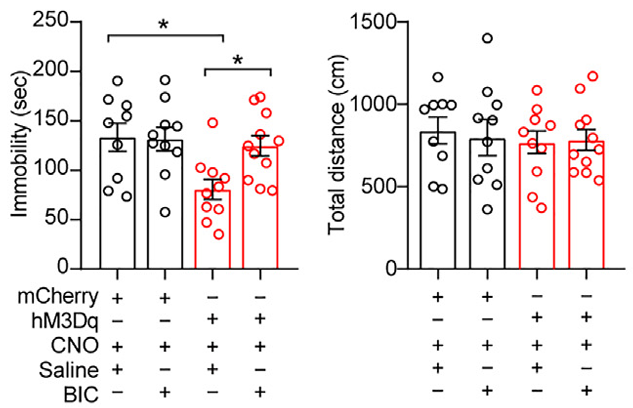
The antidepressant-like effect of activation of MGA1 in the FST was attenuated by A1 infusion of Bicuculline (BIC, 20 μM; infusion pump).
-
-
Cell Metab
Hepatic acetyl-CoA metabolism modulates neuroinflammation and depression susceptibility via acetate. [Abstract]2025 Sep 23:S1550-4131(25)00383-3. PMID: 40992374 -
Immunity
Disruption of the Na+/K+-ATPase-purinergic P2X7 receptor complex in microglia promotes stress-induced anxiety. [Abstract]2024 Mar 12;57(3):495-512.e11. PMID: 38395698 -
J Adv Res
Gut microbial GABAergic signaling improves stress-associated innate immunity to respiratory viral infection. [Abstract]2024 Jun:60:41-56. PMID: 37353002 -
Theranostics
hUC-MSC-mediated recovery of subacute spinal cord injury through enhancing the pivotal subunits β3 and γ2 of the GABAA receptor. [Abstract]2022 Mar 28;12(7):3057-3078. PMID: 35547766
Bicuculline methochloride purchased from MedChemExpress. Usage Cited in: Theranostics. 2022 Mar 28;12(7):3057-3078. [Abstract]
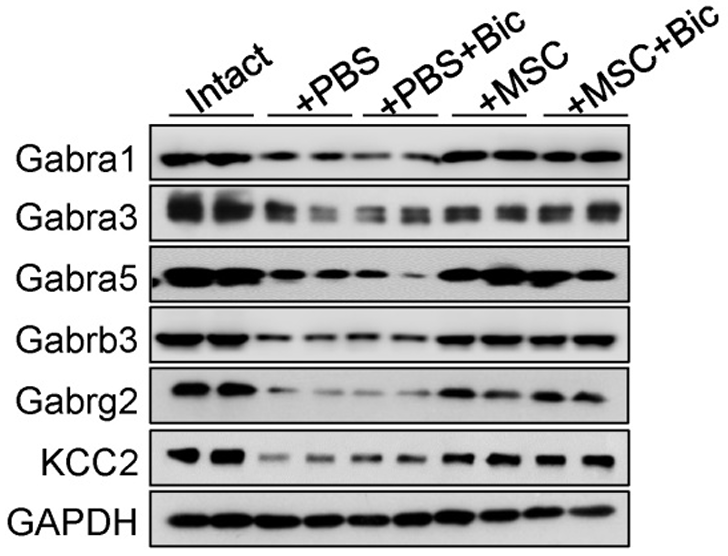
Bicuculline (3.5 mg/kg; subcutaneous injections). Western blot analyses of Gabra1, Gabra3, Gabra5, Gabrb3, Gabrg2, KCC2 and GAPDH in the lesion sites from different groups at 4 wpt.
Bicuculline methochloride purchased from MedChemExpress. Usage Cited in: Theranostics. 2022 Mar 28;12(7):3057-3078. [Abstract]
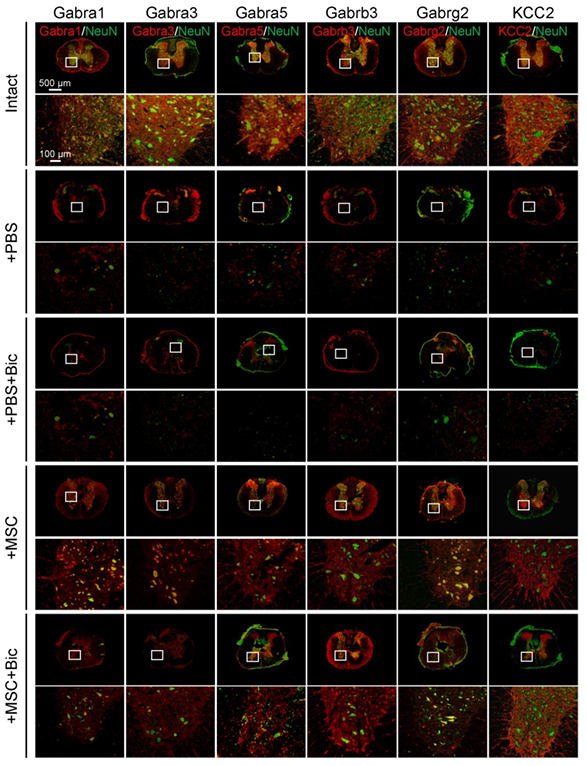
Bicuculline (3.5 mg/kg; subcutaneous injections). Representative IF images of transverse spinal cord sections from the Intact, +PBS, +PBS+Bic, +MSC, and +MSC+Bic groups at 4 wpt.
-
Adv Sci (Weinh)
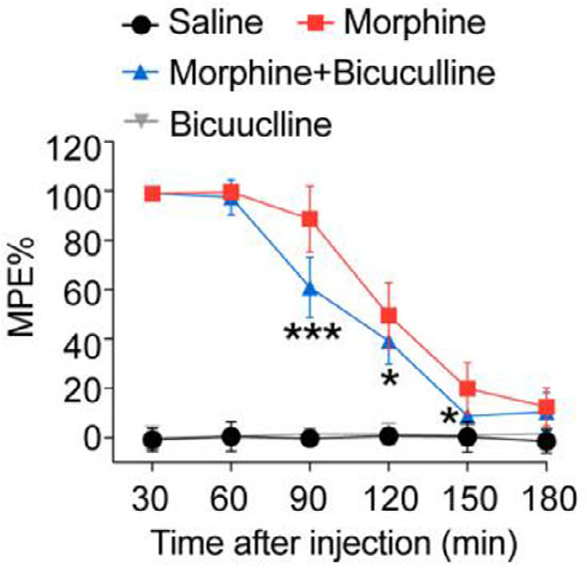
Morphine Tolerance Gated through EZH2-Mediated Suppression of Trpc5 in Spinal GABAergic Interneurons in Male Mice. [Abstract]2025 Oct 20:e07908. PMID: 41111460
Bicuculline methochloride purchased from MedChemExpress. Usage Cited in: Adv Sci (Weinh). 2025 Oct 20:e07908. [Abstract]
GABAA receptor antagonist (Bicuculline, 5 µg/10 µL, i.t.) weakened acute morphine analgesic effect.
-
Adv Sci (Weinh)
Assessing the Nature of Human Brain-Derived Extracellular Vesicles on Synaptic Activity Via the Development of an Air-liquid Microfluidic Platform. [Abstract]2025 Oct 5:e11194. PMID: 41047484 -
Adv Sci (Weinh)
Parvalbumin Interneuron-Dependent Hippocampal Neurogenesis Evoked by Prolonged Rhythmic Light Flicker. [Abstract]2025 Jun 30:e03017. PMID: 40586216 -
Adv Sci (Weinh)
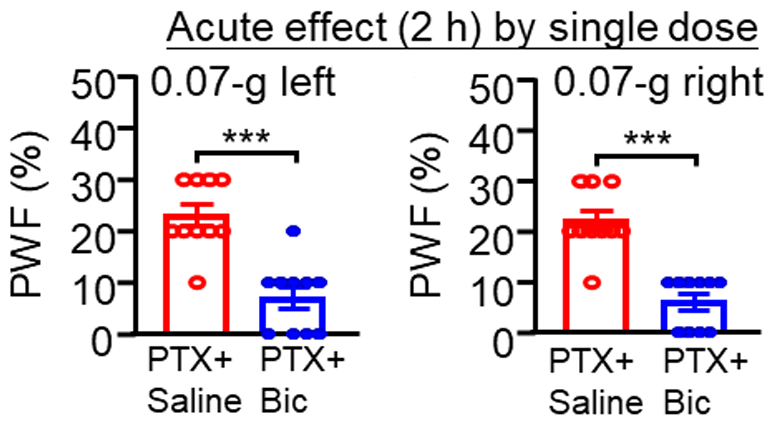
DNMT3a Downregulation Ttriggered Upregulation of GABAA Receptor in the mPFC Promotes Paclitaxel-Induced Pain and Anxiety in Male Mice. [Abstract]2025 Feb;12(5):e2407387. PMID: 39679872
Bicuculline methochloride purchased from MedChemExpress. Usage Cited in: Adv Sci (Weinh). 2025 Feb;12(5):e2407387. [Abstract]
Bicuculline (100 ng; 0.5 μL; infusion pump). Paw withdrawal responses to the 0.07 g von Frey filament following mPFC injection of physiological saline or Bicuculline (Bic) within 2 hours after intraperitoneal PTX injection.
-
J Neuroinflammation
2026 Jan 16. PMID: 41546093 -
-
Acta Pharmacol Sin
Effects of Kv1.3 knockout on pyramidal neuron excitability and synaptic plasticity in piriform cortex of mice. [Abstract]2024 Oct;45(10):2045-2060. PMID: 38862816 -
Proc Natl Acad Sci U S A
Neutralization of acyl-CoA-binding protein attenuates glucocorticoid-mediated suppression of cancer immunosurveillance. [Abstract]2026 Mar 10;123(10):e2518983123. PMID: 41779791 -
NPJ Parkinsons Dis
Metabotropic signaling downstream of GABAA receptors suppresses neuroinflammation in Parkinson's disease. [Abstract]2026 Jun 6. PMID: 42251036 -
Neural Regen Res
2022 Jan;17(1):178-184. PMID: 34100454 -
Cell Rep
2026 Jun 18;45(7):117570. PMID: 42313564 -
Cell Rep
Entorhinohippocampal cholecystokinin modulates spatial learning by facilitating neuroplasticity of hippocampal CA3-CA1 synapses. [Abstract]2023 Nov 17;42(12):113467. PMID: 37979171 -
Cell Rep
Neuronal activity recruits the CRTC1/CREB axis to drive transcription-dependent autophagy for maintaining late-phase LTD. [Abstract]2021 Jul 20;36(3):109398. PMID: 34289350 -
Br J Pharmacol
2026 Aug;183(15):4430-4447. PMID: 42062775 -
Transl Psychiatry
2026 Mar 27;16(1):210. PMID: 41888094 -
Brain Behav Immun
The microglial innate immune receptors TREM-1 and TREM-2 in the anterior cingulate cortex (ACC) drive visceral hypersensitivity and depressive-like behaviors following DSS-induced colitis. [Abstract]2023 Aug:112:96-117. PMID: 37286175 -
Brain Behav Immun
Trans-cinnamaldehyde improves neuroinflammation-mediated NMDA receptor dysfunction and memory deficits through blocking NF-κB pathway in presenilin1/2 conditional double knockout mice. [Abstract]2019 Nov:82:45-62. PMID: 31376499 -
Neurosci Bull
Restoration of Extrasynaptic/Synaptic GABAAR-α5 Localization Improves Sevoflurane-Induced Early Memory Impairment in Aged Mice. [Abstract]2025 Jun 21. PMID: 40542952 -
Clin Exp Hypertens
Overexpression of NaV1.6 in the rostral ventrolateral medulla in rats mediates stress-induced hypertension via glutamate regulation. [Abstract]2022 Feb 17;44(2):134-145. PMID: 34994674 -
J Agric Food Chem
Potential Mechanisms of Casein Hexapeptide YPVEPF on Stress-Induced Anxiety and Insomnia Mice and Its Molecular Effects and Key Active Structure. [Abstract]2024 Mar 27;72(12):6189-6202. PMID: 38501577 -
-
Ecotoxicol Environ Saf
Cognitive behavioral dysregulation induced by low-level lead, cadmium, and mercury co-exposure is linked to AMPA receptor-associated with E/I imbalance. [Abstract]2026 Mar 15:313:119988. PMID: 41806666 -
Life Sci
The modulation of cholecystokinin receptor 1 in the NAc core input from VTA on METH-induced CPP acquisition. [Abstract]2025 Jan 15:361:123290. PMID: 39638282 -
Drug Des Devel Ther
High-Dose Propofol Induces Cytotoxicity by Elevating Intracellular Ca2⁺ via GABAA Receptor and IP3R in HT22 Cells. [Abstract]2026 Mar 10:20:566272. PMID: 41836532 -
Neurobiol Dis
Contribution of activating lateral hypothalamus-lateral habenula circuit to nerve trauma-induced neuropathic pain in mice. [Abstract]2023 Jun 15:182:106155. PMID: 37182721 -
Int J Mol Sci
Inhibition of GABAAR or Application of Lactobacillus casei Zhang Alleviates Ulcerative Colitis in Mice: GABAAR as a Potential Target for Intestinal Epithelial Renewal and Repair. [Abstract]2022 Sep 23;23(19):11210. PMID: 36232509 -
J Neuroendocrinol
The caudal neurosecretory system: A novel thermosensitive tissue and its signal pathway in olive flounder (Paralichthys olivaceus). [Abstract]2020 Jun;32(6):e12876. PMID: 32542811 -
Sci Rep
Intervention effect of regulating GABA-A receptor activity on the formation of experimental abdominal aortic aneurysm in rats. [Abstract]2024 Dec 28;14(1):31388. PMID: 39732918 -
iScience
2025 Jun 18;28(7):112923. PMID: 40678505 -
Biomedicines
Salusin-β in Intermediate Dorsal Motor Nucleus of the Vagus Regulates Sympathetic-Parasympathetic Balance and Blood Pressure. [Abstract]2021 Aug 31;9(9):1118. PMID: 34572305 -
J Pain
Alleviation of Mechanical Allodynia by 14,15-Epoxyeicosatrienoic Acid in a Central Poststroke Pain Model: Possible Role of Allopregnanolone and δ-Subunit-Containing Gamma-Aminobutyric Acid A Receptors. [Abstract]2019 May;20(5):577-591. PMID: 30500366 -
-
J Psychiatr Res
Roles of nucleus accumbens shell small-conductance calcium-activated potassium channels in the conditioned fear freezing. [Abstract]2023 Jul:163:180-194. PMID: 37216772 -
-
BMC Immunol
Propofol maintains Th17/Treg cell balance in elderly patients undergoing lung cancer surgery through GABAA receptor. [Abstract]2022 Nov 25;23(1):58. PMID: 36434505 -
-
-
-
-
-
-


Solvente y solubilidad
In Vitro:
H2O : 50 mg/mL (119.66 mM; Need ultrasonic)
Please refer to the solubility information to select the appropriate solvent. Once prepared, please aliquot and store the solution to prevent product inactivation from repeated freeze-thaw cycles.
Storage method and period of stock solution: -80°C, 6 months; -20°C, 1 month (sealed storage, away from moisture). When stored at -80°C, please use it within 6 months. When stored at -20°C, please use it within 1 month.
* Note: If you choose water as the stock solution, please dilute it to the working solution, then filter and sterilize it with a 0.22 μm filter before use.
Please refer to the solubility information to select the appropriate solvent. Once prepared, please aliquot and store the solution to prevent product inactivation from repeated freeze-thaw cycles.
Storage method and period of stock solution: -80°C, 6 months; -20°C, 1 month (sealed storage, away from moisture). When stored at -80°C, please use it within 6 months. When stored at -20°C, please use it within 1 month.
* Note: If you choose water as the stock solution, please dilute it to the working solution, then filter and sterilize it with a 0.22 μm filter before use.
Concentration (start) × Volume (start) = Concentration (final) × Volume (final)


Pureza y Documentación
-
Ficha de datos (292 KB)
-
SDS (252 KB)
- English - EN (252 KB)
- Français - FR (252 KB)
- Deutsch - DE (252 KB)
- Norwegian - NO (252 KB)
- Español - ES (252 KB)
- Swedish - SV (252 KB)
- Italian - IT (252 KB)
- Korean - KR (252 KB)
- Portuguese - PT (252 KB)
-
Instrucciones de manejo (2659 KB)
Referencias
[1]. Y Yajima, et al. Effects of differential modulation of mu-, delta- and kappa-opioid systems on bicuculline-induced convulsions in the mouse. Brain Res. 2000 Apr 17;862(1-2):120-6. [Content Brief]
[2]. W A Turski, et al. Excitatory amino acid antagonists protect mice against seizures induced by bicuculline. Brain Res. 1990 Apr 23;514(1):131-4. [Content Brief]
[3]. Huang SH, et al. Bilobalide, a sesquiterpene trilactone from Ginkgo biloba, is an antagonist at recombinant alpha1beta2gamma2L GABA(A) receptors. Eur J Pharmacol. 2003;464(1):1-8. [Content Brief]
[4]. Khawaled R, et al. Bicuculline block of small-conductance calcium-activated potassium channels. Pflugers Arch. 1999 Aug;438(3):314-21. [Content Brief]
[5]. Hirase H, et al. Capillary level imaging of local cerebral blood flow in bicuculline-induced epileptic foci. Neuroscience. 2004;128(1):209-16. [Content Brief]


Complete Stock Solution Preparation Table
Please refer to the solubility information to select the appropriate solvent. Once prepared, please aliquot and store the solution to prevent product inactivation from repeated freeze-thaw cycles.
Storage method and period of stock solution: -80°C, 6 months; -20°C, 1 month (sealed storage, away from moisture). When stored at -80°C, please use it within 6 months. When stored at -20°C, please use it within 1 month.
| Optional Solvent | Concentration Solvent Mass | 1 mg | 5 mg | 10 mg | 25 mg |
|---|---|---|---|---|---|
| H2O | 1 mM | 2.3933 mL | 11.9663 mL | 23.9326 mL | 59.8315 mL |
| 5 mM | 0.4787 mL | 2.3933 mL | 4.7865 mL | 11.9663 mL | |
| 10 mM | 0.2393 mL | 1.1966 mL | 2.3933 mL | 5.9832 mL | |
| 15 mM | 0.1596 mL | 0.7978 mL | 1.5955 mL | 3.9888 mL | |
| 20 mM | 0.1197 mL | 0.5983 mL | 1.1966 mL | 2.9916 mL | |
| 25 mM | 0.0957 mL | 0.4787 mL | 0.9573 mL | 2.3933 mL | |
| 30 mM | 0.0798 mL | 0.3989 mL | 0.7978 mL | 1.9944 mL | |
| 40 mM | 0.0598 mL | 0.2992 mL | 0.5983 mL | 1.4958 mL | |
| 50 mM | 0.0479 mL | 0.2393 mL | 0.4787 mL | 1.1966 mL | |
| 60 mM | 0.0399 mL | 0.1994 mL | 0.3989 mL | 0.9972 mL | |
| 80 mM | 0.0299 mL | 0.1496 mL | 0.2992 mL | 0.7479 mL | |
| 100 mM | 0.0239 mL | 0.1197 mL | 0.2393 mL | 0.5983 mL |
* Note: If you choose water as the stock solution, please dilute it to the working solution, then filter and sterilize it with a 0.22 μm filter before use.


Bicuculline methochloride Related Classifications
HY-137790 Related Classifications
 Powered by Bioz
Keywords