



NNC 55-0396
Based on 6 publication(s) in Google Scholar
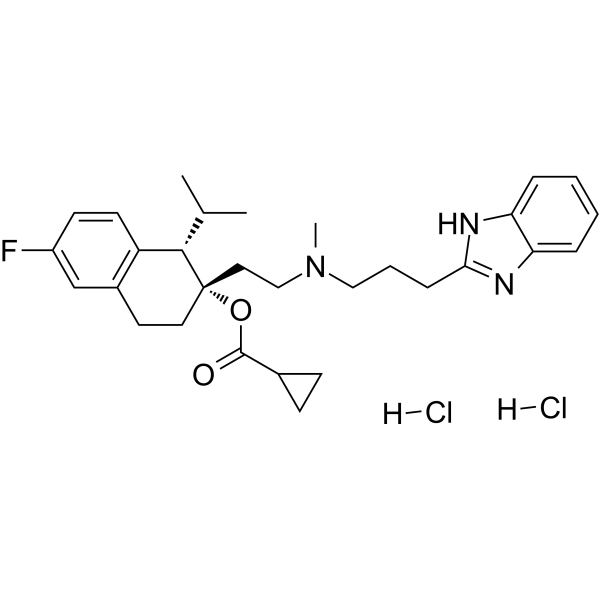
NNC 55-0396 (NNC 55-0396 dihydrochloride) is a blood-brain-barrier-permeable T-type Ca2+ channel inhibitor and pan-P450 inhibitor. NNC 55-0396 selectively inhibits T-type Ca2+ channels, suppresses HIF-1α expression and stability and inhibits Kv currents. NNC 55-0396 reduces brain infarct and attenuates neurological dysfunction. NNC 55-0396 inhibits the activity of multiple P450 enzymes. NNC 55-0396 (free base) can be used for the research of brain injury, hypertension, and glioblastoma.
For research use only. We do not sell to patients.
- Purity : 99.44%
- CAS No.: 357400-13-6
- Formula: C30H40Cl2FN3O2
- Molecular Weight:564.56
-
Storage:
-20°C, sealed storage, away from moisture
* In solvent : -80°C, 6 months; -20°C, 1 month (sealed storage, away from moisture)

To place orders, for customer services and technical support, please contact: MedChemExpress USA
Tel: 609-228-6898 E-mail: [email protected] [email protected]


-
 Biological Activity
-
Chemical Information
-
Solvent & Solubility
- Protocols
- Purity & Documentation
- References
-
 Help & FAQs


-
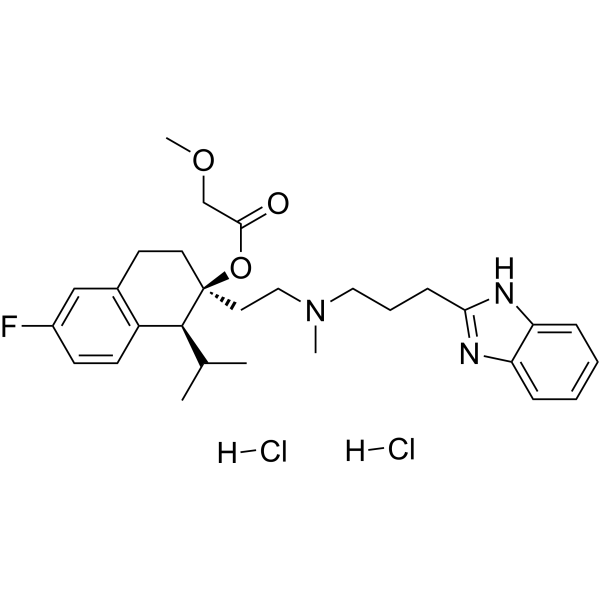
HY-15553A
Mibefradil dihydrochlorideCalcium Channel Blocker -
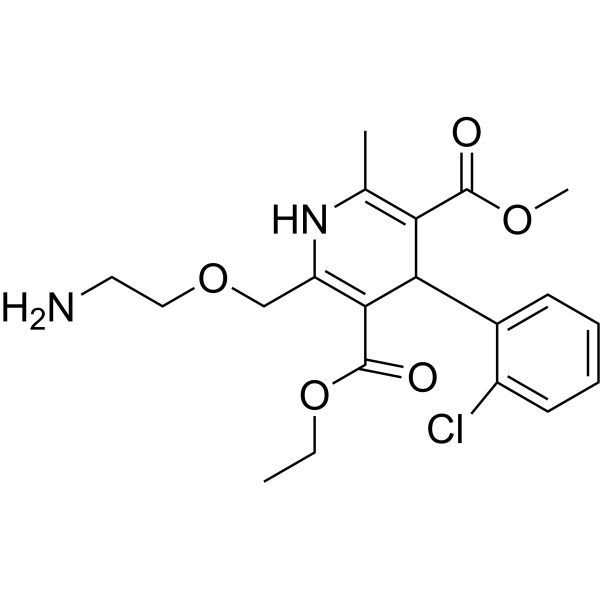
HY-B0317
AmlodipineCalcium Channel Blocker -
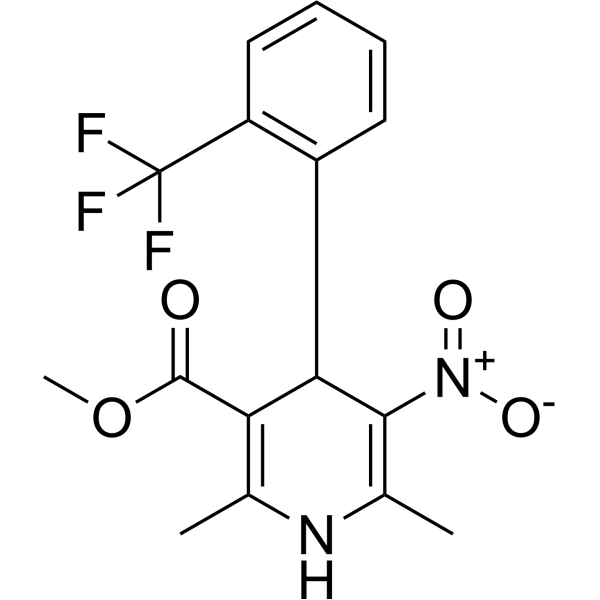
HY-10588
Bay K 8644L-type Ca2+ Channel Agonist -
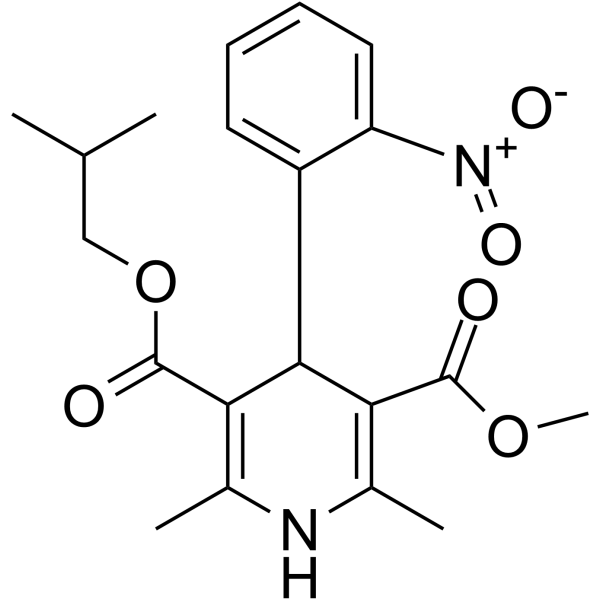
HY-17402
NisoldipineCalcium Channel Blocker -
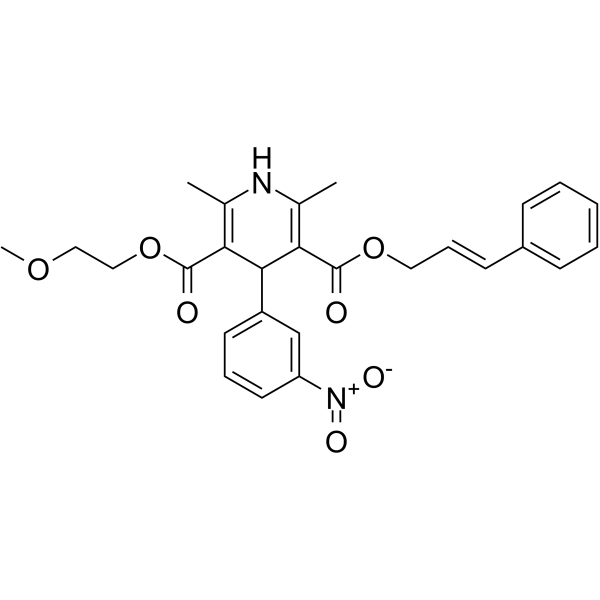
HY-17404
CilnidipineCa Channel Blocker -
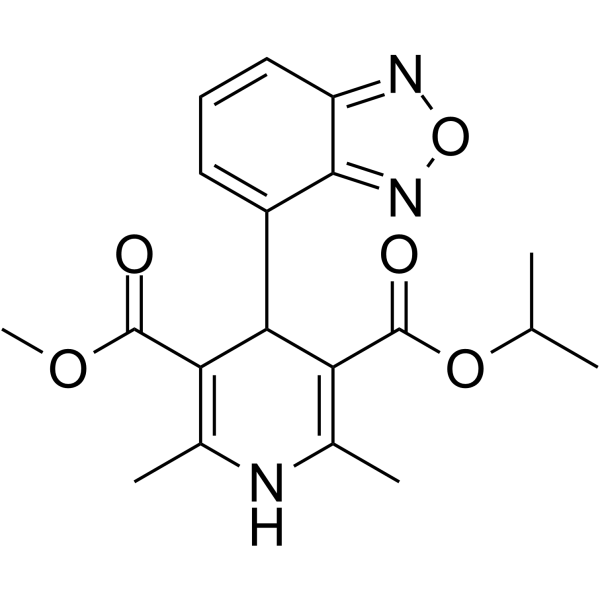
HY-B0233
IsradipineL-type Calcium Channel Blocker -
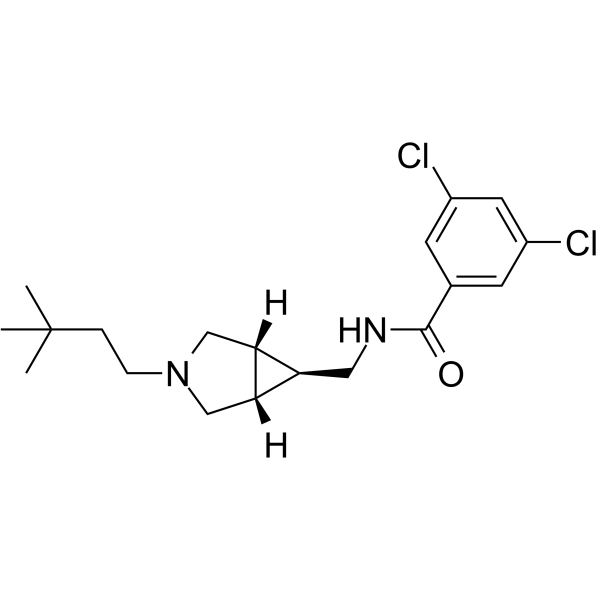
HY-103309
ML218Cav3.1/Cav3.2/Cav3.3 Inhibitor -
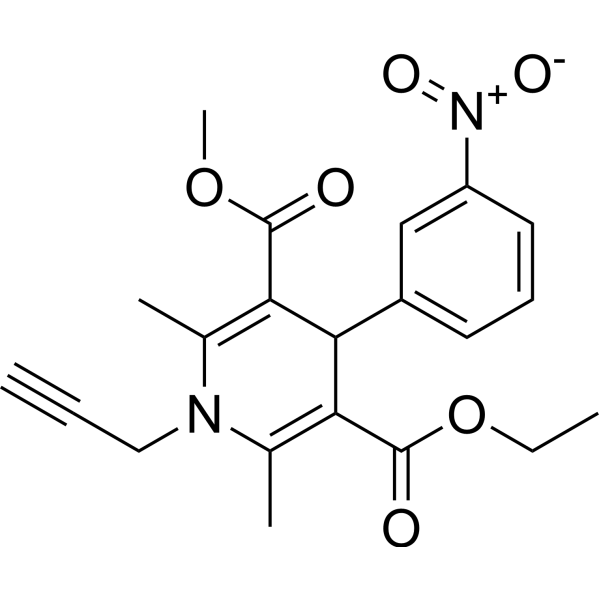
HY-103310
MRS1845SOCE Inhibitor -
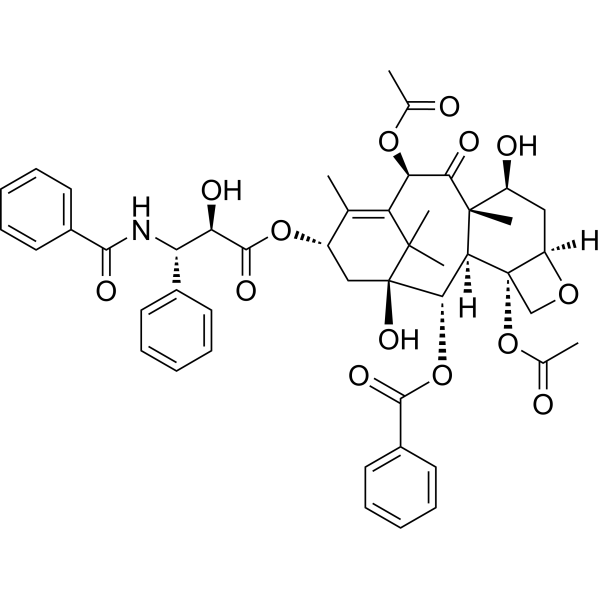
HY-B0015
PaclitaxelAntitumor Agent -
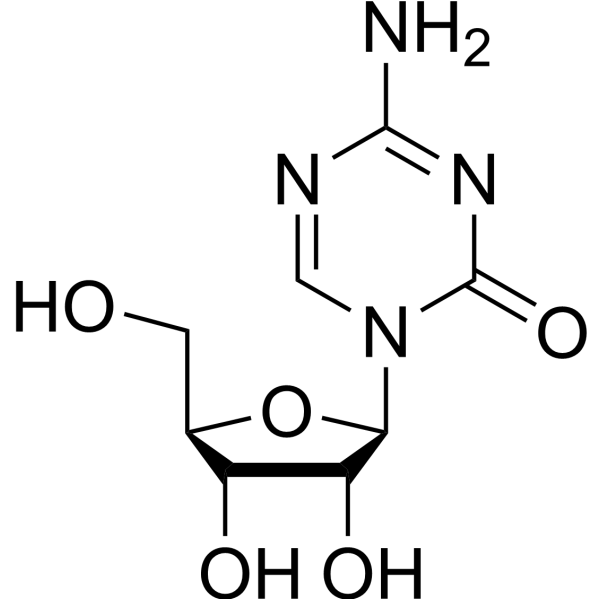
HY-10586
5-AzacytidineDNMT Inhibitor -
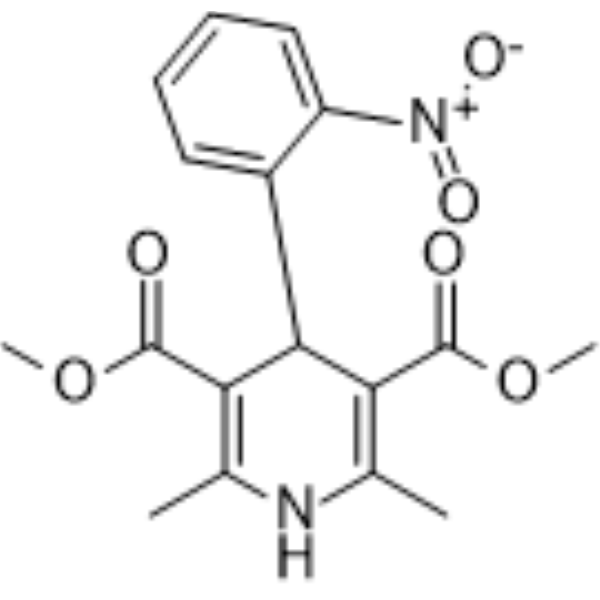
HY-B0284
NifedipineCalcium Channel Antagonist -
HY-103319
Calmidazolium chlorideCalmodulin Antagonist
Publications Citing Use of MedChemExpress (MCE) NNC 55-0396
More Customer Validation & Images

-
Cell Proliferation/Viability Assay
-
Cell Proliferation/Viability Assay
All Calcium Channel Isoforms
More

Biological Activity
Description
|
CYP3A4 300 nM (IC50) |
CYP3A4 210 nM (Ki) |
CYP2D6 29 nM (IC50) |
CYP2D6 2.8 nM (Ki) |
T-type calcium channel |
In Vitro
NNC 55-0396 potently inhibits recombinant human CYP3A4 and CYP2D6 at 100 nM and 10 μM, with weaker or no inhibition of recombinant human CYP1A2, CYP2E1, CYP2C9, CYP2C19, and CYP2C8 at these concentrations[2].
NNC 55-0396 inhibits recombinant human CYP3A4 BFC debenzylation activity with an IC50 of 300 nM and a Ki of 210 nM[2].
NNC 55-0396 inhibits recombinant human CYP2D6 AMMC N-demethylation activity with an IC50 of 29 nM and a Ki of 2.8 nM[2].
NNC 55-0396 inhibits CYP3A4-mediated testosterone 6β-hydroxylase activity in human liver microsomes with an IC50 of 11.0 μM and a Ki of 3.9 μM[2].
NNC 55-0396 inhibits CYP2D6-mediated harmaline metabolism in human liver microsomes with an IC50 of 72.6 nM and a Ki of 57.1 nM[2].
NNC 55-0396 (1-20 μM; 72 h) inhibits the growth of HepG2 cells more potently in galactose medium than glucose medium[3].
NNC 55-0396 (1-5 μM; 5 h) dose-dependently inhibits hypoxia-induced HIF-1α protein stability in HepG2 cells, with a near-complete reduction at 5 μM after 4 h hypoxic incubation, without affecting HIF-1β levels[3].
NNC 55-0396 (1-5 μM; 5 h) dose-dependently increases the hydroxylation of HIF-1α in HepG2 cells under hypoxic conditions, with a 6-fold increase observed at 5 μM after 4 h incubation[3].
NNC 55-0396 (1-5 μM; 5 h) reduces hypoxia-induced mitochondrial ROS levels in HepG2 cells[3].
NNC 55-0396 (1 μM) decreases the half-life of hypoxia-stabilized HIF-1α in HepG2 cells, reducing it from over 80 minutes to less than 70 minutes[3].
NNC 55-0396 (1-5 μM; 5 h) inhibits Desferrioxamine-induced HIF-1α stabilization in HepG2 cells, with a 50% reduction observed at 5 μM after 4 h incubation[3].
NNC 55-0396 (1-5 μM; 75 min) reduces hypoxia-induced HIF-1α protein levels in HepG2 cells, with significant suppression observed at 1 μM and 5 μM[3].
NNC 55-0396 (1-5 μM; 75 min) inhibits hypoxia-induced phosphorylation of mTOR and p70S6K in HepG2 cells, with a 70% reduction in phospho-mTOR levels observed at 5 μM after 15 min hypoxic incubation[3].
NNC 55-0396 (1-5 μM; 17 h) dose-dependently reduces hypoxia-induced VEGF expression in HepG2 cells, with significant suppression observed at 1 μM and 5 μM after 16 h hypoxic incubation[3].
NNC 55-0396 (0.001-10 mM; 1 min) dose-dependently inhibits Kv currents in freshly isolated rabbit coronary arterial smooth muscle cells with an IC50 of 0.08 mM[4].
NNC 55-0396 potently blocks recombinant Cav3.1 T-type calcium channels in HEK293 cells with an IC50 of 6.8 μM, via a state-dependent[5].
MedChemExpress (MCE) has not independently confirmed the accuracy of these methods. They are for reference only.
-
Cell Line:human liver carcinoma HepG2 cells
-
Concentration:1 μM; 2 μM; 5 μM; 7 μM; 10 μM; 20 μM
-
Incubation Time:72 h
-
Result:Exhibited stronger inhibitory effects on cell growth in galactose medium than in glucose medium.
Increased glucose/galactose cell growth ratios significantly at concentrations of 5, 7, 10, and 20 μM.
-
Cell Line:human liver carcinoma HepG2 cells
-
Concentration:1 μM; 5 μM
-
Incubation Time:5 h
-
Result:Suppressed hypoxia-induced HIF-1α protein stability in a dose-dependent manner, with no effect on HIF-1β stability.
Reduced HIF-1α expression to ~80% of hypoxic control levels at 1 μM.
Reduced HIF-1α expression to ~20% of hypoxic control levels at 5 μM (p<0.001).\nIncreased the ratio of hydroxy-HIF-1α to total HIF-1α in a dose-dependent manner.
Increased the ratio to ~250% of control levels at 1 μM.
Increased the ratio to ~600% of control levels at 5 μM (p<0.001).
-
Cell Line:human liver carcinoma HepG2 cells
-
Concentration:1 μM; 5 μM
-
Incubation Time:5 h
-
Result:Inhibited DFO-induced HIF-1α stabilization.
Reduced HIF-1α expression to ~100% of DFO-treated control levels at 1 μM.
Reduced HIF-1α expression to ~50% of DFO-treated control levels at 5 μM (p<0.01).
-
Cell Line:human liver carcinoma HepG2 cells
-
Concentration:1 μM; 5 μM
-
Incubation Time:75 min
-
Result:Repressed hypoxia-induced phosphorylation of mTOR and p70S6K.
Reduced phospho-mTOR levels to 0.8-fold of hypoxic control levels at 1 μM.
Reduced phospho-mTOR levels to 0.3-fold of hypoxic control levels at 5 μM.
Reduced phospho-p70S6K levels to 0.9-fold and 0.8-fold of hypoxic control levels at 1 μM and 5 μM, respectively.
-
Cell Line:human liver carcinoma HepG2 cells
-
Concentration:1 μM; 5 μM
-
Incubation Time:17 h
-
Result:Decreased hypoxia-induced VEGF expression in a dose-dependent manner.
Reduced relative VEGF expression to ~220% of normoxic control levels at 1 μM (vs ~280% for hypoxic control; p<0.01).
Reduced relative VEGF expression to ~180% of normoxic control levels at 5 μM (p<0.01).
In Vivo
NNC 55-0396 (10-20 mg/kg; i.p.; every 2 days for 20 days) significantly reduces glioblastoma tumor weight by 40-60% and suppresses tumor angiogenesis via reduced HIF-1α, VEGF, and PECAM-1 expression in a subcutaneous mouse xenograft model[3].
MedChemExpress (MCE) has not independently confirmed the accuracy of these methods. They are for reference only.
-
Animal Model:ddY mice (male, 3 weeks old, acclimated for a few weeks before experiments)[1]
-
Dosage:5 mg/kg; 20 mg/kg
-
Administration:i.p.; 2 doses
-
Result:Reduced MCAO/R-induced infarct area (at all measured distances from bregma) and infarct volume to ~30 mm3 (5 mg/kg i.p. pre-occlusion) and ~45 mm3 vs. vehicle ~70 mm3.
Tended to attenuate some neurological dysfunctions, including increased test latency in the passive avoidance test and reduced time spent in right-biased bending.
-
Animal Model:BALB/c-nu/nu (athymic nude) (4-week-old female, subcutaneous glioblastoma xenograft model)[3]
-
Dosage:10 mg/kg; 20 mg/kg
-
Administration:i.p.; every 2 days for 20 days
-
Result:Reduced xenograft tumor volume and weight relative to vehicle controls.
Significantly reduced tumor weight (p<0.01 for 10 mg/kg, p<0.001 for 20 mg/kg).
Significantly reduced HIF-1α, VEGF, and PECAM-1 expression levels in tumor tissue.
Significantly decreased microvessel density (p<0.001 for 10 mg/kg, p<0.01 for 20 mg/kg).
Caused no weight loss or liver toxicity in treated mice.


Chemical Information
-
CAS No. 357400-13-6
-
Appearance Solid
-
Molecular Weight 564.56
-
Formula C30H40Cl2FN3O2
-
Color White to yellow
-
SMILES
O=C(C1CC1)O[C@@]2(CCN(CCCC3=NC4=CC=CC=C4N3)C)[C@@H](C(C)C)C5=C(C=C(F)C=C5)CC2.[H]Cl.[H]Cl
-
Synonyms
NNC 55-0396 dihydrochloride
-
Shipping
Room temperature in continental US; may vary elsewhere.
-
Storage
-20°C, sealed storage, away from moisture
* In solvent : -80°C, 6 months; -20°C, 1 month (sealed storage, away from moisture)


Publications (6)
-
Journal Impact Factor
-
Most Recent
-
Cell Death Differ
MARCH8/NSUN6/ROS-mediated DNA damage positive feedback loop regulates cisplatin resistance in osteosarcoma. [Abstract]2025 Jul 19. PMID: 40683951 -
Br J Pharmacol
Endothelium-derived hydrogen sulfide acts as a hyperpolarizing factor and exerts neuroprotective effects via activation of large-conductance Ca2+ -activated K+ channels. [Abstract]2021 Oct;178(20):4155-4175. PMID: 34216027
NNC 55-0396 purchased from MedChemExpress. Usage Cited in: Br J Pharmacol. 2021 Oct;178(20):4155-4175. [Abstract]
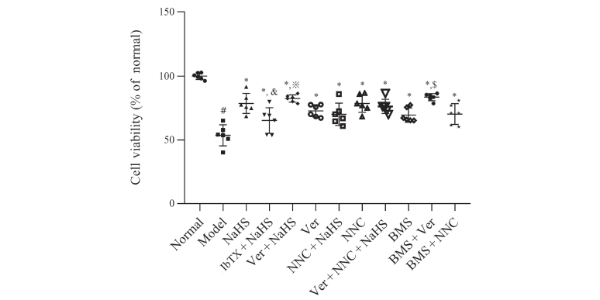
Effect of NaHS on neuronal viability against OGD/R injury in vitro. Cell viability was measured by CCK-8 at 24 h post-reoxygenation. Data: mean ± SD, n=6. #P<0.05 vs Normal; *P<0.05 vs Model (OGD/R); &P<0.05 vs NaHS (1 µM); $P<0.05 vs BMS-191011 (BMS) (10 µM); %P<0.05 vs NaHS+Verapamil (Ver) (100 µM); ※P<0.05 vs Verapamil alone. NNC 55-0396 (NNC): 100 µM.
NNC 55-0396 purchased from MedChemExpress. Usage Cited in: Br J Pharmacol. 2021 Oct;178(20):4155-4175. [Abstract]
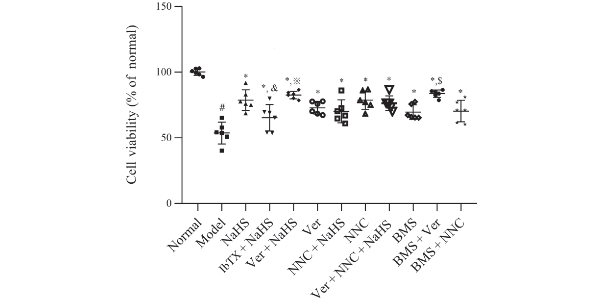
Effect of NaHS on neuronal viability against OGD/R injury in vitro. Cell viability was measured by CCK-8 at 24 h post-reoxygenation. Data: mean ± SD, n=6. #P<0.05 vs Normal; *P<0.05 vs Model (OGD/R); &P<0.05 vs NaHS (1 µM); $P<0.05 vs BMS-191011 (BMS) (10 µM); %P<0.05 vs NaHS+Verapamil (Ver) (100 µM); ※P<0.05 vs Verapamil alone. NNC 55-0396 (NNC): 100 µM.
-
Int J Mol Sci
Alkaline Dilution Alters Sperm Motility in Dairy Goat by Affecting sAC/cAMP/PKA Pathway Activity. [Abstract]2023 Jan 16;24(2):1771. PMID: 36675287 -
Fish Physiol Biochem
The voltage-gated T-type Ca2+ channel is key to the sperm motility of Atlantic salmon (Salmo salar). [Abstract]2020 Oct;46(5):1825-1831. PMID: 32506186 -
J Reprod Dev
2023 Apr 3;69(2):87-94. PMID: 36754390 -


Solvent & Solubility
In Vitro:
DMSO : 100 mg/mL (177.13 mM; Need ultrasonic; Hygroscopic DMSO has a significant impact on the solubility of product, please use newly opened DMSO)
H2O : ≥ 50 mg/mL (88.56 mM)
* "≥" means soluble, but saturation unknown.
Please refer to the solubility information to select the appropriate solvent. Once prepared, please aliquot and store the solution to prevent product inactivation from repeated freeze-thaw cycles.
Storage method and period of stock solution: -80°C, 6 months; -20°C, 1 month (sealed storage, away from moisture). When stored at -80°C, please use it within 6 months. When stored at -20°C, please use it within 1 month.
* Note: If you choose water as the stock solution, please dilute it to the working solution, then filter and sterilize it with a 0.22 μm filter before use.
Please refer to the solubility information to select the appropriate solvent. Once prepared, please aliquot and store the solution to prevent product inactivation from repeated freeze-thaw cycles.
Storage method and period of stock solution: -80°C, 6 months; -20°C, 1 month (sealed storage, away from moisture). When stored at -80°C, please use it within 6 months. When stored at -20°C, please use it within 1 month.
* Note: If you choose water as the stock solution, please dilute it to the working solution, then filter and sterilize it with a 0.22 μm filter before use.
Concentration (start) × Volume (start) = Concentration (final) × Volume (final)
In Vivo:
Select the appropriate dissolution method based on your experimental animal and administration route.
- For the following dissolution methods, please ensure to first prepare a clear stock solution using an In Vitro approach and then sequentially add co-solvents:
- To ensure reliable experimental results, the clarified stock solution can be appropriately stored based on storage conditions. As for the working solution for In Vivo experiments, it is recommended to prepare freshly and use it on the same day.
- The percentages shown for the solvents indicate their volumetric ratio in the final prepared solution. If precipitation or phase separation occurs during preparation, heat and/or sonication can be used to aid dissolution.
Add each solvent one by one: 10% DMSO 40% PEG300 5% Tween-80 45% Saline
Solubility: ≥ 2.08 mg/mL (3.68 mM); Clear solution
This protocol yields a clear solution of ≥ 2.08 mg/mL (saturation unknown).
Taking 1 mL working solution as an example, add 100 μL DMSO stock solution (20.8 mg/mL) to 400 μL PEG300, and mix evenly; then add 50 μL Tween-80 and mix evenly; then add 450 μL Saline to adjust the volume to 1 mL.
Preparation of Saline: Dissolve 0.9 g sodium chloride in ddH₂O and dilute to 100 mL to obtain a clear Saline solution.
Add each solvent one by one: 10% DMSO 90% (20% SBE-β-CD in Saline)
Solubility: ≥ 2.08 mg/mL (3.68 mM); Clear solution
This protocol yields a clear solution of ≥ 2.08 mg/mL (saturation unknown).
Taking 1 mL working solution as an example, add 100 μL DMSO stock solution (20.8 mg/mL) to 900 μL 20% SBE-β-CD in Saline, and mix evenly.
Preparation of 20% SBE-β-CD in Saline (4°C, storage for one week): 2 g SBE-β-CD powder is dissolved in 10 mL Saline, completely dissolve until clear.
In Vivo Dissolution Calculator
Please enter the basic information of animal experiments:
-
-
-
-
Recommended: Prepare an additional quantity of animals to account for potential losses during experiments.
Working solution concentration: 0.22 mg/mL
This product has good water solubility, please refer to the measured solubility data in water/PBS/Saline for details.


Purity & Documentation
-
Data Sheet (289 KB)
-
SDS (252 KB)
- English - EN (252 KB)
- Français - FR (252 KB)
- Deutsch - DE (252 KB)
- Norwegian - NO (252 KB)
- Español - ES (252 KB)
- Swedish - SV (252 KB)
- Italian - IT (252 KB)
- Korean - KR (252 KB)
- Portuguese - PT (252 KB)
-
Handling Instructions (2659 KB)
References
[1]. Matsuda S, et al. NNC 55-0396, a T-type calcium channel blocker, protects against the brain injury induced by middle cerebral artery occlusion and reperfusion in mice. J Pharmacol Sci. 2019;140(2):193-196. [Content Brief]
[2]. Bui PH, et al. The mibefradil derivative NNC55-0396, a specific T-type calcium channel antagonist, exhibits less CYP3A4 inhibition than mibefradil. Drug Metab Dispos. 2008;36(7):1291-1299. [Content Brief]
[3]. Kim KH, et al. NNC 55-0396, a T-type Ca2+ channel inhibitor, inhibits angiogenesis via suppression of hypoxia-inducible factor-1α signal transduction. J Mol Med (Berl). 2015;93(5):499-509. [Content Brief]
[4]. Son YK, et al. Ca2+ channel inhibitor NNC 55-0396 inhibits voltage-dependent K+ channels in rabbit coronary arterial smooth muscle cells. J Pharmacol Sci. 2014;125(3):312-319. [Content Brief]
[5]. Li M, et al. Towards selective antagonists of T-type calcium channels: design, characterization and potential applications of NNC 55-0396. Cardiovasc Drug Rev. 2005;23(2):173-196. [Content Brief]


Complete Stock Solution Preparation Table
Please refer to the solubility information to select the appropriate solvent. Once prepared, please aliquot and store the solution to prevent product inactivation from repeated freeze-thaw cycles.
Storage method and period of stock solution: -80°C, 6 months; -20°C, 1 month (sealed storage, away from moisture). When stored at -80°C, please use it within 6 months. When stored at -20°C, please use it within 1 month.
| Optional Solvent | Concentration Solvent Mass | 1 mg | 5 mg | 10 mg | 25 mg |
|---|---|---|---|---|---|
| H2O / DMSO | 1 mM | 1.7713 mL | 8.8565 mL | 17.7129 mL | 44.2823 mL |
| 5 mM | 0.3543 mL | 1.7713 mL | 3.5426 mL | 8.8565 mL | |
| 10 mM | 0.1771 mL | 0.8856 mL | 1.7713 mL | 4.4282 mL | |
| 15 mM | 0.1181 mL | 0.5904 mL | 1.1809 mL | 2.9522 mL | |
| 20 mM | 0.0886 mL | 0.4428 mL | 0.8856 mL | 2.2141 mL | |
| 25 mM | 0.0709 mL | 0.3543 mL | 0.7085 mL | 1.7713 mL | |
| 30 mM | 0.0590 mL | 0.2952 mL | 0.5904 mL | 1.4761 mL | |
| 40 mM | 0.0443 mL | 0.2214 mL | 0.4428 mL | 1.1071 mL | |
| 50 mM | 0.0354 mL | 0.1771 mL | 0.3543 mL | 0.8856 mL | |
| 60 mM | 0.0295 mL | 0.1476 mL | 0.2952 mL | 0.7380 mL | |
| 80 mM | 0.0221 mL | 0.1107 mL | 0.2214 mL | 0.5535 mL | |
| DMSO | 100 mM | 0.0177 mL | 0.0886 mL | 0.1771 mL | 0.4428 mL |
* Note: If you choose water as the stock solution, please dilute it to the working solution, then filter and sterilize it with a 0.22 μm filter before use.


NNC 55-0396 Related Classifications
HY-50722 Related Classifications
 Powered by Bioz