



Dooku1
Based on 17 publication(s) in Google Scholar
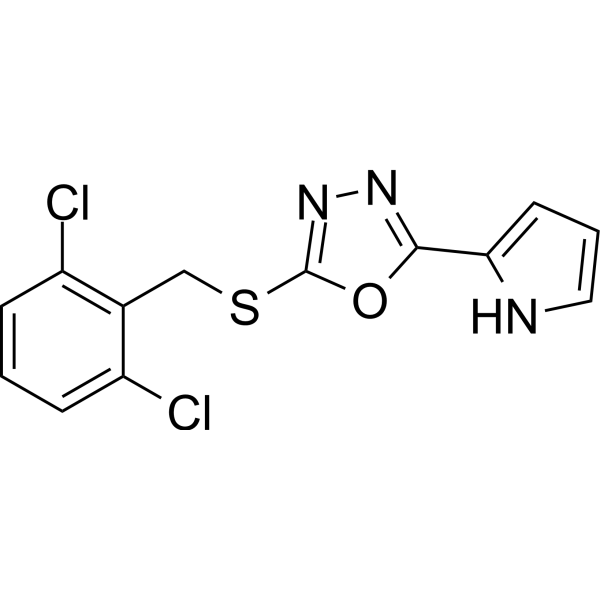
Dooku1 is a reversibly Yoda1 antagonist with IC50 value of 1.3 μM and 1.5 μM for 2 μM Yoda1-induced Ca2+ entry HEK 293 cells and HUVECs, respectively. Dooku1 can disrupt Yoda1-induced Piezo1 channel activity and inhibit Yoda1-induced relaxation of aorta. Dooku1 can be used for vascular physiology and disease research.
Para uso exclusivo en investigación. No vendemos a pacientes.
- Pureza : 99.90%
- No. CAS: 2253744-54-4
- Fòrmula: C13H9Cl2N3OS
- Peso molecular:326.20
-
Almacenamiento:
-20°C, sealed storage, away from moisture
* In solvent : -80°C, 2 years; -20°C, 1 year (sealed storage, away from moisture)

To place orders, for customer services and technical support, please contact: MedChemExpress USA
Tel: 609-228-6898 E-mail: [email protected] [email protected]


-
 Actividad biológica
-
Chemical Information
-
Solvente y solubilidad
- Protocolo
- Pureza y Documentación
- Referencias
-
 Help & FAQs


-
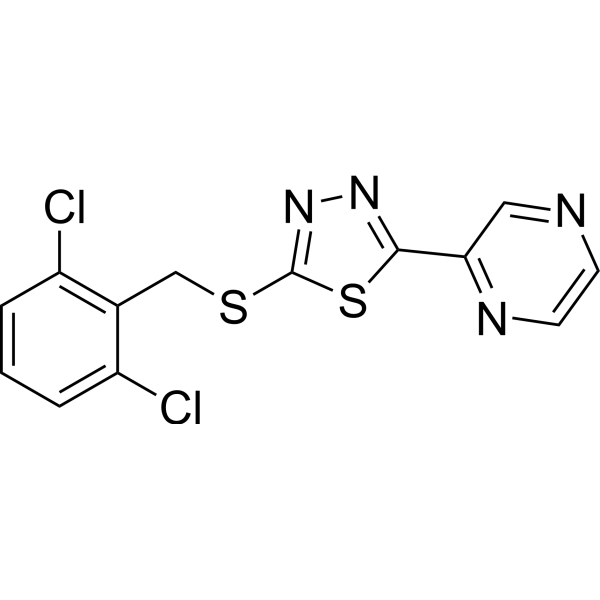
HY-18723
Yoda 1Piezo1 Agonist -
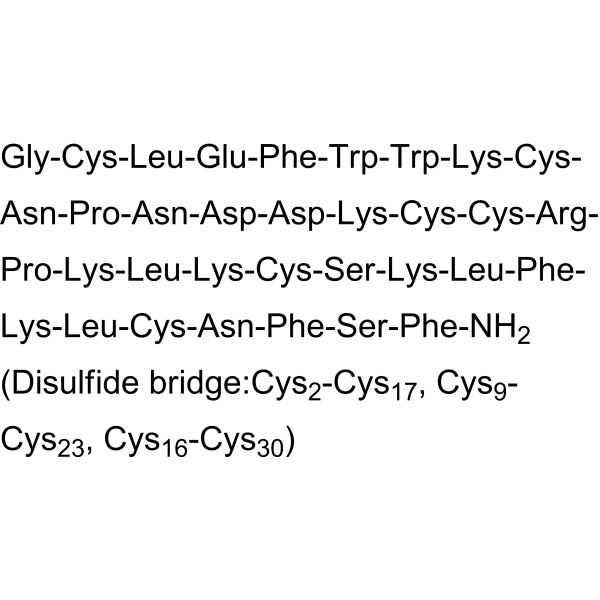
HY-P1410
GsMTx4MSCs Inhibitor -
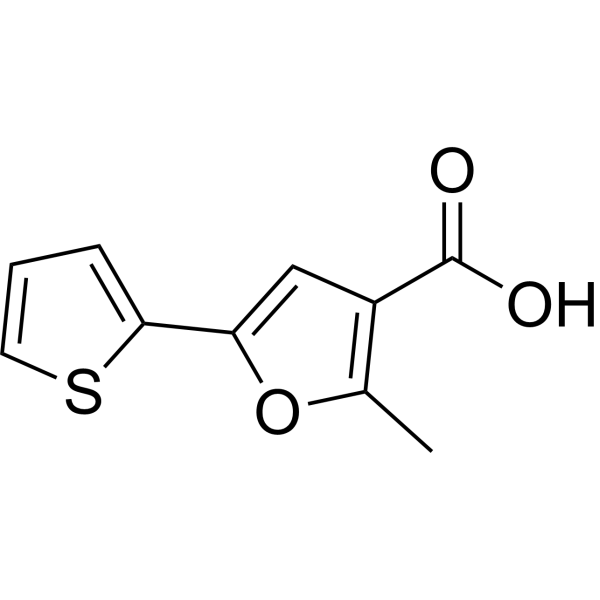
HY-131018
Jedi2Piezo1 Channel Activator -
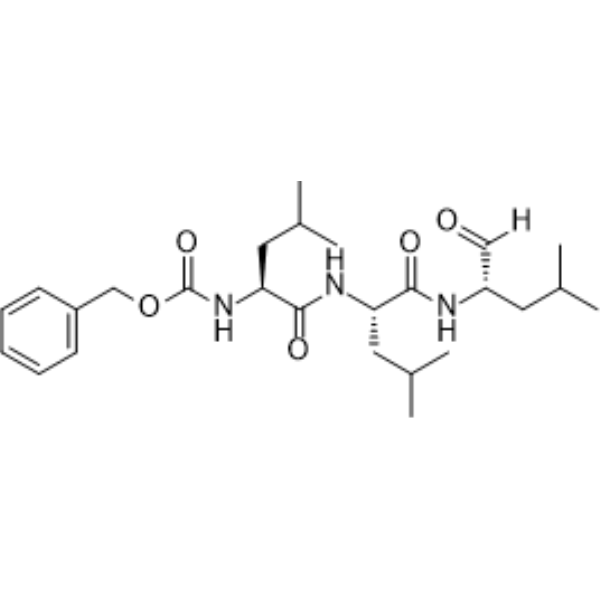
HY-13259
MG-132Proteasome Inhibitor -

HY-Y0320
Dimethyl sulfoxide, meets analytical specification of Ch.P.Aprotic Solvent -
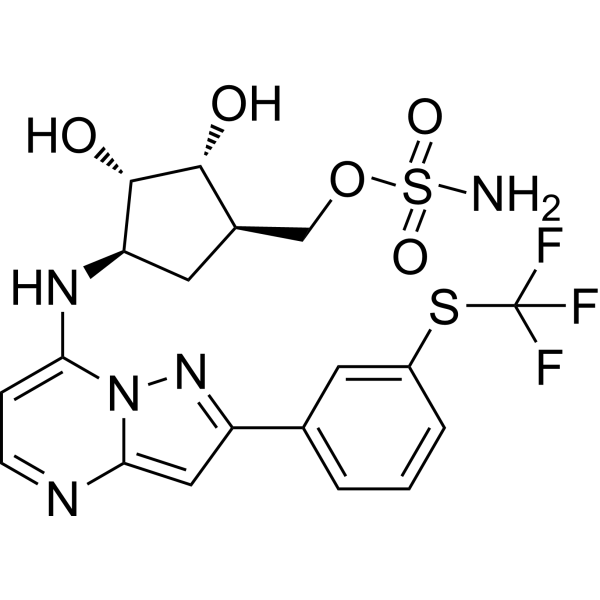
HY-100487
TAK-243UAE/E1 Inhibitor -
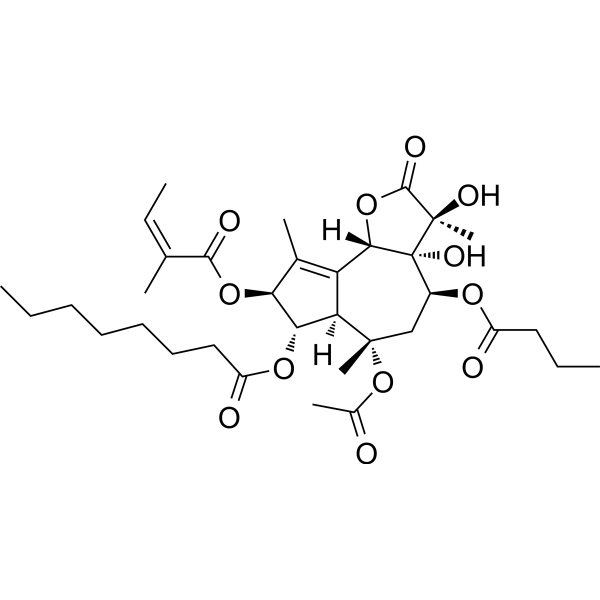
HY-13433
ThapsigarginER Stress Inducer -
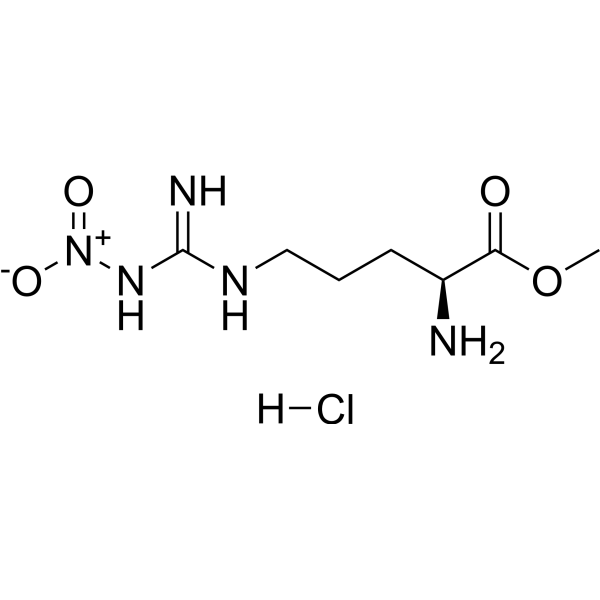
HY-18729A
L-NAME hydrochlorideNO Synthase Inhibitor -
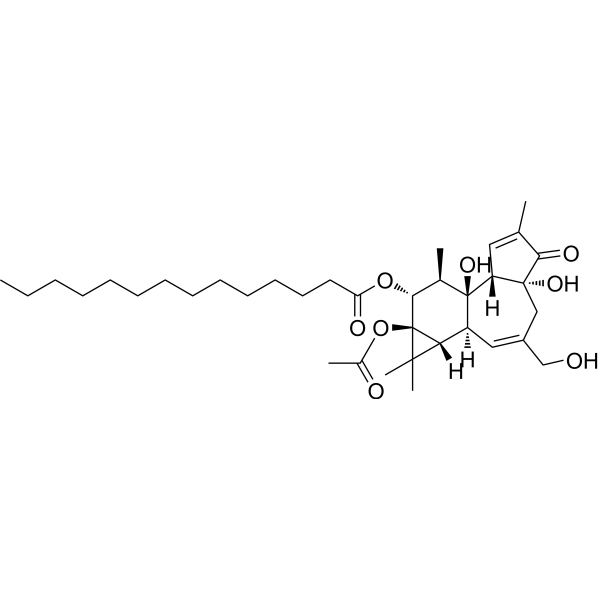
HY-18739
Phorbol 12-myristate 13-acetatePKC Activator -
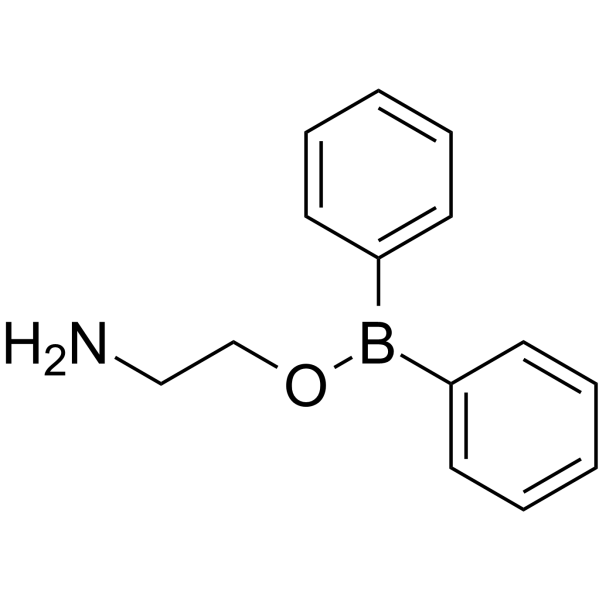
HY-W009724
2-Aminoethyl diphenylborinateIP3R Inhibitor -
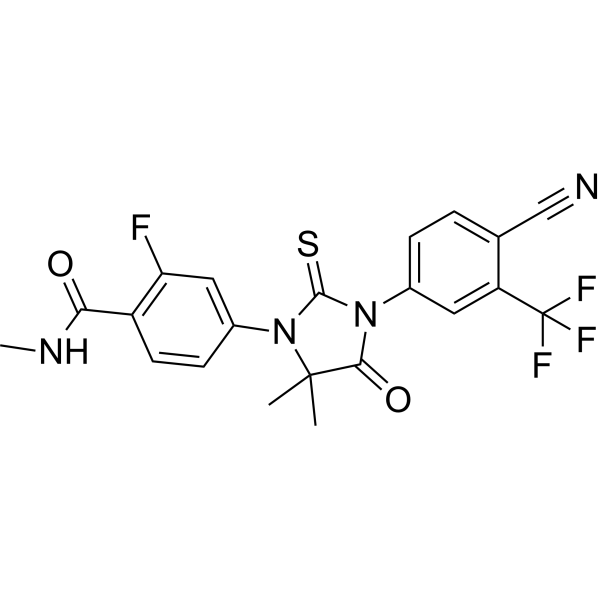
HY-70002
EnzalutamideAndrogen Receptor Antagonist -
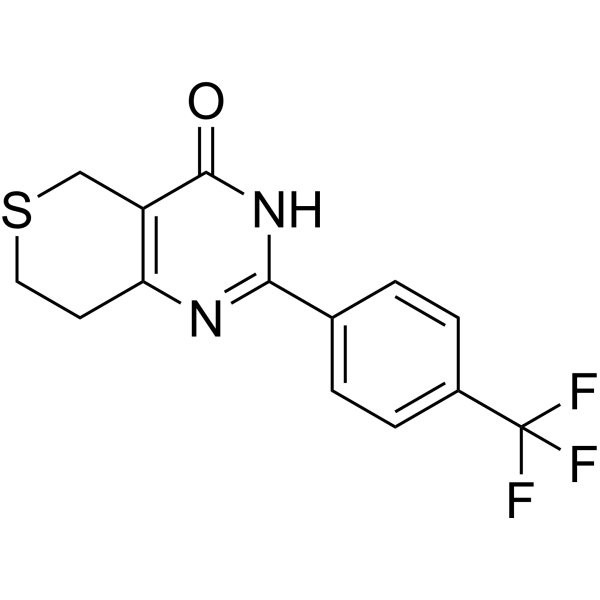
HY-15147
XAV-939Tankyrase Inhibitor
Publications Citing Use of MedChemExpress (MCE) Dooku1
More- Nat Commun. 2025 Dec 16;17(1):272. [Abstract]
- Neuron. 2023 Jan 4;111(1):15-29.e8. [Abstract]
- Sci Adv. 2024 Nov 15;10(46):eadp2357. [Abstract]
- Cell Death Differ. 2026 Jul 9.
- Mater Today Bio. 2025 Dec 3:36:102620. [Abstract]
- Mater Today Bio. 2025 Oct 21:35:102446. [Abstract]
- Hum Reprod Open. 2026 Feb 17;2026(2):hoag013. [Abstract]
- ACS Appl Mater Interfaces. 2025 Feb 5;17(5):7363-7376. [Abstract]
- Cell Rep. 2025 Jan 28;44(1):115136. [Abstract]
- Br J Pharmacol. 2024 Aug 8. [Abstract]
- Appl Mater Today. 27, June 2022, 101465.
- Cell Mol Life Sci. 2025 Oct 28;82(1):370. [Abstract]
- Life Sci. 2024 Jan 1:336:122326. [Abstract]
- Eur J Pharmacol. 2024 Nov 15:983:176954. [Abstract]
- Am J Pathol. 2023 Sep;193(9):1208-1222. [Abstract]
- Curr Med Sci. 2024 Aug;44(4):718-725. [Abstract]
- bioRxiv. 2024 Mar 11.
 Customer Validation & Images

-
Bio/Physico-chemical Assay
-
Cell Imaging/Staining
-
IF
-
IF
-
RT-PCR


Actividad biológica
Descripciòn
In Vitro
Dooku1 (10 μM, 300 s) has selectivity for Piezo1 channels in HEK 293 and CHO cells.[1].
Dooku1 (10 μM, 140 s) has no effect on constitutive Piezo1 channel activity in Piezo1 T-REx cells[1].
Dooku1 (10 μM, 40-60 s) inhibits endogenous Yoda1-activated channels in HUVECs and Piezo1 T-REx cells[1].
MedChemExpress (MCE) has not independently confirmed the accuracy of these methods. They are for reference only.
-
Cell Line:HUVECs, Piezo1 T-REx cells
-
Concentration:10 μM
-
Incubation Time:40-60 s
-
Result:Had a concentration-dependent inhibitory effect against Yoda1-induced Ca2+ entry in HUVECs, acting with an IC50 of 1.49 μM.
Increased potency in HUVECs with an EC50 of 0.23 μM, compared with 2.51 μM in Piezo1 T-REx cells.
In Vivo
MedChemExpress (MCE) has not independently confirmed the accuracy of these methods. They are for reference only.
-
Animal Model:wild-type male C57BL/6 mice’s aortic rings[1]
-
Dosage:10 μM
-
Administration:20 min
-
Result:Suppressed the Yoda1-induced relaxation.


Chemical Information
-
No. CAS 2253744-54-4
-
Appearance Solid
-
Peso molecular 326.20
-
Fòrmula C13H9Cl2N3OS
-
Color White to off-white
-
SMILES
ClC1=C(C(Cl)=CC=C1)CSC2=NN=C(C3=CC=CN3)O2
-
Envío
Room temperature in continental US; may vary elsewhere.
-
Almacenamiento
-20°C, sealed storage, away from moisture
* In solvent : -80°C, 2 years; -20°C, 1 year (sealed storage, away from moisture)


Publications (17)
-
Journal Impact Factor
-
Most Recent
-
Nat Commun
Polypeptide sono-adjuvant for ultrasound-activatable regulation of innate immunity and cancer vaccination therapy. [Abstract]2025 Dec 16;17(1):272. PMID: 41402324
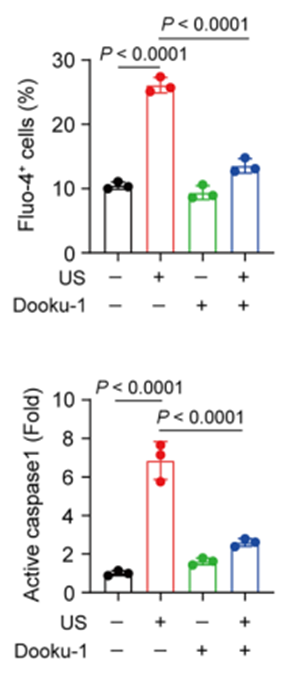
Dooku1 purchased from MedChemExpress. Usage Cited in: Nat Commun. 2025 Dec 16;17(1):272. [Abstract]
The addition of Dooku-1 markedly abrogated Ca2+ influx induced by US stimulation and significantly inhibited US-triggered active caspase-1 release in DCs.
-
Neuron
2023 Jan 4;111(1):15-29.e8. PMID: 36368316 -
Sci Adv
2024 Nov 15;10(46):eadp2357. PMID: 39546611 -
-
Mater Today Bio
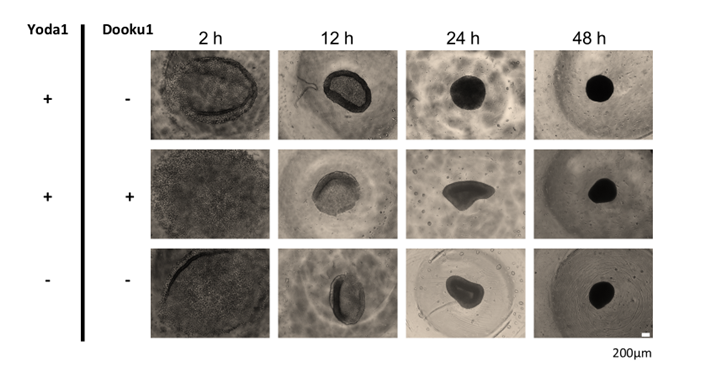
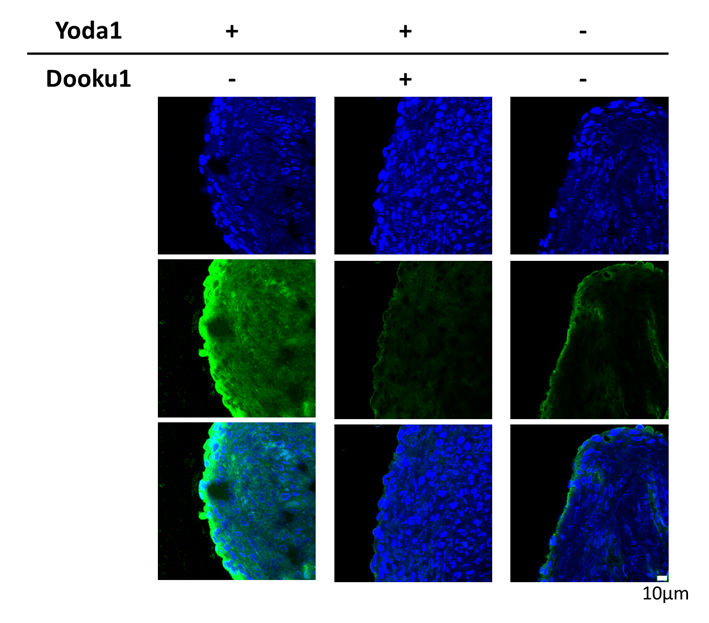
Piezo1 mediated scaffold-free rapid generation of self-mineralized bone organoids via activating Wnt signaling. [Abstract]2025 Dec 3:36:102620. PMID: 41476751
Dooku1 purchased from MedChemExpress. Usage Cited in: Mater Today Bio. 2025 Dec 3:36:102620. [Abstract]
Pre-treatment with Dooku1 slowed the rate of spheroid formation.
Dooku1 purchased from MedChemExpress. Usage Cited in: Mater Today Bio. 2025 Dec 3:36:102620. [Abstract]
IF staining confirmed the on-target activity of Dooku1, as it significantly suppressed the Yoda1 (0.5 μM)-induced upregulation of Piezo1 itself
-
Mater Today Bio
Magnetically guided neurite outgrowth modulated by PIEZO1 in hiPSC-derived retinal ganglion cells. [Abstract]2025 Oct 21:35:102446. PMID: 41209706 -
Hum Reprod Open
Impaired PIEZO1 function drives uterine hypercontractility in adenomyosis-associated dysmenorrhea. [Abstract]2026 Feb 17;2026(2):hoag013. PMID: 41836349 -
ACS Appl Mater Interfaces
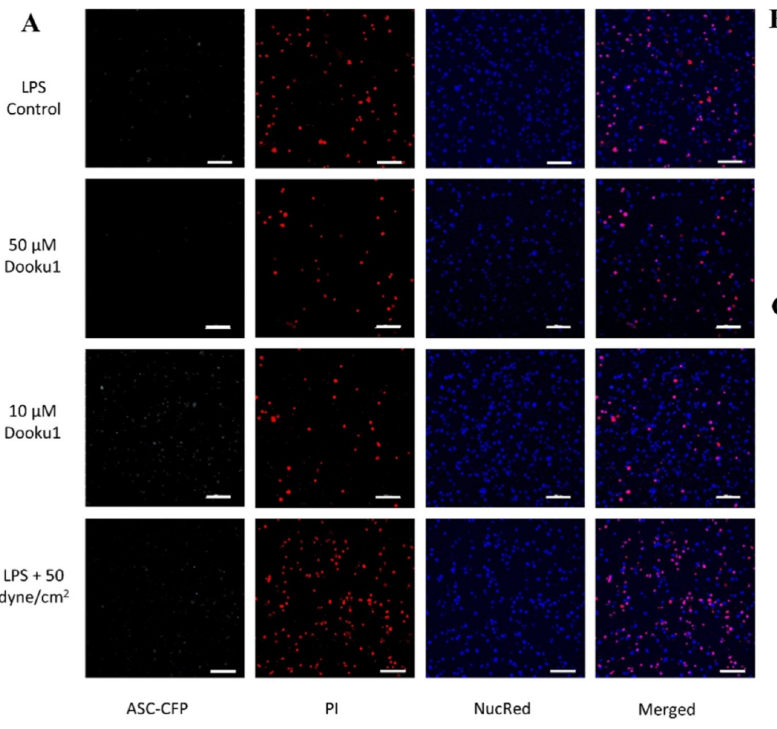
Shear-Stress Initiates Signal Two of NLRP3 Inflammasome Activation in LPS-Primed Macrophages through Piezo1. [Abstract]2025 Feb 5;17(5):7363-7376. PMID: 39836089
Dooku1 purchased from MedChemExpress. Usage Cited in: ACS Appl Mater Interfaces. 2025 Feb 5;17(5):7363-7376. [Abstract]
Dooku1 inhibits shear-stress-induced NLRP3 inflammasome activation in iBMDMs. (A) A representative imaging panel is shown above for ASC−CFP expressed iBMDMs primed LPS for 4 h followed by treatments of 10 or 50 μM Dooku1 for 2 h and 50 dyn/cm2 shear stress treatment for 30 min. LPS only controls were also performed according to aforementioned time points. NucRed stains living cell nuclei in blue, ASC−CFP specks indicating inflammasome activation are shown in cyan, and propidium iodide (PI) shows dead cell nuclei in red.
-
Cell Rep
2025 Jan 28;44(1):115136. PMID: 39932192
Dooku1 purchased from MedChemExpress. Usage Cited in: Cell Rep. 2025 Jan 28;44(1):115136. [Abstract]
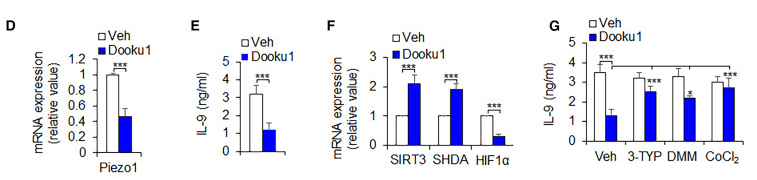
The pharmacological inhibition of Piezo1 (by Dooku1 (2 μM) and GsMTx4) in mouse T cells reduced IL-9 production and altered SIRT3, SDHA, and HIF1α expression.
-
Br J Pharmacol
Targeting the tyrosine kinase Src in endothelium attenuates inflammation and atherogenesis induced by disturbed flow. [Abstract]2024 Aug 8. PMID: 39117589 -
-
Cell Mol Life Sci
The transcription factor RBPJ is required for inflammatory macrophage activation in thoracic aortic dissection by mediating mechanotransduction-induced glycolysis. [Abstract]2025 Oct 28;82(1):370. PMID: 41148245 -
Life Sci
Regulatory role of Piezo1 channel in endothelium-dependent hyperpolarization-mediated vasorelaxation of small resistance vessels and its anti-inflammatory action. [Abstract]2024 Jan 1:336:122326. PMID: 38056769 -
Eur J Pharmacol
Activation of Piezo1 channels enhances spontaneous contractions of isolated human bladder strips via acetylcholine release from the mucosa. [Abstract]2024 Nov 15:983:176954. PMID: 39237075 -
Am J Pathol
Fibrotic matrix induces mesenchymal transformation of epithelial cells in oral submucous fibrosis. [Abstract]2023 Sep;193(9):1208-1222. PMID: 37328100 -
Curr Med Sci
2024 Aug;44(4):718-725. PMID: 38926331 -


Solvente y solubilidad
In Vitro:
DMSO : 100 mg/mL (306.56 mM; Need ultrasonic; Hygroscopic DMSO has a significant impact on the solubility of product, please use newly opened DMSO)
Please refer to the solubility information to select the appropriate solvent. Once prepared, please aliquot and store the solution to prevent product inactivation from repeated freeze-thaw cycles.
Storage method and period of stock solution: -80°C, 2 years; -20°C, 1 year (sealed storage, away from moisture). When stored at -80°C, please use it within 2 years. When stored at -20°C, please use it within 1 year.
Please refer to the solubility information to select the appropriate solvent. Once prepared, please aliquot and store the solution to prevent product inactivation from repeated freeze-thaw cycles.
Storage method and period of stock solution: -80°C, 2 years; -20°C, 1 year (sealed storage, away from moisture). When stored at -80°C, please use it within 2 years. When stored at -20°C, please use it within 1 year.
Concentration (start) × Volume (start) = Concentration (final) × Volume (final)
In Vivo:
Select the appropriate dissolution method based on your experimental animal and administration route.
- For the following dissolution methods, please ensure to first prepare a clear stock solution using an In Vitro approach and then sequentially add co-solvents:
- To ensure reliable experimental results, the clarified stock solution can be appropriately stored based on storage conditions. As for the working solution for In Vivo experiments, it is recommended to prepare freshly and use it on the same day.
- The percentages shown for the solvents indicate their volumetric ratio in the final prepared solution. If precipitation or phase separation occurs during preparation, heat and/or sonication can be used to aid dissolution.
In Vivo Dissolution Calculator
Please enter the basic information of animal experiments:
-
-
-
-
Recommended: Prepare an additional quantity of animals to account for potential losses during experiments.
Please enter your animal formula composition:
-
%DMSO +
Recommended: Keep the proportion of DMSO in working solution below 2% if your animal is weak.
-
%+
-
+%Tween-80 + +
-
%Saline +
The co-solvents required include: DMSO, . All of co-solvents are available by MedChemExpress (MCE). , Tween 80. All of co-solvents are available by MedChemExpress (MCE).
Working solution concentration: 0.22 mg/mL
Method for preparing stock solution: mg drug dissolved in μL DMSO. Stock solution concentration: mg/mL. * In solvent : -80°C, 2 years; -20°C, 1 year (sealed storage, away from moisture)
1. Take μL DMSO stock solution;
2. Add μL .
μL , mix evenly;
3. Then add μL Tween 80, mix evenly;
4. Then add μL
Please ensure that the stock solution in the first step is dissolved to a clear state, and add co-solvents in sequence. You can use ultrasonic heating (ultrasonic cleaner, recommended frequency 20-40 kHz), vortexing, etc. to assist dissolution.


Pureza y Documentación
-
Ficha de datos (276 KB)
-
SDS (394 KB)
- English - EN (394 KB)
- Français - FR (394 KB)
- Deutsch - DE (394 KB)
- Norwegian - NO (394 KB)
- Español - ES (394 KB)
- Swedish - SV (394 KB)
- Italian - IT (394 KB)
- Korean - KR (394 KB)
- Portuguese - PT (394 KB)
-
Instrucciones de manejo (2659 KB)
Referencias
[1]. Evans EL, et al. Yoda1 analogue (Dooku1) which antagonizes Yoda1-evoked activation of Piezo1 and aortic relaxation. Br J Pharmacol. 2018 May;175(10):1744-1759. [Content Brief]
[2]. Evans EL, et al. Yoda1 analogue (Dooku1) which antagonizes Yoda1-evoked activation of Piezo1 and aortic relaxation. Br J Pharmacol. 2018 May;175(10):1744-1759. [Content Brief]


Complete Stock Solution Preparation Table
Please refer to the solubility information to select the appropriate solvent. Once prepared, please aliquot and store the solution to prevent product inactivation from repeated freeze-thaw cycles.
Storage method and period of stock solution: -80°C, 2 years; -20°C, 1 year (sealed storage, away from moisture). When stored at -80°C, please use it within 2 years. When stored at -20°C, please use it within 1 year.
| Optional Solvent | Concentration Solvent Mass | 1 mg | 5 mg | 10 mg | 25 mg |
|---|---|---|---|---|---|
| DMSO | 1 mM | 3.0656 mL | 15.3280 mL | 30.6560 mL | 76.6401 mL |
| 5 mM | 0.6131 mL | 3.0656 mL | 6.1312 mL | 15.3280 mL | |
| 10 mM | 0.3066 mL | 1.5328 mL | 3.0656 mL | 7.6640 mL | |
| 15 mM | 0.2044 mL | 1.0219 mL | 2.0437 mL | 5.1093 mL | |
| 20 mM | 0.1533 mL | 0.7664 mL | 1.5328 mL | 3.8320 mL | |
| 25 mM | 0.1226 mL | 0.6131 mL | 1.2262 mL | 3.0656 mL | |
| 30 mM | 0.1022 mL | 0.5109 mL | 1.0219 mL | 2.5547 mL | |
| 40 mM | 0.0766 mL | 0.3832 mL | 0.7664 mL | 1.9160 mL | |
| 50 mM | 0.0613 mL | 0.3066 mL | 0.6131 mL | 1.5328 mL | |
| 60 mM | 0.0511 mL | 0.2555 mL | 0.5109 mL | 1.2773 mL | |
| 80 mM | 0.0383 mL | 0.1916 mL | 0.3832 mL | 0.9580 mL | |
| 100 mM | 0.0307 mL | 0.1533 mL | 0.3066 mL | 0.7664 mL |


Dooku1 Related Classifications
HY-126010 Related Classifications
 Powered by Bioz