



BAPTA-AM (Standard)

Based on 1 Customer Validation
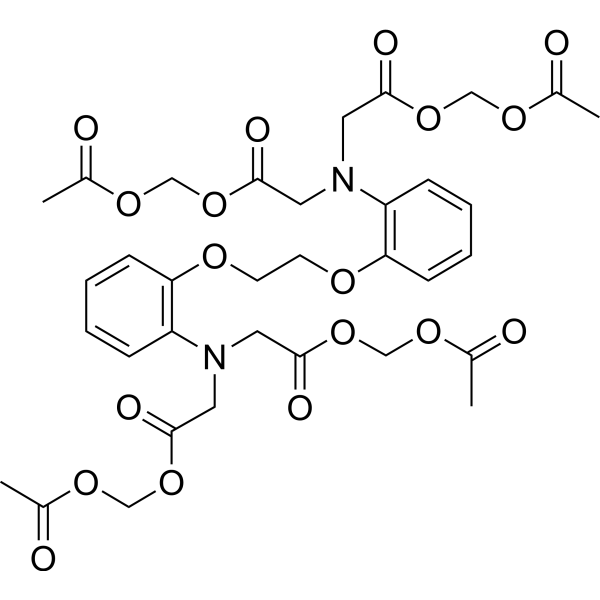
BAPTA-AM (Standard) is the analytical standard of BAPTA-AM. This product is intended for research and analytical applications. BAPTA-AM is a well-known membrane permeable Ca2+ chelator. BAPTA-AM inhibits hERG channels, hKv1.3 and hKv1.5 channels in HEK 293 cells with IC50s of 1.3 μM, 1.45 μM and 1.23 μM, respectively.
For research use only. We do not sell to patients.
- Purity : 98.14%
- CAS No.: 126150-97-8
- Formula: C34H40N2O18
- Molecular Weight:764.68
-
Storage:
Please store the product under the recommended conditions in the Certificate of Analysis.


To place orders, for customer services and technical support, please contact: MedChemExpress USA
Tel: 609-228-6898 E-mail: [email protected] [email protected]


-
 Product Information
-
Chemical Information
- Purity & Documentation
-
 Help & FAQs


-
HY-100545
BAPTA-AMCa2+ Chelator -
HY-D0040
CalceinFluorescent Dye -
HY-16950A
(E/Z)-4-HydroxytamoxifenEstrogen Receptor Modulator -
HY-B0401
TolbutamideKATP Inhibitor -
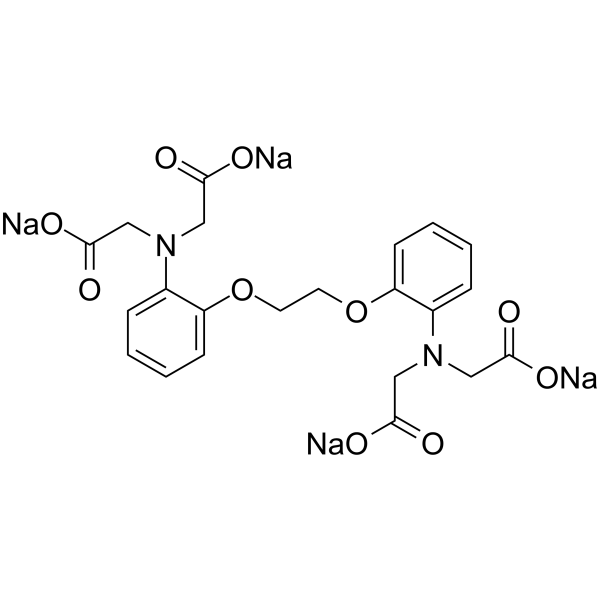
HY-100168A
BAPTA tetrasodiumCalciumChelator -

HY-B0401R
Tolbutamide (Standard)KATP Inhibitor -
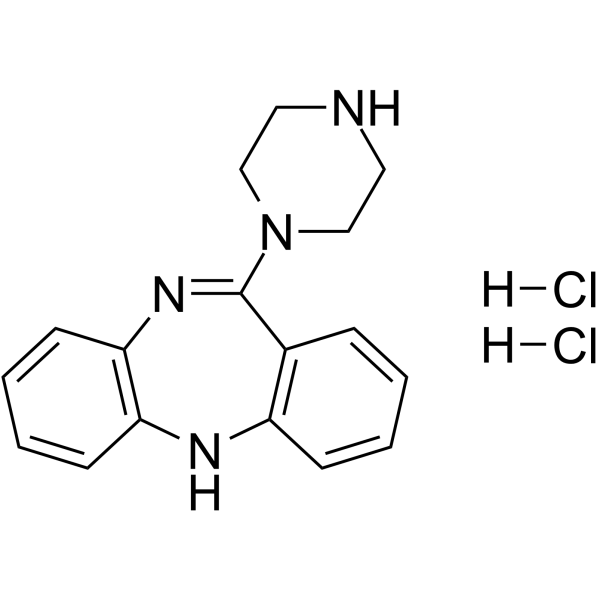
HY-100234A
DREADD agonist 21 dihydrochloridehM3Dq Agonist -
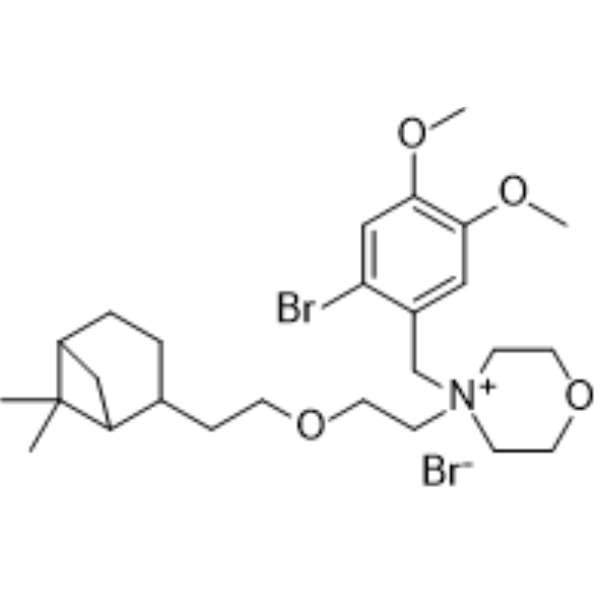
HY-111613
Pinaverium bromideCalcium Channel Inhibitor -

HY-DY1091
Calcein (solution)Fluorescent Dye -
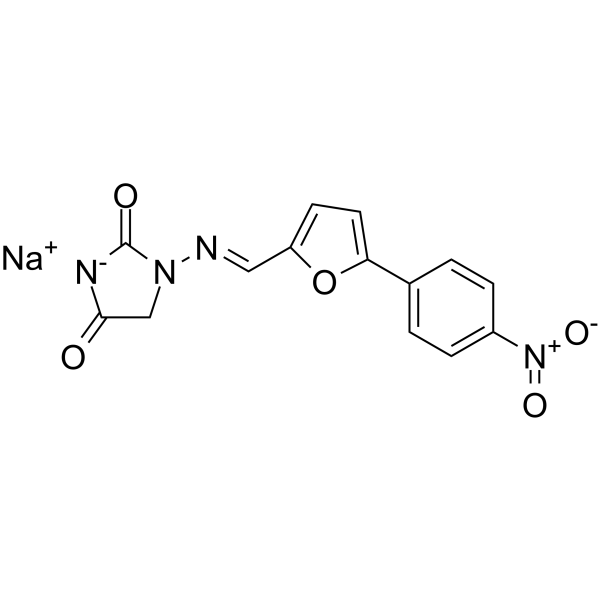
HY-14657
Dantrolene sodiumCalcium Channel Inhibitor -
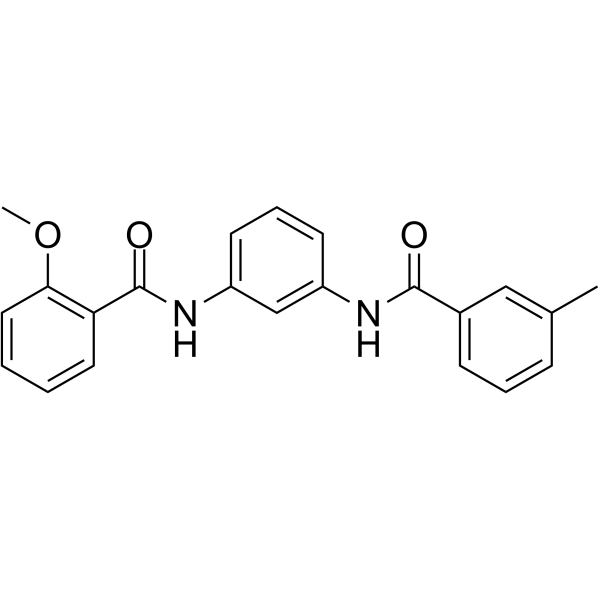
HY-12345
ML365Potassium Channel Inhibitor -
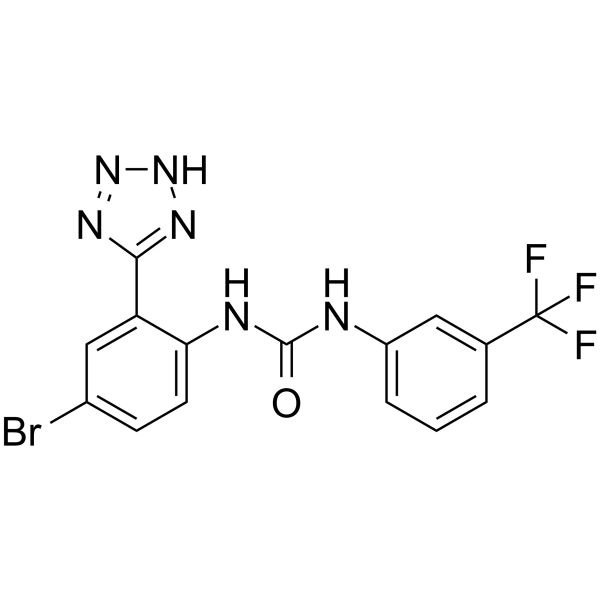
HY-108586
NS3623hERG1/IKr/Ito Activator


Product Information
Information
Application
The compound is the grade of analytical standard, which is the reference standard supplied assay. It is commonly used in qualitative, quantitative and methodological research experiments in HPLC, GC and MS.


Chemical Information
-
CAS No. 126150-97-8
-
Appearance Solid
-
Molecular Weight 764.68
-
Formula C34H40N2O18
-
Color White to off-white
-
SMILES
O=C(OCOC(C)=O)CN(C(C=CC=C1)=C1OCCOC(C=CC=C2)=C2N(CC(OCOC(C)=O)=O)CC(OCOC(C)=O)=O)CC(OCOC(C)=O)=O
-
Shipping
Room temperature in continental US; may vary elsewhere.
-
Storage
Please store the product under the recommended conditions in the Certificate of Analysis.


Purity & Documentation
-
SDS (252 KB)
- English - EN (252 KB)
- Français - FR (252 KB)
- Deutsch - DE (252 KB)
- Norwegian - NO (252 KB)
- Español - ES (252 KB)
- Swedish - SV (252 KB)
- Italian - IT (252 KB)
- Korean - KR (252 KB)
- Portuguese - PT (252 KB)
-
Handling Instructions (2659 KB)
References
[1]. Tang Q, et al. The membrane permeable calcium chelator BAPTA-AM directly blocks human ether a-go-go-related gene potassium channels stably expressed in HEK 293 cells. Biochem Pharmacol. 2007 Dec 3;74(11):1596-607. [Content Brief]
[2]. Wie MB, et al. BAPTA/AM, an intracellular calcium chelator, induces delayed necrosis by lipoxygenase-mediated free radicals in mouse cortical cultures. Prog Neuropsychopharmacol Biol Psychiatry. 2001 Nov;25(8):1641-59. [Content Brief]

Calculators
Concentration (start) × Volume (start) = Concentration (final) × Volume (final)


BAPTA-AM (Standard) Related Classifications
HY-100545R Related Classifications
 Powered by Bioz