



Senicapoc
Based on 11 publication(s) in Google Scholar
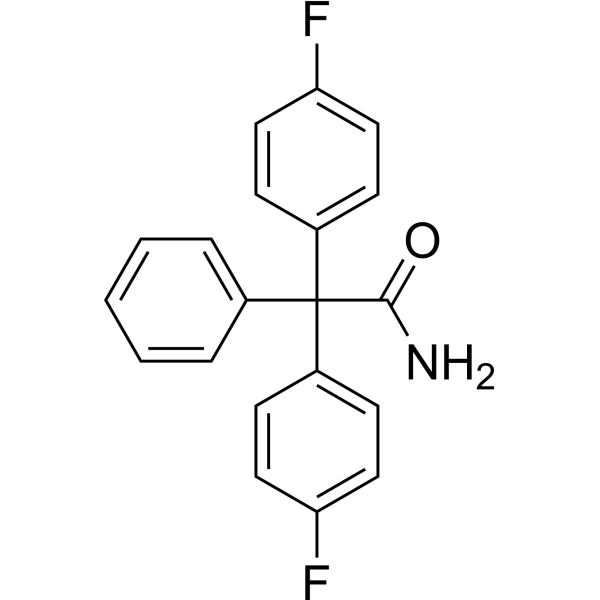
Senicapoc (ICA-17043) is a potent and selective Gardos channel (Ca2+-activated K+ channel; KCa3.1) blocker with an IC50 of 11 nM. Senicapoc blocks Ca2+-induced rubidium flux from human RBCs with an IC50 value of 11 nM and inhibits RBC dehydration with IC50 of 30 nM.
For research use only. We do not sell to patients.
- Purity : 99.91%
- CAS No.: 289656-45-7
- Formula: C20H15F2NO
- Molecular Weight:323.34
-
Storage:Powder -20°C, 3 years , 4°C, 2 years ; In solvent -80°C, 2 years , -20°C, 1 year

To place orders, for customer services and technical support, please contact: MedChemExpress USA
Tel: 609-228-6898 E-mail: [email protected] [email protected]


-
 Biological Activity
-
Chemical Information
-
Solvent & Solubility
- Protocols
- Purity & Documentation
- References
-
 Help & FAQs


-
HY-13519
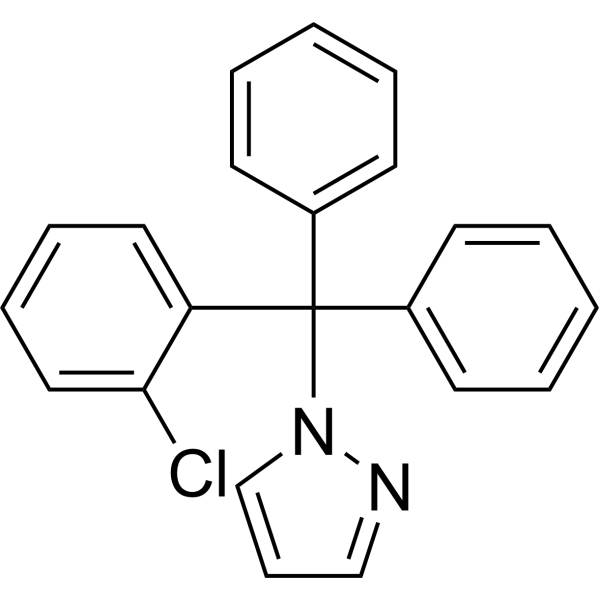
TRAM-34Potassium Channel Inhibitor -
HY-13818
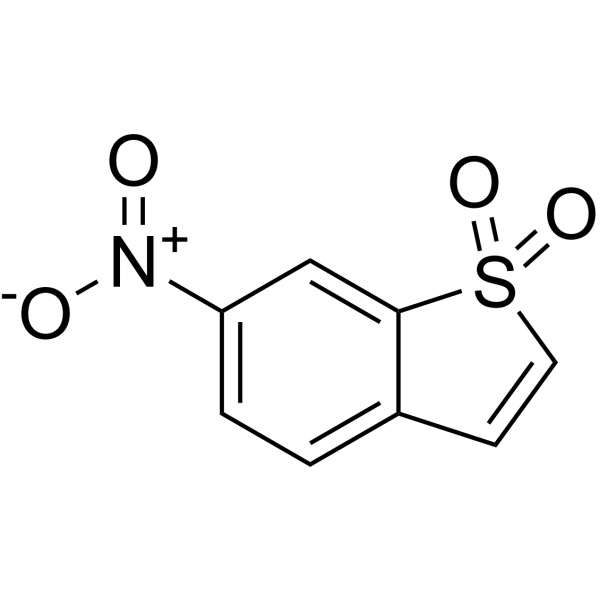
StatticSTAT3 Inhibitor -
HY-15416
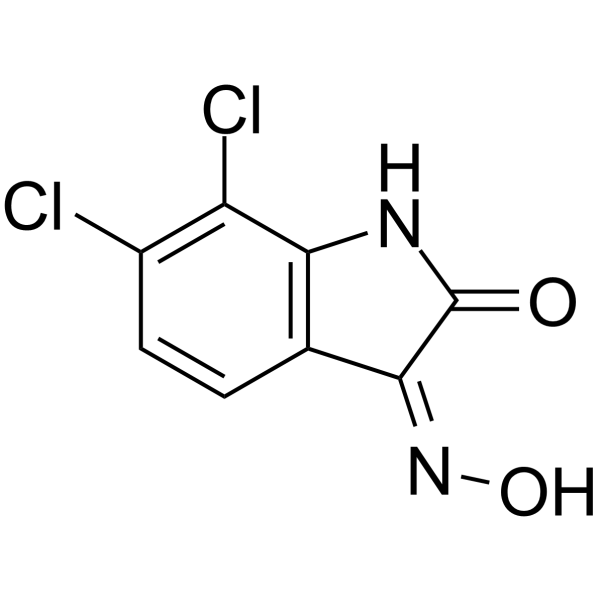
NS309Potassium Channel Activator -
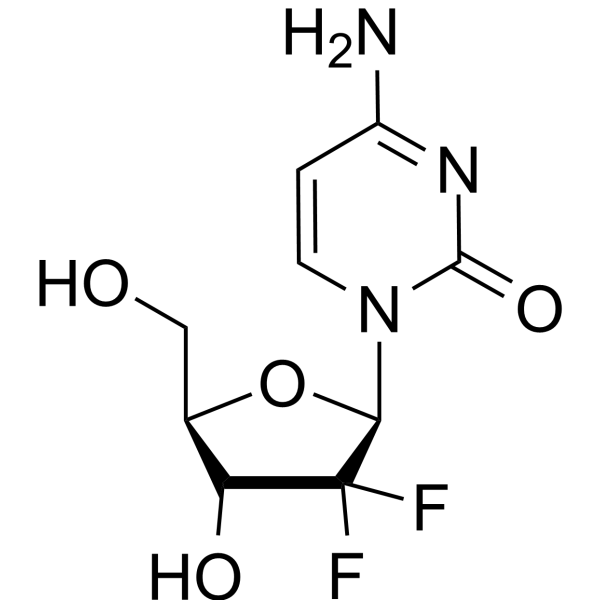
HY-17026
GemcitabineDNA Synthesis Inhibitor -
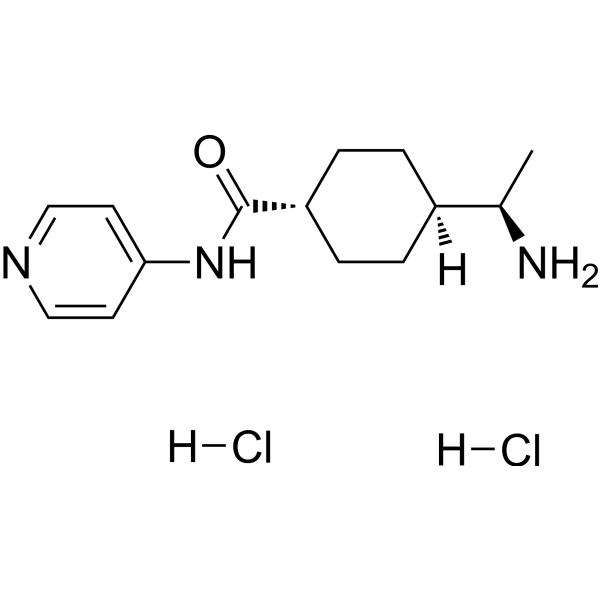
HY-10583
Y-27632 dihydrochlorideROCK Inhibitor -
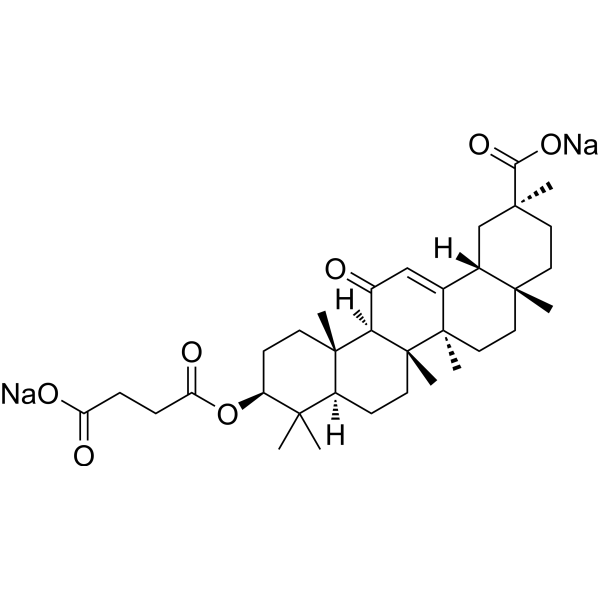
HY-B1367
Carbenoxolone disodiumGap Junction Inhibitor -
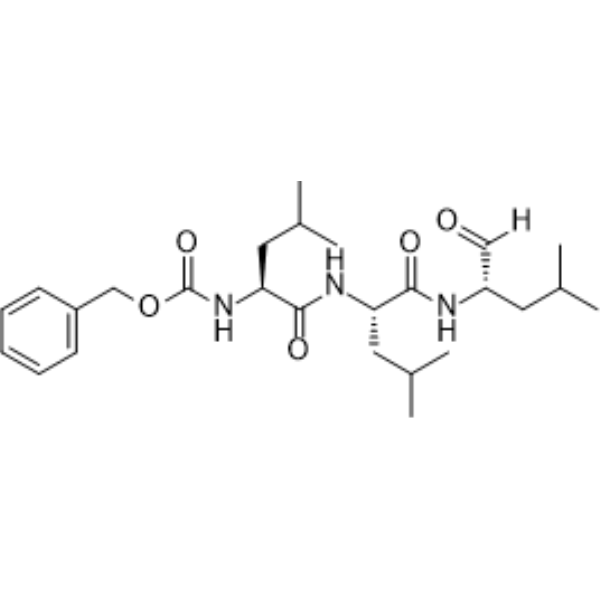
HY-13259
MG-132Proteasome Inhibitor -
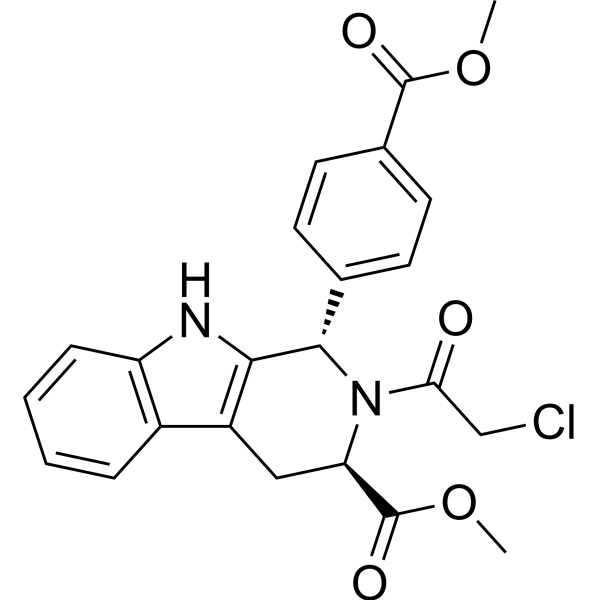
HY-100218A
RSL3GPX4 Inhibitor -
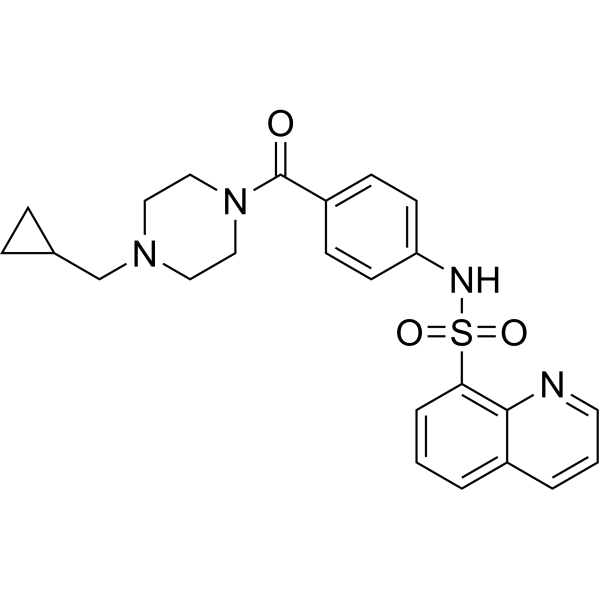
HY-12689
MitapivatPK Activator -
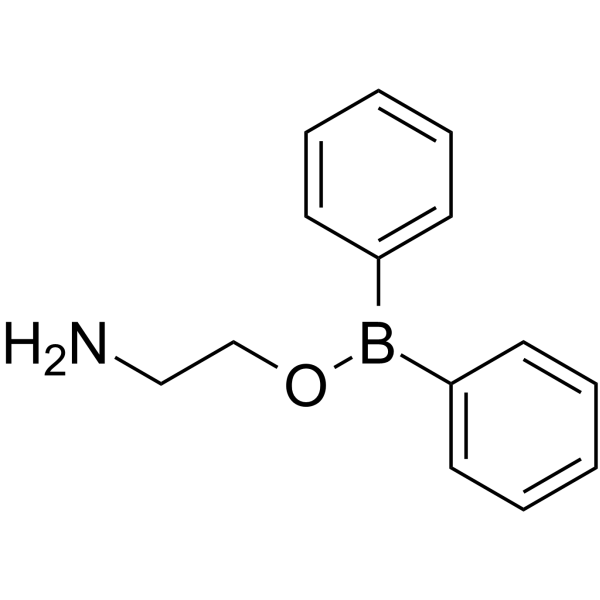
HY-W009724
2-Aminoethyl diphenylborinateIP3R Inhibitor -
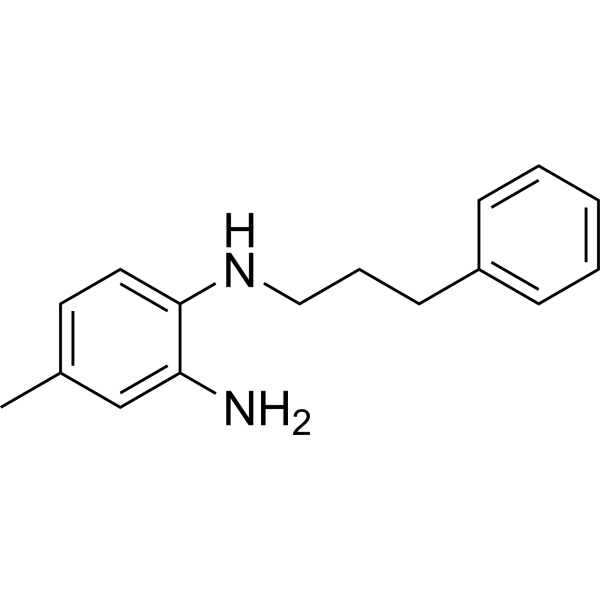
HY-13982
JSH-23NF-κB Inhibitor -
HY-K0023
Phosphatase Inhibitor Cocktail Ⅲ (100× in DMSO)
Publications Citing Use of MedChemExpress (MCE) Senicapoc
More- Haematologica. 2020 Mar;105(3):610-622. [Abstract]
- Haematologica. 2017 Oct;102(10):e415-e418. [Abstract]
- JCI Insight. 2019 Feb 21;4(4):e126444. [Abstract]
- Eur J Pharmacol. 2017 Jan 15:795:1-7. [Abstract]
- J Virol. 2019 Mar 5;93(6):e01744-18. [Abstract]
- J Appl Physiol (1985). 2021 Oct 1;131(4):1311-1327. [Abstract]
- J Cancer. 2017 Jun 3;8(9):1568-1578. [Abstract]
- Resusc Plus. 2021 Apr 2:6:100111. [Abstract]
- Intensive Care Med Exp. 2021 Apr 19;9(1):20. [Abstract]
- Blood Cells Mol Dis. 2023 Nov:103:102780. [Abstract]
- Patent. US20200046657.
 Customer Validation & Images

-
Cell Proliferation/Viability Assay
-
IHC


Biological Activity
Description
IC50 & Target
IC50: 11 nM (Gardos channel)[1]
In Vitro
ICA-17043 is shown to block the Gardos channel of mouse (C57 Black) RBCs with an IC50 of 50±6 nM. ICA-17043 blocks this increase in cellular hemoglobin concentration in human RBCs in a concentration-dependent fashion[1].
MedChemExpress (MCE) has not independently confirmed the accuracy of these methods. They are for reference only. Further protocols information, click here.
In Vivo
MedChemExpress (MCE) has not independently confirmed the accuracy of these methods. They are for reference only.
Clinical Trial
| NCT Number | Sponsor | Condition | Start Date |
Phase

|
|---|---|---|---|---|
| NCT01329991 | Plexxikon| | 2011-05 | PHASE1 |


Chemical Information
-
CAS No. 289656-45-7
-
Appearance Solid
-
Molecular Weight 323.34
-
Formula C20H15F2NO
-
Color White to yellow
-
SMILES
O=C(C(C1=CC=CC=C1)(C2=CC=C(C=C2)F)C3=CC=C(F)C=C3)N
-
Synonyms
ICA-17043
-
Shipping
Room temperature in continental US; may vary elsewhere.
-
Storage
Powder -20°C 3 years 4°C 2 years In solvent -80°C 2 years -20°C 1 year


Publications (11)
-
Journal Impact Factor
-
Most Recent
-
Haematologica
PIEZO1 activation delays erythroid differentiation of normal and hereditary xerocytosis-derived human progenitor cells. [Abstract]2020 Mar;105(3):610-622. PMID: 31413092 -
Haematologica
Red blood cell Gardos channel (KCNN4): the essential determinant of erythrocyte dehydration in hereditary xerocytosis. [Abstract]2017 Oct;102(10):e415-e418. PMID: 28619848 -
JCI Insight
Intestinal epithelial potassium channels and CFTR chloride channels activated in ErbB tyrosine kinase inhibitor diarrhea. [Abstract]2019 Feb 21;4(4):e126444. PMID: 30668547 -
Eur J Pharmacol
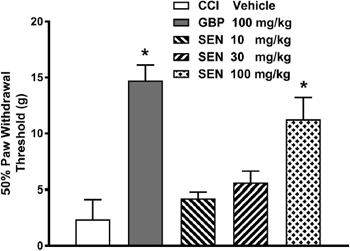
Inhibition of the potassium channel KCa3.1 by senicapoc reverses tactile allodynia in rats with peripheral nerve injury. [Abstract]2017 Jan 15:795:1-7. PMID: 27876619
Senicapoc purchased from MedChemExpress. Usage Cited in: Eur J Pharmacol. 2017 Jan 15:795:1-7. [Abstract]
In a second cohort of rats, the 50% paw withdrawal threshold (g) in response to von Frey stimulation of the injured hind paw is determined in CCI rats (n=12/group) dosed with either vehicle, Senicapoc (SEN) or GBP. The efficacy of Senicapoc (10, 30 and 100 mg/kg, p.o.) is evaluated at its Tmax, 4 h after dosing.
-
J Virol
2019 Mar 5;93(6):e01744-18. PMID: 30626681 -
J Appl Physiol (1985)
Increased cerebral endothelium-dependent vasodilation in rats in the postcardiac arrest period. [Abstract]2021 Oct 1;131(4):1311-1327. PMID: 34435510 -
J Cancer
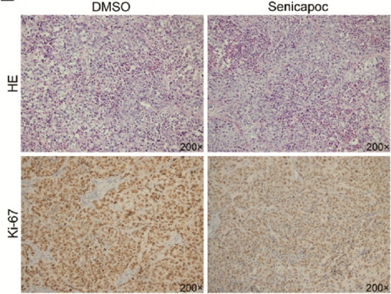
KCa3.1 as an Effective Target for Inhibition of Growth and Progression of Intrahepatic Cholangiocarcinoma. [Abstract]2017 Jun 3;8(9):1568-1578. PMID: 28775776
Senicapoc purchased from MedChemExpress. Usage Cited in: J Cancer. 2017 Jun 3;8(9):1568-1578. [Abstract]
H&E staining and Ki-67 immunohistochemistry of the respective tumors in two groups are performed.
-
Resusc Plus
Effect of the KCa3.1 blocker, senicapoc, on cerebral edema and cardiovascular function after cardiac arrest - A randomized experimental rat study. [Abstract]2021 Apr 2:6:100111. PMID: 34223371 -
Intensive Care Med Exp
2021 Apr 19;9(1):20. PMID: 33870468 -
Blood Cells Mol Dis
Next generation sequencing (NGS) interest in deciphering erythrocyte molecular defects' association in red cell disorders: Clinical and erythrocyte phenotypes of patients with mutations inheritance in PIEZO1, Spectrin ß1, RhAG and SLC4A1. [Abstract]2023 Nov:103:102780. PMID: 37516005 -


Solvent & Solubility
In Vitro:
DMSO : 50 mg/mL (154.64 mM; Need ultrasonic; Hygroscopic DMSO has a significant impact on the solubility of product, please use newly opened DMSO)
Please refer to the solubility information to select the appropriate solvent. Once prepared, please aliquot and store the solution to prevent product inactivation from repeated freeze-thaw cycles.
Storage method and period of stock solution: -80°C, 2 years; -20°C, 1 year. When stored at -80°C, please use it within 2 years. When stored at -20°C, please use it within 1 year.
Please refer to the solubility information to select the appropriate solvent. Once prepared, please aliquot and store the solution to prevent product inactivation from repeated freeze-thaw cycles.
Storage method and period of stock solution: -80°C, 2 years; -20°C, 1 year. When stored at -80°C, please use it within 2 years. When stored at -20°C, please use it within 1 year.
Concentration (start) × Volume (start) = Concentration (final) × Volume (final)
In Vivo:
Select the appropriate dissolution method based on your experimental animal and administration route.
- For the following dissolution methods, please ensure to first prepare a clear stock solution using an In Vitro approach and then sequentially add co-solvents:
- To ensure reliable experimental results, the clarified stock solution can be appropriately stored based on storage conditions. As for the working solution for In Vivo experiments, it is recommended to prepare freshly and use it on the same day.
- The percentages shown for the solvents indicate their volumetric ratio in the final prepared solution. If precipitation or phase separation occurs during preparation, heat and/or sonication can be used to aid dissolution.
Add each solvent one by one: 10% DMSO 40% PEG300 5% Tween-80 45% Saline
Solubility: ≥ 2.5 mg/mL (7.73 mM); Clear solution
This protocol yields a clear solution of ≥ 2.5 mg/mL (saturation unknown).
Taking 1 mL working solution as an example, add 100 μL DMSO stock solution (25.0 mg/mL) to 400 μL PEG300, and mix evenly; then add 50 μL Tween-80 and mix evenly; then add 450 μL Saline to adjust the volume to 1 mL.
Preparation of Saline: Dissolve 0.9 g sodium chloride in ddH₂O and dilute to 100 mL to obtain a clear Saline solution.
Add each solvent one by one: 10% DMSO 90% (20% SBE-β-CD in Saline)
Solubility: ≥ 2.5 mg/mL (7.73 mM); Clear solution
This protocol yields a clear solution of ≥ 2.5 mg/mL (saturation unknown).
Taking 1 mL working solution as an example, add 100 μL DMSO stock solution (25.0 mg/mL) to 900 μL 20% SBE-β-CD in Saline, and mix evenly.
Preparation of 20% SBE-β-CD in Saline (4°C, storage for one week): 2 g SBE-β-CD powder is dissolved in 10 mL Saline, completely dissolve until clear.
In Vivo Dissolution Calculator
Please enter the basic information of animal experiments:
-
-
-
-
Recommended: Prepare an additional quantity of animals to account for potential losses during experiments.
Please enter your animal formula composition:
-
%DMSO +
Recommended: Keep the proportion of DMSO in working solution below 2% if your animal is weak.
-
%+
-
+%Tween-80 + +
-
%Saline +
The co-solvents required include: DMSO, . All of co-solvents are available by MedChemExpress (MCE). , Tween 80. All of co-solvents are available by MedChemExpress (MCE).
Working solution concentration: 0.22 mg/mL
Method for preparing stock solution: mg drug dissolved in μL DMSO. Stock solution concentration: mg/mL.
1. Take μL DMSO stock solution;
2. Add μL .
μL , mix evenly;
3. Then add μL Tween 80, mix evenly;
4. Then add μL
Please ensure that the stock solution in the first step is dissolved to a clear state, and add co-solvents in sequence. You can use ultrasonic heating (ultrasonic cleaner, recommended frequency 20-40 kHz), vortexing, etc. to assist dissolution.

Protocols
-
Ca2+ Staining Technique
Ca2+ staining is an experimental technique that utilizes specific fluorescent probes (such as Fluo-4 AM, Fura-2, etc.) to qualitatively or quantitatively detect dynamic changes in intracellular Ca2+ concentrations; this is achieved by monitoring the changes in fluorescent signals generated when these probes bind to free intracellular calcium ions. The underlying principle relies primarily on the presence of chelating groups within the probe's molecular structure that possess high affinity for calcium ions.


Purity & Documentation
-
Data Sheet (280 KB)
-
SDS (393 KB)
- English - EN (393 KB)
- Français - FR (393 KB)
- Deutsch - DE (393 KB)
- Norwegian - NO (393 KB)
- Español - ES (393 KB)
- Swedish - SV (393 KB)
- Italian - IT (393 KB)
- Korean - KR (393 KB)
- Portuguese - PT (393 KB)
-
Handling Instructions (2659 KB)
References
[1]. Stocker JW, et al. ICA-17043, a novel Gardos channel blocker, prevents sickled red blood cell dehydration in vitro and in vivo in SAD mice. Blood. 2003 Mar 15;101(6):2412-8. [Content Brief]
[2]. Van Der Velden J, et al. K(Ca)3.1 channel-blockade attenuates airway pathophysiology in a sheep model of chronic asthma. PLoS One. 2013 Jun 24;8(6):e66886. [Content Brief]


Complete Stock Solution Preparation Table
Please refer to the solubility information to select the appropriate solvent. Once prepared, please aliquot and store the solution to prevent product inactivation from repeated freeze-thaw cycles.
Storage method and period of stock solution: -80°C, 2 years; -20°C, 1 year. When stored at -80°C, please use it within 2 years. When stored at -20°C, please use it within 1 year.
| Optional Solvent | Concentration Solvent Mass | 1 mg | 5 mg | 10 mg | 25 mg |
|---|---|---|---|---|---|
| DMSO | 1 mM | 3.0927 mL | 15.4636 mL | 30.9272 mL | 77.3180 mL |
| 5 mM | 0.6185 mL | 3.0927 mL | 6.1854 mL | 15.4636 mL | |
| 10 mM | 0.3093 mL | 1.5464 mL | 3.0927 mL | 7.7318 mL | |
| 15 mM | 0.2062 mL | 1.0309 mL | 2.0618 mL | 5.1545 mL | |
| 20 mM | 0.1546 mL | 0.7732 mL | 1.5464 mL | 3.8659 mL | |
| 25 mM | 0.1237 mL | 0.6185 mL | 1.2371 mL | 3.0927 mL | |
| 30 mM | 0.1031 mL | 0.5155 mL | 1.0309 mL | 2.5773 mL | |
| 40 mM | 0.0773 mL | 0.3866 mL | 0.7732 mL | 1.9329 mL | |
| 50 mM | 0.0619 mL | 0.3093 mL | 0.6185 mL | 1.5464 mL | |
| 60 mM | 0.0515 mL | 0.2577 mL | 0.5155 mL | 1.2886 mL | |
| 80 mM | 0.0387 mL | 0.1933 mL | 0.3866 mL | 0.9665 mL | |
| 100 mM | 0.0309 mL | 0.1546 mL | 0.3093 mL | 0.7732 mL |


Senicapoc Related Classifications
HY-50694 Related Classifications
 Powered by Bioz