



S107
Based on 2 publication(s) in Google Scholar
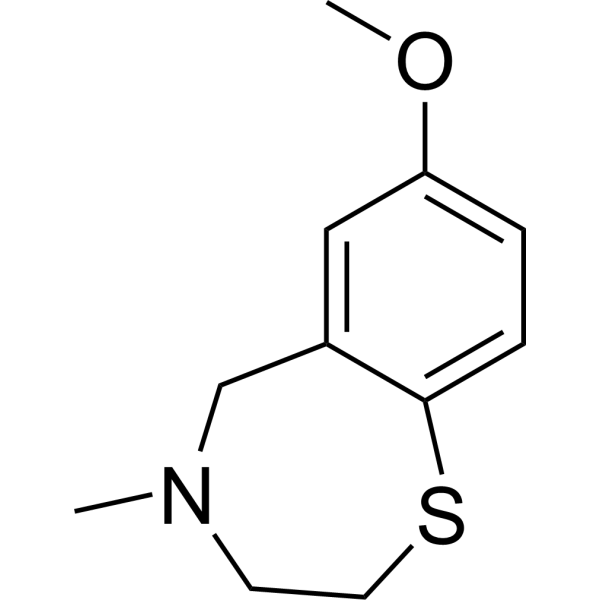
S107 is an orally available, blood brain barrier-permeable compound, which stabilizes RyR2 channels by enhancing the binding of calstabin 2 to the mutant Ryr2-R2474S channel. S107 inhibits Ca2+ leakage from the sarcoplasmic reticulum (SR) and prevents cardiac arrhythmias and raises the seizure threshold.
For research use only. We do not sell to patients.
- Purity : 99.88%
- CAS No.: 927871-76-9
- Formula: C11H15NOS
- Molecular Weight:209.31
-
Storage:Powder -20°C, 3 years , 4°C, 2 years ; In solvent -80°C, 2 years , -20°C, 1 year

To place orders, for customer services and technical support, please contact: MedChemExpress USA
Tel: 609-228-6898 E-mail: [email protected] [email protected]


-
 Biological Activity
-
Chemical Information
-
Solvent & Solubility
- Protocols
- Purity & Documentation
- References
-
 Help & FAQs


-
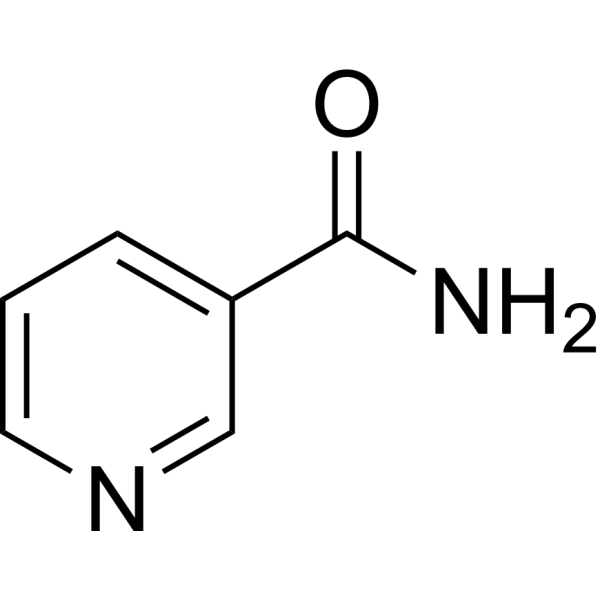
HY-B0150
NicotinamideSIRT Inhibitor -
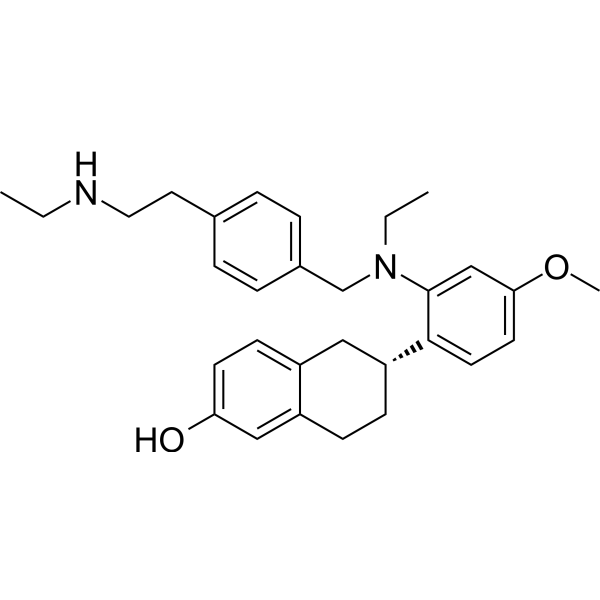
HY-19822
ElacestrantEstrogen Receptor Degrader -
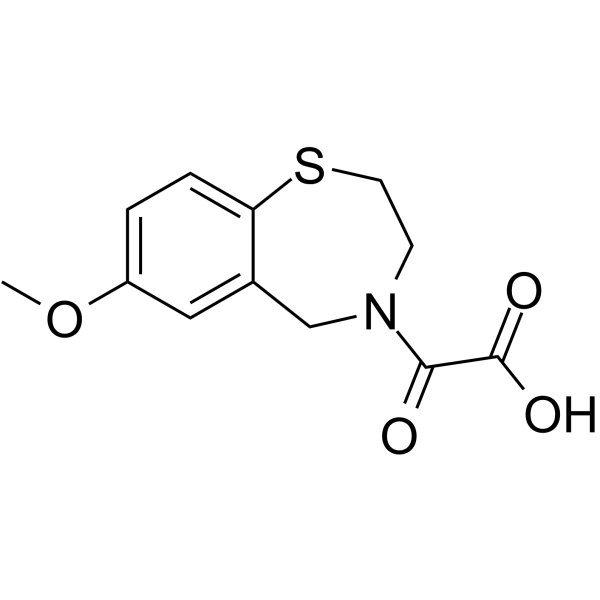
HY-119850
AladorianRyR2 Stabilizer -
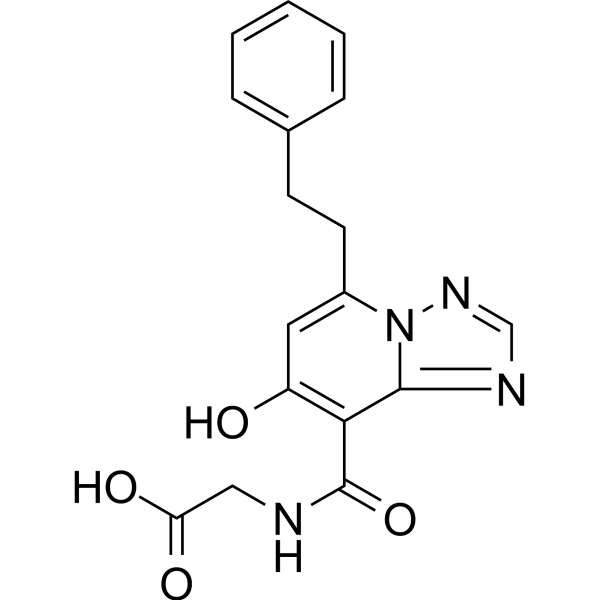
HY-109057
Enarodustat -
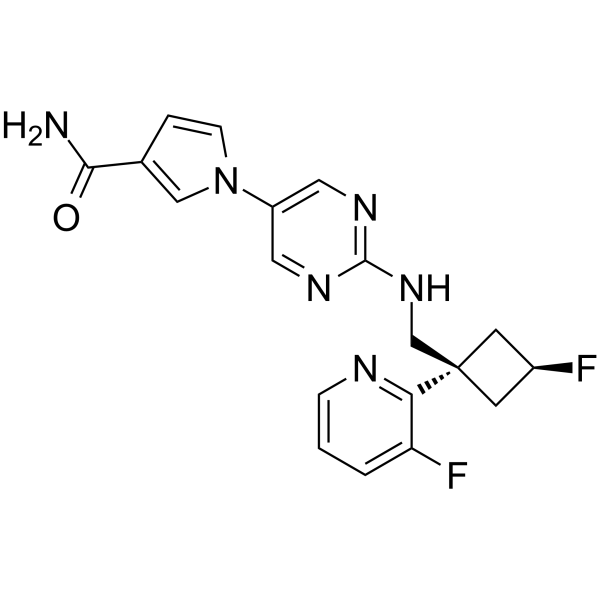
HY-109121
ReldesemtivFast Skeletal Muscle Troponin Activator -
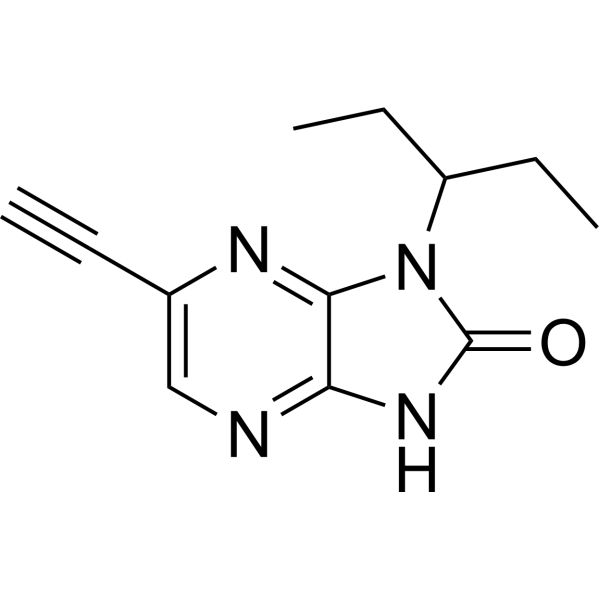
HY-15964
TirasemtivSkeletal Muscle Troponin Complex Activator -

HY-159502
SurlorianRyR Stabilizer -
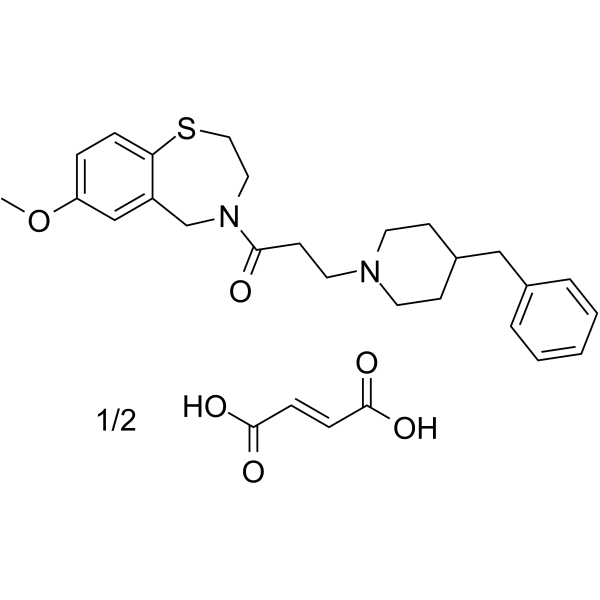
HY-15293B
JTV-519 hemifumarateSERCA Blocker
Publications Citing Use of MedChemExpress (MCE) S107
MoreAll Calcium Channel Isoforms
More

Biological Activity
Description
Cellular Effect
|
Cell Line

|
Type | Value | Description | References |
|---|---|---|---|---|
| HEK293 | IC50 |
>1000 μM
Compound: 99
|
Inhibition of RyR2 R4496C mutant (unknown origin)-mediated store-overload induced calcium release expressed in HEK293 cells after 8 to 10 mins by fura-2/AM dye-based fluorescence assay
Inhibition of RyR2 R4496C mutant (unknown origin)-mediated store-overload induced calcium release expressed in HEK293 cells after 8 to 10 mins by fura-2/AM dye-based fluorescence assay
|
[PMID: 24124794] |
In Vitro
S107 is a small compound that enhances calstabin2 binding to RyR2 at low nanomolar concentrations and failed to interact with over 400 receptors, enzymes, and ion channels in screens using up to 10 μM of the compound[1].
S107 exerts an antiarrhythmic effect on CPVT-hiPSC-CMs. Pre-incubation with 10 μM S107, which stabilizes the closed state of the ryanodine receptor 2, significantly decreases the percentage of CPVT-hiPSC-CMs presenting DADs to 25%[2].
S107 increases FKBP12 binding to RyR1 in SR vesicles in the presence of reduced glutathione and the NO-donor NOC12, with no effect in the presence of oxidized glutathione. S107 can reverse the harmful effects of redox active species on SR Ca2+ release in skeletal muscle by binding to RyR1 low affinity sites[3].
MedChemExpress (MCE) has not independently confirmed the accuracy of these methods. They are for reference only.
In Vivo
MedChemExpress (MCE) has not independently confirmed the accuracy of these methods. They are for reference only.


Chemical Information
-
CAS No. 927871-76-9
-
Appearance Solid
-
Molecular Weight 209.31
-
Formula C11H15NOS
-
Color White to off-white
-
SMILES
COC1=CC=C2C(CN(C)CCS2)=C1
-
Shipping
Room temperature in continental US; may vary elsewhere.
-
Storage
Powder -20°C 3 years 4°C 2 years In solvent -80°C 2 years -20°C 1 year


Publications (2)
-
Journal Impact Factor
-
Most Recent
-
Nat Commun
THADA inhibition in mice protects against type 2 diabetes mellitus by improving pancreatic β-cell function and preserving β-cell mass. [Abstract]2023 Feb 23;14(1):1020. PMID: 36823211 -
Cell Death Discov
Thioredoxin system dysregulation and calpain activation drive myocardial disulfidptosis via pathological disulfide bonds remodeling. [Abstract]2026 Jun 19. PMID: 42321161


Solvent & Solubility
In Vitro:
DMSO : 100 mg/mL (477.76 mM; Need ultrasonic; Hygroscopic DMSO has a significant impact on the solubility of product, please use newly opened DMSO)
Please refer to the solubility information to select the appropriate solvent. Once prepared, please aliquot and store the solution to prevent product inactivation from repeated freeze-thaw cycles.
Storage method and period of stock solution: -80°C, 2 years; -20°C, 1 year. When stored at -80°C, please use it within 2 years. When stored at -20°C, please use it within 1 year.
Please refer to the solubility information to select the appropriate solvent. Once prepared, please aliquot and store the solution to prevent product inactivation from repeated freeze-thaw cycles.
Storage method and period of stock solution: -80°C, 2 years; -20°C, 1 year. When stored at -80°C, please use it within 2 years. When stored at -20°C, please use it within 1 year.
Concentration (start) × Volume (start) = Concentration (final) × Volume (final)
In Vivo:
Select the appropriate dissolution method based on your experimental animal and administration route.
- For the following dissolution methods, please ensure to first prepare a clear stock solution using an In Vitro approach and then sequentially add co-solvents:
- To ensure reliable experimental results, the clarified stock solution can be appropriately stored based on storage conditions. As for the working solution for In Vivo experiments, it is recommended to prepare freshly and use it on the same day.
- The percentages shown for the solvents indicate their volumetric ratio in the final prepared solution. If precipitation or phase separation occurs during preparation, heat and/or sonication can be used to aid dissolution.
Add each solvent one by one: 10% DMSO 40% PEG300 5% Tween-80 45% Saline
Solubility: ≥ 2.5 mg/mL (11.94 mM); Clear solution
This protocol yields a clear solution of ≥ 2.5 mg/mL (saturation unknown).
Taking 1 mL working solution as an example, add 100 μL DMSO stock solution (25.0 mg/mL) to 400 μL PEG300, and mix evenly; then add 50 μL Tween-80 and mix evenly; then add 450 μL Saline to adjust the volume to 1 mL.
Preparation of Saline: Dissolve 0.9 g sodium chloride in ddH₂O and dilute to 100 mL to obtain a clear Saline solution.
Add each solvent one by one: 10% DMSO 90% (20% SBE-β-CD in Saline)
Solubility: ≥ 2.5 mg/mL (11.94 mM); Clear solution
This protocol yields a clear solution of ≥ 2.5 mg/mL (saturation unknown).
Taking 1 mL working solution as an example, add 100 μL DMSO stock solution (25.0 mg/mL) to 900 μL 20% SBE-β-CD in Saline, and mix evenly.
Preparation of 20% SBE-β-CD in Saline (4°C, storage for one week): 2 g SBE-β-CD powder is dissolved in 10 mL Saline, completely dissolve until clear.
In Vivo Dissolution Calculator
Please enter the basic information of animal experiments:
-
-
-
-
Recommended: Prepare an additional quantity of animals to account for potential losses during experiments.
Please enter your animal formula composition:
-
%DMSO +
Recommended: Keep the proportion of DMSO in working solution below 2% if your animal is weak.
-
%+
-
+%Tween-80 + +
-
%Saline +
The co-solvents required include: DMSO, . All of co-solvents are available by MedChemExpress (MCE). , Tween 80. All of co-solvents are available by MedChemExpress (MCE).
Working solution concentration: 0.22 mg/mL
Method for preparing stock solution: mg drug dissolved in μL DMSO. Stock solution concentration: mg/mL.
1. Take μL DMSO stock solution;
2. Add μL .
μL , mix evenly;
3. Then add μL Tween 80, mix evenly;
4. Then add μL
Please ensure that the stock solution in the first step is dissolved to a clear state, and add co-solvents in sequence. You can use ultrasonic heating (ultrasonic cleaner, recommended frequency 20-40 kHz), vortexing, etc. to assist dissolution.


Purity & Documentation
-
Data Sheet (278 KB)
-
SDS (393 KB)
- English - EN (393 KB)
- Français - FR (393 KB)
- Deutsch - DE (393 KB)
- Norwegian - NO (393 KB)
- Español - ES (393 KB)
- Swedish - SV (393 KB)
- Italian - IT (393 KB)
- Korean - KR (393 KB)
- Portuguese - PT (393 KB)
-
Handling Instructions (2659 KB)
References
[1]. Lehnart SE, et al. Leaky Ca2+ release channel/ryanodine receptor 2 causes seizures and sudden cardiac death in mice. J Clin Invest. 2008 Jun;118(6):2230-45. [Content Brief]
[2]. Sasaki K, et al. Patient-Specific Human Induced Pluripotent Stem Cell Model Assessed with Electrical Pacing Validates S107 as a Potential Therapeutic Agent for Catecholaminergic Polymorphic Ventricular Tachycardia. PLoS One. 2016 Oct 20;11(10):e0164795. [Content Brief]
[3]. Mei Y, et al. Stabilization of the skeletal muscle ryanodine receptor ion channel-FKBP12 complex by the 1,4-benzothiazepine derivative S107. PLoS One. 2013;8(1):e54208. [Content Brief]


Complete Stock Solution Preparation Table
Please refer to the solubility information to select the appropriate solvent. Once prepared, please aliquot and store the solution to prevent product inactivation from repeated freeze-thaw cycles.
Storage method and period of stock solution: -80°C, 2 years; -20°C, 1 year. When stored at -80°C, please use it within 2 years. When stored at -20°C, please use it within 1 year.
| Optional Solvent | Concentration Solvent Mass | 1 mg | 5 mg | 10 mg | 25 mg |
|---|---|---|---|---|---|
| DMSO | 1 mM | 4.7776 mL | 23.8880 mL | 47.7760 mL | 119.4401 mL |
| 5 mM | 0.9555 mL | 4.7776 mL | 9.5552 mL | 23.8880 mL | |
| 10 mM | 0.4778 mL | 2.3888 mL | 4.7776 mL | 11.9440 mL | |
| 15 mM | 0.3185 mL | 1.5925 mL | 3.1851 mL | 7.9627 mL | |
| 20 mM | 0.2389 mL | 1.1944 mL | 2.3888 mL | 5.9720 mL | |
| 25 mM | 0.1911 mL | 0.9555 mL | 1.9110 mL | 4.7776 mL | |
| 30 mM | 0.1593 mL | 0.7963 mL | 1.5925 mL | 3.9813 mL | |
| 40 mM | 0.1194 mL | 0.5972 mL | 1.1944 mL | 2.9860 mL | |
| 50 mM | 0.0956 mL | 0.4778 mL | 0.9555 mL | 2.3888 mL | |
| 60 mM | 0.0796 mL | 0.3981 mL | 0.7963 mL | 1.9907 mL | |
| 80 mM | 0.0597 mL | 0.2986 mL | 0.5972 mL | 1.4930 mL | |
| 100 mM | 0.0478 mL | 0.2389 mL | 0.4778 mL | 1.1944 mL |


S107 Related Classifications
HY-15292 Related Classifications
 Powered by Bioz