
1. Search Result
Search Result
Results for "

Escherichia coli.

" in MedChemExpress (MCE) Product Catalog:

465

Inhibitors & Agonists

7

Fluorescent Dyes

24

Biochemical Assay Reagents

45

Peptides

5

MCE Kits

1

Inhibitory Antibodies

113

Natural
Products

2

Recombinant Proteins

48

Isotope-Labeled Compounds

3

Oligonucleotides

Cat. No. Product Name Target Research Areas Chemical Structure
  • HY-D1056
    Lipopolysaccharides, from E. coli O55:B5
    Maximum Cited Publications
    506 Publications Verification

    LPS, from Escherichia coli (O55:B5)

    Toll-like Receptor (TLR) Infection Neurological Disease Inflammation/Immunology Cancer
    Lipopolysaccharides, from E. coli O55:B5 (LPS, from Escherichia coli (O55:B5)) are endotoxins and TLR4 activators extracted from Escherichia coli (E. coli O55:B5) and are classified as S (smooth) type LPS. Lipopolysaccharides, from E. coli O55:B5 possess the typical three-part structure: O-antigen, core oligosaccharide, and lipid A. Lipopolysaccharides, from E. coli O55:B5 activate TLR-4 in immune cells, exhibit high pyrogenicity, and demonstrate dose and serotype specificity. Lipopolysaccharides, from E. coli O55:B5 can be widely used to induce cellular inflammation and establish animal models related to inflammation .
    It is recommended to prepare a solution with concentration ≥2 mg/mL. Vortex thoroughly for more than 10 minutes. Due to the adsorption characteristics of LPS, silanized container or low adsorption centrifuge tubes should be used for aliquoting and storage, and mix thoroughly before use.
    Lipopolysaccharides, from E. coli O55:B5
  • HY-D1056A1

    LPS, from Escherichia coli (O111:B4)

    Toll-like Receptor (TLR) Infection Cancer
    Lipopolysaccharides, from E. coli O111:B4 (LPS, from Escherichia coli (O111:B4)) are endotoxins and TLR4 activators extracted from Escherichia coli (E. coli O111:B4) and are classified as S (smooth) type LPS. Lipopolysaccharides (LPS), from E. coli O111:B4 possess the typical three-part structure: O-antigen, R3-type core oligosaccharide, and lipid A. Lipopolysaccharides (LPS), from E. coli O111:B4 activate TLR-4 in immune cells and can cause significant gastric diseases. Lipopolysaccharides (LPS), from E. coli O111:B4 can be used to induce cellular inflammation and establish animal models related to inflammation .
    It is recommended to prepare a solution with concentration ≥2 mg/mL. Vortex thoroughly for more than 10 minutes. Due to the adsorption characteristics of LPS, silanized container or low adsorption centrifuge tubes should be used for aliquoting and storage, and mix thoroughly before use.
    Lipopolysaccharides, from E. coli O111:B4
  • HY-W006057
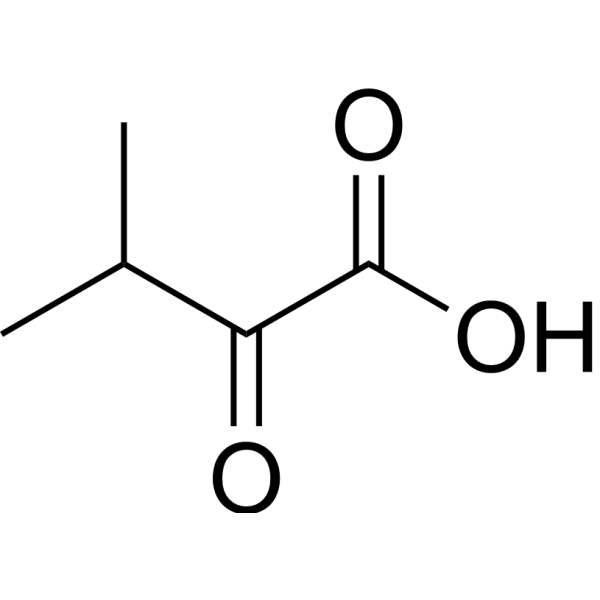
    3-Methyl-2-oxobutanoic acid
    1 Publications Verification

    Endogenous Metabolite Others
    3-Methyl-2-oxobutanoic acid is a precursor of pantothenic acid in Escherichia coli.
    3-Methyl-2-oxobutanoic acid
  • HY-P2803
    Beta-glucuronidase (Escherichia coli)
    1 Publications Verification

    β-glucuronidase Metabolic Disease
    Beta-glucuronidase is a glycosyl hydrolase that hydrolyzes β-glucuronic acid and sulfate esters in urine and other biological fluids, and then releases β-glucuronate .
    Beta-glucuronidase (Escherichia coli)
  • HY-D1056A3

    LPS, from Escherichia coli (O26:B6)

    Toll-like Receptor (TLR) Inflammation/Immunology
    Lipopolysaccharides, from E. coli (Escherichia coli) O26:B6 are lipopolysaccharide endotoxins and TLR-4 activators derived from E. coli, classified as S-type LPS, which can activate pathogen-associated molecular patterns (PAMP) of the immune system and induce cellular secretion of migrasomes. Lipopolysaccharides, from E. coli O26:B6 exhibit a typical three-part structure: O-antigen, core oligosaccharide, and lipid A, and can be recognized by the core-specific monoclonal antibody MAb J8-4C10. Lipopolysaccharides, from E. coli O26:B6 can promote an increase in pro-inflammatory cytokines in plasma, thereby triggering hypothalamic-pituitary-adrenal (HPA) activation and leading to adrenal oxidative damage. The pathogenic effects of Lipopolysaccharides, from E. coli O26:B6 can be used to construct various models, such as cellular inflammation models, sepsis, acute lung injury models, adrenal dysfunction models, and bladder infection models, etc .
    It is recommended to prepare a solution with concentration ≥2 mg/mL. Vortex thoroughly for more than 10 minutes. Due to the adsorption characteristics of LPS, silanized container or low adsorption centrifuge tubes should be used for aliquoting and storage, and mix thoroughly before use.
    Lipopolysaccharides, from E. coli O26:B6
  • HY-N2594

    Bacterial Infection
    Isoforsythiaside is an antioxidant and antibacterial phenylethanoid glycoside with MICs of 40.83, 40.83, and 81.66 μg/mL for Escherichia coli(E. coli), Pseudomonas aeruginosa(PAO), and Staphylococcus aureus (SA), respectively .
    Isoforsythiaside
  • HY-W006057A
    Sodium 3-methyl-2-oxobutanoate
    1 Publications Verification

    Endogenous Metabolite Others
    Sodium 3-methyl-2-oxobutanoate is a precursor of pantothenic acid in Escherichia coli .
    Sodium 3-methyl-2-oxobutanoate
  • HY-118827

    Quadrisol; CERM 10202; PM 150

    COX Inflammation/Immunology
    Vedaprofen (Quadrisol) is a COX-1 selective nonsteroidal anti-inflammatory agent (NSAID) for serum TxB2 and exudate PGE2 inhibition . Vedaprofen is a Escherichia coli (E. coli) sliding clamp (SC) inhibitor with the IC50 of 222 μM .
    Vedaprofen
  • HY-N1952
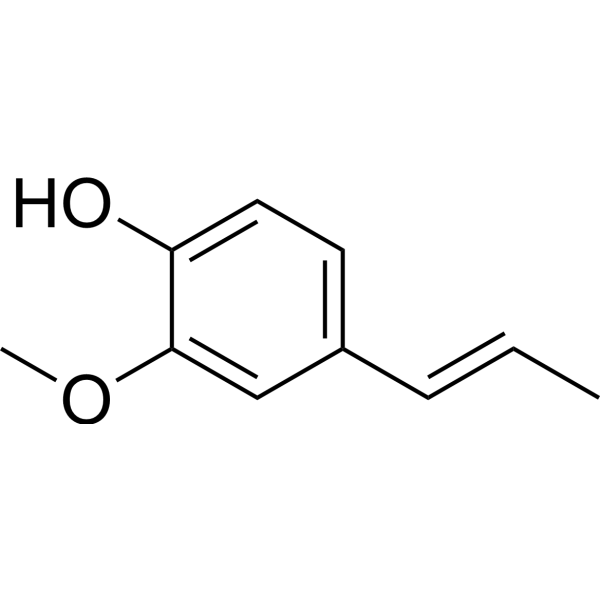
    Isoeugenol
    2 Publications Verification

    Iso-Eugenol

    Environmental Pollutants Bacterial Infection
    Isoeugenol is an essential oil constituent of nutmeg, clove, and cinnamon. Isoeugenol inhibits growth of Escherichia coli and Listeria innocua with MICs of 0.6 mg/mL and 1 mg/mL, respectively .
    Isoeugenol
  • HY-D1056A2

    LPS, from Escherichia coli (O127:B8)

    Toll-like Receptor (TLR) Inflammation/Immunology
    Lipopolysaccharides, from E. coli O127:B8 (LPS, from Escherichia coli (O127:B8)) are endotoxins and TLR4 activators extracted from Escherichia coli (E. coli O127:B8) and are classified as S (smooth) type LPS. Lipopolysaccharides, from E. coli O127:B8 possess the typical three-part structure: O-antigen, R3-type core oligosaccharide, and lipid A. Lipopolysaccharides, from E. coli O127:B8 activate TLR-4 in immune cells, can induce inflammatory responses and ileal contractility, and can be used to construct intestinal inflammation models .
    It is recommended to prepare a solution with concentration ≥2 mg/mL. Vortex thoroughly for more than 10 minutes. Due to the adsorption characteristics of LPS, silanized container or low adsorption centrifuge tubes should be used for aliquoting and storage, and mix thoroughly before use.
    Lipopolysaccharides, from E. coli O127:B8
  • HY-P2818A
    Alkaline phosphatase, Escherichia coli
    1 Publications Verification

    Apase, Escherichia coli

    Endogenous Metabolite Phosphatase Glutathione Peroxidase Bacterial Infection Inflammation/Immunology
    Alkaline Phosphatase (Apase), Escherichia coli is an alkaline phosphatase from Escherichia coli, and is one of the most active alkaline phosphatases. Alkaline phosphatase, Escherichia coli is an orally active membrane-bound glycoprotein that catalyzes the hydrolysis of phosphate monoesters at alkaline pH. Alkaline phosphatase, Escherichia coli reduces myeloperoxidase activity and bacterial translocation. Alkaline phosphatase, Escherichia coli improves survival rate of mice infected with E. coli. Alkaline phosphatase, Escherichia coli improves TNBS-induced colon inflammation .
    Alkaline phosphatase, Escherichia coli
  • HY-76691

    Endogenous Metabolite Bacterial Infection
    D-Ribonolactone is sugar lactone and an inhibitor of β-galactosidase of Escherichia coli with a Ki of 26 mM .
    D-Ribonolactone
  • HY-B0333
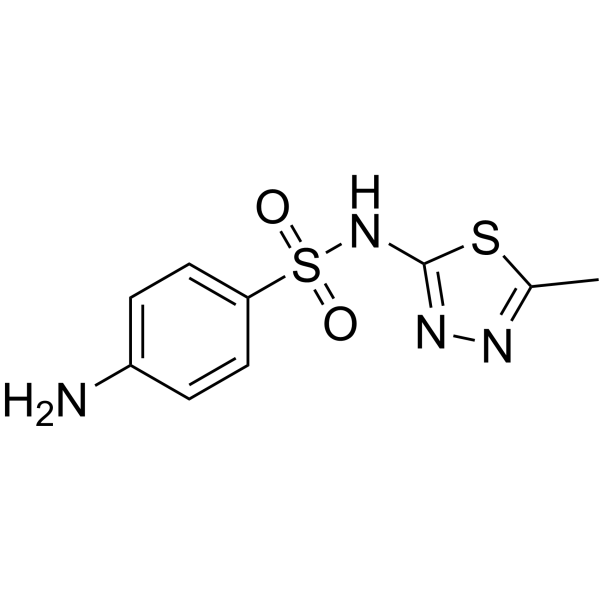
    Sulfamethizole
    2 Publications Verification

    Antibiotic Bacterial Infection
    Sulfamethizole is a sulfathiazole antibiotic. Sulfamethizole inhibits the synthesis of folic acid and thymine, and selectively suppresses Photobacterium phosphoreum bioluminescence. Sulfamethizole exerts antibacterial activity against Escherichia coli-mediated urinary tract infections but no activity against sulII gene-positive Escherichia coli. Sulfamethizole is applicable for the research of urinary tract infections and Photobacterium phosphoreum bioluminescence mechanisms .
    Sulfamethizole
  • HY-D1056A4

    LPS, from Escherichia coli (O128:B12)

    Toll-like Receptor (TLR) Inflammation/Immunology
    Lipopolysaccharides, from E. coli O128:B12 (LPS, from Escherichia coli (O128:B12)) are endotoxins and TLR4 activators extracted from Escherichia coli (E. coli O128:B12) and are classified as S (smooth) type LPS. Lipopolysaccharides, from E. coli O128:B12 possess the typical three-part structure: O-antigen, R3-type core oligosaccharide, and lipid A. Lipopolysaccharides, from E. coli O128:B12 activate TLR-4 in immune cells, can be used to construct animal models of neonatal brain inflammation, and may influence preterm birth in neonates .
    It is recommended to prepare a solution with concentration ≥2 mg/mL. Vortex thoroughly for more than 10 minutes. Due to the adsorption characteristics of LPS, silanized container or low adsorption centrifuge tubes should be used for aliquoting and storage, and mix thoroughly before use.
    Lipopolysaccharides, from E. coli O128:B12
  • HY-D1056F

    Biotin-LPS, from Escherichia coli (O111:B4)

    Biochemical Assay Reagents Inflammation/Immunology
    Biotin-Lipopolysaccharide, from E.coli O111:B4 (Biotin-LPS, from Escherichia coli (O111:B4)) is a biotin-conjugated Lipopolysaccharide (LPS) (HY-D1056A1) that can be coupled with streptavidin protein. Biotin-Lipopolysaccharide, from E.coli O111:B4 can be used to identify Lipopolysaccharide ligands. Lipopolysaccharides, from E. coli O111:B4 (LPS, from Escherichia coli (O111:B4)) are endotoxins and TLR4 activators extracted from Escherichia coli (E. coli O111:B4) and are classified as S (smooth) type LPS. Lipopolysaccharides, from E. coli O111:B4 possess the typical three-part structure: O-antigen, R3-type core oligosaccharide, and lipid A. Lipopolysaccharides, from E. coli O111:B4 activate TLR-4 in immune cells and can cause significant gastric diseases. Lipopolysaccharides, from E. coli O111:B4 can also induce M1-type polarization in mouse macrophages .
    It is recommended to prepare a solution with concentration ≥2 mg/mL. Vortex thoroughly for more than 10 minutes. Due to the adsorption characteristics of LPS, silanized container or low adsorption centrifuge tubes should be used for aliquoting and storage, and mix thoroughly before use.
    Biotin-Lipopolysaccharide, from E.coli O111:B4
  • HY-174940

    Biochemical Assay Reagents Others
    E. coli Extract Polar is a polar lipid extract of Escherichia coli containing phosphatidylethanolamine, phosphatidylglycerol, and cardiolipin for reconstitution of membrane proteins.
    E. coli Extract Polar
  • HY-B1674
    (±)-Leucine
    1 Publications Verification

    DL-Leucine; (RS)-Leucine

    Endogenous Metabolite Bacterial Metabolic Disease
    (±)-Leucine (DL-Leucine), an isomer of Leucine, chemosterilant and dietary additive. (±)-Leucine inhibits growth of Escherichia coli HfrH by 92.08% .
    (±)-Leucine
  • HY-W001941

    Drug Isomer Bacterial Antibiotic Others
    D-Cystine is the D-enantiomer of L-Cystine. D-Cystine inhibits L-aspartate-β-semialdehyde dehydrogenase (ASADH) from Escherichia coli .
    D-Cystine
  • HY-119543

    Amino Acid Derivatives Others
    O-Succinyl-L-homoserine is a homoserine derivative. O-Succinyl-L-homoserine is an intermediate in the biosynthesis of methionine in Escherichia coli and Salmonella typhimurium .
    O-Succinyl-L-homoserine
  • HY-109591A

    Oleoyl-CoA lithium

    Endogenous Metabolite Others
    Oleoyl coenzyme A (Oleoyl-CoA) lithium is a thioester of oleic acid and coenzyme A. Oleoyl coenzyme A lithium has a role as an Escherichia coli metabolite and a mouse metabolite .
    Oleoyl coenzyme A lithium
  • HY-W011539

    Bacterial Infection
    EcMetAP1-IN-1 (compound 4) is an inhibitor of Escherichia coli methionine aminopeptidase MetAP1 .
    EcMetAP1-IN-1
  • HY-159627A

    Bacterial Infection
    Met-AMS TEA (compound 50), a sulfamate analogue of methionyl adenylate, is a potent Escherichia coli methionyl-tRNA synthetase (MetRS) inhibitor (IC50 of 7 nM) .
    Met-AMS TEA
  • HY-N11554

    Bacterial Infection
    (-)-Codonopsine is an alkaloid with antibacterial activity. (-)-Codonopsine can be used in research related to Staphylococcus aureus and Escherichia coli infections .
    (-)-Codonopsine
  • HY-124679

    Bacterial Infection
    DS86760016 is a potent leucyl-tRNA synthetase (LeuRS) inhibitor with activity against multidrug-resistant (MDR) Gram-negative bacteria, such as Escherichia coli, Klebsiella pneumoniae, and Pseudomonas aeruginosa. DS86760016 inhibits LeuRS enzymes from Escherichia coli, Pseudomonas aeruginosa, and Acinetobacter baumannii, with IC50s of 0.38, 0.62, and 0.16 μM, respectively .
    DS86760016
  • HY-P5753

    Bacterial Infection
    JB-95, a β-hairpin macrocyclic peptide, exhibits potent antimicrobial activity against Escherichia coli. JB-95 can selectively disrupt the outer membrane but not the inner membrane of E. coli .
    JB-95
  • HY-100710

    Endogenous Metabolite Cancer
    Epothilone C is a polyketide natural product. Epothilone C is produced by the combined action of one nonribosomal peptide synthetase (NRPS) and nine polyketide synthase (PKS) modules in a multienzyme system. Epothilone C can be used for tumor research .
    Epothilone C
  • HY-155048

    Bacterial Infection
    BDM91270 (compound 29) is an E. coli AcrAB-TolC efflux pump inhibitor with an EC90 of 0.6 μM for wild-type E. coli AcrB. BDM91270 can be used in the study of Escherichia coli drug resistance .
    BDM91270
  • HY-154171

    Nucleoside Antimetabolite/Analog Others
    Deoxyribosyl dihydropyrimido[4,5-c][1,2]oxazin-7-one (Compound dP) exhibits mutagenicity for Escherichia coli and Salmonella typhimurium, that induces the conversion between GC and AT through replication error. eoxyribosyl dihydropyrimido[4,5-c][1,2]oxazin-7-one is stable in Escherichia coli, and can be detected at wavelength >300 nM .
    Deoxyribosyl dihydropyrimido[4,5-c][1,2]oxazin-7-one
  • HY-162590

    Bacterial Infection
    ECIN is a copper-responsive inhibitor of wild-type UPEC strains. ECIN inhibits Uropathogenic Escherichia coli (UPEC) with an IC50 value of 336 ng/mL in the absence of copper .
    ECIN
  • HY-D1056A5

    LPS, from Escherichia coli (K-235)

    Toll-like Receptor (TLR) Inflammation/Immunology
    Lipopolysaccharides, from E. coli (Escherichia coli) K-235 are lipopolysaccharide endotoxins and TLR-4 activators derived from E. coli, classified as S-type LPS, which can activate pathogen-associated molecular patterns (PAMP) of the immune system and induce cellular secretion of migrasomes. Lipopolysaccharides, from E. coli K-235 exhibit a typical three-part structure: O-antigen (O-antigen), core oligosaccharide (core oligosaccharide), and lipid A (Lipid A). Lipopolysaccharides, from E. coli K-235 have a mitogenic effect on C57BL/10ScN spleen cells. Additionally, LPS purified using butanol and deoxycholic acid methods stimulates spleen cells in C57BL/10ScCR and C3H/HeJ mice .
    It is recommended to prepare a solution with concentration ≥2 mg/mL. Vortex thoroughly for more than 10 minutes. Due to the adsorption characteristics of LPS, silanized container or low adsorption centrifuge tubes should be used for aliquoting and storage, and mix thoroughly before use.
    Lipopolysaccharides, from E. coli K-235
  • HY-E70414

    Others Others
    DNase B, Escherichia coli is an enzyme that specializes in the degradation of DNA and can be extracted from E.coli .
    DNase B, Escherichia coli
  • HY-W794670

    Aminopeptidase Others
    H-Ala-Pro-Ala-OH, tripeptide, is a substrate for Escherichia coli PepP (Xaa-Pro aminopeptidase). H-Ala-Pro-Ala-OH acts as a nitrogen source for wild-type Escherichia coli .
    H-Ala-Pro-Ala-OH
  • HY-E70407

    1-5-Anhydroglucitol-6-phosphate dehydrogenase, Escherichia coli

    Endogenous Metabolite Metabolic Disease
    Sorbitol-6-phosphate 2-dehydrogenase, escherichia coli is a dehydrogenase produced by E. coli. Sorbitol-6-phosphate 2-dehydrogenase, escherichia coli can catalyze the conversion between D-sorbitol 6-phosphate and D-fructose 6-phosphate, with the oxidation of D-sorbitol 6-phosphate happening at a rate 10 times faster than the reduction of D-fructose 6-phosphate, and it plays a role in various cellular processes .
    Sorbitol-6-phosphate 2-dehydrogenase, escherichia coli
  • HY-159628A

    Aminoacyl-tRNA Synthetase Bacterial Infection
    Glu-AMS TEA is a competitive inhibitor of Escherichia coli glutamyl-tRNA synthetase (GluRS), with the Ki of 2.8 nM .
    Glu-AMS TEA
  • HY-117951

    Beta-lactamase Infection
    ANT431 is a metallo-β-lactamase inhibitor that also restores the effectiveness of Meropenem (HY-13678) in a mouse thigh Escherichia coli infection model .
    ANT431
  • HY-142080A

    Endogenous Metabolite Metabolic Disease
    Pimeloyl-CoA lithium is a biotin precursor of Escherichia coli. Pimeloyl-CoA lithium can be used for the research of the pathway of de novo biotin biosynthesis in Escherichia coli .
    Pimeloyl-CoA lithium
  • HY-119673

    Antibiotic Others
    Lincophenicol is a hybrid antibiotic that has the activity of inhibiting the puromycin reaction catalyzed by Escherichia coli ribosomal peptidyl transferase and also inhibits the binding of specific compounds to the Escherichia coli ribosome.
    Lincophenicol
  • HY-P2782A

    Endogenous Metabolite Metabolic Disease
    Chloramphenicol Acetyltransferase, Escherichia coli is a bacterial enzyme that detoxifies the antibiotic chloramphenicol and is responsible for chloramphenicol resistance in bacteria. Chloramphenicol Acetyltransferase, Escherichia coli covalently attaches an acetyl group from acetyl-CoA to chloramphenicol, which prevents chloramphenicol from binding to ribosomes. A histidine residue, located in the C-terminal section of Chloramphenicol Acetyltransferase, Escherichia coli, plays a central role in its catalytic mechanism.
    Chloramphenicol Acetyltransferase, Escherichia coli
  • HY-P2996C

    Biochemical Assay Reagents Metabolic Disease
    Nitrate Reductase (cytochrome), Escherichia coli (EC 1.9.6.1) is an enzyme of ferrocytochrome: nitrate oxidoreductase. Nitrate Reductase (cytochrome), Escherichia coli (EC 1.9.6.1) catalyzes the following chemical reaction: ferrocytochrome, H+, and nitrate to produce ferrocytochrome and nitrite.
    Nitrate Reductase (cytochrome), Escherichia coli
  • HY-E70906

    Endogenous Metabolite Metabolic Disease
    Sugar-phosphatase, Escherichia coli (EC 3.1.3.23) belongs to the hydrolase family and is a hydrolase that acts on phosphomonomer bonds. The two substrates of sugar-phosphatase, Escherichia coli (EC 3.1.3.23) are sugar phosphate and water, and its two products are sugar and phosphate.
    Sugar-phosphatase, Escherichia coli
  • HY-P5736

    Bacterial Infection
    Bass hepcidin is an antimicrobial activity against Escherichia coli. .
    Bass hepcidin
  • HY-N14367

    Bacterial Infection
    Fluoropolyoxin L has the inhibitory activity of Escherichia coli and Streptococcus faecalis .
    Fluoropolyoxin L
  • HY-142545

    Bacterial Infection
    Antibacterial agent 68 (compound 4d) is an antibacterial agent against drug-resistant Escherichia coli. Antibacterial agent 68 has low cytotoxicity and exerts strong antibacterial activities against multidrug-resistant Escherichia coli at low concentrations as 0.007 mM .
    Antibacterial agent 68
  • HY-144701

    Antibiotic Bacterial Infection Inflammation/Immunology
    SABA1 possesses antibacterial properties against Pseudomonas aeruginosa and Escherichia coli, with an IC50 of 4.0 µM against E. coli ACC .
    SABA1
  • HY-N12287

    Pilosidine

    Bacterial Inflammation/Immunology
    Curcapicycloside (Pilosidine), a norlignan glucoside, exhibits antibacterial activity against Escherichia coli .
    Curcapicycloside
  • HY-N14130

    DNA/RNA Synthesis Infection
    Cyclothialidine B inhibits escherichia coli DNA helicases with an IC50 of 0.7 μM .
    Cyclothialidine B
  • HY-N14131

    DNA/RNA Synthesis Infection
    Cyclothialidine D inhibits escherichia coli DNA helicases with an IC50 of 0.7 μM .
    Cyclothialidine D
  • HY-N14132

    DNA/RNA Synthesis Infection
    Cyclothialidine E inhibits escherichia coli DNA helicases with an IC50 of 0.7 μM .
    Cyclothialidine E
  • HY-N14711

    Antibiotic Bacterial Infection
    Himalomycin A is an anthraquinone antibiotic with strong activity against Staphylococcus aureus, Escherichia coli and Streptomyces vuridochromogenes .
    Himalomycin A
  • HY-P5803

    Bacterial Infection
    Pardaxin P5 is an antimicrobial peptide that inhibits Escherichia coli with a MIC value of 13 μM .
    Pardaxin P5

Inquiry Online

Your information is safe with us. * Required Fields.

Salutation


Country or Region *

Applicant Name *


Organization Name *

Department *


Email Address *


Product Name *

Cat. No.


Requested quantity *

Phone Number *


Remarks

Inquiry Online

Inquiry Information

Product Name:
Cat. No.:
Quantity:
MCE Japan Authorized Agent:

