



Curzerenone
Based on 1 publication(s) in Google Scholar
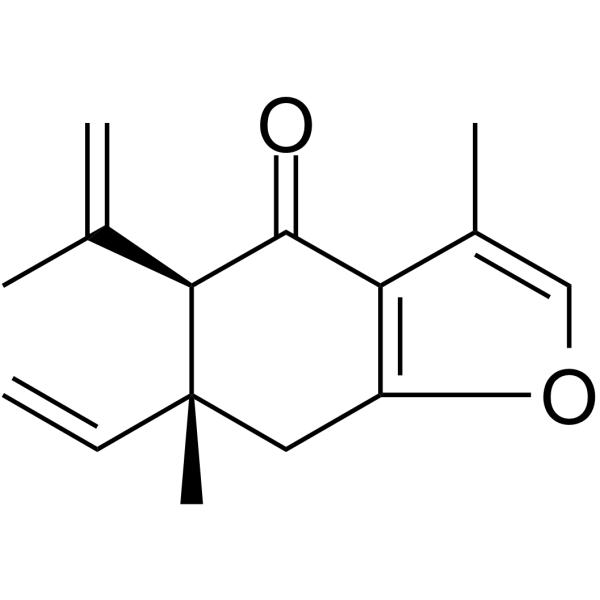
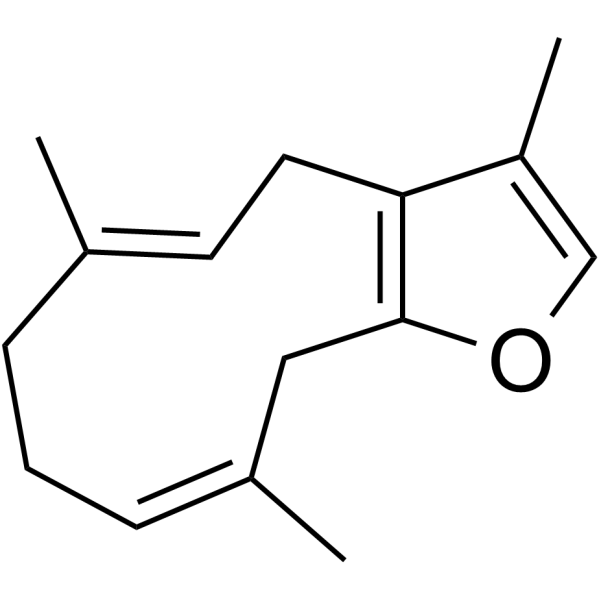
Curzerenone is an orally active sesquiterpene compound and Antibacterial agent. Curzerenone can be isolated from Curcuma zedoaria and Curcuma aeruginosa plants. Curzerenone increases ROS levels, activates Apoptotic signaling pathways, and attenuates the PI3K/AKT/mTOR signaling pathway. Curzerenone exhibits anticancer activity against liver cancer and cervical cancer. Curzerenone has antioxidant effects. Curzerenone shows weak antibacterial activity against Escherichia coli. Curzerenone can be used in research related to hepatocellular carcinoma, cervical cancer, and Escherichia coli infection.
For research use only. We do not sell to patients.
- Purity : 98.55%
- CAS No.: 20493-56-5
- Formula: C15H18O2
- Molecular Weight:230.30
-
Storage:
-20°C, protect from light
* In solvent : -80°C, 6 months; -20°C, 1 month (protect from light)

To place orders, for customer services and technical support, please contact: MedChemExpress USA
Tel: 609-228-6898 E-mail: [email protected] [email protected]


-
 Biological Activity
-
Chemical Information
-
Solvent & Solubility
- Protocols
- Purity & Documentation
- References
-
 Help & FAQs


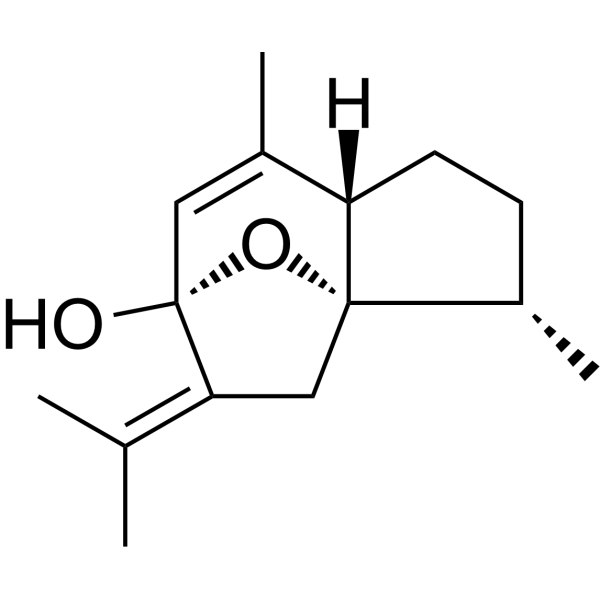
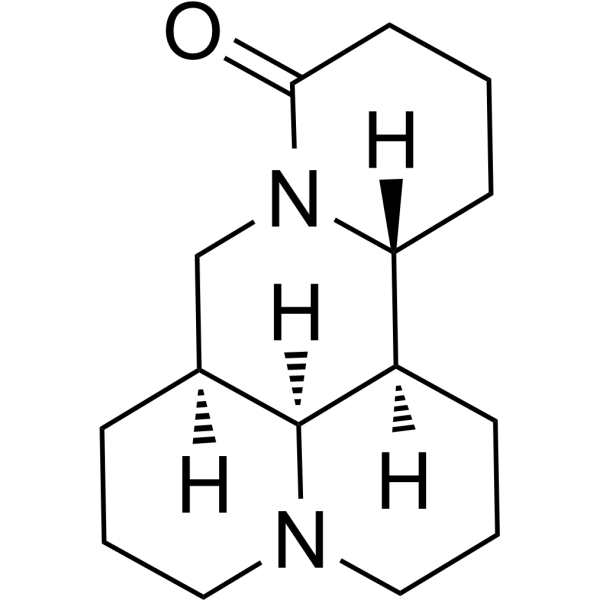
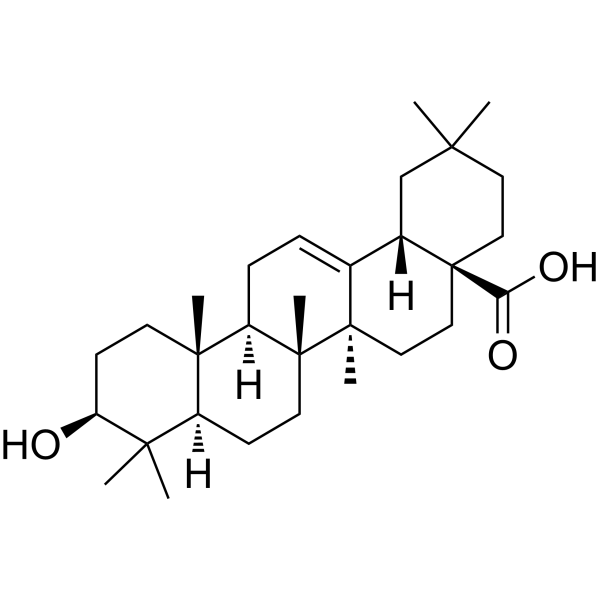

Publications Citing Use of MedChemExpress (MCE) Curzerenone
More

Biological Activity
Description
IC50 & Target
Anti-bacteria (E. coli)[1]
In Vitro
Curzerenone (0.5-25 µM; 24 h) exhibits dose-dependent, tumor-selective cytotoxicity against hepatocellular carcinoma HepG2 cells, but causes no damage to normal renal epithelial Vero cells[1].
Curzerenone (7.5 µM; 24 h) increases the intracellular ROS level in human hepatocellular carcinoma HepG2 cells, and this result is confirmed by DCFH-DA fluorescence assay[1].
Curzerenone (10-1000 μM; 15 min) potently inhibits TMEM16A-mediated I− influx in FRT cells stably transfected with TMEM16A[2].
Curzerenone (10-200 μM) inhibits Eact-induced Ca2+ -activated Cl− currents in FRT cells stably transfected with TMEM16A in a dose-dependent manner, with a concentration of 200 μM required for complete inhibition[2].
Curzerenone (3.06-100 μM; 24 h) reduces the survival rate of cervical cancer HeLa and SiHa cells by approximately 40%, while inhibiting cell proliferation, migration and invasion, and promoting cell apoptosis[3].
Curzerenone (60 min) scavenges DPPH free radicals in cell-free assays, with an IC50 value of 1.563 mg/mL[4].
Curzerenone (24 h) produces a 10.8 mm inhibition zone against planktonic Escherichia coli MTCC 443 in the 24-hour disk diffusion assay[4].
MedChemExpress (MCE) has not independently confirmed the accuracy of these methods. They are for reference only. Further protocols information, click here.
-
Cell Line:human liver cancer HepG2 cells, normal kidney epithelial Vero cells
-
Concentration:0.5-25 µM
-
Incubation Time:24 h
-
Result:Induced 3% cell death in HepG2 cells at 0.5 µM.
Induced 17% cell death in HepG2 cells at 2.5 µM.
Induced 26% cell death in HepG2 cells at 5 µM.
Induced 48% cell death in HepG2 cells at 7.5 µM (the IC50 dose).
Induced 55% cell death in HepG2 cells at 10 µM.
Induced 63% cell death in HepG2 cells at 25 µM.
Induced only 14.5% cell death in Vero cells at 25 µM, showing minimal cytotoxicity toward normal cells.
In Vivo
MedChemExpress (MCE) has not independently confirmed the accuracy of these methods. They are for reference only.
-
Animal Model:BALB/c (4-week-old female, specific pathogen-free)[3]
-
Dosage:80 mg/kg
-
Administration:p.o.; daily
-
Result:Reduced weekly xenograft tumor volumes compared to controls.
Lowered final tumor weight at 8 weeks significantly compared to controls.
Reduced CSNK2B, PD-L1, and Ki67 staining in tumor tissues.
Elevated concentrations of TNF-α and IFN-γ in tumor homogenates.
Reduced phosphorylation of p65 and p50/p105 (markers of NF-κB activation) in tumor tissues.
Diminished all aforementioned effects in mice receiving Curzerenone plus CSNK2B-overexpressing HeLa cells.


Chemical Information
-
CAS No. 20493-56-5
-
Appearance Liquid (Density: 1.063±0.06 g/cm3)
-
Molecular Weight 230.30
-
Formula C15H18O2
-
Color Colorless to light yellow
-
SMILES
O=C1C2=C(OC=C2C)C[C@@](C=C)(C)[C@H]1C(C)=C
-
Structure Classification
-
Initial Source
-
Shipping
Room temperature in continental US; may vary elsewhere.
-
Storage
-20°C, protect from light
* In solvent : -80°C, 6 months; -20°C, 1 month (protect from light)


Publications (1)
-
Journal Impact Factor
-
Most Recent


Solvent & Solubility
In Vitro:
DMSO : 50 mg/mL (217.11 mM; Need ultrasonic; Hygroscopic DMSO has a significant impact on the solubility of product, please use newly opened DMSO)
Please refer to the solubility information to select the appropriate solvent. Once prepared, please aliquot and store the solution to prevent product inactivation from repeated freeze-thaw cycles.
Storage method and period of stock solution: -80°C, 6 months; -20°C, 1 month (protect from light). When stored at -80°C, please use it within 6 months. When stored at -20°C, please use it within 1 month.
Please refer to the solubility information to select the appropriate solvent. Once prepared, please aliquot and store the solution to prevent product inactivation from repeated freeze-thaw cycles.
Storage method and period of stock solution: -80°C, 6 months; -20°C, 1 month (protect from light). When stored at -80°C, please use it within 6 months. When stored at -20°C, please use it within 1 month.
Concentration (start) × Volume (start) = Concentration (final) × Volume (final)
In Vivo:
Select the appropriate dissolution method based on your experimental animal and administration route.
- For the following dissolution methods, please ensure to first prepare a clear stock solution using an In Vitro approach and then sequentially add co-solvents:
- To ensure reliable experimental results, the clarified stock solution can be appropriately stored based on storage conditions. As for the working solution for In Vivo experiments, it is recommended to prepare freshly and use it on the same day.
- The percentages shown for the solvents indicate their volumetric ratio in the final prepared solution. If precipitation or phase separation occurs during preparation, heat and/or sonication can be used to aid dissolution.
Add each solvent one by one: 10% DMSO 40% PEG300 5% Tween-80 45% Saline
Solubility: ≥ 1.25 mg/mL (5.43 mM); Clear solution
This protocol yields a clear solution of ≥ 1.25 mg/mL (saturation unknown).
Taking 1 mL working solution as an example, add 100 μL DMSO stock solution (12.5 mg/mL) to 400 μL PEG300, and mix evenly; then add 50 μL Tween-80 and mix evenly; then add 450 μL Saline to adjust the volume to 1 mL.
Preparation of Saline: Dissolve 0.9 g sodium chloride in ddH₂O and dilute to 100 mL to obtain a clear Saline solution.
Add each solvent one by one: 10% DMSO 90% (20% SBE-β-CD in Saline)
Solubility: ≥ 1.25 mg/mL (5.43 mM); Clear solution
This protocol yields a clear solution of ≥ 1.25 mg/mL (saturation unknown).
Taking 1 mL working solution as an example, add 100 μL DMSO stock solution (12.5 mg/mL) to 900 μL 20% SBE-β-CD in Saline, and mix evenly.
Preparation of 20% SBE-β-CD in Saline (4°C, storage for one week): 2 g SBE-β-CD powder is dissolved in 10 mL Saline, completely dissolve until clear.
In Vivo Dissolution Calculator
Please enter the basic information of animal experiments:
-
-
-
-
Recommended: Prepare an additional quantity of animals to account for potential losses during experiments.
Please enter your animal formula composition:
-
%DMSO +
Recommended: Keep the proportion of DMSO in working solution below 2% if your animal is weak.
-
%+
-
+%Tween-80 + +
-
%Saline +
The co-solvents required include: DMSO, . All of co-solvents are available by MedChemExpress (MCE). , Tween 80. All of co-solvents are available by MedChemExpress (MCE).
Working solution concentration: 0.22 mg/mL
Method for preparing stock solution: mg drug dissolved in μL DMSO. Stock solution concentration: mg/mL. * In solvent : -80°C, 6 months; -20°C, 1 month (protect from light)
1. Take μL DMSO stock solution;
2. Add μL .
μL , mix evenly;
3. Then add μL Tween 80, mix evenly;
4. Then add μL
Please ensure that the stock solution in the first step is dissolved to a clear state, and add co-solvents in sequence. You can use ultrasonic heating (ultrasonic cleaner, recommended frequency 20-40 kHz), vortexing, etc. to assist dissolution.

Protocols
-
Research Protocol for Infectious Diseases
Infectious-disease experiments test how pathogens interact with host barriers, innate immune receptors, inflammatory signaling, pathogen replication, and tissue injury; pattern-recognition receptors such as TLRs, RIG-I-like receptors, NOD-like receptors, and inflammasomes detect microbial molecules and activate NF-κB, interferon, and cytokine responses. The central hypothesis is that infection severity reflects the balance between pathogen burden and host response: protective inflammation restricts pathogen growth, whereas excessive or mislocalized inflammation contributes to tissue damage and disease phenotype. Unresolved questions include which host pathways are protective versus pathogenic, why some infection models fail to translate to human disease, and which combined readouts best predict clinically relevant infection outcomes.
-
Apoptosis
Apoptosis, also called programmed cell death, is generally characterized by distinct morphological characteristics.
-
ROS/oxidative-stress fluorescent staining
ROS/oxidative-stress fluorescent staining uses cell-permeant fluorogenic probes that become fluorescent after oxidation inside cells or tissues; commonly used examples include DCFH-DA/DCFDA for broad cellular oxidant detection, DHE for superoxide-related signal detection, MitoSOX for mitochondrial superoxide-related signal detection, and CellROX probes for oxidative-stress-associated fluorescence readouts. The assay detects probe oxidation rather than a single ROS species unless the probe and analysis method have been chemically validated for that species. DCFH-DA enters cells, is deacetylated by intracellular esterases to DCFH, and produces fluorescent DCF after oxidation, so the readout is used as an operational measure of total cellular oxidative stress rather than a species-specific ROS measurement. DHE and MitoSOX can report superoxide-related oxidation, but red fluorescence alone can include non-specific ethidium-like oxidation products; HPLC or optimized spectral approaches are
-
Apoptosis Solutions
Apoptosis is a regulated, generally non-lytic cell-death pathway that removes unwanted, damaged, infected, or abnormal cells through coordinated morphological changes, caspase activation, DNA fragmentation, and membrane remodeling. The intrinsic apoptosis pathway is controlled mainly by mitochondrial outer membrane permeabilization, BCL-2 family proteins, cytochrome c release, apoptosome formation, caspase-9 activation, and downstream executioner caspase-3/7 activation. The extrinsic apoptosis pathway is initiated by death receptors such as Fas, TNFR, and TRAIL receptors, which recruit adaptor proteins and activate caspase-8 before engaging executioner caspases or mitochondrial amplification through BID cleavage. Apoptosis is linked to many phenotypes, including cancer cell killing, tissue homeostasis, immune regulation, neurodegeneration, infection response, and treatment-induced cytotoxicity; unresolved questions include how apoptosis interacts with necroptosis, pyroptosis, ferroptos
-
Liver Cancer Modeling
Liver cancer can be classified into primary liver cancer and secondary liver cancer. Secondary liver cancer is the metastatic liver cancer. Primary liver cancer includes hepatocellular carcinoma (HCC), intrahepatic cholangiocarcinoma (ICC) and fibrolamellar HCC, of which HCC is the most common form, accounting for approximately 90% of primary liver cancers[1]. HCC mouse models include chemical agent-induced models, transplanted tumor models, and genetic engineered models.
-
Bacterial live/dead nucleic-acid viability staining
The LIVE/DEAD bacterial viability staining method is based on differential permeability of nucleic-acid-binding fluorescent dyes, most commonly SYTO 9 and propidium iodide (PI), which enables discrimination of bacterial populations with intact versus compromised cytoplasmic membranes. SYTO 9 penetrates both intact and damaged bacterial membranes and binds nucleic acids to produce green fluorescence, whereas propidium iodide penetrates only cells with compromised membranes and fluoresces red while also reducing SYTO 9 signal through competitive binding and fluorescence interactions. The resulting fluorescence pattern is interpreted as a proxy for membrane integrity, which is widely used as an indicator of bacterial viability in microscopy, flow cytometry, and spectroscopic platforms. However, mechanistic studies show that SYTO 9 and PI interactions involve displacement and fluorescence resonance energy transfer effects, which can influence signal interpretation depending on dye ratios a


Purity & Documentation
-
Data Sheet (282 KB)
-
SDS (252 KB)
- English - EN (252 KB)
- Français - FR (252 KB)
- Deutsch - DE (252 KB)
- Norwegian - NO (252 KB)
- Español - ES (252 KB)
- Swedish - SV (252 KB)
- Italian - IT (252 KB)
- Korean - KR (252 KB)
- Portuguese - PT (252 KB)
-
Handling Instructions (2659 KB)
References
[2]. Zhu X, et al. Inhibitory activities of curzerenone, curdione, furanodienone, curcumol and germacrone on Ca2+-activated chloride channels. Fitoterapia. 2020;147:104736. [Content Brief]
[3]. Sun Y, et al. Curzerenone inactivates the nuclear factor-kappa B signaling to suppress malignancy and immune evasion in cervical cancer by targeting CSNK2B. Hum Cell. 2024;38(1):35. Published 2024 Dec 24. [Content Brief]
[4]. Joshi SC, et al. Antioxidant and antibacterial activities of the leaf essential oil and its constituents furanodienone and curzerenone from Lindera pulcherrima (Nees.) Benth. ex hook. f. Pharmacognosy Res. 2012 Apr;4(2):80-4. [Content Brief]


Complete Stock Solution Preparation Table
Please refer to the solubility information to select the appropriate solvent. Once prepared, please aliquot and store the solution to prevent product inactivation from repeated freeze-thaw cycles.
Storage method and period of stock solution: -80°C, 6 months; -20°C, 1 month (protect from light). When stored at -80°C, please use it within 6 months. When stored at -20°C, please use it within 1 month.
| Optional Solvent | Concentration Solvent Mass | 1 mg | 5 mg | 10 mg | 25 mg |
|---|---|---|---|---|---|
| DMSO | 1 mM | 4.3422 mL | 21.7108 mL | 43.4216 mL | 108.5541 mL |
| 5 mM | 0.8684 mL | 4.3422 mL | 8.6843 mL | 21.7108 mL | |
| 10 mM | 0.4342 mL | 2.1711 mL | 4.3422 mL | 10.8554 mL | |
| 15 mM | 0.2895 mL | 1.4474 mL | 2.8948 mL | 7.2369 mL | |
| 20 mM | 0.2171 mL | 1.0855 mL | 2.1711 mL | 5.4277 mL | |
| 25 mM | 0.1737 mL | 0.8684 mL | 1.7369 mL | 4.3422 mL | |
| 30 mM | 0.1447 mL | 0.7237 mL | 1.4474 mL | 3.6185 mL | |
| 40 mM | 0.1086 mL | 0.5428 mL | 1.0855 mL | 2.7139 mL | |
| 50 mM | 0.0868 mL | 0.4342 mL | 0.8684 mL | 2.1711 mL | |
| 60 mM | 0.0724 mL | 0.3618 mL | 0.7237 mL | 1.8092 mL | |
| 80 mM | 0.0543 mL | 0.2714 mL | 0.5428 mL | 1.3569 mL | |
| 100 mM | 0.0434 mL | 0.2171 mL | 0.4342 mL | 1.0855 mL |


Curzerenone Related Classifications
HY-N3651 Related Classifications
 Powered by Bioz