



Domiphen bromide
Based on 1 publication(s) in Google Scholar
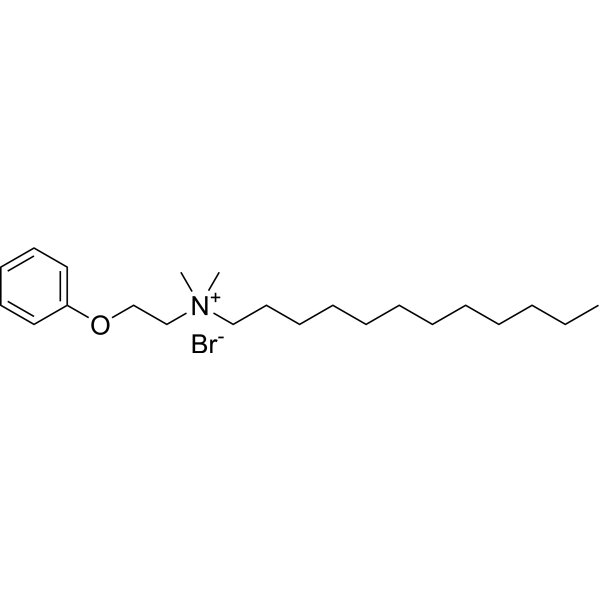
Domiphen bromide is a cationic active quaternary ammonium salt and also an inhibitor of HERG channels (IC50: 9 nM), aminopeptidase-like enzymes, Escherichia coli alkaline phosphatase, and α-chymotrypsin. Domiphen bromide has multiple activities such as antibacterial, antimalarial, and disinfectant properties, and it is also a synergist of Colistin (HY-113678). Domiphen bromide can be used as a chemical preservative and a cationic surfactant, and it can also be used in the research of bacterial infectious diseases such as pharyngitis, thrush, and oral ulcers.
연구목적의 판매만을 진행합니다. 환자를 대상으로 한 판매는 하지 않습니다.
- Purity : 98.73%
- CAS No.: 538-71-6
- 화학식: C22H40BrNO
- 분자량:414.46
-
보관:
4°C, sealed storage, away from moisture
* In solvent : -80°C, 6 months; -20°C, 1 month (sealed storage, away from moisture)

To place orders, for customer services and technical support, please contact: MedChemExpress USA
Tel: 609-228-6898 E-mail: [email protected] [email protected]


-
 Biological Activity
-
Chemical Information
-
용액&용해도
- Protocol
- 순도&문서
- References
-
 Help & FAQs


-
HY-12678
EntrectinibTrk/ROS1/ALK Inhibitor -
HY-B0889
Ethacridine lactate monohydrateAntiseptic Agent -
HY-12005
Fingolimod hydrochlorideS1P Receptors Modulator -
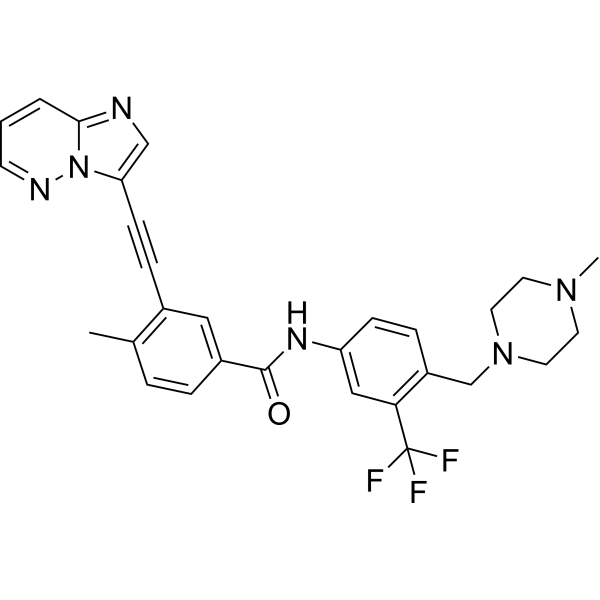
HY-12047
PonatinibMulti-targeted Kinase Inhibitor -
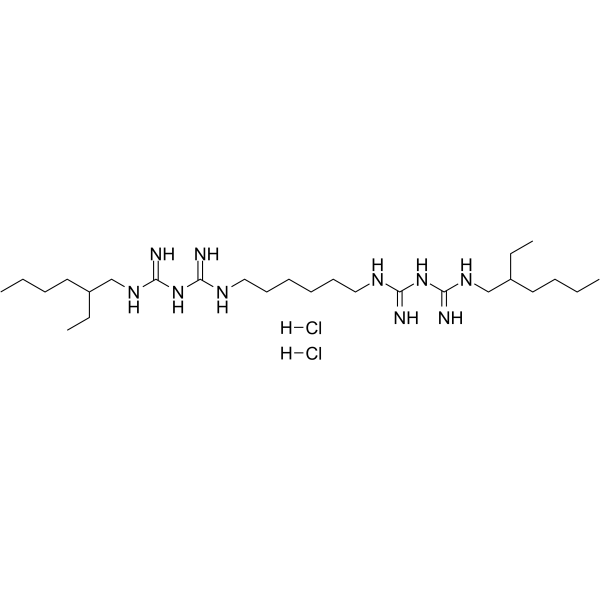
HY-108547
Alexidine dihydrochlorideAntifungal Agent -
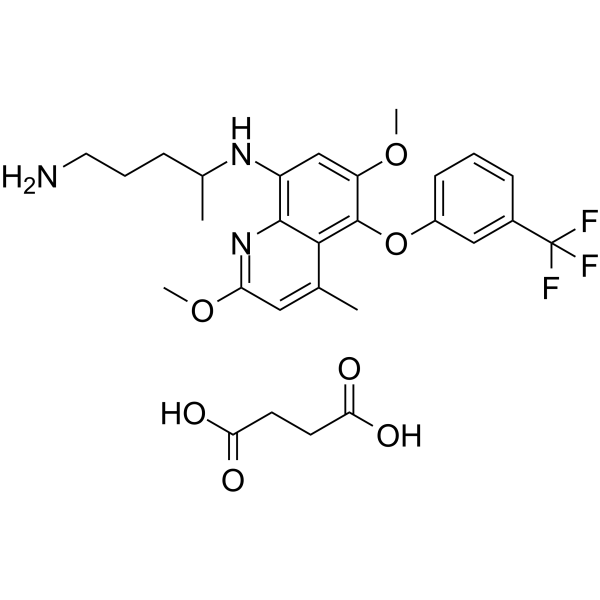
HY-111529A
Tafenoquine SuccinateAnti-malarial Prophylactic Agent -
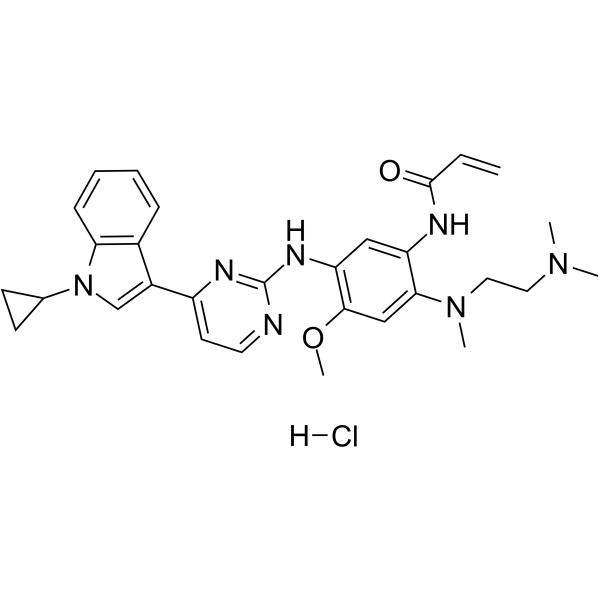
HY-112823B
Almonertinib hydrochlorideEGFR-sensitizing/T790M Inhibitor -
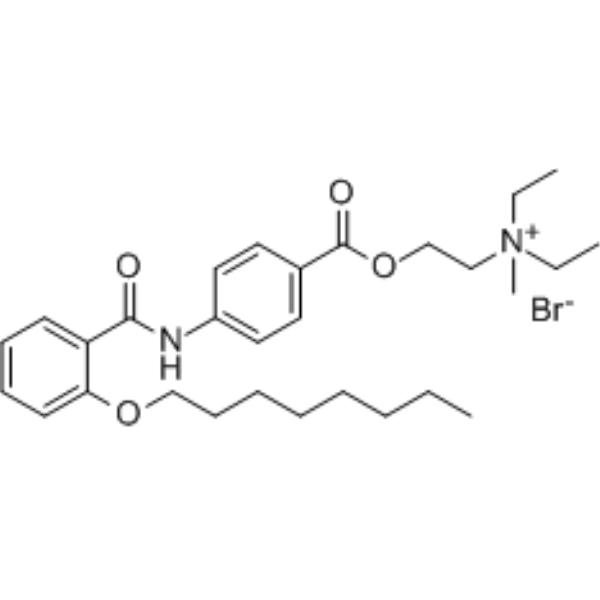
HY-B0499A
Otilonium bromidemAChR Inhibitor -
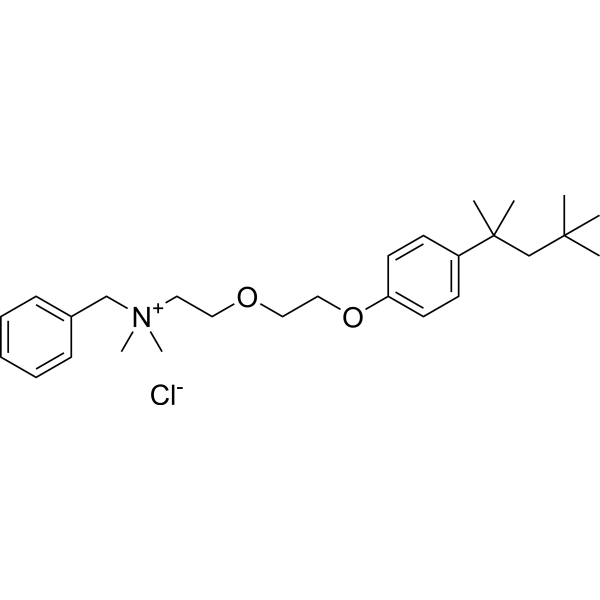
HY-B0942
Benzethonium chlorideMicrobiocidal Agent -

HY-B1467R
Domiphen bromide (Standard)Standard of Domiphen bromide -
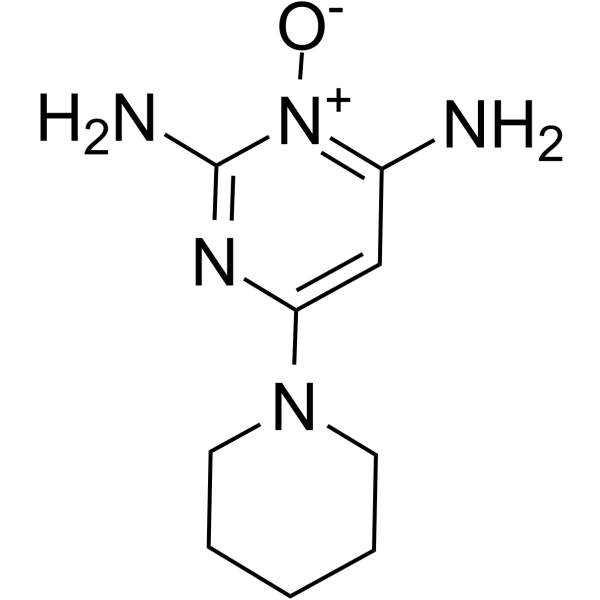
HY-B0112
MinoxidilEndogenous Metabolite -
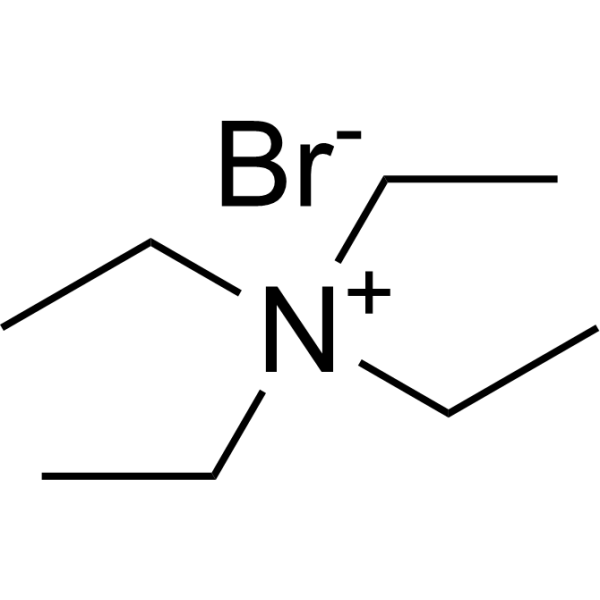
HY-W014408
Tetraethylammonium bromideBiochemical Reagent
Publications Citing Use of MedChemExpress (MCE) Domiphen bromide
MoreAll Parasite Isoforms
More

Biological Activity
제품 설명
In Vitro
Domiphen bromide (20 µM; 8-24 h) can inhibit the growth of Plasmodium falciparum, block the production of MEP, and simultaneously reduce the levels of multiple intermediates in the citric acid cycle and activate the glycolysis pathway[1].
Domiphen bromide (0.01-10 μM; 0-18 h) can inhibit contraction parameters, prolong the field potential duration, and cause tachycardia/fibrillation-like oscillations in human induced pluripotent stem cell-derived cardiomyocytes[2].
MedChemExpress (MCE) has not independently confirmed the accuracy of these methods. They are for reference only.
In Vivo
Domiphen bromide (20 mg/kg; intraperitoneal injection; single dose) in combination with Colistin (HY-113678) exhibits antibacterial activity in a mouse model infected with K. pneumonia FK6556[3].
MedChemExpress (MCE) has not independently confirmed the accuracy of these methods. They are for reference only.
-
Animal Model:SPF male New Zealand white rabbits (2.0-2.8 kg)[2]
-
Dosage:1.28, 3.85 and 12.85 mg/kg
-
Administration:Intravenous injection; single dose
-
Result:Evoked QTc prolongation, noncomplex arrhythmias and ventricular tachycardias at dose of 12.85 mg/kg.


Chemical Information
-
CAS No. 538-71-6
-
Appearance Solid
-
분자량 414.46
-
화학식 C22H40BrNO
-
Color White to off-white
-
SMILES
CCCCCCCCCCCC[N+](C)(C)CCOC1=CC=CC=C1.[Br-]
-
선적
Room temperature in continental US; may vary elsewhere.
-
보관
4°C, sealed storage, away from moisture
* In solvent : -80°C, 6 months; -20°C, 1 month (sealed storage, away from moisture)


Publications (1)
-
Journal Impact Factor
-
Most Recent
-
Antioxidants (Basel)
Pitavastatin Calcium Confers Fungicidal Properties to Fluconazole by Inhibiting Ubiquinone Biosynthesis and Generating Reactive Oxygen Species. [Abstract]2024 May 29;13(6):667. PMID: 38929106


용액&용해도
In Vitro:
DMSO : 100 mg/mL (241.28 mM; Need ultrasonic; Hygroscopic DMSO has a significant impact on the solubility of product, please use newly opened DMSO)
H2O : 100 mg/mL (241.28 mM; Need ultrasonic)
Please refer to the solubility information to select the appropriate solvent. Once prepared, please aliquot and store the solution to prevent product inactivation from repeated freeze-thaw cycles.
Storage method and period of stock solution: -80°C, 6 months; -20°C, 1 month (sealed storage, away from moisture). When stored at -80°C, please use it within 6 months. When stored at -20°C, please use it within 1 month.
* Note: If you choose water as the stock solution, please dilute it to the working solution, then filter and sterilize it with a 0.22 μm filter before use.
Please refer to the solubility information to select the appropriate solvent. Once prepared, please aliquot and store the solution to prevent product inactivation from repeated freeze-thaw cycles.
Storage method and period of stock solution: -80°C, 6 months; -20°C, 1 month (sealed storage, away from moisture). When stored at -80°C, please use it within 6 months. When stored at -20°C, please use it within 1 month.
* Note: If you choose water as the stock solution, please dilute it to the working solution, then filter and sterilize it with a 0.22 μm filter before use.
Concentration (start) × Volume (start) = Concentration (final) × Volume (final)
In Vivo:
Select the appropriate dissolution method based on your experimental animal and administration route.
- For the following dissolution methods, please ensure to first prepare a clear stock solution using an In Vitro approach and then sequentially add co-solvents:
- To ensure reliable experimental results, the clarified stock solution can be appropriately stored based on storage conditions. As for the working solution for In Vivo experiments, it is recommended to prepare freshly and use it on the same day.
- The percentages shown for the solvents indicate their volumetric ratio in the final prepared solution. If precipitation or phase separation occurs during preparation, heat and/or sonication can be used to aid dissolution.
Add each solvent one by one: 10% DMSO 40% PEG300 5% Tween-80 45% Saline
Solubility: ≥ 2.5 mg/mL (6.03 mM); Clear solution
This protocol yields a clear solution of ≥ 2.5 mg/mL (saturation unknown).
Taking 1 mL working solution as an example, add 100 μL DMSO stock solution (25.0 mg/mL) to 400 μL PEG300, and mix evenly; then add 50 μL Tween-80 and mix evenly; then add 450 μL Saline to adjust the volume to 1 mL.
Preparation of Saline: Dissolve 0.9 g sodium chloride in ddH₂O and dilute to 100 mL to obtain a clear Saline solution.
Add each solvent one by one: 10% DMSO 90% (20% SBE-β-CD in Saline)
Solubility: 2.5 mg/mL (6.03 mM); Suspended solution; Need ultrasonic
This protocol yields a suspended solution of 2.5 mg/mL. Suspended solution can be used for oral and intraperitoneal injection.
Taking 1 mL working solution as an example, add 100 μL DMSO stock solution (25.0 mg/mL) to 900 μL 20% SBE-β-CD in Saline, and mix evenly.
Preparation of 20% SBE-β-CD in Saline (4°C, storage for one week): 2 g SBE-β-CD powder is dissolved in 10 mL Saline, completely dissolve until clear.
For the following dissolution methods, please prepare the working solution directly:
It is recommended to prepare fresh solutions and use them promptly within a short period of time.
The percentages shown for the solvents indicate their volumetric ratio in the final prepared solution. If precipitation or phase separation occurs during preparation, heat and/or sonication can be used to aid dissolution.
Add each solvent one by one: PBS
Solubility: 25 mg/mL (60.32 mM); Clear solution; Need ultrasonic
In Vivo Dissolution Calculator
Please enter the basic information of animal experiments:
-
-
-
-
Recommended: Prepare an additional quantity of animals to account for potential losses during experiments.
Working solution concentration: 0.22 mg/mL
This product has good water solubility, please refer to the measured solubility data in water/PBS/Saline for details.


순도&문서
-
Data Sheet (271 KB)
-
SDS (393 KB)
- English - EN (393 KB)
- Français - FR (393 KB)
- Deutsch - DE (393 KB)
- Norwegian - NO (393 KB)
- Español - ES (393 KB)
- Swedish - SV (393 KB)
- Italian - IT (393 KB)
- Korean - KR (393 KB)
- Portuguese - PT (393 KB)
-
Handling Instructions (2659 KB)
References
[1]. Biosca A, et al. Characterization of Domiphen Bromide as a New Fast-Acting Antiplasmodial Agent Inhibiting the Apicoplastidic Methyl Erythritol Phosphate Pathway. Pharmaceutics. 2022 Jun 22;14(7):1320. [Content Brief]
[2]. Long Y, et al. Proarrhythmic effects induced by benzethonium chloride and domiphen bromide in vitro and in vivo. Toxicol Appl Pharmacol. 2021 Nov 15;431:115731. [Content Brief]
[3]. Chen H, et al. Combining with domiphen bromide restores colistin efficacy against colistin-resistant Gram-negative bacteria in vitro and in vivo. Int J Antimicrob Agents. 2024 Feb;63(2):107066. [Content Brief]
[4]. Long Y, et al. Inhibition of HERG potassium channels by domiphen bromide and didecyl dimethylammonium bromide. Eur J Pharmacol. 2014 Aug 15;737:202-9. [Content Brief]
[5]. Mäkinen KK, et al. Selective effect of domiphen bromide (dodecyldimethyl(2-phenoxyethyl)ammonium bromide) on some hydrolytic enzymes. Biochim Biophys Acta. 1970 Apr 22;206(1):143-51. [Content Brief]


Complete Stock Solution Preparation Table
Please refer to the solubility information to select the appropriate solvent. Once prepared, please aliquot and store the solution to prevent product inactivation from repeated freeze-thaw cycles.
Storage method and period of stock solution: -80°C, 6 months; -20°C, 1 month (sealed storage, away from moisture). When stored at -80°C, please use it within 6 months. When stored at -20°C, please use it within 1 month.
| Optional Solvent | Concentration Solvent Mass | 1 mg | 5 mg | 10 mg | 25 mg |
|---|---|---|---|---|---|
| DMSO / H2O | 1 mM | 2.4128 mL | 12.0639 mL | 24.1278 mL | 60.3195 mL |
| 5 mM | 0.4826 mL | 2.4128 mL | 4.8256 mL | 12.0639 mL | |
| 10 mM | 0.2413 mL | 1.2064 mL | 2.4128 mL | 6.0319 mL | |
| 15 mM | 0.1609 mL | 0.8043 mL | 1.6085 mL | 4.0213 mL | |
| 20 mM | 0.1206 mL | 0.6032 mL | 1.2064 mL | 3.0160 mL | |
| 25 mM | 0.0965 mL | 0.4826 mL | 0.9651 mL | 2.4128 mL | |
| 30 mM | 0.0804 mL | 0.4021 mL | 0.8043 mL | 2.0106 mL | |
| 40 mM | 0.0603 mL | 0.3016 mL | 0.6032 mL | 1.5080 mL | |
| 50 mM | 0.0483 mL | 0.2413 mL | 0.4826 mL | 1.2064 mL | |
| 60 mM | 0.0402 mL | 0.2011 mL | 0.4021 mL | 1.0053 mL | |
| 80 mM | 0.0302 mL | 0.1508 mL | 0.3016 mL | 0.7540 mL | |
| 100 mM | 0.0241 mL | 0.1206 mL | 0.2413 mL | 0.6032 mL |
* Note: If you choose water as the stock solution, please dilute it to the working solution, then filter and sterilize it with a 0.22 μm filter before use.


Domiphen bromide Related Classifications
HY-B1467 Related Classifications
 Powered by Bioz