



MC-207110
Based on 12 publication(s) in Google Scholar
MC-207110 is a broad-spectrum efflux pump inhibitor. MC-207110 is active against all three known Mex efflux pumps from P. aeruginosa and their close Escherichia coli efflux pump homolog (AcrAB-TolC). MC-207110 can decrease the intrinsic resistance of P. aeruginosa to fluoroquinolones. MC-207110 can be used for the research of infection .
For research use only. We do not sell to patients.
- CAS No.: 115871-02-8
- Formula: C25H30N6O2
- Molecular Weight:446.54
-
Storage:
Please store the product under the recommended conditions in the Certificate of Analysis.


To place orders, for customer services and technical support, please contact: MedChemExpress USA
Tel: 609-228-6898 E-mail: [email protected] [email protected]


-
 Biological Activity
-
Chemical Information
- Protocols
- Purity & Documentation
- References
-
 Help & FAQs


Publications Citing Use of MedChemExpress (MCE) MC-207110
More- Cell Rep. 2025 Jul 22;44(7):115987. [Abstract]
- Front Microbiol. 2024 Sep 24:15:1417237. [Abstract]
- Front Cell Infect Microbiol. 2021 Mar 25:11:660431. [Abstract]
- World J Microbiol Biotechnol. 2024 Jun 6;40(8):233. [Abstract]
- Microbiol Spectr. 2026 Jul 7;14(7):e0410825. [Abstract]
- Microbiol Spectr. 2025 Sep 2;13(9):e0114425. [Abstract]
- J Antimicrob Chemother. 2021 Dec 24;77(1):58-68. [Abstract]
- mSphere. 2023 Apr 20;8(2):e0067322. [Abstract]
- Microb Pathog. 2023 Dec:185:106397. [Abstract]
- Microb Drug Resist. 2020 Jun;26(6):550-560. [Abstract]
- Al-Rafidain Journal of Medical Sciences. 2025 Feb 11.
- bioRxiv. 2020 Apr.
 Customer Validation & Images

-
Microbiological Assay
-
Microbiological Assay
-
Microbiological Assay
-
Bio/Physico-chemical Assay
-
Microbiological Assay


Biological Activity
Description
Cellular Effect
|
Cell Line

|
Type | Value | Description | References |
|---|---|---|---|---|
| HEK293 | CC50 |
>100 μM
Compound: PAbetaN
|
Cytotoxicity against HEK293 cells incubated for 24 hrs by MTT assay
Cytotoxicity against HEK293 cells incubated for 24 hrs by MTT assay
|
[PMID: 37672933] |
| LX-2 | CC50 |
>100 μM
Compound: PAbetaN
|
Cytotoxicity against human LX2 cells incubated for 24 hrs by MTT assay
Cytotoxicity against human LX2 cells incubated for 24 hrs by MTT assay
|
[PMID: 37672933] |


Chemical Information
-
CAS No. 115871-02-8
-
Molecular Weight 446.54
-
Formula C25H30N6O2
-
SMILES
O=C([C@H](CCCNC(N)=N)NC([C@H](CC1=CC=CC=C1)N)=O)NC2=CC(C=CC=C3)=C3C=C2
-
Shipping
Room temperature in continental US; may vary elsewhere.
-
Storage
Please store the product under the recommended conditions in the Certificate of Analysis.


Publications (12)
-
Journal Impact Factor
-
Most Recent
-
Cell Rep
Lon dysfunction-mediated collateral sensitivity drives effective antibiotic combination therapies against tigecycline-resistant pathogens. [Abstract]2025 Jul 22;44(7):115987. PMID: 40650911
MC-207110 purchased from MedChemExpress. Usage Cited in: Cell Rep. 2025 Jul 22;44(7):115987. [Abstract]
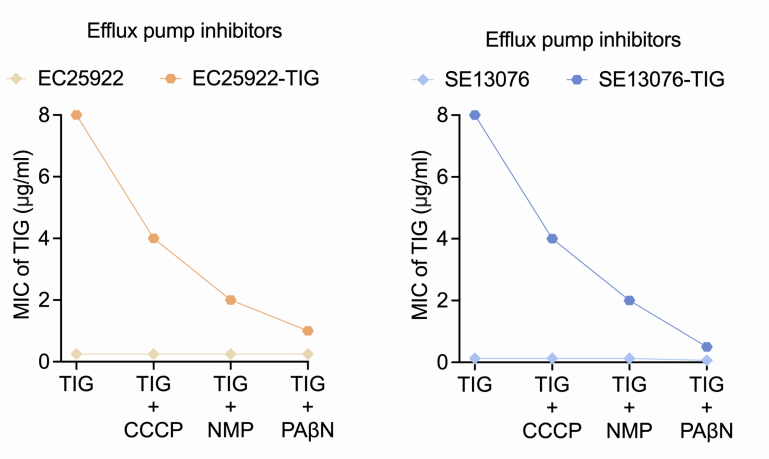
Effect of efflux pump inhibitors (CCCP (10 mg/L), NMP (25 mg/L ), and PAβN dihydrochloride (25 mg/L)) on the susceptibility of evolved strains to tigecycline (n = 2). PAβN dihydrochloride lowered the MIC values and reversed the tigecycline-resistance phenotypes, suggesting a role for increased efflux pump activity in tigecycline resistance.
-
Front Microbiol
Comparison of antimicrobial activities and resistance mechanisms of eravacycline and tigecycline against clinical Acinetobacter baumannii isolates in China. [Abstract]2024 Sep 24:15:1417237. PMID: 39380684
MC-207110 purchased from MedChemExpress. Usage Cited in: Front Microbiol. 2024 Sep 24:15:1417237. [Abstract]
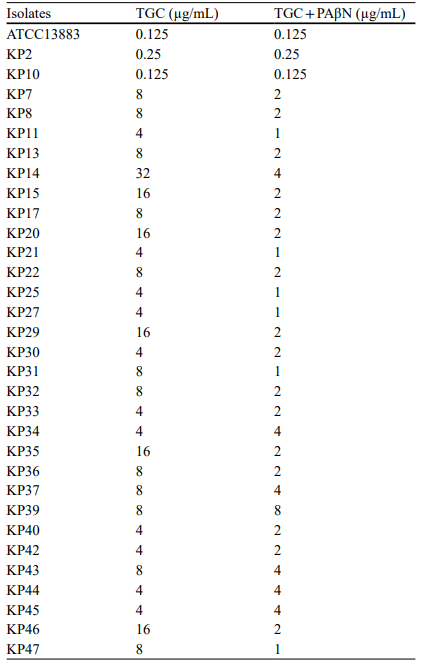
The results of tigecycline combined with PAβN dihydrochloride (20 mg/L) demonstrated that 20 TNSKP strains exhibited a fold decrease ≥ 4 in MIC after co-incubation with PAβN, but 2 strains of TSKP did not show any change in MIC under the effect of efflux pump inhibitor.
-
Front Cell Infect Microbiol
A Potential Combination Therapy of Berberine Hydrochloride With Antibiotics Against Multidrug-Resistant Acinetobacter baumannii. [Abstract]2021 Mar 25:11:660431. PMID: 33842399
MC-207110 purchased from MedChemExpress. Usage Cited in: Front Cell Infect Microbiol. 2021 Mar 25:11:660431. [Abstract]
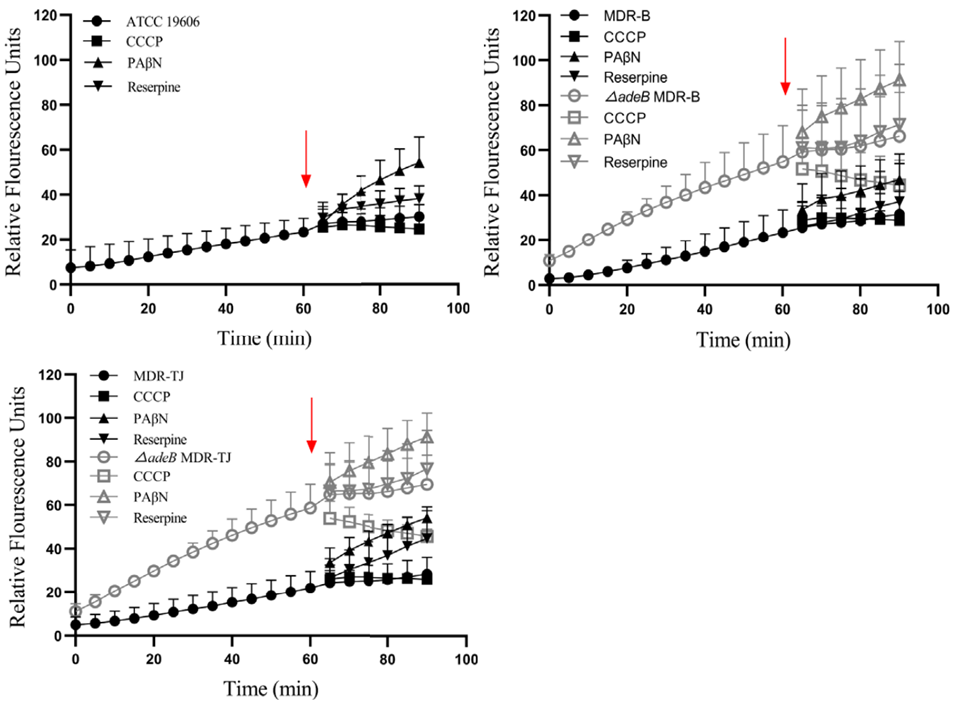
BBH uptake with pump inhibitors CCCP, PAβN dihydrochloride (50 µM; 60 min), and reserpine in ATCC 19606 strain, MDR-B and △adeB MDR-B strains, and MDR-TJ and △adeB MDR-TJ strains. Red arrows indicate the pump inhibitors (50 µM) were added at 60 min. Grey letters indicate the inhibitors were added to the adeB knockout strains.
-
World J Microbiol Biotechnol
AcrAB-TolC efflux pump overexpression and tet(A) gene mutation increase tigecycline resistance in Klebsiella pneumoniae. [Abstract]2024 Jun 6;40(8):233. PMID: 38842631 -
Microbiol Spectr
OmpK36 deficiency and inducible AmpC β-lactamase synergistically drive imipenem resistance in Klebsiella aerogenes. [Abstract]2026 Jul 7;14(7):e0410825. PMID: 42212662 -
Microbiol Spectr
IITR00803: a benzoxazole-nitrothiophene small molecule with broad-spectrum antibacterial potential. [Abstract]2025 Sep 2;13(9):e0114425. PMID: 40792514 -
J Antimicrob Chemother
Identification of a novel plasmid-mediated tigecycline resistance-related gene, tet(Y), in Acinetobacter baumannii. [Abstract]2021 Dec 24;77(1):58-68. PMID: 34634801 -
mSphere
RND Pump-Mediated Efflux of Amotosalen, a Compound Used in Pathogen Inactivation Technology to Enhance Safety of Blood Transfusion Products, May Compromise Its Gram-Negative Anti-Bacterial Activity. [Abstract]2023 Apr 20;8(2):e0067322. PMID: 36853056 -
Microb Pathog
Effect of piperine on the inhibitory potential of MexAB-OprM efflux pump and imipenem resistance in carbapenem-resistant Pseudomonas aeruginosa. [Abstract]2023 Dec:185:106397. PMID: 37852553
MC-207110 purchased from MedChemExpress. Usage Cited in: Microb Pathog. 2023 Dec:185:106397. [Abstract]
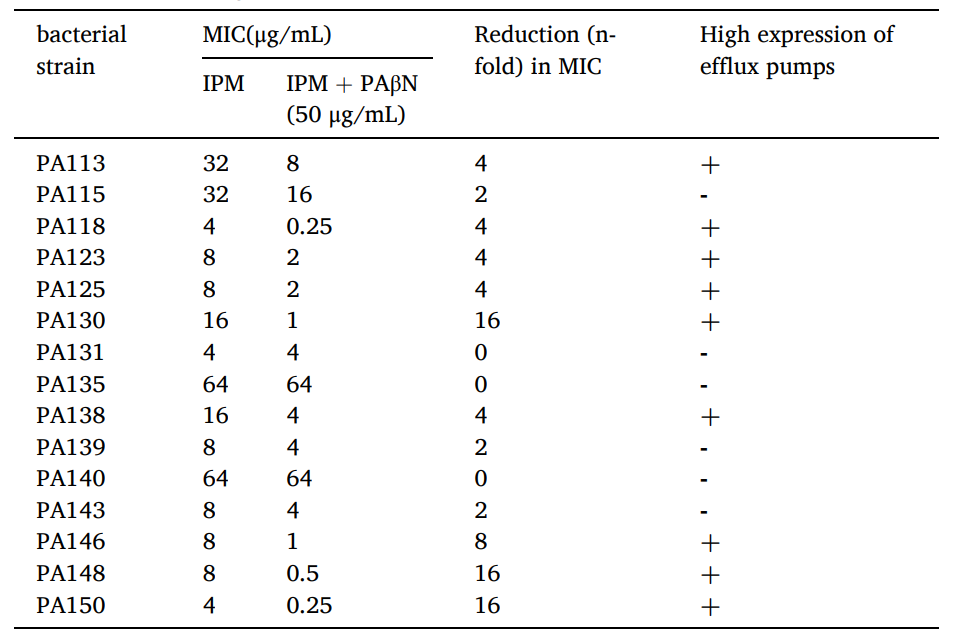
PAβN dihydrochloride (50 μg/mL; 50 μL; 24 h)。 Results of screening test strains.
-
Microb Drug Resist
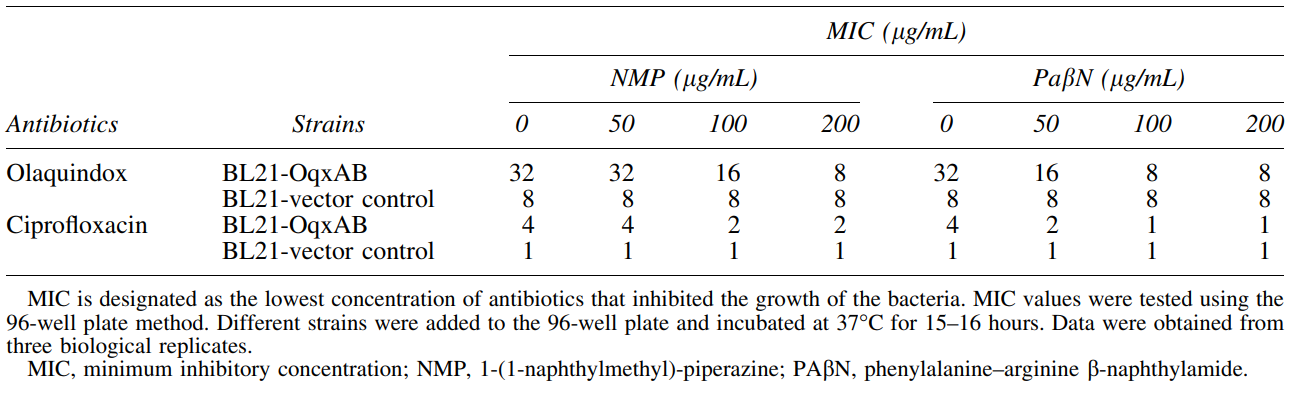
Site-Directed Mutagenesis Reveals Crucial Residues in Escherichia coli Resistance-Nodulation-Division Efflux Pump OqxB. [Abstract]2020 Jun;26(6):550-560. PMID: 31834851
MC-207110 purchased from MedChemExpress. Usage Cited in: Microb Drug Resist. 2020 Jun;26(6):550-560. [Abstract]
PAβN dihydrochloride (50-200 μg/mL) and NMP inhibited OqxB activity in a concentration-dependent manner, suggesting that an efflux pump (OqxAB) is indeed responsible for the decreased susceptibility of the overexpression system.
-
-


Purity & Documentation
References

Calculators
Concentration (start) × Volume (start) = Concentration (final) × Volume (final)


MC-207110 Related Classifications
HY-101444 Related Classifications
 Powered by Bioz