
1. Search Result
Search Result
Results for "

hydrophobicity

" in MedChemExpress (MCE) Product Catalog:

438

Inhibitors & Agonists

5

Screening Libraries

30

Fluorescent Dyes

84

Biochemical Assay Reagents

39

Peptides

7

MCE Kits

44

Natural
Products

30

Isotope-Labeled Compounds

32

Click Chemistry

37

Oligonucleotides

1

GMP Molecules

Cat. No. Product Name Target Research Areas Chemical Structure
  • HY-76847
    Chenodeoxycholic Acid
    Maximum Cited Publications
    22 Publications Verification

    CDCA

    FXR Endogenous Metabolite Autophagy Metabolic Disease Cancer
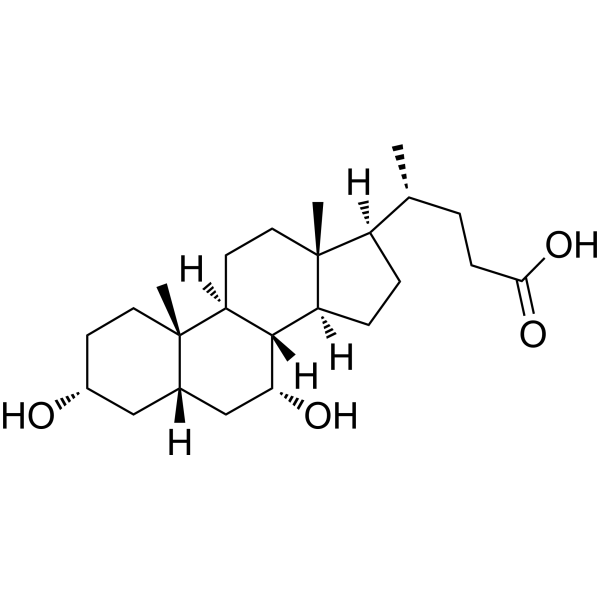
    Chenodeoxycholic Acid is a hydrophobic primary bile acid that activates nuclear receptors (FXR) involved in cholesterol metabolism.
    Chenodeoxycholic Acid
  • HY-12795
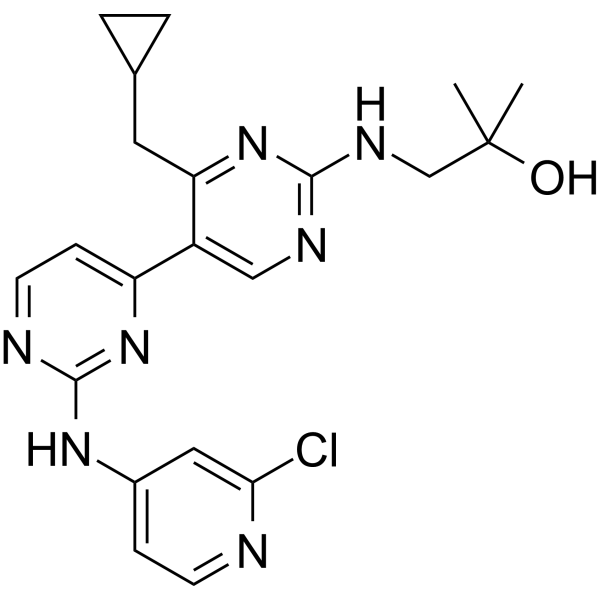
    Vps34-IN-1
    10+ Cited Publications

    PI3K Autophagy Cancer
    Vps34-IN-1 is a potent and selective inhibitor of class III Vps34 PI3K. Vps34-IN-1 inhibits phosphorylation of PtdIns by recombinant insect cell expressed Vps34-Vps15 complex with an IC50 of ~25 nM. Vps34-IN-1 can suppress SGK3 activation by reducing PtdIns(3)P levels via lowering phosphorylation of T-loop and hydrophobic motifs. Vps34-IN-1 modulates autophagy .
    Vps34-IN-1
  • HY-D0931

    Sudan Red III; Tetrazobenzene-β-naphthol; 111440 Red

    Environmental Pollutants Fluorescent Dye Others
    Sudan III is a hydrophobic bisazo dye .
    Sudan III
  • HY-126663

    ADC Payload Cancer
    N-Me-L-Ala-maytansinol is a hydrophobic, cell permeable payload used for making antibody-drug conjugate (ADC) .
    N-Me-L-Ala-maytansinol
  • HY-W099580

    n-Hexadecane; Cetane

    Environmental Pollutants Others
    Hexadecane (n-Hexadecane; Cetane) is a long-chain n-alkane, oil component, and model hydrophobic compound. Hexadecane acts as a substrate for microbial degradation.Hexadecane induces microbial biosurfactant and bioemulsifier synthesis .
    Hexadecane
  • HY-D1605
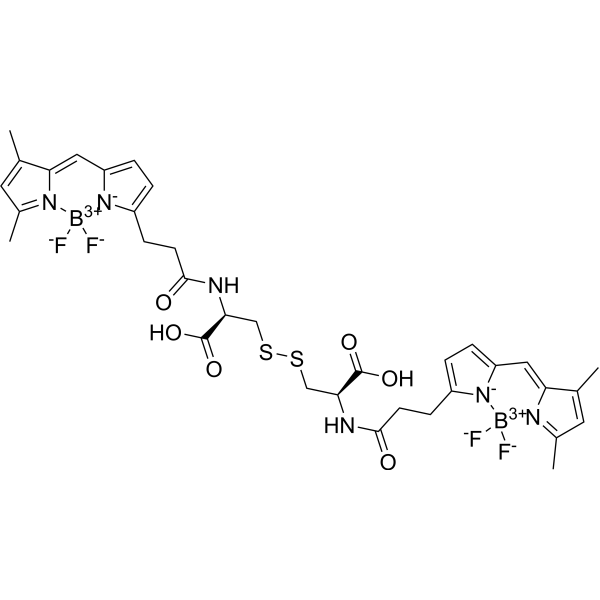
    BODIPY FL L-Cystine
    1 Publications Verification

    Fluorescent Dye Others
    BODIPY FL L-Cystine is a thiol-reactive, green-fluorescent dye. BODIPY FL L-Cystine can be the labeling of membrane proteins, proteins with hydrophobic binding sites, or hydrophobic ligands. (λex=504 nm, λem=511 nm) .
    BODIPY FL L-Cystine
  • HY-W250727
    TNS sodium
    1 Publications Verification

    6-(p-Tolylamino)naphthalene-2-sulfonate sodium

    Fluorescent Dye Others
    TNS (6-(p-Tolylamino) naphthalene-2-sulfonate) sodium is a fluorescent probe used to detect the conformational state of proteins. TNS sodium binds to the central hydrophobic calyx of β-lactoglobulin (β-LG) to form a 1:1 complex, which stabilizes the folded conformation of β-LG. TNS sodium shows weak fluorescent signals in aqueous solution, but its fluorescence intensity increases significantly upon binding to the hydrophobic domains of proteins, with the maximum excitation wavelength and maximum emission wavelength located at 321 nm and 446 nm, respectively .
    TNS sodium
  • HY-D1553

    Fluorescent Dye Others
    BODIPY-C12 is a boron-dipyrromethene derivative containing a lipophilic tail (excitation 490 nm). BODIPY-C12 is a hydrophobic molecular and sensitivity to the surrounding environment and can be used to quantify viscosity, critical micelle concentration, and critical micelle temperature .
    BODIPY-C12
  • HY-141676

    EGFR Others
    HyT36 is a low molecular weight hydrophobic tag that promotes the degradation of fusion protein and pseudokinase Her3 .
    HyT36
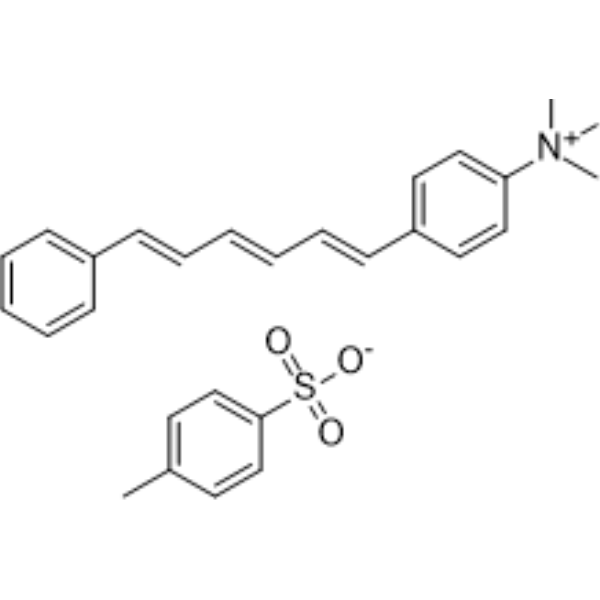
  • HY-W013967

    Fluorescent Dye Infection
    1,6-Diphenylhexa-1,3,5-triene is a membrane intercalator and hydrophobic fluorescent probe. 1,6-Diphenylhexa-1,3,5-triene intercalates into the non-polar region of lipid bilayers of adipocyte membranes with probe/membrane equilibrium affected by temperature, probe concentration, and membrane concentration. 1,6-Diphenylhexa-1,3,5-triene’s fluorescence intensity correlating with adipocyte membrane probe incorporation (Ex/Em = 350/452 nm) .
    1,6-Diphenylhexa-1,3,5-triene
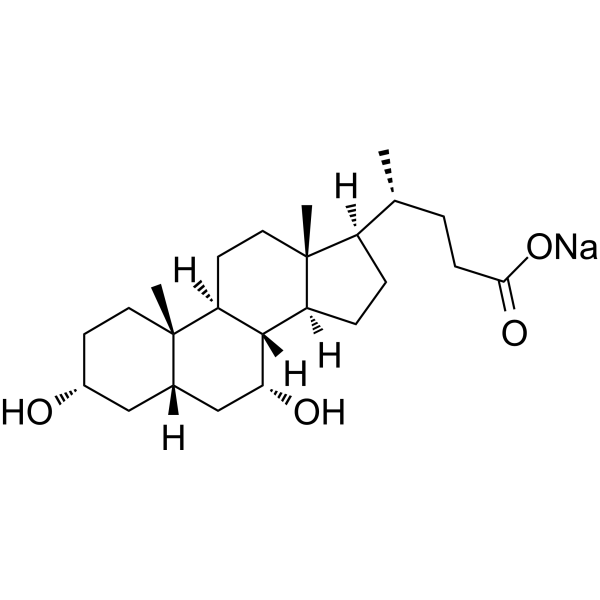
  • HY-76847A
    Chenodeoxycholic acid sodium
    Maximum Cited Publications
    22 Publications Verification

    CDCA sodium

    FXR Autophagy Endogenous Metabolite Metabolic Disease Cancer
    Chenodeoxycholic acid sodium is a hydrophobic primary bile acid that activates nuclear receptors (FXR) involved in cholesterol metabolism.
    Chenodeoxycholic acid sodium
  • HY-W099580S1

    n-Hexadecane-d34; Cetane-d34

    Isotope-Labeled Compounds Bacterial Others
    Hexadecane-d34 (n-Hexadecane-d34) is the deuterium labeled Hexadecane (HY-W099580). Hexadecane (n-Hexadecane) is a saturated hydrocarbon of alkanes or paraffins and can be used as an organic solvent. Hexadecane is a component of petroleum, belongs to hydrophobic substrates, and is a model substance for studying bacterial degradation of hydrophobic compounds .
    Hexadecane-d34
  • HY-44157

    Biochemical Assay Reagents Neurological Disease
    ALS-I, an acid-Liable surfactant, is adopted for in-solution enzymatic digestions, can help to solubilize hydrophobic proteins. ALS-I is significantly enhanced peptide recovery for mass spectrometry (MS) mapping in the study of the proteomes of regenerating rat retina and mouse brain .
    ALS-I
  • HY-D1543

    DNA Stain Infection
    Pyronin B is an organic cationic dye used for the staining of bacteria, mycobacteria and ribonucleic acids. Pyronin B is also used as a small hydrophobic (SH) protein channel inhibitor .
    Pyronin B
  • HY-141667

    7-(p-Methoxybenzylamino)-4-nitrobenz-2,1,3-oxadiazole

    Fluorescent Dye Others
    MBD (7-(p-Methoxybenzylamino)-4-nitrobenz-2,1,3-oxadiazole), a new fluorescent probe for protein and nucleoprotein conformation, is applied to bacterial ribosomes and to bovine trypsinogen and trypsin. MBD is strongly fluorescent upon binding to a hydrophobic area of a macromolecule .
    MBD
  • HY-151655

    ADC Linker Others
    11-Azidoundecanoic acid is a click chemistry reagent containing an azide group. 11-Azidoundecanoic acid acts as a hydrophobic bioconjugation linker that can be further modified at the azido-position using Staudinger ligation or Click-chemistry. 11-Azidoundecanoic acid is substrate of lipoic acid ligase (LpIA) for labeling . 11-Azidoundecanoic acid is a click chemistry reagent, it contains an Azide group and can undergo copper-catalyzed azide-alkyne cycloaddition reaction (CuAAc) with molecules containing Alkyne groups. It can also undergo strain-promoted alkyne-azide cycloaddition (SPAAC) reactions with molecules containing DBCO or BCN groups.
    11-Azidoundecanoic acid
  • HY-91054

    n-Octyltriethoxysilane

    Environmental Pollutants Biochemical Assay Reagents Others
    Triethoxyoctylsilane is a compound used in plastic applications and can be utilized to produce waterproof coatings with hydrophobic properties .
    Triethoxyoctylsilane
  • HY-W105775

    Ammonium succinate

    Environmental Pollutants Biochemical Assay Reagents Others
    Diammonium succinate (Ammonium succinate) is a hydrophobic hydrocarbon compound that can be used to study its interaction with microbial cells, especially the mechanisms of degradation and bioavailability. Diammonium succinate is a biomaterial or organic compound that can be used as a biomaterial or organic compound related to life science research.
    Diammonium succinate
  • HY-119791

    Fluorescent Dye Others
    NBD-amine is a fluorogenic amine. NBD-amine displays the property of fluorescing weakly in water and strongly in organic solvents, membranes or hydrophobic environments .
    NBD-amine
  • HY-W040217

    N-Oxodecyl meglumine; Decanoyl N-methylglucamide

    Environmental Pollutants Biochemical Assay Reagents Others
    MEGA-10 (N-Oxodecyl meglumine) is a nonionic sugar-based surfactant. MEGA-10 sequesters n-alkylbenzenes into its hydrophobic core via micelle formation as a solubilizer .
    MEGA-10
  • HY-W142092

    Bacterial Endogenous Metabolite Others
    N-Acetyl-DL-serine is a hydrophobic amino acid that is synthesized in the body and can be found as a free form or as a salt with malonate, phosphate, or acetate. N-Acetyl-DL-serine has antimicrobial activity against Bacillus cereus and Staphylococcus aureus. N-Acetyl-DL-serine has also been used for the immobilization of DNA fragments on solid surfaces and can be used for protein synthesis and optical detection of DNA strands .
    N-Acetyl-DL-serine
  • HY-150601
    Estrogen receptor-IN-1
    1 Publications Verification

    Estrogen Receptor/ERR Metabolic Disease
    Estrogen receptor-IN-1 (compound 16) is a potent estrogen receptor (ER) inhibitor with IC50s of 13, 5µM for ERα and Erβ, respectively .
    Estrogen receptor-IN-1
  • HY-139031

    Aldehyde Dehydrogenase (ALDH) Endocrinology
    ALDH1A2-IN-1 is an active site-directed reversible ALDH1A2 inhibitor (IC50=0.91 μM; Kd=0.26 μM) with several hydrophobic interactions .
    ALDH1A2-IN-1
  • HY-123045

    CDK Cancer
    PNU-292137 is an orally active, potent CDK2 inhibitor with IC50s of 37 nM and 92 nM for CDK2/cyclin A and CDK2/cyclin E, respectively. PNU-292137 makes interactions with the hydrophobic pocket at the back of the CDK2 ATP pocket. PNU-292137 efficiently inhibits tumor cell proliferation in human colon and prostate tumor cell lines. PNU-292137 exhibits antitumor activity (TGI>50%) in a mouse xenograft model .
    PNU-292137
  • HY-131309

    12-DSA

    Endogenous Metabolite Metabolic Disease
    12-Doxyl stearic acid is a form of stearic acid that contains a 4,4-dimethyl-3-oxazolinyloxy (DOXYL) group, creating a hydrophobic spin label. It is commonly used to study molecular aspects of membranes and hydrophobic proteins.
    12-Doxylstearic acid
  • HY-D0140

    ETH 5294

    Fluorescent Dye Others
    Chromoionophore I (ETH 5294) is a hydrophobic pH indicator. Chromoionophore I is used as a transmissive or fluorescent probe molecule in many types of hydrophobic sensor membranes. Chromoionophore I is oil-soluble .
    Chromoionophore I
  • HY-151818

    ADC Linker Others
    12-Azido-dodecanoyl-OSu is a click chemistry reagent containing an azide group. 12-Azido-dodecanoyl-OSu can be used as a hydrophobic bioconjugation linker. It contains an azide group and can undergo copper-catalyzed azide-alkyne cycloaddition (CuAAc) with molecules containing alkyne groups. It can also undergo ring strain-promoted alkyne-azide cycloaddition (SPAAC) with molecules containing DBCO or BCN groups.
    12-Azido-dodecanoyl-OSu
  • HY-142981

    DODA

    Liposome Others
    Dioctadecylamine (DODA) is a secondary amine that has been shown to self-organize in plate-like structures in aqueous solution. Dioctadecylamine exhibits sufficiently hydrophobic properties of nanoparticles and good dispersibility in nonpolar solvent. Dioctadecylamine does not form a monolayer above pH 3.9 .
    Dioctadecylamine
  • HY-W017213

    Biochemical Assay Reagents Others
    Phenyl methacrylate, a hydrophobic monomer, can be used for the synthesis of light-defocusing plastic rod (LDR) .
    Phenyl methacrylate
  • HY-164722

    Liposome Others
    DSPE-PEG8000-OH is a hydroxy-terminated phospholipid PEG polymer. The hydrophobic tails that allows the encapsulation and aggregation of other hydrophobic drugs, and the hydroxy-terminated can be further reacted. DSPE-PEG8000-OH can prepare liposomes or lipid nanoparticles, which can be used in drug delivery and promoting drug absorption research .
    DSPE-PEG8000-OH
  • HY-W590672

    Biochemical Assay Reagents Others
    C22 Dihydroceramide is a lipid featuring two saturated hydrophobic tails. Ceramides may be used in developing lipid nanoparticles or liposomes.
    C22-Dihydroceramide
  • HY-121950

    Biochemical Assay Reagents Others
    18-Methyleicosanoic acid is a branched-chain fatty acid. 18-Methyleicosanoic acid has a hydrophobic surface and can act as a boundary lubricant .
    18-Methyleicosanoic acid
  • HY-108299

    Perfluorotripropylamine; FTPA; Tris(perfluoropropyl)amine

    Biochemical Assay Reagents Others
    Perfluamine (Perfluorotripropylamine), a hydrophobic carrier fluid, is used in the surface modification of droplet polymeric microfluidic devices. Perfluamine has a role as a blood substitute .
    Perfluamine
  • HY-139032

    Aldehyde Dehydrogenase (ALDH) Others
    CM121 is an active site-directed reversible ALDH1A2 inhibitor (IC50=0.54 μM;Kd=1.1 μM) with a variety of hydrophobic interactions .
    CM121
  • HY-W269700

    L-Isoleucyl-L-leucine

    Drug Intermediate Neurological Disease
    Ile-Leu-OH (L-Isoleucyl-L-leucine) is a hydrophobic dipeptide fragment and is a component of the neurotensin C-terminal heptapeptide Pro-Arg-Arg-Pro-Tyr-Ile-LeuOH .
    Ile-Leu-OH
  • HY-130908

    Biochemical Assay Reagents Cancer
    11-Maleimidoundecanoic acid is a maleimide-containing hydrophobic core former. 11-Maleimidoundecanoic acid forms a hydrophobic core via maleimide-thiol coupling with cysteine residues on polypeptides, enabling stable loading and controllable release of Doxorubicin (HY-15142A). 11-Maleimidoundecanoic acid can be used for the research of breast cancer .
    11-Maleimidoundecanoic acid
  • HY-N15973

    Biochemical Assay Reagents Others
    DSPE PEG2k-OH ammonium is a hydroxyl-terminated PEGylated phospholipid. The hydrophobic tail allows for the encapsulation and aggregation of other hydrophobic drugs, and the hydroxyl terminus is suitable for further reactions. DSPE PEG2k-OH ammonium can be used to prepare liposomes or lipid nanoparticles .
    DSPE PEG2k-OH ammonium
  • HY-157243

    Biochemical Assay Reagents Others
    CEX Cation-exchange resin 2 is a CEX strong cation exchange resin, ADC purification resin. CEX Cation-exchange resin 2 contains cross-linked poly(styrene-divinylbenzene), which has good hydrophobicity .
    CEX Cation-exchange resin 2
  • HY-151636

    ADC Linker Others
    10-Undecynoyl-OSu is a click chemistry reagent. 10-Undecynoyl-OSu is used as a hydrophobic bioconjugation linker that can be further modified at the alkyne using Click-chemistry .
    10-Undecynoyl-OSu
  • HY-117585

    Bcl-2 Family Drug Derivative Cancer
    Caylin-2 is a Bcl-XL binder and analog of Nutlin-3 (HY-50696). Caylin-2 interacts with the hydrophobic groove of Bcl-XL, with binding diminished by steric collision from its trifluoromethyl groups. Caylin-2 can be used for cancer research .
    Caylin-2
  • HY-167445

    Biochemical Assay Reagents Others
    PLLA5000-PEG2000-N3 is a polylactic acid derivative used for encapsulating hydrophobic drugs. PLLA5000-PEG2000-N3 can be used in drug delivery research .
    PLLA5000-PEG2000-N3
  • HY-167449

    Biochemical Assay Reagents Others
    PLLA4000-PEG2000-N3 is a polylactic acid derivative used for encapsulating hydrophobic drugs. PLLA4000-PEG2000-N3 can be used in drug delivery research .
    PLLA4000-PEG2000-N3
  • HY-139404

    Anthrylvinyl ceramide; AV Ceramide; AV Ceramide (d18:1/10:0)

    Fluorescent Dye Others
    C10 AV Ceramide (d18:1/10:0) is a fluorescent probe. Anthrylvinyl (AV) acts as the fluorescent label positioned on the amide linked acyl chain on the Ceramide molecule to measure the CERT-mediated transfer. The anthrylvinyl moiety of C10 AV Ceramide (d18:1/10:0) localizes to the hydrophobic region of the bilayer .
    C10 AV Ceramide (d18:1/10:0)
  • HY-160478

    Bcr-Abl Cancer
    GNF-6 (Compound 14) inhibits the gatekeeper threonine residue mutation of BCR-ABL-T315I with IC50s of 0.25 μM, 0.09 μM and 0.590 μM for c-ABL-T334I, BCR-ABL and BCR-ABL-T315I variants, respectively. GNF-6, an ATP competitive inhibitor, disrupts the assembly of the hydrophobic spine (a network of hydrophobic interactions), thereby locking the kinase in an inactive ‘DFG-out’ conformation .
    GNF-6
  • HY-164645

    Ras Cancer
    pan-KRAS-IN-16 (Compound 3344) is an anti-RAS small molecule derived from an intracellular antibody fragment with pan-RAS-effector protein-protein interaction inhibitor properties. pan-KRAS-IN-16 binds to a hydrophobic pocket near to the effector-binding switch regions of RAS. pan-KRAS-IN-16 prevents endogenous RAS-dependent signaling in tumor cell lines .
    pan-KRAS-IN-16
  • HY-156405

    Fat Mass and Obesity-associated Protein (FTO) Autophagy Metabolic Disease
    FTO-IN-10 (compound 7) is a potent human demethylase FTO (the fat mass and obesity-associated protein) inhibitor with an IC50 of 4.5 μM. FTO-IN-10 enters the FTO’s structural domain II binding pocket through hydrophobic and hydrogen bonding interactions. FTO-IN-10 induces DNA damage and autophagic cell death in A549 cells .
    FTO-IN-10
  • HY-W142140

    N-Methylvaline

    Amino Acid Derivatives Others
    N-Methyl-DL-valine is a valine derivant, is metabolized to cysteine, alanine, tyrosine, tryptophan, citric acid, and succinic acid in the sprout. N-Methyl-DL-valine involves in the modification of monomethyl auristatin F (MMAF), an anti-tubulin agent, makes it hydrophobic functionalization and increases cell permeability .
    N-Methyl-DL-valine
  • HY-157245

    Biochemical Assay Reagents Others
    Hydrophobic polishing resin is an agarose filler that can be used in hydrophobic interaction chromatography (The average particle size: 40 μm) .
    Hydrophobic polishing resin
  • HY-D1645

    Fluorescent Dye Others
    DANSYL-X, SE is an environmentally sensitive hydrophobic dye (Excitation 333 nM; Emission 518 nM). DANSYL-X, SE can increase fluorescence intensity in hydrophobic environment .
    DANSYL-X, SE
  • HY-P2075

    Renin Endocrinology
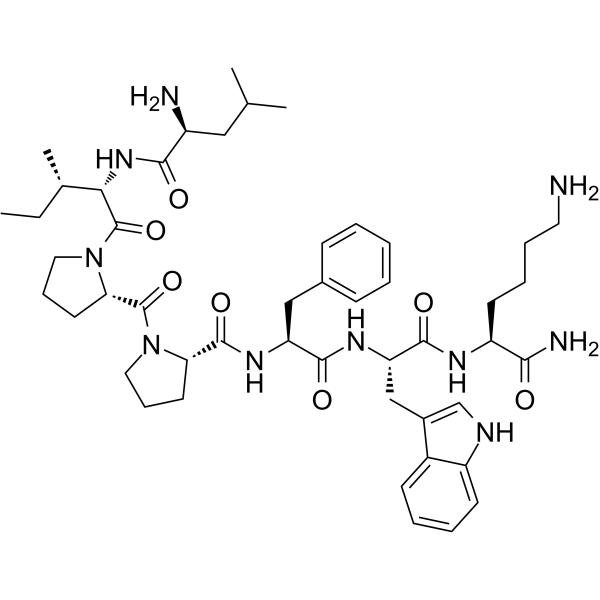
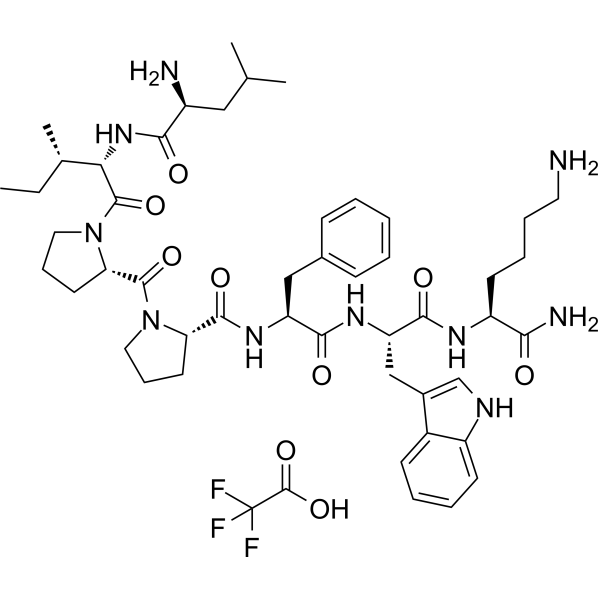
    EMD 55068 is a renin antagonist. EMD 55068 inhibits the uptake of taurocholate .
    EMD 55068

Inquiry Online

Your information is safe with us. * Required Fields.

Salutation


Country or Region *

Applicant Name *


Organization Name *

Department *


Email Address *


Product Name *

Cat. No.


Requested quantity *

Phone Number *


Remarks

Inquiry Online

Inquiry Information

Product Name:
Cat. No.:
Quantity:
MCE Japan Authorized Agent:

