



Elaidic acid
Based on 5 publication(s) in Google Scholar
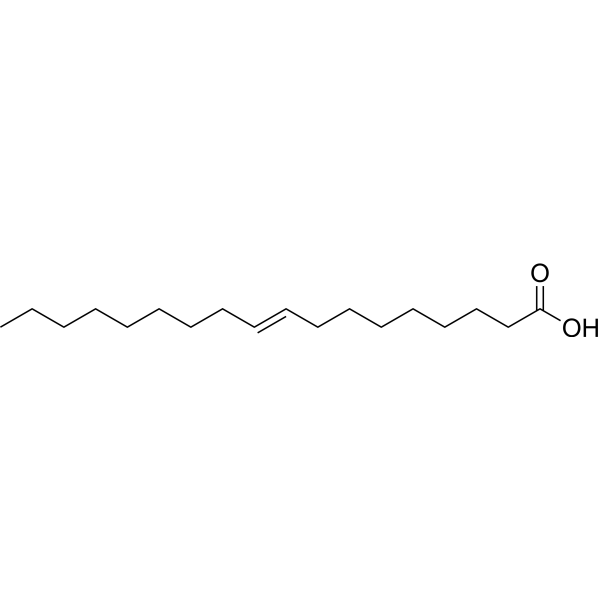
Elaidic acid is an orally active trans fatty acid. Elaidic acid enhances the stemness of colorectal cancer cells by activating the Wnt/ERK1/2 pathway, thereby promoting cell proliferation, invasion and metastasis, and inhibiting apoptosis. Elaidic acid also inhibits the growth of Lactobacillus and alters the cell surface hydrophobicity of Lactobacillus. Elaidic acid reduces basal 2-deoxyglucose uptake in muscle cells and adipocytes. Elaidic acid can be used in research on colorectal cancer, insulin and other related areas.
Nur für Forschungszwecke. Wir verkaufen nicht an Patienten.
- Reinheit : 99.81%
- CAS. Nr.: 112-79-8
- Formel: C18H34O2
- Molecular Weight:282.46
-
Speicherung:Powder -20°C, 3 years , 4°C, 2 years ; In solvent -80°C, 2 years , -20°C, 1 year

To place orders, for customer services and technical support, please contact: MedChemExpress USA
Tel: 609-228-6898 E-mail: [email protected] [email protected]


-
 Biologische Aktivität
-
Chemical Information
-
Lösungsmittel & Löslichkeit
- Protokoll
- Reinheit & Dokumentation
- Verweise
-
 Help & FAQs


-
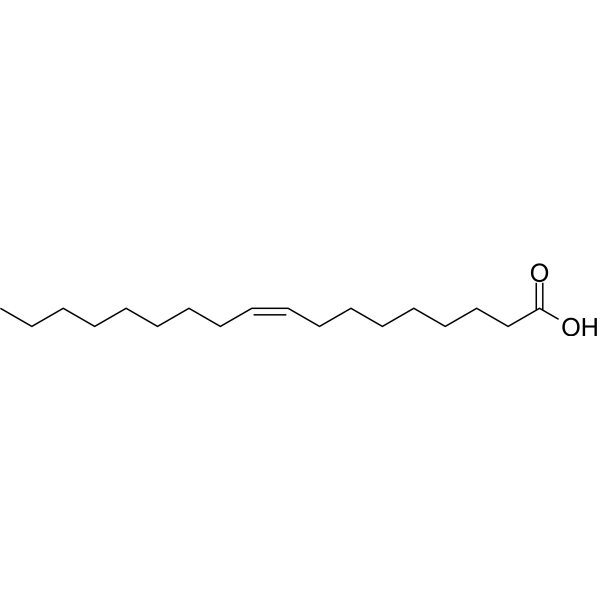
HY-N1446
Oleic acidMonounsaturated Fatty Acid -
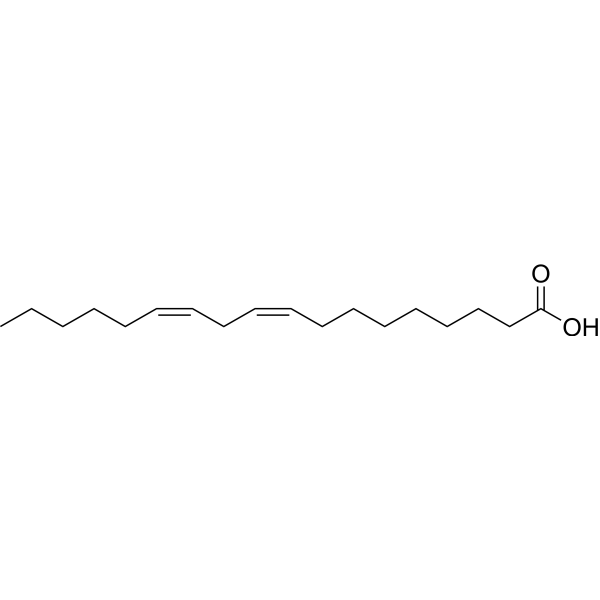
HY-N0729
Linoleic acidHuman Endogenous Metabolite -
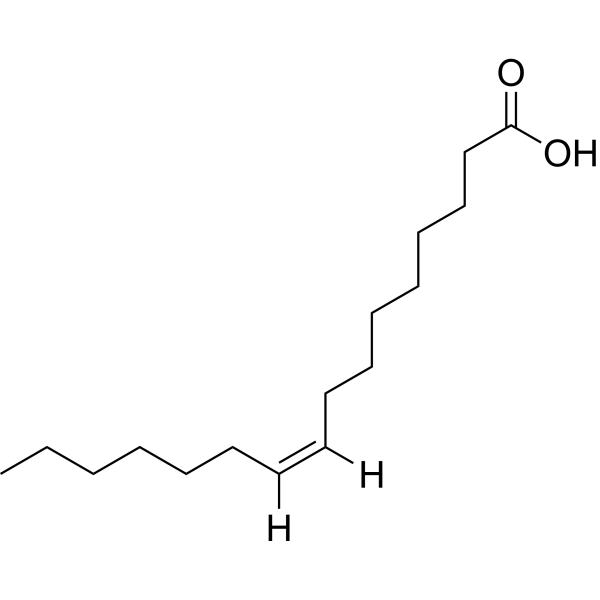
HY-W011873
Palmitoleic acid -
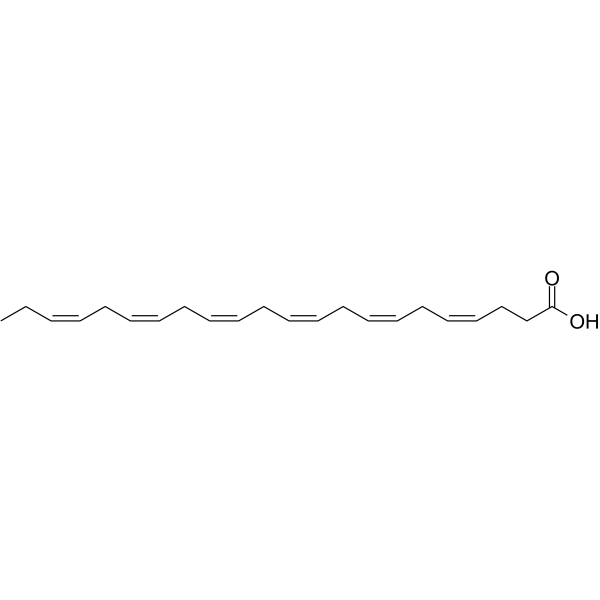
HY-B2167
Docosahexaenoic acidomega-3 Fatty Acid -
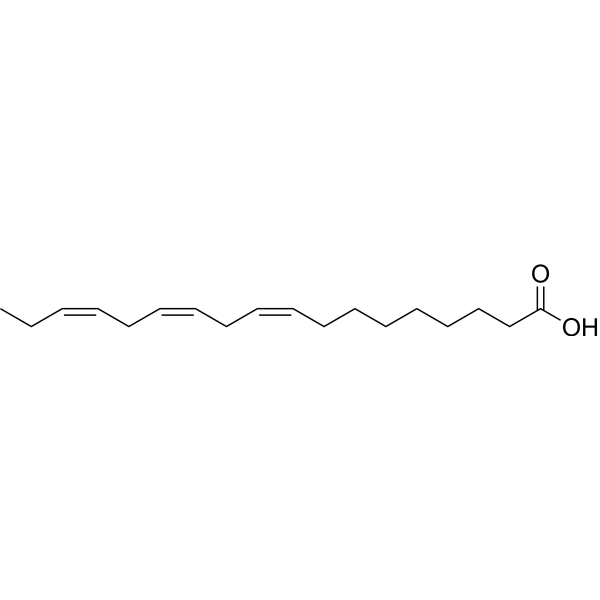
HY-N0728
α-Linolenic acidEssential Fatty Acid -
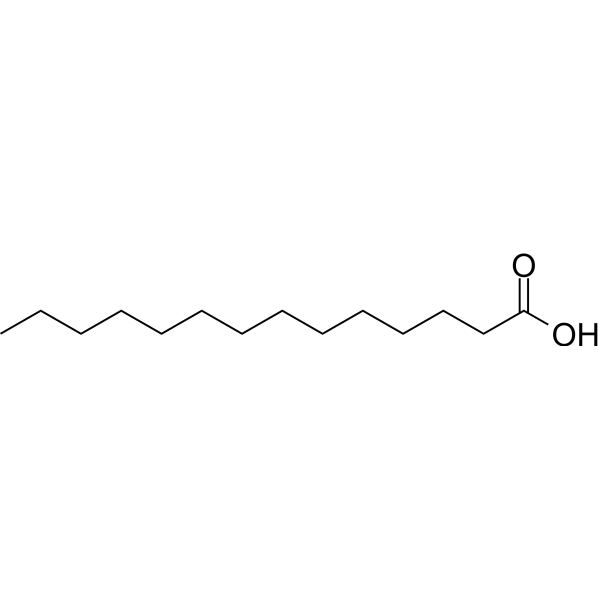
HY-N2041
Myristic acidEndogenous Metabolite -
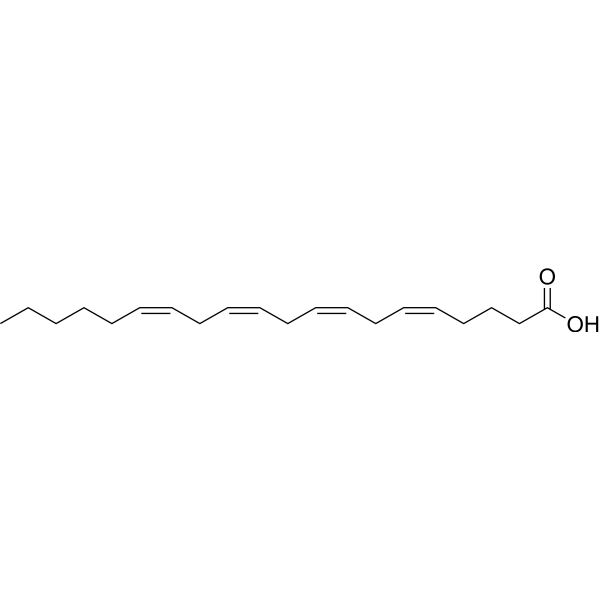
HY-109590
Arachidonic acidPolyunsaturated Fatty Acid -
HY-Y0366
Lauric acidMiddle Chain-free Fatty Acid -
HY-N0830
Palmitic acidEndogenous Metabolite -
HY-N7109
Erucic acidMonounsaturated Fatty Acid -
HY-W015309
Decanoic acidTyrosinase Inhibitor; Melanosome Inhibitor; mTORC1 Signaling Inhibitor
Publications Citing Use of MedChemExpress (MCE) Elaidic acid
More

Biologische Aktivität
Beschreibung
IC50 & Target
[3]|
IL-15 |
In Vitro
Elaidic acid (0-35 μM; 24-48 h) dose-dependently promotes the growth, reduces the apoptosis and enhances the invasive ability of CT26 and HT29 colorectal cancer cells[1].
Elaidic acid (35 μM; 1 week) enhances the sphere-forming capacity of CT26 colorectal cancer cells under concurrent treatment, pre-treatment, and hypoxic conditions[1].
Elaidic acid upregulates the expression of stem cell markers (nucleostemin, CD133, Oct4) and dedifferentiation marker (c-Myc), while downregulates the expression of differentiation markers (MUC1, MUC2, CDX2) in CT26 colorectal cancer spheres[1].
Elaidic acid (0-500 mg/L; 0-24 h) inhibits the growth of L. rhamnosus, L. paracasei, L. zeae, <L. acidophilus and L. plantarum, but exerts no effect on the growth of L. casei[2].
Elaidic acid (200 mg/L; 0-24 h) reduces the cell surface hydrophobicity of L. paracasei and L. casei[2].
Elaidic acid (20-500 μM; 24 h) dose-dependently upregulates the mRNA level of TNF-α, decreases the mRNA level of IL-15, and does not enhance insulin-stimulated glucose uptake in differentiated C2C12 myotubes[3].
MedChemExpress (MCE) has not independently confirmed the accuracy of these methods. They are for reference only.
-
Cell Line:C2C12 myotubes
-
Concentration:20, 100, 500 μM
-
Incubation Time:24 h
-
Result:Reduced the mRNA levels of IL-15.
Did not affect IL-6 levels.
Increased TNF-α mRNA levels.
In Vivo
Elaidic acid (0-0.2 mg/kg; i.g.; every 7 days; 4 weeks) increases the number of liver CRC metastatic foci and CD133-positive cells in BALB/c mice[1].
MedChemExpress (MCE) has not independently confirmed the accuracy of these methods. They are for reference only.
-
Animal Model:BALB/c (male, 5 weeks old)[1]
-
Dosage:10 mg/mouse
-
Administration:i.p.
-
Result:Increased subcutaneous CT26 or HT29 tumor growth.
Enhanced peritoneal metastasis size of CT26 or HT29 cells.
Enhanced liver metastasis of CT26 or HT29 cells.
Enhanced lung metastasis of CT26 or HT29 cells.
Increased expression of differentiation markers MUC1, MUC2, and CDX2.
- Annexin V plus membrane-impermeant dye apoptosis staining
- BrdU Incorporation Assay
- Somatic Cell Culture
- CFSE Dye Dilution Proliferation Assay
- Dye-dilution cell tracking and proliferation staining
- CCK-8/WST-8 Cell Proliferation Assay
- Protocol for Cell Cycle
- Cell Counting-Based Growth Curve Assay
- Colony Formation (Clonogenic) Assay
- Cell Viability Determination by MTT Colorimetric Assay
- EdU Incorporation Assay (Click Chemistry-Based DNA Synthesis Measurement)
- Ki-67 Immunostaining Proliferation Assay
- Detection of Apoptosis
- TUNEL staining for apoptotic DNA fragmentation
- PCNA Immunodetection Proliferation Assay
- Protocol for Cell Counting and Cell Density Analysis
- Large-size fat particle sorting
- Research Protocol for Endocrine Diseases
- Apoptosis Solutions
- Cell invasion
- MTT Cell Proliferation Assay
- Orthotopic Cell-Line Xenograft
Clinical Trial
| NCT Number | Sponsor | Condition | Start Date |
Phase

|
|---|---|---|---|---|
| NCT01329991 | 2011-05 | PHASE1 |


Chemical Information
-
CAS. Nr. 112-79-8
-
Appearance Solid
-
Molecular Weight 282.46
-
Formel C18H34O2
-
Color White to off-white
-
SMILES
CCCCCCCC/C=C/CCCCCCCC(O)=O
-
Structure Classification
-
Initial Source
-
Versand
Room temperature in continental US; may vary elsewhere.
-
Speicherung
Powder -20°C 3 years 4°C 2 years In solvent -80°C 2 years -20°C 1 year


Publications (5)
-
Journal Impact Factor
-
Most Recent
-
Nature
2025 Jul;643(8070):192-200. PMID: 39695227 -
J Exp Clin Cancer Res
DHRS2 mediates cell growth inhibition induced by Trichothecin in nasopharyngeal carcinoma. [Abstract]2019 Jul 10;38(1):300. PMID: 31291971 -
Cell Rep Med
High-fat diet increases circulating palmitic acid produced by gut Bacteroides thetaiotaomicron to promote thrombosis. [Abstract]2025 Aug 19;6(8):102260. PMID: 40749683 -
Cancer Lett
Targeting C/EBPβ/SCD1/C16:1 loop-driven macrophage M2 polarization by Bruceine D improves anti-PD-1 immunotherapy in colorectal cancer. [Abstract]2026 Sep 28:656:218655. PMID: 42250753 -
Oncogene
ACSL5 regulated acetyl-CoA to promote bladder cancer cellular senescence via 53BP1 acetylation. [Abstract]2025 Sep;44(34):3096-3112. PMID: 40595416


Lösungsmittel & Löslichkeit
In Vitro:
Ethanol : ≥ 100 mg/mL (354.03 mM)
DMSO : 13.5 mg/mL (47.79 mM; Need ultrasonic; Hygroscopic DMSO has a significant impact on the solubility of product, please use newly opened DMSO)
* "≥" means soluble, but saturation unknown.
Please refer to the solubility information to select the appropriate solvent. Once prepared, please aliquot and store the solution to prevent product inactivation from repeated freeze-thaw cycles.
Storage method and period of stock solution: -80°C, 2 years; -20°C, 1 year. When stored at -80°C, please use it within 2 years. When stored at -20°C, please use it within 1 year.
Please refer to the solubility information to select the appropriate solvent. Once prepared, please aliquot and store the solution to prevent product inactivation from repeated freeze-thaw cycles.
Storage method and period of stock solution: -80°C, 2 years; -20°C, 1 year. When stored at -80°C, please use it within 2 years. When stored at -20°C, please use it within 1 year.
Konzentration (Stammlösung) × Volumen (Stammlösung) = Konzentration (Ziellösung) × Volumen (Ziellösung)
In Vivo:
Select the appropriate dissolution method based on your experimental animal and administration route.
- For the following dissolution methods, please ensure to first prepare a clear stock solution using an In Vitro approach and then sequentially add co-solvents:
- To ensure reliable experimental results, the clarified stock solution can be appropriately stored based on storage conditions. As for the working solution for In Vivo experiments, it is recommended to prepare freshly and use it on the same day.
- The percentages shown for the solvents indicate their volumetric ratio in the final prepared solution. If precipitation or phase separation occurs during preparation, heat and/or sonication can be used to aid dissolution.
In Vivo Dissolution Calculator
Please enter the basic information of animal experiments:
-
-
-
-
Recommended: Prepare an additional quantity of animals to account for potential losses during experiments.
Please enter your animal formula composition:
-
%DMSO +
Recommended: Keep the proportion of DMSO in working solution below 2% if your animal is weak.
-
%+
-
+%Tween-80 + +
-
%Saline +
The co-solvents required include: DMSO, . All of co-solvents are available by MedChemExpress (MCE). , Tween 80. All of co-solvents are available by MedChemExpress (MCE).
Working solution concentration: 0.22 mg/mL
Method for preparing stock solution: mg drug dissolved in μL DMSO. Stock solution concentration: mg/mL.
1. Take μL DMSO stock solution;
2. Add μL .
μL , mix evenly;
3. Then add μL Tween 80, mix evenly;
4. Then add μL
Please ensure that the stock solution in the first step is dissolved to a clear state, and add co-solvents in sequence. You can use ultrasonic heating (ultrasonic cleaner, recommended frequency 20-40 kHz), vortexing, etc. to assist dissolution.


Reinheit & Dokumentation
-
Data Sheet (274 KB)
-
SDS (394 KB)
- English - EN (394 KB)
- Français - FR (394 KB)
- Deutsch - DE (394 KB)
- Norwegian - NO (394 KB)
- Español - ES (394 KB)
- Swedish - SV (394 KB)
- Italian - IT (394 KB)
- Korean - KR (394 KB)
- Portuguese - PT (394 KB)
-
Handling Instructions (2659 KB)
Verweise
[1]. Ohmori H, et al. Elaidic Acid, a Trans-Fatty Acid, Enhances the Metastasis of Colorectal Cancer Cells. Pathobiology. 2017;84(3):144-151. [Content Brief]
[2]. Wu Q, et al. Effects of elaidic acid, a predominant industrial trans fatty acid, on bacterial growth and cell surface hydrophobicity of lactobacilli. J Food Sci. 2014;79(12):M2485-M2490. [Content Brief]
[3]. Granados N, et al. Distinct effects of oleic acid and its trans-isomer elaidic acid on the expression of myokines and adipokines in cell models. Br J Nutr. 2011;105(8):1226-1234. [Content Brief]


Complete Stock Solution Preparation Table
Please refer to the solubility information to select the appropriate solvent. Once prepared, please aliquot and store the solution to prevent product inactivation from repeated freeze-thaw cycles.
Storage method and period of stock solution: -80°C, 2 years; -20°C, 1 year. When stored at -80°C, please use it within 2 years. When stored at -20°C, please use it within 1 year.
| Optional Solvent | Concentration Solvent Mass | 1 mg | 5 mg | 10 mg | 25 mg |
|---|---|---|---|---|---|
| DMSO / Ethanol | 1 mM | 3.5403 mL | 17.7016 mL | 35.4032 mL | 88.5081 mL |
| 5 mM | 0.7081 mL | 3.5403 mL | 7.0806 mL | 17.7016 mL | |
| 10 mM | 0.3540 mL | 1.7702 mL | 3.5403 mL | 8.8508 mL | |
| 15 mM | 0.2360 mL | 1.1801 mL | 2.3602 mL | 5.9005 mL | |
| 20 mM | 0.1770 mL | 0.8851 mL | 1.7702 mL | 4.4254 mL | |
| 25 mM | 0.1416 mL | 0.7081 mL | 1.4161 mL | 3.5403 mL | |
| 30 mM | 0.1180 mL | 0.5901 mL | 1.1801 mL | 2.9503 mL | |
| 40 mM | 0.0885 mL | 0.4425 mL | 0.8851 mL | 2.2127 mL | |
| Ethanol | 50 mM | 0.0708 mL | 0.3540 mL | 0.7081 mL | 1.7702 mL |
| 60 mM | 0.0590 mL | 0.2950 mL | 0.5901 mL | 1.4751 mL | |
| 80 mM | 0.0443 mL | 0.2213 mL | 0.4425 mL | 1.1064 mL | |
| 100 mM | 0.0354 mL | 0.1770 mL | 0.3540 mL | 0.8851 mL |


Elaidic acid Related Classifications
HY-113016 Related Classifications
 Powered by Bioz