



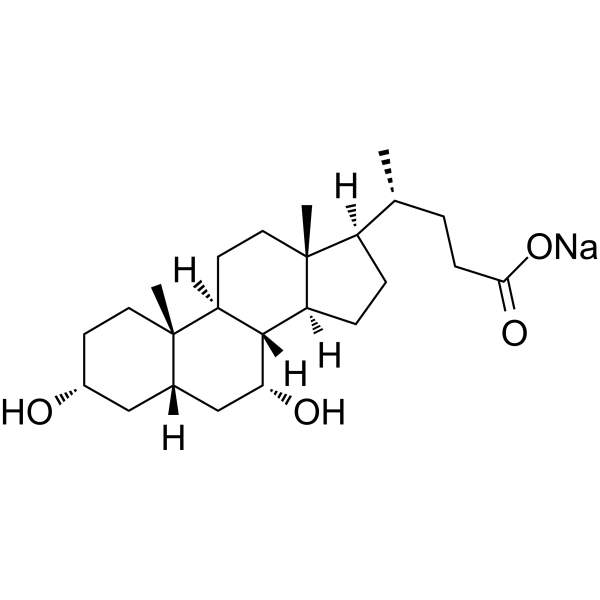
Chenodeoxycholic acid sodium
Based on 27 publication(s) in Google Scholar
Chenodeoxycholic acid sodium is a hydrophobic primary bile acid that activates nuclear receptors (FXR) involved in cholesterol metabolism.
Para uso exclusivo en investigación. No vendemos a pacientes.
- Pureza : 99.87%
- No. CAS: 2646-38-0
- Fòrmula: C24H39NaO4
- Peso molecular:414.55
-
Almacenamiento:
4°C, sealed storage, away from moisture
* In solvent : -80°C, 6 months; -20°C, 1 month (sealed storage, away from moisture)

To place orders, for customer services and technical support, please contact: MedChemExpress USA
Tel: 609-228-6898 E-mail: [email protected] [email protected]


-
 Actividad biológica
-
Chemical Information
-
Solvente y solubilidad
- Pureza y Documentación
- Referencias
-
 Help & FAQs


-
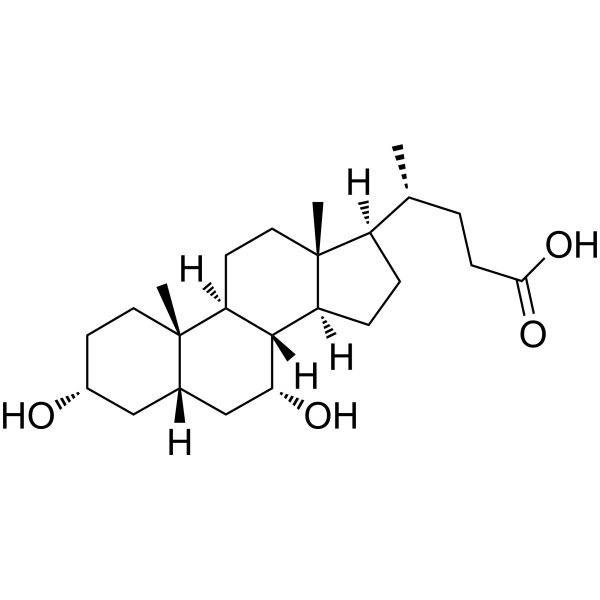
HY-76847
Chenodeoxycholic AcidEndogenous Metabolite -
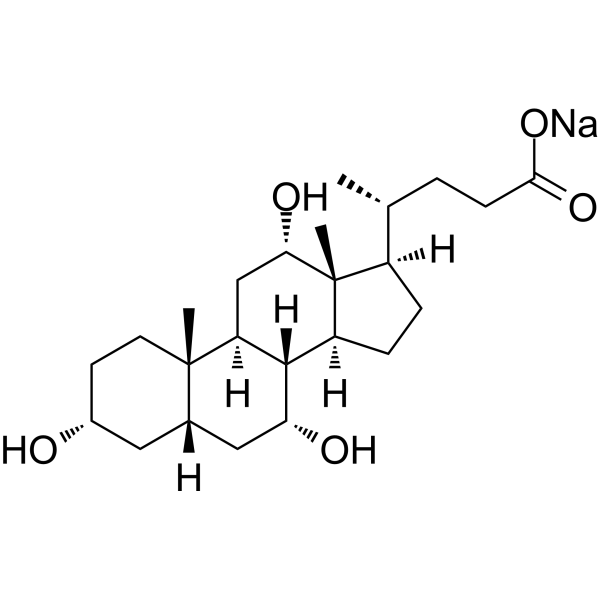
HY-N0324A
Cholic acid sodiumEndogenous Metabolite -
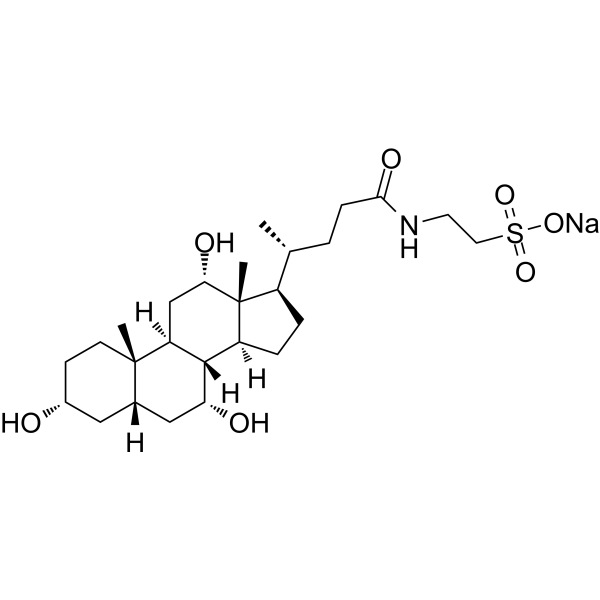
HY-N0545
Taurocholic acid sodiumImmunoregulation Agent -
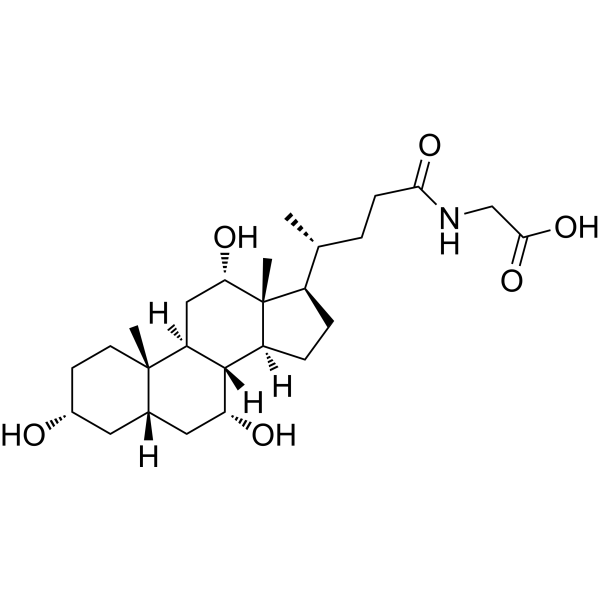
HY-N1423
Glycocholic acidBile Acid Derivative -
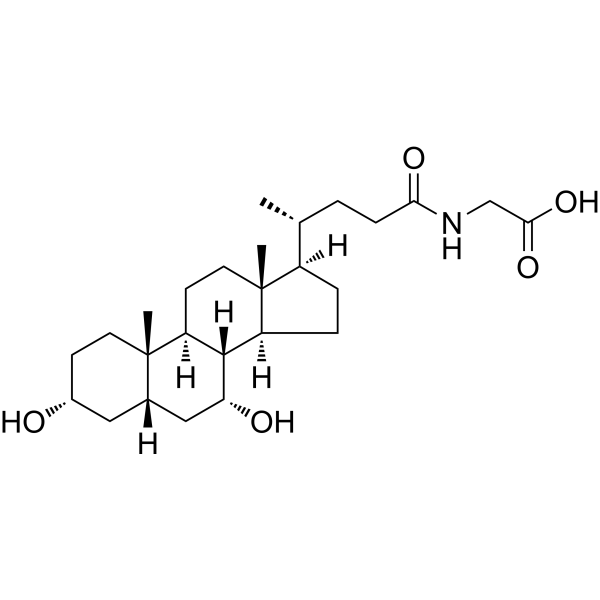
HY-N2334
Glycochenodeoxycholic acidEndogenous Metabolite -
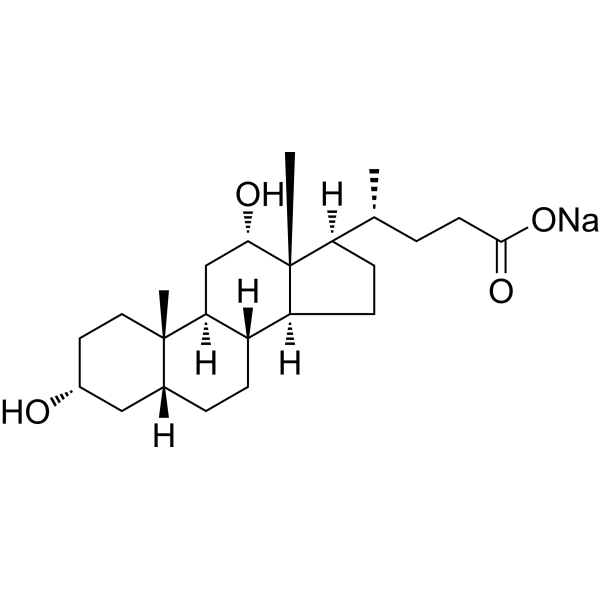
HY-N0593A
Deoxycholic acid sodium saltBile Acid Receptor Activator -
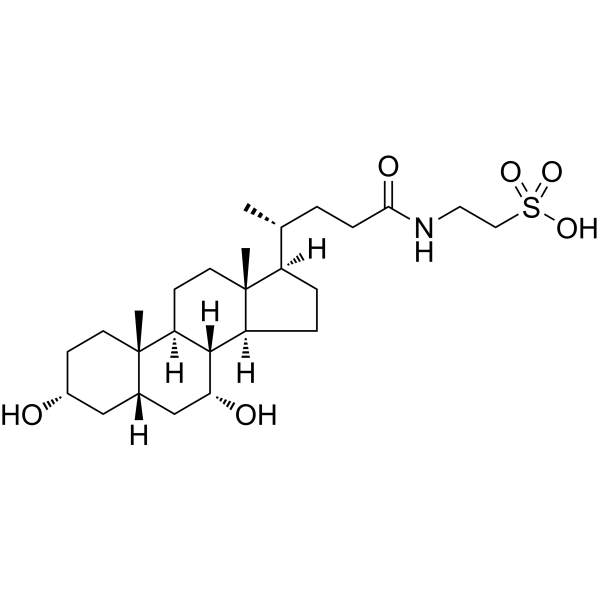
HY-N2027
Taurochenodeoxycholic acidEndogenous Metabolite -
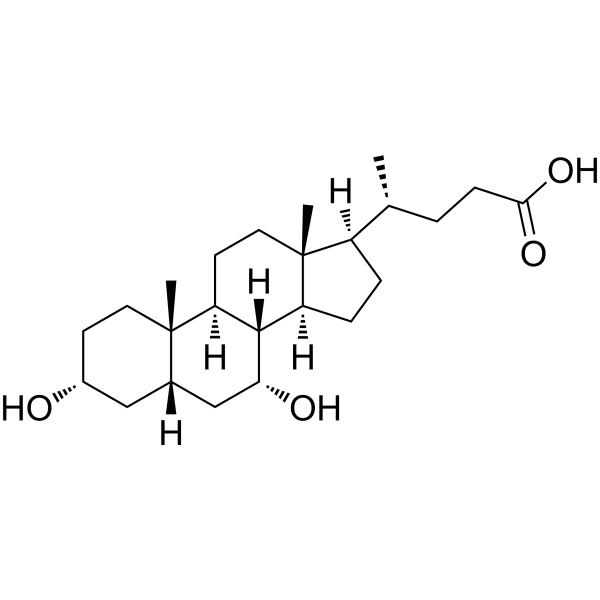
HY-76847R
Chenodeoxycholic Acid (Standard)Endogenous Metabolite -
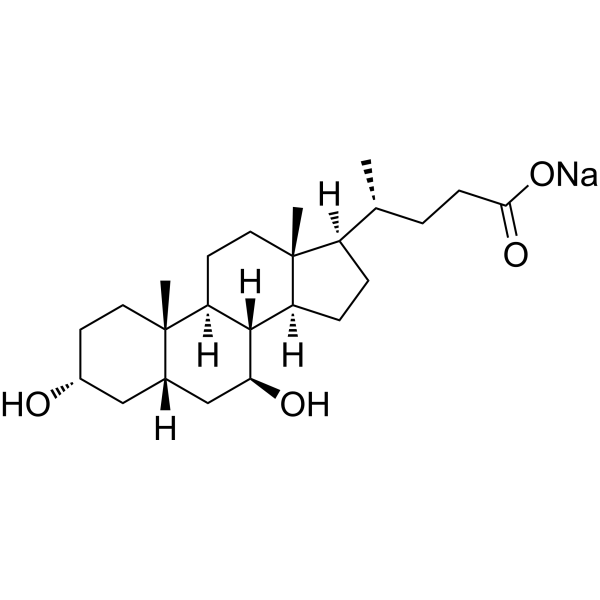
HY-13771A
Ursodeoxycholic acid sodiumGPCR19 Agonist /FXR Antagonist -
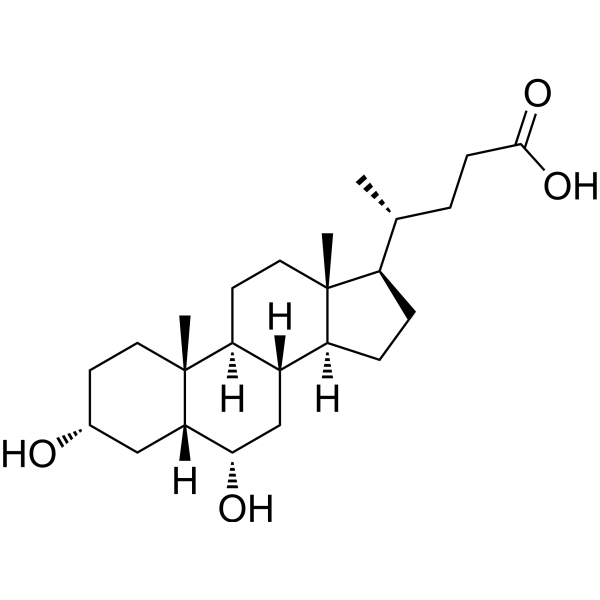
HY-N0169
Hyodeoxycholic acidGPBAR1 Agonist -
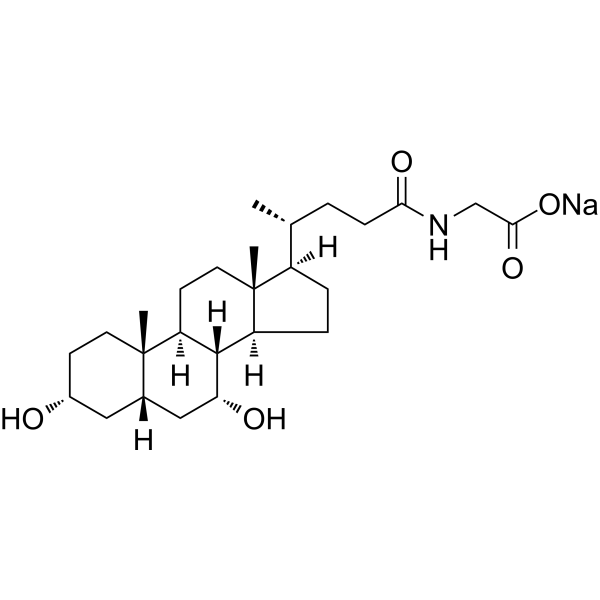
HY-N2334A
Glycochenodeoxycholic acid sodium saltEndogenous Metabolite -
HY-19696
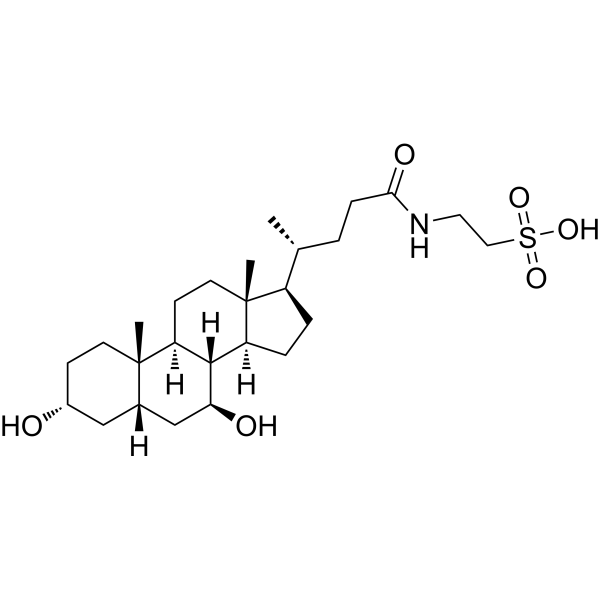
TauroursodeoxycholateEndoplasmic Reticulum Stress Inhibitor
Publications Citing Use of MedChemExpress (MCE) Chenodeoxycholic acid sodium
More- Nature. 2025 Jul;643(8070):192-200. [Abstract]
- Cell Res. 2019 Mar;29(3):193-205. [Abstract]
- Cell Host Microbe. 2025 Aug 19:S1931-3128(25)00291-4. [Abstract]
- Cell Host Microbe. 2024 Feb 14;32(2):191-208.e9. [Abstract]
- Adv Sci (Weinh). 2025 Mar;12(12):e2411719. [Abstract]
- Cell Rep Med. 2026 Sep 15;7(9):103009.
- Research (Wash D C). 2022 Nov 2:2022:9784081. [Abstract]
- Phytomedicine. 2023 Sep:118:154971. [Abstract]
- J Transl Med. 2024 Dec 20;22(1):1124. [Abstract]
- Phytother Res. 2025 Aug 20. [Abstract]
- Phytother Res. 2021 Mar;35(3):1495-1507. [Abstract]
- J Agric Food Chem. 2023 Nov 22;71(46):17615-17626. [Abstract]
- Biomolecules. 2025 Jun 28;15(7):943. [Abstract]
- Int J Mol Sci. 2023 Aug 30;24(17):13494. [Abstract]
- J Hypertens. 2022 Aug 1;40(8):1577-1588. [Abstract]
- J Nutr Biochem. 2026 Sep:155:110379. [Abstract]
- Sci Rep. 2026 May 12. [Abstract]
- Biomedicines. 2025 Apr 4;13(4):874. [Abstract]
- Aquaculture. 2023 Sep 18, 740123.
- J Biol Chem. 2024 Oct;300(10):107765. [Abstract]
- Microb Pathog. 2026 Jan:210:108187. [Abstract]
- Drug Metab Dispos. 2026 Feb 24.
- J Pharm Biomed Anal. 2025 Jul 15:259:116760. [Abstract]
- Placenta. 2026 May 22:179:87-94. [Abstract]
- Biomed Rep. 2026 Jul 22;25(3):106.
- Sci Total Environ. 2023 Apr 15:869:161701. [Abstract]
- SSRN. 2022 Jan 26.
 Customer Validation & Images

-
IP
-
2D/3D Cell Culture and Differentiation
-
Cell Proliferation/Viability Assay
-
RT-PCR
-
Bio/Physico-chemical Assay
Ver todos los productos específicos de isoformas Endogenous Metabolite
More

Actividad biológica
Descripciòn
In Vitro
Chenodeoxycholic acid sodium (CDCA) and Deoxycholic acid (DCA) both inhibit 11 beta HSD2 with IC50 values of 22 mM and 38 mM, respectively and causes cortisol-dependent nuclear translocation and increases transcriptionalactivity of mineralocorticoid receptor (MR)[1]. Chenodeoxycholic acid sodium is able to stimulate Ishikawa cell growth by inducing a significant increase in Cyclin D1 protein and mRNA expression through the activation of the membrane G protein-coupled receptor (TGR5)-dependent pathway[2]. Chenodeoxycholic acid sodium (CDCA) induces LDL receptor mRNA levels approximately 4 fold and mRNA levels for HMG-CoA reductase and HMG-CoA synthase two fold in a cultured human hepatoblastoma cell line, Hep G2[3]. Chenodeoxycholic acid sodium-induced Isc is inhibited (≥67%) by Bumetanide, BaCl2, and the cystic fibrosis transmembrane conductance regulator (CFTR) inhibitor CFTRinh-172. Chenodeoxycholic acid sodium-stimulated Isc is decreased 43% by the adenylate cyclase inhibitor MDL12330A and Chenodeoxycholic acid sodium increases intracellular cAMP concentration[4]. Chenodeoxycholic acid sodium treatment activates C/EBPβ, as shown by increases in its phosphorylation, nuclear accumulation, and expression in HepG2 cells. Chenodeoxycholic acid sodium enhances luciferase gene transcription from the construct containing -1.65-kb GSTA2 promoter, which contains C/EBP response element (pGL-1651). Chenodeoxycholic acid sodium treatment activates AMP-activated protein kinase (AMPK), which leads to extracellular signal-regulated kinase 1/2 (ERK1/2) activation, as evidenced by the results of experiments using a dominant-negative mutant of AMPKα and chemical inhibitor[5].
MedChemExpress (MCE) has not independently confirmed the accuracy of these methods. They are for reference only.


Chemical Information
-
No. CAS 2646-38-0
-
Appearance Solid
-
Peso molecular 414.55
-
Fòrmula C24H39NaO4
-
Color White to off-white
-
SMILES
O=C(O[Na])CC[C@@H](C)[C@]1([H])[C@]2(C)[C@](CC1)([H])[C@]3([H])[C@H](O)C[C@@](C4)([H])[C@@](CC[C@H]4O)(C)[C@]([H])3CC2
-
Synonyms
CDCA sodium
-
Structure Classification
-
Initial Source
-
Envío
Room temperature in continental US; may vary elsewhere.
-
Almacenamiento
4°C, sealed storage, away from moisture
* In solvent : -80°C, 6 months; -20°C, 1 month (sealed storage, away from moisture)


Publications (27)
-
Journal Impact Factor
-
Most Recent
-
Nature
2025 Jul;643(8070):192-200. PMID: 39695227
Chenodeoxycholic acid sodium purchased from MedChemExpress. Usage Cited in: Nature. 2025 Jul;643(8070):192-200. [Abstract]
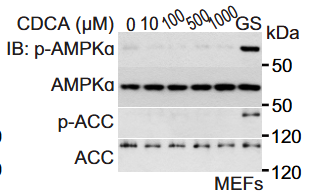
CDCA does not activate AMPK; MEFs were treated with CDCA at the indicated concentrations for 4 h.
-
Cell Res
Virus-induced accumulation of intracellular bile acids activates the TGR5-β-arrestin-SRC axis to enable innate antiviral immunity. [Abstract]2019 Mar;29(3):193-205. PMID: 30651583
Chenodeoxycholic acid sodium purchased from MedChemExpress. Usage Cited in: Cell Res. 2019 Mar;29(3):193-205. [Abstract]
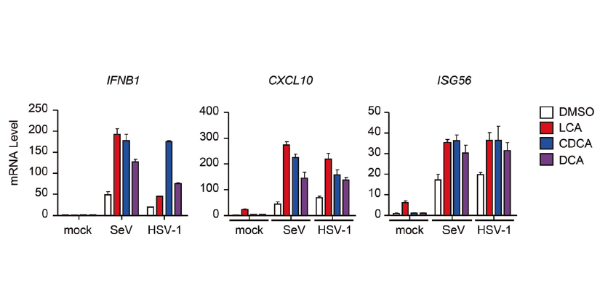
Virus-triggered accumulation of intracellular bile acids (BAs) promotes cellular antiviral response. Effects of BAs on virus-induced transcription of antiviral genes. Raw264.7 cells were infected with HSV-1 or SeV for 30 min and treated with Lithocholic acid (LCA) (0.1 mM), Chenodeoxycholic Acid (CDCA) (0.1 mM) or Deoxycholic acid (DCA) (0.1 mM) for 6 h before qPCR analysis of the indicated mRNA levels.
Chenodeoxycholic acid sodium purchased from MedChemExpress. Usage Cited in: Cell Res. 2019 Mar;29(3):193-205. [Abstract]
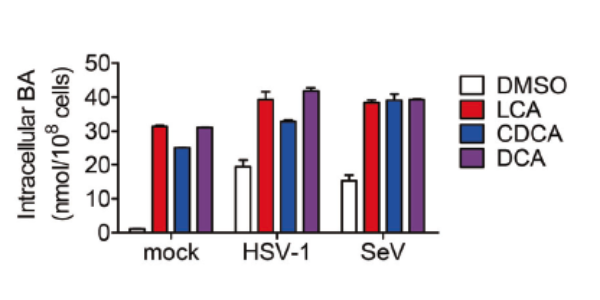
Examination of intracellular bile acids (BA) levels after cells were treated with exogenous BAs. Raw264.7 cells were infected with HSV-1 or SeV for 30 min and treated with Lithocholic acid (LCA) (0.1 mM), Chenodeoxycholic Acid (CDCA) (0.1 mM) or Deoxycholic acid (DCA) (0.1 mM) for 6 h before BA assays were performed.
-
Cell Host Microbe
2025 Aug 19:S1931-3128(25)00291-4. PMID: 40848719 -
Cell Host Microbe
A gut microbiota-bile acid axis promotes intestinal homeostasis upon aspirin-mediated damage. [Abstract]2024 Feb 14;32(2):191-208.e9. PMID: 38237593
Chenodeoxycholic acid sodium purchased from MedChemExpress. Usage Cited in: Cell Host Microbe. 2024 Feb 14;32(2):191-208.e9. [Abstract]
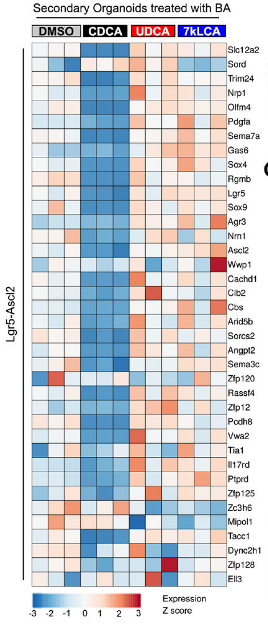
Secondary organoids were treated with CDCA (20 μM), 7-keto-LCA (20 μM), or UDCA (20 μM) for 5 days,s and next-generation sequencingwas conducted. A heatmap of changes in stem cell gene signature (Lgr5-Ascl2) is shown.
Chenodeoxycholic acid sodium purchased from MedChemExpress. Usage Cited in: Cell Host Microbe. 2024 Feb 14;32(2):191-208.e9. [Abstract]
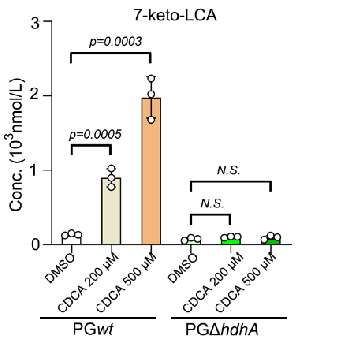
In vitro culture of wild-type P. goldsteinii (PG-WT) or hdhA-deficient P. goldsteinii(PGΔhdhA) was supplemented with CDCA (10 μM, 48h). LC–MS analysis confirmed that the mutant strain was unable to convert CDCA into 7-keto-LCA.
-
Adv Sci (Weinh)
Targeting FDFT1 Reduces Cholesterol and Bile Acid Production and Delays Hepatocellular Carcinoma Progression Through the HNF4A/ALDOB/AKT1 Axis. [Abstract]2025 Mar;12(12):e2411719. PMID: 39899681 -
-
Research (Wash D C)
Activation of Pancreatic Acinar FXR Protects against Pancreatitis via Osgin1-Mediated Restoration of Efficient Autophagy. [Abstract]2022 Nov 2:2022:9784081. PMID: 36405253 -
Phytomedicine
Geniposide alleviated bile acid-associated NLRP3 inflammasome activation by regulating SIRT1/FXR signaling in bile duct ligation-induced liver fibrosis. [Abstract]2023 Sep:118:154971. PMID: 37494875 -
J Transl Med
Conjugated bile acids alleviate acute pancreatitis through inhibition of TGR5 and NLRP3 mediated inflammation. [Abstract]2024 Dec 20;22(1):1124. PMID: 39707318 -
Phytother Res
Monosaccharide and Disaccharide Saponins of Shade-Dried Gynostemma Pentaphyllum Confer Metabolic Benefits in Mice With Non-Alcoholic Fatty Liver Disease. [Abstract]2025 Aug 20. PMID: 40833710 -
Phytother Res
Resveratrol inhibits bile acid-induced gastric intestinal metaplasia via the PI3K/AKT/p-FoxO4 signalling pathway. [Abstract]2021 Mar;35(3):1495-1507. PMID: 33103284 -
J Agric Food Chem
Galacto-Oligosaccharides Alleviate LPS-Induced Immune Imbalance in Small Intestine through Regulating Gut Microbe Composition and Bile Acid Pool. [Abstract]2023 Nov 22;71(46):17615-17626. PMID: 37947505 -
Biomolecules
Significant Reduction of Chenodeoxycholic Acid and Glycochenodeoxycholic Acid in the Elderly with Severe COVID-19. [Abstract]2025 Jun 28;15(7):943. PMID: 40723815 -
Int J Mol Sci
FXR Maintains the Intestinal Barrier and Stemness by Regulating CYP11A1-Mediated Corticosterone Synthesis in Biliary Obstruction Diseases. [Abstract]2023 Aug 30;24(17):13494. PMID: 37686300 -
J Hypertens
Renal Farnesoid X Receptor improves high fructose-induced salt-sensitive hypertension in mice by inhibiting DNM3 to promote nitro oxide production. [Abstract]2022 Aug 1;40(8):1577-1588. PMID: 35792095 -
J Nutr Biochem
Multi-omics reveals that chenodeoxycholic acid promotes calcium oxalate kidney stone formation by targeting catalase. [Abstract]2026 Sep:155:110379. PMID: 41974260 -
Sci Rep
An integrative analysis revealing involvement of IFITM2 in gastric cancer initiation and progression. [Abstract]2026 May 12. PMID: 42120461 -
Biomedicines
2025 Apr 4;13(4):874. PMID: 40299495 -
-
J Biol Chem
PPARγ and C/EBPα enable adipocyte differentiation upon inhibition of histone methyltransferase PRC2 in malignant tumors. [Abstract]2024 Oct;300(10):107765. PMID: 39276936 -
Microb Pathog
Lithocholic acid exerts antiviral activity against porcine epidemic diarrhea virus by enhancing TGR5-mediated type III interferon production. [Abstract]2026 Jan:210:108187. PMID: 41242567 -
-
J Pharm Biomed Anal
Integrating 16S rDNA sequencing analysis and targeted metabolomics to explore the mechanism of Xiexin Tang in treating atherosclerosis mice induced by high-fat diet. [Abstract]2025 Jul 15:259:116760. PMID: 40014894 -
Placenta
2026 May 22:179:87-94. PMID: 41996827 -
-
Sci Total Environ
Binding, activity and risk assessment of bisphenols toward farnesoid X receptor pathway: In vitro and in silico study. [Abstract]2023 Apr 15:869:161701. PMID: 36709907 -


Solvente y solubilidad
In Vitro:
DMSO : 100 mg/mL (241.23 mM; Need ultrasonic; Hygroscopic DMSO has a significant impact on the solubility of product, please use newly opened DMSO)
H2O : 8.75 mg/mL (21.11 mM; ultrasonic and warming and heat to 60°C)
Please refer to the solubility information to select the appropriate solvent. Once prepared, please aliquot and store the solution to prevent product inactivation from repeated freeze-thaw cycles.
Storage method and period of stock solution: -80°C, 6 months; -20°C, 1 month (sealed storage, away from moisture). When stored at -80°C, please use it within 6 months. When stored at -20°C, please use it within 1 month.
* Note: If you choose water as the stock solution, please dilute it to the working solution, then filter and sterilize it with a 0.22 μm filter before use.
Please refer to the solubility information to select the appropriate solvent. Once prepared, please aliquot and store the solution to prevent product inactivation from repeated freeze-thaw cycles.
Storage method and period of stock solution: -80°C, 6 months; -20°C, 1 month (sealed storage, away from moisture). When stored at -80°C, please use it within 6 months. When stored at -20°C, please use it within 1 month.
* Note: If you choose water as the stock solution, please dilute it to the working solution, then filter and sterilize it with a 0.22 μm filter before use.
Concentration (start) × Volume (start) = Concentration (final) × Volume (final)
In Vivo:
Select the appropriate dissolution method based on your experimental animal and administration route.
- For the following dissolution methods, please ensure to first prepare a clear stock solution using an In Vitro approach and then sequentially add co-solvents:
- To ensure reliable experimental results, the clarified stock solution can be appropriately stored based on storage conditions. As for the working solution for In Vivo experiments, it is recommended to prepare freshly and use it on the same day.
- The percentages shown for the solvents indicate their volumetric ratio in the final prepared solution. If precipitation or phase separation occurs during preparation, heat and/or sonication can be used to aid dissolution.
Add each solvent one by one: 10% DMSO 40% PEG300 5% Tween-80 45% Saline
Solubility: ≥ 5 mg/mL (12.06 mM); Clear solution
This protocol yields a clear solution of ≥ 5 mg/mL (saturation unknown).
Taking 1 mL working solution as an example, add 100 μL DMSO stock solution (50.0 mg/mL) to 400 μL PEG300, and mix evenly; then add 50 μL Tween-80 and mix evenly; then add 450 μL Saline to adjust the volume to 1 mL.
Preparation of Saline: Dissolve 0.9 g sodium chloride in ddH₂O and dilute to 100 mL to obtain a clear Saline solution.
Add each solvent one by one: 10% DMSO 90% (20% SBE-β-CD in Saline)
Solubility: ≥ 5 mg/mL (12.06 mM); Clear solution
This protocol yields a clear solution of ≥ 5 mg/mL (saturation unknown).
Taking 1 mL working solution as an example, add 100 μL DMSO stock solution (50.0 mg/mL) to 900 μL 20% SBE-β-CD in Saline, and mix evenly.
Preparation of 20% SBE-β-CD in Saline (4°C, storage for one week): 2 g SBE-β-CD powder is dissolved in 10 mL Saline, completely dissolve until clear.
In Vivo Dissolution Calculator
Please enter the basic information of animal experiments:
-
-
-
-
Recommended: Prepare an additional quantity of animals to account for potential losses during experiments.
Please enter your animal formula composition:
-
%DMSO +
Recommended: Keep the proportion of DMSO in working solution below 2% if your animal is weak.
-
%+
-
+%Tween-80 + +
-
%Saline +
The co-solvents required include: DMSO, . All of co-solvents are available by MedChemExpress (MCE). , Tween 80. All of co-solvents are available by MedChemExpress (MCE).
Working solution concentration: 0.22 mg/mL
Method for preparing stock solution: mg drug dissolved in μL DMSO. Stock solution concentration: mg/mL. * In solvent : -80°C, 6 months; -20°C, 1 month (sealed storage, away from moisture)
1. Take μL DMSO stock solution;
2. Add μL .
μL , mix evenly;
3. Then add μL Tween 80, mix evenly;
4. Then add μL
Please ensure that the stock solution in the first step is dissolved to a clear state, and add co-solvents in sequence. You can use ultrasonic heating (ultrasonic cleaner, recommended frequency 20-40 kHz), vortexing, etc. to assist dissolution.


Pureza y Documentación
-
Ficha de datos (282 KB)
-
SDS (644 KB)
- English - EN (644 KB)
- Français - FR (644 KB)
- Deutsch - DE (644 KB)
- Norwegian - NO (644 KB)
- Español - ES (644 KB)
- Swedish - SV (644 KB)
- Italian - IT (644 KB)
- Korean - KR (644 KB)
- Portuguese - PT (644 KB)
-
Instrucciones de manejo (2659 KB)
Referencias
[1]. Stauffer AT, et al. Chenodeoxycholic acid and deoxycholic acid inhibit 11 beta-hydroxysteroid dehydrogenase type 2 and cause cortisol-induced transcriptional activation of the mineralocorticoid receptor. J Biol Chem. 2002 Jul 19;277(29):26286-92 [Content Brief]
[2]. Noh K, et al. Farnesoid X receptor activation by chenodeoxycholic acid induces detoxifying enzymes through AMP-activated protein kinase and extracellular signal-regulated kinase 1/2-mediated phosphorylation of CCAAT/enhancer binding protein β. Drug Metab [Content Brief]
[3]. Casaburi I, et al. Chenodeoxycholic acid through a TGR5-dependent CREB signaling activation enhances cyclin D1 expression and promotes human endometrial cancer cell proliferation. Cell Cycle. 2012 Jul 15;11(14):2699-710 [Content Brief]
[4]. Ao M, et al. Chenodeoxycholic acid stimulates Cl(-) secretion via cAMP signaling and increases cystic fibrosis transmembrane conductance regulator phosphorylation in T84 cells. Am J Physiol Cell Physiol. 2013 Aug 15;305(4):C447-56 [Content Brief]
[5]. Kawabe Y, et al. The molecular mechanism of the induction of the low density lipoprotein receptor by chenodeoxycholic acid in cultured human cells. Biochem Biophys Res Commun. 1995 Mar 8;208(1):405-11. [Content Brief]


Complete Stock Solution Preparation Table
Please refer to the solubility information to select the appropriate solvent. Once prepared, please aliquot and store the solution to prevent product inactivation from repeated freeze-thaw cycles.
Storage method and period of stock solution: -80°C, 6 months; -20°C, 1 month (sealed storage, away from moisture). When stored at -80°C, please use it within 6 months. When stored at -20°C, please use it within 1 month.
| Optional Solvent | Concentration Solvent Mass | 1 mg | 5 mg | 10 mg | 25 mg |
|---|---|---|---|---|---|
| H2O / DMSO | 1 mM | 2.4123 mL | 12.0613 mL | 24.1225 mL | 60.3064 mL |
| 5 mM | 0.4825 mL | 2.4123 mL | 4.8245 mL | 12.0613 mL | |
| 10 mM | 0.2412 mL | 1.2061 mL | 2.4123 mL | 6.0306 mL | |
| 15 mM | 0.1608 mL | 0.8041 mL | 1.6082 mL | 4.0204 mL | |
| 20 mM | 0.1206 mL | 0.6031 mL | 1.2061 mL | 3.0153 mL | |
| DMSO | 25 mM | 0.0965 mL | 0.4825 mL | 0.9649 mL | 2.4123 mL |
| 30 mM | 0.0804 mL | 0.4020 mL | 0.8041 mL | 2.0102 mL | |
| 40 mM | 0.0603 mL | 0.3015 mL | 0.6031 mL | 1.5077 mL | |
| 50 mM | 0.0482 mL | 0.2412 mL | 0.4825 mL | 1.2061 mL | |
| 60 mM | 0.0402 mL | 0.2010 mL | 0.4020 mL | 1.0051 mL | |
| 80 mM | 0.0302 mL | 0.1508 mL | 0.3015 mL | 0.7538 mL | |
| 100 mM | 0.0241 mL | 0.1206 mL | 0.2412 mL | 0.6031 mL |
* Note: If you choose water as the stock solution, please dilute it to the working solution, then filter and sterilize it with a 0.22 μm filter before use.


Chenodeoxycholic acid sodium Related Classifications
HY-76847A Related Classifications
 Powered by Bioz