
Delivery of temperature sensitive items including proteins and kits will be paused on 6/19 for the Juneteenth holiday. For urgent orders please contact customer service.
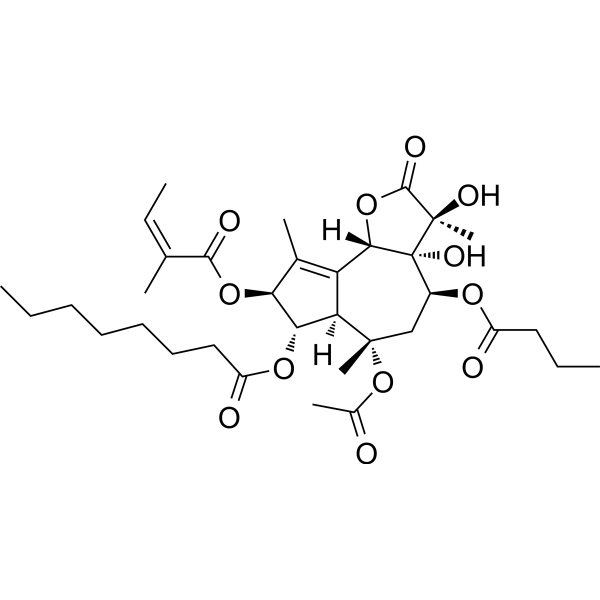
Thapsigargin, an endoplasmic reticulum (ER) stress inducer, is an inhibitor of microsomal Ca 2+-ATPase. Thapsigargin efficiently inhibits coronavirus (HCoV-229E, MERS-CoV, SARS-CoV-2) replication in different cell types .
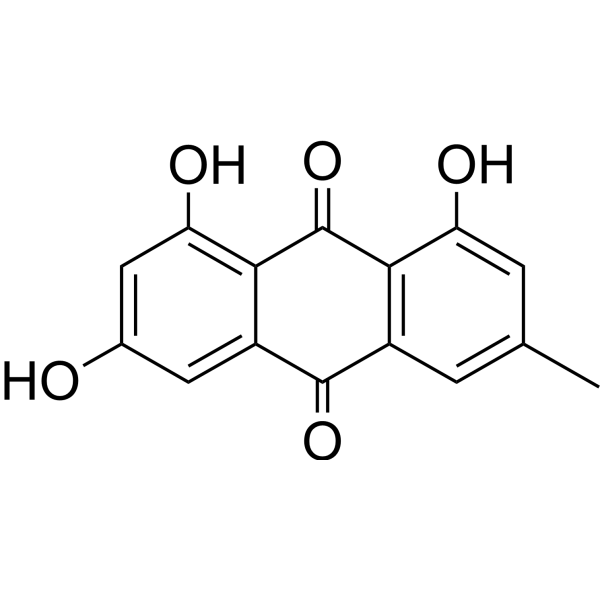
Emodin (Frangula emodin), an anthraquinone derivative, is an anti-SARS-CoV compound. Emodin blocks the SARS coronavirus spike protein and angiotensin-converting enzyme 2 (ACE2) interaction . Emodin inhibits casein kinase-2 (CK2). Anti-inflammatory and anticancer effects . Emodin is a potent selective 11β-HSD1 inhibitor with the IC50 of 186 and 86 nM for human and mouse 11β-HSD1, respectively. Emodin ameliorates metabolic disorder in diet-induced obese mice .
Tocilizumab (Anti-Human IL6R, Humanized Antibody) is an anti-human interleukin-6 receptor (IL-6R) neutralizing antibody, prevents binding of IL-6 to the IL-6R, thereby inhibiting both classic and trans-signaling. Tocilizumab (Anti-Human IL6R, Humanized Antibody) can be used for the treatment of rheumatoid arthritis . Tocilizumab is remarkablely effective for the study of severe COVID-19 (coronavirus disease) .
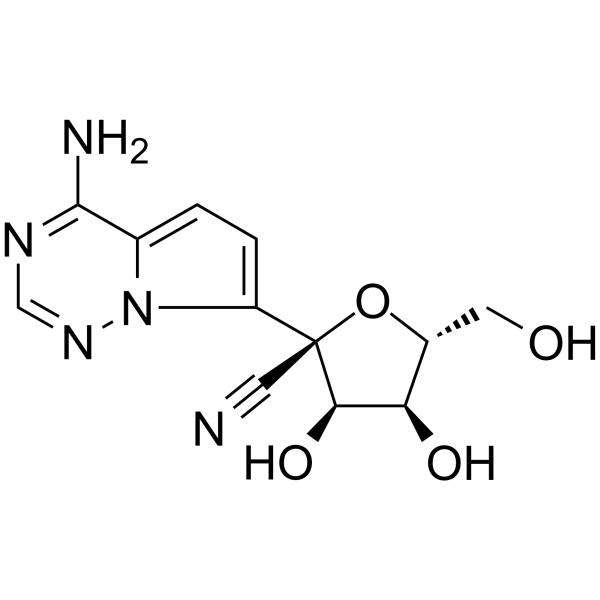
GS-441524 is a potent, orally active and CNS-penetrant viral RNA-dependent RNA polymerase inhibitor. GS-441524 competes with natural nucleosides to block viral RNA transcription as an alternative substrate and RNA chain terminator. GS-441524 inhibits the replication of feline infectious peritonitis virus, African swine fever virus, and severe acute respiratory syndrome coronavirus 2. GS-441524 reduces viral RNA levels in cats. GS-441524 can be used in research related to feline infectious peritonitis, African swine fever, and coronavirus disease 2019 (COVID-19) .
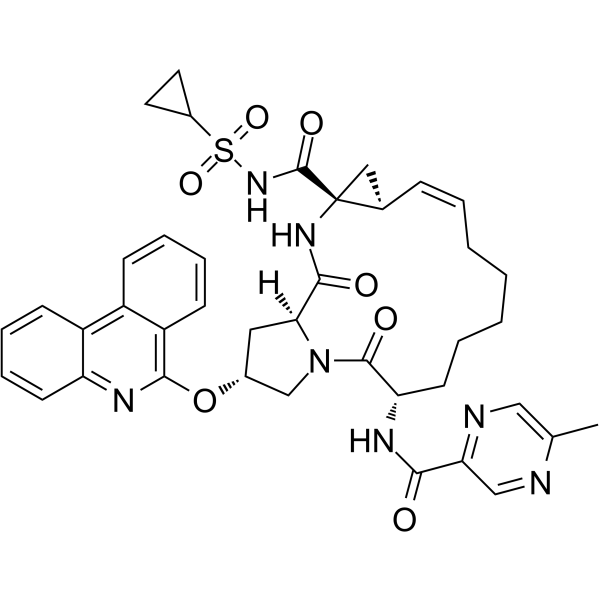
Paritaprevir (ABT-450) is a potent, orally active and antiviral non-structuralprotein 3/4A (NS3/4A) protease inhibitor with EC50s of 1 and 0.21 nM against HCV 1a and 1b, respectively. Paritaprevir is also a SARS-CoV 3CL pro inhibitor with an IC50 of 1.31 μM. Paritaprevir is metabolized primarily by cytochrome P450 (CYP) 3A. The plasma concentration and half-life of Paritaprevir can be enhanced by Ritonavir (a CYP450 inhibitor) .
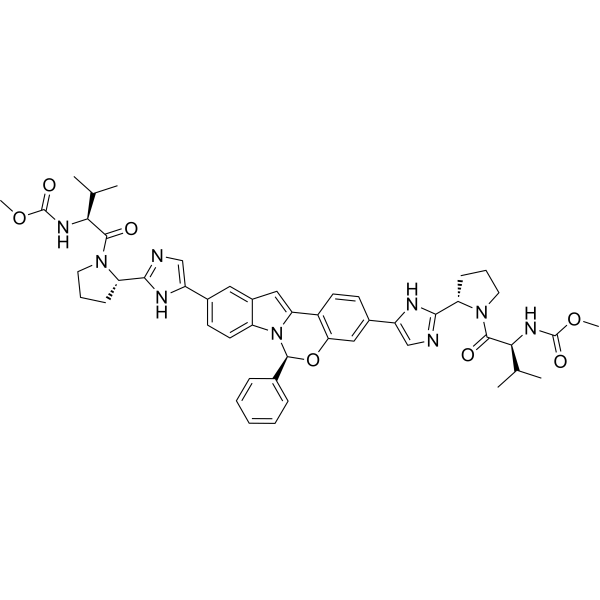
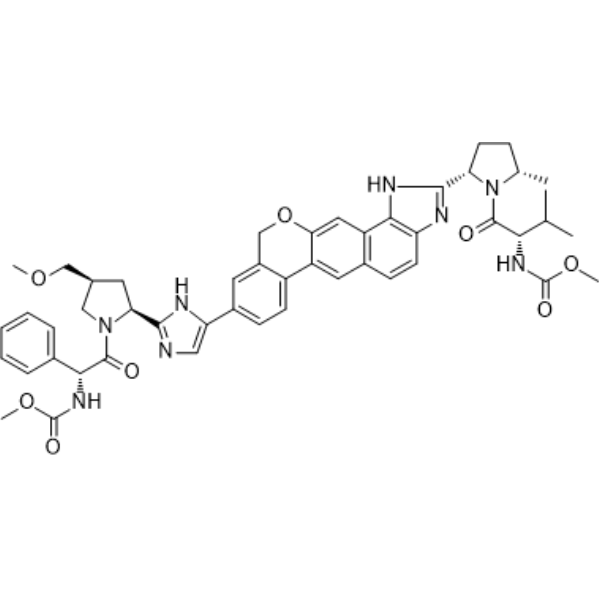
Velpatasvir (VEL, GS-5816) is a novel pan-genotypic hepatitis C virus (HCV) nonstructuralprotein 5A (NS5A) inhibitor with activity against genotype 1 (GT1) to GT6 HCV replicons. Velpatasvir is also a SARS-CoV 3CL pro inhibitor with an IC50 of 2.16 μM .
3BDO is a IFITM3 modulator and mTOR activator with antiviral and autophagy-inhibiting effects. 3BDO exhibits inhibitory activity against porcine coronaviruses. 3BDO increases the protein abundance of IFITM3, inhibits virus-cell membrane fusion, and blocks viral entry. 3BDO inhibits the entry of transmissible gastroenteritis virus, porcine epidemic diarrhea virus, and porcine respiratory coronavirus into host cells. 3BDO can be used for research on porcine coronavirus infection .
Elbasvir (MK-8742) is a hepatitis C virusnonstructuralprotein 5A (HCV NS5A) inhibitor with EC50s of 4, 3 and 3 nM against genotype 1a, 1b, and 2a, respectively.
Lufotrelvir (PF-07304814), a phosphate proagent of PF-00835231, acts as a potent 3CLpro protease (Mpro) inhibitor with SARS-CoV-2 antiviral activity. Lufotrelvir binds and inhibits SARS-CoV-2 3CLpro activity with a Ki of 174nM. Lufotrelvir is promising single antiviral agent and also can be used for the research of combination with other antivirals that target other critical stages of the coronavirus life cycle.
Zevotrelvir (EDP-235) is a coronavirus inhibitor that can inhibit 229E hCoV and the SARS-CoV-2 3C-like (3CL) protease (IC50 <0.1 mM). Zevotrelvir can be used in research on coronavirus infections .
Arbemnifosbuvir is a nidovirus DdRp-associated nucleotidyltransferase (NiRAN) domain of non-structuralprotein 12 (nsp12)-interfering drugs. Arbemnifosbuvir can be used for SARS-CoVs infection research .
Olgotrelvir (STI-1558) sodium is an orally active dual inhibitor of coronavirus main protease (Mpro) and human cell cathepsin (Cathepsin L). Olgotrelvir sodium is readily converted to its active form, AC1115, in full blood and/or plasma. Olgotrelvir sodium can effectively inhibit both SARS-CoV-2 replication and entry into host cells .
Arjungenin, a pentacyclic triterpenoid compound, is a FXR agonist. Arjungenin can improve insulin sensitivity by regulating the function of fat cells. Arjungenin exhibits moderate free radical scavenging activity. Arjungenin has growth inhibitory activity against the insect Spilarctia obliqua. Arjungenin has significant antiviral activity against a series of viruses such as chikungunya Virus (CHIKV) .
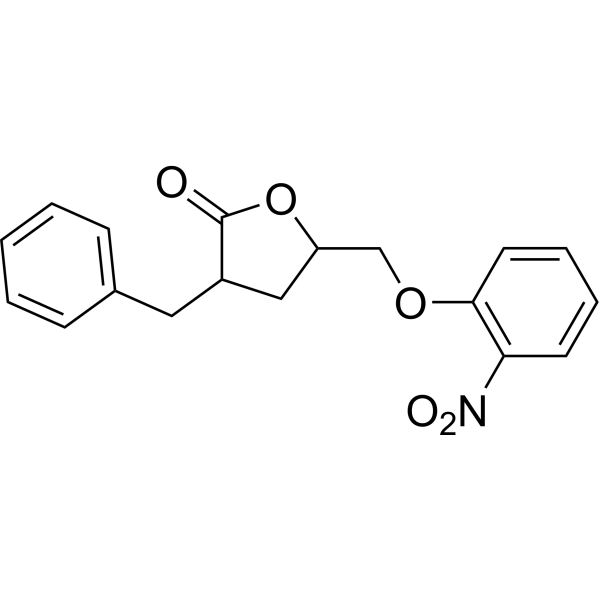
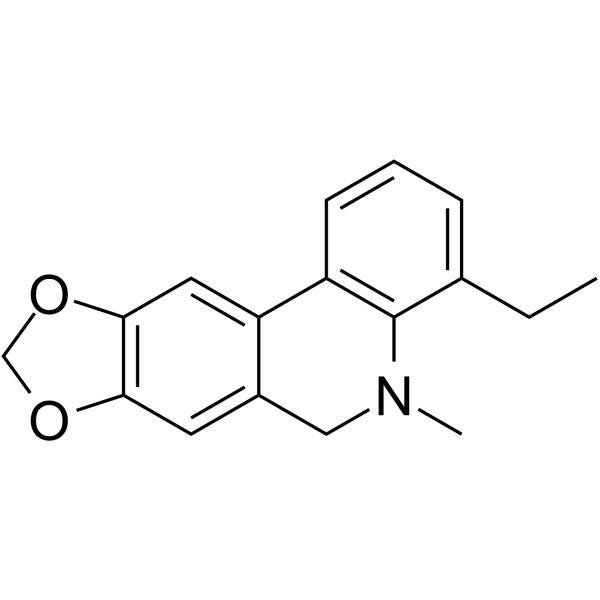
Tanshinlactone is a compound found in Salvia miltiorrhiza with anti-coronavirus (CoV) and anti-tumor activities. Tanshinlactone induces methuocytic cell death (methuosis) by activating the NRF2 pathway, and selectively kills ER +, HER2 +/EGFR + breast cancer cells. Tanshinlactone is applicable to research related to breast cancer and coronavirus infections .
ML303 is a pyrazolopyridine influenza virusnonstructuralprotein 1 (NS1) antagonist (IC90 = 155 nM), with an EC50 of 0.7 μM for Influenza A virus H1N1 .
Yimitasvir diphosphate (Emitasvir diphosphate; DAG-181 diphosphate) is an orally active inhibitor of hepatitis C virus (HCV) nonstructuralprotein 5A (NS5A). Yimitasvir diphosphate is applicable to research related to HCV infection .
Coblopasvir (KW-136) dihydrochloride is a pangenotypic non-structuralprotein 5A (NS5A) inhibitor. Coblopasvir dihydrochloride can be used for research of chronic hepatitis C virus infection .
Fmoc-Ser(Ac)-OH (Fmoc-O-acetyl-L-serine) is a Serine derivative. Fmoc-Ser(Ac)-OH can be used for the preparation of broad-spectrum coronavirus membrane fusion inhibitor .
Anti-virus agent 1 (compound 4i), a phosphoramidate proagent of GS-5734 (HY-104077; Remdesivir), has potent antiviral activity. Anti-virus agent 1 is used for the research of coronavirus and Ebola virus (EBOV) .
AXT-914 is a Calcium-sensing receptor (CaSR) inhibitor. AXT-914 has antiviral activity against the coronavirus HCoV 229E and SARS-CoV2. AXT914 reduces cytosolic calcium signalling activity of CaSR mutations. AXT-914 can be used for Bartter syndrome type 5 and autosomal dominant hypocalcemia (ADH) and coronavirus infections research .
GS-441524 hydrochloride is a potent, orally active and CNS-penetrant viral RNA-dependent RNA polymerase inhibitor. GS-441524 hydrochloride competes with natural nucleosides to block viral RNA transcription as an alternative substrate and RNA chain terminator. GS-441524 hydrochloride inhibits the replication of feline infectious peritonitis virus, African swine fever virus, and severe acute respiratory syndrome coronavirus 2. GS-441524 hydrochloride reduces viral RNA levels in cats. GS-441524 hydrochloride can be used in research related to feline infectious peritonitis, African swine fever, and coronavirus disease 2019 (COVID-19) .
RdRP-IN-2 is a RNA dependent RNA polymerase (RdRp) inhibitor. RdRP-IN-2 significantly inhibits SARS-CoV-2 RdRp with an IC50 of 41.2 μM.RdRP-IN-2 also inhibits Feline coronavirus (FIPV) replication .
Olgotrelvir (STI-1558) is an orally active dual inhibitor of coronavirus main protease (Mpro) and human cell cathepsin (Cathepsin L). Olgotrelvir is readily converted to its active form, AC1115, in full blood and/or plasma. Olgotrelvir can effectively inhibit both SARS-CoV-2 replication and entry into host cells .
TDI-015051 is a highly selective, orally active antiviral agent that targets the coronavirusNSP14guanine-N7 methyltransferase. TDI-015051 binds to substrates in a non-competitive manner and forms a stable ternary complex, precisely blocking the capping and methylation processes of viral mRNA. TDI-015051 potently inhibits a variety of coronaviruses (including SARS-CoV-2 and MERS). By impairing viral replication and translation and inducing a moderate type I interferon-mediated immune response, it significantly reduces pulmonary viral load and exhibits a synergistic effect with Nirmatrelvir (HY-138687). In addition, TDI-015051 does not inhibit non-coronavirus methyltransferases, and the drug-resistant mutations it induces impair viral fitness, demonstrating excellent antiviral properties and safety. TDI-015051 can be used for research on COVID-19 and the replication mechanism of coronaviruses .The IC50 values of TDI-015051 against SARS-CoV-2, α-hCoV-NL63, α-hCoV-229E, β-hCoV-MERS are 0.15 nM, 1.7 nM, 2.6 nM and 3.6 nM, respectively, and the Ka value against SARS-CoV-2 is 0.061 nM .
SGC-NSP2hel-1 (RA-0188293), a chemical probe, is a potent, specific and orally active nsP2 inhibitor. SGC-NSP2hel-1 has broad spectrum activity against multiple alphaviruses of the nsP2 helicase with a CC50 > 250 μM.
SGC-NSP2hel-1 (RA-0188293) shows selectivity index > 4000 against human
RNA helicases. SGC-NSP2hel-1 reduces virus replication and limited virus-induced pathology by forming a stable complex with nsP2 and ATP in a preclinical small animal model of CHIKV disease.
SARS-CoV-2 3CLpro-IN-13 is a potent SARS-CoV-2 3CL protease inhibitor with an IC50 value of 21 nM. SARS-CoV-2 3CLpro-IN-13 shows anti-coronavirus activity .
SARS-CoV-2 nsp13-IN-1 (compound C1) is a potent nsp13 (non-structuralprotein 13) inhibitor. SARS-CoV-2 nsp13-IN-1 only inhibits nsp13 ssDNA + ATPase, with an IC50 of 6 μM. SARS-CoV-2 nsp13-IN-1 does not inhibit ssDNA - ATPase. SARS-CoV-2 nsp13-IN-1 can be used for COVID-19 research .
SARS-CoV-2 3CLpro-IN-6 is a reversible covalent inhibitor of SARS-CoV-2 3CL protease. SARS-CoV-2 3CLpro-IN-6 has potent inhibitory activity for SARS-CoV-2 3CL pro with an IC50 value of 4.9 μM. SARS-CoV-2 3CLpro-IN-6 can be used for the research of coronavirus disease 2019 (COVID-19) .
SARS-CoV-2-IN-60 (compound 5a) is an S-adenosylmethionine (SAM)-competitive and irreversible SARS-CoV-2 nsp16-nsp10 methyltransferase activity inhibitor with an IC50 of 9 μM and a Ki of 26 μM. SARS-CoV-2-IN-60 can specifically occupy a newly identified pocket adjacent to the SAM-binding site on nsp16. SARS-CoV-2-IN-60 has the potential for pan-coronavirus therapeutics .
Yimitasvir (Emitasvir; DAG-181) is an orally active inhibitor of hepatitis C virus (HCV) nonstructuralprotein 5A (NS5A). Yimitasvir is applicable to research related to HCV infection .
K22 is an anti-Coronaviral compound. K22 reduces double-stranded RNA. K22 displays antiviral activity beyond the Coronavirinae subfamily, namely against nidoviruses of the Torovirinae subfamily (EToV and WBV) and members of the Arteriviridae family (PRRSV, EAV). K22 displays antiviral activity against HCoV-229E .
Coblopasvir (KW-136) is a pangenotypic non-structuralprotein 5A (NS5A) inhibitor. Coblopasvir can be used for research of chronic hepatitis C virus infection .
SARS-CoV-2 nsp13-IN-2 (Compound C2) is a SARS-CoV-2non-structuralprotein 13 (nsp13) small-molecule inhibitor with an IC50 of 42 μM against nsp13 ssDNA + ATPase .
MRL-1237 is an inhibitor of the replication of several enteroviruses targeting the non-structuralprotein 2C of the virus. MRL-1237 shows effective inhibition against poliovirus and various other enteroviruses. MRL-1237 does not inhibit the NTPase (ATPase) activity of 2C protein. MRL-1237 can be used for the research of infection .
SARS-CoV-2 Mpro-IN-49 (Compound 22e) is a potent SARS-CoV-2 main protease (M pro) inhibitor (IC50=0.087 μM). SARS-CoV-2 Mpro-IN-49 is promising for research of SARS-CoV-2 and coronavirus .
Anticoronavirus agent-1 (Compound IV-2) is a 1,4-naphthone compound and is a 3CL hydrolase inhibitor (3C-like proteinase) of the 19-nCoV novel coronavirus. Anticoronavirus agent-1 has low cytotoxity on HSF cells. Anticoronavirus agent-1 can be used for the study of the novel coronavirus .
AS-0017445 is an inhibitor targeting the main protease of both the current coronavirus and the virus that caused the Middle East Respiratory Syndrome (MERS) outbreak. AS-0017445 inhibits the viral protein processing in host cells and thus prevents viral replication .
STING agonist-30 is a potent STING agonist. STING agonist-30 exhibits STING-dependent immune activation. STING agonist-30 has extensive inhibitory effects on various viruses, including the herpes simplex virus (HSV), rotavirus, and severe acute respiratory syndrome coronavirus 2 (SARS-CoV-2) .
SARS-CoV-2 nsp3-IN-1 (Compound 15c) is a Mac1 (SARS-CoV-2 nsp3 macrodomain) inhibitor with the IC50 value of 6.1 μM. SARS-CoV-2 nsp3-IN-1 can inhibit Mac1 ADP-ribosylhydrolase activity. SARS-CoV-2 nsp3-IN-1 demonstrates notable selectivity for coronavirus macrodomains, especially towards SARS-CoV-2 Mac1 .
Romlusevimab (BRII-198) is a neutralizing recombinant human IgG1 monoclonal antibody against the spike protein of severe acute respiratory syndrome coronavirus 2 (SARS-CoV-2) .
Elbasvir (Standard) is the analytical standard of Elbasvir. This product is intended for research and analytical applications. Elbasvir (MK-8742) is a hepatitis C virusnonstructuralprotein 5A (HCV NS5A) inhibitor with EC50s of 4, 3 and 3 nM against genotype 1a, 1b, and 2a, respectively.
SARS-CoV-2 3CLpro-IN-22 (Compound 17) is a cathepsin L (CTSL ) inhibitor with an IC50 value of 32.5 nM. SARS-CoV-2 3CLpro-IN-22 can be used for the study of SARS-CoV-2 virus .
RdRP-IN-9 (Compound 6b) is a reversible covalent allosteric inhibitor of RdRp. RdRP-IN-9 demonstrates high anti-coronavirus activity, with an EC50 value of 0.68 μM against HCoV-OC43 RdRP-IN-9 exerts a more prolonged antiviral effect by reversibly acylating Cys12 in the NiRAN domain of non-structuralprotein 12 (nsp 12) and exhibits synergistic anti-coronavirus activity with Molnupiravir (HY-135853) .
Cyclobenzaprine b-D-glucuronide is a metabolite of Cyclobenzaprine. Cyclobenzaprine b-D-glucuronide can be used to treat diseases associated with coronavirus infection. Cyclobenzaprine b-D-glucuronide can be used to study the metabolic pathways of Cyclobenzaprine in the body and as a potential candidate for studying coronavirus treatment .
SARS-CoV-2 nsp13-IN-3 (Compound C3) is a SARS-CoV-2non-structuralprotein 13 (nsp13) small-molecule inhibitor with an IC50 of 32 μM against nsp13 ssDNA + ATPase .
R-1 sodium is a RNA aptamer that bind to Non-structuralprotein 1 (NS1) (Kd = 1.62 ± 0.30 nM). R-1 sodium inhibits the interaction of NS1 with tripartite motif-containing protein 25 (TRIM25), and suppression of NS1 enabled retinoic acid inducible gene I (
CHIKV nsP2 protease-IN-1(compound J13) is an oral active non-structuralprotein 2 protease inhibitor with the EC50 of 0.39 μM aganist of CHIKV S27. CHIKV nsP2 protease-IN-1 can be used for study of Chikungunya virus .
R-2 sodium is a RNA aptamer that bind to Non-structuralprotein 1 (NS1) (Kd = 1.92 ± 0.27 nM). R-2 sodium inhibits the interaction of NS1 with tripartite motif-containing protein 25 (TRIM25), and suppression of NS1 enabled retinoic acid inducible gene I (
MERS-CoV-IN-1 exhibits excellent inhibitory activity against coronavirus. MERS-CoV-IN-1 is useful as a pharmaceutical composition for preventing coronavirus-induced diseases (MERS-CoV and SARS) (extracted from patent WO2018174442A1, compound 1) .
SARS-CoV-2-IN-74 (compound 30) is a epoxide inhibitor, which inhibits cellular SARS-CoV-2 replication with an EC68 of 5 μM. SARS-CoV-2-IN-74 can be used for the research of coronavirus .
SARS-CoV-2 nsp13-IN-6 (compound C5) is a potent SARS-CoV-2 non-structuralprotein 13 (nsp13) inhibitor with IC50 values of 27 and 33 μM for ssDNA + ATPase and ssDNA - ATPase. SARS-CoV-2 nsp13-IN-6 can be used for researching anti-COVID-19 .
MDOLL-0229 (compound 27) is an antiviral agent that targets SARS-CoV-2 Mac1 and repress coronavirus replication. MDOLL-0229 inhibits SARS-CoV-2 Mac1 with an IC50 of 2.1 µM .
HCoV-OC43-IN-1 (Compound IV-16) is a coronavirusHCoV-OC43 inhibitor. HCoV-OC43-IN-1 has antiviral efficacy (EC50: 90 nM). HCoV-OC43-IN-1 inhibits the mRNA level and expression of viral nucleocapsid protein (NP) .
Nsp12-IN-1 is a nucleoside analogue. Nsp12-IN-1 can block the synthesis of viral RNA and inhibit viral replication. Nsp12-IN-1 can be used in the study of pan-coronavirus .
RSV L-protein-6 (Compound 19a) is a respiratory syncytial virus polymerase inhibitor, with an IC50 of 13 nM in SPA primer extensions enzymatic assay. RSV L-protein-6 can inhibit RSV replication in Hela cells .
CDK9-IN-25 (compound 4a) is an imidazopyrazine CDK9 inhibitor (IC50: 0.24 μM). CDK9-IN-25 has good affinity to the main protease of COVID-19 and has antiviral activity against human coronavirus 229E (IC50: 63.28 μM) .
Glycosyltransferase-IN-2 (Compound 20) is a Glycosyltransferase inhibitor. Glycosyltransferase-IN-2 has a broad-spectrum anticoronavirus activity with IC50s of 11.3, 5.5 and ~16.2 μM for MHV, HCoV-NL63 and SARS-CoV-2, respectively. Glycosyltransferase-IN-2 interferes with the coronavirus infectivity, alters viral protein glycosylation with inhibition of interaction with the ACE2 receptor or SC-VLP secretion, and inhibits RNA replication. Glycosyltransferase-IN-2 can be used for coronavirus infections research .
Anti-virus agent 1 (Standard) is the analytical standard of Anti-virus agent 1. This product is intended for research and analytical applications. Anti-virus agent 1 (compound 4i), a phosphoramidate proagent of GS-5734 (HY-104077; Remdesivir), has potent antiviral activity. Anti-virus agent 1 is used for the research of coronavirus and Ebola virus (EBOV)[1][2].
Paritaprevir (ABT-450) dihydrate is a potent, orally active and antiviral non-structuralprotein 3/4A (NS3/4A) protease inhibitor with EC50s of 1 and 0.21 nM against HCV 1a and 1b, respectively. Paritaprevir dihydrate is also a SARS-CoV 3CL pro inhibitor with an IC50 of 1.31 μM. Paritaprevir dihydrate is metabolized primarily by cytochrome P450 (CYP) 3A. The plasma concentration and half-life of Paritaprevir dihydrate can be enhanced by Ritonavir (a CYP450 inhibitor) .
2-Chloro-2′-deoxyadenosine monophosphate is an anticoronavirus agent. It exhibits significant inhibitory effects against wild-type novel coronavirus, novel coronavirus variants (Beta, Delta, and Omicron strains), and other coronaviruses such as human coronavirus 229E, human coronavirus OC43, human coronavirus NL63, and mouse coronavirus MHV .
Paritaprevir (Standard) is the analytical standard of Paritaprevir. This product is intended for research and analytical applications. Paritaprevir (ABT-450) is a potent, orally active and antiviral non-structuralprotein 3/4A (NS3/4A) protease inhibitor with EC50s of 1 and 0.21 nM against HCV 1a and 1b, respectively. Paritaprevir is also a SARS-CoV 3CLpro inhibitor with an IC50 of 1.31 μM. Paritaprevir is metabolized primarily by cytochrome P450 (CYP) 3A. The plasma concentration and half-life of Paritaprevir can be enhanced by Ritonavir (a CYP450 inhibitor) .
SARS-CoV-2 3CLpro-IN-5 is a covalent inhibitor of 3C-like protease (3CL pro). SARS-CoV-2 3CLpro-IN-5 has inhibitory activity for 3CL pro with an IC50 value of 3.8 nM. SARS-CoV-2 3CLpro-IN-5 has 9.0% oral bioavailability (BA). SARS-CoV-2 3CLpro-IN-5 can be used for the research of coronavirus disease 2019 (COVID-19) .
Abz-FRLKGGAPIKGV-EDDNP TFA is a fluorogenic substrate used to measure the enzymatic activities of protease forms, such as papain-like protease 2 (PLP2) from severe acute respiratory syndrome coronavirus (SARS-CoV). Abz-FRLKGGAPIKGV-EDDNP TFA has the potential for study 2019-nCoV (COVID-19) infection .
Antiviral agent 86 is an anti-coronavirus agent. Antiviral agent 86 acts as a binder of coronavirusnon-structuralprotein 15 (nsp15), with a Ka value of 67 μM against human targets. Antiviral agent 86 inhibits the replication of HCoV-229E and SARS-CoV-2. Antiviral agent 86 exerts inhibitory effects at the post-entry lifecycle stage of coronaviruses in host cells and inhibits the formation of viral double-stranded RNA (dsRNA). Antiviral agent 86 exhibits an additive antiviral effect when used in combination with GS-441524. Antiviral agent 86 can be used in studies related to coronavirus infections .
TO-195 hydrochlorid is a protease inhibitor targeting severe acute respiratory syndrome coronavirus 2 (SARS-CoV-2). TO-195 hydrochlorid is promising for research of coronavirus disease 2019 (COVID-19) .
SARS-CoV-2-IN-46 is a novel coronavirus (SARS-CoV-2) replication inhibitor with an EC50 of 0.9 μM in Calu-3 cells. SARS-CoV-2-IN-46 has antiviral activity and can be used in novel coronavirus (COVID-19) research .
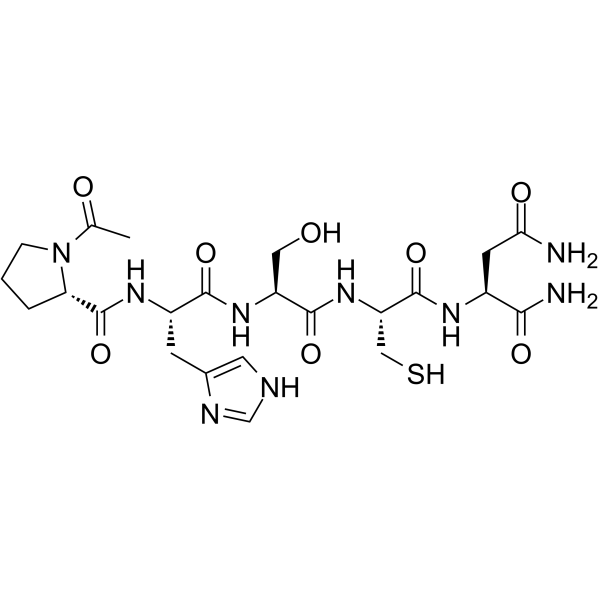
M133 peptide is a coronavirus-specific CD4 T cell epitope. M133 peptide is immunodominant in mice infected with the neurotropic coronavirus (the JHM strain of mouse hepatitis virus). M133 peptide forms a complex with MHC II molecules, which is recognized by specific TCRs, thereby activating CD4 T cells .
Yimitasvir (Emitasvir) diphosphate is an orally active hepatitis C virus (HCV) nonstructuralprotein 5A (NS5A) inhibitor and can be used for research of chronic hepatitis C virus infection .
SARS-CoV-IN-5 (compound 49) is a highly selective, nonpeptidic and noncovalent 3CL pro inhibitor with IC50s of 38 nM, 21.1 nM and 86 nM for 3CL pro of SARS-CoV-1, SARS-CoV-2, Bat coronavirus WIV1, respectively. SARS-CoV-IN-5 inhibits the replication of the SARS-CoV-2 delta variant with an EC50 of 0.272 μM. SARS-CoV-IN-5 significantly reduces the lung viral copies in a K18-hACE2 transgenic mouse model. SARS-CoV-IN-5 has good target-specific and potential broad-spectrum anticoronavirus activities against SARS-CoV-1, WIV1, MERS, HCoV-OC43, HCoV-229E, and HKU9 .
Antiviral agent 58 (Compound J1) is an orally active antiviral agent with broad-spectrum antiviral activity against enveloped viruses, including influenza A virus (IAV), respiratory syncytial virus (RSV), severe acute respiratory syndrome coronavirus 2 (SARS-CoV-2), human coronavirus OC43 (HCoV-OC43), herpes simplex virus type 1 (HSV-1), and HSV-2 .
Somantadine, an adamantane derivative, is an antiviral agent with high cross-reactivity with anti-amantadine monoclonal antibodies. Somantadine can be used for research of coronavirus-related diseases .
SARS-CoV-2 Mpro-IN-32 (Compound 1) is a selective inhibitor of SARS-CoV-2 M Pro with an IC50 value of 230 nM. SARS-CoV-2 Mpro-IN-32 can also inhibit the replication of multiple SARS-CoV-2 variants in vitro .
SARS-CoV-2 Mpro-IN-31 (Compound 18) is an inhibitor of SARS-CoV-2 M Pro with an IC50 value of 11 nM. Additionally, SARS-CoV-2 Mpro-IN-31 effectively inhibits the enzymatic activity of the cysteine proteases cathepsin B and cathepsin L, with IC50 values of 24 nM and 1.8 nM, respectively .
1"-α-Azido-RDPr (Compound 11) is an analog of adenosine diphosphate ribose, and exhibits inhibitory efficacy against the SARS-CoV-2 nonstructuralprotein macodomain SARS-CoV-2 NSP3 Mac1 with an IC50 of 30 nM .
CID15997213 is a blood-brain barrier penetrating antiviral agent. CID15997213 targets the amino-terminal domain of the VEEVnonstructuralprotein 2 (nsP2). CID15997213 shows alphavirus-specific antiviral effect, inhibiting VEEV and Western equine encephalitis virus .
NS2 (114-121), Influenza, the 114-121 fragment of influenza nonstructuralprotein 2 (NS2), is a influenza-derived epitope. NS2 (114-121), Influenza can be used for the research of CD8 + cytotoxic T lymphocyte (CTL) in antiviral immune responses .
SARS-CoV-2 nsp3-IN-2 is a macrodomain (Mac1) inhibitor with IC50 value of 180 μM. SARS-CoV-2 nsp3-IN-2 is a small molecule chemical probe and can be used for the research of viral .
SARS-CoV-2 Mpro-IN-44 (Compound 25) is a broad-spectrum coronavirus main protease (Mpro) inhibitor. SARS-CoV-2 Mpro-IN-44 has inhibitory activity against a variety of high-risk coronaviruses (including SARS-CoV-2 and PEDV, etc.) (IC50: < 0.6 μM). SARS-CoV-2 Mpro-IN-44 achieves broad-spectrum inhibition of coronaviruses by enhancing the interaction with the conserved sites of Mpro. SARS-CoV-2 Mpro-IN-44 can be used for anti-coronavirus drug development .
MTase-IN-1 (compound 26) is a potent and selective inhibitor of coronavirus nsp14 N7-methyltransferases, with an IC50 of 0.72 nM. MTase-IN-1 impairs viral RNA translation and immune evasion .
Koenine is a carbazole alkaloid. It is predicted that Koenine has strong binding affinity and inhibitory ability to SARS-CoV-2 main protease (M pro), which can be used in the research of anti-novel coronavirus drugs .
XJ5 is a non-nucleoside covalent inhibitor of Nsp12 (IC50=0.12 μM), which is the non-structuralprotein 12 of the virus. XJ5 has the potential to be an antiviral inhibitor of SARS-CoV-2 .
Anti-West Nile virus NS1 Antibody (10NS1) reacts with non-structuralprotein 1 (NS1) of West Nile virus (WNV). Anti-West Nile virus NS1 Antibody (10NS1) offers significant protection against flaviviral infections in vivo. Recommend Isotype Controls: Mouse IgG2a kappa, Isotype Control (HY-P99978) .
ATPase-IN-8 is an anti-enteroviral agent that inhibits the viral non-structuralprotein 2C, with an IC50 of 1.4 μM against CV-B3 2C ATPase. ATPase-IN-8 exhibits significant anti-enteroviral activity and acts as a potent, selective inhibitor of CV-B3 and EV-D68. ATPase-IN-8 can be used for research on enteroviral infections .
RPG-01-132 is a DENV capsid protein PROTAC degrader, with a DC50 of 2.4 μM. RPG-01-132 blocks viral assembly, eliminates viral particles, and interferes with the non-structural functions of capsid protein. RPG-01-132 exhibits significant antiviral activity against all four DENV serotypes and the ST148 (HY-121663)-resistant DENV2 mutant strain. RPG-01-132 is applicable to research related to dengue virus infection .
SARS-CoV-2 nsp14-IN-8 (Compound 26) is a SARS-CoV-2 nsp14 inhibitor, with an IC50 of 53 nM. SARS-CoV-2 nsp14-IN-8 shows IC50 values of 170 nM, 8 nM, 21 nM against SARS-CoV-1 nsp14, HCoV-NL63 nsp14, HCoV-229E nsp14, respectively. SARS-CoV-2 nsp14-IN-8 can be used in the research of Coronavirus infection .
PROTAC SARS-CoV-2 Mpro degrader-8 is an antiviral PROTAC degrader targeting the SARS-CoV-2 main protease (Mpro), with weak direct binding affinity to Mpro (Kd=80.5 μM). PROTAC SARS-CoV-2 Mpro degrader-8 exhibits broad-spectrum antiviral activity against SARS-CoV-2 and the human endemic coronavirusHCoV-OC43. It can be used for research on coronavirus infections .
Penisimplicissin is a funicone-like compound and antiviral agent. Penisimplicissin reduces the expression of AhR and viral nucleocapsid protein. Penisimplicissin improves the cell viability and morphological characteristics of CCoV-infected cells. Penisimplicissin inhibits CCoV infection. Penisimplicissin can be used in studies related to canine coronavirus infection .
Nesbuvir (Standard) is the analytical standard of Nesbuvir. This product is intended for research and analytical applications. Nesbuvir is a nonnucleoside inhibitor of the hepatitis C virus (HCV) nonstructuralprotein 5B (NS5B) polymerase.
TD-6450 (Compound 51) is an orally active HCV 1A inhibitor. TD-6450 inhibits the pan-genotypic nonstructuralprotein 5A (NS5A). TD-6450 can be used for research on diseases such as hepatitis .
LRH-0003 is an inhibitor of the Macrodomain 1 (Mac1) of nonstructuralprotein 3 (NSP3) from SARS-CoV-2, with an IC50 value of 1.7 μM. LRH-0003 can be used for the research antiviral infection targeting SARS-CoV-2 .
NVP-EGT710 (EGT710) is an orally active non-peptidomimetic covalent SARS-CoV-2 Mpro inhibitor. NVP-EGT710 can be used for coronavirus infection research .
TDI-014925 (Compound 58) is a SARS-CoV-2 methyltransferase nonstructuralprotein 14 (NSP14) inhibitor with an IC50 of 0.2 nM. TDI-014925 has an antiviral activity with significant microsomal stability and no CYP inhibitory activity. TDI-014925 can be used for COVID-19 research .
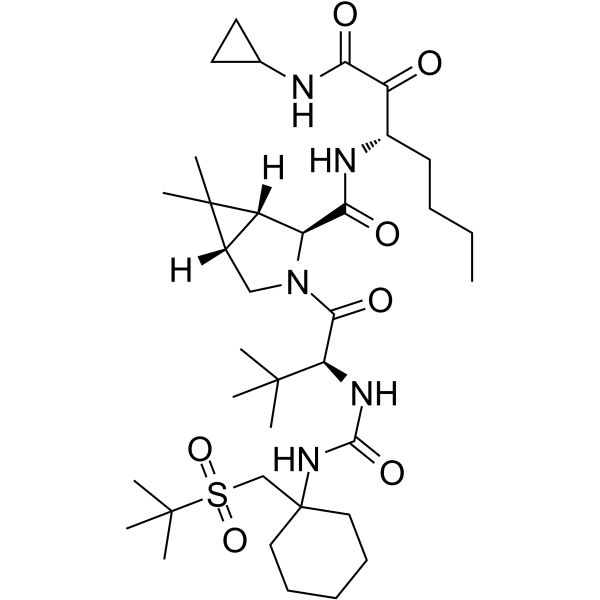
Narlaprevir (SCH 900518) is a selective and orally bioavailable NS3 protease inhibitor with a Ki value of 6 nM and an EC90 value of 40 nM . Narlaprevir also inhibits the HCV nonstructuralprotein 3 serine protease . Narlaprevir is also a SARS-CoV 3CL pro inhibitor with an IC50 of 2.3 μM .
SARS-CoV-2-IN-122 is a SARS-CoV-2 inhibitor by targeting the S2 subunit of the spike protein. SARS-CoV-2-IN-122 interacts with residues linked to membrane fusion-associated conformational rearrangements, interfering with viral entry events. SARS-CoV-2-IN-122 inhibits SARS-CoV-2 replication, lacks direct virucidal activity, and does not impair viral-host cell attachment. SARS-CoV-2-IN-122 exhibits activity against SARS-CoV-2 variants including B.1 and Omicron (BA.2.86.1). SARS-CoV-2-IN-122 can be used for the research of coronavirus disease 2019 (COVID-19) .
SSAA09E2 is an inhibitor of SARS-CoV (Severe acute respiratory syndrome-Coronavirus) replication, acting by blocking early interactions of SARS-S with the receptor for SARS-CoV, Angiotensin Converting Enzyme-2 (ACE2) .
Crepidiaside B is a plant-derived active component that can be found in Cichorium intybus. Crepidiaside B acts as a SARS-CoV-2 spike glycoprotein inhibitor and is used in research related to coronavirus disease 2019 (COVID-19) .
Withanoside V is a blood-brain barrier-permeable withanolide derivative . Withanoside V binds strongly to Sudlow I (domain IIA) of human serum albumin (HSA) to form a stable complex and alter the secondary structure of albumin, thereby increasing helix content and reducing β-sheet and random coil. Withanoside V binds to Aβ (1-42) to block the interaction between monomers and subsequent aggregation. Withanoside V inhibits the viability of neuroblastoma cells, reduces the number of apoptotic cells induced by Aβ (1-42), and decreases ROS production. Withanoside V inhibits SARS-CoV-2 Mpro. Withanoside V can be used for research on Alzheimer's disease and coronavirus disease 2019 .
RU-0415529 is an orally active inhibitor for SARS-CoV-2 nonstructuralprotein 14 (NSP14) with an IC50 of 356 nM. RU-0415529 binds to the SAH-stabilized cap binding pocket, inhibits viral RNA methylation and the viral replication. RU-0415529 exhibits anti-infectious activity in mouse models .
KK4A peptide is a small peptide derived from nonstructuralprotein 4A (NS4A) of hepatitis C virus (HCV) that significantly increases the catalytic efficiency of NS3 protease. The KK4A peptide may be used to gain insights into the function and mechanism of the HCV NS3 protease, thereby advancing research into HCV infection .
SARS-CoV-2-IN-100 (Compound 172) is an inhibitor of SARS-CoV-2, demonstrating broad-spectrum antiviral activity against various SARS-CoV-2 variants. SARS-CoV-2-IN-100 exhibits synergistic effects with Nirmatrelvir, which can reduce the risk of antiviral drug resistance .
Hepatitis C Virus S5A/5B is a synthetic peptide substrate. Hepatitis C Virus S5A/5B mimics the NS5A/5B junction of the nonstructuralprotein (NS), served as the substrate for the study of HCV NS3 protease activity .
FL-166 is a SARS coronavirus main protease (Mpro) inhibitor (Ki: 40 nM). FL-166 exerts its inhibitory effect by targeting a cluster of serine residues near the active site of the protease. FL-166 can be used in the study of SARS-CoV .
GS-9851 (PSI-7851) is a HCV nonstructuralprotein 5B (NS5B) inhibitor with potential activity for the study of HCV infection. GS-9851 shows good tolerability with initial HCV genotype 1 infection. GS-9851 is rapidly cleared from the body with a half-life of approximately 1 hour .
SARS-CoV-2 Mpro-IN-43 (Compound 1) is a coronavirus main protease (Mpro) inhibitor (IC50: 72 μM). SARS-CoV-2 Mpro-IN-43 interacts with key residues in the active site of Mpro via non-covalent binding, exerting its anti-coronavirus effect. SARS-CoV-2 Mpro-IN-43 exhibits moderate to low cytotoxicity, with CC50 values of 13.24, 41.02, and 42.26 µM in HaCaT, HEK293T, and HepG2 cells, respectively. SARS-CoV-2 Mpro-IN-43 can be used in anti-SARS-CoV-2 research .
Narlaprevir (Standard) is the analytical standard of Narlaprevir. This product is intended for research and analytical applications. Narlaprevir (SCH 900518) is a selective and orally bioavailable NS3 protease inhibitor with a Ki value of 6 nM and an EC90 value of 40 nM . Narlaprevir also inhibits the HCV nonstructuralprotein 3 serine protease . Narlaprevir is also a SARS-CoV 3CLpro inhibitor with an IC50 of 2.3 μM .
CHIKV nsP2 protease-IN-3 (Compound 5) is an irreversible covalent inhibitor targeting the nonstructuralprotein 2 (nsP2) cysteine protease of chikungunya virus (CHIKV) (IC50=0.5 μM). CHIKV nsP2 protease-IN-3 inhibits viral RNA replication. CHIKV nsP2 protease-IN-3 is promising for research of alphaviruses .
GS-441524 (Standard) is the analytical standard of GS-441524 (HY-103586). GS-441524 is a potent, orally active and CNS-penetrant viral RNA-dependent RNA polymerase inhibitor. GS-441524 competes with natural nucleosides to block viral RNA transcription as an alternative substrate and RNA chain terminator. GS-441524 inhibits the replication of feline infectious peritonitis virus, African swine fever virus, and severe acute respiratory syndrome coronavirus 2. GS-441524 reduces viral RNA levels in cats. GS-441524 can be used in research related to feline infectious peritonitis, African swine fever, and coronavirus disease 2019 (COVID-19) .
GS-441524-d is the deuterium labeled GS-441524 (HY-103586). GS-441524 is a potent, orally active and CNS-penetrant viral RNA-dependent RNA polymerase inhibitor. GS-441524 competes with natural nucleosides to block viral RNA transcription as an alternative substrate and RNA chain terminator. GS-441524 inhibits the replication of feline infectious peritonitis virus, African swine fever virus, and severe acute respiratory syndrome coronavirus 2. GS-441524 reduces viral RNA levels in cats. GS-441524 can be used in research related to feline infectious peritonitis, African swine fever, and coronavirus disease 2019 (COVID-19) .
3CLPro-IN-3 (Compound A36) is an inhibitor for SARS-CoV-2 3CLpro with IC50 of 51.3 nM. 3CLPro-IN-3 exhibits antiviral activity against human coronavirus 229E, OC43 and mouse hepatitis virus MHV .
NIP-22c is a novel coronavirus3CLpro inhibitor. The EC50 for Verona, Calu3, Caco2 and HBTEC-ALI were 4.6, 1.1, 0.1 and 0.6 μM, respectively. NIP-22c has antiviral activity .
Velpatasvir (Standard) is the analytical standard of Velpatasvir. This product is intended for research and analytical applications. Velpatasvir (VEL, GS-5816) is a novel pan-genotypic hepatitis C virus (HCV) nonstructuralprotein 5A (NS5A) inhibitor with activity against genotype 1 (GT1) to GT6 HCV replicons. Velpatasvir is also a SARS-CoV 3CL pro inhibitor with an IC50 of 2.16 μM .
6-Hydroxypyridin-3-ylboronic acid is a heterocyclic building block, which can be used in the synthesis of non-nucleoside inhibitors of hepatitis C virus (HCV) RNA-dependent RNA polymerase nonstructuralprotein 5B (NS5B). 6-Hydroxypyridin-3-ylboronic acid has also been used in the synthesis of mammalian target of rapamycin (mTOR) inhibitors .
MI-30 is an orally active SARS-CoV-2 3CLpro inhibitor (IC50 = 17.2 nM). MI-30 reduces viral load and lung lesions in a mouse model of SARS-CoV-2 infection. MI-30 may be used in coronavirus infection research .
hACE2/SP-IN-1 (compound 7a) is a dual inhibitor of hACE2 and coronavirus spike protein. hACE2/SP-IN-1 can bind to the spike protein and block cell entry, preventing SARS-CoV-2 from infecting human cells .
3′-Deoxy CTP is a nucleotide analogue and a mandatory chain terminator. 3′-Deoxy CTP can cause chain termination by lacking the 3′-hydroxyl group, inhibiting the RNA synthesis activity of HCVnonstructuralprotein (NS5B) polymerase and blocking viral replication. 3′-Deoxy CTP can be used to study the chain termination mechanism of HCV polymerase and the development of antiviral drugs .
Withanoside IV is an orally active, blood-brain barrier-permeable withanolide derivative. Withanoside IV specifically binds to the Sudlow I site of HSA, induces secondary structural changes in HSA, and forms stable HSA complexes. Withanoside IV inhibits the enzymatic activity of COX-2. Withanoside IV induces axonal regeneration, peripheral nervous system myelination and increased axonal density in spinal cord tissue, reduces reactive gliosis-related changes, and improves hindlimb motor function. Withanoside IV binds to amyloid-β 1-42 to inhibit its aggregation, induces neurite outgrowth and synapse reconstruction, repairs damaged axons and dendrites, enhances mitochondrial biogenesis, exerts neuroprotective effects via the BDNF and SIRT1 signaling pathways, reduces ROS production and neuronal apoptosis, and ameliorates memory deficits. Withanoside IV inhibits the activity of the SARS-CoV-2 main protease. Withanoside IV can be used in research related to spinal cord injury, Alzheimer's disease, and coronavirus disease 2019 (COVID-19) [6] .
ARS-CoV-2-IN-53 (Compd 5d) can inhibit the replication of SARS-CoV-2 with an EC50 value of 14.3 μM. ARS-CoV-2-IN-5 shows significant antiviral activity against human coronavirus 229E (HCoV-229E) .
C12-113 is a lipidoid delivery agent that can be used to transfect siRNA into cells. C12-113 can also be combined with other lipids to form lipid nanoparticles (LNPs) for the delivery of mRNA encoding the spike glycoprotein of severe acute respiratory syndrome coronavirus 2 (SARS-CoV-2) in mice .
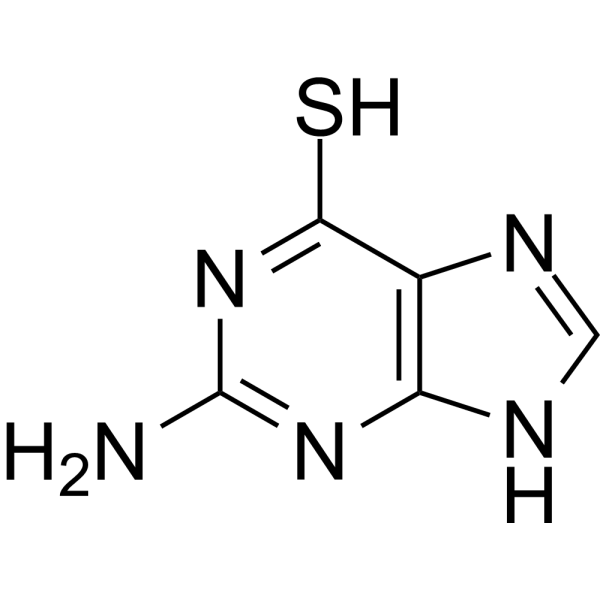
6-Thioguanine (Thioguanine; 2-Amino-6-purinethiol) is an anti-leukemia and immunosuppressant agent, acts as an inhibitor of SARS and MERS coronavirus papain-like proteases (PLpros) and also potently inhibits USP2 activity, with IC50s of 25 μM and 40 μM for Plpros and recombinant human USP2, respectively.
Filibuvir is an orally active, selective non-nucleoside inhibitor of the HCV nonstructural 5B protein (NS5B) RNA-dependent RNA polymerase (RdRp). Filibuvir binds noncovalently in the thumb II allosteric pocket of NS5B. Filibuvir inhibits genotype 1a and 1b replicons with EC50s of 59 nM for both isoforms, respectively . Filibuvir preferentially inhibits elongative RNA synthesis and potently decreases viral RNA accumulation .
Ruzasvir (MK-8408) is an orally active inhibitor for genotypic HCV nonstructuralprotein 5A (NS5A), which inhibits the replication of NS5A mutants GT1a, GT1a L31V, GT1a Y93H, GT2b, GT3a and GT4a with EC90 ranging from 0.003 to 0.067 nM. Ruzasvir exhibits good pharmacokinetic characters in rhesus monkey model .
Velpatasvir-d3 (GS-5816-d3) is deuterium labeled Velpatasvir. Velpatasvir (VEL, GS-5816) is a novel pan-genotypic hepatitis C virus (HCV) nonstructuralprotein 5A (NS5A) inhibitor with activity against genotype 1 (GT1) to GT6 HCV replicons. Velpatasvir is also a SARS-CoV 3CL pro inhibitor with an IC50 of 2.16 μM .
A-837093 sodium is a potent and orally active inhibitor of the hepatitis C virus (HCV) nonstructuralprotein 5B (NS5B) polymerase. A-837093 sodium shows potencies against polymerases derived from both HCV genotypes 1a (IC50 = 1.25 nM) and 1b (IC50 = 0.33 nM). A-837093 sodium exhibits antiviral efficacy in HCV-infected chimpanzees. A-837093 sodium can be used for HCV infection research .
Anti-inflammatory agent 18 (compound 3b) shows NO inhibitory activity, with an IC50 of 15.94 μM. Anti-inflammatory agent 18 inhibits HMGB1-induced later inflammation. Anti-inflammatory agent 18 can be used for the research of later inflammation diseases such as coronavirus diseases (COVID-19) and sepsis, etc .
SARS-CoV-2-IN-71 (compound 8h) is a potent inhibitor of SARS-CoV-2. SARS-CoV-2-IN-71 inhibits coronavirus replication at multiple stages. SARS-CoV-2-IN-71 displays anti-coronaviral effect by simultaneously acting on 3CL pro and TMPRSS2 .
Mpro/Cathepsin L-IN-2 (Compound 1) is a dual irreversible inhibitor of SARS-CoV-2 main protease (M pro, pIC50=8.61) and human cathepsin L (hCTSL, pIC50=7.64). Mpro/Cathepsin L-IN-2 is promising for research of COVID-19 and other coronavirus infections .
Anti-inflammatory agent 19 (compound 2b) shows NO inhibitory activity, with an IC50 of 36.00 μM. Anti-inflammatory agent 19 inhibits HMGB1-induced later inflammation. Anti-inflammatory agent 19 can be used for the research of later inflammation diseases such as coronavirus diseases (COVID-19) and sepsis, etc .
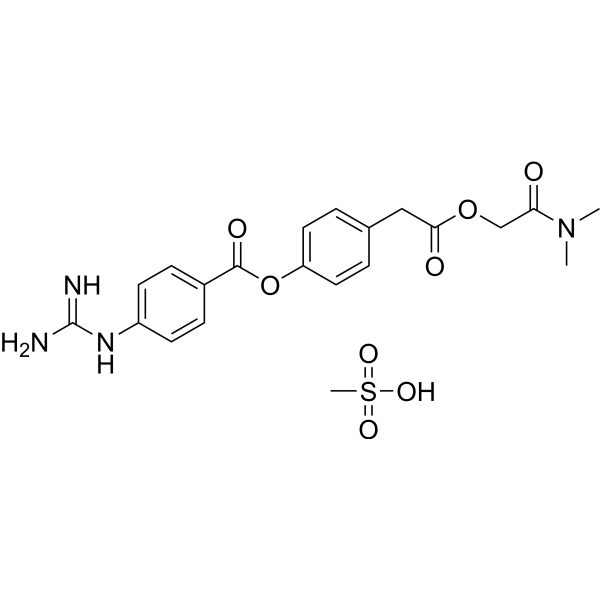
Camostat mesylate (Camostat mesilate) is an orally active, synthetic serine protease inhibitor for chronic pancreatitis. Camostat mesylate, an inhibitor of TMPRSS2, shows antiviral activity against SARS-CoV-2. Camostat mesylate also inhibits the activity of prostasin, trypsin, and matriptase .
Camostat (mesylate) (Standard) is the analytical standard of Camostat (mesylate). This product is intended for research and analytical applications. Camostat mesylate (Camostat mesilate) is an orally active, synthetic serine protease inhibitor for chronic pancreatitis. Camostat mesylate, an inhibitor of TMPRSS2, shows antiviral activity against SARS-CoV-2. Camostat mesylate also inhibits the activity of prostasin, trypsin, and matriptase .
MERS-CoV-IN-2 (compound 3c) is a MERS-CoV 3CLpro inhibitor (IC50=17nM). MERS-CoV-IN-2 inhibits the activity of the 3CLpro enzyme by binding to the active site of the enzyme, specifically the S4 subsite, thereby exhibiting antiviral activity against SARS-CoV-2 and MERS-CoV .
(±)-Alliin (Standard) is the analytical standard of (±)-Alliin. This product is intended for research and analytical applications. (±)-Alliin is the main active component of garlic. (±)-Alliin is a putative inhibitor of the main protease of SARS-CoV-2 (Mpro) .
XL177A is a covalent USP7 inhibitor that blocks the deubiquitinase activity of USP7. XL177A destabilizes non-canonical PRC1 complexes or KDM6A and reduces chromatin deposition of H2AK119Ub, thereby relieving the repression of neuronal differentiation programs. Meanwhile, XL177A also regulates the ELOF1-UVSSA-USP7-nuclear β-catenin axis, decreasing the transcription levels of related proteins and the accumulation of nuclear β-catenin. XL177A exerts antiviral effects by reducing the expression levels of coronavirus receptors, and exhibits inhibitory activity against APC-mutated colorectal cancer cells, neuroblastoma, and coronaviruses including SARS-CoV-2 variants. XL177A is mainly used in studies related to colorectal cancer, neuroblastoma, and coronavirus infections .
SARS-CoV-2-IN-59 (compound E07), an imidazoline derivative, is a non-peptide small molecule inhibitor of SARS-CoV-2 that targets the main protease (Mpro) of the coronavirus. SARS-CoV-2-IN-59 has a strong interaction with residues on Mpro (Met 165, Gln 166, Met 165, His 41, Gln 189) .
(S)-Velpatasvir- 13C,d3 ((S)-GS-5816- 13C,d3) is 13C labeled Velpatasvir. Velpatasvir (VEL, GS-5816) is a novel pan-genotypic hepatitis C virus (HCV) nonstructuralprotein 5A (NS5A) inhibitor with activity against genotype 1 (GT1) to GT6 HCV replicons. Velpatasvir is also a SARS-CoV 3CL pro inhibitor with an IC50 of 2.16 μM .
AB-343 is a selective covalent inhibitor of SARS-CoV-2 Mpro, with an IC50 of 8 nM and a Ki of 2.8 nM. AB-343 can effectively inhibit the main proteases of SARS-CoV-2 and many other coronaviruses, and is also active against some resistant variants. AB-343 can be used in the research of treating coronavirus infection-related diseases .
(Rac)-XL177A is the racemic isomer of XL177A (HY-138794). XL177A is a covalent USP7 inhibitor that blocks the deubiquitinase activity of USP7. XL177A destabilizes non-canonical PRC1 complexes or KDM6A and reduces chromatin deposition of H2AK119Ub, thereby relieving the repression of neuronal differentiation programs. Meanwhile, XL177A also regulates the ELOF1-UVSSA-USP7-nuclear β-catenin axis, decreasing the transcription levels of related proteins and the accumulation of nuclear β-catenin. XL177A exerts antiviral effects by reducing the expression levels of coronavirus receptors, and exhibits inhibitory activity against APC-mutated colorectal cancer cells, neuroblastoma, and coronaviruses including SARS-CoV-2 variants. XL177A is mainly used in studies related to colorectal cancer, neuroblastoma, and coronavirus infections .
SARS-CoV-2 3CLpro-IN-27 (Compound 9H) is an inhibitor of SARS-CoV-2 3CL pro with an IC50 value of 21 nM. SARS-CoV-2 3CLpro-IN-27 exhibits excellent anti-SARS-CoV-2 replicon activity, demonstrating an EC50 value of 5 nM .
CSNK2-IN-1 is a potent and selective CSNK2 inhibitor with IC50 of 1.7 nM and 0.66 nM for CSNK2A1 and CSNK2A2, respectively. CSNK2-IN-1 has antiviral activity against beta-coronaviruses such as SARS-CoV-2 and MHV. CSNK2-IN-1 has good solubility, metabolic stability, and low cytotoxicity, but its plasma concentration in vivo decreases rapidly and is insufficient to achieve pharmacological effects. CSNK2-IN-1 can be used in the research of antiviral drug development .
SHEN26 (ATY014) is a potent and orally active RdRp inhibitor, with an IC50 for SARS-CoV-2 is 1.36 μM. SHEN26 is a 5’-cyclohexanecarboxylate derivative of GS-441524 (HY-103586). SHEN26 inhibits viral nucleic acid synthesis to achieve antiviral effects. SHEN26 can be used for the research of
coronavirus disease 2019 (COVID-19) .
JNJ-9676 is an orally active Coronavirus M protein inhibitor and selective Sarbecovirus inhibitor. JNJ-9676 binds to the M protein dimer and forces the protein into an alternative conformational state with a compound-induced binding pocket. JNJ-9676 demonstrates in vitro nanomolar antiviral activity against SARS-CoV-2, SARS-CoV and Sarbecovirus strains from bat and pangolin zoonotic origin .
Velpatasvir- 13C,d3 (GS-5816- 13C,d3) is 13C and deuterium labeled Velpatasvir. Velpatasvir (VEL, GS-5816) is a novel pan-genotypic hepatitis C virus (HCV) nonstructuralprotein 5A (NS5A) inhibitor with activity against genotype 1 (GT1) to GT6 HCV replicons. Velpatasvir is also a SARS-CoV 3CL pro inhibitor with an IC50 of 2.16 μM .
Mosnodenvir (JNJ-1802) is an orally active pan serotype dengue virus (DENV) inhibitor, with EC50 values ranging from 0.057 to 11 nM for four dengue virus (DENV) serotypes. Mosnodenvir blocks viral replication by inhibiting the formation of complexes between two viral proteins, nonstructuralprotein 3 (NS3) and NS4B, thereby preventing the formation of new viral RNA. Mosnodenvir exhibits picomolar to nanomolar antiviral activity in vitro and has antiviral efficacy in mice and non-human primates .
SARS-CoV-2 3CLpro-IN-15 (compound a) is a beta-nitrostyrene coronavirus SARS-CoV-2 inhibitor that targets the SARS-CoV-2 3CL protease (3CLpro). SARS-CoV-2 3CLpro-IN-15 inhibits viral replication and transcription and plays a key role in the discovery of anti-COVID-19 lead compounds .
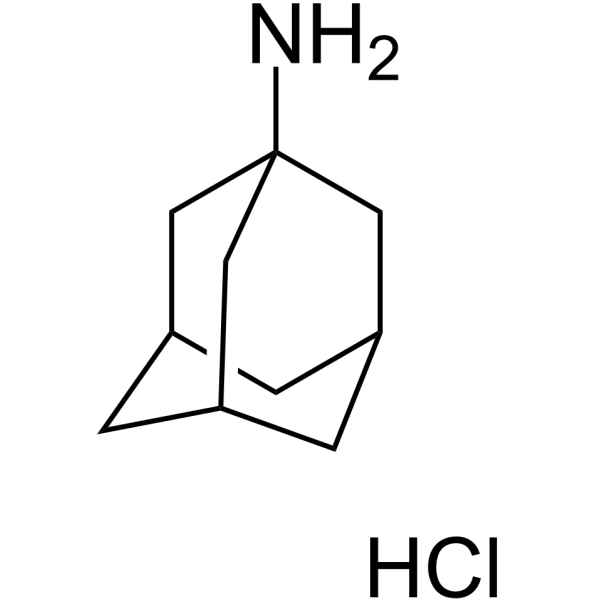
Amantadine (1-Adamantanamine) hydrochloride is an orally avtive and potent antiviral agent with activity against influenza Aviruses. Amantadine hydrochloride inhibits several ion channels such as NMDA and M2, and also inhibits Coronavirus ion channels. Amantadine hydrochloride also has anti-orthopoxvirus and anticancer activity. Amantadine hydrochloride can be used for Parkinson's disease, postoperative cognitive dysfunction (POCD) and COVID-19 research [6].
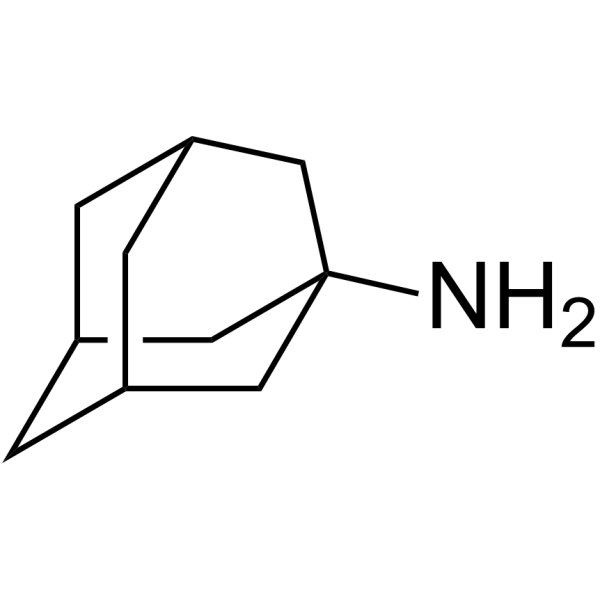
Amantadine (1-Adamantanamine) is an orally avtive and potent antiviral agent with activity against influenza Aviruses. Amantadine inhibits several ion channels such as NMDA and M2, and also inhibits Coronavirus ion channels. Amantadine also has anti-orthopoxvirus and anticancer activity. Amantadine can be used for Parkinson's disease, postoperative cognitive dysfunction (POCD) and COVID-19 research [6].
VPC285785 is an orally active SARS-CoV-2 main protease inhibitor with an IC50 of 0.8 μM and a Kd of 2.7 μM. VPC285785 functionally inhibits the viral main protease-mediated processing of viral polyprotein precursors required for viral replication. VPC285785 reduces viral loads in the liver, brain and spleen tissues of MHV-infected mice. VPC285785 is applicable to the research of coronavirus infections .
Thymohydroquinone is a COX-2 inhibitor and anti-SARS-CoV-2 agent that induces cytotoxicity, antiproliferative effects and inhibits tumor growth. Thymohydroquinone cannot scavenge superoxide radicals via σ (hydrogen atom transfer) and π-π attacks with superoxide anions. Thymohydroquinone can be used in research related to squamous cell carcinoma, fibrosarcoma and coronavirus disease 2019 (SARS-CoV-2 infection) .
Cinanserin hydrochloride (SQ 10643) is a potent, selective and highly affinity 5-HT2 receptor antagonist with a Ki of 41 nM. Cinanserin hydrochloride has a much higher binding affinity for the 5-HT2 than for the 5-HT1 receptor (Ki of 3500 nM). Cinanserin is also an inhibitor of 3C-like proteinase of severe acute respiratory syndrome coronavirus and strongly reduces virus replication in vitro .
SARS-CoV-IN-1 is an effective inhibitor of SARS-CoV replication. SARS-CoV-IN-1 shows anti-Coronavirus activity with an EC50 of 4.9 μM in Vero cells. SARS-CoV-IN-1 inhibits the 3D7 and W2 strains of P. falciparum with IC50s of 15.4 and 133.2 nM; and IC90s of 25.7 and 459.1 nM; respectively. Antimalarial and antiviral activities .
(+)-Mosnodenvir is an isomer of Mosnodenvir (HY-153810). Mosnodenvir (JNJ-1802) is an orally active pan serotype dengue virus (DENV) inhibitor, with EC50 values ranging from 0.057 to 11 nM for four dengue virus (DENV) serotypes. Mosnodenvir blocks viral replication by inhibiting the formation of complexes between two viral proteins, nonstructuralprotein 3 (NS3) and NS4B, thereby preventing the formation of new viral RNA. Mosnodenvir exhibits picomolar to nanomolar antiviral activity in vitro and has antiviral efficacy in mice and non-human primates .
3′-Deoxy CTP trisodium is the sodium salt form of 3′-Deoxy CTP (HY-171587). 3′-Deoxy CTP trisodium is a nucleotide analogue and a mandatory chain terminator. 3′-Deoxy CTP trisodium can cause chain termination by lacking the 3′-hydroxyl group, inhibiting the RNA synthesis activity of HCVnonstructuralprotein (NS5B) polymerase and blocking viral replication. 3′-Deoxy CTP trisodium can be used to study the chain termination mechanism of HCV polymerase and the development of antiviral drugs .
Amantadine-d15 hydrochloride is deuterated labeled Amantadine. Amantadine (1-Adamantanamine) is an orally avtive and potent antiviral agent with activity against influenza Aviruses. Amantadine inhibits several ion channels such as NMDA and M2, and also inhibits Coronavirus ion channels. Amantadine also has anti-orthopoxvirus and anticancer activity. Amantadine can be used for Parkinson's disease, postoperative cognitive dysfunction (POCD) and COVID-19 research [6].
Dazcapistat (BLD-2660) is an orally active small-molecule inhibitor of calpain 1, 2, and 9 (calpain 1, 2, 9). Dazcapistat reduces the expression/production level of IL-6 in injured lung tissue and alleviates fibrosis . Dazcapistat exerts anti-fibrotic effects in various animal models of fibrosis in the skin, liver and lung . Dazcapistat can be used in research related to coronavirus disease 2019 (COVID-19) and idiopathic pulmonary fibrosis .
CDK9-IN-34 (Compound 1b) is an inhibitor for CDK9 with an IC50 of 0.25 μM. CDK9-IN-34 exhibits cytotoxicity to cancer cell HCT116, MCF7 and K652 with IC50s of 1.43, 3.01 and 50.27 μM, respectively. CDK9-IN-34 exhibits antiviral activity against coronavirus 229E with an IC50 of 145.92 μM .
Corisin is a pro-apoptotic small peptide produced by Staphylococcus species. Corisin binds to serum albumin to target organs such as the lungs and kidneys, induces cellular senescence, apoptosis and epithelial-mesenchymal transition, and accelerates the progression of organ fibrosis including pulmonary fibrosis and diabetic renal fibrosis. Corisin levels are closely associated with coronavirus disease 2019 (COVID-19), diabetic chronic kidney disease (CKD), non-diabetic CKD, and idiopathic pulmonary fibrosis (IPF) .
HLB-0532247 is a cell-permeable phosphoramidate prodrug of 3'-deoxy-3',4'-didehydrocytidine (ddhC). HLB-0532247 increases the intracellular level of the endogenous antiviral nucleotide ddhCTP. HLB-0532247 reduces the titers of Zika virus and West Nile virus in cell cultures. HLB-0532247 can be used in studies related to Zika virus infection, West Nile virus infection, and coronavirus infection .
P315V3 is an pan inhibitor for coronavirus, that inhibits SARS-CoV-2 prototypePT, Delta, BA.1 and BA.4 strain with IC50s of 10.9, 8.9, 8.6, and 2.7 nM. P315V3 exhibits cytotoxicity in Vero cell with CC50 of 4.3 μM. P315V3 exhibits anti-infectious efficacy in mouse models .
6-Thioguanine (Standard) is the analytical standard of 6-Thioguanine. This product is intended for research and analytical applications. 6-Thioguanine (Thioguanine; 2-Amino-6-purinethiol) is an anti-leukemia and immunosuppressant agent, acts as an inhibitor of SARS and MERS coronavirus papain-like proteases (PLpros) and also potently inhibits USP2 activity, with IC50s of 25 μM and 40 μM for Plpros and recombinant human USP2, respectively.
Amantadine (1-Adamantanamine) sulfate is an orally avtive and potent antiviral agent with activity against influenza Aviruses. Amantadine sulfate inhibits several ion channels such as NMDA and M2, and also inhibits Coronavirus ion channels. Amantadine sulfate also has anti-orthopoxvirus and anticancer activity. Amantadine sulfate can be used for Parkinson's disease, postoperative cognitive dysfunction (POCD) and COVID-19 research [6].
XL177A GMP is XL177A (HY-138794) produced by using GMP guidelines. GMP small molecules works appropriately as an auxiliary reagent for cell therapy manufacture. XL177A is a covalent USP7 inhibitor that blocks the deubiquitinase activity of USP7. XL177A destabilizes non-canonical PRC1 complexes or KDM6A and reduces chromatin deposition of H2AK119Ub, thereby relieving the repression of neuronal differentiation programs. Meanwhile, XL177A also regulates the ELOF1-UVSSA-USP7-nuclear β-catenin axis, decreasing the transcription levels of related proteins and the accumulation of nuclear β-catenin. XL177A exerts antiviral effects by reducing the expression levels of coronavirus receptors, and exhibits inhibitory activity against APC-mutated colorectal cancer cells, neuroblastoma, and coronaviruses including SARS-CoV-2 variants. XL177A is mainly used in studies related to colorectal cancer, neuroblastoma, and coronavirus infections .
CHIKV nsP2 protease-IN-2 (Compound 2o) is a allosteric nonstructuralprotein 2 helicase (nsP2hel) inhibitor with IC50s of 0.5 μM and 0.9 μM for nsP2 ATPase and RNA unwindase, respectively. CHIKV nsP2 protease-IN-2 has broad-spectrum antialphaviral activity against chikungunya virus (CHIKV), Mayaro virus (MAYV), and Venezuelan equine encephalitis virus (VEEV) (EC50 of 120 nM for CHIKV-nLuc). CHIKV nsP2 protease-IN-2 can be used for alphaviruses infections research .
NSC-323241 is a potent STT3A-mediated mega protein complex assembly inhibitor. NSC-323241 disrupts he endoplasmic reticulum (ER) mega complex nucleated by STT3A during dengue virus (DENV) and Zika virus (ZIKV) infection. NSC-323241 targets the binding of STT3A subcomplex with viral nonstructuralproteins (e.g., NS2B, NS3) and host translocon proteins, disrupting the formation of viral replication microenvironment. NSC-323241 is promising for research of flavivirus infection, such as dengue fever and Zika virus .
Amantadine-d6 is the deuterium labeled Amantadine . Amantadine (1-Adamantanamine) is an orally avtive and potent antiviral agent with activity against influenza A viruses. Amantadine inhibits several ion channels such as NMDA and M2, and also inhibits Coronavirus ion channels. Amantadine also has anti-orthopoxvirus and anticancer activity. Amantadine can be used for Parkinson's disease, postoperative cognitive dysfunction (POCD) and COVID-19 research [6] .
CG-0988 is a selective SARS-CoV-2 3C-like protease (3CL pro) inhibitor with an IC50 of 8.5 nM. CG-0988 functionally inhibits SARS-CoV-2 3CL pro, blocks SARS-CoV-2 replication, and exerts antiviral activity against SARS-CoV-2 variants. CG-0988 can be used in research related to coronavirus disease 2019 (COVID-19) .
Ibuzatrelvir (PF-07817883), a second-generation, orally bioavailable, is SARS-CoV-2 main protease (M pro and 3CL pro) inhibitor with improved metabolic stability. Ibuzatrelvir has demonstrated pan-human coronavirus antiviral activity and off-target selectivity profile in vitro and in preclinical animal studies. Ibuzatrelvir is well tolerated with a safety profile similar to placebo and prevents viral infection and transmission. Ibuzatrelvir can be used to inhibit COVID-19 .
Amantadine (hydrochloride) (Standard) is the analytical standard of Amantadine (hydrochloride). This product is intended for research and analytical applications. Amantadine (1-Adamantanamine) hydrochloride is an orally avtive and potent antiviral agent with activity against influenza A viruses. Amantadine hydrochloride inhibits several ion channels such as NMDA and M2, and also inhibits Coronavirus ion channels. Amantadine hydrochloride also has anti-orthopoxvirus and anticancer activity. Amantadine hydrochloride can be used for Parkinson's disease, postoperative cognitive dysfunction (POCD) and COVID-19 research [6].
Amantadine (Standard) is the analytical standard of Amantadine. This product is intended for research and analytical applications. Amantadine (1-Adamantanamine) is an orally avtive and potent antiviral agent with activity against influenza A viruses. Amantadine inhibits several ion channels such as NMDA and M2, and also inhibits Coronavirus ion channels. Amantadine also has anti-orthopoxvirus and anticancer activity. Amantadine can be used for Parkinson's disease, postoperative cognitive dysfunction (POCD) and COVID-19 research [4] [6].
Amantadine in Methanol (Standard) is the solution of Amantadine (Standard). This product is intended for research and analytical applications. Amantadine (1-Adamantanamine) is an orally avtive and potent antiviral agent with activity against influenza A viruses. Amantadine inhibits several ion channels such as NMDA and M2, and also inhibits Coronavirus ion channels. Amantadine also has anti-orthopoxvirus and anticancer activity. Amantadine can be used for Parkinson's disease, postoperative cognitive dysfunction (POCD) and COVID-19 research [4] [6].
CK2-IN-15 (Compound Biv5) is a selective and potent bivalent protein kinase CK2 inhibitor with an IC50 value of 51 pM. CK2-IN-15 significantly reduces the replication of SARS-CoV-2 in HEK-ACE2-TMPRSS2 and Vero cells, and also reduces viral replication in an ex vivo model of human nasal epithelial cells. CK2-IN-15 is promising for research of β-coronavirus infection-related diseases .
PROTAC SARS-CoV-2 Mpro degrader-6 is a PROTACs degrader targeting the SARS-CoV-2 main protease (M pro). PROTAC SARS-CoV-2 Mpro degrader-6 effectively induces the degradation of M pro and increases K48-linked polyubiquitination of M pro in HEK293 cells. PROTAC SARS-CoV-2 Mpro degrader-6 can be used in studies related to coronavirus disease 2019 (COVID-19) .
K777 tosylate is a potent, orally active and irreversible cysteine protease inhibitor. K777 tosylate is also a potent CYP3A4 inhibitor with an IC50 of 60 nM. K777 tosylate irreversibly inhibits Cruzain, the major cysteine protease of Trypansoma cruzi, and cathepsins B and L. K777 tosylate is a broad-spectrum antiviral by targeting cathepsin-mediated cell entry. K777 tosylate inhibits SARS-CoV and EBOV pseudovirus entry with IC50 values of 0.68 nM and 0.87 nM, respectively .
K777 is a potent, orally active and irreversible cysteine protease inhibitor. K777 is also a potent CYP3A4 inhibitor with an IC50 of 60 nM. K777 irreversibly inhibits Cruzain, the major cysteine protease of Trypansoma cruzi, and cathepsins B and L. K777 is a broad-spectrum antiviral by targeting cathepsin-mediated cell entry. K777 inhibits SARS-CoV and EBOV pseudovirus entry with IC50 values of 0.68 nM and 0.87 nM, respectively .
DABMA is a TMEM175 channel activator with a human EC50 of 17.9 μM. DABMA directly increases TMEM175 channel current via interaction with intracellular, transmembrane, or endosomal lumen-associated domains, and does not alter TMEM175 mRNA or protein levels. DABMA delays endolysosomal substrate degradation, modulates endolysosomal trafficking, increases acidic organelle accumulation, induces cholesterol accumulation and altered late endosome morphology. DABMA can be used for the research of coronavirus disease, Clostridium difficile infection, Pseudomonas aeruginosa infection, rabies, and influenza virus infection .
SARS-CoV-2-IN-114 (Compound 36) is an antiviral agent. SARS-CoV-2-IN-114 exhibits significant antiviral activity against both the SARS-CoV-2 original strain and the Delta variant. SARS-CoV-2-IN-114 has an EC50 of 0.29 μM for inhibiting CPE of the SARS-CoV-2 original strain, and that for the Delta variant is 5.77 μM. SARS-CoV-2-IN-114 has low cytotoxicity and can be used in coronavirus research .
SBI-5844 (SBI-1275844) is a eIF4F complex inhibitor and antiviral agent. SBI-5844 disrupts the assembly of the eIF4F complex and blocks the interaction between eIF4E and eIF4G. SBI-5844 inhibits the synthesis of HCoV-OC43 nucleocapsid protein and reduces the levels of HCoV-OC43 RNA and total protein. SBI-5844 can be used in studies related to human coronavirus OC43 (HCoV-OC43) infection .
6-Thioguanine-13C2,15N (Thioguanine-13C2,15N) is the 13C and 15N labeled 6-Thioguanine (HY-13765).
6-Thioguanine is an anti-leukemia and immunosuppressant agent, acts as an inhibitor of SARS and MERS coronavirus papain-like proteases (PLpros) and also potently inhibits USP2 activity, with IC50s of 25 μM and 40 μM for Plpros and recombinant human USP2, respectively.
YS110 is a humanized anti-CD26 (DPP4) IgG1 monoclonal antibody. YS110 induces CD26 nuclear translocation through the caveolin pathway. YS110 inhibits the proliferation of tumor cell by delaying G2/M cell cycle transition. YS110 inhibits the infection of Middle East respiratory syndrome coronavirus (MERS CoV) by blocking the binding of MERS CoV S1 to CD26. YS110 can be used for researches on cancer or infection such as Malignant Mesothelioma and MERS .
HNC-1664 is the orally active inhibitor for RNA-dependent RNA polymerase (RdRP). HNC-1664 exhibits broad-spectrum antiviral activity against coronavirus (SARS-CoV-2 wildtype and its mutants XBB.1.18, HK.3.1, BF.7.14, BA.1HCoV-229E, HCoV-OC43) and arenavirus. HNC-1664 exhibits anti-infectious activity in SARS-CoV-2 Delta infected mouse models .
SARS-CoV-IN-3 is an effective inhibitor of SARS-CoV replication. SARS-CoV-IN-3 shows anti-Coronavirus activity with an EC50 of 3.6 μM in Vero cells. SARS-CoV-IN-3 inhibits the 3D7 and W2 strains of P. falciparum with IC50s of 11.7 and 20.4 nM; and IC90s of 29.19 and 56 nM; respectively. SARS-CoV-IN-3 reduces HIV-1-induced cytopathic effect with an EC50 of 10 μM in MT-4 cells .
Cinanserin (hydrochloride) (Standard) is the analytical standard of Cinanserin (hydrochloride) (HY-100943). This product is intended for research and analytical applications. Cinanserin hydrochloride (SQ 10643) is a potent, selective and highly affinity 5-HT2 receptor antagonist with a Ki of 41 nM. Cinanserin hydrochloride has a much higher binding affinity for the 5-HT2 than for the 5-HT1 receptor (Ki of 3500 nM). Cinanserin is also an inhibitor of 3C-like proteinase of severe acute respiratory syndrome coronavirus and strongly reduces virus replication in vitro .
NVP-DFV890 is an orally administered, selective NLRP3 inhibitor. NVP-DFV890 directly binds to NLRP3, blocks maturation of pro-inflammatory cytokines IL-1β and IL-18, and inhibits pyroptotic cell death. NVP-DFV890 acts as an inducer of viral clearance, promoting earlier clearance of SARS-CoV-2. NVP-DFV890 can be used for the research of COVID-19 pneumonia and coronavirus-associated acute respiratory distress syndrome (CARDS) .
6-(N-Phthalimidoylmethylthio)hexanoic acid (MFH) is a hapten with a carboxyl group at the end of its spacer arm, suitable for reacting with free amine groups of proteins. 6-(N-Phthalimidoylmethylthio)hexanoic acid can be combined with carrier proteins and used in antigen design .
MR1-114 is an orally active SARS-CoV-2 papain-like protease (PLpro) inhibitor with an IC50 of 0.037 μM. As a broad-spectrum inhibitor, MR1-114 maintains submicromolar activity against SARS-CoV-2 Delta, Omicron B.1.1.529 and Omicron BA.5 variants, with EC50 values of 0.18 μM, 0.39 μM and 0.20 μM, respectively. MR1-114 can be used for the research of coronavirus disease 2019 (SARS-CoV-2 infection) .
Secutrelvir is an oral SARS-CoV-2 3C-like protease (3CLpro) inhibitor and antiviral agent, with IC50 values of 0.655 nM and 0.697 nM against SARS-CoV-2 3CLpro, respectively. Secutrelvir forms a reversible covalent bond with the catalytic cysteine C145 of SARS-CoV-2 3CLpro, thereby inhibiting viral replication. Secutrelvir exhibits activity against multiple SARS-CoV-2 variants and can be used in research related to coronavirus disease 2019 (COVID-19) .
Emodin-d4 is the deuterium labeled Emodin. Emodin (Frangula emodin), an anthraquinone derivative, is an anti-SARS-CoV compound. Emodin blocks the SARS coronavirus spike protein and angiotensin-converting enzyme 2 (ACE2) interaction . Emodin inhibits casein kinase-2 (CK2). Anti-inflammatory and anticancer effects . Emodin is a potent selective 11β-HSD1 inhibitor with the IC50 of 186 and 86 nM for human and mouse 11β-HSD1, respectively. Emodin ameliorates metabolic disorder in diet-induced obese mice .
5-(N,N-Hexamethylene)-amiloride (Hexamethylene amiloride) derives from an amiloride and is a potent Na +/H + exchanger inhibitor, which decreases the intracellular pH (pHi) and induces apoptosis in leukemic cells. 5-(N,N-Hexamethylene)-amiloride (Hexamethylene amiloride) is also an inhibitor of the HIV-1 Vpu virus ion channel and inhibits mouse hepatitis virus (MHV) replication and human coronavirus 229E (HCoV229E) replication in cultured L929 cells with EC50s of 3.91 μM and 1.34 μM, respectively .
SARS-CoV-IN-2 is an effective inhibitor of SARS-CoV replication. SARS-CoV-IN-2 shows anti-Coronavirus activity with an EC50 of 1.9 μM in Vero cells. SARS-CoV-IN-2 inhibits the 3D7 and W2 strains of P. falciparum with IC50s of 21.5 and 30 nM; and IC90s of 51.0 and 99.9 nM; respectively. SARS-CoV-IN-2 reduces HIV-1-induced cytopathic effect with an EC50 of 2.9 μM in MT-4 cells. Antimalarial and Antiviral Activities .
DBPR110 is a nonstructuralprotein 5A (NS5A) inhibitor with inhibitory activity against hepatitis C virus (HCV). DBPR110 exhibited a 50% effective concentration (EC50) of 3.9 ± 0.9 pM and a selectivity index value of over 12,800,000 by reducing HCV1b replicon reporter expression. DBPR110 also effectively reduced the activity of HCV2a replicon with an EC50 of 228.8 pM and a selectivity index value of over 173,130. DBPR110 showed synergy with interferon alpha (IFN-α), NS3 protease inhibitors, and NS5B polymerase inhibitors. The results of DBPR110 suggest that it may be an effective small molecule inhibitor against HCV NS5A .
Human IGFBP6 mRNA encodes the human insulin like growth factor binding protein 6 (IGFBP6) protein. IGFBP6 probably involves in prolong the half-life of the IGFs and either inhibit or stimulate the growth promoting effects of the IGFs on cell culture.
6-N-Phthalimidoy hexanoic acid (compound FH) is a hapten with a carboxyl group at the end of its spacer arm, suitable for reacting with free amine groups of proteins. 6-N-Phthalimidoy hexanoic acid can be combined with carrier proteins and used in antigen design .
Emodin (Standard) is the analytical standard of Emodin. This product is intended for research and analytical applications. Emodin (Frangula emodin), an anthraquinone derivative, is an anti-SARS-CoV compound. Emodin blocks the SARS coronavirus spike protein and angiotensin-converting enzyme 2 (ACE2) interaction . Emodin inhibits casein kinase-2 (CK2). Anti-inflammatory and anticancer effects . Emodin is a potent selective 11β-HSD1 inhibitor with the IC50 of 186 and 86 nM for human and mouse 11β-HSD1, respectively. Emodin ameliorates metabolic disorder in diet-induced obese mice .
Aloin B (Isobarbaloin) is an orally active SARS-CoV-2 papain-like protease (PLpro) inhibitor with an IC50 of 16.08 μM (hydrolytic activity) and 17.51 μM (deubiquitinase activity). Aloin B is metabolized by rat intestinal flora into aloe-emodin-9-anthrone to exert laxative effects. Aloin B inhibits TPA (HY-18739)-induced ear edema, putrescine elevation, and tumor promotion in mouse skin. Aloin B can be used in research related to anti-inflammation, tumor promotion inhibition, coronavirus disease 2019 (COVID-19) and constipation .
SARS-CoV-2-IN-34 (S-20-1) is a blood brain barrier penetrable pan-coronavirus (CoV) fusion inhibitor with broad-spectrum inhibitory activity. SARS-CoV-2-IN-34 effectively inhibits infection by pseudotyped and authentic SARS-CoV-2, and pseudotyped variants of concern (VOCs). SARS-CoV-2-IN-34 shows high affinity to RBD in S1 and HR1 domain in S2 of SARS-CoV-2 S protein. SARS-CoV-2-IN-34 can be used for the research of infection .
SARS-CoV-2 3CLpro-IN-34 (Compound 55) is a highly efficient non-covalent inhibitor of the SARS-CoV-2 3CL pro protease (b. SARS-CoV-2 3CL pro protease) with an IC50 of 1.9 μM. SARS-CoV-2 3CLpro-IN-34 can inhibit the 3CL proprotein of SARS-CoV-1, with its IC50 being 3.2 μM, and it shows high selectivity towards host cysteine proteases (such as cathepsins L/K and calpain). SARS-CoV-2 3CLpro-IN-34 exhibits antiviral activity in cells infected with SARS-CoV-2, with its EC50 being 25 μM, and it is not affected by P-gp inhibitors and shows no significant cytotoxicity. SARS-CoV-2 3CLpro-IN-34 can be used for research on SARS-CoV-2 infection .
Anti-SARS-CoV-2 S protein Antibody (NTD, SARS2-29) is a mouse-derived IgG1 κ type antibody inhibitor, targeting to SARS-CoV-2 S protein. Anti-SARS-CoV-2 S protein Antibody (NTD, SARS2-29) reacts with the N-terminal domain (NTD) in the spike (S) protein of SARS-CoV-2 (Severe Acute Respiratory Syndrome Coronavirus 2). Anti-SARS-CoV-2 S protein Antibody (NTD, SARS2-29) can be used for the detections of flow cytometry and ELISA in SARS-CoV-2 infection .
SARS-CoV-2 Mpro-IN-50 (Compound 30) is a noncovalent SARS-CoV-2 Mpro inhibitor with an IC50 of 14 nM. SARS-CoV-2 Mpro-IN-50 is also a pan-CoV Mpro inhibitor with IC50 s of 20-190 nM for SARS-CoV-1 Mpro, 229E Mpro, HKU1 Mpro, MERS Mpro, NL63 Mpro and OC43 Mpro. SARS-CoV-2 Mpro-IN-50 has significant antiviral activity against the SARS-CoV-2 omicron variant (EC50 : 22 nM). SARS-CoV-2 Mpro-IN-50 can be used for coronavirus infections research .
ALG-097558 is an orally active 3CLpro inhibitor. ALG-097558 demonstrates pan-coronavirus activity against various SARS-CoV-2 variants as well as other human coronaviruses (HCoVs) such as SARS-CoV-1, α-HCoV 229E, and β-HCoV OC43. ALG-097558 demonstrates potent inhibition with IC50s of 2 nM (SARS-CoV-2 3CLpro) and 6 nM (229E 3CLpro). ALG-097558 demonstrates antiviral activity in the SARS-CoV-2 hamster infection model. ALG-097558 can be used for the study of viral infections[1].
DNJ-20 is an α-glucosidase inhibitor (IC50: 55.3 μg/mL). DNJ-20 has broad-spectrum anti-SARS-CoV-2 activity. DNJ-20 inhibits the correct processing of viral glycoproteins by interfering with the endoplasmic reticulum-associated glycoprotein folding process (ERQC), thereby blocking the formation and infection of viral particles. DNJ-20 has IC50 values up to 1.49 uM against several SARS-CoV-2 variants, as well as HCoV-229E and HCoV-0C43。DNJ-20 can be used for pan-coronavirus research .
TMP1 is an orally active bispecific inhibitor of M pro (IC50 = 312.5 nM)/TMPRSS2 (IC50 = 1.28 μM, KD = 10.10 μM). TMP1 exhibits broad protection against different SARS-CoV-2 variants in vitro. TMP1 cross-protects against highly pathogenic coronaviruses (SARS-CoV-1, SARS-CoV-2, and MERS-CoV) in vivo and effectively blocks the transmission of SARS-CoV-2. TMP1 can inhibit infection by SARS-CoV-2 escape mutants that are resistant to Nivolumab (HY-P9903). TMP1 can be used in coronavirus research .
PROTAC KRAS G12D degrader 2 is a peptidomimetic PROTAC specifically targeting the dimeric SARS-CoV-2 3CL Proprotein. PROTAC KRAS G12D degrader 2 inhibits SARS-CoV-2 3CLPro with an IC50 of 21.2 μM. PROTAC KRAS G12D degrader 2 specifically binds to the active site of SARS-CoV-2 3CL Pro. PROTAC KRAS G12D degrader 2 reduces protein levels of SARS-CoV-2 3CL Pro without affecting cell viability. PROTAC KRAS G12D degrader 2 can be used for the study of viral infections in Coronavirus genera .
Aloin B (Isobarbaloin) (Standard) is the analytical standard of Aloin B. This product is intended for research and analytical applications. Aloin B is an orally active SARS-CoV-2 papain-like protease (PLpro) inhibitor with an IC50 of 16.08 μM (hydrolytic activity) and 17.51 μM (deubiquitinase activity). Aloin B is metabolized by rat intestinal flora into aloe-emodin-9-anthrone to exert laxative effects. Aloin B inhibits TPA (HY-18739)-induced ear edema, putrescine elevation, and tumor promotion in mouse skin. Aloin B can be used in research related to anti-inflammation, tumor promotion inhibition, coronavirus disease 2019 (COVID-19) and constipation .
PROTAC SARS-CoV-2 Mpro degrader-4 (Compound LLP019) is a SARS-CoV-2 M ProPROTAC degrader with a DC50 value of 4.7 μM. PROTAC SARS-CoV-2 Mpro degrader-4 induces M Pro ubiquitination and proteasomal degradation to inhibit SARS-CoV-2 replication. PROTAC SARS-CoV-2 Mpro degrader-4 is promising for research of COVID-19 and related coronavirus infections. (Pink: DH03 (HY-32717); Black: linker (HY-42149); Blue: Thalidomide-4-O-CH2-COO(t-Bu) (HY-42771) .
5-(N,N-Hexamethylene)-amiloride (Standard) is the analytical standard of 5-(N,N-Hexamethylene)-amiloride. This product is intended for research and analytical applications. 5-(N,N-Hexamethylene)-amiloride (Hexamethylene amiloride) derives from an amiloride and is a potent Na+/H+ exchanger inhibitor, which decreases the intracellular pH (pHi) and induces apoptosis in leukemic cells. 5-(N,N-Hexamethylene)-amiloride (Hexamethylene amiloride) is also an inhibitor of the HIV-1 Vpu virus ion channel and inhibits mouse hepatitis virus (MHV) replication and human coronavirus 229E (HCoV229E) replication in cultured L929 cells with EC50s of 3.91 μM and 1.34 μM, respectively .
CTSLCTSB-IN-1 (compound 212-148) is a bispecific inhibitor of host viral spike cleaver proteinsCTSL/CTSB and TMPRSS2 with IC50s of 2.13/64.07 nM and 1.38 μM, respectively. CTSLCTSB-IN-1 blocks two relevant SARS-CoV-2 viral entry pathways by inhibiting the viral spike cleavage and can be applied to anti-SARS-CoV-2 research .
SR-A-174 is a SARS-CoV-2M Pro inhibitor with an IC50 of 0.060 μM. SR-A-174 has limited cell permeability and exhibits low activity in cells expressing M Pro-eGFP, with a cellular IC50 > 10 μM. SR-A-174 can be used in COVID-19-related research .
TLD-1433 is the fourth-generation ruthenium (II) based photodynamic compound (PDC). TLD-1433 is activated by green light (525 ± 25 nm) and efficiently generates ROS to achieve pathogen inactivation. After photoinactivation, TLD-1433 significantly induces lipid peroxidation of the cell membrane, which can directly damage the integrity of the viral envelope. TLD-1433 has ID50 for enveloped viruses (such as H1N1 influenza virus, coronavirusOC43, HSV-1, Zikavirus) is as low as nanomolar level; for non-enveloped viruses (such as adenovirus Ad5, mammalian rotavirus MRV), a concentration of micro-molar level is required for inactivation. TLD-1433 has antigen retention property and can be used for the preparation of inactivated vaccines .
MPD2 is a Cereblon-binding ligand-based PROTAC that degrades MPro, the main protease of SARS-CoV-2. MPD2 effectively reduced MProprotein levels in 293T cells in a time-dependent manner (DC50=296 nM). MPD2 exhibited potent antiviral activity against multiple SARS-CoV-2 strains and had enhanced potency against Nirmatrelvir (HY-138687) resistant strains. MPD2 provides a new direction for antiviral drug development against SARS-CoV-2 and other emerging coronavirus pathogens (Sturcture Note:(Blue: Cereblon ligand (HY-14658), Black: linker (HY-W275882);Red: SARS-CoV-2 MPro Inhibitor MP18 (HY-158763)) .
Enoxaparin (PK 10169), a low-molecular-weight heparin (LMWH) derivative. Enoxaparin exerts anticoagulant activity through antithrombin III, an endogenous inhibitor of factor Xa and thrombin IIa. Enoxaparin protect the rat hippocampus against TBI (traumatic brain injury) via antioxidant and anti-inflammatory properties. Enoxaparin can be used for the research of deep vein thrombosis (DVT), pulmonary embolism, TBI and COVID-19 .
HLY78, a Lycorine (HY-N0288) derivative, is a potent activator of the Wnt/β-catenin signaling pathway. HLY78 targets the DIX domain of Axin and promotes the Axin-LRP6 (lipoprotein receptor-related protein 6) association, thus promoting LRP6 phosphorylation and Wnt signal transduction. HLY78 can be used for subarachnoid hemorrhage (SAH) research .
SA57 is a potent, selective FAAH inhibitor with IC50s of 3.2 nM and 1.9 nM for mouse and human FAAH. SA57 also inhibits the 2-arachidonoylglycerol hydrolases MAGL (IC50s of 410 nM and 1.4 μM for mouse and human MAGL) and mouse α/β-hydrolase domain-containing protein 6(mABHD6;IC50 of 850 nM), but not other brain serine hydrolases .
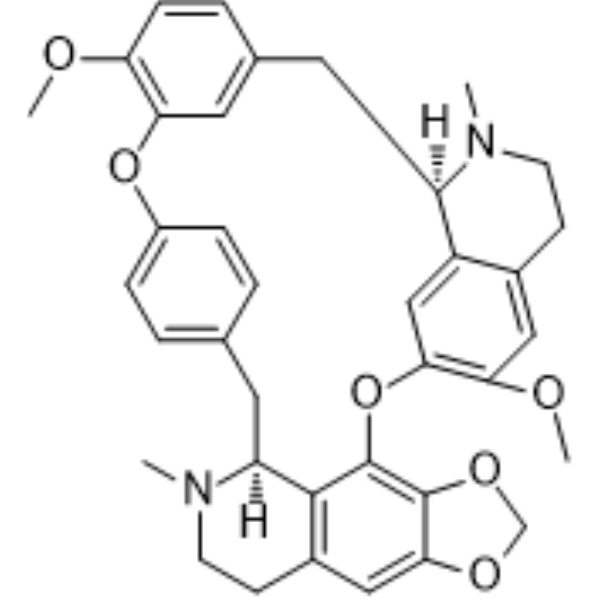
Cepharanthine is a natural product that can be isolated from the plant Stephania cephalantha Hayata. Cepharanthine has anti-severe acute respiratory syndrome coronavirus 2 (anti-SARS-CoV-2) activities. Cepharanthine has good effective in suppressing viral proliferation (half maximal (50%) inhibitory concentration (IC50) and 90% inhibitory concentration (IC90) values of 1.90 and 4.46 μM . Cepharanthine can also effectively reverses P-gp-mediated multidrug resistance in K562 cells and increase enhances the sensitivity of anticancer agents in xenograft mice model . Cepharanthine shows inhibitory effects of human liver cytochrome P450 enzymes CYP3A4, CYP2E1 and CYP2C9. Cepharanthine has antitumor, anti-inflammatory and antinociceptive effects [6] .
Anti-SARS-CoV-2 S protein Antibody (RBD epitope B, SARS2-34) is a mouse-derived IgG1 κ type antibody inhibitor, targeting to SARS-CoV-2 S protein. Anti-SARS-CoV-2 S protein Antibody (RBD epitope B, SARS2-34) reacts with the receptor binding domain (RBD) epitope B in the spike (S) protein of SARS-CoV-2 (Severe Acute Respiratory Syndrome Coronavirus 2). Anti-SARS-CoV-2 S protein Antibody (RBD epitope B, SARS2-34) can block the binding of the SARS-CoV-2 S protein to angiotensin-converting enzyme 2 (ACE2). Anti-SARS-CoV-2 S protein Antibody (RBD epitope B, SARS2-34) can be used for the research of SARS-CoV-2 infection .
Cepharanthine (Standard) is the analytical standard of Cepharanthine. This product is intended for research and analytical applications. Cepharanthine is a natural product that can be isolated from the plant Stephania?cephalantha?Hayata. Cepharanthine has anti-severe acute respiratory syndrome coronavirus 2 (anti-SARS-CoV-2) activities. Cepharanthine has good effective in suppressing viral proliferation (half maximal (50%) inhibitory concentration (IC50) and 90% inhibitory concentration (IC90) values of 1.90 and 4.46?μM . Cepharanthine can also effectively reverses P-gp-mediated multidrug resistance in K562 cells and increase enhances the sensitivity of anticancer agents in xenograft mice model . Cepharanthine shows inhibitory effects of human liver cytochrome P450 enzymes CYP3A4, CYP2E1 and CYP2C9. Cepharanthine has antitumor, anti-inflammatory and antinociceptive effects [6] .
Anti-SARS-CoV-2 S protein Antibody (RBD epitope A, SARS2-01) is a mouse-derived IgG1 κ type antibody inhibitor, targeting to SARS-CoV-2 S protein. Anti-SARS-CoV-2 S protein Antibody (RBD epitope A, SARS2-01) reacts with the receptor binding domain (RBD) epitope A in the spike (S) protein of SARS-CoV-2 (Severe Acute Respiratory Syndrome Coronavirus 2). Anti-SARS-CoV-2 S protein Antibody (RBD epitope A, SARS2-01) can block the binding of the SARS-CoV-2 S protein to angiotensin-converting enzyme 2 (ACE2). Anti-SARS-CoV-2 S protein Antibody (RBD epitope A, SARS2-01) can be used for the research of SARS-CoV-2 infection .
SARS-CoV-2 Mpro-IN-41 (Compound 7e) is an orally active inhibitor of COX-2 and SARS-CoV-2 M pro (IC50 values are 9.66 μM and 13.24 μM, respectively). SARS-CoV-2 Mpro-IN-41 also has a certain inhibitory activity against COX-1 (IC50: 46.11 μM). SARS-CoV-2 Mpro-IN-41 can significantly inhibit the expression of inflammatory-related cytokines (such as TNF-α, IL-6, IL-1β) and exert anti-inflammatory effects. SARS-CoV-2 Mpro-IN-41 exerts anti-inflammatory and antiviral effects by selectively inhibiting COX-2 and SARS-CoV-2 M pro. SARS-CoV-2 Mpro-IN-41 can be used for anti-inflammatory and anti-coronavirus research .
LDLRAP1-IN-1 (Compound B19) is a LDLRAP1 inhibitor and antiviral agent, with an IC50 of 4.98 μM for disrupting the interaction between LDLRAP1 and LDLR. LDLRAP1-IN-1 covalently modifies the C119 residue of LDLRAP1 at the LDLRAP1-LDLR binding interface, thereby disrupting the interaction between LDLRAP1 and LDLR. LDLRAP1-IN-1 exhibits antiviral activity against HCoV-OC43 .
BOC-(1R,3S)-3-aminocyclopentane carboxylic acid ((1S,3S)-3-[(tert-Butoxycarbonyl)amino]cyclopentanecarboxylic acid) is a conformationally constrained peptide building block and a key component of SARS-CoV-2 main protease (Mpro) inhibitors. When incorporated into macrocyclic peptides, BOC-(1R,3S)-3-aminocyclopentane carboxylic acid not only helps generate high-affinity Mpro inhibitors by preorganizing the secondary structure of peptides, but also exerts sequence-dependent functional inhibition on the hydrolytic activity of Mpro. BOC-(1R,3S)-3-aminocyclopentane carboxylic is widely used in COVID-19-related research .
Strictinin is an orally active phenolic compound. Strictinin reduces xanthine oxidase activity, uric acid production, and the activation of ERK1/2, JNK, NF-κB, and NLRP3 inflammasome components in hepatocytes treated with Xanthine (HY-W017389). Strictinin decreases elevated serum uric acid levels and enhanced xanthine oxidase activity in mice treated with potassium oxonate. Strictinin acts as a ROR1 inhibitor and exhibits anticancer activity against highly aggressive non-androgen-dependent prostate cancer. Strictinin induces cancer cell apoptosis (apoptosis), arrests cell cycle, and inhibits cancer cell migration, invasion, and epithelial-mesenchymal transition. Strictinin modulates gut microbiota, inhibits bacterial growth and biofilm formation, accelerates small intestinal transit, and blocks viral entry and replication. Strictinin can be used in research related to hyperuricemia, androgen receptor-negative non-androgen-dependent prostate cancer, triple-negative breast cancer, bacterial infections, constipation, coronavirus infections, dental caries, and infections caused by influenza A, influenza B, and human parainfluenza virus type 1 [6] .
Mca-PLAQAV-Dpa-RSSSR-NH2 is a fluorescent substrate peptide that can be used to detect ADAM9, ADAM10, and tumor necrosis factor-α converting enzyme (TACE/ADAM17). Mca-PLAQAV-Dpa-RSSSR-NH2 is a fluorescence resonance energy transfer-based substrate, and its activity can be determined by changes in fluorescence intensity upon cleavage (Ex = 320 nm
; Em = 405 nm) .
Pradimicin A is a potent antifungal agent with a minimum inhibitory concentration (MIC) of 4 μg/mL against Candida rugosa. Pradimicin A exhibits antiviral activity against SARS-CoV, human immunodeficiency virus (HIV) and other enveloped viruses. Pradimicin A exerts its fungicidal activity through a Ca 2+-dependent mechanism, which induces fungal lysis. Pradimicin A can be used in research related to fungal infections, HIV infections and COVID-19 .
Docosapentaenoic acid (DPA) is a 22-carbon fatty acid found in fish oil. It is a minor component of total serum unsaturated fatty acids in humans, ranging from 0.1% to 1%, and increasing with dietary supplementation. all-cis-4,7,10,13,16-DPA, also known as Austrian acid, is an isomer of DPA. It is an omega-6 fatty acid formed by the extension and desaturation of arachidonic acid. During fatty acid desaturase syndrome, levels of this fatty acid may be reduced, which may affect development. Upregulated hepatic elongate expression of very long fatty acid protein 6 and elevated levels of very long chain fatty acids, including all-cis 4,7,10,13,16-DPA, are characteristic of nonalcoholic steatohepatitis, a precancerous disease of hepatocellular carcinoma.
GC813 is a MERS-CoV 3CL protease (3CLpro) and MERS-CoV main protease (Mpro) inhibitor.GC813 can be used for the research of middle east respiratory syndrome .
LC-1310 is an antiviral agent that targets and inhibits p97, and it suppresses the in vitro replication of human cytomegalovirus (HCMV) with an EC50 value of 0.3 μM. LC-1310 targets the D2 ATP-binding site of p97, downregulates the expression of early viral proteins, thereby blocking the transcription and proliferation of early viral genes. LC-1310 can be used for research on human cytomegalovirus infection .
DMA-155 is an antiviral agent with binding activity against SARS-CoV-2 5'-terminal stem-loop RNAs, with affinities of 51.1 μM (SL1), 61.1 μM (SL4), 54.5 μM (SL5a), 66.9 μM (SL5b) and 48.6 μM (SL6), respectively. DMA-155 inhibits SARS-CoV-2 viral replication and reduces SARS-CoV-2 viral RNA levels. DMA-155 is applicable to the research of COVID-19 .
Methyl rosmarinate is an orally active hydroxycinnamic acid. Methyl rosmarinate exhibits an IC50 of 24.70 μM and a Ki of 15.29 μM against PTP1B, an IC50 of 41.46 μg/mL against BChE, a Ki of 0.61 mM against mushroom tyrosinase, and an IC50 of 2.50 μM against SARS-CoV-23CLpro. Methyl rosmarinate downregulates the phosphorylation levels of ERK, JNK, p38, Smad2 and Smad3. Methyl rosmarinate activates erythrocyte BPGM and promotes the production of 2,3-BPG. Methyl rosmarinate induces apoptosis of fibroblasts. Methyl rosmarinate prolongs the survival time of hypoxic mice. Methyl rosmarinate improves insulin sensitivity. Methyl rosmarinate binds to SARS-CoV-2 3CLpro and inhibits viral replication. Methyl rosmarinate induces glioblastoma cell death. Methyl rosmarinate activates the TGR5/AMPK axis and reduces the levels of ROS and MDA. Methyl rosmarinate shows inhibitory activity against MMP-1. Methyl rosmarinate can be used in research related to pulmonary fibrosis, hypoxia-induced injury, type 2 diabetes, Alzheimer's disease, hyperpigmentation disorders, COVID-19, glioblastoma and myocardial ischemia-reperfusion injury [6] .
XL177A GMP is XL177A (HY-138794) produced by using GMP guidelines. GMP small molecules works appropriately as an auxiliary reagent for cell therapy manufacture. XL177A is a covalent USP7 inhibitor that blocks the deubiquitinase activity of USP7. XL177A destabilizes non-canonical PRC1 complexes or KDM6A and reduces chromatin deposition of H2AK119Ub, thereby relieving the repression of neuronal differentiation programs. Meanwhile, XL177A also regulates the ELOF1-UVSSA-USP7-nuclear β-catenin axis, decreasing the transcription levels of related proteins and the accumulation of nuclear β-catenin. XL177A exerts antiviral effects by reducing the expression levels of coronavirus receptors, and exhibits inhibitory activity against APC-mutated colorectal cancer cells, neuroblastoma, and coronaviruses including SARS-CoV-2 variants. XL177A is mainly used in studies related to colorectal cancer, neuroblastoma, and coronavirus infections .
Docosapentaenoic acid (DPA) is a 22-carbon fatty acid found in fish oil. It is a minor component of total serum unsaturated fatty acids in humans, ranging from 0.1% to 1%, and increasing with dietary supplementation. all-cis-4,7,10,13,16-DPA, also known as Austrian acid, is an isomer of DPA. It is an omega-6 fatty acid formed by the extension and desaturation of arachidonic acid. During fatty acid desaturase syndrome, levels of this fatty acid may be reduced, which may affect development. Upregulated hepatic elongate expression of very long fatty acid protein 6 and elevated levels of very long chain fatty acids, including all-cis 4,7,10,13,16-DPA, are characteristic of nonalcoholic steatohepatitis, a precancerous disease of hepatocellular carcinoma.
XL177A GMP is XL177A (HY-138794) produced by using GMP guidelines. GMP small molecules works appropriately as an auxiliary reagent for cell therapy manufacture. XL177A is a covalent USP7 inhibitor that blocks the deubiquitinase activity of USP7. XL177A destabilizes non-canonical PRC1 complexes or KDM6A and reduces chromatin deposition of H2AK119Ub, thereby relieving the repression of neuronal differentiation programs. Meanwhile, XL177A also regulates the ELOF1-UVSSA-USP7-nuclear β-catenin axis, decreasing the transcription levels of related proteins and the accumulation of nuclear β-catenin. XL177A exerts antiviral effects by reducing the expression levels of coronavirus receptors, and exhibits inhibitory activity against APC-mutated colorectal cancer cells, neuroblastoma, and coronaviruses including SARS-CoV-2 variants. XL177A is mainly used in studies related to colorectal cancer, neuroblastoma, and coronavirus infections .
Corisin is a pro-apoptotic small peptide produced by Staphylococcus species. Corisin binds to serum albumin to target organs such as the lungs and kidneys, induces cellular senescence, apoptosis and epithelial-mesenchymal transition, and accelerates the progression of organ fibrosis including pulmonary fibrosis and diabetic renal fibrosis. Corisin levels are closely associated with coronavirus disease 2019 (COVID-19), diabetic chronic kidney disease (CKD), non-diabetic CKD, and idiopathic pulmonary fibrosis (IPF) .
Mca-PLAQAV-Dpa-RSSSR-NH2 is a fluorescent substrate peptide that can be used to detect ADAM9, ADAM10, and tumor necrosis factor-α converting enzyme (TACE/ADAM17). Mca-PLAQAV-Dpa-RSSSR-NH2 is a fluorescence resonance energy transfer-based substrate, and its activity can be determined by changes in fluorescence intensity upon cleavage (Ex = 320 nm
; Em = 405 nm) .
Fmoc-Ser(Ac)-OH (Fmoc-O-acetyl-L-serine) is a Serine derivative. Fmoc-Ser(Ac)-OH can be used for the preparation of broad-spectrum coronavirus membrane fusion inhibitor .
Abz-FRLKGGAPIKGV-EDDNP TFA is a fluorogenic substrate used to measure the enzymatic activities of protease forms, such as papain-like protease 2 (PLP2) from severe acute respiratory syndrome coronavirus (SARS-CoV). Abz-FRLKGGAPIKGV-EDDNP TFA has the potential for study 2019-nCoV (COVID-19) infection .
M133 peptide is a coronavirus-specific CD4 T cell epitope. M133 peptide is immunodominant in mice infected with the neurotropic coronavirus (the JHM strain of mouse hepatitis virus). M133 peptide forms a complex with MHC II molecules, which is recognized by specific TCRs, thereby activating CD4 T cells .
NS2 (114-121), Influenza, the 114-121 fragment of influenza nonstructuralprotein 2 (NS2), is a influenza-derived epitope. NS2 (114-121), Influenza can be used for the research of CD8 + cytotoxic T lymphocyte (CTL) in antiviral immune responses .
KK4A peptide is a small peptide derived from nonstructuralprotein 4A (NS4A) of hepatitis C virus (HCV) that significantly increases the catalytic efficiency of NS3 protease. The KK4A peptide may be used to gain insights into the function and mechanism of the HCV NS3 protease, thereby advancing research into HCV infection .
Hepatitis C Virus S5A/5B is a synthetic peptide substrate. Hepatitis C Virus S5A/5B mimics the NS5A/5B junction of the nonstructuralprotein (NS), served as the substrate for the study of HCV NS3 protease activity .
P315V3 is an pan inhibitor for coronavirus, that inhibits SARS-CoV-2 prototypePT, Delta, BA.1 and BA.4 strain with IC50s of 10.9, 8.9, 8.6, and 2.7 nM. P315V3 exhibits cytotoxicity in Vero cell with CC50 of 4.3 μM. P315V3 exhibits anti-infectious efficacy in mouse models .
Ac-Asp-Glu-Asp(EDANS)-Glu-Glu-Abu-ψ-(COO)Ala-Ser-Lys(DABCYL)-NH2 (HCV NS3 protease substrate) is a biological active peptide. (This peptide is a HCV protease substrate incorporating an ester bond between residues P1 and P1. Due to ready transesterification of the scissile bond to the acyl-enzyme intermediate, this substrate shows very high kcat/Km values, enabling detection of activity with subnanomolar nonstructuralprotein 3 (NS3 protease) concentrations. It is widely used for the continuous assay of NS3 protease activity. Substrate cleavage is proportional to the enzyme concentration with a detection limit for NS3 between 1 nM and 250 pM.
SARS-CoV-2-IN-34 (S-20-1) is a blood brain barrier penetrable pan-coronavirus (CoV) fusion inhibitor with broad-spectrum inhibitory activity. SARS-CoV-2-IN-34 effectively inhibits infection by pseudotyped and authentic SARS-CoV-2, and pseudotyped variants of concern (VOCs). SARS-CoV-2-IN-34 shows high affinity to RBD in S1 and HR1 domain in S2 of SARS-CoV-2 S protein. SARS-CoV-2-IN-34 can be used for the research of infection .
Tocilizumab (Anti-Human IL6R, Humanized Antibody) is an anti-human interleukin-6 receptor (IL-6R) neutralizing antibody, prevents binding of IL-6 to the IL-6R, thereby inhibiting both classic and trans-signaling. Tocilizumab (Anti-Human IL6R, Humanized Antibody) can be used for the treatment of rheumatoid arthritis . Tocilizumab is remarkablely effective for the study of severe COVID-19 (coronavirus disease) .
YS110 is a humanized anti-CD26 (DPP4) IgG1 monoclonal antibody. YS110 induces CD26 nuclear translocation through the caveolin pathway. YS110 inhibits the proliferation of tumor cell by delaying G2/M cell cycle transition. YS110 inhibits the infection of Middle East respiratory syndrome coronavirus (MERS CoV) by blocking the binding of MERS CoV S1 to CD26. YS110 can be used for researches on cancer or infection such as Malignant Mesothelioma and MERS .
Romlusevimab (BRII-198) is a neutralizing recombinant human IgG1 monoclonal antibody against the spike protein of severe acute respiratory syndrome coronavirus 2 (SARS-CoV-2) .
Anti-SARS-CoV-2 S protein Antibody (NTD, SARS2-29) is a mouse-derived IgG1 κ type antibody inhibitor, targeting to SARS-CoV-2 S protein. Anti-SARS-CoV-2 S protein Antibody (NTD, SARS2-29) reacts with the N-terminal domain (NTD) in the spike (S) protein of SARS-CoV-2 (Severe Acute Respiratory Syndrome Coronavirus 2). Anti-SARS-CoV-2 S protein Antibody (NTD, SARS2-29) can be used for the detections of flow cytometry and ELISA in SARS-CoV-2 infection .
Anti-SARS-CoV-2 S protein Antibody (RBD epitope B, SARS2-34) is a mouse-derived IgG1 κ type antibody inhibitor, targeting to SARS-CoV-2 S protein. Anti-SARS-CoV-2 S protein Antibody (RBD epitope B, SARS2-34) reacts with the receptor binding domain (RBD) epitope B in the spike (S) protein of SARS-CoV-2 (Severe Acute Respiratory Syndrome Coronavirus 2). Anti-SARS-CoV-2 S protein Antibody (RBD epitope B, SARS2-34) can block the binding of the SARS-CoV-2 S protein to angiotensin-converting enzyme 2 (ACE2). Anti-SARS-CoV-2 S protein Antibody (RBD epitope B, SARS2-34) can be used for the research of SARS-CoV-2 infection .
Anti-SARS-CoV-2 S protein Antibody (RBD epitope A, SARS2-01) is a mouse-derived IgG1 κ type antibody inhibitor, targeting to SARS-CoV-2 S protein. Anti-SARS-CoV-2 S protein Antibody (RBD epitope A, SARS2-01) reacts with the receptor binding domain (RBD) epitope A in the spike (S) protein of SARS-CoV-2 (Severe Acute Respiratory Syndrome Coronavirus 2). Anti-SARS-CoV-2 S protein Antibody (RBD epitope A, SARS2-01) can block the binding of the SARS-CoV-2 S protein to angiotensin-converting enzyme 2 (ACE2). Anti-SARS-CoV-2 S protein Antibody (RBD epitope A, SARS2-01) can be used for the research of SARS-CoV-2 infection .
Anti-West Nile virus NS1 Antibody (10NS1) reacts with non-structuralprotein 1 (NS1) of West Nile virus (WNV). Anti-West Nile virus NS1 Antibody (10NS1) offers significant protection against flaviviral infections in vivo. Recommend Isotype Controls: Mouse IgG2a kappa, Isotype Control (HY-P99978) .
Thapsigargin, an endoplasmic reticulum (ER) stress inducer, is an inhibitor of microsomal Ca 2+-ATPase. Thapsigargin efficiently inhibits coronavirus (HCoV-229E, MERS-CoV, SARS-CoV-2) replication in different cell types .
Emodin (Frangula emodin), an anthraquinone derivative, is an anti-SARS-CoV compound. Emodin blocks the SARS coronavirus spike protein and angiotensin-converting enzyme 2 (ACE2) interaction . Emodin inhibits casein kinase-2 (CK2). Anti-inflammatory and anticancer effects . Emodin is a potent selective 11β-HSD1 inhibitor with the IC50 of 186 and 86 nM for human and mouse 11β-HSD1, respectively. Emodin ameliorates metabolic disorder in diet-induced obese mice .
6-Thioguanine (Thioguanine; 2-Amino-6-purinethiol) is an anti-leukemia and immunosuppressant agent, acts as an inhibitor of SARS and MERS coronavirus papain-like proteases (PLpros) and also potently inhibits USP2 activity, with IC50s of 25 μM and 40 μM for Plpros and recombinant human USP2, respectively.
Cepharanthine is a natural product that can be isolated from the plant Stephania cephalantha Hayata. Cepharanthine has anti-severe acute respiratory syndrome coronavirus 2 (anti-SARS-CoV-2) activities. Cepharanthine has good effective in suppressing viral proliferation (half maximal (50%) inhibitory concentration (IC50) and 90% inhibitory concentration (IC90) values of 1.90 and 4.46 μM . Cepharanthine can also effectively reverses P-gp-mediated multidrug resistance in K562 cells and increase enhances the sensitivity of anticancer agents in xenograft mice model . Cepharanthine shows inhibitory effects of human liver cytochrome P450 enzymes CYP3A4, CYP2E1 and CYP2C9. Cepharanthine has antitumor, anti-inflammatory and antinociceptive effects [6] .
Camostat mesylate (Camostat mesilate) is an orally active, synthetic serine protease inhibitor for chronic pancreatitis. Camostat mesylate, an inhibitor of TMPRSS2, shows antiviral activity against SARS-CoV-2. Camostat mesylate also inhibits the activity of prostasin, trypsin, and matriptase .
Aloin B (Isobarbaloin) is an orally active SARS-CoV-2 papain-like protease (PLpro) inhibitor with an IC50 of 16.08 μM (hydrolytic activity) and 17.51 μM (deubiquitinase activity). Aloin B is metabolized by rat intestinal flora into aloe-emodin-9-anthrone to exert laxative effects. Aloin B inhibits TPA (HY-18739)-induced ear edema, putrescine elevation, and tumor promotion in mouse skin. Aloin B can be used in research related to anti-inflammation, tumor promotion inhibition, coronavirus disease 2019 (COVID-19) and constipation .
Methyl rosmarinate is an orally active hydroxycinnamic acid. Methyl rosmarinate exhibits an IC50 of 24.70 μM and a Ki of 15.29 μM against PTP1B, an IC50 of 41.46 μg/mL against BChE, a Ki of 0.61 mM against mushroom tyrosinase, and an IC50 of 2.50 μM against SARS-CoV-23CLpro. Methyl rosmarinate downregulates the phosphorylation levels of ERK, JNK, p38, Smad2 and Smad3. Methyl rosmarinate activates erythrocyte BPGM and promotes the production of 2,3-BPG. Methyl rosmarinate induces apoptosis of fibroblasts. Methyl rosmarinate prolongs the survival time of hypoxic mice. Methyl rosmarinate improves insulin sensitivity. Methyl rosmarinate binds to SARS-CoV-2 3CLpro and inhibits viral replication. Methyl rosmarinate induces glioblastoma cell death. Methyl rosmarinate activates the TGR5/AMPK axis and reduces the levels of ROS and MDA. Methyl rosmarinate shows inhibitory activity against MMP-1. Methyl rosmarinate can be used in research related to pulmonary fibrosis, hypoxia-induced injury, type 2 diabetes, Alzheimer's disease, hyperpigmentation disorders, COVID-19, glioblastoma and myocardial ischemia-reperfusion injury [6] .
Arjungenin, a pentacyclic triterpenoid compound, is a FXR agonist. Arjungenin can improve insulin sensitivity by regulating the function of fat cells. Arjungenin exhibits moderate free radical scavenging activity. Arjungenin has growth inhibitory activity against the insect Spilarctia obliqua. Arjungenin has significant antiviral activity against a series of viruses such as chikungunya Virus (CHIKV) .
Tanshinlactone is a compound found in Salvia miltiorrhiza with anti-coronavirus (CoV) and anti-tumor activities. Tanshinlactone induces methuocytic cell death (methuosis) by activating the NRF2 pathway, and selectively kills ER +, HER2 +/EGFR + breast cancer cells. Tanshinlactone is applicable to research related to breast cancer and coronavirus infections .
Thymohydroquinone is a COX-2 inhibitor and anti-SARS-CoV-2 agent that induces cytotoxicity, antiproliferative effects and inhibits tumor growth. Thymohydroquinone cannot scavenge superoxide radicals via σ (hydrogen atom transfer) and π-π attacks with superoxide anions. Thymohydroquinone can be used in research related to squamous cell carcinoma, fibrosarcoma and coronavirus disease 2019 (SARS-CoV-2 infection) .
6-Thioguanine (Standard) is the analytical standard of 6-Thioguanine. This product is intended for research and analytical applications. 6-Thioguanine (Thioguanine; 2-Amino-6-purinethiol) is an anti-leukemia and immunosuppressant agent, acts as an inhibitor of SARS and MERS coronavirus papain-like proteases (PLpros) and also potently inhibits USP2 activity, with IC50s of 25 μM and 40 μM for Plpros and recombinant human USP2, respectively.
Withanoside V is a blood-brain barrier-permeable withanolide derivative . Withanoside V binds strongly to Sudlow I (domain IIA) of human serum albumin (HSA) to form a stable complex and alter the secondary structure of albumin, thereby increasing helix content and reducing β-sheet and random coil. Withanoside V binds to Aβ (1-42) to block the interaction between monomers and subsequent aggregation. Withanoside V inhibits the viability of neuroblastoma cells, reduces the number of apoptotic cells induced by Aβ (1-42), and decreases ROS production. Withanoside V inhibits SARS-CoV-2 Mpro. Withanoside V can be used for research on Alzheimer's disease and coronavirus disease 2019 .
Emodin (Standard) is the analytical standard of Emodin. This product is intended for research and analytical applications. Emodin (Frangula emodin), an anthraquinone derivative, is an anti-SARS-CoV compound. Emodin blocks the SARS coronavirus spike protein and angiotensin-converting enzyme 2 (ACE2) interaction . Emodin inhibits casein kinase-2 (CK2). Anti-inflammatory and anticancer effects . Emodin is a potent selective 11β-HSD1 inhibitor with the IC50 of 186 and 86 nM for human and mouse 11β-HSD1, respectively. Emodin ameliorates metabolic disorder in diet-induced obese mice .
Strictinin is an orally active phenolic compound. Strictinin reduces xanthine oxidase activity, uric acid production, and the activation of ERK1/2, JNK, NF-κB, and NLRP3 inflammasome components in hepatocytes treated with Xanthine (HY-W017389). Strictinin decreases elevated serum uric acid levels and enhanced xanthine oxidase activity in mice treated with potassium oxonate. Strictinin acts as a ROR1 inhibitor and exhibits anticancer activity against highly aggressive non-androgen-dependent prostate cancer. Strictinin induces cancer cell apoptosis (apoptosis), arrests cell cycle, and inhibits cancer cell migration, invasion, and epithelial-mesenchymal transition. Strictinin modulates gut microbiota, inhibits bacterial growth and biofilm formation, accelerates small intestinal transit, and blocks viral entry and replication. Strictinin can be used in research related to hyperuricemia, androgen receptor-negative non-androgen-dependent prostate cancer, triple-negative breast cancer, bacterial infections, constipation, coronavirus infections, dental caries, and infections caused by influenza A, influenza B, and human parainfluenza virus type 1 [6] .
Camostat (mesylate) (Standard) is the analytical standard of Camostat (mesylate). This product is intended for research and analytical applications. Camostat mesylate (Camostat mesilate) is an orally active, synthetic serine protease inhibitor for chronic pancreatitis. Camostat mesylate, an inhibitor of TMPRSS2, shows antiviral activity against SARS-CoV-2. Camostat mesylate also inhibits the activity of prostasin, trypsin, and matriptase .
Withanoside IV is an orally active, blood-brain barrier-permeable withanolide derivative. Withanoside IV specifically binds to the Sudlow I site of HSA, induces secondary structural changes in HSA, and forms stable HSA complexes. Withanoside IV inhibits the enzymatic activity of COX-2. Withanoside IV induces axonal regeneration, peripheral nervous system myelination and increased axonal density in spinal cord tissue, reduces reactive gliosis-related changes, and improves hindlimb motor function. Withanoside IV binds to amyloid-β 1-42 to inhibit its aggregation, induces neurite outgrowth and synapse reconstruction, repairs damaged axons and dendrites, enhances mitochondrial biogenesis, exerts neuroprotective effects via the BDNF and SIRT1 signaling pathways, reduces ROS production and neuronal apoptosis, and ameliorates memory deficits. Withanoside IV inhibits the activity of the SARS-CoV-2 main protease. Withanoside IV can be used in research related to spinal cord injury, Alzheimer's disease, and coronavirus disease 2019 (COVID-19) [6] .
Cepharanthine (Standard) is the analytical standard of Cepharanthine. This product is intended for research and analytical applications. Cepharanthine is a natural product that can be isolated from the plant Stephania?cephalantha?Hayata. Cepharanthine has anti-severe acute respiratory syndrome coronavirus 2 (anti-SARS-CoV-2) activities. Cepharanthine has good effective in suppressing viral proliferation (half maximal (50%) inhibitory concentration (IC50) and 90% inhibitory concentration (IC90) values of 1.90 and 4.46?μM . Cepharanthine can also effectively reverses P-gp-mediated multidrug resistance in K562 cells and increase enhances the sensitivity of anticancer agents in xenograft mice model . Cepharanthine shows inhibitory effects of human liver cytochrome P450 enzymes CYP3A4, CYP2E1 and CYP2C9. Cepharanthine has antitumor, anti-inflammatory and antinociceptive effects [6] .
Koenine is a carbazole alkaloid. It is predicted that Koenine has strong binding affinity and inhibitory ability to SARS-CoV-2 main protease (M pro), which can be used in the research of anti-novel coronavirus drugs .
(±)-Alliin (Standard) is the analytical standard of (±)-Alliin. This product is intended for research and analytical applications. (±)-Alliin is the main active component of garlic. (±)-Alliin is a putative inhibitor of the main protease of SARS-CoV-2 (Mpro) .
Aloin B (Isobarbaloin) (Standard) is the analytical standard of Aloin B. This product is intended for research and analytical applications. Aloin B is an orally active SARS-CoV-2 papain-like protease (PLpro) inhibitor with an IC50 of 16.08 μM (hydrolytic activity) and 17.51 μM (deubiquitinase activity). Aloin B is metabolized by rat intestinal flora into aloe-emodin-9-anthrone to exert laxative effects. Aloin B inhibits TPA (HY-18739)-induced ear edema, putrescine elevation, and tumor promotion in mouse skin. Aloin B can be used in research related to anti-inflammation, tumor promotion inhibition, coronavirus disease 2019 (COVID-19) and constipation .
Penisimplicissin is a funicone-like compound and antiviral agent. Penisimplicissin reduces the expression of AhR and viral nucleocapsid protein. Penisimplicissin improves the cell viability and morphological characteristics of CCoV-infected cells. Penisimplicissin inhibits CCoV infection. Penisimplicissin can be used in studies related to canine coronavirus infection .
Crepidiaside B is a plant-derived active component that can be found in Cichorium intybus. Crepidiaside B acts as a SARS-CoV-2 spike glycoprotein inhibitor and is used in research related to coronavirus disease 2019 (COVID-19) .
Replicase 1AB polyprotein Protein, SARS-CoV (Cell-Free, His) is the recombinant Virus-derived Replicase 1AB polyprotein protein, expressed by E. coli Cell-free, with N-10*His labeled tag.
Nonstructural protein 1/NS1 plays multiple roles in viral infection.It inhibits cellular pre-mRNA processing by binding to CPSF4 and PABPN1, disrupting normal 3' end processing and halting host protein synthesis.Non-structural protein 1/NS1 Protein, H1N1 (His) is the recombinant Virus-derived Non-structural protein 1/NS1 protein, expressed by E.coli , with N-His labeled tag.
Nonstructural protein 2/NS2 protein plays a crucial role in the influenza virus life cycle by mediating the nuclear export of capsid genomic RNA and is the link between the viral ribonucleoprotein complex (RNP) and the host cell nuclear export machinery. Important ties. Non-structural protein 2/NS2 Protein, H1N1 (His) is the recombinant Virus-derived Non-structural protein 2/NS2 protein, expressed by E. coli , with N-His labeled tag.
IGFBP-6 protein can extend the half-life of IGF and regulate its effects. It can inhibit or stimulate the growth-promoting effects of IGF. IGFBP-6 Protein, Mouse (HEK293, His) is the recombinant mouse-derived IGFBP-6 protein, expressed by HEK293 , with C-6*His labeled tag.
The EGFL6 protein is a key player in hair follicle morphogenesis and may influence cell dynamics through binding to integrin α-8/β-1. This interaction is shown to play a key role in the complex process that controls hair follicle formation. EGFL6 Protein, Mouse (HEK293, Fc) is the recombinant mouse-derived EGFL6 protein, expressed by HEK293 , with C-hFc labeled tag.
The EGFL6 protein is a key player in hair follicle morphogenesis and may influence cell dynamics through binding to integrin α-8/β-1. This interaction is shown to play a key role in the complex process that controls hair follicle formation. EGFL6 Protein, Mouse (HEK293, His) is the recombinant mouse-derived EGFL6 protein, expressed by HEK293 , with C-10*His labeled tag.
The CHMP6 protein is a core component of ESCRT-III and plays a key role in the formation of multivesicular bodies (MVBs) for endosomal cargo protein sorting. MVB is essential for the degradation of membrane proteins transported to lysosomes. CHMP6 Protein, Human is the recombinant human-derived CHMP6 protein, expressed by E. coli , with tag free.
The CHMP6 protein is a core component of ESCRT-III and plays a key role in the formation of multivesicular bodies (MVBs) for endosomal cargo protein sorting. MVB is essential for the degradation of membrane proteins transported to lysosomes. CHMP6 Protein, Human (His, Strep) is the recombinant human-derived CHMP6 protein, expressed by E. coli , with N-Strep, N-6*His labeled tag.
The TSG-6 protein is a major extracellular matrix regulator that catalyzes the transfer of heavy chains to hyaluronic acid to form hyaluronic acid-HC oligomers that are critical for tissue remodeling and oocyte fertilization. It assembles hyaluronic acid in the pericellular matrix, which acts as a platform for receptor aggregation. TSG-6 Protein, Human (His) is the recombinant human-derived TSG-6 protein, expressed by E. coli , with N-6*His labeled tag.
Major Urinary Protein 6 (MUP6) is crucial in chemical communication, binding to pheromones in male urine. This interaction significantly influences female sexual behavior, regulating mating behaviors and contributing to chemical signaling in reproductive and social contexts. MUP6's specific binding to male-derived pheromones underscores its essential role in mediating these communication processes in the animal kingdom. Major urinary protein 6 Protein, Mouse (His-SUMO) is the recombinant mouse-derived Major urinary protein 6 protein, expressed by E. coli , with N-His, N-SUMO labeled tag.
The GEMIN6 protein is a component of the SMN complex and is critical for the assembly of small nuclear ribonucleoproteins (snRNPs), which are essential for spliceosome-mediated pre-mRNA splicing. Most spliceosomal snRNPs share a common set of Sm proteins that form a heptameric protein ring on small nuclear RNAs. GEMIN6 Protein, Human is the recombinant human-derived GEMIN6 protein, expressed by E. coli , with tag free.
The SLITRK6 protein is a key regulator that coordinates neurite growth, which is critical for normal hearing and vision, affecting neuronal development and intercellular communication. Its importance in sensory function emphasizes its important role in the molecular mechanisms of sensory perception. SLITRK6 Protein, Human (HEK293, His) is the recombinant human-derived SLITRK6 protein, expressed by HEK293 , with C-His labeled tag.
ACBD6 protein selectively binds long-chain acyl-CoA, showing a significant preference for unsaturated C18:1-CoA. Unlike other variants such as unsaturated C20:4-CoA and saturated C16:0-CoA, ACBD6 does not bind to free fatty acids. ACBD6 Protein, Human (sf9, His) is the recombinant human-derived ACBD6 protein, expressed by Sf9 insect cells , with N-His labeled tag.
KBTBD6 is a key member of the CUL3(KBTBD6/7) E3 ubiquitin ligase complex, acting as a substrate adapter to coordinate the “Lys-48” ubiquitination and subsequent proteasomal degradation of the RAC1 guanine exchange factor TIAM1. This regulatory role enables KBTBD6 to control RAC1 signaling, affecting important processes such as cytoskeletal organization, cell migration, and cell proliferation. KBTBD6 Protein, Human (sf9) is the recombinant human-derived KBTBD6 protein, expressed by sf9 insect cells , with tag free.
The GEMIN6 protein is a component of the SMN complex and is critical for the assembly of small nuclear ribonucleoproteins (snRNPs), which are essential for spliceosome-mediated pre-mRNA splicing. Most spliceosomal snRNPs share a common set of Sm proteins that form a heptameric protein ring on small nuclear RNAs. GEMIN6 Protein, Human (His, Strep) is the recombinant human-derived GEMIN6 protein, expressed by E. coli , with N-Strep, N-6*His labeled tag.
The CDKN1A protein critically controls cell cycle progression and mediates DNA damage-induced G2 arrest through p53/TP53-dependent and CREB3L1-mediated p53-independent pathways. It inhibits cyclin-dependent kinase activity, blocking cell cycle progression by preventing phosphorylation of key substrates. CDKN1A Protein, Human (GST) is the recombinant human-derived CDKN1A protein, expressed by E. coli , with N-GST labeled tag.
ARL6IP6 Protein is present in the inner nuclear membrane and displays transmembrane characteristics. ARL6IP6 gene plays a role in the activation of NF-κB and in the regulation of cell growth and apoptosis. ARL6IP6 can be used in research of cutis marmorata telangiectatica (CMTC). ARL6IP6 Protein, Human (HEK293, Fc) is the recombinant human-derived ARL6IP6 protein, expressed by HEK293 , with N-mFc labeled tag.
IGFBP-6 protein is an important IGFBP member that regulates insulin-like growth factor (IGF) by changing its interaction with cell surface receptors, thereby affecting IGF-induced growth responses. In addition to regulating IGF signaling, IGFBP-6 also activates the MAPK pathway and induces cell migration. IGFBP-6 Protein, Human (HEK293, His) is the recombinant human-derived IGFBP-6 protein, expressed by HEK293 , with C-His labeled tag.
IGFBP-6 protein modulates IGFs' activity, extending their half-life and exhibiting dual regulatory capacity.It activates the MAPK pathway, induces cell migration, and interacts with PHB2.These diverse functions emphasize IGFBP-6's multifaceted role in cellular responses related to growth regulation, signaling, and migration.IGFBP-6 Protein, Rat (HEK293, His) is the recombinant rat-derived IGFBP-6 protein, expressed by HEK293 , with C-His labeled tag.
BMP-6 protein is a member of the TGF-β superfamily and is critical in various developmental processes including skeletal development. It acts as a key regulator of HAMP/hepcidin expression and iron metabolism via hemojuvelin/HJV. Animal-Free BMP-6 Protein, Human (His) is the recombinant human-derived animal-FreeBMP-6 protein, expressed by E. coli , with C-His labeled tag. This product is for cell culture use only.
Fc receptor homolog 6; Fc receptor-like 6; Fc receptor-like protein 6; Fc receptor-like protein 7; FcR-like protein 6; FcRH6; FcRL6; FCRL6_HUMAN; FLJ16056; IFGP6; IgSF type I transmembrane receptor; leukocyte receptor
The FCRL6 protein acts as a receptor for MHC class II and interacts with HLA-DR when specific beta chains are associated. Although independent stimulation of FCRL6 does not promote cytokine production or cytotoxic activity, it exhibits tyrosine phosphorylation interactions with proteins such as PTPN11, PTPN6, INPP5D, INPPL1, and GRB2. FCRL6 Protein, Human (His) is the recombinant human-derived FCRL6 protein, expressed by E. coli , with N-His labeled tag.
ULBP-6/RAET1L Protein, a key immune response modulator, activates the KLRK1/NKG2D receptor, triggering natural killer (NK) cell cytotoxicity. This engagement is pivotal for the immune system's defense against threats, showcasing ULBP-6/RAET1L's orchestration of NK cell responses. Its specificity is highlighted by the absence of a binding association with beta2-microglobulin in molecular interactions. ULBP-6/RAET1L Protein, Human (HEK293, His) is the recombinant human-derived ULBP-6/RAET1L protein, expressed by HEK293 , with C-His labeled tag.
ULBP-6/RAET1L Protein, a key immune response modulator, activates the KLRK1/NKG2D receptor, triggering natural killer (NK) cell cytotoxicity. This engagement is pivotal for the immune system's defense against threats, showcasing ULBP-6/RAET1L's orchestration of NK cell responses. Its specificity is highlighted by the absence of a binding association with beta2-microglobulin in molecular interactions. ULBP-6/RAET1L Protein, Human (HEK293, Fc) is the recombinant human-derived ULBP-6/RAET1L protein, expressed by HEK293 , with C-hFc labeled tag.
GAS6 Protein is a secreted protein located outside the cell membrane. GAS6 Protein is a ligand for tyrosine protein kinase receptors AXL, TYRO3, and MER, and its signal transduction is related to cell growth and survival, cell adhesion, and cell migration. GAS6 is associated with tumor cell growth, metastasis, invasion, epithelial mesenchymal transition, angiogenesis, drug resistance, immune regulation, and stem cell maintenance after binding to AXL. GAS6 Protein, Human (HEK293, Fc) is a recombinant GAS6 protein with an Fc tag, expressed by HEK293.
The GAS6 protein is a ligand for AXL, TYRO3 and MER receptors and affects a variety of cellular processes.GAS6/AXL signaling promotes endothelial cell survival, aids cytokine signaling in natural killer cell development, supports liver regeneration, affects gonadotropin-releasing hormone neuron survival and migration, modulates platelet activation, and regulates thrombotic responses.GAS6 Protein, Human (HEK293, His) is the recombinant human-derived GAS6 protein, expressed by HEK293 , with C-6*His labeled tag.
The GAS6 protein is a ligand for AXL, TYRO3 and MER receptors and affects a variety of cellular processes. GAS6/AXL signaling promotes endothelial cell survival, aids cytokine signaling in natural killer cell development, supports liver regeneration, affects gonadotropin-releasing hormone neuron survival and migration, modulates platelet activation, and regulates thrombotic responses. GAS6 Protein, Mouse (HEK293, His) is the recombinant human-derived GAS6 protein, expressed by HEK293 , with C-6*His labeled tag.
The MIF protein is a pro-inflammatory cytokine that plays a crucial role in the innate immune response against bacterial pathogens.Its presence at sites of inflammation suggests its role as a mediator in the regulation of macrophage function during host defense.MIF Protein, Mouse (His) is the recombinant mouse-derived MIF protein, expressed by E.coli , with C-6*His labeled tag.
The MIF protein is a pro-inflammatory cytokine that plays a crucial role in the innate immune response against bacterial pathogens.Its presence at sites of inflammation suggests its role as a mediator in the regulation of macrophage function during host defense.Animal-Free MIF Protein, Mouse (His) is the recombinant mouse-derived animal-FreeMIF protein, expressed by E.coli , with C-His labeled tag.This product is for cell culture use only.
Gastrotropin/FABP6 is a fatty acid binding protein, or ileal bile acid binding protein (IBABP). FABP6 is a therapeutic target related to immune infiltration, and FABP6 inhibition inhibits cancer cell proliferation and migration. Gastrotropin/FABP6 Protein, Human (His) is the recombinant human-derived Gastrotropin/FABP6 protein, expressed by E. coli , with N-6*His labeled tag.
The S100A12 protein is a calcium, zinc, and copper binder that regulates inflammation and immune responses. As a DAMP molecule, it activates innate immune cells through AGER, triggering pro-inflammatory pathways. S100A12 Protein, Human is the recombinant human-derived S100A12 protein, expressed by E. coli , with tag free.
MERS-CoV Nucleoprotein/NP Protein is a phosphorylated basic protein and the second largest structural protein of MERS-CoV, containing 413 amino acid residues. The Nucleoprotein combines with the RNA genome to form a nucleocapsid, which is important in viral replication and assembly. In addition, Nucleoprotein plays an important role in enhancing the efficiency of subgenomic viral RNA transcription as well as viral replication. MERS-CoV Nucleoprotein/NP Protein (sf9, His) is the recombinant Virus-derived MERS-CoV Nucleoprotein/NP protein, expressed by Sf9 insect cells , with C-His labeled tag.
The SARS-CoV-2 nucleocapsid protein plays a crucial role in assembling the virion, forming the helical ribonucleocapsid (RNP), and interacting with the viral genome and membrane protein M.In addition to its structural function, it also enhances subgenomic viral RNA transcription and overall replication.Nucleocapsid Protein, Virus (His) is the recombinant Virus-derived Nucleocapsid protein, expressed by E.coli , with N-6*His labeled tag.
Nucleocapsid Protein, Virus (His, solution) expressed by E. coli systems. Nucleocapsid Protein is required for coronavirus RNA synthesis and has RNA chaperone activity.
Nucleocapsid Protein NTD domain, Virus (His) is the N-terminal RNA-binding domain (NTD) of nucleocapsid protein in coronaviruses. Nucleocapsid Protein NTD domain has highly conserved residues in the centre, which is identified as the RNA-binding site.
Nucleocapsid Protein CTD domain, Virus (His) is the C-terminal dimerisation domain (CTD) of nucleocapsid protein in coronaviruses. Nucleocapsid Protein CTD domain has a stronger nucleic acid-binding activity than the NTD, which could be a nucleic acid-binding site .
The SARS-CoV-2 S glycoprotein is critical in infection, binding to the ACE2 receptor and allowing viral particles to attach to the host cell membrane. Cleavage of S2/S2′ triggers cell membrane fusion or internalization via endocytosis. Spike glycoprotein, SARS-CoV-2 (Sf9, His) is the recombinant virus-derived Spike glycoprotein, expressed by Sf9 insect cells, with His labeled tag.
Nucleoprotein/NP Protein, a key component of the influenza virus, plays a vital role in viral replication and transcription. It binds to viral RNA, forming a ribonucleoprotein complex essential for viral genome replication. NP Protein also interacts with host proteins, contributing to viral pathogenesis and immune evasion. Understanding the functions of NP Protein can aid in the development of antiviral strategies against influenza infections. Nucleoprotein/NP Protein, Influenza A virus H1N1 (His-SUMO) is the recombinant Virus-derived Nucleoprotein/NP protein, expressed by E. coli , with N-SUMO, N-6*His labeled tag.
The SARS-CoV-2 S glycoprotein is critical in infection, binding to the ACE2 receptor and allowing viral particles to attach to the host cell membrane. Cleavage of S2/S2′ triggers cell membrane fusion or internalization via endocytosis. SARS-CoV-2 S glycoprotein (V987P, HEK293, Strep, His) is the recombinant virus-derived Spike glycoProtein, expressed by HEK293, with Strep, His labeled tag.
The SARS-CoV-2 nucleocapsid protein plays a crucial role in assembling the virion, forming the helical ribonucleocapsid (RNP), and interacting with the viral genome and membrane protein M. In addition to its structural function, it also enhances subgenomic viral RNA transcription and overall replication. NCP N Protein, SARS-CoV-2 (N269-K369) is the recombinant virus-derived NCP N, expressed by E. coli, with tag-free.
The SARS-CoV-2 nucleocapsid protein plays a crucial role in assembling the virion, forming the helical ribonucleocapsid (RNP), and interacting with the viral genome and membrane protein M. In addition to its structural function, it also enhances subgenomic viral RNA transcription and overall replication. NCP N Protein, SARS-CoV-2 (N48-A173) is the recombinant virus-derived NCP N, expressed by E. coli, with tag-free.
The SARS-CoV-2 nucleocapsid protein plays a crucial role in assembling the virion, forming the helical ribonucleocapsid (RNP), and interacting with the viral genome and membrane protein M. In addition to its structural function, it also enhances subgenomic viral RNA transcription and overall replication. NCP N Protein, SARS-CoV-2 (Sf9, His, Flag) is the recombinant virus-derived NCP N, expressed by Sf9 insect cells, with His, Flag labeled tag.
HCoV-OC43 Nucleoprotein (NP, N) is a homodimer with nonspecific binding activity toward nucleic acids. NP packages the positive strand viral genome RNA into a helical ribonucleocapsid (RNP) and plays a fundamental role during virion assembly, enhancing the efficiency of subgenomic viral RNA transcription as well as viral replication through its interactions with the viral genome and membrane protein M. HCoV-OC43 Nucleoprotein/NP Protein (His) is the recombinant Virus-derived HCoV-OC43 Nucleoprotein/NP protein, expressed by E. coli , with N-His labeled tag.
HCoV-NL63 Nucleoprotein (NP, N) is a homodimer with nonspecific binding activity toward nucleic acids. NP packages the positive strand viral genome RNA into a helical ribonucleocapsid (RNP) and plays a fundamental role during virion assembly, enhancing the efficiency of subgenomic viral RNA transcription as well as viral replication through its interactions with the viral genome and membrane protein M. Nucleoprotein/NP Protein, HCoV-NL63 (His) is the recombinant Virus-derived Nucleoprotein/NP protein, expressed by E. coli , with N-His labeled tag.
Polyprotein orf1a Protein, SARS coronavirus MA15 (Cell-Free, His) is the recombinant Virus-derived Polyprotein orf1a protein, expressed by E. coli Cell-free, with N-10*His labeled tag.
The multifunctional PL-PRO protein plays a critical role in viral RNA transcription and replication, providing the necessary proteases for multiprotein cleavage. It strategically blocks host translation by binding to the open head conformation of the 40S subunit, impeding ribosomal mRNA entry into the tunnel. NSP3 Protein, SARS-CoV-2 (His) is the recombinant virus-derived NSP3, expressed by E. coli, with N-His labeled tag.
The multifunctional PL-PRO protein plays a critical role in viral RNA transcription and replication, providing the necessary proteases for multiprotein cleavage. It strategically blocks host translation by binding to the open head conformation of the 40S subunit, impeding ribosomal mRNA entry into the tunnel. SARS-CoV-2 NSP7 Protein (His-Avi) is the recombinant virus-derived NSP7, expressed by E. coli, with C-His-Avi labeled tag.
HCoV-HKU1 Nucleoprotein (NP, N) is a homodimer with nonspecific binding activity toward nucleic acids. NP packages the positive strand viral genome RNA into a helical ribonucleocapsid (RNP) and plays a fundamental role during virion assembly, enhancing the efficiency of subgenomic viral RNA transcription as well as viral replication through its interactions with the viral genome and membrane protein M. Nucleoprotein/NP Protein, HCoV (YP_173242, His) is the recombinant Virus-derived Nucleoprotein/NP protein, expressed by E. coli , with N-His labeled tag.
The multifunctional PL-PRO protein plays a critical role in viral RNA transcription and replication, providing the necessary proteases for multiprotein cleavage. It strategically blocks host translation by binding to the open head conformation of the 40S subunit, impeding ribosomal mRNA entry into the tunnel. NSP3 Protein, SARS-CoV-2 (A1-F372) is the recombinant virus-derived NSP3, expressed by E. coli, with tag-free.
The multifunctional PL-PRO protein plays a critical role in viral RNA transcription and replication, providing the necessary proteases for multiprotein cleavage. It strategically blocks host translation by binding to the open head conformation of the 40S subunit, impeding ribosomal mRNA entry into the tunnel. NSP3 Protein, SARS-CoV-2 (A1-T183) is the recombinant virus-derived NSP3, expressed by E. coli, with tag-free.
The multifunctional PL-PRO protein plays a critical role in viral RNA transcription and replication, providing the necessary proteases for multiprotein cleavage. It strategically blocks host translation by binding to the open head conformation of the 40S subunit, impeding ribosomal mRNA entry into the tunnel. NSP3 Protein, SARS-CoV-2 (I388-R745) is the recombinant virus-derived NSP3, expressed by E. coli, with tag-free.
The multifunctional PL-PRO protein plays a critical role in viral RNA transcription and replication, providing the necessary proteases for multiprotein cleavage. It strategically blocks host translation by binding to the open head conformation of the 40S subunit, impeding ribosomal mRNA entry into the tunnel. NSP3 Protein, SARS-CoV-2 (E746-K1083) is the recombinant virus-derived NSP3, expressed by E. coli, with tag-free.
HCoV-OC43 is a type of coronavirus 1 that infects humans and cattle. HCoV-OC43 forms a spiky structural protein on the surface of the virus, contains receptor binding and receptor destruction activities, and mediates the deacetylation of n-acetyl-4-o-acetylneuraminic acid. HCoV-OC43 Hemagglutinin esterase Protein (HEK293, His) is the recombinant Virus-derived HCoV-OC43 Hemagglutinin esterase protein, expressed by HEK293 , with C-His labeled tag.
H-CoV Nucleoprotein (NP, N) is a homodimer with nonspecific binding activity toward nucleic acids. NP packages the positive strand viral genome RNA into a helical ribonucleocapsid (RNP) and plays a fundamental role during virion assembly, enhancing the efficiency of subgenomic viral RNA transcription as well as viral replication through its interactions with the viral genome and membrane protein M. HCoV-229E Nucleoprotein/NP Protein (NP_073556, His) is the recombinant Virus-derived HCoV-229E Nucleoprotein/NP protein, expressed by E. coli , with N-His labeled tag.
HCoV-OC43 Spike/S Protein, particularly the S1 subunit, initiates infection by attaching the virion to the cell membrane. It interacts with sialic acid-containing cell receptors, facilitating virus binding and marking the initial step in the infection process, establishing a connection with the host receptor for infection commencement. HCoV-OC43 Spike/S Protein (sf9, His, myc) is the recombinant Virus-derived HCoV-OC43 Spike/S protein, expressed by sf9 insect cells , with C-Myc, N-10*His labeled tag.
Coronaviruses, enveloped positive-strand RNA viruses, generally cause mild to moderate upper-respiratory tract illness. OC43, like SARS-CoV-2, is in the genus Betacoronavirus but grouped in another subgenus called Embecovirus. The NS2 protein of HCoV-OC43 has cyclic phosphodiesterase activity, which may modulate cAMP-mediated signaling and important physiological processes such as lipid metabolism and apoptosis. HCoV-OC43 replicate principally in the upper respiratory tract epithelial cells, where they produce virus and cause local respiratory symptoms. HCoV-OC43 Spike/S1 Protein (HEK293, His) is the recombinant Virus-derived HCoV-OC43 Spike/S1 protein, expressed by HEK293 , with C-His labeled tag.
Dc-CoV Nucleoprotein (NP, N) is a homodimer with nonspecific binding activity toward nucleic acids. NP packages the positive strand viral genome RNA into a helical ribonucleocapsid (RNP) and plays a fundamental role during virion assembly, enhancing the efficiency of subgenomic viral RNA transcription as well as viral replication through its interactions with the viral genome and membrane protein M. Nucleoprotein/NP Protein, DcCoV (sf9, His) is the recombinant Virus-derived Nucleoprotein/NP protein, expressed by Sf9 insect cells , with C-His labeled tag.
The multifunctional SARS-CoV-2 PP1ab protein is essential for viral RNA transcription and replication, utilizing proteases for multi-protein cleavage. It inhibits host translation by binding to the 40S subunit and blocks ribosomal mRNA entry channels, thereby hindering the antiviral response. NSP16/NSP10 Protein, SARS-CoV-2 is the recombinant virus-derived NSP16/NSP10, expressed by E. coli, with tag-free.
The multifunctional SARS-CoV-2 PP1ab protein is essential for viral RNA transcription and replication, utilizing proteases for multi-protein cleavage. It inhibits host translation by binding to the 40S subunit and blocks ribosomal mRNA entry channels, thereby hindering the antiviral response. NSP16/NSP10 Protein, Severe acute respiratory syndrome coronavirus 2 (2019-nCoV) (SARS-CoV-2) (His) is the recombinant virus-derived NSP16/NSP10, expressed by E. coli, with His labeled tag.
The multifunctional SARS-CoV-2 PP1ab protein is essential for viral RNA transcription and replication, utilizing proteases for multi-protein cleavage. It inhibits host translation by binding to the 40S subunit and blocks ribosomal mRNA entry channels, thereby hindering the antiviral response. RdRP Protein, Severe acute respiratory syndrome coronavirus 2 (2019-nCoV) (SARS-CoV-2) (Sf9, His, Strep) is the recombinant virus-derived RdRP, expressed by Sf9 insect cells, with Strep, His labeled tag.
Coronaviruses, enveloped positive-strand RNA viruses, generally cause mild to moderate upper-respiratory tract illness. OC43, like SARS-CoV-2, is in the genus Betacoronavirus but grouped in another subgenus called Embecovirus. The NS2 protein of HCoV-OC43 has cyclic phosphodiesterase activity, which may modulate cAMP-mediated signaling and important physiological processes such as lipid metabolism and apoptosis. HCoV-OC43 replicate principally in the upper respiratory tract epithelial cells, where they produce virus and cause local respiratory symptoms. HCoV-OC43 Spike/S2 Protein (AVR40344, sf9, His) is the recombinant Virus-derived HCoV-OC43 Spike/S2 protein, expressed by Sf9 insect cells , with C-His labeled tag.
HCoV-NL63 is a coronavirus, specifically a filovirus from the genus coronavirus A. HCoV-NL63 is a coated, positive single-stranded RNA virus that enters host cells by binding to ACE2. HCoV-NL63 is mainly found in young children, the elderly, and immunocompromised patients with acute respiratory diseases. HCoV-NL63 Spike/S1 Protein (HEK293, His) is the recombinant Virus-derived HCoV-NL63 Spike/S1 protein, expressed by HEK293 , with C-His labeled tag.
HCoV-NL63 is a coronavirus, specifically a filovirus from the genus coronavirus A. HCoV-NL63 is a coated, positive single-stranded RNA virus that enters host cells by binding to ACE2. HCoV-NL63 is mainly found in young children, the elderly, and immunocompromised patients with acute respiratory diseases. HCoV-NL63 Spike/S Protein (APF29071, sf9, His) is the recombinant Virus-derived HCoV-NL63 Spike/S protein, expressed by Sf9 insect cells , with C-His labeled tag.
Coronaviruses (CoVs) are enveloped, positive-sense, single-stranded RNA viruses with the largest genomes known among RNA viruses. The CoVs S-protein mediates receptor binding and fusion of the viral and host cell membranes. HCoV-229E is an alpha-coronaviruse that uses different host proteins as receptors.In HCoV-229E, its receptor binding domain (RBD) shows extensive sequence variation. HCoV-229E exploits trypsin, cathepsin L and TMPRSS2 to complete the fusion activation mediated by the S protein. HCoV-229E Spike/S Protein (APT69883, sf9, His) is the recombinant Virus-derived HCoV-229E Spike/S protein, expressed by Sf9 insect cells , with C-His labeled tag.
Coronaviruses, enveloped positive-strand RNA viruses, generally cause mild to moderate upper-respiratory tract illness. OC43, like SARS-CoV-2, is in the genus Betacoronavirus but grouped in another subgenus called Embecovirus. The NS2 protein of HCoV-OC43 has cyclic phosphodiesterase activity, which may modulate cAMP-mediated signaling and important physiological processes such as lipid metabolism and apoptosis. HCoV-OC43 replicate principally in the upper respiratory tract epithelial cells, where they produce virus and cause local respiratory symptoms. HCoV-OC43 Spike/S Protein (AVR40344, sf9, His) is the recombinant Virus-derived HCoV-OC43 Spike/S protein, expressed by Sf9 insect cells , with C-10*His labeled tag.
NS5 Protein is part of the flavivirus RNA replication complex (RC) composed of viral non-structural proteins and host-cell cofactors. NS5 is the largest flavivirus protein, the most conserved, which act as two domains, the RNA-dependent RNA polymerase (RdRp) and RNA methyltransferase enzyme (MTase). NS5 plays a fundamental role in flavivirus replication, viral RNA methylation, RNA polymerization, and host immune system evasion. NS5 Protein, Dengue virus 2 (His) is the recombinant Virus-derived NS5 protein, expressed by E. coli , with N-His labeled tag.
Coronaviruses (CoVs) are enveloped, positive-sense, single-stranded RNA viruses with the largest genomes known among RNA viruses. The CoVs S-protein mediates receptor binding and fusion of the viral and host cell membranes. HCoV-229E is an alpha-coronaviruse that uses different host proteins as receptors.In HCoV-229E, its receptor binding domain (RBD) shows extensive sequence variation. HCoV-229E exploits trypsin, cathepsin L and TMPRSS2 to complete the fusion activation mediated by the S protein. HCoV-229E Spike/S1 Protein (APT69883, HEK293, His) is the recombinant Virus-derived HCoV-229E Spike/S1 protein, expressed by HEK293 , with C-His labeled tag.
The HCoV-HKU1 spike protein initiates viral infection by binding to host receptors, promoting attachment of viral particles to the cell membrane. As a class I viral fusion protein, it coordinates the fusion between the virion and the cell membrane through a series of conformational states. HCoV-HKU1 Spike Protein (Q0ZME7, sf9, His) is the recombinant Virus-derived HCoV-HKU1 Spike protein, expressed by Sf9 insect cells , with C-His labeled tag.
The HCoV-HKU1 spike protein initiates viral infection by binding to host receptors, promoting attachment of viral particles to the cell membrane. As a class I viral fusion protein, it coordinates the fusion between the virion and the cell membrane through a series of conformational states. HCoV-HKU1 Spike Trimer Protein (1264a.a, HEK293, His) is the recombinant virus-derived HCoV-HKU1 Spike Trimer protein, expressed by HEK293, with C-His labeled tag.
The HCoV-HKU1 spike protein initiates viral infection by binding to host receptors, promoting attachment of viral particles to the cell membrane. As a class I viral fusion protein, it coordinates the fusion between the virion and the cell membrane through a series of conformational states. HCoV-HKU1 Spike/S1 Protein (Q0ZME7, HEK293, His) is the recombinant Virus-derived HCoV-HKU1 Spike/S1 protein, expressed by HEK293 , with C-His labeled tag.
The HCoV-HKU1 Spike/S1 protein plays a key role in infection by attaching viral particles to the host cell membrane, initiating the infection process. As a class I viral fusion protein, it promotes membrane fusion between virions and host cells through dynamic conformational transitions. HCoV-HKU1 Spike/S1 Protein (Q5MQD0, HEK293, His) is the recombinant Virus-derived HCoV-HKU1 Spike/S1 protein, expressed by HEK293 , with C-His labeled tag.
The OTUD5 protein is a deubiquitinating enzyme with complex regulatory functions that acts as a negative regulator in the innate immune system. It exhibits peptidase activity against "Lys-48" and "Lys-63" linked polyubiquitin chains, and in vitro, it can cleave "Lys-11" linked ubiquitin chains. OTUD6A Protein, Human is the recombinant human-derived OTUD6A protein, expressed by E. coli , with tag free.
Amantadine-d6 is the deuterium labeled Amantadine . Amantadine (1-Adamantanamine) is an orally avtive and potent antiviral agent with activity against influenza A viruses. Amantadine inhibits several ion channels such as NMDA and M2, and also inhibits Coronavirus ion channels. Amantadine also has anti-orthopoxvirus and anticancer activity. Amantadine can be used for Parkinson's disease, postoperative cognitive dysfunction (POCD) and COVID-19 research [6] .
Velpatasvir-d3 (GS-5816-d3) is deuterium labeled Velpatasvir. Velpatasvir (VEL, GS-5816) is a novel pan-genotypic hepatitis C virus (HCV) nonstructuralprotein 5A (NS5A) inhibitor with activity against genotype 1 (GT1) to GT6 HCV replicons. Velpatasvir is also a SARS-CoV 3CL pro inhibitor with an IC50 of 2.16 μM .
Emodin-d4 is the deuterium labeled Emodin. Emodin (Frangula emodin), an anthraquinone derivative, is an anti-SARS-CoV compound. Emodin blocks the SARS coronavirus spike protein and angiotensin-converting enzyme 2 (ACE2) interaction . Emodin inhibits casein kinase-2 (CK2). Anti-inflammatory and anticancer effects . Emodin is a potent selective 11β-HSD1 inhibitor with the IC50 of 186 and 86 nM for human and mouse 11β-HSD1, respectively. Emodin ameliorates metabolic disorder in diet-induced obese mice .
(S)-Velpatasvir- 13C,d3 ((S)-GS-5816- 13C,d3) is 13C labeled Velpatasvir. Velpatasvir (VEL, GS-5816) is a novel pan-genotypic hepatitis C virus (HCV) nonstructuralprotein 5A (NS5A) inhibitor with activity against genotype 1 (GT1) to GT6 HCV replicons. Velpatasvir is also a SARS-CoV 3CL pro inhibitor with an IC50 of 2.16 μM .
Velpatasvir- 13C,d3 (GS-5816- 13C,d3) is 13C and deuterium labeled Velpatasvir. Velpatasvir (VEL, GS-5816) is a novel pan-genotypic hepatitis C virus (HCV) nonstructuralprotein 5A (NS5A) inhibitor with activity against genotype 1 (GT1) to GT6 HCV replicons. Velpatasvir is also a SARS-CoV 3CL pro inhibitor with an IC50 of 2.16 μM .
Amantadine-d15 hydrochloride is deuterated labeled Amantadine. Amantadine (1-Adamantanamine) is an orally avtive and potent antiviral agent with activity against influenza Aviruses. Amantadine inhibits several ion channels such as NMDA and M2, and also inhibits Coronavirus ion channels. Amantadine also has anti-orthopoxvirus and anticancer activity. Amantadine can be used for Parkinson's disease, postoperative cognitive dysfunction (POCD) and COVID-19 research [6].
GS-441524-d is the deuterium labeled GS-441524 (HY-103586). GS-441524 is a potent, orally active and CNS-penetrant viral RNA-dependent RNA polymerase inhibitor. GS-441524 competes with natural nucleosides to block viral RNA transcription as an alternative substrate and RNA chain terminator. GS-441524 inhibits the replication of feline infectious peritonitis virus, African swine fever virus, and severe acute respiratory syndrome coronavirus 2. GS-441524 reduces viral RNA levels in cats. GS-441524 can be used in research related to feline infectious peritonitis, African swine fever, and coronavirus disease 2019 (COVID-19) .
6-Thioguanine-13C2,15N (Thioguanine-13C2,15N) is the 13C and 15N labeled 6-Thioguanine (HY-13765).
6-Thioguanine is an anti-leukemia and immunosuppressant agent, acts as an inhibitor of SARS and MERS coronavirus papain-like proteases (PLpros) and also potently inhibits USP2 activity, with IC50s of 25 μM and 40 μM for Plpros and recombinant human USP2, respectively.
2810449N18Rik; AI043036; Mono ADP ribosyltransferase sirtuin 6; NAD-dependent protein deacetylase sirtuin-6; Regulatory protein SIR2 homolog 6; Regulatory protein SIR2 homolog; SIR2 like 6; SIR2 like protein 6; Sir2 related protein type 6; SIR2-like protein 6; SIR2
WB, ICC/IF, IP
Human, Mouse, Rat, Monkey
SIRT6 Antibody (YA5214) is a Mouse-derived and non-conjugated monoclonal antibody, targeting to SIRT6.
P58IPK, PRKRI, DNAJC3, DnaJ homolog subfamily C member 3, Endoplasmic reticulum DNA J domain-containing protein 6, protein kinase inhibitor of 58 kDa, ER-resident protein ERdj6, ERdj6, protein kinase inhibitor p58
WB, ICC/IF, IF-Tissue, IHC-P, IP, ELISA
human
DnaJC3 Antibody (YA9017) is a Mouse-derived and non-conjugated IgG1 monoclonal antibody, targeting to DnaJC3.
1"-α-Azido-RDPr (Compound 11) is an analog of adenosine diphosphate ribose, and exhibits inhibitory efficacy against the SARS-CoV-2 nonstructuralprotein macodomain SARS-CoV-2 NSP3 Mac1 with an IC50 of 30 nM .
C12-113 is a lipidoid delivery agent that can be used to transfect siRNA into cells. C12-113 can also be combined with other lipids to form lipid nanoparticles (LNPs) for the delivery of mRNA encoding the spike glycoprotein of severe acute respiratory syndrome coronavirus 2 (SARS-CoV-2) in mice .
R-1 sodium is a RNA aptamer that bind to Non-structuralprotein 1 (NS1) (Kd = 1.62 ± 0.30 nM). R-1 sodium inhibits the interaction of NS1 with tripartite motif-containing protein 25 (TRIM25), and suppression of NS1 enabled retinoic acid inducible gene I (
R-2 sodium is a RNA aptamer that bind to Non-structuralprotein 1 (NS1) (Kd = 1.92 ± 0.27 nM). R-2 sodium inhibits the interaction of NS1 with tripartite motif-containing protein 25 (TRIM25), and suppression of NS1 enabled retinoic acid inducible gene I (
Human IGFBP6 mRNA encodes the human insulin like growth factor binding protein 6 (IGFBP6) protein. IGFBP6 probably involves in prolong the half-life of the IGFs and either inhibit or stimulate the growth promoting effects of the IGFs on cell culture.
XL177A GMP is XL177A (HY-138794) produced by using GMP guidelines. GMP small molecules works appropriately as an auxiliary reagent for cell therapy manufacture. XL177A is a covalent USP7 inhibitor that blocks the deubiquitinase activity of USP7. XL177A destabilizes non-canonical PRC1 complexes or KDM6A and reduces chromatin deposition of H2AK119Ub, thereby relieving the repression of neuronal differentiation programs. Meanwhile, XL177A also regulates the ELOF1-UVSSA-USP7-nuclear β-catenin axis, decreasing the transcription levels of related proteins and the accumulation of nuclear β-catenin. XL177A exerts antiviral effects by reducing the expression levels of coronavirus receptors, and exhibits inhibitory activity against APC-mutated colorectal cancer cells, neuroblastoma, and coronaviruses including SARS-CoV-2 variants. XL177A is mainly used in studies related to colorectal cancer, neuroblastoma, and coronavirus infections .
Inquiry Online
Your information is safe with us. * Required Fields.
Western blot analysis of extracts from THP-1(lane 2(20μg), Jurkat (lane 3(20μg) and NIH3T3(lane 4(20μg) using FOXO1A (HY-P80132) Rabbit mAb. Proteins were transferred
to a PVDF membrane and blocked with 5% non-fat milk in TBST for 2 hour at room temperature. The primary antibody (1/1000) and Loading control antibody (Beta Actin, HY-P80438, 1/10000) was
used in 5% non-fat milk in TBST at 4°C overnight. Goat Anti-Mouse/Rabbit IgG-HRP Secondary Antibody (1/10000) was used for 1 hour at room temperature.
Western blot analysis of extracts from THP-1(lane 2(20μg), Jurkat (lane 3(20μg) and NIH3T3(lane 4(20μg) using FOXO1A (HY-P80132) Rabbit mAb. Proteins were transferred
to a PVDF membrane and blocked with 5% non-fat milk in TBST for 2 hour at room temperature. The primary antibody (1/1000) and Loading control antibody (Beta Actin, HY-P80438, 1/10000) was
used in 5% non-fat milk in TBST at 4°C overnight. Goat Anti-Mouse/Rabbit IgG-HRP Secondary Antibody (1/10000) was used for 1 hour at room temperature.
Western blot analysis of extracts from THP-1(lane 2(20μg), Jurkat (lane 3(20μg) and NIH3T3(lane 4(20μg) using FOXO1A (HY-P80132) Rabbit mAb. Proteins were transferred
to a PVDF membrane and blocked with 5% non-fat milk in TBST for 2 hour at room temperature. The primary antibody (1/1000) and Loading control antibody (Beta Actin, HY-P80438, 1/10000) was
used in 5% non-fat milk in TBST at 4°C overnight. Goat Anti-Mouse/Rabbit IgG-HRP Secondary Antibody (1/10000) was used for 1 hour at room temperature.
Western blot analysis of extracts from THP-1(lane 2(20μg), Jurkat (lane 3(20μg) and NIH3T3(lane 4(20μg) using FOXO1A (HY-P80132) Rabbit mAb. Proteins were transferred
to a PVDF membrane and blocked with 5% non-fat milk in TBST for 2 hour at room temperature. The primary antibody (1/1000) and Loading control antibody (Beta Actin, HY-P80438, 1/10000) was
MedchemExpress Validation 03
Western blot analysis of extracts from THP-1(lane 2(20μg), Jurkat (lane 3(20μg) and NIH3T3(lane 4(20μg) using FOXO1A (HY-P80132) Rabbit mAb. Proteins were transferred
MedchemExpress Validation 04
Western blot analysis of extracts from THP-1(lane 2(20μg), Jurkat (lane 3(20μg) and NIH3T3(lane 4(20μg) using FOXO1A (HY-P80132) Rabbit mAb. Proteins were transferred
to a PVDF membrane and blocked with 5% non-fat milk in TBST for 2 hour at room temperature. The primary antibody (1/1000) and Loading control antibody (Beta Actin, HY-P80438, 1/10000) was
used in 5% non-fat milk in TBST at 4°C overnight. Goat Anti-Mouse/Rabbit IgG-HRP Secondary Antibody (1/10000) was used for 1 hour at room temperature.
MedchemExpress Validation
Western blot analysis of extracts from THP-1(lane 2(20μg), Jurkat (lane 3(20μg) and NIH3T3(lane 4(20μg) using FOXO1A (HY-P80132) Rabbit mAb. Proteins were transferred
to a PVDF membrane and blocked with 5% non-fat milk in TBST for 2 hour at room temperature. The primary antibody (1/1000) and Loading control antibody (Beta Actin, HY-P80438, 1/10000) was
used in 5% non-fat milk in TBST at 4°C overnight. Goat Anti-Mouse/Rabbit IgG-HRP Secondary Antibody (1/10000) was used for 1 hour at room temperature.
Western blot analysis of extracts from THP-1(lane 2(20μg), Jurkat (lane 3(20μg) and NIH3T3(lane 4(20μg) using FOXO1A (HY-P80132) Rabbit mAb. Proteins were transferred
to a PVDF membrane and blocked with 5% non-fat milk in TBST for 2 hour at room temperature. The primary antibody (1/1000) and Loading control antibody (Beta Actin, HY-P80438, 1/10000) was
used in 5% non-fat milk in TBST at 4°C overnight. Goat Anti-Mouse/Rabbit IgG-HRP Secondary Antibody (1/10000) was used for 1 hour at room temperature.
MedchemExpress Validation
Western blot analysis of extracts from THP-1(lane 2(20μg), Jurkat (lane 3(20μg) and NIH3T3(lane 4(20μg) using FOXO1A (HY-P80132) Rabbit mAb. Proteins were transferred
to a PVDF membrane and blocked with 5% non-fat milk in TBST for 2 hour at room temperature. The primary antibody (1/1000) and Loading control antibody (Beta Actin, HY-P80438, 1/10000) was
used in 5% non-fat milk in TBST at 4°C overnight. Goat Anti-Mouse/Rabbit IgG-HRP Secondary Antibody (1/10000) was used for 1 hour at room temperature.
MedchemExpress Validation
Western blot analysis of extracts from THP-1(lane 2(20μg), Jurkat (lane 3(20μg) and NIH3T3(lane 4(20μg) using FOXO1A (HY-P80132) Rabbit mAb. Proteins were transferred
to a PVDF membrane and blocked with 5% non-fat milk in TBST for 2 hour at room temperature. The primary antibody (1/1000) and Loading control antibody (Beta Actin, HY-P80438, 1/10000) was
used in 5% non-fat milk in TBST at 4°C overnight. Goat Anti-Mouse/Rabbit IgG-HRP Secondary Antibody (1/10000) was used for 1 hour at room temperature.
MedchemExpress Validation
Western blot analysis of extracts from THP-1(lane 2(20μg), Jurkat (lane 3(20μg) and NIH3T3(lane 4(20μg) using FOXO1A (HY-P80132) Rabbit mAb. Proteins were transferred
to a PVDF membrane and blocked with 5% non-fat milk in TBST for 2 hour at room temperature. The primary antibody (1/1000) and Loading control antibody (Beta Actin, HY-P80438, 1/10000) was
used in 5% non-fat milk in TBST at 4°C overnight. Goat Anti-Mouse/Rabbit IgG-HRP Secondary Antibody (1/10000) was used for 1 hour at room temperature.
MedchemExpress Validation
Western blot analysis of extracts from THP-1(lane 2(20μg), Jurkat (lane 3(20μg) and NIH3T3(lane 4(20μg) using FOXO1A (HY-P80132) Rabbit mAb. Proteins were transferred
to a PVDF membrane and blocked with 5% non-fat milk in TBST for 2 hour at room temperature. The primary antibody (1/1000) and Loading control antibody (Beta Actin, HY-P80438, 1/10000) was
used in 5% non-fat milk in TBST at 4°C overnight. Goat Anti-Mouse/Rabbit IgG-HRP Secondary Antibody (1/10000) was used for 1 hour at room temperature.
MedchemExpress Validation
Western blot analysis of extracts from THP-1(lane 2(20μg), Jurkat (lane 3(20μg) and NIH3T3(lane 4(20μg) using FOXO1A (HY-P80132) Rabbit mAb. Proteins were transferred
to a PVDF membrane and blocked with 5% non-fat milk in TBST for 2 hour at room temperature. The primary antibody (1/1000) and Loading control antibody (Beta Actin, HY-P80438, 1/10000) was
used in 5% non-fat milk in TBST at 4°C overnight. Goat Anti-Mouse/Rabbit IgG-HRP Secondary Antibody (1/10000) was used for 1 hour at room temperature.
MedchemExpress Validation
Western blot analysis of extracts from THP-1(lane 2(20μg), Jurkat (lane 3(20μg) and NIH3T3(lane 4(20μg) using FOXO1A (HY-P80132) Rabbit mAb. Proteins were transferred
to a PVDF membrane and blocked with 5% non-fat milk in TBST for 2 hour at room temperature. The primary antibody (1/1000) and Loading control antibody (Beta Actin, HY-P80438, 1/10000) was
used in 5% non-fat milk in TBST at 4°C overnight. Goat Anti-Mouse/Rabbit IgG-HRP Secondary Antibody (1/10000) was used for 1 hour at room temperature.
MedChemExpress values your privacy and your trust is important to us. We use cookies to enhance your website experience. Some cookies are necessary to run the website.
Privacy and Cookie Policy

