
Search Result
Results for "
3,4-dihydroxybenzoate moieties
" in MedChemExpress (MCE) Product Catalog:
41
Biochemical Assay Reagents
24
Isotope-Labeled Compounds
| Cat. No. |
Product Name |
Target |
Research Areas |
Chemical Structure |
-
- HY-Z0548
-
|
Protocatechuic acid methyl ester; Methyl protocatechuate
|
Keap1-Nrf2
Apoptosis
|
Inflammation/Immunology
Cancer
|
|
Methyl 3,4-dihydroxybenzoate (Protocatechuic acid methyl ester; Methyl protocatechuate) is a major metabolite of antioxidant polyphenols found in green tea. Antioxidant and anti-inflammatory effect .
|
-
-
- HY-W016409
-
|
Protocatechuic acid ethyl ester
|
HIF/HIF Prolyl-Hydroxylase
Reactive Oxygen Species (ROS)
NO Synthase
Autophagy
Apoptosis
|
Metabolic Disease
Cancer
|
|
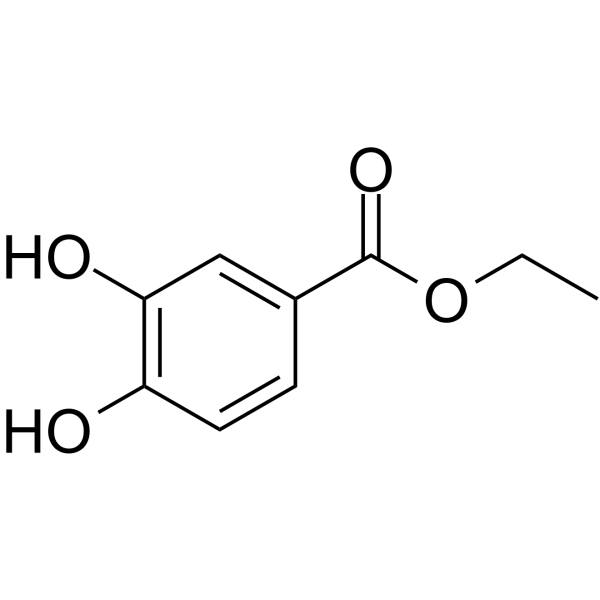
Ethyl 3,4-dihydroxybenzoate (Protocatechuic acid ethyl ester) is an orally effective, blood-brain barrier-permeable, competitive prolyl hydroxylase (PHD) inhibitor that inhibits the hydroxylation modification of hypoxia-inducible factor (HIF) by PHD. Ethyl 3,4-dihydroxybenzoate stabilizes HIF-1α by inhibiting PHD, activates downstream pathways to induce autophagy and apoptosis of tumor cells, and regulates inflammatory responses, inhibits the NF-κB pathway, improves vascular permeability, and promotes osteoblast differentiation. Ethyl 3,4-dihydroxybenzoate has anti-tumor, anti-hypoxic injury, and bone metabolism regulation effects. It can also be used in the research of cardiovascular protection (such as reducing myocardial ischemic damage), bone tissue engineering (promoting osteogenesis/inhibiting osteoclast differentiation), and prevention and treatment of high-altitude cerebral edema .
|
-
-
- HY-B1422
-
|
Aminacrine
|
Bacterial
HIV
|
Infection
|
|
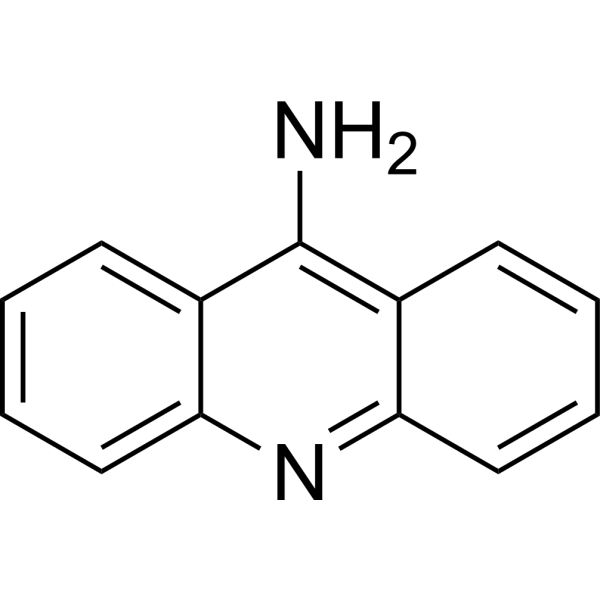
9-Aminoacridine, a fluorescent probe, acts as an indicator of pH for quantitative determination of transmembrane pH gradients (inside acidic). 9-Aminoacridine is an antimicrobial. 9-Aminoacridine exerts its antimicrobial activity by interacting with specific bacterial DNA and disrupting the proton motive force in K. pneumoniae. 9-Aminoacridine is a HIV-1 inhibitor and inhibits HIV LTR transcription highly dependent on the presence and location of the amino moiety. 9-Aminoacridine inhibits virus replication in HIV-1 infected cell lines. 9-Aminoacridine is used as a Rifampin (RIF; HY-B0272) adjuvant for the multidrug-resistant K. pneumoniae infections .
|
-
-
- HY-125586
-
|
|
DNA/RNA Synthesis
ADC Payload
|
Cancer
|
|
β-Amanitin is a cyclic peptide toxin in the poisonous Amanita phalloides mushroom. β-Amanitin inhibits inhibits eukaryotic RNA polymerase II and III. β-Amanitin inhibits protein synthesis. β-Amanitin can be used as a cytotoxic component of antibody-drug conjugates (ADCs) .
|
-
-
- HY-111606
-
-
-
- HY-P2915
-
|
|
Biochemical Assay Reagents
Bacterial
|
Infection
|
|
Protocatechuate 3,4-dioxygenase is a dioxygenase. Protocatechuate 3,4-dioxygenase belongs to the non-heme iron dioxygenase class. Protocatechuate 3,4-dioxygenase catalyzes the cleavage of the aromatic ring of 3,4-dihydroxybenzoate, attaching two atoms of molecular oxygen to the compound to generate β-carboxy-cis,cis-muconate. Protocatechuate 3,4-dioxygenase is a key enzyme in the β-ketoadipic acid pathway. It is found in marine bacteria associated with Roseobacter. Protocatechuate 3,4-dioxygenase can be isolated from Pseudomonas aeruginosa .
|
-
-
- HY-129847
-
|
|
Amino Acid Derivatives
|
Others
|
|
Alitame is a nonnutritive high-intensity sweetener, 2000 times sweeter than sucrose with no bitter or metallic aftertaste. Alitame is composed of L-aspartic acid, D-alanine, and a C-terminal amide moiety .
|
-
-
- HY-101859
-
NucPE1
5 Publications Verification
Nuc-H2O2 Probe
|
Reactive Oxygen Species (ROS)
|
Others
|
|
NucPE1 (Nuc-H2O2 Probe) is a nuclear-localized fluorescent hydrogen peroxide that is specifically localized to cellular nuclei without appended targeting moieties.
|
-
-
- HY-107824
-
|
|
Endogenous Metabolite
|
Others
|
|
D-Melibiose is a disaccharide which is composed of one galactose and one glucose moiety in an alpha (1-6) glycosidic linkage.
|
-
-
- HY-103591
-
|
|
PSMA
|
Cancer
|
|
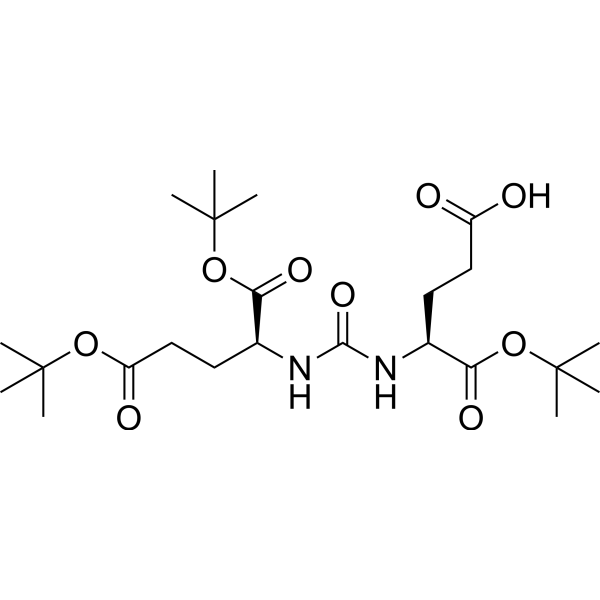
DUPA(OtBu)-OH is a DUPA precursor. DUPA is used as the targeting moiety to actively deliver Docetaxel (DTX) for treatment of Prostate-Specific Membrane Antigen (PSMA) expressing prostate cancer.
|
-
-
- HY-43723
-
-
-
- HY-107442
-
|
|
Epigenetic Reader Domain
Ligands for Target Protein for PROTAC
|
Cancer
|
|
PROTAC BRD4-binding moiety 1 is a ligand for BRD4. PROTAC BRD4-binding moiety 1 binds to cereblon ligand via a linker to form PROTAC to degrade BRD4 (HY-133136) . PROTAC BRD4-binding moiety 1 is a click chemistry reagent, it contains an Alkyne group and can undergo copper-catalyzed azide-alkyne cycloaddition (CuAAc) with molecules containing Azide groups.
|
-
-
- HY-P1348
-
|
[Gly8,36,Glu22]-GLP-1 (7-37)
|
GCGR
|
Cardiovascular Disease
Metabolic Disease
|
|
GLP-1 moiety from Dulaglutide is a 31-amino acid fragment of Dulaglutide. GLP-1 moiety from Dulaglutide is a glucagon-like peptide 1 receptor (GLP-1) agonist. Dulaglitude can be used in researches of diabetes and myocardial injury .
|
-
-
- HY-107452
-
|
PROTAC FKBP12-binding moiety 1
|
Ligands for Target Protein for PROTAC
FKBP
|
Cancer
|
|
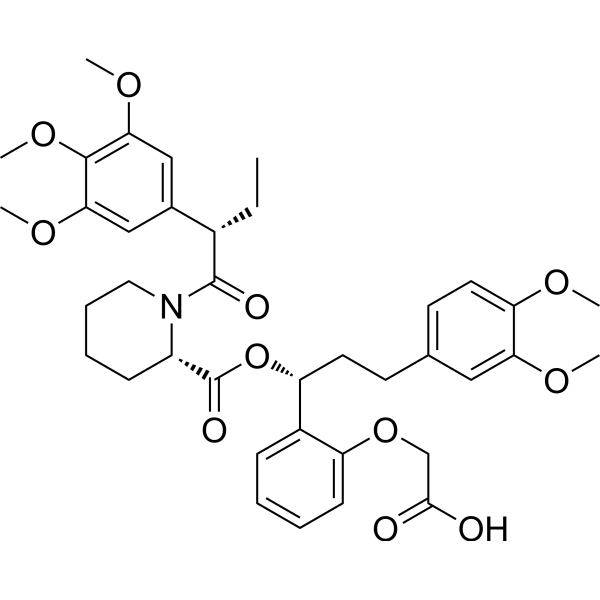
SLF-amido-C2-COOH (PROTAC FKBP12-binding moiety 1) is a synthetic ligand for FKBP (SLF). SLF-amido-C2-COOH (PROTAC FKBP12-binding moiety 1) can be used in the synthesis of PROTACs .
|
-
-
- HY-107451
-
-
-
- HY-W102590
-
|
|
Biochemical Assay Reagents
|
Others
|
|
DOTMP is a bifunctional chelator. Bifunctional chelating agents are used to stably link the radiometal to the carrier moiety of the radiopharmaceutical .
|
-
-
- HY-16138
-
|
CG-200745
|
HDAC
MDM-2/p53
Apoptosis
|
Cancer
|
|
Ivaltinostat (CG-200745) is an orally active, potent pan-HDAC inhibitor which has the hydroxamic acid moiety to bind zinc at the bottom of catalytic pocket. Ivaltinostat inhibits deacetylation of histone H3 and tubulin. Ivaltinostat induces the accumulation of p53, promotes p53-dependent transactivation, and enhances the expression of MDM2 and p21 (Waf1/Cip1) proteins. Ivaltinostat enhances the sensitivity of Gemcitabine-resistant cells to Gemcitabine (HY-16138) and 5-Fluorouracil (5-FU; HY-90006). Ivaltinostat induces apoptosis and has anti-tumour effects .
|
-
-
- HY-D1554
-
|
|
Fluorescent Dye
|
Others
|
|
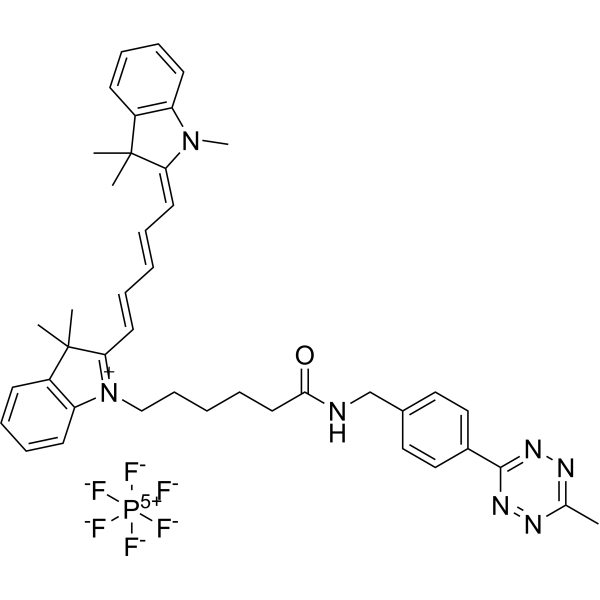
Cyanine5 tetrazine, a fluorophore, is a molecule that contains a cyano5 fluorophore and a tetrazine moiety .
|
-
-
- HY-16138A
-
|
CG-200745 formic
|
HDAC
MDM-2/p53
Apoptosis
|
Inflammation/Immunology
Endocrinology
Cancer
|
|
Ivaltinostat (CG-200745) formic is an orally active, potent pan-HDAC inhibitor which has the hydroxamic acid moiety to bind zinc at the bottom of catalytic pocket. Ivaltinostat formic inhibits deacetylation of histone H3 and tubulin. Ivaltinostat formic induces the accumulation of p53, promotes p53-dependent transactivation, and enhances the expression of MDM2 and p21 (Waf1/Cip1) proteins. Ivaltinostat formic enhances the sensitivity of Gemcitabine-resistant cells to Gemcitabine (HY-16138) and 5-Fluorouracil (5-FU; HY-90006). Ivaltinostat formic induces apoptosis and has anti-tumour effects .
|
-
-
- HY-111857
-
|
BMS-354825 carbaldehyde; PROTAC ABL binding moiety 4
|
Ligands for Target Protein for PROTAC
|
Cancer
|
|
Dasatinib carbaldehyde (BMS-354825 carbaldehyde), the Dasatinib (ABL inhibitor) based moiety, binds to IAP ligand via a linker to form SNIPER .
|
-
-
- HY-107445A
-
-
-
- HY-44103
-
|
PROTAC BRD4-binding moiety 4
|
Ligands for Target Protein for PROTAC
|
Cancer
|
|
Desmethyl-QCA276 (PROTAC BRD4-binding moiety 4), the QCA276-based moiety, binds to cereblon ligand via a linker to form PROTAC to degrade BET. QCA276 is a BET inhibitor with an IC50 of 10 nM, and with a Ki of 2.3 nM . Desmethyl-QCA276 is a click chemistry reagent, it contains an Alkyne group and can undergo copper-catalyzed azide-alkyne cycloaddition (CuAAc) with molecules containing Azide groups.
|
-
-
- HY-D2489
-
|
|
Fluorescent Dye
|
Others
|
|
Cy5-tetrazine is a fluorescent dye. Cy5-tetrazine is a CY5 (HY-D0821) derivative contains a tetrazine moiety. Cyanine5.5 tetrazine can be used for in vivo imaging and low background applications. Cy5-tetrazine is a click chemistry reagent, it contains a Tetrazine group that can undergo an inverse electron demand Diels-Alder reaction (iEDDA) with molecules containing TCO groups .
|
-
-
- HY-Z0548R
-
|
Protocatechuic acid methyl ester (Standard); Methyl protocatechuate (Standard)
|
Reference Standards
Keap1-Nrf2
Apoptosis
|
Inflammation/Immunology
Cancer
|
|
Methyl 3,4-dihydroxybenzoate (Standard) is the analytical standard of Methyl 3,4-dihydroxybenzoate. This product is intended for research and analytical applications. Methyl 3,4-dihydroxybenzoate (Protocatechuic acid methyl ester; Methyl protocatechuate) is a major metabolite of antioxidant polyphenols found in green tea. Antioxidant and anti-inflammatory effect .
|
-
-
- HY-W016409R
-
|
Protocatechuic acid ethyl ester (Standard)
|
Reference Standards
HIF/HIF Prolyl-Hydroxylase
Reactive Oxygen Species (ROS)
NO Synthase
Autophagy
Apoptosis
|
Metabolic Disease
Cancer
|
|
Ethyl 3,4-dihydroxybenzoate (Standard) (Protocatechuic acid ethyl ester (Standard)) is the analytical standard of Ethyl 3,4-dihydroxybenzoate (HY-W016409). This product is intended for research and analytical applications. Ethyl 3,4-dihydroxybenzoate (Protocatechuic acid ethyl ester) is an orally effective, blood-brain barrier-permeable, competitive prolyl hydroxylase (PHD) inhibitor that inhibits the hydroxylation modification of hypoxia-inducible factor (HIF) by PHD. Ethyl 3,4-dihydroxybenzoate stabilizes HIF-1α by inhibiting PHD, activates downstream pathways to induce autophagy and apoptosis of tumor cells, and regulates inflammatory responses, inhibits the NF-κB pathway, improves vascular permeability, and promotes osteoblast differentiation. Ethyl 3,4-dihydroxybenzoate has anti-tumor, anti-hypoxic injury, and bone metabolism regulation effects. It can also be used in the research of cardiovascular protection (such as reducing myocardial ischemic damage), bone tissue engineering (promoting osteogenesis/inhibiting osteoclast differentiation), and prevention and treatment of high-altitude cerebral edema .
|
-
-
- HY-W004649
-
|
|
Biochemical Assay Reagents
|
Others
|
|
Tris-BOC-cyclen is a bifunctional chelator. Bifunctional chelating agentscan be used to stably link the radiometal to the carrier moiety of the radiopharmaceutical .
|
-
-
- HY-100503
-
|
|
ADC Payload
|
Cancer
|
|
Maytansinoid DM4 is a thiol-containing maytansine derivative with highly potent cytotoxicity. Maytansinoid DM4 can be used as a cytotoxic moiety of ADC .
|
-
-
- HY-121597
-
|
|
Others
|
Others
|
|
Yuankanin is a genkwanin-5-bioside, the sugar moiety being composed of xylose and glucose. Yuankanin can be isolated from the methanol extract of the aerial parts of Gnidia involucrata (Thymelaeaceae) .
|
-
-
- HY-Z0548S1
-
|
|
Isotope-Labeled Compounds
Keap1-Nrf2
Apoptosis
|
Inflammation/Immunology
Cancer
|
|
Methyl 3,4-dihydroxybenzoate-d3-1 is the deuterium labeled Methyl 3,4-dihydroxybenzoate. Methyl 3,4-dihydroxybenzoate (Protocatechuic acid methyl ester; Methyl protocatechuate) is a major metabolite of antioxidant polyphenols found in green tea. Antioxidant and anti-inflammatory effect .
|
-
-
- HY-151679
-
|
|
ADC Linker
|
Others
|
|
Fmoc-L-Lys(4-N3-Z)-OH is a click chemistry reagent containing an azide group. Fmoc-L-Lys(4-N3-Z)-OH acts as Lysine building-block for SPPS containing an Azide moiety as a bioorthogonal ligation handle, an infrared probe and a photo-affinity reagent. It can be decaged by trans-cyclooctenols via a strain-promoted 1,3-dipolar cycloaddition . Fmoc-L-Lys(4-N3-Z)-OH is a click chemistry reagent, it contains an Azide group and can undergo copper-catalyzed azide-alkyne cycloaddition reaction (CuAAc) with molecules containing Alkyne groups. It can also undergo strain-promoted alkyne-azide cycloaddition (SPAAC) reactions with molecules containing DBCO or BCN groups.
|
-
-
- HY-133718
-
|
(S)-Acarviosin
|
Amylases
|
Others
|
|
Acarviosin, a pseudodisaccharide moiety, is a part of the potent inhibitor of α-amylase .
|
-
-
- HY-E70124A
-
-
-
- HY-107444
-
-
-
- HY-100217
-
|
|
Amino Acid Derivatives
|
Others
|
|
DL-3-Indolylglycine is an unnatural amino acid that is very similar to Tryptophan, with the indole moiety directly attached to the α-position.
|
-
-
- HY-151769
-
|
|
ADC Linker
|
Others
|
|
TCO-PEG2-Sulfo-NHS ester-EDC Urea is a click chemistry reagent containing an azide group. TCO-PEG2-Sulfo-NHS ester is a PEG linker containing a TCO moiety and a sulfo-NHS ester moiety. The sulfo group makes this molecule soluble in waqueous buffer. This reagent can be used to label antibodies, proteins and other primary amine-containing macromolecules with TCO moiety. Reagent grade, for research use only . TCO-PEG2-Sulfo-NHS ester-EDC Urea is a click chemistry reagent, it contains a TCO group that can undergo an inverse electron demand Diels-Alder reaction (iEDDA) with molecules containing Tetrazine groups.
|
-
-
- HY-119526
-
|
|
Biochemical Assay Reagents
|
Others
|
|
Bismaleimide is a compound used to prepare aerogels with excellent heat resistance. By optimizing its use as a bridging moiety and the polarity of the solvent, aerogels with good properties can be produced.
|
-
-
- HY-123271
-
|
|
Bacterial
Antibiotic
|
Infection
|
|
Ro 23-9424 is a broad-spectrum cephalosporin composed of a cephalosporin and a quinolone moiety. Ro 23-9424 shows antimicrobial activity in vivo and in vitro .
|
-
-
- HY-150409
-
|
|
TSPO
|
Cancer
|
|
TSPO ligand-2 is a ligand of AUTAC1. AUTAC1 contains an p-fluorobenzylguanine (FBnG) and a Fumagillol moiety, which can silence endogenous MetAP2 in HeLa cells .
|
-
-
- HY-W778057
-
|
Protocatechuic acid ethyl ester-13C3
|
Reactive Oxygen Species (ROS)
|
Cancer
|
|
Ethyl 3,4-Dihydroxybenzoate- 13C3 (Protocatechuic acid ethyl ester- 13C3) is the 13C-labeled Ethyl 3,4-dihydroxybenzoate (HY-W016409). Ethyl 3,4-dihydroxybenzoate (Protocatechuic acid ethyl ester) is an orally effective, blood-brain barrier-permeable, competitive prolyl hydroxylase (PHD) inhibitor that inhibits the hydroxylation modification of hypoxia-inducible factor (HIF) by PHD. Ethyl 3,4-dihydroxybenzoate stabilizes HIF-1α by inhibiting PHD, activates downstream pathways to induce autophagy and apoptosis of tumor cells, and regulates inflammatory responses, inhibits the NF-κB pathway, improves vascular permeability, and promotes osteoblast differentiation. Ethyl 3,4-dihydroxybenzoate has anti-tumor, anti-hypoxic injury, and bone metabolism regulation effects. It can also be used in the research of cardiovascular protection (such as reducing myocardial ischemic damage), bone tissue engineering (promoting osteogenesis/inhibiting osteoclast differentiation), and prevention and treatment of high-altitude cerebral edema .
|
-
-
- HY-135392R
-
|
AC-279 (Standard)
|
Reference Standards
Drug Metabolite
|
Neurological Disease
|
|
Methyl 3,4-dihydroxybenzoate (Standard) is the analytical standard of Methyl 3,4-dihydroxybenzoate. This product is intended for research and analytical applications. Methyl 3,4-dihydroxybenzoate (Protocatechuic acid methyl ester; Methyl protocatechuate) is a major metabolite of antioxidant polyphenols found in green tea. Antioxidant and anti-inflammatory effect .
|
-
-
- HY-156047
-
|
|
Endogenous Metabolite
|
Others
|
|
Oasomycin B, a member of the desertomycin family, is a polyketide. Oasomycin B can be isolated from Streptomyces sp. Oasomycin B, lacking the positively charged amino moiety, has no significant antibacterial activity and fails to induce Orsellinic acid (HY-N3126) production in A. nidulans .
|
-
-
- HY-120188
-
|
|
PPAR
|
Others
|
|
CC618 is a selective PPARβ/δ antagonist. CC618 covalently modifies conserved Cys249 in the PPARβ/δ ligand-binding pocket via nucleophilic aromatic substitution, converting its thiol moiety to a 5-trifluoromethyl-2-pyridylthioether .
|
-
-
- HY-126060
-
|
|
Nucleoside Antimetabolite/Analog
|
Cancer
|
|
9-Ethylguanine is a modified nucleobase derived from guanine that coordinates to azolato-bridged dinuclear platinum(II) complexes via its N7 nitrogen atom. 9-Ethylguanine forms adducts with a ruthenium(II) complex via the N7 position of its guanine moiety .
|
-
-
- HY-107450
-
-
-
- HY-157592
-
-
-
- HY-107445
-
-
-
- HY-D1916A
-
|
|
Fluorescent Dye
|
Others
|
|
ATTO 594 TEA is a highly hydrophilic fluorescent dye used to label the outermost position of the glycan moiety of glycosphingolipids to retain the biophysical and biochemical properties of native glycosphingolipids .
|
-
-
- HY-111849
-
|
CGP-57148B carbaldehyde; STI571 carbaldehyde; PROTAC ABL binding moiety 1
|
Ligands for Target Protein for PROTAC
|
Cancer
|
|
Imatinib carbaldehyde (CGP-57148B carbaldehyde), the Imatinib (ABL inhibitor) based moiety, binds to IAP ligand via a linker to form SNIPER .
|
-
-
- HY-123350
-
|
|
Antibiotic
|
Infection
|
|
Saroaspidin B, a dimer of a phloroglucinol moiety, is an antibiotic compound .
|
-
-
- HY-173549
-
|
CPPA-Triphenylphosphonium
|
Drug Intermediate
|
Cancer
|
|
CPPA-TPP (CPPA-Triphenylphosphonium) is a compound conjugated to the mitochondria-targeting moiety triphenylphosphonium (TPP). CPPA-TPP can be used in the synthesis of nanoparticles that release Camptothecin (HY-16560) in a reactive oxygen species dependent manner, leading to cancer cell death .
|
-
- HY-148154
-
|
|
Drug Derivative
|
Others
|
|
Poly(oxy-1,2-ethanediyl)-propoxy-amide-C6 (n=450) is an active compound. Poly(oxy-1,2-ethanediyl)-propoxy-amide-C6 is a small molecule moiety for pegylation modification in Avacincaptad pegol (HY-147080) .
|
-
- HY-N3796
-
|
Echinuline
|
NF-κB
|
Inflammation/Immunology
|
|
Echinulin (Echinuline) is a cyclic dipeptide carrying a triprenylated indole moiety. Echinulin contributes to the activation of T cell subsets, which leads to NF-κB activation.Echinulin exerts its immune roles by the NF-κB pathway.Echinulin has the potential to serve as a immunotherapeutic agent .
|
-
- HY-148153
-
|
|
Drug Derivative
|
Inflammation/Immunology
|
|
C6-Amide-(PEG)n-CH3 (n=310) is an active compound. C6-Amide-(PEG)n-CH3 is a small molecule moiety for PEGylation in Egaptivon pegol (HY-147079) that can be used for the research of platelet dysfunction disorders .
|
-
- HY-126664
-
-
- HY-151754
-
|
|
ADC Linker
|
Others
|
|
DACN(Tos2,6-OH) is a click chemistry reagent containing an Azide. The alkyne moiety within the ring has a unique bent structure and high reactivity toward cycloaddition reactions. The reactivity of an alkyne heavily depends on the electronic and steric characteristics of the substituents as well as structural strain. In comparison to nonbent acyclic alkynes, cyclononyne alkynes show remarkably high reactivity. Such strain-promoted azide-alkyne cycloadditions (SPAAC) using cycloalkynes have served for reliable molecular conjugation in a broad range of fields. The nitrogens are used as connection points for a variety of functional units. In comparison to cyclooctynes, DACNs possess high thermal and chemical stability along with comparable click reactivity . DACN(Tos2,6-OH) is a click chemistry reagent, it contains an Alkyne group and can undergo copper-catalyzed azide-alkyne cycloaddition (CuAAc) with molecules containing Azide groups.
|
-
- HY-146010
-
|
|
Carbonic Anhydrase
|
Cancer
|
|
Carbonic anhydrase inhibitor 13 (compound 7) is a potent carbonic anhydrase (CA) inhibitor, which features 3-methylthiazolo[3,2-a]benzimidazole moiety (as a tail) connected to the zinc anchoring benzenesulfonamide moiety via ureido linker .
|
-
- HY-W800817
-
|
|
Biochemical Assay Reagents
|
Others
|
|
TCO-PEG4-maleimide is a click chemistry building block containing a TCO moiety and a maleimide group. The maleimide group will react with a thiol group to form a covalent bond. TCO moiety is very reactive with tetrazine (3rd generation click chemistry).
|
-
- HY-B1422R
-
|
Aminacrine (Standard)
|
Reference Standards
Bacterial
HIV
|
Infection
|
|
9-Aminoacridine (Standard) is the analytical standard of 9-Aminoacridine. This product is intended for research and analytical applications. 9-Aminoacridine, a fluorescent probe, acts as an indicator of pH for quantitative determination of transmembrane pH gradients (inside acidic). 9-Aminoacridine is an antimicrobial. 9-Aminoacridine exerts its antimicrobial activity by interacting with specific bacterial DNA and disrupting the proton motive force in K. pneumoniae. 9-Aminoacridine is a HIV-1 inhibitor and inhibits HIV LTR transcription highly dependent on the presence and location of the amino moiety. 9-Aminoacridine inhibits virus replication in HIV-1 infected cell lines. 9-Aminoacridine is used as a Rifampin (RIF; HY-B0272) adjuvant for the multidrug-resistant K. pneumoniae infections .
|
-
- HY-157716
-
-
- HY-143270
-
-
- HY-146970
-
|
|
Antibiotic
|
Cancer
|
|
Lankacyclinone C is a lankacidin C congener lacking the δ-lactone moiety, with antitumor activity .
|
-
- HY-159132
-
|
|
Carbonic Anhydrase
|
Cancer
|
|
CAIX/CAXII-IN-2 (compound 23) is a CAIX/CAXII inhibitor, with Ki values of 8.9 nM and 5.3 nM for CAIX/CAXII, respectively. CAIX/CAXII-IN-2 can be used in cancer research .
|
-
- HY-E70124C
-
-
- HY-119697
-
|
(+)-Setosusin
|
Endogenous Metabolite
|
Others
|
|
Setosusin ((+)-Setosusin) is a fungal meroditerpenoid featuring a unique spiro-fused 3(2H)-furanone moiety .
|
-
- HY-W402032
-
|
|
Biochemical Assay Reagents
|
Others
|
|
Bis-Cbz-cyclen is a bifunctional chelator. Bifunctional chelating agents are used to stably link the radiometal to the carrier moiety of the radiopharmaceutical .
|
-
- HY-N14218
-
-
- HY-W800655
-
|
|
PROTAC Linkers
|
Cancer
|
|
Thalidomide-O-PEG4-Acid is a PROTAC linker that can react with Amine containing moiety in the presence of Activator EDC or HATU.
|
-
- HY-157258
-
|
|
Hapten
|
Inflammation/Immunology
|
|
Trimethoprim pentanoic acid is hapten. Trimethoprim pentanoic acid shows IC50 of 0.15 ng/mL when exposed diaminopyrimidine moiety to the immune system .
|
-
- HY-160983
-
|
|
DNA/RNA Synthesis
|
Cancer
|
|
PHYLPA-8 is an inhibitor for DNA polymerase-α, which exhibits weak inhibitory activity for the stereochemistry of the fatty acid moiety and the cyclic phosphate .
|
-
- HY-174447
-
|
|
PARP
|
Cancer
|
|
ADP-ribose/PARP-IN-1 (Compound Ex.16) is a conjugated compound. ADP-ribose/PARP-IN-1 contains disease targeting moieties, PARP inhibitor moieties, cleavable linkers, chelators. ADP-ribose/PARP-IN-1 targets specific targets through the disease targeting moiety and selectively delivers PARP inhibitors to tumor cells. The cleavable linker of ADP-ribose/PARP-IN-1 releases the PARP inhibitor under appropriate conditions, inhibiting PARP to prevent DNA damage repair, while the radionuclide carried by the chelator exerts a killing effect. ADP-ribose/PARP-IN-1 can be used in the research of prostate cancer .
|
-
- HY-167644
-
|
|
Antibiotic
Bacterial
|
Infection
|
|
Cefoxazole is a β-lactam antibiotic containing an isoxazole moiety and exhibits antibacterial activity. Cefoxazole can be used in studies related to infectious diseases .
|
-
- HY-114657
-
|
|
Neprilysin
|
Others
|
|
Benproperine is a new neprilysin B inhibitor composed of N-acyl-L-prolyl-L-valine, whose N-acyl moiety is α-isobutylsuccinic acid β-hydroxamic acid.
|
-
- HY-111852
-
-
- HY-N9332
-
|
|
Others
|
Others
|
|
Kalopanax saponin G is an ester glycoside of oleanolic acid possessing no sugar moiety at the C-3 hydroxyl group. Kalopanax saponin G is isolated from the bark of Kalopanax pictus .
|
-
- HY-W800679
-
|
|
Biochemical Assay Reagents
|
Others
|
|
Mal-Cyclohexyl-PEG3-Biotin is a PEG linker containing a maleimide moiety and a biotin group. Maleimides react specifically with sulfhydryl groups to form a stable thioether linkage when the pH is between 6.5 and 7.5. The biotinylation can react with amine molecules in the presence of activator EDC or HATU. PEG attached to the biotin gives an extended spacer arm that permits the biotin to reach into the binding pocket of the protein. The PEG moiety also increases solubility of Biotin-PEG conjugates considerably.
|
-
- HY-W020546
-
|
|
Biochemical Assay Reagents
|
Others
|
|
DBCO-amine TFA is a simple building block containing a DBCO moiety and an amine group. Amine is very reactive with NHS ester. DBCO is commonly used for copper-free Click Chemistry reactions.
|
-
- HY-N12483
-
|
|
HBV
|
Infection
|
|
Catenulopyrizomicin A has a thiazolyl pyridine moiety. Catenulopyrizomicin A can be isolated from the fermentation broth of rare actinomycete Catenuloplanes sp. Catenulopyrizomicin A has anti-Hepatitis B virus activity .
|
-
- HY-132263
-
|
|
Fluorescent Dye
|
Others
|
|
FAM hydrazide, 5-isomer is a Fluorescein dye linker containing a hydrazide group. Fluorescein is a universal dye. Hydrazide moieties react with aldehydes to form semi-permanent hydrazone bonds.
|
-
- HY-163012
-
-
- HY-P2631
-
|
|
Folate Receptor (FR)
|
Others
|
|
EC119 consists of Pteroic acid-gGlu-Asp-Arg-Asp-Asp-Cys, which is the folate–peptide moiety found within both the EC140 and EC145 structures .
|
-
- HY-111855
-
-
- HY-P2915A
-
|
|
Biochemical Assay Reagents
Bacterial
|
Infection
|
|
Protocatechuate 3,4-Dioxygenase, Bacteria is a dioxygenase. Protocatechuate 3,4-Dioxygenase, Bacteria belongs to the non-heme iron dioxygenase class. Protocatechuate 3,4-Dioxygenase, Bacteria catalyzes the cleavage of the aromatic ring of 3,4-dihydroxybenzoate, attaching two atoms of molecular oxygen to the compound to generate β-carboxy-cis,cis-muconate. Protocatechuate 3,4-Dioxygenase, Bacteria is a key enzyme in the β-ketoadipic acid pathway. Protocatechuate 3,4-Dioxygenase, Bacteria is found in marine bacteria associated with Roseobacter. Protocatechuate 3,4-Dioxygenase, Bacteria can be isolated from Pseudomonas aeruginosa .
|
-
- HY-176822
-
|
|
Epigenetic Reader Domain
|
Others
|
|
SGC-BRDVIII-NC (Compound 35) is a negative control compound of SMARCA2/4 and PB1 bromodomain (BRD) inhibitor. SGC-BRDVIII-NC completely abolishes protein-ligand binding capacity with the methylation of the phenolic hydroxyl moiety. SGC-BRDVIII-NC can be used for adipogenesis research .
|
-
- HY-181445
-
|
|
Cholinesterase (ChE)
|
Neurological Disease
|
|
NSC 620023 TFA is a highly selective butyrylcholinesterase (BChE) inhibitor with an IC50 of 32 nM. NSC 620023 TFA acts via π-stacking interactions with dual benzimidazole moieties and hydrophobic interactions within the BChE binding site. NSC 620023 TFA can be used for the research of alzheimer’s disease .
|
-
- HY-107451R
-
|
|
Reference Standards
Ligands for Target Protein for PROTAC
|
Cancer
|
|
PROTAC BET-binding moiety 1 (Standard) is the analytical standard of PROTAC BET-binding moiety 1 (HY-107451). This product is intended for research and analytical applications. PROTAC BET-binding moiety 1 is a key intermediate for the synthesis of high-affinity BET inhibitors .
|
-
- HY-107444R
-
|
|
Reference Standards
Ligands for Target Protein for PROTAC
|
Cancer
|
|
PROTAC Her3-binding moiety 1 (Standard) is the analytical standard of PROTAC Her3-binding moiety 1 (HY-107444). This product is intended for research and analytical applications. PROTAC HER3-binding moiety 1 (compound 1b) is a Her3 Ligand for PROTAC .
|
-
- HY-107442R
-
|
|
Reference Standards
Epigenetic Reader Domain
Ligands for Target Protein for PROTAC
|
Cancer
|
|
PROTAC BRD4-binding moiety 1 (Standard) is the analytical standard of PROTAC BRD4-binding moiety 1 (HY-107442). This product is intended for research and analytical applications. PROTAC BRD4-binding moiety 1 is a ligand for BRD4. PROTAC BRD4-binding moiety 1 binds to cereblon ligand via a linker to form PROTAC to degrade BRD4 (HY-133136) . PROTAC BRD4-binding moiety 1 is a click chemistry reagent, it contains an Alkyne group and can undergo copper-catalyzed azide-alkyne cycloaddition (CuAAc) with molecules containing Azide groups.
|
-
- HY-186081
-
|
|
Drug Metabolite
|
Metabolic Disease
|
|
Ramiprilat acyl-β-D-glucuronide is an acyl glucuronide metabolite of Ramiprilat (HY-B0279). Ramiprilat acyl-β-D-glucuronide undergoes methylation on its glucuronic acid moiety during solid phase extraction with strong cation exchanger cartridges, forming a methylated derivative. Ramiprilat acyl-β-D-glucuronide undergoes in-source conversion to Ramiprilat in mass spectrometry, with conversion extent proportional to declustering potential voltage .
|
-
- HY-129281
-
-
- HY-N11464
-
|
|
Others
|
Others
|
|
Kuwanon O is a flavonoid derivative with a fused dihydrochalcone partial moiety, that can be isolated from the root bark of Morus lhou (set.) Koidz .
|
-
- HY-N8514
-
|
|
Drug Derivative
|
Others
|
|
4-O-(3-Nitropropanoyl) corollin (Compound 4) is a glycosidic natural product containing a nitro fatty acid ester moiety .
|
-
- HY-N17390
-
-
- HY-N15960
-
|
|
Biochemical Assay Reagents
|
Others
|
|
Photoclick cholesterol II is a sterol lipid Cholesterol (HY-N0322) analog that contains a clickable terminal alkyne moiety and a photoactivatable diaziridine group.
|
-
- HY-D3272
-
|
|
Fluorescent Dye
|
Others
|
|
IR 680LT NHS ester is a fluorescent dye with an NHS ester moiety, which can be used to label antibodies, proteins, etc (Ex/Em = 675/694 nm) .
|
-
- HY-W800714
-
|
|
Biochemical Assay Reagents
|
Others
|
|
SPDP-Gly-Gly-methoxy is a linker with SPDP and methyl ester moiety. The SPDP is an amine and thiol reactive crosslinker. It is also membrane permeable, allowing it to participate in intracellular crosslinking reactions.
|
-
- HY-P2871I
-
|
|
Biochemical Assay Reagents
|
Metabolic Disease
|
|
α-Galactosidase, Green coffee beans (EC 3.2.1.22) is a glycoside hydrolase enzyme that hydrolyses the terminal alpha-galactosyl moieties from glycolipids and glycoproteins.
|
-
- HY-N17882
-
|
Bupleuroside III
|
Drug Derivative
|
Others
|
|
Hydroxysaikosaponin A (Bupleuroside III) is the acid hydrolysis degradation product of Saikosaponin A (HY-N0246) .
|
-
- HY-N1857
-
-
- HY-N19937
-
|
|
Others
|
Others
|
|
Rhamnolipid 4 is a rhamnolipid that can be found in Pseudomonas species .
|
-
- HY-122319R
-
|
RP-020630 (Standard)
|
Herbicide
Reference Standards
|
Others
|
|
Nystose (Standard) is the analytical standard of Nystose. This product is intended for research and analytical applications. Nystose is a tetrasaccharide with two fructose molecules linked via beta (1→2) bonds to the fructosyl moiety of sucrose.
|
-
- HY-158104
-
|
|
ATF6
|
Others
|
|
LPPM-8 is a ligand of Med25 and an inhibitor of Med25 protein-protein interactions (PPIs). LPPM-8 engages Med25 through interaction with the H2 face of its Activator Interaction Domain and stabilizes full-length protein in the cellular proteome. LPPM-8 is an orthosteric inhibitor of H2-binding transcriptional activators (such as ATF6a). LPPM-8 can be used for studying Med25 and Mediator complex biology .
|
-
- HY-P3100
-
|
|
Parasite
|
Infection
|
|
Orfamide A is a major metabolite of insecticidal biosurfactant in Pseudomonas sp. F6 and has aphidicidal activity. Orfamide A can be used for aphid control in organic agriculture. Orfamide A exhibits dose-dependent mortality against aphids with an LC50 value of 34.5 μg/mL .
|
-
- HY-107452R
-
|
PROTAC FKBP12-binding moiety 1 (Standard)
|
Reference Standards
Ligands for Target Protein for PROTAC
FKBP
|
Cancer
|
|
SLF-amido-C2-COOH (Standard) is the analytical standard of SLF-amido-C2-COOH (HY-107452). This product is intended for research and analytical applications. SLF-amido-C2-COOH (PROTAC FKBP12-binding moiety 1) is a synthetic ligand for FKBP (SLF). SLF-amido-C2-COOH (PROTAC FKBP12-binding moiety 1) can be used in the synthesis of PROTACs .
|
-
- HY-125734
-
|
|
Liposome
|
Others
|
|
DMHAPC-Chol, a cationic lipid, contains a biodegradable carbamoyl linker and a hydroxyethyl group in the polar amino head moiety. DMHAPC-Chol can be used in both transfection experiments concerning plasmids or siRNA .
|
-
- HY-151789
-
|
|
ADC Linker
|
Others
|
|
Sulfo DBCO-TFP Ester is a water-soluble, sulfo-containing click chemistry reagent. Sulfo DBCO-TFP Ester enables simple and efficient incorporation of sulfo-DBCO moieties onto amine-containing molecules .
|
-
- HY-153902
-
|
|
STAT
Fluorescent Dye
|
Others
|
|
DG-8 is a potent inhibitor of STAT3-dependent transcription (IC50 0.98 μM). DG-8 is a fluorescent probe that contains a fluorescent dansyl moiety .
|
-
- HY-N12863
-
|
|
Others
|
Endocrinology
|
|
Myricetin-3-O-robinoside is a flavonoid isolated from cassava flowers by chromatographic techniques. Its structure consists of a myricetin backbone to which a robinose moiety is attached at the third position .
|
-
- HY-130080
-
|
Maytansinoid DM3
|
ADC Payload
Microtubule/Tubulin
|
Cancer
|
|
DM3 (Maytansinoid DM3), a Maytansine (HY-13674) analog bearing disulfide or thiol groups, and is a tubulin inhibitor. DM3 a cytotoxic moiety of antibody-drug conjugates (ADCs) .
|
-
- HY-130993
-
|
|
Parasite
|
Infection
|
|
Isatropolone A, a natural product containing a 1,5-diketone moiety, is reisolated from Streptomyces Gö66. Isatropolone A shows potent activity against Leishmania donovani with an IC50 of 0.5 μM .
|
-
- HY-P3362
-
|
|
Fluorescent Dye
|
Others
|
|
Ac-IETD-AMC is a fluorogenic caspase-8/granzyme B substrate containing the acetyl (Ac) moiety. Ac-IETD-AMC is frequently used to measure caspase-8 activity .
|
-
- HY-185495
-
|
|
ADC Linker
|
Cancer
|
|
seco-CBI-PBD-disulfide linker is a conjugate of an ADC drug toxin molecule and a linker, consisting of two potent DNA-damaging moieties seco-CBI, PBD (HY-101127), and a disulfide linker .
|
-
- HY-W440831
-
|
|
Liposome
|
Others
|
|
DSPE-PEG1000-azide is a phospholipid with covalently attached polydisperse PEG. This polymer is commonly used for the preparation of long circulating liposomes. The azide moiety is reactive with alkyne to form a stable triazole bond.
|
-
- HY-N15775
-
|
|
Biochemical Assay Reagents
|
Others
|
|
ACe-1 is a ceramide derivative with an azobenzene moiety to allow for optical control of the N-acyl chain. ACe-1 is capable of reversibly switching lipid domains in a raft-like bilayer membrane .
|
-
- HY-W141932
-
|
Stearoylglycine; N-Octadecanoylglycine
|
Endogenous Metabolite
|
Others
|
|
N-stearoylglycine is a lipid and has a small ionizable polar headgroup whose charge is pH dependent and whose amide moiety can form H-bonded network between adjacent molecules in ordered films .
|
-
- HY-141121
-
|
|
Drug Intermediate
|
Others
|
|
T-Butoxycarbonyl-PEG1-NHS ester contains a t-boc protecting group and an NHS ester moiety. T-Butoxycarbonyl-PEG1-NHS ester can be used for the modification and labeling of biomolecules.
|
-
- HY-135868
-
|
|
Mitochondrial Metabolism
|
Neurological Disease
|
|
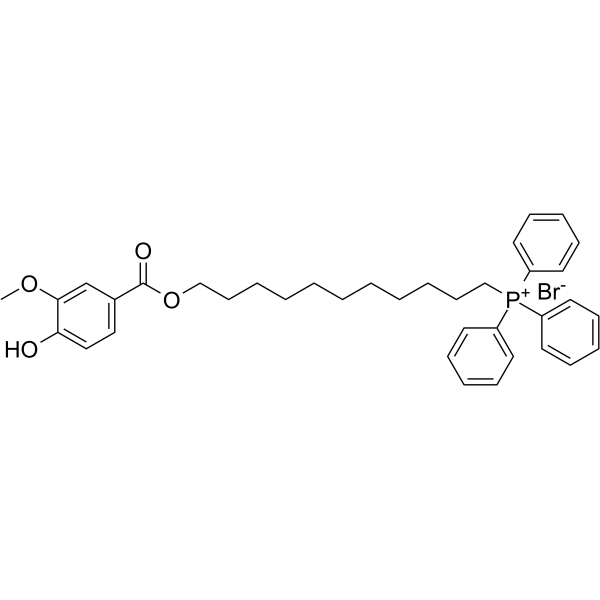
Mito-apocynin (C2), an orally active mitochondria-targeted triphenylphosphonium (TPP)-based compound, is synthesized by conjugating the Apocynin moiety with a TPP + cation. Mito-apocynin (C2) exhibits antineuroinflammatory effect .
|
-
- HY-131178
-
-
- HY-163410
-
|
|
PROTACs
Epigenetic Reader Domain
|
Cancer
|
|
AU-24118 is a selective and orally bioavailable PROTAC degrader of mSWI-SNF ATPases (SMARCA2 and SMARCA4) and PBRM1. AU-24118 integrates a bait moiety binding to the bromodomains of SMARCA2 and SMARCA4, along with a ligand moiety for CRBN ligase. AU-24118 demonstrates tumor regression in prostate cancer model. AU-24118 can be studied to combat prostate cancer. (Pink: PBRM1/SMARCA2,4 ligand (HY-171774); Blue: CRBN ligand (HY-171775)) .
|
-
- HY-33821
-
|
|
LXR
|
Others
|
|
LXRβ ligand 1 is a LXR β ligand-binding domain agonist, with an EC50 of 57 μM and a Ki of 28 μM against human LXR β. LXRβ ligand 1 forms hydrogen bonds with His435, stabilizes the His-Trp activation switch, and locks the ligand-binding domain in an agonist conformation; its tert-butyl moiety occupies a hydrophobic subpocket, while its phenyl moiety forms a π-π stacking interaction with Phe329. LXRβ ligand 1 serves as a structural unit for the development of LXRβ modulators .
|
-
- HY-N6681
-
|
|
Caspase
Bacterial
Apoptosis
Antibiotic
|
Infection
|
|
15-acetoxyscirpenol, one of acetoxyscirpenol moiety mycotoxins (ASMs), strongly induces apoptosis and inhibits Jurkat T cell growth in a dose-dependent manner by activating other caspases independent of caspase-3 .
|
-
- HY-140535
-
|
|
Biochemical Assay Reagents
|
Others
|
|
Boc-NH-Bis(acid-PEG1-m) is a PEG derivative contains carboxylic acid moieties. Boc-NH-Bis(acid-PEG1-m) can be conjugated with amine containing molecule .
|
-
- HY-140875
-
|
|
Drug Intermediate
|
Others
|
|
Propargyl-PEG3-triethoxysilane contains a triethoxysilane moiety and an alkynyl group. Propargyl-PEG3-triethoxysilane can be used for material surface modification, biological molecule labeling, immobilization, and so on.
|
-
- HY-E70040
-
|
|
Endogenous Metabolite
|
Metabolic Disease
|
|
Endoglycoceramidase I (EGCase I) is a glycosidase, is often used in biochemical studies. Endoglycoceramidase I catalyzes a transglycosylation reaction, which transfers the sugar moiety of GSLs to the primary hydroxyl group of several 1-alkanols .
|
-
- HY-151645
-
|
|
ADC Linker
|
Others
|
|
Alkyne-SNAP (compound 3) is an Alkyne-conjugated benzylguanine. The benzylguanine moiety reacts with the SNAP-tag, allowing irreversible and covalent labeling of SNAP fusion proteins with an additional alkyne functionality for further click chemistry conjugation .
|
-
- HY-107824R
-
|
|
Endogenous Metabolite
Reference Standards
|
Inflammation/Immunology
|
|
D-Melibiose (Standard) is the analytical standard of D-Melibiose. This product is intended for research and analytical applications. D-Melibiose is a disaccharide which is composed of one galactose and one glucose moiety in an alpha (1-6) glycosidic linkage.
|
-
- HY-111839
-
|
CRABP-II ligand 1
|
Ligands for Target Protein for PROTAC
|
Cancer
|
|
ATRA-hydroxyimino (CRABP-II ligand 1), the Retinoic acid (ATRA)-based moiety, binds to cIAP1 ligand (Bestatin) via a linker to form SNIPER to degrade CRABP-II in IMR-32 cells .
|
-
- HY-113123
-
|
14:0 Lyso PC; 1-myristoyl-sn-glycero-3-phosphatidylcholine
|
Endogenous Metabolite
|
Neurological Disease
Metabolic Disease
|
|
LysoPC(14:0/0:0) is a lysophospholipid (LyP). It is a monoglycerophospholipid in which a phosphorylcholine moiety occupies a glycerol substitution site. LysoPC(14:0/0:0) has potent antispasmodic effect .
|
-
- HY-W190914
-
|
|
Biochemical Assay Reagents
|
Others
|
|
TCO-PEG2-TCO is a homebifunctional reagent containing TCO moiety at both ends of the molecule. TCO group specifically and efficiently reacts with tetrazine. The hydrophilic PEG linker increases the solubility of compounds in aqueous media.
|
-
- HY-W440722
-
|
|
Liposome
|
Others
|
|
Cholesterol-PEG1000-Thiol is a PEGylated lipid that forms micelles in water and can be used to prepare liposomes or nanoparticles as drug delivery systems. The thiol moiety reacts with maleimide to form a stable thioether bond .
|
-
- HY-W190930
-
|
|
Biochemical Assay Reagents
|
Others
|
|
t-Butyl 1,5-di(ethoxycarbonyl)pentan-3-ylcarbamate is a branched molecule with an n-Boc group and two ethyl ester moieties. The Boc-protected amine can be deprotected under acidic conditions.
|
-
- HY-W440719
-
|
|
Liposome
|
Cancer
|
|
Cholesterol-PEG2000-MAL is a PEG derivative and can be used to prepare liposome or nanoparticle due to its ability to self-assemble in water. The maleimide moiety is reactive with thiol molecule to form a covalent thioether bond.
|
-
- HY-B1738
-
|
|
Cholinesterase (ChE)
|
Neurological Disease
|
|
Pralidoxime is a potent reactivator of acetylcholinesterase (AChE). Pralidoxime reactivates nerve agent-inhibited AChE via direct nucleophilic attack by the oxime moiety on the phosphorus center of the bound nerve agent. Pralidoxime is an antidote for organophosphate poisoning .
|
-
- HY-B1200
-
|
2-PAM chloride
|
Cholinesterase (ChE)
|
Neurological Disease
|
|
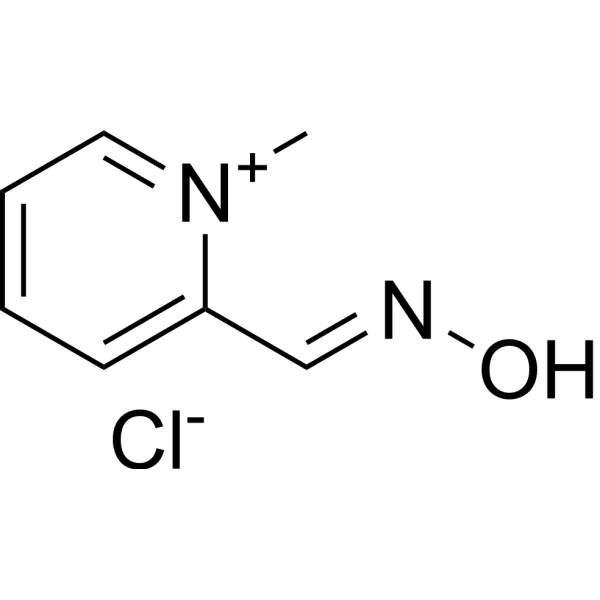
Pralidoxime chloride is a potent reactivator of acetylcholinesterase (AChE). Pralidoxime chloride reactivates nerve agent-inhibited AChE via direct nucleophilic attack by the oxime moiety on the phosphorus center of the bound nerve agent. Pralidoxime chloride is an antidote for organophosphate poisoning .
|
-
- HY-N11738
-
|
|
Others
|
Cancer
|
|
Aspalathin is a C-glycosyldihydrochalcone flavonoid and antioxidant.Aspalathin functions as an antimutagen.Aspalathin can be absorbed by pig intestine as a C-glycoside, and can also be cleaved into its aglycone and sugar moiety.Aspalathin is found in Aspalathus linearis (rooibos) .
|
-
- HY-150410
-
|
|
AUTACs
|
Cancer
|
|
TSPO ligand-3 is a ligand of AUTAC2. AUTAC2 contains an p-fluorobenzylguanine (FBnG) and an synthetic ligand of FKBP (SLF) moiety, which can cause significant silencing of FKBP12 in HeLa cells .
|
-
- HY-W800711
-
|
|
Biochemical Assay Reagents
|
Others
|
|
SPDP-Gly-Pro-NHS ester is a linker with SPDP and NHS ester moieties. The SPDP is an amine and thiol reactive crosslinker. It is also membrane permeable, allowing it to participate in intracellular crosslinking reactions. The NHS ester is amine reactive and forms stable amide bonds.
|
-
- HY-155500
-
|
|
Fluorescent Dye
|
Others
|
|
Digoxigenin NHS ester is an activated ester which readily reacts with amino groups under mild conditions, attaching the Digoxigenin (HY-B1025) moiety to proteins or amino-. Digoxigenin NHS ester can be used to label proteins and oligonucleotides .
|
-
- HY-E70206
-
|
CpG
|
DNA Methyltransferase
Biochemical Assay Reagents
|
Others
Cancer
|
|
CpG Methyltransferase is a DNA methyltransferase. CpG Methyltransferase can methylate the C5 position on the base moiety of all cytosine nucleotides contained in unmethylated or hemimethylated double stranded DNA in a 5’-CpG-3’ context .
|
-
- HY-W440724
-
|
|
Liposome
|
Cancer
|
|
Cholesterol-PEG3400-Thiol is an amphiphatic PEG derivative which forms micelles in water and can be used to prepare liposomes or nanoparticles for drug delivery system. The thiol moiety is reactive with maleimide to form a stable thioether bond.
|
-
- HY-122288
-
|
|
Bacterial
|
Infection
|
|
SC 28538 is a compound with antimicrobial activity. SC 28538 exerts its antimicrobial effect by reducing its nitro moiety in an anaerobic environment to form cytotoxic free radicals that can damage DNA and other key biomolecules of microorganisms .
|
-
- HY-W440690
-
|
|
Liposome
|
Cancer
|
|
Cholesterol-PEG2000-amine is a pegylated lipids which can be used for preparation of liposome or nanoparticle. The lipophilic moiety can encapsulate hydrophobic drugs whereas the hydrophilic PEG chain helps the overal water solubility of the micelles.
|
-
- HY-114420
-
-
- HY-134184
-
|
|
AUTACs
Autophagy
|
Inflammation/Immunology
Cancer
|
|
AUTAC2 is a FKBP12-targeting autophagy-mediated degrader (AUTAC). AUTAC2 contains an FBnG (p-Fluorobenzyl Guanine) and an SLF (c ligand of FKBP) moiety. SLF binds non-covalently to FKBP12 .
|
-
- HY-W190921
-
|
|
Biochemical Assay Reagents
|
Others
|
|
t-Butyl 3-(hydroxypropoxyl)-propanoate contains reactive hydroxyl and t-butyl protected carboxyl moieties. The hydroxyl group can react to further derivatize the compound. The t-butyl carbonyl group can be deprotected under acidic conditions.
|
-
- HY-N15472
-
|
C24:0(2R-OH) Galactosyl(ß) Ceramide (d18:1/24:0)
|
Others
|
Others
|
|
Phrenosine (C24:0(2R-OH) Galactosyl(ß) Ceramide (d18:1/24:0)) is a cerebroside with a 24-carbon fatty acid chain and an 18-carbon sphingosine moiety .
|
-
- HY-155639
-
|
|
Biochemical Assay Reagents
|
Others
|
|
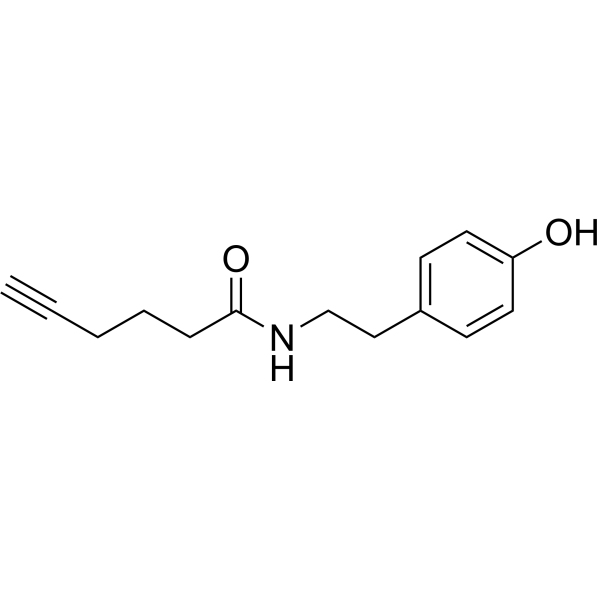
Tyramide alkyne is an alternative labeling substrate that can be coupled to detection or enrichment moieties via a Copper-catalyzed Azide/Alkyne Cycloaddition (CuAAC) “click” reaction. Tyramide alkyne can be used for ascorbate peroxidase 2 (APEX2) labeling .
|
-
- HY-176130
-
|
|
ATTECs
Tau Protein
Autophagy
|
Neurological Disease
|
|
MRL828 combines a Tau pathology-binding ligand and modified guanine moiety based on the ATTEC technology to selectively designate aggregated tau proteins for clearance via the ALP. MRL828 decreases intracellular Tau aggregates and promotes the secretion of Tau .
|
-
- HY-B1738B
-
|
|
Cholinesterase (ChE)
|
Neurological Disease
|
|
Pralidoxime methanesulfonate is a potent reactivator of acetylcholinesterase (AChE). Pralidoxime methanesulfonate reactivates nerve agent-inhibited AChE via direct nucleophilic attack by the oxime moiety on the phosphorus center of the bound nerve agent. Pralidoxime methanesulfonate is an antidote for organophosphate poisoning .
|
-
- HY-140345A
-
|
|
PROTAC Linkers
|
Cancer
|
|
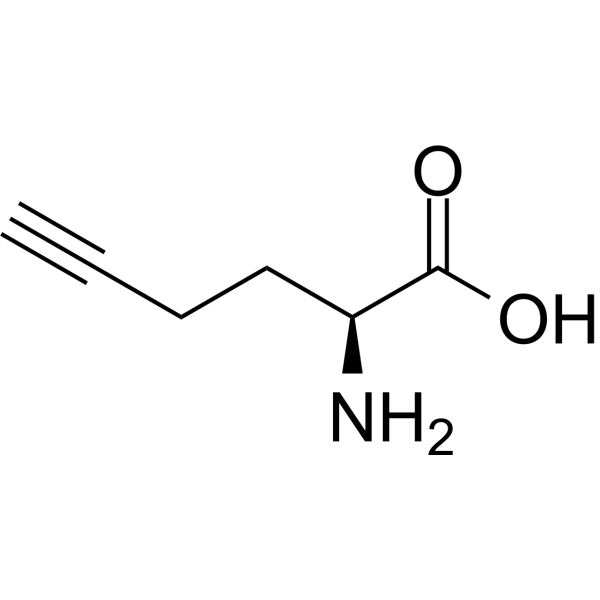
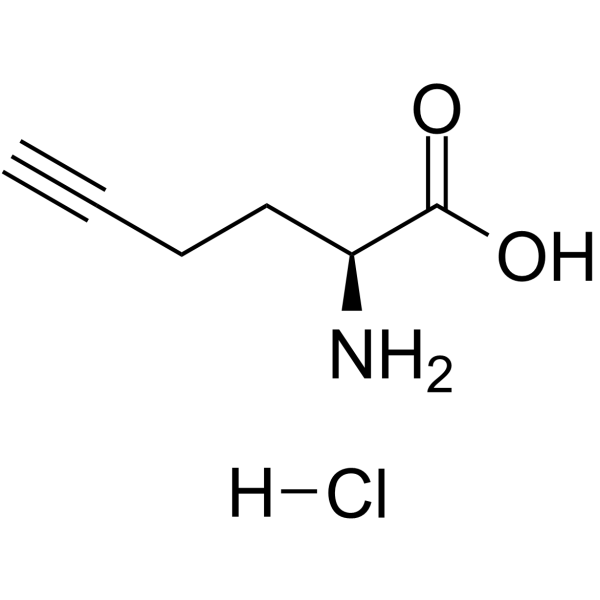
L-Homopropargylglycine hydrochloride is an alkyl chain-based PROTAC linker that can be used in the synthesis of PROTACs. L-homopropargylglycine hydrochloride is an amino acid analog of methionine containing an alkyne moiety that can undergo a classic click chemical reaction with azide containing Alexa Fluor .
|
-
- HY-W018772S6
-
-
- HY-140345
-
|
|
PROTAC Linkers
|
Cancer
|
|
L-Homopropargylglycine is an alkyl chain-based PROTAC linker that can be used in the synthesis of PROTACs. L-homopropargylglycine is an amino acid analog of methionine containing an alkyne moiety that can undergo a classic click chemical reaction with azide containing Alexa Fluor .
|
-
- HY-160047
-
|
|
PDGFR
|
Cancer
|
|
AX102 sodium is a 34 bp length nucleotide aptamer modified at the 5' end with a 40 kDa polyethylene glycol moiety. AX102 selectively binds platelet-derived growth factor B (PDGF-B) and causes tumor vessel regression .
|
-
- HY-B1738A
-
|
|
Cholinesterase (ChE)
|
Neurological Disease
|
|
Pralidoxime iodide is a potent reactivator of acetylcholinesterase (AChE). Pralidoxime iodide reactivates nerve agent-inhibited AChE via direct nucleophilic attack by the oxime moiety on the phosphorus center of the bound nerve agent. Pralidoxime iodide is an antidote for organophosphate poisoning .
|
-
- HY-107447S
-
-
- HY-157182
-
|
|
Biochemical Assay Reagents
|
Cancer
|
|
DNP-PEG2-NHCO-C2-DBCO is a clickable hapten that bears a dinitrophenyl (DNP) moiety as the antibody‐recruiting motif at one end, a polyethylene glycol chain as a spacer and a dibenzocyclooctene at the other end for the SPAAC chemistry .
|
-
- HY-N16040
-
|
|
Liposome
|
Others
|
|
DMG-pSar25 is a double lipid-tailed polysarcosine lipid with 25 sarcosine moieties, serving as a PEG lipid substitute in lipid nanoparticle formulations for mRNA delivery. DMG-pSar25 supports mRNA delivery in lipid nanoparticle formulations .
|
-
- HY-N1499
-
-
- HY-N4173R
-
|
|
Reference Standards
Drug Metabolite
|
Metabolic Disease
|
|
p-Dimethylaminobenzaldehyde (Standard) is the analytical standard of p-Dimethylaminobenzaldehyde. This product is intended for research and analytical applications. p-Dimethylaminobenzaldehyde (4-Dimethylaminobenzaldehyde) is an organic compound containing amine and aldehyde moieties which is used in Ehrlich's reagent and Kovac's reagent to test for indoles .
|
-
- HY-159858
-
|
|
Liposome
|
Cancer
|
|
Lipid 16 is an ionizable lipid that can be used to synthesize lipid nanoparticles (LNP) for delivering mRNA and other payloads. Lipid 16 as a potent cell type-specific ionizable lipid for the CD11bhi macrophage population without an additional targeting moiety .
|
-
- HY-W190940
-
|
|
Biochemical Assay Reagents
|
Others
|
|
Biotin-PEG4-S-S-acid is a cleavable reagent which can efficiently introduce a biotin moiety to amine-containing biomolecules. The disulfide bond in this linker can be cleaved using reducing agents such as DTT, BME and TCEP to remove the biotin label.
|
-
- HY-W018772S
-
-
- HY-107448
-
|
Protac cdk9-binding moiety 1
|
Drug Intermediate
|
Others
|
|
1H-Pyrazole-1-carboxylic acid, 3-amino-5-cyclobutyl-, 1,1-dimethylethyl ester (Protac cdk9-binding moiety 1) is a drug intermediate for synthesis of various active compounds.
|
-
- HY-W018772S9
-
-
- HY-W018772S14
-
-
- HY-W018772S1
-
-
- HY-P99770
-
|
514-G3
|
Bacterial
|
Infection
|
|
Omodenbamab is an anti-SpA (Staphylococcal protein A) human monoclonal antibody with a KD value of 0.0467 nM. Omodenbamab circumvents a key S. aureus evasion mechanism by targeting the cell wall moiety Protein A (SpA). Omodenbamab can be used in research of S. aureus bloodstream infection .
|
-
- HY-W018772S8
-
-
- HY-W018772S7
-
-
- HY-155885
-
|
mPEG40000-NH2
|
Biochemical Assay Reagents
|
Others
|
|
mPEG40000-amine (mPEG40000-NH2) is a monofunctional polyPEG with a terminal amine. The coupling between NHS ester and amine produces a stable amide bond. The amine moieties is also reactive with carboxyl in the presence of activating agent .
|
-
- HY-129363
-
-
- HY-E70082A
-
|
|
Biochemical Assay Reagents
|
Others
|
|
Fructosyl-Amino Acid Oxidase, Corynebacterium sp. catalyzes the oxidative deglycation of low molecular weight fructosamines. Fructosyl-Amino Acid Oxidase, Corynebacterium sp. catalyzes the oxidation of the C-N bond linking the C1 of the fructosyl moiety and the nitrogen of the amino group of fructosyl amino acids.
|
-
- HY-129363A
-
|
|
Ligands for Target Protein for PROTAC
FKBP
|
Cancer
|
|
AP1867-3-(aminoethoxy) hydrochloride, the AP1867 (HY-114434) based moiety, is a synthetic ligand for FKBP. AP1867-3-(aminoethoxy) hydrochloride can be used in the synthesis of PROTAC FKBP12 F36V degrader .
|
-
- HY-136821
-
|
|
Bacterial
Antibiotic
|
Infection
|
|
Polymyxin D2 is an antibiotic discovered from Bacillus polymyxa, exhibiting antibacterial activity. Its core structure consists of a cyclic heptapeptide moiety and a tripeptide side chain with a fatty acyl residue. Polymyxin D2 can be used in anti-infective research .
|
-
- HY-W018772S12
-
-
- HY-W008234
-
|
|
Biochemical Assay Reagents
|
Inflammation/Immunology
|
|
N-Phthaloyl-β-alanine (hapten FP) is an FX-type hapten without CH2S moiety. N-Phthaloyl-β-alanine can be coupled to OVA using the mixed anhydride method. N-Phthaloyl-β-alanine has more heterologies .
|
-
- HY-W018772S10
-
-
- HY-178241
-
|
|
Biochemical Assay Reagents
|
Cancer
|
|
3tBu-Crown TFA is a chelator. 3tBu-Crown TFA chelates radiometals and couples to biological targeting moieties to facilitate targeted delivery of chelated radiometals.3tBu-Crown TFA can be used for the research of cancer .
|
-
- HY-N18097
-
|
|
Others
|
Others
|
|
Junipeionoloside is a norterpenoid glucoside that can find in the leaves of Juniperus phoenicea .
|
-
- HY-N17435
-
|
|
Drug Derivative
|
Others
|
|
Phloridzin 2''-acetate is a dihydrochalcone glycoside found in the leaves of Kalmia latifolia .
|
-
- HY-158031
-
|
|
Apoptosis
Polo-like Kinase (PLK)
Epigenetic Reader Domain
|
Cancer
|
|
PLK1/BRD4-IN-5 (Compound SC10) is an orally active PLK1 and BRD4 inhibitor with IC50 values of 0.3 nM and 60.8 nM, respectively. PLK1/BRD4-IN-5 can induce MV4-11 cell block in S phase and apoptosis) in a dose-dependent manner. PLK1/BRD4-IN-5 can be used in cancer research .
|
-
- HY-W800669
-
|
|
PROTAC Linkers
|
Cancer
|
|
(S, R, S)-AHPC-PEG2-NHS ester is a synthetic PROTAC linker that incorporatess an E3 ligase ligand with a PEG linker to empower PROTAC medicine chemistry. NHS ester is reactive with amine moiety. The hydrophilic PEG spacer increases its aqueous solubility.
|
-
- HY-134183
-
|
|
AUTACs
Autophagy
|
Metabolic Disease
Cancer
|
|
AUTAC1 is a MetAP2-targeting autophagy-mediated degrader (AUTAC). AUTACs contain a degradation tag and a warhead to provide target specificity. AUTAC1 contains an FBnG (p-Fluorobenzyl Guanine) and a Fumagillol moiety. Fumagillol binds covalently to MetAP2 .
|
-
- HY-E70882
-
|
EndoD N322Q
|
Glycosidase
|
Others
|
|
Endoglycosidase D (N322Q mutant) (EndoD N322Q) is a mutant endoglycosidase, which can be highly efficient to transfer Man5GlcNAc oxazoline to a similar cyclic glycopeptide carrying two free GlcNAc moieties to give a doubly glycosylated peptide .
|
-
- HY-143692
-
-
- HY-P2871E
-
|
|
Endogenous Metabolite
|
Metabolic Disease
|
|
α-Galactosidase, Cellvibrio mixtus (EC 3.2.1.22) is a glycoside hydrolase enzyme that hydrolyses the terminal alpha-galactosyl moieties from glycolipids and glycoproteins. Two recombinant forms of α-Galactosidase are called agalsidase alfa (INN) and agalsidase beta (INN).
|
-
- HY-P2871D
-
|
|
Endogenous Metabolite
|
Metabolic Disease
|
|
α-Galactosidase, Clostridium cellulolyticum (EC 3.2.1.22) is a glycoside hydrolase enzyme that hydrolyses the terminal alpha-galactosyl moieties from glycolipids and glycoproteins. Two recombinant forms of α-Galactosidase are called agalsidase alfa (INN) and agalsidase beta (INN).
|
-
- HY-N16300
-
|
|
Fluorescent Dye
|
Others
|
|
Mito-laurdan bromide, a derivative of Laurdan (HY-D0080), is a fluorescent probe. Mito-laurdan bromide contains a cationic triphenylphosphonium moiety, which accumulates at the inner mitochondrial membrane due to its negative membrane potential, connected via a 3 carbon linker .
|
-
- HY-170433
-
|
|
Apoptosis
Ferroptosis
|
Cancer
|
|
DefNEtTrp is a Fe dual chelator ligand, consisting of the Def and Trp moieties. DefNEtTrp exhibits potent and broad-spectrum antiproliferative and cell death behavior in cancer cell lines. DefNEtTrp induces both apoptosis and ferroptosis and has cytotoxicity with an IC50 value of 0.77 μM .
|
-
- HY-P2871H
-
|
|
Endogenous Metabolite
|
Metabolic Disease
|
|
α-Galactosidase, Thermus brockianus (EC 3.2.1.22) is a glycoside hydrolase enzyme that hydrolyses the terminal alpha-galactosyl moieties from glycolipids and glycoproteins. Two recombinant forms of α-Galactosidase are called agalsidase alfa (INN) and agalsidase beta (INN).
|
-
- HY-W800661
-
|
|
Biochemical Assay Reagents
|
Others
|
|
Tos-PEG3-methyl ester is a PEG linker with tosyl and methyl ester moieties. The tosyl group is a very good leaving group for nucleophilic substitution reactions. The hydrophilic PEG linker increases the water solubility of the compound. Methyl ester can be hydrolyzed under strong basic condition.
|
-
- HY-175412
-
|
Dodecylmercapto-S-(poly(tris(hydroxymethyl)acrylamidomethane); H12-TAC
|
Biochemical Assay Reagents
|
Others
|
|
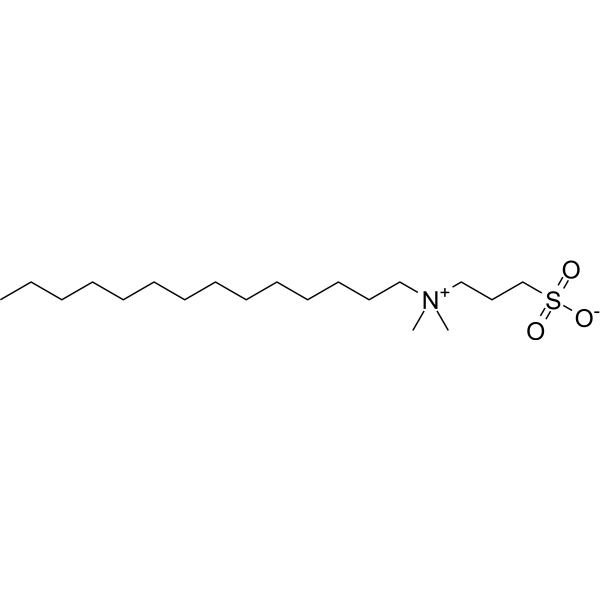
DDTAC (H12-TAC) is a detergent that can extract and solubilize membrane proteins. DDTAC has a thio dodecanoyl chain linked to a polar group made of Tris polyalcoholic moieties and can be utilized in extracting yeast ATP synthase from mitochondrial membranes .
|
-
- HY-167335
-
|
|
Biochemical Assay Reagents
|
Others
|
|
PLLA1000-PEG3000-SPDP is a polylactic acid derivative that can form micelles in water and the SPDP moiety can react with thiols. PLLA1000-PEG3000-SPDP can be used in drug delivery research .
|
-
- HY-167338
-
|
|
Biochemical Assay Reagents
|
Others
|
|
PLLA10000-PEG5000-SPDP is a polylactic acid derivative that can form micelles in water and the SPDP moiety can react with thiols. PLLA10000-PEG5000-SPDP can be used in drug delivery research .
|
-
- HY-134433A
-
|
|
Endogenous Metabolite
|
Metabolic Disease
|
|
GDP-L-fucose disodium is a nucleotide sugar that is a key substrate for the biosynthesis of fucose oligosaccharides. GDP-L-fucose disodium provides the fucose moiety for the oligosaccharides. The formation of GDP-L-fucose disodium occurs through two pathways, the major de novo metabolic pathway and the minor remedial metabolic pathway .
|
-
- HY-167331
-
|
|
Biochemical Assay Reagents
|
Others
|
|
PLLA2000-PEG3000-SPDP is a polylactic acid derivative that can form micelles in water and the SPDP moiety can react with thiols. PLLA2000-PEG3000-SPDP can be used in drug delivery research .
|
-
- HY-167332
-
|
|
Biochemical Assay Reagents
|
Others
|
|
PLLA2000-PEG2000-SPDP is a polylactic acid derivative that can form micelles in water and the SPDP moiety can react with thiols. PLLA2000-PEG2000-SPDP can be used in drug delivery research .
|
-
- HY-W800662
-
|
|
Biochemical Assay Reagents
|
Others
|
|
Bromo-PEG2-methyl ester is a PEG linker containing a bromide moiety and a methyl ester. The bromide (Br) is a very good leaving group for nucleophilic substitution reactions. The hydrophilic PEG spacer increases solubility in aqueous media. Methyl ester can be hydrolyzed under strong basic condition.
|
-
- HY-145663
-
|
|
Drug-Linker Conjugates for ADC
|
Cancer
|
|
HS-(CH2)3CO-L-Ala-D-Ala-L-Ala-NH-CH2-S-(CH2)5-CO-DM is a agent-linker (peptide-cleavable) conjugate for ADC. DM indicates the maytansinoid moiety .
|
-
- HY-E70280
-
|
rEGCase I
|
Biochemical Assay Reagents
|
Metabolic Disease
|
|
Recombinant endoglycoceramidase I (rEGCase I) is a glycosidase that catalyzes the hydrolysis of the β-glycosidic linkage between oligosaccharides and ceramides. Recombinant endoglycoceramidase I catalyzes a transglycosylation reaction, which transfers the sugar moiety of glycosphingolipids (GSLs) to the primary hydroxyl group of several 1-alkanols .
|
-
- HY-167321
-
|
|
Biochemical Assay Reagents
|
Others
|
|
PLLA5000-PEG1000-SPDP is a polylactic acid derivative that can form micelles in water and the SPDP moiety can react with thiols. PLLA5000-PEG1000-SPDP can be used in drug delivery research .
|
-
- HY-P3110
-
|
|
Fluorescent Dye
|
Others
|
|
Ac-WLA-AMC is a fluorogenic substrate of caspase-3. Ac-WLA-AMC is cleaved to release the fluorescent moiety 7-amino-4-methylcoumarin (AMC), which can be used to quantify the β5c subunit activity .
|
-
- HY-167328
-
|
|
Biochemical Assay Reagents
|
Others
|
|
PLLA3000-PEG2000-SPDP is a polylactic acid derivative that can form micelles in water and the SPDP moiety can react with thiols. PLLA3000-PEG2000-SPDP can be used in drug delivery research .
|
-
- HY-167320
-
|
|
Biochemical Assay Reagents
|
Others
|
|
PLLA5000-PEG2000-SPDP is a polylactic acid derivative that can form micelles in water and the SPDP moiety can react with thiols. PLLA5000-PEG2000-SPDP can be used in drug delivery research .
|
-
- HY-167327
-
|
|
Biochemical Assay Reagents
|
Others
|
|
PLLA3000-PEG3000-SPDP is a polylactic acid derivative that can form micelles in water and the SPDP moiety can react with thiols. PLLA3000-PEG3000-SPDP can be used in drug delivery research .
|
-
- HY-167326
-
|
|
Biochemical Assay Reagents
|
Others
|
|
PLLA3000-PEG5000-SPDP is a polylactic acid derivative that can form micelles in water and the SPDP moiety can react with thiols. PLLA3000-PEG5000-SPDP can be used in drug delivery research .
|
-
- HY-151696
-
|
|
ADC Linker
|
Others
|
|
TCO-PEG3-maleimide (TCO-PEG3-NEM) is a click chemistry reagent. TCO-PEG3-maleimide efficiently binds TCO (trans-cyclooctene) moiety to thiol-containing molecules (such as antibodies, cysteine-containing peptides) .
|
-
- HY-167334
-
|
|
Biochemical Assay Reagents
|
Others
|
|
PLLA1000-PEG5000-SPDP is a polylactic acid derivative that can form micelles in water and the SPDP moiety can react with thiols. PLLA1000-PEG5000-SPDP can be used in drug delivery research .
|
-
- HY-167318
-
|
|
Biochemical Assay Reagents
|
Others
|
|
PLLA5000-PEG5000-SPDP is a polylactic acid derivative that can form micelles in water and the SPDP moiety can react with thiols. PLLA5000-PEG5000-SPDP can be used in drug delivery research .
|
-
- HY-D0152
-
|
|
Fluorescent Dye
|
Others
|
|
Tetramethylrhodamine-6-maleimide is a fluorescent dye with a reactive sulfhydryl-specific moiety is covalently coupled to this cysteine. Tetramethylrhodamine-6-maleimide can be used as labels to detect local protein motions of the fully active Na+/K+-ATPase in real time .
|
-
- HY-167341
-
|
|
Biochemical Assay Reagents
|
Others
|
|
PLLA10000-PEG1000-SPDP is a polylactic acid derivative that can form micelles in water and the SPDP moiety can react with thiols. PLLA10000-PEG1000-SPDP can be used in drug delivery research .
|
-
- HY-W190925
-
|
|
Biochemical Assay Reagents
|
Others
|
|
APN-C3-biotin is a heterobifunctional linker containing an APN moiety with exquisite chemoselectivity for cysteine and Biotin. The superior stability of APN-cysteine conjugates in aqueous media, human plasma, and living cells makes this new thiol-click reaction a promising methodology for applications in bioconjugation.
|
-
- HY-167336
-
|
|
Biochemical Assay Reagents
|
Others
|
|
PLLA1000-PEG2000-SPDP is a polylactic acid derivative that can form micelles in water and the SPDP moiety can react with thiols. PLLA1000-PEG2000-SPDP can be used in drug delivery research .
|
-
- HY-167324
-
|
|
Biochemical Assay Reagents
|
Others
|
|
PLLA4000-PEG2000-SPDP is a polylactic acid derivative that can form micelles in water and the SPDP moiety can react with thiols. PLLA4000-PEG2000-SPDP can be used in drug delivery research .
|
-
- HY-167333
-
|
|
Biochemical Assay Reagents
|
Others
|
|
PLLA2000-PEG1000-SPDP is a polylactic acid derivative that can form micelles in water and the SPDP moiety can react with thiols. PLLA2000-PEG1000-SPDP can be used in drug delivery research .
|
-
- HY-167323
-
|
|
Biochemical Assay Reagents
|
Others
|
|
PLLA4000-PEG3000-SPDP is a polylactic acid derivative that can form micelles in water and the SPDP moiety can react with thiols. PLLA4000-PEG3000-SPDP can be used in drug delivery research .
|
-
- HY-167322
-
|
|
Biochemical Assay Reagents
|
Others
|
|
PLLA4000-PEG5000-SPDP is a polylactic acid derivative that can form micelles in water and the SPDP moiety can react with thiols. PLLA4000-PEG5000-SPDP can be used in drug delivery research .
|
-
- HY-167339
-
|
|
Biochemical Assay Reagents
|
Others
|
|
PLLA10000-PEG3000-SPDP is a polylactic acid derivative that can form micelles in water and the SPDP moiety can react with thiols. PLLA10000-PEG3000-SPDP can be used in drug delivery research .
|
-
- HY-167330
-
|
|
Biochemical Assay Reagents
|
Others
|
|
PLLA2000-PEG5000-SPDP is a polylactic acid derivative that can form micelles in water and the SPDP moiety can react with thiols. PLLA2000-PEG5000-SPDP can be used in drug delivery research .
|
-
- HY-167325
-
|
|
Biochemical Assay Reagents
|
Others
|
|
PLLA4000-PEG1000-SPDP is a polylactic acid derivative that can form micelles in water and the SPDP moiety can react with thiols. PLLA4000-PEG1000-SPDP can be used in drug delivery research .
|
-
- HY-167340
-
|
|
Biochemical Assay Reagents
|
Others
|
|
PLLA10000-PEG2000-SPDP is a polylactic acid derivative that can form micelles in water and the SPDP moiety can react with thiols. PLLA10000-PEG2000-SPDP can be used in drug delivery research .
|
-
- HY-167337
-
|
|
Biochemical Assay Reagents
|
Others
|
|
PLLA1000-PEG1000-SPDP is a polylactic acid derivative that can form micelles in water and the SPDP moiety can react with thiols. PLLA1000-PEG1000-SPDP can be used in drug delivery research .
|
-
- HY-167319
-
|
|
Biochemical Assay Reagents
|
Others
|
|
PLLA5000-PEG3000-SPDP is a polylactic acid derivative that can form micelles in water and the SPDP moiety can react with thiols. PLLA5000-PEG3000-SPDP can be used in drug delivery research .
|
-
- HY-156843
-
|
|
Nucleoside Antimetabolite/Analog
|
Cancer
|
|
Antiproliferative agent-38 (com 18) is a tetracyclic ring, but its most reactive ring nitrogen (probably the quinoline moiety) cannot undergo N-alkylation. Antiproliferative agent-38 lacks anti-malarial activity and lacks anti-cancer cell proliferation activity .
|
-
- HY-167329
-
|
|
Biochemical Assay Reagents
|
Others
|
|
PLLA3000-PEG1000-SPDP is a polylactic acid derivative that can form micelles in water and the SPDP moiety can react with thiols. PLLA3000-PEG1000-SPDP can be used in drug delivery research .
|
-
- HY-183800
-
-
- HY-W018772S2
-
-
- HY-184126
-
|
|
Androgen Receptor
|
Cancer
|
|
JZY3221 is an androgen receptor (AR) inhibitor. JZY3221 binds to the AR ligand-binding domain to inhibit AR function. JZY3221 constitutes the AR inhibitory moiety of DALTAC JZY3032 (HY-184124). JZY3221 is applicable to research related to prostate cancer .
|
-
- HY-P2871C
-
|
|
Endogenous Metabolite
|
Metabolic Disease
|
|
α-Galactosidase, positionally specific, Escherichia coli (EC 3.2.1.22) is a glycoside hydrolase enzyme that hydrolyses the terminal alpha-galactosyl moieties from glycolipids and glycoproteins. Two recombinant forms of α-Galactosidase are called agalsidase alfa (INN) and agalsidase beta (INN).
|
-
- HY-W018772
-
|
|
Endogenous Metabolite
|
Inflammation/Immunology
Cancer
|
|
D-Ribose(mixture of isomers) is an energy enhancer, and acts as a sugar moiety of ATP, and widely used as a metabolic therapy supplement for chronic fatigue syndrome or cardiac energy metabolism. D-Ribose(mixture of isomers) is active in protein glycation, induces NF-κB inflammation in a RAGE-dependent manner .
|
-
- HY-W018772S4
-
-
- HY-105455
-
|
|
Apoptosis
|
Inflammation/Immunology
Cancer
|
|
NCX-530 is an Indomethacin (HY-14397) molecule chemically conjugated with a NO moiety. NCX-530 can release NO. NCX-530 can inhibit cancer cells proliferation and induce apoptosis. NCX-530 can be used for the researches of cancer and inflammation .
|
-
- HY-W018772S5
-
-
- HY-151686
-
|
|
Biochemical Assay Reagents
|
Others
|
|
Bz-(Me)Tz-NHS is a methyltetrazine carboxylic acid NHS ester that enables conjugation of the tetrazine moiety to the 5' end of oligonucleotides via amide coupling reaction, and it is used in oligonucleotide template-mediated fluorescent bioorthogonal cycloaddition reactions. Bz-(Me) Tz-NHS is applicable to click chemistry-related studies .
|
-
- HY-W018772S3
-
-
- HY-134433
-
|
|
Endogenous Metabolite
|
Metabolic Disease
|
GDP-L-fucose is a nucleotide sugar that is a key substrate for the biosynthesis of fucose oligosaccharides, providing the fucose moiety for the oligosaccharides.The formation of GDP-L-fucose occurs through two pathways, the major ab initio metabolic pathway and the minor remedial metabolic pathway. GDP-L-fucose is associated with diabetes in rats .
|
-
- HY-P11783
-
|
|
Fungal
|
Infection
|
|
Surfactin C2 is a lipopeptide produced by Bacillus subtilis A18 with antifungal activity. Surfactin C2 acts against Heterobasidion annosum and Heterobasidion parviporum. Surfactin C2 exerts its activity mainly through membrane‑active effects to disrupt fungal cell structures and inhibit mycelial growth. Surfactin C2 can be used for the research of butt rot and root rot of conifers .
|
-
- HY-E71229A
-
|
|
Biochemical Assay Reagents
|
Others
|
|
α-Galactosidase 110A, Bacteroides thetaiotaomicron (EC 3.2.1.-) is a glycoside hydrolase enzyme that hydrolyses the terminal alpha-galactosyl moieties from glycolipids and glycoproteins. It is encoded by the GLA gene. Two recombinant forms of alpha-galactosidase are called agalsidase alfa (INN) and agalsidase beta (INN) .
|
-
- HY-W800657
-
|
|
Biochemical Assay Reagents
|
Others
|
|
Azido-PEG1-hydrazide hydrochloride is a bifunctional PEG linker containing an azide group and a hydrazide group. The azide group can react with alkyne, BCN, DBCO via Click Chemistry to yield a stable triazole linkage. Hydrazine moiety reacts with an aldehyde to form semi-permanent hydrazone bonds.
|
-
- HY-W097018
-
|
|
Biochemical Assay Reagents
|
Others
|
|
Iomeprol intermediate-1 (compound 5) is an iodinated polysaccharide compound used in the synthesis of contrast agents. The amino group of Iomeprol intermediate-1 can be coupled to the carboxyl group of the D-glucuronide subunit of non-animal stable hyaluronic acid (NASHA), providing a water-soluble, radiopaque moiety .
|
-
- HY-B1497
-
|
AgSD
|
Bacterial
DNA/RNA Synthesis
Antibiotic
|
Infection
|
|
Silver sulfadiazine (AgSD), a sulfonamide antibiotic, effects a dual inhibitory action on bacterial growth by its sulfa moiety (SD-SDZ) that prevents bacterial folate absorption and subsequent DNA synthesis. The silver that is released from Silver sulfadiazine binds and disrupts the DNA structure, precluding bacterial DNA replication .
|
-
- HY-W800713
-
|
|
Biochemical Assay Reagents
|
Others
|
|
SPDP-Gly-Pro-acid is a linker with SPDP and carboxylic acid moieties. The SPDP is an amine and thiol reactive crosslinker. It is also membrane permeable, allowing it to participate in intracellular crosslinking reactions. The terminal carboxylic acid can react with primary amine groups in the presence of activators (e.g. EDC, or HATU) to form a stable amide bond.
|
-
- HY-112373
-
|
|
Aurora Kinase
|
Others
|
|
Aurora kinase inhibitor-3 is a strong and selective Aurora A kinase inhibitor with an IC50 of 42 nM, and weakly inhibits EGFR with an IC50 of >10 μM. Aurora kinase inhibitor-3 has a binding mode with the cyclopropanecarboxylic acid moiety directed towards the solvent exposed region of the ATP-binding pocket .
|
-
- HY-140812
-
|
|
Biochemical Assay Reagents
|
Others
|
|
Azido-PEG3-phosphonic acid is a PEG linker which contains an azide moiety and a phosphonic acid. Azido-PEG3-phosphonic acid is a click chemistry reagent. It contains an azide group and can undergo copper-catalyzed azide-alkyne cycloaddition (CuAAc) with molecules containing alkyne groups.
|
-
- HY-E71229
-
|
|
Biochemical Assay Reagents
|
Others
|
|
α-Galactosidase 110A, Bacteroides fragilis (EC 3.2.1.-) is a glycoside hydrolase enzyme that hydrolyses the terminal alpha-galactosyl moieties from glycolipids and glycoproteins. It is encoded by the GLA gene. Two recombinant forms of alpha-galactosidase are called agalsidase alfa (INN) and agalsidase beta (INN) .
|
-
- HY-E71231
-
|
|
Biochemical Assay Reagents
|
Others
|
|
α-Galactosidase 4A, Bacillus halodurans (EC 3.2.1.22) is a glycoside hydrolase enzyme that hydrolyses the terminal alpha-galactosyl moieties from glycolipids and glycoproteins. It is encoded by the GLA gene. Two recombinant forms of alpha-galactosidase are called agalsidase alfa (INN) and agalsidase beta (INN) .
|
-
- HY-W440706
-
|
|
Liposome
|
Cancer
|
|
Cholesterol-PEG2000-alcohol is a pegylated lipids which can be used for preparation of liposome or nanoparticle. The lipophilic moiety can encapsulate hydrophobic drugs whereas the hydrophilic PEG chain helps the overal water solubility of the micelles. The amine can react with an activated NHS ester to form a stable amide bond.
|
-
- HY-20794
-
|
|
Fluorescent Dye
|
Others
|
|
8-Hydroxyjulolidine is a chromophore moiety of a fluorescent probe for the detection of weak acid ions. 8-Hydroxyjulolidine can be used to synthesize the salicylaldehyde derivative 9-formyl-8-hydroxyjulolidine, which exhibits sensitive detection ability to pH changes of hydrogen sulfide and silicate in aqueous solution .
|
-
- HY-161436
-
|
|
Small Interfering RNA (siRNA)
|
Others
|
|
TPA-dT is a thymidine analog with a tris[(2-pyridyl)methyl]amine (TPA) group. TPA-dT can be used to modify siRNAs. The TPA-modified siRNAs remain functionally inactive and is incapable of silencing gene expression until the TPA moiety is removed upon exposure to Cu(I) .
|
-
- HY-E71230
-
|
|
Biochemical Assay Reagents
|
Others
|
|
α-Galactosidase 27A, Clostridium cellulolyticum (EC 3.2.1.22) is a glycoside hydrolase enzyme that hydrolyses the terminal alpha-galactosyl moieties from glycolipids and glycoproteins. It is encoded by the GLA gene. Two recombinant forms of alpha-galactosidase are called agalsidase alfa (INN) and agalsidase beta (INN) .
|
-
- HY-175788
-
|
|
Btk
|
Cancer
|
|
BTK ligand-17 (The Target Protein Ligand Moiety of Catadegbrutinib) is a BTK ligand. BTK can be used as Ligands for Target Protein for PROTAC to develop and design degradative agents for PROTAC BTKs, such as Catadegbrutinib (HY-160141). BTK ligand-17 can also be used in cancer research .
|
-
- HY-P6028
-
|
|
N-myristoyltransferase
|
Others
|
|
GSNKSKPK-NH2 is a synthetic model peptide based on the c-Src N-terminal sequence and model peptide substrate for human NMT1 and NMT2.GSNKSKPK-NH2 facilitates in vitro assays measuring transfer of myristate or X10 fatty acid moieties .
|
-
- HY-E71233
-
|
|
Biochemical Assay Reagents
|
Others
|
|
α-Galactosidase 97A, Bacteroides thetaiotaomicron (EC 3.2.1.22) is a glycoside hydrolase enzyme that hydrolyses the terminal alpha-galactosyl moieties from glycolipids and glycoproteins. It is encoded by the GLA gene. Two recombinant forms of alpha-galactosidase are called agalsidase alfa (INN) and agalsidase beta (INN) .
|
-
- HY-B1200R
-
|
2-PAM chloride (Standard)
|
Reference Standards
Cholinesterase (ChE)
|
Neurological Disease
|
|
Pralidoxime (chloride) (Standard) is the analytical standard of Pralidoxime (chloride). This product is intended for research and analytical applications. Pralidoxime chloride is a potent reactivator of acetylcholinesterase (AChE). Pralidoxime chloride reactivates nerve agent-inhibited AChE via direct nucleophilic attack by the oxime moiety on the phosphorus center of the bound nerve agent. Pralidoxime chloride is an antidote for organophosphate poisoning .
|
-
- HY-E71232
-
|
|
Biochemical Assay Reagents
|
Others
|
|
α-Galactosidase 95A, Bacteroides ovatus (EC 3.2.1.22) is a glycoside hydrolase enzyme that hydrolyses the terminal alpha-galactosyl moieties from glycolipids and glycoproteins. It is encoded by the GLA gene. Two recombinant forms of alpha-galactosidase are called agalsidase alfa (INN) and agalsidase beta (INN) .
|
-
- HY-156090
-
|
|
Mitochondrial Metabolism
Fungal
|
Infection
|
|
PK-10 is a synergistic antibacterial agent of Fluconazole (HY-B0101) and has strong antifungal activity against a variety of Fluconazole-resistant Candida albicans strains. PK-10 combined with Fluconazole can inhibit hyphae formation and induce the accumulation of reactive oxygen species. It further causes damage to mitochondrial membrane potential, reduces intracellular ATP content, and leads to mitochondrial dysfunction .
|
-
- HY-E71234
-
|
|
Biochemical Assay Reagents
|
Others
|
|
α-Galactosidase 97B, Bacteroides thetaiotaomicron (EC 3.2.1.22) is a glycoside hydrolase enzyme that hydrolyses the terminal alpha-galactosyl moieties from glycolipids and glycoproteins. It is encoded by the GLA gene. Two recombinant forms of alpha-galactosidase are called agalsidase alfa (INN) and agalsidase beta (INN) .
|
-
- HY-103591R
-
|
|
PSMA
Reference Standards
|
Cancer
|
|
DUPA(OtBu)-OH (Standard) is the analytical standard of DUPA(OtBu)-OH (HY-103591). This product is intended for research and analytical applications. DUPA(OtBu)-OH is a DUPA precursor. DUPA is used as the targeting moiety to actively deliver Docetaxel (DTX) for treatment of Prostate-Specific Membrane Antigen (PSMA) expressing prostate cancer.
|
-
- HY-D3165
-
|
|
Fluorescent Dye
|
Cancer
|
|
DCM-gal-CF is a fluorescent probe containing a DCM fluorophore scaffold and a D-galactose recognition moiety. DCM-gal-CF itself shows weak fluorescence, and its fluorescence is enhanced after cleavage by β-galactosidase. DCM-gal-CF can be used to detect β-galactosidase activity .
|
-
- HY-41121S1
-
|
|
Isotope-Labeled Compounds
Endogenous Metabolite
|
Others
|
|
Boc-L-Ala-OH-3- 13C is a 13C-labeled Boc-L-Ala-OH (HY-41121). Boc-L-Ala-OH (Boc-Ala-OH) shows excellent affinity with ATP. Boc-L-Ala-OH contains an amino acid moiety, and an acylamide bond like that of the peptide and protein .
|
-
- HY-135869
-
|
|
Mitochondrial Metabolism
|
Neurological Disease
|
|
Mito-apocynin (C11), an orally active mitochondria-targeted triphenylphosphonium (TPP)-based compound, is synthesized by conjugating the Apocynin moiety with a TPP + cation. Mito-apocynin (C11) selectively targets mitochondria, and shows neuroprotective effect. Mito-apocynin (C11) prevents hyposmia and corrects deficits in motor function .
|
-
- HY-W190947
-
|
|
Biochemical Assay Reagents
|
Others
|
|
Iodoacetamido-PEG8-acid is a PEG reagent containing an Iodoacetamide group and a carboxlic acid moiety. The terminal carboxylic acid can react with primary amine groups in the presence of activators (e.g. EDC, or HATU) to form a stable amide bond. The iodoacetamide group is an alkylating agent that can be used to bind covalently with the thiol group.
|
-
- HY-41121S2
-
|
|
Isotope-Labeled Compounds
|
Others
|
|
Boc-L-Ala-OH-2- 13C is a 13C-labeled Boc-L-Ala-OH (HY-41121). Boc-L-Ala-OH (Boc-Ala-OH) shows excellent affinity with ATP. Boc-L-Ala-OH contains an amino acid moiety, and an acylamide bond like that of the peptide and protein .
|
-
- HY-D2040
-
|
|
Fluorescent Dye
|
Others
|
|
ROX tetrazine is a derivative of ROX (Rhodamine X, Rhodamine 101) dye, a red-emitting fluorophore possessing high brightness and fluorescence quantum yield. This compound contains tetrazine moiety that reacts with trans-cycloalkenes and other strained olefins in inverse electron demand Diels-Alder reaction (IEDDA). The reaction is very quick and specific.
|
-
- HY-130081
-
|
|
ADC Payload
Microtubule/Tubulin
|
Cancer
|
|
DM3-SMe is a maytansine derivative and a tubulin inhibitor, and is a cytotoxic moiety of antibody-drug conjugates (ADCs), which can be linked to antibody through disulfide bond or stable thioether bond. DM3-SMe shows highly cytotoxic activity in vitro with an IC50 of 0.0011 nM .
|
-
- HY-P6028A
-
|
|
N-myristoyltransferase
|
Others
|
|
GSNKSKPK-NH2 TFA is a synthetic model peptide based on the c-Src N-terminal sequence and model peptide substrate for human NMT1 and NMT2.GSNKSKPK-NH2 TFA facilitates in vitro assays measuring transfer of myristate or X10 fatty acid moieties .
|
-
- HY-P990708
-
|
MDNA55; NBI-3001; PRX-321
|
Interleukin Related
Apoptosis
|
Inflammation/Immunology
Cancer
|
|
Bizaxofusp (MDNA55) is a fusion protein formed by the linkage of IL-4 and a truncated Pseudomonas exotoxin. Bizaxofusp can bind to IL-4 receptors on the surface of tumor cells and be internalized, and its exotoxin moiety can inhibit protein synthesis and induce tumor cell apoptosis. Bizaxofusp can be used in the study of cancer .
|
-
- HY-P99225
-
|
M9346A
|
Antifolate
ADC Antibody
|
Cancer
|
|
Mirvetuximab (M9346A) is an anti-FOLR1 (folate receptor 1) monoclonal antibody. Mirvetuximab is the antibody moiety of folate receptor alpha (FRα)-targeting ADC (Mirvetuximab soravtansine). Mirvetuximab soravtansine can be used in ovarian and other FRα-positive cancer research .
|
-
- HY-138064
-
|
|
Biochemical Assay Reagents
|
Others
|
|
4-APC hydrobromide is a highly sensitive and selective derivatization agent for aldehydes. 4-APC hydrobromide possesses an aniline moiety for a fast selective reaction with aliphatic aldehydes as well as a quaternary ammonium group for improved MS sensitivity. 4-APC hydrobromide allows highly sensitive and selective MS detection of aldehydes .
|
-
- HY-D0146
-
|
BzRes; 7-Benzyloxyresorufin; 7-Benzyloxyphenoxazone
|
Fluorescent Dye
|
Others
|
|
Resorufin benzyl ether (BzRes), a fluorogenic enzyme substrate, can be used to detect CYP3A4 enzyme activity. Resorufin benzyl ether modified with a recognizing moiety boronate, can be used for ONOO - detection via a self-immolation mechanism. Ex/Em=530-570 nm/590 nm .
|
-
- HY-140818
-
|
|
Biochemical Assay Reagents
|
Others
|
|
Azido-PEG8-hydrazide-Boc is a PEG linker which contains an azide moiety and a Boc-protected hydrazide. Azido-PEG8-hydrazide-Boc is a click chemistry reagent. It contains an azide group and can undergo copper-catalyzed azide-alkyne cycloaddition (CuAAc) with molecules containing alkyne groups.
|
-
- HY-153821
-
|
|
Ras
PROTACs
|
Cancer
|
|
PROTAC KRAS G12C degrader-2 (compound 432) is a modulator of K-Ras protein hydrolysis. PROTAC KRAS G12C degrader-2 is a bifunctional compound, which contain on one end a cereblon inhibitor of apoptosis proteins (IAP) and on the other end a moiety which binds KRAS .
|
-
- HY-P11718
-
-
- HY-D3227
-
|
|
Fluorescent Dye
|
Inflammation/Immunology
Cancer
|
|
HOTN is a hypochlorous acid (HClO) Fluorescent indicator. HOTN is oxidized by HClO, causing cleavage of its Py +-N + moiety and a change in hydrophobicity, which in turn triggers aggregation-induced emission to generate a strong fluorescent signal. HOTN is used for in vivo imaging of inflammation and hepatocellular carcinoma, as these diseases typically result in high levels of HClO .
|
-
- HY-Z1146
-
|
|
Others
|
Others
|
|
7-Methoxytryptamine is an indole substance. The 7-methoxytryptamine moiety can be found in a number of alkaloids, first of all in Aspidosperma type alkaloids (among others as aspidospermine, beninine, dichotamine, kopsingine, 12-methoxyvoaphylline, vobtusine), but it can be also in many other type alkaloids as crenatidine, cuanzine, vincaricine, vinervinine, and others .
|
-
- HY-160423
-
|
|
PROTACs
Histone Methyltransferase
|
Cancer
|
|
MS8815N is a negative control of EZH2 PROTAC degrader MS8815 (HY-148334). MS8815N is incapable of recruiting the VHL E3 ligase but retains the same EZH2 binding moiety and linker. MS8815N can be used for triple-negative breast cancer (TNBC) research .
|
-
- HY-122039
-
|
|
Amino Acid Derivatives
|
Others
|
|
Hypusine dihydrochloride is a natural amino acid found only in the eukaryotic translation initiation factor 5A (eIF-5A). Hypusine is formed by the transfer of the butylamine portion from spermidine to the ϵ-amino group of a specific lysine residue of eIF-5A precursor and by the hydroxylation at carbon 2 of the incoming 4-aminobutyl moiety .
|
-
- HY-185557
-
|
|
Histone Methyltransferase
|
Cancer
|
|
LLC0424N is a negative control compound designed by methylating the thalidomide moiety of LLC0424 (HY-161574). LLC0424N shows does not induce NSD2 degradation and inhibit growth of acute lymphoblastic leukemia cells with NSD2 mutation. LLC0424N can be used for the research of acute lymphoblastic leukemia .
|
-
- HY-P2869I
-
|
|
Glycosidase
|
Metabolic Disease
|
|
β-Galactosidase, Sweet almond is a glycoside hydrolase that hydrolyzes the β-glycosidic bonds formed between galactose and its organic moieties. β-Galactosidase, Sweet almond can hydrolyze lactose to form glucose and galactose, and enter glycolysis; it can also catalyze the transgalactosylation of lactose into allolactose; allolactose can be cracked into monosaccharides .
|
-
- HY-P5444
-
|
|
Bacterial
|
Others
|
|
Drosocin is a biological active peptide. (Drosocin is a 19-mer cationic antimicrobial peptide from Drosophila melanogaster. In Drosophila native drosocin carries a disaccharide moiety attached to a threonine residue in mid-chain position. This synthetic drosocin peptide of identical amino acid sequence without the disaccharide has an activity several times lower than the native compound.)
|
-
- HY-N1499R
-
|
|
Reference Standards
Wnt
β-catenin
TGF-beta/Smad
Bacterial
|
Infection
Metabolic Disease
Inflammation/Immunology
|
|
Nystose (Standard) is the analytical standard of Nystose. This product is intended for research and analytical applications. Nystose is a tetrasaccharide with two fructose molecules linked via beta (1→2) bonds to the fructosyl moiety of sucrose. Nystose exhibits prebiotic, immunomodulatory, and metabolism regulating activities. Nystose promotes the bone mineralization by activating the Wnt/β-catenin signaling pathway .
|
-
- HY-B1738AR
-
|
|
Cholinesterase (ChE)
Reference Standards
|
Neurological Disease
|
|
Pralidoxime (iodide) (Standard) is the analytical standard of Pralidoxime (iodide). This product is intended for research and analytical applications. Pralidoxime iodide is a potent reactivator of acetylcholinesterase (AChE). Pralidoxime iodide reactivates nerve agent-inhibited AChE via direct nucleophilic attack by the oxime moiety on the phosphorus center of the bound nerve agent. Pralidoxime iodide is an antidote for organophosphate poisoning .
|
-
- HY-P99225A
-
|
M9346A (powder)
|
Antifolate
ADC Antibody
|
Cancer
|
|
Mirvetuximab (M9346A) (powder) is an anti-FOLR1 (folate receptor 1) monoclonal antibody. Mirvetuximab (powder) is the antibody moiety of folate receptor alpha (FRα)-targeting ADC (Mirvetuximab soravtansine). Mirvetuximab soravtansine can be used in ovarian and other FRα-positive cancer research .
|
-
- HY-W710422
-
|
|
Biochemical Assay Reagents
|
Others
|
|
1-O-Octadecyl-2-O-benzyl-rac-glycerol is a diacylglycerol that contains octadecyl alcohol at the sn-1 and benzyl alcohol at the sn-3 position. It is used in the synthesis of alkylphospholipids containing modifications of the phosphocholine moiety with antitumor activities. The hydroxyl group enables further derivatization or replacement with other reactive functional groups.
|
-
- HY-W190933
-
|
|
Biochemical Assay Reagents
|
Others
|
|
Bis-PEG6-TFP ester is a PEG linker with two terminal TFP ester moieties. TFP esters are amine reactive and are also more stable than NHS esters against hydrolysis. The PEG chain increases the water solubility properties of compounds in aqueous media. The water solubility properties of PEG chains are enhanced as the PEG chain grows.
|
-
- HY-P10798
-
|
LY-3841136
|
Amylin Receptor
|
Metabolic Disease
|
|
Eloralintide is an amylin receptor (AMYR) activator and long-acting peptide. Eloralintide selectively activates amylin receptors. Eloralintide is modified with a C20 fatty diacid moiety that binds to amylin receptors while retaining selectivity from calcitonin receptors. Eloralintide induces decreased appetite.Eloralintide reduces body weight. Eloralintide can be used for the research of obesity .
|
-
- HY-P992091
-
|
|
Mucin
|
Cancer
|
|
Nacolomab is an anti-human monoclonal antibody targeting MUC1/CD227. Nacolomab can be used for the research of cancer .
|
-
- HY-W190948
-
|
|
Biochemical Assay Reagents
|
Others
|
|
10-(tert-Butoxy)-10-oxodecanoic NHS ester has a t-butyl ester group and an NHS ester moiety. The t-butyl group can be deprotected under acidic conditions. NHS ester can react specifically and efficiently with primary amines such as the side chain of lysine residues or aminosilane-coated surfaces at neutral or slightly basic condition to form a covalent bond.
|
-
- HY-137602
-
|
Up2U
|
P2Y Receptor
|
Others
|
|
P1,P2-Diuridine-5’-diphosphate (Up2U) is a symmetrical dinucleoside polyphosphate containing two pyrimidine base moieties. P1,P2-Diuridine-5’-diphosphate is also an activator of purinergic P2Y receptor .
|
-
- HY-12679
-
|
|
Btk
|
Cancer
|
|
PF-06658607 is an alkynylated irreversible Brutons tyrosine kinase (BTK) inhibitor that covalently reacts with active site cysteines in the ATP-binding pocket. PF-06658607 can be used to detect "off "-targets for covalent kinase inhibitors in cancer cells. The alkyne moiety allows for azide-based detection probe via copper-catalyzed click chemistry .
|
-
- HY-140810
-
|
|
Biochemical Assay Reagents
|
Others
|
|
3-(Azido-PEG5-amino)propanol is a PEG linker which contains an azide moiety and a hydroxyl group. 3-(Azido-PEG5-amino)propanol is a click chemistry reagent. It contains an azide group and can undergo copper-catalyzed azide-alkyne cycloaddition (CuAAc) with molecules containing alkyne groups.
|
-
- HY-172333
-
|
|
Fluorescent Dye
|
Others
|
|
HCy-Lyso is a lysosome-targeting turn-on fluorescent probe based on hydrocyanine. HCy-Lyso integrates a hydrocyanine moiety for selective recognition of hydroxyl radicals (•OH) and a morpholine group for lysosome targeting. Upon reacting with •OH, HCy-Lyso undergoes an extension of its π-conjugation system, producing a strong fluorescence signal at 598 nm when excited at 510 nm .
|
-
- HY-139404
-
|
Anthrylvinyl ceramide; AV Ceramide; AV Ceramide (d18:1/10:0)
|
Fluorescent Dye
|
Others
|
|
C10 AV Ceramide (d18:1/10:0) is a fluorescent probe. Anthrylvinyl (AV) acts as the fluorescent label positioned on the amide linked acyl chain on the Ceramide molecule to measure the CERT-mediated transfer. The anthrylvinyl moiety of C10 AV Ceramide (d18:1/10:0) localizes to the hydrophobic region of the bilayer .
|
-
- HY-W008388
-
|
N6-Benzoyladenosine
|
Nucleoside Antimetabolite/Analog
|
Others
|
|
Bz-rA (N6-Benzoyladenosine) is a nucleoside derivative with an N6 protecting group. Bz-rA is mainly used as a synthetic intermediate to participate in photocatalytic oxidative cyclization reactions and synthesize oligoribonucleotides. Bz-rA can be used to efficiently construct heterocyclic skeletons in photochemical conversions and protect the ribose moiety to regulate the cyclization pathway .
|
-
- HY-D2891
-
|
|
Fluorescent Dye
|
Others
|
|
5-TAMRA-DBCO is a fluorescent dye that combines 5-TAMRA (HY-15942) with a dibenzocyclooctyne (DBCO) moiety. 5-TAMRA-DBCO is able to copper-free click chemistry reactions with azide-functionalized molecules. 5-TAMRA-DBCO can be used for labeling proteins, peptides, nucleic acids (Ex/Em = 541/567 nm) .
|
-
- HY-W591360
-
|
|
Biochemical Assay Reagents
|
Others
|
|
Iodoacetamido-PEG6-azide is an aqueous soluble PEG linker containing an azide and a terminal Iodoacetamido group. The azide group can react with alkyne, BCN, DBCO via Click Chemistry to yield a stable triazole linkage. The Iodoacetamido moiety is commonly used to bind covalently with the thiol group of cysteine so the protein cannot form disulfide bonds.
|
-
- HY-W190906
-
|
|
Biochemical Assay Reagents
|
Others
|
|
6-(tert-Butoxy)-6-oxohexanoic NHS ester has a t-butyl ester group and an NHS ester moiety. The t-butyl group can be deprotected under acidic conditions. NHS ester can react specifically and efficiently with primary amines such as the side chain of lysine residues or aminosilane-coated surfaces at neutral or slightly basic condition to form a covalent bond.
|
-
- HY-N3810
-
|
|
Tyrosinase
|
Others
|
|
ent-11α-Hydroxy-15-oxokaur-16-en-19-oic acid is an anti-melanin synthesis tyrosinase inhibitor, which can be isolated from Pteris fern. ent-11α-Hydroxy-15-oxokaur-16-en-19-oic acid regulates the melanogenesis transcription factor microphthalmia-associated transcription factor (MITF). The 11α-OH, 15-oxo and 16-en moieties of ent-11α-Hydroxy-15-oxokaur-16-en-19-oic acid are key fragments that inhibit melanin synthesis. The 19-COOH moiety has been implicated in the inhibition of cytotoxicity associated with 11α-OH KA and related compounds .
|
-
- HY-147690
-
|
|
Photosensitizer
|
Cancer
|
|
Photosensitizer-2 (compound 1) is a organic D-π-A sensitizer against phototoxicity. Photosensitizer-2 contains an acrylic acid moiety that exerts high levels of phototoxicity. Photosensitizer-2 shows antitumor activity against HeLa cells, with IC50 values of 20.9 ± 4.5 μM (dark) and 0.046 ± 0.012 μM (irradiation), respectively .
|
-
- HY-111024
-
-
- HY-151697
-
|
|
ADC Linker
|
Others
|
|
DACN(Tos2) is a a click chemistry reagent containing an cycloalkynes group. The alkyne moiety within the ring has a unique bent structure and high reactivity toward cycloaddition reactions. DACN(Tos2) through such strain-promoted azide-alkyne cycloadditions (SPAAC) using cycloalkynes. DACN(Tos2) can be used for the research of molecular conjugation .
|
-
- HY-P2869
-
|
EC 3.2.1.23; GAL
|
Glycosidase
|
Metabolic Disease
|
|
β-Galactosidase, E. coli (EC 3.2.1.23; GAL) is a glycoside hydrolase that hydrolyzes the β-glycosidic bonds formed between galactose and its organic moieties. β-Galactosidase, E. coli can hydrolyze lactose to form glucose and galactose, and enter glycolysis; it can also catalyze the transgalactosylation of lactose into allolactose; allolactose can be cracked into monosaccharides .
|
-
- HY-P99285
-
|
hBU 12
|
ADC Antibody
CD19
|
Cancer
|
|
Denintuzumab (hBU 12) is a recombinant humanized anti-CD19 monoclonal antibody. Denintuzumab binds to CD19 on the surface of B cells. Denintuzumab can be used as the antibody moiety (ADC antibody) of antibody-drug conjugates to synthesize ADC, Denintuzumab Mafodotin (SGN-CD19A). Denintuzumab Mafodotin can be used in the research of acute lymphoblastic leukemia .
|
-
- HY-140855
-
|
|
Biochemical Assay Reagents
|
Others
|
|
Azido-PEG4-oxazolidin-2-one is a PEG linker which contains an azide moiety and an oxazolidin group. Azido-PEG4-oxazolidin-2-one is a click chemistry reagent. It contains an azide group and can undergo copper-catalyzed azide-alkyne cycloaddition (CuAAc) with molecules containing alkyne groups.
|
-
- HY-W800840
-
|
|
Biochemical Assay Reagents
|
Others
|
|
Alkyne Sphinganine a metabolic labeling reagent that contains a terminal alkyne moiety that allows for the subsequent tagging of protein?lipid complexes by click chemistry. The terminal alkyne group can be used in a highly specific linking reaction with azide-containing reagents, known as ‘click chemistry’, in the presence of a copper (Cu)-containing catalyst allowing for the visualization and proteomic profiling of protein?sphingolipid complexes in living cells.
|
-
- HY-125042
-
|
|
Bacterial
|
Infection
|
|
Sarothralin G is an antibacterial compound isolated from Hypericum japonicum Thunb. (Japanese spurfle). The structure of Sarothralin G contains phenolic and aromatic acid moieties and shows excellent antibacterial activity against Gram-positive bacteria such as Staphylococcus aureus, Bacillus subtilis and Nocardia spp., which is stronger than Sarothralen A, B and Saroaspidin A, B, C. Sarothralin G exhibits significant antibacterial potential.
|
-
- HY-151795
-
|
|
ADC Linker
|
Others
|
|
DACN(Tos) hydrochloride is a click chemistry reagent containing a cycloalkyne group. The alkyne moiety within the ring has a unique bent structure and high reactivity toward cycloaddition reactions, such strain-promoted azide-alkyne cycloadditions (SPAAC) by using cycloalkynes. DACNs possesses high thermal and chemical stability along with comparable click reactivity. DACN(Tos) hydrochloride can be used for the research of molecular conjugation .
|
-
- HY-P992133
-
|
SYS6002 Antibody; CRB-701 Antibody
|
ADC Antibody
Nectin-4
|
Cancer
|
|
Sutantatug (SYS6002 Antibody) is a monoclonal antibody targeting Nectin-4, and serves as the antibody moiety of the ADC CRB-701. Sutantatug is applicable to the research of Nectin-4-positive solid tumors, urothelial carcinoma and cervical cancer. The corresponding isotype control for Sutantatug is Human IgG1 kappa, Isotype Control (HY-P99001) .
|
-
- HY-125273
-
|
|
Fluorescent Dye
Phosphoglycerate Dehydrogenase (PHGDH)
|
Others
|
|
DNS-pE is a 3-phosphoglycerate dehydrogenase (PHGDH) inhibitor with a Ki of 7.4 μM. DNS-pE selectively and irreversibly covalently modifies endogenous PHGDH in live mammalian cells, its vinyl sulfone moiety acts as a fluorescence quencher that becomes highly fluorescent upon covalent modification of PHGDH. DNS-pE can be used as a fluorescent dye for live-cell imaging .
|
-
- HY-N18050
-
|
|
Endogenous Metabolite
Bacterial
|
Infection
|
|
Petrobactin is a photoreactive siderophore. Petrobactin can be produced by the oil-degrading marine bacterium Marinobacter hydrocarbonoclasticus. Petrobactin can be synthesized by Bacillus anthracis str. Sterne under conditions of iron starvation. Petrobactin readily undergoes a light-mediated decarboxylation reaction when bound to Fe(III) .
|
-
- HY-W997836
-
|
4-AHP
|
Endogenous Metabolite
|
Cancer
|
|
4-Amino-3-hydroxyphenylalanine dihydrochloride (4-AHP) is a photodegradation product of eumelanin. 4-Amino-3-hydroxyphenylalanine dihydrochloride can be used to investigate the development of cutaneous melanoma and age-related macular degeneration .
|
-
- HY-129303
-
|
|
Endogenous Metabolite
|
Metabolic Disease
|
|
AP39 (Item No. 17100) is a compound used to increase the levels of hydrogen sulfide (H2S) within mitochondria. It consists of a mitochondria-targeting motif (triphenylphosphonium) coupled to an H2S-donating moiety (dithiolethione) by an aliphatic linker. AP219 is a control compound for AP39, containing the triphenylphosphonium scaffold but lacking the H2S-releasing portion.
|
-
- HY-101859R
-
|
Nuc-H2O2 Probe (Standard)
|
Reference Standards
Reactive Oxygen Species (ROS)
|
Others
|
|
NucPE1 (Standard) (Nuc-H2O2 Probe (Standard)) is the analytical standard of NucPE1 (HY-101859). This product is intended for research and analytical applications. NucPE1 (Nuc-H2O2 Probe) is a nuclear-localized fluorescent hydrogen peroxide that is specifically localized to cellular nuclei without appended targeting moieties.
|
-
- HY-W021042
-
|
THPTA
|
Biochemical Assay Reagents
|
Others
|
|
Tris(3-hydroxypropyltriazolylmethyl)amine (THPTA) is an accelerating ligand in the copper-catalyzed azide-alkyne cycloaddition reaction (CuAAC) and protects cells from oxidants generated by copper-catalyzed reduction of oxygen by ascorbate. In addition, Tris(3-hydroxypropyltriazolylmethyl)amine can also protect the histidine moiety of biomolecules in a manner proportional to the ligand concentration .
|
-
- HY-W440901
-
|
|
Liposome
|
Others
|
|
DSPE-PEG5000-SPDP is an amphiphilic polyPEG which forms lipid bilayer in water. It can be used to encapsualte therapeutic agents. The core can encapsulate hydrophilic nutrients, such as protein/peptide and mRNA/DNA/siRNA etc. while the lipid bilayer can solubilize hydrophobic drugs, such as doxorubicin, curcumin etc. The SPDP moiety can react with thiol molecule to form a disulfide bond.
|
-
- HY-141147
-
|
|
Drug-Linker Conjugates for ADC
|
Cancer
|
|
7-O-(Amino-PEG4)-paclitaxel is a PEG-class Drug-linker conjugates for ADC, containing a paclitaxel moiety and a amino group. The amine group is reactive with carboxylic acids, activated NHS esters, carbonyls (ketone, aldehyde) etc. 7-O-(Amino-PEG4)-paclitaxel can be used in the synthesis of Antibody-Drug Conjugates (ADCs) .
|
-
- HY-79444
-
|
|
Biochemical Assay Reagents
|
Others
|
|
Bis(pinacolato)diborane is an organoboron reagent. Bis(pinacolato)diborane serves as a source of the [Bpin] moiety with pronounced nucleophilic character and is used in the synthesis of various organoboranes, including organoboron compounds and arylboronates .Bis(pinacolato)diborane reacts with p-benzyne to produce tetraborylated products through a series of steps involving addition and 1,2-migration of the boryl group .
|
-
- HY-B1497R
-
|
AgSD (Standard)
|
Reference Standards
Bacterial
DNA/RNA Synthesis
Antibiotic
|
Infection
|
|
Silver sulfadiazine (Standard) is the analytical standard of Silver sulfadiazine. This product is intended for research and analytical applications. Silver sulfadiazine (AgSD), a sulfonamide antibiotic, effects a dual inhibitory action on bacterial growth by its sulfa moiety (SD-SDZ) that prevents bacterial folate absorption and subsequent DNA synthesis. The silver that is released from Silver sulfadiazine binds and disrupts the DNA structure, precluding bacterial DNA replication .
|
-
- HY-N10800
-
1,2,6,7,8,9-Hexahydro-1,6,6-trimethyl-3,11-dioxanaphth[2,1-e]azulene-10,12-dione
|
Others
|
Cancer
|
|
1,2,6,7,8,9-Hexahydro-1,6,6-trimethyl-3,11-dioxanaphth[2,1-e]azulene-10,12-dione is a kind of chemical constituents of Salvia miltiorrhiza f. alba. The dihydroisotanshinone with a para-quinone moiety shows cytotoxicity and anti-tumor activity .
|
-
- HY-176820
-
|
|
Histone Methyltransferase
|
Cancer
|
|
MRK-740-NC is a PRDM7/9 histone methyltransferase inhibitor. MRK-740-NC is a negative control compound of MRK-740 (HY-114209). MRK-740-NC has no inhibitory activity for PRDM7 and PRDM9 by replacing the methyl pyridine moiety of MRK-740 by a phenyl group .
|
-
- HY-164793
-
|
|
TGF-β Receptor
Cytochrome P450
Bacterial
|
Infection
|
|
TGFBR1-IN-2 (Compound AQA) is a TGFBR1 inhibitor and an antibacterial agent. TGFBR1-IN-2 is a substrate for cytochrome P450s. TGFBR1-IN-2 contains the pyridyl-6-methyl moiety necessary for Mycobacterium tuberculosis inhibition and has potent inhibitory activity against non-replicating and persistent Mycobacterium tuberculosis .
|
-
- HY-164813
-
|
7-Ketocholesteryl-9-carboxynonanoate
|
NF-κB
|
Metabolic Disease
|
|
oxLig-1 (7-Ketocholesteryl-9-carboxynonanoate) is the lipid moiety of oxidized low-density lipoprotein (oxLDL) and is a key ligand for β-glycoprotein I (β(2)-GPI). oxLig-1 causes nuclear translocation by activating the NF-κB pathway. oxLig-1 can be used in the study of atherosclerosis (AS) .
|
-
- HY-N13016
-
|
|
Transmembrane Glycoprotein
|
Cancer
|
|
Yinyanghuo C is a prenylated flavonoid isolated from the leaves of Epimedium sagittatum. Yinyanghuo C increases the mRNA expression levels of endothelial cell markers and enhances cancer-associated angiogenesis in the 4T1 breast tumor-bearing model .
|
-
- HY-D2758
-
|
|
Fluorescent Dye
|
Others
|
|
TAMRA DBCO, 5-isomer is a derivative of tetramethylrhodamine (TMR, TAMRA) containing a cyclooctyne moiety (dibenzocyclooctyne, DBCO). Pure 5-isomer. DBCO reacts quickly and efficiently with azides by simply mixing the components without the need for a copper catalyst (so-called sterically promoted cycloaddition reaction (SPAAC)). TAMRA DBCO can be used for the labeling of proteins, peptides, nucleic acids, and other molecules containing azide groups.
|
-
- HY-75706
-
|
|
PARP
Ligands for Target Protein for PROTAC
|
Cancer
|
|
N-Descyclopropanecarbaldehyde Olaparib is an analogue of Olaparib (HY-10162) containing DOTA moiety. N-Descyclopropanecarbaldehyde Olaparib is a PARP inhibitor used for synthesizing novel dual EGFR and PARP PROTAC, DP-C-4 (HY-141481) . N-Descyclopropanecarbaldehyde Olaparib can be radiolabeled with F-18 or fluorophore for positron emission tomography (PET) or optical imaging in several types of tumor .
|
-
- HY-140533
-
|
|
Biochemical Assay Reagents
|
Others
|
|
N-(Azido-PEG2)-N-biotin-PEG3-acid is a PEG derivative which contains biotin and carboxylic acid moieties. N-(Azido-PEG2)-N-biotin-PEG3-acid is a click chemistry reagent, it contains an Azide group and can undergo copper-catalyzed azide-alkyne cycloaddition reaction (CuAAc) with molecules containing Alkyne groups .
|
-
- HY-W591479
-
|
|
ADC Linker
|
Cancer
|
|
MC-Val-Ala-NHS ester is a cleavable ADC linker with a malimide group and an NHS ester group. The Val-Ala linkers can be cleaved by Cathepsin B. Maleimide group is reactive toward thiol groups. MC is reactive with thiol moieties. The NHS ester is able to react specifically and efficiently with amines (e.g. the side chain of lysine residues or aminosilane-coated surfaces) at neutral or slightly basic condition to form a covalent bond.
|
-
- HY-147168
-
|
|
Biochemical Assay Reagents
|
Others
|
|
Biocytin hydrazide is a long-chain biotin-containing hydrazide, serving as a biotin-derived active coupling reagent, selective labeling agent and biotinylating reagent. Biocytin hydrazide targets aldehyde, carboxyl, amino and guanidino groups to biotinylate glycoconjugates, K99 lectin, peptides and proteins through its hydrazide moiety, and achieves nonradioactive detection of sialic acid- and galactose-containing glycoconjugates via the avidin–biotin system .
|
-
- HY-W020784
-
|
|
Biochemical Assay Reagents
|
Others
|
|
3-(N-Maleimidopropionyl)biocytin is a cysteine-specific labeling reagent and non-membrane-permeable probe. 3-(N-Maleimidopropionyl)biocytin covalently modifies the exposed cysteine residues of yeast Tim44, conjugating the biotin moiety to the polypeptide chain. 3-(N-Maleimidopropionyl)biocytin determines the topology of membrane proteins by modifying the exposed cysteine residues on the outer side of the inner mitochondrial membrane .
|
-
- HY-D3244
-
|
|
Fluorescent Dye
|
Others
|
|
RDDB is a rhodamine-based turn-on fluorescent and colorimetric chemosensor selective for Mn 2+, with a limit of detection of 5×10 -8 M (excitation wavelength: 480-550 nm; fluorescence signal collection range: >590 nm). In the presence of Mn 2+, RDDB undergoes a spirolactam ring-opening reaction of its rhodamine hydrazide moiety, resulting in turn-on fluorescence and a color change. RDDB can be used for intracellular Mn 2+ imaging .
|
-
- HY-160693
-
|
|
DNA/RNA Synthesis
|
Others
|
|
2′-O-Methylguanosine 5′-monophosphate is the nucleotide complex group (pGm) of the ribosome and is primarily used for DNA conjugation. Today's antibodies recognize pGm, in descending order of importance, as the parent base, the methylated ribose moiety, and the phosphate group. 2′-O-Methylguanosine 5′-monophosphate can also be used to prepare RNA vaccines as a 5′-terminal nucleotide to block the RNA molecule .
|
-
- HY-D1636
-
|
|
Fluorescent Dye
|
Others
|
|
5-Nitro BAPTA is a calcium chelator, combinded with 2-Me-substituted TM ( as a fluorescent moiety), can be used to form a red fluorescent probe (CaTM-2 AM), for imaging of cytoplasmic Ca 2+ in cultured living cells. 5-Nitro BAPTA is a building block used in the synthesis of Ca 2+ specific chelators, Ca 2+ buffers, and fluorescent Ca 2+ indicators .
|
-
- HY-134369
-
|
|
P2Y Receptor
|
Others
Inflammation/Immunology
|
|
Ap4C tetrasodium is a dinucleoside polyphosphate containing purine and pyrimidine base moieties. Ap4C tetrasodium acts as a signaling molecule by binding to specific P2Y receptors, activating P2Y2 and P2Y4 receptors in platelets, leading to platelet aggregation and other cellular responses. Ap4C tetrasodium can be used for research in inflammation and blood coagulation .
|
-
- HY-W190920
-
|
|
Biochemical Assay Reagents
|
Others
|
|
t-Butoxycarbonyl-PEG2-NHS ester has a t-Boc protecting group and an NHS ester moiety. The t-butyl group can be deprotected under acidic conditions. NHS ester can react specifically and efficiently with primary amines such as the side chain of lysine residues or aminosilane-coated surfaces at neutral or slightly basic condition to form a covalent bond. The hydrophilic PEG linker increases the water solubility of the compound in aqueous media.
|
-
- HY-W018772R
-
|
|
Reference Standards
Endogenous Metabolite
|
Inflammation/Immunology
Cancer
|
|
D-Ribose(mixture of isomers) (Standard) is the analytical standard of D-Ribose(mixture of isomers). This product is intended for research and analytical applications. D-Ribose(mixture of isomers) is an energy enhancer, and acts as a sugar moiety of ATP, and widely used as a metabolic therapy supplement for chronic fatigue syndrome or cardiac energy metabolism. D-Ribose(mixture of isomers) is active in protein glycation, induces NF-κB inflammation in a RAGE-dependent manner .
|
-
- HY-W040254
-
|
|
Fluorescent Dye
|
Others
|
|
Biotin-LC-LC-NHS is a biotinylation reagent that contains an NHS moiety, which can react efficiently with primary amino (-NH2). Biotin-LC-LC-NHS enables simple and efficient biotinylation of antibodies, proteins, and any other primary amine-containing biomolecules in solution. Biotin-LC-LC-NHS can be used to biotinylate small molecules such as Paclitaxel (HY-B0015) for use in binding site characterization.
|
-
- HY-D1510
-
|
|
Biochemical Assay Reagents
|
Others
|
|
4-Nitrophenyl 2-O-(β-L-Fucopyranosyl)-β-D-Galactopyranoside is a synthetic chromogenic substrate and can be used in the assay of α-fucosidases which hydrolyze the glycosidic linkage Fuc α1-2Gal. The assay is based on the sequential action of α-fucosidase and an exogenously added exo-β-d-galactosidase to release the easily measurable p-nitrophenol moiety .
|
-
- HY-115545
-
|
|
ADC Linker
|
Cancer
|
|
DBCO-NHS ester 3 (Compound 12) is a cleavable linker that is used for making antibody-drug conjugate (ADC). DBCO-NHS ester 3 is a derivative of Dibenzylcyclooctyne (DBCO) obtained by activation of N-hydroxysuccinimide by the carboxylic acid moiety of both methyl-oxanorbornadiene (MeOND) and dibenzoazacyclooctyne (DIBAC) . DBCO-NHS ester 3 is a click chemistry reagent, it contains a DBCO group that can undergo strain-promoted alkyne-azide cycloaddition (SPAAC) with molecules containing Azide groups.
|
-
- HY-144876
-
|
|
Reactive Oxygen Species (ROS)
|
Cancer
|
|
RIDR-PI-103 is a reactive oxygen species (ROS)-induced agent release proagent with a self-cyclizing moiety linked to a pan-PI3K inhibitor (PI-103). Doxorubicin and RIDR-PI-103 shows a synergistic effect in MDA-MB-361 and MDA-MB-231 cells to inhibit cancer cell proliferation .
|
-
- HY-141148
-
|
|
Drug-Linker Conjugates for ADC
|
Cancer
|
|
7-O-(Cbz-N-amido-PEG4)-paclitaxel is a PEG-class Drug-linker conjugates for ADC, containing a paclitaxel moiety and a amino group. The amine group is reactive with carboxylic acids, activated NHS esters, carbonyls (ketone, aldehyde) etc. 7-O-(Cbz-N-amido-PEG4)-paclitaxel can be used in the synthesis of Antibody-Drug Conjugates (ADCs) .
|
-
- HY-160562
-
|
|
PROTACs
Estrogen Receptor/ERR
|
Cancer
|
|
PROTAC ERα Degrader-7 (compound i-320) is a potent estrogen receptor alpha(ERα) PROTAC degrader with a DC50 value of 0.000006 µM. PROTAC ERα Degrader-7 comprises a cereblon-binding moiety LBM linked to a ligand ERBM that binds ERα and comprises a benzofused partially saturated 6-membered carbocyclic or heterocyclic ring .
|
-
- HY-113123S1
-
|
14:0 Lyso PC-d7; 1-myristoyl-sn-glycero-3-phosphatidylcholine-d7
|
Isotope-Labeled Compounds
Endogenous Metabolite
|
Neurological Disease
Metabolic Disease
|
|
LysoPC(14:0/0:0)-d7 (14:0 Lyso PC-d7) is deuterium labeled LysoPC(14:0/0:0). LysoPC(14:0/0:0) is a lysophospholipid (LyP). It is a monoglycerophospholipid in which a phosphorylcholine moiety occupies a glycerol substitution site. LysoPC(14:0/0:0) has potent antispasmodic effect .
|
-
- HY-W441376
-
|
|
Ligands for E3 Ligase
|
Cancer
|
|
Thalidomide-1-Me,4-OH is a Thalidomide (HY-14658) analogue. Thalidomide-1-Me,4-OH contains an extra methyl group on the glutarimide moiety of thalidomide, which is known to abrogate its ability to bind the E3 ligase CRBN. Thalidomide is a ligand for E3 ligase, which ubiquitinylates proteins, thus committing their fate to proteolytic destruction.
|
-
- HY-171830
-
|
YX39-105
|
PROTACs
Tyrosinase
Apoptosis
|
Cancer
|
|
MS105 (YX39-105) is an orally active and selective protein tyrosine kinase 6 (PTK6) (BRK) PROTAC degrader. MS105 recruits VHL E3 ligase via a VHL ligand moiety, promotes PTK6 ubiquitination and proteasomal degradation, inhibits the proliferation and migration of breast cancer cells, and induces apoptosis. MS105 shows potential for use in breast cancer research .
|
-
- HY-W097018R
-
|
|
Biochemical Assay Reagents
Reference Standards
|
Others
|
|
Iomeprol intermediate-1 (Standard) is the analytical standard of Iomeprol intermediate-1. This product is intended for research and analytical applications. Iomeprol intermediate-1 (compound 5) is an iodinated polysaccharide compound used in the synthesis of contrast agents. The amino group of Iomeprol intermediate-1 can be coupled to the carboxyl group of the D-glucuronide subunit of non-animal stable hyaluronic acid (NASHA), providing a water-soluble, radiopaque moiety .
|
-
- HY-125954
-
|
UDP-α-D-glucuronic acid
|
Endogenous Metabolite
|
Metabolic Disease
|
|
Uridine diphosphate glucuronic acid (UDP-α-D-glucuronic acid) is a glucuronic acid donor. Uridine diphosphate glucuronic acid transfers its glucuronic acid moiety to acceptor molecules, thereby forming "ether" glucuronides, while being converted into uridine 5'-pyrophosphate. Uridine diphosphate glucuronic acid serves as a substrate for Arabidopsis UDP-GlcA 4-epimerase 1, and undergoes reversible 4-epimerization to generate UDP-α-D-galacturonic acid .
|
-
- HY-N18263
-
|
|
Others
|
Others
|
|
(25R)-Timosaponin BII (Compound 7) is a furostanol saponin. (25R)-Timosaponin BII can be isolated from Anemarrhenae rhizoma .
|
-
- HY-N17722
-
|
|
Others
|
Others
|
|
Cimicifugic acid L is a Cimicifugic acid. Cimicifugic acid L can be isolated from the aerial parts of Cimicifuga simplex and Cimicifuga japonica .
|
-
- HY-136675
-
|
|
Fluorescent Dye
|
Others
|
|
ASMI is a ratiometric, two-photon excited fluorescent probe, composed of a highly two-photon active and biocompatible merocyanine fluorophore and an acrylate moiety as a thiol reactive site. ASMI is able to selectively detect and monitor mitochondrial Cys with rapid responsiveness, imaging living cells and intact tissues with high contrast and brightness at a depth of 150 μm. The two-photon action cross section (Φσmax) of ASMI is 65.2 GM, corresponding to an excitation wavelength (λex) of 740 nm.
|
-
- HY-W018772S15
-
|
|
Endogenous Metabolite
|
Inflammation/Immunology
|
|
D-Ribose(mixture of isomers)- 13C5 isomers)- 13C5 is the 13C labeled D-Ribose(mixture of isomers) . D-Ribose(mixture of isomers) is an energy enhancer, and acts as a sugar moiety of ATP, and widely used as a metabolic therapy supplement for chronic fatigue syndrome or cardiac energy metabolism. D-Ribose(mixture of isomers) is active in protein glycation, induces NF-κB inflammation in a RAGE-dependent manner .
|
-
- HY-N9448
-
|
|
Bacterial
|
Infection
Inflammation/Immunology
|
|
Lacto-N-tetraose is the significant core structure of human milk oligosaccharides (HMOs) naturally existing in human milk. Lacto-N-tetraose is consist of galactose, N-acetylglucosamine, and glucose moieties. Lacto-N-tetraose has prebiotic effect, immune regulatory effect, anti-inflammatory effects, intestinal cell responses regulatory effect, antibacterial activity and antiviral activity. Lacto-N-tetraose has been widely added to infant formula .
|
-
- HY-178248
-
|
|
PSMA
|
Cancer
|
|
PSMA ligand 2 is a prostate specific membrane antigen (PSMA) ligand with a glutamate-urea-lysine (GUL) moiety. PSMA ligand 2 can be efficiently labeled with radioactive nuclides such as 68Ga and 177Lu and specifically binds to PSMA-positive tumor cells. PSMA ligand 2 can be used for imaging of PSMA-expressing tumors or cells via PET or SPECT imaging. PSMA ligand 2 can be used for the research of prostate cancer .
|
-
- HY-E70064
-
|
|
Endogenous Metabolite
|
Others
|
|
alpha-1,3-Fucosyltransferase (α1,3FucT) catalyzes the transfer of L-fucose moiety from guanosine diphosphate-beta-L-fucose (GDP-Fuc) to acceptor sugars. alpha-1,3-Fucosyltransferase (α1,3FucT) is often used in biochemical studies, and it can be used to form fucoglycoconjugates .
|
-
- HY-P2209
-
|
Daechuine S27; N-Demethylamphibine H
|
Parasite
Phosphodiesterase (PDE)
|
Infection
|
|
Nummularine B (Daechuine S27; N-Demethylamphibine H) is an anti-parasite agent. Nummularine B inhibits calmodulin-dependent phosphodiesterase activity with an IC50 of 16.8 μM. Nummularine B inhibits the growth of Plasmodium and Leishmania donovani in vitro. Nummularine B inhibits the calmodulin-dependent activity of actomyosin Ca 2+-ATPase. Nummularine B is applicable to research related to malaria and visceral leishmaniasis .
|
-
- HY-17466
-
|
Bonomycin; 6-Demethyl-6-deoxytetracycline
|
Bacterial
Antibiotic
|
Metabolic Disease
Inflammation/Immunology
|
|
Sancycline (6-Demethyl-6-deoxytetracycline) acts by reversibly binding to the 30 S ribosomal subunit and inhibiting protein translation by blocking entry of aminoacyl-tRNA into the ribosome a site similar to tetracycline (HY-A0107). Sancycline, four linearly fused six-membered rings with four stereocenters, is a rare semi-synthetic tetracycline (HY-A0107) prepared by hydrogenolysis of the chloro and benzylic hydroxy moieties of Declomycin .
|
-
- HY-76779
-
|
|
Drug Derivative
|
Cancer
|
|
4-(Chloromethyl)-7-hydroxycoumarin (compound 4) is a hydroxycoumarin derivative with potent antioxidant effect and high hydroxyl radical-scavenging property. 4-(Chloromethyl)-7-hydroxycoumarin contains a methyl group and a chlorine group in the heterocyclic ring. A series of coumarins incorporating hydroxy-, chloro- and/or chloromethyl-moieties has been investigated as potent inhibitors of the zinc enzyme carbonic anhydrase, expecially tumor-associated isoforms CA IX and XII .
|
-
- HY-151822
-
|
|
ADC Linker
|
Others
|
|
Hydroxy-PEG3-DBCO is a click chemistry reagent containing an azide group. Hydroxy-PEG3-DBCO is a PEG linker containing a DBCO moiety and a terminal primary hydroxyl group. The hydroxyl can react with a variety of functional groups and the hydrophilic PEG spacer arm can provide better solubility to labeled molecules. DBCO is commonly used for copper-free Click Chemistry reactions. Reagent grade, for research use only .
|
-
- HY-130991A
-
|
|
Target Protein Ligand-Linker Conjugates
|
Cancer
|
|
K-Ras ligand-Linker Conjugate 6 formate incorporates a ligand for K-Ras recruiting moiety, and a PROTAC linker, which recruit E3 ligases (such as VHL, CRBN, MDM2, and IAP). K-Ras ligand-Linker Conjugate 6 formate can be used in the synthesis of PROTAC K-Ras Degrader-1 (HY-129523), which is potent PROTAC K-Ras degrader that exhibits ≥70% degradation efficacy in SW1573 cells .
|
-
- HY-129379
-
|
|
ADC Payload
|
Cancer
|
|
DC0-NH2 is an effector moiety for ADC and a simplified analog of DC1 with better stability. DC0-NH2 is about 1000-fold more cytotoxic than commonly used anticancer agents (ex. Doxorubicin). DC0-NH2 can bind to the minor groove of DNA, followed by alkylation of adenine residues by its propabenzindole (CBI) component .
|
-
- HY-130822
-
|
|
Target Protein Ligand-Linker Conjugates
|
Cancer
|
|
K-Ras ligand-Linker Conjugate 4 incorporates a ligand for K-Ras recruiting moiety, and a PROTAC linker, which recruit E3 ligases (such as VHL, CRBN, MDM2, and IAP). K-Ras ligand-Linker Conjugate 4 can be used in the synthesis of PROTAC K-Ras Degrader-1 (HY-129523), which is potent PROTAC K-Ras degrader that exhibits ≥70% degradation efficacy in SW1573 cells .
|
-
- HY-W008048
-
|
|
Nucleoside Antimetabolite/Analog
|
Others
|
|
2',3'-O-Isopropylideneadenosine is a nucleoside compound and also a Golgi-targeting moiety. 2',3'-O-Isopropylideneadenosine constitutes a furanose ribose group that undergoes cyclization at the O (2') and O (3') atoms. As a component of the fluorescent probe TPE-Ade, 2',3'-O-Isopropylideneadenosine enables specific Golgi localization for fluorescence imaging. 2',3'-O-Isopropylideneadenosine participates in the synthesis of aggregation-induced emission (AIE) fluorescent probes .
|
-
- HY-130823
-
|
|
Target Protein Ligand-Linker Conjugates
|
Cancer
|
|
K-Ras ligand-Linker Conjugate 5 incorporates a ligand for K-Ras recruiting moiety, and a PROTAC linker, which recruit E3 ligases (such as VHL, CRBN, MDM2, and IAP). K-Ras ligand-Linker Conjugate 5 can be used in the synthesis of PROTAC K-Ras Degrader-1 (HY-129523), which is potent PROTAC K-Ras degrader that exhibits ≥70% degradation efficacy in SW1573 cells .
|
-
- HY-D1598
-
|
|
Fluorescent Dye
|
Others
|
|
Sulfo-CY3 tetrazine potassium is a sulfo-Cyanine3 derivative that contains methyltetrazine moiety (Ex=548 nm, Em=563 nm). Sulfo-CY3 tetrazine potassium can be used for the labeling of metabolically engineered cell-surface glycoconjugates . Sulfo-CY3 tetrazine (potassium) is a click chemistry reagent, it contains a Tetrazine group that can undergo an inverse electron demand Diels-Alder reaction (iEDDA) with molecules containing TCO groups.
|
-
- HY-130082
-
|
|
ADC Payload
Microtubule/Tubulin
|
Cancer
|
|
DM4-SMe is a metabolite of antibody-maytansin conjugates (AMCs) and a tubulin inhibitor, and also a cytotoxic moiety of antibody-drug conjugates (ADCs), which can be linked to antibody through disulfide bond or stable thioether bond. DM4-SMe inhibits KB cells with an IC50 of 0.026 nM. DM4-SMe is a highly toxic metabolite that can be oxidized and detoxified by human liver microsomes .
|
-
- HY-130991
-
|
|
Target Protein Ligand-Linker Conjugates
|
Cancer
|
|
K-Ras ligand-Linker Conjugate 6 incorporates a ligand for K-Ras recruiting moiety, and a PROTAC linker, which recruit E3 ligases (such as VHL, CRBN, MDM2, and IAP). K-Ras ligand-Linker Conjugate 6 can be used in the synthesis of PROTAC K-Ras Degrader-1 (HY-129523), which is potent PROTAC K-Ras degrader that exhibits ≥70% degradation efficacy in SW1573 cells .
|
-
- HY-151766
-
|
|
ADC Linker
|
Others
|
|
DACN(Tos,Suc-OH) is a click chemistry reagent containing a cycloalkyne group. The alkyne moiety within the ring has a unique bent structure and high reactivity toward cycloaddition reactions. Such strain-promoted azide-alkyne cycloadditions (SPAAC) using cycloalkynes have served for reliable molecular conjugation in a broad range of fields. The nitrogens are used as connection points for a variety of functional units. DACNs possess high thermal and chemical stability along with comparable click reactivity .
|
-
- HY-130707
-
|
|
Target Protein Ligand-Linker Conjugates
|
Cancer
|
|
K-Ras ligand-Linker Conjugate 3 (Compound 001371) incorporates a ligand for K-Ras recruiting moiety, and a PROTAC linker, which recruit E3 ligases (such as VHL, CRBN, MDM2, and IAP). K-Ras ligand-Linker Conjugate 3 can be used in the synthesis of PROTAC K-Ras Degrader-1 (HY-129523), which is potent PROTAC K-Ras degrader that exhibits ≥70% degradation efficacy in SW1573 cells .
|
-
- HY-W018772S16
-
|
|
Isotope-Labeled Compounds
|
Inflammation/Immunology
|
|
D-Ribose-1,2- 13C2 is the 13C labled D-Ribose(mixture of isomers) (HY-W018772) . D-Ribose(mixture of isomers) is an energy enhancer,and acts as a sugar moiety of ATP,and widely used as a metabolic therapy supplement for chronic fatigue syndrome or cardiac energy metabolism. D-Ribose(mixture of isomers) is active in protein glycation,induces NF-κB inflammation in a RAGE-dependent manner .
|
-
- HY-125954A
-
|
UDP-α-D-glucuronic acid ammonium
|
Endogenous Metabolite
|
Metabolic Disease
|
|
Uridine diphosphate glucuronic acid ammonium (UDP-α-D-glucuronic acid ammonium) is a glucuronic acid donor. Uridine diphosphate glucuronic acid ammonium transfers its glucuronic acid moiety to acceptor molecules, thereby forming "ether" glucuronides, while being converted into uridine 5'-pyrophosphate. Uridine diphosphate glucuronic acid ammonium serves as a substrate for Arabidopsis UDP-GlcA 4-epimerase 1, and undergoes reversible 4-epimerization to generate UDP-α-D-galacturonic acid .
|
-
- HY-17466A
-
|
Bonomycin hydrochloride; 6-Demethyl-6-deoxytetracycline hydrochloride
|
Antibiotic
Bacterial
|
Metabolic Disease
Inflammation/Immunology
|
|
Sancycline (6-Demethyl-6-deoxytetracycline) hydrochloride acts by reversibly binding to the 30 S ribosomal subunit and inhibiting protein translation by blocking entry of aminoacyl-tRNA into the ribosome a site similar to tetracycline (HY-A0107). Sancycline hydrochloride, four linearly fused six-membered rings with four stereocenters, is a rare semi-synthetic tetracycline (HY-A0107) prepared by hydrogenolysis of the chloro and benzylic hydroxy moieties of Declomycin .
|
-
- HY-178106
-
|
|
Drug Intermediate
|
Cancer
|
|
SCN2 is a esterase-responsive prodrug-based amphiphile composed of SN38 (HY-13704) and di-(triazole-[12]aneN3, N) moiety through a 7‑carbon alkyl chains. SCN2 has excellent self-assembly and reversible siRNA condensation capabilities as well as anti-proliferation activity against cancer cells. SCN2 can be used for synthesis of nanoparticles for drug delivery of lung cancer .
|
-
- HY-146489
-
|
|
Bacterial
Parasite
|
Infection
|
|
Anti-infective agent 3 (compound 3l) shows antiparasitic activity against P. falciparum and T. brucei rhodesiense, with IC50 values of 0.47 and 0.13 μM, respectively. Anti-infective agent 3 shows antimycobacterial activity against Mycobacterium smegmatis with a MIC of 4 μg/mL .
|
-
- HY-107767
-
|
DC 81
|
Antibiotic
Apoptosis
DNA/RNA Synthesis
|
Cancer
|
|
Antibiotic DC 81 (DC 81), an antitumor antibiotic produced by Streptomyces species, is a PBD (pyrrolo[2,1-c][1,4]benzodiazepine). Antibiotic DC 81 is potent inhibitor of nucleic acid synthesis. Antibiotic DC 81 can recognize and bind to specific sequences of DNA and form a labile covalent adduct .
|
-
- HY-N18177
-
|
|
Others
|
Others
|
|
Apigenin 6-C-β-boivinopyranosyl-7-O-β-glucopyranoside is a C-glycosylflavone that can be found in the whole plant of Pogonatherum crinitum (Thunb.) Kunth .
|
-
- HY-E70555
-
|
|
Glycosidase
|
Others
|
|
PNGase A is a β-aspartylglucosaminidase and N-glycan-releasing enzyme. PNGase A catalyzes hydrolysis reactions to release the N-glycan moiety from glycoproteins or glycopeptides. PNGase A releases N-linked oligosaccharides containing core α-1,3 fucose from glycopeptides. PNGase A undergoes self-deglycosylation, which may cause contamination of endogenous glycan structures in N-glycan analysis. PNGase A cannot be heterologously expressed in recombinant expression systems; it can be extracted and purified from almond seeds .
|
-
- HY-W597583
-
|
|
Ligands for E3 Ligase
|
Cancer
|
|
2-(2,6-Dioxopiperidin-3-yl)phthalimidine NMe is an E3 ligase ligand of SIAIS630121-NC (HY-159016). 2-(2,6-Dioxopiperidin-3-yl)phthalimidine NMe contains an extra methyl group on the glutarimide moiety of thalidomide, which is known to abrogate its ability to bind the E3 ligase CRBN. SIAIS630121-NC is a negative control for NAMPT degrader SIAIS630121 .
|
-
- HY-161306
-
|
|
HDAC
|
Cancer
|
|
ITF5924 (compound 1) is a potent and highly selective HDAC6 inhibitor with an IC50 of 7.7 nM. ITF5924 shows greater than 104-fold selectivity for HDAC6 over all other HDAC subtypes. ITF5924 containing a difluoromethyl-1,3,4-oxadiazole (DFMO) moiety is slow-binding substrate analog of HDAC6 that undergo an enzyme-catalyzed ring opening reaction, forming a tight and long-lived enzyme-inhibitor complex .
|
-
- HY-W587486
-
|
|
Endogenous Metabolite
Bacterial
|
Metabolic Disease
|
|
N‑acetyltaurine is an orally active endogenous sulfonate that is synthesized from taurine and acetate in the renal cortex. N‑acetyltaurine supports bacterial growth as a sole fixed nitrogen or carbon source. N‑acetyltaurine buffers acetyl moieties of mitochondrial acetyl‑CoA in skeletal muscle. N‑acetyltaurine reduces food intake and body weight in obese and lean wild‑type mice in a GFRAL‑dependent manner. N‑acetyltaurine can be used for the research of diet‑induced obesity, hyperacetatemia and diabetes .
|
-
- HY-183964
-
|
|
Biochemical Assay Reagents
|
Others
|
|
DSPE-PEG2000-tetrazine is a synthetic phospholipid modified with PEG2000 and tetrazine moieties. DSPE-PEG2000-tetrazine gains improved steric stability via PEGylation. DSPE-PEG2000-tetrazine enables bioorthogonal click chemistry through its tetrazine segment, which selectively reacts with trans-cyclooctene (TCO) under complex biological environments. DSPE-PEG2000-tetrazine can be applied for researches related to click chemistry .
|
-
- HY-161668
-
|
|
Ligands for E3 Ligase
Ferroptosis
|
Cancer
|
|
Ru-Poma is a Ru(II)-based photosensitizer, which attenuates Cisplatin (HY-17394)-resistant tumor through photodynamic therapy (PDT). Ru-Poma photodegrades CRBN through a Pomalidomide (HY-10984) moiety. Ru-Poma induces ferroptosis, through an increase in lipid peroxide, downregulation of GPX4 and GAPDH expression. Ru-Poma exhibits cytotoxicity in A549, with IC50 of 18.46 μM and 0.37 μM in dark and upon irradiation, respectively .
|
-
- HY-N10527
-
|
Globoisotetraose
|
Others
|
Others
|
|
Isoglobotetraose (Globoisotetraose) is the oligosaccharide moiety of human glycosphingolipids. Synthesis process: globotetraose (GalNAcβ1→3Galα1→4Galβ1→4Glc) and isoglobotetraose (GalNAcβ1→3Galα1→3Galβ1→4Glc) .
|
-
- HY-P4154
-
|
ALM-488
|
Fluorescent Dye
|
Neurological Disease
Cancer
|
|
Bevonescein (ALM-488) is a fluorescein-conjugated peptide that facilitates the targeted delivery of a fluorescent moiety (5-FAM (HY-66022)) to nerves after intravenous (IV) administration. Bevonescein binds nerve-associated connective tissue, labels peripheral nerves under real-time fluorescence imaging (FL) in living mice and human ex vivo nerve tissue. Bevonescein is a peptide-linked tracer which fluorescently labeled both intact and degenerated nerves (Ex/Em = 480/530 nm) .
|
-
- HY-D1071
-
|
|
Fluorescent Dye
|
Others
|
|
DBCO-PEG12-TCO cantains a TCO and a DBCO moiety. TCO group can specifically react with terrahydrazine. DBCO-PEG12-TCO is a click chemistry reagent, it contains a DBCO group that can undergo strain-promoted alkyne-azide cycloaddition (SPAAC) with molecules containing Azide groups. DBCO-PEG12-TCO also contains a TCO group that can undergo an inverse electron demand Diels-Alder reaction (iEDDA) with molecules containing Tetrazine groups.
|
-
- HY-D1557
-
|
|
Fluorescent Dye
|
Others
|
|
Cyanine5.5 tetrazine is a far-infrared luminescent dye. Cyanine5.5 tetrazine is a Cyanine5.5 (HY-D0925A) derivative contains a tetrazine moiety. Cyanine5.5 tetrazine can be used for in vivo imaging and low background applications. Cyanine5.5 tetrazine is a click chemistry reagent, it contains a Tetrazine group that can undergo an inverse electron demand Diels-Alder reaction (iEDDA) with molecules containing TCO groups.
|
-
- HY-181777
-
|
|
EGFR
|
Cancer
|
|
Mal-Pip-ValCit-PAB-AZ7550 is a prodrug of EGFR inhibitor. Mal-Pip-ValCit-PAB-AZ7550 selectively binds covalently to albumin via its maleimide moiety. Mal-Pip-ValCit-PAB-AZ7550 exhibits potent in vivo anticancer activity in non-small cell lung cancer xenograft models. Mal-Pip-ValCit-PAB-AZ7550 can be used in research related to non-small cell lung cancer .
|
-
- HY-P10447
-
|
Fengycin IX; SNA-60-367-3
|
Phospholipase
Fungal
|
Infection
|
|
Plipastatin A1 (Fengycin IX; SNA-60-367-3) is a lipopeptide with phospholipase A2 inhibitory activity. Plipastatin A1 inhibits conidial germination of Botrytis cinerea in vitro and reduces the incidence of gray mold on tomato leaves. Plipastatin A1 is applicable to research related to gray mold [1][2].
|
-
- HY-178455
-
|
|
Influenza Virus
|
Infection
|
|
Influenza virus-IN-10 is a dual-target antiviral agents for influenza that targets both PAC (KD = 8.9 μM) and NP (KD = 52.5 μM) simultaneously. Influenza virus-IN-10 exhibits an EC50 values of 1.64 μM) against influenza A virus (H1N1, A/WSN/33) and broad-spectrum activity against other influenza strains, including influenza B virus and multiple subtypes of influenza A .
|
-
- HY-146488
-
|
|
Parasite
Bacterial
|
Infection
|
|
Anti-infective agent 2 (compound 3k) shows antiparasitic activity against P. falciparum and T. brucei rhodesiense, with IC50 values of 0.07 and 2.20 μM, respectively. Anti-infective agent 2 shows antimycobacterial activity against Mycobacterium smegmatis with a MIC of 32 μg/mL .
|
-
- HY-P1801
-
|
Cys-[HIV-Tat (47-57)]
|
HIV
Drug Derivative
|
Others
|
|
Cys-TAT(47-57) (Cys-[HIV-Tat (47-57)]), TAT (HY-P0281) derivative, is a Cysteine (HY-Y0337)-tagged cell-penetrating peptide (CPP) derived from the HIV TAT protein. Cys-TAT(47-57) can be used for the research for the research of drug delivery .
|
-
- HY-N18307
-
|
|
Others
|
Others
|
|
Jasnudifloside C is an oleoside-type secoiridoid glucoside. Jasnudifloside C can be found in the leaves of Jasminum nudiflorum .
|
-
- HY-146487
-
|
|
Bacterial
Parasite
|
Infection
|
|
Anti-infective agent 1 (compound 3a) is a potent and selective antiprotozoal and antimycobacterial agent. Anti-infective agent 1 shows antiparasitic activity against P. falciparum and T. brucei rhodesiense, with IC50 values of 10.95 and 0.06 μM, respectively. Anti-infective agent 1 shows antimycobacterial activity against Mycobacterium smegmatis with a MIC of 8 μg/mL .
|
-
- HY-W013727
-
|
|
Potassium Channel
|
Inflammation/Immunology
|
|
UK-78282, a novel piperidine, potent and selective Kv1.3 blocker with an IC50 of 200 nM. UK-78,282 effectively suppresses human T-lymphocyte activation in vitro. UK-78,282 binds to residues at the inner surface of the channel overlapping the site of action of verapamil .
|
-
- HY-181228
-
|
|
Biochemical Assay Reagents
|
Others
|
|
DBCO-PEG10-Biotin is an azadibenzocyclooctyne-biotin derivative containing a biotin group and 10 PEGs. DBCO-PEG10-Biotin is a versatile biotinylation reagent used for the introduction of a biotin moiety to azide-labeled biomolecules via copper-free strain-promoted alkyne-azide click chemistry (SPAAC) reaction. DBCO-PEG10-Biotin is a click chemistry reagent, it contains a DBCO group that can undergo strain-promoted alkyne-azide cycloaddition (SPAAC) with molecules containing Azide groups .
|
-
- HY-150408
-
|
|
AUTACs
|
Cancer
|
|
FBnG-(Cys-acetamide)-CH2-PEG3-CH2-CH2-CH2-NH2 is a tag-linker conjugate of AUTAC4 (HY-134640) that incorporates a degradation tag FBnG (HY-W073762) and a glycol linker. AUTAC4 contains an p-fluorobenzylguanine (FBnG) and a phenylindole moiety, which can induce K63-linked polyubiquitination and degradation of mitochondria in HeLa cells .
|
-
- HY-130809
-
|
|
Biochemical Assay Reagents
|
Cancer
|
|
DBCO-PEG4-Biotin is an azadibenzocyclooctyne-biotin derivative containing a biotin group and 4 PEGs. DBCO-PEG4-Biotin is a versatile biotinylation reagent used for the introduction of a biotin moiety to azide-labeled biomolecules via copper-free strain-promoted alkyne-azide click chemistry (SPAAC) reaction . DBCO-PEG4-Biotin is a click chemistry reagent, it contains a DBCO group that can undergo strain-promoted alkyne-azide cycloaddition (SPAAC) with molecules containing Azide groups.
|
-
- HY-107453
-
|
PROTAC Sirt2-binding moiety 1
|
Ligands for Target Protein for PROTAC
|
Cancer
|
|
SirReal1-O-propargyl is a selective and highly potent Sirtuin 2 (Sirt2) inhibitor, with an IC50 of 2.4 μM. SirReal1-O-propargyl, the SirReal1-based moiety, binds to the cereblon ligand via a linker to form PROTAC to degrade Sirt2 . SirReal1-O-propargyl is a click chemistry reagent, it contains an Alkyne group and can undergo copper-catalyzed azide-alkyne cycloaddition (CuAAc) with molecules containing Azide groups.
|
-
- HY-17365
-
-
- HY-W099581
-
|
SB3-14; DMAPS
|
Biochemical Assay Reagents
|
Others
|
|
Zwittergent 3-14 (DMAPS) is a zwitterionic detergent commonly used in biochemistry and molecular biology for the solubilization and purification of membrane-bound proteins and other hydrophobic biomolecules, which have both hydrophilic and hydrophobic moieties , so that it has good detergency properties, making it suitable for stabilizing membrane proteins in aqueous solutions. In addition, DMAPS has been used in various techniques such as electrophoresis and chromatography for the separation and analysis of biomolecules. The long The hydrocarbon chains provide it with good membrane penetration and solubilization capabilities, while the sulfonate and quaternary ammonium groups ensure water solubility and charge neutrality.
|
-
- HY-17466R
-
|
Bonomycin (Standard); 6-Demethyl-6-deoxytetracycline (Standard)
|
Reference Standards
Bacterial
Antibiotic
|
Metabolic Disease
Inflammation/Immunology
|
|
Sancycline (Standard) is the analytical standard of Sancycline. This product is intended for research and analytical applications. Sancycline (6-Demethyl-6-deoxytetracycline) acts by reversibly binding to the 30 S ribosomal subunit and inhibiting protein translation by blocking entry of aminoacyl-tRNA into the ribosome a site similar to tetracycline (HY-A0107). Sancycline, four linearly fused six-membered rings with four stereocenters, is a rare semi-synthetic tetracycline (HY-A0107) prepared by hydrogenolysis of the chloro and benzylic hydroxy moieties of Declomycin[1][2][3].
|
-
- HY-130768
-
|
|
PROTAC Linkers
|
Cancer
|
|
N-(Azido-PEG3)-N-Fluorescein-PEG3-acid is a PEG-based PROTAC linker which contains azide, fluorescein and carboxylic acid moieties. N-(Azido-PEG3)-N-Fluorescein-PEG3-acid is a click chemistry reagent, it contains an Azide group and can undergo copper-catalyzed azide-alkyne cycloaddition reaction (CuAAc) with molecules containing Alkyne groups. It can also undergo strain-promoted alkyne-azide cycloaddition (SPAAC) reactions with molecules containing DBCO or BCN groups.
|
-
- HY-142079
-
|
|
Drug Derivative
|
Cancer
|
|
Br-C1-CONH-C5-CO-Val-Cit-PAB-MMAE (compound 62) is a drug-linker conjugate that contains a monomethyl auristatin E (MMAE) drug moiety, which is linked to a bromoacetamide-containing extension unit via a valine-citrulline (Val-Cit) dipeptide and a self-immolative p-aminobenzyl (PAB) spacer. Br-C1-CONH-C5-CO-Val-Cit-PAB-MMAE is applicable to the research of breast cancer, anaplastic large cell lymphoma and lung adenocarcinoma .
|
-
- HY-P991055
-
|
RG-6234; RO-7425781
|
CD3
|
Inflammation/Immunology
|
|
Forimtamig (RG-6324) is a GPRC5DxCD3 T-cell-engaging bispecific antibody. Forimtamig has a 2 + 1 format, comprising two high-affinity GPRC5D binding moieties and one CD3 binder. Forimtamig further features a P329G LALA mutated Fc domain that inhibits Fcγ receptor and C1q binding, yet retains binding to the neonatal Fc receptor. The isotype control for Forimtamig can refer to Human IgG1 kappa, Isotype Control (HY-P99001) .
|
-
- HY-137822
-
|
4-Nitrophenyl a-D-mannopyranoside
|
Glycosidase
|
Others
|
|
p-Nitrophenyl α-D-mannopyranoside (4-Nitrophenyl α-D-mannopyranoside) is a chromogenic glycosidic ligand. p-Nitrophenyl α-D-mannopyranoside features a sugar moiety (α-D-mannopyranose) with the mannose-characteristic axial hydroxyl group at the C2 position and a ligand portion (p-nitrophenol) that provides ultraviolet-visible light absorption properties. p-Nitrophenyl α-D-mannopyranoside can be used to determine glycosidase activity and characterize the sugar recognition properties of lectins (such as Concanavalin A (HY-P2149)) .
|
-
- HY-117664
-
|
|
Reverse Transcriptase
|
Inflammation/Immunology
Cancer
|
|
PNR-7-02 inhibits Pol η function with an IC50 value of near 8 μM, which binds to the little finger domain. PNR-7-02 is also an inhibitor against hRev1 and hpol lambda (λ). PNR-7-02 acts synergistically with Cisplatin (HY-17394) to kill chronic myeloid leukaemia and ovarian cancer cell lines. PNR-7-02 is an indole thio-barbituric acid (ITBA) derivative with both N-napthoyl moiety and 5-chloro substituent on the indole ring .
|
-
- HY-151646
-
|
Alkyne-PEG5-BG
|
ADC Linker
|
Others
|
|
Alkyne-PEG5-SNAP is a click chemistry reagent containing an alkyne group. Alkyne-PEG5-SNAP can alkyne conjugated benzylguanine (BG), the BG moiety reacts specifically and rapidly with SNAP-tag, a polypeptide protein tag, allowing irreversible and covalent labeling of SNAP fusion proteins with an additional alkyne functionality suitable for further conjugation . Alkyne-PEG5-SNAP is a click chemistry reagent, it contains an Alkyne group and can undergo copper-catalyzed azide-alkyne cycloaddition (CuAAc) with molecules containing Azide groups.
|
-
- HY-D3007
-
|
|
Fluorescent Dye
|
Others
|
|
LD-CK is a fluorescent probe based on a coumarin-chromone structure, specifically designed to visualize lipid droplet polarity changes and endowed with multimodal imaging capability. LD-CK contains a high-performance lipophilic coumarin moiety, which enables it to specifically target lipid droplets upon cellular entry while minimizing background fluorescence to the greatest extent. LD-CK has an excitation wavelength (Ex) of 488 nm and an emission wavelength (Em) of 540 nm (in low-polarity environments such as toluene) or 640 nm (in high-polarity environments such as glycerol), with its emission peak undergoing a redshift as solvent polarity increases .
|
-
- HY-16621
-
|
|
SphK
|
Inflammation/Immunology
|
|
PPI-4955 is a subtype 1 (S1P₁) agonist of sphingosine-1-phosphate receptor with an EC50 of 1.62 nM. PPI-4955-P (the active phosphorylated form) exhibits excellent receptor selectivity and affinity, and the IC50 values for hS1P₁, hS1P₃, hS1P₄, and hS1P₅ are 0.23, 2000, 6.5, and 184 nM respectively. PPI-4955 has significantly improved in vivo phosphorylation efficiency, which can reduce lymphocytes and improve cardiovascular risk. PPI-4955 can be used in immunomodulation research .
|
-
- HY-W714239
-
|
|
Drug Metabolite
|
Others
|
|
Spirotetramat-keto-hydroxy is a metabolite of Spirotetramat (HY-120253). Spirotetramat is an insecticide .
|
-
- HY-N17940
-
|
|
Others
|
Others
|
|
Hemerocallal A is a diterpenoid compound with a trans-bicyclooctane core, which can be isolated from the dried roots of Hemerocallis fulva (L.) L .
|
-
- HY-N18092
-
|
|
Others
|
Others
|
|
Platycodin C is an oleanane-type oligoglycoside and monoacetylated saponin found in the roots of Platycodon grandiflorum A. DC. (Campanulaceae) .
|
-
- HY-P992161
-
|
|
Interleukin Related
PD-1/PD-L1
|
Inflammation/Immunology
Cancer
|
|
REGN-10597, composed of an anti-huPD-1-targeting antibody and IL2Ra-IL2 moiety, is a PD-1-dependent IL-2 agonist. REGN-10597 binds PD-1 to deliver masked native IL-2 to PD-1+ T cells, engaging trimeric IL-2 receptors to activate downstream signaling. REGN-10597 can be used for the research on melanoma, prostate cancer, colorectal cancer, and ovarian cancer .
|
-
- HY-N10577
-
|
|
TGF-beta/Smad
|
Cancer
|
|
Chlorfortunone A is a novel sesquiterpenoid dimers, can be isolated from the roots of Chloranthus fortunei. Chlorfortunone A inhibits transforming growth factor (TGF)-β activity .
|
-
- HY-N7293
-
|
|
Histamine Receptor
|
Inflammation/Immunology
|
|
Bakkenolide D is a sesquiterpene lactone. Bakkenolide D is the major component of Bakkenolides in Petasites tricholobus. Bakkenolide D exhibits anti-allergic and antihistamine activities, and can be used in studies related to allergic rhinitis .
|
-
- HY-174221
-
|
|
IMPDH
HDAC
|
Cancer
|
|
IMPDH II/HDAC1-IN-1 (Compound C12) is an orally active, selective dual IMPDH II/HDAC1 inhibitor, with an IC50 of 84.69 nM against hIMPDH II and an IC50 of 81.75 nM against HDAC1. IMPDH II/HDAC1-IN-1 inhibits the proliferation of chronic myeloid leukemia cells. IMPDH II/HDAC1-IN-1 can be used for the research of chronic myeloid leukemia .
|
-
- HY-W755033
-
-
- HY-W008048S
-
|
|
Isotope-Labeled Compounds
Nucleoside Antimetabolite/Analog
|
Others
|
|
2',3'-O-Isopropylideneadenosine- 13C5 is the 13C-labeled 2',3'-O-Isopropylideneadenosine (HY-W008048). 2',3'-O-Isopropylideneadenosine is a nucleoside compound and also a Golgi-targeting moiety. 2',3'-O-Isopropylideneadenosine constitutes a furanose ribose group that undergoes cyclization at the O (2') and O (3') atoms. As a component of the fluorescent probe TPE-Ade, 2',3'-O-Isopropylideneadenosine enables specific Golgi localization for fluorescence imaging. 2',3'-O-Isopropylideneadenosine participates in the synthesis of aggregation-induced emission (AIE) fluorescent probes .
|
-
- HY-W587486R
-
|
|
Reference Standards
Endogenous Metabolite
Bacterial
|
Metabolic Disease
|
|
N-Acetyltaurine (Standard) is the analytical standard of N-Acetyltaurine (HY-W587486). This product is intended for research and analytical applications. N‑acetyltaurine is an orally active endogenous sulfonate that is synthesized from taurine and acetate in the renal cortex. N‑acetyltaurine supports bacterial growth as a sole fixed nitrogen or carbon source. N‑acetyltaurine buffers acetyl moieties of mitochondrial acetyl‑CoA in skeletal muscle. N‑acetyltaurine reduces food intake and body weight in obese and lean wild‑type mice in a GFRAL‑dependent manner. N‑acetyltaurine can be used for the research of diet‑induced obesity, hyperacetatemia and diabetes .
|
-
- HY-118998
-
|
|
PROTACs
EGFR
ERK
Akt
|
Cancer
|
|
TX2-121-1 is a potent and selective Her3 (ErbB3) degrader that contains a hydrophobic adamantane moiety. TX2-121-1 has an IC50 of 49 nM for Her3. TX2-121-1 inhibits Her3-dependent signaling and heterodimerization of Her3. TX2-121-1 has the ability to inhibit cell proliferation. TX2-121-1 can be used in the study of tumors. (Pink: Her3 inhibitor (HY-164988); Black: Linker; Blue: Adamantane (HY-N2427)) .
|
-
- HY-111024R
-
|
PMC (Standard)
|
Reference Standards
Androgen Receptor
NF-κB
|
Cardiovascular Disease
Inflammation/Immunology
Cancer
|
|
2,2,5,7,8-Pentamethyl-6-Chromanol (Standard) is the analytical standard of 2,2,5,7,8-Pentamethyl-6-Chromanol. This product is intended for research and analytical applications. 2,2,5,7,8-Pentamethyl-6-Chromanol (PMC) is the anti-oxidant moiety of vitamin E (α-tocopherol). 2,2,5,7,8-Pentamethyl-6-Chromanol has potent androgen receptor (AR) signaling modulation and anti-cancer activity against prostate cancer cell lines[1].
|
-
- HY-W1129940
-
|
|
Radionuclide-Drug Conjugates (RDCs)
|
Cancer
|
|
p-SCN-Macropa is a bifunctional macrocyclic chelator featuring macrocyclic polyamine skeletons and thiocyanate (-SCN) reactive moieties. p-SCN-Macropa can conjugate with monoclonal antibodies including Nimotuzumab (HY-P9968), Rituximab (HY-P9913) and Trastuzumab (HY-P9907)-PEG6-DM1 for 225Ac radiolabeling to construct radioimmunoconjugates. p-SCN-Macropa is applicable for the research of colorectal cancer, HER2-positive breast cancer, TROP-2-positive cancers, and PSMA-positive cancers .
|
-
- HY-181058
-
|
|
Drug-Linker Conjugates for ADC
|
Cancer
|
|
Cyclopamine-COO-2-ethoxy-1,3-benzodioxole-O-C-Triazole-C5-AC is a drug-linker conjugate, with Cyclopamine (HY-17024) as its drug moiety. Cyclopamine-COO-2-ethoxy-1,3-benzodioxole-O-C-Triazole-C5-AC itself exhibits no significant anti-tumor activity. Cyclopamine-COO-2-ethoxy-1,3-benzodioxole-O-C-Triazole-C5-AC can be used for the synthesis of ADC molecules .
|
-
- HY-D3179
-
|
|
Fluorescent Dye
BCRP
|
Neurological Disease
|
|
CDg13 is a fluorescent probe that specifically detects living neural stem/progenitor cells. CDg13 localizes to the endoplasmic reticulum via its dihexyl moiety, with no interaction with endoplasmic reticulum biomolecules. CDg13 undergoes selective efflux by active ABCG2 transporters, with increased intracellular accumulation following ABCG2 inhibition or knockdown. CDg13 isolates and enriches self-renewable neural stem/progenitor cells from embryonic mouse brain tissue, stains neural stem/progenitor cells brightly, and sorts ABCG2low cell populations from heterogeneous populations . (Ex/Em = 520/553 nm)
|
-
- HY-N2054
-
|
Kaempferol 4'-β-glucoside
|
Drug Derivative
|
Others
|
|
Kaempferol 4'-glucoside (Kaempferol 4'-β-glucoside) is a glycosylated form of Kaempferol (HY-14590). Kaempferol 4'-glucoside interacts with SBE-β-CD (HY-17031). Kaempferol 4'-glucoside can be used in the food and active compound industries .
|
-
- HY-121465
-
|
|
Endogenous Metabolite
|
Metabolic Disease
|
|
Stearoyl serotonin is a hybrid molecule patterned after arachidonoyl serotonin. Arachidonoyl serotonin is a dual antagonist of fatty acid amide hydrolase (FAAH) and the transient receptor potential vanilloid-type 1 (TRPV1) channel, reducing both acute and chronic peripheral pain. The effects of replacing the arachidonoyl portion with the saturated 18-carbon stearoyl moiety have not been studied. However, replacement of arachidonate with saturated 11- or 12-carbon fatty acids produces compounds that potently inhibit capsaicin-induced TRPV1 channel activation (IC50=0.76 μM) without blocking FAAH-mediated hydrolysis of arachidonoyl ethanolamine (IC50 > 50 μM).
|
-
- HY-131187
-
|
|
Ligands for Target Protein for PROTAC
|
Cancer
|
|
BMS-1166-N-piperidine-COOH, the BMS-1166-based moiety, binds to E3 ligase ligand via a linker to form PROTAC PD-1/PD-L1 degrader-1 (HY-131183) to degrade PD-1/PD-L1 . BMS-1166 is a potent PD-1/PD-L1 interaction inhibitor with an IC50 of 1.4 nM. BMS-1166 antagonizes the inhibitory effect of PD-1/PD-L1 immune checkpoint on T cell activation .
|
-
- HY-W099581R
-
|
SB3-14 (Standard); DMAPS (Standard)
|
Biochemical Assay Reagents
Reference Standards
|
Others
|
|
Sulfobetaine-14 (Standard) is the analytical standard of Sulfobetaine-14. This product is intended for research and analytical applications. Zwittergent 3-14 (DMAPS) is a zwitterionic detergent commonly used in biochemistry and molecular biology for the solubilization and purification of membrane-bound proteins and other hydrophobic biomolecules, which have both hydrophilic and hydrophobic moieties , so that it has good detergency properties, making it suitable for stabilizing membrane proteins in aqueous solutions. In addition, DMAPS has been used in various techniques such as electrophoresis and chromatography for the separation and analysis of biomolecules. The long The hydrocarbon chains provide it with good membrane penetration and solubilization capabilities, while the sulfonate and quaternary ammonium groups ensure water solubility and charge neutrality.
|
-
- HY-182396
-
|
|
Penicillin-binding protein (PBP)
Bacterial
|
Infection
|
|
YU253434 is a PBP3 inhibitor with an IC50 of 2.5 μM against Pseudomonas aeruginosa PBP3. YU253434 contains a siderophore domain that facilitates its uptake into the periplasmic space of Gram-negative bacilli. YU253434 exhibits antibacterial activity against multidrug-resistant Gram-negative bacilli. YU253434 can be used in studies of multidrug-resistant Gram-negative bacterial infections .
|
-
- HY-180329
-
|
|
Ligands for E3 Ligase
ERK
Raf
|
|
|
CG 858-Neg (compound 13) is a negative control for Thalidomide (HY-14658)-derived PROTAC degraders, targeting BRAF and BRAF V600E with Ki values of 9.5 nM and 14.4 nM, respectively. CG 858-Neg inhibits downstream ERK phosphorylation and suppresses BRAF V600E-driven melanoma (e.g., A375 cells, IC50=492 nM) and colorectal cancer (e.g., HT-29 cells, IC50=459 nM) cells. CG 858-Neg can be used in research related to melanoma and colorectal cancer .
|
-
- HY-W521246
-
|
|
Herbicide
Acetolactate Synthase (ALS)
|
Others
|
|
Tritosulfuron is a sulfonylurea herbicide. Tritosulfuron has inhibitory activity against acetolactate synthase. Tritosulfuron is a broad-spectrum post-emergent dicotyledonous herbicide used in cereals, maize, and turf cultivation .
|
-
- HY-N17258
-
|
|
Insecticide
|
Infection
|
|
Quercetin 3-O-(2G-β-D-xylopyranosylrutinoside) is an oviposition inhibitory factor. Quercetin 3-O-(2G-β-D-xylopyranosylrutinoside) can be isolated from the leaves of Orixa japonica. When presented together with the oviposition stimulant from Citrus unshiu (Satsuma mandarin), Quercetin 3-O-(2G-β-D-xylopyranosylrutinoside) inhibits oviposition by gravid female Papilio xuthus (Asian swallowtail) .
|
-
- HY-125954S
-
|
UDP-α-D-glucuronic acid-13C,15N2
|
Isotope-Labeled Compounds
Endogenous Metabolite
|
Metabolic Disease
|
|
Uridine diphosphate glucuronic acid- 13C, 15N2 (UDP-α-D-glucuronic acid- 13C, 15N2) is the 13C- and 15N-labeled Uridine diphosphate glucuronic acid (HY-125954). Uridine diphosphate glucuronic acid ammonium (UDP-α-D-glucuronic acid ammonium) is a glucuronic acid donor. Uridine diphosphate glucuronic acid ammonium transfers its glucuronic acid moiety to acceptor molecules, thereby forming "ether" glucuronides, while being converted into uridine 5'-pyrophosphate. Uridine diphosphate glucuronic acid ammonium serves as a substrate for Arabidopsis UDP-GlcA 4-epimerase 1, and undergoes reversible 4-epimerization to generate UDP-α-D-galacturonic acid .
|
-
- HY-183038
-
|
|
Biochemical Assay Reagents
|
Others
|
|
2-Phenyl-1-octen-7-yn-1-one is an alkyne-functionalized enone with site-selective reactivity toward the N-terminal α-amino group of peptides and proteins. 2-Phenyl-1-octen-7-yn-1-one can undergo click chemistry with azides via its alkyne moiety to enable further protein functionalization. 2-Phenyl-1-octen-7-yn-1-one modifies unprotected peptide libraries as well as proteins including insulin, lysozyme, RNaseA and BCArg .
|
-
- HY-151761
-
|
|
ADC Linker
|
Others
|
|
H-L-Lys(4-N3-Z)-OH hydrochloride is a click chemistry reagent containing an azide group. H-L-Lys(4-N3-Z)-OH hydrochloride contains a lysine-modified azide moiety and as a bioorthogonal ligation handle. H-L-Lys(4-N3-Z)-OH hydrochloride is an infrared probe and a photo-affinity reagent . It contains an azide group and can undergo copper-catalyzed azide-alkyne cycloaddition (CuAAc) with molecules containing alkyne groups. It can also undergo ring strain-promoted alkyne-azide cycloaddition (SPAAC) with molecules containing DBCO or BCN groups.
|
-
- HY-141126
-
|
|
Biochemical Assay Reagents
|
Cancer
|
|
Azido-PEG4-alpha-D-mannose is a PEG linker that combines an azide group with an alpha-D-mannose moiety. Azido-PEG4-alpha-D-mannose is a click chemistry reagent, it contains an Azide group and can undergo copper-catalyzed azide-alkyne cycloaddition reaction (CuAAc) with molecules containing Alkyne groups. It can also undergo strain-promoted alkyne-azide cycloaddition (SPAAC) reactions with molecules containing DBCO or BCN groups. Azido-PEG4-alpha-D-mannose has the targeting property of mannose, which can accurately deliver drugs to specific cells or tissues to improve the therapeutic effect of drugs .
|
-
- HY-W800697
-
|
|
Fluorescent Dye
|
Others
|
|
BP Fluor 430 Picolyl Azide is an advanced fluorescent probe that incorporatess a copper-chelating motif to raise the effective concentration of Cu(I) at the reaction site. The rate of the CuAAC reaction depends on the concentrations of all reagents, including copper, therefore raising the effective copper concentration at the reaction site will dramatically increase the rate of CuAAC reaction without the need to increase concentration of azide reagent or copper.
In addition, the use of BP Fluor 430 Picolyl Azide instead of conventional BP Fluor 430 Azide allows for at least a tenfold reduction in the concentration of the copper catalyst without sacrificing the efficiency of labeling.
In summary, the introduction of a picolyl moiety into an azide probe leads to a substantial increase in the sensitivity of alkyne detection. This is of special value for the detection of low abundance targets or where significant increase in signal intensity is desired.
|
-
- HY-W800701
-
|
|
Biochemical Assay Reagents
|
Others
|
|
BP Fluor 546 DBCO is an azide-reactive probe that can be used for imaging azide-tagged biomolecules via a copper-free click reaction. The DBCO moiety reacts with azides to form a stable triazole and does not require a Cu-catalyst or elevated temperatures. In applications where the presence of copper is a concern, BP Fluor 546 DBCO is an ideal alternative to copper-requiring fluorescent alkynes.
BP Fluor 546 is a water-soluble, pH-insensitive (from pH 4-10), orange-fluorescent dye with absorption and emission maxima at 554 and 570 nm, respectively. It can be used with the 488 nm and 532 nm laser lines. BP Fluor 546 dye conjugates to a variety of antibodies, peptides, proteins, tracers, and amplification substrates, which are often used for generating stable signals in imaging and flow cytometry.
|
-
- HY-126929
-
|
TXN-B
|
DNA Alkylator/Crosslinker
Apoptosis
Bacterial
Parasite
Fungal
|
Infection
Cancer
|
|
Trioxacarcin B (TXN-B) is a potent cytotoxic agent and DNA-targeted inhibitor. Trioxacarcin B disrupts DNA function and induces apoptosis in cancer cells. Trioxacarcin B not only effectively inhibits the growth of various Gram-positive and Gram-negative bacteria as well as Plasmodium falciparum, but also blocks the colony formation of cancer stem cells, significantly reduces tumor volume and prolongs survival in preclinical in vivo models. The activity of Trioxacarcin B is highly dependent on its intact spiro-epoxide structure; it loses efficacy once this moiety undergoes hydrolysis, and Trioxacarcin B shows no activity against fungi, microalgae and small RNA viruses. Trioxacarcin B can be used for research on bacterial infections, malaria, and various cancers including colon cancer and melanoma .
|
-
- HY-D3191
-
|
|
Fluorescent Dye
Aminopeptidase
Monoamine Oxidase
|
Infection
Metabolic Disease
|
|
L&M-D-MR is a highly specific fluorescent "AND" logic probe with response moieties for leucine aminopeptidase (LAP) and monoamine oxidase (MAO). The coexistence of both LAP and MAO is required for L&M-D-MR to trigger intramolecular cyclization, release fluorophores and activate fluorescence. In the presence of only a single enzyme, L&M-D-MR generates only an extremely weak signal. L&M-D-MR enables bioimaging in living cells and mouse models, and can effectively distinguish different subtypes of liver diseases via blood samples or test strips. L&M-D-MR is widely used in studies related to liver cirrhosis, hepatitis B and drug-induced liver injury .
|
-
- HY-137873
-
|
4-Methylumbelliferyl-α-D-Glucose; 4-Methylumbelliferyl-α-D-Glucoside; 4-MU-α-D-Glucopyranoside
|
Fluorescent Dye
Glycosidase
|
Others
|
|
4-Methylumbelliferyl-α-D-Glucopyranoside (4-Methylumbelliferyl-α-D-Glucose) is a fluorescent substrate for α-glucosidase, which releases the fluorescent moiety 4-methylumbelliferyl (4-MU) upon cleavage. 4-MU has pH-dependent fluorescence excitation activity, with excitation wavelengths of 320 nm at low pH (1.97-6.72) and 360 nm at high pH (7.12-10.3), respectively. The emission wavelength of 4-Methylumbelliferyl-α-D-Glucopyranoside increases with decreasing pH, ranging from 445-455 nm. 4-Methylumbelliferyl-α-D-Glucopyranoside can be used as a biomarker for Fabry and Pompe diseases to quantify α-glucosidase activity in infant blood spot samples.
|
-
- HY-145969
-
|
3'-O-Me-m7G(5')ppp(5')G
|
DNA/RNA Synthesis
Eukaryotic Initiation Factor (eIF)
|
Cancer
|
|
β-S-ARCA (3'-O-Me-m7G(5')ppp(5')G) is a mRNA 7-methylguanosine (m7G) cap analog carrying a phosphorothioate (PS) moiety. β-S-ARCA binds eIF4E via electrostatic interactions between its β-sulfur atom and positively charged Arg and Lys residues in the protein binding site. β-S-ARCA prevents the decapping by Dcp2, increases the mRNA half-life, enhances cap-dependent translation, and increases protein expression in cells. β-S-ARCA has been applied in researching experimental mRNA-based anticancer vaccines .
|
-
- HY-W800693
-
|
|
Fluorescent Dye
|
Others
|
|
BP Fluor 405 Picolyl Azide is an advanced fluorescent probe that incorporatess a copper-chelating motif to raise the effective concentration of Cu(I) at the reaction site. The rate of the CuAAC reaction depends on the concentrations of all reagents, including copper, therefore raising the effective copper concentration at the reaction site dramatically increases the rate of CuAAC reaction without increasing the concentrations of azide reagent or copper.
In addition, the use of picolyl azide instead of conventional azides allows for at least a tenfold reduction in the concentration of the copper catalyst without sacrificing the efficiency of labeling.
In summary, the introduction of a picolyl moiety into an azide probe leads to a substantial increase in the sensitivity of alkyne detection. This is of special value for the detection of low abundance targets or where significant increase in signal intensity is desired.
|
-
- HY-D3216
-
|
|
Fluorescent Dye
|
Others
|
|
ER-Cu (II) is an endoplasmic reticulum-selective fluorescent Cu 2+ probe. ER-Cu (II) localizes specifically to the endoplasmic reticulum of hepatocytes .
|
-
- HY-180474
-
|
|
Liposome
|
Neurological Disease
|
|
LP293-p is a lipid with activated ester groups, which can be used for the synthesis of ATXN2 RNAi. LP293-p can be utilized to enhance the targeting of the central nervous system (CNS) .
|
-
- HY-N17564
-
|
|
Drug Derivative
|
Others
|
|
Inonotsutriol C is a lanostane-type triterpenoid found in the sclerotia of Inonotus obliquus .
|
-
- HY-N17505
-
|
|
Others
|
Others
|
|
(1S,2R,4S)-Borneol β-D-glucopyranoside (Compound 10) is a monoterpenoid glucoside.(1S,2R,4S)-Borneol β-D-glucopyranoside can be found in the leaf of Thymus vulgaris .
|
-
- HY-P11261
-
|
|
PSMA
|
Cancer
|
AAZTA-NI-PSMA-093 is a bispecific agent targeting prostate-specific membrane antigen (PSMA) with an IC50 value for PSMA of 87.48 nM. AAZTA-NI-PSMA-093 has a PSMA targeting module and an oxygen-sensitivity module (hypoxia-sensitive NI-moiety). AAZTA-NI-PSMA-093 can utilize the PSMA targeting property as a "navigation system" to efficiently concentrate the entire molecule within prostate cancer cells, and once the cells are in an oxygen-deficient state, the molecule will irreversibly capture and remain in the oxygen-deficient cells, achieving "secondary enrichment". AAZTA-NI-PSMA-093 can be labeled with ⁶⁸Ga and ¹⁷⁷Lu, and has high accumulation and rapid clearance characteristics in mouse models. AAZTA-NI-PSMA-093 can be used for the study of prostate cancer .
|
-
- HY-B1422S
-
|
Aminacrine-13C6
|
Bacterial
HIV
Isotope-Labeled Compounds
|
Infection
|
|
9-Aminoacridine-13C6 is the 13C-labeled 9-Aminoacridine(HY-B1422). 9-Aminoacridine, a fluorescent probe, acts as an indicator of pH for quantitative determination of transmembrane pH gradients (inside acidic). 9-Aminoacridine is an antimicrobial. 9-Aminoacridine exerts its antimicrobial activity by interacting with specific bacterial DNA and disrupting the proton motive force in K. pneumoniae. 9-Aminoacridine is a HIV-1 inhibitor and inhibits HIV LTR transcription highly dependent on the presence and location of the amino moiety. 9-Aminoacridine inhibits virus replication in HIV-1 infected cell lines. 9-Aminoacridine is used as a Rifampin (RIF; HY-B0272) adjuvant for the multidrug-resistant K. pneumoniae infections .
|
-
- HY-145969A
-
|
3’-O-Me-m7G(5')ppp(5')G triammonium
|
DNA/RNA Synthesis
Eukaryotic Initiation Factor (eIF)
|
Cancer
|
|
β-S-ARCA (3'-O-Me-m7G(5')ppp(5')G) triammonium is a mRNA 7-methylguanosine (m7G) cap analog carrying a phosphorothioate (PS) moiety. β-S-ARCA triammonium binds eIF4E via electrostatic interactions between its β-sulfur atom and positively charged Arg and Lys residues in the protein binding site. β-S-ARCA triammonium prevents the decapping by Dcp2, increases the mRNA half-life, enhances cap-dependent translation, and increases protein expression in cells. β-S-ARCA triammonium has been applied in researching experimental mRNA-based anticancer vaccines .
|
-
- HY-W012166
-
|
NHS-Bromoacetate
|
Biochemical Assay Reagents
|
Infection
|
|
N-Succinimidyl bromoacetate (NHS-Bromoacetate) is a heterobifunctional crosslinking reagent, mainly used to modify the ɛ-amino group of lysine side chains. By covalently linking its bromoacetyl moiety to the ɛ-amino group of lysine in peptidomimetics, N-Succinimidyl bromoacetate enables their conjugation with thiol-modified nanoparticles via thioether bonds. N-Succinimidyl bromoacetate also performs bromoacetylation modification on carrier proteins, which then forms stable thioether bonds with the thiol groups of cysteine in peptides, thus efficiently preparing soluble peptide-protein conjugates with high substitution ratios. N-Succinimidyl bromoacetate can be used to prepare activated Sepharose derivatives for affinity chromatography, protein affinity labeling reagents, and peptide-protein immunogen conjugates with non-immunogenic linkages. N-Succinimidyl bromoacetate is applicable to studies related to HIV-1 infection and glioblastoma multiforme .
|
-
- HY-119925
-
|
|
Drug Intermediate
|
Neurological Disease
|
|
Amaralin is a sesquiterpene lactone with analgesic activity, which exists in the leaves and stems of Helenium amarum (Raf.) H. Rock. When administered subcutaneously, Amaralin produces analgesic effects in the mouse tail-flick test. When administered subcutaneously, Amaralin inhibits acetic acid-induced writhing syndrome in mice. Amaralin can be used for pain-related research .
|
-
- HY-N18288
-
|
|
Insecticide
|
Infection
|
|
6''-O-(3'''-Hydroxy-3'''-methylglutaryl) vitexin is an orally active flavonoid glycoside and insecticide that can be isolated from the twigs of Eleusine coracana. 6''-O-(3'''-Hydroxy-3'''-methylglutaryl) vitexin exhibits distinct antifeedant activity against Nilaparvata lugens (brown planthopper) nymphs and effectively inhibits their feeding behavior. 6''-O-(3'''-Hydroxy-3'''-methylglutaryl) vitexin can serve as a plant-derived natural defense substance for regulating pest behavior and investigating potential control mechanisms of agricultural pests .
|
-
- HY-N19720
-
|
|
Drug Derivative
Parasite
|
Infection
|
|
Bractein is a natural aurone flavonoid with potential antioxidant activity. Bractein shows in vitro antileishmanial activity and inhibits promastigotes and intracellular amastigotes of Leishmania donovani. Bractein exhibits no obvious cytotoxicity against mammalian macrophages with an EC50 value > 25.0 μg/mL. Bractein can be used for the research of Leishmania .
|
-
- HY-157006A
-
|
|
Biochemical Assay Reagents
|
Others
|
|
TCO-PEG3-NH2 is a click chemistry reagent that contains a TCO group and undergoes the inverse electron-demand Diels-Alder (iEDDA) reaction with tetrazine-containing molecules .
|
-
- HY-151715
-
|
|
Biochemical Assay Reagents
|
Others
|
|
N3-D-Dap(Fmoc)-OH is a click chemistry reagent. N3-D-Dap(Fmoc)-OH can be used as a component for coupling by click reaction and as an orthogonally protected diaminocarboxylic acid derivative. N3-D-Dap(Fmoc)-OH contains an azide group and can undergo copper-catalyzed azide-alkyne cycloaddition (CuAAc) with molecules containing alkyne groups. N3-D-Dap(Fmoc)-OH can also undergo ring strain-promoted alkyne-azide cycloaddition (SPAAC) with molecules containing DBCO or BCN groups .
|
-
- HY-181164
-
|
|
PROTACs
Epigenetic Reader Domain
HIV
|
Infection
|
|
PROTAC BRD4 Degrader-43 is a BRD4 PROTAC degrader. PROTAC BRD4 Degrader-43 recruits the DCAF1-DDB1-Cul4A E3 ligase complex via a Vpr-derived peptide moiety to induce BRD4 ubiquitination and degradation through the ubiquitin-proteasome system. PROTAC BRD4 Degrader-43 exhibits potent HIV latency-reversing activity. PROTAC BRD4 Degrader-43 can be used for the research of HIV-1 latent infection . (Pink: BRD4 ligand (HY-13030); Blue: Cul4A-DDB1-DCAF1 ligand (HY-P11640); Black: conjugate of PEG linker + cell-penetrating peptide (HY-P2483))
|
-
- HY-181532
-
|
|
Ligands for E3 Ligase
IAP
|
Cancer
|
|
IAP ligand 8 is an ASX-series, non-peptidic SMAC mimetic and IAP binder with high cell permeability. IAP ligand 8 selectively targets cIAP1-BIR3, XIAP-BIR2 (with a KD of 15.8 nM for both). IAP ligand 8 serves as an IAP ligand moiety to synthesize IAP-recruiting protein degrader (IPD) (HY-181590). This IPD simultaneously forms two ternary complexes, cIAP1-A538-TEAD1 and XIAP-A538-TEAD1, and efficiently degrades TEAD1 via a dual E3 recruitment mechanism, while inducing the autodegradation of cIAP1. IAP ligand 8 and its series of degraders are applicable to targeted research on Hippo pathway-dysregulated cancers such as NF2-mutant mesothelioma .
|
-
- HY-P4948
-
|
|
Biochemical Assay Reagents
|
Others
|
|
Coumarin-phalloidin is a kind of phalloidin labeled with Coumarin (HY-N0709). Coumarin-phalloidin is a new type of actin probe that can be used for triple immunofluorescence microscopic observation of the cell skeleton .
|
-
- HY-125682
-
|
|
Fungal
|
Infection
|
|
Amphotericin A is a tetraenic polyene antifungal agent, produced in the fermentation broth of Amphotericin B (HY-B0221). Amphotericin A has a structure identical to Amphotericin B except for a single bond between carbons 28 and 29 instead of a double bond. Amphotericin A can be used for research on fungal infection .
|
-
- HY-W024615
-
|
3-(3-Methyl-3H-diazirin-3-yl)propanoic acid
|
Drug Intermediate
Biochemical Assay Reagents
|
Others
|
|
Me-diazirine-cooh (3-(3-Methyl-3H-diazirin-3-yl) propanoic acid) is a molecular building block containing an aliphatic diazirine ring. Me-diazirine-cooh undergoes orthogonal coupling in solid-phase peptide synthesis to introduce the Diazirine group into collagen-mimetic peptides. Me-diazirine-cooh is used to construct the photoaffinity probe P1 .
|
-
- HY-160258
-
|
GDP-Fucose-Am-Tz
|
Biochemical Assay Reagents
|
Others
|
|
GDP-Fucose-Tz (GDP-Fucose-Am-Tz) is a non-natural GDP-fucose analog bearing a Tetrazine group. As a precursor, GDP-Fucose-Tz enables the synthesis of GDP-fucose-ssDNA probes via inverse electron demand Diels-Alder reaction. GDP-Fucose-Tz participates in chemoenzymatic reactions to prepare GDP-fucose-Herceptin derivatives through conjugation with TCO-Herceptin .
|
-
- HY-185397
-
|
|
Drug-Linker Conjugates for ADC
Topoisomerase
|
Cancer
|
|
2-MSP(4-OMe)-5-HA-PEG8-VA-Exatecan is a Drug-linker conjugates for ADC consisting of the ADC Cytotoxin Exatecan (HY-13631) and a linker. 2-MSP(4-OMe)-5-HA-PEG8-VA-Exatecan can be used for synthesis of ADCs .
|
-
- HY-146248B
-
|
|
Poly(ADP-ribose) Glycohydrolase (PARG)
SARS-CoV
Protease Activated Receptor (PAR)
|
Metabolic Disease
|
|
TFMU-ADPr diammonium is a selective reporter substrate of SARS-CoV-2 Macro1 (IC50=0.59 μM), with an excitation wavelength (λEx) of 385 nm, and an emission wavelength (λEm) of 502 nm (or 495 nm). TFMU-ADPr diammonium can also undergo enzymatic hydrolysis with Poly(ADP-ribose) Glycohydrolase (PARG) sourced from human, Tetrahymena thermophila and ADP-ribosylhydrolase 3 from human to release fluorophores, thereby directly reporting total poly (ADP-ribose) hydrolase activity. TFMU-ADPr diammonium binds to the ADPr-binding site of SARS-CoV-2 Macro1, and its TFMU moiety inserts into the narrow hydrophobic groove of this protein. TFMU-ADPr diammonium can thus be used to evaluate small-molecule inhibitors targeting PAR hydrolases under in vitro conditions, to investigate the regulatory mechanisms of ADP-ribosyl catabolic enzymes, or to detect PAR hydrolase activity in whole-cell lysate assays. TFMU-ADPr diammonium is also applicable to COVID-19-related research .
|
-
- HY-146248A
-
|
|
Poly(ADP-ribose) Glycohydrolase (PARG)
SARS-CoV
Protease Activated Receptor (PAR)
|
Others
|
|
TFMU-ADPr triethylamine is a selective reporter substrate of SARS-CoV-2 Macro1 (IC50=0.59 μM), with an excitation wavelength (λEx) of 385 nm, and an emission wavelength (λEm) of 502 nm (or 495 nm). TFMU-ADPr triethylamine can also undergo enzymatic hydrolysis with Poly(ADP-ribose) Glycohydrolase (PARG) sourced from human, Tetrahymena thermophila and ADP-ribosylhydrolase 3 from human to release fluorophores, thereby directly reporting total poly (ADP-ribose) hydrolase activity. TFMU-ADPr triethylamine binds to the ADPr-binding site of SARS-CoV-2 Macro1, and its TFMU moiety inserts into the narrow hydrophobic groove of this protein. TFMU-ADPr triethylamine can thus be used to evaluate small-molecule inhibitors targeting PAR hydrolases under in vitro conditions, to investigate the regulatory mechanisms of ADP-ribosyl catabolic enzymes, or to detect PAR hydrolase activity in whole-cell lysate assays. TFMU-ADPr triethylamine is also applicable to COVID-19-related research .
|
-
- HY-146248
-
|
|
SARS-CoV
Poly(ADP-ribose) Glycohydrolase (PARG)
Protease Activated Receptor (PAR)
|
Infection
|
|
TFMU-ADPr is a selective reporter substrate of SARS-CoV-2 Macro1 (IC50=0.59 μM), with an excitation wavelength (λEx) of 385 nm, and an emission wavelength (λEm) of 502 nm (or 495 nm). TFMU-ADPr can also undergo enzymatic hydrolysis with Poly(ADP-ribose) Glycohydrolase (PARG) sourced from human, Tetrahymena thermophila and ADP-ribosylhydrolase 3 from human to release fluorophores, thereby directly reporting total poly (ADP-ribose) hydrolase activity. TFMU-ADPr binds to the ADPr-binding site of SARS-CoV-2 Macro1, and its TFMU moiety inserts into the narrow hydrophobic groove of this protein. TFMU-ADPr can thus be used to evaluate small-molecule inhibitors targeting PAR hydrolases under in vitro conditions, to investigate the regulatory mechanisms of ADP-ribosyl catabolic enzymes, or to detect PAR hydrolase activity in whole-cell lysate assays. TFMU-ADPr is also applicable to COVID-19-related research .
|
-
- HY-176823
-
|
|
PROTACs
SGK
|
Cancer
|
|
PROTAC SGK3 degrader-2 is the cis epimer of PROTAC SGK3 degrader-1 (SGK3-PROTAC1) (HY-125878), with a cis hydroxyl group in its VH032 moiety, which is incapable of binding to the VHL E3 ligase. PROTAC SGK3 degrader-2 exhibits inhibitory activity against SGK3, SGK1, and S6K1 with IC50 values of 0.6 μM, 1.4 μM, and 1.7 μM, respectively, but shows no SGK3 degradation efficiency. PROTAC SGK3 degrader-2 can be used as a control compound to study the specific effects of SGK3-PROTAC1-mediated SGK3 degradation. (Pink: SGK3 ligand (HY-167701), Blue: VHL Ligand (HY-120217A), Black: Linker (HY-130618), SGK3 ligand-linker conjugate (HY-176824)) .
|
-
- HY-134599
-
|
|
Biochemical Assay Reagents
|
Cancer
|
|
(2E)-TCO-PNB ester is an active reaction substrate with the properties of trans-cyclooctene derivatives. The core chemical property of (2E)-TCO-PNB ester is its ability to undergo efficient inverse electron-demand Diels-Alder (IEDDA) cycloaddition with tetrazine groups. (2E)-TCO-PNB ester can be used in ligation reactions to verify the integrity of tetrazine groups, and also serves as a key synthetic raw material for the preparation of the prodrug TCO-DOX. (2E)-TCO-PNB ester is applied in research related to drug synthesis and bioorthogonal chemistry .
|
-
- HY-165613
-
|
Dipalmitoyl-S-glyceryl-cysteine; S-[2,3-Bis(palmitoyloxy)propyl]cysteine
|
Toll-like Receptor (TLR)
Influenza Virus
NF-κB
|
Infection
Inflammation/Immunology
|
|
Pam2Cys (Dipalmitoyl-S-glyceryl-cysteine; S-[2,3-Bis(palmitoyloxy)propyl]cysteine) is a TLR2 agonist and immunostimulant. Pam2Cys binds to TLR2 to activate dendritic cells and trigger the TLR2-dependent NF-κB signaling pathway. Pam2Cys also induces dendritic cell maturation by upregulating the expression of cell surface MHC II molecules. Pam2Cys activates innate immune signaling pathways, drives pro-inflammatory and antimicrobial responses, enhances the expression of macrophage activation markers, increases phagocytic activity, induces the release of IL-12 and pro-inflammatory cytokines, and polarizes macrophages into a pro-inflammatory, antimicrobial phenotype without interfering with IL-10-induced macrophage polarization. Pam2Cys also serves as the lipid moiety in synthetic lipopeptide vaccines and possesses self-adjuvant properties. Pam2Cys enhances the immunogenicity of conjugated peptide segments and induces cellular and humoral immune responses. However, it does not activate CD4 T cells in mouse splenocyte cultures when used alone. Pam2Cys activates pulmonary TLR2 signaling pathways, triggers innate immune responses, recruits neutrophils and macrophages, induces the secretion of various cytokines, alleviates symptoms and damages associated with influenza A virus infection in mice without impairing adaptive immunity. Pam2Cys can be used in studies related to tuberculosis and influenza A virus infection .
|
-
-
-
HY-L0118V
-
|
|
942 compounds
|
|
A unique set of molecules containing mild electrophilic moieties that covalently interact with amino acid residues in the target protein. The diversity of our compounds for covalent drug discovery ranges from natural product-like scaffolds to macrocycles, creating multiple opportunities in hit generation for a selected target.
|
| Cat. No. |
Product Name |
Type |
-
- HY-B1422
-
|
Aminacrine
|
Fluorescent Dyes
|
|
9-Aminoacridine, a fluorescent probe, acts as an indicator of pH for quantitative determination of transmembrane pH gradients (inside acidic). 9-Aminoacridine is an antimicrobial. 9-Aminoacridine exerts its antimicrobial activity by interacting with specific bacterial DNA and disrupting the proton motive force in K. pneumoniae. 9-Aminoacridine is a HIV-1 inhibitor and inhibits HIV LTR transcription highly dependent on the presence and location of the amino moiety. 9-Aminoacridine inhibits virus replication in HIV-1 infected cell lines. 9-Aminoacridine is used as a Rifampin (RIF; HY-B0272) adjuvant for the multidrug-resistant K. pneumoniae infections .
|
-
- HY-101859
-
NucPE1
5 Publications Verification
Nuc-H2O2 Probe
|
Fluorescent Dyes
|
|
NucPE1 (Nuc-H2O2 Probe) is a nuclear-localized fluorescent hydrogen peroxide that is specifically localized to cellular nuclei without appended targeting moieties.
|
-
- HY-146248
-
|
|
Fluorescent Dyes
|
|
TFMU-ADPr is a selective reporter substrate of SARS-CoV-2 Macro1 (IC50=0.59 μM), with an excitation wavelength (λEx) of 385 nm, and an emission wavelength (λEm) of 502 nm (or 495 nm). TFMU-ADPr can also undergo enzymatic hydrolysis with Poly(ADP-ribose) Glycohydrolase (PARG) sourced from human, Tetrahymena thermophila and ADP-ribosylhydrolase 3 from human to release fluorophores, thereby directly reporting total poly (ADP-ribose) hydrolase activity. TFMU-ADPr binds to the ADPr-binding site of SARS-CoV-2 Macro1, and its TFMU moiety inserts into the narrow hydrophobic groove of this protein. TFMU-ADPr can thus be used to evaluate small-molecule inhibitors targeting PAR hydrolases under in vitro conditions, to investigate the regulatory mechanisms of ADP-ribosyl catabolic enzymes, or to detect PAR hydrolase activity in whole-cell lysate assays. TFMU-ADPr is also applicable to COVID-19-related research .
|
-
- HY-D1071
-
|
|
Fluorescent Dyes
|
|
DBCO-PEG12-TCO cantains a TCO and a DBCO moiety. TCO group can specifically react with terrahydrazine. DBCO-PEG12-TCO is a click chemistry reagent, it contains a DBCO group that can undergo strain-promoted alkyne-azide cycloaddition (SPAAC) with molecules containing Azide groups. DBCO-PEG12-TCO also contains a TCO group that can undergo an inverse electron demand Diels-Alder reaction (iEDDA) with molecules containing Tetrazine groups.
|
-
- HY-D2489
-
|
|
Fluorescent Dyes
|
|
Cy5-tetrazine is a fluorescent dye. Cy5-tetrazine is a CY5 (HY-D0821) derivative contains a tetrazine moiety. Cyanine5.5 tetrazine can be used for in vivo imaging and low background applications. Cy5-tetrazine is a click chemistry reagent, it contains a Tetrazine group that can undergo an inverse electron demand Diels-Alder reaction (iEDDA) with molecules containing TCO groups .
|
-
- HY-D0146
-
|
BzRes; 7-Benzyloxyresorufin; 7-Benzyloxyphenoxazone
|
Fluorescent Dyes
|
|
Resorufin benzyl ether (BzRes), a fluorogenic enzyme substrate, can be used to detect CYP3A4 enzyme activity. Resorufin benzyl ether modified with a recognizing moiety boronate, can be used for ONOO - detection via a self-immolation mechanism. Ex/Em=530-570 nm/590 nm .
|
-
- HY-D1557
-
|
|
Fluorescent Dyes
|
|
Cyanine5.5 tetrazine is a far-infrared luminescent dye. Cyanine5.5 tetrazine is a Cyanine5.5 (HY-D0925A) derivative contains a tetrazine moiety. Cyanine5.5 tetrazine can be used for in vivo imaging and low background applications. Cyanine5.5 tetrazine is a click chemistry reagent, it contains a Tetrazine group that can undergo an inverse electron demand Diels-Alder reaction (iEDDA) with molecules containing TCO groups.
|
-
- HY-D2891
-
|
|
Fluorescent Dyes
|
|
5-TAMRA-DBCO is a fluorescent dye that combines 5-TAMRA (HY-15942) with a dibenzocyclooctyne (DBCO) moiety. 5-TAMRA-DBCO is able to copper-free click chemistry reactions with azide-functionalized molecules. 5-TAMRA-DBCO can be used for labeling proteins, peptides, nucleic acids (Ex/Em = 541/567 nm) .
|
-
- HY-W800701
-
|
|
Fluorescent Dyes
|
|
BP Fluor 546 DBCO is an azide-reactive probe that can be used for imaging azide-tagged biomolecules via a copper-free click reaction. The DBCO moiety reacts with azides to form a stable triazole and does not require a Cu-catalyst or elevated temperatures. In applications where the presence of copper is a concern, BP Fluor 546 DBCO is an ideal alternative to copper-requiring fluorescent alkynes.
BP Fluor 546 is a water-soluble, pH-insensitive (from pH 4-10), orange-fluorescent dye with absorption and emission maxima at 554 and 570 nm, respectively. It can be used with the 488 nm and 532 nm laser lines. BP Fluor 546 dye conjugates to a variety of antibodies, peptides, proteins, tracers, and amplification substrates, which are often used for generating stable signals in imaging and flow cytometry.
|
-
- HY-D1916A
-
|
|
Fluorescent Dyes
|
|
ATTO 594 TEA is a highly hydrophilic fluorescent dye used to label the outermost position of the glycan moiety of glycosphingolipids to retain the biophysical and biochemical properties of native glycosphingolipids .
|
-
- HY-P3110
-
|
|
Fluorescent Dyes
|
|
Ac-WLA-AMC is a fluorogenic substrate of caspase-3. Ac-WLA-AMC is cleaved to release the fluorescent moiety 7-amino-4-methylcoumarin (AMC), which can be used to quantify the β5c subunit activity .
|
-
- HY-D0152
-
|
|
Fluorescent Dyes
|
|
Tetramethylrhodamine-6-maleimide is a fluorescent dye with a reactive sulfhydryl-specific moiety is covalently coupled to this cysteine. Tetramethylrhodamine-6-maleimide can be used as labels to detect local protein motions of the fully active Na+/K+-ATPase in real time .
|
-
- HY-B1422R
-
|
Aminacrine (Standard)
|
Fluorescent Dyes
|
|
9-Aminoacridine (Standard) is the analytical standard of 9-Aminoacridine. This product is intended for research and analytical applications. 9-Aminoacridine, a fluorescent probe, acts as an indicator of pH for quantitative determination of transmembrane pH gradients (inside acidic). 9-Aminoacridine is an antimicrobial. 9-Aminoacridine exerts its antimicrobial activity by interacting with specific bacterial DNA and disrupting the proton motive force in K. pneumoniae. 9-Aminoacridine is a HIV-1 inhibitor and inhibits HIV LTR transcription highly dependent on the presence and location of the amino moiety. 9-Aminoacridine inhibits virus replication in HIV-1 infected cell lines. 9-Aminoacridine is used as a Rifampin (RIF; HY-B0272) adjuvant for the multidrug-resistant K. pneumoniae infections .
|
-
- HY-132263
-
|
|
Fluorescent Dyes
|
|
FAM hydrazide, 5-isomer is a Fluorescein dye linker containing a hydrazide group. Fluorescein is a universal dye. Hydrazide moieties react with aldehydes to form semi-permanent hydrazone bonds.
|
-
- HY-P3362
-
|
|
Fluorescent Dyes
|
|
Ac-IETD-AMC is a fluorogenic caspase-8/granzyme B substrate containing the acetyl (Ac) moiety. Ac-IETD-AMC is frequently used to measure caspase-8 activity .
|
-
- HY-D2040
-
|
|
Fluorescent Dyes
|
|
ROX tetrazine is a derivative of ROX (Rhodamine X, Rhodamine 101) dye, a red-emitting fluorophore possessing high brightness and fluorescence quantum yield. This compound contains tetrazine moiety that reacts with trans-cycloalkenes and other strained olefins in inverse electron demand Diels-Alder reaction (IEDDA). The reaction is very quick and specific.
|
-
- HY-D2758
-
|
|
Fluorescent Dyes
|
|
TAMRA DBCO, 5-isomer is a derivative of tetramethylrhodamine (TMR, TAMRA) containing a cyclooctyne moiety (dibenzocyclooctyne, DBCO). Pure 5-isomer. DBCO reacts quickly and efficiently with azides by simply mixing the components without the need for a copper catalyst (so-called sterically promoted cycloaddition reaction (SPAAC)). TAMRA DBCO can be used for the labeling of proteins, peptides, nucleic acids, and other molecules containing azide groups.
|
-
- HY-D1598
-
|
|
Fluorescent Dyes
|
|
Sulfo-CY3 tetrazine potassium is a sulfo-Cyanine3 derivative that contains methyltetrazine moiety (Ex=548 nm, Em=563 nm). Sulfo-CY3 tetrazine potassium can be used for the labeling of metabolically engineered cell-surface glycoconjugates . Sulfo-CY3 tetrazine (potassium) is a click chemistry reagent, it contains a Tetrazine group that can undergo an inverse electron demand Diels-Alder reaction (iEDDA) with molecules containing TCO groups.
|
-
- HY-130768
-
|
|
Fluorescent Dyes
|
|
N-(Azido-PEG3)-N-Fluorescein-PEG3-acid is a PEG-based PROTAC linker which contains azide, fluorescein and carboxylic acid moieties. N-(Azido-PEG3)-N-Fluorescein-PEG3-acid is a click chemistry reagent, it contains an Azide group and can undergo copper-catalyzed azide-alkyne cycloaddition reaction (CuAAc) with molecules containing Alkyne groups. It can also undergo strain-promoted alkyne-azide cycloaddition (SPAAC) reactions with molecules containing DBCO or BCN groups.
|
-
- HY-W800697
-
|
|
Fluorescent Dyes
|
|
BP Fluor 430 Picolyl Azide is an advanced fluorescent probe that incorporatess a copper-chelating motif to raise the effective concentration of Cu(I) at the reaction site. The rate of the CuAAC reaction depends on the concentrations of all reagents, including copper, therefore raising the effective copper concentration at the reaction site will dramatically increase the rate of CuAAC reaction without the need to increase concentration of azide reagent or copper.
In addition, the use of BP Fluor 430 Picolyl Azide instead of conventional BP Fluor 430 Azide allows for at least a tenfold reduction in the concentration of the copper catalyst without sacrificing the efficiency of labeling.
In summary, the introduction of a picolyl moiety into an azide probe leads to a substantial increase in the sensitivity of alkyne detection. This is of special value for the detection of low abundance targets or where significant increase in signal intensity is desired.
|
-
- HY-D3272
-
|
|
Fluorescent Dyes
|
|
IR 680LT NHS ester is a fluorescent dye with an NHS ester moiety, which can be used to label antibodies, proteins, etc (Ex/Em = 675/694 nm) .
|
-
- HY-W190940
-
|
|
Fluorescent Dyes
|
|
Biotin-PEG4-S-S-acid is a cleavable reagent which can efficiently introduce a biotin moiety to amine-containing biomolecules. The disulfide bond in this linker can be cleaved using reducing agents such as DTT, BME and TCEP to remove the biotin label.
|
-
- HY-D3165
-
|
|
Fluorescent Dyes
|
|
DCM-gal-CF is a fluorescent probe containing a DCM fluorophore scaffold and a D-galactose recognition moiety. DCM-gal-CF itself shows weak fluorescence, and its fluorescence is enhanced after cleavage by β-galactosidase. DCM-gal-CF can be used to detect β-galactosidase activity .
|
-
- HY-D3227
-
|
|
Fluorescent Dyes
|
|
HOTN is a hypochlorous acid (HClO) Fluorescent indicator. HOTN is oxidized by HClO, causing cleavage of its Py +-N + moiety and a change in hydrophobicity, which in turn triggers aggregation-induced emission to generate a strong fluorescent signal. HOTN is used for in vivo imaging of inflammation and hepatocellular carcinoma, as these diseases typically result in high levels of HClO .
|
-
- HY-101859R
-
|
Nuc-H2O2 Probe (Standard)
|
Fluorescent Dyes
|
|
NucPE1 (Standard) (Nuc-H2O2 Probe (Standard)) is the analytical standard of NucPE1 (HY-101859). This product is intended for research and analytical applications. NucPE1 (Nuc-H2O2 Probe) is a nuclear-localized fluorescent hydrogen peroxide that is specifically localized to cellular nuclei without appended targeting moieties.
|
-
- HY-D3244
-
|
|
Fluorescent Dyes
|
|
RDDB is a rhodamine-based turn-on fluorescent and colorimetric chemosensor selective for Mn 2+, with a limit of detection of 5×10 -8 M (excitation wavelength: 480-550 nm; fluorescence signal collection range: >590 nm). In the presence of Mn 2+, RDDB undergoes a spirolactam ring-opening reaction of its rhodamine hydrazide moiety, resulting in turn-on fluorescence and a color change. RDDB can be used for intracellular Mn 2+ imaging .
|
-
- HY-D3007
-
|
|
Fluorescent Dyes
|
|
LD-CK is a fluorescent probe based on a coumarin-chromone structure, specifically designed to visualize lipid droplet polarity changes and endowed with multimodal imaging capability. LD-CK contains a high-performance lipophilic coumarin moiety, which enables it to specifically target lipid droplets upon cellular entry while minimizing background fluorescence to the greatest extent. LD-CK has an excitation wavelength (Ex) of 488 nm and an emission wavelength (Em) of 540 nm (in low-polarity environments such as toluene) or 640 nm (in high-polarity environments such as glycerol), with its emission peak undergoing a redshift as solvent polarity increases .
|
-
- HY-D3179
-
|
|
Fluorescent Dyes
|
|
CDg13 is a fluorescent probe that specifically detects living neural stem/progenitor cells. CDg13 localizes to the endoplasmic reticulum via its dihexyl moiety, with no interaction with endoplasmic reticulum biomolecules. CDg13 undergoes selective efflux by active ABCG2 transporters, with increased intracellular accumulation following ABCG2 inhibition or knockdown. CDg13 isolates and enriches self-renewable neural stem/progenitor cells from embryonic mouse brain tissue, stains neural stem/progenitor cells brightly, and sorts ABCG2low cell populations from heterogeneous populations . (Ex/Em = 520/553 nm)
|
-
- HY-D3191
-
|
|
Fluorescent Dyes
|
|
L&M-D-MR is a highly specific fluorescent "AND" logic probe with response moieties for leucine aminopeptidase (LAP) and monoamine oxidase (MAO). The coexistence of both LAP and MAO is required for L&M-D-MR to trigger intramolecular cyclization, release fluorophores and activate fluorescence. In the presence of only a single enzyme, L&M-D-MR generates only an extremely weak signal. L&M-D-MR enables bioimaging in living cells and mouse models, and can effectively distinguish different subtypes of liver diseases via blood samples or test strips. L&M-D-MR is widely used in studies related to liver cirrhosis, hepatitis B and drug-induced liver injury .
|
-
- HY-W800693
-
|
|
Fluorescent Dyes
|
|
BP Fluor 405 Picolyl Azide is an advanced fluorescent probe that incorporatess a copper-chelating motif to raise the effective concentration of Cu(I) at the reaction site. The rate of the CuAAC reaction depends on the concentrations of all reagents, including copper, therefore raising the effective copper concentration at the reaction site dramatically increases the rate of CuAAC reaction without increasing the concentrations of azide reagent or copper.
In addition, the use of picolyl azide instead of conventional azides allows for at least a tenfold reduction in the concentration of the copper catalyst without sacrificing the efficiency of labeling.
In summary, the introduction of a picolyl moiety into an azide probe leads to a substantial increase in the sensitivity of alkyne detection. This is of special value for the detection of low abundance targets or where significant increase in signal intensity is desired.
|
-
- HY-D3216
-
|
|
Fluorescent Dyes
|
|
ER-Cu (II) is an endoplasmic reticulum-selective fluorescent Cu 2+ probe. ER-Cu (II) localizes specifically to the endoplasmic reticulum of hepatocytes .
|
| Cat. No. |
Product Name |
Type |
-
- HY-W021042
-
|
THPTA
|
Biochemical Assay Reagents
|
|
Tris(3-hydroxypropyltriazolylmethyl)amine (THPTA) is an accelerating ligand in the copper-catalyzed azide-alkyne cycloaddition reaction (CuAAC) and protects cells from oxidants generated by copper-catalyzed reduction of oxygen by ascorbate. In addition, Tris(3-hydroxypropyltriazolylmethyl)amine can also protect the histidine moiety of biomolecules in a manner proportional to the ligand concentration .
|
-
- HY-79444
-
|
|
Biochemical Assay Reagents
|
|
Bis(pinacolato)diborane is an organoboron reagent. Bis(pinacolato)diborane serves as a source of the [Bpin] moiety with pronounced nucleophilic character and is used in the synthesis of various organoboranes, including organoboron compounds and arylboronates .Bis(pinacolato)diborane reacts with p-benzyne to produce tetraborylated products through a series of steps involving addition and 1,2-migration of the boryl group .
|
-
- HY-W099581
-
|
SB3-14; DMAPS
|
Biochemical Assay Reagents
|
|
Zwittergent 3-14 (DMAPS) is a zwitterionic detergent commonly used in biochemistry and molecular biology for the solubilization and purification of membrane-bound proteins and other hydrophobic biomolecules, which have both hydrophilic and hydrophobic moieties , so that it has good detergency properties, making it suitable for stabilizing membrane proteins in aqueous solutions. In addition, DMAPS has been used in various techniques such as electrophoresis and chromatography for the separation and analysis of biomolecules. The long The hydrocarbon chains provide it with good membrane penetration and solubilization capabilities, while the sulfonate and quaternary ammonium groups ensure water solubility and charge neutrality.
|
-
- HY-137822
-
|
4-Nitrophenyl a-D-mannopyranoside
|
Biochemical Assay Reagents
|
|
p-Nitrophenyl α-D-mannopyranoside (4-Nitrophenyl α-D-mannopyranoside) is a chromogenic glycosidic ligand. p-Nitrophenyl α-D-mannopyranoside features a sugar moiety (α-D-mannopyranose) with the mannose-characteristic axial hydroxyl group at the C2 position and a ligand portion (p-nitrophenol) that provides ultraviolet-visible light absorption properties. p-Nitrophenyl α-D-mannopyranoside can be used to determine glycosidase activity and characterize the sugar recognition properties of lectins (such as Concanavalin A (HY-P2149)) .
|
-
- HY-143692
-
|
|
Biochemical Assay Reagents
|
|
SQDG inhibits topoisomerase I and P-selectin receptor, exhibits anti-inflammatory, antiviral and antitumor activities. SQDG is a glycolipid that possesses sugar moieties in their head groups. SQDG is a membrane lipid that can be used to investigate the effects of structural lipid in LNP formulations .
|
-
- HY-W102590
-
|
|
Biochemical Assay Reagents
|
|
DOTMP is a bifunctional chelator. Bifunctional chelating agents are used to stably link the radiometal to the carrier moiety of the radiopharmaceutical .
|
-
- HY-125954A
-
|
UDP-α-D-glucuronic acid ammonium
|
Biochemical Assay Reagents
|
|
Uridine diphosphate glucuronic acid ammonium (UDP-α-D-glucuronic acid ammonium) is a glucuronic acid donor. Uridine diphosphate glucuronic acid ammonium transfers its glucuronic acid moiety to acceptor molecules, thereby forming "ether" glucuronides, while being converted into uridine 5'-pyrophosphate. Uridine diphosphate glucuronic acid ammonium serves as a substrate for Arabidopsis UDP-GlcA 4-epimerase 1, and undergoes reversible 4-epimerization to generate UDP-α-D-galacturonic acid .
|
-
- HY-134433A
-
|
|
Biochemical Assay Reagents
|
|
GDP-L-fucose disodium is a nucleotide sugar that is a key substrate for the biosynthesis of fucose oligosaccharides. GDP-L-fucose disodium provides the fucose moiety for the oligosaccharides. The formation of GDP-L-fucose disodium occurs through two pathways, the major de novo metabolic pathway and the minor remedial metabolic pathway .
|
-
- HY-W004649
-
|
|
Biochemical Assay Reagents
|
|
Tris-BOC-cyclen is a bifunctional chelator. Bifunctional chelating agentscan be used to stably link the radiometal to the carrier moiety of the radiopharmaceutical .
|
-
- HY-W099581R
-
|
SB3-14 (Standard); DMAPS (Standard)
|
Biochemical Assay Reagents
|
|
Sulfobetaine-14 (Standard) is the analytical standard of Sulfobetaine-14. This product is intended for research and analytical applications. Zwittergent 3-14 (DMAPS) is a zwitterionic detergent commonly used in biochemistry and molecular biology for the solubilization and purification of membrane-bound proteins and other hydrophobic biomolecules, which have both hydrophilic and hydrophobic moieties , so that it has good detergency properties, making it suitable for stabilizing membrane proteins in aqueous solutions. In addition, DMAPS has been used in various techniques such as electrophoresis and chromatography for the separation and analysis of biomolecules. The long The hydrocarbon chains provide it with good membrane penetration and solubilization capabilities, while the sulfonate and quaternary ammonium groups ensure water solubility and charge neutrality.
|
-
- HY-E70180
-
|
EC:3.2.1.22; GLA
|
Biochemical Assay Reagents
|
|
alpha-Galactosidase A is a lysosomal exoglycosidase and hydrolyses the terminal α-galactosyl moieties of glycoconjugates .
|
-
- HY-157716
-
-
- HY-W402032
-
|
|
Biochemical Assay Reagents
|
|
Bis-Cbz-cyclen is a bifunctional chelator. Bifunctional chelating agents are used to stably link the radiometal to the carrier moiety of the radiopharmaceutical .
|
-
- HY-W440831
-
|
|
Biochemical Assay Reagents
|
|
DSPE-PEG1000-azide is a phospholipid with covalently attached polydisperse PEG. This polymer is commonly used for the preparation of long circulating liposomes. The azide moiety is reactive with alkyne to form a stable triazole bond.
|
-
- HY-W440722
-
|
|
Biochemical Assay Reagents
|
|
Cholesterol-PEG1000-Thiol is a PEGylated lipid that forms micelles in water and can be used to prepare liposomes or nanoparticles as drug delivery systems. The thiol moiety reacts with maleimide to form a stable thioether bond .
|
-
- HY-W440901
-
|
|
Biochemical Assay Reagents
|
|
DSPE-PEG5000-SPDP is an amphiphilic polyPEG which forms lipid bilayer in water. It can be used to encapsualte therapeutic agents. The core can encapsulate hydrophilic nutrients, such as protein/peptide and mRNA/DNA/siRNA etc. while the lipid bilayer can solubilize hydrophobic drugs, such as doxorubicin, curcumin etc. The SPDP moiety can react with thiol molecule to form a disulfide bond.
|
-
- HY-155885
-
|
mPEG40000-NH2
|
Biochemical Assay Reagents
|
|
mPEG40000-amine (mPEG40000-NH2) is a monofunctional polyPEG with a terminal amine. The coupling between NHS ester and amine produces a stable amide bond. The amine moieties is also reactive with carboxyl in the presence of activating agent .
|
-
- HY-167335
-
|
|
Biochemical Assay Reagents
|
|
PLLA1000-PEG3000-SPDP is a polylactic acid derivative that can form micelles in water and the SPDP moiety can react with thiols. PLLA1000-PEG3000-SPDP can be used in drug delivery research .
|
-
- HY-167338
-
|
|
Biochemical Assay Reagents
|
|
PLLA10000-PEG5000-SPDP is a polylactic acid derivative that can form micelles in water and the SPDP moiety can react with thiols. PLLA10000-PEG5000-SPDP can be used in drug delivery research .
|
-
- HY-167331
-
|
|
Biochemical Assay Reagents
|
|
PLLA2000-PEG3000-SPDP is a polylactic acid derivative that can form micelles in water and the SPDP moiety can react with thiols. PLLA2000-PEG3000-SPDP can be used in drug delivery research .
|
-
- HY-167332
-
|
|
Biochemical Assay Reagents
|
|
PLLA2000-PEG2000-SPDP is a polylactic acid derivative that can form micelles in water and the SPDP moiety can react with thiols. PLLA2000-PEG2000-SPDP can be used in drug delivery research .
|
-
- HY-167321
-
|
|
Biochemical Assay Reagents
|
|
PLLA5000-PEG1000-SPDP is a polylactic acid derivative that can form micelles in water and the SPDP moiety can react with thiols. PLLA5000-PEG1000-SPDP can be used in drug delivery research .
|
-
- HY-167328
-
|
|
Biochemical Assay Reagents
|
|
PLLA3000-PEG2000-SPDP is a polylactic acid derivative that can form micelles in water and the SPDP moiety can react with thiols. PLLA3000-PEG2000-SPDP can be used in drug delivery research .
|
-
- HY-167320
-
|
|
Biochemical Assay Reagents
|
|
PLLA5000-PEG2000-SPDP is a polylactic acid derivative that can form micelles in water and the SPDP moiety can react with thiols. PLLA5000-PEG2000-SPDP can be used in drug delivery research .
|
-
- HY-167327
-
|
|
Biochemical Assay Reagents
|
|
PLLA3000-PEG3000-SPDP is a polylactic acid derivative that can form micelles in water and the SPDP moiety can react with thiols. PLLA3000-PEG3000-SPDP can be used in drug delivery research .
|
-
- HY-167326
-
|
|
Biochemical Assay Reagents
|
|
PLLA3000-PEG5000-SPDP is a polylactic acid derivative that can form micelles in water and the SPDP moiety can react with thiols. PLLA3000-PEG5000-SPDP can be used in drug delivery research .
|
-
- HY-167334
-
|
|
Biochemical Assay Reagents
|
|
PLLA1000-PEG5000-SPDP is a polylactic acid derivative that can form micelles in water and the SPDP moiety can react with thiols. PLLA1000-PEG5000-SPDP can be used in drug delivery research .
|
-
- HY-167318
-
|
|
Biochemical Assay Reagents
|
|
PLLA5000-PEG5000-SPDP is a polylactic acid derivative that can form micelles in water and the SPDP moiety can react with thiols. PLLA5000-PEG5000-SPDP can be used in drug delivery research .
|
-
- HY-167341
-
|
|
Biochemical Assay Reagents
|
|
PLLA10000-PEG1000-SPDP is a polylactic acid derivative that can form micelles in water and the SPDP moiety can react with thiols. PLLA10000-PEG1000-SPDP can be used in drug delivery research .
|
-
- HY-167336
-
|
|
Biochemical Assay Reagents
|
|
PLLA1000-PEG2000-SPDP is a polylactic acid derivative that can form micelles in water and the SPDP moiety can react with thiols. PLLA1000-PEG2000-SPDP can be used in drug delivery research .
|
-
- HY-167324
-
|
|
Biochemical Assay Reagents
|
|
PLLA4000-PEG2000-SPDP is a polylactic acid derivative that can form micelles in water and the SPDP moiety can react with thiols. PLLA4000-PEG2000-SPDP can be used in drug delivery research .
|
-
- HY-167333
-
|
|
Biochemical Assay Reagents
|
|
PLLA2000-PEG1000-SPDP is a polylactic acid derivative that can form micelles in water and the SPDP moiety can react with thiols. PLLA2000-PEG1000-SPDP can be used in drug delivery research .
|
-
- HY-167323
-
|
|
Biochemical Assay Reagents
|
|
PLLA4000-PEG3000-SPDP is a polylactic acid derivative that can form micelles in water and the SPDP moiety can react with thiols. PLLA4000-PEG3000-SPDP can be used in drug delivery research .
|
-
- HY-167322
-
|
|
Biochemical Assay Reagents
|
|
PLLA4000-PEG5000-SPDP is a polylactic acid derivative that can form micelles in water and the SPDP moiety can react with thiols. PLLA4000-PEG5000-SPDP can be used in drug delivery research .
|
-
- HY-167339
-
|
|
Biochemical Assay Reagents
|
|
PLLA10000-PEG3000-SPDP is a polylactic acid derivative that can form micelles in water and the SPDP moiety can react with thiols. PLLA10000-PEG3000-SPDP can be used in drug delivery research .
|
-
- HY-167330
-
|
|
Biochemical Assay Reagents
|
|
PLLA2000-PEG5000-SPDP is a polylactic acid derivative that can form micelles in water and the SPDP moiety can react with thiols. PLLA2000-PEG5000-SPDP can be used in drug delivery research .
|
-
- HY-167325
-
|
|
Biochemical Assay Reagents
|
|
PLLA4000-PEG1000-SPDP is a polylactic acid derivative that can form micelles in water and the SPDP moiety can react with thiols. PLLA4000-PEG1000-SPDP can be used in drug delivery research .
|
-
- HY-167340
-
|
|
Biochemical Assay Reagents
|
|
PLLA10000-PEG2000-SPDP is a polylactic acid derivative that can form micelles in water and the SPDP moiety can react with thiols. PLLA10000-PEG2000-SPDP can be used in drug delivery research .
|
-
- HY-167337
-
|
|
Biochemical Assay Reagents
|
|
PLLA1000-PEG1000-SPDP is a polylactic acid derivative that can form micelles in water and the SPDP moiety can react with thiols. PLLA1000-PEG1000-SPDP can be used in drug delivery research .
|
-
- HY-167319
-
|
|
Biochemical Assay Reagents
|
|
PLLA5000-PEG3000-SPDP is a polylactic acid derivative that can form micelles in water and the SPDP moiety can react with thiols. PLLA5000-PEG3000-SPDP can be used in drug delivery research .
|
-
- HY-167329
-
|
|
Biochemical Assay Reagents
|
|
PLLA3000-PEG1000-SPDP is a polylactic acid derivative that can form micelles in water and the SPDP moiety can react with thiols. PLLA3000-PEG1000-SPDP can be used in drug delivery research .
|
| Cat. No. |
Product Name |
Target |
Research Area |
-
- HY-P10798
-
|
LY-3841136
|
Amylin Receptor
|
Metabolic Disease
|
|
Eloralintide is an amylin receptor (AMYR) activator and long-acting peptide. Eloralintide selectively activates amylin receptors. Eloralintide is modified with a C20 fatty diacid moiety that binds to amylin receptors while retaining selectivity from calcitonin receptors. Eloralintide induces decreased appetite.Eloralintide reduces body weight. Eloralintide can be used for the research of obesity .
|
-
- HY-17365
-
-
- HY-125586
-
|
|
DNA/RNA Synthesis
ADC Payload
|
Cancer
|
|
β-Amanitin is a cyclic peptide toxin in the poisonous Amanita phalloides mushroom. β-Amanitin inhibits inhibits eukaryotic RNA polymerase II and III. β-Amanitin inhibits protein synthesis. β-Amanitin can be used as a cytotoxic component of antibody-drug conjugates (ADCs) .
|
-
- HY-P4154
-
|
ALM-488
|
Fluorescent Dye
|
Neurological Disease
Cancer
|
|
Bevonescein (ALM-488) is a fluorescein-conjugated peptide that facilitates the targeted delivery of a fluorescent moiety (5-FAM (HY-66022)) to nerves after intravenous (IV) administration. Bevonescein binds nerve-associated connective tissue, labels peripheral nerves under real-time fluorescence imaging (FL) in living mice and human ex vivo nerve tissue. Bevonescein is a peptide-linked tracer which fluorescently labeled both intact and degenerated nerves (Ex/Em = 480/530 nm) .
|
-
- HY-105055
-
|
|
Peptides
|
Cancer
|
|
Didemnin B is a depsipeptide extracted from the marine tunicate Trididemnin cyanophorum. Didemnin B can be used for the research of cancer .
|
-
- HY-P6028A
-
|
|
N-myristoyltransferase
|
Others
|
|
GSNKSKPK-NH2 TFA is a synthetic model peptide based on the c-Src N-terminal sequence and model peptide substrate for human NMT1 and NMT2.GSNKSKPK-NH2 TFA facilitates in vitro assays measuring transfer of myristate or X10 fatty acid moieties .
|
-
- HY-P1348
-
|
[Gly8,36,Glu22]-GLP-1 (7-37)
|
GCGR
|
Cardiovascular Disease
Metabolic Disease
|
|
GLP-1 moiety from Dulaglutide is a 31-amino acid fragment of Dulaglutide. GLP-1 moiety from Dulaglutide is a glucagon-like peptide 1 receptor (GLP-1) agonist. Dulaglitude can be used in researches of diabetes and myocardial injury .
|
-
- HY-P10447
-
|
Fengycin IX; SNA-60-367-3
|
Phospholipase
Fungal
|
Infection
|
|
Plipastatin A1 (Fengycin IX; SNA-60-367-3) is a lipopeptide with phospholipase A2 inhibitory activity. Plipastatin A1 inhibits conidial germination of Botrytis cinerea in vitro and reduces the incidence of gray mold on tomato leaves. Plipastatin A1 is applicable to research related to gray mold [1][2].
|
-
- HY-W141932
-
|
Stearoylglycine; N-Octadecanoylglycine
|
Endogenous Metabolite
|
Others
|
|
N-stearoylglycine is a lipid and has a small ionizable polar headgroup whose charge is pH dependent and whose amide moiety can form H-bonded network between adjacent molecules in ordered films .
|
-
- HY-P4755
-
|
|
Peptides
|
Others
|
|
N-((RS)-2-Hydroxy-propyl)-Val-Leu-anilide is a polypeptide that can be found by peptide screening. Peptide screening is a research tool that pools active peptides primarily by immunoassay. Peptide screening can be used for protein interaction, functional analysis, epitope screening, especially in the field of agent research and development .
|
-
- HY-P3100
-
|
|
Parasite
|
Infection
|
|
Orfamide A is a major metabolite of insecticidal biosurfactant in Pseudomonas sp. F6 and has aphidicidal activity. Orfamide A can be used for aphid control in organic agriculture. Orfamide A exhibits dose-dependent mortality against aphids with an LC50 value of 34.5 μg/mL .
|
-
- HY-P6028
-
|
|
N-myristoyltransferase
|
Others
|
|
GSNKSKPK-NH2 is a synthetic model peptide based on the c-Src N-terminal sequence and model peptide substrate for human NMT1 and NMT2.GSNKSKPK-NH2 facilitates in vitro assays measuring transfer of myristate or X10 fatty acid moieties .
|
-
- HY-P1801
-
|
Cys-[HIV-Tat (47-57)]
|
HIV
Drug Derivative
|
Others
|
|
Cys-TAT(47-57) (Cys-[HIV-Tat (47-57)]), TAT (HY-P0281) derivative, is a Cysteine (HY-Y0337)-tagged cell-penetrating peptide (CPP) derived from the HIV TAT protein. Cys-TAT(47-57) can be used for the research for the research of drug delivery .
|
-
- HY-125357
-
|
|
Peptides
|
Metabolic Disease
|
|
Ternatin (compound 2) is a cyclic heptapeptides that can be isolated from mushroom Coliorus versicolor. Ternatin inhibits fat-accumulation with an IC50 of 0.027 μM in 3T3-L1 adipocytes .
|
-
- HY-158104
-
|
|
ATF6
|
Others
|
|
LPPM-8 is a ligand of Med25 and an inhibitor of Med25 protein-protein interactions (PPIs). LPPM-8 engages Med25 through interaction with the H2 face of its Activator Interaction Domain and stabilizes full-length protein in the cellular proteome. LPPM-8 is an orthosteric inhibitor of H2-binding transcriptional activators (such as ATF6a). LPPM-8 can be used for studying Med25 and Mediator complex biology .
|
-
- HY-P3110
-
|
|
Fluorescent Dye
|
Others
|
|
Ac-WLA-AMC is a fluorogenic substrate of caspase-3. Ac-WLA-AMC is cleaved to release the fluorescent moiety 7-amino-4-methylcoumarin (AMC), which can be used to quantify the β5c subunit activity .
|
-
- HY-P5444
-
|
|
Bacterial
|
Others
|
|
Drosocin is a biological active peptide. (Drosocin is a 19-mer cationic antimicrobial peptide from Drosophila melanogaster. In Drosophila native drosocin carries a disaccharide moiety attached to a threonine residue in mid-chain position. This synthetic drosocin peptide of identical amino acid sequence without the disaccharide has an activity several times lower than the native compound.)
|
-
- HY-P11261
-
|
|
PSMA
|
Cancer
|
AAZTA-NI-PSMA-093 is a bispecific agent targeting prostate-specific membrane antigen (PSMA) with an IC50 value for PSMA of 87.48 nM. AAZTA-NI-PSMA-093 has a PSMA targeting module and an oxygen-sensitivity module (hypoxia-sensitive NI-moiety). AAZTA-NI-PSMA-093 can utilize the PSMA targeting property as a "navigation system" to efficiently concentrate the entire molecule within prostate cancer cells, and once the cells are in an oxygen-deficient state, the molecule will irreversibly capture and remain in the oxygen-deficient cells, achieving "secondary enrichment". AAZTA-NI-PSMA-093 can be labeled with ⁶⁸Ga and ¹⁷⁷Lu, and has high accumulation and rapid clearance characteristics in mouse models. AAZTA-NI-PSMA-093 can be used for the study of prostate cancer .
|
-
- HY-P2631
-
|
|
Folate Receptor (FR)
|
Others
|
|
EC119 consists of Pteroic acid-gGlu-Asp-Arg-Asp-Asp-Cys, which is the folate–peptide moiety found within both the EC140 and EC145 structures .
|
-
- HY-P3362
-
|
|
Fluorescent Dye
|
Others
|
|
Ac-IETD-AMC is a fluorogenic caspase-8/granzyme B substrate containing the acetyl (Ac) moiety. Ac-IETD-AMC is frequently used to measure caspase-8 activity .
|
-
- HY-P11783
-
|
|
Fungal
|
Infection
|
|
Surfactin C2 is a lipopeptide produced by Bacillus subtilis A18 with antifungal activity. Surfactin C2 acts against Heterobasidion annosum and Heterobasidion parviporum. Surfactin C2 exerts its activity mainly through membrane‑active effects to disrupt fungal cell structures and inhibit mycelial growth. Surfactin C2 can be used for the research of butt rot and root rot of conifers .
|
-
- HY-P11718
-
-
- HY-P2209
-
|
Daechuine S27; N-Demethylamphibine H
|
Parasite
Phosphodiesterase (PDE)
|
Infection
|
|
Nummularine B (Daechuine S27; N-Demethylamphibine H) is an anti-parasite agent. Nummularine B inhibits calmodulin-dependent phosphodiesterase activity with an IC50 of 16.8 μM. Nummularine B inhibits the growth of Plasmodium and Leishmania donovani in vitro. Nummularine B inhibits the calmodulin-dependent activity of actomyosin Ca 2+-ATPase. Nummularine B is applicable to research related to malaria and visceral leishmaniasis .
|
-
- HY-P4948
-
|
|
Biochemical Assay Reagents
|
Others
|
|
Coumarin-phalloidin is a kind of phalloidin labeled with Coumarin (HY-N0709). Coumarin-phalloidin is a new type of actin probe that can be used for triple immunofluorescence microscopic observation of the cell skeleton .
|
| Cat. No. |
Product Name |
Target |
Research Area |
Image |
-
- HY-P99225
-
|
M9346A
|
Antifolate
ADC Antibody
|
Cancer
|
|
Mirvetuximab (M9346A) is an anti-FOLR1 (folate receptor 1) monoclonal antibody. Mirvetuximab is the antibody moiety of folate receptor alpha (FRα)-targeting ADC (Mirvetuximab soravtansine). Mirvetuximab soravtansine can be used in ovarian and other FRα-positive cancer research .
|
-
(5)
-
- HY-P99225A
-
|
M9346A (powder)
|
Antifolate
ADC Antibody
|
Cancer
|
|
Mirvetuximab (M9346A) (powder) is an anti-FOLR1 (folate receptor 1) monoclonal antibody. Mirvetuximab (powder) is the antibody moiety of folate receptor alpha (FRα)-targeting ADC (Mirvetuximab soravtansine). Mirvetuximab soravtansine can be used in ovarian and other FRα-positive cancer research .
|
-
(5)
-
- HY-P99285
-
|
hBU 12
|
ADC Antibody
CD19
|
Cancer
|
|
Denintuzumab (hBU 12) is a recombinant humanized anti-CD19 monoclonal antibody. Denintuzumab binds to CD19 on the surface of B cells. Denintuzumab can be used as the antibody moiety (ADC antibody) of antibody-drug conjugates to synthesize ADC, Denintuzumab Mafodotin (SGN-CD19A). Denintuzumab Mafodotin can be used in the research of acute lymphoblastic leukemia .
|
-
(5)
-
- HY-P991055
-
|
RG-6234; RO-7425781
|
CD3
|
Inflammation/Immunology
|
|
Forimtamig (RG-6324) is a GPRC5DxCD3 T-cell-engaging bispecific antibody. Forimtamig has a 2 + 1 format, comprising two high-affinity GPRC5D binding moieties and one CD3 binder. Forimtamig further features a P329G LALA mutated Fc domain that inhibits Fcγ receptor and C1q binding, yet retains binding to the neonatal Fc receptor. The isotype control for Forimtamig can refer to Human IgG1 kappa, Isotype Control (HY-P99001) .
|
-
(5)
-
- HY-P99770
-
|
514-G3
|
Bacterial
|
Infection
|
|
Omodenbamab is an anti-SpA (Staphylococcal protein A) human monoclonal antibody with a KD value of 0.0467 nM. Omodenbamab circumvents a key S. aureus evasion mechanism by targeting the cell wall moiety Protein A (SpA). Omodenbamab can be used in research of S. aureus bloodstream infection .
|
-
(5)
-
- HY-P990708
-
|
MDNA55; NBI-3001; PRX-321
|
Interleukin Related
Apoptosis
|
Inflammation/Immunology
Cancer
|
|
Bizaxofusp (MDNA55) is a fusion protein formed by the linkage of IL-4 and a truncated Pseudomonas exotoxin. Bizaxofusp can bind to IL-4 receptors on the surface of tumor cells and be internalized, and its exotoxin moiety can inhibit protein synthesis and induce tumor cell apoptosis. Bizaxofusp can be used in the study of cancer .
|
-
(5)
-
- HY-P992091
-
|
|
Mucin
|
Cancer
|
|
Nacolomab is an anti-human monoclonal antibody targeting MUC1/CD227. Nacolomab can be used for the research of cancer .
|
-
(5)
-
- HY-P992133
-
|
SYS6002 Antibody; CRB-701 Antibody
|
ADC Antibody
Nectin-4
|
Cancer
|
|
Sutantatug (SYS6002 Antibody) is a monoclonal antibody targeting Nectin-4, and serves as the antibody moiety of the ADC CRB-701. Sutantatug is applicable to the research of Nectin-4-positive solid tumors, urothelial carcinoma and cervical cancer. The corresponding isotype control for Sutantatug is Human IgG1 kappa, Isotype Control (HY-P99001) .
|
-
(5)
-
- HY-P992161
-
|
|
Interleukin Related
PD-1/PD-L1
|
Inflammation/Immunology
Cancer
|
|
REGN-10597, composed of an anti-huPD-1-targeting antibody and IL2Ra-IL2 moiety, is a PD-1-dependent IL-2 agonist. REGN-10597 binds PD-1 to deliver masked native IL-2 to PD-1+ T cells, engaging trimeric IL-2 receptors to activate downstream signaling. REGN-10597 can be used for the research on melanoma, prostate cancer, colorectal cancer, and ovarian cancer .
|
-
(5)
| Cat. No. |
Product Name |
Category |
Target |
Chemical Structure |
-
- HY-Z0548
-
-
-
- HY-N1499
-
-
-
- HY-W018772
-
-
-
- HY-N9448
-
-
-
- HY-W016409
-
|
Protocatechuic acid ethyl ester
|
Arachis hypogaea L.
Classification of Application Fields
Leguminosae
Phenols
Polyphenols
Metabolic Disease
Plants
Disease Research Fields
Source Classification
|
HIF/HIF Prolyl-Hydroxylase
Reactive Oxygen Species (ROS)
NO Synthase
Autophagy
Apoptosis
|
|
Ethyl 3,4-dihydroxybenzoate (Protocatechuic acid ethyl ester) is an orally effective, blood-brain barrier-permeable, competitive prolyl hydroxylase (PHD) inhibitor that inhibits the hydroxylation modification of hypoxia-inducible factor (HIF) by PHD. Ethyl 3,4-dihydroxybenzoate stabilizes HIF-1α by inhibiting PHD, activates downstream pathways to induce autophagy and apoptosis of tumor cells, and regulates inflammatory responses, inhibits the NF-κB pathway, improves vascular permeability, and promotes osteoblast differentiation. Ethyl 3,4-dihydroxybenzoate has anti-tumor, anti-hypoxic injury, and bone metabolism regulation effects. It can also be used in the research of cardiovascular protection (such as reducing myocardial ischemic damage), bone tissue engineering (promoting osteogenesis/inhibiting osteoclast differentiation), and prevention and treatment of high-altitude cerebral edema .
|
-
-
- HY-134433
-
-
-
- HY-113123
-
-
-
- HY-105055
-
-
-
- HY-N16040
-
|
|
Structural Classification
Lipid
|
Liposome
|
|
DMG-pSar25 is a double lipid-tailed polysarcosine lipid with 25 sarcosine moieties, serving as a PEG lipid substitute in lipid nanoparticle formulations for mRNA delivery. DMG-pSar25 supports mRNA delivery in lipid nanoparticle formulations .
|
-
-
- HY-125954
-
|
UDP-α-D-glucuronic acid
|
Human Gut Microbiota Metabolites
Microorganisms
Endogenous metabolite
Source Classification
|
Endogenous Metabolite
|
|
Uridine diphosphate glucuronic acid (UDP-α-D-glucuronic acid) is a glucuronic acid donor. Uridine diphosphate glucuronic acid transfers its glucuronic acid moiety to acceptor molecules, thereby forming "ether" glucuronides, while being converted into uridine 5'-pyrophosphate. Uridine diphosphate glucuronic acid serves as a substrate for Arabidopsis UDP-GlcA 4-epimerase 1, and undergoes reversible 4-epimerization to generate UDP-α-D-galacturonic acid .
|
-
-
- HY-107824
-
-
-
- HY-125954A
-
-
-
- HY-N2054
-
-
-
- HY-134433A
-
-
-
- HY-N7293
-
-
-
- HY-Z0548R
-
-
-
- HY-W016409R
-
|
Protocatechuic acid ethyl ester (Standard)
|
Structural Classification
Arachis hypogaea L.
Leguminosae
Phenols
Polyphenols
Plants
Source Classification
|
Reference Standards
HIF/HIF Prolyl-Hydroxylase
Reactive Oxygen Species (ROS)
NO Synthase
Autophagy
Apoptosis
|
|
Ethyl 3,4-dihydroxybenzoate (Standard) (Protocatechuic acid ethyl ester (Standard)) is the analytical standard of Ethyl 3,4-dihydroxybenzoate (HY-W016409). This product is intended for research and analytical applications. Ethyl 3,4-dihydroxybenzoate (Protocatechuic acid ethyl ester) is an orally effective, blood-brain barrier-permeable, competitive prolyl hydroxylase (PHD) inhibitor that inhibits the hydroxylation modification of hypoxia-inducible factor (HIF) by PHD. Ethyl 3,4-dihydroxybenzoate stabilizes HIF-1α by inhibiting PHD, activates downstream pathways to induce autophagy and apoptosis of tumor cells, and regulates inflammatory responses, inhibits the NF-κB pathway, improves vascular permeability, and promotes osteoblast differentiation. Ethyl 3,4-dihydroxybenzoate has anti-tumor, anti-hypoxic injury, and bone metabolism regulation effects. It can also be used in the research of cardiovascular protection (such as reducing myocardial ischemic damage), bone tissue engineering (promoting osteogenesis/inhibiting osteoclast differentiation), and prevention and treatment of high-altitude cerebral edema .
|
-
-
- HY-121597
-
-
-
- HY-W018772R
-
-
-
- HY-N10800
-
1,2,6,7,8,9-Hexahydro-1,6,6-trimethyl-3,11-dioxanaphth[2,1-e]azulene-10,12-dione
|
Terpenoids
Labiatae
Samanea saman (Jacq.) Merr.
Diterpenoids
Plants
Source Classification
|
Others
|
|
1,2,6,7,8,9-Hexahydro-1,6,6-trimethyl-3,11-dioxanaphth[2,1-e]azulene-10,12-dione is a kind of chemical constituents of Salvia miltiorrhiza f. alba. The dihydroisotanshinone with a para-quinone moiety shows cytotoxicity and anti-tumor activity .
|
-
-
- HY-156047
-
|
|
Natural Products
Microorganisms
Source Classification
|
Endogenous Metabolite
|
|
Oasomycin B, a member of the desertomycin family, is a polyketide. Oasomycin B can be isolated from Streptomyces sp. Oasomycin B, lacking the positively charged amino moiety, has no significant antibacterial activity and fails to induce Orsellinic acid (HY-N3126) production in A. nidulans .
|
-
-
- HY-130993
-
-
-
- HY-N6681
-
-
-
- HY-N16300
-
|
|
Lipid
|
Fluorescent Dye
|
|
Mito-laurdan bromide, a derivative of Laurdan (HY-D0080), is a fluorescent probe. Mito-laurdan bromide contains a cationic triphenylphosphonium moiety, which accumulates at the inner mitochondrial membrane due to its negative membrane potential, connected via a 3 carbon linker .
|
-
-
- HY-N1499R
-
-
-
- HY-123350
-
-
-
- HY-N3796
-
-
-
- HY-119697
-
-
-
- HY-N14218
-
-
-
- HY-N9332
-
-
-
- HY-N12483
-
-
-
- HY-N12863
-
-
-
- HY-107824R
-
-
-
- HY-N4173R
-
|
|
other families
Stilbenes
Plants
Source Classification
|
Reference Standards
Drug Metabolite
|
|
p-Dimethylaminobenzaldehyde (Standard) is the analytical standard of p-Dimethylaminobenzaldehyde. This product is intended for research and analytical applications. p-Dimethylaminobenzaldehyde (4-Dimethylaminobenzaldehyde) is an organic compound containing amine and aldehyde moieties which is used in Ehrlich's reagent and Kovac's reagent to test for indoles .
|
-
-
- HY-136821
-
-
-
- HY-N3810
-
|
|
Terpenoids
Pteridaceae
Diterpenoids
Plants
Pteris semipinnata L. Sp.
Source Classification
|
Tyrosinase
|
|
ent-11α-Hydroxy-15-oxokaur-16-en-19-oic acid is an anti-melanin synthesis tyrosinase inhibitor, which can be isolated from Pteris fern. ent-11α-Hydroxy-15-oxokaur-16-en-19-oic acid regulates the melanogenesis transcription factor microphthalmia-associated transcription factor (MITF). The 11α-OH, 15-oxo and 16-en moieties of ent-11α-Hydroxy-15-oxokaur-16-en-19-oic acid are key fragments that inhibit melanin synthesis. The 19-COOH moiety has been implicated in the inhibition of cytotoxicity associated with 11α-OH KA and related compounds .
|
-
-
- HY-N10577
-
-
-
- HY-N11464
-
-
-
- HY-N8514
-
-
-
- HY-N17390
-
-
-
- HY-N15960
-
|
|
Lipid
|
Biochemical Assay Reagents
|
|
Photoclick cholesterol II is a sterol lipid Cholesterol (HY-N0322) analog that contains a clickable terminal alkyne moiety and a photoactivatable diaziridine group.
|
-
-
- HY-N17882
-
-
-
- HY-N1857
-
-
-
- HY-N19937
-
-
-
- HY-N15775
-
|
|
Lipid
|
Biochemical Assay Reagents
|
|
ACe-1 is a ceramide derivative with an azobenzene moiety to allow for optical control of the N-acyl chain. ACe-1 is capable of reversibly switching lipid domains in a raft-like bilayer membrane .
|
-
-
- HY-N11738
-
-
-
- HY-N15472
-
-
-
- HY-N18097
-
-
-
- HY-N17435
-
-
-
- HY-N18050
-
-
- HY-N13016
-
-
- HY-N18263
-
-
- HY-N17722
-
-
- HY-P2209
-
-
- HY-N18177
-
-
- HY-N10527
-
-
- HY-N18307
-
-
- HY-N17940
-
-
- HY-N18092
-
-
- HY-N17258
-
-
- HY-N17564
-
-
- HY-N17505
-
-
- HY-119925
-
-
- HY-N18288
-
|
|
Structural Classification
Monophenols
Flavonoids
Flavones
Phenols
Poaceae
Plants
Source Classification
|
Insecticide
|
|
6''-O-(3'''-Hydroxy-3'''-methylglutaryl) vitexin is an orally active flavonoid glycoside and insecticide that can be isolated from the twigs of Eleusine coracana. 6''-O-(3'''-Hydroxy-3'''-methylglutaryl) vitexin exhibits distinct antifeedant activity against Nilaparvata lugens (brown planthopper) nymphs and effectively inhibits their feeding behavior. 6''-O-(3'''-Hydroxy-3'''-methylglutaryl) vitexin can serve as a plant-derived natural defense substance for regulating pest behavior and investigating potential control mechanisms of agricultural pests .
|
-
- HY-N19720
-
-
| Cat. No. |
Product Name |
Chemical Structure |
-
- HY-W018772S12
-
|
|
|
D-Ribose-d6 is the deuterium labeled D-Ribose. D-Ribose is an energy enhancer, and acts as a sugar moiety of ATP, and widely used as a metabolic therapy supplement for chronic fatigue syndrome or cardiac energy metabolism. D-Ribose is active in protein gl
|
-
-
- HY-W018772S15
-
|
|
|
D-Ribose(mixture of isomers)- 13C5 isomers)- 13C5 is the 13C labeled D-Ribose(mixture of isomers) . D-Ribose(mixture of isomers) is an energy enhancer, and acts as a sugar moiety of ATP, and widely used as a metabolic therapy supplement for chronic fatigue syndrome or cardiac energy metabolism. D-Ribose(mixture of isomers) is active in protein glycation, induces NF-κB inflammation in a RAGE-dependent manner .
|
-
-
- HY-113123S1
-
|
|
|
LysoPC(14:0/0:0)-d7 (14:0 Lyso PC-d7) is deuterium labeled LysoPC(14:0/0:0). LysoPC(14:0/0:0) is a lysophospholipid (LyP). It is a monoglycerophospholipid in which a phosphorylcholine moiety occupies a glycerol substitution site. LysoPC(14:0/0:0) has potent antispasmodic effect .
|
-
-
- HY-Z0548S1
-
|
|
|
Methyl 3,4-dihydroxybenzoate-d3-1 is the deuterium labeled Methyl 3,4-dihydroxybenzoate. Methyl 3,4-dihydroxybenzoate (Protocatechuic acid methyl ester; Methyl protocatechuate) is a major metabolite of antioxidant polyphenols found in green tea. Antioxidant and anti-inflammatory effect .
|
-
-
- HY-W018772S1
-
|
|
|
D-Ribose- 13C is the 13C labeled D-Ribose. D-Ribose is an energy enhancer, and acts as a sugar moiety of ATP, and widely used as a metabolic therapy supplement for chronic fatigue syndrome or cardiac energy metabolism. D-Ribose is active in protein glycati
|
-
-
- HY-W018772S4
-
|
|
|
D-Ribose- 13C-3 is the 13C labeled D-Ribose. D-Ribose is an energy enhancer, and acts as a sugar moiety of ATP, and widely used as a metabolic therapy supplement for chronic fatigue syndrome or cardiac energy metabolism. D-Ribose is active in protein glyca
|
-
-
- HY-125954S
-
|
|
|
Uridine diphosphate glucuronic acid- 13C, 15N2 (UDP-α-D-glucuronic acid- 13C, 15N2) is the 13C- and 15N-labeled Uridine diphosphate glucuronic acid (HY-125954). Uridine diphosphate glucuronic acid ammonium (UDP-α-D-glucuronic acid ammonium) is a glucuronic acid donor. Uridine diphosphate glucuronic acid ammonium transfers its glucuronic acid moiety to acceptor molecules, thereby forming "ether" glucuronides, while being converted into uridine 5'-pyrophosphate. Uridine diphosphate glucuronic acid ammonium serves as a substrate for Arabidopsis UDP-GlcA 4-epimerase 1, and undergoes reversible 4-epimerization to generate UDP-α-D-galacturonic acid .
|
-
-
- HY-W778057
-
|
|
|
Ethyl 3,4-Dihydroxybenzoate- 13C3 (Protocatechuic acid ethyl ester- 13C3) is the 13C-labeled Ethyl 3,4-dihydroxybenzoate (HY-W016409). Ethyl 3,4-dihydroxybenzoate (Protocatechuic acid ethyl ester) is an orally effective, blood-brain barrier-permeable, competitive prolyl hydroxylase (PHD) inhibitor that inhibits the hydroxylation modification of hypoxia-inducible factor (HIF) by PHD. Ethyl 3,4-dihydroxybenzoate stabilizes HIF-1α by inhibiting PHD, activates downstream pathways to induce autophagy and apoptosis of tumor cells, and regulates inflammatory responses, inhibits the NF-κB pathway, improves vascular permeability, and promotes osteoblast differentiation. Ethyl 3,4-dihydroxybenzoate has anti-tumor, anti-hypoxic injury, and bone metabolism regulation effects. It can also be used in the research of cardiovascular protection (such as reducing myocardial ischemic damage), bone tissue engineering (promoting osteogenesis/inhibiting osteoclast differentiation), and prevention and treatment of high-altitude cerebral edema .
|
-
-
- HY-W018772S10
-
|
|
|
D-Ribose-d2 is the deuterium labeled D-Ribose. D-Ribose is an energy enhancer, and acts as a sugar moiety of ATP, and widely used as a metabolic therapy supplement for chronic fatigue syndrome or cardiac energy metabolism. D-Ribose is active in protein gl
|
-
-
- HY-W018772S7
-
|
|
|
D-Ribose-d-1 is the deuterium labeled D-Ribose. D-Ribose is an energy enhancer, and acts as a sugar moiety of ATP, and widely used as a metabolic therapy supplement for chronic fatigue syndrome or cardiac energy metabolism. D-Ribose is active in protein g
|
-
-
- HY-W018772S6
-
|
|
|
D-Ribose-d is the deuterium labeled D-Ribose. D-Ribose is an energy enhancer, and acts as a sugar moiety of ATP, and widely used as a metabolic therapy supplement for chronic fatigue syndrome or cardiac energy metabolism. D-Ribose is active in protein gly
|
-
-
- HY-107447S
-
|
|
|
N-Deshydroxyethyl Dasatinib-d8 is the deuterium labeled N-Deshydroxyethyl Dasatinib. N-Deshydroxyethyl Dasatinib (N-Deshydroxyethyl BMS-354825), the Dasatinib-based moiety, binds to IAP ligand via a linker to form SNIPER to degrade ABL .
|
-
-
- HY-W018772S14
-
|
|
|
D-Ribose-d5 is the deuterium labeled D-Ribose. D-Ribose is an energy enhancer, and acts as a sugar moiety of ATP, and widely used as a metabolic therapy supplement for chronic fatigue syndrome or cardiac energy metabolism. D-Ribose is active in protein gl
|
-
-
- HY-W018772S
-
|
|
|
D-Ribose- 18O is the 18O labeled D-Ribose. D-Ribose is an energy enhancer, and acts as a sugar moiety of ATP, and widely used as a metabolic therapy supplement for chronic fatigue syndrome or cardiac energy metabolism. D-Ribose is active in protein glycati
|
-
-
- HY-W018772S9
-
|
|
|
D-Ribose-d-3 is the deuterium labeled D-Ribose. D-Ribose is an energy enhancer, and acts as a sugar moiety of ATP, and widely used as a metabolic therapy supplement for chronic fatigue syndrome or cardiac energy metabolism. D-Ribose is active in protein g
|
-
-
- HY-W018772S8
-
|
|
|
D-Ribose-d-2 is the deuterium labeled D-Ribose. D-Ribose is an energy enhancer, and acts as a sugar moiety of ATP, and widely used as a metabolic therapy supplement for chronic fatigue syndrome or cardiac energy metabolism. D-Ribose is active in protein g
|
-
-
- HY-W018772S5
-
|
|
|
D-Ribose- 13C-4 is the 13C labeled D-Ribose. D-Ribose is an energy enhancer, and acts as a sugar moiety of ATP, and widely used as a metabolic therapy supplement for chronic fatigue syndrome or cardiac energy metabolism. D-Ribose is active in protein glyca
|
-
-
- HY-W018772S2
-
|
|
|
D-Ribose- 13C-1 is the 13C labeled D-Ribose. D-Ribose is an energy enhancer, and acts as a sugar moiety of ATP, and widely used as a metabolic therapy supplement for chronic fatigue syndrome or cardiac energy metabolism. D-Ribose is active in protein glyca
|
-
-
- HY-W018772S3
-
|
|
|
D-Ribose- 13C-2 is the 13C labeled D-Ribose. D-Ribose is an energy enhancer, and acts as a sugar moiety of ATP, and widely used as a metabolic therapy supplement for chronic fatigue syndrome or cardiac energy metabolism. D-Ribose is active in protein glyca
|
-
-
- HY-41121S1
-
|
|
|
Boc-L-Ala-OH-3- 13C is a 13C-labeled Boc-L-Ala-OH (HY-41121). Boc-L-Ala-OH (Boc-Ala-OH) shows excellent affinity with ATP. Boc-L-Ala-OH contains an amino acid moiety, and an acylamide bond like that of the peptide and protein .
|
-
-
- HY-41121S2
-
|
|
|
Boc-L-Ala-OH-2- 13C is a 13C-labeled Boc-L-Ala-OH (HY-41121). Boc-L-Ala-OH (Boc-Ala-OH) shows excellent affinity with ATP. Boc-L-Ala-OH contains an amino acid moiety, and an acylamide bond like that of the peptide and protein .
|
-
-
- HY-W018772S16
-
|
|
|
D-Ribose-1,2- 13C2 is the 13C labled D-Ribose(mixture of isomers) (HY-W018772) . D-Ribose(mixture of isomers) is an energy enhancer,and acts as a sugar moiety of ATP,and widely used as a metabolic therapy supplement for chronic fatigue syndrome or cardiac energy metabolism. D-Ribose(mixture of isomers) is active in protein glycation,induces NF-κB inflammation in a RAGE-dependent manner .
|
-
-
- HY-W008048S
-
|
|
|
2',3'-O-Isopropylideneadenosine- 13C5 is the 13C-labeled 2',3'-O-Isopropylideneadenosine (HY-W008048). 2',3'-O-Isopropylideneadenosine is a nucleoside compound and also a Golgi-targeting moiety. 2',3'-O-Isopropylideneadenosine constitutes a furanose ribose group that undergoes cyclization at the O (2') and O (3') atoms. As a component of the fluorescent probe TPE-Ade, 2',3'-O-Isopropylideneadenosine enables specific Golgi localization for fluorescence imaging. 2',3'-O-Isopropylideneadenosine participates in the synthesis of aggregation-induced emission (AIE) fluorescent probes .
|
-
-
- HY-B1422S
-
|
|
|
9-Aminoacridine-13C6 is the 13C-labeled 9-Aminoacridine(HY-B1422). 9-Aminoacridine, a fluorescent probe, acts as an indicator of pH for quantitative determination of transmembrane pH gradients (inside acidic). 9-Aminoacridine is an antimicrobial. 9-Aminoacridine exerts its antimicrobial activity by interacting with specific bacterial DNA and disrupting the proton motive force in K. pneumoniae. 9-Aminoacridine is a HIV-1 inhibitor and inhibits HIV LTR transcription highly dependent on the presence and location of the amino moiety. 9-Aminoacridine inhibits virus replication in HIV-1 infected cell lines. 9-Aminoacridine is used as a Rifampin (RIF; HY-B0272) adjuvant for the multidrug-resistant K. pneumoniae infections .
|
-
| Cat. No. |
Product Name |
|
Classification |
-
- HY-130809
-
|
|
|
DBCO
|
|
DBCO-PEG4-Biotin is an azadibenzocyclooctyne-biotin derivative containing a biotin group and 4 PEGs. DBCO-PEG4-Biotin is a versatile biotinylation reagent used for the introduction of a biotin moiety to azide-labeled biomolecules via copper-free strain-promoted alkyne-azide click chemistry (SPAAC) reaction . DBCO-PEG4-Biotin is a click chemistry reagent, it contains a DBCO group that can undergo strain-promoted alkyne-azide cycloaddition (SPAAC) with molecules containing Azide groups.
|
-
- HY-140345
-
|
|
|
PROTAC Synthesis
Alkynes
|
|
L-Homopropargylglycine is an alkyl chain-based PROTAC linker that can be used in the synthesis of PROTACs. L-homopropargylglycine is an amino acid analog of methionine containing an alkyne moiety that can undergo a classic click chemical reaction with azide containing Alexa Fluor .
|
-
- HY-151696
-
|
|
|
TCO
|
|
TCO-PEG3-maleimide (TCO-PEG3-NEM) is a click chemistry reagent. TCO-PEG3-maleimide efficiently binds TCO (trans-cyclooctene) moiety to thiol-containing molecules (such as antibodies, cysteine-containing peptides) .
|
-
- HY-141126
-
|
|
|
PROTAC Synthesis
Azide
|
|
Azido-PEG4-alpha-D-mannose is a PEG linker that combines an azide group with an alpha-D-mannose moiety. Azido-PEG4-alpha-D-mannose is a click chemistry reagent, it contains an Azide group and can undergo copper-catalyzed azide-alkyne cycloaddition reaction (CuAAc) with molecules containing Alkyne groups. It can also undergo strain-promoted alkyne-azide cycloaddition (SPAAC) reactions with molecules containing DBCO or BCN groups. Azido-PEG4-alpha-D-mannose has the targeting property of mannose, which can accurately deliver drugs to specific cells or tissues to improve the therapeutic effect of drugs .
|
-
- HY-140345A
-
|
|
|
Alkynes
|
|
L-Homopropargylglycine hydrochloride is an alkyl chain-based PROTAC linker that can be used in the synthesis of PROTACs. L-homopropargylglycine hydrochloride is an amino acid analog of methionine containing an alkyne moiety that can undergo a classic click chemical reaction with azide containing Alexa Fluor .
|
-
- HY-151645
-
|
|
|
Alkynes
Labeling and Fluorescence Imaging
|
|
Alkyne-SNAP (compound 3) is an Alkyne-conjugated benzylguanine. The benzylguanine moiety reacts with the SNAP-tag, allowing irreversible and covalent labeling of SNAP fusion proteins with an additional alkyne functionality for further click chemistry conjugation .
|
-
- HY-107442
-
|
|
|
Alkynes
|
|
PROTAC BRD4-binding moiety 1 is a ligand for BRD4. PROTAC BRD4-binding moiety 1 binds to cereblon ligand via a linker to form PROTAC to degrade BRD4 (HY-133136) . PROTAC BRD4-binding moiety 1 is a click chemistry reagent, it contains an Alkyne group and can undergo copper-catalyzed azide-alkyne cycloaddition (CuAAc) with molecules containing Azide groups.
|
-
- HY-151646
-
|
Alkyne-PEG5-BG
|
|
Alkynes
Labeling and Fluorescence Imaging
|
|
Alkyne-PEG5-SNAP is a click chemistry reagent containing an alkyne group. Alkyne-PEG5-SNAP can alkyne conjugated benzylguanine (BG), the BG moiety reacts specifically and rapidly with SNAP-tag, a polypeptide protein tag, allowing irreversible and covalent labeling of SNAP fusion proteins with an additional alkyne functionality suitable for further conjugation . Alkyne-PEG5-SNAP is a click chemistry reagent, it contains an Alkyne group and can undergo copper-catalyzed azide-alkyne cycloaddition (CuAAc) with molecules containing Azide groups.
|
-
- HY-D1071
-
|
|
|
DBCO
|
|
DBCO-PEG12-TCO cantains a TCO and a DBCO moiety. TCO group can specifically react with terrahydrazine. DBCO-PEG12-TCO is a click chemistry reagent, it contains a DBCO group that can undergo strain-promoted alkyne-azide cycloaddition (SPAAC) with molecules containing Azide groups. DBCO-PEG12-TCO also contains a TCO group that can undergo an inverse electron demand Diels-Alder reaction (iEDDA) with molecules containing Tetrazine groups.
|
-
- HY-115545
-
|
|
|
ADC Synthesis
DBCO
|
|
DBCO-NHS ester 3 (Compound 12) is a cleavable linker that is used for making antibody-drug conjugate (ADC). DBCO-NHS ester 3 is a derivative of Dibenzylcyclooctyne (DBCO) obtained by activation of N-hydroxysuccinimide by the carboxylic acid moiety of both methyl-oxanorbornadiene (MeOND) and dibenzoazacyclooctyne (DIBAC) . DBCO-NHS ester 3 is a click chemistry reagent, it contains a DBCO group that can undergo strain-promoted alkyne-azide cycloaddition (SPAAC) with molecules containing Azide groups.
|
-
- HY-D1557
-
|
|
|
Tetrazine
Labeling and Fluorescence Imaging
|
|
Cyanine5.5 tetrazine is a far-infrared luminescent dye. Cyanine5.5 tetrazine is a Cyanine5.5 (HY-D0925A) derivative contains a tetrazine moiety. Cyanine5.5 tetrazine can be used for in vivo imaging and low background applications. Cyanine5.5 tetrazine is a click chemistry reagent, it contains a Tetrazine group that can undergo an inverse electron demand Diels-Alder reaction (iEDDA) with molecules containing TCO groups.
|
-
- HY-151761
-
|
|
|
Azide
Labeling and Fluorescence Imaging
|
|
H-L-Lys(4-N3-Z)-OH hydrochloride is a click chemistry reagent containing an azide group. H-L-Lys(4-N3-Z)-OH hydrochloride contains a lysine-modified azide moiety and as a bioorthogonal ligation handle. H-L-Lys(4-N3-Z)-OH hydrochloride is an infrared probe and a photo-affinity reagent . It contains an azide group and can undergo copper-catalyzed azide-alkyne cycloaddition (CuAAc) with molecules containing alkyne groups. It can also undergo ring strain-promoted alkyne-azide cycloaddition (SPAAC) with molecules containing DBCO or BCN groups.
|
-
- HY-151715
-
|
|
|
Azide
|
|
N3-D-Dap(Fmoc)-OH is a click chemistry reagent. N3-D-Dap(Fmoc)-OH can be used as a component for coupling by click reaction and as an orthogonally protected diaminocarboxylic acid derivative. N3-D-Dap(Fmoc)-OH contains an azide group and can undergo copper-catalyzed azide-alkyne cycloaddition (CuAAc) with molecules containing alkyne groups. N3-D-Dap(Fmoc)-OH can also undergo ring strain-promoted alkyne-azide cycloaddition (SPAAC) with molecules containing DBCO or BCN groups .
|
-
- HY-160258
-
|
GDP-Fucose-Am-Tz
|
|
Tetrazine
|
|
GDP-Fucose-Tz (GDP-Fucose-Am-Tz) is a non-natural GDP-fucose analog bearing a Tetrazine group. As a precursor, GDP-Fucose-Tz enables the synthesis of GDP-fucose-ssDNA probes via inverse electron demand Diels-Alder reaction. GDP-Fucose-Tz participates in chemoenzymatic reactions to prepare GDP-fucose-Herceptin derivatives through conjugation with TCO-Herceptin .
|
-
- HY-151679
-
|
|
|
Azide
|
|
Fmoc-L-Lys(4-N3-Z)-OH is a click chemistry reagent containing an azide group. Fmoc-L-Lys(4-N3-Z)-OH acts as Lysine building-block for SPPS containing an Azide moiety as a bioorthogonal ligation handle, an infrared probe and a photo-affinity reagent. It can be decaged by trans-cyclooctenols via a strain-promoted 1,3-dipolar cycloaddition . Fmoc-L-Lys(4-N3-Z)-OH is a click chemistry reagent, it contains an Azide group and can undergo copper-catalyzed azide-alkyne cycloaddition reaction (CuAAc) with molecules containing Alkyne groups. It can also undergo strain-promoted alkyne-azide cycloaddition (SPAAC) reactions with molecules containing DBCO or BCN groups.
|
-
- HY-151769
-
|
|
|
Labeling and Fluorescence Imaging
TCO
|
|
TCO-PEG2-Sulfo-NHS ester-EDC Urea is a click chemistry reagent containing an azide group. TCO-PEG2-Sulfo-NHS ester is a PEG linker containing a TCO moiety and a sulfo-NHS ester moiety. The sulfo group makes this molecule soluble in waqueous buffer. This reagent can be used to label antibodies, proteins and other primary amine-containing macromolecules with TCO moiety. Reagent grade, for research use only . TCO-PEG2-Sulfo-NHS ester-EDC Urea is a click chemistry reagent, it contains a TCO group that can undergo an inverse electron demand Diels-Alder reaction (iEDDA) with molecules containing Tetrazine groups.
|
-
- HY-151789
-
|
|
|
DBCO
|
|
Sulfo DBCO-TFP Ester is a water-soluble, sulfo-containing click chemistry reagent. Sulfo DBCO-TFP Ester enables simple and efficient incorporation of sulfo-DBCO moieties onto amine-containing molecules .
|
-
- HY-D2891
-
|
|
|
DBCO
|
|
5-TAMRA-DBCO is a fluorescent dye that combines 5-TAMRA (HY-15942) with a dibenzocyclooctyne (DBCO) moiety. 5-TAMRA-DBCO is able to copper-free click chemistry reactions with azide-functionalized molecules. 5-TAMRA-DBCO can be used for labeling proteins, peptides, nucleic acids (Ex/Em = 541/567 nm) .
|
-
- HY-151822
-
|
|
|
DBCO
|
|
Hydroxy-PEG3-DBCO is a click chemistry reagent containing an azide group. Hydroxy-PEG3-DBCO is a PEG linker containing a DBCO moiety and a terminal primary hydroxyl group. The hydroxyl can react with a variety of functional groups and the hydrophilic PEG spacer arm can provide better solubility to labeled molecules. DBCO is commonly used for copper-free Click Chemistry reactions. Reagent grade, for research use only .
|
-
- HY-151686
-
|
|
|
Tetrazine
|
|
Bz-(Me)Tz-NHS is a methyltetrazine carboxylic acid NHS ester that enables conjugation of the tetrazine moiety to the 5' end of oligonucleotides via amide coupling reaction, and it is used in oligonucleotide template-mediated fluorescent bioorthogonal cycloaddition reactions. Bz-(Me) Tz-NHS is applicable to click chemistry-related studies .
|
-
- HY-140533
-
|
|
|
Azide
|
|
N-(Azido-PEG2)-N-biotin-PEG3-acid is a PEG derivative which contains biotin and carboxylic acid moieties. N-(Azido-PEG2)-N-biotin-PEG3-acid is a click chemistry reagent, it contains an Azide group and can undergo copper-catalyzed azide-alkyne cycloaddition reaction (CuAAc) with molecules containing Alkyne groups .
|
-
- HY-107453
-
|
PROTAC Sirt2-binding moiety 1
|
|
Alkynes
|
|
SirReal1-O-propargyl is a selective and highly potent Sirtuin 2 (Sirt2) inhibitor, with an IC50 of 2.4 μM. SirReal1-O-propargyl, the SirReal1-based moiety, binds to the cereblon ligand via a linker to form PROTAC to degrade Sirt2 . SirReal1-O-propargyl is a click chemistry reagent, it contains an Alkyne group and can undergo copper-catalyzed azide-alkyne cycloaddition (CuAAc) with molecules containing Azide groups.
|
-
- HY-159132
-
|
|
|
Azide
|
|
CAIX/CAXII-IN-2 (compound 23) is a CAIX/CAXII inhibitor, with Ki values of 8.9 nM and 5.3 nM for CAIX/CAXII, respectively. CAIX/CAXII-IN-2 can be used in cancer research .
|
-
- HY-W020546
-
|
|
|
DBCO
|
|
DBCO-amine TFA is a simple building block containing a DBCO moiety and an amine group. Amine is very reactive with NHS ester. DBCO is commonly used for copper-free Click Chemistry reactions.
|
-
- HY-W440831
-
|
|
|
Azide
|
|
DSPE-PEG1000-azide is a phospholipid with covalently attached polydisperse PEG. This polymer is commonly used for the preparation of long circulating liposomes. The azide moiety is reactive with alkyne to form a stable triazole bond.
|
-
- HY-157182
-
|
|
|
DBCO
|
|
DNP-PEG2-NHCO-C2-DBCO is a clickable hapten that bears a dinitrophenyl (DNP) moiety as the antibody‐recruiting motif at one end, a polyethylene glycol chain as a spacer and a dibenzocyclooctene at the other end for the SPAAC chemistry .
|
-
- HY-W800657
-
|
|
|
Azide
|
|
Azido-PEG1-hydrazide hydrochloride is a bifunctional PEG linker containing an azide group and a hydrazide group. The azide group can react with alkyne, BCN, DBCO via Click Chemistry to yield a stable triazole linkage. Hydrazine moiety reacts with an aldehyde to form semi-permanent hydrazone bonds.
|
-
- HY-140812
-
|
|
|
Azide
|
|
Azido-PEG3-phosphonic acid is a PEG linker which contains an azide moiety and a phosphonic acid. Azido-PEG3-phosphonic acid is a click chemistry reagent. It contains an azide group and can undergo copper-catalyzed azide-alkyne cycloaddition (CuAAc) with molecules containing alkyne groups.
|
-
- HY-D2040
-
|
|
|
Tetrazine
|
|
ROX tetrazine is a derivative of ROX (Rhodamine X, Rhodamine 101) dye, a red-emitting fluorophore possessing high brightness and fluorescence quantum yield. This compound contains tetrazine moiety that reacts with trans-cycloalkenes and other strained olefins in inverse electron demand Diels-Alder reaction (IEDDA). The reaction is very quick and specific.
|
-
- HY-140818
-
|
|
|
Azide
|
|
Azido-PEG8-hydrazide-Boc is a PEG linker which contains an azide moiety and a Boc-protected hydrazide. Azido-PEG8-hydrazide-Boc is a click chemistry reagent. It contains an azide group and can undergo copper-catalyzed azide-alkyne cycloaddition (CuAAc) with molecules containing alkyne groups.
|
-
- HY-D2758
-
|
|
|
DBCO
|
|
TAMRA DBCO, 5-isomer is a derivative of tetramethylrhodamine (TMR, TAMRA) containing a cyclooctyne moiety (dibenzocyclooctyne, DBCO). Pure 5-isomer. DBCO reacts quickly and efficiently with azides by simply mixing the components without the need for a copper catalyst (so-called sterically promoted cycloaddition reaction (SPAAC)). TAMRA DBCO can be used for the labeling of proteins, peptides, nucleic acids, and other molecules containing azide groups.
|
-
- HY-D1598
-
|
|
|
Tetrazine
Labeling and Fluorescence Imaging
|
|
Sulfo-CY3 tetrazine potassium is a sulfo-Cyanine3 derivative that contains methyltetrazine moiety (Ex=548 nm, Em=563 nm). Sulfo-CY3 tetrazine potassium can be used for the labeling of metabolically engineered cell-surface glycoconjugates . Sulfo-CY3 tetrazine (potassium) is a click chemistry reagent, it contains a Tetrazine group that can undergo an inverse electron demand Diels-Alder reaction (iEDDA) with molecules containing TCO groups.
|
-
- HY-130768
-
|
|
|
Azide
PROTAC Synthesis
|
|
N-(Azido-PEG3)-N-Fluorescein-PEG3-acid is a PEG-based PROTAC linker which contains azide, fluorescein and carboxylic acid moieties. N-(Azido-PEG3)-N-Fluorescein-PEG3-acid is a click chemistry reagent, it contains an Azide group and can undergo copper-catalyzed azide-alkyne cycloaddition reaction (CuAAc) with molecules containing Alkyne groups. It can also undergo strain-promoted alkyne-azide cycloaddition (SPAAC) reactions with molecules containing DBCO or BCN groups.
|
-
- HY-140810
-
|
|
|
Azide
|
|
3-(Azido-PEG5-amino)propanol is a PEG linker which contains an azide moiety and a hydroxyl group. 3-(Azido-PEG5-amino)propanol is a click chemistry reagent. It contains an azide group and can undergo copper-catalyzed azide-alkyne cycloaddition (CuAAc) with molecules containing alkyne groups.
|
-
- HY-W591360
-
|
|
|
Azide
|
|
Iodoacetamido-PEG6-azide is an aqueous soluble PEG linker containing an azide and a terminal Iodoacetamido group. The azide group can react with alkyne, BCN, DBCO via Click Chemistry to yield a stable triazole linkage. The Iodoacetamido moiety is commonly used to bind covalently with the thiol group of cysteine so the protein cannot form disulfide bonds.
|
-
- HY-140855
-
|
|
|
Azide
|
|
Azido-PEG4-oxazolidin-2-one is a PEG linker which contains an azide moiety and an oxazolidin group. Azido-PEG4-oxazolidin-2-one is a click chemistry reagent. It contains an azide group and can undergo copper-catalyzed azide-alkyne cycloaddition (CuAAc) with molecules containing alkyne groups.
|
-
- HY-183038
-
|
|
|
Alkynes
|
|
2-Phenyl-1-octen-7-yn-1-one is an alkyne-functionalized enone with site-selective reactivity toward the N-terminal α-amino group of peptides and proteins. 2-Phenyl-1-octen-7-yn-1-one can undergo click chemistry with azides via its alkyne moiety to enable further protein functionalization. 2-Phenyl-1-octen-7-yn-1-one modifies unprotected peptide libraries as well as proteins including insulin, lysozyme, RNaseA and BCArg .
|
-
- HY-D3216
-
|
|
|
Azide
|
|
ER-Cu (II) is an endoplasmic reticulum-selective fluorescent Cu 2+ probe. ER-Cu (II) localizes specifically to the endoplasmic reticulum of hepatocytes .
|
| Cat. No. |
Product Name |
|
Classification |
-
- HY-113123
-
|
14:0 Lyso PC; 1-myristoyl-sn-glycero-3-phosphatidylcholine
|
|
Phospholipids
|
|
LysoPC(14:0/0:0) is a lysophospholipid (LyP). It is a monoglycerophospholipid in which a phosphorylcholine moiety occupies a glycerol substitution site. LysoPC(14:0/0:0) has potent antispasmodic effect .
|
-
- HY-W440719
-
|
|
|
Pegylated Lipids
|
|
Cholesterol-PEG2000-MAL is a PEG derivative and can be used to prepare liposome or nanoparticle due to its ability to self-assemble in water. The maleimide moiety is reactive with thiol molecule to form a covalent thioether bond.
|
-
- HY-W440690
-
|
|
|
Pegylated Lipids
|
|
Cholesterol-PEG2000-amine is a pegylated lipids which can be used for preparation of liposome or nanoparticle. The lipophilic moiety can encapsulate hydrophobic drugs whereas the hydrophilic PEG chain helps the overal water solubility of the micelles.
|
-
- HY-W008048
-
|
|
|
Nucleoside Analogs
Adenosine
|
|
2',3'-O-Isopropylideneadenosine is a nucleoside compound and also a Golgi-targeting moiety. 2',3'-O-Isopropylideneadenosine constitutes a furanose ribose group that undergoes cyclization at the O (2') and O (3') atoms. As a component of the fluorescent probe TPE-Ade, 2',3'-O-Isopropylideneadenosine enables specific Golgi localization for fluorescence imaging. 2',3'-O-Isopropylideneadenosine participates in the synthesis of aggregation-induced emission (AIE) fluorescent probes .
|
-
- HY-145969
-
|
3'-O-Me-m7G(5')ppp(5')G
|
|
Cap Analogs
|
|
β-S-ARCA (3'-O-Me-m7G(5')ppp(5')G) is a mRNA 7-methylguanosine (m7G) cap analog carrying a phosphorothioate (PS) moiety. β-S-ARCA binds eIF4E via electrostatic interactions between its β-sulfur atom and positively charged Arg and Lys residues in the protein binding site. β-S-ARCA prevents the decapping by Dcp2, increases the mRNA half-life, enhances cap-dependent translation, and increases protein expression in cells. β-S-ARCA has been applied in researching experimental mRNA-based anticancer vaccines .
|
-
- HY-145969A
-
|
3’-O-Me-m7G(5')ppp(5')G triammonium
|
|
Cap Analogs
|
|
β-S-ARCA (3'-O-Me-m7G(5')ppp(5')G) triammonium is a mRNA 7-methylguanosine (m7G) cap analog carrying a phosphorothioate (PS) moiety. β-S-ARCA triammonium binds eIF4E via electrostatic interactions between its β-sulfur atom and positively charged Arg and Lys residues in the protein binding site. β-S-ARCA triammonium prevents the decapping by Dcp2, increases the mRNA half-life, enhances cap-dependent translation, and increases protein expression in cells. β-S-ARCA triammonium has been applied in researching experimental mRNA-based anticancer vaccines .
|
-
- HY-W440706
-
|
|
|
Pegylated Lipids
|
|
Cholesterol-PEG2000-alcohol is a pegylated lipids which can be used for preparation of liposome or nanoparticle. The lipophilic moiety can encapsulate hydrophobic drugs whereas the hydrophilic PEG chain helps the overal water solubility of the micelles. The amine can react with an activated NHS ester to form a stable amide bond.
|
-
- HY-160047
-
|
|
|
Aptamers
|
|
AX102 sodium is a 34 bp length nucleotide aptamer modified at the 5' end with a 40 kDa polyethylene glycol moiety. AX102 selectively binds platelet-derived growth factor B (PDGF-B) and causes tumor vessel regression .
|
-
- HY-159858
-
|
|
|
Cationic Lipids
|
|
Lipid 16 is an ionizable lipid that can be used to synthesize lipid nanoparticles (LNP) for delivering mRNA and other payloads. Lipid 16 as a potent cell type-specific ionizable lipid for the CD11bhi macrophage population without an additional targeting moiety .
|
-
- HY-157716
-
|
|
|
Phospholipids
|
|
08:0 PI ammonium is a glycerophospholipid with a head group carrying a cyclohexanol moiety.
|
-
- HY-125734
-
|
|
|
Cationic Lipids
Cholesterol
|
|
DMHAPC-Chol, a cationic lipid, contains a biodegradable carbamoyl linker and a hydroxyethyl group in the polar amino head moiety. DMHAPC-Chol can be used in both transfection experiments concerning plasmids or siRNA .
|
-
- HY-W440831
-
|
|
|
Pegylated Lipids
|
|
DSPE-PEG1000-azide is a phospholipid with covalently attached polydisperse PEG. This polymer is commonly used for the preparation of long circulating liposomes. The azide moiety is reactive with alkyne to form a stable triazole bond.
|
-
- HY-W440722
-
|
|
|
Pegylated Lipids
|
|
Cholesterol-PEG1000-Thiol is a PEGylated lipid that forms micelles in water and can be used to prepare liposomes or nanoparticles as drug delivery systems. The thiol moiety reacts with maleimide to form a stable thioether bond .
|
-
- HY-W440724
-
|
|
|
Pegylated Lipids
|
|
Cholesterol-PEG3400-Thiol is an amphiphatic PEG derivative which forms micelles in water and can be used to prepare liposomes or nanoparticles for drug delivery system. The thiol moiety is reactive with maleimide to form a stable thioether bond.
|
-
- HY-160693
-
|
|
|
Nucleotide Analogs
Guanine Nucleotide
|
|
2′-O-Methylguanosine 5′-monophosphate is the nucleotide complex group (pGm) of the ribosome and is primarily used for DNA conjugation. Today's antibodies recognize pGm, in descending order of importance, as the parent base, the methylated ribose moiety, and the phosphate group. 2′-O-Methylguanosine 5′-monophosphate can also be used to prepare RNA vaccines as a 5′-terminal nucleotide to block the RNA molecule .
|
Your information is safe with us. * Required Fields.
Inquiry Information
- Product Name:
- Cat. No.:
- Quantity:
- MCE Japan Authorized Agent:

