



GLP-1 moiety from Dulaglutide

Based on 1 Customer Validation
GLP-1 moiety from Dulaglutide ([Gly8,36,Glu22]-GLP-1 (7-37)) is a 31-amino acid fragment derived from Dulaglutide (HY-P0120). GLP-1 moiety from Dulaglutide is a DPP-4-modified GLP-1 analog carrying the [Gly8,36,Glu22] sequence mutation, which acts as a GLP-1 receptor agonist. GLP-1 moiety from Dulaglutide covalently links to the human IgG4 Fc fragment and constitutes a part of the dulaglutide recombinant fusion protein. GLP-1 moiety from Dulaglutide exhibits glucose-dependent insulinotropic activity. GLP-1 moiety from Dulaglutide can be used in research related to type 2 diabetes.
연구목적의 판매만을 진행합니다. 환자를 대상으로 한 판매는 하지 않습니다.
- Purity : 99.60%
- CAS No.: 1197810-60-8
- 화학식: C149H221N37O49
- 분자량:3314.62
-
보관:
Sealed storage, away from moisture.
Powder -80°C, 2 years , -20°C, 1 year* In solvent : -80°C, 6 months; -20°C, 1 month (sealed storage, away from moisture)


To place orders, for customer services and technical support, please contact: MedChemExpress USA
Tel: 609-228-6898 E-mail: [email protected] [email protected]


-
 Biological Activity
-
Chemical Information
-
용액&용해도
- Protocol
- 순도&문서
- References
-
 Help & FAQs


-

HY-P1145
Glucagon-like peptide 1 (1-37), humanGCGR Agonist -
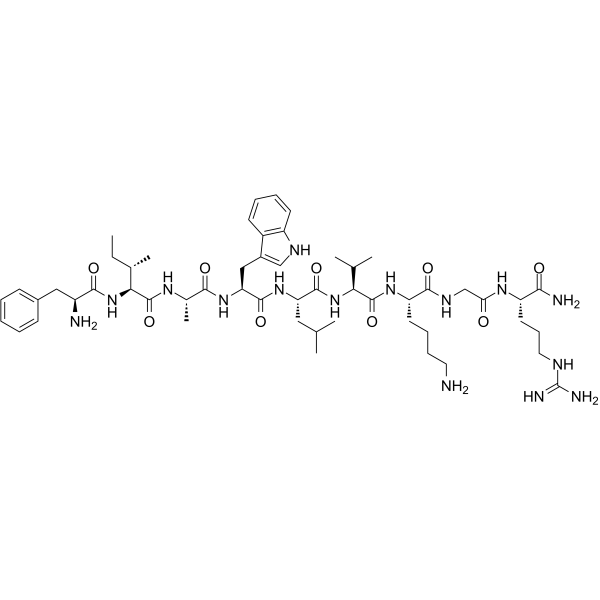
HY-P3101
GLP-1(28-36)amideAntioxidant -
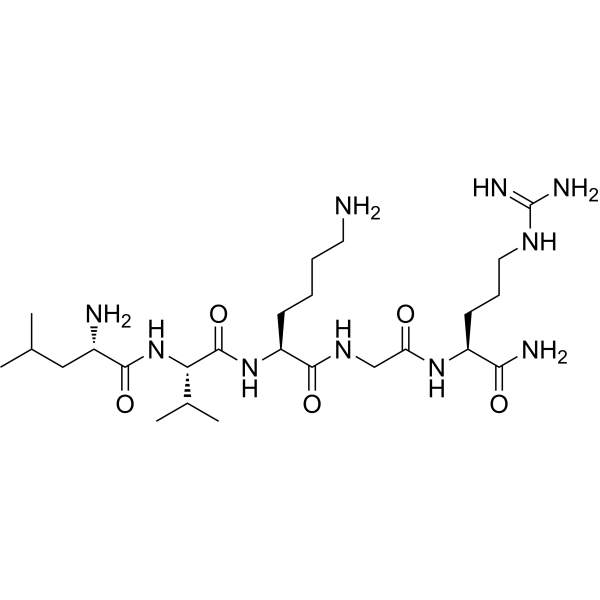
HY-P3102
GLP-1(32-36)amidePentapeptide -
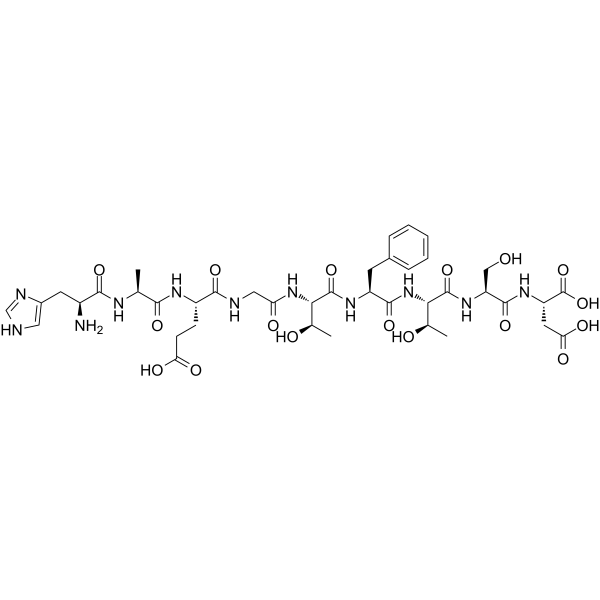
HY-P1226
HAEGTFTSDResidue Peptide of GLP-1 -
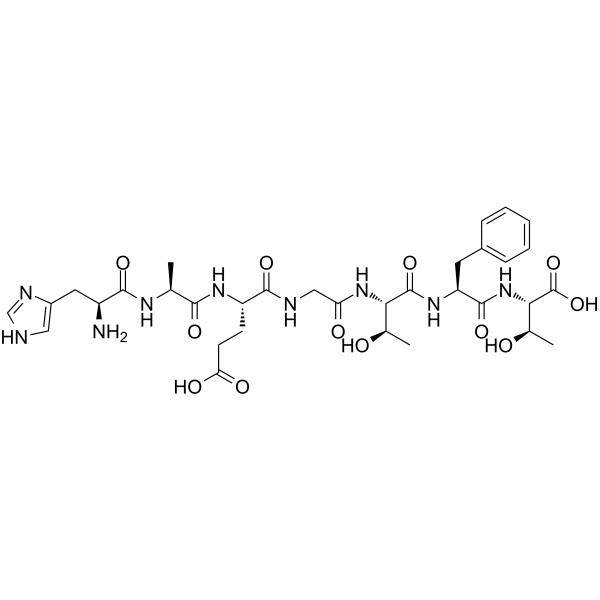
HY-P1228
HAEGTFT -

HY-P1223
Exendin-3/4 (59-86)Exendin-4 Derivative -
![[Des-His1,Glu9]-Glucagon amide](https://file.medchemexpress.com/product_pic/hy-p1143.gif)
HY-P1143
[Des-His1,Glu9]-Glucagon amideGlucagon Receptor Antagonist -
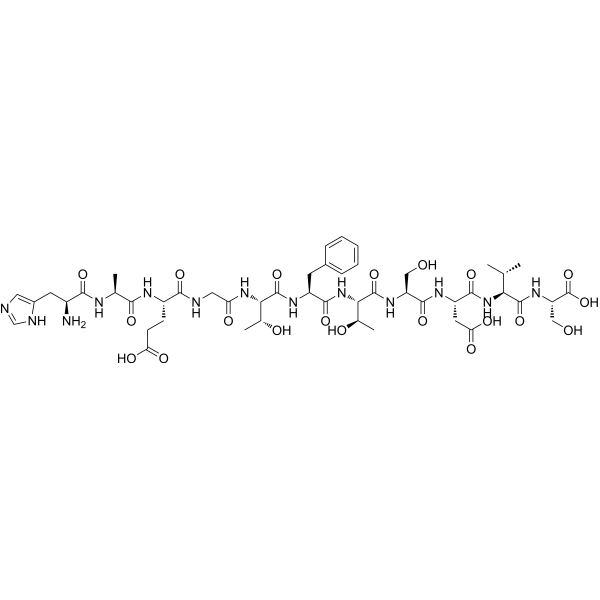
HY-P1224
HAEGTFTSDVSGLP-1 Derivative


Biological Activity
제품 설명
In Vitro
GLP-1 moiety from Dulaglutide ([Gly8,36,Glu22]-GLP-1 (7-37)), when incorporated into the optimized dulaglutide GLP-1-Fc fusion protein expressed in HEK293-EBNA cells, contributes to a 4-fold greater in vitro activity than the corresponding free DPP-4-protected GLP-1 analog[4].
MedChemExpress (MCE) has not independently confirmed the accuracy of these methods. They are for reference only. Further protocols information, click here.


Chemical Information
-
CAS No. 1197810-60-8
-
Appearance Solid
-
분자량 3314.62
-
화학식 C149H221N37O49
-
Color White to off-white
-
Synonyms
[Gly8,36,Glu22]-GLP-1 (7-37)
-
Sequence Shortening
HGEGTFTSDVSSYLEEQAAKEFIAWLVKGGG
-
선적
Room temperature in continental US; may vary elsewhere.
-
보관
Sealed storage, away from moisture
Powder -80°C 2 years -20°C 1 year * In solvent : -80°C, 6 months; -20°C, 1 month (sealed storage, away from moisture)


용액&용해도
In Vitro:
DMSO : 1.96 mg/mL (0.59 mM; ultrasonic and adjust pH to 2 with 1 M HCl; Hygroscopic DMSO has a significant impact on the solubility of product, please use newly opened DMSO)
H2O : < 0.1 mg/mL (insoluble)

Protocol
-
Research Protocol for Metabolic Diseases
AMP-activated protein kinase, AMPK, is a conserved cellular energy sensor that responds to reduced cellular energy status and coordinates metabolism by increasing ATP-generating catabolic pathways while suppressing ATP-consuming anabolic processes. In metabolic disease research, the AMPK pathway is experimentally relevant because it regulates hepatic lipid synthesis, fatty acid oxidation, glucose production, skeletal-muscle glucose disposal, mTORC1-linked biosynthesis, autophagy, mitochondrial homeostasis, and whole-body energy balance. The central pathway logic is that energy stress, metformin, exercise-like stimulation, or direct AMPK activators increase AMPKα Thr172 phosphorylation and downstream substrate phosphorylation, including ACC and RAPTOR. Phosphorylation of ACC suppresses lipogenesis and supports fatty acid oxidation, whereas phosphorylation of RAPTOR suppresses mTORC1 signaling and links cellular energy status to growth and protein synthesis control. The pathway is linked
-
Genotoxicity/Mutagenicity Study
The bacterial reverse mutation assay detects point mutations that restore amino-acid prototrophy in auxotrophic Salmonella typhimurium or Escherichia coli tester strains; after exposure to a test article, mutagenic activity is read out as an increased number of revertant colonies on minimal agar compared with the vehicle control. The assay uses tester strains with different mutation targets so that base-substitution and frameshift mutagens can be detected, and testing is performed with and without exogenous mammalian metabolic activation because some chemicals require biotransformation to become mutagenic.


순도&문서
-
Data Sheet (268 KB)
-
SDS (252 KB)
- English - EN (252 KB)
- Français - FR (252 KB)
- Deutsch - DE (252 KB)
- Norwegian - NO (252 KB)
- Español - ES (252 KB)
- Swedish - SV (252 KB)
- Italian - IT (252 KB)
- Korean - KR (252 KB)
- Portuguese - PT (252 KB)
-
Handling Instructions (2659 KB)
References
[1]. Celeste A, et al. Anti-PCSK9-GLP-1 fusions and methods for use. US20160369010 A1. 2016 Dec 22.
[2]. Xi L, et al. Dulaglutide accelerates diabetic wound healing by suppressing Nrf2-dependent ferroptosis in diabetic mice. Peptides. 2025 Mar;185:171366. [Content Brief]
[3]. Wang R, et al. Dulaglutide Alleviates LPS-Induced Injury in Cardiomyocytes. ACS omega. 2021 Mar 30;6(12):8271-8278. [Content Brief]
[4]. Jimenez-Solem E, et al. Dulaglutide, a long-acting GLP-1 analog fused with an Fc antibody fragment for the potential treatment of type 2 diabetes. Current opinion in molecular therapeutics. 2010 Dec;12(6):790-7. [Content Brief]
[5]. Lorenz M, et al. Recent progress and future options in the development of GLP-1 receptor agonists for the treatment of diabesity. Bioorganic & medicinal chemistry letters. 2013 Jul 15;23(14):4011-8. [Content Brief]

Calculators
Concentration (start) × Volume (start) = Concentration (final) × Volume (final)


GLP-1 moiety from Dulaglutide Related Classifications
HY-P1348 Related Classifications
 Powered by Bioz