



Lacto-N-tetraose
Based on 1 publication(s) in Google Scholar
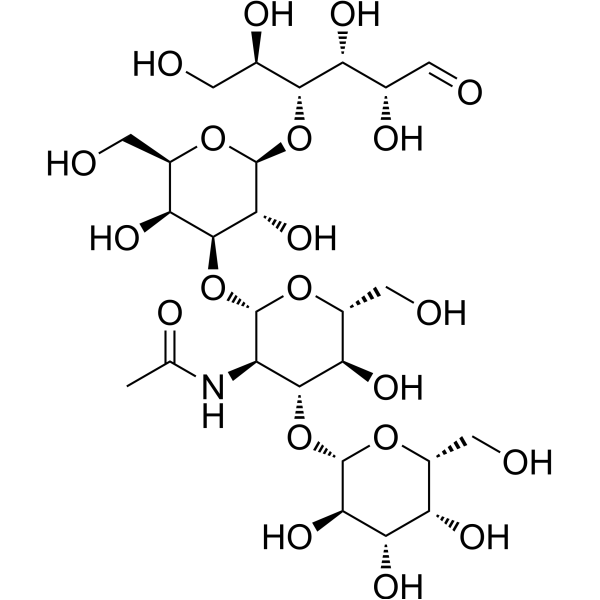
Lacto-N-tetraose is the significant core structure of human milk oligosaccharides (HMOs) naturally existing in human milk. Lacto-N-tetraose is consist of galactose, N-acetylglucosamine, and glucose moieties. Lacto-N-tetraose has prebiotic effect, immune regulatory effect, anti-inflammatory effects, intestinal cell responses regulatory effect, antibacterial activity and antiviral activity. Lacto-N-tetraose has been widely added to infant formula.
For research use only. We do not sell to patients.
- Purity : 99.91%
- CAS No.: 14116-68-8
- Formula: C26H45NO21
- Molecular Weight:707.63
-
Storage:Powder -20°C, 3 years ; In solvent -80°C, 6 months , -20°C, 1 month

To place orders, for customer services and technical support, please contact: MedChemExpress USA
Tel: 609-228-6898 E-mail: [email protected] [email protected]


-
 Biological Activity
-
Chemical Information
-
Solvent & Solubility
- Protocols
- Purity & Documentation
- References
-
 Help & FAQs


-
HY-N9445
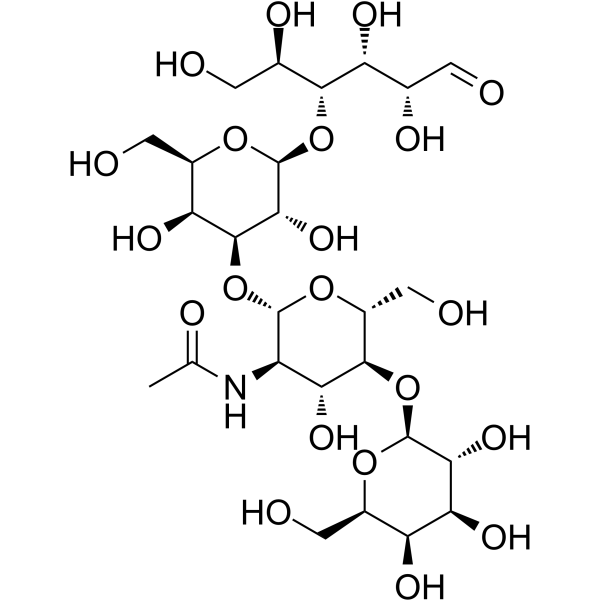
Lacto-N-neotetraoseEndogenous Metabolite -
HY-N10528
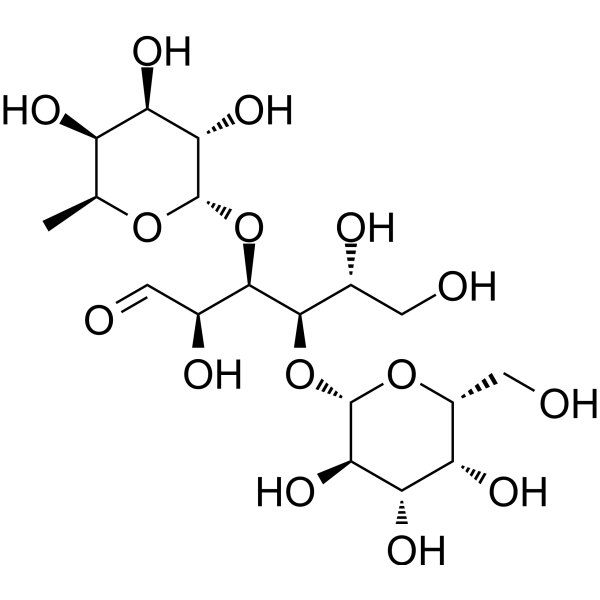
3-FucosyllactoseFucosylated Oligosaccharide -
HY-N9965
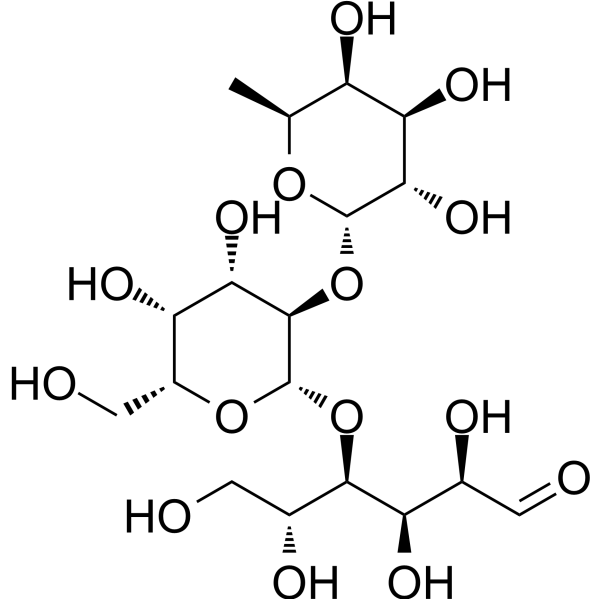
2'-FucosyllactoseImmunomodulator -
HY-W019806
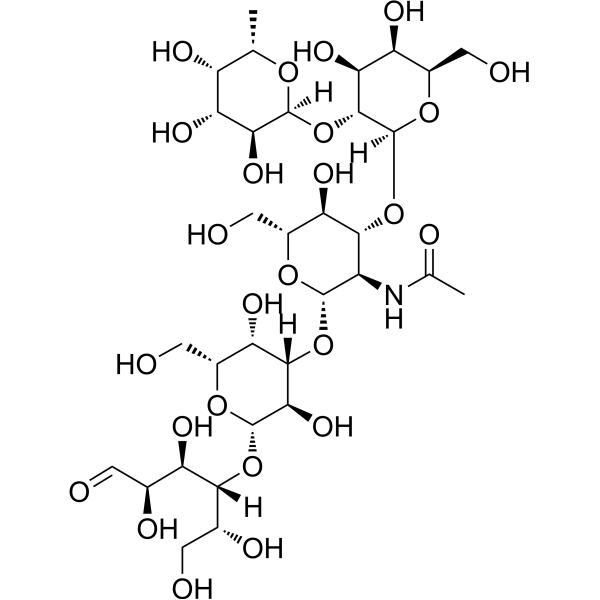
Lacto-N-fucopentaose IHuman Milk Oligosaccharide -
HY-N10521
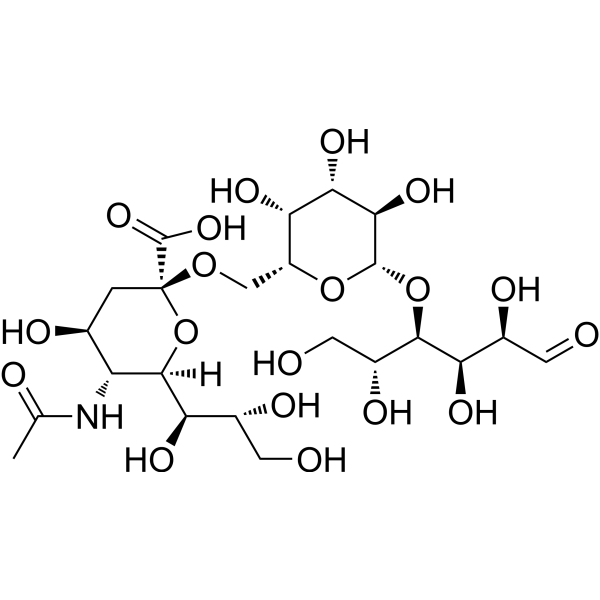
6'-SialyllactoseMilk Oligosaccharide -
HY-108065A
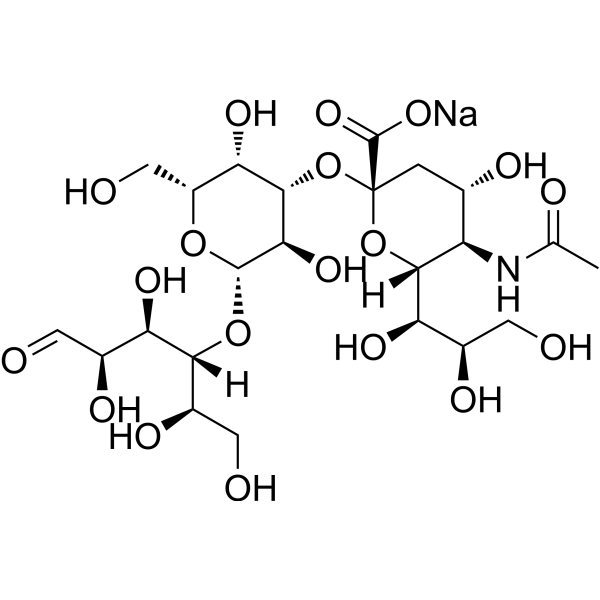
3'-Sialyllactose sodiumPrebiotic -
HY-137335
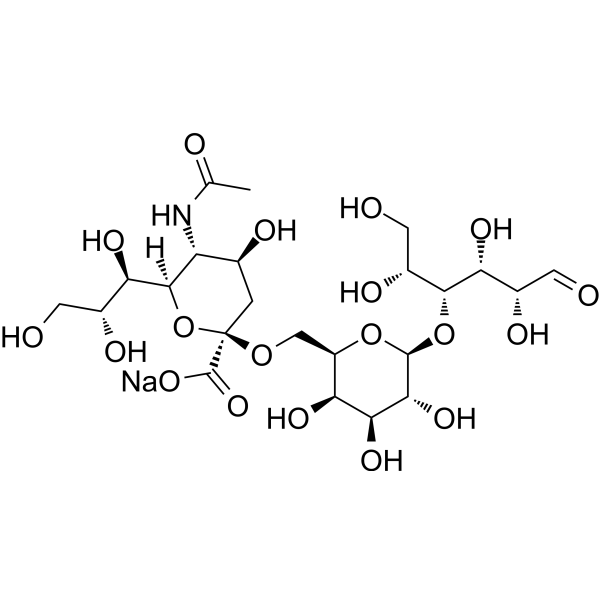
6'-Sialyllactose sodiumMilk Oligosaccharide -
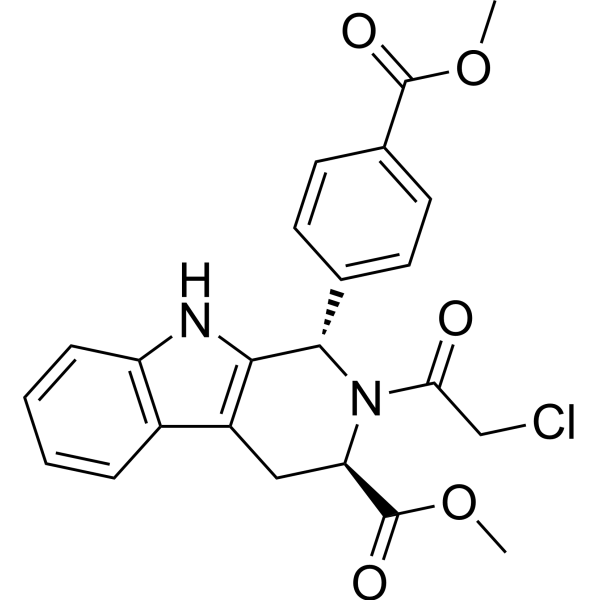
HY-100218A
RSL3GPX4 Inhibitor -

HY-N9448R
Lacto-N-tetraose (Standard)Oligosaccharides -
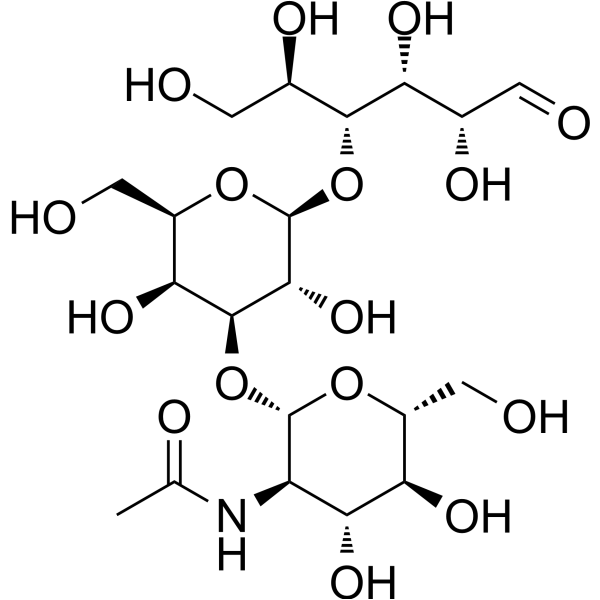
HY-N10514
Lacto-N-triose IIPolysaccharide -
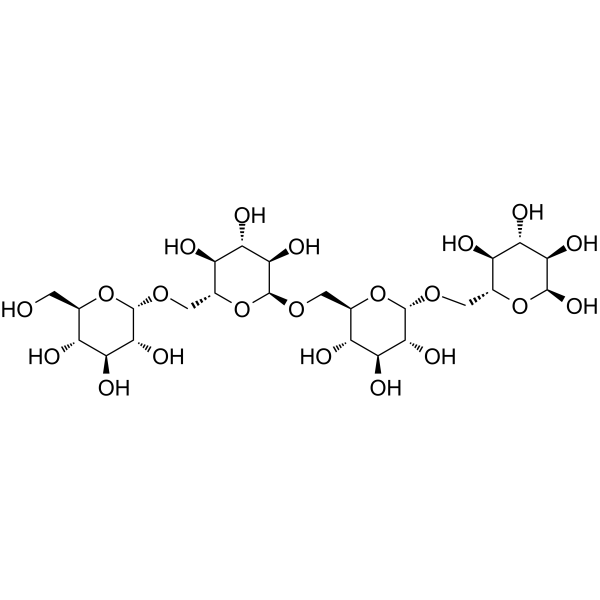
HY-N7948
IsomaltotetraosePrebiotic Oligosaccharide -
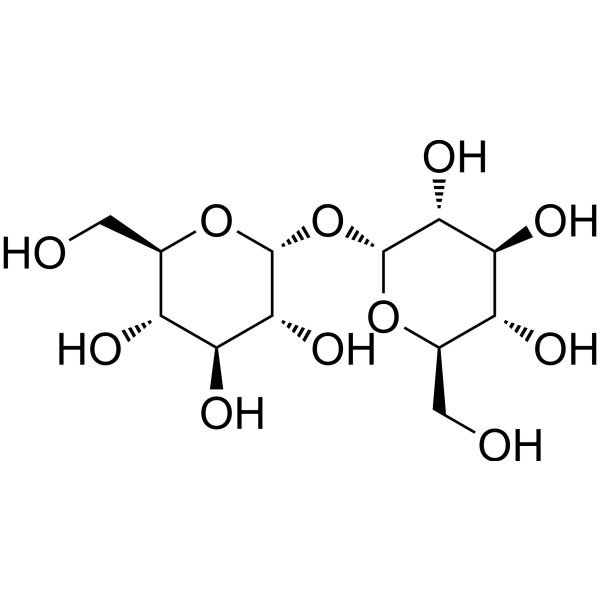
HY-N1132
D-(+)-TrehaloseDisaccharide
Publications Citing Use of MedChemExpress (MCE) Lacto-N-tetraose
More

Biological Activity
Description
In Vitro
HMOs exhibits antimicrobial and antibiofilm activity against Streptococcus agalactiae, antibiofilm activity against Methicillin-resistant Staphylococcus aureus (MRSA), and antimicrobial activity against both Acinetobacter baumannii and Clostridium difficile[2].
Lacto-N-tetraose (500-2000 μg/mL) does not cause clastogenic or aneugenic signs in human peripheral blood lymphocytes, nor increase the percentage of micronucleated cells[3].
MedChemExpress (MCE) has not independently confirmed the accuracy of these methods. They are for reference only. Further protocols information, click here.
In Vivo
MedChemExpress (MCE) has not independently confirmed the accuracy of these methods. They are for reference only.
-
Animal Model:Female neonatal SD rats (housed together with dam until weaning after 21 days)[3]
-
Dosage:1000, 25000 and 4000 mg/kg
-
Administration:p.o.; daily for 90 days
-
Result:Did not show toxicity on clinical observations, body weight, food consumption, development and maturation, clinical pathology, organ weights or histopathology.
Clinical Trial
| NCT Number | Sponsor | Condition | Start Date |
Phase

|
|---|---|---|---|---|
| NCT01329991 | Plexxikon| | 2011-05 | PHASE1 |


Chemical Information
-
CAS No. 14116-68-8
-
Appearance Solid
-
Molecular Weight 707.63
-
Formula C26H45NO21
-
Color White to off-white
-
SMILES
CC(N[C@H]([C@H]([C@@H]([C@H](O1)CO)O)O[C@@H]2O[C@@H]([C@@H]([C@@H]([C@H]2O)O)O)CO)[C@@H]1O[C@@H]3[C@H]([C@@H](O[C@@H]([C@@H]3O)CO)O[C@H]([C@H](O)CO)[C@H](O)[C@@H](O)C=O)O)=O
-
Structure Classification
-
Initial Source
-
Shipping
Room temperature in continental US; may vary elsewhere.
-
Storage
Powder -20°C 3 years In solvent -80°C 6 months -20°C 1 month


Publications (1)
-
Journal Impact Factor
-
Most Recent
-
Future Sci OA
The potential of human milk oligosaccharides in ameliorating traumatic brain injury-induced cognitive impairment in mice. [Abstract]2026 Dec;12(1):2622241. PMID: 41622772


Solvent & Solubility
In Vitro:
H2O : 100 mg/mL (141.32 mM; Need ultrasonic)
Please refer to the solubility information to select the appropriate solvent. Once prepared, please aliquot and store the solution to prevent product inactivation from repeated freeze-thaw cycles.
Storage method and period of stock solution: -80°C, 6 months; -20°C, 1 month. When stored at -80°C, please use it within 6 months. When stored at -20°C, please use it within 1 month.
* Note: If you choose water as the stock solution, please dilute it to the working solution, then filter and sterilize it with a 0.22 μm filter before use.
Please refer to the solubility information to select the appropriate solvent. Once prepared, please aliquot and store the solution to prevent product inactivation from repeated freeze-thaw cycles.
Storage method and period of stock solution: -80°C, 6 months; -20°C, 1 month. When stored at -80°C, please use it within 6 months. When stored at -20°C, please use it within 1 month.
* Note: If you choose water as the stock solution, please dilute it to the working solution, then filter and sterilize it with a 0.22 μm filter before use.
Concentration (start) × Volume (start) = Concentration (final) × Volume (final)

Protocols
-
Research Protocol for Infectious Diseases
Infectious-disease experiments test how pathogens interact with host barriers, innate immune receptors, inflammatory signaling, pathogen replication, and tissue injury; pattern-recognition receptors such as TLRs, RIG-I-like receptors, NOD-like receptors, and inflammasomes detect microbial molecules and activate NF-κB, interferon, and cytokine responses. The central hypothesis is that infection severity reflects the balance between pathogen burden and host response: protective inflammation restricts pathogen growth, whereas excessive or mislocalized inflammation contributes to tissue damage and disease phenotype. Unresolved questions include which host pathways are protective versus pathogenic, why some infection models fail to translate to human disease, and which combined readouts best predict clinically relevant infection outcomes.
-
Research Protocol for Inflammation-related Diseases
The NLRP3 inflammasome is a cytosolic innate immune signaling platform that integrates priming signals and danger-signal activation to promote caspase-1 activation, maturation of IL-1β and IL-18, and gasdermin D-mediated pyroptotic cell death. The core experimental logic is to determine whether inflammatory disease phenotypes are driven by increased NLRP3 expression, ASC-containing inflammasome assembly, caspase-1 cleavage, GSDMD cleavage, and extracellular release of IL-1β/IL-18 rather than by nonspecific cell injury alone. The pathway is strongly linked to inflammation-related disease phenotypes because monosodium urate crystals activate NALP3/NLRP3 inflammasome signaling in gout-like crystal inflammation, cholesterol crystals activate NLRP3 inflammasomes in atherogenesis models, and DSS-induced intestinal inflammation has been reported to involve NLRP3 inflammasome activity. However, experimental colitis studies also show context-dependent protective effects of NLRP3 inflammasome co
-
Bacterial live/dead nucleic-acid viability staining
The LIVE/DEAD bacterial viability staining method is based on differential permeability of nucleic-acid-binding fluorescent dyes, most commonly SYTO 9 and propidium iodide (PI), which enables discrimination of bacterial populations with intact versus compromised cytoplasmic membranes. SYTO 9 penetrates both intact and damaged bacterial membranes and binds nucleic acids to produce green fluorescence, whereas propidium iodide penetrates only cells with compromised membranes and fluoresces red while also reducing SYTO 9 signal through competitive binding and fluorescence interactions. The resulting fluorescence pattern is interpreted as a proxy for membrane integrity, which is widely used as an indicator of bacterial viability in microscopy, flow cytometry, and spectroscopic platforms. However, mechanistic studies show that SYTO 9 and PI interactions involve displacement and fluorescence resonance energy transfer effects, which can influence signal interpretation depending on dye ratios a


Purity & Documentation
-
Data Sheet (283 KB)
-
SDS (394 KB)
- English - EN (394 KB)
- Français - FR (394 KB)
- Deutsch - DE (394 KB)
- Norwegian - NO (394 KB)
- Español - ES (394 KB)
- Swedish - SV (394 KB)
- Italian - IT (394 KB)
- Korean - KR (394 KB)
- Portuguese - PT (394 KB)
-
Handling Instructions (2659 KB)
References
[1]. Zhu Y, et al. Physiological effects, biosynthesis, and derivatization of key human milk tetrasaccharides, lacto-N-tetraose, and lacto-N-neotetraose. Crit Rev Biotechnol. 2022 Jun;42(4):578-596. [Content Brief]
[2]. Craft KM, Thomas HC, Townsend SD. Sialylated variants of lacto-N-tetraose exhibit antimicrobial activity against Group B Streptococcus. Org Biomol Chem. 2019 Feb 13;17(7):1893-1900. [Content Brief]
[3]. Phipps KR, et al. Preclinical safety evaluation of the human-identical milk oligosaccharide lacto-N-tetraose. Regul Toxicol Pharmacol. 2018 Nov;99:260-273. [Content Brief]


Complete Stock Solution Preparation Table
Please refer to the solubility information to select the appropriate solvent. Once prepared, please aliquot and store the solution to prevent product inactivation from repeated freeze-thaw cycles.
Storage method and period of stock solution: -80°C, 6 months; -20°C, 1 month. When stored at -80°C, please use it within 6 months. When stored at -20°C, please use it within 1 month.
| Optional Solvent | Concentration Solvent Mass | 1 mg | 5 mg | 10 mg | 25 mg |
|---|---|---|---|---|---|
| H2O | 1 mM | 1.4132 mL | 7.0658 mL | 14.1317 mL | 35.3292 mL |
| 5 mM | 0.2826 mL | 1.4132 mL | 2.8263 mL | 7.0658 mL | |
| 10 mM | 0.1413 mL | 0.7066 mL | 1.4132 mL | 3.5329 mL | |
| 15 mM | 0.0942 mL | 0.4711 mL | 0.9421 mL | 2.3553 mL | |
| 20 mM | 0.0707 mL | 0.3533 mL | 0.7066 mL | 1.7665 mL | |
| 25 mM | 0.0565 mL | 0.2826 mL | 0.5653 mL | 1.4132 mL | |
| 30 mM | 0.0471 mL | 0.2355 mL | 0.4711 mL | 1.1776 mL | |
| 40 mM | 0.0353 mL | 0.1766 mL | 0.3533 mL | 0.8832 mL | |
| 50 mM | 0.0283 mL | 0.1413 mL | 0.2826 mL | 0.7066 mL | |
| 60 mM | 0.0236 mL | 0.1178 mL | 0.2355 mL | 0.5888 mL | |
| 80 mM | 0.0177 mL | 0.0883 mL | 0.1766 mL | 0.4416 mL | |
| 100 mM | 0.0141 mL | 0.0707 mL | 0.1413 mL | 0.3533 mL |
* Note: If you choose water as the stock solution, please dilute it to the working solution, then filter and sterilize it with a 0.22 μm filter before use.


Lacto-N-tetraose Related Classifications
HY-N9448 Related Classifications
 Powered by Bioz