



N-Acetyltaurine

Based on 1 Customer Validation
N‑acetyltaurine is an orally active endogenous sulfonate that is synthesized from taurine and acetate in the renal cortex. N‑acetyltaurine supports bacterial growth as a sole fixed nitrogen or carbon source. N‑acetyltaurine buffers acetyl moieties of mitochondrial acetyl‑CoA in skeletal muscle. N‑acetyltaurine reduces food intake and body weight in obese and lean wild‑type mice in a GFRAL‑dependent manner. N‑acetyltaurine can be used for the research of diet‑induced obesity, hyperacetatemia and diabetes.
For research use only. We do not sell to patients.
- Purity : 98.71%
- CAS No.: 19213-70-8
- Formula: C4H9NO4S
- Molecular Weight:167.18
-
Storage:Powder -20°C, 3 years , 4°C, 2 years ; In solvent -80°C, 6 months , -20°C, 1 month


To place orders, for customer services and technical support, please contact: MedChemExpress USA
Tel: 609-228-6898 E-mail: [email protected] [email protected]


-
 Biological Activity
-
Chemical Information
-
Solvent & Solubility
- Protocols
- Purity & Documentation
- References
-
 Help & FAQs


-
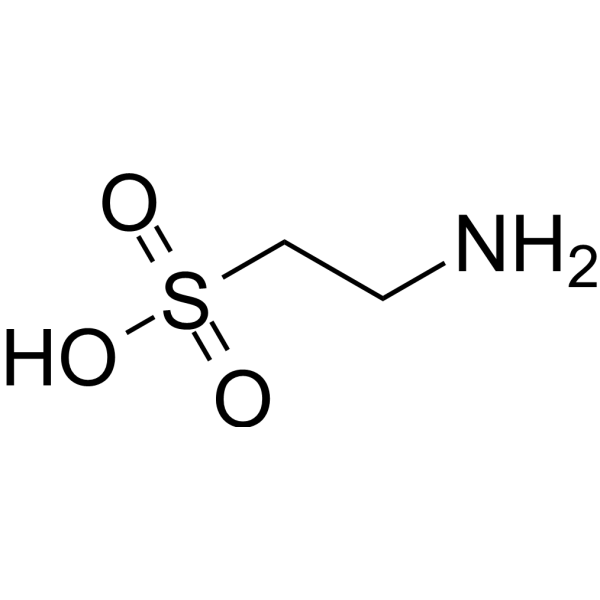
HY-B0351
TaurineAutophagy Inducer -
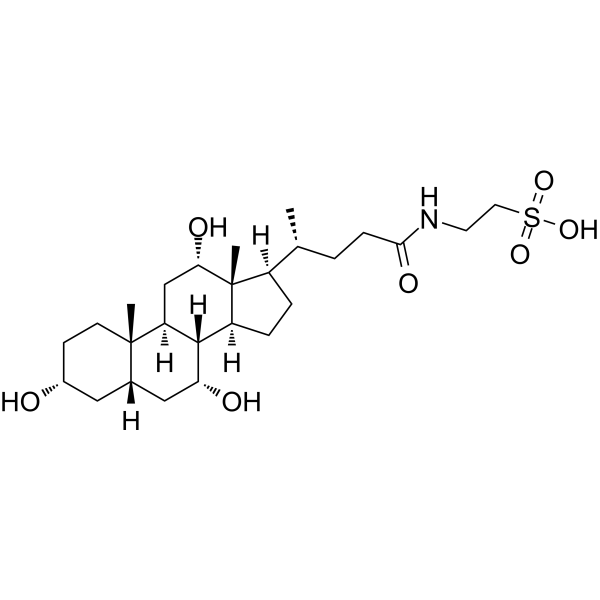
HY-B1788
Taurocholic acidImmunoregulation Agent -
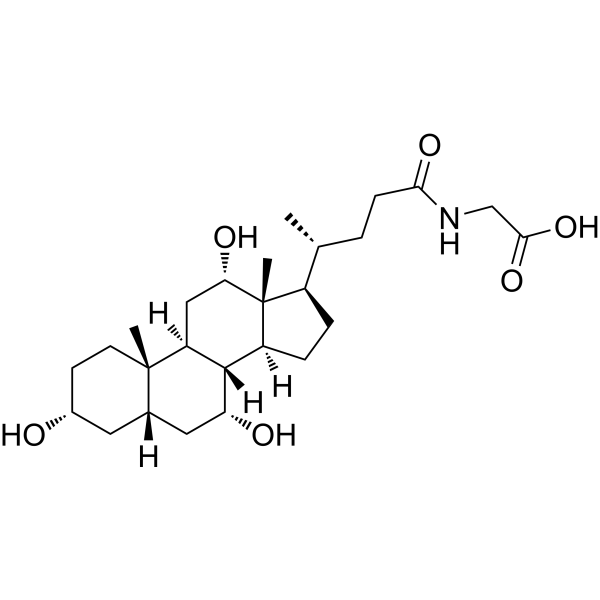
HY-N1423
Glycocholic acidBile Acid Derivative -

HY-D0842
BSA ProteinGlobular Protein -
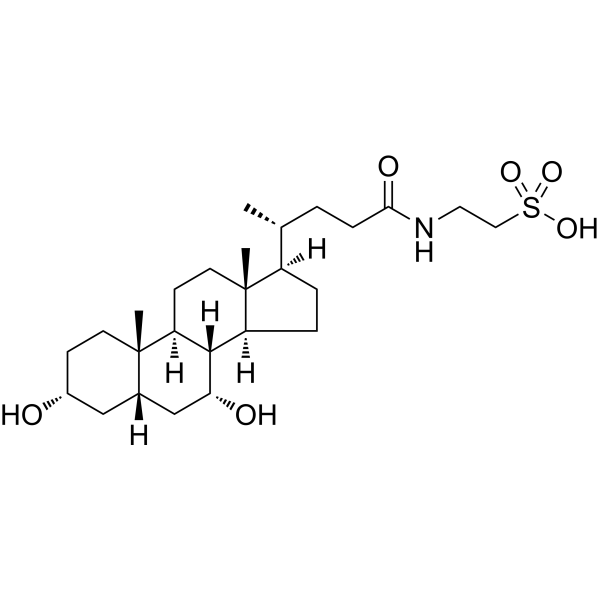
HY-N2027
Taurochenodeoxycholic acidEndogenous Metabolite -
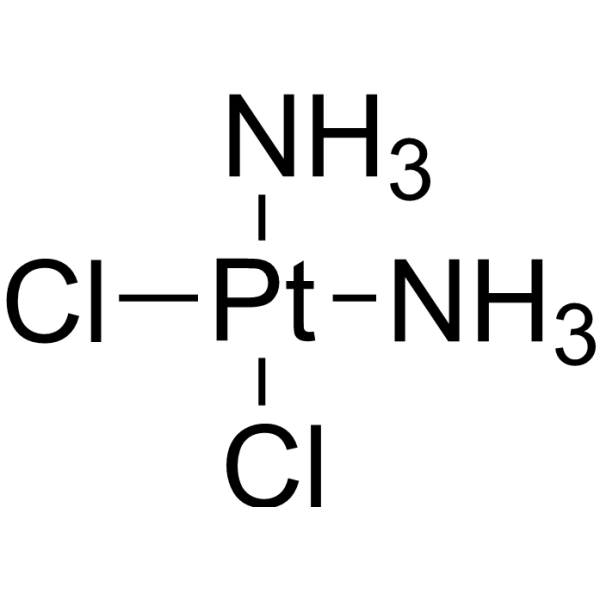
HY-17394
CisplatinDNA Alkylator -
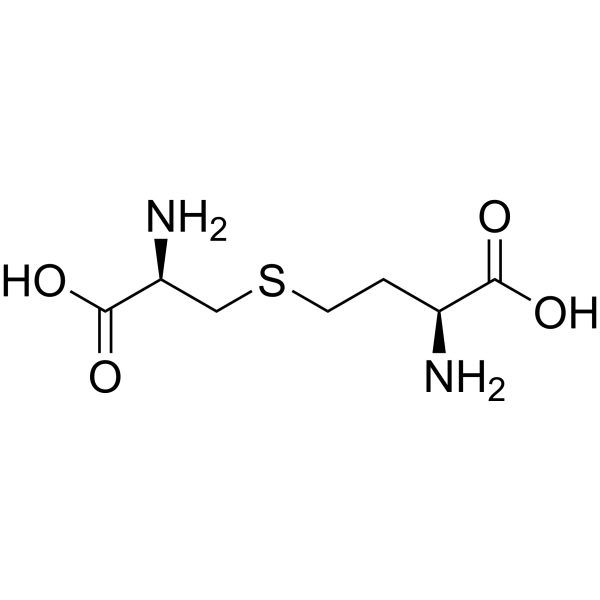
HY-W009749
L-Cystathionine -
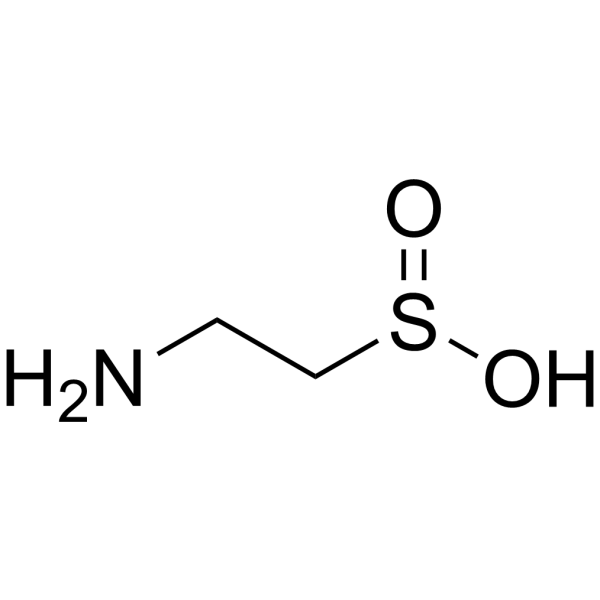
HY-100803
HypotaurineAntioxidant -
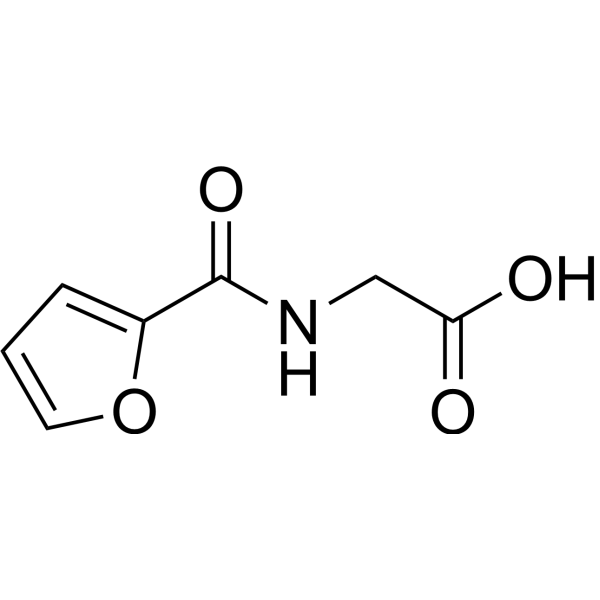
HY-113340
2-FuroylglycineEndogenous Metabolite -
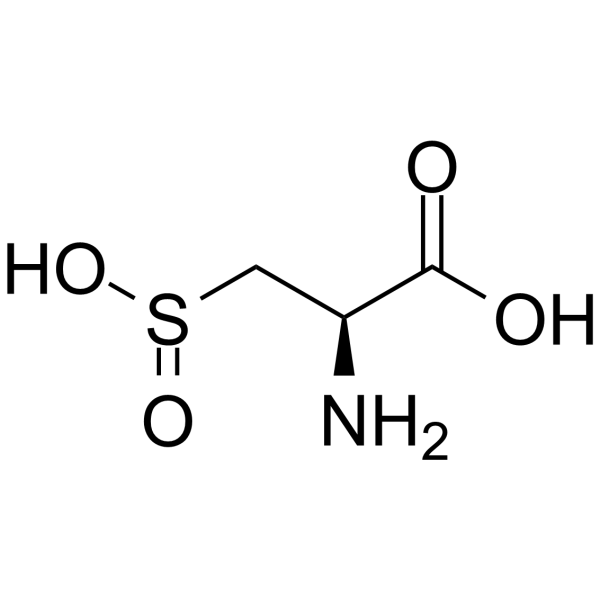
HY-100804
L-Cysteinesulfinic acidmGluR Agonist -
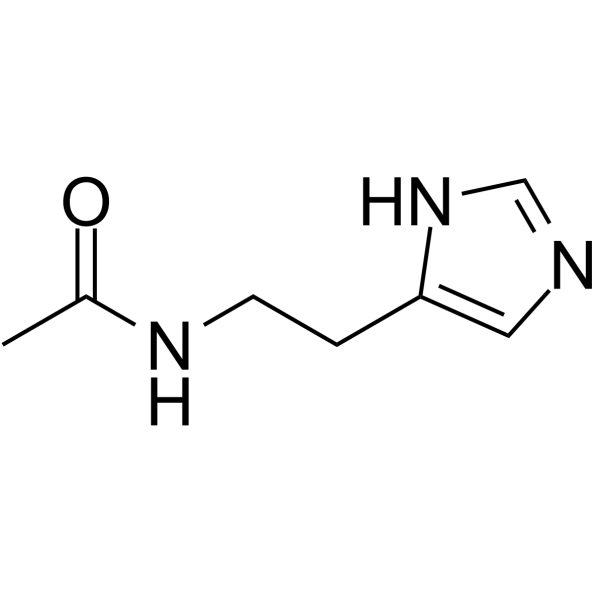
HY-112175
N-AcetylhistamineEndogenous Metabolite
All Endogenous Metabolite Isoforms
More

Biological Activity
Description
IC50 & Target
|
GDF15 |
In Vitro
N‑acetyltaurine (100 μM; 1 h) is hydrolyzed into taurine and acetate by recombinant mouse PTER protein, and shows high hydrolytic activity in HEK293T cells overexpressing PTER but no activity in PTER‑KO HEK293T cells[2].
N‑acetyltaurine is synthesized from taurine and acetate in mouse renal cortex homogenate and in primary human skeletal muscle cells[3].
MedChemExpress (MCE) has not independently confirmed the accuracy of these methods. They are for reference only.
In Vivo
N-acetyltaurine (15-50 mg/kg; i.p.; daily; 7 days) reduces body weight and food intake in healthy chow-fed male mice[2].
N-acetyltaurine (15 mg/kg; i.p.; daily; 7 days) reduces body weight and food intake in DIO male mice[2].
N-acetyltaurine (15 mg/kg; i.p.; daily; 7 days) reduces body weight and food intake in DIO male Mc4r KO mice, indicating the effects of N-acetyltaurine do not require functional MC4R receptors[2].
N-acetyltaurine (50-500 mg/kg; p.o.; daily; 7 days) administered orally to DIO male mice reduces body weight and food intake in a dose-dependent manner, with significant effects observed at doses of 150 mg/kg and 500 mg/kg daily for 7 days, and achieves measurable plasma levels following oral gavage[2].
N-Acetyltaurine levels were increased in response to Triacetin (HY-B0896)-induced hyperacetatemia[5].
N-Acetyltaurine levels were significantly increased in response to endogenous hyperacetatemia from Streptozotocin (HY-13753)-induced diabetes[5].
MedChemExpress (MCE) has not independently confirmed the accuracy of these methods. They are for reference only.
-
Animal Model:C57BL/6J (male, 26-28 weeks old, diet-induced obese)[2]
-
Dosage:1 mg/kg; 5 mg/kg; 15 mg/kg; 50 mg/kg
-
Administration:i.p.; daily; 7 days
-
Result:Reduced body weight change and food intake in a dose-dependent manner at 15 mg/kg and 50 mg/kg compared with vehicle.
-
Animal Model:C57BL/6J (male, 19-21 weeks old, diet-induced obese)[2]
-
Dosage:15 mg/kg
-
Administration:i.p.; daily; 7 days
-
Result:Reduced body weight change and food intake significantly compared with vehicle.
-
Animal Model:C57BL/6J (male, 13 weeks old, chow-fed)[2]
-
Dosage:15 mg/kg; 50 mg/kg
-
Administration:i.p.; daily; 7 days
-
Result:Reduced body weight change nd food intake significantly at 50 mg/kg compared with vehicle.
-
Animal Model:C57BL/6J (male, 16 weeks old, diet-induced obese)[2]
-
Dosage:15 mg/kg
-
Administration:i.p.; daily; 7 days
-
Result:Reduced body weight gain and food intake significantly.
-
Animal Model:C57BL/6J (male, 3 months old, diet-induced obese)[2]
-
Dosage:50 mg/kg; 150 mg/kg; 500 mg/kg
-
Administration:p.o.; daily; 7 days
-
Result:Increased plasma N-acetyltaurine levels dose-dependently.
Reduced body weight gain and food intake significantly at 150 mg/kg and 500 mg/kg.
-
Animal Model:Mc4r KO (C57BL/6J background, male, 3-4 months old, diet-induced obese)[2]
-
Dosage:15 mg/kg
-
Administration:i.p.; daily; 7 days
-
Result:Reduced body weight change and food intake significantly compared with vehicle, similar to effects observed in wild-type DIO mice.


Chemical Information
-
CAS No. 19213-70-8
-
Appearance Solid
-
Molecular Weight 167.18
-
Formula C4H9NO4S
-
Color White to off-white
-
SMILES
O=C(C)NCCS(=O)(O)=O
-
Shipping
Room temperature in continental US; may vary elsewhere.
-
Storage
Powder -20°C 3 years 4°C 2 years In solvent -80°C 6 months -20°C 1 month


Solvent & Solubility
In Vitro:
DMSO : 175 mg/mL (1046.78 mM; Need ultrasonic; Hygroscopic DMSO has a significant impact on the solubility of product, please use newly opened DMSO)
H2O : 175 mg/mL (1046.78 mM; Need ultrasonic)
Please refer to the solubility information to select the appropriate solvent. Once prepared, please aliquot and store the solution to prevent product inactivation from repeated freeze-thaw cycles.
Storage method and period of stock solution: -80°C, 6 months; -20°C, 1 month. When stored at -80°C, please use it within 6 months. When stored at -20°C, please use it within 1 month.
* Note: If you choose water as the stock solution, please dilute it to the working solution, then filter and sterilize it with a 0.22 μm filter before use.
Please refer to the solubility information to select the appropriate solvent. Once prepared, please aliquot and store the solution to prevent product inactivation from repeated freeze-thaw cycles.
Storage method and period of stock solution: -80°C, 6 months; -20°C, 1 month. When stored at -80°C, please use it within 6 months. When stored at -20°C, please use it within 1 month.
* Note: If you choose water as the stock solution, please dilute it to the working solution, then filter and sterilize it with a 0.22 μm filter before use.
Concentration (start) × Volume (start) = Concentration (final) × Volume (final)


Purity & Documentation
-
Data Sheet (278 KB)
-
SDS (394 KB)
- English - EN (394 KB)
- Français - FR (394 KB)
- Deutsch - DE (394 KB)
- Norwegian - NO (394 KB)
- Español - ES (394 KB)
- Swedish - SV (394 KB)
- Italian - IT (394 KB)
- Korean - KR (394 KB)
- Portuguese - PT (394 KB)
-
Handling Instructions (2659 KB)
References
[1]. Mayer J, et al. N-acetyltaurine dissimilated via taurine by Delftia acidovorans NAT. Arch Microbiol. 2006;186(1):61-67. [Content Brief]
[2]. Wei W, et al. PTER is a N-acetyltaurine hydrolase that regulates feeding and obesity. Nature. 2024;633(8028):182-188. [Content Brief]
[3]. Miyazaki T, et al. N-acetyltaurine and Acetylcarnitine Production for the Mitochondrial Acetyl-CoA Regulation in Skeletal Muscles during Endurance Exercises. Metabolites. 2021;11(8):522. Published 2021 Aug 6. [Content Brief]
[4]. Luginbühl M, et al. N-Acetyltaurine as a novel urinary ethanol marker in a drinking study. Anal Bioanal Chem. 2016;408(26):7529-7536. [Content Brief]
[5]. Mao Q, et al. Characterization of Urinary N-Acetyltaurine as a Biomarker of Hyperacetatemia in Mice. Metabolites. 2024;14(6):322. Published 2024 Jun 7. [Content Brief]


Complete Stock Solution Preparation Table
Please refer to the solubility information to select the appropriate solvent. Once prepared, please aliquot and store the solution to prevent product inactivation from repeated freeze-thaw cycles.
Storage method and period of stock solution: -80°C, 6 months; -20°C, 1 month. When stored at -80°C, please use it within 6 months. When stored at -20°C, please use it within 1 month.
| Optional Solvent | Concentration Solvent Mass | 1 mg | 5 mg | 10 mg | 25 mg |
|---|---|---|---|---|---|
| DMSO / H2O | 1 mM | 5.9816 mL | 29.9079 mL | 59.8158 mL | 149.5394 mL |
| 5 mM | 1.1963 mL | 5.9816 mL | 11.9632 mL | 29.9079 mL | |
| 10 mM | 0.5982 mL | 2.9908 mL | 5.9816 mL | 14.9539 mL | |
| 15 mM | 0.3988 mL | 1.9939 mL | 3.9877 mL | 9.9693 mL | |
| 20 mM | 0.2991 mL | 1.4954 mL | 2.9908 mL | 7.4770 mL | |
| 25 mM | 0.2393 mL | 1.1963 mL | 2.3926 mL | 5.9816 mL | |
| 30 mM | 0.1994 mL | 0.9969 mL | 1.9939 mL | 4.9846 mL | |
| 40 mM | 0.1495 mL | 0.7477 mL | 1.4954 mL | 3.7385 mL | |
| 50 mM | 0.1196 mL | 0.5982 mL | 1.1963 mL | 2.9908 mL | |
| 60 mM | 0.0997 mL | 0.4985 mL | 0.9969 mL | 2.4923 mL | |
| 80 mM | 0.0748 mL | 0.3738 mL | 0.7477 mL | 1.8692 mL | |
| 100 mM | 0.0598 mL | 0.2991 mL | 0.5982 mL | 1.4954 mL |
* Note: If you choose water as the stock solution, please dilute it to the working solution, then filter and sterilize it with a 0.22 μm filter before use.


N-Acetyltaurine Related Classifications
HY-W587486 Related Classifications
 Powered by Bioz