



ALK3
ALK3, also known as BMPR1A, is a type I bone morphogenetic protein (BMP) receptor that mediates signaling within the TGF-β/BMP superfamily and functions through receptor complexes composed of type I and type II receptors[1][2]. Upon BMP ligand binding, activated receptor complexes phosphorylate BMP-responsive SMAD1/5/8, thereby transmitting canonical signaling and coordinating additional non-canonical pathways involved in development and tissue homeostasis[1][2]. Mechanistically, ALK3-dependent BMP signaling regulates cell fate determination, skeletal development, and postnatal bone formation, and global loss of ALK3 results in embryonic lethality, highlighting its essential biological role[2][1]. In disease and experimental settings, dysregulated BMP signaling is linked to multiple developmental and skeletal abnormalities, while genetic mouse models with altered BMP pathway activity have provided valuable systems for studying disease mechanisms and therapeutic intervention[1][1]. ALK3 also contributes to vascular biology, where BMP signaling through ALK3/BMPR1A and SMAD1/5 has been shown to control venous identity in vivo[2]. Compared with related BMP type I receptors, ALK3 shares some functional similarities with ALK2 but displays distinct developmental requirements and broader roles in tissue morphogenesis, whereas it also exhibits substantial sequence similarity to ALK6[2]. For experimental applications, small-molecule BMP type I receptor inhibitors, including compounds that inhibit ALK3 kinase activity, are widely used to modulate BMP signaling and investigate BMP-dependent biological processes and disease models[2][5].
-
ALK3 Related Products (12)
Related Products (12)

-
Recombinant Proteins (4)
- 1
-
Dorsomorphin
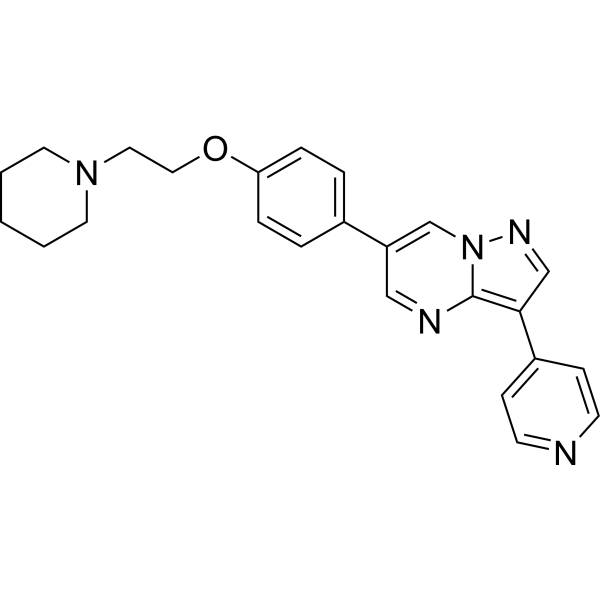 0 ImagesSynonyms: BML-275
-
LDN193189
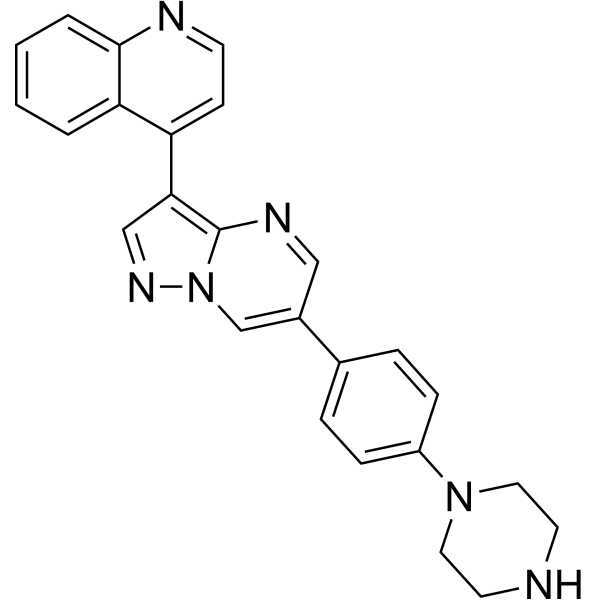 0 ImagesSynonyms: DM-3189LDN193189 (DM-3189) is a potent selective BMP type I receptor (BMP I) inhibitor. LDN193189 efficiently inhibits transcriptional activity of the BMP type I receptors ALK2 and ALK3 with IC50 values of 5 nM and 30 nM, respectively. LDN193189 can be used for the research of bone morphogenetic protein signalling, such as fibrodysplasia ossificans progressiva.
-
Dorsomorphin dihydrochloride
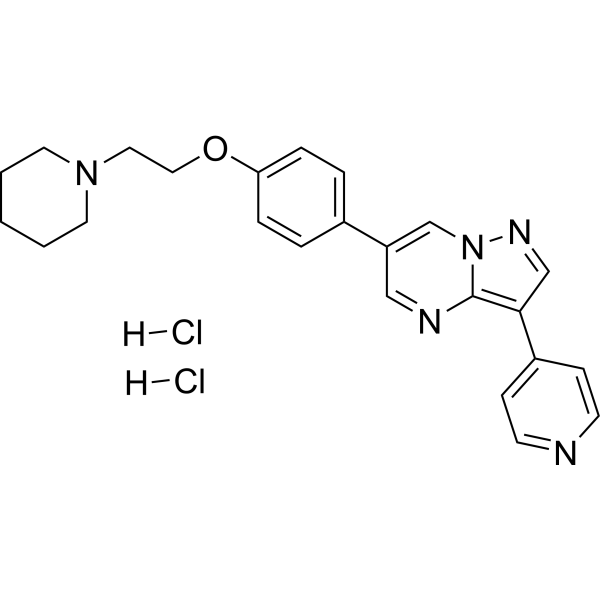 0 ImagesSynonyms: Compound C dihydrochloride; BML-275 dihydrochlorideDorsomorphin (Compound C) dihydrochloride is a potent, selective and ATP-competitive AMPK inhibitor, with a Ki of 109 nM. Dorsomorphin dihydrochloride inhibits BMP pathway by targeting the type I receptors ALK2, ALK3, and ALK6. Dorsomorphin dihydrochloride can reverse autophagy activation and anti-inflammatory effect of Urolithin A (HY-100599).
-
LDN193189 Tetrahydrochloride
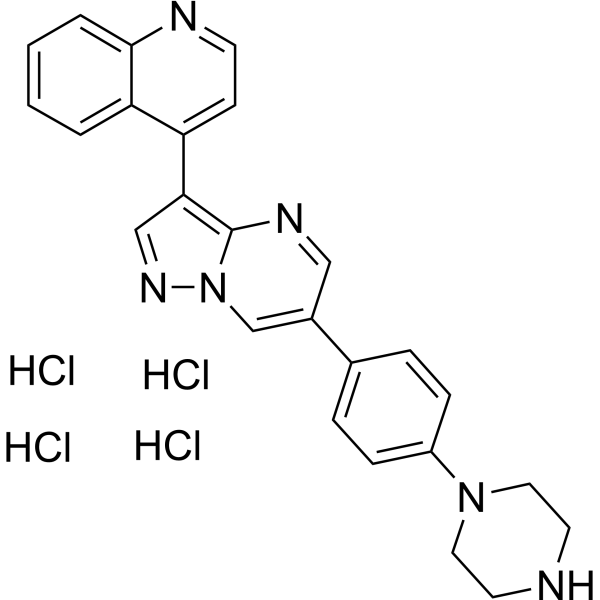 0 ImagesSynonyms: DM-3189 TetrahydrochlorideLDN193189 (DM-3189) Tetrahydrochloride is a potent selective BMP type I receptor (BMP I) inhibitor. LDN193189 efficiently inhibits transcriptional activity of the BMP type I receptors ALK2 and ALK3 with IC50 values of 5 nM and 30 nM, respectively. LDN193189 can be used for the research of bone morphogenetic protein signalling, such as fibrodysplasia ossificans progressiva.
-
LDN-214117
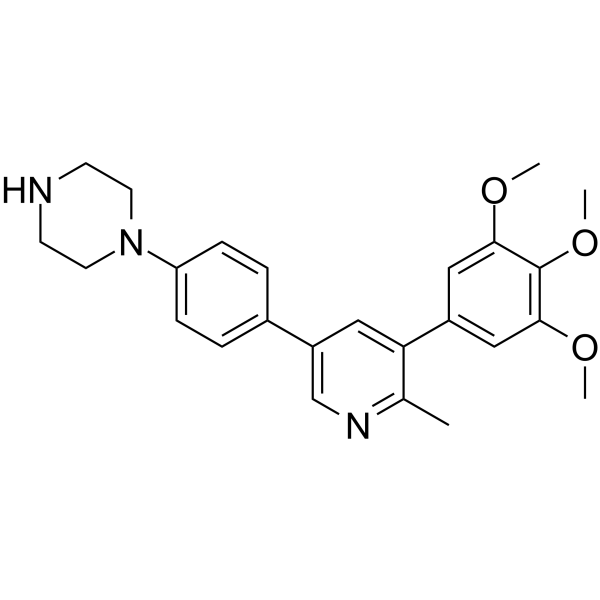 0 ImagesLDN-214117 is an orally active ALK2 inhibitor with well-tolerated and good brain penetration. LDN-214117 has a high selectivity and low cytotoxicity for ALK2 with an IC50 value of 24 nM. LDN-214117 also is a specific bone morphogenetic proteins (BMPs) signaling inhibitor and has relatively selective inhibition for BMP6 with an IC50 value of 100 nM. LDN-214117 can be used for the research of fibrodysplasia ossificans progressiva (FOP), diffuse intrinsic pontine glioma (DIPG) .
-
HM-279
 0 ImagesCat. No.: HY-185430CAS No.: 3039954-64-5HM-279 is a potent and orally active ALK5 inhibitor with an IC50 of 4.7 nM. HM-279 shows cross-reactivity with ALK7 (IC50 = 6.8 nM), but HM-279 has fair to good selectivity against other TGF-β receptor family kinases, with 4.5-693-fold selectivity. HM-279 demonstrates antitumor activity in vivo through CD8+ T cell immunity. HM-279 can be used for the research of colon cancer.
-
LDN-212854
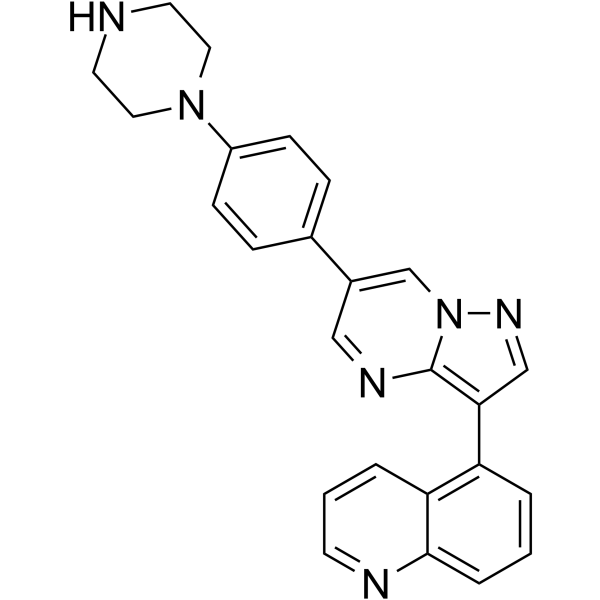 0 ImagesLDN-212854 is a bone morphogenetic protein (BMP) inhibitor that potently inhibits ALK2 (IC50: 1.3 nM). LDN-212854 also inhibits ALK1 (IC50: 2.40 nM). LDN-212854 can be used in the research of fibrodysplasia ossificans progressive and cancers, such as hepatocellular carcinoma (HCC).
-
THR-123 TFA
 0 ImagesCat. No.: HY-P11354APurity: 99.91%THR-123 TFA is an orally active ALK3 peptide agonist. THR-123 TFA has a relatively weak binding to ALK2, but does not bind to ALK6. THR-123 TFA suppresses inflammation, Apoptosis and the epithelial-to-mesenchymal transition program and reverses established fibrosis in five mouse models of acute and chronic renal injury. THR-123 TFA can be used for the study of kidney fibrosis.
-
CDD-2789
 0 ImagesCat. No.: HY-173149CAS No.: 3052084-77-9
-
THR-123
 0 ImagesCat. No.: HY-P11354THR-123 is an orally active ALK3 peptide agonist. THR-123 has a relatively weak binding to ALK2, but does not bind to ALK6. THR-123 suppresses inflammation, apoptosis and the epithelial-to-mesenchymal transition program and reverses established fibrosis in five mouse models of acute and chronic renal injury. THR-123 can be used for the study of kidney fibrosis.
- 1




