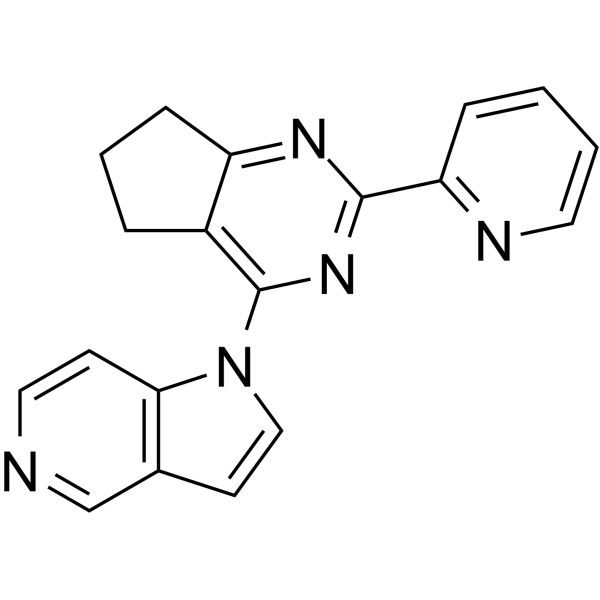
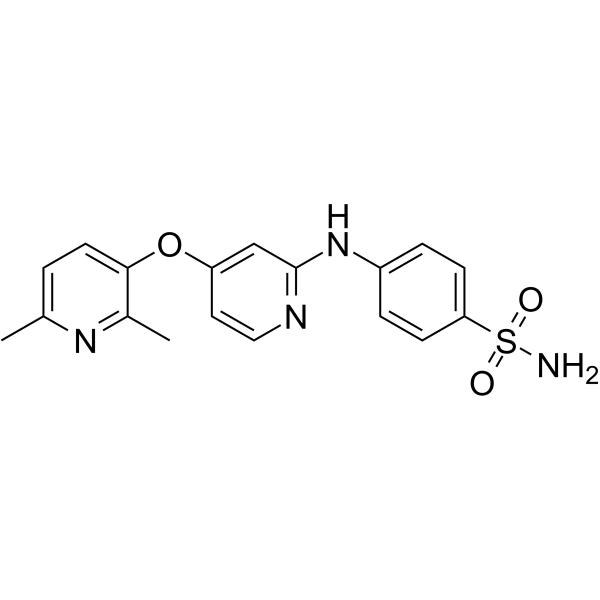
ALK4
ALK4, also known as activin receptor type-1B (ACVR1B), is a type I serine/threonine kinase receptor of the transforming growth factor-β (TGF-β) superfamily that functions as a key transducer of activin signaling[1][2]. Upon ligand engagement, activin first binds type II receptors, including ACVR2A or ACVR2B, which subsequently recruit and activate ALK4, leading to downstream phosphorylation of SMAD2 and SMAD3 and regulation of transcriptional programs involved in cell growth, differentiation, and homeostasis[1][2]. Mechanistically, ALK4 also mediates signaling induced by activin-like ligands and participates in canonical activin-SMAD signaling pathways that govern diverse physiological processes[1][2]. In experimental and disease-related contexts, genetic and functional studies have linked ACVR1B to tumor biology, including the identification of somatic ACVR1B mutations in pancreatic carcinoma, supporting a role for disrupted ALK4 signaling in cancer-associated pathways[3]. Compared with related type I receptors such as ALK5 (TGFBR1) and ALK7 (ACVR1C), ALK4 primarily functions as a receptor for activin-family ligands and therefore represents a distinct entry point into activin-dependent signaling networks[1][2]. For experimental applications, pharmacological blockade of ALK4 signaling is frequently achieved using SB-431542, a small-molecule inhibitor that targets ALK4 together with ALK5 and ALK7 and is widely used to interrogate activin/TGF-β pathway function in cellular models[4].
All Product Categories
-
ALK4 Related Products (10)
Related Products (10)

-
Recombinant Proteins (7)
-
SB-431542
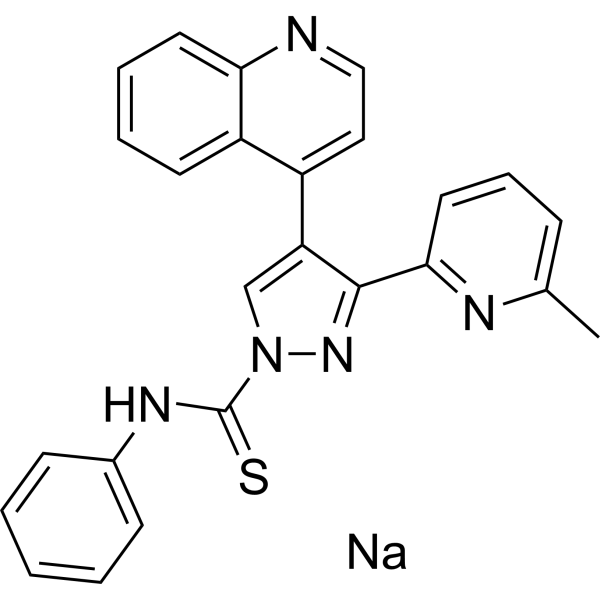
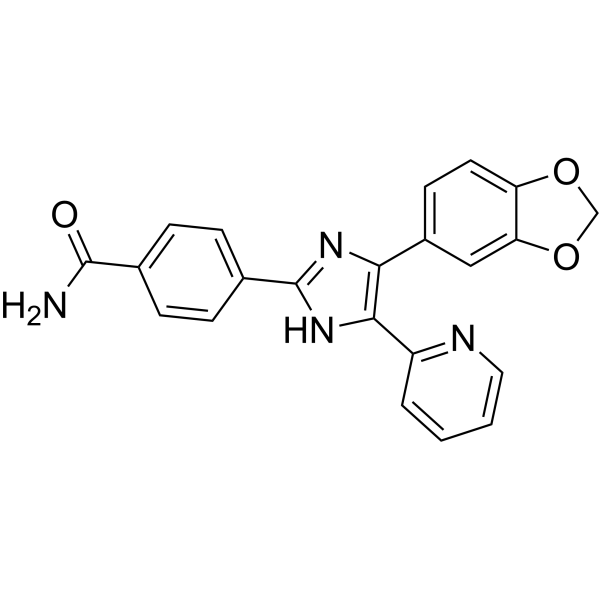 0 ImagesSB-431542 is a TGF-β receptor kinase inhibitor (TRKI). SB-431542 has inhibitory activity for ALK4, ALK5 and ALK7 with IC50 values of 1 μM, 0.75 μM and 2 μM, respectively. SB-431542 also inhibits TGF-β-induced transcription, gene expression, apoptosis, and growth suppression. SB-431542 can be used for the research of cancer and signal transduction pathways.
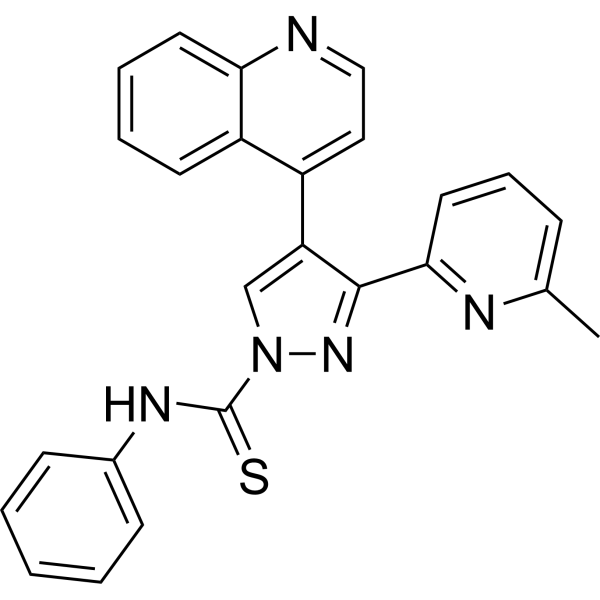
-
SB-431542 (GMP)
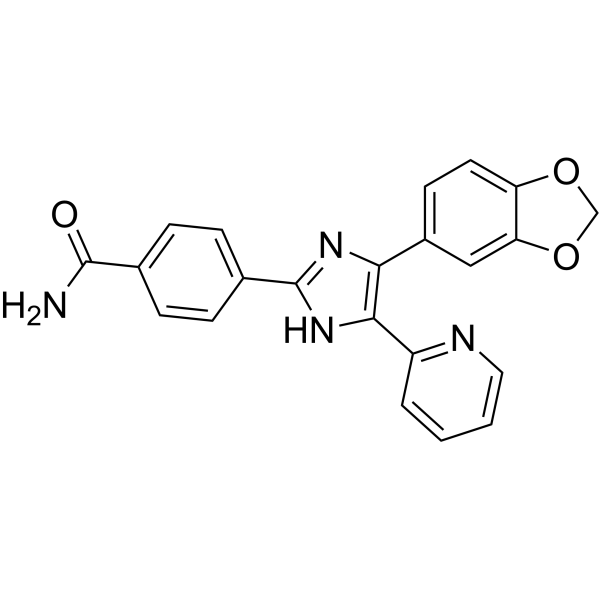 0 ImagesCat. No.: HY-10431GCAS No.: 301836-41-9SB-431542 (GMP) is SB-431542 (HY-10431) produced by using GMP guidelines. GMP small molecules works appropriately as an auxiliary reagent for cell therapy manufacture. SB-431542 is a TGF-β receptor kinase inhibitor (TRKI) in SMAD signaling.
-
LDN-212854
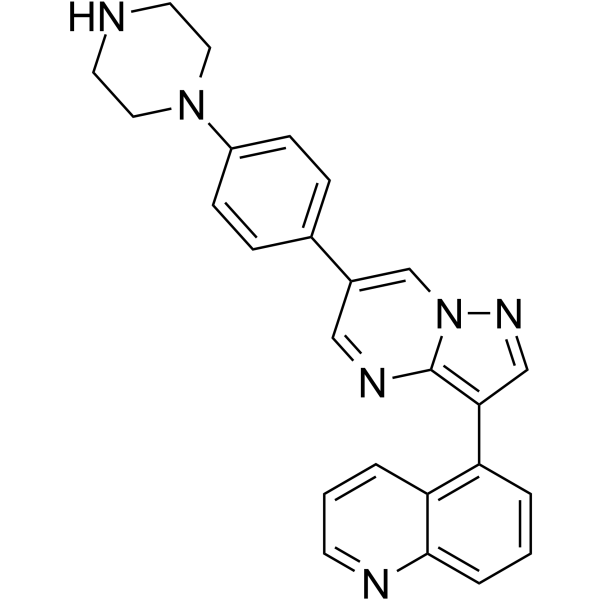 0 ImagesLDN-212854 is a bone morphogenetic protein (BMP) inhibitor that potently inhibits ALK2 (IC50: 1.3 nM). LDN-212854 also inhibits ALK1 (IC50: 2.40 nM). LDN-212854 can be used in the research of fibrodysplasia ossificans progressive and cancers, such as hepatocellular carcinoma (HCC).
-
HM-279
 0 ImagesCat. No.: HY-185430CAS No.: 3039954-64-5HM-279 is a potent and orally active ALK5 inhibitor with an IC50 of 4.7 nM. HM-279 shows cross-reactivity with ALK7 (IC50 = 6.8 nM), but HM-279 has fair to good selectivity against other TGF-β receptor family kinases, with 4.5-693-fold selectivity. HM-279 demonstrates antitumor activity in vivo through CD8+ T cell immunity. HM-279 can be used for the research of colon cancer.
-
Fidrisertib
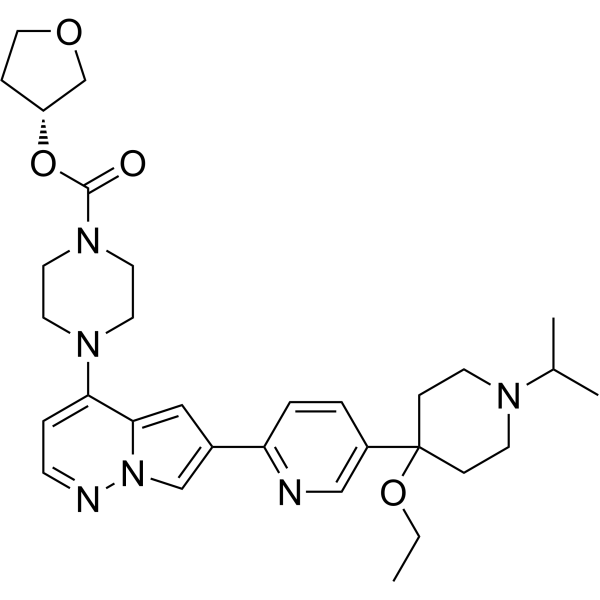 0 ImagesSynonyms: BLU-782; IPN-60130; ALK2-IN-1
-
A 83-01 (Standard)
 0 ImagesCat. No.: HY-10432RCAS No.: 909910-43-6A 83-01 (Standard) is the analytical standard of A 83-01 (HY-10432). This product is intended for research and analytical applications. A 83-01 is a potent inhibitor of TGF-β type I receptor ALK5 kinase, type I nodal receptor ALK4 and type I nodal receptor ALK7, with IC50s of 12 nM, 45 nM and 7.5 nM against the transcription induced by ALK5, ALK4 and ALK7, respectively.