



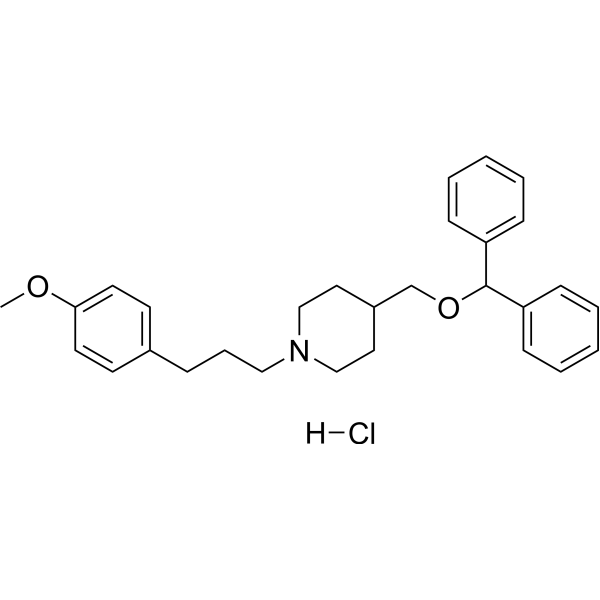
UK-78282 hydrochloride

Based on 1 Customer Validation
UK-78282 hydrochloride is a KV1.3 channel inhibitor with an IC50 value of 0.20 μM and a Kd of 0.39 μM. UK-78282 hydrochloride also inhibits the Kv1.4 Potassium Channel. UK-78282 hydrochloride blocks KV1.3 in a use-dependent manner and inhibits human T lymphocyte activation by regulating the cell cycle. UK-78282 hydrochloride can be used in research related to mental disorders, such as depression and schizophrenia.
For research use only. We do not sell to patients.
- Purity : 99.82%
- CAS No.: 136647-02-4
- Formula: C29H36ClNO2
- Molecular Weight:466.05
-
Storage:
-20°C, sealed storage, away from moisture
* In solvent : -80°C, 6 months; -20°C, 1 month (sealed storage, away from moisture)

To place orders, for customer services and technical support, please contact: MedChemExpress USA
Tel: 609-228-6898 E-mail: [email protected] [email protected]


-
 Biological Activity
-
Chemical Information
-
Solvent & Solubility
- Purity & Documentation
- References
-
 Help & FAQs



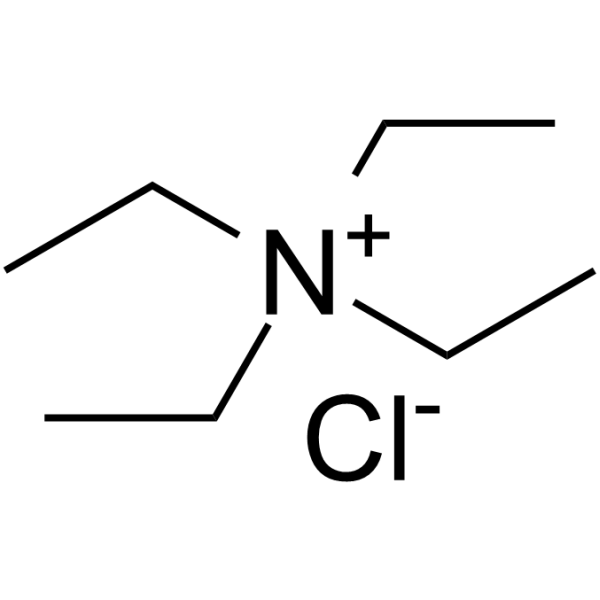
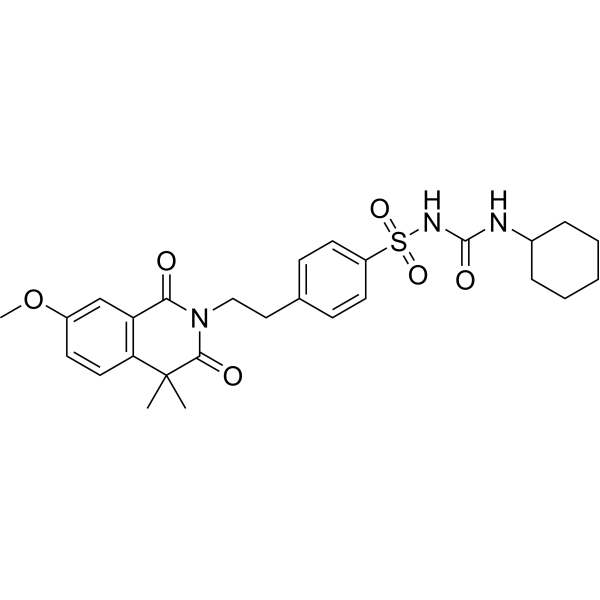
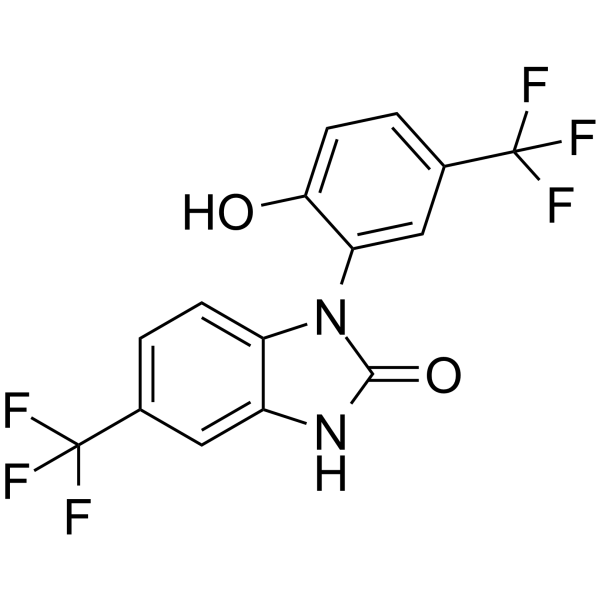
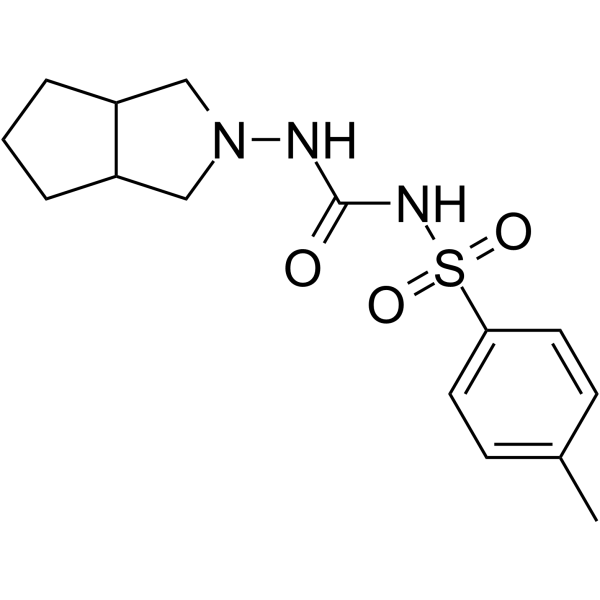


Biological Activity
Description
|
Kv1.3 0.2 μM (IC50) |
Kv1.4 |
IL-2 |
Cellular Effect
|
Cell Line

|
Type | Value | Description | References |
|---|---|---|---|---|
| L929 | IC50 |
280 nM
|
Blockade of Kv1.3 currents in stably transfected L929 cells assessed via whole-cell patch-clamp electrophysiology assay with depolarizing pulses to +40 mV from a holding potential of -80 mV.
Blockade of Kv1.3 currents in stably transfected L929 cells assessed via whole-cell patch-clamp electrophysiology assay with depolarizing pulses to +40 mV from a holding potential of -80 mV.
|
10372812 |
| HeLa | IC50 |
0.7 μM
|
Inhibition of specific 125I-ChTX binding to Kv1.3 channels in vaccinia virus-infected HeLa cells assessed via radioligand binding assay with 15 min pre-incubation before 1 h binding period at ambient temperature measured by gamma counting.
Inhibition of specific 125I-ChTX binding to Kv1.3 channels in vaccinia virus-infected HeLa cells assessed via radioligand binding assay with 15 min pre-incubation before 1 h binding period at ambient temperature measured by gamma counting.
|
10372812 |
In Vitro
UK‑78282 hydrochloride blocks Kv1.3 channel function in various cell models. Under acute administration conditions, this compound blocks native Kv1.3 channels in human peripheral blood T lymphoblasts (IC50 = 202 nM), recombinant Kv1.3 channels in L929 cells (IC50 = 280 nM), and Kv1.3 channels in RBL cells (IC50 = 333 nM); it inhibits Kv1.3-mediated 86Rb efflux in human T cells (IC50 = 0.4 μM); and it inhibits the binding of 125I‑ChTX to Kv1.3 expressed in HeLa cells (IC50 = 0.7 μM)[1].
UK‑78282 hydrochloride produces use-dependent block of Kv1.3 channels in human peripheral blood T lymphoblasts; the longer the duration of depolarizing pulses, the faster the establishment of steady-state block. Maintaining the holding potential at -50 mV to increase the proportion of C-type inactivated channels enhances the blocking efficacy of this compound[1].
UK-78282 hydrochloride binds to an internal site of the Kv1.3 channel in human peripheral blood T lymphoblasts. This site overlaps with the binding site of verapamil, but does not overlap with the binding sites of extracellular ChTX or intracellular TEA[1].
UK-78282 hydrochloride exhibits selectivity for Kv1.3 and Kv1.4 channels over other Kv family channels, with negligible activity on T cell KCa channels at concentrations up to 30 μM[1].
UK‑78282 (100 nM; ≥2 min) hydrochloride selectively inhibits action potential firing only in striatal projection neurons of the nucleus accumbens shell in low-motivation (lowS) rats, and slows the inactivation of their A-type potassium currents; this compound reduces the amplitude of A-type potassium currents in such neurons across three groups of rats, namely low-motivation (lowS), high-motivation (highS), and moderate-motivation (midS) rats[1].
UK‑78282 hydrochloride inhibits PHA-induced proliferation of purified human peripheral blood T cells (IC50 = 2.0 μM) by acting on the late G1/early S phase of the cell cycle; it also suppresses PHA-stimulated IL‑2 production (IC50 = 2.9 μM)[1].
MedChemExpress (MCE) has not independently confirmed the accuracy of these methods. They are for reference only.
In Vivo
MedChemExpress (MCE) has not independently confirmed the accuracy of these methods. They are for reference only.


Chemical Information
-
CAS No. 136647-02-4
-
Appearance Solid
-
Molecular Weight 466.05
-
Formula C29H36ClNO2
-
Color White to off-white
-
SMILES
COC1=CC=C(CCCN2CCC(COC(C3=CC=CC=C3)C4=CC=CC=C4)CC2)C=C1.[H]Cl
-
Shipping
Room temperature in continental US; may vary elsewhere.
-
Storage
-20°C, sealed storage, away from moisture
* In solvent : -80°C, 6 months; -20°C, 1 month (sealed storage, away from moisture)


Solvent & Solubility
In Vitro:
DMSO : 100 mg/mL (214.57 mM; Need ultrasonic; Hygroscopic DMSO has a significant impact on the solubility of product, please use newly opened DMSO)
Please refer to the solubility information to select the appropriate solvent. Once prepared, please aliquot and store the solution to prevent product inactivation from repeated freeze-thaw cycles.
Storage method and period of stock solution: -80°C, 6 months; -20°C, 1 month (sealed storage, away from moisture). When stored at -80°C, please use it within 6 months. When stored at -20°C, please use it within 1 month.
Please refer to the solubility information to select the appropriate solvent. Once prepared, please aliquot and store the solution to prevent product inactivation from repeated freeze-thaw cycles.
Storage method and period of stock solution: -80°C, 6 months; -20°C, 1 month (sealed storage, away from moisture). When stored at -80°C, please use it within 6 months. When stored at -20°C, please use it within 1 month.
Concentration (start) × Volume (start) = Concentration (final) × Volume (final)
In Vivo:
Select the appropriate dissolution method based on your experimental animal and administration route.
- For the following dissolution methods, please ensure to first prepare a clear stock solution using an In Vitro approach and then sequentially add co-solvents:
- To ensure reliable experimental results, the clarified stock solution can be appropriately stored based on storage conditions. As for the working solution for In Vivo experiments, it is recommended to prepare freshly and use it on the same day.
- The percentages shown for the solvents indicate their volumetric ratio in the final prepared solution. If precipitation or phase separation occurs during preparation, heat and/or sonication can be used to aid dissolution.
Add each solvent one by one: 10% DMSO 40% PEG300 5% Tween-80 45% Saline
Solubility: ≥ 2.5 mg/mL (5.36 mM); Clear solution
This protocol yields a clear solution of ≥ 2.5 mg/mL (saturation unknown).
Taking 1 mL working solution as an example, add 100 μL DMSO stock solution (25.0 mg/mL) to 400 μL PEG300, and mix evenly; then add 50 μL Tween-80 and mix evenly; then add 450 μL Saline to adjust the volume to 1 mL.
Preparation of Saline: Dissolve 0.9 g sodium chloride in ddH₂O and dilute to 100 mL to obtain a clear Saline solution.
Add each solvent one by one: 10% DMSO 90% (20% SBE-β-CD in Saline)
Solubility: ≥ 2.5 mg/mL (5.36 mM); Clear solution
This protocol yields a clear solution of ≥ 2.5 mg/mL (saturation unknown).
Taking 1 mL working solution as an example, add 100 μL DMSO stock solution (25.0 mg/mL) to 900 μL 20% SBE-β-CD in Saline, and mix evenly.
Preparation of 20% SBE-β-CD in Saline (4°C, storage for one week): 2 g SBE-β-CD powder is dissolved in 10 mL Saline, completely dissolve until clear.
In Vivo Dissolution Calculator
Please enter the basic information of animal experiments:
-
-
-
-
Recommended: Prepare an additional quantity of animals to account for potential losses during experiments.
Please enter your animal formula composition:
-
%DMSO +
Recommended: Keep the proportion of DMSO in working solution below 2% if your animal is weak.
-
%+
-
+%Tween-80 + +
-
%Saline +
The co-solvents required include: DMSO, . All of co-solvents are available by MedChemExpress (MCE). , Tween 80. All of co-solvents are available by MedChemExpress (MCE).
Working solution concentration: 0.22 mg/mL
Method for preparing stock solution: mg drug dissolved in μL DMSO. Stock solution concentration: mg/mL. * In solvent : -80°C, 6 months; -20°C, 1 month (sealed storage, away from moisture)
1. Take μL DMSO stock solution;
2. Add μL .
μL , mix evenly;
3. Then add μL Tween 80, mix evenly;
4. Then add μL
Please ensure that the stock solution in the first step is dissolved to a clear state, and add co-solvents in sequence. You can use ultrasonic heating (ultrasonic cleaner, recommended frequency 20-40 kHz), vortexing, etc. to assist dissolution.


Purity & Documentation
-
Data Sheet (282 KB)
-
SDS (597 KB)
- English - EN (597 KB)
- Français - FR (597 KB)
- Deutsch - DE (597 KB)
- Norwegian - NO (597 KB)
- Español - ES (597 KB)
- Swedish - SV (597 KB)
- Italian - IT (597 KB)
- Korean - KR (597 KB)
- Portuguese - PT (597 KB)
-
Handling Instructions (2659 KB)
References


Complete Stock Solution Preparation Table
Please refer to the solubility information to select the appropriate solvent. Once prepared, please aliquot and store the solution to prevent product inactivation from repeated freeze-thaw cycles.
Storage method and period of stock solution: -80°C, 6 months; -20°C, 1 month (sealed storage, away from moisture). When stored at -80°C, please use it within 6 months. When stored at -20°C, please use it within 1 month.
| Optional Solvent | Concentration Solvent Mass | 1 mg | 5 mg | 10 mg | 25 mg |
|---|---|---|---|---|---|
| DMSO | 1 mM | 2.1457 mL | 10.7285 mL | 21.4569 mL | 53.6423 mL |
| 5 mM | 0.4291 mL | 2.1457 mL | 4.2914 mL | 10.7285 mL | |
| 10 mM | 0.2146 mL | 1.0728 mL | 2.1457 mL | 5.3642 mL | |
| 15 mM | 0.1430 mL | 0.7152 mL | 1.4305 mL | 3.5762 mL | |
| 20 mM | 0.1073 mL | 0.5364 mL | 1.0728 mL | 2.6821 mL | |
| 25 mM | 0.0858 mL | 0.4291 mL | 0.8583 mL | 2.1457 mL | |
| 30 mM | 0.0715 mL | 0.3576 mL | 0.7152 mL | 1.7881 mL | |
| 40 mM | 0.0536 mL | 0.2682 mL | 0.5364 mL | 1.3411 mL | |
| 50 mM | 0.0429 mL | 0.2146 mL | 0.4291 mL | 1.0728 mL | |
| 60 mM | 0.0358 mL | 0.1788 mL | 0.3576 mL | 0.8940 mL | |
| 80 mM | 0.0268 mL | 0.1341 mL | 0.2682 mL | 0.6705 mL | |
| 100 mM | 0.0215 mL | 0.1073 mL | 0.2146 mL | 0.5364 mL |


UK-78282 hydrochloride Related Classifications
HY-W013727 Related Classifications
 Powered by Bioz