

Search Result
Results for "
D1056
" in MedChemExpress (MCE) Product Catalog:
23
Biochemical Assay Reagents
4
Isotope-Labeled Compounds
| Cat. No. |
Product Name |
Target |
Research Areas |
Chemical Structure |
-
- HY-D1056
-
|
LPS, from Escherichia coli (O55:B5)
|
Toll-like Receptor (TLR)
|
Infection
Neurological Disease
Inflammation/Immunology
Cancer
|
Lipopolysaccharides, from E. coli O55:B5 (LPS, from Escherichia coli (O55:B5)) are endotoxins and TLR4 activators extracted from Escherichia coli (E. coli O55:B5) and are classified as S (smooth) type LPS. Lipopolysaccharides, from E. coli O55:B5 possess the typical three-part structure: O-antigen, core oligosaccharide, and lipid A. Lipopolysaccharides, from E. coli O55:B5 activate TLR-4 in immune cells, exhibit high pyrogenicity, and demonstrate dose and serotype specificity. Lipopolysaccharides, from E. coli O55:B5 can be widely used to induce cellular inflammation and establish animal models related to inflammation .
It is recommended to prepare a solution with concentration ≥2 mg/mL. Vortex thoroughly for more than 10 minutes. Due to the adsorption characteristics of LPS, silanized container or low adsorption centrifuge tubes should be used for aliquoting and storage, and mix thoroughly before use.
|
-
-
- HY-D1056A1
-
|
LPS, from Escherichia coli (O111:B4)
|
Toll-like Receptor (TLR)
|
Infection
Cancer
|
Lipopolysaccharides, from E. coli O111:B4 (LPS, from Escherichia coli (O111:B4)) are endotoxins and TLR4 activators extracted from Escherichia coli (E. coli O111:B4) and are classified as S (smooth) type LPS. Lipopolysaccharides (LPS), from E. coli O111:B4 possess the typical three-part structure: O-antigen, R3-type core oligosaccharide, and lipid A. Lipopolysaccharides (LPS), from E. coli O111:B4 activate TLR-4 in immune cells and can cause significant gastric diseases. Lipopolysaccharides (LPS), from E. coli O111:B4 can be used to induce cellular inflammation and establish animal models related to inflammation .
It is recommended to prepare a solution with concentration ≥2 mg/mL. Vortex thoroughly for more than 10 minutes. Due to the adsorption characteristics of LPS, silanized container or low adsorption centrifuge tubes should be used for aliquoting and storage, and mix thoroughly before use.
|
-
-
- HY-D1056A3
-
|
LPS, from Escherichia coli (O26:B6)
|
Toll-like Receptor (TLR)
|
Inflammation/Immunology
|
Lipopolysaccharides, from E. coli (Escherichia coli) O26:B6 are lipopolysaccharide endotoxins and TLR-4 activators derived from E. coli, classified as S-type LPS, which can activate pathogen-associated molecular patterns (PAMP) of the immune system and induce cellular secretion of migrasomes. Lipopolysaccharides, from E. coli O26:B6 exhibit a typical three-part structure: O-antigen, core oligosaccharide, and lipid A, and can be recognized by the core-specific monoclonal antibody MAb J8-4C10. Lipopolysaccharides, from E. coli O26:B6 can promote an increase in pro-inflammatory cytokines in plasma, thereby triggering hypothalamic-pituitary-adrenal (HPA) activation and leading to adrenal oxidative damage. The pathogenic effects of Lipopolysaccharides, from E. coli O26:B6 can be used to construct various models, such as cellular inflammation models, sepsis, acute lung injury models, adrenal dysfunction models, and bladder infection models, etc .
It is recommended to prepare a solution with concentration ≥2 mg/mL. Vortex thoroughly for more than 10 minutes. Due to the adsorption characteristics of LPS, silanized container or low adsorption centrifuge tubes should be used for aliquoting and storage, and mix thoroughly before use.
|
-
-
- HY-D1056D
-
|
LPS, from Porphyromonas gingivalis
|
Toll-like Receptor (TLR)
|
Inflammation/Immunology
|
Lipopolysaccharides, from P. gingivalis (LPS, from Porphyromonas gingivalis) are endotoxins and TLR4 activators extracted from Porphyromonas gingivalis (P. gingivalis) and are classified as S (smooth) type LPS. Lipopolysaccharides, from P. gingivalis possess the typical three-part structure: O-antigen, core oligosaccharide, and lipid A. Lipopolysaccharides, from P. gingivalis activate TLR-4 in immune cells and are important virulence factors in the mechanism of periodontal disease. Lipopolysaccharides, from P. gingivalis can be used in research related to periodontitis .
It is recommended to prepare a solution with concentration ≥2 mg/mL. Vortex thoroughly for more than 10 minutes. Due to the adsorption characteristics of LPS, silanized container or low adsorption centrifuge tubes should be used for aliquoting and storage, and mix thoroughly before use.
|
-
-
- HY-D1056B3
-
|
LPS, from bacterial (Klebsiella pneumoniae)
|
Toll-like Receptor (TLR)
|
Inflammation/Immunology
|
Lipopolysaccharides, from Klebsiella pneumoniae (LPS, from bacterial (Klebsiella pneumoniae)) are lipopolysaccharide endotoxins and TLR4 activators derived from Klebsiella pneumoniae, and are classified as S-type LPS. Lipopolysaccharides, from Klebsiella pneumoniae exhibit a typical three-part structure: O-antigen, core oligosaccharide, and lipid A. Lipopolysaccharides, from Klebsiella pneumoniae may participate in bacterial immune evasion by inhibiting complement-mediated killing and suppressing the host's secretion of antimicrobial peptides, thereby allowing the bacteria to escape immune defenses. Lipopolysaccharides, from Klebsiella pneumoniae possess high viscosity and resistance to serum-mediated killing, which may lead to sepsis. Lipopolysaccharides, from Klebsiella pneumoniae can be used to construct Acute Lung Injury Model .
It is recommended to prepare a solution with concentration ≥2 mg/mL. Vortex thoroughly for more than 10 minutes. Due to the adsorption characteristics of LPS, silanized container or low adsorption centrifuge tubes should be used for aliquoting and storage, and mix thoroughly before use.
|
-
-
- HY-D1056A2
-
|
LPS, from Escherichia coli (O127:B8)
|
Toll-like Receptor (TLR)
|
Inflammation/Immunology
|
Lipopolysaccharides, from E. coli O127:B8 (LPS, from Escherichia coli (O127:B8)) are endotoxins and TLR4 activators extracted from Escherichia coli (E. coli O127:B8) and are classified as S (smooth) type LPS. Lipopolysaccharides, from E. coli O127:B8 possess the typical three-part structure: O-antigen, R3-type core oligosaccharide, and lipid A. Lipopolysaccharides, from E. coli O127:B8 activate TLR-4 in immune cells, can induce inflammatory responses and ileal contractility, and can be used to construct intestinal inflammation models .
It is recommended to prepare a solution with concentration ≥2 mg/mL. Vortex thoroughly for more than 10 minutes. Due to the adsorption characteristics of LPS, silanized container or low adsorption centrifuge tubes should be used for aliquoting and storage, and mix thoroughly before use.
|
-
-
- HY-D1056F
-
|
Biotin-LPS, from Escherichia coli (O111:B4)
|
Biochemical Assay Reagents
|
Inflammation/Immunology
|
Biotin-Lipopolysaccharide, from E.coli O111:B4 (Biotin-LPS, from Escherichia coli (O111:B4)) is a biotin-conjugated Lipopolysaccharide (LPS) (HY-D1056A1) that can be coupled with streptavidin protein. Biotin-Lipopolysaccharide, from E.coli O111:B4 can be used to identify Lipopolysaccharide ligands. Lipopolysaccharides, from E. coli O111:B4 (LPS, from Escherichia coli (O111:B4)) are endotoxins and TLR4 activators extracted from Escherichia coli (E. coli O111:B4) and are classified as S (smooth) type LPS. Lipopolysaccharides, from E. coli O111:B4 possess the typical three-part structure: O-antigen, R3-type core oligosaccharide, and lipid A. Lipopolysaccharides, from E. coli O111:B4 activate TLR-4 in immune cells and can cause significant gastric diseases. Lipopolysaccharides, from E. coli O111:B4 can also induce M1-type polarization in mouse macrophages .
It is recommended to prepare a solution with concentration ≥2 mg/mL. Vortex thoroughly for more than 10 minutes. Due to the adsorption characteristics of LPS, silanized container or low adsorption centrifuge tubes should be used for aliquoting and storage, and mix thoroughly before use.
|
-
-
- HY-D1056H
-
|
LPS, from Serratia marcescens
|
Toll-like Receptor (TLR)
|
Inflammation/Immunology
|
Lipopolysaccharides, from S. marcescens (Serratia marcescens) are lipopolysaccharide endotoxins and TLR-4 activators derived from Serratia marcescens, classified as S-type LPS, which can activate pathogen-associated molecular patterns (PAMP) of the immune system and induce cellular secretion of migrasomes. Lipopolysaccharides, from S. marcescens exhibit a typical three-part structure: O-antigen (O-antigen), core oligosaccharide (core oligosaccharide), and lipid A (Lipid A). Lipopolysaccharides, from S. marcescens induce NF-κB activation in mouse cells via Toll-like receptor (TLR4)/MD-2. The lipopolysaccharides of S. marcescens can induce apoptosis in host immune cells, thereby suppressing the host's innate immunity .
It is recommended to prepare a solution with concentration ≥2 mg/mL. Vortex thoroughly for more than 10 minutes. Due to the adsorption characteristics of LPS, silanized container or low adsorption centrifuge tubes should be used for aliquoting and storage, and mix thoroughly before use.
|
-
-
- HY-D1056C5
-
|
LPS, from Salmonella enterica (Serotype minnesota Re 595 (Re mutant))
|
Toll-like Receptor (TLR)
Bacterial
|
Inflammation/Immunology
|
Lipopolysaccharides (LPS), from S. enterica (Salmonella enterica) serotype minnesota Re 595 (Re mutant) is prepared from Salmonella enterica strain Re 595 (Re mutant). The structure in the LPS of strain Re 595 was shown to induce secretion and aggregation in human platelets .
It is recommended to prepare a solution with concentration ≥2 mg/mL. Vortex thoroughly for more than 10 minutes. Due to the adsorption characteristics of LPS, silanized container or low adsorption centrifuge tubes should be used for aliquoting and storage, and mix thoroughly before use.
|
-
-
- HY-D1056A4
-
|
LPS, from Escherichia coli (O128:B12)
|
Toll-like Receptor (TLR)
|
Inflammation/Immunology
|
Lipopolysaccharides, from E. coli O128:B12 (LPS, from Escherichia coli (O128:B12)) are endotoxins and TLR4 activators extracted from Escherichia coli (E. coli O128:B12) and are classified as S (smooth) type LPS. Lipopolysaccharides, from E. coli O128:B12 possess the typical three-part structure: O-antigen, R3-type core oligosaccharide, and lipid A. Lipopolysaccharides, from E. coli O128:B12 activate TLR-4 in immune cells, can be used to construct animal models of neonatal brain inflammation, and may influence preterm birth in neonates .
It is recommended to prepare a solution with concentration ≥2 mg/mL. Vortex thoroughly for more than 10 minutes. Due to the adsorption characteristics of LPS, silanized container or low adsorption centrifuge tubes should be used for aliquoting and storage, and mix thoroughly before use.
|
-
-
- HY-D1056E
-
|
LPS, from Pseudomonas aeruginosa (10)
|
Toll-like Receptor (TLR)
|
Inflammation/Immunology
|
Lipopolysaccharides from P. aeruginosa (Pseudomonas aeruginosa) 10 are lipopolysaccharide endotoxins and TLR4 activators derived from Pseudomonas aeruginosa 10, and are classified as S-type LPS. Lipopolysaccharides from P. aeruginosa 10 exhibit a typical three-part structure: O-antigen, core oligosaccharide, and lipid A. The lipopolysaccharides of P. aeruginosa 10 have a fatty acid composition distinct from common enterobacteria, an exceptionally high degree of phosphorylation (triphosphate residues have been detected), and a unique outer region of the core oligosaccharide. Additionally, their O-specific side chains are typically rich in novel aminosugars. Lipopolysaccharides from P. aeruginosa 10 demonstrate susceptibility to viruses, with the level of susceptibility determined by the content of high molecular weight polysaccharides in their composition. The absence of high molecular weight polysaccharides increases their sensitivity to bacteriophages .
It is recommended to prepare a solution with concentration ≥2 mg/mL. Vortex thoroughly for more than 10 minutes. Due to the adsorption characteristics of LPS, silanized container or low adsorption centrifuge tubes should be used for aliquoting and storage, and mix thoroughly before use.
|
-
-
- HY-D1056B4
-
|
LPS, from bacterial (Salmonella typhosa)
|
Toll-like Receptor (TLR)
|
Inflammation/Immunology
|
Lipopolysaccharides, from Salmonella typhosa are lipopolysaccharide endotoxins and TLR-4 activators derived from Salmonella typhosa, classified as S-type LPS, which can activate pathogen-associated molecular patterns (PAMP) of the immune system and induce cellular secretion of migrasomes. Lipopolysaccharides, from Salmonella typhosa exhibit a typical three-part structure: O-antigen, core oligosaccharide, and lipid A. Lipopolysaccharides, from Salmonella typhosa can serve as vaccine adjuvants and demonstrate adjuvant activity targeting B cells in immune responses in vivo .
It is recommended to prepare a solution with concentration ≥2 mg/mL. Vortex thoroughly for more than 10 minutes. Due to the adsorption characteristics of LPS, silanized container or low adsorption centrifuge tubes should be used for aliquoting and storage, and mix thoroughly before use.
|
-
-
- HY-D1056C3
-
|
LPS, from Salmonella enterica (Serotype typhimurium)
|
Toll-like Receptor (TLR)
|
Inflammation/Immunology
|
Lipopolysaccharides, from S. enterica (Salmonella enterica) serotype typhimurium are lipopolysaccharide endotoxins and TLR4 activators derived from serotype typhimurium of Salmonella enterica, and are classified as S-type LPS. Lipopolysaccharides, from S. enterica exhibit a typical three-part structure: O-antigen, core oligosaccharide, and lipid A. Lipopolysaccharides, from S. enterica serotype typhimurium can modulate the fate of bacteria in dendritic cells (DC), determining the uptake, degradation, and activation of immune functions by DC cells against the bacteria .
It is recommended to prepare a solution with concentration ≥2 mg/mL. Vortex thoroughly for more than 10 minutes. Due to the adsorption characteristics of LPS, silanized container or low adsorption centrifuge tubes should be used for aliquoting and storage, and mix thoroughly before use.
|
-
-
- HY-D1056C1
-
|
LPS, from Salmonella enterica (Serotype enteritidis)
|
Toll-like Receptor (TLR)
|
Inflammation/Immunology
|
Lipopolysaccharides, from S. enterica (Salmonella enterica) serotype enteritidis are lipopolysaccharide endotoxins and TLR-4 activators derived from the enteritidis serotype of S. enterica, classified as S-type LPS, which can activate pathogen-associated molecular patterns (PAMP) of the immune system and induce cellular secretion of migrasomes. Lipopolysaccharides, from S. enterica serotype enteritidis exhibit a typical three-part structure: O-antigen, core oligosaccharide, and lipid A. Lipopolysaccharides, from S. enterica serotype enteritidis can induce systemic inflammatory responses, increasing levels of TNF-α, IFN-γ, IL-6, IL-10, and nitrate in plasma .
It is recommended to prepare a solution with concentration ≥2 mg/mL. Vortex thoroughly for more than 10 minutes. Due to the adsorption characteristics of LPS, silanized container or low adsorption centrifuge tubes should be used for aliquoting and storage, and mix thoroughly before use.
|
-
-
- HY-D1056B2
-
|
LPS, from bacterial (Proteus mirabilis)
|
Toll-like Receptor (TLR)
|
Inflammation/Immunology
|
Lipopolysaccharides, from Proteus mirabilis are lipopolysaccharide endotoxins and TLR-4 activators derived from Proteus mirabilis, classified as S-type LPS, which can activate pathogen-associated molecular patterns (PAMP) of the immune system and induce cellular secretion of migrasomes. Lipopolysaccharides, from Proteus mirabilis exhibit a typical three-part structure: O-antigen, core oligosaccharide, and lipid A. Proteus mirabilis is a major pathogen causing urinary tract infections and may also contribute to rheumatoid arthritis. Lipopolysaccharides, from Proteus mirabilis also exhibit potential anti-tumor effects, demonstrating in vivo inhibitory activity against solid tumors such as meningosarcoma and Walker carcinosarcoma .
It is recommended to prepare a solution with concentration ≥2 mg/mL. Vortex thoroughly for more than 10 minutes. Due to the adsorption characteristics of LPS, silanized container or low adsorption centrifuge tubes should be used for aliquoting and storage, and mix thoroughly before use.
|
-
-
- HY-D1056A5
-
|
LPS, from Escherichia coli (K-235)
|
Toll-like Receptor (TLR)
|
Inflammation/Immunology
|
Lipopolysaccharides, from E. coli (Escherichia coli) K-235 are lipopolysaccharide endotoxins and TLR-4 activators derived from E. coli, classified as S-type LPS, which can activate pathogen-associated molecular patterns (PAMP) of the immune system and induce cellular secretion of migrasomes. Lipopolysaccharides, from E. coli K-235 exhibit a typical three-part structure: O-antigen (O-antigen), core oligosaccharide (core oligosaccharide), and lipid A (Lipid A). Lipopolysaccharides, from E. coli K-235 have a mitogenic effect on C57BL/10ScN spleen cells. Additionally, LPS purified using butanol and deoxycholic acid methods stimulates spleen cells in C57BL/10ScCR and C3H/HeJ mice .
It is recommended to prepare a solution with concentration ≥2 mg/mL. Vortex thoroughly for more than 10 minutes. Due to the adsorption characteristics of LPS, silanized container or low adsorption centrifuge tubes should be used for aliquoting and storage, and mix thoroughly before use.
|
-
-
- HY-D1056I
-
|
LPS, from Akkermansia muciniphila
|
Biochemical Assay Reagents
|
Inflammation/Immunology
|
Lipopolysaccharides, from Akkermansia muciniphila (LPS, from Akkermansia muciniphila) are lipopolysaccharide endotoxins derived from Akkermansia muciniphila and are TLR-4 activators. Unlike typical LPS, Lipopolysaccharides, from Akkermansia muciniphila are R-type LPS or lipooligosaccharides (LOS), lacking the O-antigen domain and consisting only of a core oligosaccharide and a lipid A. Lipopolysaccharides, from Akkermansia muciniphila can activate TLR4 and TLR2, and may inhibit the TLR4/NF-κB pathway, thereby alleviating LPS-induced acute kidney injury .
It is recommended to prepare a solution with concentration ≥2 mg/mL. Vortex thoroughly for more than 10 minutes. Due to the adsorption characteristics of LPS, silanized container or low adsorption centrifuge tubes should be used for aliquoting and storage, and mix thoroughly before use.
|
-
-
- HY-D1056C4
-
|
LPS, from Salmonella enterica (Serotype abortus equi)
|
Toll-like Receptor (TLR)
|
Inflammation/Immunology
|
Lipopolysaccharides, from S. enterica (Salmonella enterica) serotype Abortusequi are lipopolysaccharide endotoxins and TLR-4 activators derived from the Abortusequi serotype of S. enterica, classified as a mutated R-type LPS, which can activate pathogen-associated molecular patterns (PAMP) of the immune system and induce cellular secretion of migrasomes. Lipopolysaccharides, from S. enterica serotype abortus equi consist of core oligosaccharide (core oligosaccharide) and lipid A (Lipid A). S. enterica serotype Abortusequi is a major pathogen causing abortion in mares and is also associated with neonatal sepsis, multiple abscesses, orchitis, and polyarthritis in equids. It is primarily grouped based on lipopolysaccharides (O-antigen) and flagellin (H-antigen) .
It is recommended to prepare a solution with concentration ≥2 mg/mL. Vortex thoroughly for more than 10 minutes. Due to the adsorption characteristics of LPS, silanized container or low adsorption centrifuge tubes should be used for aliquoting and storage, and mix thoroughly before use.
|
-
-
- HY-D1056B1
-
|
LPS, from bacterial (Proteus vulgaris)
|
Toll-like Receptor (TLR)
|
Inflammation/Immunology
|
Lipopolysaccharides, from Proteus vulgaris are lipopolysaccharide endotoxins and TLR-4 activators derived from Proteus vulgaris, classified as S-type LPS, which can activate pathogen-associated molecular patterns (PAMP) of the immune system and induce cellular secretion of migrasomes. Lipopolysaccharides, from Proteus vulgaris exhibit a typical three-part structure: O-antigen, core oligosaccharide, and lipid A. Lipopolysaccharides, from Proteus vulgaris possess a unique molecular structure and chitosan affinity (Kb=2.72 μM), surpassing that of Yersinia pseudotuberculosis (Kb=6.06 μM) and Escherichia coli (Kb=79.50 μM) .
It is recommended to prepare a solution with concentration ≥2 mg/mL. Vortex thoroughly for more than 10 minutes. Due to the adsorption characteristics of LPS, silanized container or low adsorption centrifuge tubes should be used for aliquoting and storage, and mix thoroughly before use.
|
-
-
- HY-N2179
-
|
|
p38 MAPK
JNK
|
Neurological Disease
Metabolic Disease
Inflammation/Immunology
|
|
Hypaphorine is an indole found in Caragana korshinskii. Hypaphorine has neurological and glucose-lowering effects. Hypaphorine prevents Lipopolysaccharides (LPS) (HY-D1056)-mediated acute lung injury (ALI) and proinflammatory response via inactivating the p38/JNK signaling pathway by upregulating DUSP1 .
|
-
-
- HY-P1439
-
-
-
- HY-132248
-
-
-
- HY-118828
-
|
12-OPDA
|
NF-κB
p38 MAPK
|
Neurological Disease
Inflammation/Immunology
|
|
12-Oxo phytodienoic acid (12-OPDA) is a plant lipid-derived anti-inflammatory compound. 12-Oxo phytodienoic acid suppresses neuroinflammation by inhibiting Nf-κB and p38 MAPK signaling in Lipopolysaccharides (LPS) (HY-D1056)-activated cells. 12-Oxo phytodienoic acid can be used for neurodegenerative diseases research .
|
-
-
- HY-128731
-
|
DL-5-MTP
|
Endogenous Metabolite
Interleukin Related
|
Cardiovascular Disease
|
|
5-Methoxy-DL-tryptophan is a metabolite. 5-Methoxy-DL-tryptophan reduces LPS (HY-D1056)-induced release of IL-6. 5-Methoxy-DL-tryptophan has anti-inflammatory effects. 5-Methoxy-DL-tryptophan can be used in the study of atherosclerosis .
|
-
-
- HY-131521
-
|
Oxalomalate trisodium
|
Isocitrate Dehydrogenase (IDH)
|
Cancer
|
|
Oxalomalic acid (Oxalomalate) trisodium is a aconitase and NADP-dependent isocitrate dehydrogenase inhibitor. Oxalomalic acid trisodium inhibits nitrite production and iNOS protein expression in lipopolysaccharide (HY-D1056)-activated J774 macrophages .
|
-
-
- HY-132814
-
|
ATH-1017
|
c-Met/HGFR
|
Neurological Disease
|
|
Fosgonimeton (ATH-1017) is a hepatocyte growth factor receptor (c-Met/HGFR) agonist. Fosgonimeton has neuroprotective effects in both LPS (HY-D1056) -induced neuroinflammation and Aβ-induced AD models .
|
-
-
- HY-N2459
-
|
YGM-6 chloride
|
Interleukin Related
|
Neurological Disease
Inflammation/Immunology
Cancer
|
|
Peonidin (YGM-6) chloride is an anthocyanin compound found in plants such as grapes and purple-fleshed sweet potatoes. Peonidin chloride alone exerts no stable inhibitory effect on LPS (HY-D1056)-mediated inflammatory gene expression. The acylated form of Peonidin chloride exhibits antimutagenic activity .
|
-
-
- HY-N0358
-
|
1,4-DCQA
|
TNF Receptor
Xanthine Oxidase
|
Inflammation/Immunology
|
|
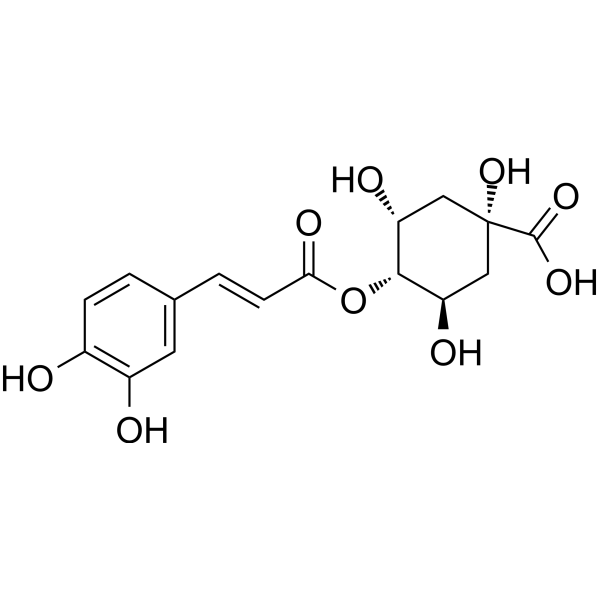
1,4-Dicaffeoylquinic acid (1,4-DCQA) is a phenylpropanoid compound that can be isolated from Xanthii fructus and an inhibitor of xanthine oxidase (IC50: 7.36 μM). 1,4-Dicaffeoylquinic acid has anti-inflammatory activity and can inhibit the production of TNF-α induced by LPS (HY-D1056) .
|
-
-
- HY-34748
-
-
-
- HY-P1439A
-
|
|
Toll-like Receptor (TLR)
NF-κB
|
Inflammation/Immunology
|
|
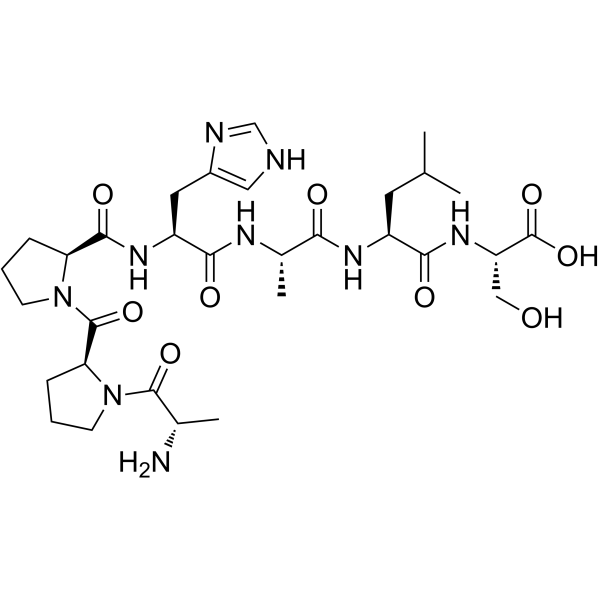
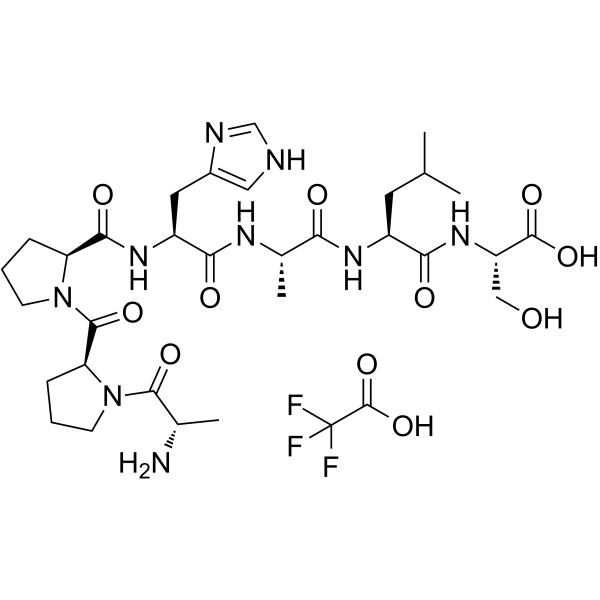
RS 09 TFA is an LPS (HY-D1056) peptide mimic and TLR4 agonist. RS 09 TFA can bind to TLR-4 and activate NF-κB. RS 09 TFA can function as an adjuvant in vivo, enhancing the antigen-specific immune response .
|
-
-
- HY-N2592
-
|
|
Others
|
Inflammation/Immunology
|
|
Isobutylshikonin is a kind of shikonin pigments found in hairy root culture of Lithospermum canescens. Isobutylshikonin decreases cell viability induces marked changes in JA-4 cells with nuclear condensation and swelling in the presence of LPS (HY-D1056) .
|
-
-
- HY-N8559
-
-
-
- HY-N16500
-
|
|
NF-κB
|
Neurological Disease
|
|
Hericenone C is a metabolite derived from Hericium erinaceus. Hericenone C inhibits LPS (HY-D1056)-induced NRE::Luc luciferase activity, reduces phosphorylation of p65 and inhibits NF-κB signaling. Hericenone C exhibits neuroprotective effect .
|
-
-
- HY-170446
-
|
|
MyD88
|
Inflammation/Immunology
|
|
MyD88-IN-2 (compound A5S) is a Myeloid differentiation primary response 88 (MyD88) inhibitor with the Kd of 15 μM. MyD88-IN-2 shows protective effects on LPS (HY-D1056)-induced and sepsis-induced ALI mouse models .
|
-
-
- HY-N3480
-
|
(+)-Isogospherol; Isogospherol
|
Others
|
Inflammation/Immunology
|
|
Isogosferol ((+)-Isogospherol; Isogospherol) is a potent anti-inflammatory agent. Isogosferol decreases LPS (HY-D1056)-stimulated NO and IL-1β expression. Isogosferol decreases the LPS (HY-D1056)-stimulated expression of iNOS, COX-2, NF-κB, and pERK1/2 .
|
-
-
- HY-N4022
-
|
Isobocconin; Seravschanin
|
Others
|
Inflammation/Immunology
|
|
Hyuganin D (Isobocconin) is a Coumarin (HY-N0709) constituent that substantially inhibits LPS (HY-D1056)-induced NO production in mouse peritoneal macrophages .
|
-
-
- HY-N16172
-
|
Sanggenone B
|
Others
|
Inflammation/Immunology
|
|
Sanggenon B (Sanggenone B) is a compound that can be extracted from mulberry trees and has an inhibitory effect on NO production in RAW264.7 cells stimulated by LPS (HY-D1056). Sanggenon B has anti-inflammatory activity .
|
-
-
- HY-P3912A
-
|
|
Interleukin Related
|
Infection
|
|
Endotoxin inhibitor TFA is a synthetic peptide that binds lipid A with high affinity, thereby detoxifying LPS (HY-D1056) and preventing LPS-induced cytokine release in vivo. Endotoxin inhibitor TFA inhibits the febrile response to LPS with very low toxicity and lethality .
|
-
-
- HY-N16537
-
|
|
NO Synthase
|
Inflammation/Immunology
|
|
2-Oxostenine (Compound 7) is a stenine-type alkaloid found in the roots of Stemona tuberosa Lour. 2-Oxostenine can weakly inhibit Lipopolysaccharide (HY-D1056)-induced NO production. 2-Oxostenine can be used for the research of inflammation .
|
-
-
- HY-174285
-
|
|
Thrombin
|
Cardiovascular Disease
|
|
NAPAP is a selective direct thrombin inhibitor. NAPAP rapidly binds to thrombin and inhibits its activity, and reduces LPS (HY-D1056)-induced brain inflammation and coagulation factor expression in vivo. NAPAP can be used in studies related to coagulation and neuroinflammation .
|
-
-
- HY-156060
-
|
|
Toll-like Receptor (TLR)
|
Inflammation/Immunology
|
|
NCI126224 is a TLR4 signaling inhibitor. NCI126224 suppress LPS (HY-D1056)-induced production of NF-κB, TNF-α, IL-1β, and NO in the nanomolar-low micromolar range. NCI126224 can be used for the research of inflammatory diseases .
|
-
-
- HY-158650
-
-
-
- HY-W143375
-
|
|
Bacterial
|
Infection
|
|
Phytantriol is an aliphatic alcohol that can be used to form nanoparticles. Phytantriol-based cubosome formulation as an antimicrobial against Lipopolysaccharides (HY-D1056) (LPS)-deficient gram-Negative bacteria .
|
-
-
- HY-108644
-
|
|
p38 MAPK
|
Inflammation/Immunology
|
|
SB 706504 is a potent p38 MAPK inhibitor that inhibits Lipopolysaccharides (HY-D1056)-stimulated inflammatory gene expression in macrophages in chronic obstructive pulmonary disease (COPD) .
|
-
-
- HY-N1912
-
|
|
Others
|
Cancer
|
|
Andropanolide is a natural product that exerts cytotoxicity toward carcinoma cells and significantly inhibits the overproduction of nitric oxide (NO) in Lipopolysaccharides (HY-D1056) (LPS)-stimulated RAW264.7 macrophages .
|
-
-
- HY-P3912
-
|
|
COX
Interleukin Related
|
Infection
|
|
Endotoxin inhibitor a synthetic peptide that binds lipid A with high affinity, thereby detoxifying LPS (HY-D1056) and preventing LPS-induced cytokine release in vivo. Endotoxin inhibitor inhibits the febrile response to LPS with very low toxicity and lethality .
|
-
-
- HY-162765
-
|
|
TRP Channel
|
Inflammation/Immunology
|
|
TRPV4-IN-5 (Compound 1f) is a potent TRPV4 inhibitor (IC50 = 0.46 μM). TRPV4-IN-5 significantly alleviates the symptoms of acute lung injury induced by lipopolysaccharide (HY-D1056) in mice .
|
-
-
- HY-N15689
-
|
|
NO Synthase
|
Inflammation/Immunology
|
|
Dichotomine E is a β-carboline alkaloid that can be isolated from the root of Stellaria dichotoma var. lanceolata. Dichotomine E has anti-inflammatory property for the inhibition of NO production in LPS (HY-D1056)-treated RAW264.7 cells .
|
-
-
- HY-N10312
-
-
-
- HY-138050
-
|
(-)-Nyasol; (Z)-Hinokiresinol; cis-Hinokiresinol
|
NO Synthase
Bacterial
Fungal
Parasite
Leukotriene Receptor
|
Infection
Inflammation/Immunology
|
|
Nyasol ((-)-Nyasol) is an active compound that has antifungal, antibacterial, antileishmanial, hyaluronidase inhibition activities. Nyasol inhibits LTB4 binding to human neutrophils. Nyasol suppresses neuroinflammatory response through the inhibition of I-κB degradation in LPS (HY-D1056)-stimulated BV-2 microglial cells .
|
-
- HY-N11657
-
|
Sanggenone A
|
NF-κB
Keap1-Nrf2
|
Inflammation/Immunology
|
|
Sanggenon A (Sanggenone A) exerts anti-inflammatory effects by regulating NF-κB and HO-1/Nrf2 signaling pathways in BV2 and RAW264.7 cells. Sanggenon A markedly inhibits the Lipopolysaccharide (LPS; HY-D1056)-induced production of nitric oxide .
|
-
- HY-113829
-
|
|
Antibiotic
Bacterial
|
Infection
Inflammation/Immunology
|
|
Valnemulin is an orally active broad-spectrum antibiotic against Gram-negative and Gram-positive bacteria, anaerobic bacteria, Mycoplasma, and Spirochetes. Valnemulin ameliorates enteric diseases, acute polyarthritis and enzootic pneumonia in pigs . Valnemulin exhibits anti-inflammatory efficacy against lipopolysaccharide (HY-D1056)-induced lung injury .
|
-
- HY-179396
-
|
|
Bacterial
|
Infection
|
|
T-1228 is a highly selective LpxC inhibitor. T-1228 can effectively block the synthesis of LPS (HY-D1056), causing defects in the bacterial outer membrane structure, increasing membrane permeability, and ultimately leading to bacterial cell death. T-1228 can be used for the study of Gram-negative bacterial infections .
|
-
- HY-N11028
-
|
|
Others
|
Inflammation/Immunology
|
|
Isophysalin G is a steroid that inhibits NO production induced by Lipopolysaccharides (HY-D1056) in macrophages with an IC50 of 64.01 μM .
|
-
- HY-131306
-
|
|
Drug Metabolite
|
Others
|
|
Δ2-cis-Hexadecenoic acid is an unsaturated fatty acid that is a hydrolysate of lipopolysaccharide (HY-D1056) .
|
-
- HY-106691
-
|
CGS-13080
|
Thrombin
|
Endocrinology
|
|
Pirmagrel is a thrombin synthetase inhibitor. Pirmagrel has inhibitory effects on thrombin secretion stimulated by lipopolysaccharide (HY-D1056) .
|
-
- HY-133098
-
|
|
NO Synthase
|
Inflammation/Immunology
|
|
Juncutol is a potent inducible nitric oxide synthase (iNOS) inhibitor. Juncutol decreases the LPS (HY-D1056)-stimulated iNOS protein expression .
|
-
- HY-N1080
-
|
|
Others
|
Inflammation/Immunology
|
|
Vitexdoin A is a nitric oxide scavenging lignin. Vitexdoin A inhibits NO production with an IC50 of 0.38 μM in LPS (HY-D1056)-stimulated RAW 264.7 cells .
|
-
- HY-N11570
-
|
|
Others
|
Inflammation/Immunology
|
|
Phaeocaulisin E (Compound 5) is a guaiane-type sesquiterpene that inhibits LPS HY-(HY-D1056)-induced NO production in RAW 264.7 macrophages with an IC50 of 10.3 μM .
|
-
- HY-161835
-
-
- HY-142100
-
|
|
NF-κB
|
Inflammation/Immunology
|
|
Licoagrochalcone C, a flavonoid, reveals efficacious inhibitory activity on NF-κB transcription. Licoagrochalcone C shows significant inhibitory activity on LPS (HY-D1056)-induced NO production .
|
-
- HY-N1695
-
|
Regelin acid
|
NO Synthase
|
Inflammation/Immunology
|
|
Demethylregelin (Regelin acid), a triterpene, effectively reduces the expression of iNOS protein and subsequent nitric oxide production induced by lipopolysaccharide (HY-D1056) in RAW264.7 cells. Demethylregelin has anti-inflammatory activities .
|
-
- HY-153579
-
|
|
Interleukin Related
|
Inflammation/Immunology
|
|
Anti-inflammatory agent 42 (Compound 10j) is an anti-inflammatory agent. Anti-inflammatory agent 42 shows excellent inhibition on the expression of TNF-α and IL-6 in LPS (HY-D1056)-stimulated macrophages .
|
-
- HY-124508
-
-
- HY-N1186
-
|
|
Glycosidase
|
Metabolic Disease
|
|
Tachioside inhibits nitric oxide production in lipopolysaccharide (HY-D1056)-stimulated RAW 264.7 cells with IC50 value of 12.14 μM. Tachioside has anti-obesity, antioxidant and α-glucosidase inhibitory activities .
|
-
- HY-N3246
-
|
|
NO Synthase
|
Inflammation/Immunology
|
|
Morachalcone A is a naturally-occurring aromatase inhibitor (IC50=4.6 mM). Morachalcone A is also a plants metabolite with potential anti-inflammatory and anticancer activity. Morachalcone A inhibits Lipopolysaccharide (HY-D1056)-induced nitric oxide production .
|
-
- HY-W168309A
-
|
|
Endogenous Metabolite
|
Inflammation/Immunology
|
|
Trans-Caffeic aldehyde is a type of phenylpropanoid compound, which was discovered in the secondary metabolites of the actinomycete Acrocarpospora punica. Trans-Caffeic aldehyde does not exhibit inhibitory activity against NO production in the mouse macrophage (RAW 264.7) model induced by LPS (HY-D1056) .
|
-
- HY-100702
-
|
|
Akt
Apoptosis
|
Cancer
|
|
SH-5 is a potent AKT inhibitor. SH-5 potentiates the apoptosis induced by tumor necrosis factor. SH-5 blocks NF-kB activation induced by TNF-a, lipopolysaccharide (HY-D1056), phorbol ester (HY-18739), and cigarette smoke .
|
-
- HY-P10631
-
|
|
HSP
|
Inflammation/Immunology
|
|
Gp96-II is a gp96-blocking peptide that antagonizes gp96-mediated LPS(HY-D1056)-induced cytokine production. Gp96-II can be utilized in research on inflammatory disease .
|
-
- HY-163778
-
|
|
NF-κB
|
Inflammation/Immunology
|
|
ZM600 is a potent and orally active antihepatic fibrosis agent. ZM600 decreases the LPS (HY-D1056) induced protein expression of collagen I, α-SM, p-p65. ZM600 has the potential for the research of liver fibrosis .
|
-
- HY-114730
-
|
|
IKK
|
Inflammation/Immunology
|
|
CGA-JK3 is CGA-JK3 is an ATP-competitive inhibitor of IKKβ-catalyzed kinase activity. CGA-JK3 inhibits IκBα phosphorylation in LPS (HY-D1056) - induced RAW 264.7 cells .
|
-
- HY-P5829A
-
|
|
Bacterial
|
Infection
|
|
CRAMP (140-173) (mouse) TFA is a ortholog of human LL-37 antimicrobial peptide. CRAMP (140-173) (mouse) TFA inhibits LPS (HY-D1056)-induced responses, and can not colocalized with TLR3 in BEAS-2B cells .
|
-
- HY-N15226
-
|
|
NO Synthase
Interleukin Related
Autophagy
|
Inflammation/Immunology
|
|
Butyrolactone Ia is the inhibitor for the NO production with an IC50 of 18 μM. Butyrolactone Ia inhibits LPS (HY-D1056)-induced mRNA expression of iNOS and the inflammatory cytokine IL-1β. Butyrolactone Ia modulates autophagy in HeLa cells, and exhibits immune suppressive activity .
|
-
- HY-169420
-
|
|
Interleukin Related
|
Inflammation/Immunology
|
|
IL-6-IN-1 (Compound 22) inhibits the release of IL-6 with an IC50 of 1.065 μM. IL-6-IN-1 exhibits anti-inflammatory efficacy in LPS (HY-D1056)-induced acute lung injury in mouse model .
|
-
- HY-N15651
-
|
|
NO Synthase
TNF Receptor
Interleukin Related
|
Inflammation/Immunology
|
|
Asperflavin is an anti-inflammatory compound that can be produced by the marine fungus Eurotium amstelodami. Asperflavin inhibits the production of NO, PGE2, and proinflammatory cytokines, as well as the expression of inducible NOS (iNOS) in RAW 264.7 cells treated with LPS (HY-D1056). Asperflavin can be used in the study of inflammatory diseases .
|
-
- HY-175430
-
|
|
TNF Receptor
|
Inflammation/Immunology
|
|
TNF-α-IN-26 (Compound 18) is a TNF-α inhibitor with an IC50 of 0.10 μM for CSBP ligands. TNF-α-IN-26 inhibits LPS (HY-D1056)-stimulated TNF production in mice model. TNF-α-IN-26 can be used for inflammatory diseases research .
|
-
- HY-P5680
-
|
|
Bacterial
|
Inflammation/Immunology
|
|
SpHistin is an antimicrobial peptide (AMP). SpHistin can bind to LPS (HY-D1056) and permeabilize the bacterial membrane. SpHistin combined with Rifampicin (HY-B0272) and Azithromycin (HY-17506) promotes the intracellular uptake of the antibiotics and subsequently enhances the bactericidal activity of both agents against P. aeruginosa .
|
-
- HY-N2179R
-
-
- HY-162622
-
|
|
Epigenetic Reader Domain
|
Inflammation/Immunology
|
|
BET-IN-26 (compound 13a) is a potent, selective and orally active BD1 inhibitor with IC50 values of 0.0055, 9.0 µM for BD1, BD2, respectively. BET-IN-26 decreases LPS (HY-D1056) induced serum levels of IL-6 and MCP-1 .
|
-
- HY-122063
-
|
|
NO Synthase
|
Inflammation/Immunology
|
|
FR260330 is a selective, orally active inhibitor for inducible nitric oxide synthase (iNOS) through suppression of iNOS dimerization. FR260330 inhibits the NO accumulation in rat splenocytes and human DLD-110 cells, with IC50 of 27 and 10 nM. FR260330 ameliorates the Lipopolysaccharides (HY-D1056)-induced inflammatory diseases in rats model .
|
-
- HY-N18031
-
|
|
NO Synthase
|
Inflammation/Immunology
|
|
Idesin is a compound found in the fruits of Idesia polycarpa. Idesin inhibits LPS (HY-D1056)-induced nitric oxide production with mild cytotoxicity .
|
-
- HY-N17496
-
|
|
NO Synthase
|
Inflammation/Immunology
|
|
Cyathisterol is a steroidal compound that inhibits LPS (HY-D1056)-induced nitric oxide production. Cyathisterol can be used for the research of inflammatory diseases .
|
-
- HY-N17594
-
|
|
NO Synthase
|
Inflammation/Immunology
|
|
Achyranthoside A is an isoflavone glycoside isolated from the roots of Achyranthes bidentata. Achyranthoside A inhibits NO production in macrophages treated with LPS (HY-D1056). Achyranthoside A can be used in the study of inflammatory diseases .
|
-
- HY-N18187
-
|
|
NO Synthase
|
Inflammation/Immunology
|
|
Hirundigoside E is a compound with anti-inflammatory activity. Hirundigoside E inhibits LPS (HY-D1056)-induced iNOS protein expression in macrophages. Hirundigoside E can be used for the research of inflammatory diseases .
|
-
- HY-N17919
-
|
|
Prostaglandin Receptor
|
Inflammation/Immunology
|
|
Salviifoside A is a phenolic glycoside found in the leaves of Alangium salviifolium. Salviifoside A inhibits LPS (HY-D1056)-induced nitric oxide and prostaglandin E2 production in macrophages without affecting cell viability .
|
-
- HY-N18012
-
|
|
NO Synthase
|
Inflammation/Immunology
|
|
Pratialin B is a C14-polyacetylenol glycoside analog found in the roots of Codonopsis pilosula. Pratialin B exhibits weak inhibitory activity against LPS (HY-D1056)-induced NO production .
|
-
- HY-N9558
-
|
|
TNF Receptor
|
Inflammation/Immunology
|
|
12-Hydroxydehydroabietic acid is a diterpenoid found in the whole plant of Gaultheria yunnanensis. 12-Hydroxydehydroabietic acid weakly inhibits pro-inflammatory cytokine TNF-α production in LPS (HY-D1056)-induced macrophages .
|
-
- HY-N17961
-
|
Septemloside I
|
Others
|
Inflammation/Immunology
|
|
Kalopanaxsaponin I (Septemloside I) is an oleanane-type triterpenoid that exists in the fruits of Stauntonia brachyanthera. Kalopanaxsaponin I inhibits LPS (HY-D1056)-induced nitric oxide production in macrophages, with a IC50 of 80.25 μM .
|
-
- HY-N15221
-
|
|
NO Synthase
|
Inflammation/Immunology
|
|
12-Acetoxyganoderic acid D is a triterpenoid compound found in Ganoderma sinense. 12-Acetoxyganoderic acid D exhibits certain anti-inflammatory activity and inhibits NO production in LPS (HY-D1056) stimulated RAW 264.7 macrophages .
|
-
- HY-W750903
-
|
|
NO Synthase
|
Inflammation/Immunology
|
|
Dihydroxanthohumol is a chalcone found in Humulus lupulus L. Dihydroxanthohumol is a nitric oxide (NO) production inhibitor. Dihydroxanthohumol slightly suppresses LPS (HY-D1056)/IFN-γ-induced iNOS protein expression and NO production. Dihydroxanthohumol exhibits cytotoxicity at high concentrations .
|
-
- HY-107138
-
|
|
Others
|
Inflammation/Immunology
|
|
AIM-102 is an immune modulating anti-inflammatory agent. AIM-102 can inhibit LPS (HY-D1056)-induced neutrophilia increase. AIM-102 can be used for the researches of inflammation and immunology, such as allergic asthma .
|
-
- HY-N17540
-
|
|
NO Synthase
|
Inflammation/Immunology
|
|
8-Epiasterolide is a sesquiterpenoid compound isolated from the rhizomes of Atractylodes japonica Koidzumi. 8-Epiasterolide inhibits NO production in LPS (HY-D1056)-treated RAW 264.7 cells. 8-Epiasterolide can be used in the study of inflammatory diseases .
|
-
- HY-N18276
-
|
|
NO Synthase
|
Inflammation/Immunology
|
|
Mudanpioside F is a monoterpene glycoside found in the seed cake of Paeonia rockii T. Hong et J.J.Li. Mudanpioside Fnitric inhibits LPS (HY-D1056)-induced nitric oxide production with an IC50 value of 18.65 ± 2.1 μM .
|
-
- HY-N17841
-
|
|
Others
|
Inflammation/Immunology
|
|
1,3,8-Trihydroxy-2-methoxyanthraquinone is an anthraquinone found in the roots of Morinda officinalis How. 1,3,8-Trihydroxy-2-methoxyanthraquinoneand inhibits LPS (HY-D1056)-stimulated nitric oxide production .
|
-
- HY-181122
-
|
|
Interleukin Related
|
Cardiovascular Disease
|
|
MK169 is an IL-1β inhibitor. MK169 reduces LPS (HY-D1056)-induced IL-1β release in human aortic smooth muscle cells. MK169 is applicable to the research of cardiovascular inflammatory diseases such as atherosclerosis .
|
-
- HY-N17843
-
|
|
Others
|
Inflammation/Immunology
|
|
3,8-Dihydroxy-1,2-dimethoxyanthraquinone is an anthraquinone found in the roots of Morinda officinalis How. 3,8-Dihydroxy-1,2-dimethoxyanthraquinone does not inhibit LPS (HY-D1056)-stimulated NO production with an IC50 >50 μM .
|
-
- HY-181121
-
|
|
Interleukin Related
|
Inflammation/Immunology
|
|
MK175 is an IL-1β inhibitor. MK175 reduces LPS (HY-D1056)-induced IL-1β release in human aortic smooth muscle cells. MK175 is applicable to the research of cardiovascular inflammatory diseases such as atherosclerosis .
|
-
- HY-171254
-
|
|
p38 MAPK
|
Inflammation/Immunology
|
|
p38-α MAPK-IN-9 (Compound 25a) is a p38-α MAPK inhibitor (Ki: 0.057 nM). p38-α MAPK-IN-9 inhibits LPS (HY-D1056) induced TNFα production in hPBMCs (IC50: 18 nM) .
|
-
- HY-N19854
-
|
|
NO Synthase
|
Neurological Disease
|
|
Mariaterpenoside A is an inducible nitric oxide synthase (iNOS) inhibitor. Mariaterpenoside A interacts with the active cavity of iNOS protein via hydrogen bonds with specific residues of the binding site. Mariaterpenoside A suppresses NO release in LPS (HY-D1056)-induced murine microglial BV-2 cells. Mariaterpenoside A can be used for the research of neurodegenerative disease .
|
-
- HY-N9566
-
|
|
Interleukin Related
TNF Receptor
IFNAR
|
Inflammation/Immunology
|
|
Isopongaflavone is an isoflavone that can be isolated from the seedpods of Tephrosia vogelii with anti-inflammatory effects. Isopongaflavone suppresses the secretion of IL-1β, IFN-γ, granulocyte macrophage-colony stimulating factor (GM-CSF) and TNF-α in LPS (HY-D1056)-stimulated peripheral blood mononuclear cells (PBMCs) .
|
-
- HY-P11077
-
|
TLT-1 (94-110)
|
TREM receptor
|
Inflammation/Immunology
|
|
LR-17 (TLT-1 (94-110)), a 17-aa peptide, is a TREM-1 inhibitor. LR-17 shows anti-inflammatory effects that can reduce the secretion of pro-inflammatory cytokines induced by Lipopolysaccharides (HY-D1056) (LPS). LR-17 can be used for the study of sepsis .
|
-
- HY-N16632
-
|
|
NO Synthase
|
Inflammation/Immunology
|
|
1-O-Caffeoylglycerol is a compound with anti-inflammatory activity found in Sorghum bicolor. 1-O-Caffeoylglycerol significantly inhibits LPS (HY-D1056) induced NO production (IC50 = 18.5 μM) and dose dependently inhibits iNOS protein expression. 1-O-Caffeoylglycerol can be used for research on inflammatory conditions .
|
-
- HY-162317
-
|
|
JAK
p38 MAPK
|
Infection
|
|
AMPK-IN-5 (compound 7m) is a Osthole (HY-N0054) derivative, and blocks MAPK signal transduction by inhibiting the phosphorylation of JNK and p38, thereby inhibiting the release of inflammatory cytokines. AMPK-IN-5 reduce DSS-induced ulcerative colitis and LPS (HY-D1056)-induced acute lung injury .
|
-
- HY-N7741
-
|
Dehydrozaluzanin C-derivative
|
Bacterial
|
Infection
Inflammation/Immunology
|
|
Isozaluzanin C (Dehydrozaluzanin c-derivative) is an anti-inflammatory agent that can be isolated from Saussurea lappa and has immunomodulatory effects. Isozaluzanin C improves tissue damage (lung, kidney, and liver) and excessive inflammation in mice induced by LPS (HY-D1056) or CRKP infection. Isozaluzanin C can be used in the study of bacterial infections and sepsi .
|
-
- HY-N15307
-
|
|
Interleukin Related
TNF Receptor
|
Inflammation/Immunology
|
|
Trigraecum is a flavonoid compound found in Dracaena steudneri and Dalbergia cochinchinensis, exhibiting anti-inflammatory activity. It can inhibit the LPS (HY-D1056)-induced production of IL-1β, IL-2, GM-CSF, and TNF-α in human peripheral blood mononuclear cells. Trigraecum holds promise for research on inflammatory diseases .
|
-
- HY-Y0586
-
|
Asaronic acid
|
NF-κB
STAT
|
Metabolic Disease
Inflammation/Immunology
|
|
2,4,5-Trimethoxybenzoic acid (Asaronic acid) is a compound identified in purple perilla extracts. 2,4,5-Trimethoxybenzoic acid inhibits LPS (HY-D1056)-induced inflammatory responses, inhibits the activation of NF-κB and STAT signaling pathways. 2,4,5-Trimethoxybenzoic acid inhibits M1 macrophage phenotype-mediated inflammation in diabetes .
|
-
- HY-W010253
-
-
- HY-B1916
-
|
Spiramycin B; Spiramycin II; Foromacidin B
|
Antibiotic
Bacterial
Parasite
|
Infection
|
|
Acetylspiramycin (Spiramycin B) is an effective oral macrolide antibiotic produced by Streptomyces, It can inhibit the splenic lymphocyte transformation induced by phytohemagglutinin (PHA), LPS (HY-D1056) and antigen, reduce the procoagulant activity of macrophages, have good antibacterial effect on gram-positive bacteria, and is also an effective antigenic insect agent, which can be used to fight parasitic infection .
|
-
- HY-N2459R
-
|
YGM-6 chloride (Standard)
|
Reference Standards
Interleukin Related
|
Neurological Disease
Inflammation/Immunology
Cancer
|
|
Peonidin (YGM-6) chloride Standard is the analytical standard of Peonidin chloride (HY-N2459). This product is intended for research and analytical applications. Peonidin chloride is an anthocyanin compound found in plants such as grapes and purple-fleshed sweet potatoes. Peonidin chloride alone exerts no stable inhibitory effect on LPS (HY-D1056)-mediated inflammatory gene expression. The acylated form of Peonidin chloride exhibits antimutagenic activity.
|
-
- HY-P11183
-
|
|
Bacterial
Toll-like Receptor (TLR)
TNF Receptor
Interleukin Related
JNK
NF-κB
|
Infection
Inflammation/Immunology
|
|
Cathelicidin-PY is an antimicrobial peptide exhibiting strong antimicrobial property. Cathelicidin-PY inhibits the activation of TLR4 inflammatory response pathways induced by lipopolysaccharide (LPS) (HY-D1056). Cathelicidin-PY possesses strong antimicrobial and anti-inflammatory activities and low cytotoxic ability against RAW 264.7 cells. Cathelicidin-PY can be used for antimicrobial and anti-inflammatory research .
|
-
- HY-161620
-
|
|
IRAK
|
Inflammation/Immunology
|
|
DW18134 is an inhibitor for interleukin receptor-associated kinase 4 (IRAK 4) with an IC50 of 11.2 nM. DW18134 inhibits phosphorylation of IRAK4 and IKK, downregulates the secretion of TNF-α and IL-6. DW18134 attenuates the Lipopolysaccharides (HY-D1056)-induced peritonitis and DSS-induced colitis in mouse models, and protects the intestinal barrier function .
|
-
- HY-120245
-
|
|
Epigenetic Reader Domain
|
Inflammation/Immunology
|
|
GSK-340 is a BET inhibitor with high affinity and significant selectivity for BD2 from BRD4 with a pIC50 of 7.2. GSK-340 inhibits MCP-1 release in Lipopolysaccharide (HY-D1056) treated PBMCs and whole blood with the pIC50 of 7.4 and 6.0, respectively. GSK-340 has immunomodulatory activity .
|
-
- HY-172406
-
|
|
p38 MAPK
Interleukin Related
IRAK
|
Inflammation/Immunology
|
|
MAPK-IN-4 (Compound c1) is an orally active anti-inflammatory agent. MAPK-IN-4 can inhibit the expression and release of pro-inflammatory cytokines IL-6 and TNF-α induced by LPS (HY-D1056). MAPK-IN-4 can bind to IRAK4 and exert its anti-inflammatory effect by inhibiting the MAPK pathway .
|
-
- HY-139374
-
|
BAY 1834845
|
IRAK
|
Inflammation/Immunology
|
|
Zabedosertib (BAY 1834845) is a selective, orally active IRAK4 inhibitor with immunomodulatory potential, IC50 is 3.55 nM. IRAK4 is a protein kinase involved in signaling innate immune responses from Toll-like receptors . Zabedosertib exhibits anti-inflammatory property against IL-β, LPS (HY-D1056) and Imiquimod (HY-B1080) induced inflammation .
|
-
- HY-W750980
-
|
|
TNF Receptor
Interleukin Related
|
Inflammation/Immunology
|
|
β-Bisabolol is a potent anti-inflammatory agent that can be found in cotton gin trash. β-Bisabolol inhibits the production of nitric oxide (NO), pGE2, TNF-α, IL-6, and IL-8 in LPS (HY-D1056)-stimulated macrophages and fibroblast cells. β-Bisabolol can be used for the research on inflammatory conditions .
|
-
- HY-130757
-
|
|
Endogenous Metabolite
|
Inflammation/Immunology
|
|
Remisporine B is a polyketide, that can be isolated from Penicillium sp. ZJ-SY2. Remisporine B exhibits immunosuppressive efficacy, that inhibits concanavalin A (HY-P2149)-induced T-cell proliferation and LPS (HY-D1056)- induced B-cell proliferations of mouse splenic lymphocytes with IC50 of 30.1 µg/mL and 32.4 µg/mL .
|
-
- HY-163744
-
-
- HY-N6998A
-
|
|
Others
|
Infection
Cancer
|
|
6-epi-Paederosidic acid is a cyclopentanoid monoterpene glycoside found in the aerial parts of Paederia foetida L. 6-epi-Paederosidic acid does not exhibit cytotoxic activity against human tumor cells, hepatoprotective activity against APAP (HY-66005)-induced cellular toxicity, or inhibitory activity against LPS (HY-D1056)-induced nitric oxide production in murine microglia .
|
-
- HY-N13160
-
|
|
NO Synthase
|
Metabolic Disease
Inflammation/Immunology
|
|
Sanggenon F is a flavonoid compound derived from Morus alba var. multicaulis. It inhibits the differentiation of 3T3-L1 adipocytes and the production of nitric oxide (NO) in RAW264.7 cells induced by lipopolysaccharides (HY-D1056) and IFN-γ (IC50 of 19 nM). Sanggenon F has potential application value in the fields of anti-inflammatory and metabolic diseases .
|
-
- HY-112481
-
|
|
|
Inflammation/Immunology
|
|
IKK2-IN-5 is a selective IKK-2 inhibitor with an IC50 of 0.025 μM. IKK2-IN-5 inhibits the production of TNF-α in LPS (HY-D1056)-stimulated human peripheral blood mononuclear cells. IKK2-IN-5 exhibits extremely low cytotoxicity against human peripheral blood mononuclear cells .
|
-
- HY-N17239
-
|
|
TNF Receptor
Interleukin Related
NO Synthase
|
Inflammation/Immunology
|
|
Oleracone is a type of alkaloid that can be found in Portulaca oleracea L.. Oleracone exhibits a significant anti-inflammatory effect in the RAW 264.7 macrophage model induced by LPS (HY-D1056), capable of inhibiting NO production and significantly suppressing the secretion of pro-inflammatory cytokines TNF-α, IL-6, and prostaglandin E₂ (PGE₂). Oleracone can be used for the study of inflammatory diseases .
|
-
- HY-W011592
-
|
|
NO Synthase
|
Inflammation/Immunology
|
|
N-Phthaloyl-L-glutamic acid is an orally active anti-inflammatory agent. N-Phthaloyl-L-glutamic acid inhibits Lipopolysaccharides (HY-D1056) (LPS)-induced nitric oxide production in murine spleen cells. N-Phthaloyl-L-glutamic acid does not exhibit significant cytotoxicity in vitro against tumor cells and BALB/c mice spleen cell culture. N-Phthaloyl-L-glutamic acid can be used for the research of inflammation .
|
-
- HY-159516
-
-
- HY-N15570
-
|
|
Interleukin Related
TNF Receptor
|
Neurological Disease
Inflammation/Immunology
|
|
2-O-Methylatromentin is an anti-neuroinflammatory agent. 2-O-Methylatromentin shows inhibitory activity on the production of pro-inflammatory cytokines TNF-α, IL-6 and IL-1β in Lipopolysaccharides (HY-D1056) (LPS) -induced BV-2 microglial cells. 2-O-Methylatromentin can be used for the study of neuroinflammatory related diseases .
|
-
- HY-W590845
-
|
|
AMPK
Keap1-Nrf2
|
Neurological Disease
Inflammation/Immunology
|
|
Ethyl (E)-ferulate is an AMPK/Nrf2 signaling pathway activator that can reduce lipopolysaccharide (HY-D1056)-induced acute lung injury. Additionally, Ethyl (E)-ferulate exhibits free radical scavenging properties, providing anti-inflammatory, antioxidant, neuroprotective, and sunscreen effects. Ethyl (E)-ferulate holds promise for research in the fields of inflammation and neurodegenerative diseases .
|
-
- HY-158315
-
|
|
Dipeptidyl Peptidase
|
Inflammation/Immunology
|
|
NZ-97 is an inhibitor for dipeptidyl peptidase 4 (DPP4) with an IC50 of 18 nM. NZ-97 exhibits a low initial plasma exposure with Cmax of 0.13 µM, which is eliminated in 8 h. NZ-97 ameliorates damage in the Lipopolysaccharides (HY-D1056)-induced lung injury and Bleomycin (HY-108345)-induced lung fibrosis in mice model .
|
-
- HY-177155
-
|
|
p38 MAPK
TNF Receptor
|
Cardiovascular Disease
Inflammation/Immunology
|
|
P38α-IN-10 (Compound 8) is an orally active inhibitor of p38α, with an IC₅₀ of 230 nM. P38α-IN-10 has an inhibitory effect on TNF production induced by LPS (HY-D1056). P38α-IN-10 can be used for the study of diseases such as rheumatoid arthritis and septic shock .
|
-
- HY-N12571A
-
-
- HY-155335
-
|
|
Formyl Peptide Receptor (FPR)
|
Inflammation/Immunology
|
|
FPR2 agonist 3 (compound CMC23) can limit the lactate dehydrogenase release in LPS (HY-D1056) -stimulated cultures and decrease the levels of pro-inflammatory IL-1β and IL-6. FPR2 agonist 3 decrease the level of phosphor-STAT3 via the STAT3/SOCS3 signaling pathway .
|
-
- HY-161440
-
|
|
AMPK
|
Inflammation/Immunology
|
|
SIK-IN-1 (Compound 53) is an inhibitor for salt-inducible kinase (SIK), which inhibits SIK1, SIK2 and SIK3 with IC50s of 0.1, 0.4 and 1.5 nM, respectively. SIK-IN-1 inhibits the release of TNFa with IC50 of 0.5 nM, stimulates the LPS (HY-D1056) -induced IL-10 release with EC50 of 4 nM in human macrophages .
|
-
- HY-161471
-
|
|
Ser/Thr Protease
|
Inflammation/Immunology
|
|
DCLK1-IN-5 (Compound a24) is a DCLK1 inhibitor (IC50: 179.7 nM). DCLK1-IN-5 inhibits lipopolysaccharide (HY-D1056)-induced inflammation via inhibiting DCLK1-mediated IKKβ phosphorylation. DCLK1-IN-5 protects mice against inflammation-induced lung injury and sepsis .
|
-
- HY-161441
-
|
|
AMPK
|
Inflammation/Immunology
|
|
SIK-IN-2 (Compound 45) is an inhibitor for salt-inducible kinase (SIK), which inhibits SKI1, SIK2 and SIK3 with IC50s of 0.1, 0.2 and 0.4 nM, respectively. SIK-IN-2 inhibits the release of TNFa with IC50 of 0.5 nM, stimulates the LPS (HY-D1056) -induced IL-10 release with EC50 of 2 nM in human macrophages .
|
-
- HY-161618
-
|
|
JAK
EGFR
PI3K
IGF-1R
GSK-3
|
Inflammation/Immunology
Endocrinology
|
|
MJ04 is a selective inhibitor for Janus Kinase 3 (JAK 3) with an IC50 of 2.03 nM. MJ04 inhibits T cell differentation and inhibits the proinfammatory cytokines in Lipopolysaccharides (HY-D1056)‑induced macrophages. MJ04 exhibits good pharmacokinetic characters in mice, promotes hair growth in DHT-induced androgenetic alopecia (AGA) in athymic mice model, without significant toxicity (LD50 >2 g/kg) .
|
-
- HY-15698A
-
|
|
PKD
Pim
Apoptosis
|
Inflammation/Immunology
Cancer
|
|
CRT0066101 dihydrochloride is a potent and orally active PKD inhibitor with IC50 values of 1 nM, 2.5 nM and 2 nM for PKD1, PKD2, and PKD3, respectively . CRT0066101 dihydrochloride is also a potent PIM2 inhibitor with an IC50 of ~135.7 nM. CRT0066101 dihydrochloride exhibits anti-inflammatory activity in mice LPS (HY-D1056)-induced lung injury models, and has anticancer effects .
|
-
- HY-183934
-
|
|
NF-κB
JNK
ERK
p38 MAPK
TNF Receptor
Interleukin Related
|
Inflammation/Immunology
|
|
Anti-inflammatory agent 99 is a chalcone derivative. Anti-inflammatory agent 99 inhibits LPS (HY-D1056)-induced NF-κB nuclear translocation and suppress the phosphorylation of JNK, ERK, and p38. Anti-inflammatory agent 99 inhibits the expression of cytoinflammatory factors such as TNF-α and IL-6 induced by LPS. Anti-inflammatory agent 99 can be used for the research of LPS-induced septic shock .
|
-
- HY-160906
-
|
GSSSG
|
Interleukin Related
ERK
|
Neurological Disease
Inflammation/Immunology
|
|
Glutathione trisulfide (GSSSG) is a potent neuroprotective agent with anti-inflammatory activity. Glutathione trisulfide prevents the LPS (HY-D1056)-induced inflammatory gene expression in retinal pigment epithelial cells, which is mediated through hyperactivation of ERK signaling, independent of the NRF2/HMOX1 pathway. Glutathione trisulfide can be used for neurodegenerative diseases and ischemic spinal cord injury (SCI) research .
|
-
- HY-161442
-
|
|
AMPK
|
Inflammation/Immunology
|
|
SIK-IN-3 (Compound 6B) is an inhibitor for salt-inducible kinase (SIK), which inhibits SKI1, SIK2 and SIK3 with IC50s of 0.1, 0.3 and 0.8 nM, respectively. SIK-IN-1 inhibits the release of TNFa with IC50 of 0.6 nM, stimulates the LPS (HY-D1056) -induced IL-10 release with EC50 of 3 nM in human macrophages .
|
-
- HY-170836
-
-
- HY-15698
-
|
|
PKD
Pim
Apoptosis
|
Inflammation/Immunology
Cancer
|
|
CRT0066101 is a potent and orally active PKD inhibitor with IC50 values of 1 nM, 2.5 nM and 2 nM for PKD1, PKD2, and PKD3, respectively . CRT0066101 is also a potent PIM2 inhibitor with an IC50 of ~135.7 nM. CRT0066101 exhibits anti-inflammatory activity in mice LPS (HY-D1056)-induced lung injury models, and has anticancer effects .
|
-
- HY-161936
-
|
|
Phosphodiesterase (PDE)
|
Inflammation/Immunology
|
|
Z21115 is an orally active inhibitor for phosphodiesterase 4 (PDE4), that inhibits PDE4D7 with IC50 of 10.5 nM. Z21115 inhibits Lipopolysaccharide (HY-D1056)-induced expression of IL-6, TNF-α and iNOS. Z21115 exhibits anti-inflammatory activity in DSS (HY-116282)-induced mouse colitis models without significant toxicity (1 g/kg) .
|
-
- HY-183296
-
|
|
NOD-like Receptor (NLR)
Interleukin Related
Caspase
|
Inflammation/Immunology
|
|
NLRP3-IN-91 is a potent NLRP3 inflammasome inhibitor with a Kd of 558.4 nM. NLRP3-IN-91 directly targets the NLRP3 NACHT domain, blocks inflammasome assembly and activation, and exerts anti-inflammatory effects. NLRP3-IN-91 increases survival time in a murine model of LPS (HY-D1056)-induced sepsis. NLRP3-IN-91 can be used for the research of sepsis .
|
-
- HY-181155
-
|
|
NO Synthase
COX
TNF Receptor
Interleukin Related
|
Inflammation/Immunology
|
|
Anti-inflammatory agent 111 is a potent anti-inflammatory agent. Anti-inflammatory agent 111 reduces Lipopolysaccharides (LPS) (HY-D1056)-induced i-NOS and COX-2 protein expression, decreases nitric oxide, IL-6, and TNF-α production. Anti-inflammatory agent 111 maintains normal cell viability at bioactive concentrations.Anti-inflammatory agent 111 can be used for the research of inflammation-related disorders .
|
-
- HY-N13701
-
|
|
NO Synthase
|
Inflammation/Immunology
|
|
3β,7β,15α-Trihydroxy-4-(hydroxymethyl)-11,23-dioxo-lanost-8-en-26-oic acid is a triterpene compound that can be found in Ganoderma lucidum, and it inhibits nitric oxide (NO) production in BV-2 microglial cells induced by lipopolysaccharide (LPS, HY-D1056), with an IC50 of 4.15 μM .
|
-
- HY-163355
-
|
|
COX
Lipoxygenase
NF-κB
|
Inflammation/Immunology
|
|
COX-2/15-LOX-IN-5 (Compound 4f) is a dual inhibitor of COX-2/15-LOX. COX-2/15-LOX-IN-5 attenuates increased NF-κB activation in RAW 264.7 macrophages mediated by lipopolysaccharide (HY-D1056). COX-2/15-LOX-IN-5 has anti-inflammatory and antioxidant activities .
|
-
- HY-N18117A
-
|
|
NO Synthase
EBV
|
Infection
Inflammation/Immunology
Cancer
|
|
23-Hydroxyohchininolide is a limonoid found in the leaves of Melia azedarach L.. 23-Hydroxyohchininolide inhibits LPS (HY-D1056)-induced NO production and exerts cytotoxic activity against human leukemia and stomach cancer cells. 23-Hydroxyohchininolide inhibits TPA (HY-18739)-induced Epstein-Barr virus early antigen activation. 23-Hydroxyohchininolide can be used for the research of cancer, infection and inflammatory disease .
|
-
- HY-120602
-
-
- HY-N0512
-
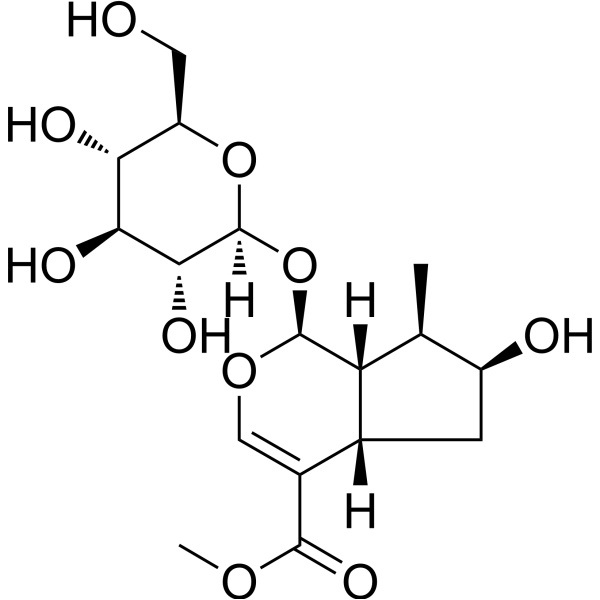
Loganin
5 Publications Verification
Loganoside
|
Reactive Oxygen Species (ROS)
TNF Receptor
Interleukin Related
|
Neurological Disease
Inflammation/Immunology
Cancer
|
|
Loganin is a type of iridoid glycoside compound that possesses anti-inflammatory, antioxidant, and antitumor properties, and offers protective effects against acute lung injury and pulmonary fibrosis. Loganin exerts its protective effects against LPS (HY-D1056)-mediated inflammation and oxidative stress by upregulating the Nrf2/HO-1 signaling pathway, and it reduces neuroinflammation caused by spinal cord injury (SCI) .
|
-
- HY-128754
-
|
|
Environmental Pollutants
Endogenous Metabolite
NO Synthase
Interleukin Related
TNF Receptor
|
Inflammation/Immunology
|
|
Monoolein is a biocompatible lipid molecule that can be used as a carrier for bone repair. Monoolein exhibits anti-inflammatory activity by inhibiting the immune response induced by LPS (HY-D1056). It exerts its anti-inflammatory effects by reducing the production of immune response factors such as IL-12 p40, IL-6, and TNF-α, and inhibiting the generation of NO. Monoolein can be used in drug delivery and research in the field of inflammatory diseases .
|
-
- HY-118984
-
|
|
Toll-like Receptor (TLR)
|
Inflammation/Immunology
|
|
CRX-526 is a TLR4 antagonist that can block the interaction of lipopolysaccharide (LPS, HY-D1056) with the immune system, including preventing the expression of pro-inflammatory genes stimulated by LPS, as well as blocking the release of TNF-α induced by LPS. CRX-526 exhibits anti-inflammatory effects in two mouse models of colitis (namely, the dextran sodium sulfate-induced colitis model and the multidrug resistance gene 1a-deficient mouse model) .
|
-
- HY-178214
-
|
|
Ser/Thr Kinase
Lipoxygenase
|
Inflammation/Immunology
|
|
CSBP ligand 1 (Compound 36) is a ligand of CSBP, with an IC50 of 0.08 μM for CSBP binding. CSBP ligand 1 can inhibit the production of TNF in mice treated with LPS (HY-D1056). CSBP ligand 1 has no significant inhibitory activity against PGHS-1 (IC50: 16 μM) and 5-LO (IC50: 60 μM). CSBP ligand 1 can be used in the research of inflammation-related diseases .
|
-
- HY-N13706
-
|
|
NO Synthase
|
Inflammation/Immunology
|
|
3β,15α-Dihydroxy-7,11,23-trioxo-lanost-8-dien-26-oic acid is a triterpene compound that can be found in Ganoderma lucidum, and it inhibits nitric oxide (NO) production in BV-2 microglial cells induced by lipopolysaccharide (LPS, HY-D1056), with an IC50 of 6.50 μM, making it a potential candidate for anti-inflammatory research .
|
-
- HY-163368
-
|
|
HDAC
|
Inflammation/Immunology
|
|
HDAC6-IN-34 (compound 21) is an oral active and selective HDAC6 inhibitor with the IC50 of 18 nM. HDAC6-IN-34 increases the acetylation level of tubulin without affecting histone acetylation in cutaneous T-cell lymphoma cells and inhibits TNF-α secretion in LPS (HY-D1056)-stimulated macrophage cells. HDAC6-IN-34 shows excellent anti-arthritic efficacy in rat .
|
-
- HY-128754R
-
|
|
Reference Standards
Endogenous Metabolite
Interleukin Related
TNF Receptor
NO Synthase
|
Inflammation/Immunology
|
|
Monoolein is a biocompatible lipid molecule that can be used as a carrier for bone repair. Monoolein exhibits anti-inflammatory activity by inhibiting the immune response induced by LPS (HY-D1056). It exerts its anti-inflammatory effects by reducing the production of immune response factors such as IL-12 p40, IL-6, and TNF-α, and inhibiting the generation of NO. Monoolein can be used in drug delivery and research in the field of inflammatory diseases .
|
-
- HY-P11603
-
|
|
Pyroptosis
|
Inflammation/Immunology
|
|
SK56 is a GSDMD-NT pore inhibitor. SK56 inhibits pyroptosis (Pyroptosis) and the release of pyroptosis-related cytokines in macrophages and human peripheral blood leukocytes. SK56 prevents extensive cell death in human alveolar organoids in an organoid-macrophage co-culture model. SK56 prevents death from infectious shock induced by LPS (HY-D1056) or cecal ligation and puncture in mice. SK56 can be used in studies related to sepsis .
|
-
- HY-15698B
-
|
|
PKD
Pim
Apoptosis
|
Inflammation/Immunology
Cancer
|
|
CRT0066101 trihydrochloride is the trihydrochloride salt form of CRT0066101 (HY-15698). CRT0066101 trihydrochloride is an orally active PKD inhibitor with IC50 values of 1 nM, 2.5 nM and 2 nM for PKD1, PKD2, and PKD3, respectively. CRT0066101 trihydrochloride is also an inhibitor for PIM2 with an IC50 of ~135.7 nM. CRT0066101 trihydrochloride exhibits anti-inflammatory activity in mice LPS (HY-D1056)-induced lung injury models, and has anticancer effects .
|
-
- HY-N12540
-
|
MGDG
|
DNA/RNA Synthesis
Apoptosis
|
Others
|
|
Monogalactosyldiacylglycerol (MGDG) is a galactolipid with anti-inflammatory and anticancer activities, which is found in photosynthetic organisms. Monogalactosyldiacylglycerol is a potent DNA polymerase inhibitor with pro-apoptotic activity. Monogalactosyldiacylglycerol inhibits the synthesis of LPS (HY-D1056)-induced inflammation-related proteins (Ex-FABP, Avidin, Serum Amyloid A). Monogalactosyldiacylglycerol exerts an anti-proliferative effect on chicken articular chondrocytes . Monogalactosyldiacylglycerol can be used in research related to osteoarthritis, cancer and inflammatory diseases .
|
-
- HY-P11772
-
|
|
Bacterial
|
Infection
|
|
LBP-14, a peptide, is a synthetic fragment of the LPS (HY-D1056) binding protein (LBP) and is a LPS antagonist. LBP-14 interacts with LPS via electrostatic contacts between arginine/lysine residues and LPS phosphate groups, and hydrophobic contacts between aromatic/aliphatic residues and LPS acyl chains, blocking LPS binding to LBP. LBP-14 moderately inhibits LPS-induced TNF-α formation. LBP-14 can be used for the research of gram-negative sepsis .
|
-
- HY-N3029
-
|
|
Interleukin Related
Apoptosis
Glutathione Peroxidase
SOD
Glutathione S-transferase
Necroptosis
|
Inflammation/Immunology
|
|
Noreugenin is a phenolic compound found in Calea uniflora Less. Noreugenin inhibits myeloperoxidase activity and reduces levels of proinflammatory cytokines IL-1β and IL-17A levels in LPS (HY-D1056)-induced murine pleurisy model. Noreugenin reduces apoptosis and necrosis. Noreugenin reduces lipid peroxidation, and antioxidant enzyme (CAT, SOD, GST) activity. Noreugenin exhibits anti-inflammatory and antioxidant effects. Noreugenin can be used for the research of inflammatory conditions, such as pleurisy .
|
-
- HY-169974
-
|
|
SARS-CoV
Virus Protease
NO Synthase
|
Infection
Inflammation/Immunology
|
|
SARS-CoV-2-IN-107 (Compound A7) is the inhibitor for SARS-CoV-2 3CLpro with an IC50 of 261.3 nM. SARS-CoV-2-IN-107 inhibits the SARS-CoV-2 replication with an EC50 of 11.7 μM. SARS-CoV-2-IN-107 exhibits anti-inflammatory activity with a NO inhibition rate of 68.6% in LPS (HY-D1056)-stimulated RAW264.7 macrophages .
|
-
- HY-179646
-
|
|
Toll-like Receptor (TLR)
NO Synthase
NF-κB
TNF Receptor
Interleukin Related
|
Neurological Disease
|
|
CIAC101 is a potent and brain-penetrant TLR4 antagonist with an IC50 of 17.0 nM in NO assay. CIAC101 blocks Lipopolysaccharides (HY-D1056) (LPS)-induced NF-κB activation and reduces the expression of pro-inflammatory mediators (iNOS, IL-1β, TNF-α, and IL-6). CIAC101 robust antineuroinflammatory activity with efficacy against drug-evoked neurobehavioral adaptations. CIAC101 can be used for the research of addiction and neurological disease .
|
-
- HY-W010253R
-
|
|
Bacterial
Reference Standards
|
Infection
Inflammation/Immunology
|
|
Benzylurea (Standard) is the analytical standard of Benzylurea (HY-W010253). This product is intended for research and analytical applications. Benzylurea is a benzylamide. Benzylurea is an anti-inflammatory agent. Benzylurea inhibits LPS (HY-D1056)-induced upregulation of MTCH2 expression and regulates pathways associated with mitochondrial function, inflammation and cell survival. Benzylurea alleviates LPS-induced proliferation inhibition and apoptosis of periodontal ligament fibroblasts, as well as the release of proinflammatory cytokines. Benzylurea can be used in studies related to periodontitis.
|
-
- HY-179009
-
|
|
NOD-like Receptor (NLR)
Interleukin Related
|
Inflammation/Immunology
|
NOD2 agonist 4 (Compound 12b) is a potent NOD2 agonist with an EC50 of 44.1 nM. NOD2 agonist 4 induces cytokine production (MCP-1, IL-6 and IL-8) in peripheral blood mononuclear cells (PBMCs), both alone and in combination with Lipopolysaccharide (LPS) (HY-D1056). NOD2 agonist 4 can be used for the studies of NOD2-targeted immunomodulator or vaccine adjuvant .
|
-
- HY-W709413
-
-
- HY-N16376
-
|
MJ 286A
|
NF-κB
STAT
|
Inflammation/Immunology
|
|
Thienodolin (MJ 286A) is an alkaloid that has been found in S. albogriseolus. Thienodolin inhibits nitric oxide production in LPS (HY-D1056)-stimulated RAW 264.7 murine macrophage cells with an IC50 value of 17.2 μM. Thienodolin suppresses iNOS, blocks the degradation of IκBα, attenuates NF-κB p65 accumulation in the nucleus, and reduces the phosphorylation level of STAT1 at Tyr701. Thienodolin can be used for the study of inflammation .
|
-
- HY-B1916R
-
|
Spiramycin B (Standard); Spiramycin II (Standard); Foromacidin B (Standard)
|
Reference Standards
Antibiotic
Bacterial
Parasite
|
Infection
|
|
Acetylspiramycin (Standard) is the analytical standard of Acetylspiramycin. This product is intended for research and analytical applications. Acetylspiramycin (Spiramycin B) is an effective oral macrolide antibiotic produced by Streptomyces, It can inhibit the splenic lymphocyte transformation induced by phytohemagglutinin (PHA), LPS (HY-D1056) and antigen, reduce the procoagulant activity of macrophages, have good antibacterial effect on gram-positive bacteria, and is also an effective antigenic insect agent, which can be used to fight parasitic infection[1][2][3][4].
|
-
- HY-172226
-
|
|
P2Y Receptor
|
Inflammation/Immunology
|
|
P2Y14R antagonist 3 (Compound A) is a potent and orally active P2Y14R antagonist with an IC50 value of 23.60 nM and a Kd value of 7.26 μM. P2Y14R antagonist 3 can reduce the degree of lung injury in the Lipopolysaccharides (LPS) (HY-D1056)-induced acute lung injury mice. P2Y14R antagonist 3 can be used for inflammatory diseases .
|
-
- HY-173407
-
|
|
P2Y Receptor
Interleukin Related
|
Inflammation/Immunology
|
|
P2Y14R antagonist 4 (Compound 25l) is an orally active P2Y14R antagonist (IC50: 5.6 nM) with superior binding affinity to P2Y14R over PPTN. P2Y14R antagonist 4 has anti-inflammatory activity and reduces LPS (HY-D1056)-induced proinflammatory cytokines (IL-1β, IL-6, and TNF-α) release .
|
-
- HY-P990268
-
|
|
Phosphatase
|
Inflammation/Immunology
|
|
Anti-Mouse CD45.2 Antibody (104.2) is a mouse-derived IgG2a κ type antibody inhibitor, targeting to mouse CD45.2. Anti-Mouse CD45.2 Antibody (104.2) can inhibit B Cell differentiation. Anti-Mouse CD45.2 Antibody (104.2) can be used for the researches of inflammation and immunology, such as LPS (HY-D1056)-induced inflammation and autoimmunity .
|
-
- HY-N3602A
-
|
Rengyolone
|
TNF Receptor
NF-κB
NO Synthase
|
Inflammation/Immunology
|
|
rel-Cleroindicin F (Rengyolone) is a cyclohexyl acetyl compound that can be isolated from the fruit of forsythia and has anti-inflammatory activity. It strongly inhibits the production of nitric oxide (NO) and tumor necrosis factor-alpha (TNF-α). rel-Cleroindicin F does this by downregulating the activity of NF-κB and NF-κB kinases in RAW 264.7 cells stimulated by LPS (HY-D1056), thus inhibiting the expression of inducible nitric oxide synthase (NO Synthase) and nitric oxide production .
|
-
- HY-168710
-
|
|
Toll-like Receptor (TLR)
NF-κB
IKK
|
Inflammation/Immunology
|
|
TLR4/NF-κB-IN-1 (Compound 7x) is an orally available inhibitor that specifically targets the TLR4/NF-κB signaling pathway, offering anti-inflammatory effects and the ability to cross the blood-brain barrier. TLR4/NF-κB-IN-1 can reduce acute neuroinflammation in mice caused by LPS (HY-D1056) and downregulate the expression of TLR4, P-NF-κB and P-IκB-α proteins .
|
-
- HY-161833
-
|
|
Interleukin Related
TNF Receptor
|
Inflammation/Immunology
|
|
HSP90-IN-31 (compound Be01) causes reduction of CD80 and CD86 expression on dendritic cells (DCs). HSP90-IN-31 decreases the production of pro-inflammatory cytokines (IL-6, TNF-α, and IL-1β) in BMDC and peritoneal macrophages stimulated by LPS (HY-D1056). Under the delayed-type hypersensitivity (DTH) mice model, HSP90-IN-31 reduces ear swelling and pro-inflammatory cytokines in the spleen .
|
-
- HY-114221
-
|
UR13870
|
p38 MAPK
|
Inflammation/Immunology
|
|
Org 48762-0 (UR13870) is a potent, orally active and selective p38 inhibitor with an EC50 of 0.1 μM for p38α kinase. Org 48762-0 shows a high degree of kinase selectivity for p38α and p38β over other kinases. Org 48762-0 reduces Lipopolysaccharides (HY-D1056) (LPS)-induced TNFα release. Org 48762-0 can be used for the study of rheumatoid arthritis (RA) and Werner syndrome .
|
-
- HY-A0024
-
|
(R)-(+)-Tolterodine; (+)-Tolterodine; (R)-Tolterodine; PNU-200583
|
mAChR
Cytochrome P450
|
Neurological Disease
Cancer
|
|
Tolterodine ((R)-(+)-Tolterodine) is a mAChR inhibitor and substrate for cytochrome P450 enzymes. Tolterodine competitively binds acetylcholine, reduces sympathetic excitation, and inhibits involuntary bladder muscle contraction. Tolterodine restores the Nrf2/NF-κB signaling pathway, mediates protection against inflammatory response and ferroptosis. Tolterodine ameliorates LPS (HY-D1056)-induced reactive oxygen species production and lipid oxidation. Tolterodine can be used for the research of urinary tract infections and overactive bladder .
|
-
- HY-N12087
-
|
|
NF-κB
NO Synthase
Reactive Oxygen Species (ROS)
|
Inflammation/Immunology
|
|
8-Deoxylactucin is an orally active sesquiterpene lactone. 8-Deoxylactucin inhibits LPS (HY-D1056)-induced NO production in RAW264.7 macrophages with an IC50 value of 4.35 μM. 8-Deoxylactucin exerts anti-inflammatory effects by blocking the NF-κB pathway. 8-Deoxylactucin demonstrates hepatoprotective efficacy in LPS/D-galactosamine-induced acute hepatitis model of mice. 8-Deoxylactucin can be used for the study of inflammatory diseases and inflammatory liver injuries .
|
-
- HY-119298
-
|
|
p38 MAPK
|
Inflammation/Immunology
|
|
AW-814141 is a selective and orally active p38 MAP kinase inhibitor. AW-814141 has an IC50 values of 100 nM and 158 nM for p38-α and β isoforms, respectively. AW-814141 can inhibit the production of TNF-α induced by LPS (HY-D1056). AW-814141 can inhibit paw edema in rats in a dose-dependent manner. AW-814141 exhibits anti-inflammatory activity and can be used in the research of inflammatory diseases such as rheumatoid arthritis .
|
-
- HY-N0787
-
|
4-Caffeoylquinic acid; 4-O-Caffeoylquinic acid
|
Endogenous Metabolite
NF-κB
Keap1-Nrf2
mTOR
HIF/HIF Prolyl-Hydroxylase
|
Inflammation/Immunology
|
|
Cryptochlorogenic acid (4-Caffeoylquinic acid) is a naturally occurring phenolic acid compound with oral effectiveness, anti-inflammatory, antioxidant and anti-cardiac hypertrophy effects. Alleviating LPS (HY-D1056) and ISO (HY-B0468) by regulating proinflammatory factor expression, inhibiting NF-κB activity, promoting Nrf2 nuclear transfer, and regulating PI3Kα/Akt/ mTOR / HIF-1α signaling pathway Induced physiological stress response .
|
-
- HY-172409
-
|
|
Cannabinoid Receptor
p38 MAPK
NF-κB
|
Inflammation/Immunology
|
|
CB1R antagonist 2 (Compound 11g) is the antagonist for cannabinoid receptor 1 (CB1R), that inhibits MAPK/NF-κB signaling pathway and exhibits anti-inflammatory activity. CB1R antagonist 2 inhibits LPS (HY-D1056)-induced IL-6, IL-1β and TNF-α expressions in RAW264.7. CB1R antagonist 2 ameliorates OVA-induced allergic rhinitis in mouse models .
|
-
- HY-168935
-
|
|
NO Synthase
TNF Receptor
Interleukin Related
|
Inflammation/Immunology
|
|
Anti-inflammatory agent 95 (Compound 2e) is an anti-inflammatory agent that exhibits the most potent anti-inflammatory activity in LPS (HY-D1056)-induced RAW 264.7 mouse macrophages.
It significantly inhibits the production of NO, with an IC50 of 8.8 μM, and reduces the secretion of TNF-α and IL-1β, with inhibition rates reaching 60% and over 90%, respectively, at a concentration of 100 μM.
Anti-inflammatory agent 95 holds promise for research in the field of inflammatory diseases .
|
-
- HY-N10768
-
|
|
IKK
NF-κB
|
Inflammation/Immunology
|
|
1-Dehydro-[10]-gingerdione directly inhibits IKKβ activity by targeting the activation loop of IKKβ, thus disrupting IKKβ-catalysed IκBα phosphorylation in macrophages stimulated with agonists. 1-Dehydro-[10]-gingerdione inhibits LPS (HY-D1056)-induced NF-κB transcriptional activity. 1-Dehydro-[10]-gingerdione has the potential for NF-κB-associated inflammation and autoimmune disorders research .
|
-
- HY-168096
-
|
|
NO Synthase
Apoptosis
|
Cardiovascular Disease
Neurological Disease
|
|
iNOs-IN-5 (Compound BN-4) is an inhibitor for iNOS with an IC50 of 0.1707 μM, and reduces NO levels in LPS (HT-D1056)-induced RAW264.7 cells. iNOs-IN-5 reduces the hypoxic injury stimulated ROS and lactate dehydrogenase expression, and exhibits anti-necrosis and anti-apoptosis efficacy. iNOs-IN-5 exhibits anti-cerebral ischemia and neuroprotective activities in SD rat models. iNOs-IN-5 is blood-brain barrier penetrable .
|
-
- HY-163151
-
|
|
PI3K
Akt
p38 MAPK
|
Neurological Disease
Inflammation/Immunology
|
|
JE-133 is an optically active isochromane-2H-chromene conjugate. JE-133 exhibits antioxidant and anti-inflammatory activities. JE-133 is a neuroprotective agent that effectively inhibits neuronal oxidative damage associated with PI3K/Akt and MAPK signaling pathways. JE-133 can also inhibit lipopolysaccharide (LPS) (HY-D1056)-induced neuroinflammation by regulating JAK/STAT and Nrf2 signaling pathways .
|
-
- HY-164102
-
|
|
TNF Receptor
NF-κB
|
Inflammation/Immunology
|
|
TNF-α-IN-18 (Compound 61) is an inhibitor for TNF-α (IC50 of 1.8 μM), that inhibits TNF signaling pathway through block of NF-kB migration from cytoplasm to nucleus. TNF-α-IN-18 exhibits slight cytotoxicity to mouse fibroblast LM cell, with a CC50 >50 μM. TNF-α-IN-18 ameliorates the TNF- or Lipopolysaccharide (HY-D1056)-induced sepsis in mouse models. TNF-α-IN-18 protects mice from rheumatoid arthritis .
|
-
- HY-162316
-
|
|
NF-κB
|
Inflammation/Immunology
|
|
NF-κB-IN-15 (compound 14r) is a potent NF-κB inhibitor. NF-κB-IN-15 decreases the NO levels and inhibits the release of IL-6, TNF-α, and IL-1β in LPS (HY-D1056) -induced cells. NF-κB-IN-15 inhibits LPS-induced phosphorylation of p65 and degradation of IκBα. NF-κB-IN-15 shows anti-inflammatory activity has the potential for the research of acute lung injury (ALI) .
|
-
- HY-182236
-
|
Reduced scytonemin
|
PI3K
p38 MAPK
NF-κB
NO Synthase
Reactive Oxygen Species (ROS)
Autophagy
|
Cancer
|
|
JRN73958 (Reduced scytonemin) is a PI3K/Akt, MAPK, and NF-κB inhibitor found in Nostoc commune. JRN73958 inhibits nitric oxide production, induce reactive oxygen species (ROS) generation, and lead to autophagy. JRN73958 decreases LPS (HY-D1056)/IFNγ-induced PI3K/Akt, MAPK, and NF-κB activity. JRN73958 can be used for the research of leukemia .
|
-
- HY-W010037
-
|
|
Environmental Pollutants
COX
|
Inflammation/Immunology
|
|
2-tert-Butyl-4-methoxyphenol is a major component of Butylhydroxyanisole (BHA) (HY-B1066). 2-tert-Butyl-4-methoxyphenol is an antioxidant agent, that inhibits expression of Cox2 and Tnfa genes upon stimulation with Lipopolysaccharides (HY-D1056). 2-tert-Butyl-4-methoxyphenol exhibits anti-inflammatory activity, combined with 2,6-di-tert-butyl-4-methylphenol (BHT) .
|
-
- HY-N0358R
-
|
1,4-DCQA (Standard)
|
Reference Standards
TNF Receptor
Xanthine Oxidase
|
Inflammation/Immunology
|
|
1,4-Dicaffeoylquinic acid (Standard) (1,4-DCQA (Standard)) is the analytical standard of 1,4-Dicaffeoylquinic acid (HY-N0358). This product is intended for research and analytical applications. 1,4-Dicaffeoylquinic acid (1,4-DCQA) is a phenylpropanoid compound that can be isolated from Xanthii fructus and an inhibitor of xanthine oxidase (IC50: 7.36 μM). 1,4-Dicaffeoylquinic acid has anti-inflammatory activity and can inhibit the production of TNF-α induced by LPS (HY-D1056) .
|
-
- HY-182569
-
|
|
VEGFR
|
Inflammation/Immunology
Cancer
|
|
FR 111142 is an angiogenesis inhibitor (IC50 = 18.4 μM) and has anti-inflammatory activity (IC50 = 20.6 μM). FR 111142 inhibits capillary-like tube formation as well as nitric oxide production in LPS (HY-D1056)-activated murine macrophages. FR 111142 enhances catabolism of low-density lipoprotein (LDL). FR 111142 does not induce significant cytotoxicity in human endothelial progenitor cells, nor affect cell viability of murine macrophages. FR 111142 can be used for the research of cancer, inflammatory diseases .
|
-
- HY-P99008
-
|
IC14
|
Toll-like Receptor (TLR)
|
Infection
Neurological Disease
Inflammation/Immunology
|
|
Atibuclimab (IC14), is a chimeric monoclonal antibody directed against CD14 and is composed of murine variable and human IgG4 Fc regions. Atibuclimab attenuates Lipopolysaccharides (HY-D1056) (LPS)-induced symptoms and strongly inhibits LPS-induced proinflammatory cytokine release, while only delaying the release of the anti-inflammatory cytokines soluble TNF receptor type I and IL-1 receptor antagonist. Atibuclimab can be used for the research of amyotrophic lateral sclerosis, sepsis, community-acquired pneumonia, or acute lung injury .
|
-
- HY-Y0586R
-
|
|
NF-κB
Reference Standards
STAT
|
Metabolic Disease
Inflammation/Immunology
|
|
2,4,5-Trimethoxybenzoic acid (Standard) is the analytical standard of 2,4,5-Trimethoxybenzoic acid (HY-Y0586). This product is intended for research and analytical applications. 2,4,5-Trimethoxybenzoic acid (Asaronic acid) is a compound identified in purple perilla extracts. 2,4,5-Trimethoxybenzoic acid inhibits LPS (HY-D1056)-induced inflammatory responses, inhibits the activation of NF-κB and STAT signaling pathways. 2,4,5-Trimethoxybenzoic acid inhibits M1 macrophage phenotype-mediated inflammation in diabetes .
|
-
- HY-162359
-
|
|
IRAK
|
Neurological Disease
Inflammation/Immunology
|
|
BIO-7488 is an orally active, selective and blood-brain barrier permeable IRAK4 inhibitor, with an IC50 value of 0.5 nM. BIO-7488 inhibits the production of pro-inflammatory cytokines (IL-1β, TNFα, IL-6) and demonstrates anti-inflammatory effects in both LPS (HY-D1056) and distal hypoxic-middle cerebral artery occlusion (DH-MCAO) ischemic stroke model. BIO-7488 can be used for the study of neuroinflammatory-related diseases, particularly ischemic stroke .
|
-
- HY-158434
-
|
|
IRAK
|
Inflammation/Immunology
|
|
IRAK1-IN-1 (compound B8) is an orally active IRAK1 inhibitor. IRAK1-IN-1 inhibits the release of IL-6 with the IC50 values of 4.57 μM and 6.51 μM on mouse cells J774A. 1 and human cells THP-1, respectively. IRAK1-IN-1 alleviats LPS (HY-D1056)-induced acute lung injury (ALI) and DSS(HY-116282C)-induced colitis in mice .
|
-
- HY-179371
-
|
|
Pyruvate Kinase
Interleukin Related
|
Inflammation/Immunology
|
|
LIQ1, a flavonoid derivative, is a potent Pyruvate kinase M2 (PKM2) allosteric inhibitor (IC50 = 0.39 μM; Kd = 4.5 μM) targeting Arg43 within the polyarginine pocket. LIQ1 exhibits efficacy in a mouse model of LPS (HY-D1056)-induced endotoxemia, preventing the nuclear translocation of PKM2 and inhibiting its binding to HIF-1α, thereby suppressing IL-1β transcription. LIQ1 can be used for the research of endotoxemia [1].
|
-
- HY-N0512R
-
|
Loganoside (Standard)
|
Reference Standards
Apoptosis
Keap1-Nrf2
TNF Receptor
Interleukin Related
|
Neurological Disease
Inflammation/Immunology
Cancer
|
|
Loganin (Standard) is the analytical standard of Loganin. This product is intended for research and analytical applications. Loganin is a type of iridoid glycoside compound that possesses anti-inflammatory, antioxidant, and antitumor properties, and offers protective effects against acute lung injury and pulmonary fibrosis. Loganin exerts its protective effects against LPS (HY-D1056)-mediated inflammation and oxidative stress by upregulating the Nrf2/HO-1 signaling pathway, and it reduces neuroinflammation caused by spinal cord injury (SCI) .
|
-
- HY-173564
-
|
|
Epigenetic Reader Domain
Necroptosis
|
Inflammation/Immunology
|
|
DW34 is an orally active pan-BRD4-D1 biased inhibitor with additional BRD4-D2 inhibitive activity. DW34 displays comparable inhibitive efficacy to I-BET151 (HY-13235) (EC50 = 0.16 μM) with low nanomolar EC50 values of 0.14 μM. DW34 significantly reduces liver inflammation induced by LPS (HY-D1056) and APAP (HY-66005) via reducing chemokine expression and cellular necrosis .
|
-
- HY-N10156
-
|
|
Na+/H+ Exchanger (NHE)
Phosphodiesterase (PDE)
NO Synthase
|
Inflammation/Immunology
|
|
1,3,5-Trihydroxy-4-prenylxanthone is a Na +/H + exchange system inhibitor with a minimum inhibitory concentration of 10 μg/mL . 1,3,5-Trihydroxy-4-prenylxanthone is a phosphodiesterase type 5 (PDE5) inhibitor with an IC50 value of 3.0 μM . 1,3,5-Trihydroxy-4-prenylxanthone inhibits Lipopolysaccharide (LPS) (HY-D1056)-induced NO production in RAW264.7 macrophages, and has anti-inflammatory activities .
|
-
- HY-N19818
-
|
|
Phosphatase
NF-κB
Pregnane X Receptor (PXR)
|
Cancer
|
|
Glycybridin C is a Protein tyrosine phosphatase 1B (PTP1B) inhibitor and pregnane X receptor (PXR) ligand. Glycybridin C inhibits insulin and leptin signaling pathway negative regulation, LPS (HY-D1056)-induced NF-κB transcriptional activity. Glycybridin C forms hydrophobic and π-π stacking interactions with Met243, Phe288, Tyr306, and His407 residues of PXR. Glycybridin C can be used for the research of hepatocellular carcinoma, colorectal adenocarcinoma, breast carcinoma .
|
-
- HY-N0854
-
|
|
HBV
ERK
JNK
p38 MAPK
STAT
NF-κB
TNF Receptor
Interleukin Related
NO Synthase
COX
|
Metabolic Disease
Cancer
|
|
Alisol F is a protostane-type triterpenoid with anti-inflammatory and anti-hepatitis B virus activities. Alisol F inhibits LPS (HY-D1056)-induced phosphorylation of ERK, JNK, p38, STAT3 and NF-κB (p65), suppresses the production of NO, IL-6, TNF-α and IL-1β, and also downregulates the levels of iNOS and COX-2. Alisol F reduces the serum alanine aminotransferase and aspartate aminotransferase levels in mice with acute liver injury and ameliorates their liver pathological damage .
|
-
- HY-N9086A
-
|
5,7,4'-Trihydroxy-6-methylflavanone
|
NO Synthase
COX
Interleukin Related
|
Inflammation/Immunology
|
|
(rac)-Poriol (5,7,4'-Trihydroxy-6-methylflavanone) exhibits antioxidant activity, and scavenges free radical DPPH with an IC50 of 0.18 µg/mL. (rac)-Poriol inhibits the LPS (HY-D1056)-induced NO generation in RAW264.7 (98.35% inhibition rate at 10 μM), and exhibits anti-inflammatory activity. (rac)-Poriol exhibits good binding affinity with iNOS, COX-1, COX-2, TNF-α, and IL-1β .
|
-
- HY-N18117
-
|
|
EBV
|
Infection
Cancer
|
|
21-Hydroxyisoohchininolide is a salannin-type limonoid. 21-Hydroxyisoohchininolide inhibits lipopolysaccharide (LPS, HY-D1056)-induced nitric oxide production in mouse macrophages. 21-Hydroxyisoohchininolide exhibits cytotoxic activity against leukemia cells and breast cancer cells. 21-Hydroxyisoohchininolide suppresses phorbol 12-myristate 13-acetate (PMA) (HY-18739)-induced activation of Epstein-Barr virus early antigen in lymphocytes. 21-Hydroxyisoohchininolide can be used for the research of leukemia, breast cancer and inflammatory diseases .
|
-
- HY-90010
-
|
Kabi-2234; PNU-200583E
|
mAChR
Cytochrome P450
|
Neurological Disease
Cancer
|
|
Tolterodine tartrate (Kabi-2234) is a mAChR inhibitor and substrate for cytochrome P450 enzymes. Tolterodine tartrate competitively binds acetylcholine, reduces sympathetic excitation, and inhibits involuntary bladder muscle contraction. Tolterodine tartrate restores the Nrf2/NF-κB signaling pathway, mediates protection against inflammatory response and ferroptosis. Tolterodine tartrate ameliorates LPS (HY-D1056)-induced reactive oxygen species production and lipid oxidation. Tolterodine tartrate can be used for the research of urinary tract infections and overactive bladder .
|
-
- HY-P99019
-
|
TEV-48125; LBR-101; PF-04427429; RN-307
|
CGRP Receptor
|
Neurological Disease
Inflammation/Immunology
|
|
Fremanezumab (TEV-48125) is a humanized lgG2 monoclonal antibody that selectively and potently binds to calcitonin gene related peptide (CGRp) (IC50 values = 7.943 nM). Fremanezumab binds to mouse CGRP with an IC50 value of 19.6 nM. Fremanezumab counteracts anti-inflammatory effects of CGRP in vitro, including CGRP-mediated inhibition of LPS (HY-D1056)-induced microglial activation. Fremanezumab selectively inhibits the activation of Aδ meningeal nociceptors by cortical spreading depression (CSD) in rats. Fremanezumab can be used for the study of inflammation and chronic migraine .
|
-
- HY-A0024S
-
|
(R)-(+)-Tolterodine-d14 hydrochloride; (+)-Tolterodine-d14 hydrochloride; (R)-Tolterodine-d14 hydrochloride; PNU-200583-d14 hydrochloride
|
Isotope-Labeled Compounds
mAChR
Cytochrome P450
|
Neurological Disease
|
|
Tolterodine-d14 (hydrochloride) is the deuterium labeled Tolterodine hydrochloride . Tolterodine ((R)-(+)-Tolterodine) is a mAChR inhibitor and substrate for cytochrome P450 enzymes. Tolterodine competitively binds acetylcholine, reduces sympathetic excitation, and inhibits involuntary bladder muscle contraction. Tolterodine restores the Nrf2/NF-κB signaling pathway, mediates protection against inflammatory response and ferroptosis. Tolterodine ameliorates LPS (HY-D1056)-induced reactive oxygen species production and lipid oxidation. Tolterodine can be used for the research of urinary tract infections and overactive bladder.
|
-
- HY-170228
-
|
|
c-Kit
|
Inflammation/Immunology
|
|
Kit-IN-9 (Compound D9) is an inhibitor of c-Kit. c-Kit-IN-9 inhibits the inflammatory responses in J774A.1, RAW264.7, MPMs cells and lung tissues by blocking the activation of the NF-κB pathway induced by LPS (HY-D1056). Meanwhile, c-Kit-IN-9 exhibits good anti-inflammatory activities in acute lung injury and sepsis mouse models. c-Kit-IN-9 can be used in the research of acute lung injury and related inflammatory diseases .
|
-
- HY-N0761A
-
|
trans-3-Hydroxy-4-methoxycinnamic acid
|
NO Synthase
Prostaglandin Receptor
PI3K
Akt
NF-κB
Keap1-Nrf2
COX
|
Metabolic Disease
Inflammation/Immunology
|
|
trans-Isoferulic acid (trans-3-Hydroxy-4-methoxycinnamic acid) is an aromatic acid that exhibits anti-inflammatory activity. trans-Isoferulic acid dephosphorylates PI3K/Akt, suppresses LPS (HY-D1056)-induced NF-κB activation, enhances Nrf2 activity, downregulates iNOS and COX-2 expression, induces HO-1 expression, inhibits NO and PGE2 production, and scavenges hydroperoxyl radical. trans-Isoferulic acid can be used for research of inflammatiory diseases .
|
-
- HY-159564
-
|
|
COX
NO Synthase
|
Inflammation/Immunology
|
|
iNOS/COX-2-IN-3 (compound 7d) is a dual inhibitor of iNOS and COX-2, with potential anti-inflammatory activity against LPS (HY-D1056)-induced RAW 264.7 cells (IC50=3.48 μM). iNOS/COX-2-IN-3 has good plasma stability, oral activity and gastric safety, and its inhibitory activity on iNOS and COX-2 expression is 5.43-fold and 2.37-fold that of Indomethacin (HY-14397), respectively .
|
-
- HY-N3029R
-
|
|
Reference Standards
Interleukin Related
Apoptosis
Glutathione Peroxidase
SOD
Glutathione S-transferase
|
Inflammation/Immunology
|
|
Noreugenin (Standard) is the analytical standard of Noreugenin. This product is intended for research and analytical applications. Noreugenin is a phenolic compound found in Calea uniflora Less. Noreugenin inhibits myeloperoxidase activity and reduces levels of proinflammatory cytokines IL-1β and IL-17A levels in LPS (HY-D1056)-induced murine pleurisy model. Noreugenin reduces apoptosis and necrosis. Noreugenin reduces lipid peroxidation, and antioxidant enzyme (CAT, SOD, GST) activity. Noreugenin exhibits anti-inflammatory and antioxidant effects. Noreugenin can be used for the research of inflammatory conditions, such as pleurisy .
|
-
- HY-90010R
-
|
Kabi-2234 (Standard); PNU-200583E (Standard)
|
Reference Standards
mAChR
Cytochrome P450
|
Neurological Disease
Cancer
|
|
Tolterodine (tartrate) (Standard) is the analytical standard of Tolterodine tartrate. This product is intended for research and analytical applications. Tolterodine ((R)-(+)-Tolterodine) is a mAChR inhibitor and substrate for cytochrome P450 enzymes. Tolterodine competitively binds acetylcholine, reduces sympathetic excitation, and inhibits involuntary bladder muscle contraction. Tolterodine restores the Nrf2/NF-κB signaling pathway, mediates protection against inflammatory response and ferroptosis. Tolterodine ameliorates LPS (HY-D1056)-induced reactive oxygen species production and lipid oxidation. Tolterodine can be used for the research of urinary tract infections and overactive bladder.
|
-
- HY-182377
-
|
|
Interleukin Related
TNF Receptor
|
Inflammation/Immunology
Cancer
|
|
DT-5461 is an IL-1 and TNF-α antagonist. DT-5461 competitively binds lipid A-binding sites on macrophage receptors, blocks LPS (HY-D1056)-initiated signaling, inhibits LPS-induced cytokine release, prevents LPS-induced serum cytokine production in mice, and protects against LPS-induced lethal endotoxemia. DT-5461 can be used for the research of lethal endotoxemia, medullary tubular mammary carcinoma, poorly differentiated colon adenocarcinoma, squamous-cell lung carcinoma, and gelatinous gastric adenocarcinoma .
|
-
- HY-162963
-
|
|
PPAR
|
Inflammation/Immunology
|
|
PPARδ agonist 11 (Compound 11) is a selective agonist for PPARδ with an EC50 of 20 nM. PPARδ agonist 11 reduces the levels of nitrite oxide (NO), proinflammatory cytokines TNFα and IL-6 in LPS (HY-D1056)-stimulated RAW264.7 cell, and exhibits anti-inflammatory efficacy via NF-κB pathway. PPARδ agonist 11 exhibits good stability in human liver microsomes and plasma. PPARδ agonist 11 ameliorates Carrageenan (HY-125474)-induced foot edema .
|
-
- HY-N16431
-
|
|
AMPK
Nuclear Factor of activated T Cells (NFAT)
Interleukin Related
Endogenous Metabolite
|
Metabolic Disease
Inflammation/Immunology
|
|
NFAT-133 is an aromatic polyketide with immunosuppressive and antidiabetic activity. NFAT-133 activates the AMPK pathway, promoting glucose uptake in L6 muscle fibers, thereby resisting diabetes. NFAT-133 inhibits the transcriptional activity of activated T-cell nuclear factor (NFAT), thereby suppressing the expression of IL-2 and the proliferation of T cells, demonstrating an immunosuppressive effect. NFAT-133 does not exhibit antibacterial activity or cytotoxicity, but it can weaken the production of NO in RAW264.7 cells induced by Lipopolysaccharide (LPS) (HY-D1056) .
|
-
- HY-A0024R
-
|
(R)-(+)-Tolterodine (Standard); (+)-Tolterodine (Standard); (R)-Tolterodine (Standard); PNU-200583 (Standard)
|
Reference Standards
mAChR
Cytochrome P450
|
Neurological Disease
Cancer
|
|
Tolterodine (Standard) is the analytical standard of Tolterodine. This product is intended for research and analytical applications. Tolterodine ((R)-(+)-Tolterodine) is a mAChR inhibitor and substrate for cytochrome P450 enzymes. Tolterodine competitively binds acetylcholine, reduces sympathetic excitation, and inhibits involuntary bladder muscle contraction. Tolterodine restores the Nrf2/NF-κB signaling pathway, mediates protection against inflammatory response and ferroptosis. Tolterodine ameliorates LPS (HY-D1056)-induced reactive oxygen species production and lipid oxidation. Tolterodine can be used for the research of urinary tract infections and overactive bladder.
|
-
- HY-173115
-
|
|
COX
Lipoxygenase
Interleukin Related
PPAR
|
Metabolic Disease
Inflammation/Immunology
|
|
15-LOX-IN-2 (Compound 2a) is an orally active COX-2/15-LOX inhibitor and a partial agonist of PPARγ. 15-LOX-IN-2 has anti-inflammatory activity and inhibits the levels of 20-HETE, IL-1β and TNF-α in RAW 264.7 cells treated with LPS (HY-D1056). In addition, 15-LOX-IN-2 has significant glucose uptake capacity in the absence of insulin. 15-LOX-IN-2 can be used for the research of metabolic diseases .
|
-
- HY-N18025
-
-
- HY-176851
-
|
|
REV-ERB
|
Inflammation/Immunology
|
|
GSK1362 is a selective inverse agonist of REV-ERB. GSK1362disrupts the interaction of REV-ERBα with repressive co-modulators (NCoR1, SMRT2, RIP140). GSK1362 exerts an inverse agonist effect by increasing the transcription of BMAL1 to relieve BMAL1 repression by endogenous REV-ERB ligands. GSK1362 suppresses LPS (HY-D1056)-induced inflammatory cytokine expression, inhibits IL-1β-induced Cxcl5 transcription in cells. GSK1362 can be used for the study of inflammatory diseases .
|
-
- HY-179635
-
|
|
Glutathione S-transferase
Interleukin Related
|
Inflammation/Immunology
|
|
GSTO1-IN-6 is an allosteric and covalent GSTO1 inhibitor with an IC50 of 457 nM. GSTO1-IN-6 markedly reduces Lipopolysaccharides (LPS) (HY-D1056)-induced IL-1β (IC50 of 1.9 μM) and IL-18 (IC50 of 10. μM) secretion in human monocyte-derived macrophages. GSTO1-IN-6 covalently modifies GSTO1-Cys32, inducing conformational changes and protein destabilization. GSTO1-IN-6 can be used for the research of inflammatory diseases .
|
-
- HY-126066
-
-
- HY-W145486
-
|
|
Environmental Pollutants
Biochemical Assay Reagents
|
Neurological Disease
Metabolic Disease
Inflammation/Immunology
|
|
Calcium gluconate is an orally effective calcium salt supplement . Calcium gluconate reduces elevated serum potassium, decreased serum calcium, and postoperative myalgia associated with succinylcholine administration. Calcium gluconate restores calcium homeostasis, skeletal integrity, bone mineralization and bone density, and maintains levels of parathyroid hormone, bone resorption markers and osteoclasts. Calcium gluconate reverses LPS (HY-D1056)-induced ERK phosphorylation, inflammatory cytokine release and acute lung injury, alleviates airway inflammatory damage and suppresses immune responses. Calcium gluconate can be used in research related to postoperative myalgia, osteoporosis/osteomalacia and acute lung injury .
|
-
- HY-111165
-
|
|
HSP
NF-κB
ERK
JNK
PDGFR
c-Myc
DNA/RNA Synthesis
Apoptosis
|
Inflammation/Immunology
Cancer
|
|
SNX-7081 is an Hsp90 inhibitor with Ki and IC50 values of 26 nM and 44 nM, respectively. SNX-7081 blocks the nuclear translocation of NF-κB, inhibits the production of pro-inflammatory cytokines, attenuates the ERK/JNK and PDGF signaling pathways, and suppresses LPS (HY-D1056)-induced nitric oxide production. SNX-7081 inhibits DNA repair, induces G2/M cell cycle arrest, and triggers apoptosis via downregulation of MYC/nucleolin and activation of Fas. SNX-7081 can be used in research related to rheumatoid arthritis and cancer .
|
-
- HY-128598
-
|
|
Toll-like Receptor (TLR)
NF-κB
|
Inflammation/Immunology
Cancer
|
|
MD2-TLR4-IN-1 is a myeloid differentiation protein 2/toll-like receptor 4 (MD2-TLR4) complex antagonist. MD2-TLR4-IN-1 inhibits Lipopolysaccharides (HY-D1056) (LPS)-induced expression of TNF-α and IL-6 in macrophages with IC50 values of 0.89 μM and 0.53 μM, respectively. MD2-TLR4-IN-1 can be used for the study of acute lung injury (ALI) .
|
-
- HY-90010S
-
|
Kabi-2234-d14; PNU-200583E-d14
|
Isotope-Labeled Compounds
mAChR
Cytochrome P450
|
Neurological Disease
Cancer
|
|
Tolterodine tartrate-d14 (Kabi-2234-d14) is deuterium labeled Tolterodine tartrate. Tolterodine ((R)-(+)-Tolterodine) is a mAChR inhibitor and substrate for cytochrome P450 enzymes. Tolterodine competitively binds acetylcholine, reduces sympathetic excitation, and inhibits involuntary bladder muscle contraction. Tolterodine restores the Nrf2/NF-κB signaling pathway, mediates protection against inflammatory response and ferroptosis. Tolterodine ameliorates LPS (HY-D1056)-induced reactive oxygen species production and lipid oxidation. Tolterodine can be used for the research of urinary tract infections and overactive bladder.
|
-
- HY-145087A
-
|
|
NOD-like Receptor (NLR)
Interleukin Related
Caspase
|
Inflammation/Immunology
|
|
NP3-146 sodium is a NLRP3 inflammasome inhibitor through locking the NACHT domain of NLRP3. NP3-146 sodium shows potent inhibitory activity against IL-1β release with an IC50 value of 0.171 μM in LPS (HY-D1056)/Nigericin (HY-127019)-stimulated BMDM cells. NP3-146 sodium regulates the levels of cleaved Caspase-1 and cleaved IL-1β in cell supernatants. NP3-146 sodium can be used for the research of inflammatory diseases .
|
-
- HY-107574
-
|
|
Histone Methyltransferase
AP-1
NF-κB
PKA
|
Metabolic Disease
Inflammation/Immunology
Cancer
|
|
TC-E 5003 is a selective protein arginine methyltransferase 1 (PRMT1) inhibitor with an IC50 of 1.5 µM against hPRMT1. TC-E 5003 modulates the lipopolysaccharide (LPS) (HY-D1056)-induced AP-1 and NF-κB signaling pathways with anti-inflammatory properties. TC-E 5003 also upregulates the expression of Ucp1 and Fgf21, activates protein kinase A signaling and lipolysis in primary subcutaneous adipocytes from both mouse and humans. TC-E 5003 is promising for research of obesity and associated metabolic disorders, oxidative stress, inflammation and cancers .
|
-
- HY-174405
-
|
|
PROTACs
Phosphodiesterase (PDE)
TNF Receptor
Interleukin Related
|
Inflammation/Immunology
|
|
PROTAC PDE4 degrader-1 (Compound 9m) is a selective and orally active PDE4 PROTAC degrader with a DC50 of 41.98 μM. PROTAC PDE4 degrader-1 potently inhibits the secretion of pro-inflammatory cytokines such as TNF-α and IL-6. PROTAC PDE4 degrader-1 significantly alleviates pulmonary inflammation in LPS (HY-D1056)-induced acute lung injury (ALI) mice Model . Pink: PDE4 ligand (HY-174410); Blue: CRBN ligase ligand (HY-10984); Black: linker
|
-
- HY-177050
-
|
|
G protein-coupled Bile Acid Receptor 1
|
Metabolic Disease
Inflammation/Immunology
|
|
RG-239 is an orally active TGR5 agonist with an EC50 of 120 nM, significantly outperforming Betulinic acid (HY-10529) (EC50 = 1.04 μM). RG-239 demonstrates higher selectivity for TGR5 compared to the FXRα. RG-239 increases mitochondrial activity in adipocytes and promotes neurite outgrowth at higher concentrations. RG-239 inhibits LPS (HY-D1056)-induced iNOS expression and nitrite production in Raw264.7 and microglia cells. RG-239 can be used for the study of type 2 diabetes [1][2][3][4][5].
|
-
- HY-168207
-
|
|
Toll-like Receptor (TLR)
NF-κB
|
Inflammation/Immunology
|
|
TH023 is an inhibitor for the TLR4 signaling pathway, that targets especially the formation of TLR4 homodimer. TH023 inhibits secreted embryonic alkaline phosphatase in cell HEK-Blue hTLR4 with an IC50 of 0.354 μM, and inhibits the NO expression in RAW264.7 with an IC50 of 1.61μM. TH023 also inhibits the activation of NF-κB, reduces the nuclear translocation of NF-κB p65. TH023 exhibits anti-inflammatory efficacy in LPS (HY-D1056)-induced mouse acute sepsis model, and ameliorates the mouse lung injury .
|
-
- HY-180831
-
|
|
Epigenetic Reader Domain
|
Metabolic Disease
Inflammation/Immunology
|
|
BRD4 D1-IN-3 (compound 39) is a potent, selective, and cell-active BRD4-D1 inhibitor (IC50 = 39 nM, Ki = 2.4 nM) with >1700-fold selectivity over BRD2-D1. BRD4 D1-IN-3 reduces the expression of pro-inflammatory chemokines CXCL1 and CCL2 in an LPS (HY-D1056)-mediated cellular model of liver inflammation. BRD4 D1-IN-3 can be used for liver inflammation research .
|
-
- HY-128578
-
|
|
PDHK
NO Synthase
Interleukin Related
HIF/HIF Prolyl-Hydroxylase
|
Metabolic Disease
Inflammation/Immunology
|
|
KPLH1130 is a pyruvate dehydrogenase kinase (PDK) inhibitor. KPLH1130 potently inhibits M1 macrophage polarization by reducing the expression of pro-inflammatory cytokines, decreasing the levels of M1 phenotype markers (HIF-1α, iNOS) and nitric oxide (NO) production. KPLH1130 prevents the reduction of mitochondrial oxygen consumption rate (OCR) induced by inflammatory stimuli (LPS ((HY-D1056) + IFN-γ) in various macrophage types. KPLH1130 improves glucose tolerance in HFD-fed mice. KPLH1130 can be used for the study of obesity-associated metabolic disorders and other inflammatory conditions .
|
-
- HY-179701
-
|
|
NF-κB
TNF Receptor
Interleukin Related
CXCR
|
Inflammation/Immunology
|
|
NIK-IN-3 is a potent and orally active NF-κB-inducing kinase (NIK) inhibitor with an IC50 of 5.2 nM. NIK-IN-3 suppresses non-canonical NF-κB pathway activation and inhibits the secretion of pro-inflammatory cytokines, such as TNF-α, IL-6, IL-1β and chemokine CXCL12. NIK-IN-3 shows significant anti-inflammatory effects in LPS (HY-D1056)-induced sepsis mice model and DSS (HY-116282)-induced colitis model. NIK-IN-3 can be used for the research of inflammation, such as colitis .
|
-
- HY-145087
-
|
NLRP3-IN-5
|
NOD-like Receptor (NLR)
Interleukin Related
Caspase
|
Inflammation/Immunology
|
|
NP3-146 is a NLRP3 inflammasome inhibitor through locking the NACHT domain of NLRP3. NP3-146 shows potent inhibitory activity against IL-1β release with an IC50 value of 0.171 μM in LPS (HY-D1056)/Nigericin (HY-127019)-stimulated BMDM cells. NP3-146 regulates the levels of cleaved Caspase-1 and cleaved IL-1β in cell supernatants. NP3-146 can be used for the research of inflammatory diseases .
|
-
- HY-N3307
-
-
- HY-161925
-
|
|
TGF-β Receptor
|
Neurological Disease
Inflammation/Immunology
|
|
sTGFBR3 antagonist 1 (Compound p24) is an antagonist for soluble transforming growth factor beta receptor 3 (sTGFBR3), thus activates TGF-β signaling pathway, and inhibits IκBα/NF-κB signaling pathway. sTGFBR3 antagonist 1 inhibits NO-release in LPS (HY-D1056) -induced BV2 cells with an IC50 of 0.52 μM. sTGFBR3 antagonist 1 exhibits anti-inflammatory and neuroprotective activities with blood brain barrier (BBB) permeability. sTGFBR3 antagonist 1 can be used in Alzheimer’s Disease research .
|
-
- HY-169052
-
|
|
JNK
Apoptosis
|
Cardiovascular Disease
Inflammation/Immunology
|
|
Cyy-272 is an orally active JNK inhibitor with IC50 values of 1.25 μM for JNK1, 1.07 μM for JNK2, and 1.24 μM for JNK3. Cyy-272 exerts anti-inflammatory effects by inhibiting JNK phosphorylation, thereby alleviating acute lung injury (ALI) induced by lipopolysaccharide (LPS, HY-D1056). Additionally, Cyy-272 significantly reduces inflammation in cardiomyocytes and cardiac tissue induced by high lipid concentrations, further mitigating cardiac hypertrophy, fibrosis, and apoptosis. Cyy-272 can be used in the study of obese cardiomyopathy .
|
-
- HY-180889
-
|
|
PROTACs
Epigenetic Reader Domain
|
Neurological Disease
Inflammation/Immunology
|
|
PROTAC BRD3 degrader-1 (compound D072) is a potent and selective PROTAC BRD3 degrader. PROTAC BRD3 degrader-1 selectively degrades BRD3 in mice, leading to the downregulation of H3K18ac without affecting BRD2 or BRD4. PROTAC BRD3 degrader-1 reduces intraocular inflammation in the experimental autoimmune uveitis (EAU) mouse mode and inhibits proinflammatory microglia in both uveitis retina and LPS (HY-D1056) treated mouse microglia cell line BV2. PROTAC BRD3 degrader-1 can be used for uveitis research .
|
-
- HY-N17395
-
|
|
TNF Receptor
Interleukin Related
|
Inflammation/Immunology
|
|
(6R,7R)-Epoxy-1-oleanen-3-ol is a triterpenoid that can be found in Boswellia ovalifoliolata, exhibiting anti-inflammatory activity. (6R,7R)-Epoxy-1-oleanen-3-ol inhibits TNF-α, IL-6, IL-8, and NO production in LPS (HY-D1056)-activated murine neutrophils. (6R,7R)-Epoxy-1-oleanen-3-ol can be used for the research on inflammatory conditions .
|
-
- HY-N0631
-
|
|
p38 MAPK
NF-κB
JNK
Cholinesterase (ChE)
Acyltransferase
NO Synthase
Interleukin Related
TNF Receptor
Prostaglandin Receptor
ERK
COX
|
Neurological Disease
Inflammation/Immunology
|
|
Cornuside is an iridoid glycoside with anti-allergic, anti-inflammatory, and neuroprotective activities. Cornuside exerts anti-allergic activity by downregulating the p38 MAPK, JNK, and NF-κB signaling pathways, and inhibits IgE-mediated histamine release from mast cells. Cornuside improves cognitive impairment in mice by inhibiting BACE1 activity (IC50 = 55.84 μg/mL) and enhancing ChAT activity. Cornuside inhibits LPS (HY-D1056)-induced inflammatory mediators, including iNOS, COX-2, PGE2, TNF-α, IL-6, and IL-1β, by suppressing NF-κB activation .
|
-
- HY-162641
-
|
|
IRAK
NF-κB
p38 MAPK
TNF Receptor
|
Inflammation/Immunology
|
|
AF-45 inhibits IRAK4 and IRAK1, with IC50s of 128 nM and 1765 nM. AF-45 inhibits the release of IL-6 and TNF-α in macrophages, with IC50s of 0.53-1.54 μM and 0.6-2.75 μM. AF-45 is also an inhibitor for NF-κB/MAPK signaling pathway. AF-45 exhibits anti-inflammatory activities against DSS-induced ulcerative colitis and Lipopolysaccharide (HY-D1056)-induced acute lung injury in mouse model. AF-45 exhibits good pharmacokinetic characteristics in rat models .
|
-
- HY-178352
-
|
|
Monoamine Oxidase
Reactive Oxygen Species (ROS)
|
Neurological Disease
Inflammation/Immunology
|
|
MAO-B-IN-49 is a selective and reversible MAO-B inhibitor (IC50 of 1 nM for human MAO-B). MAO-B-IN-49 shows much higher selectivity for MAO-B than for MAO-A (IC50 = 633.9 μM). MAO-B-IN-49 can reduce ROS production induced by Lipopolysaccharides (HY-D1056) (LPS) in HT22 cells. MAO-B-IN-49 demonstrates substantial neuroprotective properties and significantly improves motor dysfunction in MPTP (HY-W114750)-induced mouse models of Parkinson’s disease (PD). MAO-B-IN-49 can be used for the study of PD .
|
-
- HY-182939
-
|
|
MNK
Eukaryotic Initiation Factor (eIF)
NF-κB
|
Inflammation/Immunology
|
|
MNK1/2-IN-10 is an orally active, selective MNK1/MNK2 inhibitor, with an IC50 of 10.84 nM for MNK1 and an IC50 of 12.81 nM for MNK2. MNK1/2-IN-10 inhibits eIF4E phosphorylation, the NF-κB signaling pathway, macrophage polarization, oxidative stress and the production of pro-inflammatory cytokines. MNK1/2-IN-10 alleviates kidney and spleen damage in LPS (HY-D1056)-induced inflammatory mouse models. Anti-inflammatory agent 115 is applicable for research related to acute inflammation .
|
-
- HY-111152
-
|
|
STAT
|
Cancer
|
|
ML115, a molecular probe of the signal transducer, is a selective STAT3 agonist, with an EC50 of 2 nM. ML115 increases the expression of BCL3, a known STAT3-dependent oncogene. ML115 is inactive against the related STAT1, STAT5 and NF-κB anti-targets. ML115 counteracts the effects of Ginsenoside Rc (HY-N0042) on cell viability and inflammatory responses in LPS (HY-D1056)-stimulated H9c2 and RAW264.7 cells, while altering oxidative stress markers. ML115 can be used for the study of breast and prostate cancers .
|
-
- HY-B1114
-
|
AR-DF 26
|
Potassium Channel
ERK
STAT
NF-κB
COX
Interleukin Related
Reactive Oxygen Species (ROS)
|
Metabolic Disease
|
|
Gliquidone can bind to the pancreatic β-cells and increases insulin release to regulate blood glucose levels. Gliquidone significantly decreases LPS (HY-D1056)-induced proinflammatory responses and inhibits ERK/STAT3/NF-κB phosphorylation in BV2 microglial cells. Gliquidone can suppress microgliosis, microglial hypertrophy mediated by LPS, and proinflammatory cytokine COX-2 and IL-6 levels in murine model. Gliquidone also exhibits good anticancer activity in lung carcinoma cells. Gliquidone has antioxidant property. Gliquidone can be studied in research for type 2 diabetes and cancers .
|
-
- HY-170621
-
-
- HY-178136
-
|
|
Toll-like Receptor (TLR)
MyD88
p38 MAPK
NF-κB
JNK
|
Infection
Inflammation/Immunology
|
|
MyD88-IN-3 is an orally active, selective MyD88 Inhibitor. MyD88-IN-3 specifically targets the TIR domain of MyD88 (KD = 28.5 μM), thereby preventing MyD88 self-polymerization and interaction with TLRs, which suppresses the activation of MAPK and NF-κB pathways. MyD88-IN-3 demonstrates significant anti-inflammatory efficacy and effectively mitigates Acute Lung Injury (ALI) symptoms in CLP (cecal ligation and puncture) and Lipopolysaccharides (HY-D1056) (LPS)-induced ALI models. MyD88-IN-3 can be used for the study of ALI .
|
-
- HY-158402
-
|
|
Bacterial
Fungal
|
Infection
Inflammation/Immunology
|
|
Anti-inflammatory agent 84 (Compound 4D) is a derivative of Coumarin (HY-N0709) with antimicrobial and anti-inflammatory activities. Anti-inflammatory agent 84 inhibits E. coli, Candida albicans, Staphylococcus aureus and methicillin-resistant S. aureus (MRSA), with MIC of 312, 156, 19 and 316 μg/mL, respectively. Anti-inflammatory agent 84 inhibits biofilm formation of S. aureus, E. coli and MRSA, with IC50 of 185, 321 and 99 μM, respectively. Anti-inflammatory agent 84 inhibits nitric oxide production in Lipopolysaccharide (HY-D1056)-stimulated RAW264.7 macrophage cell .
|
-
- HY-125577
-
|
RU-36384
|
Interleukin Related
|
Inflammation/Immunology
|
|
VRT-18858 (RU-36384), the active metabolite of Pralnacasan (HY-19676), is a potent interleukin-1β converting enzyme (ICE) inhibitor (Ki = 1.4 nM). VRT-18858 inhibits LPS (HY-D1056)-induced IL-1β release (IC50 = 0.42 µM) and S. aureus Cowan-induced IL-1β and IL-18 release (IC50=1.3 and 2.1 µM, respectively) in human peripheral blood mononuclear cells. VRT-18858 can be used for osteoarthritis research .
|
-
- HY-118828B
-
|
12-OPDA (≥90%)
|
NF-κB
p38 MAPK
TNF Receptor
Interleukin Related
NO Synthase
Keap1-Nrf2
|
Neurological Disease
Inflammation/Immunology
|
|
12-Oxo phytodienoic acid (≥90%) (12-OPDA (≥90%)) is a plant lipid-derived anti-inflammatory compound. 12-Oxo phytodienoic acid (≥90%) induces the expression of SOCS-1 and inhibits LPS (HY-D1056)-induced activation of the NF-κB and p38 MAPK signaling pathways. 12-Oxo phytodienoic acid (≥90%) inhibits LPS-induced expression of IL-6 and TNF-α, and reduces LPS-induced NO production by decreasing iNOS levels. 12-Oxo phytodienoic acid (≥90%) induces activation of the Nrf2 signaling cascade. 12-Oxo phytodienoic acid (≥90%) can be used for the research of neurodegenerative diseases .
|
-
- HY-P992437
-
|
|
CD44
Apoptosis
|
Inflammation/Immunology
Cancer
|
|
PF-03475952 is a fully human IgG2 monoclonal antibody targeting CD44. PF-03475952 binds an epitope in CD44’s constant exons, blocks CD44-hyaluronic acid interaction, reduces cell surface CD44, and does not cross-react with rodent CD44 or LYVE-1. PF-03475952 induces cancer cell apoptosis, inhibits LPS (HY-D1056)-induced leukocyte cytokine release and cancer metastasis, and reduces CD44 expression on circulating CD3+ lymphocytes in cynomolgus monkeys. PF-03475952 can be used for the research of rheumatoid arthritis and hepatocellular carcinoma .
|
-
- HY-N1482
-
|
|
Environmental Pollutants
Parasite
|
Inflammation/Immunology
|
|
Methyl palmitate is a naturally occurring fatty acid ester. Methyl palmitate is a potent inhibitor of ΙκB phosphorylation. Methyl palmitate modulates macrophage activity and down-regulates pro-inflammatory mediators such as TNF-α and nitric oxide (NO). Methyl palmitate possesses anti-inflammatory and antifibrotic effects. Methyl palmitate can inhibit LPS (HY-D1056)-induced Kupffer cells and rat peritoneal macrophages. Methyl palmitate is able to inhibit the phagocytic function of RAW cells. Methyl palmitate is antagonistic to muscarinic receptors. Methyl palmitate exerts cardioprotective effects against ischemia/reperfusion injury in vivo. Methyl palmitate is highly toxic against adult T. cinnabarinus .
|
-
- HY-N11011
-
|
|
NF-κB
STAT
PERK
JNK
p38 MAPK
PGE synthase
Interleukin Related
TNF Receptor
COX
|
Inflammation/Immunology
Cancer
|
|
Withaphysalin A is a withanolide compound with anti-inflammatory and antioxidant activities. Withaphysalin A inhibits LPS (HY-D1056)-induced nuclear translocation of NF-κB p65, as well as phosphorylation of STAT3, ERK, JNK and p38 MAPK. Withaphysalin A upregulates the expression of HO-1. Withaphysalin A inhibits LPS-induced production of NO, PGE2, IL-1β, IL-6 and TNF-α. Withaphysalin A downregulates LPS-induced expression of iNOS and COX-2. Withaphysalin A interacts with B-cell activating factor protein (BAFF) to exert inhibitory effects. Withaphysalin A exhibits ELOVL6 inhibitory activity. Withaphysalin A can be used in the research of inflammatory diseases, nephrotic syndrome and chronic myeloid leukemia .
|
-
- HY-P10462A
-
|
Synthetic anti-inflammatory peptide 15 acetate
|
HDAC
NF-κB
|
Inflammation/Immunology
|
|
SAP15 (Synthetic anti-inflammatory peptide 15) acetate is a synthetic anti-inflammatory peptide consisting of 15 amino acids designed from human beta-defensin 3. SAP15 acetate has the ability to penetrate cells and is able to induce downregulation of intracellular inflammation. SAP15 acetate inhibits inflammation by inhibiting the phosphorylation of HDAC5 and thereby reducing the phosphorylation of NF-κB p65. SAP15 acetate inhibits HDAC5 and NF-κB p65 phosphorylation in LPS (HY-D1056)-induced macrophages. SAP15 acetate increases the expression of aggrecan and type II collagen and decreases the expression of osteocalcin in LPS-induced chondrocytes. SAP15 acetate can be used in the study of inflammation regulation and anti-inflammatory therapy of biomaterials .
|
-
- HY-N5025
-
|
|
P2X Receptor
Apoptosis
ERK
p38 MAPK
c-Myc
NF-κB
Reactive Oxygen Species (ROS)
|
Neurological Disease
Inflammation/Immunology
Cancer
|
|
Bullatine A, a diterpenoid alkaloid, is a potent P2X7 antagonist. Bullatine A possesses anti-rheumatic, anti-inflammatory and anti-nociceptive effects. Bullatine A inhibits ATP-induced BV-2 cell death/apoptosis and P2X receptor-mediated inflammatory responses. Bullatine A suppresses glioma cell growth by targeting SIRT6. Bullatine A specifically attenuates pain hypersensitivity in rats. Bullatine A attenuates LPS (HY-D1056)-induced systemic inflammatory response by inhibiting the ROS/JNK/NF-κB pathway in mice. Bullatine A improves despair behavior in Chronic chronic social defeat stress (CSDS) mice. Bullatine A can be used for the study of inflammation, glioblastoma (GBM) and depression .
|
-
- HY-184027
-
|
|
Indoleamine 2,3-Dioxygenase (IDO)
TNF Receptor
Interleukin Related
|
Inflammation/Immunology
|
|
IDO1/TDO-IN-12 is an IDO1/TDO2 inhibitor with IC50 values of 0.825 and 4.04 μM, respectively. IDO1/TDO-IN-12 interacts with the ferrous heme cofactor in IDO1 as a non-competitive tryptophan inhibitor. IDO1/TDO-IN-12 inhibits nitric oxide production in LPS (HY-D1056)-stimulated immune cells. IDO1/TDO-IN-12 relieves pulmonary edema and lung injury in LPS-induced mouse models. IDO1/TDO-IN-12 can be used for the research of acute lung injury (ALI) .
|
-
- HY-146841S
-
|
1-Nonadecanoyl-2-hydroxy-sn-glycero-3-phosphocholine-d5; 19:0 Lyso PC-d5
|
Isotope-Labeled Compounds
|
Others
|
|
Lecithin-cholesterol acyltransferase C19:0-d5 (19:0 lecithin-cholesterol acyltransferase-d5) is the deuterated form of lecithin-cholesterol acyltransferase C19:0 (HY-154830). Lecithin-cholesterol acyltransferase C19:0 is a lysophosphatidylcholine with a fully saturated C19 acyl chain. When lecithin-cholesterol acyltransferase C19:0 is combined with LPS (HY-D1056), it can induce the secretion of IL-1β by human monocyte-derived dendritic cells. Lecithin-cholesterol acyltransferase C19:0 can reduce the survival rate of dendritic cells derived from monocytes.
|
-
- HY-N0631R
-
|
|
Reference Standards
Prostaglandin Receptor
ERK
p38 MAPK
Acyltransferase
TNF Receptor
COX
Cholinesterase (ChE)
Interleukin Related
JNK
NO Synthase
NF-κB
|
Neurological Disease
Inflammation/Immunology
|
|
Cornuside (Standard) is the analytical standard of Cornuside (HY-N0631). This product is intended for research and analytical applications. Cornuside is an iridoid glycoside with anti-allergic, anti-inflammatory, and neuroprotective activities. Cornuside exerts anti-allergic activity by downregulating the p38 MAPK, JNK, and NF-κB signaling pathways, and inhibits IgE-mediated histamine release from mast cells. Cornuside improves cognitive impairment in mice by inhibiting BACE1 activity (IC50 = 55.84 μg/mL) and enhancing ChAT activity. Cornuside inhibits LPS (HY-D1056)-induced inflammatory mediators, including iNOS, COX-2, PGE2, TNF-α, IL-6, and IL-1β, by suppressing NF-κB activation.
|
-
- HY-175645
-
|
|
NOD-like Receptor (NLR)
URAT1
Interleukin Related
OAT
GLUT
|
Metabolic Disease
Inflammation/Immunology
|
|
NLRP3/URAT1-IN-1 is an orally active double inhibitor of NLRP3 and URAT1 (IC50 = 3.81 μM). NLRP3/URAT1-IN-1 inhibits IL-1β release in LPS (HY-D1056) and ATP-stimulated mouse bone marrow-derived macrophages (BMDMs), with an IC50 of 2.61 μM. NLRP3/URAT1-IN-1 reduces serum uric acid (SUA) and alleviates liver/kidney damage in mice with acute hyperuricemia (HUA). NLRP3/URAT1-IN-1can be used for the study of gout and hyperuricemia .
|
-
- HY-118646
-
|
|
nAChR
TNF Receptor
|
Neurological Disease
Inflammation/Immunology
|
|
NS-6740 is a partial agonist of α7 nicotinic acetylcholine receptor (α7 nAChR) with an IC50 of 3 nM. NS-6740 also acts as a potent modulator of the cholinergic anti-inflammatory pathway. NS-6740 alters the signaling pattern of α7 in an ion channel-independent manner, thereby reducing synaptic function. NS-6740 induces the desensitized state of α7 nAChR. NS-6740 generates robust nAChR-mediated currents. NS-6740 reduces LPS (HY-D1056)-induced TNF-α release from microglia. NS-6740 can be used in the research of neuroinflammation and neuropathic pain .
|
-
- HY-178144
-
|
|
Formyl Peptide Receptor (FPR)
Calcium Channel
Interleukin Related
NO Synthase
|
Neurological Disease
Inflammation/Immunology
|
|
FPR2 agonist 5 is a selective Formyl Peptide Receptor 2 (FPR2) agonist. FPR2 agonist 5 induces Ca 2+ mobilization in FPR2-HL60 transfected cells with an EC50 of 1.2 μM and causes FPR2 desensitization with an IC50 of 0.32 μM. FPR2 agonist 5 exerts neuroprotective effects by mitigating LDH release, NO production, IL-1β, IL-6, IL-33, and IL-10 levels in LPS (HY-D1056)-induced mouse primary microglial cells. FPR2 agonist 5 can be used for the study of neuroinflammatory-related diseases .
|
-
- HY-155830
-
|
ME3183; PDE4-IN-14
|
Phosphodiesterase (PDE)
Interleukin Related
|
Neurological Disease
Metabolic Disease
Inflammation/Immunology
Cancer
|
|
Morcamilast (ME3183) is a selective and orally active PDE4 inhibitor, with IC50s of 1.28 nM (PDE4A1A), 2.33 nM (PDE4B1), and 1.63 nM (PDE4D2) respectively. Morcamilast shows weak inhibition of PDEs other than PDE4s Morcamilast is an anti-inflammatory agent and inhibits LPS (HY-D1056)-induced release of TNF-α, IL-12/23p40, IL-23, and IL-17A in human PBMCs and T cells. Morcamilast has antipruritic effect and can be used in the study of psoriasis, atopic dermatitis, and other inflammatory diseases .
|
-
- HY-N7110
-
|
|
Akt
ERK
JNK
GABA Receptor
|
Neurological Disease
Metabolic Disease
Inflammation/Immunology
|
|
6-Hydroxyflavone is an orally effective flavonoid compound. 6-Hydroxyflavone can inhibit LPS (HY-D1056) -induced NO production and has anti-inflammatory effects. 6-Hydroxyflavone promotes osteoblast differentiation by activating AKT, ERK 1/2 and JNK signaling pathways. 6-Hydroxyflavone has an inhibitory effect on bovine hemoglobin (BHb) glycosylation. 6-Hydroxyflavone has a kidney protective effect. In addition, 6-Hydroxyflavone enhances GABA-induced current through the Benzodiazepine sites of γ-aminobutyric acid (GABAA) receptors. 6-Hydroxyflavone shows a clear preference for α2 - and α3 - subtypes, which play an anti-anxiety role .
|
-
- HY-180830
-
|
|
NOD-like Receptor (NLR)
Lactate Dehydrogenase
Interleukin Related
Pyroptosis
|
Inflammation/Immunology
|
|
NLRP3-IN-86 (Compound 8a), a derivative of Songorine (HY-N2080), is a potent and selective NLRP3 inflammasome inhibitor. NLRP3-IN-86 can reduce LPS (HY-D1056)- and Nigericin (HY-127019)-stimulated lactate dehydrogenase (LDH) release (IC50 = 2.69 μM in THP-1 cells and 1.75 μ M in J774A.1 cells). NLRP3-IN-86 can inhibit gasdermin D (GSDMD) cleavage and IL-1β secretion. NLRP3-IN-86 can inhibit cell pyroptosis. NLRP3-IN-86 can be used for research of inflammation .
|
-
- HY-B1114R
-
|
AR-DF 26 (Standard)
|
Potassium Channel
Reference Standards
ERK
STAT
NF-κB
COX
Interleukin Related
|
Metabolic Disease
|
|
Gliquidone (Standard) is the analytical standard of Gliquidone. This product is intended for research and analytical applications. Gliquidone can bind to the pancreatic β-cells and increases insulin release to regulate blood glucose levels. Gliquidone significantly decreases LPS (HY-D1056)-induced proinflammatory responses and inhibits ERK/STAT3/NF-κB phosphorylation in BV2 microglial cells. Gliquidone can suppress microgliosis, microglial hypertrophy mediated by LPS, and proinflammatory cytokine COX-2 and IL-6 levels in murine model. Gliquidone also exhibits good anticancer activity in lung carcinoma cells. Gliquidone has antioxidant property. Gliquidone can be studied in research for type 2 diabetes and cancers .
|
-
- HY-175640
-
|
|
Pyroptosis
Reactive Oxygen Species (ROS)
Interleukin Related
Caspase
|
Cardiovascular Disease
|
|
Troponin-IN-1 is a troponin inhibitor. Troponin-IN-1 protects OGD/R-injured H9c2 cardiomyocytes by reducing LDH leakage, pyroptosis and ROS accumulation. Troponin-IN-1 inhibits NO production and IL-1β/TNF-α/IL-18 release in LPS (HY-D1056)-induced RAW264.7 cells. Troponin-IN-1 acts via caspase-1/GSDMD/IL-18 pathway. Troponin-IN-1 reduces myocardial infarct size in LAD-induced myocardial ischemia/reperfusion (MI/R) male rats. Troponin-IN-1 can be used for the study of myocardial ischemia/reperfusion (MI/R) injury .
|
-
- HY-181646
-
|
|
Phosphodiesterase (PDE)
TNF Receptor
|
Inflammation/Immunology
|
|
PDE4-IN-34 is a phosphodiesterase 4 (PDE4) inhibitor, with IC50 values of 19 pM and 14 pM against PDE4B1 and PDE4D2, respectively. PDE4-IN-34 shows weak inhibitory activity against PDE8A1, with an IC50 value of 4.092 μM, and exhibits significant selectivity over other subtypes (IC50 > 10 μM). PDE4-IN-34 improves pulmonary function, reduces inflammatory responses and alleviates lung tissue damage in a rat model induced by cigarette smoke combined with LPS (HY-D1056). PDE4-IN-34 can be used for research related to chronic obstructive pulmonary disease .
|
-
- HY-P10462
-
|
Synthetic anti-inflammatory peptide 15
|
HDAC
NF-κB
|
Inflammation/Immunology
|
|
SAP15 (Synthetic anti-inflammatory peptide 15) is a synthetic anti-inflammatory peptide consisting of 15 amino acids designed from human beta-defensin 3. SAP15 has the ability to penetrate cells and is able to induce downregulation of intracellular inflammation. SAP15 inhibits inflammation by inhibiting the phosphorylation of HDAC5 and thereby reducing the phosphorylation of NF-κB p65. SAP15 inhibits HDAC5 and NF-κB p65 phosphorylation in LPS (HY-D1056)-induced macrophages. SAP15 increases the expression of aggrecan and type II collagen and decreases the expression of osteocalcin in LPS-induced chondrocytes. SAP15 can be used in the study of inflammation regulation and anti-inflammatory therapy of biomaterials .
|
-
- HY-183352
-
|
|
Cholinesterase (ChE)
Toll-like Receptor (TLR)
p38 MAPK
Interleukin Related
Complement System
|
Neurological Disease
|
BuChE-IN-23 is an orally active, blood-brain barrier permeable butyrylcholinesterase (eqBuChE) inhibitor with an IC50 of 15.59 μM and a Ki of 29.33 μM. BuChE-IN-23 exhibits an IC50 of 38.65 μM against hBuChE and shows selectivity for butyrylcholinesterase over acetylcholinesterase. BuChE-IN-23 inhibits LPS (HY-D1056)-induced nitric oxide production, attenuates hippocampal glial cell activation and neuroinflammation, suppresses the TLR4/p38 MAPK signaling pathway, and regulates the IL-1β/C3-mediated microglia-astrocyte inflammatory axis. BuChE-IN-23 can be used for the research of Alzheimer's disease .
|
-
- HY-P1956
-
|
HSA
|
NF-κB
NO Synthase
|
Cardiovascular Disease
Inflammation/Immunology
Cancer
|
Human serum albumin (HSA) is the most abundant protein in plasma and is a major determinant of plasma oncotic pressure. Human serum albumin exhibits antioxidant, anticoagulant, anti-inflammatory, anti-platelet aggregation activities as well as colloid osmotic action. Human serum albumin can block the inhibitory effect of GML on human T cells, providing protective function for T cells. Human serum albumin is also associated with cardiovascular diseases and can partially prevent the LPS (HY-D1056) induced oxidative stress, as well as the upregulation of NF-κB, NF-κB, and peroxynitrite (ONOO −) in the vascular wall, contributing to the reduction of blood pressure . This product is recombinant Human Serum Albumin expressed in a microbial expression system.
|
-
- HY-W010037R
-
|
|
Reference Standards
COX
|
Inflammation/Immunology
|
|
2-(tert-Butyl)-4-methoxyphenol (Standard) is the analytical standard of 2-(tert-Butyl)-4-methoxyphenol. This product is intended for research and analytical applications. 2-tert-Butyl-4-methoxyphenol is a major component of Butylhydroxyanisole (BHA) (HY-B1066). 2-tert-Butyl-4-methoxyphenol is an antioxidant agent, that inhibits expression of Cox2 and Tnfa genes upon stimulation with Lipopolysaccharides (HY-D1056). 2-tert-Butyl-4-methoxyphenol exhibits anti-inflammatory activity, combined with 2,6-di-tert-butyl-4-methylphenol (BHT) .
|
-
- HY-N9164
-
-
- HY-N12188
-
|
|
NF-κB
TNF Receptor
Interleukin Related
p38 MAPK
|
Inflammation/Immunology
|
|
Stigmasta-3,5-dien-7-one is a steroid compound that can be isolated from Harrisonia abyssinica. Stigmasta-3,5-dien-7-one blocks the NF-κB signaling pathway via down-regulation of phospho-p38 mitogen-activated protein kinase and phosphorylation and degradation of inhibitor of NF-κB α. Stigmasta-3,5-dien-7-one reduces LPS (HY-D1056)-induced nitric oxide, PGE2, and pro-inflammatory cytokine levels in macrophages. Stigmasta-3,5-dien-7-one can be used for inflammation diseases .
|
-
- HY-N16606
-
|
|
Drug Derivative
NO Synthase
|
Inflammation/Immunology
|
|
2,4-Dihydroxy-6-methoxy-3,5-diprenylacetophenone (Compound 8) is an Acetophenone (HY-Y0989) derivative found in Acronychia oligophlebia. 2,4-Dihydroxy-6-methoxy-3,5-diprenylacetophenone exhibits anti-inflammatory and antioxidant activities. 2,4-Dihydroxy-6-methoxy-3,5-diprenylacetophenone can inhibit LPS (HY-D1056)-induced NO production (IC50 = 34.5 μM) and scavenge DPPH free radical (SC50 = 0.15 mM). 2,4-Dihydroxy-6-methoxy-3,5-diprenylacetophenone can be used for the research of inflammation .
|
-
- HY-178041
-
|
|
Epigenetic Reader Domain
Interleukin Related
c-Fms
NF-κB
TNF Receptor
|
Inflammation/Immunology
|
|
BRD4-BD1/2-IN-3 (Compound B6) is a selective BRD4 BD2 inhibitor with an IC50 of 0.41 nM for BRD4 BD2 over BRD4 BD1. BRD4-BD1/2-IN-3 significantly inhibits the LPS (HY-D1056)-induced expression of IL-6. BRD4-BD1/2-IN-3 shows anti-inflammatory activities by modulating the TNF and NF-κB signaling pathway. BRD4-BD1/2-IN-3 can be used for inflammatory diseases research .
|
-
- HY-118646A
-
|
|
nAChR
TNF Receptor
|
Neurological Disease
Inflammation/Immunology
|
|
NS-6740 hydrochloride is a partial agonist of α7 nicotinic acetylcholine receptor (α7 nAChR) with an IC50 of 3 nM. NS-6740 hydrochloride also acts as a potent modulator of the cholinergic anti-inflammatory pathway. NS-6740 hydrochloride alters the signaling pattern of α7 in an ion channel-independent manner, thereby reducing synaptic function. NS-6740 hydrochloride induces the desensitized state of α7 nAChR. NS-6740 hydrochloride generates robust nAChR-mediated currents. NS-6740 hydrochloride reduces LPS (HY-D1056)-induced TNF-α release from microglia. NS-6740 hydrochloride can be used in the research of neuroinflammation and neuropathic pain .
|
-
- HY-186072
-
|
|
NOD-like Receptor (NLR)
Interleukin Related
Cytochrome P450
|
Neurological Disease
Metabolic Disease
Inflammation/Immunology
|
|
NT-0527 is a selective, orally active, and brain-permeable NLRP3 inflammasome inhibitor. NT-0527 can specifically block the formation of the NLRP3 inflammasome, resulting in the reduction in the maturation and release of IL-1β, exhibit inhibition on CYP2C19. NT-0527 displays anti-inflammatory activity in the mouse LPS (HY-D1056) /ATP (HY-B2176)-induced peritonitis model. NT-0527 can be used for the research of neuroinflammatory disorders (Parkinson's disease, Alzheimer's disease, amyotrophic lateral sclerosis) and peripheral inflammatory disorders (type II diabetes, atherosclerosis, gout, etc.) associated with NLRP3 inflammasome .
|
-
- HY-107574R
-
|
|
Reference Standards
Histone Methyltransferase
AP-1
NF-κB
PKA
|
Metabolic Disease
Inflammation/Immunology
Cancer
|
|
TC-E 5003 (Standard) is the analytical standard of TC-E 5003 (HY-107574). This product is intended for research and analytical applications. TC-E 5003 is a selective protein arginine methyltransferase 1 (PRMT1) inhibitor with an IC50 of 1.5 µM against hPRMT1. TC-E 5003 modulates the lipopolysaccharide (LPS) (HY-D1056)-induced AP-1 and NF-κB signaling pathways with anti-inflammatory properties. TC-E 5003 also upregulates the expression of Ucp1 and Fgf21, activates protein Kinase A signaling and lipolysis in primary subcutaneous adipocytes from both mouse and humans. TC-E 5003 is promising for research of obesity and associated metabolic disorders, oxidative stress, inflammation and cancers .
|
-
- HY-185311
-
|
|
Molecular Glues
NEKs
NOD-like Receptor (NLR)
Caspase
Interleukin Related
Pyroptosis
|
Neurological Disease
Inflammation/Immunology
|
|
NEK7 degrader-3 is an orally active and brain-penetrant NEK7 molecular glue degrader with a DC50 of 33.1 nM. NEK7 degrader-3 mediates interaction between NEK7 and E3 ligase cereblon, promoting proteasomal degradation of NEK7 and attenuating NLRP3 inflammasome-mediated inflammatory responses. NEK7 degrader-3 inhibits caspase-1 activity, cytokine release of IL-1β, IL-1α, and IL-18, and pyroptosis-related plasma membrane permeabilization. NEK7 degrader-3 shows antiinflammatory activity in an LPS (HY-D1056)-induced neuroinflammation mouse model. NEK7 degrader-3 can be used for the research of neuroinflammation .
|
-
- HY-N7012
-
|
5-Hydroxy-3',4',7-trimethoxyflavone
|
Lipoxygenase
TNF Receptor
Interleukin Related
COX
Fungal
Parasite
Apoptosis
|
Infection
Inflammation/Immunology
Cancer
|
|
7,3',4'-Tri-O-methylluteolin (5-Hydroxy-3',4',7-trimethoxyflavone) is a flavonoid with multiple biological activities. 7,3',4'-Tri-O-methylluteolin inhibits soybean lipoxygenase (LOX), with an IC50 value of 23.97 µg/mL. 7,3',4'-Tri-O-methylluteolin possesses anti-inflammatory effects in Lipopolysaccharides (HY-D1056) (LPS)-induced RAW 264.7 macrophages. 7,3',4'-Tri-O-methylluteolin inhibits the binding of MDM2 with p53 and induces apoptosis in MCF-7 breast cancer cells. 7,3',4'-Tri-O-methylluteolin also has antioxidant, antifungal and antitrypanosomal activities sup>[4]sup>[5].
|
-
- HY-N0847
-
|
|
NF-κB
PI3K
Akt
TGF-beta/Smad
|
Inflammation/Immunology
Cancer
|
|
Micheliolide is a sesquiterpene lactone with anti-cancer and anti-inflammatory effects, which is derived from Michelia compressa and Michelia champaca. Micheliolide can attenuate high glucose-stimulated NF-κB activation, IκBα degradation, and the expression of MCP-1, TGF-β1, and FN in mouse mesangial cells. Micheliolide inhibits LPS (HY-D1056)-induced activation of NF-κB and PI3K/Akt/p70S6K pathways to play an anti-inflammatory role. Micheliolide inhibits dextran sodium sulphate (DSS) (HY-116282)-induced inflammatory intestinal disease, colitis-associated cancer and rheumatic arthritis .
|
-
- HY-N0847R
-
|
|
Reference Standards
NF-κB
PI3K
Akt
TGF-beta/Smad
|
Inflammation/Immunology
Cancer
|
|
Micheliolide is a sesquiterpene lactone with anti-cancer and anti-inflammatory effects, which is derived from Michelia compressa and Michelia champaca. Micheliolide can attenuate high glucose-stimulated NF-κB activation, IκBα degradation, and the expression of MCP-1, TGF-β1, and FN in mouse mesangial cells. Micheliolide inhibits LPS (HY-D1056)-induced activation of NF-κB and PI3K/Akt/p70S6K pathways to play an anti-inflammatory role. Micheliolide inhibits dextran sodium sulphate (DSS) (HY-116282)-induced inflammatory intestinal disease, colitis-associated cancer and rheumatic arthritis .
|
-
- HY-171895
-
|
12-Nitro-9-cis,12-cis-octadecadienoic acid
|
PPAR
Interleukin Related
NF-κB
TNF Receptor
|
Inflammation/Immunology
|
|
12-Nitrolinoleate (12-Nitro-9-cis,12-cis-octadecadienoic acid) is an activator for peroxisome proliferator-activated receptor γ (PPARγ). 12-Nitrolinoleate is a nitrated form of linoleic acid. 12-Nitrolinoleate can be formed upon exposure to acidified nitrate and found in human red blood cells and plasma. 12-Nitrolinoleate can activate PPARγ-dependent gene expression in MCF-7 cells expressing PPARγ with an EC50 = 0.045 μM. 12-Nitrolinoleate is able to inhibit LPS (HY-D1056)-induced NF-κB transcription in RAW 264.7 cells. 12-Nitrolinoleate can inhibit IL-6, TNF-α and CCL2 induced by LPS .
|
-
- HY-W100287
-
|
|
NF-κB
p38 MAPK
Interleukin Related
IKK
JNK
β-catenin
Wnt
|
Neurological Disease
Inflammation/Immunology
Cancer
|
|
Murrayafoline A is a carbazole alkaloid that can be extracted from Murraya tetramera. Murrayafoline A directly targets Specificity protein 1 (Sp1), thereby inhibiting NF-κB and MAPK signaling pathways. Murrayafoline a induces a G0/G1-phase arrest in platelet-derived growth factor (PDGF)-stimulated vascular smooth muscle cells. Murrayafoline A attenuates the Wnt/β-catenin pathway by promoting the degradation of intracellular β-catenin proteins. Murrayafoline A enhances the contraction of rat ventricular myocytes and L-type calcium current by activating protein kinase C. Murrayafoline A inhibits LPS (HY-D1056)-induced neuroinflammation in vivo. Murrayafoline A can be used for the study of inflammation, vascular complications and colon cancer .
|
-
- HY-175275
-
|
BEM
|
MMP
Lipoxygenase
Reactive Oxygen Species (ROS)
|
Neurological Disease
Inflammation/Immunology
Cancer
|
|
10-Butyl Ether Minocycline (BEM), a Minocycline (HY-17412A) derivative, is an MMP-8 and MMP-9 inhibitor with IC50s of 69.4 µM and 47.0 µM, respectively. 10-Butyl Ether Minocycline suppresses LPS (HY-D1056)-induced microglial activation. 10-Butyl Ether Minocycline inhibits VEGF-induced endothelial cell migration and L-Glutamine (HY-N0390)-induced ROS levels. 10-Butyl Ether Minocycline significantly reduces alcohol consumption in the Chronic Intermittent Ethanol (CIE) mouse model of alcohol dependence. 10-Butyl Ether Minocycline can be used for the study of neuroimmune-inflammatory diseases and Alcohol use disorder (AUD) .
|
-
- HY-148013
-
|
|
Glycosidase
Amyloid-β
NF-κB
COX
ERK
NO Synthase
Interleukin Related
|
Neurological Disease
Inflammation/Immunology
|
|
K284-6111 is a high-affinity and orally active CHI3L1 inhibitor, and inhibits CHI3L1 expression. K284-6111 inhibits ERK and NF-κB pathway. K284-6111 suppresses nuclear translocation of p50 and p65, and phosphorylation of IκB. K284-6111 improves memory dysfunction by alleviating amyloidogenesis and neuroinflammation, with the reduction of inflammatory proteins (eg: iNOS, COX-2, GFAP, and Iba-1). K284-6111 reduces atopic-like skin inflammation and inhibits LPS (HY-D1056) -induced liver injury. K284-6111 can be used for the study of Alzheimer's diseases and sepsis like hepatic injury .
|
-
- HY-W052508
-
|
N-Desalkylquetiapine
|
Drug Metabolite
5-HT Receptor
HCN Channel
Serotonin Transporter
|
Neurological Disease
|
|
Norquetiapine ( N-Desalkylauetiapine), a metabolite of Quetiapine (HY-14544), is a selective HCN1 channel inhibitor, with an IC50 of 13.9 μM. Norquetiapine selectively inhibits noradrenaline reuptake, is a partial 5-HT1A (Ki = 45 nM) receptor agonist, and acts as an antagonist at presynapticα2 (Ki = 237 nM), 5-HT2C(Ki = 107 nM), and 5-HT7 (Ki = 76 nM) receptors. Norquetiapine blocks the human cardiac sodium channel Nav1.5 in a state-dependent manner. Norquetiapine shows partial anti-inflammatory effects in LPS (HY-D1056) injected C57BL/6 mice. Norquetiapine can be used for the study of depression and inflammation .
|
-
- HY-178471
-
|
|
FABP
Interleukin Related
|
Metabolic Disease
Inflammation/Immunology
|
|
FABP4/5-IN-6 is an orally active, potent FABP4/5 inhibitor (Ki = 0.41/2.53 μM), showing low selectivity over FABP3 (Ki = 59.72 μM). FABP4/5-IN-6 inhibits the secretion of MCP-1 and IL-6 in Lipopolysaccharides (HY-D1056) (LPS)-induced THP-1 macrophage. FABP4/5-IN-6 exhibits significant anti-inflammatory effects and attenuates LPS-induced liver injury. FABP4/5-IN-6 has low hERG inhibition (LD50 > 2000 mg/kg). FABP4/5-IN-6 can be used for the study of Inflammation-related diseases .
|
-
- HY-W040555
-
|
N-Desalkylquetiapine dihydrochloride
|
Drug Metabolite
5-HT Receptor
HCN Channel
Serotonin Transporter
|
Neurological Disease
|
|
Norquetiapine ( N-Desalkylauetiapine) dihydrochloride, a metabolite of Quetiapine (HY-14544), is a selective HCN1 channel inhibitor, with an IC50 of 13.9 μM. Norquetiapine dihydrochloride selectively inhibits noradrenaline reuptake, is a partial 5-HT1A (Ki = 45 nM) receptor agonist, and acts as an antagonist at presynapticα2 (Ki = 237 nM), 5-HT2C(Ki = 107 nM), and 5-HT7 (Ki = 76 nM) receptors. Norquetiapine dihydrochloride blocks the human cardiac sodium channel Nav1.5 in a state-dependent manner. Norquetiapine dihydrochloride shows partial anti-inflammatory effects in LPS (HY-D1056) injected C57BL/6 mice. Norquetiapine dihydrochloride can be used for the study of depression and inflammation .
|
-
- HY-B1311
-
|
SKF-525A; U-5446; RP-5171
|
Cytochrome P450
Monoamine Oxidase
Bcl-2 Family
Survivin
PARP
|
Neurological Disease
Inflammation/Immunology
Cancer
|
|
Proadifen (SKF-525A) hydrochloride is a non-competitive Cytochrome P450 inhibitor with an IC50 value of 19 μM. Proadifen hydrochloride reduces monoamine oxidase A (MAO-A) activity and reverses the antidepressantlike behavioral effect of Imipramine (HY-B1490A) and Desipramine (HY-B1272A) in rats. Proadifen hydrochloride also reduces N, N-dimethyltryptamine (DMT) metabolism in liver microsomes and inhibits N-demethylationand Acridone (HY-W007771) formation. Proadifen hydrochloride augments Lipopolysaccharide (LPS) (HY-D1056)-induced fever and exacerbates Prostaglandin E2 (PGE2) (HY-101952) levels in the rat. Proadifen hydrochloride is promising for research of metabolism-related deseases, ovarian carcinoma, inflammation and dopamine neurons-related deseases .
|
-
- HY-173518
-
|
|
Heme Oxygenase (HO)
Reactive Oxygen Species (ROS)
NO Synthase
COX
Interleukin Related
|
Inflammation/Immunology
|
|
SIN 14, a derivative of Sinomenine (HY-15122), is an orally active HO-1 activator (KD = 17.2 μM). SIN 14 binds to the catalytic core domain of HO-1 and induces HO-1 activation in catalysis. SIN 14 significantly increases HO-1 stability. SIN 14 has anti-inflammatory effects and inhibits M1 macrophage polarization while promoting M2 polarization in LPS (Lipopolysaccharides)(HY-D1056)-induced RAW264.7 cells. SIN 14 inhibits inflammatory mediator production (eg: NO, IL-6, IL-1β and CCL2, inhibits production of ROS and down-regulates the expression of COX-2 and iNOS. SIN 14 can inhibit RA-related inflammatory edema in collagen-induced arthritis (ClA) mice .
|
-
- HY-B1311R
-
|
SKF-525A (Standard); U-5446 (Standard); RP-5171 (Standard)
|
Reference Standards
Cytochrome P450
Monoamine Oxidase
Bcl-2 Family
Survivin
PARP
|
Neurological Disease
Inflammation/Immunology
Cancer
|
|
Proadifen (hydrochloride) (Standard) is the analytical standard of Proadifen (hydrochloride). This product is intended for research and analytical applications. Proadifen (SKF-525A) hydrochloride is a non-competitive Cytochrome P450 inhibitor with an IC50 value of 19 μM. Proadifen hydrochloride reduces monoamine oxidase A (MAO-A) activity and reverses the antidepressantlike behavioral effect of Imipramine (HY-B1490A) and Desipramine (HY-B1272A) in rats. Proadifen hydrochloride also reduces N, N-dimethyltryptamine (DMT) metabolism in liver microsomes and inhibits N-demethylationand Acridone (HY-W007771) formation. Proadifen hydrochloride augments Lipopolysaccharide (LPS) (HY-D1056)-induced fever and exacerbates Prostaglandin E2 (PGE2) (HY-101952) levels in the rat. Proadifen hydrochloride is promising for research of metabolism-related deseases, ovarian carcinoma, inflammation and dopamine neurons-related deseases [4] .
|
-
- HY-N3001
-
|
|
STAT
VEGFR
Bcl-2 Family
Survivin
IAP
NF-κB
Apoptosis
Caspase
|
Neurological Disease
Inflammation/Immunology
Cancer
|
|
Isolinderalactone is a sesquiterpene that exhibits anti-cancer, anti-inflammatory, and neuroprotective effects. Isolinderalactone inhibits VEGF expression and tyrosine phosphorylation of VEGFR2. Isolinderalactone decreases viability and induces apoptosis in U-87 glioblastoma (GBM) cells and colorectal cancer (CRC) cells. Isolinderalactone induces G2/M phase cell cycle arrest, ROS generation, pJNK/p38 MAPK activation, in colorectal cancer (CRC) cells. Isolinderalactone blocks LPS (HY-D1056)-induced NF-κB activation while activating Nrf2-HMOX1 signaling in RAW264.7 macrophages. Isolinderalactone improves cognitive dysfunction in APP/PS1 mice. Isolinderalactone can be used for the study of Glioblastoma multiforme (GBM), colorectal cancer, Alzheimer’s disease and acute lung injury .
|
-
- HY-B1829
-
|
Dexamethasone 21-phosphate
|
Glucocorticoid Receptor
TGF-β Receptor
Interleukin Related
|
Neurological Disease
Inflammation/Immunology
|
|
Dexamethasone phosphate (Dexamethasone 21-phosphate) is a prodrug form of the glucocorticoid Dexamethasone (HY-14648). Dexamethasone phosphate is prepared by introducing a phosphate ester group to the hydroxyl group at position 21 of the Dexamethasone molecule. Dexamethasone phosphate inhibits LPS (HY-D1056)-induced degradation of IRAK-1 and IRAK-4, and blocks LPS-induced activation of TRAF6, p-TAK1 and p-JNK. Dexamethasone phosphate inhibits the secretion of RANTES, TGF-β1 and NO, promotes the production of MIP-1α and IL-10, and blocks microglial migration. Dexamethasone phosphate is almost completely converted to Dexamethasone in rat blood, and supports transdermal delivery via iontophoresis. Dexamethasone phosphate can be used in research related to steroid-dependent ulcerative colitis, chemotherapy-induced vomiting, allergic asthma and acute colitis (inflammatory bowel disease) .
|
-
- HY-175655
-
|
|
p38 MAPK
Cholinesterase (ChE)
Interleukin Related
|
Neurological Disease
Inflammation/Immunology
|
|
BChE/p38-α MAPK-IN-1 is a selective dual inhibitor of hBChE (IC50 = 772 nM) and p38α MAPK (IC50 = 191 nM). BChE/p38-α MAPK-IN-1 reduces the production of pro-inflammatory cytokines (IL-1β, IL-6, IL-8, TNF-α) in cells. BChE/p38-α MAPK-IN-1 improves Scopolamine (HY-N0296)-induced cognitive impairment, as well as alleviates LPS (HY-D1056)-induced spatial learning impairment and exerts anti-neuroinflammatory effects in mice. BChE/p38-α MAPK-IN-1 can be used for the study of Alzheimer’s disease (AD) by targeting both cholinergic deficit and neuroinflammation .
|
-
- HY-178356
-
|
|
Cholinesterase (ChE)
nAChR
Interleukin Related
TNF Receptor
|
Neurological Disease
Inflammation/Immunology
|
|
BChE-IN-44 is a potent, brain-penetrant, highly selective BChE inhibitor [equine BChE IC50 = 18.00 pM, human BChE IC50 = 1.50 nM]. BChE-IN-44 shows neuroprotective effects against the Aβ1-42-induced injury model and inhibitory effects on Aβ1-42 self-aggregation. BChE-IN-44 reduces the levels of inflammatory factors (NO, IL-6, and TNF-α) in Lipopolysaccharides (HY-D1056)-induced BV2 cells. BChE-IN-44 can significantly ameliorate Scopolamine (HY-N0296)-induced cognition impairment. BChE-IN-44 exhibits capacity in the regulation of BChE and acetylcholine levels in the mouse hippocampus. BChE-IN-44 can be used for the study of Alzheimer’s disease (AD) .
|
-
- HY-W052508S
-
|
N-Desalkylquetiapine-d8
|
Isotope-Labeled Compounds
|
Others
Neurological Disease
Inflammation/Immunology
|
|
Norquetiapine-d8 (N-Desalkylquetiapine-d8) is the deuterium labeled Norquetiapine.Norquetiapine ( N-Desalkylauetiapine), a metabolite of Quetiapine (HY-14544), is a selective HCN1 channel inhibitor, with an IC50 of 13.9 μM. Norquetiapine selectively inhibits noradrenaline reuptake, is a partial 5-HT1A (Ki = 45 nM) receptor agonist, and acts as an antagonist at presynapticα2 (Ki = 237 nM), 5-HT2C(Ki = 107 nM), and 5-HT7 (Ki = 76 nM) receptors. Norquetiapine blocks the human cardiac sodium channel Nav1.5 in a state-dependent manner. Norquetiapine shows partial anti-inflammatory effects in LPS (HY-D1056) injected C57BL/6 mice. Norquetiapine can be used for the study of depression and inflammation .
|
-
- HY-W100287R
-
|
|
NF-κB
Reference Standards
p38 MAPK
Interleukin Related
IKK
JNK
β-catenin
Wnt
|
Neurological Disease
Inflammation/Immunology
Cancer
|
|
Murrayafoline A (Standard) is the analytical standard of Murrayafoline A (HY-W100287). This product is intended for research and analytical applications. Murrayafoline A is a carbazole alkaloid that can be extracted from Murraya tetramera. Murrayafoline A directly targets Specificity protein 1 (Sp1), thereby inhibiting NF-κB and MAPK signaling pathways. Murrayafoline a induces a G0/G1-phase arrest in platelet-derived growth factor (PDGF)-stimulated vascular smooth muscle cells. Murrayafoline A attenuates the Wnt/β-catenin pathway by promoting the degradation of intracellular β-catenin proteins. Murrayafoline A enhances the contraction of rat ventricular myocytes and L-type calcium current by activating protein kinase C. Murrayafoline A inhibits LPS (HY-D1056)-induced neuroinflammation in vivo. Murrayafoline A can be used for the study of inflammation, vascular complications and colon cancer .
|
-
- HY-13687A
-
|
|
IKK
LRRK2
P-glycoprotein
PKD
NF-κB
TNF Receptor
Interleukin Related
|
Cardiovascular Disease
Inflammation/Immunology
|
|
IKK 16 hydrochloride is an orally active IKK inhibitor. IKK 16 hydrochloride shows IC50s of 40 nM, 70 nM, 200 nM, and 50 nM for IKK2, IKK complex, IKK1, and LRRK 2, respectively. IKK 16 hydrochloride is also a pan-PKD inhibitor, inhibiting PKD1, PKD2, and PKD3 with IC50s of 153.9, 115, and 99.7 nM, respectively. IKK 16 hydrochloride is also an ABCB1 inhibitor, interfering with the binding of ABCB1 to its substrates. IKK 16 hydrochloride protects against LPS (HY-D1056)-induced multiple organ dysfunction by reducing the acute inflammatory response induced by endotoxin exposure. IKK 16 hydrochloride can restore renal function and alleviate fibrosis in acute kidney injury. IKK 16 hydrochloride attenuates cardiac dysfunction associated with polymicrobial sepsis in mice with type 2 diabetes mellitus (T2DM) by inhibiting the NF-κB pathway .
|
-
- HY-13687
-
|
|
IKK
LRRK2
P-glycoprotein
PKD
NF-κB
TNF Receptor
Interleukin Related
|
Cardiovascular Disease
Inflammation/Immunology
|
|
IKK 16 is an orally active IKK inhibitor. IKK 16 shows IC50s of 40 nM, 70 nM, 200 nM, and 50 nM for IKK2, IKK complex, IKK1, and LRRK 2, respectively. IKK 16 is also a pan-PKD inhibitor, inhibiting PKD1, PKD2, and PKD3 with IC50s of 153.9, 115, and 99.7 nM, respectively. IKK 16 is also an ABCB1 inhibitor, interfering with the binding of ABCB1 to its substrates. IKK 16 protects against LPS (HY-D1056)-induced multiple organ dysfunction by reducing the acute inflammatory response induced by endotoxin exposure. IKK 16 can restore renal function and alleviate fibrosis in acute kidney injury. IKK 16 attenuates cardiac dysfunction associated with polymicrobial sepsis in mice with type 2 diabetes mellitus (T2DM) by inhibiting the NF-κB pathway .
|
-
- HY-13687R
-
|
|
IKK
LRRK2
Reference Standards
P-glycoprotein
PKD
NF-κB
TNF Receptor
Interleukin Related
|
Inflammation/Immunology
|
|
IKK 16 (Standard) is the analytical standard of IKK 16. This product is intended for research and analytical applications. IKK 16 hydrochloride is an orally active IKK inhibitor. IKK 16 hydrochloride shows IC50s of 40 nM, 70 nM, 200 nM, and 50 nM for IKK2, IKK complex, IKK1, and LRRK 2, respectively. IKK 16 hydrochloride is also a pan-PKD inhibitor, inhibiting PKD1, PKD2, and PKD3 with IC50s of 153.9, 115, and 99.7 nM, respectively. IKK 16 hydrochloride is also an ABCB1 inhibitor, interfering with the binding of ABCB1 to its substrates. IKK 16 hydrochloride protects against LPS (HY-D1056)-induced multiple organ dysfunction by reducing the acute inflammatory response induced by endotoxin exposure. IKK 16 hydrochloride can restore renal function and alleviate fibrosis in acute kidney injury. IKK 16 hydrochloride attenuates cardiac dysfunction associated with polymicrobial sepsis in mice with type 2 diabetes mellitus (T2DM) by inhibiting the NF-κB pathway.
|
-
- HY-B1829A
-
|
Dexamethasone 21-phosphate disodium
|
Glucocorticoid Receptor
TGF-β Receptor
Interleukin Related
|
Neurological Disease
Inflammation/Immunology
|
|
Dexamethasone phosphate (Dexamethasone 21-phosphate) disodium is a prodrug form of the glucocorticoid Dexamethasone (HY-14648). Dexamethasone phosphate disodium is produced by introducing a phosphate ester group at the 21-position of the Dexamethasone molecule, forming a salt with sodium ions, thereby significantly improving water solubility. Dexamethasone phosphate disodium inhibits LPS (HY-D1056)-induced degradation of IRAK-1 and IRAK-4, and blocks LPS-induced activation of TRAF6, p-TAK1 and p-JNK. Dexamethasone phosphate disodium inhibits the secretion of RANTES, TGF-β1 and NO, promotes the production of MIP-1α and IL-10, and blocks microglial migration. Dexamethasone phosphate disodium is almost completely converted to Dexamethasone in rat blood, and supports transdermal delivery via iontophoresis. Dexamethasone phosphate disodium can be used in research related to steroid-dependent ulcerative colitis, chemotherapy-induced vomiting, allergic asthma and acute colitis (inflammatory bowel disease) .
|
-
- HY-N2392
-
|
|
Parasite
Lipoxygenase
Opioid Receptor
Apoptosis
Autophagy
Reactive Oxygen Species (ROS)
Interleukin Related
TNF Receptor
PGE synthase
COX
|
Infection
Neurological Disease
Metabolic Disease
Inflammation/Immunology
Cancer
|
|
Kukoamine A, a spermine alkaloid, is an orally active and brain-penetrant component found in the root barks of Lycium chinense (L. chinense) Miller. Kukoamine A inhibits purified Crithidia fasciculata trypanothione reductase and soybean lipoxygenase, activates μ-opioid receptor. Kukoamine A can inhibt cancer cell proliferation, migration and invasion, cause G0/G1 phase cell cycle arrest and induce apoptosis. Kukoamine A exerts neuroprotective effect and can induce autophagy . Kukoamine A inhibits LPS (HY-D1056)-induced NO, ROS, PGE2, TNF-α, IL-1β, IL-6 production and COX-2 activity. Kukoamine A reverses palmitic acid-induced insulin resistance, lipid accumulation, and oxidative stress via downregulation of Srebp-1c. Kukoamine A can be used for the research of cancer, infection, inflammation, metabolic and neurological disease, such as glioblastoma and Parkinson's disease .
|
-
- HY-B1829R
-
|
Dexamethasone 21-phosphate (Standard)
|
Glucocorticoid Receptor
Reference Standards
TGF-β Receptor
Interleukin Related
|
Neurological Disease
Inflammation/Immunology
|
|
Dexamethasone phosphate (Standard) (Dexamethasone 21-phosphate (Standard)) is the analytical standard of Dexamethasone phosphate (HY-B1829). This product is intended for research and analytical applications. Dexamethasone phosphate (Dexamethasone 21-phosphate) is a prodrug form of the glucocorticoid Dexamethasone (HY-14648). Dexamethasone phosphate is prepared by introducing a phosphate ester group to the hydroxyl group at position 21 of the Dexamethasone molecule. Dexamethasone phosphate inhibits LPS (HY-D1056)-induced degradation of IRAK-1 and IRAK-4, and blocks LPS-induced activation of TRAF6, p-TAK1 and p-JNK. Dexamethasone phosphate inhibits the secretion of RANTES, TGF-β1 and NO, promotes the production of MIP-1α and IL-10, and blocks microglial migration. Dexamethasone phosphate is almost completely converted to Dexamethasone in rat blood, and supports transdermal delivery via iontophoresis. Dexamethasone phosphate can be used in research related to steroid-dependent ulcerative colitis, chemotherapy-induced vomiting, allergic asthma and acute colitis (inflammatory bowel disease).
|
-
- HY-W587743
-
|
AMK hydrochloride
|
Prostaglandin Receptor
PGE synthase
COX
Reactive Oxygen Species (ROS)
|
Neurological Disease
Metabolic Disease
|
|
N1-Acetyl-5-methoxykynuramine (AMK) hydrochloride is an active metabolite of the neurohormone melatonin (HY-B0075). N1-Acetyl-5-methoxykynuramine hydrochloride (200 µM) effectively scavenges singlet oxygen (ROS).1 It also inhibits the production of prostaglandin E2 (PGE2) and prostaglandin D2 (PGD2) induced by epinephrine and arachidonic acid in a concentration- and time-dependent manner, and suppresses the increase in COX-2 levels induced by LPS (HY-D1056) in RAW 264.7 macrophages at a concentration of 500 µM. In a mouse model of Parkinson's disease induced by MPTP (HY-15608), N1-Acetyl-5-methoxykynuramine hydrochloride (20 mg/kg) reduces the increase in lipid peroxidation in the cytosol and mitochondria of the substantia nigra and striatum. N1-Acetyl-5-methoxykynuramine hydrochloride can be used in research on metabolic and neurological diseases
|
-
- HY-182380
-
|
|
STAT
NOD-like Receptor (NLR)
Apoptosis
|
Others
Neurological Disease
Inflammation/Immunology
Cancer
|
|
ODZ10117 is a STAT3 and NLRP3 inhibitor with a human STAT3 SH2 domain IC50 of 7.5 μM. ODZ10117 binds to the STAT3 SH2 domain, suppressing tyrosine phosphorylation, dimerization, nuclear translocation, and transcriptional activity. ODZ10117 binds to NLRP3, impairs NEK7 interaction, prevents inflammasome formation, and inhibits caspase-1 and IL-1β cleavage.ODZ10117 reduces MSU (HY-B2130A)-induced IL-1β release, lowers LPS (HY-D1056)-induced sepsis mortality, and exhibits anti-inflammatory effects. ODZ10117 induces apoptosis, suppresses breast cancer cell migration and invasion, reduces tumor growth and lung metastasis, and extends survival in breast cancer models. ODZ10117 can be used for the research of Monosodium urate (HY-B2130A)-induced peritonitis, LPS-induced sepsis, breast cancer, glioblastoma, and Alzheimer's disease .
|
-
- HY-B1829AR
-
|
Dexamethasone 21-phosphate disodium (Standard)
|
Glucocorticoid Receptor
Reference Standards
Interleukin Related
TGF-β Receptor
|
Neurological Disease
Metabolic Disease
Inflammation/Immunology
|
|
Dexamethasone phosphate (Dexamethasone 21-phosphate) disodium (Standard) is the analytical standard of Dexamethasone phosphate disodium (HY-B1829A). This product is intended for research and analytical applications. Dexamethasone phosphate (Dexamethasone 21-phosphate) disodium is a prodrug form of the glucocorticoid Dexamethasone (HY-14648). Dexamethasone phosphate disodium is produced by introducing a phosphate ester group at the 21-position of the Dexamethasone molecule, forming a salt with sodium ions, thereby significantly improving water solubility. Dexamethasone phosphate disodium inhibits LPS (HY-D1056)-induced degradation of IRAK-1 and IRAK-4, and blocks LPS-induced activation of TRAF6, p-TAK1 and p-JNK. Dexamethasone phosphate disodium inhibits the secretion of RANTES, TGF-β1 and NO, promotes the production of MIP-1α and IL-10, and blocks microglial migration. Dexamethasone phosphate disodium is almost completely converted to Dexamethasone in rat blood, and supports transdermal delivery via iontophoresis. Dexamethasone phosphate disodium can be used in research related to steroid-dependent ulcerative colitis, chemotherapy-induced vomiting, allergic asthma and acute colitis (inflammatory bowel disease).
|
-
- HY-183357
-
|
|
GABA Receptor
5-HT Receptor
Reactive Oxygen Species (ROS)
TNF Receptor
Interleukin Related
COX
NF-κB
IKK
NO Synthase
|
Neurological Disease
Inflammation/Immunology
|
|
GABAAR/5-HT2AR modulator-1 is an orally active and brain-penetrant GABAAR agonist and 5-HT2AR antagonist with Kd values of 0.89 and 0.78 μM. GABAAR/5-HT2AR modulator-1 blocks 5-HT-stimulated IP1 accumulation, inducing a chloride current, reduces LPS (HY-D1056)-induced increases of ROS, NO, TNF-α, IL-6, IL-1β, iNOS, and COX-2 levels. Antidepressant agent 11 dihydrochloride inhibits NF-κB pathway activation by reducing IκBα and p65 phosphorylation and blocking p65 nuclear translocation. GABAAR/5-HT2AR modulator-1 alleviates depression-like behaviors in LPS-challenged and chronic restraint stress-challenged mice, and protects hippocampal neurons against inflammation-mediated damage .
|
-
- HY-P11242
-
|
|
Bacterial
NF-κB
p38 MAPK
JNK
ERK
TNF Receptor
Interleukin Related
|
Infection
|
Cm-CATH2 is an antimicrobial peptide discovered from Chelonia mydas. Cm-CATH2 has a potent, broad-spectrum and rapid bactericidal ability by rapidly destroying the integrity of bacterial cell membranes. It shows strong activity against Gram-positive bacteria (such as VREF, Staphylococcus aureus), Gram-negative bacteria (such as Escherichia coli, Klebsiella pneumoniae), and fungi (such as Candida albicans) with MICs ranges from 1.17 to 18.75 μg/mL. Cm-CATH2 is also effective against various aquatic pathogenic bacteria. Cm-CATH2 not only inhibits biofilm formation but can also remove the formed biofilms. Cm-CATH2 has immunomodulatory functions and chemotactic effects on immune cells, and can inhibit the production of pro-inflammatory cytokines by macrophages stimulated by LPS (HY-D1056). Cm-CATH2 prevents the activation of NF-κB by inhibiting the degradation of IκBα, and also inhibits the phosphorylation of MAPK signaling pathways (p38, JNK, ERK). Cm-CATH2 demonstrates strong anti-infective ability in mouse peritonitis models and pneumonia models .
|
-
- HY-P1956A
-
|
HSA (Cell culture grade, Endotoxin<0.125 EU/mg)
|
NF-κB
NO Synthase
|
Cardiovascular Disease
Inflammation/Immunology
|
Human serum albumin (Cell culture grade, Endotoxin<0.125 EU/mg) (HSA) is the most abundant protein in plasma and is a major determinant of plasma oncotic pressure. Human serum albumin (Cell culture grade, Endotoxin<0.125 EU/mg) exhibits antioxidant, anticoagulant, anti-inflammatory, anti-platelet aggregation activities as well as colloid osmotic action. Human serum albumin (Cell culture grade, Endotoxin<0.125 EU/mg) can block the inhibitory effect of GML on human T cells, providing protective function for T cells. Human serum albumin (Cell culture grade, Endotoxin<0.125 EU/mg) is also associated with cardiovascular diseases and can partially prevent the LPS (HY-D1056) induced oxidative stress, as well as the upregulation of NF-κB, iNOS, and peroxynitrite (ONOO −) in the vascular wall, contributing to the reduction of blood pressure. Human serum albumin (Cell culture grade, Endotoxin<0.125 EU/mg) can be used for in vitro cell culture . This product is human serum albumin recombinantly expressed in an Escherichia coli expression system.
|
-
- HY-W923189
-
|
|
Interleukin Related
COX
TNF Receptor
NOD-like Receptor (NLR)
NO Synthase
PERK
p38 MAPK
Reactive Oxygen Species (ROS)
Caspase
Autophagy
Herbicide
|
Inflammation/Immunology
Cancer
|
|
Neral is a plant-derived anti-inflammatory, antioxidant and anticancer agent. Neral inhibits the phosphorylation of ERK1/2, p38 MAPK and IκB in macrophages induced by LPS (HY-D1056), suppresses the secretion of TNF-α and IL-6, as well as the expression of pro-IL-1β, iNOS and COX-2 in cells, and reduces the production of ROS in cells. Neral inhibits the activation of the NLRP3 inflammasome, and decreases the activation of caspase-1 and the secretion of IL-1β in mouse macrophages. Neral induces autophagy, and exhibits antiproliferative activity both in in vitro breast cancer cell models and mouse xenograft models. Neral regulates brassinosteroid, jasmonic acid and ethylene signaling pathways, and induces the expression of AP2/ERF-ERF and bHLH family genes in rice roots. Neral acts as a herbicide safener, alleviates the damage induced by Fenoxaprop-P-ethyl (HY-B2013), and promotes the elongation of rice roots. Neral can be used in research related to breast cancer, inflammatory and immune system diseases, and herbicide safeners .
|
-
- HY-N0469R
-
|
|
Reference Standards
Endogenous Metabolite
Virus Protease
HSV
|
Infection
Metabolic Disease
Inflammation/Immunology
|
L-Lysine (Standard) is the analytical standard of L-Lysine. This product is intended for research and analytical applications. L-lysine is an essential amino acid for humans with orally activity. L-lysine can inhibit the occurrence of HSV infections and is used in herpes research. L-lysine increases calcium absorption, reduces diabetes-related diseases, improves gut health, and alleviates pancreatic inflammation. L-lysine can be used in research on metabolism, infection, and inflammation .
IC50 & Target:L-lysine (150 mg/kg) promotes, but not initiates, bladder cancer. The administration of L-lysine to rats submitted to colovesical cystoplasty accelerates the development of transitional metaplasia of the intestinal epithelium .
L-lysine (10 mg/kg) treatment attenuates pancreatic tissue injury induced by L-arginine by inhibiting the release of the inflammatory cytokine IL-6 and enhance antioxidant activity .
In Vivo:L-lysine (10?mg/kg, p.o., pre-treated or post-treated, administration duration 15 days) treatment attenuates pancreatic tissue injury induced by L-arginine by inhibiting the release of the inflammatory cytokine IL-6 and enhance antioxidant activity in acute pancreatitis mice model .
L-lysine (5 or 10?mg/kg, p.o., 45 days) ameliorates sepsis-induced acute lung injury in a lipopolysaccharide (HY-D1056)-induced mouse model .
|
-
- HY-N15602
-
|
|
Glycosidase
NO Synthase
|
Inflammation/Immunology
|
|
Isosojagol (Compound 5) is a α-Glucosidase inhibitor with an IC50 of 32.2 μM. Isosojagol can be isolated from the Roots of Dolichos trilobus. Isosojagol has anti-inflammatory activity and inhibits LPS (HY-D1056A1)-induced NO production in RAW264.7 cells. Isosojagol can be used for fracture, soft tissue injuries and rheumatoid arthritis research .
|
-
- HY-109540
-
|
AF-0150
|
Heme Oxygenase (HO)
Interleukin Related
|
Inflammation/Immunology
|
|
Perfluorohexane (AF-0150) is a perfluorocarbon. Perfluorohexane is also an enhancer of high-intensity focused ultrasound (HIFU) therapy. Perfluorohexane increases HO-1 and IL-10. Perfluorohexane exerts an antioxidant effect. Perfluorohexane alleviates lung injury induced by LPS (HY-D1056A1). Perfluorohexane improves the efficiency and precision of HIFU and reduces damage to surrounding normal tissues. Perfluorohexane can be used in the study of acute lung injury .
|
-
- HY-180952
-
|
|
Drug Metabolite
COX
PPAR
NF-κB
p38 MAPK
|
Inflammation/Immunology
|
|
Zaltoprofen sulfoxide (Compound M2) is the main metabolite of Zaltoprofen (HY-B0619). Zaltoprofen sulfoxide is an efficient and selective COX-2 inhibitor (IC50 = 45.38 nM) and a PPAR-γ activator. Zaltoprofen sulfoxide effectively inhibits NF-κB and MAPK inflammatory signaling pathways and alleviates acute lung injury induced by LPS (HY-D1056B3). Zaltoprofen sulfoxide can be used for the study of acute lung injury .
|
-
- HY-B1907A
-
|
Rifamycin SV
|
Antibiotic
Bacterial
DNA/RNA Synthesis
|
Infection
|
|
Rifamycin (Rifamycin SV) is an orally active ansamycin antibiotic. Rifamycin inhibits DNA-dependent RNA synthesis. Rifamycin has antibacterial activity against Mycobacterium tuberculosis. Rifamycin interferes with hepatic bile acid metabolism. Rifamycin has anti-inflammatory effects. Rifamycin can be used in the study of Mycobacterium tuberculosis, Bacteroides fragilis infection, and Lipopolysaccharide (HY-D1056B3)-induced inflammation .
|
-
- HY-B1907
-
|
Rifamycin SV sodium
|
Antibiotic
Bacterial
DNA/RNA Synthesis
|
Infection
Inflammation/Immunology
|
|
Rifamycin sodium (Rifamycin SV monosodium) is an orally active ansamycin antibiotic. Rifamycin sodium inhibits DNA-dependent RNA synthesis. Rifamycin sodium has antibacterial activity against Mycobacterium tuberculosis. Rifamycin sodium interferes with hepatic bile acid metabolism. Rifamycin sodium has anti-inflammatory effects. Rifamycin sodium can be used in the study of Mycobacterium tuberculosis, Bacteroides fragilis infection, and Lipopolysaccharide (HY-D1056B3)-induced inflammation .
|
-
- HY-B1907R
-
|
Rifamycin SV sodium (Standard)
|
Reference Standards
Bacterial
Antibiotic
|
Infection
|
|
Rifamycin (sodium) (Standard) is the analytical standard of Rifamycin (sodium). This product is intended for research and analytical applications. Rifamycin sodium (Rifamycin SV sodium) is an orally active ansamycin antibiotic. Rifamycin sodium inhibits DNA-dependent RNA synthesis. Rifamycin sodium has antibacterial activity against Mycobacterium tuberculosis. Rifamycin sodium interferes with hepatic bile acid metabolism. Rifamycin sodium has anti-inflammatory effects. Rifamycin sodium can be used in the study of Mycobacterium tuberculosis, Bacteroides fragilis infection, and Lipopolysaccharide (HY-D1056B3)-induced inflammation .
|
-
| Cat. No. |
Product Name |
Type |
-
- HY-D1056
-
|
LPS, from Escherichia coli (O55:B5)
|
Biochemical Assay Reagents
|
Lipopolysaccharides, from E. coli O55:B5 (LPS, from Escherichia coli (O55:B5)) are endotoxins and TLR4 activators extracted from Escherichia coli (E. coli O55:B5) and are classified as S (smooth) type LPS. Lipopolysaccharides, from E. coli O55:B5 possess the typical three-part structure: O-antigen, core oligosaccharide, and lipid A. Lipopolysaccharides, from E. coli O55:B5 activate TLR-4 in immune cells, exhibit high pyrogenicity, and demonstrate dose and serotype specificity. Lipopolysaccharides, from E. coli O55:B5 can be widely used to induce cellular inflammation and establish animal models related to inflammation .
It is recommended to prepare a solution with concentration ≥2 mg/mL. Vortex thoroughly for more than 10 minutes. Due to the adsorption characteristics of LPS, silanized container or low adsorption centrifuge tubes should be used for aliquoting and storage, and mix thoroughly before use.
|
-
- HY-D1056A1
-
|
LPS, from Escherichia coli (O111:B4)
|
Biochemical Assay Reagents
|
Lipopolysaccharides, from E. coli O111:B4 (LPS, from Escherichia coli (O111:B4)) are endotoxins and TLR4 activators extracted from Escherichia coli (E. coli O111:B4) and are classified as S (smooth) type LPS. Lipopolysaccharides (LPS), from E. coli O111:B4 possess the typical three-part structure: O-antigen, R3-type core oligosaccharide, and lipid A. Lipopolysaccharides (LPS), from E. coli O111:B4 activate TLR-4 in immune cells and can cause significant gastric diseases. Lipopolysaccharides (LPS), from E. coli O111:B4 can be used to induce cellular inflammation and establish animal models related to inflammation .
It is recommended to prepare a solution with concentration ≥2 mg/mL. Vortex thoroughly for more than 10 minutes. Due to the adsorption characteristics of LPS, silanized container or low adsorption centrifuge tubes should be used for aliquoting and storage, and mix thoroughly before use.
|
-
- HY-D1056A3
-
|
LPS, from Escherichia coli (O26:B6)
|
Biochemical Assay Reagents
|
Lipopolysaccharides, from E. coli (Escherichia coli) O26:B6 are lipopolysaccharide endotoxins and TLR-4 activators derived from E. coli, classified as S-type LPS, which can activate pathogen-associated molecular patterns (PAMP) of the immune system and induce cellular secretion of migrasomes. Lipopolysaccharides, from E. coli O26:B6 exhibit a typical three-part structure: O-antigen, core oligosaccharide, and lipid A, and can be recognized by the core-specific monoclonal antibody MAb J8-4C10. Lipopolysaccharides, from E. coli O26:B6 can promote an increase in pro-inflammatory cytokines in plasma, thereby triggering hypothalamic-pituitary-adrenal (HPA) activation and leading to adrenal oxidative damage. The pathogenic effects of Lipopolysaccharides, from E. coli O26:B6 can be used to construct various models, such as cellular inflammation models, sepsis, acute lung injury models, adrenal dysfunction models, and bladder infection models, etc .
It is recommended to prepare a solution with concentration ≥2 mg/mL. Vortex thoroughly for more than 10 minutes. Due to the adsorption characteristics of LPS, silanized container or low adsorption centrifuge tubes should be used for aliquoting and storage, and mix thoroughly before use.
|
-
- HY-D1056D
-
|
LPS, from Porphyromonas gingivalis
|
Biochemical Assay Reagents
|
Lipopolysaccharides, from P. gingivalis (LPS, from Porphyromonas gingivalis) are endotoxins and TLR4 activators extracted from Porphyromonas gingivalis (P. gingivalis) and are classified as S (smooth) type LPS. Lipopolysaccharides, from P. gingivalis possess the typical three-part structure: O-antigen, core oligosaccharide, and lipid A. Lipopolysaccharides, from P. gingivalis activate TLR-4 in immune cells and are important virulence factors in the mechanism of periodontal disease. Lipopolysaccharides, from P. gingivalis can be used in research related to periodontitis .
It is recommended to prepare a solution with concentration ≥2 mg/mL. Vortex thoroughly for more than 10 minutes. Due to the adsorption characteristics of LPS, silanized container or low adsorption centrifuge tubes should be used for aliquoting and storage, and mix thoroughly before use.
|
-
- HY-D1056B3
-
|
LPS, from bacterial (Klebsiella pneumoniae)
|
Biochemical Assay Reagents
|
Lipopolysaccharides, from Klebsiella pneumoniae (LPS, from bacterial (Klebsiella pneumoniae)) are lipopolysaccharide endotoxins and TLR4 activators derived from Klebsiella pneumoniae, and are classified as S-type LPS. Lipopolysaccharides, from Klebsiella pneumoniae exhibit a typical three-part structure: O-antigen, core oligosaccharide, and lipid A. Lipopolysaccharides, from Klebsiella pneumoniae may participate in bacterial immune evasion by inhibiting complement-mediated killing and suppressing the host's secretion of antimicrobial peptides, thereby allowing the bacteria to escape immune defenses. Lipopolysaccharides, from Klebsiella pneumoniae possess high viscosity and resistance to serum-mediated killing, which may lead to sepsis. Lipopolysaccharides, from Klebsiella pneumoniae can be used to construct Acute Lung Injury Model .
It is recommended to prepare a solution with concentration ≥2 mg/mL. Vortex thoroughly for more than 10 minutes. Due to the adsorption characteristics of LPS, silanized container or low adsorption centrifuge tubes should be used for aliquoting and storage, and mix thoroughly before use.
|
-
- HY-D1056A2
-
|
LPS, from Escherichia coli (O127:B8)
|
Biochemical Assay Reagents
|
Lipopolysaccharides, from E. coli O127:B8 (LPS, from Escherichia coli (O127:B8)) are endotoxins and TLR4 activators extracted from Escherichia coli (E. coli O127:B8) and are classified as S (smooth) type LPS. Lipopolysaccharides, from E. coli O127:B8 possess the typical three-part structure: O-antigen, R3-type core oligosaccharide, and lipid A. Lipopolysaccharides, from E. coli O127:B8 activate TLR-4 in immune cells, can induce inflammatory responses and ileal contractility, and can be used to construct intestinal inflammation models .
It is recommended to prepare a solution with concentration ≥2 mg/mL. Vortex thoroughly for more than 10 minutes. Due to the adsorption characteristics of LPS, silanized container or low adsorption centrifuge tubes should be used for aliquoting and storage, and mix thoroughly before use.
|
-
- HY-D1056F
-
|
Biotin-LPS, from Escherichia coli (O111:B4)
|
Biochemical Assay Reagents
|
Biotin-Lipopolysaccharide, from E.coli O111:B4 (Biotin-LPS, from Escherichia coli (O111:B4)) is a biotin-conjugated Lipopolysaccharide (LPS) (HY-D1056A1) that can be coupled with streptavidin protein. Biotin-Lipopolysaccharide, from E.coli O111:B4 can be used to identify Lipopolysaccharide ligands. Lipopolysaccharides, from E. coli O111:B4 (LPS, from Escherichia coli (O111:B4)) are endotoxins and TLR4 activators extracted from Escherichia coli (E. coli O111:B4) and are classified as S (smooth) type LPS. Lipopolysaccharides, from E. coli O111:B4 possess the typical three-part structure: O-antigen, R3-type core oligosaccharide, and lipid A. Lipopolysaccharides, from E. coli O111:B4 activate TLR-4 in immune cells and can cause significant gastric diseases. Lipopolysaccharides, from E. coli O111:B4 can also induce M1-type polarization in mouse macrophages .
It is recommended to prepare a solution with concentration ≥2 mg/mL. Vortex thoroughly for more than 10 minutes. Due to the adsorption characteristics of LPS, silanized container or low adsorption centrifuge tubes should be used for aliquoting and storage, and mix thoroughly before use.
|
-
- HY-D1056H
-
|
LPS, from Serratia marcescens
|
Biochemical Assay Reagents
|
Lipopolysaccharides, from S. marcescens (Serratia marcescens) are lipopolysaccharide endotoxins and TLR-4 activators derived from Serratia marcescens, classified as S-type LPS, which can activate pathogen-associated molecular patterns (PAMP) of the immune system and induce cellular secretion of migrasomes. Lipopolysaccharides, from S. marcescens exhibit a typical three-part structure: O-antigen (O-antigen), core oligosaccharide (core oligosaccharide), and lipid A (Lipid A). Lipopolysaccharides, from S. marcescens induce NF-κB activation in mouse cells via Toll-like receptor (TLR4)/MD-2. The lipopolysaccharides of S. marcescens can induce apoptosis in host immune cells, thereby suppressing the host's innate immunity .
It is recommended to prepare a solution with concentration ≥2 mg/mL. Vortex thoroughly for more than 10 minutes. Due to the adsorption characteristics of LPS, silanized container or low adsorption centrifuge tubes should be used for aliquoting and storage, and mix thoroughly before use.
|
-
- HY-D1056C5
-
|
LPS, from Salmonella enterica (Serotype minnesota Re 595 (Re mutant))
|
Biochemical Assay Reagents
|
Lipopolysaccharides (LPS), from S. enterica (Salmonella enterica) serotype minnesota Re 595 (Re mutant) is prepared from Salmonella enterica strain Re 595 (Re mutant). The structure in the LPS of strain Re 595 was shown to induce secretion and aggregation in human platelets .
It is recommended to prepare a solution with concentration ≥2 mg/mL. Vortex thoroughly for more than 10 minutes. Due to the adsorption characteristics of LPS, silanized container or low adsorption centrifuge tubes should be used for aliquoting and storage, and mix thoroughly before use.
|
-
- HY-D1056A4
-
|
LPS, from Escherichia coli (O128:B12)
|
Biochemical Assay Reagents
|
Lipopolysaccharides, from E. coli O128:B12 (LPS, from Escherichia coli (O128:B12)) are endotoxins and TLR4 activators extracted from Escherichia coli (E. coli O128:B12) and are classified as S (smooth) type LPS. Lipopolysaccharides, from E. coli O128:B12 possess the typical three-part structure: O-antigen, R3-type core oligosaccharide, and lipid A. Lipopolysaccharides, from E. coli O128:B12 activate TLR-4 in immune cells, can be used to construct animal models of neonatal brain inflammation, and may influence preterm birth in neonates .
It is recommended to prepare a solution with concentration ≥2 mg/mL. Vortex thoroughly for more than 10 minutes. Due to the adsorption characteristics of LPS, silanized container or low adsorption centrifuge tubes should be used for aliquoting and storage, and mix thoroughly before use.
|
-
- HY-D1056E
-
|
LPS, from Pseudomonas aeruginosa (10)
|
Biochemical Assay Reagents
|
Lipopolysaccharides from P. aeruginosa (Pseudomonas aeruginosa) 10 are lipopolysaccharide endotoxins and TLR4 activators derived from Pseudomonas aeruginosa 10, and are classified as S-type LPS. Lipopolysaccharides from P. aeruginosa 10 exhibit a typical three-part structure: O-antigen, core oligosaccharide, and lipid A. The lipopolysaccharides of P. aeruginosa 10 have a fatty acid composition distinct from common enterobacteria, an exceptionally high degree of phosphorylation (triphosphate residues have been detected), and a unique outer region of the core oligosaccharide. Additionally, their O-specific side chains are typically rich in novel aminosugars. Lipopolysaccharides from P. aeruginosa 10 demonstrate susceptibility to viruses, with the level of susceptibility determined by the content of high molecular weight polysaccharides in their composition. The absence of high molecular weight polysaccharides increases their sensitivity to bacteriophages .
It is recommended to prepare a solution with concentration ≥2 mg/mL. Vortex thoroughly for more than 10 minutes. Due to the adsorption characteristics of LPS, silanized container or low adsorption centrifuge tubes should be used for aliquoting and storage, and mix thoroughly before use.
|
-
- HY-D1056B4
-
|
LPS, from bacterial (Salmonella typhosa)
|
Biochemical Assay Reagents
|
Lipopolysaccharides, from Salmonella typhosa are lipopolysaccharide endotoxins and TLR-4 activators derived from Salmonella typhosa, classified as S-type LPS, which can activate pathogen-associated molecular patterns (PAMP) of the immune system and induce cellular secretion of migrasomes. Lipopolysaccharides, from Salmonella typhosa exhibit a typical three-part structure: O-antigen, core oligosaccharide, and lipid A. Lipopolysaccharides, from Salmonella typhosa can serve as vaccine adjuvants and demonstrate adjuvant activity targeting B cells in immune responses in vivo .
It is recommended to prepare a solution with concentration ≥2 mg/mL. Vortex thoroughly for more than 10 minutes. Due to the adsorption characteristics of LPS, silanized container or low adsorption centrifuge tubes should be used for aliquoting and storage, and mix thoroughly before use.
|
-
- HY-D1056C3
-
|
LPS, from Salmonella enterica (Serotype typhimurium)
|
Biochemical Assay Reagents
|
Lipopolysaccharides, from S. enterica (Salmonella enterica) serotype typhimurium are lipopolysaccharide endotoxins and TLR4 activators derived from serotype typhimurium of Salmonella enterica, and are classified as S-type LPS. Lipopolysaccharides, from S. enterica exhibit a typical three-part structure: O-antigen, core oligosaccharide, and lipid A. Lipopolysaccharides, from S. enterica serotype typhimurium can modulate the fate of bacteria in dendritic cells (DC), determining the uptake, degradation, and activation of immune functions by DC cells against the bacteria .
It is recommended to prepare a solution with concentration ≥2 mg/mL. Vortex thoroughly for more than 10 minutes. Due to the adsorption characteristics of LPS, silanized container or low adsorption centrifuge tubes should be used for aliquoting and storage, and mix thoroughly before use.
|
-
- HY-D1056C1
-
|
LPS, from Salmonella enterica (Serotype enteritidis)
|
Biochemical Assay Reagents
|
Lipopolysaccharides, from S. enterica (Salmonella enterica) serotype enteritidis are lipopolysaccharide endotoxins and TLR-4 activators derived from the enteritidis serotype of S. enterica, classified as S-type LPS, which can activate pathogen-associated molecular patterns (PAMP) of the immune system and induce cellular secretion of migrasomes. Lipopolysaccharides, from S. enterica serotype enteritidis exhibit a typical three-part structure: O-antigen, core oligosaccharide, and lipid A. Lipopolysaccharides, from S. enterica serotype enteritidis can induce systemic inflammatory responses, increasing levels of TNF-α, IFN-γ, IL-6, IL-10, and nitrate in plasma .
It is recommended to prepare a solution with concentration ≥2 mg/mL. Vortex thoroughly for more than 10 minutes. Due to the adsorption characteristics of LPS, silanized container or low adsorption centrifuge tubes should be used for aliquoting and storage, and mix thoroughly before use.
|
-
- HY-D1056B2
-
|
LPS, from bacterial (Proteus mirabilis)
|
Biochemical Assay Reagents
|
Lipopolysaccharides, from Proteus mirabilis are lipopolysaccharide endotoxins and TLR-4 activators derived from Proteus mirabilis, classified as S-type LPS, which can activate pathogen-associated molecular patterns (PAMP) of the immune system and induce cellular secretion of migrasomes. Lipopolysaccharides, from Proteus mirabilis exhibit a typical three-part structure: O-antigen, core oligosaccharide, and lipid A. Proteus mirabilis is a major pathogen causing urinary tract infections and may also contribute to rheumatoid arthritis. Lipopolysaccharides, from Proteus mirabilis also exhibit potential anti-tumor effects, demonstrating in vivo inhibitory activity against solid tumors such as meningosarcoma and Walker carcinosarcoma .
It is recommended to prepare a solution with concentration ≥2 mg/mL. Vortex thoroughly for more than 10 minutes. Due to the adsorption characteristics of LPS, silanized container or low adsorption centrifuge tubes should be used for aliquoting and storage, and mix thoroughly before use.
|
-
- HY-D1056A5
-
|
LPS, from Escherichia coli (K-235)
|
Biochemical Assay Reagents
|
Lipopolysaccharides, from E. coli (Escherichia coli) K-235 are lipopolysaccharide endotoxins and TLR-4 activators derived from E. coli, classified as S-type LPS, which can activate pathogen-associated molecular patterns (PAMP) of the immune system and induce cellular secretion of migrasomes. Lipopolysaccharides, from E. coli K-235 exhibit a typical three-part structure: O-antigen (O-antigen), core oligosaccharide (core oligosaccharide), and lipid A (Lipid A). Lipopolysaccharides, from E. coli K-235 have a mitogenic effect on C57BL/10ScN spleen cells. Additionally, LPS purified using butanol and deoxycholic acid methods stimulates spleen cells in C57BL/10ScCR and C3H/HeJ mice .
It is recommended to prepare a solution with concentration ≥2 mg/mL. Vortex thoroughly for more than 10 minutes. Due to the adsorption characteristics of LPS, silanized container or low adsorption centrifuge tubes should be used for aliquoting and storage, and mix thoroughly before use.
|
-
- HY-D1056I
-
|
LPS, from Akkermansia muciniphila
|
Biochemical Assay Reagents
|
Lipopolysaccharides, from Akkermansia muciniphila (LPS, from Akkermansia muciniphila) are lipopolysaccharide endotoxins derived from Akkermansia muciniphila and are TLR-4 activators. Unlike typical LPS, Lipopolysaccharides, from Akkermansia muciniphila are R-type LPS or lipooligosaccharides (LOS), lacking the O-antigen domain and consisting only of a core oligosaccharide and a lipid A. Lipopolysaccharides, from Akkermansia muciniphila can activate TLR4 and TLR2, and may inhibit the TLR4/NF-κB pathway, thereby alleviating LPS-induced acute kidney injury .
It is recommended to prepare a solution with concentration ≥2 mg/mL. Vortex thoroughly for more than 10 minutes. Due to the adsorption characteristics of LPS, silanized container or low adsorption centrifuge tubes should be used for aliquoting and storage, and mix thoroughly before use.
|
-
- HY-D1056C4
-
|
LPS, from Salmonella enterica (Serotype abortus equi)
|
Biochemical Assay Reagents
|
Lipopolysaccharides, from S. enterica (Salmonella enterica) serotype Abortusequi are lipopolysaccharide endotoxins and TLR-4 activators derived from the Abortusequi serotype of S. enterica, classified as a mutated R-type LPS, which can activate pathogen-associated molecular patterns (PAMP) of the immune system and induce cellular secretion of migrasomes. Lipopolysaccharides, from S. enterica serotype abortus equi consist of core oligosaccharide (core oligosaccharide) and lipid A (Lipid A). S. enterica serotype Abortusequi is a major pathogen causing abortion in mares and is also associated with neonatal sepsis, multiple abscesses, orchitis, and polyarthritis in equids. It is primarily grouped based on lipopolysaccharides (O-antigen) and flagellin (H-antigen) .
It is recommended to prepare a solution with concentration ≥2 mg/mL. Vortex thoroughly for more than 10 minutes. Due to the adsorption characteristics of LPS, silanized container or low adsorption centrifuge tubes should be used for aliquoting and storage, and mix thoroughly before use.
|
-
- HY-D1056B1
-
|
LPS, from bacterial (Proteus vulgaris)
|
Biochemical Assay Reagents
|
Lipopolysaccharides, from Proteus vulgaris are lipopolysaccharide endotoxins and TLR-4 activators derived from Proteus vulgaris, classified as S-type LPS, which can activate pathogen-associated molecular patterns (PAMP) of the immune system and induce cellular secretion of migrasomes. Lipopolysaccharides, from Proteus vulgaris exhibit a typical three-part structure: O-antigen, core oligosaccharide, and lipid A. Lipopolysaccharides, from Proteus vulgaris possess a unique molecular structure and chitosan affinity (Kb=2.72 μM), surpassing that of Yersinia pseudotuberculosis (Kb=6.06 μM) and Escherichia coli (Kb=79.50 μM) .
It is recommended to prepare a solution with concentration ≥2 mg/mL. Vortex thoroughly for more than 10 minutes. Due to the adsorption characteristics of LPS, silanized container or low adsorption centrifuge tubes should be used for aliquoting and storage, and mix thoroughly before use.
|
-
- HY-P1956
-
|
HSA
|
Biochemical Assay Reagents
|
Human serum albumin (HSA) is the most abundant protein in plasma and is a major determinant of plasma oncotic pressure. Human serum albumin exhibits antioxidant, anticoagulant, anti-inflammatory, anti-platelet aggregation activities as well as colloid osmotic action. Human serum albumin can block the inhibitory effect of GML on human T cells, providing protective function for T cells. Human serum albumin is also associated with cardiovascular diseases and can partially prevent the LPS (HY-D1056) induced oxidative stress, as well as the upregulation of NF-κB, NF-κB, and peroxynitrite (ONOO −) in the vascular wall, contributing to the reduction of blood pressure . This product is recombinant Human Serum Albumin expressed in a microbial expression system.
|
-
- HY-P1956A
-
|
HSA (Cell culture grade, Endotoxin<0.125 EU/mg)
|
Biochemical Assay Reagents
|
Human serum albumin (Cell culture grade, Endotoxin<0.125 EU/mg) (HSA) is the most abundant protein in plasma and is a major determinant of plasma oncotic pressure. Human serum albumin (Cell culture grade, Endotoxin<0.125 EU/mg) exhibits antioxidant, anticoagulant, anti-inflammatory, anti-platelet aggregation activities as well as colloid osmotic action. Human serum albumin (Cell culture grade, Endotoxin<0.125 EU/mg) can block the inhibitory effect of GML on human T cells, providing protective function for T cells. Human serum albumin (Cell culture grade, Endotoxin<0.125 EU/mg) is also associated with cardiovascular diseases and can partially prevent the LPS (HY-D1056) induced oxidative stress, as well as the upregulation of NF-κB, iNOS, and peroxynitrite (ONOO −) in the vascular wall, contributing to the reduction of blood pressure. Human serum albumin (Cell culture grade, Endotoxin<0.125 EU/mg) can be used for in vitro cell culture . This product is human serum albumin recombinantly expressed in an Escherichia coli expression system.
|
-
- HY-W145486
-
|
|
Biochemical Assay Reagents
|
|
Calcium gluconate is an orally effective calcium salt supplement . Calcium gluconate reduces elevated serum potassium, decreased serum calcium, and postoperative myalgia associated with succinylcholine administration. Calcium gluconate restores calcium homeostasis, skeletal integrity, bone mineralization and bone density, and maintains levels of parathyroid hormone, bone resorption markers and osteoclasts. Calcium gluconate reverses LPS (HY-D1056)-induced ERK phosphorylation, inflammatory cytokine release and acute lung injury, alleviates airway inflammatory damage and suppresses immune responses. Calcium gluconate can be used in research related to postoperative myalgia, osteoporosis/osteomalacia and acute lung injury .
|
-
- HY-34748
-
|
Ethylideneacetone; (3Z)-pent-3-en-2-one
|
Biochemical Assay Reagents
|
|
3-Penten-2-one (Ethylideneacetone) inhibits nitric oxide production and inducible nitric oxide synthase expression via heme oxygenase-1 induction in RAW264.7 macrophages activated with Lipopolysaccharides (HY-D1056) (LPS) .
|
| Cat. No. |
Product Name |
Target |
Research Area |
-
- HY-P1439
-
-
- HY-P1439A
-
|
|
Toll-like Receptor (TLR)
NF-κB
|
Inflammation/Immunology
|
|
RS 09 TFA is an LPS (HY-D1056) peptide mimic and TLR4 agonist. RS 09 TFA can bind to TLR-4 and activate NF-κB. RS 09 TFA can function as an adjuvant in vivo, enhancing the antigen-specific immune response .
|
-
- HY-P11077
-
|
TLT-1 (94-110)
|
TREM receptor
|
Inflammation/Immunology
|
|
LR-17 (TLT-1 (94-110)), a 17-aa peptide, is a TREM-1 inhibitor. LR-17 shows anti-inflammatory effects that can reduce the secretion of pro-inflammatory cytokines induced by Lipopolysaccharides (HY-D1056) (LPS). LR-17 can be used for the study of sepsis .
|
-
- HY-P3912A
-
|
|
Interleukin Related
|
Infection
|
|
Endotoxin inhibitor TFA is a synthetic peptide that binds lipid A with high affinity, thereby detoxifying LPS (HY-D1056) and preventing LPS-induced cytokine release in vivo. Endotoxin inhibitor TFA inhibits the febrile response to LPS with very low toxicity and lethality .
|
-
- HY-P10462
-
|
Synthetic anti-inflammatory peptide 15
|
HDAC
NF-κB
|
Inflammation/Immunology
|
|
SAP15 (Synthetic anti-inflammatory peptide 15) is a synthetic anti-inflammatory peptide consisting of 15 amino acids designed from human beta-defensin 3. SAP15 has the ability to penetrate cells and is able to induce downregulation of intracellular inflammation. SAP15 inhibits inflammation by inhibiting the phosphorylation of HDAC5 and thereby reducing the phosphorylation of NF-κB p65. SAP15 inhibits HDAC5 and NF-κB p65 phosphorylation in LPS (HY-D1056)-induced macrophages. SAP15 increases the expression of aggrecan and type II collagen and decreases the expression of osteocalcin in LPS-induced chondrocytes. SAP15 can be used in the study of inflammation regulation and anti-inflammatory therapy of biomaterials .
|
-
- HY-P3912
-
|
|
COX
Interleukin Related
|
Infection
|
|
Endotoxin inhibitor a synthetic peptide that binds lipid A with high affinity, thereby detoxifying LPS (HY-D1056) and preventing LPS-induced cytokine release in vivo. Endotoxin inhibitor inhibits the febrile response to LPS with very low toxicity and lethality .
|
-
- HY-P10462A
-
|
Synthetic anti-inflammatory peptide 15 acetate
|
HDAC
NF-κB
|
Inflammation/Immunology
|
|
SAP15 (Synthetic anti-inflammatory peptide 15) acetate is a synthetic anti-inflammatory peptide consisting of 15 amino acids designed from human beta-defensin 3. SAP15 acetate has the ability to penetrate cells and is able to induce downregulation of intracellular inflammation. SAP15 acetate inhibits inflammation by inhibiting the phosphorylation of HDAC5 and thereby reducing the phosphorylation of NF-κB p65. SAP15 acetate inhibits HDAC5 and NF-κB p65 phosphorylation in LPS (HY-D1056)-induced macrophages. SAP15 acetate increases the expression of aggrecan and type II collagen and decreases the expression of osteocalcin in LPS-induced chondrocytes. SAP15 acetate can be used in the study of inflammation regulation and anti-inflammatory therapy of biomaterials .
|
-
- HY-P10631
-
|
|
HSP
|
Inflammation/Immunology
|
|
Gp96-II is a gp96-blocking peptide that antagonizes gp96-mediated LPS(HY-D1056)-induced cytokine production. Gp96-II can be utilized in research on inflammatory disease .
|
-
- HY-P5829A
-
|
|
Bacterial
|
Infection
|
|
CRAMP (140-173) (mouse) TFA is a ortholog of human LL-37 antimicrobial peptide. CRAMP (140-173) (mouse) TFA inhibits LPS (HY-D1056)-induced responses, and can not colocalized with TLR3 in BEAS-2B cells .
|
-
- HY-P5680
-
|
|
Bacterial
|
Inflammation/Immunology
|
|
SpHistin is an antimicrobial peptide (AMP). SpHistin can bind to LPS (HY-D1056) and permeabilize the bacterial membrane. SpHistin combined with Rifampicin (HY-B0272) and Azithromycin (HY-17506) promotes the intracellular uptake of the antibiotics and subsequently enhances the bactericidal activity of both agents against P. aeruginosa .
|
-
- HY-P11183
-
|
|
Bacterial
Toll-like Receptor (TLR)
TNF Receptor
Interleukin Related
JNK
NF-κB
|
Infection
Inflammation/Immunology
|
|
Cathelicidin-PY is an antimicrobial peptide exhibiting strong antimicrobial property. Cathelicidin-PY inhibits the activation of TLR4 inflammatory response pathways induced by lipopolysaccharide (LPS) (HY-D1056). Cathelicidin-PY possesses strong antimicrobial and anti-inflammatory activities and low cytotoxic ability against RAW 264.7 cells. Cathelicidin-PY can be used for antimicrobial and anti-inflammatory research .
|
-
- HY-P11242
-
|
|
Bacterial
NF-κB
p38 MAPK
JNK
ERK
TNF Receptor
Interleukin Related
|
Infection
|
Cm-CATH2 is an antimicrobial peptide discovered from Chelonia mydas. Cm-CATH2 has a potent, broad-spectrum and rapid bactericidal ability by rapidly destroying the integrity of bacterial cell membranes. It shows strong activity against Gram-positive bacteria (such as VREF, Staphylococcus aureus), Gram-negative bacteria (such as Escherichia coli, Klebsiella pneumoniae), and fungi (such as Candida albicans) with MICs ranges from 1.17 to 18.75 μg/mL. Cm-CATH2 is also effective against various aquatic pathogenic bacteria. Cm-CATH2 not only inhibits biofilm formation but can also remove the formed biofilms. Cm-CATH2 has immunomodulatory functions and chemotactic effects on immune cells, and can inhibit the production of pro-inflammatory cytokines by macrophages stimulated by LPS (HY-D1056). Cm-CATH2 prevents the activation of NF-κB by inhibiting the degradation of IκBα, and also inhibits the phosphorylation of MAPK signaling pathways (p38, JNK, ERK). Cm-CATH2 demonstrates strong anti-infective ability in mouse peritonitis models and pneumonia models .
|
-
- HY-P11603
-
|
|
Pyroptosis
|
Inflammation/Immunology
|
|
SK56 is a GSDMD-NT pore inhibitor. SK56 inhibits pyroptosis (Pyroptosis) and the release of pyroptosis-related cytokines in macrophages and human peripheral blood leukocytes. SK56 prevents extensive cell death in human alveolar organoids in an organoid-macrophage co-culture model. SK56 prevents death from infectious shock induced by LPS (HY-D1056) or cecal ligation and puncture in mice. SK56 can be used in studies related to sepsis .
|
-
- HY-P11772
-
|
|
Bacterial
|
Infection
|
|
LBP-14, a peptide, is a synthetic fragment of the LPS (HY-D1056) binding protein (LBP) and is a LPS antagonist. LBP-14 interacts with LPS via electrostatic contacts between arginine/lysine residues and LPS phosphate groups, and hydrophobic contacts between aromatic/aliphatic residues and LPS acyl chains, blocking LPS binding to LBP. LBP-14 moderately inhibits LPS-induced TNF-α formation. LBP-14 can be used for the research of gram-negative sepsis .
|
| Cat. No. |
Product Name |
Target |
Research Area |
Image |
-
- HY-P99019
-
|
TEV-48125; LBR-101; PF-04427429; RN-307
|
CGRP Receptor
|
Neurological Disease
Inflammation/Immunology
|
|
Fremanezumab (TEV-48125) is a humanized lgG2 monoclonal antibody that selectively and potently binds to calcitonin gene related peptide (CGRp) (IC50 values = 7.943 nM). Fremanezumab binds to mouse CGRP with an IC50 value of 19.6 nM. Fremanezumab counteracts anti-inflammatory effects of CGRP in vitro, including CGRP-mediated inhibition of LPS (HY-D1056)-induced microglial activation. Fremanezumab selectively inhibits the activation of Aδ meningeal nociceptors by cortical spreading depression (CSD) in rats. Fremanezumab can be used for the study of inflammation and chronic migraine .
|
-
(5)
-
- HY-P99008
-
|
IC14
|
Toll-like Receptor (TLR)
|
Infection
Neurological Disease
Inflammation/Immunology
|
|
Atibuclimab (IC14), is a chimeric monoclonal antibody directed against CD14 and is composed of murine variable and human IgG4 Fc regions. Atibuclimab attenuates Lipopolysaccharides (HY-D1056) (LPS)-induced symptoms and strongly inhibits LPS-induced proinflammatory cytokine release, while only delaying the release of the anti-inflammatory cytokines soluble TNF receptor type I and IL-1 receptor antagonist. Atibuclimab can be used for the research of amyotrophic lateral sclerosis, sepsis, community-acquired pneumonia, or acute lung injury .
|
-
(5)
-
- HY-P990268
-
|
|
Phosphatase
|
Inflammation/Immunology
|
|
Anti-Mouse CD45.2 Antibody (104.2) is a mouse-derived IgG2a κ type antibody inhibitor, targeting to mouse CD45.2. Anti-Mouse CD45.2 Antibody (104.2) can inhibit B Cell differentiation. Anti-Mouse CD45.2 Antibody (104.2) can be used for the researches of inflammation and immunology, such as LPS (HY-D1056)-induced inflammation and autoimmunity .
|
-
(5)
-
- HY-P992437
-
|
|
CD44
Apoptosis
|
Inflammation/Immunology
Cancer
|
|
PF-03475952 is a fully human IgG2 monoclonal antibody targeting CD44. PF-03475952 binds an epitope in CD44’s constant exons, blocks CD44-hyaluronic acid interaction, reduces cell surface CD44, and does not cross-react with rodent CD44 or LYVE-1. PF-03475952 induces cancer cell apoptosis, inhibits LPS (HY-D1056)-induced leukocyte cytokine release and cancer metastasis, and reduces CD44 expression on circulating CD3+ lymphocytes in cynomolgus monkeys. PF-03475952 can be used for the research of rheumatoid arthritis and hepatocellular carcinoma .
|
-
(5)
| Cat. No. |
Product Name |
Category |
Target |
Chemical Structure |
-
- HY-D1056
-
|
LPS, from Escherichia coli (O55:B5)
|
Structural Classification
Natural Products
Microorganisms
Classification of Application Fields
Inflammation/Immunology
Disease Research Fields
Source Classification
|
Toll-like Receptor (TLR)
|
Lipopolysaccharides, from E. coli O55:B5 (LPS, from Escherichia coli (O55:B5)) are endotoxins and TLR4 activators extracted from Escherichia coli (E. coli O55:B5) and are classified as S (smooth) type LPS. Lipopolysaccharides, from E. coli O55:B5 possess the typical three-part structure: O-antigen, core oligosaccharide, and lipid A. Lipopolysaccharides, from E. coli O55:B5 activate TLR-4 in immune cells, exhibit high pyrogenicity, and demonstrate dose and serotype specificity. Lipopolysaccharides, from E. coli O55:B5 can be widely used to induce cellular inflammation and establish animal models related to inflammation .
It is recommended to prepare a solution with concentration ≥2 mg/mL. Vortex thoroughly for more than 10 minutes. Due to the adsorption characteristics of LPS, silanized container or low adsorption centrifuge tubes should be used for aliquoting and storage, and mix thoroughly before use.
|
-
-
- HY-N0787
-
-
-
- HY-N0512
-
-
-
- HY-128754
-
-
-
- HY-N2179
-
-
-
- HY-N0631
-
|
|
Structural Classification
Iridoids
Cornaceae
Classification of Application Fields
Cornus officinalis Sieb. et Zucc.
Terpenoids
Phenols
Polyphenols
Plants
Inflammation/Immunology
Disease Research Fields
Source Classification
|
p38 MAPK
NF-κB
JNK
Cholinesterase (ChE)
Acyltransferase
NO Synthase
Interleukin Related
TNF Receptor
Prostaglandin Receptor
ERK
COX
|
|
Cornuside is an iridoid glycoside with anti-allergic, anti-inflammatory, and neuroprotective activities. Cornuside exerts anti-allergic activity by downregulating the p38 MAPK, JNK, and NF-κB signaling pathways, and inhibits IgE-mediated histamine release from mast cells. Cornuside improves cognitive impairment in mice by inhibiting BACE1 activity (IC50 = 55.84 μg/mL) and enhancing ChAT activity. Cornuside inhibits LPS (HY-D1056)-induced inflammatory mediators, including iNOS, COX-2, PGE2, TNF-α, IL-6, and IL-1β, by suppressing NF-κB activation .
|
-
-
- HY-N3029
-
-
-
- HY-N1482
-
-
-
- HY-N7110
-
-
-
- HY-128731
-
-
-
- HY-Y0586
-
-
-
- HY-N2459
-
-
-
- HY-N0358
-
-
-
- HY-N3307
-
-
-
- HY-126066
-
-
-
- HY-N5025
-
-
-
- HY-W010253
-
-
-
- HY-N12540
-
|
MGDG
|
Structural Classification
other families
Oplismenus burmannii
Plants
Lipid
Source Classification
|
DNA/RNA Synthesis
Apoptosis
|
|
Monogalactosyldiacylglycerol (MGDG) is a galactolipid with anti-inflammatory and anticancer activities, which is found in photosynthetic organisms. Monogalactosyldiacylglycerol is a potent DNA polymerase inhibitor with pro-apoptotic activity. Monogalactosyldiacylglycerol inhibits the synthesis of LPS (HY-D1056)-induced inflammation-related proteins (Ex-FABP, Avidin, Serum Amyloid A). Monogalactosyldiacylglycerol exerts an anti-proliferative effect on chicken articular chondrocytes . Monogalactosyldiacylglycerol can be used in research related to osteoarthritis, cancer and inflammatory diseases .
|
-
-
- HY-W010037
-
-
-
- HY-N11011
-
|
|
Structural Classification
Physalis minima Linn.
Solanaceae
Plants
Steroids
Source Classification
|
NF-κB
STAT
PERK
JNK
p38 MAPK
PGE synthase
Interleukin Related
TNF Receptor
COX
|
|
Withaphysalin A is a withanolide compound with anti-inflammatory and antioxidant activities. Withaphysalin A inhibits LPS (HY-D1056)-induced nuclear translocation of NF-κB p65, as well as phosphorylation of STAT3, ERK, JNK and p38 MAPK. Withaphysalin A upregulates the expression of HO-1. Withaphysalin A inhibits LPS-induced production of NO, PGE2, IL-1β, IL-6 and TNF-α. Withaphysalin A downregulates LPS-induced expression of iNOS and COX-2. Withaphysalin A interacts with B-cell activating factor protein (BAFF) to exert inhibitory effects. Withaphysalin A exhibits ELOVL6 inhibitory activity. Withaphysalin A can be used in the research of inflammatory diseases, nephrotic syndrome and chronic myeloid leukemia .
|
-
-
- HY-N2592
-
-
-
- HY-N8559
-
-
-
- HY-N16500
-
-
-
- HY-N0854
-
-
-
- HY-N0761A
-
-
-
- HY-N13160
-
|
|
Flavonoids
Flavonones
Plants
Moraceae
Morus alba Linn.
Source Classification
|
NO Synthase
|
|
Sanggenon F is a flavonoid compound derived from Morus alba var. multicaulis. It inhibits the differentiation of 3T3-L1 adipocytes and the production of nitric oxide (NO) in RAW264.7 cells induced by lipopolysaccharides (HY-D1056) and IFN-γ (IC50 of 19 nM). Sanggenon F has potential application value in the fields of anti-inflammatory and metabolic diseases .
|
-
-
- HY-N3480
-
-
-
- HY-N4022
-
-
-
- HY-N16172
-
-
-
- HY-N16537
-
-
-
- HY-N7741
-
|
Dehydrozaluzanin C-derivative
|
Saussurea costus (Falc.) Lipsch.
Natural Products
Plants
Compositae
Source Classification
|
Bacterial
|
|
Isozaluzanin C (Dehydrozaluzanin c-derivative) is an anti-inflammatory agent that can be isolated from Saussurea lappa and has immunomodulatory effects. Isozaluzanin C improves tissue damage (lung, kidney, and liver) and excessive inflammation in mice induced by LPS (HY-D1056) or CRKP infection. Isozaluzanin C can be used in the study of bacterial infections and sepsi .
|
-
-
- HY-W709413
-
-
-
- HY-N9164
-
-
-
- HY-N1912
-
-
-
- HY-N15689
-
-
-
- HY-N10312
-
-
-
- HY-138050
-
-
-
- HY-N11657
-
-
-
- HY-113829
-
|
|
Natural Products
Animals
Source Classification
|
Antibiotic
Bacterial
|
|
Valnemulin is an orally active broad-spectrum antibiotic against Gram-negative and Gram-positive bacteria, anaerobic bacteria, Mycoplasma, and Spirochetes. Valnemulin ameliorates enteric diseases, acute polyarthritis and enzootic pneumonia in pigs . Valnemulin exhibits anti-inflammatory efficacy against lipopolysaccharide (HY-D1056)-induced lung injury .
|
-
-
- HY-N17239
-
-
-
- HY-N10768
-
|
|
Monophenols
Phenols
Plants
Source Classification
Zingiberaceae
|
IKK
NF-κB
|
|
1-Dehydro-[10]-gingerdione directly inhibits IKKβ activity by targeting the activation loop of IKKβ, thus disrupting IKKβ-catalysed IκBα phosphorylation in macrophages stimulated with agonists. 1-Dehydro-[10]-gingerdione inhibits LPS (HY-D1056)-induced NF-κB transcriptional activity. 1-Dehydro-[10]-gingerdione has the potential for NF-κB-associated inflammation and autoimmune disorders research .
|
-
-
- HY-N10156
-
-
-
- HY-N11028
-
-
-
- HY-133098
-
-
-
- HY-N1080
-
-
-
- HY-N11570
-
-
-
- HY-142100
-
-
-
- HY-N1695
-
-
-
- HY-124508
-
-
-
- HY-N1186
-
-
- HY-N3246
-
-
- HY-W168309A
-
-
- HY-N15226
-
-
- HY-N15651
-
-
- HY-N2179R
-
-
- HY-N15307
-
-
- HY-N2459R
-
-
- HY-130757
-
|
|
Microorganisms
Xanthones
Phenols
Source Classification
|
Endogenous Metabolite
|
|
Remisporine B is a polyketide, that can be isolated from Penicillium sp. ZJ-SY2. Remisporine B exhibits immunosuppressive efficacy, that inhibits concanavalin A (HY-P2149)-induced T-cell proliferation and LPS (HY-D1056)- induced B-cell proliferations of mouse splenic lymphocytes with IC50 of 30.1 µg/mL and 32.4 µg/mL .
|
-
- HY-N15570
-
|
|
Microorganisms
Phenols
Polyphenols
Source Classification
|
Interleukin Related
TNF Receptor
|
|
2-O-Methylatromentin is an anti-neuroinflammatory agent. 2-O-Methylatromentin shows inhibitory activity on the production of pro-inflammatory cytokines TNF-α, IL-6 and IL-1β in Lipopolysaccharides (HY-D1056) (LPS) -induced BV-2 microglial cells. 2-O-Methylatromentin can be used for the study of neuroinflammatory related diseases .
|
-
- HY-N13701
-
|
|
Triterpenes
Microorganisms
Terpenoids
Source Classification
|
NO Synthase
|
|
3β,7β,15α-Trihydroxy-4-(hydroxymethyl)-11,23-dioxo-lanost-8-en-26-oic acid is a triterpene compound that can be found in Ganoderma lucidum, and it inhibits nitric oxide (NO) production in BV-2 microglial cells induced by lipopolysaccharide (LPS, HY-D1056), with an IC50 of 4.15 μM .
|
-
- HY-N13706
-
|
|
Triterpenes
Microorganisms
Terpenoids
Source Classification
|
NO Synthase
|
|
3β,15α-Dihydroxy-7,11,23-trioxo-lanost-8-dien-26-oic acid is a triterpene compound that can be found in Ganoderma lucidum, and it inhibits nitric oxide (NO) production in BV-2 microglial cells induced by lipopolysaccharide (LPS, HY-D1056), with an IC50 of 6.50 μM, making it a potential candidate for anti-inflammatory research .
|
-
- HY-128754R
-
-
- HY-N16376
-
|
MJ 286A
|
Alkaloids
Microorganisms
Pyridine Alkaloids
Source Classification
|
NF-κB
STAT
|
|
Thienodolin (MJ 286A) is an alkaloid that has been found in S. albogriseolus. Thienodolin inhibits nitric oxide production in LPS (HY-D1056)-stimulated RAW 264.7 murine macrophage cells with an IC50 value of 17.2 μM. Thienodolin suppresses iNOS, blocks the degradation of IκBα, attenuates NF-κB p65 accumulation in the nucleus, and reduces the phosphorylation level of STAT1 at Tyr701. Thienodolin can be used for the study of inflammation .
|
-
- HY-N3602A
-
|
Rengyolone
|
Natural Products
Oleaceae
Forsythia koreana (Rehder) Nakai
Plants
Source Classification
|
TNF Receptor
NF-κB
NO Synthase
|
|
rel-Cleroindicin F (Rengyolone) is a cyclohexyl acetyl compound that can be isolated from the fruit of forsythia and has anti-inflammatory activity. It strongly inhibits the production of nitric oxide (NO) and tumor necrosis factor-alpha (TNF-α). rel-Cleroindicin F does this by downregulating the activity of NF-κB and NF-κB kinases in RAW 264.7 cells stimulated by LPS (HY-D1056), thus inhibiting the expression of inducible nitric oxide synthase (NO Synthase) and nitric oxide production .
|
-
- HY-N12087
-
-
- HY-N0358R
-
-
- HY-N0512R
-
-
- HY-N9086A
-
|
5,7,4'-Trihydroxy-6-methylflavanone
|
Flavonoids
Flavonones
Plants
Cephalotaxaceae
Cephalotaxus oliveri Mast.
Source Classification
|
NO Synthase
COX
Interleukin Related
|
|
(rac)-Poriol (5,7,4'-Trihydroxy-6-methylflavanone) exhibits antioxidant activity, and scavenges free radical DPPH with an IC50 of 0.18 µg/mL. (rac)-Poriol inhibits the LPS (HY-D1056)-induced NO generation in RAW264.7 (98.35% inhibition rate at 10 μM), and exhibits anti-inflammatory activity. (rac)-Poriol exhibits good binding affinity with iNOS, COX-1, COX-2, TNF-α, and IL-1β .
|
-
- HY-N3029R
-
-
- HY-N16431
-
|
|
Natural Products
Microorganisms
Source Classification
|
AMPK
Nuclear Factor of activated T Cells (NFAT)
Interleukin Related
Endogenous Metabolite
|
|
NFAT-133 is an aromatic polyketide with immunosuppressive and antidiabetic activity. NFAT-133 activates the AMPK pathway, promoting glucose uptake in L6 muscle fibers, thereby resisting diabetes. NFAT-133 inhibits the transcriptional activity of activated T-cell nuclear factor (NFAT), thereby suppressing the expression of IL-2 and the proliferation of T cells, demonstrating an immunosuppressive effect. NFAT-133 does not exhibit antibacterial activity or cytotoxicity, but it can weaken the production of NO in RAW264.7 cells induced by Lipopolysaccharide (LPS) (HY-D1056) .
|
-
- HY-N0631R
-
|
|
Structural Classification
Iridoids
Cornaceae
Cornus officinalis Sieb. et Zucc.
Terpenoids
Phenols
Polyphenols
Plants
Source Classification
|
Reference Standards
Prostaglandin Receptor
ERK
p38 MAPK
Acyltransferase
TNF Receptor
COX
Cholinesterase (ChE)
Interleukin Related
JNK
NO Synthase
NF-κB
|
|
Cornuside (Standard) is the analytical standard of Cornuside (HY-N0631). This product is intended for research and analytical applications. Cornuside is an iridoid glycoside with anti-allergic, anti-inflammatory, and neuroprotective activities. Cornuside exerts anti-allergic activity by downregulating the p38 MAPK, JNK, and NF-κB signaling pathways, and inhibits IgE-mediated histamine release from mast cells. Cornuside improves cognitive impairment in mice by inhibiting BACE1 activity (IC50 = 55.84 μg/mL) and enhancing ChAT activity. Cornuside inhibits LPS (HY-D1056)-induced inflammatory mediators, including iNOS, COX-2, PGE2, TNF-α, IL-6, and IL-1β, by suppressing NF-κB activation.
|
-
- HY-N18031
-
-
- HY-N17496
-
-
- HY-N17594
-
-
- HY-N18187
-
-
- HY-N17919
-
-
- HY-N18012
-
-
- HY-N9558
-
-
- HY-N17961
-
-
- HY-N15221
-
-
- HY-W750903
-
-
- HY-N17540
-
-
- HY-N18276
-
-
- HY-N17841
-
-
- HY-N17843
-
-
- HY-N19854
-
-
- HY-N9566
-
-
- HY-N16632
-
-
- HY-W750980
-
-
- HY-N6998A
-
-
- HY-N12571A
-
-
- HY-N18117A
-
-
- HY-W010253R
-
|
|
Structural Classification
Natural Products
Opiliaceae
Plants
Salvadora persica
|
Bacterial
Reference Standards
|
|
Benzylurea (Standard) is the analytical standard of Benzylurea (HY-W010253). This product is intended for research and analytical applications. Benzylurea is a benzylamide. Benzylurea is an anti-inflammatory agent. Benzylurea inhibits LPS (HY-D1056)-induced upregulation of MTCH2 expression and regulates pathways associated with mitochondrial function, inflammation and cell survival. Benzylurea alleviates LPS-induced proliferation inhibition and apoptosis of periodontal ligament fibroblasts, as well as the release of proinflammatory cytokines. Benzylurea can be used in studies related to periodontitis.
|
-
- HY-182236
-
-
- HY-182569
-
|
|
Structural Classification
Natural Products
Microorganisms
Source Classification
|
VEGFR
|
|
FR 111142 is an angiogenesis inhibitor (IC50 = 18.4 μM) and has anti-inflammatory activity (IC50 = 20.6 μM). FR 111142 inhibits capillary-like tube formation as well as nitric oxide production in LPS (HY-D1056)-activated murine macrophages. FR 111142 enhances catabolism of low-density lipoprotein (LDL). FR 111142 does not induce significant cytotoxicity in human endothelial progenitor cells, nor affect cell viability of murine macrophages. FR 111142 can be used for the research of cancer, inflammatory diseases .
|
-
- HY-Y0586R
-
|
|
Araceae
Ketones, Aldehydes, Acids
Acorus calamus L.
Plants
Source Classification
|
NF-κB
Reference Standards
STAT
|
|
2,4,5-Trimethoxybenzoic acid (Standard) is the analytical standard of 2,4,5-Trimethoxybenzoic acid (HY-Y0586). This product is intended for research and analytical applications. 2,4,5-Trimethoxybenzoic acid (Asaronic acid) is a compound identified in purple perilla extracts. 2,4,5-Trimethoxybenzoic acid inhibits LPS (HY-D1056)-induced inflammatory responses, inhibits the activation of NF-κB and STAT signaling pathways. 2,4,5-Trimethoxybenzoic acid inhibits M1 macrophage phenotype-mediated inflammation in diabetes .
|
-
- HY-N19818
-
-
- HY-N18117
-
|
|
Structural Classification
Terpenoids
Melia azedarach L.
Diterpenoids
Plants
Meliaceae
Source Classification
|
EBV
|
|
21-Hydroxyisoohchininolide is a salannin-type limonoid. 21-Hydroxyisoohchininolide inhibits lipopolysaccharide (LPS, HY-D1056)-induced nitric oxide production in mouse macrophages. 21-Hydroxyisoohchininolide exhibits cytotoxic activity against leukemia cells and breast cancer cells. 21-Hydroxyisoohchininolide suppresses phorbol 12-myristate 13-acetate (PMA) (HY-18739)-induced activation of Epstein-Barr virus early antigen in lymphocytes. 21-Hydroxyisoohchininolide can be used for the research of leukemia, breast cancer and inflammatory diseases .
|
-
- HY-N18025
-
-
- HY-N17395
-
-
- HY-N12188
-
-
- HY-N16606
-
-
- HY-N7012
-
|
5-Hydroxy-3',4',7-trimethoxyflavone
|
Monophenols
Flavonoids
Classification of Application Fields
Flavones
Labiatae
Phenols
Plants
Swartzia polyphylla DC.
Inflammation/Immunology
Disease Research Fields
Source Classification
|
Lipoxygenase
TNF Receptor
Interleukin Related
COX
Fungal
Parasite
Apoptosis
|
|
7,3',4'-Tri-O-methylluteolin (5-Hydroxy-3',4',7-trimethoxyflavone) is a flavonoid with multiple biological activities. 7,3',4'-Tri-O-methylluteolin inhibits soybean lipoxygenase (LOX), with an IC50 value of 23.97 µg/mL. 7,3',4'-Tri-O-methylluteolin possesses anti-inflammatory effects in Lipopolysaccharides (HY-D1056) (LPS)-induced RAW 264.7 macrophages. 7,3',4'-Tri-O-methylluteolin inhibits the binding of MDM2 with p53 and induces apoptosis in MCF-7 breast cancer cells. 7,3',4'-Tri-O-methylluteolin also has antioxidant, antifungal and antitrypanosomal activities sup>[4]sup>[5].
|
-
- HY-N0847
-
-
- HY-N0847R
-
|
|
Structural Classification
Other Monoterpenes
other families
Terpenoids
Plants
Source Classification
|
Reference Standards
NF-κB
PI3K
Akt
TGF-beta/Smad
|
|
Micheliolide is a sesquiterpene lactone with anti-cancer and anti-inflammatory effects, which is derived from Michelia compressa and Michelia champaca. Micheliolide can attenuate high glucose-stimulated NF-κB activation, IκBα degradation, and the expression of MCP-1, TGF-β1, and FN in mouse mesangial cells. Micheliolide inhibits LPS (HY-D1056)-induced activation of NF-κB and PI3K/Akt/p70S6K pathways to play an anti-inflammatory role. Micheliolide inhibits dextran sodium sulphate (DSS) (HY-116282)-induced inflammatory intestinal disease, colitis-associated cancer and rheumatic arthritis .
|
-
- HY-W100287
-
|
|
Alkaloids
Murraya tetramera C. C. Huang
Rutaceae
Carbazole Alkaloids
Plants
Source Classification
|
NF-κB
p38 MAPK
Interleukin Related
IKK
JNK
β-catenin
Wnt
|
|
Murrayafoline A is a carbazole alkaloid that can be extracted from Murraya tetramera. Murrayafoline A directly targets Specificity protein 1 (Sp1), thereby inhibiting NF-κB and MAPK signaling pathways. Murrayafoline a induces a G0/G1-phase arrest in platelet-derived growth factor (PDGF)-stimulated vascular smooth muscle cells. Murrayafoline A attenuates the Wnt/β-catenin pathway by promoting the degradation of intracellular β-catenin proteins. Murrayafoline A enhances the contraction of rat ventricular myocytes and L-type calcium current by activating protein kinase C. Murrayafoline A inhibits LPS (HY-D1056)-induced neuroinflammation in vivo. Murrayafoline A can be used for the study of inflammation, vascular complications and colon cancer .
|
-
- HY-N3001
-
-
- HY-W100287R
-
|
|
Structural Classification
Alkaloids
Murraya tetramera C. C. Huang
Rutaceae
Carbazole Alkaloids
Plants
Source Classification
|
NF-κB
Reference Standards
p38 MAPK
Interleukin Related
IKK
JNK
β-catenin
Wnt
|
|
Murrayafoline A (Standard) is the analytical standard of Murrayafoline A (HY-W100287). This product is intended for research and analytical applications. Murrayafoline A is a carbazole alkaloid that can be extracted from Murraya tetramera. Murrayafoline A directly targets Specificity protein 1 (Sp1), thereby inhibiting NF-κB and MAPK signaling pathways. Murrayafoline a induces a G0/G1-phase arrest in platelet-derived growth factor (PDGF)-stimulated vascular smooth muscle cells. Murrayafoline A attenuates the Wnt/β-catenin pathway by promoting the degradation of intracellular β-catenin proteins. Murrayafoline A enhances the contraction of rat ventricular myocytes and L-type calcium current by activating protein kinase C. Murrayafoline A inhibits LPS (HY-D1056)-induced neuroinflammation in vivo. Murrayafoline A can be used for the study of inflammation, vascular complications and colon cancer .
|
-
- HY-N2392
-
|
|
Cardiovascular Disease
Alkaloids
Structural Classification
other families
Classification of Application Fields
Other Alkaloids
Phenols
Polyphenols
Plants
Disease Research Fields
Source Classification
|
Parasite
Lipoxygenase
Opioid Receptor
Apoptosis
Autophagy
Reactive Oxygen Species (ROS)
Interleukin Related
TNF Receptor
PGE synthase
COX
|
|
Kukoamine A, a spermine alkaloid, is an orally active and brain-penetrant component found in the root barks of Lycium chinense (L. chinense) Miller. Kukoamine A inhibits purified Crithidia fasciculata trypanothione reductase and soybean lipoxygenase, activates μ-opioid receptor. Kukoamine A can inhibt cancer cell proliferation, migration and invasion, cause G0/G1 phase cell cycle arrest and induce apoptosis. Kukoamine A exerts neuroprotective effect and can induce autophagy . Kukoamine A inhibits LPS (HY-D1056)-induced NO, ROS, PGE2, TNF-α, IL-1β, IL-6 production and COX-2 activity. Kukoamine A reverses palmitic acid-induced insulin resistance, lipid accumulation, and oxidative stress via downregulation of Srebp-1c. Kukoamine A can be used for the research of cancer, infection, inflammation, metabolic and neurological disease, such as glioblastoma and Parkinson's disease .
|
-
- HY-N0469R
-
|
|
Structural Classification
Microorganisms
Disease markers
Endocrine diseases
Amino acids
Nervous System Disorder
Endogenous metabolite
Source Classification
|
Reference Standards
Endogenous Metabolite
Virus Protease
HSV
|
L-Lysine (Standard) is the analytical standard of L-Lysine. This product is intended for research and analytical applications. L-lysine is an essential amino acid for humans with orally activity. L-lysine can inhibit the occurrence of HSV infections and is used in herpes research. L-lysine increases calcium absorption, reduces diabetes-related diseases, improves gut health, and alleviates pancreatic inflammation. L-lysine can be used in research on metabolism, infection, and inflammation .
IC50 & Target:L-lysine (150 mg/kg) promotes, but not initiates, bladder cancer. The administration of L-lysine to rats submitted to colovesical cystoplasty accelerates the development of transitional metaplasia of the intestinal epithelium .
L-lysine (10 mg/kg) treatment attenuates pancreatic tissue injury induced by L-arginine by inhibiting the release of the inflammatory cytokine IL-6 and enhance antioxidant activity .
In Vivo:L-lysine (10?mg/kg, p.o., pre-treated or post-treated, administration duration 15 days) treatment attenuates pancreatic tissue injury induced by L-arginine by inhibiting the release of the inflammatory cytokine IL-6 and enhance antioxidant activity in acute pancreatitis mice model .
L-lysine (5 or 10?mg/kg, p.o., 45 days) ameliorates sepsis-induced acute lung injury in a lipopolysaccharide (HY-D1056)-induced mouse model .
|
-
- HY-N15602
-
-
- HY-B1907
-
-
- HY-B1907R
-
|
Rifamycin SV sodium (Standard)
|
Structural Classification
Microorganisms
Antibiotics
Antibacterial
Disease Research
Other Antibiotics
Source Classification
|
Reference Standards
Bacterial
Antibiotic
|
|
Rifamycin (sodium) (Standard) is the analytical standard of Rifamycin (sodium). This product is intended for research and analytical applications. Rifamycin sodium (Rifamycin SV sodium) is an orally active ansamycin antibiotic. Rifamycin sodium inhibits DNA-dependent RNA synthesis. Rifamycin sodium has antibacterial activity against Mycobacterium tuberculosis. Rifamycin sodium interferes with hepatic bile acid metabolism. Rifamycin sodium has anti-inflammatory effects. Rifamycin sodium can be used in the study of Mycobacterium tuberculosis, Bacteroides fragilis infection, and Lipopolysaccharide (HY-D1056B3)-induced inflammation .
|
-
| Cat. No. |
Product Name |
Chemical Structure |
-
- HY-W052508S
-
|
|
|
Norquetiapine-d8 (N-Desalkylquetiapine-d8) is the deuterium labeled Norquetiapine.Norquetiapine ( N-Desalkylauetiapine), a metabolite of Quetiapine (HY-14544), is a selective HCN1 channel inhibitor, with an IC50 of 13.9 μM. Norquetiapine selectively inhibits noradrenaline reuptake, is a partial 5-HT1A (Ki = 45 nM) receptor agonist, and acts as an antagonist at presynapticα2 (Ki = 237 nM), 5-HT2C(Ki = 107 nM), and 5-HT7 (Ki = 76 nM) receptors. Norquetiapine blocks the human cardiac sodium channel Nav1.5 in a state-dependent manner. Norquetiapine shows partial anti-inflammatory effects in LPS (HY-D1056) injected C57BL/6 mice. Norquetiapine can be used for the study of depression and inflammation .
|
-
-
- HY-A0024S
-
|
|
|
Tolterodine-d14 (hydrochloride) is the deuterium labeled Tolterodine hydrochloride . Tolterodine ((R)-(+)-Tolterodine) is a mAChR inhibitor and substrate for cytochrome P450 enzymes. Tolterodine competitively binds acetylcholine, reduces sympathetic excitation, and inhibits involuntary bladder muscle contraction. Tolterodine restores the Nrf2/NF-κB signaling pathway, mediates protection against inflammatory response and ferroptosis. Tolterodine ameliorates LPS (HY-D1056)-induced reactive oxygen species production and lipid oxidation. Tolterodine can be used for the research of urinary tract infections and overactive bladder.
|
-
-
- HY-146841S
-
|
|
|
Lecithin-cholesterol acyltransferase C19:0-d5 (19:0 lecithin-cholesterol acyltransferase-d5) is the deuterated form of lecithin-cholesterol acyltransferase C19:0 (HY-154830). Lecithin-cholesterol acyltransferase C19:0 is a lysophosphatidylcholine with a fully saturated C19 acyl chain. When lecithin-cholesterol acyltransferase C19:0 is combined with LPS (HY-D1056), it can induce the secretion of IL-1β by human monocyte-derived dendritic cells. Lecithin-cholesterol acyltransferase C19:0 can reduce the survival rate of dendritic cells derived from monocytes.
|
-
-
- HY-90010S
-
|
|
|
Tolterodine tartrate-d14 (Kabi-2234-d14) is deuterium labeled Tolterodine tartrate. Tolterodine ((R)-(+)-Tolterodine) is a mAChR inhibitor and substrate for cytochrome P450 enzymes. Tolterodine competitively binds acetylcholine, reduces sympathetic excitation, and inhibits involuntary bladder muscle contraction. Tolterodine restores the Nrf2/NF-κB signaling pathway, mediates protection against inflammatory response and ferroptosis. Tolterodine ameliorates LPS (HY-D1056)-induced reactive oxygen species production and lipid oxidation. Tolterodine can be used for the research of urinary tract infections and overactive bladder.
|
-
| Cat. No. |
Product Name |
|
Classification |
-
- HY-173115
-
|
|
|
Alkynes
|
|
15-LOX-IN-2 (Compound 2a) is an orally active COX-2/15-LOX inhibitor and a partial agonist of PPARγ. 15-LOX-IN-2 has anti-inflammatory activity and inhibits the levels of 20-HETE, IL-1β and TNF-α in RAW 264.7 cells treated with LPS (HY-D1056). In addition, 15-LOX-IN-2 has significant glucose uptake capacity in the absence of insulin. 15-LOX-IN-2 can be used for the research of metabolic diseases .
|
-
- HY-159564
-
|
|
|
Azide
|
|
iNOS/COX-2-IN-3 (compound 7d) is a dual inhibitor of iNOS and COX-2, with potential anti-inflammatory activity against LPS (HY-D1056)-induced RAW 264.7 cells (IC50=3.48 μM). iNOS/COX-2-IN-3 has good plasma stability, oral activity and gastric safety, and its inhibitory activity on iNOS and COX-2 expression is 5.43-fold and 2.37-fold that of Indomethacin (HY-14397), respectively .
|
| Cat. No. |
Product Name |
|
Classification |
-
- HY-128754
-
|
|
|
Emulsifiers
|
|
Monoolein is a biocompatible lipid molecule that can be used as a carrier for bone repair. Monoolein exhibits anti-inflammatory activity by inhibiting the immune response induced by LPS (HY-D1056). It exerts its anti-inflammatory effects by reducing the production of immune response factors such as IL-12 p40, IL-6, and TNF-α, and inhibiting the generation of NO. Monoolein can be used in drug delivery and research in the field of inflammatory diseases .
|
Your information is safe with us. * Required Fields.
Inquiry Information
- Product Name:
- Cat. No.:
- Quantity:
- MCE Japan Authorized Agent:

