



Micheliolide
Based on 10 publication(s) in Google Scholar
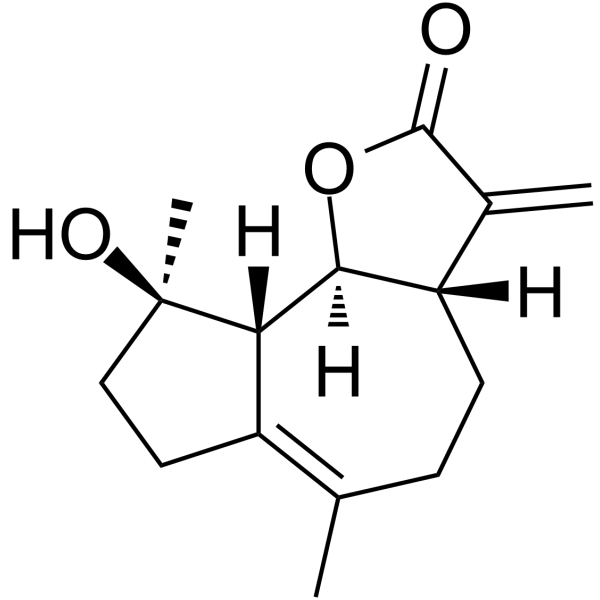
Micheliolide is a sesquiterpene lactone with anti-cancer and anti-inflammatory effects, which is derived from Michelia compressa and Michelia champaca. Micheliolide can attenuate high glucose-stimulated NF-κB activation, IκBα degradation, and the expression of MCP-1, TGF-β1, and FN in mouse mesangial cells. Micheliolide inhibits LPS (HY-D1056)-induced activation of NF-κB and PI3K/Akt/p70S6K pathways to play an anti-inflammatory role. Micheliolide inhibits dextran sodium sulphate (DSS) (HY-116282)-induced inflammatory intestinal disease, colitis-associated cancer and rheumatic arthritis.
For research use only. We do not sell to patients.
- Purity : 99.77%
- CAS No.: 68370-47-8
- Formula: C15H20O3
- Molecular Weight:248.32
-
Storage:Powder -20°C, 3 years , 4°C, 2 years ; In solvent -80°C, 2 years , -20°C, 1 year

To place orders, for customer services and technical support, please contact: MedChemExpress USA
Tel: 609-228-6898 E-mail: [email protected] [email protected]


-
 Biological Activity
-
Chemical Information
-
Solvent & Solubility
- Protocols
- Purity & Documentation
- References
-
 Help & FAQs


-
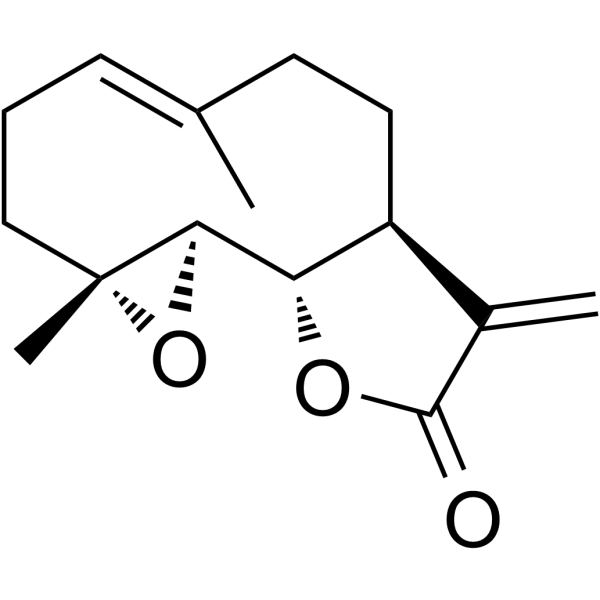
HY-N0141
ParthenolideNF-κB Inhibitor -
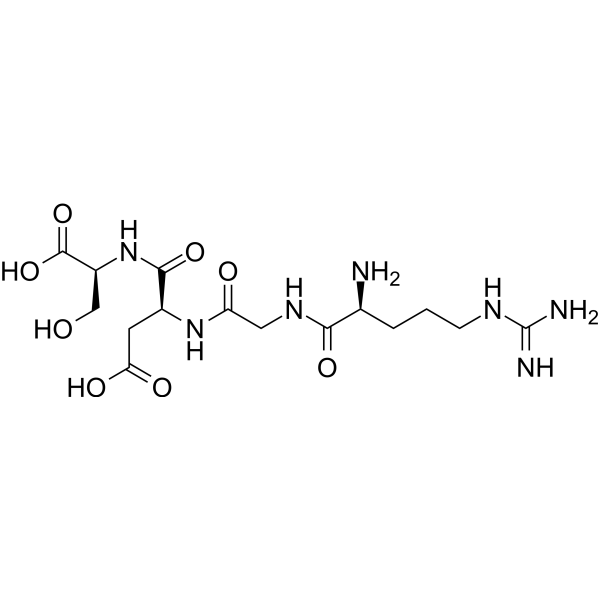
HY-12290
Arg-Gly-Asp-SerIntegrin Inhibitor -
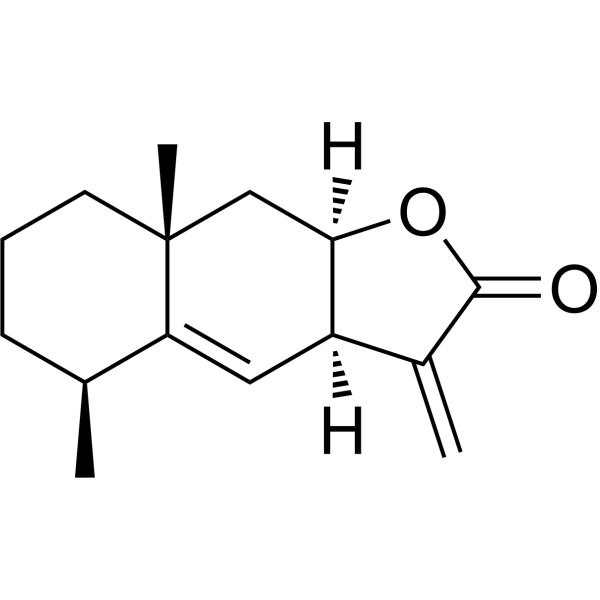
HY-N0038
AlantolactoneApoptosis Inducer -
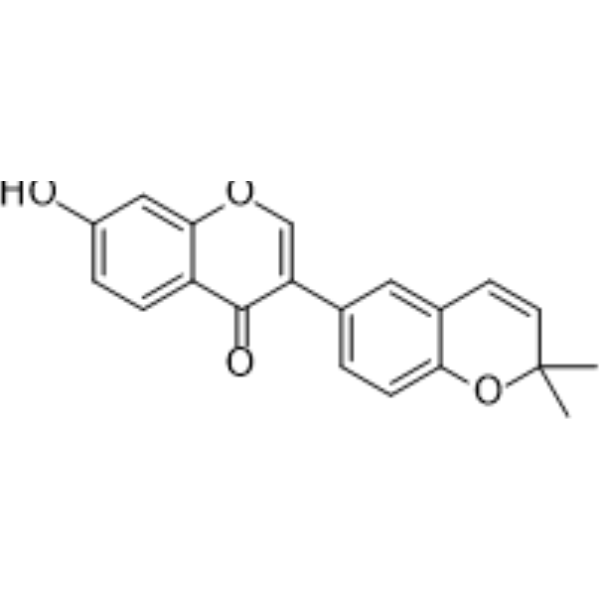
HY-N0236
CorylinAnti-inflammatory Agent -

HY-N0847R
Micheliolide (Standard)NF-κB Inhibitor -
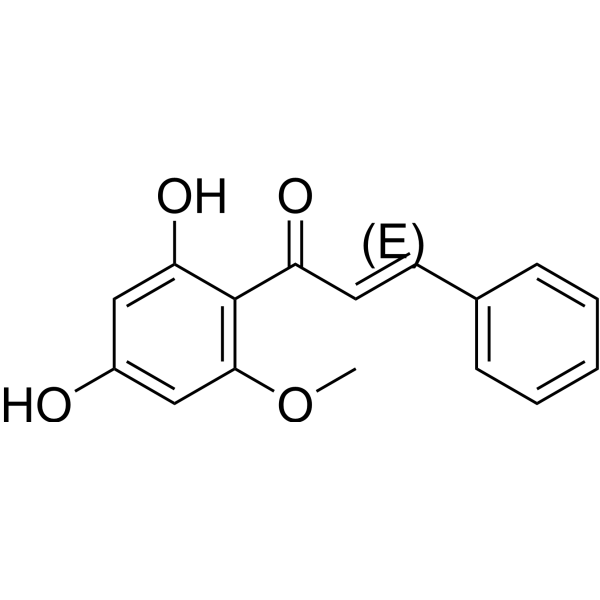
HY-N1378
(E)-CardamoninhTRPA1 Antagonist -

HY-N1378R
(E)-Cardamonin (Standard)hTRPA1 Antagonist
Publications Citing Use of MedChemExpress (MCE) Micheliolide
More- Phytomedicine. 2026 May 15:157:158303. [Abstract]
- J Transl Med. 2026 Feb 21;24(1):431. [Abstract]
- PLoS Biol. 2024 Jun 27;22(6):e3002672. [Abstract]
- Pharmaceuticals (Basel). 2025 Feb 20;18(3):287. [Abstract]
- Int Immunopharmacol. 2026 Jun 22:185:117056. [Abstract]
- Int Immunopharmacol. 2024 Oct 27;143(Pt 2):113490. [Abstract]
- World Allergy Organ J. 2025 Jul 18;18(8):101091. [Abstract]
- Carcinogenesis. 2020 Jul 10;41(6):723-733. [Abstract]
- bioRxiv. 2024 Apr 3:2023.06.02.542933. [Abstract]
- J Biol Regul Homeost Agents. 2023 Jul 20, 37(7): 3911-3919.
 Customer Validation & Images

-
WB
-
RT-PCR
-
Histological Imaging/Staining
-
Cell Proliferation/Viability Assay
-
Cell Migration/Invasion Assay


Biological Activity
Description
Cellular Effect
|
Cell Line

|
Type | Value | Description | References |
|---|---|---|---|---|
| HL-60 | IC50 |
5.5 μM
Compound: 9, MCL
|
Cytotoxicity against human HL60 cells after 18 hrs by annexin-V labeling-based flow cytometry
Cytotoxicity against human HL60 cells after 18 hrs by annexin-V labeling-based flow cytometry
|
[PMID: 22985027] |
In Vitro
Micheliolide (0.2-10 μM, 24 h) decreases the proliferation of mesangial cells and the production of MCP-1, TGF-β1, FN increased by a high concentration of glucose (HG) and suppresses the HG-induced degradation of IκBα[1].
Micheliolide (1-10 μM, 18 h) does not affect the growth and apoptosis of Raw264.7. I[2].
Micheliolide (1-10 μM, 3-18 h) inhibits LPS-triggered inflammatory responses in mouse macrophages, dendritic cells (DCs), human monocytic cell line THP-1, human CD14+ monocytes and inhibits LPS-induced NF-κB and PI3K/Akt/p70S6K activation[2][3].
MedChemExpress (MCE) has not independently confirmed the accuracy of these methods. They are for reference only. Further protocols information, click here.
-
Cell Line:Mouse macrophages and dendritic cells
-
Concentration:1-10 μM
-
Incubation Time:3-18 h
-
Result:Inhibited LPS-induced IL-6, TNF-α, IL-1β, MCP-1, IFN-β and IL-10 production in Raw264.7 and mouse primary peritoneal macrophages.
-
Cell Line:Raw264.7 cells
-
Concentration:10 μM
-
Incubation Time:0-180 min
-
Result:Inhibited LPS-induced phosphorylation of IκBα (Ser32/36) in Raw264.7.
In Vivo
Micheliolide (10 or 20 mg/kg, i.p., a single dose for 6 days) enhances the survival rate in mice following lethal septic shock[2].
Micheliolide (30 mg/kg, i.p., every two days for 63 days) reduces swelling of the paws and suppresses the degeneration of articular cartilage in collagen-induced arthritis mice[4].
MedChemExpress (MCE) has not independently confirmed the accuracy of these methods. They are for reference only.
-
Animal Model:Acute peritonitis mouse model[2]
-
Dosage:10 or 20 mg/kg
-
Administration:i.p., a single dose for 2 h
-
Result:Suppressed LPS-induced production of proinflammatory cytokines, chemokines and IFN in macrophages and DCs, showing clearer alveolar wall and less inflammatory cell infiltration.
-
Animal Model:Septic shock mouse model[2]
-
Dosage:10 or 20 mg/kg
-
Administration:i.p., a single dose for 6 days
-
Result:Protected mice against septic shock following lethal LPS challenge.
-
Animal Model:Collagen-induced arthritis mice[4]
-
Dosage:30 mg/kg
-
Administration:i.p., every two days for 63 days
-
Result:Remited the pathological changes of collagen-induced arthritis and recovered the expression levels of M-CSF, TIMP-1 and C5/C5a in collagen-induced arthritis mice.


Chemical Information
-
CAS No. 68370-47-8
-
Appearance Solid
-
Molecular Weight 248.32
-
Formula C15H20O3
-
Color White to off-white
-
SMILES
O=C(O[C@@]1([H])[C@@]2([H])CCC(C)=C3CC[C@@](C)(O)[C@@]31[H])C2=C
-
Structure Classification
-
Initial Source
-
Shipping
Room temperature in continental US; may vary elsewhere.
-
Storage
Powder -20°C 3 years 4°C 2 years In solvent -80°C 2 years -20°C 1 year


Publications (10)
-
Journal Impact Factor
-
Most Recent
-
Phytomedicine
Micheliolide directly targets keratinocyte Annexin A2 to abrogate STAT3-driven inflammation and pruritus in atopic dermatitis. [Abstract]2026 May 15:157:158303. PMID: 42172985 -
J Transl Med
Micheliolide suppresses epithelial-mesenchymal transition of lens epithelial cells via downregulating matrix metalloproteinase 8 to ameliorate posterior capsular opacification. [Abstract]2026 Feb 21;24(1):431. PMID: 41723479
Micheliolide purchased from MedChemExpress. Usage Cited in: J Transl Med. 2026 Feb 21;24(1):431. [Abstract]
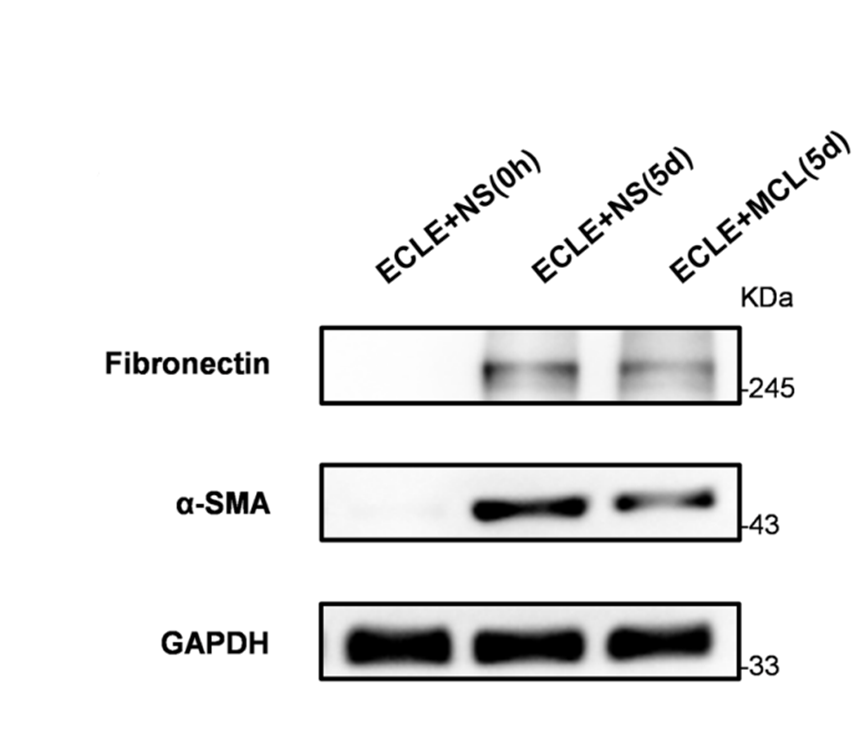
Western blot and quantitative analysis of EMT-related markers in the capsular bags after ECLE combined with injection of saline or Micheliolide (MCL) (5 mM) into the anterior chamber.
Micheliolide purchased from MedChemExpress. Usage Cited in: J Transl Med. 2026 Feb 21;24(1):431. [Abstract]
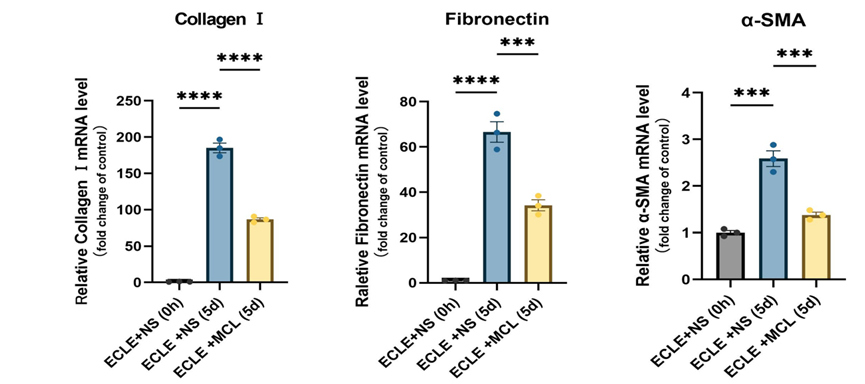
qRT-PCR analysis of α-SMA, Col I, and FN in capsular bags after ECLE with or without anterior chamber injection of Micheliolide (MCL) (5 mM).
Micheliolide purchased from MedChemExpress. Usage Cited in: J Transl Med. 2026 Feb 21;24(1):431. [Abstract]
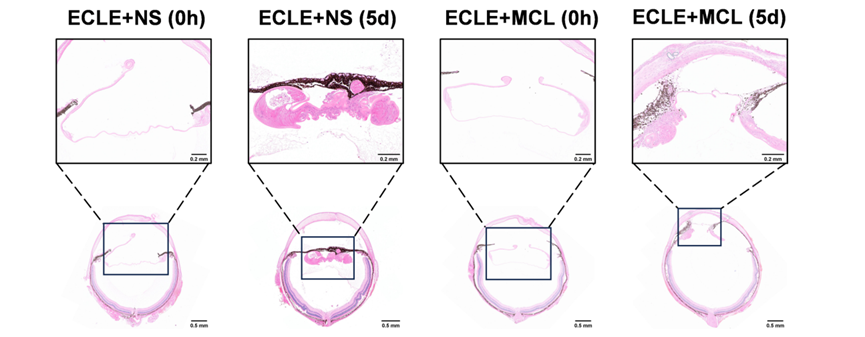
Representative HE staining shows cell proliferation and migration in the capsular bags following treatment with ECLE co-treated with an anterior chamber injection of saline or Micheliolide (MCL) (5 mM).
Micheliolide purchased from MedChemExpress. Usage Cited in: J Transl Med. 2026 Feb 21;24(1):431. [Abstract]
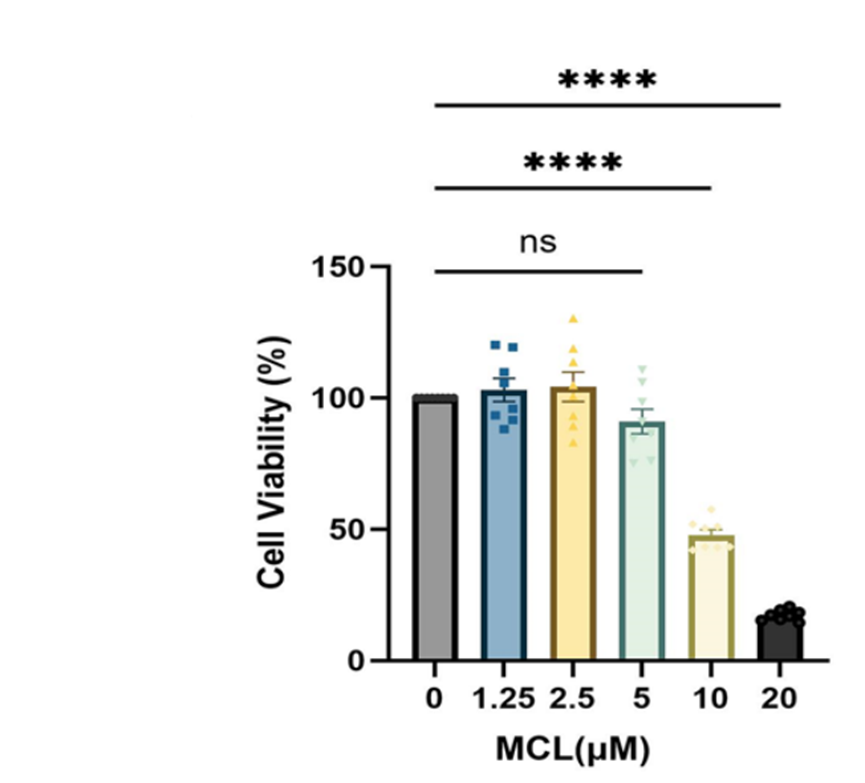
Viability test of LECs at gradient concentrations of Micheliolide (MCL) (1.25, 2.5, 5, 10, 20 μM).
Micheliolide purchased from MedChemExpress. Usage Cited in: J Transl Med. 2026 Feb 21;24(1):431. [Abstract]
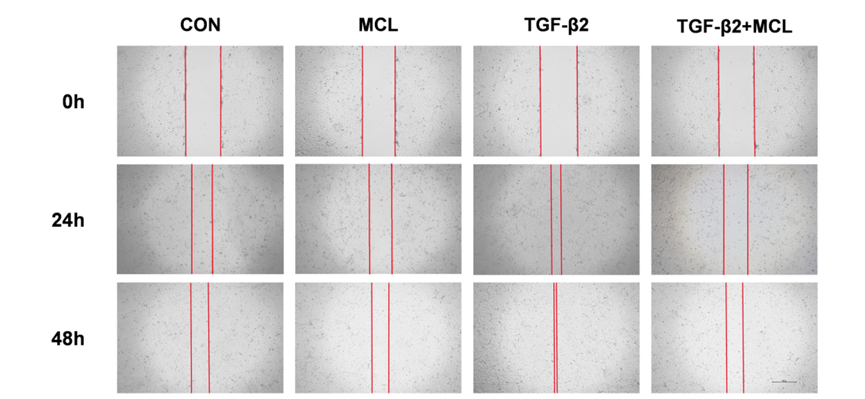
Representative images of the scratch wound assay in LECs at 0, 24, and 48 hours. Cells were pretreated with or without 5 μmol/L Micheliolide (MCL) and then stimulated with 10 ng/mL TGF-β2.
-
PLoS Biol
2024 Jun 27;22(6):e3002672. PMID: 38935621 -
Pharmaceuticals (Basel)
Micheliolide Alleviates Hepatic Fibrosis by Inhibiting Autophagy in Hepatic Stellate Cells via the TrxR1/2-Mediated ROS/MEK/ERK Pathway. [Abstract]2025 Feb 20;18(3):287. PMID: 40143066 -
Int Immunopharmacol
MCL inhibits macrophage ferroptosis through the NRF2/HO-1/GPX4 axis to attenuate carotid atherosclerotic plaque formation. [Abstract]2026 Jun 22:185:117056. PMID: 42330582 -
Int Immunopharmacol
Micheliolide ameliorates severe acute pancreatitis in mice through potentiating Nrf2-mediated anti-inflammation and anti-oxidation effects. [Abstract]2024 Oct 27;143(Pt 2):113490. PMID: 39467351 -
World Allergy Organ J
Protective effect of micheliolide against inflammation and oxidative stress in asthma through the MAPK/NF-κB signalling pathway. [Abstract]2025 Jul 18;18(8):101091. PMID: 40718157 -
Carcinogenesis
EGFR-PKM2 signaling promotes the metastatic potential of nasopharyngeal carcinoma through induction of FOSL1 and ANTXR2. [Abstract]2020 Jul 10;41(6):723-733. PMID: 31665243 -
bioRxiv
An efficient behavioral screening platform classifies natural products and other chemical cues according to their chemosensory valence in C. elegans. [Abstract]2024 Apr 3:2023.06.02.542933. PMID: 37333363 -


Solvent & Solubility
In Vitro:
DMSO : 50 mg/mL (201.35 mM; ultrasonic and warming and heat to 60°C; Hygroscopic DMSO has a significant impact on the solubility of product, please use newly opened DMSO)
Please refer to the solubility information to select the appropriate solvent. Once prepared, please aliquot and store the solution to prevent product inactivation from repeated freeze-thaw cycles.
Storage method and period of stock solution: -80°C, 2 years; -20°C, 1 year. When stored at -80°C, please use it within 2 years. When stored at -20°C, please use it within 1 year.
Please refer to the solubility information to select the appropriate solvent. Once prepared, please aliquot and store the solution to prevent product inactivation from repeated freeze-thaw cycles.
Storage method and period of stock solution: -80°C, 2 years; -20°C, 1 year. When stored at -80°C, please use it within 2 years. When stored at -20°C, please use it within 1 year.
Concentration (start) × Volume (start) = Concentration (final) × Volume (final)
In Vivo:
Select the appropriate dissolution method based on your experimental animal and administration route.
- For the following dissolution methods, please ensure to first prepare a clear stock solution using an In Vitro approach and then sequentially add co-solvents:
- To ensure reliable experimental results, the clarified stock solution can be appropriately stored based on storage conditions. As for the working solution for In Vivo experiments, it is recommended to prepare freshly and use it on the same day.
- The percentages shown for the solvents indicate their volumetric ratio in the final prepared solution. If precipitation or phase separation occurs during preparation, heat and/or sonication can be used to aid dissolution.
Add each solvent one by one: 10% DMSO 40% PEG300 5% Tween-80 45% Saline
Solubility: ≥ 2.5 mg/mL (10.07 mM); Clear solution
This protocol yields a clear solution of ≥ 2.5 mg/mL (saturation unknown).
Taking 1 mL working solution as an example, add 100 μL DMSO stock solution (25.0 mg/mL) to 400 μL PEG300, and mix evenly; then add 50 μL Tween-80 and mix evenly; then add 450 μL Saline to adjust the volume to 1 mL.
Preparation of Saline: Dissolve 0.9 g sodium chloride in ddH₂O and dilute to 100 mL to obtain a clear Saline solution.
Add each solvent one by one: 10% DMSO 90% (20% SBE-β-CD in Saline)
Solubility: ≥ 2.5 mg/mL (10.07 mM); Clear solution
This protocol yields a clear solution of ≥ 2.5 mg/mL (saturation unknown).
Taking 1 mL working solution as an example, add 100 μL DMSO stock solution (25.0 mg/mL) to 900 μL 20% SBE-β-CD in Saline, and mix evenly.
Preparation of 20% SBE-β-CD in Saline (4°C, storage for one week): 2 g SBE-β-CD powder is dissolved in 10 mL Saline, completely dissolve until clear.
In Vivo Dissolution Calculator
Please enter the basic information of animal experiments:
-
-
-
-
Recommended: Prepare an additional quantity of animals to account for potential losses during experiments.
Please enter your animal formula composition:
-
%DMSO +
Recommended: Keep the proportion of DMSO in working solution below 2% if your animal is weak.
-
%+
-
+%Tween-80 + +
-
%Saline +
The co-solvents required include: DMSO, . All of co-solvents are available by MedChemExpress (MCE). , Tween 80. All of co-solvents are available by MedChemExpress (MCE).
Working solution concentration: 0.22 mg/mL
Method for preparing stock solution: mg drug dissolved in μL DMSO. Stock solution concentration: mg/mL.
1. Take μL DMSO stock solution;
2. Add μL .
μL , mix evenly;
3. Then add μL Tween 80, mix evenly;
4. Then add μL
Please ensure that the stock solution in the first step is dissolved to a clear state, and add co-solvents in sequence. You can use ultrasonic heating (ultrasonic cleaner, recommended frequency 20-40 kHz), vortexing, etc. to assist dissolution.

Protocols
-
RNA extraction experimental
By lysing cells, releasing RNA, and removing impurities such as proteins and DNA, high-purity RNA products are finally obtained. The commonly used traditional method is the guanidine isothiocyanate/phenol/chloroform method (Trizol), which is suitable for a variety of animal materials including animal tissues, microorganisms, cultured cells, etc., and most plant materials.
-
Collagen-Induced Arthritis
Collagen-induced arthritis (CIA) is an autoimmune murine model of rheumatoid arthritis in which immunization with type II collagen (CII) emulsified in an adjuvant induces a T cell- and autoantibody-driven inflammatory arthritis characterized by synovial hyperplasia, immune cell infiltration, and joint destruction. The model typically relies on genetically susceptible mouse strains (e. g. , DBA/1) and reproduces key features of human rheumatoid arthritis, including anti-collagen immune responses and progressive joint inflammation. Disease onset generally occurs within ~3-4 weeks after immunization, depending on antigen/adjuvant combinations and protocol variation. The immunopathology is driven by adaptive immune activation against CII, leading to systemic and local joint inflammation mediated by pro-inflammatory cytokines and effector immune cells, making CIA a standard preclinical platform for evaluating immunomodulatory and anti-arthritic interventions.
-
DSS-Induced Colitis
Dextran sulfate sodium (DSS)-induced colitis is generated by administering DSS in mouse drinking water, producing epithelial injury, barrier disruption, weight loss, diarrhea, fecal blood, colon shortening, histologic mucosal damage, and inflammatory mediator changes; the model is mainly used to study acute or chronic intestinal inflammation resembling selected features of ulcerative colitis. DSS injury is interpreted through clinical and tissue readouts rather than a single molecular endpoint: daily body weight, stool consistency, and bleeding are combined into a disease activity index, while colon length, histology, cytokines, myeloperoxidase activity, intestinal permeability, and tight-junction markers provide complementary measures of inflammation and barrier damage.
-
TNBS-Induced Colitis
TNBS-induced colitis is produced by intrarectal delivery of 2,4,6-trinitrobenzene sulfonic acid in ethanol, where ethanol disrupts the mucosal barrier and TNBS haptenates colonic proteins, generating immune-mediated colonic inflammation with weight loss, diarrhea, ulceration, transmural injury, inflammatory-cell infiltration, and cytokine responses. The model is used as an experimental intestinal inflammation model with Crohn’s disease–like features, especially when Th1-type responses, IL-12–dependent inflammation, chronic relapsing inflammation, or fibrosis-related endpoints are studied.
-
Research Protocol for Inflammation-related Diseases
The NLRP3 inflammasome is a cytosolic innate immune signaling platform that integrates priming signals and danger-signal activation to promote caspase-1 activation, maturation of IL-1β and IL-18, and gasdermin D-mediated pyroptotic cell death. The core experimental logic is to determine whether inflammatory disease phenotypes are driven by increased NLRP3 expression, ASC-containing inflammasome assembly, caspase-1 cleavage, GSDMD cleavage, and extracellular release of IL-1β/IL-18 rather than by nonspecific cell injury alone. The pathway is strongly linked to inflammation-related disease phenotypes because monosodium urate crystals activate NALP3/NLRP3 inflammasome signaling in gout-like crystal inflammation, cholesterol crystals activate NLRP3 inflammasomes in atherogenesis models, and DSS-induced intestinal inflammation has been reported to involve NLRP3 inflammasome activity. However, experimental colitis studies also show context-dependent protective effects of NLRP3 inflammasome co


Purity & Documentation
-
Data Sheet (288 KB)
-
SDS (393 KB)
- English - EN (393 KB)
- Français - FR (393 KB)
- Deutsch - DE (393 KB)
- Norwegian - NO (393 KB)
- Español - ES (393 KB)
- Swedish - SV (393 KB)
- Italian - IT (393 KB)
- Korean - KR (393 KB)
- Portuguese - PT (393 KB)
-
Handling Instructions (2659 KB)
References
[1]. Jia QQ, et al. Sesquiterpene lactones and their derivatives inhibit high glucose-induced NF-κB activation and MCP-1 and TGF-β1 expression in rat mesangial cells. Molecules. 2013 Oct 21;18(10):13061-77. [Content Brief]
[2]. Qin X, et al. Micheliolide inhibits LPS-induced inflammatory response and protects mice from LPS challenge. Sci Rep. 2016 Mar 17;6:23240. [Content Brief]
[3]. Viennois E, et al. Micheliolide, a new sesquiterpene lactone that inhibits intestinal inflammation and colitis-associated cancer. Lab Invest. 2014 Sep;94(9):950-65. [Content Brief]
[4]. Xu H, et al. Therapeutic effects of micheliolide on a murine model of rheumatoid arthritis. Mol Med Rep. 2015 Jan;11(1):489-93. [Content Brief]


Complete Stock Solution Preparation Table
Please refer to the solubility information to select the appropriate solvent. Once prepared, please aliquot and store the solution to prevent product inactivation from repeated freeze-thaw cycles.
Storage method and period of stock solution: -80°C, 2 years; -20°C, 1 year. When stored at -80°C, please use it within 2 years. When stored at -20°C, please use it within 1 year.
| Optional Solvent | Concentration Solvent Mass | 1 mg | 5 mg | 10 mg | 25 mg |
|---|---|---|---|---|---|
| DMSO | 1 mM | 4.0271 mL | 20.1353 mL | 40.2706 mL | 100.6765 mL |
| 5 mM | 0.8054 mL | 4.0271 mL | 8.0541 mL | 20.1353 mL | |
| 10 mM | 0.4027 mL | 2.0135 mL | 4.0271 mL | 10.0677 mL | |
| 15 mM | 0.2685 mL | 1.3424 mL | 2.6847 mL | 6.7118 mL | |
| 20 mM | 0.2014 mL | 1.0068 mL | 2.0135 mL | 5.0338 mL | |
| 25 mM | 0.1611 mL | 0.8054 mL | 1.6108 mL | 4.0271 mL | |
| 30 mM | 0.1342 mL | 0.6712 mL | 1.3424 mL | 3.3559 mL | |
| 40 mM | 0.1007 mL | 0.5034 mL | 1.0068 mL | 2.5169 mL | |
| 50 mM | 0.0805 mL | 0.4027 mL | 0.8054 mL | 2.0135 mL | |
| 60 mM | 0.0671 mL | 0.3356 mL | 0.6712 mL | 1.6779 mL | |
| 80 mM | 0.0503 mL | 0.2517 mL | 0.5034 mL | 1.2585 mL | |
| 100 mM | 0.0403 mL | 0.2014 mL | 0.4027 mL | 1.0068 mL |


Micheliolide Related Classifications
HY-N0847 Related Classifications
 Powered by Bioz