



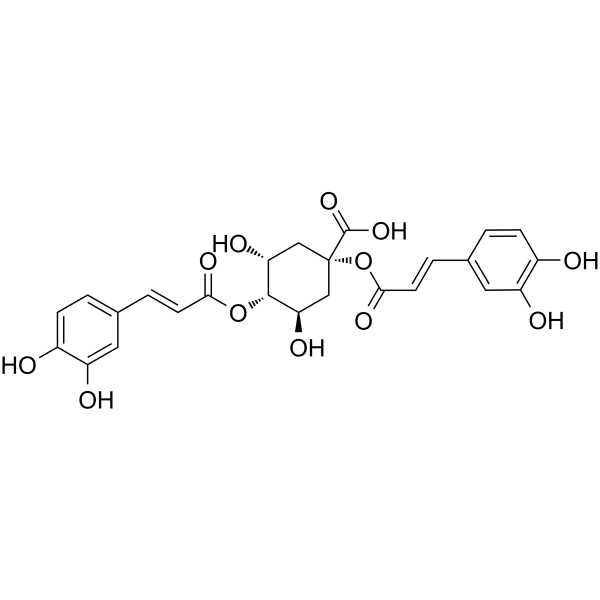
Cryptochlorogenic acid
Based on 6 publication(s) in Google Scholar
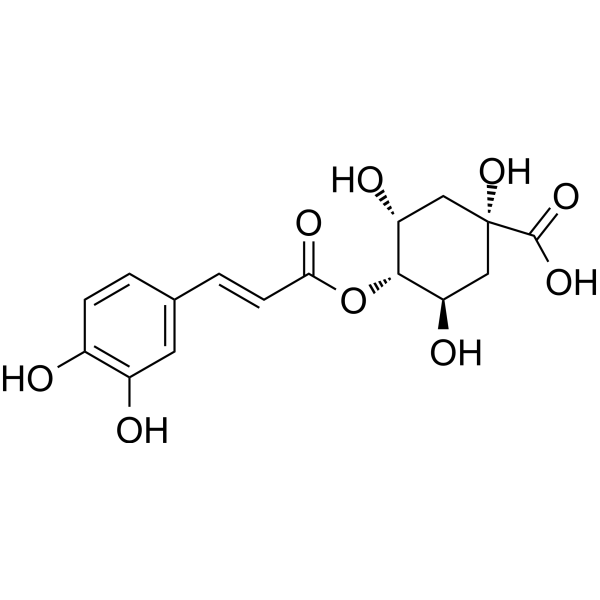
Cryptochlorogenic acid (4-Caffeoylquinic acid) is a naturally occurring phenolic acid compound with oral effectiveness, anti-inflammatory, antioxidant and anti-cardiac hypertrophy effects. Alleviating LPS (HY-D1056) and ISO (HY-B0468) by regulating proinflammatory factor expression, inhibiting NF-κB activity, promoting Nrf2 nuclear transfer, and regulating PI3Kα/Akt/ mTOR / HIF-1α signaling pathway Induced physiological stress response.
For research use only. We do not sell to patients.
- Purity : 99.49%
- CAS No.: 905-99-7
- Formula: C16H18O9
- Molecular Weight:354.31
-
Storage:Powder -20°C, 3 years , 4°C, 2 years ; In solvent -80°C, 6 months , -20°C, 1 month

To place orders, for customer services and technical support, please contact: MedChemExpress USA
Tel: 609-228-6898 E-mail: [email protected] [email protected]


-
 Biological Activity
-
Chemical Information
-
Solvent & Solubility
- Protocols
- Purity & Documentation
- References
-
 Help & FAQs


-
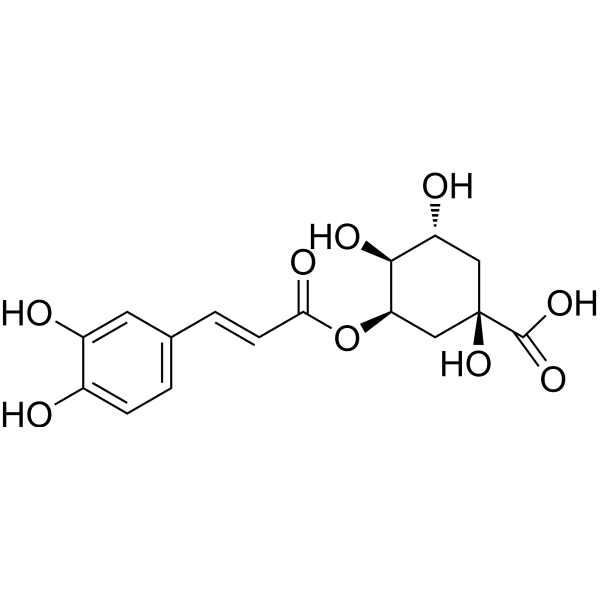
HY-N0722
Neochlorogenic acidCOX Inhibitor -
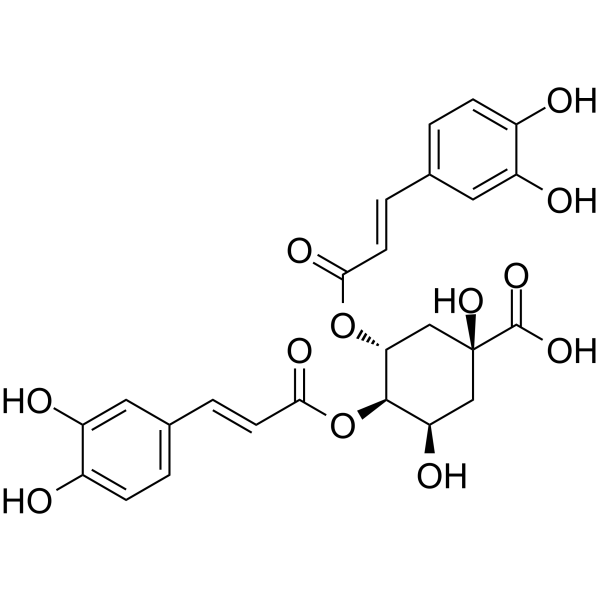
HY-N0057
3,4-Dicaffeoylquinic acidAntioxidant -
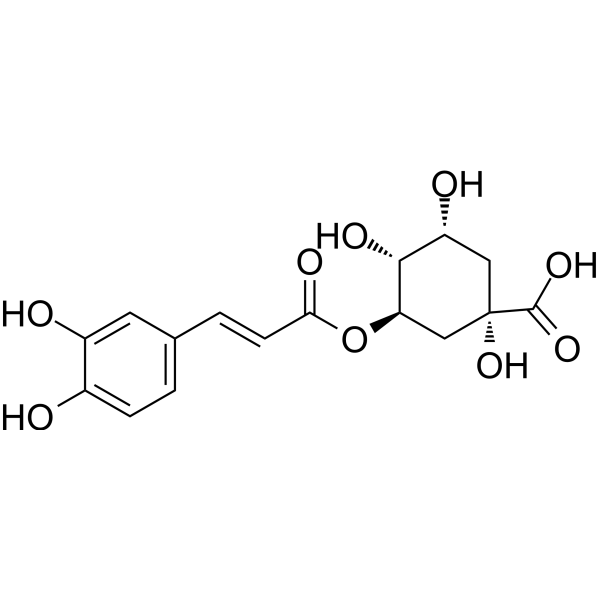
HY-N0055
Chlorogenic acidAntioxidant -
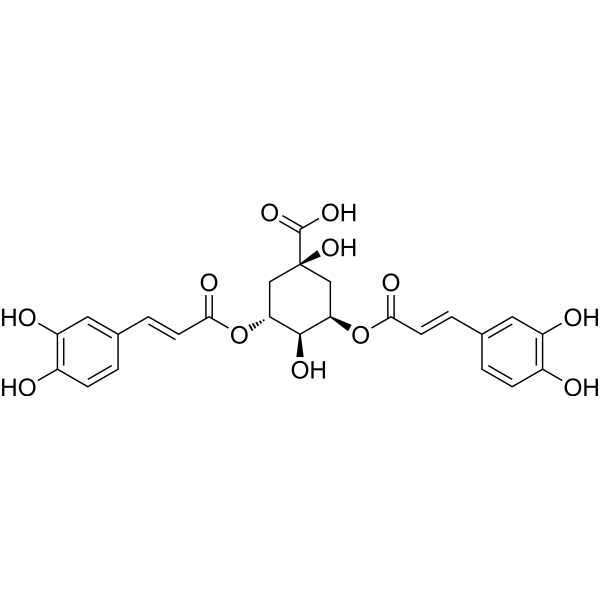
HY-N0056
Isochlorogenic acid AAntioxidant -
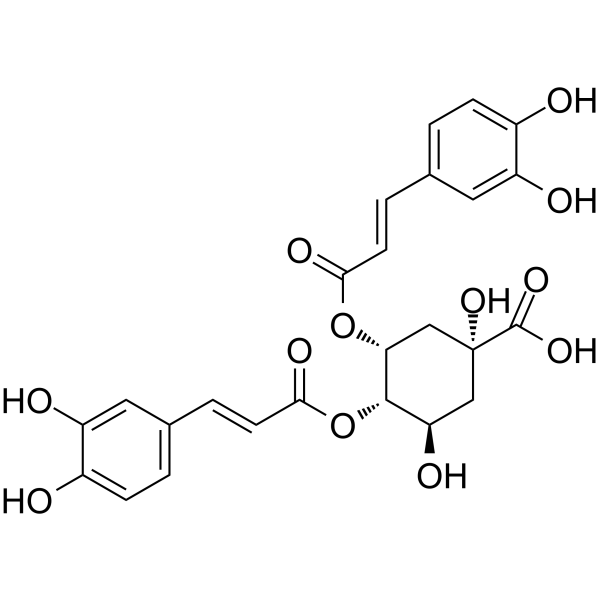
HY-N0058
4,5-Dicaffeoylquinic acidAntioxidant -
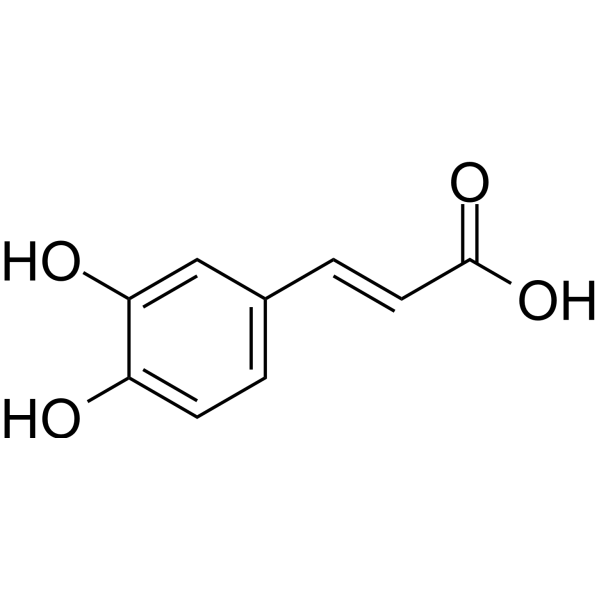
HY-N0172
Caffeic acidEndogenous Metabolite -
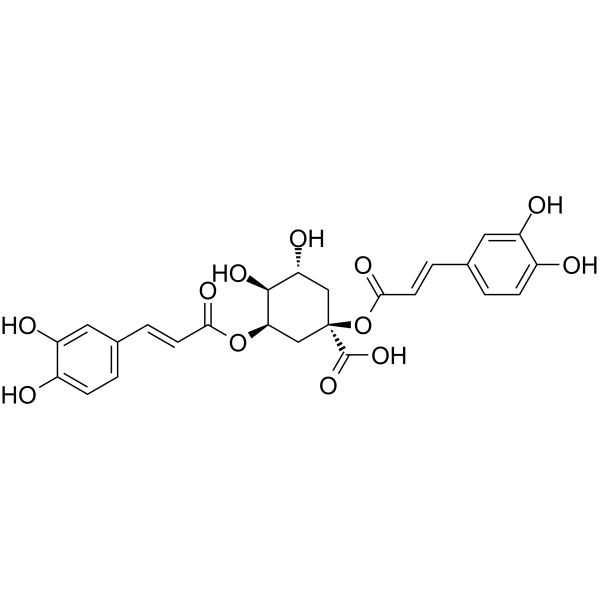
HY-N0359
CynarinAntioxidant -
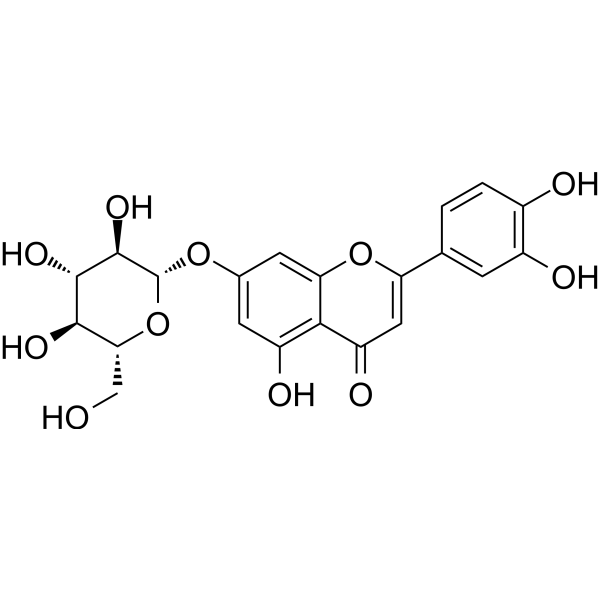
HY-N0540
CynarosideRNA Polymerase Inhibitor -
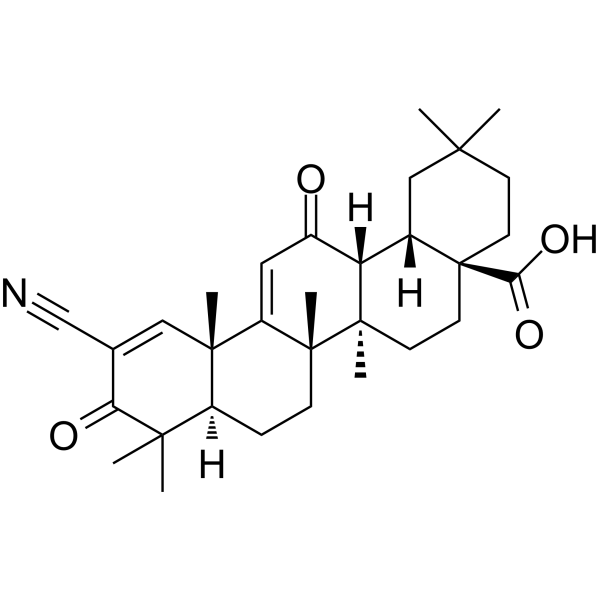
HY-14909
BardoxoloneNrf2 Activator -
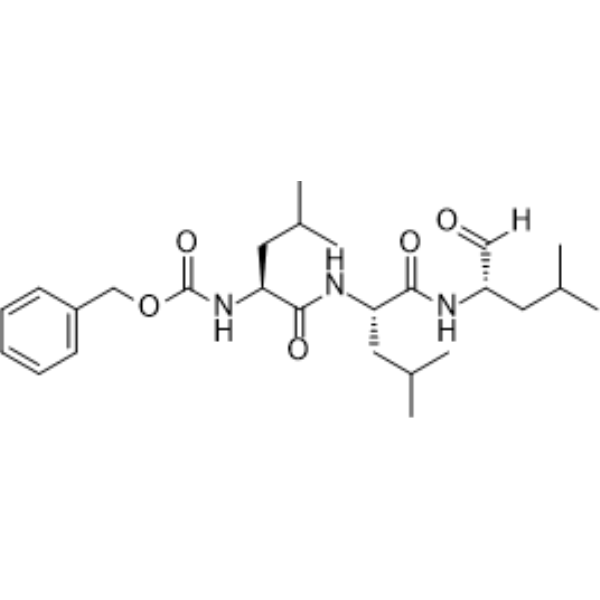
HY-13259
MG-132Proteasome Inhibitor -
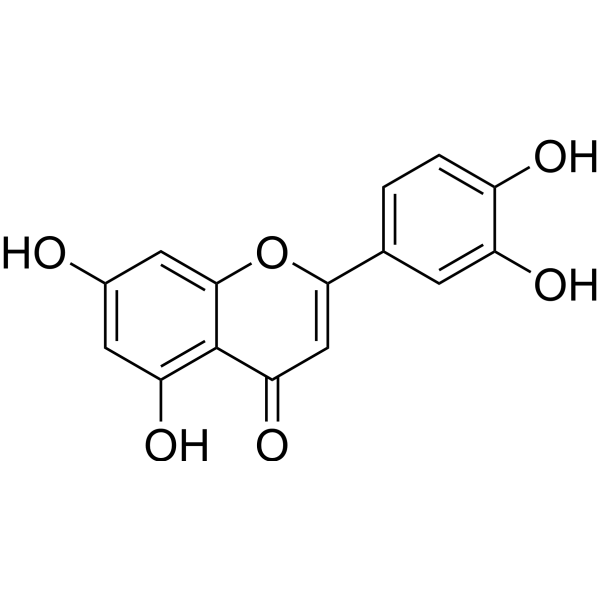
HY-N0162
LuteolinNrf2 Inhibitor -
HY-N0358
1,4-Dicaffeoylquinic acidAnti-inflammatory Agent
Publications Citing Use of MedChemExpress (MCE) Cryptochlorogenic acid
MoreAll Endogenous Metabolite Isoforms
More

Biological Activity
Description
IC50 & Target
|
HIF-1α |
In Vitro
Cryptochlorogenic acid (0-150 μM, 12, 24 or 48 h) shows low toxicity to RAW264.7 cells and does not significantly affect the viability of RAW264.7 cells at specific concentrations[2].
Cryptochlorogenic acid (20-80 μM, 2 h) can dose-dependent inhibit lipopolysaccharide (LPS: 1 μg/mL, 24 h) in RAW264.7 cells. induced the production of nitric oxide (NO), tumor necrosis factor-α (TNF-α) and interleukin-6 (IL-6), blocking the expression of iNOS, COX-2, TNF-α and IL-6[2].
Cryptochlorogenic acid (20-80 μM, 2 hours) inhibits the phosphorylation of IκB kinase (IKK), degrades I-κB, and reduces the nuclear translocation of NF-κB. At the same time, CCGA downregulates the phosphorylation level of MAPKs. Overall, CCGA effectively controls the expression of pro-inflammatory factors, thereby alleviating LPS-induced (1 μg/mL, 24 h) inflammation. It also promotes the nuclear translocation of Nrf2 to inhibit oxidative stress[2].
Cryptochlorogenic acid (1-200 μM, 48 hours) can effectively reduce the myocardial hypertrophy of H9c2 cells caused by ISO at a certain concentration. Cryptochlorogenic acid regulates the PI3Kα/Akt/mTOR/HIF-1α signaling pathway by significantly inhibiting the phosphorylation expression level of mTOR and over-expression of p-Akt and HIF-1α induced by ISO[3].
MedChemExpress (MCE) has not independently confirmed the accuracy of these methods. They are for reference only. Further protocols information, click here.
-
Cell Line:RAW264.7 cells
-
Concentration:Cryptochlorogenic acid: 20-80 μM, LPS: 1 μg/mL
-
Incubation Time:Cryptochlorogenic acid: 2 h, LPS: 24 h
-
Result:Significantly inhibited the protein levels of iNOS, COX-2, IL-6, TNF-α and TLR4 in RAW264.7 macrophages stimulated by LPS.
Significantly inhibited the phosphorylation and degradation of IκB and the phosphorylation of IKKα/β induced by LPS.
Dose-dependent reduction of LPS-induced NF-κB(p65) transfer from cytoplasm to nucleus.
Significantly inhibited the phosphorylation of JNK1/2, ERK1/2, and p38 proteins induced by LPS.
significantly up-regulated Nrf2 protein levels in the nucleus and decreased NRF2 protein levels in the cytoplasm in a dose-dependent manner.
-
Cell Line:RAW264.7 cells
-
Concentration:Cryptochlorogenic acid (CCGA) : 0-150 μM, LPS (HY-D1056) : 0-3 μg/ml
-
Incubation Time:12, 24 or 48 h
-
Result:At doses of 150 μM and 100 μM, slight toxicity was shown to RAW264.7 cells with no significant decrease in cell viability.
RAW264.7 cells showed no toxicity after being treated with LPS at different concentrations for 12 hours. After being treated with LPS above 2 μg/ml for 24h, the cell viability decreased significantly.
Treated with 0-100 μM CCGA and 1 μg/ml LPS for 24 h, RAW264.7 cells had low toxicity and no significant effect on cell viability.
-
Cell Line:H9c2 Cells
-
Concentration:1-200 μM
-
Incubation Time:48 h
-
Result:Significantly decreased the expression levels of ANP, BNP and HIF-1α mRNA in H9c2 cells after ISO treatment.
In Vivo
Pharmacokinetic parameters of Cryptochlorogenic acid after intragastric administration of Cryptochlorogenic acid at three dosages[2]
| Dose (mg/kg) | Cmax (μg/L) | tmax (h) | t1/2 (h) | AUC0-t (μg•h/L) | AUC0-∞ (μg•h/L) | MRT0-t (h) | MRT0-∞ (h) |
| 100 | 630 | 0.33 | 2.00 | 1938.91 | 1977.70 | 3.21 | 3.51 |
| 200 | 1270.09 | 0.47 | 1.97 | 3071.87 | 3179.41 | 3.23 | 3.39 |
| 400 | 2582.68 | 0.44 | 2.34 | 8825.32 | 9139.54 | 3.47 | 3.93 |
MedChemExpress (MCE) has not independently confirmed the accuracy of these methods. They are for reference only.


Chemical Information
-
CAS No. 905-99-7
-
Appearance Solid
-
Molecular Weight 354.31
-
Formula C16H18O9
-
Color White to off-white
-
SMILES
O=C(/C=C/C1=CC(O)=C(O)C=C1)O[C@@H]([C@@H]2O)[C@@H](C[C@](C(O)=O)(O)C2)O
-
Synonyms
4-Caffeoylquinic acid; 4-O-Caffeoylquinic acid
-
Structure Classification
-
Initial Source
-
Shipping
Room temperature in continental US; may vary elsewhere.
-
Storage
Powder -20°C 3 years 4°C 2 years In solvent -80°C 6 months -20°C 1 month


Publications (6)
-
Journal Impact Factor
-
Most Recent
-
Phytomedicine
A novel mechanism of Reduning injection in sepsis treatment: Targeting inflammatory kinases TBK1 and IKKβ. [Abstract]2026 Feb:151:157776. PMID: 41512388 -
-
-
Discov Oncol
2026 Apr 17;17(1):808. PMID: 41998400 -
-


Solvent & Solubility
In Vitro:
DMSO : 50 mg/mL (141.12 mM; Need ultrasonic; Hygroscopic DMSO has a significant impact on the solubility of product, please use newly opened DMSO)
Please refer to the solubility information to select the appropriate solvent. Once prepared, please aliquot and store the solution to prevent product inactivation from repeated freeze-thaw cycles.
Storage method and period of stock solution: -80°C, 6 months; -20°C, 1 month. When stored at -80°C, please use it within 6 months. When stored at -20°C, please use it within 1 month.
Please refer to the solubility information to select the appropriate solvent. Once prepared, please aliquot and store the solution to prevent product inactivation from repeated freeze-thaw cycles.
Storage method and period of stock solution: -80°C, 6 months; -20°C, 1 month. When stored at -80°C, please use it within 6 months. When stored at -20°C, please use it within 1 month.
Concentration (start) × Volume (start) = Concentration (final) × Volume (final)
In Vivo:
Select the appropriate dissolution method based on your experimental animal and administration route.
- For the following dissolution methods, please ensure to first prepare a clear stock solution using an In Vitro approach and then sequentially add co-solvents:
- To ensure reliable experimental results, the clarified stock solution can be appropriately stored based on storage conditions. As for the working solution for In Vivo experiments, it is recommended to prepare freshly and use it on the same day.
- The percentages shown for the solvents indicate their volumetric ratio in the final prepared solution. If precipitation or phase separation occurs during preparation, heat and/or sonication can be used to aid dissolution.
Add each solvent one by one: 10% DMSO 40% PEG300 5% Tween-80 45% Saline
Solubility: ≥ 2.5 mg/mL (7.06 mM); Clear solution
This protocol yields a clear solution of ≥ 2.5 mg/mL (saturation unknown).
Taking 1 mL working solution as an example, add 100 μL DMSO stock solution (25.0 mg/mL) to 400 μL PEG300, and mix evenly; then add 50 μL Tween-80 and mix evenly; then add 450 μL Saline to adjust the volume to 1 mL.
Preparation of Saline: Dissolve 0.9 g sodium chloride in ddH₂O and dilute to 100 mL to obtain a clear Saline solution.
Add each solvent one by one: 10% DMSO 90% (20% SBE-β-CD in Saline)
Solubility: 2.5 mg/mL (7.06 mM); Suspended solution; Need ultrasonic
This protocol yields a suspended solution of 2.5 mg/mL. Suspended solution can be used for oral and intraperitoneal injection.
Taking 1 mL working solution as an example, add 100 μL DMSO stock solution (25.0 mg/mL) to 900 μL 20% SBE-β-CD in Saline, and mix evenly.
Preparation of 20% SBE-β-CD in Saline (4°C, storage for one week): 2 g SBE-β-CD powder is dissolved in 10 mL Saline, completely dissolve until clear.
In Vivo Dissolution Calculator
Please enter the basic information of animal experiments:
-
-
-
-
Recommended: Prepare an additional quantity of animals to account for potential losses during experiments.
Please enter your animal formula composition:
-
%DMSO +
Recommended: Keep the proportion of DMSO in working solution below 2% if your animal is weak.
-
%+
-
+%Tween-80 + +
-
%Saline +
The co-solvents required include: DMSO, . All of co-solvents are available by MedChemExpress (MCE). , Tween 80. All of co-solvents are available by MedChemExpress (MCE).
Working solution concentration: 0.22 mg/mL
Method for preparing stock solution: mg drug dissolved in μL DMSO. Stock solution concentration: mg/mL.
1. Take μL DMSO stock solution;
2. Add μL .
μL , mix evenly;
3. Then add μL Tween 80, mix evenly;
4. Then add μL
Please ensure that the stock solution in the first step is dissolved to a clear state, and add co-solvents in sequence. You can use ultrasonic heating (ultrasonic cleaner, recommended frequency 20-40 kHz), vortexing, etc. to assist dissolution.

Protocols
-
RNA extraction experimental
By lysing cells, releasing RNA, and removing impurities such as proteins and DNA, high-purity RNA products are finally obtained. The commonly used traditional method is the guanidine isothiocyanate/phenol/chloroform method (Trizol), which is suitable for a variety of animal materials including animal tissues, microorganisms, cultured cells, etc., and most plant materials.
-
Research Protocol for Inflammation-related Diseases
The NLRP3 inflammasome is a cytosolic innate immune signaling platform that integrates priming signals and danger-signal activation to promote caspase-1 activation, maturation of IL-1β and IL-18, and gasdermin D-mediated pyroptotic cell death. The core experimental logic is to determine whether inflammatory disease phenotypes are driven by increased NLRP3 expression, ASC-containing inflammasome assembly, caspase-1 cleavage, GSDMD cleavage, and extracellular release of IL-1β/IL-18 rather than by nonspecific cell injury alone. The pathway is strongly linked to inflammation-related disease phenotypes because monosodium urate crystals activate NALP3/NLRP3 inflammasome signaling in gout-like crystal inflammation, cholesterol crystals activate NLRP3 inflammasomes in atherogenesis models, and DSS-induced intestinal inflammation has been reported to involve NLRP3 inflammasome activity. However, experimental colitis studies also show context-dependent protective effects of NLRP3 inflammasome co
-
Cardiac Morphometry
Cardiac morphometry is based on quantitative histological and stereological assessment of myocardial structure, including cardiomyocyte size, number, and extracellular matrix composition, to evaluate cardiac growth and remodeling under physiological or pathological conditions. Design-based stereology is considered a reference framework for obtaining unbiased estimates of structural parameters such as cardiomyocyte number, volume, and tissue architecture, enabling quantitative comparison across experimental groups. Histological image-based morphometry further enables measurement of cardiomyocyte cross-sectional area and collagen deposition using microscopy combined with image analysis software, allowing assessment of hypertrophy and fibrosis in cardiac remodeling models. These morphometric readouts reflect underlying biological processes such as cardiomyocyte hypertrophy, loss, or structural reorganization during disease progression or experimental stress.


Purity & Documentation
-
Data Sheet (282 KB)
-
SDS (396 KB)
- English - EN (396 KB)
- Français - FR (396 KB)
- Deutsch - DE (396 KB)
- Norwegian - NO (396 KB)
- Español - ES (396 KB)
- Swedish - SV (396 KB)
- Italian - IT (396 KB)
- Korean - KR (396 KB)
- Portuguese - PT (396 KB)
-
Handling Instructions (2659 KB)
References
[2]. Zhao XL, et al. Cryptochlorogenic acid attenuates LPS-induced inflammatory response and oxidative stress via upregulation of the Nrf2/HO-1 signaling pathway in RAW 264.7 macrophages. Int Immunopharmacol. 2020;83:106436. [Content Brief]
[3]. Li J, et al. Cryptochlorogenic acid and its metabolites ameliorate myocardial hypertrophy through a HIF1α-related pathway. Food Funct. 2022;13(4):2269-2282. Published 2022 Feb 21. [Content Brief]


Complete Stock Solution Preparation Table
Please refer to the solubility information to select the appropriate solvent. Once prepared, please aliquot and store the solution to prevent product inactivation from repeated freeze-thaw cycles.
Storage method and period of stock solution: -80°C, 6 months; -20°C, 1 month. When stored at -80°C, please use it within 6 months. When stored at -20°C, please use it within 1 month.
| Optional Solvent | Concentration Solvent Mass | 1 mg | 5 mg | 10 mg | 25 mg |
|---|---|---|---|---|---|
| DMSO | 1 mM | 2.8224 mL | 14.1119 mL | 28.2239 mL | 70.5597 mL |
| 5 mM | 0.5645 mL | 2.8224 mL | 5.6448 mL | 14.1119 mL | |
| 10 mM | 0.2822 mL | 1.4112 mL | 2.8224 mL | 7.0560 mL | |
| 15 mM | 0.1882 mL | 0.9408 mL | 1.8816 mL | 4.7040 mL | |
| 20 mM | 0.1411 mL | 0.7056 mL | 1.4112 mL | 3.5280 mL | |
| 25 mM | 0.1129 mL | 0.5645 mL | 1.1290 mL | 2.8224 mL | |
| 30 mM | 0.0941 mL | 0.4704 mL | 0.9408 mL | 2.3520 mL | |
| 40 mM | 0.0706 mL | 0.3528 mL | 0.7056 mL | 1.7640 mL | |
| 50 mM | 0.0564 mL | 0.2822 mL | 0.5645 mL | 1.4112 mL | |
| 60 mM | 0.0470 mL | 0.2352 mL | 0.4704 mL | 1.1760 mL | |
| 80 mM | 0.0353 mL | 0.1764 mL | 0.3528 mL | 0.8820 mL | |
| 100 mM | 0.0282 mL | 0.1411 mL | 0.2822 mL | 0.7056 mL |


Cryptochlorogenic acid Related Classifications
HY-N0787 Related Classifications
 Powered by Bioz