



12-Oxo phytodienoic acid
Based on 1 publication(s) in Google Scholar
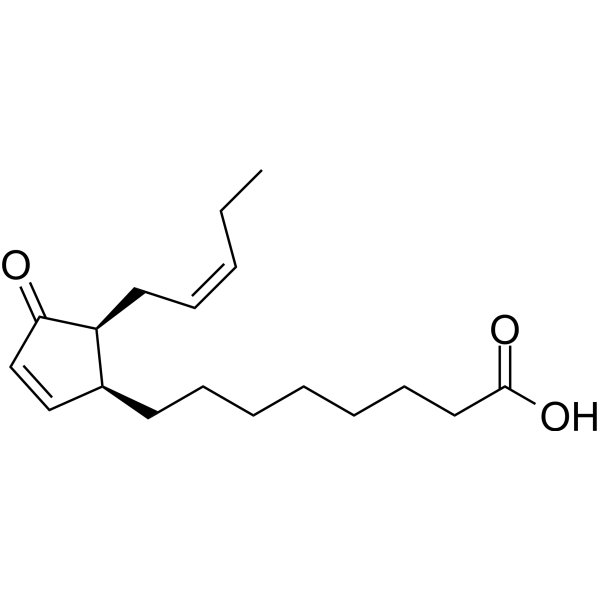
12-Oxo phytodienoic acid (12-OPDA) is a plant lipid-derived anti-inflammatory compound. 12-Oxo phytodienoic acid suppresses neuroinflammation by inhibiting Nf-κB and p38 MAPK signaling in Lipopolysaccharides (LPS) (HY-D1056)-activated cells. 12-Oxo phytodienoic acid can be used for neurodegenerative diseases research.
연구목적의 판매만을 진행합니다. 환자를 대상으로 한 판매는 하지 않습니다.
- CAS No.: 85551-10-6
- 화학식: C18H28O3
- 분자량:292.41
-
보관:
Solution, -20°C, 2 years

To place orders, for customer services and technical support, please contact: MedChemExpress USA
Tel: 609-228-6898 E-mail: [email protected] [email protected]


-
 Biological Activity
-
Chemical Information
- Protocol
- 순도&문서
- References
-
 Help & FAQs




Publications Citing Use of MedChemExpress (MCE) 12-Oxo phytodienoic acid
More

Biological Activity
제품 설명
In Vitro
12-Oxo phytodienoic acid (12-OPDA) (7.5, 15, 30 μM, 6, 24 h) protects MG5 cells against inflammation induced by LPS[1].
12-Oxo phytodienoic acid (12-OPDA) (7.5, 15, 30 μM, 6, 24 h) suppresses LPS-induced activation of NF-κB and p38 MAPK and induces SOCS-1 transcription in MG5 cells[1].
MedChemExpress (MCE) has not independently confirmed the accuracy of these methods. They are for reference only. Further protocols information, click here.
-
Cell Line:MG5 cells
-
Concentration:7.5, 15, 30 μM
-
Incubation Time:6, 24 h
-
Result:Reduced LPS-induced mRNA expression of IL-6, TNF-α, and iNOS in a concentration-dependent manner.
-
Cell Line:MG5 cells
-
Concentration:7.5, 15, 30 μM
-
Incubation Time:6, 24 h
-
Result:Decreased the protein levels of IL-6 and TNF-α and NO level.
Reduced LPS-induced phosphorylation of p38, but had no effect on phosphorylation of JNK.
Elevated expression of HO-1 protein.


Chemical Information
-
CAS No. 85551-10-6
-
Appearance Liquid
-
분자량 292.41
-
화학식 C18H28O3
-
Color Colorless to light yellow
-
SMILES
O=C(O)CCCCCCC[C@H]1C=CC([C@H]1C/C=C\CC)=O
-
Synonyms
12-OPDA
-
선적
Room temperature in continental US; may vary elsewhere.
-
보관
Solution, -20°C, 2 years


Publications (1)
-
Journal Impact Factor
-
Most Recent
-
Molecules
Untargeted Metabolomics Using UHPLC-HRMS Reveals Metabolic Changes of Fresh-Cut Potato during Browning Process. [Abstract]2023 Apr 11;28(8):3375. PMID: 37110608

Protocol
-
Research Protocol for Inflammation-related Diseases
The NLRP3 inflammasome is a cytosolic innate immune signaling platform that integrates priming signals and danger-signal activation to promote caspase-1 activation, maturation of IL-1β and IL-18, and gasdermin D-mediated pyroptotic cell death. The core experimental logic is to determine whether inflammatory disease phenotypes are driven by increased NLRP3 expression, ASC-containing inflammasome assembly, caspase-1 cleavage, GSDMD cleavage, and extracellular release of IL-1β/IL-18 rather than by nonspecific cell injury alone. The pathway is strongly linked to inflammation-related disease phenotypes because monosodium urate crystals activate NALP3/NLRP3 inflammasome signaling in gout-like crystal inflammation, cholesterol crystals activate NLRP3 inflammasomes in atherogenesis models, and DSS-induced intestinal inflammation has been reported to involve NLRP3 inflammasome activity. However, experimental colitis studies also show context-dependent protective effects of NLRP3 inflammasome co
-
Research Protocol for Neurological Diseases
PINK1/Parkin-mediated mitophagy pathway is a mitochondrial quality-control signaling axis in which mitochondrial depolarization stabilizes PINK1 on damaged mitochondria, activates Parkin recruitment and E3 ubiquitin ligase activity, promotes ubiquitination of outer mitochondrial membrane proteins, recruits selective autophagy adaptors, and drives lysosomal degradation of damaged mitochondria. In neurological disease research, this pathway is experimentally important because neurons, especially dopaminergic neurons, are highly dependent on mitochondrial integrity, and defective mitochondrial turnover can lead to mitochondrial dysfunction, oxidative stress, impaired neuronal survival, α-synuclein accumulation, and neuroinflammatory damage-associated signals. The genetic disease link is strongest in Parkinson’s disease because mutations in PRKN/parkin cause autosomal recessive juvenile parkinsonism, mutations in PINK1 cause hereditary early-onset Parkinson’s disease, and Drosophila studie


순도&문서
-
Data Sheet (270 KB)
-
SDS (419 KB)
- English - EN (419 KB)
- Français - FR (419 KB)
- Deutsch - DE (419 KB)
- Norwegian - NO (419 KB)
- Español - ES (419 KB)
- Swedish - SV (419 KB)
- Italian - IT (419 KB)
- Korean - KR (419 KB)
- Portuguese - PT (419 KB)
-
Handling Instructions (2659 KB)
References

Calculators
Concentration (start) × Volume (start) = Concentration (final) × Volume (final)


12-Oxo phytodienoic acid Related Classifications
HY-118828 Related Classifications
 Powered by Bioz