1. Search Result
Search Result
Results for "

growth arrest

" in MedChemExpress (MCE) Product Catalog:

380

Inhibitors & Agonists

1

Fluorescent Dyes

1

Biochemical Assay Reagents

13

Peptides

2

Inhibitory Antibodies

55

Natural
Products

8

Recombinant Proteins

10

Isotope-Labeled Compounds

10

Antibodies

2

Click Chemistry

4

Oligonucleotides

1

GMP Molecules

Cat. No. Product Name Target Research Areas Chemical Structure
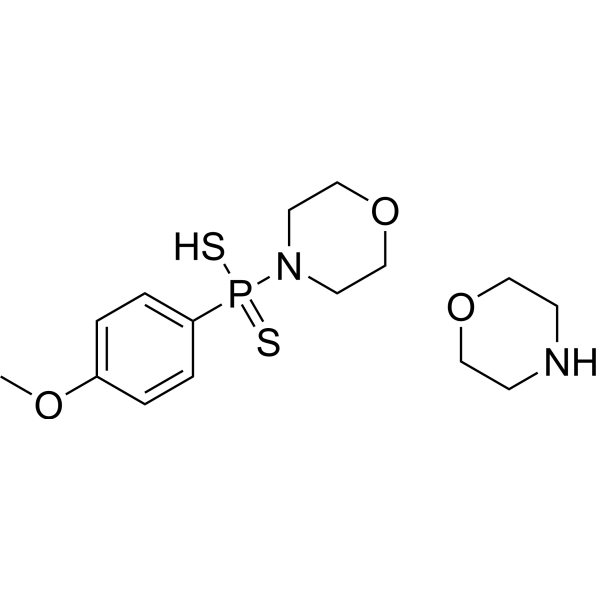
  • HY-107632
    GYY4137
    5+ Cited Publications

    Apoptosis STAT NF-κB NO Synthase COX TNF Receptor Interleukin Related Cardiovascular Disease Neurological Disease Inflammation/Immunology Cancer
    GY4137 is a sustained-release H2S donor possessing vasodilatory, antihypertensive, and anti-inflammatory activities. GY4137 can inhibit cell growth, induce apoptosis, and cause cell cycle arrest by blocking the STAT3 pathway, demonstrating potent anticancer activity .
    GYY4137
  • HY-162001
    INX-315
    5+ Cited Publications

    CDK Cancer
    INX-315 is an orally active and selective CDK2 inhibitor that induces cell cycle arrest in the G1 phase. INX-315 reduces CDK2 substrate phosphorylation and inhibits tumor growth in a dose-dependent manner in xenograft mouse models. INX-315 may be used in cancer research .
    INX-315
  • HY-10127
    Barasertib
    20+ Cited Publications

    AZD1152

    Aurora Kinase Apoptosis Cancer
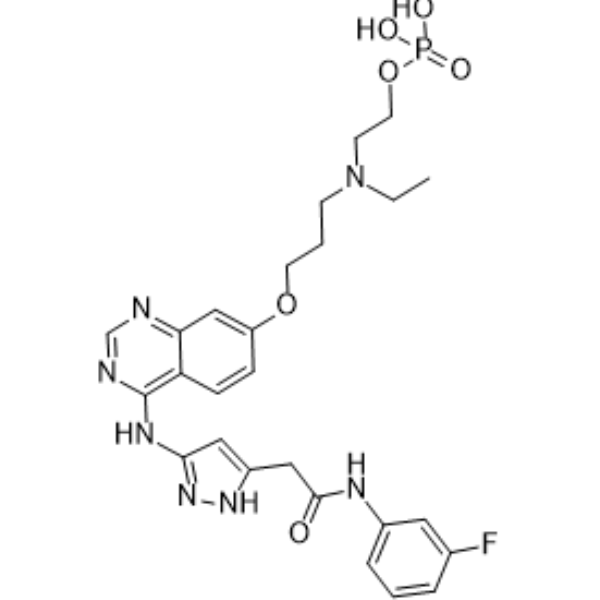
    Barasertib (AZD1152), a pro-drug of Barasertib-hQPA, is a highly selective Aurora B inhibitor with an IC50 of 0.37 nM in a cell-free assay. Barasertib (AZD1152) induces growth arrest and apoptosis in cancer cells .
    Barasertib
  • HY-N0036
    Costunolide
    5+ Cited Publications

    (+)-Costunolide; Costus lactone

    Apoptosis Endogenous Metabolite Cancer
    Costunolide ((+)-Costunolide) is a naturally occurring sesquiterpene lactone, with antioxidative, anti-inflammatory, antiallergic, bone remodeling, neuroprotective, hair growth promoting, anticancer, and antidiabetic properties. Costunolide can induce cell cycle arrest and apoptosis on breast cancer cells .
    Costunolide
  • HY-113679

    Telomerase Metabolic Disease Endocrinology
    Ceramides Mixture is an endogenous ceramide and consists of hydroxy and non-hydroxy fatty acid-containing ceramides. Ceramides Mixture is a main lipid component of the permeability barrier in epidermis. Ceramides Mixture is involved in the regulation of growth inhibition, cell cycle arrest, and modulation of telomerase activity .
    Ceramides Mixture
  • HY-10126
    Barasertib-HQPA
    5+ Cited Publications

    AZD2811; INH-34; AZD1152-HQPA

    Aurora Kinase Apoptosis Cancer
    Barasertib-HQPA (AZD2811) is a highly selective Aurora B inhibitor with an IC50 of 0.37 nM in a cell-free assay. Barasertib-HQPA (AZD2811) induces growth arrest and apoptosis in cancer cells .
    Barasertib-HQPA
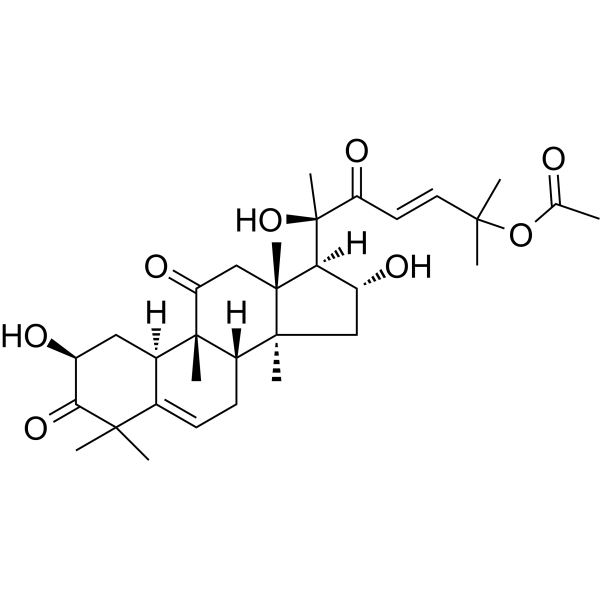
  • HY-N0416
    Cucurbitacin B
    Maximum Cited Publications
    11 Publications Verification

    HIF/HIF Prolyl-Hydroxylase Integrin Autophagy Apoptosis Endogenous Metabolite ROS Kinase COX Others Neurological Disease Inflammation/Immunology Cancer
    Cucurbitacin B belongs to a class of highly oxidized tetracyclic triterpenoids and is oral active. Cucurbitacin B inhibits tumor cell growth, migration and invasion and cycle arrest, but induces cell apoptosis. Cucurbitacin B has potent anti-inflammatory, antioxidant, antiviral, hypoglycemic, hepatoprotective, neuroprotective activity .
    Cucurbitacin B
  • HY-N0421
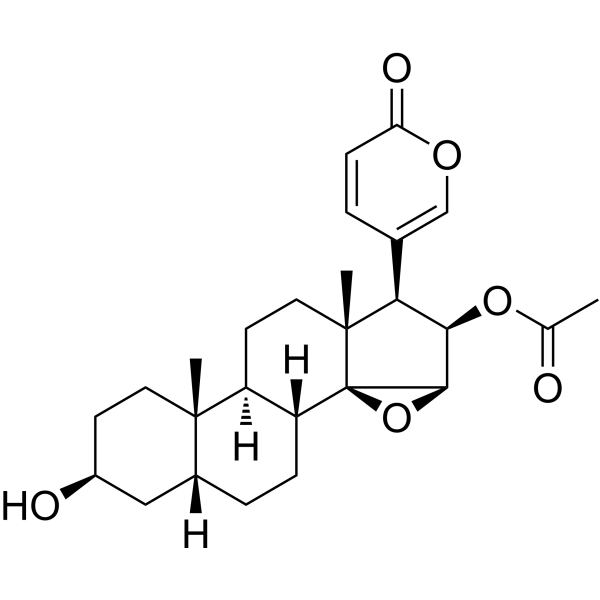
    Cinobufagin
    5+ Cited Publications

    Cinobufagine

    Apoptosis Neurological Disease Cancer
    Cinobufagin is an anticancer agent that can be secreted by the Asiatic toad Bufo gargarizans. Cinobufagin induces the cell cycle arrests in the G1 phase or G2/M phase, leading to apoptosis in cancer cells. Cinobufagin inhibits tumor growth in melanoma and glioblastoma multiforme xenograft mouse models .
    Cinobufagin
  • HY-B0896

    Glyceryl triacetate; 1,2,3-Triacetoxypropane

    Environmental Pollutants Fungal Endogenous Metabolite Cancer
    Triacetin (Glyceryl triacetate) is a synthetic compound that is a triester of glycerol and acetic acid, orally active. Triacetin increases acetate bioavailability in glioma cells. Triacetin induces glioma cell growth arrest and Apoptosis. Triacetin freely crosses the blood brain barrier/plasma membrane. Triacetin increases histone acetylation and enhances Temozolomide (HY-17364) (TMZ) chemotherapeutic efficacy .
    Triacetin
  • HY-19331
    WZB117
    20+ Cited Publications

    GLUT Cancer
    WZB117 is a glucose transporter 1 (Glut1) inhibitor, which downregulates glycolysis, induces cell-cycle arrest, and inhibits cancer cell growth in vitro and in vivo.
    WZB117
  • HY-129241
    AGX51
    5+ Cited Publications

    DNA/RNA Synthesis DNA Alkylator/Crosslinker Cancer
    AGX51 is the first-in-class pan-Id (inhibitors of DNA-binding/differentiation proteins) antagonist and degrader. AGX51 inhibits Id1-E47 interaction, leading to ubiquitin-mediated degradation of Ids, cell growth arrest, and viability reduction. AGX51 can inhibit TNBC and has an IC50 of about 25 nM. AGX51 can be used in cancer research.
    AGX51
  • HY-B0114
    Oxcarbazepine
    2 Publications Verification

    GP 47680

    Sodium Channel Apoptosis Neurological Disease Cancer
    Oxcarbazepine is a sodium channel blocker . Oxcarbazepine significantly inhibits glioblastoma cell growth and induces apoptosis or G2/M arrest in glioblastoma cell lines . Anti-cancer and anticonvulsant effects .
    Oxcarbazepine
  • HY-N5074

    Apoptosis Inflammation/Immunology Cancer
    Terrestrosin D is an orally active apoptosis inducer. Terrestrosin D induces cell cycle arrest at the G1 and S phases, reduces mitochondrial membrane potential, and inhibits the growth of cancer cells and endothelial cells. Terrestrosin D is studied in castration-resistant prostate cancer and pulmonary fibrosis .
    Terrestrosin D
  • HY-B1165

    p38 MAPK Checkpoint Kinase (Chk) Histamine Receptor 5-HT Receptor CDK PARP Apoptosis Cancer
    Cyproheptadine hydrochloride sesquihydrate acts as a p38 MAP kinase activator, CHK2 activator, histamine H1 receptor inhibitor and serotonin receptor inhibitor. Cyproheptadine hydrochloride sesquihydrate mediates cell cycle arrest via G1 phase arrest, G1/S transition arrest, G0/G1 phase arrest, reduced expression of cyclins D1/D2/D3, upregulated expression of HBP1, p16, p21, p27, and decreased phosphorylation of retinoblastoma protein. Cyproheptadine hydrochloride sesquihydrate induces Apoptosis by increasing PARP and cleaved PARP, as well as activating the mitochondrial caspase pathway. Cyproheptadine hydrochloride sesquihydrate inhibits tumor growth with extremely low toxicity to normal cells. Cyproheptadine hydrochloride sesquihydrate can be used in research related to hepatocellular carcinoma, multiple myeloma and acute myeloid leukemia .
    Cyproheptadine (hydrochloride sesquihydrate)
  • HY-18621
    OTS514
    3 Publications Verification

    TOPK Apoptosis Cancer
    OTS514 is a highly potent TOPK inhibitor with an IC50 of 2.6 nM. OTS514 strongly suppresses the growth of TOPK-positive cancer cells . OTS514 induces cell cycle arrest and apoptosis .
    OTS514
  • HY-42484

    Eribulin intermediate

    Microtubule/Tubulin Cancer
    ER-076349 (Eribulin intermediate) is an inhibitor of tubulin polymerization, induces G2-M cell cycle arrest, and disrupts mitotic spindles. ER-076349 inhibits cancer cell growth, and inhibits tumor growth in several human tumor xenografts. ER-076349 is an analog of Halichondrin B .
    ER-076349
  • HY-19759
    SRT 2183
    3 Publications Verification

    Sirtuin Apoptosis Cancer
    SRT 2183 is a selective Sirtuin-1 (SIRT1) activator with an EC1.5 value of 0.36 μM . SRT 2183 induces growth arrest and apoptosis, concomitant with deacetylation of STAT3 and NF-κB, and reduction of c-Myc protein levels .
    SRT 2183
  • HY-124632
    WJ460
    3 Publications Verification

    Ferroptosis Autophagy Cancer
    WJ460 is a potent inhibitor of myoferlin (MYOF) that interacts directly with MYOF. WJ460 inhibits the migration and growth, induces cell cycle arrest, mitochondrial autophagy, lipid peroxidation and ferroptosis in tumor cells. WJ460 has anti-tumor activity .
    WJ460
  • HY-176806

    Doxorubicin-LNAA-Boc

    Drug Derivative Cancer
    Legubicin (Doxorubicin-LNAA-Boc) is a novel conjugate of Doxorubicin (HY-15142A) and a Legumain-cleavable peptide linker. Legubicin is activated by Legumain to release leucine-doxorubicin while sparing normal tissues. Legubicin inhibits tumor cell growth and reduces DNA binding in non-legumain expressing cells. Legubicin completely arrests tumor growth in mice bearing CT26 tumors. Legubicin can be used for the study of colon carcinoma (CRC) .
    Legubicin
  • HY-118672

    HDAC MMP HIF/HIF Prolyl-Hydroxylase Cancer
    HNHA is a potent HDAC inhibitor with an IC50 of 100 nM. HNHA arrests the cell cycle at the G1/S phase via p21 induction. HNHA inhibits tumor growth and tumor neovascularization. HNHA may be a potent anti-cancer agent against breast cancer .
    HNHA
  • HY-119357

    Microtubule/Tubulin Apoptosis Autophagy Neurological Disease Cancer
    TN-16 is a Microtubule polymerization inhibitor. TN-16 induces G2/M cell cycle arrest, metaphase mitotic arrest and Apoptotic cell death in cells, and blocks late Autophagic flux by inhibiting autophagosome-lysosome fusion. TN-16 suppresses tumor growth in syngeneic mouse breast cancer models. TN-16 can be used in research related to neuroblastoma, cervical cancer, breast cancer and other tumors .
    TN-16
  • HY-W058849

    AMPK mTOR Apoptosis Cancer
    MT 63-78 is a specific and potent direct AMPK activator with an EC50 of 25 μM. MT 63–78 also induces cell mitotic arrest and apoptosis. MT 63-78 blocks prostate cancer growth by inhibiting the lipogenesis and mTORC1 pathways. MT 63-78 has antitumor effects .
    MT 63-78
  • HY-162471

    DNA/RNA Synthesis ATM/ATR Cancer
    GSK_WRN3 is selective WRN helicase inhibitor (pIC50 = 8.6). SK_WRN3 can selectively inhibit the growth of microsatellite unstable (MSI) cancer cells, induce DNA damage, and cause cell cycle arrest. GSK_WRN3 has anti-tumor activity .
    GSK_WRN3
  • HY-117102

    Aryl Hydrocarbon Receptor Checkpoint Kinase (Chk) Cancer
    ANI-7 is an activator of aryl hydrocarbon receptor (AhR) pathway. ANI-7 inhibits the growth of multiple cancer cells, and potently and selectively inhibits the growth of MCF-7 breast cancer cells with a GI50 of 0.56 μM. ANI-7 induces CYP1-metabolizing mono-oxygenases by activating AhR pathway, and also induces DNA damage, checkpoint Kinase 2 (Chk2) activation, S-phase cell cycle arrest, and cell death in sensitive breast cancer cell lines .
    ANI-7
  • HY-10815
    σ1 Receptor antagonist-1
    1 Publications Verification

    Sigma Receptor Apoptosis Neurological Disease Cancer
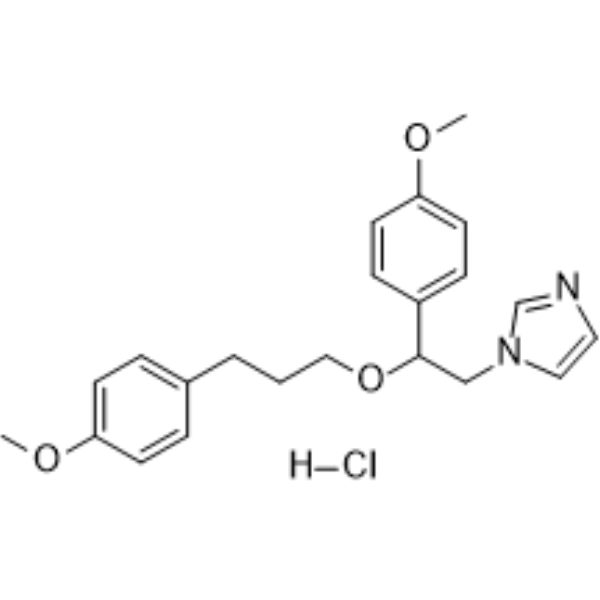
    σ1 Receptor antagonist-1 is a highly potent and selective sigma 1 receptor antagonist (pKi=10.28). σ1 Receptor antagonist-1 inhibits cell growth, arrests cell cycle at G0/G1 phase and induces apoptosis of MCF-7/ADR cells .
    σ1 Receptor antagonist-1
  • HY-N7160

    Src Apoptosis Cancer
    2-Hydroxy-3-methylanthraquinone (compound 1) is a natural compound isolated from a water extract of Hedyotis diffusa WILLD. 2-Hydroxy-3-methylanthraquinone shows inhibitory activity against protein tyrosine kinases v-src and pp60src, and induces growth arrest and apoptosis in the HepG2 cancer cells .
    2-Hydroxy-3-methylanthraquinone
  • HY-W016099

    MQCA

    Drug Metabolite Cancer
    3-Methyl-2-quinoxalinecarboxylic acid (MQCA), an important N-oxide reductive metabolite of Quinocetone or Olaquindox, potently inhibits the growth of Chang liver cells through S phase arrest of the cell cycle .
    3-Methyl-2-quinoxalinecarboxylic acid
  • HY-138071

    8αTGH

    STAT Pyroptosis Apoptosis Reactive Oxygen Species (ROS) c-Myc Bcl-2 Family TrxR Cancer
    8α-Tigloyloxyhirsutinolide 13-O-acetate (8αTGH) is a potent and orally active STAT3 inhibitor. 8α-Tigloyloxyhirsutinolide 13-O-acetate induces early oxidative stress and pyroptosis, and late DNA damage, cell cycle arrest, apoptosis in the TNBC cells. 8α-Tigloyloxyhirsutinolide 13-O-acetate suppresses tumor cell growth in vitro and tumor growth in vivo .
    8α-Tigloyloxyhirsutinolide 13-O-acetate
  • HY-110280

    HDAC Apoptosis Cancer
    MC1742 is a potent HDAC inhibitor, with IC50s of 0.1 μM, 0.11 μM, 0.02 μM, 0.007 μM, 0.61 μM, 0.04 μM and 0.1 μM for HDAC1, HDAC2, HDAC3, HDAC6, HDAC8, HDAC10 and HDAC11, respectively. MC1742 can increase acetyl-H3 and acetyl-tubulin levels and inhibits cancer stem cells growth. MC1742 can induce growth arrest, apoptosis, and differentiation in sarcoma CSC .
    MC1742
  • HY-153495

    BP1001

    Bcl-2 Family Apoptosis Reactive Oxygen Species (ROS) Cancer
    Prexigebersen (BP1001) is an antisense oligonucleotide targeting Bcl-2 and Grb2. Prexigebersen exhibits antileukemic activity in cell models. Prexigebersen induces apoptosis (apoptosis), cell cycle arrest and ROS production in leukemia cells. Prexigebersen inhibits Grb2 expression, thereby suppressing tumor growth and survival. Prexigebersen can be used in studies related to acute myeloid leukemia .
    Prexigebersen
  • HY-10127A

    AZD1152 dihydrochloride

    Aurora Kinase Apoptosis Cancer
    Barasertib (AZD1152 dihydrochloride), a pro-drug of Barasertib-hQPA, is a highly selective Aurora B inhibitor with an IC50 of 0.37 nM in a cell-free assay. Barasertib (AZD1152 dihydrochloride) induces growth arrest and apoptosis in cancer cells .
    Barasertib dihydrochloride
  • HY-N11097

    Apoptosis HSV HIV Infection Cancer
    FK-3000 is a potent anti-tumor agent that inhibits the growth of carcinoma cells through apoptosis and induction cell cycle arrest. FK-3000 also exhibit antiviral effects against HSV-1 and HIV-1 .
    FK-3000
  • HY-100538A
    DTP3 TFA
    1 Publications Verification

    DNA/RNA Synthesis JNK Cancer
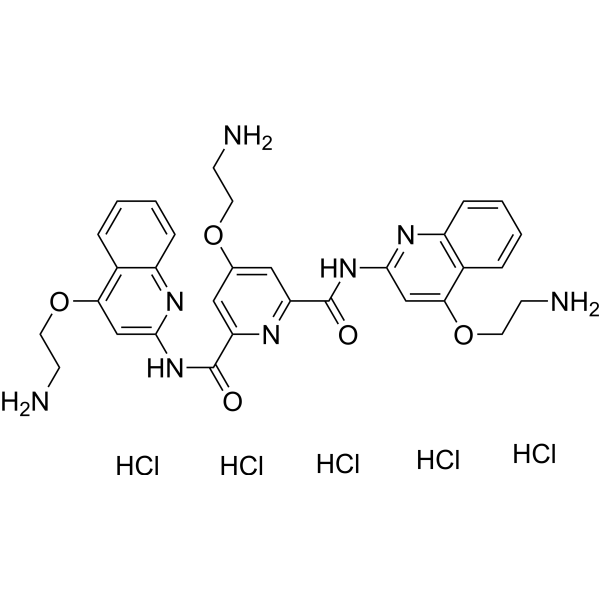
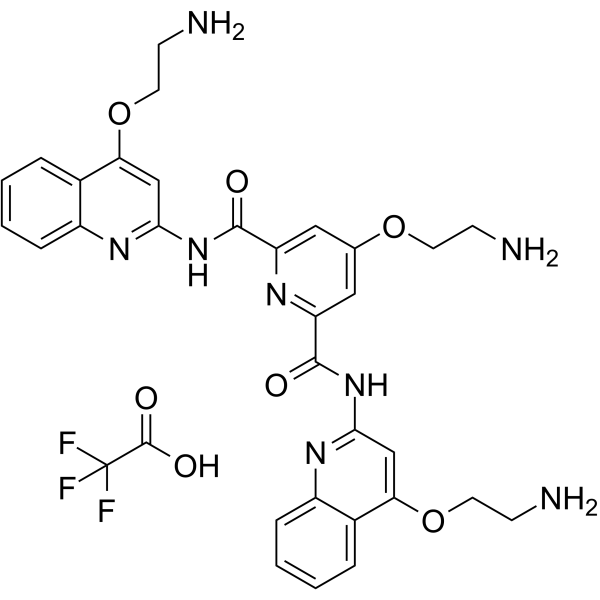
    DTP3 TFA is a potent and selective GADD45β/MKK7 (growth arrest and DNA-damage-inducible β/mitogen-activated protein kinase kinase 7) inhibitor. DTP3 TFA targets an essential, cancer-selective cell-survival module downstream of the NF-κB pathway .
    DTP3 TFA
  • HY-N0036R

    (+)-Costunolide (Standard); Costus lactone (Standard)

    Reference Standards Apoptosis Endogenous Metabolite Cancer
    Costunolide (Standard) is the analytical standard of Costunolide. This product is intended for research and analytical applications. Costunolide ((+)-Costunolide) is a naturally occurring sesquiterpene lactone, with antioxidative, anti-inflammatory, antiallergic, bone remodeling, neuroprotective, hair growth promoting, anticancer, and antidiabetic properties. Costunolide can induce cell cycle arrest and apoptosis on breast cancer cells .
    Costunolide (Standard)
  • HY-12564

    Aurora Kinase Apoptosis Mitosis Cancer
    Phthalazinone pyrazole is a potent, selective, and orally active inhibitor of Aurora-A kinase with an IC50 of 0.031 μM. Phthalazinone pyrazole can arrests mitosis and subsequently inhibit tumor growth via apoptosis of proliferating cells. Phthalazinone pyrazole suppresses the epithelial-mesenchymal transition (EMT) during the differentiation of hepatocyte-like cells (HLCs) from human embryonic stem cells .
    Phthalazinone pyrazole
  • HY-103257

    NSC656158

    Microtubule/Tubulin Cancer
    CHM-1, a microtubule-destabilizing agent, inhibits tubulin polymerization. CHM-1 is a potent and selective antimitotic antitumor activity against human hepatocellular carcinoma. CHM-1 induces growth inhibition and apoptosis via G2-M phase arrest in human hepatocellular carcinoma cells by activation of Cdc2 kinase activity .
    CHM-1
  • HY-W016099S

    MQCA-d4

    Isotope-Labeled Compounds Cancer
    3-Methyl-2-quinoxalinecarboxylic acid-d4 is the deuterium labeled 3-Methyl-2-quinoxalinecarboxylic acid. 3-Methyl-2-quinoxalinecarboxylic acid (MQCA), an important N-oxide reductive metabolite of Quinocetone or Olaquindox, potently inhibits the growth of Chang liver cells through S phase arrest of the cell cycle .
    3-Methyl-2-quinoxalinecarboxylic acid-d4
  • HY-W338764

    Apoptosis Aryl Hydrocarbon Receptor Cancer
    AHR agonist 3 is an aryl hydrocarbon receptor (AhR) agonist, that can induces cell cycle arrest or apoptosis via activation of tumor-suppressive transcriptional programs. AHR agonist 3 inhibits triple-negative breast cancer (TNBC) stem cell growth via AhR while exhibits minimal cytotoxicity against normal human primary cells and can be used for cancer research .
    AHR agonist 3
  • HY-18952A

    FLT3 Apoptosis Cancer
    (Z)-SU5614 is a potent FLT3 inhibitor and selectively induces growth arrest, apoptosis, and cell cycle arrest in Ba/F3 and AML cell lines expressing a constitutively activated FLT3 .
    (Z)-SU5614
  • HY-168620

    CDK Cancer
    CDK6-IN-1 (compound 4i) is a CDK6 inhibitor. CDK6-IN-1 inhibits cell growth and induces cell cycle arrest at G1-phase .
    CDK6-IN-1
  • HY-118331

    PD 124895; CL-1957E

    Antibiotic Infection Cancer
    Kazusamycin B is an antibiotic that could be isolated from the fermentation broth of Streptomyces sp. No. 81-484. Kazusamycin B inhibits cell growth and arrests cell cycle at G1 phase. Kazusamycin B can be used in research of cancer .
    Kazusamycin B
  • HY-B0114R

    GP 47680 (Standard)

    Reference Standards Sodium Channel Apoptosis Neurological Disease Cancer
    Oxcarbazepine (Standard) is the analytical standard of Oxcarbazepine. This product is intended for research and analytical applications. Oxcarbazepine is a sodium channel blocker . Oxcarbazepine significantly inhibits glioblastoma cell growth and induces apoptosis or G2/M arrest in glioblastoma cell lines . Anti-cancer and anticonvulsant effects .
    Oxcarbazepine (Standard)
  • HY-Y0943

    Drug Metabolite Cancer
    Aldehyde Dehydrogenase Isobutyramide is an orally active liver alcohol dehydrogenase (LADH2) inhibitor. Isobutyramide inhibits ethanol metabolism and enhances differentiation-related gene expression, inducing cell cycle arrest and significantly reducing the growth rate of prostate cancer cells (LNCaP). Isobutyramide is promising for research of advanced prostate cancer .
    Isobutyramide
  • HY-171047

    Apoptosis Autophagy DNA/RNA Synthesis Akt mTOR Cancer
    Autophagy inducer 7 (Compound SSA) is an Autophagy and Apoptosis inducer. Autophagy inducer 7 activates autophagy by inhibiting Akt/mTOR signaling and the expression of downstream proteins. Autophagy inducer 7 suppresses DNA synthesis and causes a G0-G1 cell-cycle arrest. Autophagy inducer 7 inhibits tumor cell growth .
    Autophagy inducer 7
  • HY-119994

    Protein Arginine Deiminase Others
    DFPM activates plant resistance protein signaling in roots, and triggers root growth arrest. DFPM decreases root cell viability in accession Col-0. DFPM is light sensitive in aqueous solutions. DFPM becomes bioactive during light and oxygen-dependent modification .
    DFPM
  • HY-W414644

    Parasite STAT Phosphatase MDM-2/p53 Apoptosis Infection Neurological Disease Inflammation/Immunology Cancer
    Fluacrypyrim, a Miticide, is a STAT3 inhibitor. Fluacrypyrim significantly increases the protein tyrosine phosphatases(PTPs) activity. Fluacrypyrim inhibits the growth of leukemia cells by a predominant G1 arrest with significant decrease of the protein and mRNA levels of cyclin D1. Fluacrypyrim selectively inhibits STAT3 signaling, inducing growth arrest and apoptosis in STAT3-dependent cancer cells. Fluacrypyrim mitigates IR-induced hematopoietic system injury mainly by preventing apoptosis in the HSCs. Fluacrypyrim demonstrates significant analgesic and anti-inflammatory effects by inhibiting uterine smooth muscle contraction and inflammatory responses .
    Fluacrypyrim
  • HY-N12044

    Apoptosis Cancer
    Asparanin A is an apoptosis inducer with anticancer activity. Asparanin A induces cell cycle arrest in the G0/G1 phase through mitochondria and PI3K/AKT signaling pathways, inhibiting cancer cell growth. Asparanin A also demonstrated in vivo efficacy in a mouse xenograft model of Ishikawa endometrial carcinoma, significantly inhibiting tumor growth .
    Asparanin A
  • HY-18621A

    TOPK Apoptosis Cancer
    OTS514 hydrochloride is a highly potent TOPK inhibitor, which inhibits TOPK kinase activity with a median inhibitory concentration (IC50) value of 2.6 nM. OTS514 hydrochloride strongly suppresses the growth of TOPK-positive cancer cells . OTS514 hydrochloride induces cell cycle arrest and apoptosis .
    OTS514 hydrochloride
  • HY-18203

    Apoptosis Akt mTOR Cancer
    HBF-0079 is a selective anti-hepatocellular carcinoma agent. HBF-0079 induces cell cycle arrest and Apoptosis. HBF-0079 modulates cell-growth and anti-apoptotic signaling through AKT and mTOR. HBF-0079 exhibits antitumor activity against hepatocellular carcinoma .
    HBF-0079
  • HY-P10603

    Antibiotic Bacterial Infection
    SP1 is an α-peptide encoded by the mating pheromone MFα1 gene in Candida albicans, which can induce cell growth arrest at the mating type locus MTLa in Candida albicans. SP1 can be used in the study of the prevention and treatment of Candida albicans infection .
    SP1

Inquiry Online

Your information is safe with us. * Required Fields.

Salutation


Country or Region *

Applicant Name *


Organization Name *

Department *


Email Address *


Product Name *

Cat. No.


Requested quantity *

Phone Number *


Remarks

Inquiry Online

Inquiry Information

Product Name:
Cat. No.:
Quantity:
MCE Japan Authorized Agent:

