



Cucurbitacin B (Standard)

Based on 1 Customer Validation
Cucurbitacin B (Standard) is the analytical standard of Cucurbitacin B. This product is intended for research and analytical applications. Cucurbitacin B belongs to a class of highly oxidized tetracyclic triterpenoids and is oral active. Cucurbitacin B inhibits tumor cell growth, migration and invasion and cycle arrest, but induces cell apoptosis. Cucurbitacin B has potent anti-inflammatory, antioxidant, antiviral, hypoglycemic, hepatoprotective, neuroprotective activity.
For research use only. We do not sell to patients.
- Purity : 98.23%
- CAS No.: 6199-67-3
- Formula: C₃₂H₄₆O₈
- Molecular Weight:558.70
-
Storage:
Please store the product under the recommended conditions in the Certificate of Analysis.


To place orders, for customer services and technical support, please contact: MedChemExpress USA
Tel: 609-228-6898 E-mail: [email protected] [email protected]


-
 Product Information
-
Chemical Information
- Purity & Documentation
-
 Help & FAQs


-
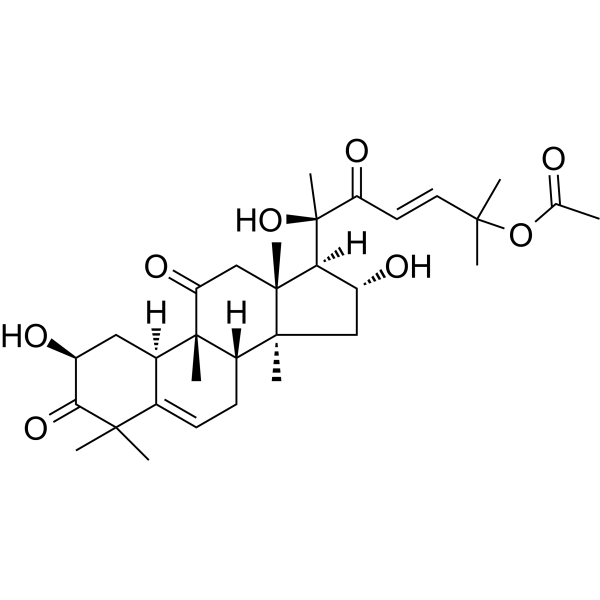
HY-N0416
Cucurbitacin BBioactive Tetracyclic Triterpenoid -
HY-N0045
Ginsenoside Rg1Apoptosis Inducer -
HY-10448
CapsaicinTRPV1 Agonist -
HY-16141
CilengitideIntegrin Inhibitor -
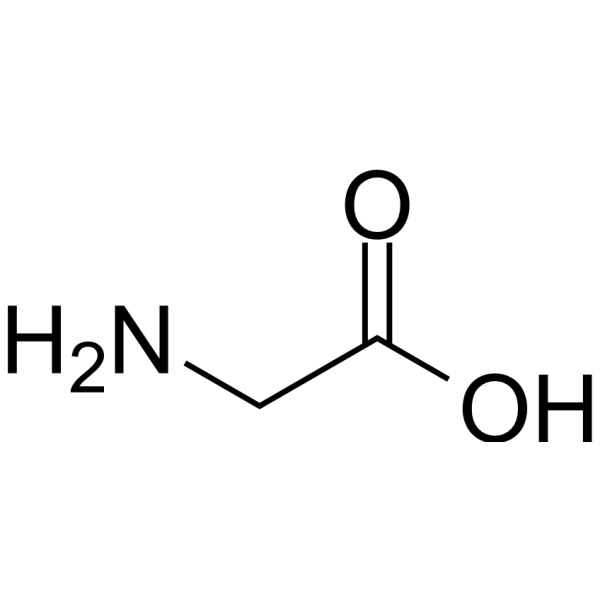
HY-Y0966
GlycineNMDAR Agonist -
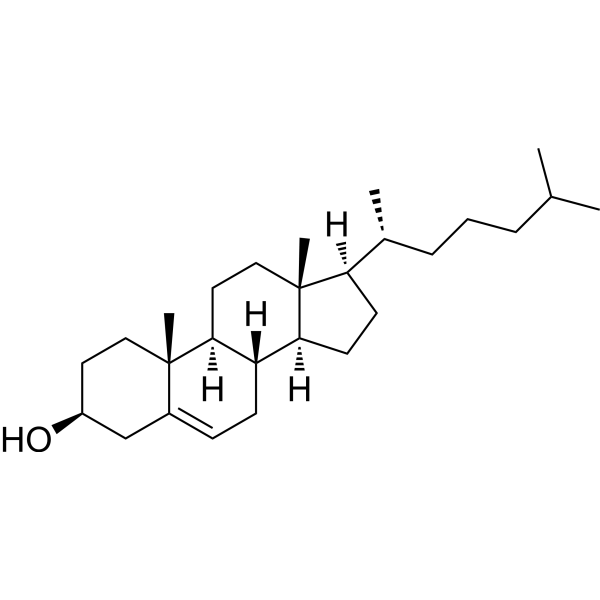
HY-N0322
Cholesterol (from animal)ERRα Agonist -
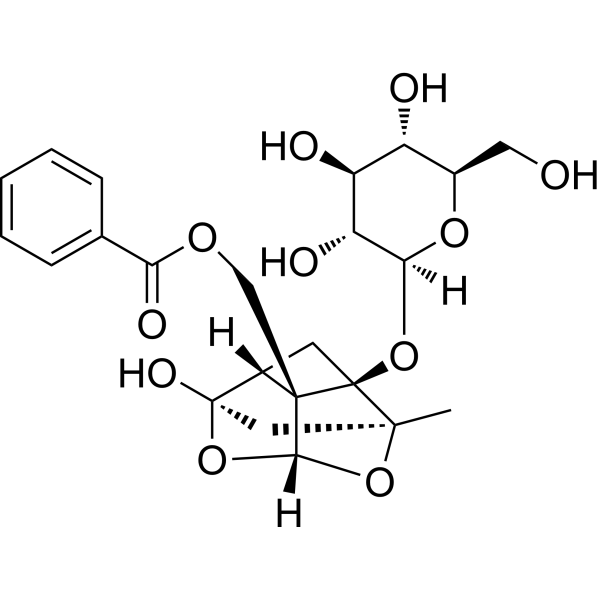
HY-N0293
PaeoniflorinHSP Activator -
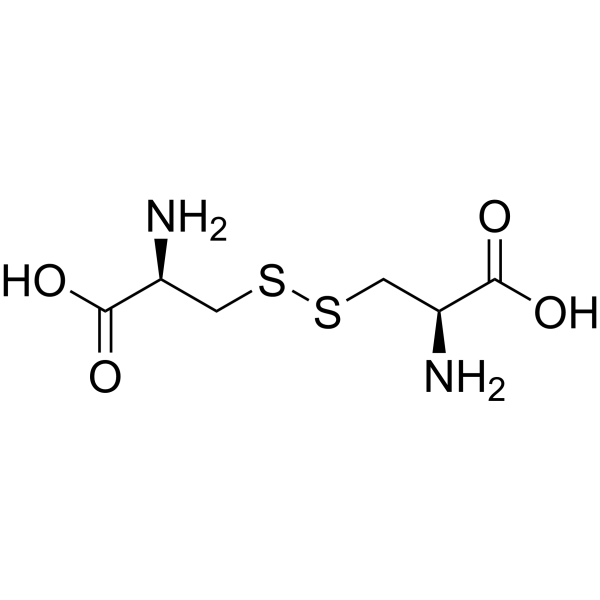
HY-N0394
L-CystineNrf2 Activator/ROS Inhibitor -
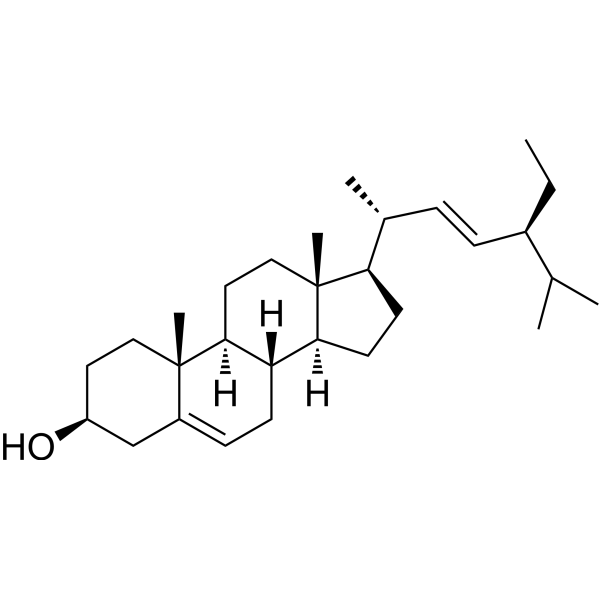
HY-N0131
StigmasterolPlant Sterol -
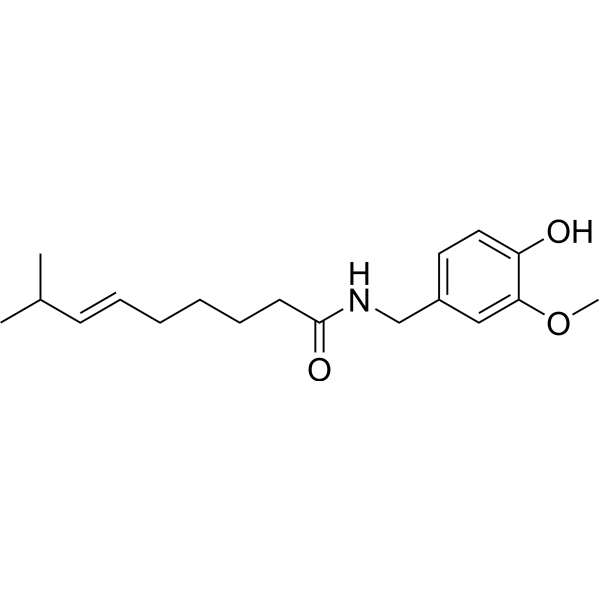
HY-10448R
Capsaicin (Standard)Analytical Standard -
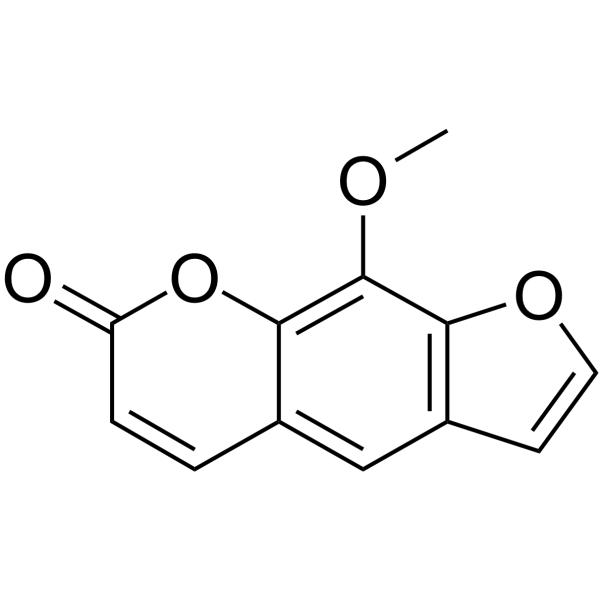
HY-30151
MethoxsalenCytochrome P450 Inhibitor -
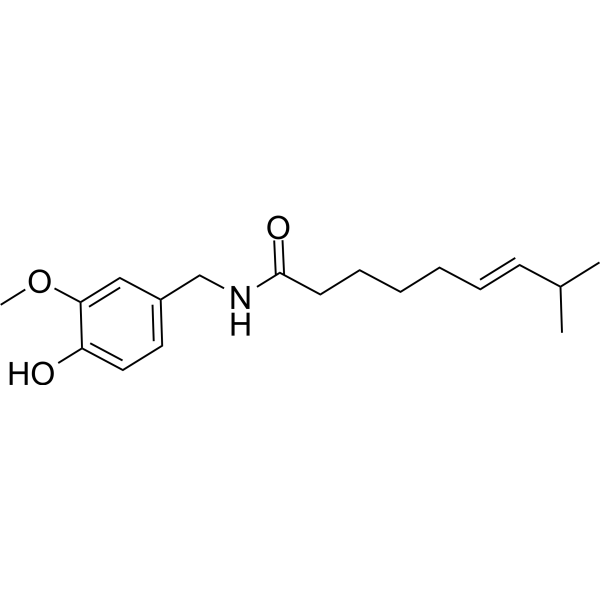
HY-10448A
Capsaicin (Purity 65%)TRPV1 Agonist


Product Information
Information
Application
The compound is the grade of analytical standard, which is the reference standard supplied assay. It is commonly used in qualitative, quantitative and methodological research experiments in HPLC, GC and MS.


Chemical Information
-
CAS No. 6199-67-3
-
Appearance Solid
-
Molecular Weight 558.70
-
Formula C₃₂H₄₆O₈
-
Color White to off-white
-
SMILES
O[C@H](C1)[C@@]([C@@](C)(O)C(/C=C/C(OC(C)=O)(C)C)=O)([H])[C@](C2)(C)[C@]1(C)[C@]3([H])CC=C4C(C)(C)C([C@@H](O)C[C@@]4([H])[C@]3(C)C2=O)=O
-
Structure Classification
-
Shipping
Room temperature in continental US; may vary elsewhere.
-
Storage
Please store the product under the recommended conditions in the Certificate of Analysis.


Purity & Documentation
-
SDS (480 KB)
- English - EN (480 KB)
- Français - FR (480 KB)
- Deutsch - DE (480 KB)
- Norwegian - NO (480 KB)
- Español - ES (480 KB)
- Swedish - SV (480 KB)
- Italian - IT (480 KB)
- Korean - KR (480 KB)
- Portuguese - PT (480 KB)
-
Handling Instructions (2659 KB)
References
[1]. Dai S, , et al. Cucurbitacin B: A review of its pharmacology, toxicity, and pharmacokinetics. Pharmacol Res. 2023;187:106587. [Content Brief]
[2]. Klungsaeng, et al. Targeted Modulation of FAK/PI3K/PDK1/AKT and FAK/p53 Pathways by Cucurbitacin B for the Antiproliferation Effect Against Human Cholangiocarcinoma Cells. Am J Chin Med. 2020;48(6):1475-1489. [Content Brief]
[3]. Lin Y, et al. Cucurbitacin B Exerts Antiaging Effects in Yeast by Regulating Autophagy and Oxidative Stress. Oxid Med Cell Longev. 2019;2019:4517091. [Content Brief]
[4]. Aljohani OS. Phytochemical evaluation of Cucumis prophetarum: protective effects against carrageenan-induced prostatitis in rats. Drug Chem Toxicol. 2022;45(4):1461-1469. [Content Brief]
[5]. Liu Z, Kumar M, Kabra A. Cucurbitacin B exerts neuroprotection in a murine Alzheimer's disease model by modulating oxidative stress, inflammation, and neurotransmitter levels. Front Biosci (Landmark Ed). 2022;27(2):71. [Content Brief]
[6]. Shang Y, et al. Cucurbitacin-B inhibits neuroblastoma cell proliferation through up-regulation of PTEN. Eur Rev Med Pharmacol Sci. 2014;18(21):3297-303. [Content Brief]
[7]. Zhang M, et al. Cucurbitacin B inhibits proliferation and induces apoptosis via STAT3 pathway inhibition in A549 lung cancer cells. Mol Med Rep. 2014 Dec;10(6):2905-11. [Content Brief]
[8]. Guo J, et al. Cucurbitacin B induced ATM-mediated DNA damage causes G2/M cell cycle arrest in a ROS-dependent manner. PLoS One. 2014 Feb 4;9(2):e88140. [Content Brief]
[9]. Gupta P, et al. Inhibition of Integrin-HER2 signaling by Cucurbitacin B leads to in vitro and in vivo breast tumor growth suppression. Oncotarget. 2014 Apr 15;5(7):1812-28. [Content Brief]

Calculators
Concentration (start) × Volume (start) = Concentration (final) × Volume (final)


Cucurbitacin B (Standard) Related Classifications
HY-N0416R Related Classifications
 Powered by Bioz