



Sotetsuflavone
Based on 1 publication(s) in Google Scholar
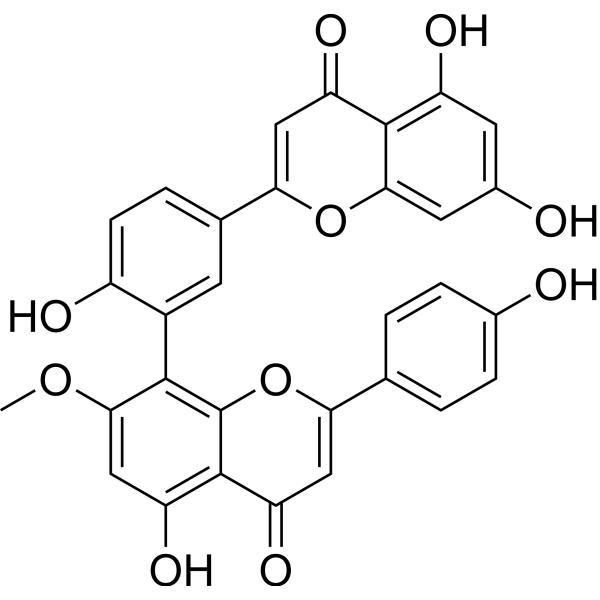
Sotetsuflavone is a flavonoid that can be isolated from Cycas revolute. Sotetsuflavone inhibits phosphorylation of PI3K, Akt, mTOR, JNK, and p38 MAPK; modulates expression of Cyclin D1, CDK4, Bcl-2, Bax, cleaved caspases 3/9, MMP-9, TGF-β, STAT3, and β-catenin. Sotetsuflavone induces G0/G1 cell cycle arrest, apoptosis, autophagy, and intracellular ROS elevation, inhibits cancer cell proliferation. Sotetsuflavone inhibits tumor growth in mouse tumor xenograft models. Sotetsuflavone can be used for the research of non-small cell lung cancer and Crohn’s disease.
Nur für Forschungszwecke. Wir verkaufen nicht an Patienten.
- CAS. Nr.: 2608-21-1
- Formel: C31H20O10
- Molecular Weight:552.48
-
Speicherung:
4°C, protect from light
* In solvent : -80°C, 6 months; -20°C, 1 month (protect from light)

To place orders, for customer services and technical support, please contact: MedChemExpress USA
Tel: 609-228-6898 E-mail: [email protected] [email protected]


-
 Biologische Aktivität
-
Chemical Information
- Protokoll
- Reinheit & Dokumentation
- Verweise
-
 Help & FAQs


Publications Citing Use of MedChemExpress (MCE) Sotetsuflavone
MoreAlle Caspase Isoform-spezifische Produkte anzeigen
More

Biologische Aktivität
Beschreibung
In Vitro
Sotetsuflavone (64-128 μmol/L; 24 h) inhibits the PI3K/Akt/mTOR signaling pathway in A549 and H1650 non-small cell lung cancer cells[1].
Sotetsuflavone (5-200 μmol/L; 24 h) dose-dependently inhibits H1650 cell viability with an IC50 of 67.54 μmol/L[1].
Sotetsuflavone (64-128 μmol/L; 14 days) significantly inhibits colony formation by A549 and H1650 non-small cell lung cancer cells[1].
Sotetsuflavone (64-128 μmol/L; 24 h) significantly inhibits the migration of H1650 cells[1].
Sotetsuflavone (64-128 μmol/L) significantly inhibits the invasion of H1650 non-small cell lung cancer cells[1].
Sotetsuflavone (64-128 μmol/L; 24 h) significantly induces apoptosis in both A549 and H1650 non-small cell lung cancer cells[1].
Sotetsuflavone (64-128 μmol/L; 24 h) modulates apoptosis and cell cycle-related protein expression in H1650 non-small cell lung cancer cells, reducing cyclin D1, CDK4, and Bcl-2 and increasing Bax, cleaved-caspase 3, cleaved-caspase 9, and cytochrome C[1].
Sotetsuflavone (64-128 μmol/L; 24 h) induces G0/G1 phase cell cycle arrest in H1650 non-small cell lung cancer cells[1].
Sotetsuflavone (64-128 μmol/L; 24 h) induces autophagy in A549 cells, as shown by increased LC3-II conversion and reduced P62 expression[1].
Sotetsuflavone (64-128 μmol/L; 24 h) increases autophagosome formation in A549 non-small cell lung cancer cells[1].
Sotetsuflavone (64-128 μmol/L; 24 h) increases the formation of acidic vesicle organelles in A549 non-small cell lung cancer cells, indicating enhanced autophagy[1].
Sotetsuflavone (5-200 μmol/L; 12-48 h) inhibits the proliferation of A549 cells in a time- and dose-dependent manner[2].
Sotetsuflavone (64-128 μmol/L; 24 h) dose-dependently increases intracellular ROS levels in A549 cells[2].
Sotetsuflavone (64-128 μmol/L; 24 h) dose-dependently reduces the mitochondrial membrane potential of A549 cells[2].
Sotetsuflavone (64-128 μmol/L; 24 h) dose-dependently modulates epithelial-mesenchymal transition marker proteins in human non-small-cell lung cancer A549 cells, increasing E-cadherin and decreasing Snail, HIF-1α, MMP-9/13, VEGF, TNF-α and NF-κB expression[3].
Sotetsuflavone (64-128 μmol/L; 24 h) dose-dependently inhibits PI3K and AKT expression in human non-small-cell lung cancer A549 cells, suppressing activation of the PI3K/AKT pathway[3].
Sotetsuflavone (64-128 μmol/L; 24 h) concentration-dependently downregulates STAT3, β-catenin, and TGF-β expression and upregulates ZO-1 expression in human non-small cell lung cancer A549 cells[4].
Sotetsuflavone (25-100 μM; 24 h) dose-dependently inhibits LPS (HY-D1056) plus IFN-γ-induced JNK and p38 phosphorylation in RAW264.7 macrophages[5].
Sotetsuflavone (50 μM; 12 h pre-incubation) inhibits the LPS plus IFN-γ-induced upregulation of M1 macrophage marker genes iNOS and IRF-5 in RAW264.7 macrophages, an effect mediated via suppression of p38 signalling[5].
Sotetsuflavone (50 μM; 12 h pre-incubation) protects mouse colonic organoids from M1 macrophage-induced damage, including reduced size, impaired budding, and increased permeability, via suppression of p38 and JNK signalling[5].
MedChemExpress (MCE) has not independently confirmed the accuracy of these methods. They are for reference only.
-
Cell Line:A549 and H1650 non-small cell lung cancer cells
-
Concentration:64; 128 μmol/L
-
Incubation Time:24 h
-
Result:Reduced the phosphorylation levels of PI3K, Akt, mTOR, Raptor, and p70S6K in A549 cells.
Significantly increased LC3-II conversion and reduced P62 expression in both A549 and H1650 cells when co-treated with 20 μM LY294002 (HY-10108).
-
Cell Line:H1650 non-small cell lung cancer cells
-
Concentration:5; 10; 20; 40; 80; 100; 120; 160; 200 μmol/L
-
Incubation Time:24 h
-
Result:Inhibited H1650 cell growth in a dose- and time-dependent manner.
Exhibited an IC50 value of 67.54 μmol/L.
-
Cell Line:A549 and H1650 non-small cell lung cancer cells
-
Concentration:64; 128 μmol/L
-
Incubation Time:14 days
-
Result:Reduced A549 cell colony numbers to ~35% and ~15% of control at 64 and 128 μmol/L, respectively.
Reduced H1650 cell colony numbers to ~30% and ~10% of control at 64 and 128 μmol/L, respectively.
-
Cell Line:H1650 non-small cell lung cancer cells
-
Concentration:64; 128 μmol/L
-
Incubation Time:24 h
-
Result:Reduced H1650 cell migration to ~55% and ~35% of control at 64 and 128 μmol/L, respectively.
-
Cell Line:H1650 non-small cell lung cancer cells
-
Concentration:64; 128 μmol/L
-
Incubation Time:24 h
-
Result:Increased the proportion of H1650 cells in the G0/G1 phase and decreased the proportion in the G2/M phase compared to control.
-
Cell Line:human non-small cell lung cancer A549 cells
-
Concentration:5; 10; 20; 40; 80; 100; 120; 160; 200 μmol/L
-
Incubation Time:12; 24; 48 h
-
Result:Inhibited A549 cell proliferation in a time- and dose-dependent manner.
Reduced cell viability significantly at concentrations ≥80 μmol/L across all incubation times.
Showed no significant difference in inhibitory effect between 12 h, 24 h, and 48 h at concentrations >80 μmol/L.
Exhibited IC50 values of 87 μmol/L for 12 h incubation, 71 μmol/L for 24 h incubation, and 63 μmol/L for 48 h incubation.
-
Cell Line:human non-small cell lung cancer A549 cells
-
Concentration:64; 128 μmol/L
-
Incubation Time:24 h
-
Result:Induced apoptosis in A549 cells in a dose-dependent manner.
Increased the apoptosis ratio from a low control level to ~10% at 64 μmol/L and ~32% at 128 μmol/L.
Increased green (Annexin V-FITC) and red (PI) staining with higher sotetsuflavone concentrations.\nIncreased the number of cells with condensed, fragmented bright blue nuclei (apoptotic cells) in a dose-dependent manner.
-
Cell Line:human non-small cell lung cancer A549 cells
-
Concentration:64; 128 μmol/L
-
Incubation Time:24 h
-
Result:Downregulated cell cycle-related proteins Cyclin D1 and CDK4 in a dose-dependent manner.
Upregulated pro-apoptotic proteins Bax, cleaved caspase-3, cleaved caspase-9, and cytochrome C in a dose-dependent manner.
Downregulated anti-apoptotic protein Bcl-2 and death receptor pathway protein cleaved caspase-8 in a dose-dependent manner.
Increased the Bax/Bcl-2 ratio.
-
Cell Line:human non-small-cell lung cancer A549 cells
-
Concentration:64; 128 μmol/L
-
Incubation Time:24 h
-
Result:Upregulated E-cadherin protein expression in a dose-dependent manner compared to the control group.
Downregulated Snail protein expression in a dose-dependent manner compared to the control group.
-
Cell Line:human non-small-cell lung cancer A549 cells
-
Concentration:64; 128 μmol/L
-
Incubation Time:24 h
-
Result:Downregulated mRNA expression of Snail in a dose-dependent manner compared to the control group.
Downregulated mRNA expression of Vimentin in a dose-dependent manner compared to the control group.
Downregulated mRNA expression of N-cadherin in a dose-dependent manner compared to the control group.
-
Cell Line:human non-small cell lung cancer A549 cells
-
Concentration:64; 128 μmol/L
-
Incubation Time:24 h
-
Result:Significantly increases endostatin fluorescence intensity and significantly decreases TGF-β fluorescence intensity compared to control at 64 μmol/L.
Produces a further significant increase in endostatin fluorescence intensity and further significant decrease in TGF-β fluorescence intensity compared to control at 128 μmol/L, with effects showing a concentration-dependent trend.
Localizes endostatin primarily to the A549 cell membrane, while TGF-β is localized primarily to the cytoplasm.
-
Cell Line:human non-small cell lung cancer A549 cells
-
Concentration:64; 128 μmol/L
-
Incubation Time:24 h
-
Result:Significantly decreased STAT3, β-catenin, and TGF-β mRNA expression, and significantly increases ZO-1 mRNA expression compared to control at 64 μmol/L.
Produces a further significant decrease in STAT3, β-catenin, and TGF-β mRNA expression, and further significant increase in ZO-1 mRNA expression compared to control at 128 μmol/L, with effects showing a concentration-dependent trend.
-
Cell Line:human non-small cell lung cancer A549 cells
-
Concentration:64; 128 μmol/L
-
Incubation Time:24 h
-
Result:Significantly decreases STAT3 and β-catenin protein expression relative to GAPDH compared to control at 64 μmol/L.
Produces a further significant decrease in STAT3 and β-catenin protein expression relative to GAPDH compared to control at 128 μmol/L, with effects showing a concentration-dependent trend.
-
Cell Line:RAW264.7 macrophages
-
Concentration:25; 50; 100 μM
-
Incubation Time:24 h
-
Result:Dose-dependently inhibited the LPS (HY-D1056) plus IFN-γ-induced increases in phosphorylated JNK (p-JNK) and phosphorylated p38 protein levels.
Reduced relative p-JNK protein to ~2.7-fold and relative p-p38 protein to ~2.5-fold at 25 μM compared to the non-stimulated control group's ~1-fold.
Reduced relative p-JNK protein to ~1.5-fold and relative p-p38 protein to ~1.5-fold at 50 μM.
Reduced relative p-JNK protein to ~1.2-fold and relative p-p38 protein to ~1.2-fold at 100 μM.
-
Cell Line:RAW264.7 macrophages
-
Concentration:50 μM
-
Incubation Time:12 h pre-incubation, followed by 24 h LPS/IFN-γ stimulation
-
Result:Down-regulated the transcript levels of M1 macrophage genes iNOS and IRF-5 in LPS plus IFN-γ-induced RAW264.7 cells.
Reduced relative iNOS mRNA from ~2.5-fold (LPS/IFN-γ only) to ~1.7-fold compared to the non-stimulated control group's ~1-fold.
Reduced relative IRF5 mRNA from ~3.8-fold (LPS/IFN-γ only) to ~1.7-fold compared to the non-stimulated control group's ~1-fold.
Inhibitory effect was abolished by co-treatment with the p38 agonist anisomycin (50 nM).
In Vivo
Sotetsuflavone (40 mg/kg; i.p.; every other day; 4 weeks) ameliorates spontaneous Crohn's disease-like colitis in IL-10-/- mice[5].
MedChemExpress (MCE) has not independently confirmed the accuracy of these methods. They are for reference only.
-
Animal Model:BALB/C mice (male, 4 weeks old) subcutaneously inoculated with A549 cells[1]
-
Dosage:20; 40 mg/kg
-
Administration:i.p.; every 4 days; 28 days
-
Result:Significantly reduced tumor volume and mean tumor weight relative to control.
Resulted in lower mean tumor weight at 40 mg/kg dose than at 20 mg/kg dose.
Increased apoptotic cells in tumor tissues, with more apoptosis observed in the 40 mg/kg group.
Increased LC3 expression and decreased P62 expression in tumor tissues.
Maintained stable mouse body weight throughout the study.
Showed no serious morphological changes in lung, intestine, or liver tissues.
-
Animal Model:IL-10-/- mice (15-week-old male) with colitis[5]
-
Dosage:40 mg/kg
-
Administration:i.p.; every other day; 4 weeks
-
Result:Significantly reduced disease activity index (DAI) scores starting 2 weeks post-treatment.
Increased net weight change relative to untreated IL-10-/- mice.
Attenuated colon shortening.
Reduced macroscopic colonic mucosal injury scores to 3.63 and colonic inflammatory scores to 2.
Lowered serum intestinal fatty acid binding protein (I-FABP) levels and blood FITC-dextran levels.
Increased transepithelial electric resistance (TEER) of colon tissues.
Reduced bacterial translocation rate to mesentery lymph nodes (MLNs) from 37.25% to 12.5% and to liver from 31.25% to 6.25%.
Decreased the percentage of iNOS+/F4/80+ M1 macrophages from 7.69% to 3.89%, increased the percentage of CD206+/F4/80+ M2 macrophages from 8.91% to 13.14%, and reduced the M1/M2 ratio.
Decreased protein and mRNA levels of proinflammatory cytokines TNF-α, IL-6, IFN-γ, and IL-1β.
Inhibited phosphorylation of JNK and p38 in intestinal epithelial macrophages.
- RNA extraction experimental
- Somatic Cell Culture
- Detection of Apoptosis
- TUNEL staining for apoptotic DNA fragmentation
- Flow cytometric DNA-content cell-cycle staining
- Mitochondrial membrane-potential and mitochondrial mass staining
- Autophagy
- Apoptosis Solutions
- Lysosome and acidic-vesicle live-cell staining
- MTT Cell Proliferation Assay
- Macroautophagy Solutions
- Western Blot
- Mitochondrial membrane-potential fluorescent assay
- Annexin V plus membrane-impermeant dye apoptosis staining
- BrdU Incorporation Assay
- ROS/oxidative-stress fluorescent staining
- CFSE Dye Dilution Proliferation Assay
- Dye-dilution cell tracking and proliferation staining
- Patient-Derived Orthotopic Xenograft (PDOX)
- Protocol for Cell Cycle
- CCK-8/WST-8 Cell Proliferation Assay
- Cell Counting-Based Growth Curve Assay
- Colony Formation (Clonogenic) Assay
- Cell Viability Determination by MTT Colorimetric Assay
- Kinase activity and phosphorylation assays
- EdU Incorporation Assay (Click Chemistry-Based DNA Synthesis Measurement)
- Ki-67 Immunostaining Proliferation Assay
- PCNA Immunodetection Proliferation Assay
- Protocol for Cell Counting and Cell Density Analysis
- Patient-Derived Xenograft (PDX)
- Splenic/Portal-Vein Liver Metastasis Xenograft
- Protocol for Kinase activity and phosphorylation assays
- Subcutaneous Cell-Line-Derived Xenograft
- Orthotopic Cell-Line Xenograft
- Intraperitoneal/Peritoneal Dissemination Xenograft


Chemical Information
-
CAS. Nr. 2608-21-1
-
Appearance Solid
-
Molecular Weight 552.48
-
Formel C31H20O10
-
Color Light brown to brown
-
SMILES
O=C1C=C(C2=CC=C(O)C=C2)OC3=C(C4=CC(C5=CC(C6=C(O)C=C(O)C=C6O5)=O)=CC=C4O)C(OC)=CC(O)=C13
-
Structure Classification
-
Versand
Room temperature in continental US; may vary elsewhere.
-
Speicherung
4°C, protect from light
* In solvent : -80°C, 6 months; -20°C, 1 month (protect from light)


Publications (1)
-
Journal Impact Factor
-
Most Recent


Reinheit & Dokumentation
-
Data Sheet (305 KB)
-
SDS (252 KB)
- English - EN (252 KB)
- Français - FR (252 KB)
- Deutsch - DE (252 KB)
- Norwegian - NO (252 KB)
- Español - ES (252 KB)
- Swedish - SV (252 KB)
- Italian - IT (252 KB)
- Korean - KR (252 KB)
- Portuguese - PT (252 KB)
-
Handling Instructions (2659 KB)
Verweise
[1]. Wang S, et al. Sotetsuflavone Induces Autophagy in Non-Small Cell Lung Cancer Through Blocking PI3K/Akt/mTOR Signaling Pathway in Vivo and in Vitro. Front Pharmacol. 2019 Dec 5;10:1460. [Content Brief]
[2]. Wang S, et al. Sotetsuflavone inhibits proliferation and induces apoptosis of A549 cells through ROS-mediated mitochondrial-dependent pathway. BMC Complement Altern Med. 2018;18(1):235. Published 2018 Aug 9. [Content Brief]
[3]. Wang S, et al. Sotetsuflavone suppresses invasion and metastasis in non-small-cell lung cancer A549 cells by reversing EMT via the TNF-α/NF-κB and PI3K/AKT signaling pathway. Cell Death Discov. 2018;4:26. Published 2018 Feb 14. [Content Brief]
[5]. Ge S, et al. Sotetsuflavone ameliorates Crohn's disease-like colitis by inhibiting M1 macrophage-induced intestinal barrier damage via JNK and MAPK signalling. Eur J Pharmacol. 2023;940:175464. [Content Brief]

Calculators
Konzentration (Stammlösung) × Volumen (Stammlösung) = Konzentration (Ziellösung) × Volumen (Ziellösung)


Sotetsuflavone Related Classifications
HY-N2199 Related Classifications
 Powered by Bioz
Keywords
- Sotetsuflavone
- 2608-21-1
- Apoptosis
- Autophagy
- PI3K
- JNK
- mTOR
- p38 MAPK
- CDK
- MMP
- TGF-beta/Smad
- STAT
- β-catenin
- Reactive Oxygen Species (ROS)
- Bcl-2 Family
- Caspase
- non-small cell lung cancer
- TNF-α/NF-κB pathway
- Crohn’s disease
- A549 cells
- PI3K/Akt/mTOR pathway
- BEAS-2B cells
- RAW264.7 macrophages
- autophagy
- epithelial-mesenchymal transition
- H1650 cells
- Inhibitor
- inhibitor
- inhibit