



GYY4137
Based on 8 publication(s) in Google Scholar
GY4137 is a sustained-release H2S donor possessing vasodilatory, antihypertensive, and anti-inflammatory activities. GY4137 can inhibit cell growth, induce apoptosis, and cause cell cycle arrest by blocking the STAT3 pathway, demonstrating potent anticancer activity.
For research use only. We do not sell to patients.
- Purity : 98.64%
- CAS No.: 106740-09-4
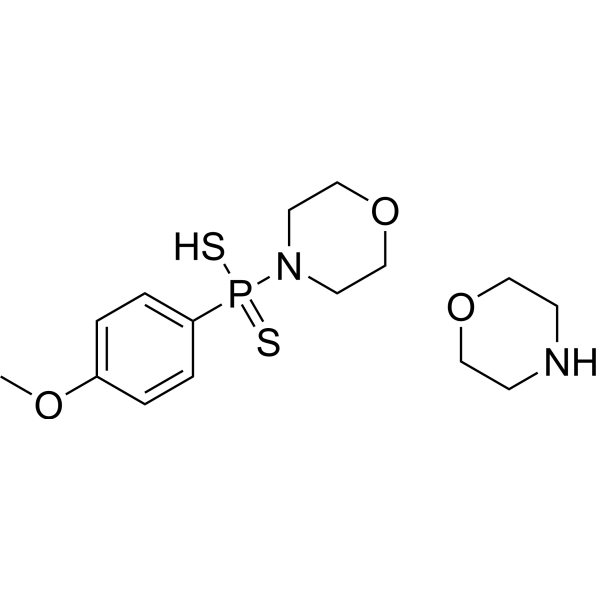
- Formula: C15H25N2O3PS2
- Molecular Weight:376.47
-
Storage:
-20°C, stored under nitrogen
* In solvent : -80°C, 6 months; -20°C, 1 month (stored under nitrogen)

To place orders, for customer services and technical support, please contact: MedChemExpress USA
Tel: 609-228-6898 E-mail: [email protected] [email protected]


-
 Biological Activity
-
Chemical Information
-
Solvent & Solubility
- Protocols
- Purity & Documentation
- References
-
 Help & FAQs


-
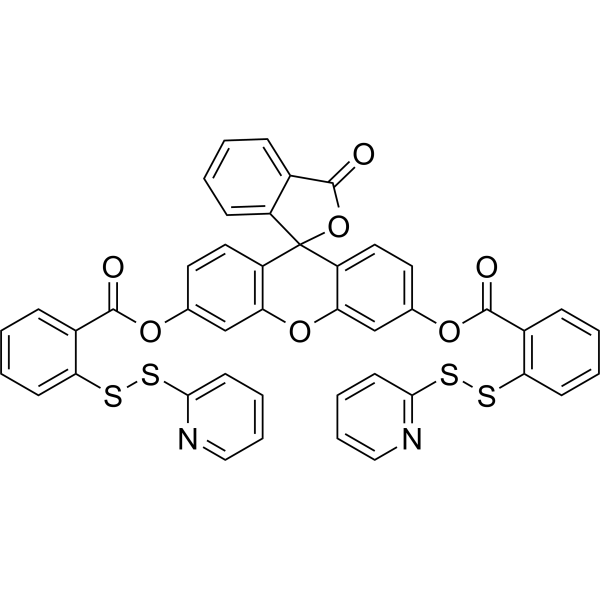
HY-129420
WSP-5Fluorescent Probe -
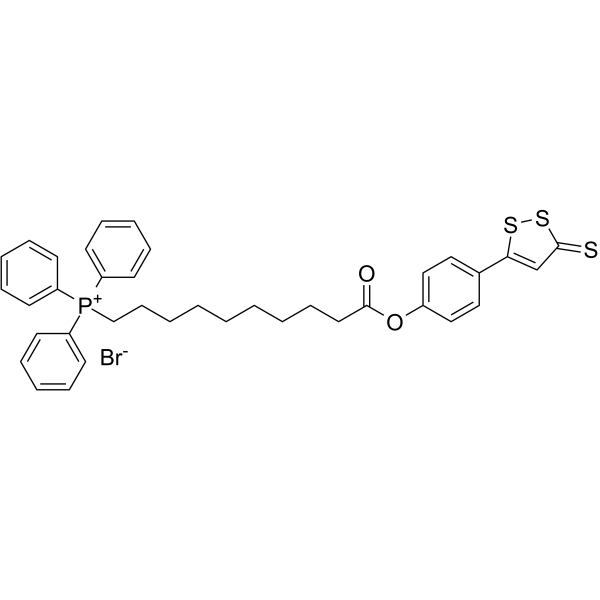
HY-126124
AP39Mitochondrial H2S Donor -
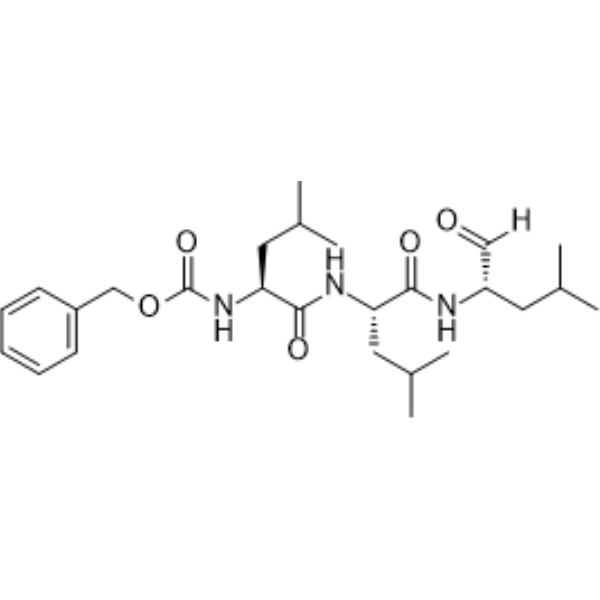
HY-13259
MG-132Proteasome Inhibitor -
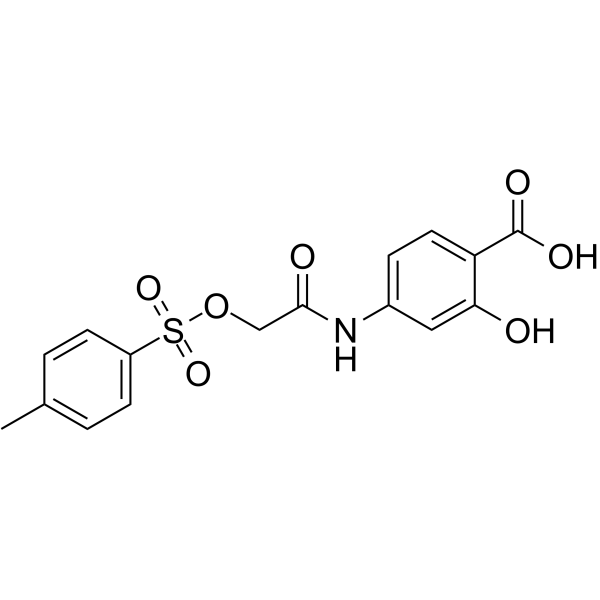
HY-15146
NSC 74859STAT3 Inhibitor -
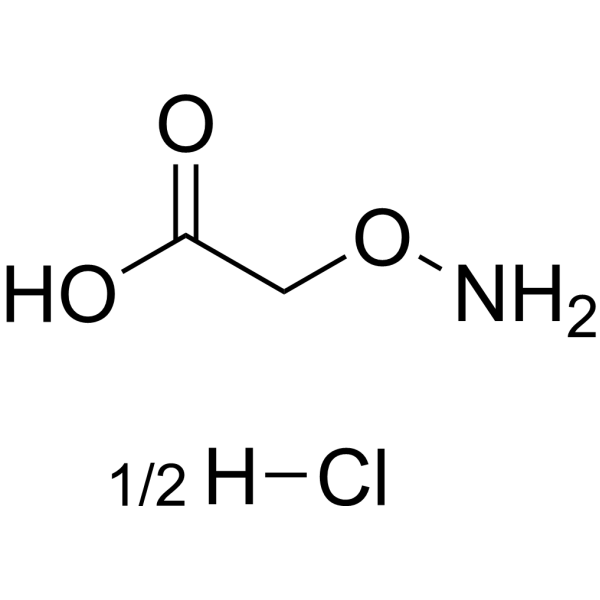
HY-107994
Aminooxyacetic acid hemihydrochlorideGABA Receptor Inhibitor -
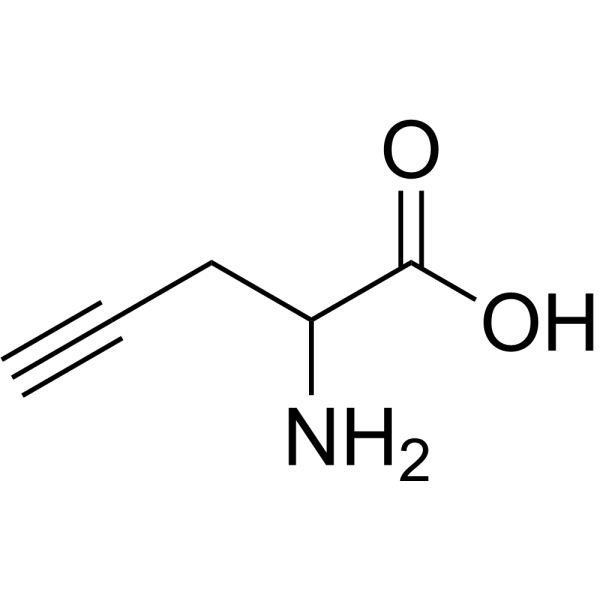
HY-W040124
DL-PropargylglycineAmino Acid Derivative -
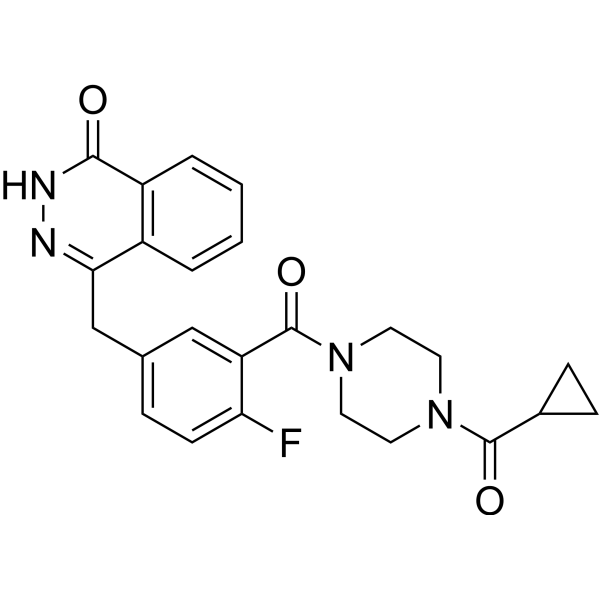
HY-10162
OlaparibPARP Inhibitor -
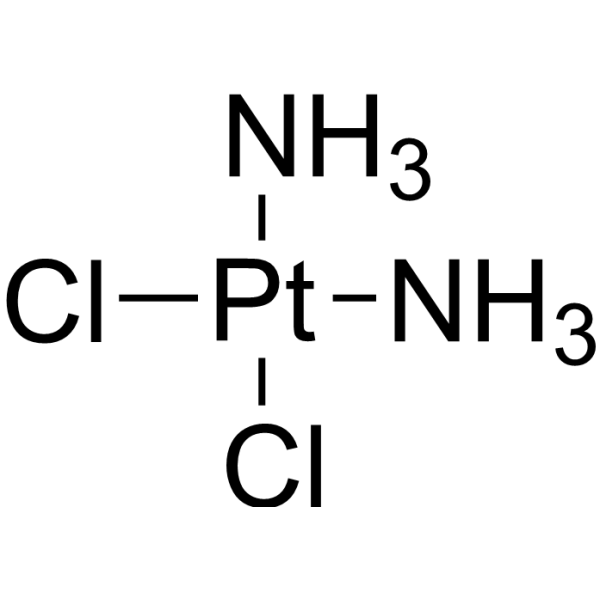
HY-17394
CisplatinDNA Alkylator -
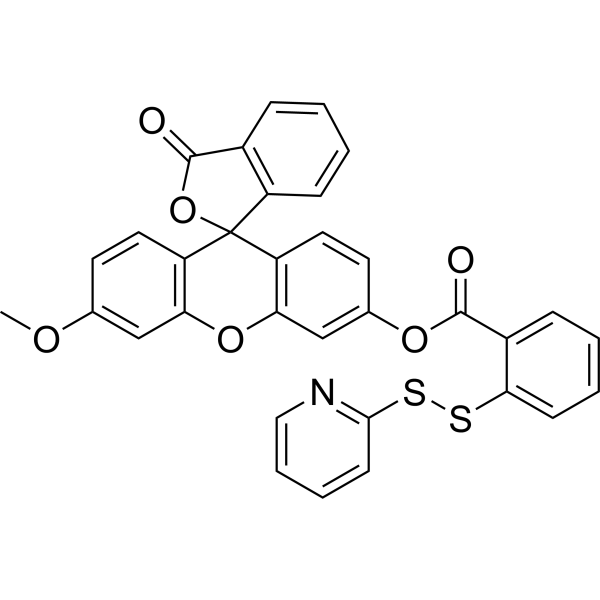
HY-124409
WSP-1H2S Fluorescent Dye -
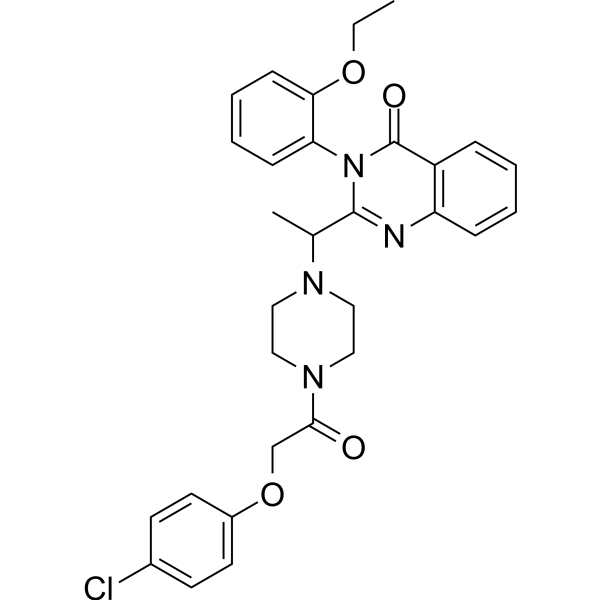
HY-15763
ErastinFerroptosis Inducer -
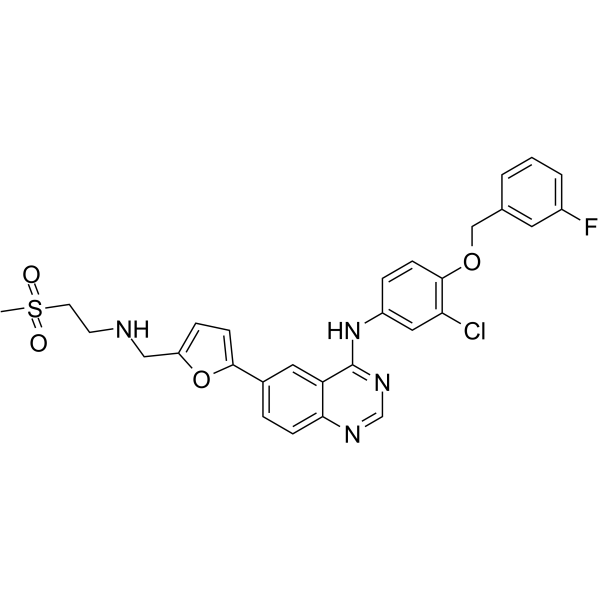
HY-50898
LapatinibEGFR/HER2 Inhibitor -
HY-100803
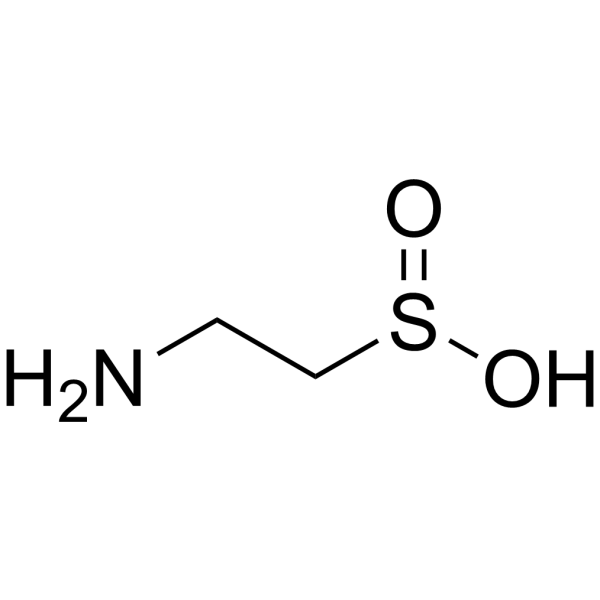
HypotaurineAntioxidant
Publications Citing Use of MedChemExpress (MCE) GYY4137
More- Cell Commun Signal. 2024 Jan 12;22(1):33. [Abstract]
- Antioxid Redox Signal. 2025 Jan;42(1-3):1-15. [Abstract]
- Biochem Pharmacol. 2026 Feb 13:247:117815. [Abstract]
- Molecules. 2023 Jun 14;28(12):4770. [Abstract]
- Biomedicines. 2026 Mar 26;14(4):760. [Abstract]
- Med Gas Res. 2026 Jun 1;16(2):103-109. [Abstract]
- Nitric Oxide. 2022 Dec 1:129:41-52. [Abstract]
- Patent. US20250276009A1.
 Customer Validation & Images

-
In Vivo Efficacy Study
-
WB
-
WB
-
Cell Proliferation/Viability Assay
-
In Vivo Efficacy Study


Biological Activity
Description
IC50 & Target
[6]|
Stat-3 |
Cellular Effect
|
Cell Line

|
Type | Value | Description | References |
|---|---|---|---|---|
| MCF7 | IC50 |
>500 μM
Compound: 1, GYY4137
|
Cytotoxicity against human MCF7 cells assessed as inhibition of cell proliferation after 72 hrs by MTT assay
Cytotoxicity against human MCF7 cells assessed as inhibition of cell proliferation after 72 hrs by MTT assay
|
[PMID: 26147240] |
| MCF7 | IC50 |
368.2 μM
Compound: 1, GYY4137
|
Cytotoxicity against human MCF7 cells assessed as inhibition of cell proliferation after 4 days by crystal violet assay
Cytotoxicity against human MCF7 cells assessed as inhibition of cell proliferation after 4 days by crystal violet assay
|
[PMID: 26147240] |
| MDA-MB-231 | IC50 |
239.6 μM
Compound: 1, GYY4137
|
Cytotoxicity against human MDA-MB-231 cells assessed as inhibition of cell proliferation after 72 hrs by MTS assay
Cytotoxicity against human MDA-MB-231 cells assessed as inhibition of cell proliferation after 72 hrs by MTS assay
|
[PMID: 26147240] |
| PC-3 | IC50 |
>200 μM
Compound: 1, GYY4137
|
Cytotoxicity against human PC3 cells assessed as inhibition of cell proliferation after 72 hrs by MTT assay
Cytotoxicity against human PC3 cells assessed as inhibition of cell proliferation after 72 hrs by MTT assay
|
[PMID: 26147240] |
| SK-OV-3 | IC50 |
332 μM
Compound: 1, GYY4137
|
Cytotoxicity against human SKOV3 cells assessed as inhibition of cell proliferation after 4 days by crystal violet assay
Cytotoxicity against human SKOV3 cells assessed as inhibition of cell proliferation after 4 days by crystal violet assay
|
[PMID: 26147240] |
| WI-38 | IC50 |
1977 μM
Compound: 1, GYY4137
|
Toxicity in human WI38 cells assessed as inhibition of cell proliferation after 4 days by crystal violet assay
Toxicity in human WI38 cells assessed as inhibition of cell proliferation after 4 days by crystal violet assay
|
[PMID: 26147240] |
In Vitro
GYY4137 (400-800 μM) causes concentration-dependent killing of seven different human cancer cell lines (HeLa, HCT-116, Hep G2, HL-60, MCF-7, MV4-11 and U2OS) but did not affect survival of normal human lung fibroblasts (IMR90, WI-38)[2].
GYY4137 (0.1-0.5 mM) decreases LPS-induced production of nitrite (NO2 ), PGE2, TNF-α and IL-6 from human synoviocytes (HFLS) and articular chondrocytes (HAC), reduces the levels and catalytic activity of inducible nitric oxide synthase (iNOS) and cyclooxygenase-2 (COX-2) and reduced LPS-induced NF-κB activation[3].
MedChemExpress (MCE) has not independently confirmed the accuracy of these methods. They are for reference only.
-
Cell Line:HeLa, HCT-116, Hep G2, HL-60, MCF-7, MV4-11 and U2OS
-
Concentration:400 or 800 µM
-
Incubation Time:5 days
-
Result:Significantly affected cancer cell survivability.
In Vivo
In the complete Freund's adjuvant (CFA)-treated mouse, GYY4137 (50 mg/kg, i.p.) injected 1 hr prior to CFA increased knee joint swelling while an anti-inflammatory effect, as demonstrated by reduced synovial fluid myeloperoxidase (MPO) and N-acetyl-β-D-glucosaminidase (NAG) activity and decreased TNF-α, IL-1β, IL-6 and IL-8 concentration, was apparent when GYY4137 was injected 6 hrs after CFA[3].
GYY4137 significantly inhibited tumor growth in the subcutaneous HepG2 xenograft model by inhibiting STAT3 activation and its target gene expression[4].
GYY4137 prevents nitrative stress and α-synuclein nitration in an MPTP mouse model of parkinson’s disease[5].
MedChemExpress (MCE) has not independently confirmed the accuracy of these methods. They are for reference only.
-
Animal Model:Female, severe combined immunodeficiency (SCID) mice (bearing HL-60 or MV4-11 cells)[2]
-
Dosage:100, 200 and 300 mg/kg
-
Administration:I.p.; daily for 14 days
-
Result:Reduced tumor volume by 52.5% and 55.3% in HL-60 and MV4–11 injected animals.
- Annexin V plus membrane-impermeant dye apoptosis staining
- BrdU Incorporation Assay
- Somatic Cell Culture
- CCK-8/WST-8 Cell Proliferation Assay
- Protocol for Cell Cycle
- Research Protocol for Inflammation-related Diseases
- Cell Counting-Based Growth Curve Assay
- Cell Viability Determination by MTT Colorimetric Assay
- Detection of Apoptosis
- TUNEL staining for apoptotic DNA fragmentation
- Flow cytometric DNA-content cell-cycle staining
- Protocol for Cell Counting and Cell Density Analysis
- Apoptosis Solutions
- MTT Cell Proliferation Assay


Chemical Information
-
CAS No. 106740-09-4
-
Appearance Solid
-
Molecular Weight 376.47
-
Formula C15H25N2O3PS2
-
Color White to off-white
-
SMILES
SP(N1CCOCC1)(C2=CC=C(OC)C=C2)=S.N3CCOCC3
-
Shipping
Room temperature in continental US; may vary elsewhere.
-
Storage
-20°C, stored under nitrogen
* In solvent : -80°C, 6 months; -20°C, 1 month (stored under nitrogen)


Publications (8)
-
Journal Impact Factor
-
Most Recent
-
Cell Commun Signal
A slow-releasing donor of hydrogen sulfide inhibits neuronal cell death via anti-PANoptosis in rats with spinal cord ischemia‒reperfusion injury. [Abstract]2024 Jan 12;22(1):33. PMID: 38217003
GYY4137 purchased from MedChemExpress. Usage Cited in: Cell Commun Signal. 2024 Jan 12;22(1):33. [Abstract]
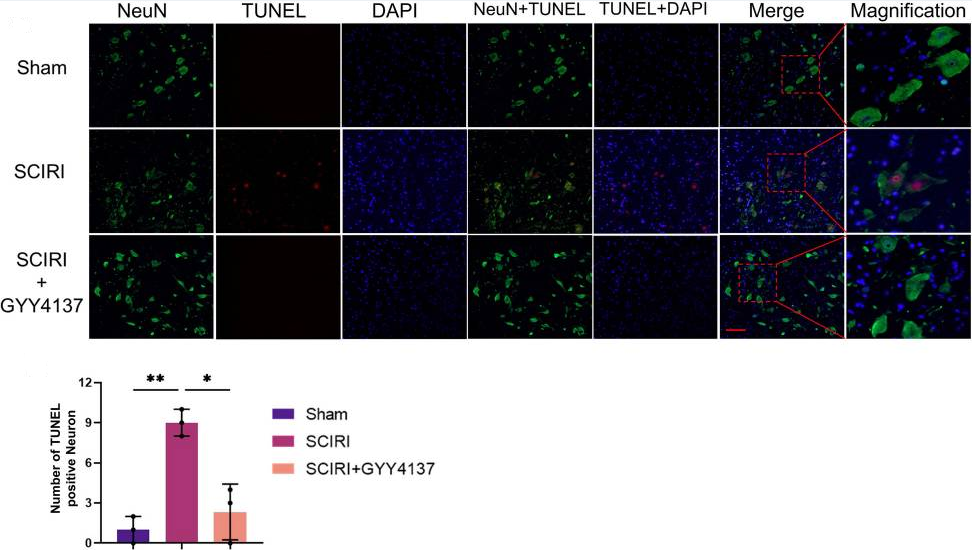
The number of TUNEL-positive neurons was notably increased after SCIRI, which was significantly decreased by GYY4137 treatment (50 mg/kg; IP; 30 min before the onset of spinal cord reperfusion; Single dose).
GYY4137 purchased from MedChemExpress. Usage Cited in: Cell Commun Signal. 2024 Jan 12;22(1):33. [Abstract]
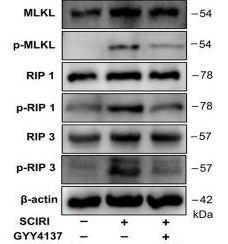
The Western blotting results demonstrated that expression of the p-MLKL, p-RIP1, and p-RIP3 in the SCIRI group were higher than those in the sham group, and the p-MLKL/MLKL, p-RIP1/RIP1, and p-RIP3/RIP3 ratios were increased. With GYY4137 treatment (50 mg/kg; IP; 30 min before the onset of spinal cord reperfusion; Single dose), these changes were largely reversed.
-
Antioxid Redox Signal
2025 Jan;42(1-3):1-15. PMID: 38877802 -
Biochem Pharmacol
Loss of cystathionine-β-synthase contributes to elevated OXPHOS, a vulnerability in Ara-C-resistant Myeloid Leukemia in Down syndrome. [Abstract]2026 Feb 13:247:117815. PMID: 41692349 -
Molecules
Attenuation of Sepsis-Induced Acute Kidney Injury by Exogenous H2S via Inhibition of Ferroptosis. [Abstract]2023 Jun 14;28(12):4770. PMID: 37375325
GYY4137 purchased from MedChemExpress. Usage Cited in: Molecules. 2023 Jun 14;28(12):4770. [Abstract]
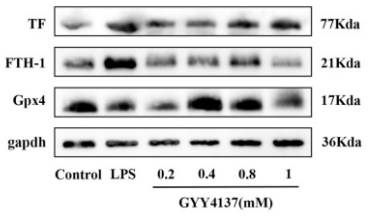
Representative Western blots for Gpx4, FTH-1, and TF expression in MRGECs of the control, 100 µg/mL LPS-treated, and 100 µg/mL LPS + GYY4137 (0.2, 0.4, 0.8, or 1 mM; for 24 h) treatment groups. β-actin was used as the internal control.
GYY4137 purchased from MedChemExpress. Usage Cited in: Molecules. 2023 Jun 14;28(12):4770. [Abstract]
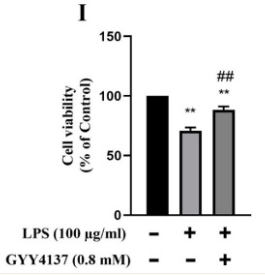
MRGECs were incubated in 100 µg/mL LPS and 0.8 mM GYY4137 for 24 h, and this was followed by detection of cell viability with the CCK-8 assay.
GYY4137 purchased from MedChemExpress. Usage Cited in: Molecules. 2023 Jun 14;28(12):4770. [Abstract]
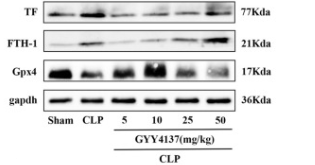
Representative Western blots for Gpx4, FTH-1, and TF expression in the kidney tissues from mice subjected to CLP and treated with different concentrations of GYY4137 (5, 10, 25, or 50 mg/kg; IP; 30 min after CLP treatment; Single dose).
-
Biomedicines
H2S Donor Therapy Reverses Established Pulmonary Arterial Hypertension and Pulmonary Vascular Structural Remodeling in Rats. [Abstract]2026 Mar 26;14(4):760. PMID: 42072301 -
Med Gas Res
Hydrogen sulfide ameliorates peritoneal fibrosis: inhibition of high mobility group box-1 expression to block the activation of the transforming growth factor-beta/Smad3 pathway. [Abstract]2026 Jun 1;16(2):103-109. PMID: 40826932 -
Nitric Oxide
Polysulfides derived from the hydrogen sulfide and persulfide donor P* inhibit IL-1β-mediated inducible nitric oxide synthase signaling in ATDC5 cells: are CCAAT/enhancer-binding proteins β and δ involved in the anti-inflammatory effects of hydrogen sulfide and polysulfides?. [Abstract]2022 Dec 1:129:41-52. PMID: 36216240 -


Solvent & Solubility
In Vitro:
DMSO : 100 mg/mL (265.63 mM; Need ultrasonic; Hygroscopic DMSO has a significant impact on the solubility of product, please use newly opened DMSO)
H2O : 19.23 mg/mL (51.08 mM; Need ultrasonic)
Please refer to the solubility information to select the appropriate solvent. Once prepared, please aliquot and store the solution to prevent product inactivation from repeated freeze-thaw cycles.
Storage method and period of stock solution: -80°C, 6 months; -20°C, 1 month (stored under nitrogen). When stored at -80°C, please use it within 6 months. When stored at -20°C, please use it within 1 month.
* Note: If you choose water as the stock solution, please dilute it to the working solution, then filter and sterilize it with a 0.22 μm filter before use.
Please refer to the solubility information to select the appropriate solvent. Once prepared, please aliquot and store the solution to prevent product inactivation from repeated freeze-thaw cycles.
Storage method and period of stock solution: -80°C, 6 months; -20°C, 1 month (stored under nitrogen). When stored at -80°C, please use it within 6 months. When stored at -20°C, please use it within 1 month.
* Note: If you choose water as the stock solution, please dilute it to the working solution, then filter and sterilize it with a 0.22 μm filter before use.
Concentration (start) × Volume (start) = Concentration (final) × Volume (final)
In Vivo:
Select the appropriate dissolution method based on your experimental animal and administration route.
- For the following dissolution methods, please ensure to first prepare a clear stock solution using an In Vitro approach and then sequentially add co-solvents:
- To ensure reliable experimental results, the clarified stock solution can be appropriately stored based on storage conditions. As for the working solution for In Vivo experiments, it is recommended to prepare freshly and use it on the same day.
- The percentages shown for the solvents indicate their volumetric ratio in the final prepared solution. If precipitation or phase separation occurs during preparation, heat and/or sonication can be used to aid dissolution.
Add each solvent one by one: 10% DMSO 40% PEG300 5% Tween-80 45% Saline
Solubility: ≥ 2.5 mg/mL (6.64 mM); Clear solution
This protocol yields a clear solution of ≥ 2.5 mg/mL (saturation unknown).
Taking 1 mL working solution as an example, add 100 μL DMSO stock solution (25.0 mg/mL) to 400 μL PEG300, and mix evenly; then add 50 μL Tween-80 and mix evenly; then add 450 μL Saline to adjust the volume to 1 mL.
Preparation of Saline: Dissolve 0.9 g sodium chloride in ddH₂O and dilute to 100 mL to obtain a clear Saline solution.
Add each solvent one by one: 10% DMSO 90% (20% SBE-β-CD in Saline)
Solubility: ≥ 2.5 mg/mL (6.64 mM); Clear solution
This protocol yields a clear solution of ≥ 2.5 mg/mL (saturation unknown).
Taking 1 mL working solution as an example, add 100 μL DMSO stock solution (25.0 mg/mL) to 900 μL 20% SBE-β-CD in Saline, and mix evenly.
Preparation of 20% SBE-β-CD in Saline (4°C, storage for one week): 2 g SBE-β-CD powder is dissolved in 10 mL Saline, completely dissolve until clear.
For the following dissolution methods, please prepare the working solution directly:
It is recommended to prepare fresh solutions and use them promptly within a short period of time.
The percentages shown for the solvents indicate their volumetric ratio in the final prepared solution. If precipitation or phase separation occurs during preparation, heat and/or sonication can be used to aid dissolution.
Add each solvent one by one: PBS
Solubility: 50 mg/mL (132.81 mM); Clear solution; Need ultrasonic
In Vivo Dissolution Calculator
Please enter the basic information of animal experiments:
-
-
-
-
Recommended: Prepare an additional quantity of animals to account for potential losses during experiments.
Working solution concentration: 0.22 mg/mL
This product has good water solubility, please refer to the measured solubility data in water/PBS/Saline for details.


Purity & Documentation
-
Data Sheet (279 KB)
-
SDS (396 KB)
- English - EN (396 KB)
- Français - FR (396 KB)
- Deutsch - DE (396 KB)
- Norwegian - NO (396 KB)
- Español - ES (396 KB)
- Swedish - SV (396 KB)
- Italian - IT (396 KB)
- Korean - KR (396 KB)
- Portuguese - PT (396 KB)
-
Handling Instructions (2659 KB)
References
[1]. Li L, et al. Characterization of a novel, water-soluble hydrogen sulfide-releasing molecule (GYY4137): new insights into the biology of hydrogen sulfide. Circulation. 2008;117(18):2351-2360. [Content Brief]
[2]. Lee ZW, et al. The slow-releasing hydrogen sulfide donor, GYY4137, exhibits novel anti-cancer effects in vitro and in vivo. PLoS One. 2011;6(6):e21077. [Content Brief]
[3]. Li L, et al. The complex effects of the slow-releasing hydrogen sulfide donor GYY4137 in a model of acute joint inflammation and in human cartilage cells. J Cell Mol Med. 2013;17(3):365-376. [Content Brief]
[4]. Lu S, Gao Y, et al. GYY4137, a hydrogen sulfide (H₂S) donor, shows potent anti-hepatocellular carcinoma activity through blocking the STAT3 pathway. Int J Oncol. 2014;44(4):1259-1267. [Content Brief]
[5]. Hou X, et al. GYY4137, an H2S Slow-Releasing Donor, Prevents Nitrative Stress and α-Synuclein Nitration in an MPTP Mouse Model of Parkinson's Disease. Front Pharmacol. 2017;8:741. Published 2017 Oct 30. [Content Brief]
[6]. Lu S, et al. GYY4137, a hydrogen sulfide (H2S) donor, shows potent anti-hepatocellular carcinoma activity through blocking the STAT3 pathway[J]. International journal of oncology, 2014, 44(4): 1259-1267. [Content Brief]


Complete Stock Solution Preparation Table
Please refer to the solubility information to select the appropriate solvent. Once prepared, please aliquot and store the solution to prevent product inactivation from repeated freeze-thaw cycles.
Storage method and period of stock solution: -80°C, 6 months; -20°C, 1 month (stored under nitrogen). When stored at -80°C, please use it within 6 months. When stored at -20°C, please use it within 1 month.
| Optional Solvent | Concentration Solvent Mass | 1 mg | 5 mg | 10 mg | 25 mg |
|---|---|---|---|---|---|
| H2O / DMSO | 1 mM | 2.6563 mL | 13.2813 mL | 26.5625 mL | 66.4064 mL |
| 5 mM | 0.5313 mL | 2.6563 mL | 5.3125 mL | 13.2813 mL | |
| 10 mM | 0.2656 mL | 1.3281 mL | 2.6563 mL | 6.6406 mL | |
| 15 mM | 0.1771 mL | 0.8854 mL | 1.7708 mL | 4.4271 mL | |
| 20 mM | 0.1328 mL | 0.6641 mL | 1.3281 mL | 3.3203 mL | |
| 25 mM | 0.1063 mL | 0.5313 mL | 1.0625 mL | 2.6563 mL | |
| 30 mM | 0.0885 mL | 0.4427 mL | 0.8854 mL | 2.2135 mL | |
| 40 mM | 0.0664 mL | 0.3320 mL | 0.6641 mL | 1.6602 mL | |
| 50 mM | 0.0531 mL | 0.2656 mL | 0.5313 mL | 1.3281 mL | |
| DMSO | 60 mM | 0.0443 mL | 0.2214 mL | 0.4427 mL | 1.1068 mL |
| 80 mM | 0.0332 mL | 0.1660 mL | 0.3320 mL | 0.8301 mL | |
| 100 mM | 0.0266 mL | 0.1328 mL | 0.2656 mL | 0.6641 mL |
* Note: If you choose water as the stock solution, please dilute it to the working solution, then filter and sterilize it with a 0.22 μm filter before use.


GYY4137 Related Classifications
HY-107632 Related Classifications
 Powered by Bioz