



LSD1/TLK1-IN-1

Based on 1 Customer Validation
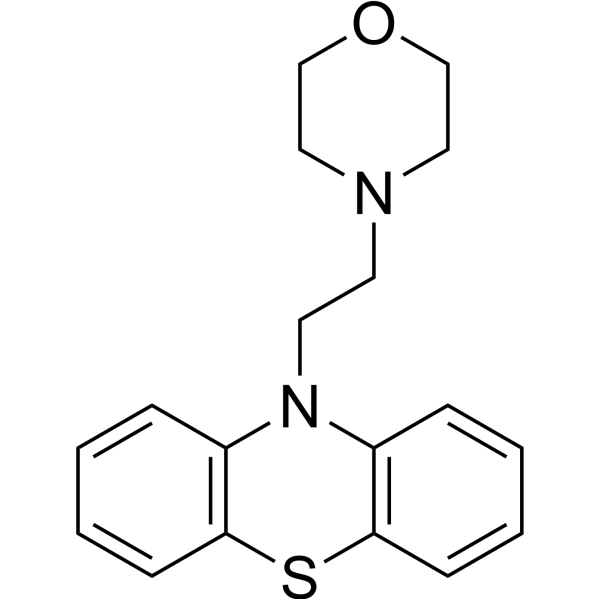
LSD1/TLK1-IN-1 is an orally active LSD1, TLK1, TLK2, TTK inhibitor with an LSD1 IC50 of 0.247 μM. LSD1/TLK1-IN-1 suppresses phosphorylation of Nek1 at T141 and Rad9 at S328, abrogates the TLK1>Nek1>ATR>Chk1 axis, protects H3K4me1/2 from demethylation, and does not affect LSD2, MAO-A, or MAO-B. LSD1/TLK1-IN-1 induces apoptosis, bypasses cell-cycle arrest, suppresses tumor growth, downregulates PD-L1 expression, enhances T-cell killing response, inhibits gastric cancer cell proliferation. LSD1/TLK1-IN-1 can be used for the research of prostate cancer and gastric cancer.
For research use only. We do not sell to patients.
- Purity : 99.20%
- CAS No.: 4734-59-2
- Formula: C18H20N2OS
- Molecular Weight:312.43
-
Storage:Powder -20°C, 3 years , 4°C, 2 years ; In solvent -80°C, 6 months , -20°C, 1 month

To place orders, for customer services and technical support, please contact: MedChemExpress USA
Tel: 609-228-6898 E-mail: [email protected] [email protected]


-
 Biological Activity
-
Chemical Information
-
Solvent & Solubility
- Protocols
- Purity & Documentation
- References
-
 Help & FAQs


-
HY-19991
BMS-1PD-1/PD-L1 PPI Inhibitor -
HY-N0242
FraxinelloneSTAT Inhibitor -
HY-15648B
GSK-J4JMJD3/UTX Inhibitor -
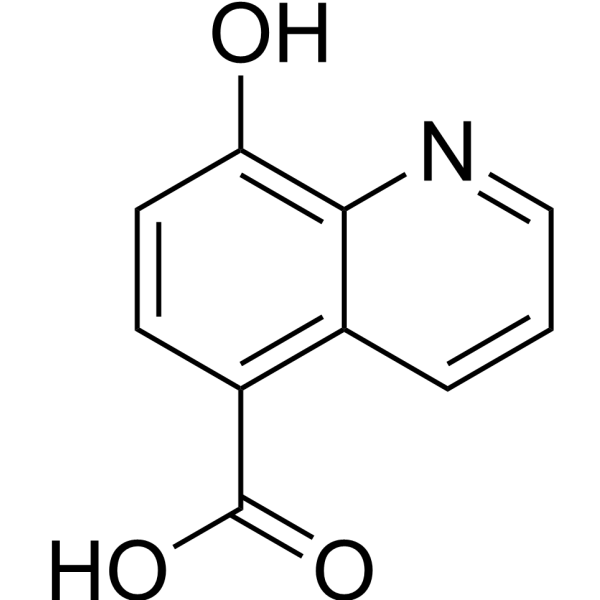
HY-12304
IOX12OG Oxygenases Inhibitor -
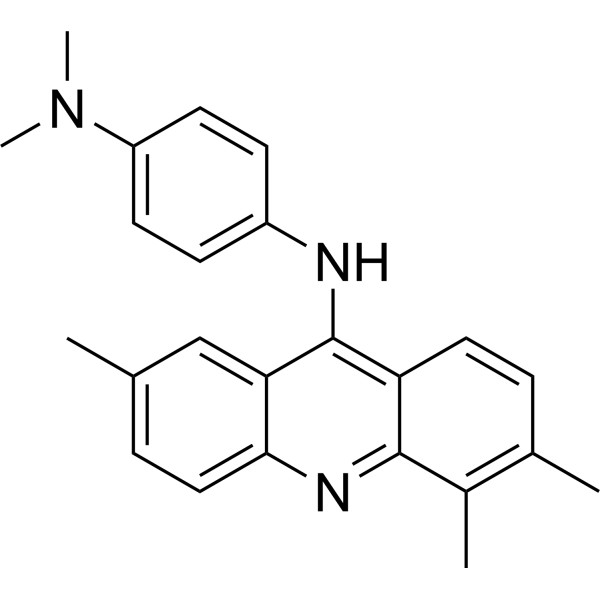
HY-155115
LSD1-IN-27LSD1 Inhibitor -
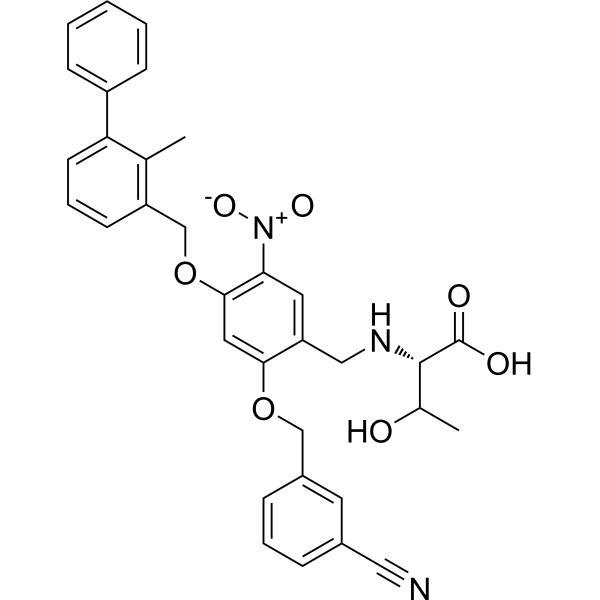
HY-132202
PD-1/PD-L1-IN-10PD-1/PD-L1 Inhibitor -
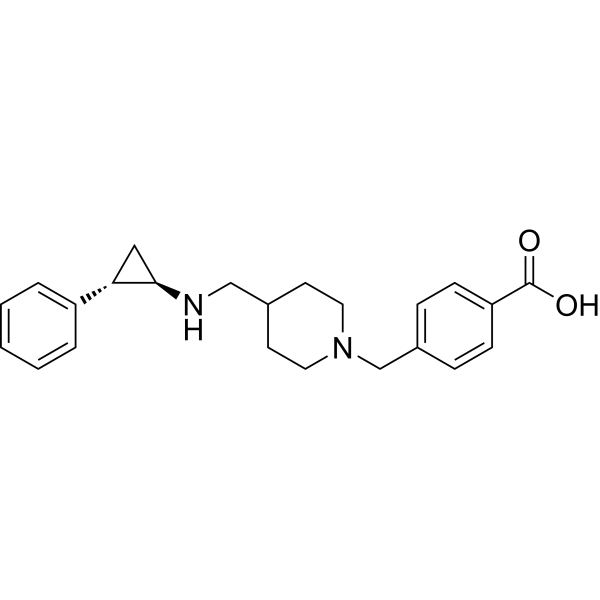
HY-18632
GSK2879552LSD1 Inhibitor -
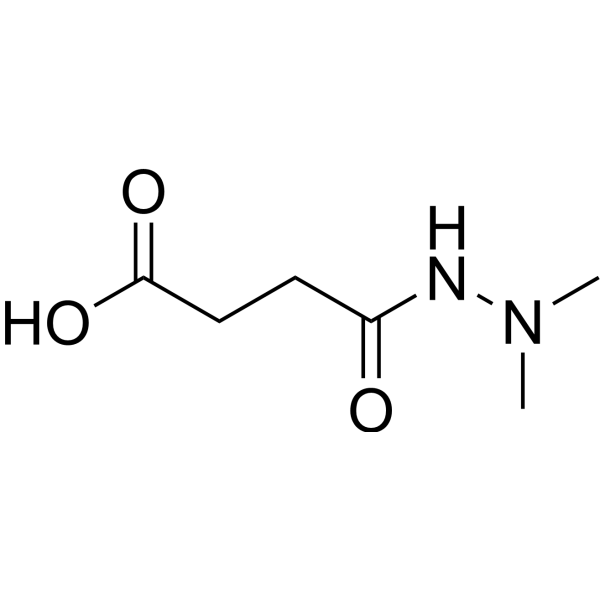
HY-13643
DaminozideKDM2/7 Inhibitor -
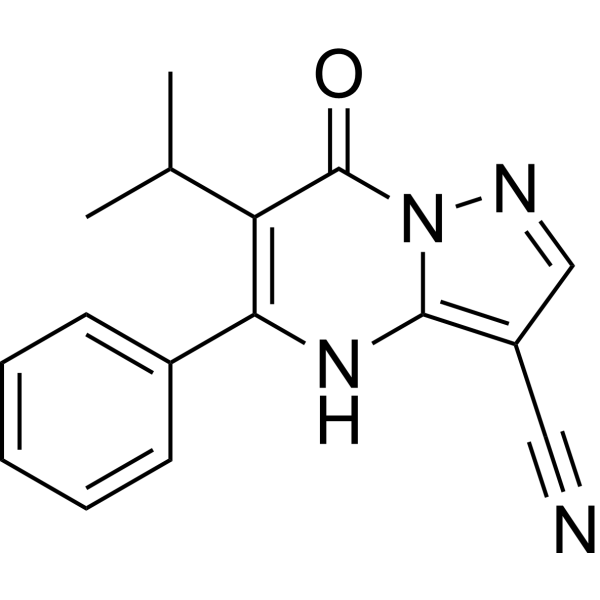
HY-100421
CPI-455KDM5 Inhibitor -
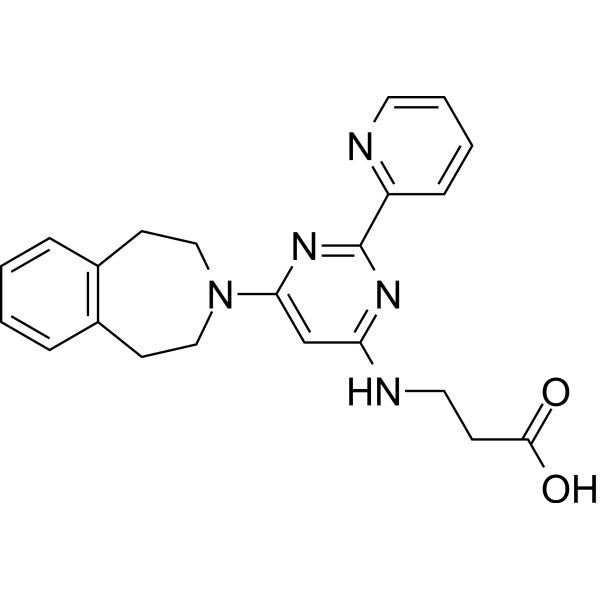
HY-15648
GSK-J1JMJD3/KDM6B Inhibitor -
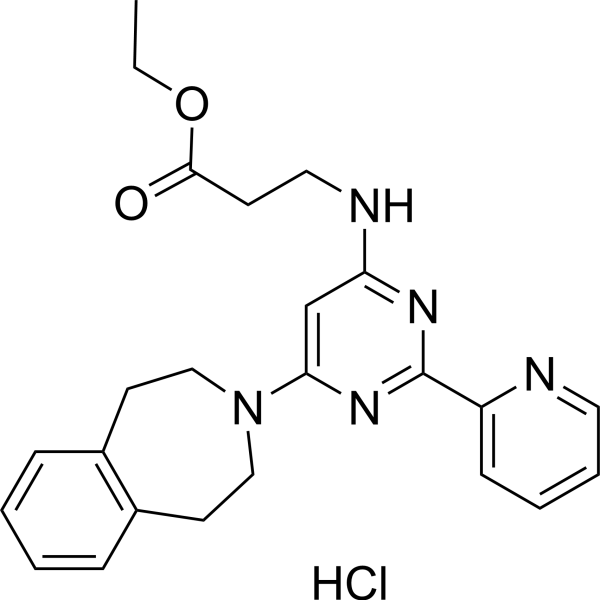
HY-15648F
GSK-J4 hydrochlorideJMJD3/UTX Inhibitor -
HY-104048
QC6352KDM4 Inhibitor


Biological Activity
Description
IC50 & Target
[1]|
TLK1 |
TLK2 |
In Vitro
LSD1/TLK1-IN-1 (compound J3-54) (20 μM; range; 30 minutes) potently inhibits recombinant human TLK1B kinase activity in vitro, with a Km of 31.31 μM in competitive ATP-binding assays[1].
LSD1/TLK1-IN-1 (6-20 μM; 72 h) induces weak dose-dependent proliferation inhibition in multiple prostate cancer cell lines, causes dose-dependent viability loss in LNCaP and TRAMP-C2 cells over 72 hours, and has no effect on normal RWPE1 prostate cells[1].
LSD1/TLK1-IN-1 (2-3 weeks) alone reduces colony formation in LNCaP, VCaP, and TRAMP-C2 androgen-sensitive prostate cancer cells, and causes a 4- to 5-fold greater suppression when combined with bicalutamide[1].
LSD1/TLK1-IN-1 (5-10 μM; 12-24 h) alone causes a modest S-phase reduction in LNCaP cells, and when combined with Bicalutamide (HY-14249), induces apoptosis and bypasses G1 cell cycle arrest in LNCaP, VCaP, and TRAMP-C2 cells, while suppressing TLK1B-mediated DNA damage response signaling[1].
LSD1/TLK1-IN-1 (compound 3S) potently inhibits recombinant LSD1 with an IC50 of 0.247 μM[2].
LSD1/TLK1-IN-1 (10 μM) shows high selectivity for LSD1, with less than 10% inhibitory activity against LSD2, MAO-A, and MAO-B at 10 μM[2].
LSD1/TLK1-IN-1 (0.5 μM; 6 h) directly binds to cellular LSD1 in BGC-823 gastric cancer cells when treated at 0.5 μM for 6 h, as demonstrated by enhanced LSD1 thermal stability in CETSA[2].
LSD1/TLK1-IN-1 (5-20 μM) dose-dependently suppresses PD-L1 expression via reducing PD-L1 mRNA transcription in an LSD1-dependent manner in BGC-823 and MFC gastric cancer cells when treated at 5, 10, 20 μM, with no effect on LSD1 KO cells[2].
LSD1/TLK1-IN-1 (5-20 μM) dose-dependently enhances T-cell killing response against BGC-823 gastric cancer cells via an LSD1- and PD-L1-dependent manner when treated at 5, 10, 20 μM, increasing IFNγ and TNFα secretion and reducing PD-1 binding[2].
LSD1/TLK1-IN-1 does not alter the proliferation of BGC-823 or MFC gastric cancer cells[2].
MedChemExpress (MCE) has not independently confirmed the accuracy of these methods. They are for reference only.
-
Cell Line:Prostate cancer cell lines (LNCaP, VCaP, C4-2B, 22RV1, DU145, PC3, TRAMP-C2), normal prostate RWPE-1 cells
-
Concentration:6-18 μM (proliferation assays); 5,13,20 μM (viability assays)
-
Incubation Time:72 h (viability assays)
-
Result:Induced weak dose-dependent proliferation inhibition in most tested cell lines, with maximal efficacy at 18 μM.
Showed no effect on RWPE1 normal prostate cells.
Caused dose-dependent loss in cell viability over 72 hours in LNCaP and TRAMP-C2 cells, with significant reductions at 13 and 20 μM.
Inhibited VCaP cells by 60% when used alone.
-
Cell Line:Androgen-sensitive prostate cancer cell lines (LNCaP, VCaP, TRAMP-C2)
-
Concentration:5 μM (cell cycle analysis); 10 μM (Rad9 phosphorylation assay)
-
Incubation Time:24 h (cell cycle analysis); 12 h (Rad9 phosphorylation assay)
-
Result:Caused a modest reduction in S-phase cells in LNCaP cells when used alone.
Induced a strong increase in apoptotic sub-G1 cells (33% in LNCaP, 26% in TRAMP-C2) and bypassed BIC-induced G1 cell cycle arrest when combined with bicalutamide (BIC).
Reduced phosphorylation of Nek1-T141, Rad9-S328, ATR, and Chk1 in all three cell lines.
Caused a modest increase in p-ATR in LNCaP and TRAMP-C2 cells when used alone.
Induced cleaved caspase 3, cleaved PARP, γH2AX, and p21 expression, markers of apoptosis and DNA damage, when combined with BIC.
-
Cell Line:BGC-823 gastric cancer cells, LSD1 KO BGC-823 gastric cancer cells, MFC gastric cancer cells, LSD1 KO MFC gastric cancer cells
-
Concentration:5-20 μM
-
Incubation Time:5 days (membrane PD-L1 analysis)
-
Result:Dose-dependently reduced total PD-L1 protein levels, membrane PD-L1 levels, and PD-L1 mRNA levels in BGC-823 and MFC cells.
Had no effect on PD-L1 expression in LSD1 KO BGC-823 and LSD1 KO MFC cells.
Reversed PD-L1 upregulation induced by wild-type LSD1 transfection, but not by LSD1 K661A mutant transfection, in LSD1 KO BGC-823 cells.
Parmacokinetics
| Species | Dose | Route | Cmax |
|---|---|---|---|
| Mice[1] | 10 mg/kg | i.p. | 100 ng/mL |
In Vivo
LSD1/TLK1-IN-1 (compound 3S) (10-50 mg/kg; p.o.; daily; 14 days) dose-dependently inhibits gastric cancer tumor growth in immunocompetent mice, enhances intratumoral T-cell infiltration and activity, and reduces intratumoral PD-L1 expression without significant systemic toxicity[2].
MedChemExpress (MCE) has not independently confirmed the accuracy of these methods. They are for reference only.
-
Animal Model:NOD/SCID (male)[1]
-
Dosage:5 mg/kg
-
Administration:i.p.; biweekly
-
Result:Significantly suppressed tumor growth and tumor weight compared to control.
Suppressed phosphorylation of Nek1-T141 in tumor tissues.
Reduced Ki67 staining.
Increased staining for cleaved PARP, cleaved caspase 3, and γH2AX.
When combined with bicalutamide, resulted in complete suppression of tumor growth, actual tumor regression compared to starting size, and the most pronounced reductions in proliferation markers and increases in apoptosis/DNA damage markers among all groups.
-
Animal Model:615 mice (male, 4−5 weeks old)[2]
-
Dosage:10 mg/kg; 25 mg/kg; 50 mg/kg
-
Administration:p.o.; daily; 14 days
-
Result:Suppressed MFC tumor growth in a dose-dependent manner.
Significantly decreased tumor weights in all treatment groups compared to control.
Significantly reduced Ki67 expression in tumors.
Decreased intratumoral PD-L1 expression in a dose-dependent manner.
Significantly increased the number of intratumoral CD3+, CD4+, and CD8+ T cells.
Upregulated mRNA and protein levels of the T-cell cytokines IL2 and IFNγ in tumors.
Observed no significant differences in mouse body weight between treatment and control groups.
Detected no significant histopathological toxicity in the heart, liver, spleen, lungs, or kidneys of treated mice.
- RNA extraction experimental
- Somatic Cell Culture
- Detection of Apoptosis
- TUNEL staining for apoptotic DNA fragmentation
- Apoptosis Solutions
- MTT Cell Proliferation Assay
- Western Blot
- Annexin V plus membrane-impermeant dye apoptosis staining
- BrdU Incorporation Assay
- CFSE Dye Dilution Proliferation Assay
- Patient-Derived Orthotopic Xenograft (PDOX)
- Dye-dilution cell tracking and proliferation staining
- CCK-8/WST-8 Cell Proliferation Assay
- Protocol for Cell Cycle
- Cell Counting-Based Growth Curve Assay
- Colony Formation (Clonogenic) Assay
- Cell Viability Determination by MTT Colorimetric Assay
- Kinase activity and phosphorylation assays
- EdU Incorporation Assay (Click Chemistry-Based DNA Synthesis Measurement)
- Ki-67 Immunostaining Proliferation Assay
- PCNA Immunodetection Proliferation Assay
- Protocol for Cell Counting and Cell Density Analysis
- Patient-Derived Xenograft (PDX)
- Protocol for Kinase activity and phosphorylation assays
- Subcutaneous Cell-Line-Derived Xenograft
- Orthotopic Cell-Line Xenograft


Chemical Information
-
CAS No. 4734-59-2
-
Appearance Solid
-
Molecular Weight 312.43
-
Formula C18H20N2OS
-
Color Pale purple to purple
-
SMILES
N1(CCN2C3=C(SC4=C2C=CC=C4)C=CC=C3)CCOCC1
-
Synonyms
J54; J3-54
-
Shipping
Room temperature in continental US; may vary elsewhere.
-
Storage
Powder -20°C 3 years 4°C 2 years In solvent -80°C 6 months -20°C 1 month


Solvent & Solubility
In Vitro:
DMSO : 100 mg/mL (320.07 mM; ultrasonic and warming and heat to 80°C; Hygroscopic DMSO has a significant impact on the solubility of product, please use newly opened DMSO)
Please refer to the solubility information to select the appropriate solvent. Once prepared, please aliquot and store the solution to prevent product inactivation from repeated freeze-thaw cycles.
Storage method and period of stock solution: -80°C, 6 months; -20°C, 1 month. When stored at -80°C, please use it within 6 months. When stored at -20°C, please use it within 1 month.
Please refer to the solubility information to select the appropriate solvent. Once prepared, please aliquot and store the solution to prevent product inactivation from repeated freeze-thaw cycles.
Storage method and period of stock solution: -80°C, 6 months; -20°C, 1 month. When stored at -80°C, please use it within 6 months. When stored at -20°C, please use it within 1 month.
Concentration (start) × Volume (start) = Concentration (final) × Volume (final)
In Vivo:
Select the appropriate dissolution method based on your experimental animal and administration route.
- For the following dissolution methods, please ensure to first prepare a clear stock solution using an In Vitro approach and then sequentially add co-solvents:
- To ensure reliable experimental results, the clarified stock solution can be appropriately stored based on storage conditions. As for the working solution for In Vivo experiments, it is recommended to prepare freshly and use it on the same day.
- The percentages shown for the solvents indicate their volumetric ratio in the final prepared solution. If precipitation or phase separation occurs during preparation, heat and/or sonication can be used to aid dissolution.
Add each solvent one by one: 10% DMSO 40% PEG300 5% Tween-80 45% Saline
Solubility: 2.5 mg/mL (8.00 mM); Clear solution; Need ultrasonic
This protocol yields a clear solution of 2.5 mg/mL.
Taking 1 mL working solution as an example, add 100 μL DMSO stock solution (25.0 mg/mL) to 400 μL PEG300, and mix evenly; then add 50 μL Tween-80 and mix evenly; then add 450 μL Saline to adjust the volume to 1 mL.
Preparation of Saline: Dissolve 0.9 g sodium chloride in ddH₂O and dilute to 100 mL to obtain a clear Saline solution.
In Vivo Dissolution Calculator
Please enter the basic information of animal experiments:
-
-
-
-
Recommended: Prepare an additional quantity of animals to account for potential losses during experiments.
Please enter your animal formula composition:
-
%DMSO +
Recommended: Keep the proportion of DMSO in working solution below 2% if your animal is weak.
-
%+
-
+%Tween-80 + +
-
%Saline +
The co-solvents required include: DMSO, . All of co-solvents are available by MedChemExpress (MCE). , Tween 80. All of co-solvents are available by MedChemExpress (MCE).
Working solution concentration: 0.22 mg/mL
Method for preparing stock solution: mg drug dissolved in μL DMSO. Stock solution concentration: mg/mL.
1. Take μL DMSO stock solution;
2. Add μL .
μL , mix evenly;
3. Then add μL Tween 80, mix evenly;
4. Then add μL
Please ensure that the stock solution in the first step is dissolved to a clear state, and add co-solvents in sequence. You can use ultrasonic heating (ultrasonic cleaner, recommended frequency 20-40 kHz), vortexing, etc. to assist dissolution.


Purity & Documentation
-
Data Sheet (286 KB)
-
SDS (254 KB)
- English - EN (254 KB)
- Français - FR (254 KB)
- Deutsch - DE (254 KB)
- Norwegian - NO (254 KB)
- Español - ES (254 KB)
- Swedish - SV (254 KB)
- Italian - IT (254 KB)
- Korean - KR (254 KB)
- Portuguese - PT (254 KB)
-
Handling Instructions (2659 KB)
References
[1]. Singh V, et al. Generation of Phenothiazine with Potent Anti-TLK1 Activity for Prostate Cancer Therapy. iScience. 2020;23(9):101474. Published 2020 Aug 20. [Content Brief]
[2]. Dai XJ, et al. Phenothiazine-Based LSD1 Inhibitor Promotes T-Cell Killing Response of Gastric Cancer Cells. J Med Chem. 2023;66(6):3896-3916. [Content Brief]


Complete Stock Solution Preparation Table
Please refer to the solubility information to select the appropriate solvent. Once prepared, please aliquot and store the solution to prevent product inactivation from repeated freeze-thaw cycles.
Storage method and period of stock solution: -80°C, 6 months; -20°C, 1 month. When stored at -80°C, please use it within 6 months. When stored at -20°C, please use it within 1 month.
| Optional Solvent | Concentration Solvent Mass | 1 mg | 5 mg | 10 mg | 25 mg |
|---|---|---|---|---|---|
| DMSO | 1 mM | 3.2007 mL | 16.0036 mL | 32.0072 mL | 80.0179 mL |
| 5 mM | 0.6401 mL | 3.2007 mL | 6.4014 mL | 16.0036 mL | |
| 10 mM | 0.3201 mL | 1.6004 mL | 3.2007 mL | 8.0018 mL | |
| 15 mM | 0.2134 mL | 1.0669 mL | 2.1338 mL | 5.3345 mL | |
| 20 mM | 0.1600 mL | 0.8002 mL | 1.6004 mL | 4.0009 mL | |
| 25 mM | 0.1280 mL | 0.6401 mL | 1.2803 mL | 3.2007 mL | |
| 30 mM | 0.1067 mL | 0.5335 mL | 1.0669 mL | 2.6673 mL | |
| 40 mM | 0.0800 mL | 0.4001 mL | 0.8002 mL | 2.0004 mL | |
| 50 mM | 0.0640 mL | 0.3201 mL | 0.6401 mL | 1.6004 mL | |
| 60 mM | 0.0533 mL | 0.2667 mL | 0.5335 mL | 1.3336 mL | |
| 80 mM | 0.0400 mL | 0.2000 mL | 0.4001 mL | 1.0002 mL | |
| 100 mM | 0.0320 mL | 0.1600 mL | 0.3201 mL | 0.8002 mL |


LSD1/TLK1-IN-1 Related Classifications
HY-149213 Related Classifications
 Powered by Bioz