



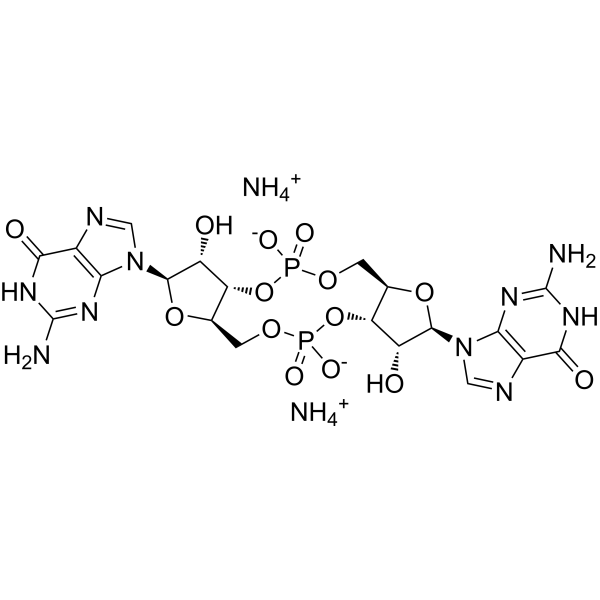
Cyclic-di-GMP diammonium
Based on 9 publication(s) in Google Scholar
Cyclic-di-GMP diammonium is a STING agonist and a bacterial second messenger that coordinates different aspects of bacterial growth and behavior, including motility, virulence, biofilm formation, and cell cycle progression. Cyclic-di-GMP diammonium has anti-cancer cell proliferation activity and also induces elevated CD4 receptor expression and cell cycle arrest. Cyclic-di-GMP diammonium can be used in cancer research.
For research use only. We do not sell to patients.
- Purity : 99.07%
- CAS No.: 609343-82-0
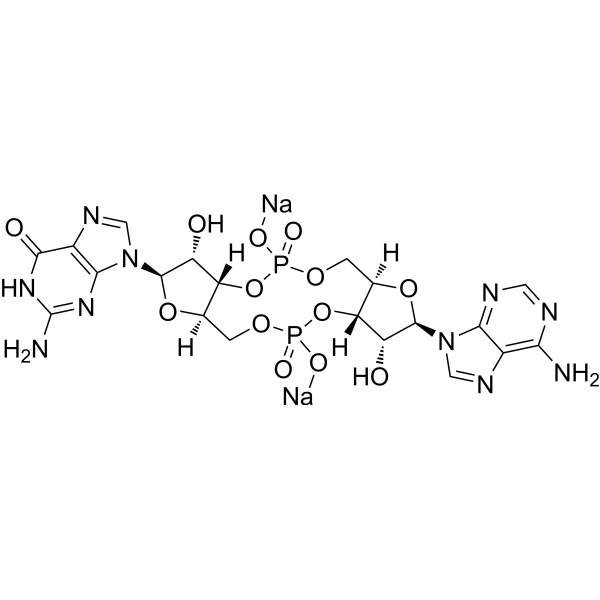
- Formula: C20H30N12O14P2
- Molecular Weight:724.47
-
Storage:
-20°C, sealed storage, away from moisture
* In solvent : -80°C, 6 months; -20°C, 1 month (sealed storage, away from moisture)

To place orders, for customer services and technical support, please contact: MedChemExpress USA
Tel: 609-228-6898 E-mail: [email protected] [email protected]


-
 Biological Activity
-
Chemical Information
-
Solvent & Solubility
- Purity & Documentation
- References
-
 Help & FAQs


-
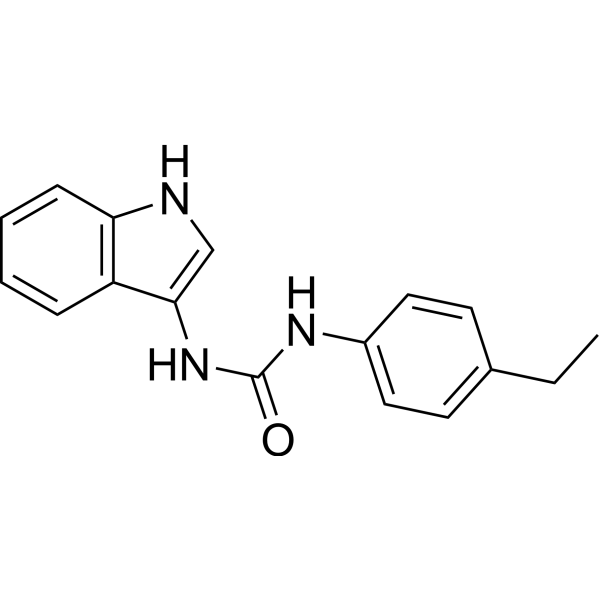
HY-112693
H-151 -
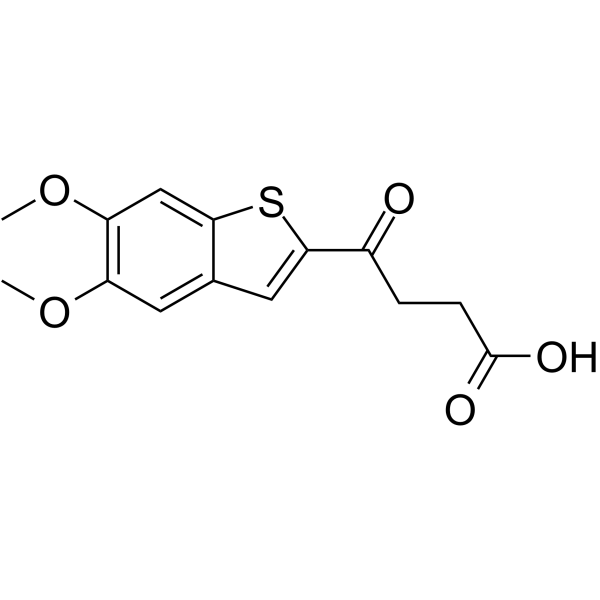
HY-136927
MSA-2 -
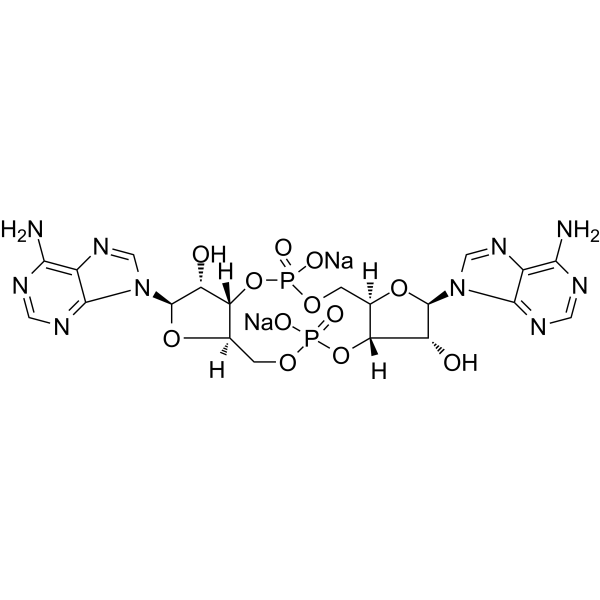
HY-12326A
c-di-AMP disodium -
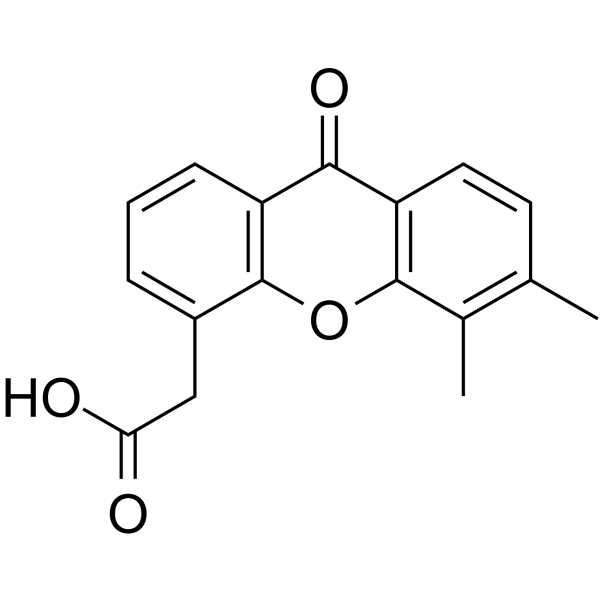
HY-10964
Vadimezan -
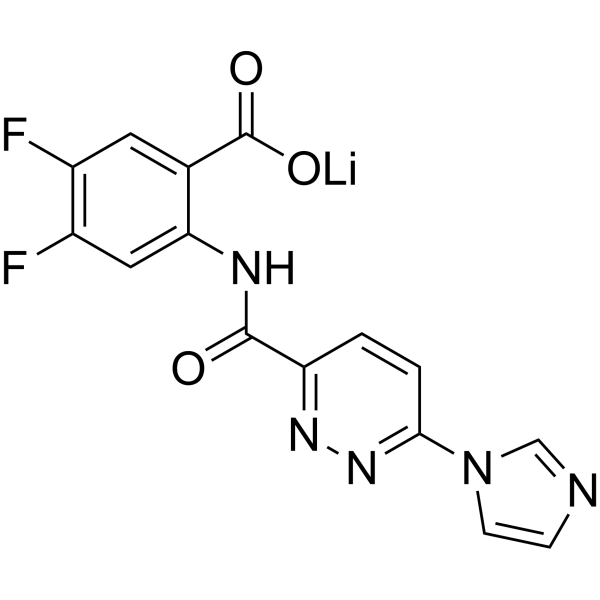
HY-131454
SR-717 -
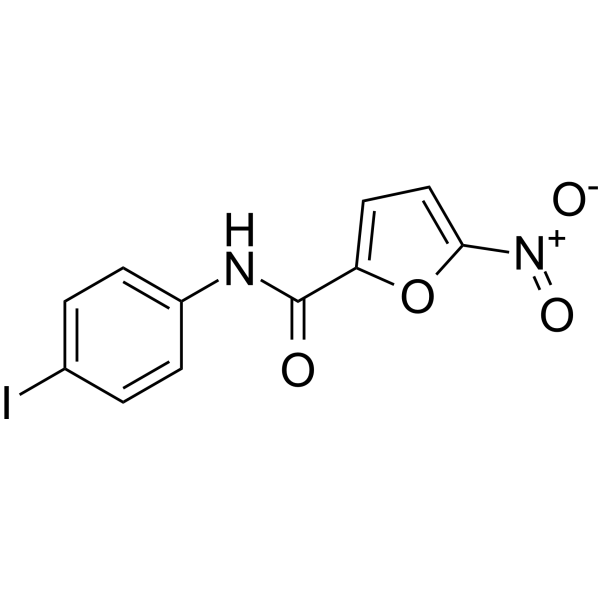
HY-112906
C-176 -
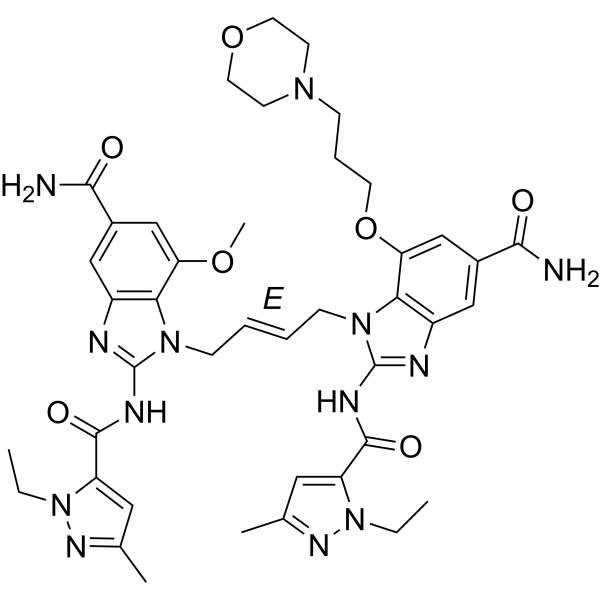
HY-112921A
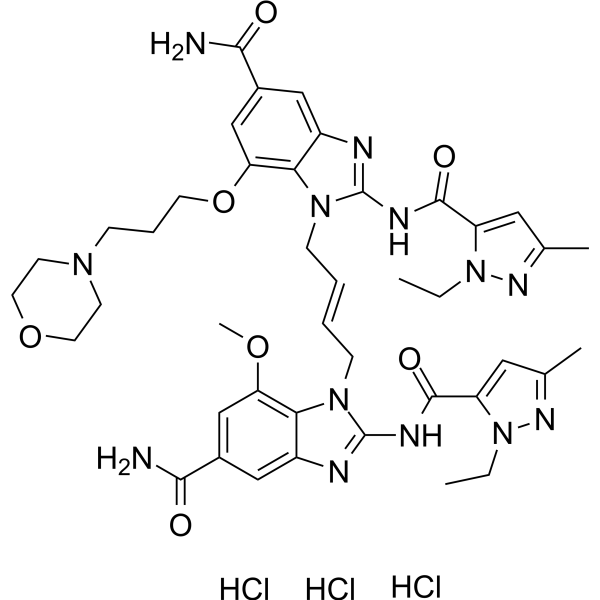
diABZI STING agonist-1 -
HY-112921B
diABZI STING agonist-1 trihydrochloride -
HY-12512
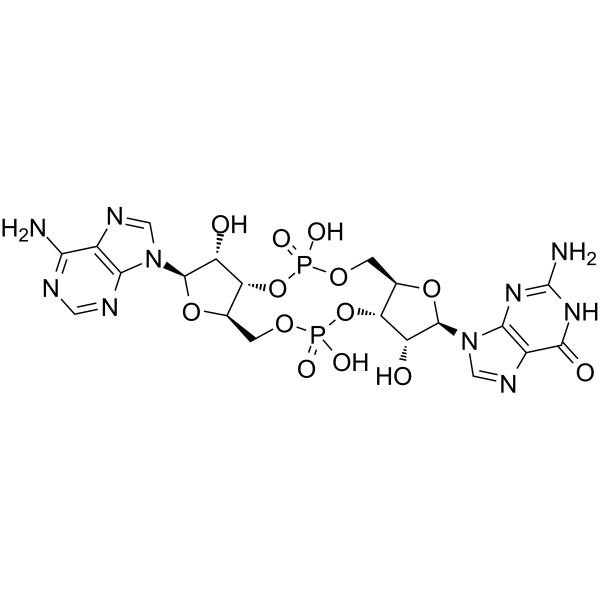
cGAMP -
HY-111999A
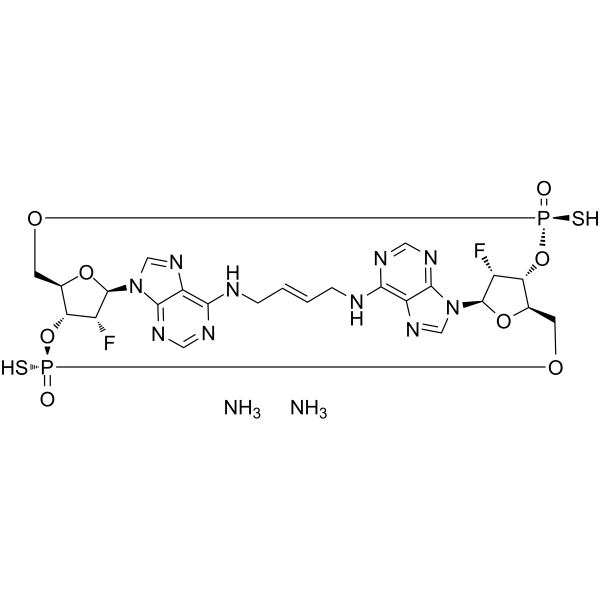
E7766 diammonium salt -
HY-12885B
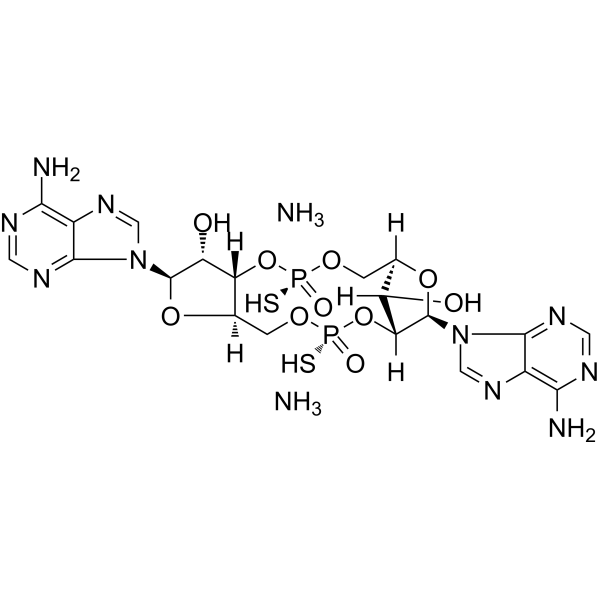
2’3’-c-di-AM(PS)2 (Rp,Rp) ammonium salt -
HY-110385
cGAMP disodium
Publications Citing Use of MedChemExpress (MCE) Cyclic-di-GMP diammonium
More- Cell. 2026 Mar 19;189(6):1748-1767.e26. [Abstract]
- Gut Microbes. 2022 Jan-Dec;14(1):2119055. [Abstract]
- Nucleic Acids Res. 2025 Oct 28;53(20):gkaf1069. [Abstract]
- NPJ Biofilms Microbiomes. 2024 Jun 20;10(1):51. [Abstract]
- J Transl Med. 2025 Mar 4;23(1):271. [Abstract]
- Int J Biol Macromol. 2024 Sep 14;280(Pt 1):135660. [Abstract]
- Clin Transl Med. 2024 Aug;14(8):e1744. [Abstract]
- Mbio. 2021 Oct 26;12(5):e0119221. [Abstract]
- J Biol Chem. 2025 Dec 6;302(1):111021. [Abstract]
 Customer Validation & Images

-
WB
-
Histological Imaging/Staining
-
In Vivo Efficacy Study
-
Bio/Physico-chemical Assay
-
Gel Electrophoresis
All Endogenous Metabolite Isoforms
More

Biological Activity
Description
IC50 & Target
In Vitro
Cyclic-di-GMP diammonium (0.5-50 μM; 5 days) inhibits proliferation of human colon cancer cells[1].
Cyclic-di-GMP diammonium (0.5-50 μM; 5 days) specifically elevates CD4 expression in Jurkat cells[2].
Cyclic-di-GMP diammonium (0.5-50 μM; 5 days) induces cell cycle arrest at the S-phase in Jurkat cells[2].
MedChemExpress (MCE) has not independently confirmed the accuracy of these methods. They are for reference only.
-
Cell Line:H508 cells
-
Concentration:0.5-50 µM
-
Incubation Time:5 days
-
Result:Reduced basal H508 cell proliferation by approx 15%, even inhibited acetylcholine- and EGF-induced cell proliferation.
-
Cell Line:Jurkat cells
-
Concentration:50 µM
-
Incubation Time:24 h
-
Result:Specifically induced of CD4 (no effect on the expression of CD8), with a 6.3-fold upregulation over control and in a dose-dependent manner.
-
Cell Line:Jurkat cells
-
Concentration:50 µM
-
Incubation Time:24 h
-
Result:Increased the percentage of cells in S-phase by 79%, with almost complete disappearance of G2/M-phase cells which decreased by 93%.
In Vivo
MedChemExpress (MCE) has not independently confirmed the accuracy of these methods. They are for reference only.
-
Animal Model:C57BL/6 (B6) mice (8- to 10-week-old)[3].
-
Dosage:100 µg/per
-
Administration:Intravenous injection; two sequential vaccinations 9 days apart; combine with TriVax.
-
Result:Significantly higher numbers of antigen-specific CD8 T cells when combined with TriVax. (TriVax consisted of a mixture of 120 μg Pam-hgp100, 100 µg hgp100 or 100 µg Ova, 50 or 25 μg anti-CD40 antibody, and 25 μg Poly-IC).
Enhanced the anti-tumor activity of TriVax.


Chemical Information
-
CAS No. 609343-82-0
-
Appearance Solid
-
Molecular Weight 724.47
-
Formula C20H30N12O14P2
-
Color White to off-white
-
SMILES
O[C@@H]([C@H](N1C=NC2=C1N=C(N)NC2=O)O3)[C@H](OP([O-])(OC[C@@H]4[C@H]([C@H]([C@H](N5C=NC6=C5N=C(N)NC6=O)O4)O)O7)=O)[C@H]3COP7([O-])=O.[NH4+].[NH4+]
-
Synonyms
c-di-GMP diammonium; cyclic diguanylate diammonium; 5GP-5GP diammonium
-
Structure Classification
-
Initial Source
-
Shipping
Room temperature in continental US; may vary elsewhere.
-
Storage
-20°C, sealed storage, away from moisture
* In solvent : -80°C, 6 months; -20°C, 1 month (sealed storage, away from moisture)


Publications (9)
-
Journal Impact Factor
-
Most Recent
-
Cell
2026 Mar 19;189(6):1748-1767.e26. PMID: 41643675 -
Gut Microbes
Gut microbiota modulate radiotherapy-associated antitumor immune responses against hepatocellular carcinoma Via STING signaling. [Abstract]2022 Jan-Dec;14(1):2119055. PMID: 36093568 -
Nucleic Acids Res
Cyclic-di-GMP interferes with DNA-MucR-DNA bridging to derepress genes targeted by the xenogeneic silencer MucR. [Abstract]2025 Oct 28;53(20):gkaf1069. PMID: 41148150 -
NPJ Biofilms Microbiomes
2024 Jun 20;10(1):51. PMID: 38902226 -
J Transl Med
Photothermal therapy combined with a STING agonist induces pyroptosis, and gasdermin D could be a new biomarker for guiding the treatment of pancreatic cancer. [Abstract]2025 Mar 4;23(1):271. PMID: 40038726
Cyclic-di-GMP diammonium purchased from MedChemExpress. Usage Cited in: J Transl Med. 2025 Mar 4;23(1):271. [Abstract]
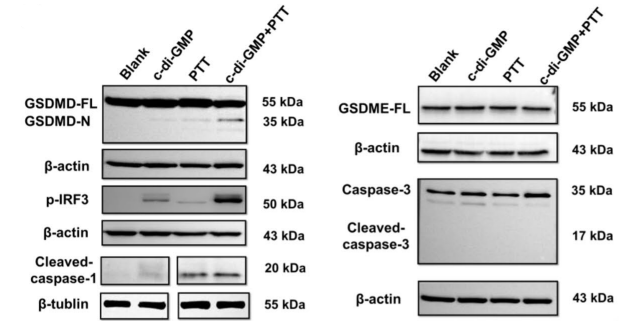
Cyclic-di-GMP disodium (c-di-GMP; 200 μg/mL; 50 μL; intratumoural injection; day 0 and day 2) combined with photothermal therapy (PTT) increased the protein expression of GSDMD-N, cleaved caspase-3, and phosphorylated-IRF3 (p-IRF3) in C57BL/6 N mice (Pan02-luc cells).
Cyclic-di-GMP diammonium purchased from MedChemExpress. Usage Cited in: J Transl Med. 2025 Mar 4;23(1):271. [Abstract]
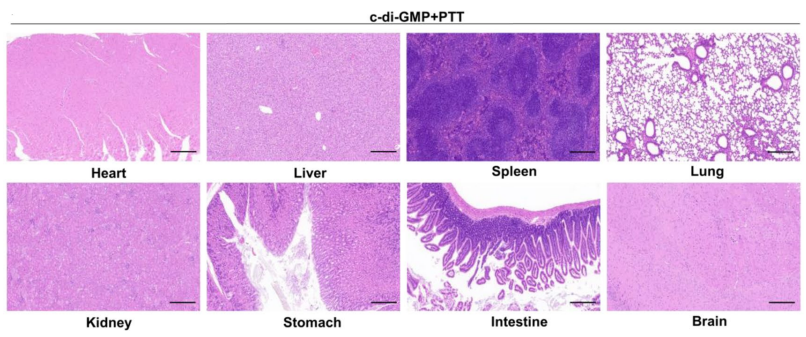
Cyclic-di-GMP disodium (c-di-GMP; 200 μg/mL; 50 μL; intratumoural injection; day 0 and day 2) combined with photothermal therapy (PTT) indicated the good biocompatibility in C57BL/6 N mice (Pan02-luc cells) by H&E staining of the major organs.
Cyclic-di-GMP diammonium purchased from MedChemExpress. Usage Cited in: J Transl Med. 2025 Mar 4;23(1):271. [Abstract]
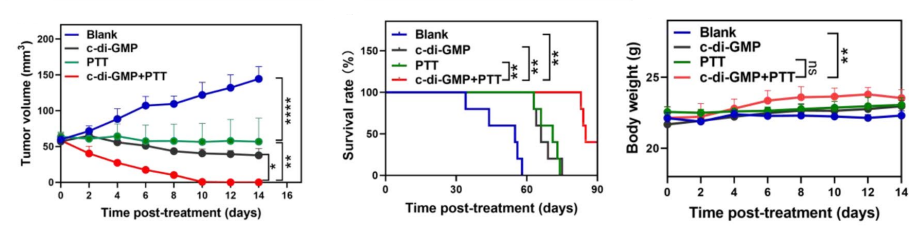
Cyclic-di-GMP disodium (c-di-GMP; 200 μg/mL; 50 μL; intratumoural injection; day 0 and day 2) showed antitumour effect in C57BL/6 N mice (Pan02-luc cells).
-
Int J Biol Macromol
C-di-GMP@ZIF-8 nanocomposite injectable hydrogel based on modified chitosan and hyaluronic acid for infected wound healing by activating STING signaling. [Abstract]2024 Sep 14;280(Pt 1):135660. PMID: 39284469 -
Clin Transl Med
2024 Aug;14(8):e1744. PMID: 39166890 -
Mbio
Global Transcriptional Repression of Diguanylate Cyclases by MucR1 Is Essential for Sinorhizobium-Soybean Symbiosis. [Abstract]2021 Oct 26;12(5):e0119221. PMID: 34700374 -
J Biol Chem
Dynamic control of bacterial antiphage defense through the CdnG-Cap5 cyclic oligonucleotide-based antiphage pathway in Vibrio cholerae. [Abstract]2025 Dec 6;302(1):111021. PMID: 41360261
Cyclic-di-GMP diammonium purchased from MedChemExpress. Usage Cited in: J Biol Chem. 2025 Dec 6;302(1):111021. [Abstract]
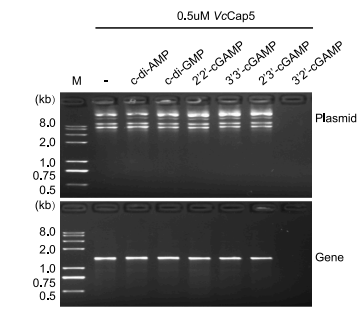
agarose gel electrophoresis analysis of DNA degradation assays. Nuclease activity assays were performed by incubating 0.5 μM VcCap5 with 20 ng/μl DNA in the presence of 0.5 μM of various cyclic dinucleotides (Cyclic-di-GMP disodium; c-di-GMP).
Cyclic-di-GMP diammonium purchased from MedChemExpress. Usage Cited in: J Biol Chem. 2025 Dec 6;302(1):111021. [Abstract]
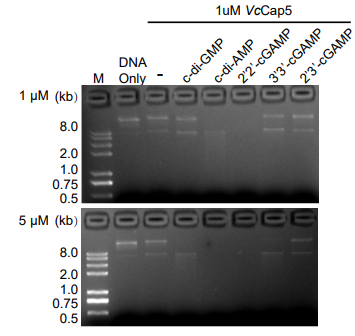
second messenger-dependent activation of VcCap5 DNA cleavage. Nuclease activity assays were performed by incubating 1 µM VcCap5 with 10 ng/µl DNA in the presence of 1 µM or 5 µM of various cyclic dinucleotides (Cyclic-di-GMP disodium; c-di-GMP).
Cyclic-di-GMP diammonium purchased from MedChemExpress. Usage Cited in: J Biol Chem. 2025 Dec 6;302(1):111021. [Abstract]
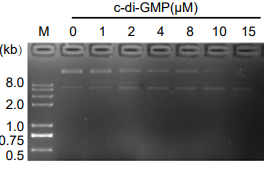
dose-response analysis of VcCap5 activity with increasing concentrations of cyclic dinucleotides. The nuclease assay mixture contained 1 µM VcCap5, 10 ng/µl DNA, and cyclic dinucleotide (Cyclic-di-GMP disodium; c-di-GMP) over a concentration range of 0.1 to 15 µM.


Solvent & Solubility
In Vitro:
H2O : 50 mg/mL (69.02 mM; Need ultrasonic)
Please refer to the solubility information to select the appropriate solvent. Once prepared, please aliquot and store the solution to prevent product inactivation from repeated freeze-thaw cycles.
Storage method and period of stock solution: -80°C, 6 months; -20°C, 1 month (sealed storage, away from moisture). When stored at -80°C, please use it within 6 months. When stored at -20°C, please use it within 1 month.
* Note: If you choose water as the stock solution, please dilute it to the working solution, then filter and sterilize it with a 0.22 μm filter before use.
Please refer to the solubility information to select the appropriate solvent. Once prepared, please aliquot and store the solution to prevent product inactivation from repeated freeze-thaw cycles.
Storage method and period of stock solution: -80°C, 6 months; -20°C, 1 month (sealed storage, away from moisture). When stored at -80°C, please use it within 6 months. When stored at -20°C, please use it within 1 month.
* Note: If you choose water as the stock solution, please dilute it to the working solution, then filter and sterilize it with a 0.22 μm filter before use.
Concentration (start) × Volume (start) = Concentration (final) × Volume (final)
In Vivo:
For the following dissolution methods, please prepare the working solution directly:
It is recommended to prepare fresh solutions and use them promptly within a short period of time.
The percentages shown for the solvents indicate their volumetric ratio in the final prepared solution. If precipitation or phase separation occurs during preparation, heat and/or sonication can be used to aid dissolution.
Add each solvent one by one: PBS
Solubility: 100 mg/mL (138.03 mM); Clear solution; Need ultrasonic


Purity & Documentation
-
Data Sheet (284 KB)
-
SDS (252 KB)
- English - EN (252 KB)
- Français - FR (252 KB)
- Deutsch - DE (252 KB)
- Norwegian - NO (252 KB)
- Español - ES (252 KB)
- Swedish - SV (252 KB)
- Italian - IT (252 KB)
- Korean - KR (252 KB)
- Portuguese - PT (252 KB)
-
Handling Instructions (2659 KB)
References
[1]. Karaolis DK, et al. 3',5'-Cyclic diguanylic acid (c-di-GMP) inhibits basal and growth factor-stimulated human colon cancer cell proliferation. Biochem Biophys Res Commun. 2005 Apr 1;329(1):40-5. [Content Brief]
[2]. Steinberger O, et al. Elevated expression of the CD4 receptor and cell cycle arrest are induced in Jurkat cells by treatment with the novel cyclic dinucleotide 3',5'-cyclic diguanylic acid. FEBS Lett. 1999 Feb 5;444(1):125-9. [Content Brief]
[3]. Wang Z, et al. STING activator c-di-GMP enhances the anti-tumor effects of peptide vaccines in melanoma-bearing mice. Cancer Immunol Immunother. 2015 Aug;64(8):1057-66. [Content Brief]
[4]. Jenal U, et al. Cyclic di-GMP: second messenger extraordinaire. Nat Rev Microbiol. 2017 May;15(5):271-284. [Content Brief]


Complete Stock Solution Preparation Table
Please refer to the solubility information to select the appropriate solvent. Once prepared, please aliquot and store the solution to prevent product inactivation from repeated freeze-thaw cycles.
Storage method and period of stock solution: -80°C, 6 months; -20°C, 1 month (sealed storage, away from moisture). When stored at -80°C, please use it within 6 months. When stored at -20°C, please use it within 1 month.
| Optional Solvent | Concentration Solvent Mass | 1 mg | 5 mg | 10 mg | 25 mg |
|---|---|---|---|---|---|
| H2O | 1 mM | 1.3803 mL | 6.9016 mL | 13.8032 mL | 34.5080 mL |
| 5 mM | 0.2761 mL | 1.3803 mL | 2.7606 mL | 6.9016 mL | |
| 10 mM | 0.1380 mL | 0.6902 mL | 1.3803 mL | 3.4508 mL | |
| 15 mM | 0.0920 mL | 0.4601 mL | 0.9202 mL | 2.3005 mL | |
| 20 mM | 0.0690 mL | 0.3451 mL | 0.6902 mL | 1.7254 mL | |
| 25 mM | 0.0552 mL | 0.2761 mL | 0.5521 mL | 1.3803 mL | |
| 30 mM | 0.0460 mL | 0.2301 mL | 0.4601 mL | 1.1503 mL | |
| 40 mM | 0.0345 mL | 0.1725 mL | 0.3451 mL | 0.8627 mL | |
| 50 mM | 0.0276 mL | 0.1380 mL | 0.2761 mL | 0.6902 mL | |
| 60 mM | 0.0230 mL | 0.1150 mL | 0.2301 mL | 0.5751 mL |
* Note: If you choose water as the stock solution, please dilute it to the working solution, then filter and sterilize it with a 0.22 μm filter before use.


Cyclic-di-GMP diammonium Related Classifications
HY-107780B Related Classifications
 Powered by Bioz